

The DOI matches its Crossref record; 38 of the 40 references it cites were found in a registry or an index.
Longitudinal associations between problematic social media use and depressive symptoms in adolescent girls
Open accessAbstract
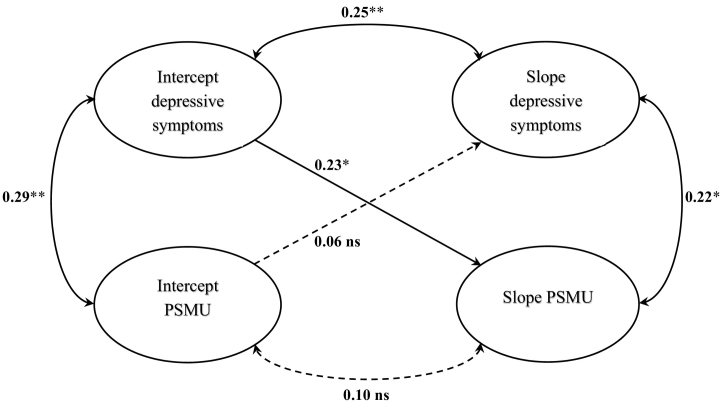
The primary aim of the current study was to examine longitudinal relation between problematic social media use (PSMU) and depressive symptoms in adolescent girls. Adolescent girls (n = 397) were assessed in three time points across two years. PSMU and depressive symptoms were subjectively assessed at three waves spaced 2 years apart. Latent growth models were used to test whether changes in PSMU were related to changes in depressive symptoms, and whether baseline PSMU predicted changes in depressive symptoms and vice versa. Results revealed baseline PSMU was positively associated with baseline depressive symptoms (β = 0.29, p < 0.01), and changes in PSMU were related to changes in depressive symptoms (β = 0.22, p < 0.05). In addition, baseline depressive symptoms were predictive of changes in PSMU (β = 0.23, p < 0.05), but baseline PSMU did not predict changes in depressive symptoms. These findings provide evidence of positive associations between increasing PSMU and depressive symptoms and suggest that interventions should target reduction of PSMU to prevent adolescents' mental health problems.
Overview
The claims and statistics of this paper haven’t been checked yet.
Run the check — free, no account needed. It reads the open-access text and checks the sources it cites.
Integrity signals
Registry
Cites
Statistics
Figures
Verification
Claims the paper makes
The claims and statistics of this paper haven’t been checked yet.
Run the check — free, no account needed. It reads the open-access text and checks the sources it cites.
Claims other papers make about this one
Each is checked against this paper’s own text: does it say what the citing paper says it does?
The source backs part of the claim, not all of it — or backs it for a different population, condition or comparison.
In the citing paper
“Another study found that the more time adolescents spent on social media, the more depressed they became (Raudsepp & Kais, 2019).”
From Ethics of the Attention Economy: The Problem of Social Media Addiction (2021) · cites this paper as Raudsepp & Kais, 2019
Experimental — accuracy not yet measuredIn the citing paper
“Similarly, Raudsepp and Kais's (35) 2-year study of adolescent girls revealed that baseline levels of depressive symptoms predicted problematic social media use, whereas prior social media use did not predict depressive symptoms.”
From Does Social Media Use Increase Depressive Symptoms? A Reverse Causation Perspective (2021) · cites this paper as [35]
In the citing paper
“A handful of studies that have approached questions around screen time using longitudinal methods observe either no or very small effects for the impact of screen time on experiences such as depressive symptoms [21,45]. This holds when exploring specific forms of screen activities such as video games [46], social media [5,6,47,48], and passive screen use [21].”
From The Conceptual and Methodological Mayhem of “Screen Time” (2020) · cites this paper as [48]
Self-check
Percentages, sums and reported differences re-computed from the paper’s own numbers.
The self-check needs the paper’s full text.
Citations
Cites
Hu, L., & Bentler, P. M. (1999) · Structural Equation Modeling A Multidisciplinary Journal · doi:10.1080/10705519909540118 · Cited by 108,788
The CES-D Scale: A Self-Report Depression Scale for Research in the General Population
Radloff, L. S. (1977) · Applied Psychological Measurement · doi:10.1177/014662167700100306 · Cited by 53,267
Cohen, J. (1992) · Psychological Bulletin · doi:10.1037//0033-2909.112.1.155 · Cited by 8,771
Internet paradox: A social technology that reduces social involvement and psychological well-being?
Kraut, R., Patterson, M., Lundmark, V., Kiesler, S., Mukophadhyay, T., & Scherlis, W. (1998) · American Psychologist · doi:10.1037/0003-066x.53.9.1017 · Cited by 4,793
Development of a Facebook Addiction Scale
Andreassen, C. S., Torsheim, T., Brunborg, G. S., & Pallesen, S. (2012) · Psychological Reports · doi:10.2466/02.09.18.pr0.110.2.501-517 · Cited by 1,884
Bollen, K. A., & Curran, P. J. (2005) · Wiley series in probability and statistics · doi:10.1002/0471746096 · Cited by 1,824
Social networking sites and addiction: Ten lessons learned
Kuss, D., & Griffiths, M. (2017) · International Journal of Environmental Research and Public Health · doi:10.3390/ijerph14030311 · Cited by 1,603
Andreassen, C. S., Pallesen, S., & Griffiths, M. D. (2017) · Addictive Behaviors · doi:10.1016/j.addbeh.2016.03.006 · Cited by 1,504
Latent Curve Models: A Structural Equation Perspective
Horan, P. M. (2006) · Contemporary Sociology A Journal of Reviews · doi:10.1177/009430610603500650 · Cited by 1,214
Online Social Network Site Addiction: A Comprehensive Review
Andreassen, C. S. (2015) · Current Addiction Reports · doi:10.1007/s40429-015-0056-9 · Cited by 1,212
Cited by
Sorted by citations
Adolescents’ Intense and Problematic Social Media Use and Their Well-Being in 29 Countries
Boer, M., van den Eijnden, R. J. J. M., Boniel-Nissim, M., Wong, S.-L., Inchley, J. C., Badura, P., Craig, W. M., Gobina, I., Kleszczewska, D., Klanšček, H. J., et al. (2020) · Journal of Adolescent Health · doi:10.1016/j.jadohealth.2020.02.014 · Cited by 434
“Although some longitudinal studies provide evidence for a causal pathway whereby problematic SMUwould negativelyaffect (mental)wellbeing [12,13], other research suggests a reverse [47] or bidirectional pathway [48].”
BackgroundEthics of the Attention Economy: The Problem of Social Media Addiction
Bhargava, V. R., & Velasquez, M. (2021) · Business Ethics Quarterly · doi:10.1017/beq.2020.32 · Cited by 292
“Another study found that the more time adolescents spent on social media, the more depressed they became (Raudsepp & Kais, 2019).”
BackgroundThe Conceptual and Methodological Mayhem of “Screen Time”
K. Kaye, L., Orben, A., A. Ellis, D., C. Hunter, S., & Houghton, S. (2020) · International Journal of Environmental Research and Public Health · doi:10.3390/ijerph17103661 · Cited by 304
Fabris, M. A., Marengo, D., Longobardi, C., & Settanni, M. (2020) · Addictive Behaviors · doi:10.1016/j.addbeh.2020.106364 · Cited by 287
Marttila, E., Koivula, A., & Räsänen, P. (2020) · Telematics and Informatics · doi:10.1016/j.tele.2020.101556 · Cited by 246
Social media usage and development of psychiatric disorders in childhood and adolescence: a review
Cataldo, I., Lepri, B., Neoh, M. J. Y., & Esposito, G. (2021) · Frontiers in Psychiatry · doi:10.3389/fpsyt.2020.508595 · Cited by 186
“As social behavior and the risk for psychiatric disorders is related to the activity of determined brain regions and biological features (21, 22), and since we are addressing the outcomes of problematic social media usage (PSMU) under a biopsychosocial perspective, we will also provide an overview about the neuroscien…”
BackgroundResultInfluentialProblematic Social Media Use and Health among Adolescents
Paakkari, L., Tynjälä, J., Lahti, H., Ojala, K., & Lyyra, N. (2021) · International Journal of Environmental Research and Public Health · doi:10.3390/ijerph18041885 · Cited by 169
Gutman, L. M., & Mcmaster, N. C. (2020) · Research on Child and Adolescent Psychopathology · doi:10.1007/s10802-020-00623-w · Cited by 192
“This finding may reflect recent research showing that moderate social media use does not predict changes in depressive symptoms, but rather increasing, excessive screen and media use relates to increasing depressive symptoms, highlighting that this relationshipmay be bidirectional (Houghton et al. 2018; Raudsepp and K…”
BackgroundResultWartberg, L., Thomasius, R., & Paschke, K. (2021) · Computers in Human Behavior · doi:10.1016/j.chb.2021.106788 · Cited by 123
Does Social Media Use Increase Depressive Symptoms? A Reverse Causation Perspective
Hartanto, A., Quek, F. Y. X., Tng, G. Y. Q., & Yong, J. C. (2021) · Frontiers in Psychiatry · doi:10.3389/fpsyt.2021.641934 · Cited by 107
“Similarly, Raudsepp and Kais’s (35) 2-year study of adolescent girls revealed that baseline levels of depressive symptoms predicted problematic social media use, whereas prior social media use did not predict depressive symptoms.”
BackgroundBoursier, V., Gioia, F., & Griffiths, M. D. (2020) · Frontiers in Psychology · doi:10.3389/fpsyg.2020.00147 · Cited by 112
Boniel-Nissim, M., van den Eijnden, R. J. J. M., Furstova, J., Marino, C., Lahti, H., Inchley, J., Šmigelskas, K., Vieno, A., & Badura, P. (2022) · Computers in Human Behavior · doi:10.1016/j.chb.2021.107144 · Cited by 96
A systematic review on automated clinical depression diagnosis
Mao, K., Wu, Y., & Chen, J. (2023) · npj Mental Health Research · doi:10.1038/s44184-023-00040-z · Cited by 106
“91 – 93 indicate that over-sharing and stressed posting on social media is associated with depression.”
Social comparisons: A potential mechanism linking problematic social media use with depression
Samra, A., Warburton, W. A., & Collins, A. M. (2022) · Journal of Behavioral Addictions · doi:10.1556/2006.2022.00023 · Cited by 82
Wu, P., Feng, R., & Zhang, J. (2024) · BMC Psychology · doi:10.1186/s40359-023-01498-4 · Cited by 111
“This study found that the level of problematic social media usage among Chinese college students increases continuously during their college years, which is consistent with previous research findings [22].”
BackgroundResultHealthy Food on Instagram Social Network: Vegan, Homemade and Clean Eating
Pilař, L., Stanislavská, L. K., Kvasnička, R., Hartman, R. T., & Tichá, I. (2021) · Nutrients · doi:10.3390/nu13061991 · Cited by 85
“A greater amount of time spent on social media in adolescents is associated with an increased risk of self-harm [45] and depression [41,45–49], whilst lower levels of self-respect [41,45,46] with online harassment [41], bad sleep [3,41,46,50], higher levels of anxiety [46] and poor image of one’s…”
BackgroundOnline media consumption and depression in young people: A systematic review and meta-analysis
Shin, M., Juventin, M., Chu, J. T. W., Manor, Y. D., & Kemps, E. (2021) · Computers in Human Behavior · doi:10.1016/j.chb.2021.107129 · Cited by 82
The Association Between Internet Addiction and Adolescents’ Mental Health: A Meta-Analytic Review
Soriano-Molina, E., Gras, R. M. L., Patró-Hernández, R. M., & Rubio‐Aparicio, M. (2025) · Behavioral Sciences · doi:10.3390/bs15020116 · Cited by 97
“In the same way, research by Heffer et al. (2019) and Raudsepp and Kais (2019) found that depression led to increased social media use.”
Girls, mental health and academic achievement: a qualitative systematic review
Stentiford, L., Koutsouris, G., & Allan, A. (2021) · Educational Review · doi:10.1080/00131911.2021.2007052 · Cited by 71
Musetti, A., Starčević, V., Boursier, V., Corsano, P., Billieux, J., & Schimmenti, A. (2021) · Journal of Clinical Psychology · doi:10.1002/jclp.23138 · Cited by 68
“More- over, our findings are in agreement with studies that reported a stronger association between engagement in social media use and depressive mood, low self‐esteem, and other psychological symptoms among females than males (McCrae et al., 2017; Nowland et al., 2018; Raudsepp & Kais, 2019).”
ResultAzhari, A., Toms, Z., Pavlopoulou, G., Esposito, G., & Dimitriou, D. (2022) · Acta Psychologica · doi:10.1016/j.actpsy.2022.103706 · Cited by 92
“By comparison, the relationship between inordinate social media usage and adverse effects on mental health is significantly stronger (Raudsepp & Kais, 2019; Wheatley & Buglass, 2019) which has prompted researchers to distinguish between Social Media Disorder (SMD), characterised by the excessive…”
Does social media use confer suicide risk? A systematic review of the evidence
Macrynikola, N., Auad, E., Menjivar, J., & Miranda, R. (2021) · Computers in Human Behavior Reports · doi:10.1016/j.chbr.2021.100094 · Cited by 57
The association between valence of social media experiences and depressive symptoms
Primack, B. A., Bisbey, M. A., Shensa, A. S., Bowman, N. D., Karim, S. A., Knight, J. M., & Sidani, J. E. (2018) · Depression and Anxiety · doi:10.1002/da.22779 · Cited by 54
Mieczkowski, H., Lee, A. Y., & Hancock, J. T. (2020) · Social Media + Society · doi:10.1177/2056305120961784 · Cited by 50
Saleem, N., Young, P., & Yousuf, S. (2024) · Cyberpsychology Behavior and Social Networking · doi:10.1089/cyber.2023.0456 · Cited by 63
“31,65 66 – 68 Children diagnosed with ADHD and having problematic digital media use had signi fi cantly higher depression scores 69 compared with those who did not have PSMU.”
Internet Addiction: The Role of Parental Care and Mental Health in Adolescence
Trumello, C., Vismara, L., Sechi, C., Ricciardi, P., Marino, V., & Babore, A. (2021) · International Journal of Environmental Research and Public Health · doi:10.3390/ijerph182412876 · Cited by 56
Throuvala, M. A., Griffiths, M. D., Rennoldson, M., & Kuss, D. J. (2021) · International Journal of Environmental Research and Public Health · doi:10.3390/ijerph18094522 · Cited by 60
Longitudinal and daily associations between adolescent self-control and digital technology use.
Burnell, K., Andrade, F. C., & Hoyle, R. H. (2022) · Developmental Psychology · doi:10.1037/dev0001444 · Cited by 46
Shannon, H., Bush, K., Shvetz, C., Paquin, V., Morency, J., Hellemans, K. G. C., & Guimond, S. (2024) · Psychology Research and Behavior Management · doi:10.2147/prbm.s450217 · Cited by 42
“45 A recent review by Course-Choi and Hammond (2021) did not find sufficient evidence to support any impact of frequency of social media use on adolescent well-being longitudinally.”
BackgroundShafi, R. M. A., Nakonezny, P. A., Miller, K. A., Desai, J., Almorsy, A. G., Ligezka, A. N., Morath, B. A., Romanowicz, M., & Croarkin, P. E. (2021) · Psychiatry Research · doi:10.1016/j.psychres.2021.114020 · Cited by 37
Tandoc, E. C., & Goh, Z. H. (2021) · Information Communication & Society · doi:10.1080/1369118x.2021.1954975 · Cited by 35
“…have examined the link between social media use and depression across a variety of media contexts, including the United States (Escobar-Viera et al., 2018), Germany (Ozimek, 2020), Estonia (Raudsepp & Kais, 2019), Belgium, Netherlands, Australia, Taiwan, Romania and Spain (McCrae et al., 2017).”
BackgroundProblematic social media use and psychological symptoms in adolescents
Mojtabai, R. (2024) · Social Psychiatry and Psychiatric Epidemiology · doi:10.1007/s00127-024-02657-7 · Cited by 36
“Several cross-sectional, longitudinal and experimental studies have found evidence linking psychological symptoms with excessive social media use [e.g., 6,7–11].”
Risk Factors for Problematic Social Media Use in Youth: A Systematic Review of Longitudinal Studies
Pazdur, M., Tutus, D., & Haag, A. (2025) · Adolescent Research Review · doi:10.1007/s40894-025-00264-4 · Cited by 63
“Negative emotions, alexithymia, symptoms of depression, anxiety, and stress all serve as risk factors for the development of problematic social media use (Li et al., 2018; Nesi et al., 2017; Pace et al., 2022; Raudsepp & Kais, 2019; Shoshani et al., 2024).”
InfluentialGingras, M.-P., Brendgen, M. R., Beauchamp, M. H., Séguin, J. R., Tremblay, R. E., Côté, S. M., & Herba, C. M. (2023) · Research on Child and Adolescent Psychopathology · doi:10.1007/s10802-023-01084-7 · Cited by 35
“Conversely, two other studies revealed that 10–14-year-old adolescents’ higher baseline depression symptoms were significantly associated with a higher incidence (Li et al., 2018) or a steeper increase (Raudsepp & Kais, 2019 ) of problematic social media use over time.”
BackgroundResultOrsolini, L., Volpe, U., Albert, U., Carmassi, C., Carrà, G., Cirulli, F., Dell’Osso, B. M., Vecchio, V. D., Nicola, M. D., Giallonardo, V., et al. (2022) · Annals of General Psychiatry · doi:10.1186/s12991-022-00419-w · Cited by 37
“Some authors proposed a bidirectional association, by supporting the hypothesis that PSMU may lead to depression and, similarly, depression may increase a pre-existing PSMU [78].”
BackgroundTsilosani, A., Chan, K., Steffens, A., Bolton, T., & Kowalczyk, W. J. (2023) · Addictive Behaviors · doi:10.1016/j.addbeh.2023.107781 · Cited by 38
Santini, Z. I., Thygesen, L. C., Andersen, S., Tolstrup, J. S., Koyanagi, A., Nielsen, L., Meilstrup, C., Koushede, V., & Ekholm, O. (2024) · International Journal of Mental Health and Addiction · doi:10.1007/s11469-024-01283-3 · Cited by 42
“…isolation outcomes (see the appendix for an expanded review of the following studies, Brailovskaia & Margraf, 2017; Chen et al., 2020; Di Blasi et al., 2022; Marttila et al., 2021; Muusses et al., 2014; Raudsepp, 2019; Raudsepp & Kais, 2019; van den Eijnden et al., 2018; Vernon et al., 2017).”
de Mello, V. O., Cheung, F., & Inzlicht, M. (2024) · Communications Psychology · doi:10.1038/s44271-024-00062-z · Cited by 35
de Mello, V. O., Cheung, F., & Inzlicht, M. (2022) · doi:10.31234/osf.io/4x5em · Cited by 25
Geurts, S. M., Vossen, H. G. M., van den Eijnden, R. J. J. M., & Koning, I. M. (2024) · Journal of Youth and Adolescence · doi:10.1007/s10964-024-01990-z · Cited by 23
“…social media use may promote attention problems, impulsivity (e.g., Boer et al., 2020a), anxiety (e.g., Chang et al., 2022), cybervictimiza-tion (e.g., Boer et al., 2021) and depressive symptoms (e.g., Raudsepp & Kais, 2019), and may lower life satisfaction (e.g., Van den Eijnden et al., 2018).”
BackgroundHousehold chaos: a risk factor for adverse child outcomes gains attention in public health
Emond, J. A. (2020) · BMC Public Health · doi:10.1186/s12889-020-08680-y · Cited by 22
“It is also possible that excessive social media use in adolescence may relate to internalizing behaviors including depression and anxiety [19, 20] and risky sexual behaviors [18, 21, 22], although findings are mixed [23].”
BackgroundMesce, M., Cerniglia, L., & Cimino, S. (2022) · Behavioral Sciences · doi:10.3390/bs12080255 · Cited by 29
Developmental changes in brain function linked with addiction-like social media use two years later
Flannery, J. S., Burnell, K., Kwon, S., Jorgensen, N. A., Prinstein, M. J., Lindquist, K. A., & Telzer, E. H. (2024) · Social Cognitive and Affective Neuroscience · doi:10.1093/scan/nsae008 · Cited by 24
“Indeed, research shows that ASMU symptoms are associated with depressive symptoms (Robinson et al ., 2019), especially among adolescent girls (Raudsepp and Kais, 2019).”
BackgroundSamra, A., & Dryer, R. (2024) · Journal of Affective Disorders · doi:10.1016/j.jad.2024.06.057 · Cited by 20
Identification of the opportunities and threats of using social media among Iranian adolescent girls
Abolfathi, M., Dehdari, T., Zamani‐Alavijeh, F., Taghdisi, M. H., Ashtarian, H., Rezaei, M., & Irandoost, S. F. (2022) · Heliyon · doi:10.1016/j.heliyon.2022.e09224 · Cited by 25
“For girls, higher levels of depressive symptoms may lead to more use of social media and put them in a vicious cyclic of relations [2, 4, 15, 19, 20, 61].”
BackgroundGeng, Y., Gu, J., Yu, J., & Zhu, X. (2020) · Current Psychology · doi:10.1007/s12144-020-00621-7 · Cited by 18
Ahmed, O., Dawel, A., Walsh, E., & Cherbuin, N. (2025) · Addictive Behaviors · doi:10.1016/j.addbeh.2025.108446 · Cited by 25
Nomophobia in teenagers: digital lifestyle, social networking and smartphone abuse
Soler, I. R., Sánchez, C. L., & Quiles-Soler, M. C. (2021) · Communication & Society · doi:10.15581/003.34.4.17-32 · Cited by 32
“…Valle, Oberst & Chamarro, 2015; Lee, Kim, Mendoza & McDonough, 2018; Darvishi, Noori, Nazer, Sheikholeslami & Karimi, 2019), general health problems (Raudsepp & Kais, 2019), as well as low productivity and academic performance (Duke & Montag, 2017; Lanaj, Johnson & Barnes, 2014 ; Montag &…”
Wang, H. (2024) · Psychology Research and Behavior Management · doi:10.2147/prbm.s452603 · Cited by 17
“21,38 On the one hand, universities are currently undergoing digital reform and transformation with the development of digital technology, and activities related to the learning and development of university students are carried out online and even on social media; over time, this situation creates…”
InfluentialMaftei, A., & Diaconu-Gherasim, L. R. (2023) · Journal of Children and Media · doi:10.1080/17482798.2023.2255304 · Cited by 15
“Adolescence is a crucial period for the emergence of various dependences (Gladwin et al., 2011), including behavioral addictions, such as social media addiction, and the escalation of emotion-related symptoms (Raudsepp & Kais, 2019).”
BackgroundPacker, J., & Flack, M. (2023) · International Journal of Mental Health and Addiction · doi:10.1007/s11469-023-01094-y · Cited by 17
“Longitudinal research has also indicated a temporal relationship depression and increased the risk of PSMU severity (Raudsepp & Kais, 2019).”
Social media and e-cigarette use: The mediating role of mental health conditions
Azagba, S., Ebling, T., & Korkmaz, A. (2023) · Journal of Affective Disorders · doi:10.1016/j.jad.2023.10.053 · Cited by 16
Social Media Use and Well-being With Bipolar Disorder During the COVID-19 Pandemic: Path Analysis
Star, A. P., Bachner, Y. G., Cohen, B., Haglili, O., & O’Rourke, N. (2022) · JMIR Formative Research · doi:10.2196/39519 · Cited by 14
“Alternatively, depression may predict excessive SMU [23], as those with severe chronic depression are often socially isolated and rely on online interactions [24].”
BackgroundProblematic Digital Media Use and Addiction
Domoff, S. E., Borgen, A. L., Rye, B., Barajas, G. R., & Avery, K. (2022) · Cambridge University Press eBooks · doi:10.1017/9781108976237.016 · Cited by 13
Conceptualización del comportamiento emocional y la adicción a las redes sociales virtuales
García del Castillo, J. A., García del Castillo-López, Á., Dias, P. C., & García-Castillo, F. (2019) · Health and Addictions/Salud y Drogas · doi:10.21134/haaj.v19i2.525 · Cited by 21
Hernández, C., Cottin, M., Parada, F., Labbé, N., Núñez, C., Quevedo, Y., Davanzo, A., & Behn, A. J. (2021) · Computers in Human Behavior · doi:10.1016/j.chb.2021.106995 · Cited by 13
Zotova, D., & Rozanov, V. A. (2020) · Vestnik of Saint Petersburg University Psychology · doi:10.21638/spbu16.2020.204 · Cited by 18
“и патологической тяги к СС у девочек-подростков [61].”
Xiong, S., Yi, X., Chen, Y., & Zhang, B. (2025) · Journal of Behavioral Addictions · doi:10.1556/2006.2025.00032 · Cited by 11
“Overall, the Chinese adolescents showed a linear increase in PSMU over the course of one year, consistent with existing longitudinal research (Raudsepp, 2019; Raudsepp & Kais, 2019).”
Oberle, E., Ji, X. R., Molyneux, T. M., Guhn, M., Forer, B., Thomson, K., Alkawaja, M., Kassan, A., & Gadermann, A. (2025) · Social Science & Medicine · doi:10.1016/j.socscimed.2025.118201 · Cited by 13
Luo, Y., Liang, L., Zhou, H., Qi, X., Xu, J., & Meng, H. (2025) · BMC Public Health · doi:10.1186/s12889-025-23443-3 · Cited by 22
McIsaac, M. A., King, N., Steeves, V., Phillips, S. P., Vafaei, A., Michaelson, V. E., Davison, C., & Pickett, W. (2023) · Preventive Medicine · doi:10.1016/j.ypmed.2023.107451 · Cited by 14
Clayborne, Z. M., Wong, S. L., Roberts, K. C., Prince, S. A., Gariépy, G., Goldfield, G. S., Janssen, I., & Lang, J. J. (2024) · Journal of Psychiatric Research · doi:10.1016/j.jpsychires.2024.11.071 · Cited by 10
Durmuş, M., Sarman, A., Çiftçi, N., & Durmuş, Y. (2025) · Journal of Child and Adolescent Psychiatric Nursing · doi:10.1111/jcap.70024 · Cited by 8
“Social media enables individual expression (Radovic et al. 2017) but, when used excessively, can negatively impact mental health (Raudsepp and Kais 2019), leading to loneliness, insomnia, fatigue, diminished interest and concentration, depressive moods, and stress (Aalbers et al. 2019; Azhari et…”
Ren, Z., Lu, H. J., Zheng, P., Lu, H., Su, Z., Huang, Z., & Wu, Y. (2025) · Addictive Behaviors · doi:10.1016/j.addbeh.2025.108515 · Cited by 12
Dampak Penggunaan Media Sosial Terhadap Gangguan Psikososial Pada Remaja: A Narrative Review
Gunawan, I. A. N., Suryani, & Shalahuddin, I. (2022) · Jurnal Kesehatan · doi:10.23917/jk.v15i1.17426 · Cited by 42
Ji, W., Ding, L., Li, X., Wu, Y., & 李海燕 (2026) · Addictive Behaviors · doi:10.1016/j.addbeh.2026.108640 · Cited by 7
Digital generation: the association between daily smartphone app use and well-being
Schenkel, K., Nußbeck, F. W., Kerkhoff, D., Scholz, U., Keller, J., & Radtke, T. (2024) · Behaviour and Information Technology · doi:10.1080/0144929x.2024.2406255 · Cited by 6
Waqar, L., Mazhar, A. F., Rafique, M., & Rehman, M. (2022) · Journal of Pakistan Psychiatric Society · doi:10.63050/jpps.19.04.184 · Cited by 7
Examining the Associations Between Online Interactions and Momentary Affect in Depressed Adolescents
Moukalled, S., Bickham, D. S., & Rich, M. (2021) · Frontiers in Human Dynamics · doi:10.3389/fhumd.2021.624727 · Cited by 5
“Researchers acknowledge, however, that depression may precede and motivate SNS use, or that vulnerable youth may engage with interactive media in maladaptive ways that have been associated with increases in depressive symptoms (Raudsepp and Kais 2019).”
BackgroundLei, H., Huang, Y., chai, Y., & Zhang, X. (2022) · Frontiers in Public Health · doi:10.3389/fpubh.2022.942720 · Cited by 6
Sursely, A. M., Baran, B., Bardhoshi, G., & Platt, J. (2025) · Journal of Adolescence · doi:10.1002/jad.70088 · Cited by 8
“…al. 2023a; Hanprathet et al. 2015; Li et al. 2017; Muzi et al. 2021; Pontes 2017; Wang et al. 2018; Watson et al. 2022; Yurdagül et al. 2021; Boer et al. 2021; Raudsepp and Kais 2019; Vernon et al. 2017), and a null association was reported in two studies (Khalil et al. 2022; Gingras et al. 2023).”
Wiedemann, H., Lüdecke, D., Thomasius, R., & Paschke, K. (2026) · Computers in Human Behavior Reports · doi:10.1016/j.chbr.2026.100958 · Cited by 8
Ledel, Å., Låftman, S. B., & Landberg, J. (2025) · BMC Public Health · doi:10.1186/s12889-025-22927-6 · Cited by 4
“Excessive time spent on social media platforms may also imply a risk for poor health since it limits the time spent on health promoting habits such as adequate sleep, physical and social activities [13].”
Internet addiction and psychological impact on adolescents: A scoping review
Dermani, H., & Perdikaris, P. (2022) · International Journal of Biological and Pharmaceutical Sciences Archive · doi:10.53771/ijbpsa.2022.4.2.0096 · Cited by 7
Bonassi, A., Carollo, A., Cataldo, I., Gabrieli, G., Tandiono, M., Foo, J. N., Lepri, B., & Esposito, G. (2021) · International Journal of Environmental Research and Public Health · doi:10.3390/ijerph18147547 · Cited by 3
Rice, T., Calov, C., & Arias, D. (2024) · Bulletin of the Menninger Clinic · doi:10.1521/bumc.2024.88.4.360 · Cited by 3
Zhang, Y. L., & Chao, M. (2025) · Addiction Research & Theory · doi:10.1080/16066359.2025.2517630 · Cited by 3
“Furthermore, longitudinal studies have found that adolescent social media use is associated with depressed mood, over time (Raudsepp and Kais 2019; Thorisdottir et al. 2020).”
Social Media and Youth Mental Health: A Departure from the Status Quo
Coyne, S. M., Escobar-Viera, C. G., Bekalu, M. A., Charmaraman, L., Primack, B. A., Shafi, R. M. A., Valkenburg, P. M., & Williams, K. D. A. (2024) · Springer eBooks · doi:10.1007/978-3-031-69362-5_17 · Cited by 3
Importance of patient online activities
Monteith, S., Glenn, T., Geddes, J. R., Whybrow, P. C., Achtyes, E. D., Bauer, R., & Bauer, M. (2025) · The British Journal of Psychiatry · doi:10.1192/bjp.2025.32 · Cited by 3
Chen, H.-J., Lee, T. S., & Wu, W. (2025) · Psychology Health & Medicine · doi:10.1080/13548506.2025.2490223 · Cited by 3
“…exploring the relationship between depression and IA have focused on adolescents (e.g. Bai et al., 2020; Cheung et al., 2018; Houghton et al., 2018; Raudsepp & Kais, 2019; Zhao et al., 2023, 2024; Zhen et al., 2020) or adults (e.g. S. K. Chen & Lin, 2016; Jasso-Medrano & López-Rosales, 2018; Lim…”
Dou, K., Li, Y.-Y., Wang, M.-L., Yuan, X., & Liang, W. (2025) · Journal of Behavioral Addictions · doi:10.1556/2006.2025.00074 · Cited by 2
“Previous studies have recognized the trajectory of PSMU among adolescents (Boer et al., 2022; Raudsepp, 2019; Raudsepp & Kais, 2019; Xiong et al., 2025).”
InfluentialThe Relationship Between Social Media Addiction, Depression, Stress, and Anxiety: A Meta-Analysis
Dadiotis, A., Malliari, K., Critselis, E., Bacopoulou, F., Vlachakis, D., Chrousos, G. P., & Darviri, C. (2025) · Advances in experimental medicine and biology · doi:10.1007/978-3-032-03398-7_28 · Cited by 5
Digital Media Use in Transitional-Age Youth: Challenges and Opportunities
Weigle, P. E., Kaliebe, K., Dalope, K. A., Asamoah, T., & Shafi, R. M. A. (2021) · Springer eBooks · doi:10.1007/978-3-030-62113-1_18 · Cited by 3
Faulhaber, M. E. (2023) · doi:10.31274/td-20240617-356 · Cited by 2
Problematic social networking site use in Turkey: A large-scale national survey study
Ünübol, H., Sayar, G., Hussain, Z., Savcı, M., Kircaburun, K., & Griffiths, M. D. (2024) · Journal of Concurrent Disorders · doi:10.54127/gmqz8433 · Cited by 1
Mulisa, F., Kejela, M., & Shuku, J. (2025) · Journal of Technology in Behavioral Science · doi:10.1007/s41347-025-00502-5 · Cited by 3
Ahmed, O., Walsh, E., Dawel, A., & Cherbuin, N. (2025) · Human Behavior and Emerging Technologies · doi:10.1155/hbe2/6575876 · Cited by 2
Mental development of children and adolescents in the context of digitalization of society
Fedonkina, A. A. (2025) · Psychology and Law · doi:10.17759/psylaw.2025150302 · Cited by 1
Effects of problematic social media use on depressive symptoms
Blanquer-Cortés, M., Estévez, E., Estévez, J. F., & Irles, D. L. (2025) · Scientific Reports · doi:10.1038/s41598-025-29258-x · Cited by 1
“The results are in line with those found in previous studies, which support the idea that problematic social media use increases depressive symptoms 38,39 , as well as the development of other mental health problems 25,40 .”
Yuan, C., Zhou, H., Wang, A., Jiang, H., & Xiao, N. (2026) · International Journal of Psychology · doi:10.1002/ijop.70210 · Cited by 1
Remondi, C., Tona, A. L., Salerno, L., Aiello, R., Donisi, V., Poli, S., De, E. F., Delvecchio, E., & Brugnera, A. (2026) · Journal of Adolescence · doi:10.1002/jad.70237 · Cited by 3
“This perspective has been supported by a substantial body of cross‐sectional research, as well as longitudinal studies examining temporal precedence (e.g., Raudsepp and Kais 2019; Zhou et al. 2023).”
Patel, A., Sefi, A., Hanley, T., Conn, C., & Prescott, J. (2022) · Mental Health and Social Inclusion · doi:10.1108/mhsi-05-2022-0032 · Cited by 1
Social media, societal changes, and mental health
Shawcroft, J. E., Gale, M., & Coyne, S. M. (2021) · Elsevier eBooks · doi:10.1016/b978-0-323-91497-0.00002-3 · Cited by 1
#ConnectedTeens: Social media use and adolescent wellbeing
Boer, M. (2022) · Utrecht University Repository (Utrecht University) · doi:10.33540/1272 · Cited by 1
Jones, R. (2023) · Cronfa (Swansea University) · doi:10.23889/suthesis.63767 · Cited by 1
Bermejo‐Martins, E., Torres-Sahli, M., Madsen, K. R., Tabs-Damgraads, M., Nielsen, L., Meilstrup, C., Toftager, M., & Santini, Z. I. (2023) · medRxiv · doi:10.1101/2023.08.31.23294835 · Cited by 1
Yi, H., Wu, X., & Liu, X. (2025) · Research Square · doi:10.21203/rs.3.rs-7600425/v1 · Cited by 2
Social support, social media and life satisfaction with BD during the COVID-19 Pandemic (Preprint)Preprint
Star, A. P., Bachner, Y. G., Cohen, B., Haglili, O., & O’Rourke, N. (2022) · doi:10.2196/preprints.39519
Vaňková, K. (2024) · Clinical Social Work and Health Intervention · doi:10.22359/cswhi_15_2_11
“…10,930 adolescents from six European countries has shown an association between problematic Internet use and a higher risk of overweight/obesity through various information and communication technologies as well as reduced academic performance (Tsitsika et al., 2016; Raudsepp, Kais, 2019).”
Background
Metadata
- Authors
- Raudsepp, L., & Kais, K.
- Affiliations
- University of Tartu (EE)
- Corresponding author
- Raudsepp, Lennart
- ORCID
- Raudsepp, Lennart
- Venue
- Preventive Medicine Reports
- Publisher
- Elsevier BV
- Published
- 2019-09
- Volume
- 15
- Pages
- 100925
- ISSN
- 2211-3355 (ISSN-L)
- PMC
- PMC6603436
- OpenAlex
- W2952745509
- Cited by
- 114
- References
- 40
- Citations by year
- 2026: 10 · 2025: 27 · 2024: 18 · 2023: 10 · 2022: 16 · 2021: 20 · 2020: 11 · 2019: 1
- FWCI
- 24.11
- Type
- journal article
- Language
- en
- Open access
- gold
- doi.org
- Licence
- Locations
- Preventive Medicine Reports (publishedVersion, cc-by)
- Europe PMC (PubMed Central) (publishedVersion, cc-by)
- PubMed Central (publishedVersion, cc-by)
- PubMed (publishedVersion)
- DOAJ (DOAJ: Directory of Open Access Journals) (submittedVersion, cc-by-sa)
- Funders
- Tartu Ülikool
- Topics
- Social Sciences › Sociology and Political Science › Impact of Technology on Adolescents
- Social Sciences › Psychology › Clinical Psychology › Child and Adolescent Psychosocial and Emotional Development
- Social Sciences › Psychology › Social Psychology › Mental Health via Writing
- Keywords
- social media addiction, depressive symptoms, adolescent girls, longitudinal associations, mental health, social media use, prevention interventions
About these checks
Registry, retraction, Cites and statistics results are computed, not judged, with one exception: a printed reference that no index lists is read once by a model before it counts as a citation error. Claims are extracted by a model and kept only when their quote appears verbatim in the text; each cited source is then checked, with a model’s help, for whether it says what the claim relies on. Those verdicts can be wrong — read the claim’s quote and the cited source before relying on one.
Statistics and arithmetic are recomputed, not judged.
Confidence bands are shown only for fields calibrated on our annotated test set. None is calibrated yet, so no band is shown.
What counts as a claim ›How we measure confidence ›How we check this ›
Are you an author, or do you see a problem with this page? Request a review
