

Cortisol and development of depression in adolescence and young adulthood – a systematic review and meta-analysis
Open accessThe DOI matches its Crossref record; 59 of the 59 references it cites were found in a registry or an index; 7 of the 87 sources its claims cite were checked for support.
Abstract
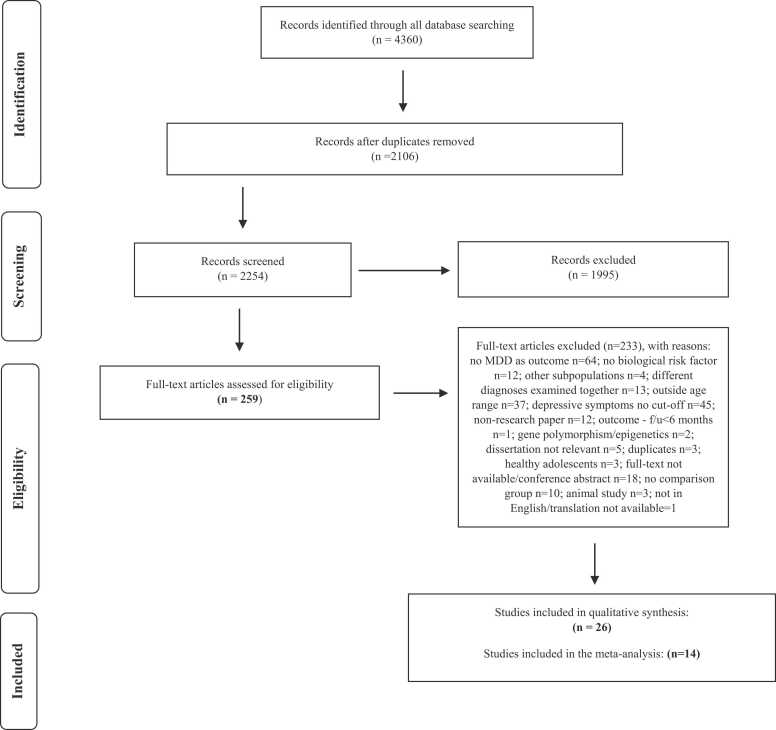
INTRODUCTION: Dysregulation of the hypothalamic-pituitary-adrenal (HPA) axis has been implicated in the development of major depressive disorder (MDD) in adulthood. Less work has focused on the role of the HPA axis in depression in adolescence and young adulthood globally. The aim of this study was to conduct a systematic review and meta-analysis of worldwide research investigating the relationship between cortisol, a measure of HPA axis activity, and MDD in adolescence and young adulthood. METHOD: We searched MEDLINE, PsycINFO, Cochrane Database of Systematic Reviews, Web of Science, Lilacs, African Journals Online, and Global Health for studies which examined the relationship between cortisol and MDD in global youth (10-24 years old). RESULTS: Twenty-six studies were included in the systematic review and 14 were eligible for the meta-analysis, but only one study included young adults in their sample. Results from the meta-analysis demonstrated that elevated morning, but not evening, cortisol levels was prospectively associated with later MDD development in adolescence and young adulthood. However, morning cortisol levels did not significantly differ between healthy controls and individuals with MDD in cross-sectional studies. Afternoon cortisol and cortisol stress response also did not differ between adolescents with MDD and healthy controls. Qualitative synthesis of the three studies examining nocturnal cortisol showed higher nocturnal cortisol was both longitudinally and cross-sectionally associated with MDD in adolescence. CONCLUSION: Our findings suggest elevated morning cortisol precedes depression in adolescence. Despite this, we did not find any differences in other cortisol measures in association with MDD in cross-sectional studies. Taken together, these findings suggest that elevated morning and nocturnal cortisol are risk factors for depression in adolescence rather than a biomarker of existing MDD. This supports a role for the hyperactivity of the HPA axis in the development of MDD in adolescence. Most of the studies were from high-income-countries (HICs) and thus further work would need to be conducted in low- and middle-income countries (LMICs) to understand if our findings are generalisable also to these populations.
Overview
CoChat Summary
TL;DR
This systematic review and meta-analysis found that elevated morning cortisol prospectively predicts later MDD in adolescence and young adulthood, while cross-sectional morning, afternoon, evening, and stress-response cortisol largely did not differ between MDD and controls. Nocturnal cortisol and cortisol awakening response showed qualitative associations with MDD, but evidence is limited by few studies and high heterogeneity.
Key findings
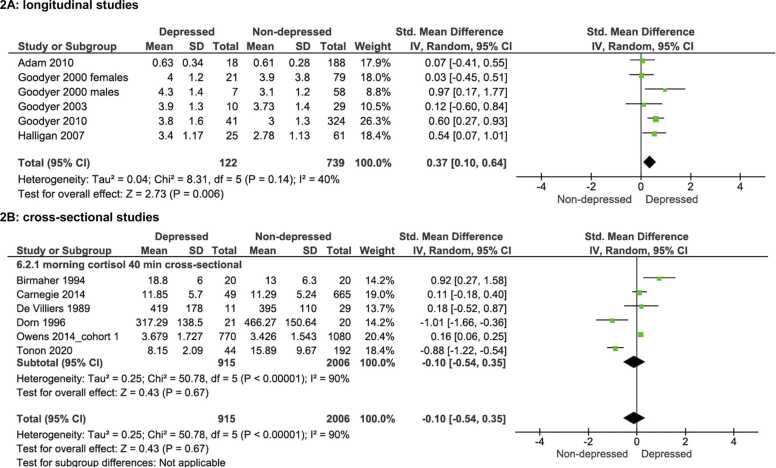
- Twenty-six studies were included in the systematic review and 14 in the meta-analysis. Morning cortisol assessed longitudinally (5 studies; MDD n = 122, no MDD n = 739) was associated with later depression: SMD = 0.37, 95% CI 0.10–0.64, p = .006; I² = 40%.
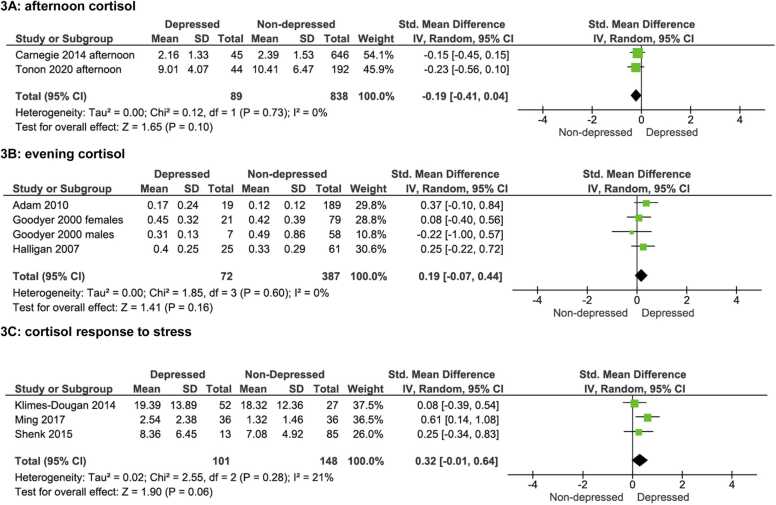
- Morning cortisol cross-sectionally (6 studies; MDD n = 915, healthy controls n = 2006) did not differ: SMD = −0.10, 95% CI −0.54–0.35, p = .67; I² = 90%. Afternoon cortisol (MDD n = 89, no MDD n = 838) SMD = −0.19, 95% CI −0.41–0.04, p = .10; evening cortisol longitudinally (MDD n = 72, no MDD n = 387) SMD = 0.19, 95% CI −0.07–0.44, p = .16; cortisol stress response (MDD n = 101, no depression n = 148) SMD = 0.32, 95% CI −0.01–0.64, p = .06.
- Qualitative synthesis showed that all three studies examining nocturnal cortisol found higher nocturnal cortisol both longitudinally and cross-sectionally associated with MDD in adolescence. Cortisol awakening response could not be meta-analyzed, but two studies found elevated CAR predicted later MDD and one cross-sectional study found higher CAR in females with MDD.
- Diurnal cortisol slope was not associated with subsequent depression in two studies. Other measures showed no difference in 24-hour urinary cortisol; lower waking-to-bedtime cortisol ratio predicted mild depression in boys with BMI above 23; and mCPP challenge showed a sharper baseline-cortisol decline and increased response in MDD.
Methods
- PRISMA systematic review and meta-analysis; searched MEDLINE, PsycINFO, Cochrane Database of Systematic Reviews, Web of Science, Lilacs, African Journals Online, and Global Health from inception to 24 July 2020. Included studies examined ages 10–24 with MDD diagnosis or clinical cut-off depressive symptoms and cortisol measurement; designs included intervention/prevention trials, cross-sectional, and longitudinal studies; only peer-reviewed, global research was eligible.
- Twenty-six studies were eligible for qualitative synthesis and 14 for meta-analysis (14 cross-sectional, 12 longitudinal), grouped by cortisol measure. Random-effects meta-analyses used standardized mean differences (SMDs) and 95% CIs; heterogeneity was assessed with I²; analyses used Cochrane Review Manager 5.3.24. Quality was assessed with SAQOR and modified GRADE; 22 studies were rated “low” and 4 “very low.”
- Only three studies were conducted in LMICs; all studies focused on adolescence and one included both adolescents and young people.
Limitations
- Stated: heterogeneity in methodologies was high; sensitivity analysis was not possible due to small sample sizes in cortisol subgroups; the number of studies was low; most studies focused on adolescents up to age 19, limiting conclusions about young adulthood; and only three studies were from LMICs, with most from HICs, limiting generalizability.
- Stated: meta-analyses were constrained by overlapping samples and unavailable data; CAR could not be meta-analyzed due to heterogeneity in measurement and reporting.
- Evident from the text: only one study included young adults in its sample, so conclusions about young adulthood are especially limited; cross-sectional designs may misclassify at-risk individuals as healthy controls.
Model-written summary. Check it against the paper before relying on it.
Integrity signals
Registry
Cites
Statistics
Figures
Verification
Claims the paper makes
5 Valid · 1 Not valid · 52 Not checked · 60 Own results and interpretations
The cited sources support only part of this claim — read each source’s verdict below.
In the paper
“The remaining two studies found no significant difference in morning cortisol levels when measured either in plasma (De Villiers et al., 1989) or salivary cortisol (Carnegie et al., 2014) in adolescence with MDD compared with healthy controls.”
§ Cortisol and development of depression in adolescence and young adulthood – a systematic review and meta-analysis > Results > Morning cortisol cross-sectionally assessed
What the sources say
- Not checked yetcites De Villiers et al., 1989 matched to “Noradrenergic function and hypothalamic-pituitary-adrenal axis activity in adolescents with major depressive disorder” (1989) source
- Partly supportedcites Carnegie et al., 2014 matched to “Cortisol awakening response and subsequent depression: prospective longitudinal study” (2014) sourceExperimental — accuracy not yet measured
Our copy does support the null part of the claim: the Results section 'Association with depression' states 'There was no statistical evidence for an association between any of the cortisol measures and depression at follow-up, either before or after adjustment for confounding factors' (CAR OR 1.24, 95% CI 0.93-1.66, P = 0.14; mean waking cortisol OR 0.87, P = 0.39; total early morning cortisol OR 1.49, P = 0.10), and Table 2 gives morning values for those with and without depression. However, the design the citing sentence attributes is not this study's: Carnegie et al. is a prospective population cohort (ALSPAC) in which salivary cortisol was measured at 15 years and the comparison was with ICD-10 depression at 18 years (mostly 'new onset'), not a concurrent case-control comparison of adolescents with MDD versus healthy controls. Two further details sit awkwardly with a flat 'no significant difference': the CAR was numerically higher in those who developed depression (5.07 s.d. 3.87 nmol/l, Table 2), and there was weak evidence of an association between CAR and depressive symptoms at 16 years (OR 1.22, 95% CI 0.99-1.51, P = 0.06) that was attenuated by adjustment. (LLM, conf=0.72)
plain- Asserted: passes — The authors put it forward as true.
- Checkable: passes — It can be checked against evidence.
- Load-bearing: unclear — It is unclear whether the paper’s conclusions depend on it.
- Based: passes — The paper gives a reason why it holds.
The cited sources support only part of this claim — read each source’s verdict below.
In the paper
“the meta-analysis including studies which assessed morning cortisol cross-sectionally (Birmaher et al., 1994, Carnegie et al., 2014, De Villiers et al., 1989, Dorn et al., 1996, Owens et al., 2014, Tonon et al., 2020) did not find a significant difference in morning cortisol levels in adolescents with a diagnosis of MDD (n = 915) compared with healthy controls (n = 2006), (SMD= −0.10, 95% CI −0.54”
§ Cortisol and development of depression in adolescence and young adulthood – a systematic review and meta-analysis > Results > Morning cortisol cross-sectionally assessed
What the sources say
- Not checked yetcites Birmaher et al., 1994 matched to “Cellular immunity in depressed, conduct disorder, and normal adolescents: role of adverse life events” (1994) source
Checked before — its earlier verdict is held back until a new check runs.
- Partly supportedcites Carnegie et al., 2014 matched to “Cortisol awakening response and subsequent depression: prospective longitudinal study” (2014) sourceExperimental — accuracy not yet measured
Split into 2 atoms — 0 confirmed, 2 partially supported, 0 disputed, 0 misattributed, 0 unverifiable. Expand the claim to see per-atom verdicts.
- Not checked yetcites De Villiers et al., 1989 matched to “Noradrenergic function and hypothalamic-pituitary-adrenal axis activity in adolescents with major depressive disorder” (1989) source
Checked before — its earlier verdict is held back until a new check runs.
plainn = 915- Asserted: passes — The authors put it forward as true.
- Checkable: passes — It can be checked against evidence.
- Load-bearing: passes — The paper’s conclusions depend on it.
- Based: passes — The paper gives a reason why it holds.
- Rests on 2 assumptions not shown here.
- Not checked yet
The cited sources support only part of this claim — read each source’s verdict below.
In the paper
“The remaining four studies did not find an association between morning cortisol and subsequent development of MDD in adolescence (follow up times ranged from 12 to 36 months) (Adam et al., 2010, Carnegie et al., 2014, Goodyer et al., 2003, Goodyer et al., 2000a).”
§ Cortisol and development of depression in adolescence and young adulthood – a systematic review and meta-analysis > Results > Morning cortisol longitudinally assessed
What the sources say
- Partly supportedcites Adam et al., 2010 matched to “Prospective prediction of major depressive disorder from cortisol awakening responses in adolescence” (2010) sourceExperimental — accuracy not yet measured
Adam et al. (2010) does report a null for absolute morning cortisol: in the separate model (Results, 'Prospective prediction of MDD') wakeup and wakeup+40-minute cortisol were non-significant predictors of later MDD (OR = .93, p = .85; OR = 1.3, p = .59), and the Discussion states that 'absolute levels of morning cortisol ... did not significantly predict the onset of MDD'. However, the paper's headline finding is the opposite of a wholesale null: the size of the cortisol awakening response — a morning cortisol measure — significantly predicted clinical MDD over follow-up (OR = 3.0, p = .04; OR = 2.5, p = .02 for the clinical-plus-subclinical outcome group), and the Discussion opens by saying the study 'supports past research suggesting that morning cortisol levels are important prospective predictors of MDD'. So classifying this study among those that 'did not find an association between morning cortisol and subsequent development of MDD' captures only the waking-level null and omits the positive CAR result. The follow-up detail is consistent: Method/'Procedure' and 'Follow-up Interview' describe interviews approximately one year after the cortisol assessment (average 368 days; 1.1 years after baseline), i.e. the 12-month end of the stated 12–36 month range. (LLM, conf=0.78)
- Supportedcites Carnegie et al., 2014 matched to “Cortisol awakening response and subsequent depression: prospective longitudinal study” (2014) source
The Abstract and the Results section 'Association with depression' state that in ALSPAC adolescents aged 15 at sampling there was no evidence of an association between salivary cortisol — including the cortisol awakening response and total morning cortisol secretion — and ICD-10 depression at 18 years (unadjusted OR 1.24 per SD, 95% CI 0.93-1.66, P = 0.14; adjusted OR 1.12, 95% CI 0.73-1.72, P = 0.61), and the Discussion reiterates that no basal cortisol measure increased risk of subsequent depressive illness. The follow-up interval implied by the claim (up to 36 months) is consistent with this study: cortisol at 15 years, outcome assessed by CIS-R at a mean age of 17.7 years. The weak, non-significant CAR-depressive-symptoms signal at 16 years (OR 1.22, P = 0.06) was attenuated by adjustment, so it does not contradict the null attribution. (LLM, conf=0.88)
- Not checked yetcites Goodyer et al., 2003 matched to “Psychoendocrine antecedents of persistent first-episode major depression in adolescents: a community-based longitudinal enquiry” (2003) source
plain- Asserted: passes — The authors put it forward as true.
- Checkable: passes — It can be checked against evidence.
- Load-bearing: unclear — It is unclear whether the paper’s conclusions depend on it.
- Based: passes — The paper gives a reason why it holds.
- Partly supported
The cited sources support only part of this claim — read each source’s verdict below.
In the paper
“whilst two other studies found that adolescents with MDD had significantly lower levels of morning cortisol compared with healthy controls (Dorn et al., 1996, Tonon et al., 2020).”
§ Cortisol and development of depression in adolescence and young adulthood – a systematic review and meta-analysis > Results > Morning cortisol cross-sectionally assessed
What the sources say
- Not checked yetcites Dorn et al., 1996 matched to “Response to oCRH in depressed and nondepressed adolescents: does gender make a difference?” (1996) source
- Partly supportedcites Tonon et al., 2020 matched to “How do stress, sleep quality, and chronotype associate with clinically significant depressive symptoms? A study of young male military recruits in compulsory service” (2020) sourceExperimental — accuracy not yet measured
Tonon et al. (2020) do report lower morning cortisol associated with greater depressive symptomatology — Results ('Correlation between Beck Depression Inventory (BDI) score and salivary cortisol level') give r = -0.335, p = 0.043 for BDI score versus morning salivary cortisol, echoed in the Abstract and Discussion. But the claim's case-control framing and MDD population are not what this study did: Subjects and study protocol describes 236 healthy 18-year-old male Air Force conscripts screened out for continuous medication or comorbidities, a non-clinical sample scored on the BDI cutoff (>10) rather than diagnosed with major depressive disorder, and Strengths and limitations states explicitly that no diagnostic interview was performed. Cortisol was measured in only a random subsample of 37 conscripts, and the analysis was a continuous correlation, not a comparison of MDD patients against healthy controls. (LLM, conf=0.80)
plainstates an association- Asserted: passes — The authors put it forward as true.
- Checkable: passes — It can be checked against evidence.
- Load-bearing: unclear — It is unclear whether the paper’s conclusions depend on it.
- Based: passes — The paper gives a reason why it holds.
The cited sources support only part of this claim — read each source’s verdict below.
In the paper
“Two studies examined salivary cortisol measured in the afternoon in adolescents with depression and healthy controls and found no association between MDD diagnosis and afternoon cortisol levels (Carnegie et al., 2014, Tonon et al., 2020).”
§ Cortisol and development of depression in adolescence and young adulthood – a systematic review and meta-analysis > Results > Afternoon cortisol
What the sources say
- Supportedcites Carnegie et al., 2014 matched to “Cortisol awakening response and subsequent depression: prospective longitudinal study” (2014) source
Carnegie et al. (2014) collected four salivary samples per school day, including an 'after school' afternoon sample (mean collection time 16.30 h, restricted to 15.00–18.00 h; Method > Cortisol sampling; Table 2, Results > Descriptive statistics), in ALSPAC adolescents aged 15 with ICD-10 depression assessed at follow-up (46 cases vs 622 without depression). The Abstract (Results) and Discussion state there was no evidence of association for 'cortisol at each time point', and Table 2 shows comparable after-school values (2.16 vs 2.39 nmol/l), so the null afternoon finding is supported. One qualifier to note: the design is prospective (cortisol at 15 predicting depression at 18), not a concurrent depressed-vs-control contrast as the citing sentence's grouping with Tonon et al. implies. (LLM, conf=0.80)
- Partly supportedcites Tonon et al., 2020 matched to “How do stress, sleep quality, and chronotype associate with clinically significant depressive symptoms? A study of young male military recruits in compulsory service” (2020) sourceExperimental — accuracy not yet measured
Tonon et al. (2020) do report the null afternoon finding: Results, 'Correlation between Beck Depression Inventory (BDI) score and salivary cortisol level' states 'No significant correlations were found between BDI score and afternoon or night cortisol level', with afternoon salivary samples collected between 4:00-5:00 p.m. (Material and methods, 'Salivary cortisol measurement'; only 37 conscripts supplied all three samples). However, the design attributed to it is not what the paper did: the sample was 236 healthy 18-year-old male Air Force conscripts in a non-clinical population screened by self-reported BDI >10 for 'clinically significant depressive symptoms' (Subjects and study protocol; Study questionnaires), with no diagnostic interview and hence no MDD diagnosis versus healthy-control comparison (Strengths and limitations). So the afternoon-cortisol null association is supported, while 'adolescents with depression and healthy controls' and 'MDD diagnosis' overstate this source. (LLM, conf=0.82)
plainn = 89- Asserted: passes — The authors put it forward as true.
- Checkable: passes — It can be checked against evidence.
- Load-bearing: unclear — It is unclear whether the paper’s conclusions depend on it.
- Based: passes — The paper gives a reason why it holds.
- Supported
79 more claims
Create a free account to see all 118 claims and to verify the 67 references still open.
- Probably not a substantial claim. 20
- It may state two separate claims as one. 19
Claims other papers make about this one
Each is checked against this paper’s own text: does it say what the citing paper says it does?
In the citing paper
“Meta-analytic data established that flatter diurnal cortisol slopes are linked to more anxiety and depressive symptoms (Adam et al., 2017;Zajkowska et al., 2022).”
From Prospective associations of cortisol dynamics and daily stress with depression, generalized anxiety, and panic disorder symptoms (2026) · cites this paper as Zajkowska et al., 2022
Self-check
Percentages, sums and reported differences re-computed from the paper’s own numbers.
Each contradiction between two passages listed here was confirmed by an independent check.
Rated minor: it would not touch a result — a value no result rests on, a p-value that stays on the same side of the significance level, or a conflict that is clerical, resolved elsewhere in the paper, or outside its own findings.
In the paper
§ Cortisol and development of depression in adolescence and young adulthood – a systematic review and meta-analysis > Discussion
“all three studies which assessed nocturnal cortisol, support that elevated cortisol is associated with depression (Rao et al., 2009a, Rao et al., 2009b, Rao and Poland, 2008).”
§ Cortisol and development of depression in adolescence and young adulthood – a systematic review and meta-analysis > Results > Nocturnal cortisol
“In contrast, one other study which measured nocturnal cortisol via blood serum found no significant difference between cortisol levels in those with MDD compared with healthy controls (Kutcher et al., 1991).”
Rated minor: it would not touch a result — a value no result rests on, a p-value that stays on the same side of the significance level, or a conflict that is clerical, resolved elsewhere in the paper, or outside its own findings.
In the paper
§ Cortisol and development of depression in adolescence and young adulthood – a systematic review and meta-analysis > Introduction
“Whilst there have been several meta-analyses investigating cortisol in depression in adults (Broderick et al., 1998, Knorr et al., 2010, Stetler and Miller, 2011)”
§ Cortisol and development of depression in adolescence and young adulthood – a systematic review and meta-analysis > References
“Broderick J. Brott T. Kothari R. Miller R. Khoury J. Pancioli A. Gebel J. Mills D. Minneci L. Shukla R. The Greater Cincinnati/Northern Kentucky Stroke Study: preliminary first-ever and total incidence rates of stroke among blacks Stroke 29 1998 415 421 9472883”
Rated minor: it would not touch a result — a value no result rests on, a p-value that stays on the same side of the significance level, or a conflict that is clerical, resolved elsewhere in the paper, or outside its own findings.
In the paper
§ Cortisol and development of depression in adolescence and young adulthood – a systematic review and meta-analysis > Results > Cortisol and onset of depression
“Three cross-sectional studies did not find any differences in morning, evening and nocturnal cortisol levels between adolescents with first episode depression and their healthy counterparts (De Villiers et al., 1989, Goodyer et al., 2000a, Kutcher et al., 1991).”
§ Cortisol and development of depression in adolescence and young adulthood – a systematic review and meta-analysis > Methods > Analysis
“| Goodyer (2000a) | Salivary cortisol – morning and evening cortisol | Longitudinal |”
Citations
Cites
PRISMA-P Group, Moher, D., Shamseer, L., Clarke, M., Ghersi, D., Liberati, A., Petticrew, M., Shekelle, P., & Stewart, L. A. (2015) · Systematic Reviews · doi:10.1186/2046-4053-4-1 · Cited by 26,223 · cited 2×
“The systematic review and meta-analysis were conducted in accordance with the Preferred Reporting Items for Systematic Reviews and Meta-Analyses (PRISMA) (Moher et al., 2015).”
Molecular Mechanisms of Depression: Perspectives on New Treatment Strategies
Lang, U. E., & Borgwardt, S. (2013) · Cellular Physiology and Biochemistry · doi:10.1159/000350094 · Cited by 8,475
Whiteford, H. A., Degenhardt, L., Rehm, J., Baxter, A. J., Ferrari, A. J., Erskine, H. E., Charlson, F. J., Norman, R. E., Flaxman, A. D., Johns, N., et al. (2013) · The Lancet · doi:10.1016/s0140-6736(13)61611-6 · Cited by 6,006
A Meta-Analysis of Cytokines in Major Depression
Dowlati, Y., Herrmann, N., Swardfager, W., Liu, H., Sham, L., Reim, E. K., & Lanctôt, K. L. (2010) · Biological Psychiatry · doi:10.1016/j.biopsych.2009.09.033 · Cited by 4,729 · cited 1×
“Furthermore, the hyperactivation of the HPA axis leads to an increase in circulating inflammatory cytokines, which have been widely implicated in the pathogenesis of depression (Dowlati et al., 2010; Hiles et al., 2012; Liu et al., 2012; Nettis et al., 2021; Nikkheslat et al., 2020).”
The role of inflammation in depression: from evolutionary imperative to modern treatment target
Miller, A. H., & Raison, C. L. (2016) · Nature Reviews Immunology · doi:10.1038/nri.2015.5 · Cited by 3,942 · cited 1×
“For example, they activate enzyme Indoleamine-2–3-Dioxygenase (IDO) which, through the kynurenine pathway, leads to a reduction in serotonin (Miller and Raison, 2016), a key neurotransmitter known to be involved in depression (Kambeitz and Howes, 2015).”
BackgroundSawyer, S. M., Azzopardi, P. S., Wickremarathne, D., & Patton, G. C. (2018) · The Lancet Child & Adolescent Health · doi:10.1016/s2352-4642(18)30022-1 · Cited by 3,666
Child and adolescent mental health worldwide: evidence for action
Kieling, C., Baker-Henningham, H., Belfer, M., Conti, G., Ertem, I., Omigbodun, O., Rohde, L. A., Srinath, S., Ulkuer, N., & Rahman, A. (2011) · The Lancet · doi:10.1016/s0140-6736(11)60827-1 · Cited by 2,449 · cited 2×
“It is striking to see how little has been done in trying to understand how the HPA axis, one of the key biological systems known to be involved in the pathogenesis of MDD in adults, is involved in MDD development in adolescence, especially given that youth in LMICs comprise 90% of the world’s child and adolescent popu…”
Self-citationThe HPA axis in major depression: classical theories and new developments
Pariante, C. M., & Lightman, S. L. (2008) · Trends in Neurosciences · doi:10.1016/j.tins.2008.06.006 · Cited by 2,009 · cited 1×
“They are also is in line with findings reported in adults which also suggest that hyperactive HPA axis activity, indicted by elevated cortisol levels (Pariante and Lightman, 2008; Varghese and Brown, 2001), is associated with MDD.”
Avenevoli, S., Swendsen, J., He, J.-P., Burstein, M., & Merikangas, K. R. (2015) · Journal of the American Academy of Child & Adolescent Psychiatry · doi:10.1016/j.jaac.2014.10.010 · Cited by 1,202 · cited 1×
“It is striking to see how little has been done in trying to understand how the HPA axis, one of the key biological systems known to be involved in the pathogenesis of MDD in adults, is involved in MDD development in adolescence, especially given that youth in LMICs comprise 90% of the world’s child and adolescent popu…”
Stetler, C., & Miller, G. E. (2011) · Psychosomatic Medicine · doi:10.1097/psy.0b013e31820ad12b · Cited by 1,123 · cited 3×
“A compelling body of evidence implicates dysregulation of the hypothalamic-pituitary-adrenal (HPA) axis in the pathophysiology of MDD in adulthood (Kennis et al., 2020; Stetler and Miller, 2011).”
Cited by
Items 201–229 of 229
Wei, X., & Chen, H. (2026) · Archives of Psychiatric Nursing · doi:10.1016/j.apnu.2026.152106
Baron, P. (2023) · theses.fr (ABES) · doi:10.70675/d24294fdz30a1z42eezae8ez00ac4cfb8be8
Goyal, A., Rai, A., Singh, K., Bhardwaj, A., Aggarwal, S., Kunwar, P., & Khan, A. Z. (2026) · Journal of international oral health · doi:10.4103/jioh.jioh_211_25
Pearson, A. L., Tomaszewska, M., Brown, C. D., Buxton, R. T., Horton, T. H., Perez, J. A., Pfeiffer, K. A., & Henebry, G. M. (2026) · International Journal of Health Geographics · doi:10.21203/rs.3.rs-9734906/v1
Wadkar, P., Giram, P. S., Shirale, S. S., & Umbare, S. V. (2026) · International journal of research and scientific innovation · doi:10.51244/ijrsi.2026.1305000231
Fang, H., Zhu, G., Chen, J., & Zou, T. (2026) · Frontiers in Psychiatry · doi:10.3389/fpsyt.2026.1814473
Tandonnet, L., Braconnier, A., & Marcelli, D. (2026) · Encyclopédie médico-chirurgicale. Psychiatrie · doi:10.1016/s0246-1072(26)45841-1
Rostami, S., Bermudo-Gallaguet, A., Camins-Vila, N., Ferrer-Uris, B., Busquets, A., Vía, M., & Mataró, M. (2026) · Psychoneuroendocrinology · doi:10.1016/j.psyneuen.2026.107946
Cheng, X., Liu, P., & Zhang, Q. (2026) · Behavioral Sciences · doi:10.3390/bs16071104
Zainal, N. H., & Van Doren, N. (2026) · Journal of Anxiety Disorders · doi:10.1016/j.janxdis.2026.103238
Biswas, S. D. (2026) · Elsevier eBooks · doi:10.1016/b978-0-443-27797-9.00011-7
Hu, X., Zhang, L., Feng, R., Gao, Y., Zhou, Z., Ouyang, X., Bao, W., Huang, G., & Huang, X. (2026) · Journal of Affective Disorders · doi:10.1016/j.jad.2026.122337
Ziccardi, L., Romano, A., Moltoni, G., Carolis, A. D., Aloini, M. E., Cavallari, M., Roberto, G., Bozzao, A., Giubilei, F., & Stigliano, A. (2026) · Frontiers in Endocrinology · doi:10.3389/fendo.2026.1913085
Wang, Z., 谭支内, Zhang, Y., Li, Y., Lin, J., Xu, Y., Li, Y., & Chen, T. (2026) · Acta Neurologica Belgica · doi:10.1007/s13760-026-03168-9
Exercise for adolescent depression - Perspectives from a multicenter randomized controlled trial
Mortazavi, R. (2026) · Lund University Publications (Lund University)
Molecular Pathways and Biomarkers for the Diagnosis and Treatment of Major Depressive Disorder
Jafari, D. A. (2026) · IGI Global eBooks · doi:10.4018/979-8-2600-4270-0.ch004
Fortaner-Uyà, L. (n.d.) · Archivio Istituzionale della Ricerca - Università Vita-Salute San Raffaele
Mind Over Microbes: Exploring the Psychological Mechanisms Behind Bacterial Resistance
AL-Khikani, F. H. O. (2025) · Infinity Journal of Medicine and Innovation
Dean, J. A., Eldering, M. J., van Driel, C. M. G., Smit, A. C., Schoevers, R. A., & Oldehinkel, A. J. (2026) · Psychoneuroendocrinology · doi:10.1016/j.psyneuen.2026.108037
Hypothalamic–pituitary Axis Dysregulation, Stress, and Adolescent Mental Health: A Brief Review
Tabitha, L., Srivastava, S., Bhatia, M., & Raizada, N. (2026) · Delhi Psychiatry Journal · doi:10.5005/dpj-11077-0013
Daniel, S., & Sadananda, M. (2026) · Learning and Motivation · doi:10.1016/j.lmot.2026.102377
Rahmayanti, F., Fanani, E., & Lestari, L. I. (2026) · Health Frontiers · doi:10.62255/mjhp.v4isuppl1.313
Cortisol, Perceived Stress, and Schema Modes in Adolescents: A Biopsychosocial Perspective
Wagner, G. P., & de Almeida, R. M. M. (2026) · Developmental Psychobiology · doi:10.1002/dev.70216
Liu, L., Cai, M., Yin, Y., Song, Y., 庄珏, Shen, B., Liu, Y., & Liu, Y. (2026) · Frontiers in Immunology · doi:10.3389/fimmu.2026.1995842
Pan, S.-M., Zhou, Y.-F., Zuo, N., Jiao, R.-Q., Kong, L.-D., & Pan, Y. (2022) · doi:10.3389/fphar.2022.872375.s001
Lazarenko, O. V., Shykula, O. P., Романець, З., & Ільків, К. Р. (2026) · Academic Visions · doi:10.66556/2786-586x.56.lazarenko-o
Metadata
- Authors
- Zajkowska, Z., Gullett, N., Walsh, A., Zonca, V., Pedersen, G. A., Souza, L., Kieling, C., Fisher, H. L., Kohrt, B. A., & Mondelli, V.
- Affiliations
- King's College London (GB)
- George Washington University (US)
- Universidade Federal do Rio Grande do Sul (BR)
- Corresponding author
- Mondelli, Valeria
- ORCID
- Venue
- Psychoneuroendocrinology
- Publisher
- Elsevier BV
- Published
- 2022-02
- Volume
- 136
- Pages
- 105625
- ISSN
- 0306-4530 (ISSN-L)
- PMC
- PMC8783058
- OpenAlex
- W4200477815
- Cited by
- 228
- References
- 58
- Citations by year
- 2026: 49 · 2025: 83 · 2024: 50 · 2023: 33 · 2022: 11
- FWCI
- 2.52
- Type
- journal article
- Language
- en
- Open access
- hybrid
- doi.org
- Licence
- cc-by
- www.elsevier.com/tdm/userlicense/1.0/ (tdm)
- www.elsevier.com/legal/tdmrep-license (tdm)
- creativecommons.org/licenses/by/4.0/ (vor)
- Locations
- Psychoneuroendocrinology (publishedVersion, cc-by)
- PubMed (publishedVersion)
- PubMed Central (publishedVersion, cc-by)
- LA Referencia (Red Federada de Repositorios Institucionales de Publicaciones Científicas) (publishedVersion, cc-by-nc-sa)
- Funders
- National Institute for Health and Care Research
- Department of Health and Social Care
- Academy of Medical Sciences (NAF\R10\100044, GCRFNG\\100281)
- King's College London
- Conselho Nacional de Desenvolvimento Científico e Tecnológico
- MQ: Transforming Mental Health (MQBF1)
- Medical Research Council (MC_PC_MR/R019460/1)
- Economic and Social Research Council (ES/S012567/1)
- National Institute of Mental Health (R21MH124072)
- Topics
- Life Sciences › Neuroscience › Behavioral Neuroscience › Stress Responses and Cortisol
- Social Sciences › Psychology › Clinical Psychology › Child and Adolescent Psychosocial and Emotional Development
- Social Sciences › Psychology › Experimental and Cognitive Psychology › Anxiety, Depression, Psychometrics, Treatment, Cognitive Processes
- Keywords
- cortisol, major depressive disorder, adolescence, early adulthood, hypothalamic-pituitary-adrenal axis, HPA axis dysregulation, morning cortisol, cortisol stress response, risk factors for depression, depression biomarkers
- MeSH terms
- Adolescent, Adult, Child, Cross-Sectional Studies, Depression, Major Depressive Disorder, Humans, Hydrocortisone, Hypothalamo-Hypophyseal System, Pituitary-Adrenal System, Young Adult
About these checks
Registry, retraction, Cites and statistics results are computed, not judged, with one exception: a printed reference that no index lists is read once by a model before it counts as a citation error. Claims are extracted by a model and kept only when their quote appears verbatim in the text; each cited source is then checked, with a model’s help, for whether it says what the claim relies on. Those verdicts can be wrong — read the claim’s quote and the cited source before relying on one.
The claim verdicts this report counts are experimental: their accuracy is not yet measured.
A language model drew the claims from the paper on 2026-11-19, under version 3 of the claim definition (model deepseek-v4.1-flash, prompt extract-v3).
A second model labelled each claim on 2026-11-19 (model jev-1.13-20260917, definition revision gold-guideline-v0.2).
Cited sources are checked with a language model’s help (qwen3.8-omni-flash).
Statistics and arithmetic are recomputed, not judged.
Confidence bands are shown only for fields calibrated on our annotated test set. None is calibrated yet, so no band is shown.
What counts as a claim ›How we measure confidence ›How we check this ›
Are you an author, or do you see a problem with this page? Request a review
Data sources
Bibliographic data: Semantic Scholar, OpenAlex, Crossref.
Contains information from the Semantic Scholar Academic Graph Datasets, made available under the ODC Attribution License (ODC-BY 1.0).
Semantic Scholar’s data is described in: Kinney, R., et al. (2023). The Semantic Scholar Open Data Platform. arXiv:2301.10140.
