

Cortisol and development of depression in adolescence and young adulthood – a systematic review and meta-analysis
Open accessThe DOI matches its Crossref record; 59 of the 59 references it cites were found in a registry or an index; 7 of the 87 sources its claims cite were checked for support.
Abstract
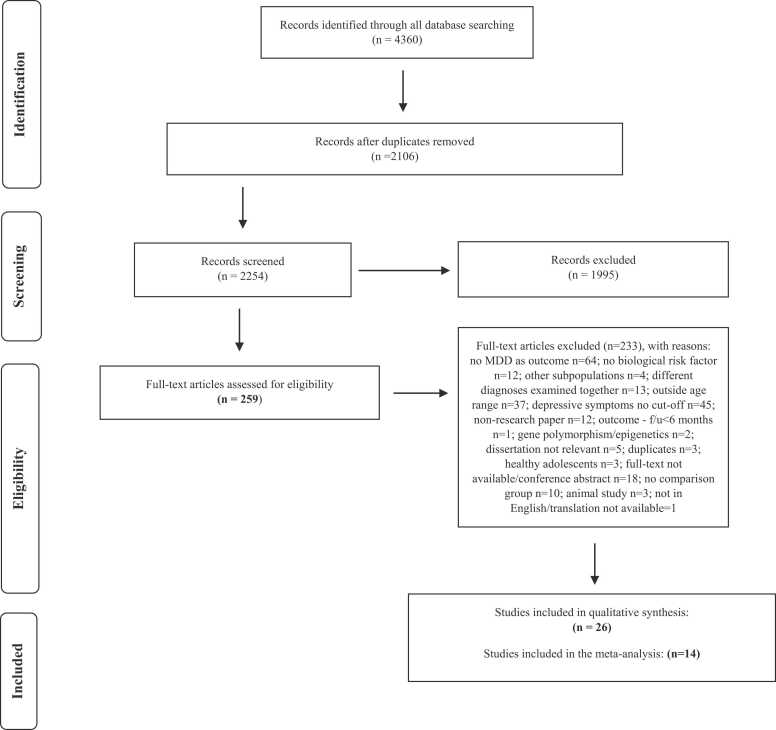
INTRODUCTION: Dysregulation of the hypothalamic-pituitary-adrenal (HPA) axis has been implicated in the development of major depressive disorder (MDD) in adulthood. Less work has focused on the role of the HPA axis in depression in adolescence and young adulthood globally. The aim of this study was to conduct a systematic review and meta-analysis of worldwide research investigating the relationship between cortisol, a measure of HPA axis activity, and MDD in adolescence and young adulthood. METHOD: We searched MEDLINE, PsycINFO, Cochrane Database of Systematic Reviews, Web of Science, Lilacs, African Journals Online, and Global Health for studies which examined the relationship between cortisol and MDD in global youth (10-24 years old). RESULTS: Twenty-six studies were included in the systematic review and 14 were eligible for the meta-analysis, but only one study included young adults in their sample. Results from the meta-analysis demonstrated that elevated morning, but not evening, cortisol levels was prospectively associated with later MDD development in adolescence and young adulthood. However, morning cortisol levels did not significantly differ between healthy controls and individuals with MDD in cross-sectional studies. Afternoon cortisol and cortisol stress response also did not differ between adolescents with MDD and healthy controls. Qualitative synthesis of the three studies examining nocturnal cortisol showed higher nocturnal cortisol was both longitudinally and cross-sectionally associated with MDD in adolescence. CONCLUSION: Our findings suggest elevated morning cortisol precedes depression in adolescence. Despite this, we did not find any differences in other cortisol measures in association with MDD in cross-sectional studies. Taken together, these findings suggest that elevated morning and nocturnal cortisol are risk factors for depression in adolescence rather than a biomarker of existing MDD. This supports a role for the hyperactivity of the HPA axis in the development of MDD in adolescence. Most of the studies were from high-income-countries (HICs) and thus further work would need to be conducted in low- and middle-income countries (LMICs) to understand if our findings are generalisable also to these populations.
Overview
CoChat Summary
TL;DR
This systematic review and meta-analysis found that elevated morning cortisol prospectively predicts later MDD in adolescence and young adulthood, while cross-sectional morning, afternoon, evening, and stress-response cortisol largely did not differ between MDD and controls. Nocturnal cortisol and cortisol awakening response showed qualitative associations with MDD, but evidence is limited by few studies and high heterogeneity.
Key findings
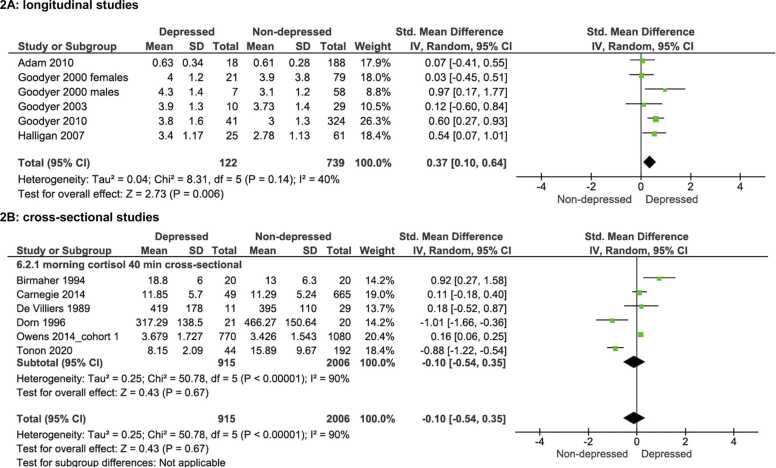
- Twenty-six studies were included in the systematic review and 14 in the meta-analysis. Morning cortisol assessed longitudinally (5 studies; MDD n = 122, no MDD n = 739) was associated with later depression: SMD = 0.37, 95% CI 0.10–0.64, p = .006; I² = 40%.
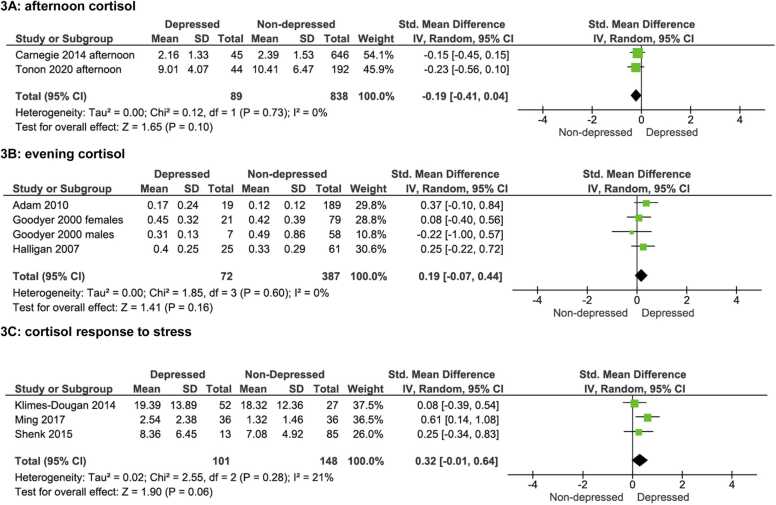
- Morning cortisol cross-sectionally (6 studies; MDD n = 915, healthy controls n = 2006) did not differ: SMD = −0.10, 95% CI −0.54–0.35, p = .67; I² = 90%. Afternoon cortisol (MDD n = 89, no MDD n = 838) SMD = −0.19, 95% CI −0.41–0.04, p = .10; evening cortisol longitudinally (MDD n = 72, no MDD n = 387) SMD = 0.19, 95% CI −0.07–0.44, p = .16; cortisol stress response (MDD n = 101, no depression n = 148) SMD = 0.32, 95% CI −0.01–0.64, p = .06.
- Qualitative synthesis showed that all three studies examining nocturnal cortisol found higher nocturnal cortisol both longitudinally and cross-sectionally associated with MDD in adolescence. Cortisol awakening response could not be meta-analyzed, but two studies found elevated CAR predicted later MDD and one cross-sectional study found higher CAR in females with MDD.
- Diurnal cortisol slope was not associated with subsequent depression in two studies. Other measures showed no difference in 24-hour urinary cortisol; lower waking-to-bedtime cortisol ratio predicted mild depression in boys with BMI above 23; and mCPP challenge showed a sharper baseline-cortisol decline and increased response in MDD.
Methods
- PRISMA systematic review and meta-analysis; searched MEDLINE, PsycINFO, Cochrane Database of Systematic Reviews, Web of Science, Lilacs, African Journals Online, and Global Health from inception to 24 July 2020. Included studies examined ages 10–24 with MDD diagnosis or clinical cut-off depressive symptoms and cortisol measurement; designs included intervention/prevention trials, cross-sectional, and longitudinal studies; only peer-reviewed, global research was eligible.
- Twenty-six studies were eligible for qualitative synthesis and 14 for meta-analysis (14 cross-sectional, 12 longitudinal), grouped by cortisol measure. Random-effects meta-analyses used standardized mean differences (SMDs) and 95% CIs; heterogeneity was assessed with I²; analyses used Cochrane Review Manager 5.3.24. Quality was assessed with SAQOR and modified GRADE; 22 studies were rated “low” and 4 “very low.”
- Only three studies were conducted in LMICs; all studies focused on adolescence and one included both adolescents and young people.
Limitations
- Stated: heterogeneity in methodologies was high; sensitivity analysis was not possible due to small sample sizes in cortisol subgroups; the number of studies was low; most studies focused on adolescents up to age 19, limiting conclusions about young adulthood; and only three studies were from LMICs, with most from HICs, limiting generalizability.
- Stated: meta-analyses were constrained by overlapping samples and unavailable data; CAR could not be meta-analyzed due to heterogeneity in measurement and reporting.
- Evident from the text: only one study included young adults in its sample, so conclusions about young adulthood are especially limited; cross-sectional designs may misclassify at-risk individuals as healthy controls.
Model-written summary. Check it against the paper before relying on it.
Integrity signals
Registry
Cites
Statistics
Figures
Verification
Claims the paper makes
5 Valid · 1 Not valid · 52 Not checked · 60 Own results and interpretations
The cited sources support only part of this claim — read each source’s verdict below.
In the paper
“The remaining two studies found no significant difference in morning cortisol levels when measured either in plasma (De Villiers et al., 1989) or salivary cortisol (Carnegie et al., 2014) in adolescence with MDD compared with healthy controls.”
§ Cortisol and development of depression in adolescence and young adulthood – a systematic review and meta-analysis > Results > Morning cortisol cross-sectionally assessed
What the sources say
- Not checked yetcites De Villiers et al., 1989 matched to “Noradrenergic function and hypothalamic-pituitary-adrenal axis activity in adolescents with major depressive disorder” (1989) source
- Partly supportedcites Carnegie et al., 2014 matched to “Cortisol awakening response and subsequent depression: prospective longitudinal study” (2014) sourceExperimental — accuracy not yet measured
Our copy does support the null part of the claim: the Results section 'Association with depression' states 'There was no statistical evidence for an association between any of the cortisol measures and depression at follow-up, either before or after adjustment for confounding factors' (CAR OR 1.24, 95% CI 0.93-1.66, P = 0.14; mean waking cortisol OR 0.87, P = 0.39; total early morning cortisol OR 1.49, P = 0.10), and Table 2 gives morning values for those with and without depression. However, the design the citing sentence attributes is not this study's: Carnegie et al. is a prospective population cohort (ALSPAC) in which salivary cortisol was measured at 15 years and the comparison was with ICD-10 depression at 18 years (mostly 'new onset'), not a concurrent case-control comparison of adolescents with MDD versus healthy controls. Two further details sit awkwardly with a flat 'no significant difference': the CAR was numerically higher in those who developed depression (5.07 s.d. 3.87 nmol/l, Table 2), and there was weak evidence of an association between CAR and depressive symptoms at 16 years (OR 1.22, 95% CI 0.99-1.51, P = 0.06) that was attenuated by adjustment. (LLM, conf=0.72)
plain- Asserted: passes — The authors put it forward as true.
- Checkable: passes — It can be checked against evidence.
- Load-bearing: unclear — It is unclear whether the paper’s conclusions depend on it.
- Based: passes — The paper gives a reason why it holds.
The cited sources support only part of this claim — read each source’s verdict below.
In the paper
“the meta-analysis including studies which assessed morning cortisol cross-sectionally (Birmaher et al., 1994, Carnegie et al., 2014, De Villiers et al., 1989, Dorn et al., 1996, Owens et al., 2014, Tonon et al., 2020) did not find a significant difference in morning cortisol levels in adolescents with a diagnosis of MDD (n = 915) compared with healthy controls (n = 2006), (SMD= −0.10, 95% CI −0.54”
§ Cortisol and development of depression in adolescence and young adulthood – a systematic review and meta-analysis > Results > Morning cortisol cross-sectionally assessed
What the sources say
- Not checked yetcites Birmaher et al., 1994 matched to “Cellular immunity in depressed, conduct disorder, and normal adolescents: role of adverse life events” (1994) source
Checked before — its earlier verdict is held back until a new check runs.
- Partly supportedcites Carnegie et al., 2014 matched to “Cortisol awakening response and subsequent depression: prospective longitudinal study” (2014) sourceExperimental — accuracy not yet measured
Split into 2 atoms — 0 confirmed, 2 partially supported, 0 disputed, 0 misattributed, 0 unverifiable. Expand the claim to see per-atom verdicts.
- Not checked yetcites De Villiers et al., 1989 matched to “Noradrenergic function and hypothalamic-pituitary-adrenal axis activity in adolescents with major depressive disorder” (1989) source
Checked before — its earlier verdict is held back until a new check runs.
plainn = 915- Asserted: passes — The authors put it forward as true.
- Checkable: passes — It can be checked against evidence.
- Load-bearing: passes — The paper’s conclusions depend on it.
- Based: passes — The paper gives a reason why it holds.
- Rests on 2 assumptions not shown here.
- Not checked yet
The cited sources support only part of this claim — read each source’s verdict below.
In the paper
“The remaining four studies did not find an association between morning cortisol and subsequent development of MDD in adolescence (follow up times ranged from 12 to 36 months) (Adam et al., 2010, Carnegie et al., 2014, Goodyer et al., 2003, Goodyer et al., 2000a).”
§ Cortisol and development of depression in adolescence and young adulthood – a systematic review and meta-analysis > Results > Morning cortisol longitudinally assessed
What the sources say
- Partly supportedcites Adam et al., 2010 matched to “Prospective prediction of major depressive disorder from cortisol awakening responses in adolescence” (2010) sourceExperimental — accuracy not yet measured
Adam et al. (2010) does report a null for absolute morning cortisol: in the separate model (Results, 'Prospective prediction of MDD') wakeup and wakeup+40-minute cortisol were non-significant predictors of later MDD (OR = .93, p = .85; OR = 1.3, p = .59), and the Discussion states that 'absolute levels of morning cortisol ... did not significantly predict the onset of MDD'. However, the paper's headline finding is the opposite of a wholesale null: the size of the cortisol awakening response — a morning cortisol measure — significantly predicted clinical MDD over follow-up (OR = 3.0, p = .04; OR = 2.5, p = .02 for the clinical-plus-subclinical outcome group), and the Discussion opens by saying the study 'supports past research suggesting that morning cortisol levels are important prospective predictors of MDD'. So classifying this study among those that 'did not find an association between morning cortisol and subsequent development of MDD' captures only the waking-level null and omits the positive CAR result. The follow-up detail is consistent: Method/'Procedure' and 'Follow-up Interview' describe interviews approximately one year after the cortisol assessment (average 368 days; 1.1 years after baseline), i.e. the 12-month end of the stated 12–36 month range. (LLM, conf=0.78)
- Supportedcites Carnegie et al., 2014 matched to “Cortisol awakening response and subsequent depression: prospective longitudinal study” (2014) source
The Abstract and the Results section 'Association with depression' state that in ALSPAC adolescents aged 15 at sampling there was no evidence of an association between salivary cortisol — including the cortisol awakening response and total morning cortisol secretion — and ICD-10 depression at 18 years (unadjusted OR 1.24 per SD, 95% CI 0.93-1.66, P = 0.14; adjusted OR 1.12, 95% CI 0.73-1.72, P = 0.61), and the Discussion reiterates that no basal cortisol measure increased risk of subsequent depressive illness. The follow-up interval implied by the claim (up to 36 months) is consistent with this study: cortisol at 15 years, outcome assessed by CIS-R at a mean age of 17.7 years. The weak, non-significant CAR-depressive-symptoms signal at 16 years (OR 1.22, P = 0.06) was attenuated by adjustment, so it does not contradict the null attribution. (LLM, conf=0.88)
- Not checked yetcites Goodyer et al., 2003 matched to “Psychoendocrine antecedents of persistent first-episode major depression in adolescents: a community-based longitudinal enquiry” (2003) source
plain- Asserted: passes — The authors put it forward as true.
- Checkable: passes — It can be checked against evidence.
- Load-bearing: unclear — It is unclear whether the paper’s conclusions depend on it.
- Based: passes — The paper gives a reason why it holds.
- Partly supported
The cited sources support only part of this claim — read each source’s verdict below.
In the paper
“whilst two other studies found that adolescents with MDD had significantly lower levels of morning cortisol compared with healthy controls (Dorn et al., 1996, Tonon et al., 2020).”
§ Cortisol and development of depression in adolescence and young adulthood – a systematic review and meta-analysis > Results > Morning cortisol cross-sectionally assessed
What the sources say
- Not checked yetcites Dorn et al., 1996 matched to “Response to oCRH in depressed and nondepressed adolescents: does gender make a difference?” (1996) source
- Partly supportedcites Tonon et al., 2020 matched to “How do stress, sleep quality, and chronotype associate with clinically significant depressive symptoms? A study of young male military recruits in compulsory service” (2020) sourceExperimental — accuracy not yet measured
Tonon et al. (2020) do report lower morning cortisol associated with greater depressive symptomatology — Results ('Correlation between Beck Depression Inventory (BDI) score and salivary cortisol level') give r = -0.335, p = 0.043 for BDI score versus morning salivary cortisol, echoed in the Abstract and Discussion. But the claim's case-control framing and MDD population are not what this study did: Subjects and study protocol describes 236 healthy 18-year-old male Air Force conscripts screened out for continuous medication or comorbidities, a non-clinical sample scored on the BDI cutoff (>10) rather than diagnosed with major depressive disorder, and Strengths and limitations states explicitly that no diagnostic interview was performed. Cortisol was measured in only a random subsample of 37 conscripts, and the analysis was a continuous correlation, not a comparison of MDD patients against healthy controls. (LLM, conf=0.80)
plainstates an association- Asserted: passes — The authors put it forward as true.
- Checkable: passes — It can be checked against evidence.
- Load-bearing: unclear — It is unclear whether the paper’s conclusions depend on it.
- Based: passes — The paper gives a reason why it holds.
The cited sources support only part of this claim — read each source’s verdict below.
In the paper
“Two studies examined salivary cortisol measured in the afternoon in adolescents with depression and healthy controls and found no association between MDD diagnosis and afternoon cortisol levels (Carnegie et al., 2014, Tonon et al., 2020).”
§ Cortisol and development of depression in adolescence and young adulthood – a systematic review and meta-analysis > Results > Afternoon cortisol
What the sources say
- Supportedcites Carnegie et al., 2014 matched to “Cortisol awakening response and subsequent depression: prospective longitudinal study” (2014) source
Carnegie et al. (2014) collected four salivary samples per school day, including an 'after school' afternoon sample (mean collection time 16.30 h, restricted to 15.00–18.00 h; Method > Cortisol sampling; Table 2, Results > Descriptive statistics), in ALSPAC adolescents aged 15 with ICD-10 depression assessed at follow-up (46 cases vs 622 without depression). The Abstract (Results) and Discussion state there was no evidence of association for 'cortisol at each time point', and Table 2 shows comparable after-school values (2.16 vs 2.39 nmol/l), so the null afternoon finding is supported. One qualifier to note: the design is prospective (cortisol at 15 predicting depression at 18), not a concurrent depressed-vs-control contrast as the citing sentence's grouping with Tonon et al. implies. (LLM, conf=0.80)
- Partly supportedcites Tonon et al., 2020 matched to “How do stress, sleep quality, and chronotype associate with clinically significant depressive symptoms? A study of young male military recruits in compulsory service” (2020) sourceExperimental — accuracy not yet measured
Tonon et al. (2020) do report the null afternoon finding: Results, 'Correlation between Beck Depression Inventory (BDI) score and salivary cortisol level' states 'No significant correlations were found between BDI score and afternoon or night cortisol level', with afternoon salivary samples collected between 4:00-5:00 p.m. (Material and methods, 'Salivary cortisol measurement'; only 37 conscripts supplied all three samples). However, the design attributed to it is not what the paper did: the sample was 236 healthy 18-year-old male Air Force conscripts in a non-clinical population screened by self-reported BDI >10 for 'clinically significant depressive symptoms' (Subjects and study protocol; Study questionnaires), with no diagnostic interview and hence no MDD diagnosis versus healthy-control comparison (Strengths and limitations). So the afternoon-cortisol null association is supported, while 'adolescents with depression and healthy controls' and 'MDD diagnosis' overstate this source. (LLM, conf=0.82)
plainn = 89- Asserted: passes — The authors put it forward as true.
- Checkable: passes — It can be checked against evidence.
- Load-bearing: unclear — It is unclear whether the paper’s conclusions depend on it.
- Based: passes — The paper gives a reason why it holds.
- Supported
79 more claims
Create a free account to see all 118 claims and to verify the 67 references still open.
- Probably not a substantial claim. 20
- It may state two separate claims as one. 19
Claims other papers make about this one
Each is checked against this paper’s own text: does it say what the citing paper says it does?
In the citing paper
“Meta-analytic data established that flatter diurnal cortisol slopes are linked to more anxiety and depressive symptoms (Adam et al., 2017;Zajkowska et al., 2022).”
From Prospective associations of cortisol dynamics and daily stress with depression, generalized anxiety, and panic disorder symptoms (2026) · cites this paper as Zajkowska et al., 2022
Self-check
Percentages, sums and reported differences re-computed from the paper’s own numbers.
Each contradiction between two passages listed here was confirmed by an independent check.
Rated minor: it would not touch a result — a value no result rests on, a p-value that stays on the same side of the significance level, or a conflict that is clerical, resolved elsewhere in the paper, or outside its own findings.
In the paper
§ Cortisol and development of depression in adolescence and young adulthood – a systematic review and meta-analysis > Discussion
“all three studies which assessed nocturnal cortisol, support that elevated cortisol is associated with depression (Rao et al., 2009a, Rao et al., 2009b, Rao and Poland, 2008).”
§ Cortisol and development of depression in adolescence and young adulthood – a systematic review and meta-analysis > Results > Nocturnal cortisol
“In contrast, one other study which measured nocturnal cortisol via blood serum found no significant difference between cortisol levels in those with MDD compared with healthy controls (Kutcher et al., 1991).”
Rated minor: it would not touch a result — a value no result rests on, a p-value that stays on the same side of the significance level, or a conflict that is clerical, resolved elsewhere in the paper, or outside its own findings.
In the paper
§ Cortisol and development of depression in adolescence and young adulthood – a systematic review and meta-analysis > Introduction
“Whilst there have been several meta-analyses investigating cortisol in depression in adults (Broderick et al., 1998, Knorr et al., 2010, Stetler and Miller, 2011)”
§ Cortisol and development of depression in adolescence and young adulthood – a systematic review and meta-analysis > References
“Broderick J. Brott T. Kothari R. Miller R. Khoury J. Pancioli A. Gebel J. Mills D. Minneci L. Shukla R. The Greater Cincinnati/Northern Kentucky Stroke Study: preliminary first-ever and total incidence rates of stroke among blacks Stroke 29 1998 415 421 9472883”
Rated minor: it would not touch a result — a value no result rests on, a p-value that stays on the same side of the significance level, or a conflict that is clerical, resolved elsewhere in the paper, or outside its own findings.
In the paper
§ Cortisol and development of depression in adolescence and young adulthood – a systematic review and meta-analysis > Results > Cortisol and onset of depression
“Three cross-sectional studies did not find any differences in morning, evening and nocturnal cortisol levels between adolescents with first episode depression and their healthy counterparts (De Villiers et al., 1989, Goodyer et al., 2000a, Kutcher et al., 1991).”
§ Cortisol and development of depression in adolescence and young adulthood – a systematic review and meta-analysis > Methods > Analysis
“| Goodyer (2000a) | Salivary cortisol – morning and evening cortisol | Longitudinal |”
Citations
Cites
PRISMA-P Group, Moher, D., Shamseer, L., Clarke, M., Ghersi, D., Liberati, A., Petticrew, M., Shekelle, P., & Stewart, L. A. (2015) · Systematic Reviews · doi:10.1186/2046-4053-4-1 · Cited by 26,223 · cited 2×
“The systematic review and meta-analysis were conducted in accordance with the Preferred Reporting Items for Systematic Reviews and Meta-Analyses (PRISMA) (Moher et al., 2015).”
Molecular Mechanisms of Depression: Perspectives on New Treatment Strategies
Lang, U. E., & Borgwardt, S. (2013) · Cellular Physiology and Biochemistry · doi:10.1159/000350094 · Cited by 8,475
Whiteford, H. A., Degenhardt, L., Rehm, J., Baxter, A. J., Ferrari, A. J., Erskine, H. E., Charlson, F. J., Norman, R. E., Flaxman, A. D., Johns, N., et al. (2013) · The Lancet · doi:10.1016/s0140-6736(13)61611-6 · Cited by 6,006
A Meta-Analysis of Cytokines in Major Depression
Dowlati, Y., Herrmann, N., Swardfager, W., Liu, H., Sham, L., Reim, E. K., & Lanctôt, K. L. (2010) · Biological Psychiatry · doi:10.1016/j.biopsych.2009.09.033 · Cited by 4,729 · cited 1×
“Furthermore, the hyperactivation of the HPA axis leads to an increase in circulating inflammatory cytokines, which have been widely implicated in the pathogenesis of depression (Dowlati et al., 2010; Hiles et al., 2012; Liu et al., 2012; Nettis et al., 2021; Nikkheslat et al., 2020).”
The role of inflammation in depression: from evolutionary imperative to modern treatment target
Miller, A. H., & Raison, C. L. (2016) · Nature Reviews Immunology · doi:10.1038/nri.2015.5 · Cited by 3,942 · cited 1×
“For example, they activate enzyme Indoleamine-2–3-Dioxygenase (IDO) which, through the kynurenine pathway, leads to a reduction in serotonin (Miller and Raison, 2016), a key neurotransmitter known to be involved in depression (Kambeitz and Howes, 2015).”
BackgroundSawyer, S. M., Azzopardi, P. S., Wickremarathne, D., & Patton, G. C. (2018) · The Lancet Child & Adolescent Health · doi:10.1016/s2352-4642(18)30022-1 · Cited by 3,666
Child and adolescent mental health worldwide: evidence for action
Kieling, C., Baker-Henningham, H., Belfer, M., Conti, G., Ertem, I., Omigbodun, O., Rohde, L. A., Srinath, S., Ulkuer, N., & Rahman, A. (2011) · The Lancet · doi:10.1016/s0140-6736(11)60827-1 · Cited by 2,449 · cited 2×
“It is striking to see how little has been done in trying to understand how the HPA axis, one of the key biological systems known to be involved in the pathogenesis of MDD in adults, is involved in MDD development in adolescence, especially given that youth in LMICs comprise 90% of the world’s child and adolescent popu…”
Self-citationThe HPA axis in major depression: classical theories and new developments
Pariante, C. M., & Lightman, S. L. (2008) · Trends in Neurosciences · doi:10.1016/j.tins.2008.06.006 · Cited by 2,009 · cited 1×
“They are also is in line with findings reported in adults which also suggest that hyperactive HPA axis activity, indicted by elevated cortisol levels (Pariante and Lightman, 2008; Varghese and Brown, 2001), is associated with MDD.”
Avenevoli, S., Swendsen, J., He, J.-P., Burstein, M., & Merikangas, K. R. (2015) · Journal of the American Academy of Child & Adolescent Psychiatry · doi:10.1016/j.jaac.2014.10.010 · Cited by 1,202 · cited 1×
“It is striking to see how little has been done in trying to understand how the HPA axis, one of the key biological systems known to be involved in the pathogenesis of MDD in adults, is involved in MDD development in adolescence, especially given that youth in LMICs comprise 90% of the world’s child and adolescent popu…”
Stetler, C., & Miller, G. E. (2011) · Psychosomatic Medicine · doi:10.1097/psy.0b013e31820ad12b · Cited by 1,123 · cited 3×
“A compelling body of evidence implicates dysregulation of the hypothalamic-pituitary-adrenal (HPA) axis in the pathophysiology of MDD in adulthood (Kennis et al., 2020; Stetler and Miller, 2011).”
Liu, Y., Ho, R. C.-M., & Mak, A. (2012) · Journal of Affective Disorders · doi:10.1016/j.jad.2011.08.003 · Cited by 948 · cited 1×
“Furthermore, the hyperactivation of the HPA axis leads to an increase in circulating inflammatory cytokines, which have been widely implicated in the pathogenesis of depression (Dowlati et al., 2010; Hiles et al., 2012; Liu et al., 2012; Nettis et al., 2021; Nikkheslat et al., 2020).”
BackgroundBroderick, J., Brott, T., Kothari, R., Miller, R., Khoury, J., Pancioli, A., Gebel, J., Mills, D., Minneci, L., & Shukla, R. (1998) · Stroke · doi:10.1161/01.str.29.2.415 · Cited by 752
Cortisol stress reactivity across psychiatric disorders: a systematic review and meta-analysis
Zorn, J. V., Schür, R. R., Boks, M. P., Kahn, R. S., Joëls, M., & Vinkers, C. H. (2017) · Psychoneuroendocrinology · doi:10.1016/j.psyneuen.2016.11.036 · Cited by 697 · cited 1×
“However, the majority of studies examining cortisol as a biological risk factor for depression focus on adults (Kennis et al., 2020; Murri et al., 2014; Stetler and Miller, 2011; Zorn et al., 2017).”
Goodyer, I. M., Herbert, J., Tamplin, A., & Altham, P. M. E. (2000) · British Journal of Psychiatry · doi:10.1192/bjp.177.6.499 · Cited by 499
The Roles of BDNF in the Pathophysiology of Major Depression and in Antidepressant Treatment
Lee, B.-H., & Kim, Y.-K. (2010) · Psychiatry Investigation · doi:10.4306/pi.2010.7.4.231 · Cited by 445
Prospective biomarkers of major depressive disorder: A systematic review and meta-analysis
Kennis, M., Gerritsen, L., van Dalen, M., Williams, A., Cuijpers, P., & Bockting, C. (2020) · Molecular Psychiatry · doi:10.1038/s41380-019-0585-z · Cited by 435 · cited 7×
“A compelling body of evidence implicates dysregulation of the hypothalamic-pituitary-adrenal (HPA) axis in the pathophysiology of MDD in adulthood (Kennis et al., 2020; Stetler and Miller, 2011).”
BackgroundResultInfluentialLopez-Duran, N. L., Kovacs, M., & George, C. J. (2009) · Psychoneuroendocrinology · doi:10.1016/j.psyneuen.2009.03.016 · Cited by 425 · cited 3×
“Lopez and colleagues (Lopez-Duran et al., 2009) showed higher cortisol levels in children and adolescents with depression compared with healthy volunteers.”
InfluentialHPA axis and aging in depression: Systematic review and meta-analysis
Belvederi Murri, M., Pariante, C., Mondelli, V., Masotti, M., Atti, A. R., Mellacqua, Z., Antonioli, M., Ghio, L., Menchetti, M., Zanetidou, S., et al. (2014) · Psychoneuroendocrinology · doi:10.1016/j.psyneuen.2013.12.004 · Cited by 367 · cited 1×
“However, the majority of studies examining cortisol as a biological risk factor for depression focus on adults (Kennis et al., 2020; Murri et al., 2014; Stetler and Miller, 2011; Zorn et al., 2017).”
Self-citationKnorr, U., Vinberg, M., Kessing, L. V., & Wetterslev, J. (2010) · Psychoneuroendocrinology · doi:10.1016/j.psyneuen.2010.04.001 · Cited by 317 · cited 1×
“Whilst there have been several meta-analyses investigating cortisol in depression in adults (Broderick et al., 1998; Knorr et al., 2010; Stetler and Miller, 2011), only two were conducted including adolescent populations.”
Prospective prediction of major depressive disorder from cortisol awakening responses in adolescence
Adam, E. K., Doane, L. D., Zinbarg, R. E., Mineka, S., Craske, M. G., & Griffith, J. W. (2010) · Psychoneuroendocrinology · doi:10.1016/j.psyneuen.2009.12.007 · Cited by 315 · cited 10×
“Two studies assessed whether diurnal cortisol rhythm measured in salivary cortisol was associated with subsequent development of MDD at one-year follow-up (Adam et al., 2010) and over a four-year follow-up period (Vrshek-Schallhorn et al.”
InfluentialHiles, S. A., Baker, A. L., de Malmanche, T., & Attia, J. (2012) · Brain, Behavior, and Immunity · doi:10.1016/j.bbi.2012.06.001 · Cited by 274 · cited 1×
“Furthermore, the hyperactivation of the HPA axis leads to an increase in circulating inflammatory cytokines, which have been widely implicated in the pathogenesis of depression (Dowlati et al., 2010; Hiles et al., 2012; Liu et al., 2012; Nettis et al., 2021; Nikkheslat et al., 2020).”
Varghese, F. P., & Brown, E. S. (2001) · The Primary Care Companion For CNS Disorders · doi:10.4088/pcc.v03n0401 · Cited by 236 · cited 1×
“They are also is in line with findings reported in adults which also suggest that hyperactive HPA axis activity, indicted by elevated cortisol levels (Pariante and Lightman, 2008; Varghese and Brown, 2001), is associated with MDD.”
Nettis, M. A., Lombardo, G., Hastings, C., Zajkowska, Z., Mariani, N., Nikkheslat, N., Worrell, C., Enache, D., McLaughlin, A., Kose, M., et al. (2021) · Neuropsychopharmacology · doi:10.1038/s41386-020-00948-6 · Cited by 235 · cited 1×
“Furthermore, the hyperactivation of the HPA axis leads to an increase in circulating inflammatory cytokines, which have been widely implicated in the pathogenesis of depression (Dowlati et al., 2010; Hiles et al., 2012; Liu et al., 2012; Nettis et al., 2021; Nikkheslat et al., 2020).”
Self-citationVrshek-Schallhorn, S., Doane, L. D., Mineka, S., Zinbarg, R. E., Craske, M. G., & Adam, E. K. (2013) · Psychological Medicine · doi:10.1017/s0033291712001213 · Cited by 230 · cited 5×
“Elevated cortisol levels have also been found to prospectively predict subsequent onset of MDD (Vrshek-Schallhorn et al., 2013), including findings from the recent meta-analysis by Kennis and colleagues (Kennis et al.”
InfluentialMeta-analysis of functional neuroimaging of major depressive disorder in youth
Miller, C. H., Hamilton, J. P., Sacchet, M. D., & Gotlib, I. H. (2015) · JAMA Psychiatry · doi:10.1001/jamapsychiatry.2015.1376 · Cited by 229 · cited 2×
“However, none of the meta-analyses focused on the period of adolescence and young adulthood, which is an important period of growth and transition from childhood to adulthood, where biological maturational changes take place (Miller et al., 2015).”
Halligan, S. L., Herbert, J., Goodyer, I., & Murray, L. (2007) · Biological Psychiatry · doi:10.1016/j.biopsych.2006.09.011 · Cited by 217 · cited 5×
“Out of the six studies which examined evening cortisol, five of the studies were longitudinal, examining evening cortisol in relation to the subsequent development of MDD 12, 24 or 36 months later (Adam et al., 2010; Goodyer et al., 2003, 2000a, 2000b; Halligan et al., 2007).”
InfluentialRao, U., Hammen, C., Ortiz, L. R., Chen, L.-A., & Poland, R. E. (2008) · Biological Psychiatry · doi:10.1016/j.biopsych.2008.05.012 · Cited by 211 · cited 1×
“Two studies reported that youth with MDD showed greater cortisol response to social stress tests compared with healthy controls (Ming et al., 2017; Rao et al., 2008).”
Goodyer, I. M., Herbert, J., Tamplin, A., & Altham, P. M. E. (2000) · British Journal of Psychiatry · doi:10.1192/bjp.176.2.142 · Cited by 172 · cited 7×
“Out of the six studies which examined evening cortisol, five of the studies were longitudinal, examining evening cortisol in relation to the subsequent development of MDD 12, 24 or 36 months later (Adam et al., 2010; Goodyer et al., 2003, 2000a, 2000b; Halligan et al., 2007).”
BackgroundMethodResultInfluentialGOODYER, I. M., HERBERT, J., & TAMPLIN, A. (2003) · Psychological Medicine · doi:10.1017/s0033291702007286 · Cited by 146 · cited 1×
“However, two other studies reported no association between morning and evening cortisol (first onset MDD), and CAR levels (first onset and recurrent depression) and subsequent MDD development (Carnegie et al., 2014; Goodyer et al., 2003).”
Opel, N., Redlich, R., Dohm, K., Zaremba, D., Goltermann, J., Repple, J., Kaehler, C., Grotegerd, D., Leehr, E. J., Böhnlein, J., et al. (2019) · The Lancet Psychiatry · doi:10.1016/s2215-0366(19)30044-6 · Cited by 145 · cited 3×
“…not only in adolescents with current MDD but also in those who are at-risk for developing depression and can act as a “switch” to the cascade of molecular mechanisms typically involved in depression, such as reduced neurogenesis, increased inflammation, and brain abnormalities (Opel et al., 2019).”
BackgroundInfluentialChildhood trauma, HPA axis activity and antidepressant response in patients with depression
Nikkheslat, N., McLaughlin, A. P., Hastings, C., Zajkowska, Z., Nettis, M. A., Mariani, N., Enache, D., Lombardo, G., Pointon, L., Cowen, P. J., et al. (2020) · Brain, Behavior, and Immunity · doi:10.1016/j.bbi.2019.11.024 · Cited by 124 · cited 2×
“For example, glucocorticoid resistance, whereby the glucocorticoid receptor-mediated negative feedback becomes impaired, is one of the main theories put forward for the HPA axis dysregulation and increased levels of cortisol in patients with depression (Cattaneo et al., 2020; Nikkheslat et al., 2020).”
Self-citationCattaneo, A., Ferrari, C., Turner, L., Mariani, N., Enache, D., Hastings, C., Kose, M., Lombardo, G., McLaughlin, A. P., Nettis, M. A., et al. (2020) · Translational Psychiatry · doi:10.1038/s41398-020-00874-7 · Cited by 115 · cited 12×
“Three studies were conducted in LMICs (De Villiers et al., 1989; Ming et al., 2017; Tonon et al., 2020).”
BackgroundInfluentialSelf-citationLam, J. C. W., Shields, G. S., Trainor, B. C., Slavich, G. M., & Yonelinas, A. P. (2019) · Stress and Health · doi:10.1002/smi.2835 · Cited by 107 · cited 2×
“This suggests that initial elevation in cortisol levels, likely caused by the exposure to stress, is an antecedent of subsequent MDD development and that by the time one reaches adolescence, the cumulative stress exposure can lead to blunted cortisol levels and MDD development (Lam et al., 2019).”
Owens, M., Herbert, J., Jones, P. B., Sahakian, B. J., Wilkinson, P. O., Dunn, V. J., Croudace, T. J., & Goodyer, I. M. (2014) · Proceedings of the National Academy of Sciences · doi:10.1073/pnas.1318786111 · Cited by 101 · cited 4×
“Evidence for an association between morning cortisol and depression was mixed, with two studies showing that adolescents with MDD had significantly higher levels of morning cortisol compared with healthy controls (Birmaher et al., 1994; Owens et al., 2014), whilst two other studies found that adolescents with MDD had…”
InfluentialRisk Markers for Depression in Adolescents: Sleep and HPA Measures
Rao, U., Hammen, C. L., & Poland, R. E. (2009) · Neuropsychopharmacology · doi:10.1038/npp.2009.27 · Cited by 97
Kambeitz, J. P., & Howes, O. D. (2015) · Journal of Affective Disorders · doi:10.1016/j.jad.2015.07.034 · Cited by 96 · cited 1×
“For example, they activate enzyme Indoleamine-2–3-Dioxygenase (IDO) which, through the kynurenine pathway, leads to a reduction in serotonin (Miller and Raison, 2016), a key neurotransmitter known to be involved in depression (Kambeitz and Howes, 2015).”
BackgroundIslam, M. R., Islam, M. R., Ahmed, I., Moktadir, A. A., Nahar, Z., Islam, M. S., Shahid, S. F. B., Islam, S. N., Islam, M. S., & Hasnat, A. (2018) · SAGE Open Medicine · doi:10.1177/2050312118773953 · Cited by 89 · cited 1×
“Evidence from cross-sectional studies has repeatedly shown higher levels of cortisol in those with MDD compared with healthy controls (Islam et al., 2018; Khan et al., 2019).”
Ming, Q., Zhong, X., Zhang, X., Pu, W., Dong, D., Jiang, Y., Gao, Y., Wang, X., Detre, J. A., Yao, S., et al. (2017) · American Journal of Psychiatry · doi:10.1176/appi.ajp.2017.16080974 · Cited by 86 · cited 12×
“Three studies were conducted in LMICs (De Villiers et al., 1989; Ming et al., 2017; Tonon et al., 2020).”
InfluentialCortisol awakening response and subsequent depression: prospective longitudinal study
Carnegie, R., Araya, R., Ben-Shlomo, Y., Glover, V., O'Connor, T. G., O'Donnell, K. J., Pearson, R., & Lewis, G. (2014) · British Journal of Psychiatry · doi:10.1192/bjp.bp.113.126250 · Cited by 73 · cited 7×
“The remaining four studies did not find an association between morning cortisol and subsequent development of MDD in adolescence (follow up times ranged from 12 to 36 months) (Adam et al., 2010; Carnegie et al., 2014; Goodyer et al., 2003, 2000a).”
InfluentialAnacker, C. (2014) · Current topics in behavioral neurosciences · doi:10.1007/7854_2014_275 · Cited by 71 · cited 1×
“One hypothesis suggests that high levels of circulating cortisol can lead to a reduction in neurogenesis which in turn can contribute towards symptoms of depression (Anacker, 2014).”
Goodyer, I. M., Croudace, T., Dudbridge, F., Ban, M., & Herbert, J. (2010) · British Journal of Psychiatry · doi:10.1192/bjp.bp.110.077750 · Cited by 67 · cited 5×
“Two more longitudinal studies have shown that elevated morning and nocturnal urinary free cortisol (NUFC) levels predicted first onset of MDD at follow-up, and one cross-sectional study reported higher NUFC levels in patients with MDD compared with healthy controls (Goodyer et al., 2010; Rao et al., 2009b; Rao and Pol…”
BackgroundResultInfluentialKUTCHER, S., MALKIN, D., SILVERBERG, J., MARTON, P., WILLIAMSON, P., MALKIN, A., SZALAI, J., & KATIC, M. (1991) · Journal of the American Academy of Child & Adolescent Psychiatry · doi:10.1097/00004583-199105000-00009 · Cited by 62 · cited 2×
“Three cross-sectional studies did not find any differences in morning, evening and nocturnal cortisol levels between adolescents with first episode depression and their healthy counterparts (De Villiers et al., 1989; Goodyer et al., 2000a; Kutcher et al., 1991).”
Response to oCRH in depressed and nondepressed adolescents: does gender make a difference?
DORN, L. D., BURGESS, E. S., SUSMAN, E. J., von EYE, A., DeBELLIS, M. D., GOLD, P. W., & CHROUSOS, G. P. (1996) · Journal of the American Academy of Child & Adolescent Psychiatry · doi:10.1097/00004583-199606000-00016 · Cited by 56 · cited 5×
“Furthermore, two additional studies found that there was no difference in cortisol levels in response to a psychosocial stressor between depressed adolescents and controls (Dorn et al., 1996; Klimes-Dougan et al., 2014).”
InfluentialBIRMAHER, B., RABIN, B. S., GARCIA, M. R., JAIN, U., WHITESIDE, T. L., WILLIAMSON, D. E., AL-SHABBOUT, M., NELSON, B. C., DAHL, R. E., & RYAN, N. D. (1994) · Journal of the American Academy of Child & Adolescent Psychiatry · doi:10.1097/00004583-199406000-00008 · Cited by 56 · cited 6×
“…to the findings looking at morning cortisol longitudinally, the meta-analysis including studies which assessed morning cortisol cross-sectionally (Birmaher et al., 1994; Carnegie et al., 2014; De Villiers et al., 1989; Dorn et al., 1996; Owens et al., 2014; Tonon et al., 2020) did not find a…”
BackgroundResultInfluentialRao, U., Hammen, C. L., & Poland, R. E. (2009) · American Journal of Psychiatry · doi:10.1176/appi.ajp.2008.08030412 · Cited by 55
Kieling, C., Buchweitz, C., Caye, A., Manfro, P. H., Pereira, R. B., Viduani, A. C., Anés, M., Battel, L., Benetti, S. P. D. C., Fisher, H. L., et al. (2021) · Frontiers in Psychiatry · doi:10.3389/fpsyt.2021.697144 · Cited by 50 · cited 1×
“Therefore, a more comprehensive way of understanding depression and the risk factors associated with depression onset, is crucial to more accurately identify who is at-risk of developing this condition which would allow designing better prevention strategies (Kieling et al., 2021).”
BackgroundSelf-citationRao, U., & Poland, R. E. (2008) · Journal of Child and Adolescent Psychopharmacology · doi:10.1089/cap.2008.034 · Cited by 46 · cited 4×
“The same group also reported in two other studies that adolescents with MDD had significantly higher levels of nocturnal UFC compared with healthy controls (Rao et al., 2009a; Rao and Poland, 2008).”
BackgroundResultInfluentialKlimes-Dougan, B., Eberly, L. E., Westlund Schreiner, M., Kurkiewicz, P., Houri, A., Schlesinger, A., Thomas, K. M., Mueller, B. A., Lim, K. O., & Cullen, K. R. (2014) · Development and Psychopathology · doi:10.1017/s0954579414001059 · Cited by 42 · cited 2×
“After conducting the meta-analysis of cortisol response to stress for these studies, (Klimes-Dougan et al., 2014; Ming et al., 2017; Shenk et al., 2015) adolescents with MDD (n = 101) had higher cortisol levels in response to stress compared with adolescents without depression (n = 148), but this did not reach statist…”
Behavioral Neurobiology of Stress-related Disorders
Bluhm, M. D. L., & Pariante, C. M. (2014) · Current topics in behavioral neurosciences · doi:10.1007/978-3-662-45126-7 · Cited by 35
Cortisol response to psychosocial stress during a depressive episode and remission
Morris, M. C., & Rao, U. (2014) · Stress · doi:10.3109/10253890.2013.857398 · Cited by 34 · cited 1×
“Morris and colleagues reported that adolescents with MDD did not show habituation of cortisol response to repeated stress exposure as reported in healthy adolescents (Morris and Rao, 2014).”
Major depression in young girls is related to altered cortisol awakening response
Ulrike, S., Reinhold, L., & Dirk, H. (2013) · European Child & Adolescent Psychiatry · doi:10.1007/s00787-012-0371-9 · Cited by 32 · cited 14×
“, 2013) and one other study shows, those with MDD are characterised by elevated CAR (Ulrike et al., 2013).”
InfluentialDepressive symptom composites associated with cortisol stress reactivity in adolescents
Morris, M. C., Kouros, C. D., Mielock, A. S., & Rao, U. (2017) · Journal of Affective Disorders · doi:10.1016/j.jad.2016.12.023 · Cited by 30 · cited 1×
“In contrast, a third study demonstrated that participants with MDD and those at high-risk by virtue of having one or both parents with MDD, reported significantly lower cortisol reactivity in response to the Trier Social Stress Test (TSST) compared with healthy controls (Morris et al., 2017).”
Tonon, A. C., Carissimi, A., Schimitt, R. L., de Lima, L. S., Pereira, F. D. S., & Hidalgo, M. P. (2020) · Brazilian Journal of Psychiatry · doi:10.1590/1516-4446-2018-0286 · Cited by 28 · cited 12×
“Three studies were conducted in LMICs (De Villiers et al., 1989; Ming et al., 2017; Tonon et al., 2020).”
InfluentialShenk, C. E., Griffin, A. M., & O'Donnell, K. J. (2015) · Development and Psychopathology · doi:10.1017/s0954579415000905 · Cited by 18 · cited 2×
“Finally, one other study tested whether cortisol had a specific indirect effect on the relationship between childhood maltreatment and the development of MDD and found that cortisol was not significantly associated with subsequent depression outcome (Shenk et al., 2015).”
Cattaneo, A., Ferrari, C., Turner, L., Mariani, N., Enache, D., Hastings, C. N. M., Kose, M., Lombardo, G., McLaughlin, A. P., Nettis, M. A., et al. (2020) · Translational Psychiatry · doi:10.1038/s41398-020-01044-5 · Cited by 13
Self-citationGhaziuddin, N., King, C. A., Welch, K. B., Zaccagnini, J., Weidmer-Mikhail, E., Mellow, A. M., Ghaziuddin, M., & Greden, J. F. (2000) · Psychiatry Research · doi:10.1016/s0165-1781(00)00163-3 · Cited by 12 · cited 1×
“One other study compared cortisol levels in response to metachlorophenylpiperazine (mCPP) infusion in patients with MDD and healthy controls (Ghaziuddin et al., 2000).”
de Villiers, A. S., Russell, V. A., Carstens, M. E., Searson, J. A., van Zyl, A. M., Lombard, C. J., & Taljaard, J. J. F. (1989) · Psychiatry Research · doi:10.1016/0165-1781(89)90125-x · Cited by 8
Grant, R., Bilgin, A., Guest, J., Morris, M. J., Garg, M., & Pearce, R. (2015) · International Journal of Child Health and Nutrition · doi:10.6000/1929-4247.2015.04.01.4 · Cited by 3 · cited 1×
“Grant and colleagues (Grant et al., 2015) looked at the ratio between waking and bedtime cortisol measures as an indicator of stress, where higher ratio represented lower state of stress as health cortisol secretion is expected to be high in the morning and low in the evening.”
(2019) · International Journal of Medical Research & Health Sciences
Cited by
Marx, W., Penninx, B. W. J. H., Solmi, M., Furukawa, T. A., Firth, J., Carvalho, A. F., & Berk, M. (2023) · Nature Reviews Disease Primers · doi:10.1038/s41572-023-00454-1 · Cited by 768
Berk, M., Köhler‐Forsberg, O., Turner, M., Penninx, B. W. J. H., Wrobel, A., Firth, J., Loughman, A., Reavley, N. J., McGrath, J. J., Momen, N. C., et al. (2023) · World Psychiatry · doi:10.1002/wps.21110 · Cited by 336
Neuroinflammation—A Crucial Factor in the Pathophysiology of Depression—A Comprehensive Review
Sălcudean, A., Bodo, C.-R., Popovici, R. A., Lica, M. M., Păcurar, M., Crăciun, R.-E., Crișan, A., ENĂTESCU, V. R., Marinescu, I. P., Cîmpian, D. M., et al. (2025) · Biomolecules · doi:10.3390/biom15040502 · Cited by 202
Gut microbiota, nutrition, and mental health
Merlo, G., Bachtel, G., & Sugden, S. G. (2024) · Frontiers in Nutrition · doi:10.3389/fnut.2024.1337889 · Cited by 130
The Metabolic Syndrome, a Human Disease
Alemany, M. (2024) · International Journal of Molecular Sciences · doi:10.3390/ijms25042251 · Cited by 101
Metadata
- Authors
- Zajkowska, Z., Gullett, N., Walsh, A., Zonca, V., Pedersen, G. A., Souza, L., Kieling, C., Fisher, H. L., Kohrt, B. A., & Mondelli, V.
- Affiliations
- King's College London (GB)
- George Washington University (US)
- Universidade Federal do Rio Grande do Sul (BR)
- Corresponding author
- Mondelli, Valeria
- ORCID
- Venue
- Psychoneuroendocrinology
- Publisher
- Elsevier BV
- Published
- 2022-02
- Volume
- 136
- Pages
- 105625
- ISSN
- 0306-4530 (ISSN-L)
- PMC
- PMC8783058
- OpenAlex
- W4200477815
- Cited by
- 228
- References
- 58
- Citations by year
- 2026: 49 · 2025: 83 · 2024: 50 · 2023: 33 · 2022: 11
- FWCI
- 2.52
- Type
- journal article
- Language
- en
- Open access
- hybrid
- doi.org
- Licence
- cc-by
- www.elsevier.com/tdm/userlicense/1.0/ (tdm)
- www.elsevier.com/legal/tdmrep-license (tdm)
- creativecommons.org/licenses/by/4.0/ (vor)
- Locations
- Psychoneuroendocrinology (publishedVersion, cc-by)
- PubMed (publishedVersion)
- PubMed Central (publishedVersion, cc-by)
- LA Referencia (Red Federada de Repositorios Institucionales de Publicaciones Científicas) (publishedVersion, cc-by-nc-sa)
- Funders
- National Institute for Health and Care Research
- Department of Health and Social Care
- Academy of Medical Sciences (NAF\R10\100044, GCRFNG\\100281)
- King's College London
- Conselho Nacional de Desenvolvimento Científico e Tecnológico
- MQ: Transforming Mental Health (MQBF1)
- Medical Research Council (MC_PC_MR/R019460/1)
- Economic and Social Research Council (ES/S012567/1)
- National Institute of Mental Health (R21MH124072)
- Topics
- Life Sciences › Neuroscience › Behavioral Neuroscience › Stress Responses and Cortisol
- Social Sciences › Psychology › Clinical Psychology › Child and Adolescent Psychosocial and Emotional Development
- Social Sciences › Psychology › Experimental and Cognitive Psychology › Anxiety, Depression, Psychometrics, Treatment, Cognitive Processes
- Keywords
- cortisol, major depressive disorder, adolescence, early adulthood, hypothalamic-pituitary-adrenal axis, HPA axis dysregulation, morning cortisol, cortisol stress response, risk factors for depression, depression biomarkers
- MeSH terms
- Adolescent, Adult, Child, Cross-Sectional Studies, Depression, Major Depressive Disorder, Humans, Hydrocortisone, Hypothalamo-Hypophyseal System, Pituitary-Adrenal System, Young Adult
About these checks
Registry, retraction, Cites and statistics results are computed, not judged, with one exception: a printed reference that no index lists is read once by a model before it counts as a citation error. Claims are extracted by a model and kept only when their quote appears verbatim in the text; each cited source is then checked, with a model’s help, for whether it says what the claim relies on. Those verdicts can be wrong — read the claim’s quote and the cited source before relying on one.
The claim verdicts this report counts are experimental: their accuracy is not yet measured.
A language model drew the claims from the paper on 2026-11-19, under version 3 of the claim definition (model deepseek-v4.1-flash, prompt extract-v3).
A second model labelled each claim on 2026-11-19 (model jev-1.13-20260917, definition revision gold-guideline-v0.2).
Cited sources are checked with a language model’s help (qwen3.8-omni-flash).
Statistics and arithmetic are recomputed, not judged.
Confidence bands are shown only for fields calibrated on our annotated test set. None is calibrated yet, so no band is shown.
What counts as a claim ›How we measure confidence ›How we check this ›
Are you an author, or do you see a problem with this page? Request a review
Data sources
Bibliographic data: Semantic Scholar, OpenAlex, Crossref.
Contains information from the Semantic Scholar Academic Graph Datasets, made available under the ODC Attribution License (ODC-BY 1.0).
Semantic Scholar’s data is described in: Kinney, R., et al. (2023). The Semantic Scholar Open Data Platform. arXiv:2301.10140.
