

The DOI matches its Crossref record; 175 of the 180 references it cites were found in a registry or an index.
Calcium and ROS: A mutual interplay
Open accessAbstract
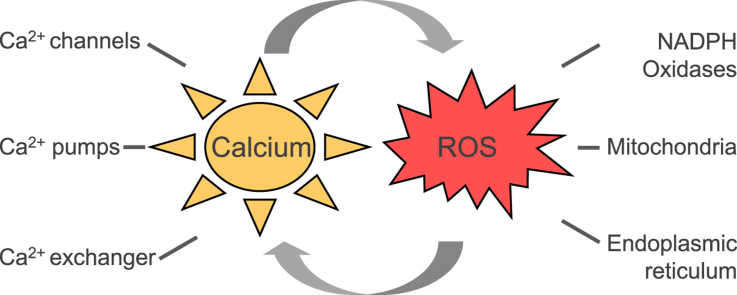
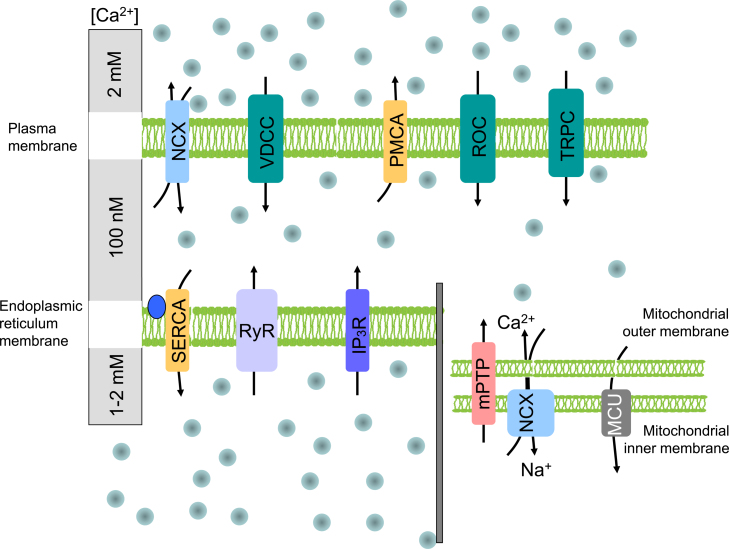
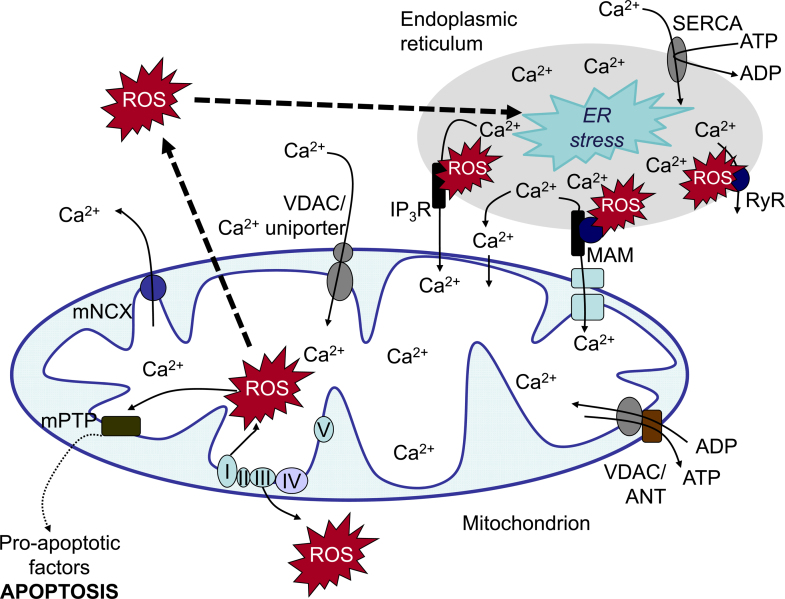
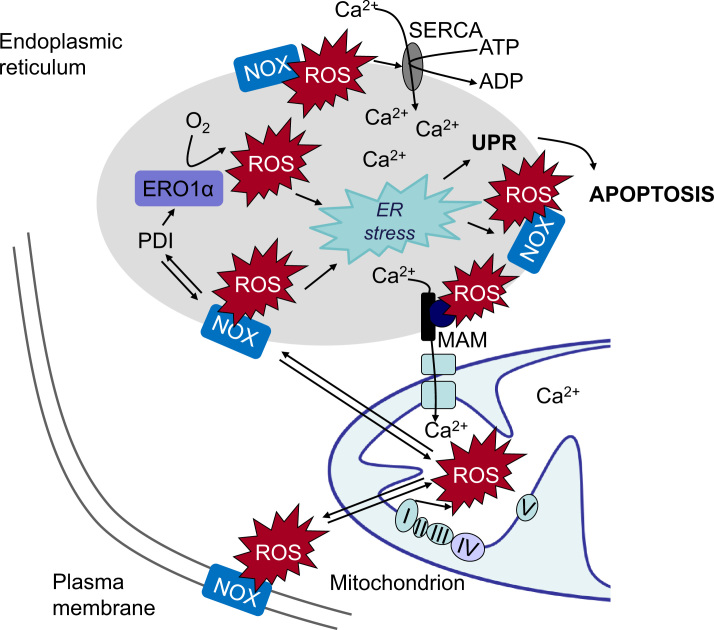
Calcium is an important second messenger involved in intra- and extracellular signaling cascades and plays an essential role in cell life and death decisions. The Ca(2+) signaling network works in many different ways to regulate cellular processes that function over a wide dynamic range due to the action of buffers, pumps and exchangers on the plasma membrane as well as in internal stores. Calcium signaling pathways interact with other cellular signaling systems such as reactive oxygen species (ROS). Although initially considered to be potentially detrimental byproducts of aerobic metabolism, it is now clear that ROS generated in sub-toxic levels by different intracellular systems act as signaling molecules involved in various cellular processes including growth and cell death. Increasing evidence suggests a mutual interplay between calcium and ROS signaling systems which seems to have important implications for fine tuning cellular signaling networks. However, dysfunction in either of the systems might affect the other system thus potentiating harmful effects which might contribute to the pathogenesis of various disorders.
Overview
The claims and statistics of this paper haven’t been checked yet.
Run the check — free, no account needed. It reads the open-access text and checks the sources it cites.
Integrity signals
Registry
Cites
Statistics
Figures
Verification
Claims the paper makes
The claims and statistics of this paper haven’t been checked yet.
Run the check — free, no account needed. It reads the open-access text and checks the sources it cites.
Claims other papers make about this one
Each is checked against this paper’s own text: does it say what the citing paper says it does?
The source backs part of the claim, not all of it — or backs it for a different population, condition or comparison.
In the citing paper
“However, sustained elevation in the cellular calcium signal stimulates higher mitochondrial reactive oxygen species (ROS) generation (28) due to enhanced electron flow through respiratory chain and subsequent inhibition of complexes I and III of ubiquinone (Q) cycle.”
From Mechanistic inferences on metabolic dysfunction in posttraumatic stress disorder from an integrated model and multiomic analysis: role of glucocorticoid receptor sensitivity (2019) · cites this paper as [28]
Experimental — accuracy not yet measured
Self-check
Percentages, sums and reported differences re-computed from the paper’s own numbers.
The self-check needs the paper’s full text.
Citations
Cites
Down-Regulation of Na+/K+ATPase Activity by Human Parvovirus B19 Capsid Protein VP1
Almilaji, A., Szteyn, K., Fein, E., Pakladok, T., Muñoz, C., Elvira, B., Towhid, S. T., Alesutan, I., Shumilina, E. V., Bock, C. –., et al. (2013) · Cellular Physiology and Biochemistry · doi:10.1159/000350083 · Cited by 8,700
How mitochondria produce reactive oxygen species
Murphy, M. P. (2009) · Biochemical Journal · doi:10.1042/bj20081386 · Cited by 8,207
The NOX Family of ROS-Generating NADPH Oxidases: Physiology and Pathophysiology
Bedard, K., & Krause, K.-H. (2007) · Physiological Reviews · doi:10.1152/physrev.00044.2005 · Cited by 6,989
Oxidants, antioxidants, and the degenerative diseases of aging.
Ames, B. N., Shigenaga, M. K., & Hagen, T. M. (1993) · Proceedings of the National Academy of Sciences · doi:10.1073/pnas.90.17.7915 · Cited by 5,958
Mitochondrial formation of reactive oxygen species
Turrens, J. F. (2003) · The Journal of Physiology · doi:10.1113/jphysiol.2003.049478 · Cited by 5,084
Meijer, L., Nelson, D. J., Riazanski, V., Gabdoulkhakova, A. G., Héry-Arnaud, G., Berre, R. L., Loaëc, N., Oumata, N., Galons, H., Nowak, E., et al. (2016) · Journal of Innate Immunity · doi:10.1159/000444256 · Cited by 5,008
Regulation of cell death: the calcium–apoptosis link
Orrenius, S., Zhivotovsky, B., & Nicotera, P. (2003) · Nature Reviews Molecular Cell Biology · doi:10.1038/nrm1150 · Cited by 3,060
Physiological Roles of Mitochondrial Reactive Oxygen Species
Sena, L. A., & Chandel, N. S. (2012) · Molecular Cell · doi:10.1016/j.molcel.2012.09.025 · Cited by 2,632
Calcium, ATP, and ROS: a mitochondrial love-hate triangle
Brookes, P. S., Yoon, Y., Robotham, J. L., Anders, M. W., & Sheu, S.-S. (2004) · American Journal of Physiology-Cell Physiology · doi:10.1152/ajpcell.00139.2004 · Cited by 2,575
Cellular response to oxidative stress: Signaling for suicide and survival*
Martindale, J. L., & Holbrook, N. J. (2002) · Journal of Cellular Physiology · doi:10.1002/jcp.10119 · Cited by 2,314
Cited by
Sorted by citations
Items 901–999 of 999
Hattori, K., Takano, N., Kazama, H., Moriya, S., Miyake, K., Hiramoto, M., Tsukahara, K., & Miyazawa, K. (2021) · Oncology Letters · doi:10.3892/ol.2021.12941 · Cited by 9
Chen, X., Ashraf, S., Ashraf, N., & Harmancey, R. (2021) · Journal of the American Heart Association · doi:10.1161/jaha.121.022556 · Cited by 10
Involvement of calcium signaling in different types of cell death in cancer
Babula, P., & Križanová, O. (2022) · Neoplasma · doi:10.4149/neo_2022_220127n121 · Cited by 9
H2O2/Ca2+/Zn2+ Complex Can Be Considered a “Collaborative Sensor” of the Mitochondrial Capacity?
Filippo, E. S. D., Checcaglini, F., Fanò, G., & Fulle, S. (2022) · Antioxidants · doi:10.3390/antiox11020342 · Cited by 9
Varela, L., Hendry, A. C., Cassar, J., Martín‐Escolano, R., Cantoni, D. M., Ossa, F., Edwards, J. C., Abdul‐Salam, V. B., & Roldan, J. O. (2022) · Journal of Cell Science · doi:10.1242/jcs.259704 · Cited by 10
Zhang, Y., Sun, Y., Li, W., Li, J., Xu, R., Du, J., Li, Z., Li, G., & Yang, K. (2022) · Plants · doi:10.3390/plants11192487 · Cited by 9
Correa, F., Pavón, N., Buelna‐Chontal, M., Chiquete‐Félix, N., Hernández‐Esquivel, L., & Chávez, E. (2018) · Cell Biochemistry and Biophysics · doi:10.1007/s12013-018-0856-3 · Cited by 9
Mitochondrial-Protective Effects of R-Phenibut after Experimental Traumatic Brain Injury
Kupats, E., Stelfa, G., Zvejniece, B., Grı̄nberga, S., Vavers, E., Makrecka‐Kuka, M., Švalbe, B., Zvejniece, L., & Dambrova, M. (2020) · Oxidative Medicine and Cellular Longevity · doi:10.1155/2020/9364598 · Cited by 9
Sardari, M., Ghanati, F., Mobasheri, H., & Hajnorouzi, A. (2024) · PLoS ONE · doi:10.1371/journal.pone.0299055 · Cited by 8
Chang, L., Motley, R., Daly, C. L., Diggle, C. P., Hopkins, P. M., & Shaw, M. (2024) · International Journal of Molecular Sciences · doi:10.3390/ijms25063489 · Cited by 8
Myocardial calcification: case reports and a systematic review
Kido, T., Tanimoto, K., Watanabe, T., Taira, M., Narita, J., Ishida, H., Ishii, R., Ueno, T., & Miyagawa, S. (2024) · European Heart Journal - Imaging Methods and Practice · doi:10.1093/ehjimp/qyae079 · Cited by 8
Immunonutrition: future perspective in neurodegenerative disorders
Claro, C., Rivero‐Pino, F., Torrecillas-López, M., Jiménez-González, V., & la Paz, S. M. (2024) · Nutritional Neuroscience · doi:10.1080/1028415x.2024.2425565 · Cited by 10
Intharuksa, A., Arunotayanun, W., Takuathung, M. N., Boongla, Y., Chaichit, S., Khamnuan, S., & Prasansuklab, A. (2024) · Antioxidants · doi:10.3390/antiox14010023 · Cited by 10
Yin, D., Wu, X., Chen, X., Chen, J., Xia, X., Wang, J., Chen, X., & Zhu, X. (2025) · Materials Today Bio · doi:10.1016/j.mtbio.2025.101649 · Cited by 8
Oxidative modulation of Piezo1 channels
Novosolova, N., Braidotti, N., Patinen, T., Laitinen, T., Ciubotaru, C. D., Huttunen, K. M., Levonen, A., Cojoc, D., Giniatullin, R. A., & Malm, T. (2025) · Redox Biology · doi:10.1016/j.redox.2025.103797 · Cited by 10
AlAhmad, M., Shitaw, E., & Sivaprasadarao, A. (2025) · Biomolecules · doi:10.3390/biom15081193 · Cited by 8
Turovsky, E. A., Baimler, I. V., Rogachev, V. V., Gudkov, S. V., & Varlamova, E. G. (2025) · Biological Trace Element Research · doi:10.1007/s12011-025-04953-y · Cited by 8
Saco, A., Panebianco, A., Blanco, S., Novoa, B., Diz, Á. P., & Figueras, A. J. (2021) · Frontiers in Marine Science · doi:10.3389/fmars.2021.735309 · Cited by 8
Turan, B., Durak, A. T., Olğar, Y., & Tuncay, E. (2022) · Molecular and Cellular Biochemistry · doi:10.1007/s11010-022-04474-5 · Cited by 8
Sharifi, S., Böger, M., Lortz, S., & Mehmeti, I. (2022) · The FASEB Journal · doi:10.1096/fj.202201237r · Cited by 8
Elsaid, H. O. A., Tjeldnes, H., Rivedal, M., Serre, C., Eikrem, Ø., Svarstad, E., Tøndel, C., Marti, H., Furriol, J., & Bábíčková, J. (2022) · International Journal of Molecular Sciences · doi:10.3390/ijms24010358 · Cited by 8
Porcher, A., Wilmot, N., Bonnet, P., Procaccio, V., & Vian, A. (2023) · Bioelectromagnetics · doi:10.1002/bem.22475 · Cited by 8
Tavakoli, A., Aliakbari, F., & Mehranjani, M. S. (2023) · Zygote · doi:10.1017/s0967199423000412 · Cited by 8
Supplementation with vitamins D3 and a mitigates Parkinsonism in a haloperidol mice model
Sirajo, M. U., Oyem, J. C., & Badamasi, I. M. (2023) · Journal of Chemical Neuroanatomy · doi:10.1016/j.jchemneu.2023.102366 · Cited by 8
Li, X., Mao, C., Sun, G., Zhao, C., Dai, J., Yang, F., Wang, L., & Wang, X. (2024) · Open Research (University of Surrey) · doi:10.1002/viw.20240019 · Cited by 8
Saturation of SERCA's lipid annulus may protect against its thermal inactivation
Fajardo, V. A., Trojanowski, N., Castelli, L. M., Miotto, P. M., Amoye, F., Ward, W. E., Tupling, A. R., & LeBlanc, P. J. (2017) · Biochemical and Biophysical Research Communications · doi:10.1016/j.bbrc.2017.01.154 · Cited by 8
Snyder, P. J., Reddy, P., Kirste, R., LaJeunesse, D., Collazo, R., & Ivanisevic, A. (2018) · RSC Advances · doi:10.1039/c8ra06836d · Cited by 8
Relation of Photochemical Internalization to Heat, pH and Ca2+ Ions
Soe, T. H., Nanjo, T., Watanabe, K., & Ohtsuki, T. (2019) · Photochemistry and Photobiology · doi:10.1111/php.13146 · Cited by 8
Characterization of cytotoxic effects of aristolochic acids on the vascular endothelium
Youl, E., Husson, C. P., Khattabi, C. E., Mere, S. E., Declèves, A., Pochet, S., Nortier, J., & Antoine, M. (2020) · Toxicology in Vitro · doi:10.1016/j.tiv.2020.104811 · Cited by 9
AIR POLLUTION AND POPULATION HEALTH IN THE RUSSIAN ARCTIC: A LITERATURE REVIEW
Салтыкова, М. М., Bobrovnitskii, I. P., & Балакаева, А. В. (2020) · Экология человека · doi:10.33396/1728-0869-2020-4-48-55 · Cited by 8
Ray, A., Jaiswal, A. K., Dutta, J., Singh, S., & Mabalirajan, U. (2020) · Mitochondrion · doi:10.1016/j.mito.2020.09.004 · Cited by 8
Navrátilová, A., Kovár, M., & Požgajová, M. (2020) · Environmental Science and Pollution Research · doi:10.1007/s11356-020-11480-x · Cited by 8
Long-term depletion of cereblon induces mitochondrial dysfunction in cancer cells
Park, S., Kim, K., Haam, K., Ban, H. S., Kim, J.-A., Park, S. G., Park, S. G., Kim, S., & Kim, J. (2021) · BMB Reports · doi:10.5483/bmbrep.2021.54.6.218 · Cited by 8
Mu, D., Qin, H., Jiao, M., Hua, S., & Sun, T. (2021) · Journal of Zhejiang University SCIENCE B · doi:10.1631/jzus.b2000540 · Cited by 7
Pregnancy-associated plasma protein-aa regulates endoplasmic reticulum–mitochondria associations
Alassaf, M., & Halloran, M. C. (2021) · eLife · doi:10.7554/elife.59687 · Cited by 8
Scavenging of reactive oxygen species mimics the anoxic response in goldfish pyramidal neurons
Pillai, V., Buck, L. T., & Lari, E. (2021) · Journal of Experimental Biology · doi:10.1242/jeb.238147 · Cited by 8
Coxsackievirus B3 Exploits the Ubiquitin-Proteasome System to Facilitate Viral Replication
Voß, M., Braun, V. M., Bredow, C., Kloetzel, P., & Beling, A. (2021) · Viruses · doi:10.3390/v13071360 · Cited by 8
Neural Circuit Repair by Low-Intensity rTMS
Lohof, A. M., Dufor, T., & Sherrard, R. M. (2022) · The Cerebellum · doi:10.1007/s12311-021-01354-4 · Cited by 8
Pino, A. M. D., Falcinelli, B., D’Amato, R., Businelli, D., Benincasa, P., & Palmerini, C. A. (2022) · Plants · doi:10.3390/plants11070859 · Cited by 8
Calcium acts as a central player in melatonin antitumor activity in sarcoma cells
Sánchez‐Sánchez, A. M., Turos‐Cabal, M., Puente‐Moncada, N., Herrera, F., Rodrı́guez, C., & Martı́n, V. (2022) · Cellular Oncology · doi:10.1007/s13402-022-00674-9 · Cited by 8
RETRACTED: Neuroprotective effects of tannic acid against kainic acid-induced seizures in mice
Hasanvand, A., Hosseinzadeh, A., Saeedavi, M., Goudarzi, M., Basir, Z., & Mehrzadi, S. (2022) · Human & Experimental Toxicology · doi:10.1177/09603271221093989 · Cited by 8
RetractedSevgiler, Y., & Atli, G. (2022) · Journal of Trace Elements in Medicine and Biology · doi:10.1016/j.jtemb.2022.127035 · Cited by 8
Shi, Q., Shen, X., Long, C., Mi, Z., Li, Y., & Ma, R. (2022) · Journal of Trace Elements in Medicine and Biology · doi:10.1016/j.jtemb.2022.127094 · Cited by 8
Parekh, N., Lakhani, S., Patel, A. S., Oza, D., Patel, B., Yadav, R., & Chaube, U. (2023) · Artificial Intelligence Chemistry · doi:10.1016/j.aichem.2023.100009 · Cited by 8
Ham, S. W., Jeon, H.-Y., & Kim, H. (2017) · Tumor Biology · doi:10.1177/1010428317692244 · Cited by 8
Zhang, Y., Ren, S., Gu, Y., Wang, J., Liu, Z., & Zhang, Z. (2018) · Oxidative Medicine and Cellular Longevity · doi:10.1155/2018/4596746 · Cited by 8
Harnessing ionic mechanisms to achieve disease modification in neurodegenerative disorders
Masi, A., Narducci, R., & Mannaioni, G. (2019) · Pharmacological Research · doi:10.1016/j.phrs.2019.104343 · Cited by 8
Al‐Hakeim, H. K., Al-Jassas, H. K., Morris, G., & Maes, M. H. J. (2021) · Preprints.org · doi:10.20944/preprints202103.0710.v1 · Cited by 7
Tuckowski, A. M., Beydoun, S., Kitto, E. S., Bhat, A., Howington, M. B., Sridhar, A., Bhandari, M., Chambers, K., & Leiser, S. F. (2024) · eLife · doi:10.7554/elife.99971 · Cited by 8
Panja, C., Więsyk, A., Niedźwiecka, K., Baranowska, E., & Kucharczyk, R. (2022) · Scientific Reports · doi:10.1038/s41598-023-30966-5 · Cited by 5
Xiao, Y. J., Zheng, Y., Zhou, Y., Yu, C., & Ye, T.-E. (2023) · Microbial Cell Factories · doi:10.1186/s12934-023-02205-z · Cited by 7
Natural products applied in acute kidney injury treatment: polymer matters
Yu, B., Jin, Q., & Ji, J. (2023) · Biomaterials Science · doi:10.1039/d3bm01772a · Cited by 7
Membrane potential dynamics of C5a-stimulated neutrophil granulocytes
Becker, S., Swoboda, A., Siemer, H., Schimmelpfennig, S., Sargin, S., Shahin, V., Schwab, A., & Najder, K. (2024) · Pflügers Archiv - European Journal of Physiology · doi:10.1007/s00424-024-02947-8 · Cited by 7
He, K., Long, X., Jiang, H., Qin, C., & Liu, Y. (2024) · Developmental & Comparative Immunology · doi:10.1016/j.dci.2024.105184 · Cited by 6
Yaghoobi, A., Rezaee, M., Hedayati, N., Keshavarzmotamed, A., Khalilzad, M. A., Russel, R. C. G., Asemi, Z., Moghaddam, H. R., & Mafi, A. (2024) · Molecular and Cellular Biochemistry · doi:10.1007/s11010-024-05002-3 · Cited by 9
Xu, Y., Ren, M., Deng, R., Meng, J., Xu, L., Zhao, W., Ni, Y., Mao, C., & Zhang, S. (2025) · Advanced Healthcare Materials · doi:10.1002/adhm.202404215 · Cited by 7
The molecular determinants regulating redox signaling in diabetic endothelial cells
Srivastava, S. P., Kopasz-Gemmen, O., Thurman, A., Rajendran, B. K., Selvam, M., Kumar, S., Srivastava, R., Suresh, M. X., Kumari, R., Goodwin, J. E., et al. (2025) · Frontiers in Pharmacology · doi:10.3389/fphar.2025.1563047 · Cited by 11
Sun, J.-Y., Wang, Z., Xu, W., & Zhao, J. (2025) · Biochemical Pharmacology · doi:10.1016/j.bcp.2025.117050 · Cited by 8
Cold atmospheric plasma combined with nanoparticles in cancer therapy
Wang, Y., Cao, F., Martins, G. A., Fang, Q., Lin, Y., Chen, Z., Chen, G., & Chen, Z. (2025) · Interdisciplinary medicine · doi:10.1002/inmd.20250021 · Cited by 8
Cao, X., Shuai, K., Wang, P., Xu, J., Pan, W., Wang, Y., Li, X., Lu, W., Chen, K., Chen, Y., et al. (2025) · Advanced Functional Materials · doi:10.1002/adfm.202503183 · Cited by 7
Zhan, W., Ahmad, M., Rongzhi, C., Fatima, S., & Shah, S. A. (2025) · IJC Heart & Vasculature · doi:10.1016/j.ijcha.2025.101756 · Cited by 8
Bowden, M., Rosario‐Ortiz, F. L., & Mansfeldt, C. B. (2025) · Environmental Science & Technology · doi:10.1021/acs.est.5c02148 · Cited by 7
The role and behavior of voltage-gated calcium channels in ischemia/reperfusion
Ay, Y. A., Yurdgülü, E. E., Bayır, Y., & Halıcı, Z. (2025) · Cellular Signalling · doi:10.1016/j.cellsig.2025.112107 · Cited by 7
Mallik, B., Bhat, S. A., Wang, X., & Frank, C. A. (2025) · PLoS Biology · doi:10.1371/journal.pbio.3003388 · Cited by 11
Delgado, T. C., Martín-Cuevas, C., Sánchez-Hidalgo, A. C., Gil-Gómez, A., Rejano-Gordillo, C. M., Landa, J., Gallego-Duran, R., Goikoetxea-Usandizaga, N., González-Recio, I., Gil-Pitarch, C., et al. (2025) · Science Advances · doi:10.1126/sciadv.ady9758 · Cited by 8
Mitochondria–ER crosstalk via MAMS: Bridging cellular homeostasis and cancer progression
Roy, R., Adhikary, A., De, R., & Ghosh, S. (2026) · APOPTOSIS · doi:10.1007/s10495-025-02252-4 · Cited by 7
Hsu, S., Lin, Y., & Liang, W. (2021) · Journal of Biochemical and Molecular Toxicology · doi:10.1002/jbt.22862 · Cited by 7
Targeting T-type channels in cancer: What is on and what is off?
Visa, A., Alza, L., Casas-Benito, A., Herreros, J., & Cantı́, C. (2021) · Drug Discovery Today · doi:10.1016/j.drudis.2021.11.021 · Cited by 7
Horváth, T., Sándor, L., Baráth, B., Donka, T., Baráth, B., Mohácsi, Á., Jász, K. D., Hartmann, P., & Boros, M. (2023) · Antioxidants · doi:10.3390/antiox12020271 · Cited by 7
Subchronic pulmonary toxicity of ambient particles containing cement production–related elements
Park, E., Yang, M., Kang, M.-S., Jo, Y. M., Yoon, C., Lee, Y., Kim, D., Lee, G., Kwon, I. H., & Kim, J. (2023) · Toxicology Reports · doi:10.1016/j.toxrep.2023.07.002 · Cited by 7
The role of anesthetic drug and technique in endothelial glycocalyx: A narrative review
Li, X., Zeng, S., Wan, J., Yang, Z., & Wang, F. (2023) · Medicine · doi:10.1097/md.0000000000034265 · Cited by 7
Association between dietary calcium, potassium, and magnesium consumption and glaucoma
Zhang, Y., Zhao, Z., Ma, Q., Li, K., Zhao, X., & Jia, Z. (2023) · PLoS ONE · doi:10.1371/journal.pone.0292883 · Cited by 7
Guo, Z., Zhong, W., & Zou, Z. (2023) · Neuropsychiatric Disease and Treatment · doi:10.2147/ndt.s415597 · Cited by 7
Using CaCO3 armor to alleviate PFOA-induced stress on microorganisms in porous aquatic environments
Chen, C.-L., Fang, Y., Wang, Y., Zhang, C.-J., & Zhou, D.-D. (2024) · Chemical Engineering Journal · doi:10.1016/j.cej.2024.153733 · Cited by 5
Umetsu, A., Tanaka, M., Sato, T., Akiyama, Y., Endo, K., Mori, K., Ohnishi, H., Watanabe, M., Ohguro, H., Hanawa, N., et al. (2024) · Circulation Journal · doi:10.1253/circj.cj-24-0241 · Cited by 7
Paiola, M., Moreira, C., Duflot, A., Knigge, T., & Monsinjon, T. (2018) · Fish & Shellfish Immunology · doi:10.1016/j.fsi.2018.11.078 · Cited by 7
L’Abbate, S., Russo, I., & Kusmic, C. (2020) · Life Sciences · doi:10.1016/j.lfs.2020.117843 · Cited by 8
Non-Thermal Plasma Couples Oxidative Stress to TRAIL Sensitization through DR5 Upregulation
Hwang, S. Y., Nguyen, N. H., Kim, T. J., Lee, Y., Kang, M. A., & Lee, J. (2020) · International Journal of Molecular Sciences · doi:10.3390/ijms21155302 · Cited by 8
Zhang, X., Mao, Z., Huang, Y., Zhang, Z., & Yao, J. Q. (2020) · Channels · doi:10.1080/19336950.2020.1803552 · Cited by 7
Fedenia, L., Klein, R. R., Dykes, L., Rooney, W. L., & Klein, P. G. (2020) · Journal of Agricultural and Food Chemistry · doi:10.1021/acs.jafc.0c02657 · Cited by 7
Zaki, A. G., Erdogan, Y. C., Caglar, T. A., & Eroğlu, E. (2021) · Biochemical Society Transactions · doi:10.1042/bst20210506 · Cited by 7
Park, Y., Suvorov, A., Symington, S. B., & Clark, J. M. (2022) · Food and Chemical Toxicology · doi:10.1016/j.fct.2021.112804 · Cited by 7
Prolonged NHE Activation may be both Cause and Outcome of Cytokine Release Syndrome in COVID-19
Cüre, M. C., & Cüre, E. (2022) · Current Pharmaceutical Design · doi:10.2174/1381612828666220713121741 · Cited by 7
Morikis, V. A., Chen, S. J., Madigan, J., Jo, M. H., Werba, L. C., Ha, T., & Simon, S. I. (2022) · Cells · doi:10.3390/cells11182822 · Cited by 7
Ying, M., & Hu, X. (2022) · Seminars in Cancer Biology · doi:10.1016/j.semcancer.2022.10.005 · Cited by 7
Topçu, A., Saral, S., Öztürk, A., Saral, Ö., & Kaya, A. K. (2023) · Neurological Research · doi:10.1080/01616412.2022.2164452 · Cited by 7
Luna-Carrascal, J., Olivero‐Verbel, J., Acosta-Hoyos, A. J., & Quintana-Sosa, M. (2023) · Mutation Research/Genetic Toxicology and Environmental Mutagenesis · doi:10.1016/j.mrgentox.2023.503597 · Cited by 8
NNAT is a novel mediator of oxidative stress that suppresses ER + breast cancer
Plasterer, C., Semenikhina, M., Tsaih, S., Flister, M. J., & Palygin, O. (2023) · Molecular Medicine · doi:10.1186/s10020-023-00673-y · Cited by 7
Presenilin 1 increases association with synaptotagmin 1 during normal aging
Keller, L. J., Sekula, N. M., Svirsky, S. E., Maesako, M., Zoltowska, K. M., & Berezovska, O. (2019) · Neurobiology of Aging · doi:10.1016/j.neurobiolaging.2019.10.006 · Cited by 7
Yu, B., Ruan, M., Liang, T., & Yu, Y. (2020) · International Journal of Pharmacology · doi:10.3923/ijp.2020.104.119 · Cited by 7
Sheng, Y.-H., Leu, W., Chen, C.-N., Hsu, J., Liu, Y.-T., Hsu, L., Hou, D., & Guh, J. (2020) · Molecules · doi:10.3390/molecules25122929 · Cited by 7
Pomegranate peel Extract Protects Cadmium-induced nephrotoxicity in albino mice.
El-Daly, A. A. A. (2016) · Journal of Bioscience and Applied Research/Journal of Bioscience and Applied Research · doi:10.21608/jbaar.2016.108529 · Cited by 7
Xiao, S., Li, L., Yao, J., Wang, L., Li, K., Yang, C., Wang, C., & Fan, Y. (2021) · Annals of Biomedical Engineering · doi:10.1007/s10439-021-02733-y · Cited by 7
Lysosome-targeted photodynamic treatment induces primary keratinocyte differentiation
Daugelaviciene, N., Grigaitis, P., Gasiulė, L., Dabkevičienė, D., Neniškytė, U., & Sasnauskienė, A. (2021) · Journal of Photochemistry and Photobiology B Biology · doi:10.1016/j.jphotobiol.2021.112183 · Cited by 7
Rodrigues-dos-Santos, K., Soares, G. M., Guimarães, D. S. P. S. F., Araújo, T. R., Vettorazzi, J. F., Zangerolamo, L., Marconato-Júnior, E., Cai, R., Sha, W., Schally, A. V., et al. (2021) · Molecular and Cellular Endocrinology · doi:10.1016/j.mce.2021.111379 · Cited by 7
Zhang, Q., Li, W., Ayidaerhan, N., Han, W., Chen, Y., Song, W., & Yue, Y. (2021) · Journal of Cellular and Molecular Medicine · doi:10.1111/jcmm.16546 · Cited by 8
Pino, A. M. D., Regni, L., D’Amato, R., Michele, A. D., Proietti, P., & Palmerini, C. A. (2021) · Plants · doi:10.3390/plants10112290 · Cited by 7
Wang, K., Du, Y., Li, P., Guan, C., Zhou, M., Wu, L., Liu, Z., & Huang, Z. (2023) · Research Square · doi:10.21203/rs.3.rs-3222853/v1 · Cited by 7
Li, G., Ma, Y., Zhang, S., Lin, W., Yao, X. Y., Zhou, Y., Zhao, Y., Rao, Q., Qu, Y.-J., Gao, Y., et al. (2024) · Redox Biology · doi:10.1016/j.redox.2024.103415 · Cited by 7
Metadata
- Authors
- Görlach, A., Bertram, K., Hudecova, S., & Krizanova, O.
- Affiliations
- German Centre for Cardiovascular Research (DE)
- Deutsches Herzzentrum München (DE)
- Corresponding author
- Görlach, Agnes
- ORCID
- Görlach, Agnes
- Venue
- Redox Biology
- Publisher
- Elsevier BV
- Published
- 2015-12
- Volume
- 6
- Pages
- 260-271
- ISSN
- 2213-2317 (ISSN-L)
- PMC
- PMC4556774
- OpenAlex
- W1165140024
- Cited by
- 1,546
- References
- 180
- Citations by year
- 2026: 128 · 2025: 188 · 2024: 195 · 2023: 184 · 2022: 177 · 2021: 179 · 2020: 141 · 2019: 133 · 2018: 115 · 2017: 72 · 2016: 30 · 2015: 3
- FWCI
- 7.11
- Type
- journal article
- Language
- en
- Open access
- gold
- doi.org
- Licence
- Locations
- Redox Biology (publishedVersion, cc-by-nc-nd)
- Europe PMC (PubMed Central) (publishedVersion, cc-by-nc-nd)
- PubMed (publishedVersion)
- mediaTUM (Technical University of Munich) (submittedVersion)
- Funders
- Bundesministerium für Bildung und Forschung (SAV 2/0074)
- Deutsches Zentrum für Herz-Kreislaufforschung
- Deutsche Forschungsgemeinschaft (DFG-GO709/4-5)
- Topics
- Life Sciences › Biochemistry, Genetics and Molecular Biology › Molecular Biology › Redox biology and oxidative stress
- Life Sciences › Biochemistry, Genetics and Molecular Biology › Physiology › Calcium signaling and nucleotide metabolism
- Life Sciences › Neuroscience › Sensory Systems › Ion Channels and Receptors
- Keywords
- calcium signaling, reactive oxygen species, second messengers, cell death, cell signaling networks, redox signaling, intracellular calcium stores
- MeSH terms
- Animals, Calcium, Cell Membrane, Endoplasmic Reticulum, Eukaryotic Cells, Gene Expression Regulation, Humans, Mitochondria, Calcium Channels, Cell Death, Reactive Oxygen Species, Oxidative Stress, NADPH Oxidases, Calcium Signaling, Plasma Membrane Calcium-Transporting ATPases
About these checks
Registry, retraction, Cites and statistics results are computed, not judged, with one exception: a printed reference that no index lists is read once by a model before it counts as a citation error. Claims are extracted by a model and kept only when their quote appears verbatim in the text; each cited source is then checked, with a model’s help, for whether it says what the claim relies on. Those verdicts can be wrong — read the claim’s quote and the cited source before relying on one.
Statistics and arithmetic are recomputed, not judged.
Confidence bands are shown only for fields calibrated on our annotated test set. None is calibrated yet, so no band is shown.
What counts as a claim ›How we measure confidence ›How we check this ›
Are you an author, or do you see a problem with this page? Request a review
