

The DOI matches its Crossref record; 60 of the 63 references it cites were found in a registry or an index.
Empagliflozin rescues diabetic myocardial microvascular injury via AMPK-mediated inhibition of mitochondrial fission
Open accessAbstract
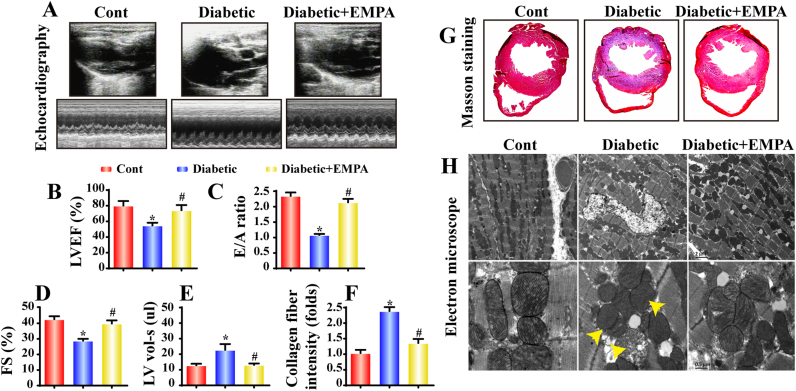
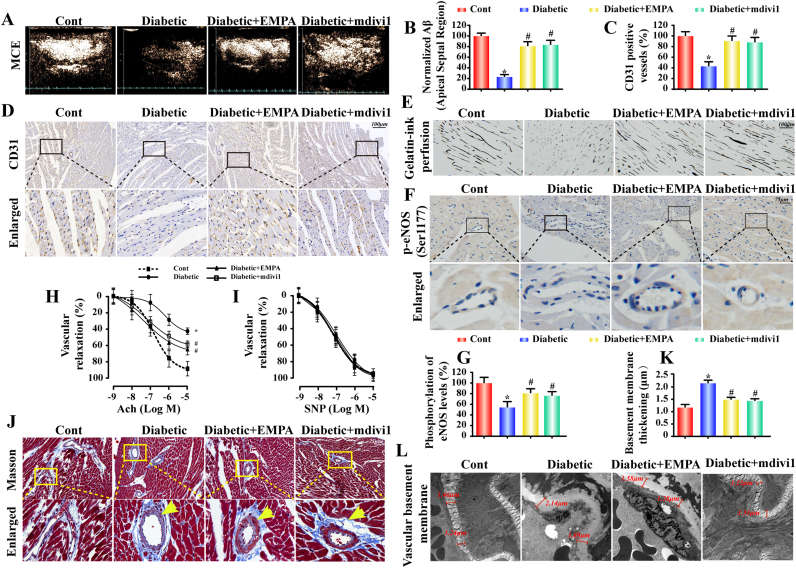
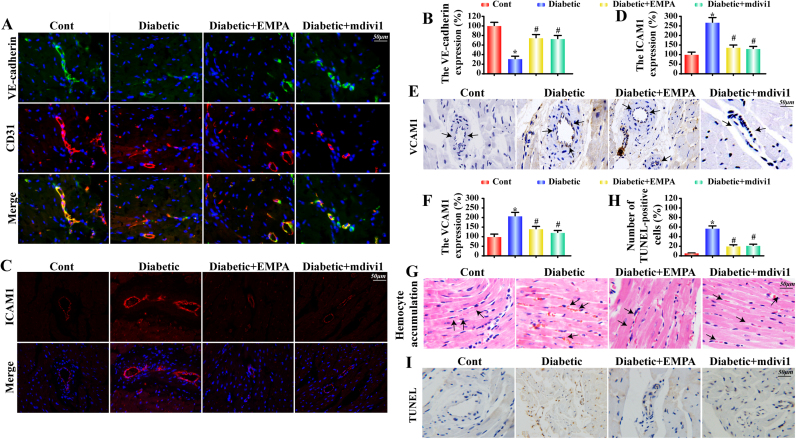
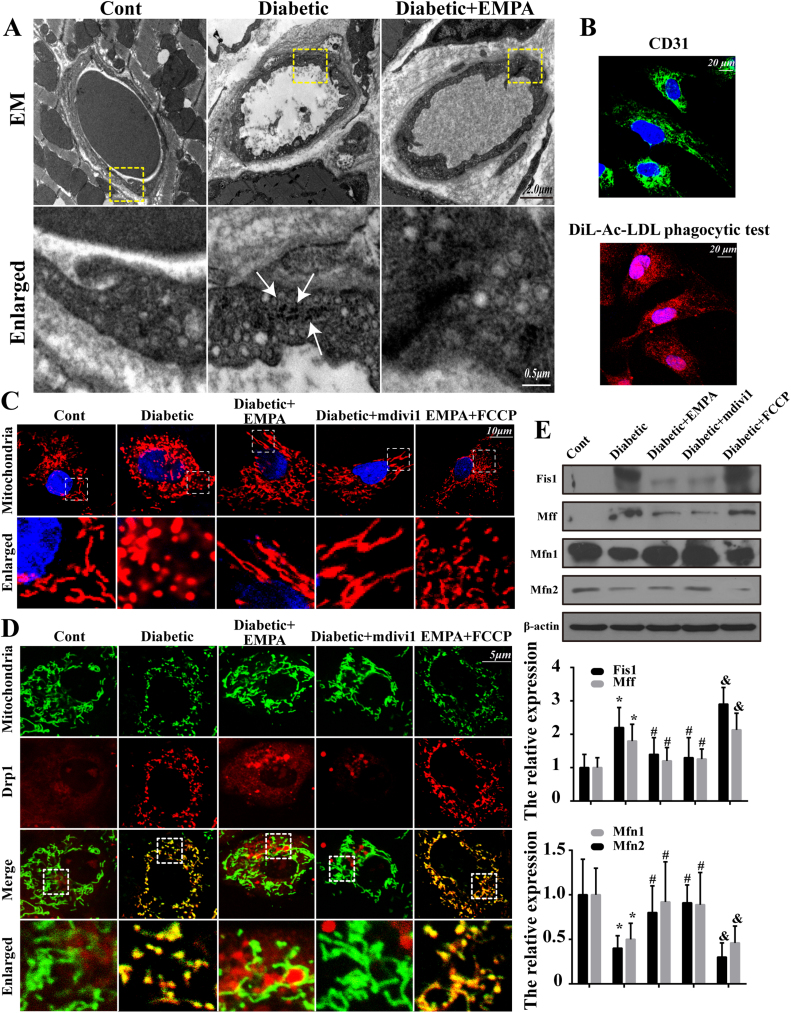
Impaired cardiac microvascular function contributes to diabetic cardiovascular complications although effective therapy remains elusive. Empagliflozin, a sodium-glucose cotransporter 2 (SGLT2) inhibitor recently approved for treatment of type 2 diabetes, promotes glycosuria excretion and offers cardioprotective actions beyond its glucose-lowering effects. This study was designed to evaluate the effect of empagliflozin on cardiac microvascular injury in diabetes and the underlying mechanism involved with a focus on mitochondria. Our data revealed that empagliflozin improved diabetic myocardial structure and function, preserved cardiac microvascular barrier function and integrity, sustained eNOS phosphorylation and endothelium-dependent relaxation, as well as improved microvessel density and perfusion. Further study suggested that empagliflozin exerted its effects through inhibition of mitochondrial fission in an adenosine monophosphate (AMP)-activated protein kinase (AMPK)-dependent manner. Empagliflozin restored AMP-to-ATP ratio to trigger AMPK activation, suppressed Drp1 S616 phosphorylation, and increased Drp1 S637 phosphorylation, ultimately leading to inhibition of mitochondrial fission. The empagliflozin-induced inhibition of mitochondrial fission preserved cardiac microvascular endothelial cell (CMEC) barrier function through suppressed mitochondrial reactive oxygen species (mtROS) production and subsequently oxidative stress to impede CMEC senescence. Empagliflozin-induced fission loss also favored angiogenesis by promoting CMEC migration through amelioration of F-actin depolymerization. Taken together, these results indicated the therapeutic promises of empagliflozin in the treatment of pathological microvascular changes in diabetes.
Overview
The claims and statistics of this paper haven’t been checked yet.
Run the check — free, no account needed. It reads the open-access text and checks the sources it cites.
Integrity signals
Registry
Cites
Statistics
Figures
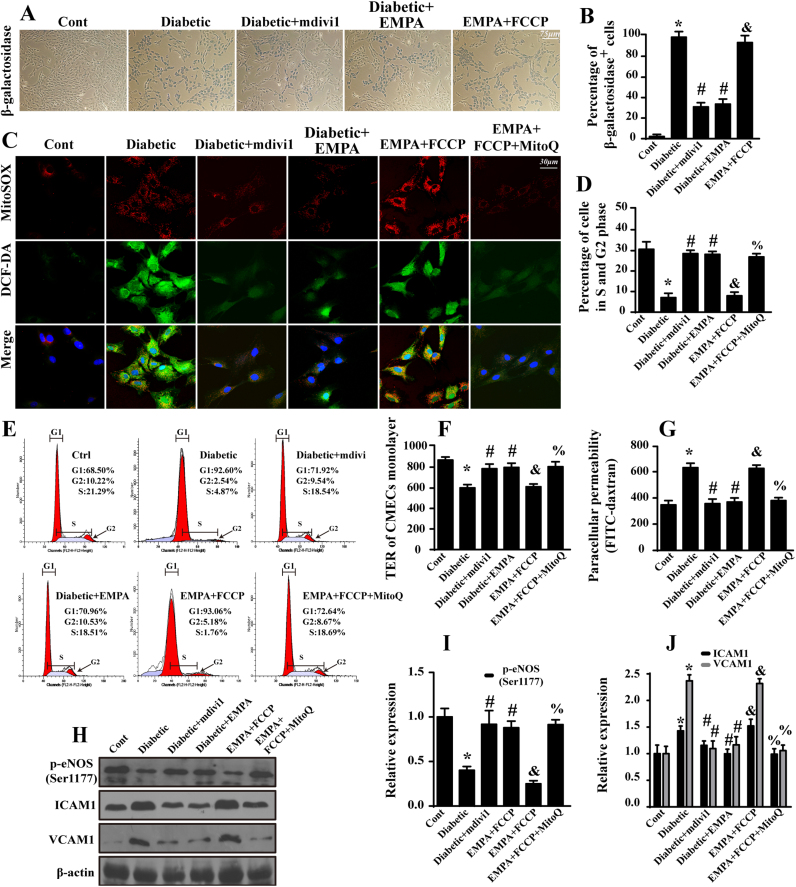
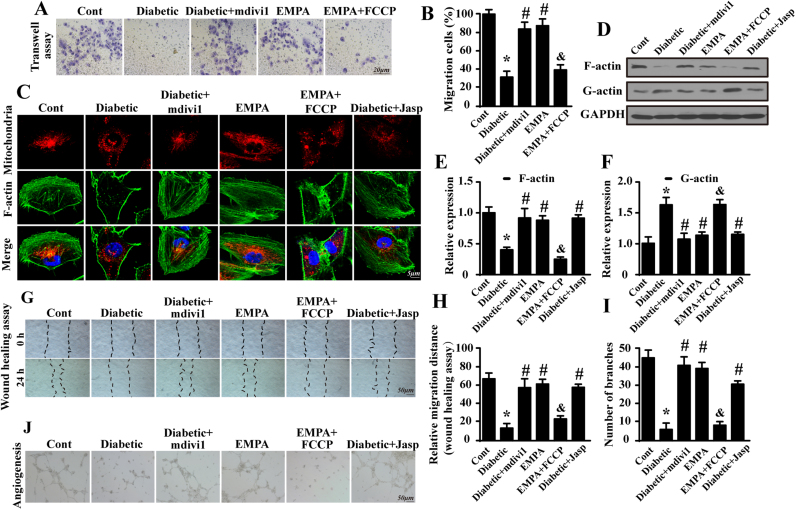
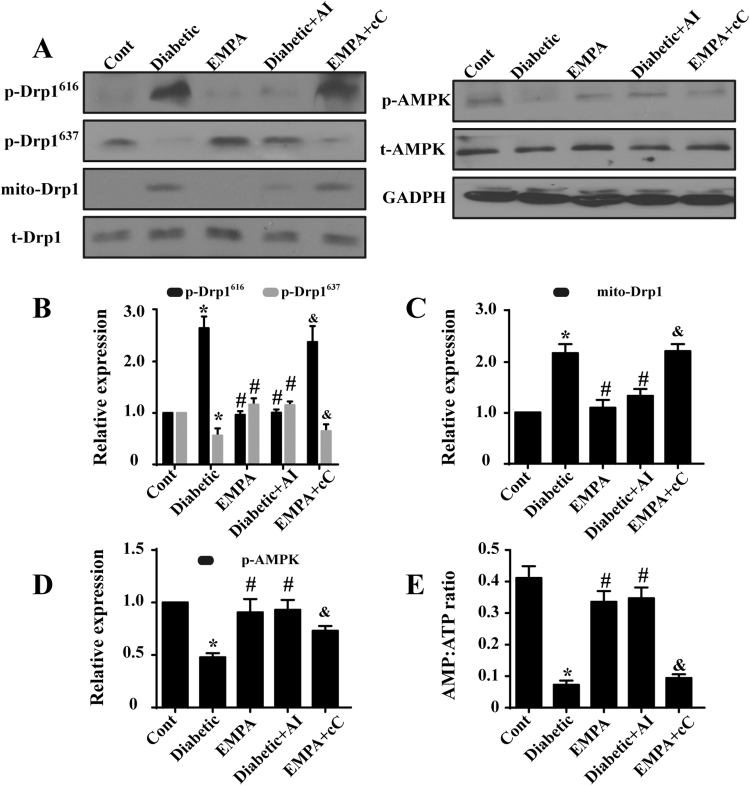
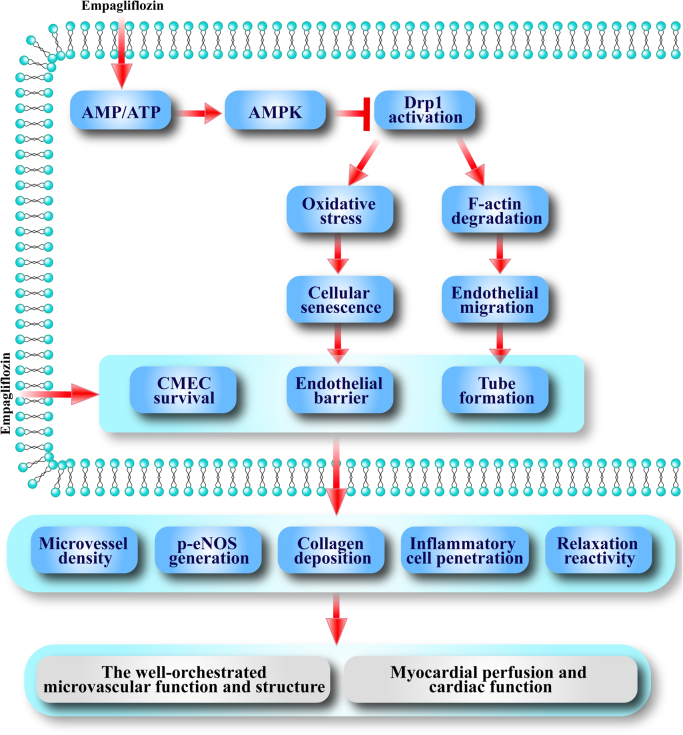
Verification
Claims the paper makes
The claims and statistics of this paper haven’t been checked yet.
Run the check — free, no account needed. It reads the open-access text and checks the sources it cites.
Claims other papers make about this one
Each is checked against this paper’s own text: does it say what the citing paper says it does?
In the citing paper
“Empagliflozin exerted its protective roles via inhibition of AMPK-dependent mitochondrial fission [229].”
From AMPK, Mitochondrial Function, and Cardiovascular Disease (2020) · cites this paper as [229]
In the citing paper
“Empagliflozin recovered the AMP-to-ATP ratio that is necessary for triggering AMPK activation [229].”
From AMPK, Mitochondrial Function, and Cardiovascular Disease (2020) · cites this paper as [229]
In the citing paper
“In the meantime, DRP1-S616 phosphorylation was decreased, while DRP1-S637 phosphorylation was increased, ultimately leading to mitochondrial fission [229].”
From AMPK, Mitochondrial Function, and Cardiovascular Disease (2020) · cites this paper as [229]
Self-check
Percentages, sums and reported differences re-computed from the paper’s own numbers.
The self-check needs the paper’s full text.
Citations
Cites
1 retracted
Zhou, H., Du, W., Li, Y., Chen, S., Hu, N., Ma, S., Wang, W., & Ren, J. T. (2017) · Journal of Pineal Research · doi:10.1111/jpi.12450 · Cited by 292
RetractedEmpagliflozin, Cardiovascular Outcomes, and Mortality in Type 2 Diabetes
Zinman, B., Wanner, C., Lachin, J. M., Fitchett, D., Bluhmki, E., Hantel, S., Mattheus, M., Devins, T., Johansen, O. E., Woerle, H. J., et al. (2015) · New England Journal of Medicine · doi:10.1056/nejmoa1504720 · Cited by 12,315
AMP-activated protein kinase mediates mitochondrial fission in response to energy stress
Toyama, E. Q., Herzig, S., Courchet, J., Lewis, T. L., Losón, O. C., Hellberg, K., Young, N. P., Chen, H., Polleux, F., Chan, D. C., et al. (2016) · Science · doi:10.1126/science.aab4138 · Cited by 1,085
Mitochondrial Fission Inhibitors Suppress Endothelin-1-Induced Artery Constriction
Chen, C., Gao, J., Liu, M., Li, S., Xuan, X., Zhang, X., Zhang, X.-Y., Wei, Y., Zhen, C., Jin, J., et al. (2017) · Cellular Physiology and Biochemistry · doi:10.1159/000479536 · Cited by 782
Empagliflozin, Cardiovascular Outcomes, and Mortality in Type 2 Diabetes
(2016) · New England Journal of Medicine · doi:10.1056/nejmc1600827 · Cited by 700
Mitochondrial composition and function under the control of hypoxia
Fuhrmann, D. C., & Brüne, B. (2017) · Redox Biology · doi:10.1016/j.redox.2017.02.012 · Cited by 665 · cited 1×
“The mitochondrial content is modest in endothelial cells compared to other cell types with a higher energy requirement, indicating a primary role for mitochondria as essential signaling organelles in vascular endothelium [10,11].”
BackgroundMitochondrial dynamics in type 2 diabetes: Pathophysiological implications
Rovira-Llopis, S., Bañuls, C., Diaz-Morales, N., Hernandez-Mijares, A., Rocha, M., & Victor, V. M. (2017) · Redox Biology · doi:10.1016/j.redox.2017.01.013 · Cited by 657 · cited 2×
“Besides, hyperglycemia-triggered mitochondrial fission may be lessened by mitophagy, a repair system for the mitochondrial homeostasis via timely clearance of the mitochondrial debris [15,53].”
BackgroundEndothelial Cell Metabolism in Normal and Diseased Vasculature
Eelen, G., de Zeeuw, P., Simons, M., & Carmeliet, P. (2015) · Circulation Research · doi:10.1161/circresaha.116.302855 · Cited by 637 · cited 1×
“Therefore, the hunt for means to protect the cardiac microvasculature against hyperglycemic damage is essential to retard or alleviate diabetic macrovascular complications [4].”
BackgroundChilton, R., Tikkanen, I., Cannon, C. P., Crowe, S., Woerle, H. J., Broedl, U. C., & Johansen, O. E. (2015) · Diabetes, Obesity and Metabolism · doi:10.1111/dom.12572 · Cited by 507 · cited 1×
“Considerable evidence has documented the ability of empagliflozin to reduce SBP through facilitating osmotic diuresis [38].”
BackgroundWang, W., Wang, Y., Long, J., Wang, J., Haudek, S. B., Overbeek, P., Chang, B. H. J., Schumacker, P. T., & Danesh, F. R. (2012) · Cell Metabolism · doi:10.1016/j.cmet.2012.01.009 · Cited by 476 · cited 3×
“ROCK triggers fission by phosphorylating Drp1 at the Serine(616) (Ser(616)) residue in kidney podocytes and endothelial cells [12].”
Background
Cited by
Sorted by citations
Sharifi-Rad, M., Anil Kumar, N. V., Zucca, P., Varoni, E. M., Dini, L., Panzarini, E., Rajkovic, J., Tsouh Fokou, P. V., Azzini, E., Peluso, I., et al. (2020) · Frontiers in Physiology · doi:10.3389/fphys.2020.00694 · Cited by 1,971
“A recent study demonstrated the beneficial effect of empagliflozin on cardiac microvascular injury in diabetes and the protective mechanism against oxidative stress in mitochondria (Zhou et al., 2018).”
BackgroundLi, C., Zhang, J., Xue, M., Li, X., Han, F., Liu, X., Xu, L., Lu, Y., Cheng, Y., Li, T., et al. (2019) · Cardiovascular Diabetology · doi:10.1186/s12933-019-0816-2 · Cited by 604
Packer, M. (2022) · Circulation · doi:10.1161/circulationaha.122.061732 · Cited by 456
“…cells Only canagliflozin increased activity of AMPK Effect of canagliflozin to reduce proinflammatory signaling was attenuated by AMPK knockout Zhou et al. (2018)192 Empagliflozin Cardiac microvascular endothelial cells from diabetic mice Increased AMPK phosphorylation Reduction in cardiac…”
BackgroundThe role of oxidative stress in diabetes mellitus-induced vascular endothelial dysfunction
An, Y., Xu, B.-T., Wan, S., Xiu-mei, M., Long, Y., Xu, Y., & Jiang, Z. (2023) · Cardiovascular Diabetology · doi:10.1186/s12933-023-01965-7 · Cited by 462
“However, empagliflozin causes CMECs to migrate and promotes angiogenesis [128].”
BackgroundZhang, Y., Wang, Y., Xu, J., Tian, F., Hu, S., Chen, Y., & Fu, Z. (2018) · Journal of Pineal Research · doi:10.1111/jpi.12542 · Cited by 393
Metadata
- Authors
- Zhou, H., Wang, S., Zhu, P., Hu, S., Chen, Y., & Ren, J.
- Affiliations
- Chinese PLA General Hospital (CN)
- University of Wyoming (US)
- Corresponding author
- Zhou, Hao
- Chen, Yundai
- Ren, Jun
- Venue
- Redox Biology
- Publisher
- Elsevier BV
- Published
- 2018-05
- Volume
- 15
- Pages
- 335-346
- ISSN
- 2213-2317 (ISSN-L)
- PMC
- PMC5756062
- OpenAlex
- W2777514005
- Cited by
- 550
- References
- 63
- Citations by year
- 2026: 34 · 2025: 53 · 2024: 87 · 2023: 71 · 2022: 71 · 2021: 65 · 2020: 63 · 2019: 53 · 2018: 50
- FWCI
- 35.91
- Type
- journal article
- Language
- en
- Update notices
- erratum (2024-05-01)
- Open access
- gold
- doi.org
- Licence
- Locations
- Redox Biology (publishedVersion, cc-by-nc-nd)
- PubMed Central (publishedVersion, cc-by-nc-nd)
- PubMed (publishedVersion)
- DOAJ (DOAJ: Directory of Open Access Journals) (submittedVersion, cc-by-sa)
- Funders
- National Natural Science Foundation of China (81441008, 81030002, 81102079, 81270186)
- Topics
- Health Sciences › Medicine › Endocrinology, Diabetes and Metabolism › Diabetes Treatment and Management
- Health Sciences › Medicine › Cardiology and Cardiovascular Medicine › Cardiovascular Function and Risk Factors
- Life Sciences › Biochemistry, Genetics and Molecular Biology › Molecular Biology › Mitochondrial Function and Pathology
- Keywords
- empagliflozin, SGLT2 inhibitors, diabetic cardiomyopathy, mitochondrial fission, AMPK, Drp1 phosphorylation, endothelial barrier function, endothelial cell senescence, mitochondrial reactive oxygen species, oxidative stress, angiogenesis, endothelial cell migration, F-actin depolymerization, eNOS phosphorylation, type 2 diabetes
- MeSH terms
- AMP-Activated Protein Kinase Kinases, Animals, Benzhydryl Compounds, Diabetes Mellitus, Type 2, Glucosides, Heart Injuries, Humans, Mitochondria, Protein Kinases, Endothelial Cells, Mice, Mitochondrial Dynamics
About these checks
Registry, retraction, Cites and statistics results are computed, not judged, with one exception: a printed reference that no index lists is read once by a model before it counts as a citation error. Claims are extracted by a model and kept only when their quote appears verbatim in the text; each cited source is then checked, with a model’s help, for whether it says what the claim relies on. Those verdicts can be wrong — read the claim’s quote and the cited source before relying on one.
Statistics and arithmetic are recomputed, not judged.
Confidence bands are shown only for fields calibrated on our annotated test set. None is calibrated yet, so no band is shown.
What counts as a claim ›How we measure confidence ›How we check this ›
Are you an author, or do you see a problem with this page? Request a review
