

Enhancing microglial antioxidant capacity via the ascorbate transporter SVCT2 delays onset and modifies disease progression in mouse models of Alzheimer's disease
Open accessThe DOI matches its Crossref record; 89 of the 89 references it cites were found in a registry or an index; none of the 65 sources its claims cite is checked for support yet.
Abstract
Despite clear evidence that vitamin C levels are depleted in the brains of Alzheimer's disease (AD) patients, dietary supplementation has consistently failed in clinical trials, suggesting a critical bottleneck not in systemic supply, but in its transport into brain cells. Here, we identify this bottleneck as a progressive downregulation of the ascorbate transporter, Slc23a2, also known as SVCT2, in microglia. Then we hypothesized that bypassing this cellular deficiency via targeted SVCT2 overexpression in microglia could either prevent the onset of pathology or rescue established functional deficits. Indeed, overexpressing SVCT2 in microglia before disease onset in 5xFAD mice triggered a profound redox reprogramming, resulting in a unique "hybrid" neuroprotective microglial phenotype that co-expressed both homeostatic and disease-associated markers. Functionally, this leads to decreased amyloid plaque burden and strengthens the synaptic bioenergetic capacity, which consequently prevents the development of synaptic and memory deficits. Strikingly, when employed after disease establishment, SVCT2 overexpression rescued synaptic plasticity and memory performance despite not affecting the existing amyloid burden. This rescue was driven by changes in the microglial secretory pathways. Collectively, these findings resolve a long-standing clinical paradox by establishing that neuroprotection depends not on systemic vitamin C intake but on the brain's cellular uptake machinery. This offers a mechanistic explanation for the failure of dietary supplementation in AD and identifies SVCT2 as a promising therapeutic target against the neurodegenerative process in AD.
Overview
CoChat Summary
TL;DR
In 5xFAD and APP/PS1 mice, microglial SVCT2 declines with AD-like pathology, and AAV9-CD68-driven SVCT2 overexpression in microglia before onset reduces amyloid burden and prevents synaptic and memory deficits. When delivered after disease establishment, SVCT2 overexpression rescues synaptic plasticity and memory without reducing amyloid, linked to redox reprogramming, a hybrid microglial state, synaptic mitochondrial bioenergetics, and late-stage secretory pathway remodeling.
Key findings
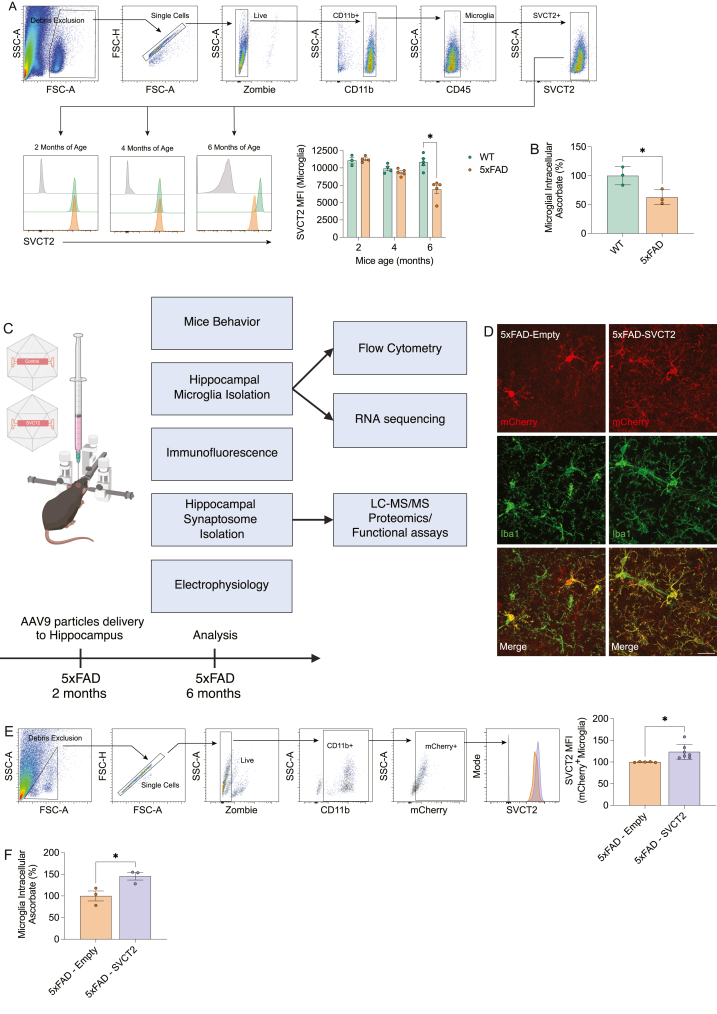
- Microglial SVCT2 expression declined age-dependently in 5xFAD mice at 2, 4, and 6 months, with significantly lower intracellular ascorbate in 5xFAD microglia at 6 months; APP/PS1 microglia also showed diminished SVCT2.
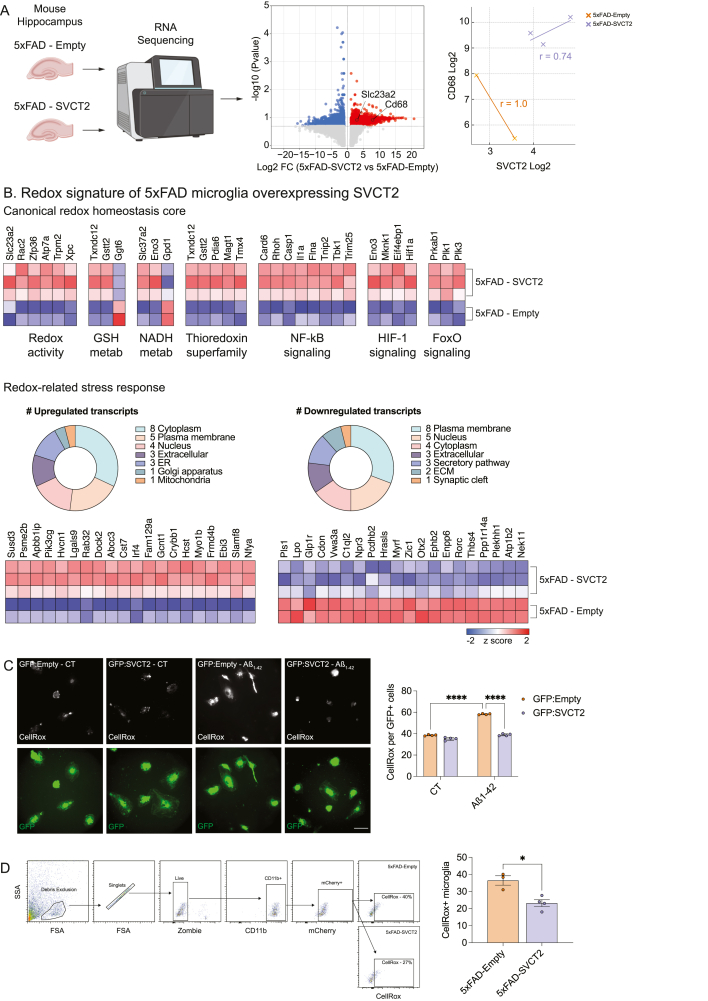
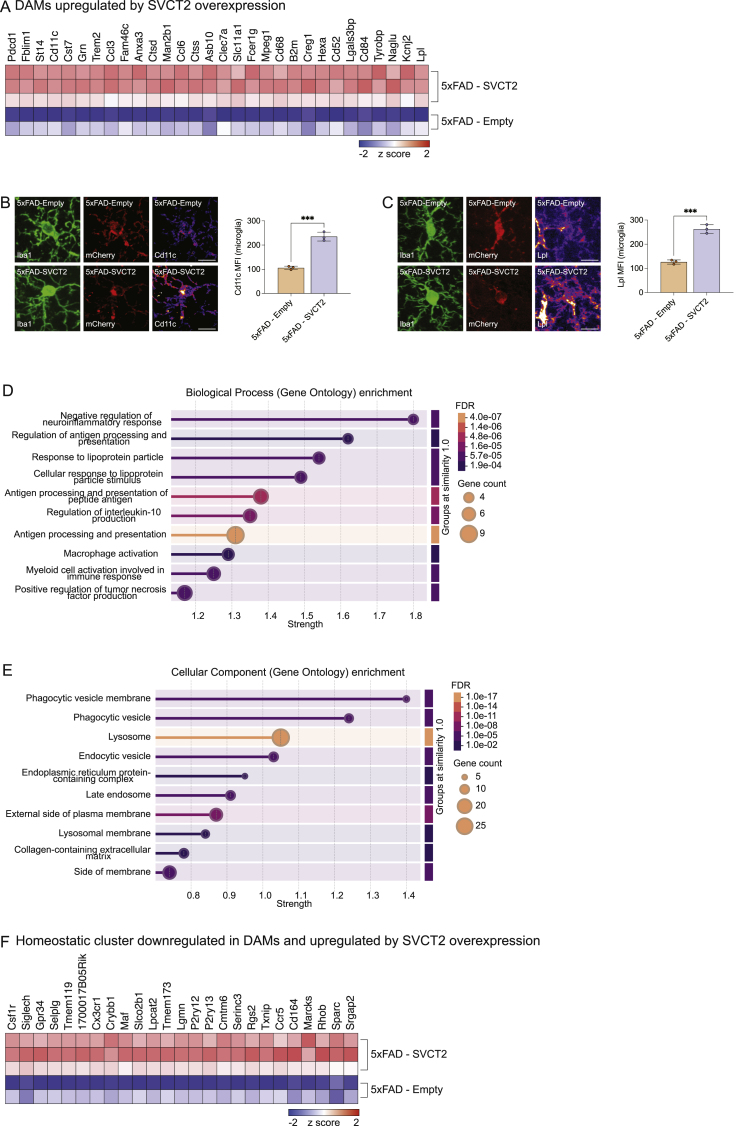
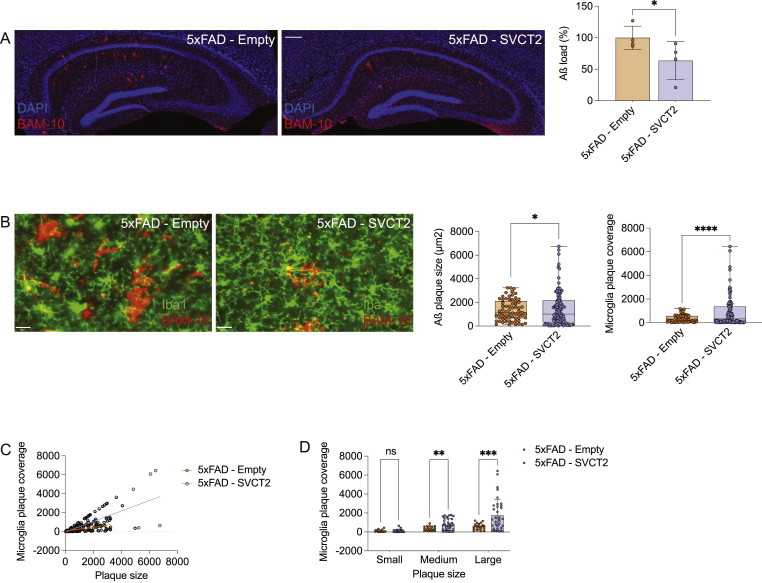
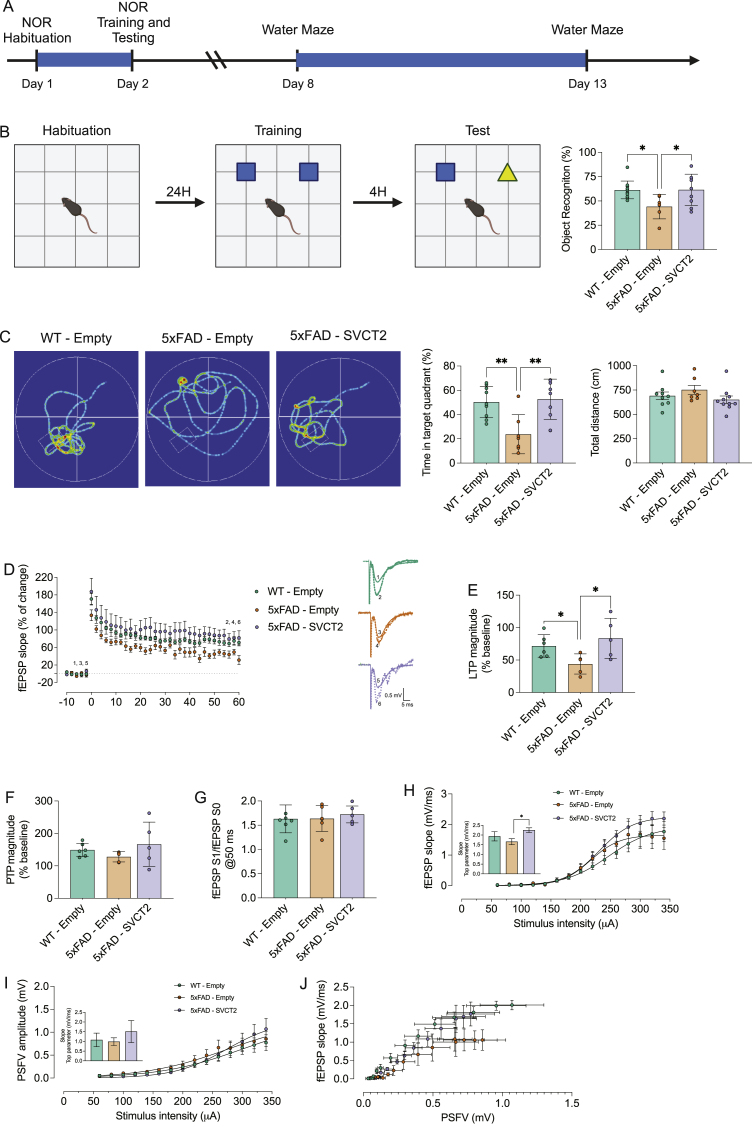
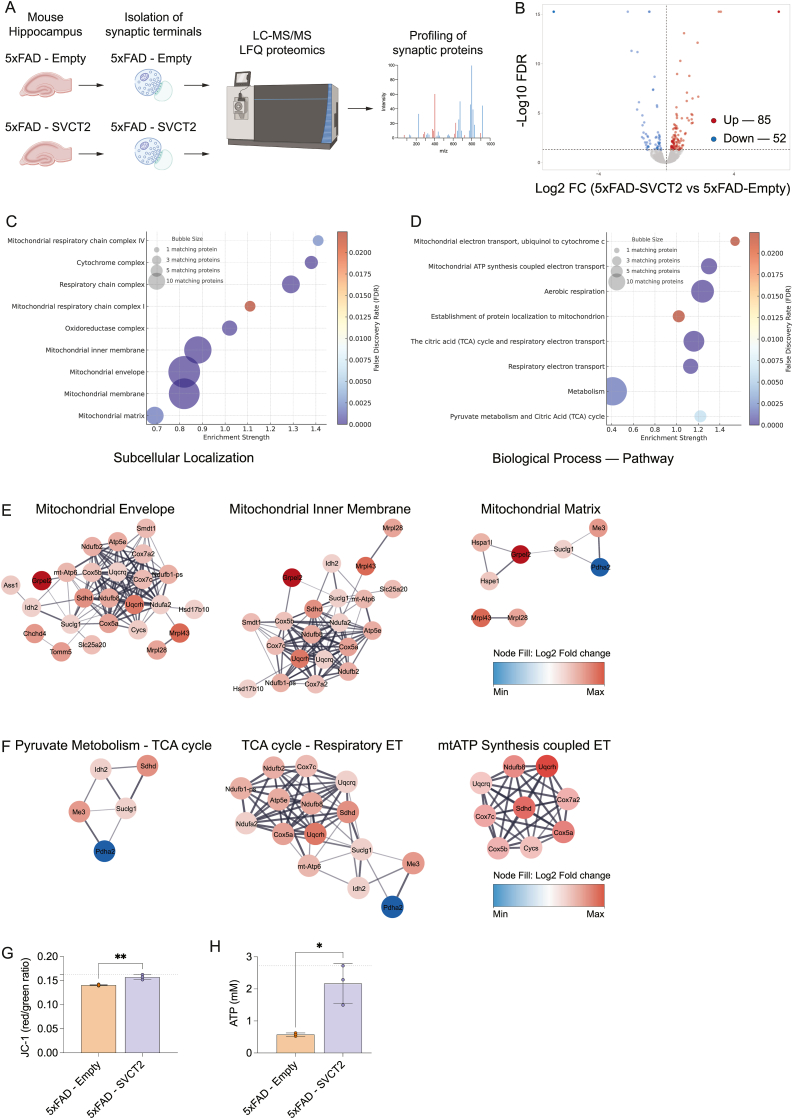
- Early SVCT2 overexpression (AAV9 at 2 months, analysis at 6 months) produced 328 upregulated and 193 downregulated microglial transcripts, a “hybrid” DAM/homeostatic phenotype, decreased amyloid plaque area and size, enhanced microglial plaque coverage, prevented NOR and MWM memory deficits, and enhanced LTP; synaptosome proteomics found 85 upregulated and 52 downregulated proteins, with increased mitochondrial membrane potential and ATP.
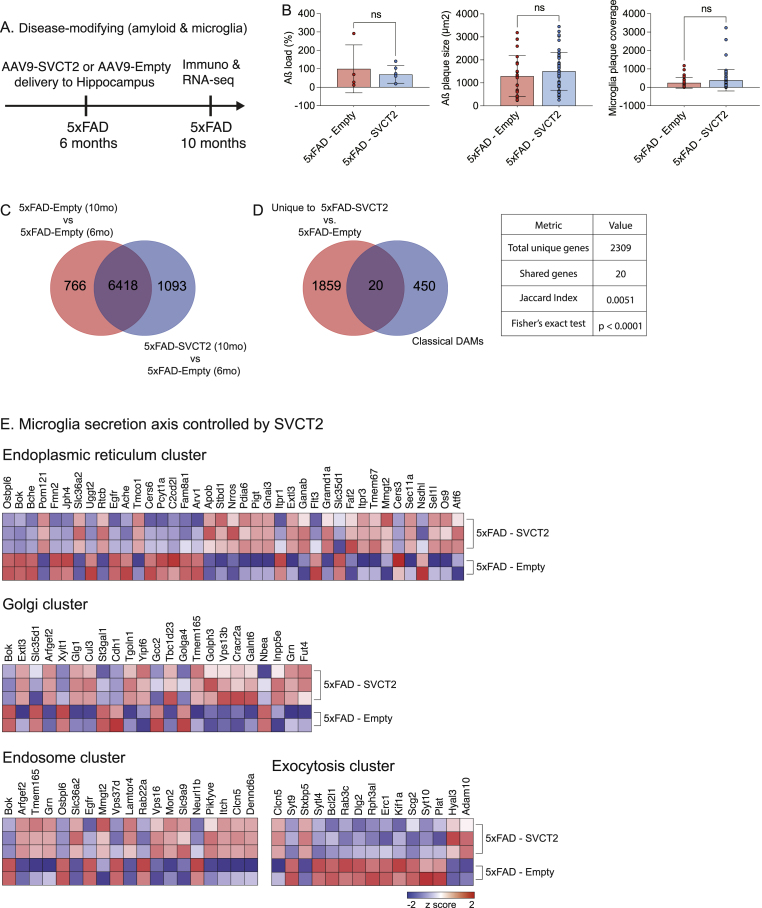
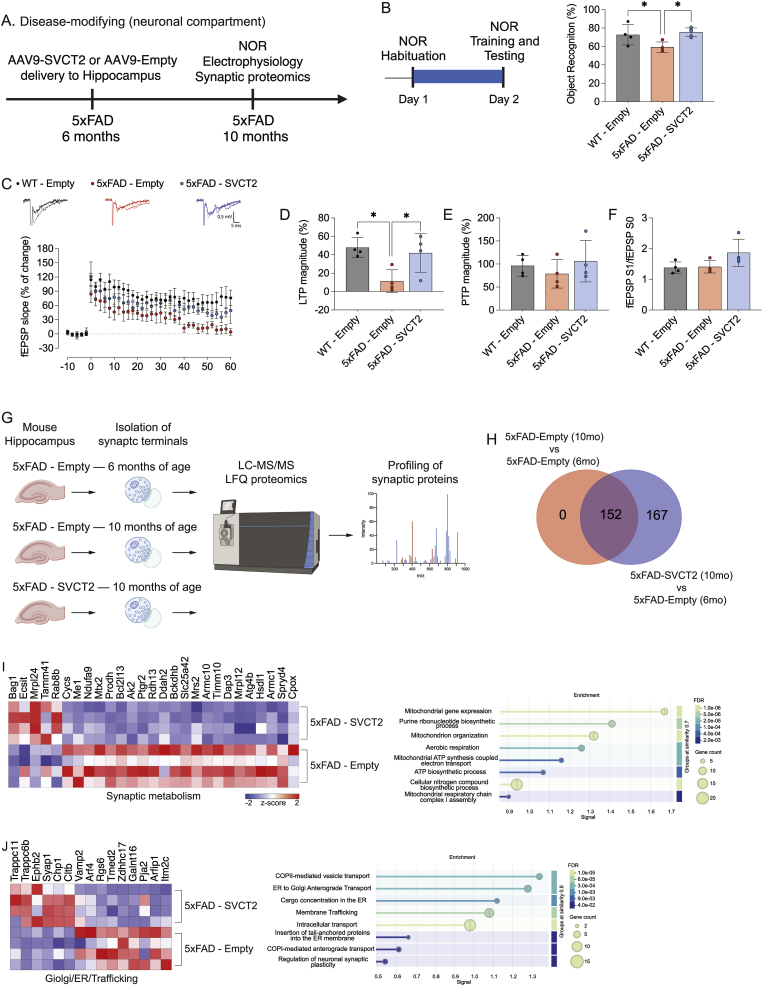
- Late SVCT2 overexpression (AAV9 at 6 months, analysis at 10 months) did not significantly alter amyloid load, plaque size, or microglial plaque coverage, but rescued NOR memory and LTP; it modified 1,093 genes specifically, with only 20 transcripts shared with a canonical DAM set of 2,309 unique genes (Jaccard index 0.0051; Fisher’s exact p < 0.0001), and 167 synaptic proteins were uniquely altered.
- In APP/PS1 mice, microglial SVCT2 overexpression decreased amyloid burden and increased excitatory synaptic density.
Methods
- Female heterozygous 5xFAD and APP/PS1 mice received hippocampal stereotaxic injections of AAV9-CD68:SVCT2-IRES-mCherry or AAV9-CD68:mCherry control; early intervention was at 2 months with analysis at 6 months, and late intervention was at 6 months with analysis at 10 months.
- Outcomes included Novel Object Recognition and Morris Water Maze, hippocampal electrophysiology (fEPSP, LTP, PTP, PPF, input/output), flow cytometry, MACS-isolated microglial RNA-seq, synaptosome LC-MS/MS proteomics, Aβ1-42 ELISA, ascorbate measurements, immunofluorescence imaging, and primary rat microglial cultures.
- Analyses used blinded procedures, Gaussian testing by D’Agostino-Pearson omnibus test, significance at P < 0.05, GraphPad Prism/Python; RNA-seq thresholds were fold change < −1.5 or >1.5, p < 0.05, FDR < 0.1; proteomics used Benjamini–Hochberg FDR ≤ 0.05.
Limitations
- Stated: the study used transgenic mouse models (5xFAD and APP/PS1) that do not capture the full heterogeneity or comorbidities of human AD; AAV9-CD68 translational safety, immunogenicity, and optimal human brain delivery need further investigation; more granular redox-sensitive signaling and secretome composition are needed; long-term efficacy and durability of SVCT2 modulation, especially late-stage, remain to be determined.
- Evident from the text: only female mice were used (5xFAD heterozygous females and exclusively female APP/PS1 mice), limiting sex-generalizability.
- Evident from the text: several key experiments used small group sizes (e.g., N = 3 per group for ascorbate measurements and some imaging/flow analyses; N = 4–5 mice per group for late-stage amyloid and behavior).
Model-written summary. Check it against the paper before relying on it.
Integrity signals
Registry
Cites
Statistics
Figures
Verification
Claims the paper makes
0 Valid · 1 Not valid · 50 Not checked · 196 Own results and interpretations
A result the paper reports from its own data — it cites no other source for it, so there is none to check. The quote shows it is in the paper.
In the paper
“Paired-pulse facilitation (PPF) assay, designed to probe presynaptic alterations, indicated no significant differences in glutamate release probabilities or quantal content between groups (Fig. 5G)”
§ Enhancing microglial antioxidant capacity via the ascorbate transporter SVCT2 delays onset and modifies disease progression in mouse models of Alzheimer's disease > Results > Overexpressing SVCT2 in microglia before disease onset prevents memory deficits and synaptic plasticity impairments in the 5xFAD mice
hedged- Asserted: passes — The authors put it forward as true.
- Checkable: passes — It can be checked against evidence.
- Load-bearing: passes — The paper’s conclusions depend on it.
- Based: passes — The paper gives a reason why it holds.
A result the paper reports from its own data — it cites no other source for it, so there is none to check. The quote shows it is in the paper.
In the paper
“Specifically, the maximum fEPSP slope, a critical parameter indicating synaptic strength, was higher in hippocampal slices from SVCT2-overexpressing 5xFAD microglia than in slices from control 5xFAD microglia (Fig. 5H).”
§ Enhancing microglial antioxidant capacity via the ascorbate transporter SVCT2 delays onset and modifies disease progression in mouse models of Alzheimer's disease > Results > Overexpressing SVCT2 in microglia before disease onset prevents memory deficits and synaptic plasticity impairments in the 5xFAD mice
plainstates an association- Asserted: passes — The authors put it forward as true.
- Checkable: passes — It can be checked against evidence.
- Load-bearing: passes — The paper’s conclusions depend on it.
- Based: passes — The paper gives a reason why it holds.
A result the paper reports from its own data — it cites no other source for it, so there is none to check. The quote shows it is in the paper.
In the paper
“Functionally, this leads to decreased amyloid plaque burden and strengthens the synaptic bioenergetic capacity, which consequently prevents the development of synaptic and memory deficits.”
§ Enhancing microglial antioxidant capacity via the ascorbate transporter SVCT2 delays onset and modifies disease progression in mouse models of Alzheimer's disease > Abstract
plainstates a cause- Asserted: passes — The authors put it forward as true.
- Checkable: passes — It can be checked against evidence.
- Load-bearing: passes — The paper’s conclusions depend on it.
- Based: passes — The paper gives a reason why it holds.
A result the paper reports from its own data — it cites no other source for it, so there is none to check. The quote shows it is in the paper.
In the paper
“We also observed an increase in excitatory synaptic density in the hippocampus of APP/PS1 mice overexpressing SVCT2 in microglia compared to APP/PS1 mice injected with the control virus (Suppl. Fig. 4E).”
§ Enhancing microglial antioxidant capacity via the ascorbate transporter SVCT2 delays onset and modifies disease progression in mouse models of Alzheimer's disease > Results > SVCT2 overexpression in 5xFAD microglia decreases amyloid pathology
plainstates a cause- Asserted: passes — The authors put it forward as true.
- Checkable: passes — It can be checked against evidence.
- Load-bearing: unclear — It is unclear whether the paper’s conclusions depend on it.
- Based: passes — The paper gives a reason why it holds.
A result the paper reports from its own data — it cites no other source for it, so there is none to check. The quote shows it is in the paper.
In the paper
“Furthermore, SVCT2 overexpression in microglia induced a decrease in amyloid plaque size and, critically, enhanced microglial coverage of amyloid deposits (Fig. 4B).”
§ Enhancing microglial antioxidant capacity via the ascorbate transporter SVCT2 delays onset and modifies disease progression in mouse models of Alzheimer's disease > Results > SVCT2 overexpression in 5xFAD microglia decreases amyloid pathology
plainstates a cause- Asserted: passes — The authors put it forward as true.
- Checkable: passes — It can be checked against evidence.
- Load-bearing: passes — The paper’s conclusions depend on it.
- Based: passes — The paper gives a reason why it holds.
178 more claims
Create a free account to see all 247 claims and to verify the 59 references still open.
- It may state two separate claims as one. 48
- Probably not a substantial claim. 23
- The quote only partly states this claim. 1
Self-check
Percentages, sums and reported differences re-computed from the paper’s own numbers.
Each contradiction between two passages listed here was confirmed by an independent check.
Rated major: it would touch a result — a value a result rests on, reported and recomputed p-values on opposite sides of the significance level, two passages that conflict with no sign which is right, or a cited work retracted before this paper was published.
In the paper
§ Enhancing microglial antioxidant capacity via the ascorbate transporter SVCT2 delays onset and modifies disease progression in mouse models of Alzheimer's disease > Methods > Experimental procedures
“incubation with saline (control) or Aβ1-42 oligomers (1 μg/ml) for 3 h.”
§ Enhancing microglial antioxidant capacity via the ascorbate transporter SVCT2 delays onset and modifies disease progression in mouse models of Alzheimer's disease > Results > SVCT2 overexpression reconfigures the redox landscape of 5xFAD microglia
“Cultures were challenged with Aβ1-42 oligomers (1 μM for 3 h) or control saline.”
Citations
Cites
Szklarczyk, D., Gable, A. L., Lyon, D., Junge, A., Wyder, S., Huerta-Cepas, J., Simonovic, M., Doncheva, N. T., Morris, J. H., Bork, P., et al. (2019) · Nucleic Acids Research · doi:10.1093/nar/gky1131 · Cited by 17,749
A Unique Microglia Type Associated with Restricting Development of Alzheimer’s Disease
Keren-Shaul, H., Spinrad, A., Weiner, A., Matcovitch-Natan, O., Dvir-Szternfeld, R., Ulland, T. K., David, E., Baruch, K., Lara-Astaiso, D., Toth, B., et al. (2017) · Cell · doi:10.1016/j.cell.2017.05.018 · Cited by 5,493
NF-κB AND REL PROTEINS: Evolutionarily Conserved Mediators of Immune Responses
Ghosh, S., May, M. J., & Kopp, E. B. (1998) · Annual Review of Immunology · doi:10.1146/annurev.immunol.16.1.225 · Cited by 5,182
Oakley, H., Cole, S. L., Logan, S., Maus, E., Shao, P., Craft, J., Guillozet-Bongaarts, A., Ohno, M., Disterhoft, J., Van Eldik, L., et al. (2006) · The Journal of Neuroscience · doi:10.1523/jneurosci.1202-06.2006 · Cited by 3,530
Friard, O., & Gamba, M. (2016) · Methods in Ecology and Evolution · doi:10.1111/2041-210x.12584 · Cited by 3,437
Krasemann, S., Madore, C., Cialic, R., Baufeld, C., Calcagno, N., El Fatimy, R., Beckers, L., O’Loughlin, E., Xu, Y., Fanek, Z., et al. (2017) · Immunity · doi:10.1016/j.immuni.2017.08.008 · Cited by 2,979
Mitochondrial TCA cycle metabolites control physiology and disease
Martínez-Reyes, I., & Chandel, N. S. (2020) · Nature Communications · doi:10.1038/s41467-019-13668-3 · Cited by 2,813
Microglia promote learning-dependent synapse formation through brain-derived neurotrophic factor
Parkhurst, C. N., Yang, G., Ninan, I., Savas, J. N., Yates, J. R., Lafaille, J. J., Hempstead, B. L., Littman, D. R., & Gan, W.-B. (2013) · Cell · doi:10.1016/j.cell.2013.11.030 · Cited by 2,599
Oxidative Damage Is the Earliest Event in Alzheimer Disease
Nunomura, A., Perry, G., Aliev, G., Hirai, K., Takeda, A., Balraj, E. K., Jones, P. K., Ghanbari, H., Wataya, T., Shimohama, S., et al. (2001) · Journal of Neuropathology & Experimental Neurology · doi:10.1093/jnen/60.8.759 · Cited by 1,885
Nolfi-Donegan, D., Braganza, A., & Shiva, S. (2020) · Redox Biology · doi:10.1016/j.redox.2020.101674 · Cited by 1,488
Disease-Associated Microglia: A Universal Immune Sensor of Neurodegeneration
Deczkowska, A., Keren-Shaul, H., Weiner, A., Colonna, M., Schwartz, M., & Amit, I. (2018) · Cell · doi:10.1016/j.cell.2018.05.003 · Cited by 1,474 · cited 1×
“Given the extensive transcriptomic reprogramming observed, we further leveraged our RNA-seq data to characterize whether SVCT2-induced redox reprogramming in microglia also influences the micro-glial response commonly reported in Alzheimer ’ s pathology [21,46,47].”
Dissecting molecular cross-talk between Nrf2 and NF-κB response pathways
Wardyn, J. D., Ponsford, A. H., & Sanderson, C. M. (2015) · Biochemical Society Transactions · doi:10.1042/bst20150014 · Cited by 1,200
Nagahara, A. H., Merrill, D. A., Coppola, G., Tsukada, S., Schroeder, B. E., Shaked, G. M., Wang, L., Blesch, A., Kim, A., Conner, J. M., et al. (2009) · Nature Medicine · doi:10.1038/nm.1912 · Cited by 1,034
Borchelt, D. R., Ratovitski, T., van Lare, J., Lee, M. K., Gonzales, V., Jenkins, N. A., Copeland, N. G., Price, D. L., & Sisodia, S. S. (1997) · Neuron · doi:10.1016/s0896-6273(00)80974-5 · Cited by 1,023 · cited 2×
“…mice, coexpress a chimeric mouse-human amyloid-β protein precursor (A β PP) bearing a human A β domain with mutations (K595 N and M596L) linked to Swedish familial AD pedigrees and human presenilin-1 A246E mutation, with both transgenes under the control of the mouse prion protein promoter [24].”
Vitamin C pharmacokinetics: Implications for oral and intravenous use
Padayatty, S. J., Sun, H., Wang, Y., Riordan, H. D., Hewitt, S. M., Katz, A., Wesley, R. A., & Levine, M. (2004) · Annals of Internal Medicine · doi:10.7326/0003-4819-140-7-200404060-00010 · Cited by 992
Sala Frigerio, C., Wolfs, L., Fattorelli, N., Thrupp, N., Voytyuk, I., Schmidt, I., Mancuso, R., Chen, W.-T., Woodbury, M. E., Srivastava, G., et al. (2019) · Cell Reports · doi:10.1016/j.celrep.2019.03.099 · Cited by 926 · cited 1×
“Genetic analyses of diagnosed AD patients highlight the significance of microglial genes as genetic risk factors for the disease [17], a finding corroborated by animal studies identifying genes modulating microglial responses to amyloid-beta (A β ) plaques [18].”
Yin, R., Mao, S.-Q., Zhao, B., Chong, Z., Yang, Y., Zhao, C., Zhang, D., Huang, H., Gao, J., Li, Z., et al. (2013) · Journal of the American Chemical Society · doi:10.1021/ja4028346 · Cited by 609 · cited 1×
“Ascorbate itself can modulate gene expression via epigenetic mechanisms, serving as a cofactor for TET enzymes and histone demethylases [8,55 – 57].”
Complement C3 deficiency protects against neurodegeneration in aged plaque-rich APP/PS1 mice
Shi, Q., Chowdhury, S., Ma, R., Le, K. X., Hong, S., Caldarone, B. J., Stevens, B., & Lemere, C. A. (2017) · Science Translational Medicine · doi:10.1126/scitranslmed.aaf6295 · Cited by 593
Butterfield, D. A., Reed, T., Newman, S. F., & Sultana, R. (2007) · Free Radical Biology and Medicine · doi:10.1016/j.freeradbiomed.2007.05.037 · Cited by 564
Late onset Alzheimer’s disease genetics implicates microglial pathways in disease risk
Efthymiou, A. G., & Goate, A. M. (2017) · Molecular Neurodegeneration · doi:10.1186/s13024-017-0184-x · Cited by 562 · cited 1×
“Genetic analyses of diagnosed AD patients highlight the significance of microglial genes as genetic risk factors for the disease [17], a finding corroborated by animal studies identifying genes modulating microglial responses to amyloid-beta (A β ) plaques [18].”
Plasma antioxidants are similarly depleted in mild cognitive impairment and in Alzheimer’s disease
Rinaldi, P., Polidori, M. C., Metastasio, A., Mariani, E., Mattioli, P., Cherubini, A., Catani, M., Cecchetti, R., Senin, U., & Mecocci, P. (2003) · Neurobiology of Aging · doi:10.1016/s0197-4580(03)00031-9 · Cited by 549
Microglia regulation of synaptic plasticity and learning and memory
Zhou, M., Cornell, J., Salinas, S., & Huang, H.-Y. (2022) · Neural Regeneration Research · doi:10.4103/1673-5374.322423 · Cited by 548 · cited 1×
“Given the critical role of microglial secreted factors in modulating synaptic plasticity and memory [50,51], we hypothesized that enhancing SVCT2 expression in microglia could ameliorate memory deficits and synaptic dysfunction, even after their manifestation in the 5xFAD mice.”
Aschauer, D. F., Kreuz, S., & Rumpel, S. (2013) · PLoS ONE · doi:10.1371/journal.pone.0076310 · Cited by 522 · cited 2×
“The expression of these transgenes was driven by the CD68 promoter, chosen for its specificity to the target microglia within the hippocampal region [29 – 33].”
Systematic phenotyping and characterization of the 5xFAD mouse model of Alzheimer’s disease.
Forner, S., Kawauchi, S., Balderrama-Gutierrez, G., Kramár, E. A., Matheos, D. P., Phan, J., Javonillo, D. I., Tran, K. M., Hingco, E., da Cunha, C., et al. (2021) · Scientific Data · doi:10.1038/s41597-021-01054-y · Cited by 501
Mitochondria at the crossroads of health and disease
Suomalainen, A., & Nunnari, J. (2024) · Cell · doi:10.1016/j.cell.2024.04.037 · Cited by 478
Rangaraju, S., Dammer, E. B., Raza, S. A., Rathakrishnan, P., Xiao, H., Gao, T., Duong, D. M., Pennington, M. W., Lah, J. J., Seyfried, N. T., et al. (2018) · Molecular Neurodegeneration · doi:10.1186/s13024-018-0254-8 · Cited by 430
Anderson, W. W., & Collingridge, G. L. (2001) · Journal of Neuroscience Methods · doi:10.1016/s0165-0270(01)00374-0 · Cited by 416
Minor, E. A., Court, B. L., Young, J. I., & Wang, G. (2013) · Journal of Biological Chemistry · doi:10.1074/jbc.c113.464800 · Cited by 413
REGULATION OF VITAMIN C TRANSPORT
Wilson, J. X. (2005) · Annual Review of Nutrition · doi:10.1146/annurev.nutr.25.050304.092647 · Cited by 377
Sotiriou, S., Gispert, S., Cheng, J., Wang, Y., Chen, A., Hoogstraten-Miller, S., Miller, G. F., Kwon, O., Levine, M., Guttentag, S. H., et al. (2002) · Nature Medicine · doi:10.1038/0502-514 · Cited by 367
Grace, P. M., Strand, K. A., Galer, E. L., Urban, D. J., Wang, X., Baratta, M. V., Fabisiak, T. J., Anderson, N. D., Cheng, K., Greene, L. I., et al. (2016) · Proceedings of the National Academy of Sciences · doi:10.1073/pnas.1602070113 · Cited by 367
Vitamin C: A concentration-function approach yields pharmacology and therapeutic discoveries
Levine, M., Padayatty, S. J., & Espey, M. G. (2011) · Advances in Nutrition · doi:10.3945/an.110.000109 · Cited by 357
Vitamin C Suppresses TNFα-Induced NFκB Activation by Inhibiting IκBα Phosphorylation
Cárcamo, J. M., Pedraza, A., Bórquez-Ojeda, O., & Golde, D. W. (2002) · Biochemistry · doi:10.1021/bi0263210 · Cited by 280
Baldwin, A. S. (2012) · Immunological Reviews · doi:10.1111/j.1600-065x.2012.01095.x · Cited by 277
Sobue, A., Komine, O., Hara, Y., Endo, F., Mizoguchi, H., Watanabe, S., Murayama, S., Saito, T., Saido, T. C., Sahara, N., et al. (2021) · Acta Neuropathologica Communications · doi:10.1186/s40478-020-01099-x · Cited by 253 · cited 2×
“Given the extensive transcriptomic reprogramming observed, we further leveraged our RNA-seq data to characterize whether SVCT2-induced redox reprogramming in microglia also influences the micro-glial response commonly reported in Alzheimer ’ s pathology [21,46,47].”
Vitamin C, Aging and Alzheimer’s Disease
Monacelli, F., Acquarone, E., Giannotti, C., Borghi, R., & Nencioni, A. (2017) · Nutrients · doi:10.3390/nu9070670 · Cited by 243 · cited 1×
“Despite the recognized importance of vitamin C in combating oxidative stress in AD, epidemiological studies have not consistently linked vitamin C supplementation with AD prevention or improvement [14,15].”
TDP-43 depletion in microglia promotes amyloid clearance but also induces synapse loss
Paolicelli, R. C., Jawaid, A., Henstridge, C. M., Valeri, A., Merlini, M., Robinson, J. L., Lee, E. B., Rose, J., Appel, S., Lee, V. M.-Y., et al. (2017) · Neuron · doi:10.1016/j.neuron.2017.05.037 · Cited by 239
Anxiety in Alzheimer's Disease: Prevalence and Comorbidity
Teri, L., Ferretti, L. E., Gibbons, L. E., Logsdon, R. G., McCurry, S. M., Kukull, W. A., McCormick, W. C., Bowen, J. D., & Larson, E. B. (1999) · The Journals of Gerontology Series A: Biological Sciences and Medical Sciences · doi:10.1093/gerona/54.7.m348 · Cited by 227
Reconstruction of neocortex: Organelles, compartments, cells, circuits, and activity
Turner, N. L., Macrina, T., Bae, J. A., Yang, R., Wilson, A. M., Schneider-Mizell, C., Lee, K., Lu, R., Wu, J., Bodor, A. L., et al. (2022) · Cell · doi:10.1016/j.cell.2022.01.023 · Cited by 206 · cited 1×
“Such bolstering of neuronal energy supply is essential for maintaining neuronal resilience and synaptic function against an ongoing neurodegenerative process [70 – 73].”
Increased lipoprotein oxidation in alzheimer’s disease
Schippling, S., Kontush, A., Arlt, S., Buhmann, C., Stürenburg, H.-J., Mann, U., Müller-Thomsen, T., & Beisiegel, U. (2000) · Free Radical Biology and Medicine · doi:10.1016/s0891-5849(99)00247-6 · Cited by 199
Rabinovici, G. D. (2019) · Continuum · doi:10.1212/con.0000000000000700 · Cited by 170 · cited 1×
“Characterized by progressive memory loss and behavioral changes, AD manifests through diminished decision-making abilities, language difficulties, and personality alterations [1], with anxiety and depression frequently observed as comorbidities [2].”
Vitamin C Status and Cognitive Function: A Systematic Review
Travica, N., Ried, K., Sali, A., Scholey, A., Hudson, I., & Pipingas, A. (2017) · Nutrients · doi:10.3390/nu9090960 · Cited by 170
Albensi, B. C., Oliver, D. R., Toupin, J., & Odero, G. (2007) · Experimental Neurology · doi:10.1016/j.expneurol.2006.12.009 · Cited by 168
EphB Controls NMDA Receptor Function and Synaptic Targeting in a Subunit-Specific Manner
Nolt, M. J., Lin, Y., Hruska, M., Murphy, J., Sheffler-Colins, S. I., Kayser, M. S., Passer, J., Bennett, M. V. L., Zukin, R. S., & Dalva, M. B. (2011) · The Journal of Neuroscience · doi:10.1523/jneurosci.0282-11.2011 · Cited by 165
Human Microglia Show Unique Transcriptional Changes in Alzheimer's Disease
Prater, K. E., Green, K. J., Mamde, S., Sun, W., Cochoit, A., Smith, C. L., Chiou, K. L., Heath, L., Rose, S. E., Wiley, J., et al. (2023) · Nature Aging · doi:10.1038/s43587-023-00424-y · Cited by 164 · cited 3×
“More recently, Prater and colleagues have reported a decrease in SVCT2 mRNA expression in microglia from AD patients [16].”
InfluentialLi, X., Bu, X., Lu, B., Avraham, H., Flavell, R. A., & Lim, B. (2002) · Molecular and Cellular Biology · doi:10.1128/mcb.22.4.1158-1171.2002 · Cited by 153 · cited 1×
“Indeed, Card6 , Rhoh , and Tnip2 are well-known inhibitors of NF-κβ signaling [60 – 62].”
Chang, Y.-T., Chang, W.-N., Tsai, N.-W., Huang, C.-C., Kung, C.-T., Su, Y.-J., Lin, W.-C., Cheng, B.-C., Su, C.-M., Chiang, Y.-F., et al. (2014) · BioMed Research International · doi:10.1155/2014/182303 · Cited by 141
Lower brain and blood nutrient status in Alzheimer's disease: Results from meta‐analyses
de Wilde, M. C., Vellas, B., Girault, E., Yavuz, A. C., & Sijben, J. W. (2017) · Alzheimer's & Dementia: Translational Research & Clinical Interventions · doi:10.1016/j.trci.2017.06.002 · Cited by 135
Microglia-specific targeting by novel capsid-modified AAV6 vectors
Rosario, A. M., Cruz, P. E., Ceballos-Diaz, C., Strickland, M. R., Siemienski, Z., Pardo, M., Schob, K.-L., Li, A., Aslanidi, G. V., Srivastava, A., et al. (2016) · Molecular Therapy - Methods & Clinical Development · doi:10.1038/mtm.2016.26 · Cited by 118
Exploring ER stress response in cellular aging and neuroinflammation in Alzheimer's disease
Uddin, M. S., Yu, W. S., & Lim, L. W. (2021) · Ageing Research Reviews · doi:10.1016/j.arr.2021.101417 · Cited by 114
DREADDed microglia in pain: Implications for spinal inflammatory signaling in male rats
Grace, P. M., Wang, X., Strand, K. A., Baratta, M. V., Zhang, Y., Galer, E. L., Yin, H. H., Maier, S. F., & Watkins, L. R. (2018) · Experimental Neurology · doi:10.1016/j.expneurol.2018.03.005 · Cited by 111
O’Carroll, S. J., Cook, W. H., & Young, D. (2021) · Frontiers in Molecular Neuroscience · doi:10.3389/fnmol.2020.618020 · Cited by 107
Nuclear Factor Kappa B Signaling Complexes in Acute Inflammation
Rius-Pérez, S., Pérez, S., Martí-Andrés, P., Monsalve, M., & Sastre, J. (2020) · Antioxidants & Redox Signaling · doi:10.1089/ars.2019.7975 · Cited by 105
Astrocyte-derived TNF and glutamate critically modulate microglia activation by methamphetamine
Canedo, T., Portugal, C. C., Socodato, R., Almeida, T. O., Terceiro, A. F., Bravo, J., Silva, A. I., Magalhães, J. D., Guerra‐Gomes, S., Oliveira, J. F., et al. (2021) · Neuropsychopharmacology · doi:10.1038/s41386-021-01139-7 · Cited by 95
Self-citationSocodato, R., Portugal, C. C., Canedo, T., Rodrigues, A., Almeida, T. O., Henriques, J. F., Vaz, S. H., Magalhães, J., Silva, C. M., Baptista, F. I., et al. (2020) · Cell Reports · doi:10.1016/j.celrep.2020.107796 · Cited by 94 · cited 3×
“A β 1-42 oligomers were prepared as before [26,27].”
Self-citationKorogod, N., Lou, X., & Schneggenburger, R. (2007) · Proceedings of the National Academy of Sciences · doi:10.1073/pnas.0704603104 · Cited by 94
Pharmacokinetic perspectives on megadoses of ascorbic acid
Blanchard, J., Tozer, T., & Rowland, M. (1997) · The American Journal of Clinical Nutrition · doi:10.1093/ajcn/66.5.1165 · Cited by 88
Vitamin C promotes oligodendrocytes generation and remyelination
Guo, Y., Suo, N., Cui, X. J., Yuan, Q., & Xie, X. (2018) · Glia · doi:10.1002/glia.23306 · Cited by 85
Minjarez, B. D., Calderón-González, K. G., Rustarazo, M. L. V., Herrera-Aguirre, M. E., Labra‐Barrios, M. L., Rincón-Limas, D. E., del Pino, M. M. S., Mena, R., & Luna‐Arias, J. P. (2016) · Journal of Proteomics · doi:10.1016/j.jprot.2016.03.022 · Cited by 85
Proteomics Analysis of Gastric Cancer Patients with Diabetes Mellitus
Osório, H., Silva, C., Ferreira, M., Gullo, I., Máximo, V., Barros, R., Mendonça, F., Oliveira, C., & Carneiro, F. (2021) · Journal of Clinical Medicine · doi:10.3390/jcm10030407 · Cited by 83
Mun, G. H., Kim, M. J., Lee, J. H., Kim, H. J., Chung, Y. H., Chung, Y. B., Kang, J. S., Hwang, Y. I., Oh, S. H., Kim, J., et al. (2006) · Journal of Neuroscience Research · doi:10.1002/jnr.20751 · Cited by 81
Socodato, R., Henriques, J. F., Portugal, C. C., Almeida, T. O., Tedim-Moreira, J., Alves, R. L., Canedo, T., Silva, C., Magalhães, A., Summavielle, T., et al. (2020) · Science Signaling · doi:10.1126/scisignal.aba5754 · Cited by 79
Self-citationPortugal, C. C., Socodato, R., Canedo, T., Silva, C. M., Martins, T., Coreixas, V. S. M., Loiola, E. C., Gess, B., Röhr, D., Santiago, A. R., et al. (2017) · Science Signaling · doi:10.1126/scisignal.aal2005 · Cited by 76
Self-citationHu, R., Wei, P., Jin, L., Zheng, T., Chen, W.-Y., Liu, X.-Y., Shi, X.-D., Hao, J.-R., Sun, N., & Gao, C. (2017) · Cell Death & Disease · doi:10.1038/cddis.2017.140 · Cited by 75
A quantitative meta-analysis of vitamin C in the pathophysiology of Alzheimer’s disease
Hamid, M., Mansoor, S., Amber, S., & Zahid, S. (2022) · Frontiers in Aging Neuroscience · doi:10.3389/fnagi.2022.970263 · Cited by 73
Tai, Y.-H., Engels, D., Locatelli, G., Emmanouilidis, I., Fecher, C., Theodorou, D., Müller, S. A., Licht‐Mayer, S., Kreutzfeldt, M., Wagner, I., et al. (2023) · Nature Metabolism · doi:10.1038/s42255-023-00838-3 · Cited by 71
Lv, Z., Chen, L., Chen, P., Peng, H., Rong, Y., Hong, W., Zhou, Q., Li, N., Li, B., Paolicelli, R. C., et al. (2024) · Neuron · doi:10.1016/j.neuron.2023.12.003 · Cited by 69
Ascorbic acid, cognitive function, and Alzheimer's disease: A current review and future direction
Bowman, G. L. (2012) · BioFactors · doi:10.1002/biof.1002 · Cited by 66
CARD6 Is a Modulator of NF-κB Activation by Nod1- and Cardiak-mediated Pathways
Stehlik, C., Hayashi, H., Pio, F., Godzik, A., & Reed, J. C. (2003) · Journal of Biological Chemistry · doi:10.1074/jbc.m300009200 · Cited by 59
Chen, S.-J., Hseu, Y.-C., Gowrisankar, Y. V., Chung, Y.-T., Zhang, Y.-Z., Way, T.-D., & Yang, H.-L. (2021) · Free Radical Biology and Medicine · doi:10.1016/j.freeradbiomed.2021.07.030 · Cited by 58
Isolation of Microglia and Immune Infiltrates from Mouse and Primate Central Nervous System
Galatro, T. F. D. A., Vainchtein, I. D., Brouwer, N., Boddeke, E., & Eggen, B. J. L. (2017) · Methods in molecular biology · doi:10.1007/978-1-4939-6786-5_23 · Cited by 55
Socodato, R., Portugal, C. C., Canedo, T., Domith, I., Oliveira, N. A., Paes-de-Carvalho, R., Relvas, J. B., & Cossenza, M. (2015) · Free Radical Biology and Medicine · doi:10.1016/j.freeradbiomed.2014.11.019 · Cited by 51
Self-citationHabets, R. L. P., & Borst, J. G. G. (2007) · The Journal of Physiology · doi:10.1113/jphysiol.2006.127365 · Cited by 51
Vitamin C modulates glutamate transport and NMDA receptor function in the retina
Domith, I., Socodato, R., Portugal, C. C., Munis, A. F., Duarte-Silva, A. T., & Paes‐de‐Carvalho, R. (2017) · Journal of Neurochemistry · doi:10.1111/jnc.14260 · Cited by 45
Self-citationSotiriou, S., Gispert, S., Cheng, J., et al. (2002) · Nature Medicine · doi:10.1038/nm0502-514 · Cited by 40
Abreu, D. S., Gomes, J. I., Ribeiro, F. F., Diógenes, M. J., Sebastião, A. M., & Vaz, S. H. (2023) · Frontiers in Cellular Neuroscience · doi:10.3389/fncel.2023.1282841 · Cited by 34
Self-citationScanning ultrasound-mediated memory and functional improvements do not require amyloid-β reduction
Leinenga, G., To, X. V., Bodea, L., Yousef, J. M., Richter-Stretton, G. L., Palliyaguru, T., Chicoteau, A., Dagley, L. F., Nasrallah, F. A., & Götz, J. (2024) · Molecular Psychiatry · doi:10.1038/s41380-024-02509-5 · Cited by 33
Rei, N., Rombo, D. M., Ferreira, M. F., Baqi, Y., Müller, C. E., Ribeiro, J. A., Sebastião, A. M., & Vaz, S. H. (2020) · Neuropharmacology · doi:10.1016/j.neuropharm.2020.108106 · Cited by 30
Self-citationMicroglial Rac1 is essential for experience-dependent brain plasticity and cognitive performance
Socodato, R., Almeida, T. O., Portugal, C. C., Santos, E. C. S., Tedim-Moreira, J., Galvão-Ferreira, J., Canedo, T., Baptista, F. I., Magalhães, A., Ambrósio, A. F., et al. (2023) · Cell Reports · doi:10.1016/j.celrep.2023.113447 · Cited by 27
Self-citationNi, Y., Wu, G.-H., Cai, J.-J., Zhang, R., Zheng, Y., Liu, J.-Q., Yang, X.-H., Yang, X., Shen, Y., Lai, J.-M., et al. (2022) · International Journal of Biological Sciences · doi:10.7150/ijbs.74430 · Cited by 25
Barendrecht, S., Schreurs, A., Geissler, S., Sabanov, V., Ilse, V., Rieckmann, V., Eichentopf, R., Künemund, A., Hietel, B., Wussow, S., et al. (2023) · Alzheimer's Research & Therapy · doi:10.1186/s13195-022-01144-y · Cited by 22
Portugal, C. C. (2024) · Free Radical Biology and Medicine · doi:10.1016/j.freeradbiomed.2023.12.040 · Cited by 21
Self-citationKatsuyama, Y., Tsuboi, T., Taira, N., Yoshioka, M., & Masaki, H. (2016) · Journal of Dermatological Science · doi:10.1016/j.jdermsci.2016.03.002 · Cited by 18
Maity, J., Majumder, S., Pal, R., Saha, B., & Mukhopadhyay, P. K. (2023) · BioEssays · doi:10.1002/bies.202300035 · Cited by 16
Pinto, S., Gonçalves‐Ribeiro, J., Tedim-Moreira, J., Socodato, R., Relvas, J. B., Sebastião, A. M., & Vaz, S. H. (2024) · Neurobiology of Disease · doi:10.1016/j.nbd.2024.106435 · Cited by 11
Self-citationQian, X., Wang, Y., Li, X., Li, Y., & Li, L. (2023) · Immunity, Inflammation and Disease · doi:10.1002/iid3.970 · Cited by 10
Construction of a Brain-specific SLC23A2 Gene Knockout Mice Model
Cao, B., Xia, Y., Cai, Z., Wang, Z., Tang, C., & Song, Y. (2023) · Neuroscience · doi:10.1016/j.neuroscience.2023.05.023 · Cited by 8
(2004) · PubMed
Leinenga, G., To, X. V., Bodea, L.-G., Yousef, J., Richter-Stretton, G., Palliyaguru, T., Chicoteau, A., Dagley, L., Nasrallah, F., & Götz, J. (2024) · Molecular Psychiatry · doi:10.1038/s41380-024-02616-3
Cited by
Efficacy of antioxidants as a therapy for Alzheimer's disease: a meta-analysis
Li, J., Chen, B., Jiang, J., Feng, Y., Zhang, R., Li, D. M., Wang, R., Long, Z., Ge, L., Guo, Y., et al. (2026) · Frontiers in Nutrition · doi:10.3389/fnut.2026.1878597 · Cited by 3
Ain, Q., Martínez‐Cerdeño, V., Traber, M. G., Leonard, S., Finno, C. J., Lin, X., Lozano, R., & Tassone, F. (2026) · Nutrition Research · doi:10.1016/j.nutres.2026.10.001
Metadata
- Authors
- Portugal, C. C., Santos, E. C. S., Monteiro-Pacheco, A., Costa-Pinto, S., Almeida, T. O., Tedim-Moreira, J., Gavin, D., Canedo, T., Oliveira, F., Cardoso, I., Summavielle, T., Vaz, S. H., Socodato, R., & Relvas, J. B.
- Affiliations
- Universidade do Porto (PT)
- i3S - Instituto de Investigação e Inovação em Saúde, Universidade do Porto (PT)
- University of Lisbon (PT)
- Corresponding author
- Portugal, Camila C.
- Socodato, Renato
- Relvas, João B.
- ORCID
- Venue
- Redox Biology
- Publisher
- Elsevier BV
- Published
- 2025-10
- Volume
- 86
- Pages
- 103851
- ISSN
- 2213-2317 (ISSN-L)
- PMC
- PMC12445587
- OpenAlex
- W4413801239
- Cited by
- 2
- References
- 87
- Citations by year
- 2026: 2
- FWCI
- 0.47
- Type
- journal article
- Language
- en
- Open access
- gold
- doi.org
- Licence
- cc-by-nc-nd
- www.elsevier.com/tdm/userlicense/1.0/ (tdm)
- www.elsevier.com/legal/tdmrep-license (tdm)
- creativecommons.org/licenses/by-nc-nd/4.0/ (vor)
- Locations
- Redox Biology (publishedVersion, cc-by-nc-nd)
- PubMed Central (publishedVersion, cc-by-nc-nd)
- Europe PMC (PubMed Central) (publishedVersion, cc-by-nc-nd)
- PubMed (publishedVersion)
- DOAJ (DOAJ: Directory of Open Access Journals) (submittedVersion)
- Funders
- Rede Nacional de Espectrometria de Massa (ROTEIRO/0028/2013, LISBOA-01-0145-FEDER-022125)
- Fundação para a Ciência e a Tecnologia (PTDC/BTM-SAL/32147/2017, 2024.05324, EXPL/MED-NEU/0588/2021, 2023.06380, 57/2016, SFRH/BD/147981/2019, 57/2017, UI/BD/151552/2021, SFRH/BD/147277/2019)
- Institut Sukan Negara (952455)
- European Regional Development Fund
- International Society for Neurochemistry
- Brown Foundation Institute of Molecular Medicine for the Prevention of Human Diseases
- Topics
- Life Sciences › Neuroscience › Cellular and Molecular Neuroscience › Alzheimer's disease research and treatments
- Life Sciences › Neuroscience › Neurology › Neuroinflammation and Neurodegeneration Mechanisms
- Life Sciences › Neuroscience › Neurology › Neurological Disease Mechanisms and Treatments
- Keywords
- Alzheimer's disease, SVCT2, SLC23A2, microglia, vitamin C, antioxidant capacity, 5xFAD mice, amyloid plaques, synaptic plasticity, memory impairment, neuroprotection, therapeutic target
- MeSH terms
- Alzheimer Disease, Animals, Antioxidants, Ascorbic Acid, Disease Models, Animal, Humans, Mice, Transgenic, Oxidation-Reduction, Microglia, Disease Progression, Mice, Sodium-Coupled Vitamin C Transporters
About these checks
Registry, retraction, Cites and statistics results are computed, not judged, with one exception: a printed reference that no index lists is read once by a model before it counts as a citation error. Claims are extracted by a model and kept only when their quote appears verbatim in the text; each cited source is then checked, with a model’s help, for whether it says what the claim relies on. Those verdicts can be wrong — read the claim’s quote and the cited source before relying on one.
A language model drew the claims from the paper on 2026-11-27, under version 3 of the claim definition (model deepseek-v4.1-flash, prompt extract-v3).
A second model labelled each claim on 2026-11-27 (model jev-1.13-20260917, definition revision gold-guideline-v0.2).
Statistics and arithmetic are recomputed, not judged.
Confidence bands are shown only for fields calibrated on our annotated test set. None is calibrated yet, so no band is shown.
What counts as a claim ›How we measure confidence ›How we check this ›
Are you an author, or do you see a problem with this page? Request a review
Data sources
Bibliographic data: Semantic Scholar, OpenAlex, Crossref.
Contains information from the Semantic Scholar Academic Graph Datasets, made available under the ODC Attribution License (ODC-BY 1.0).
Semantic Scholar’s data is described in: Kinney, R., et al. (2023). The Semantic Scholar Open Data Platform. arXiv:2301.10140.
