

The DOI matches its Crossref record; 1 of the 1 references it cites were found in a registry or an index.
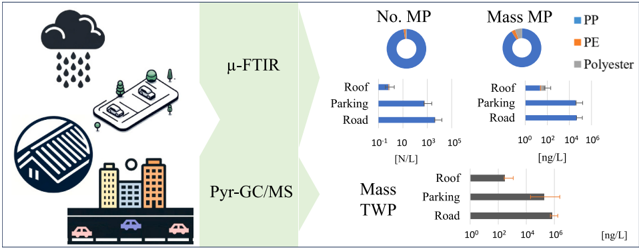
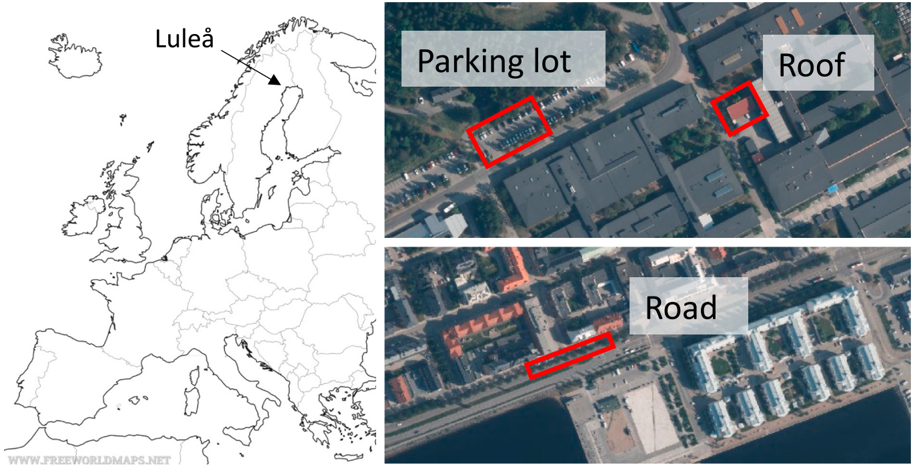
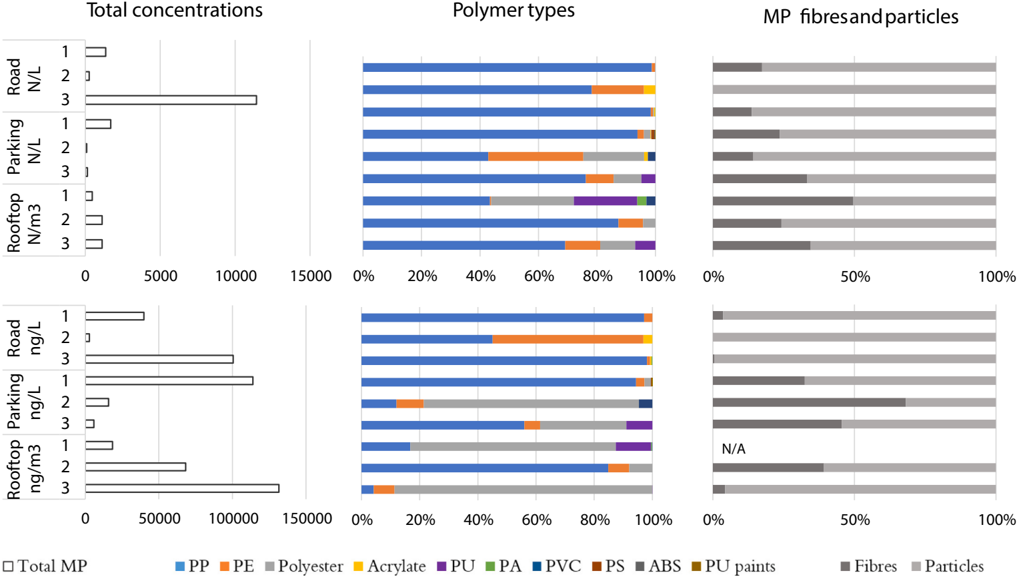
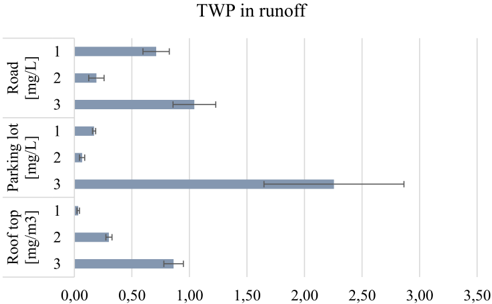
Microplastics and tyre wear particles in urban runoff from different urban surfaces
Overview
The claims and statistics of this paper haven’t been checked yet.
Run the check — free, no account needed. It reads the open-access text and checks the sources it cites.
Integrity signals
Registry
Cites
Statistics
Figures


Verification
Claims the paper makes
The claims and statistics of this paper haven’t been checked yet.
Run the check — free, no account needed. It reads the open-access text and checks the sources it cites.
Claims other papers make about this one
Each is checked against this paper’s own text: does it say what the citing paper says it does?
In the citing paper
“Traffic is a major source of airborne MP, primarily through the generation of particles from the wear and tear of vehicle rubber tires, brake wear, and road surface abrasion (Lindfors et al., 2025).”
From Airborne microplastic exposure and urinary oxidative damage biomarkers in populations living in traffic-congested areas (2026) · cites this paper as Lindfors et al., 2025
Self-check
Percentages, sums and reported differences re-computed from the paper’s own numbers.
The self-check needs the paper’s full text.
Citations
Cites
Microplastics entering northwestern Lake Ontario are diverse and linked to urban sources
Grbić, J., Helm, P., Athey, S., & Rochman, C. M. (2020) · Water Research · doi:10.1016/j.watres.2020.115623 · Cited by 407
Research works printed but not linked: 57
- Boyd, 2004, Pharmaceuticals and personal care products (PPCPs) and endocrine disrupting chemicals (EDCs) in stormwater canals and Bayou St. John in New Orleans, Louisiana, USA, Sci. Total Environ., 333, 137, 10.1016/j.scitotenv.2004.03.018 · DOI
- Cho, 2023, Microplastic emission characteristics of stormwater runoff in an urban area: intra-event variability and influencing factors, Sci. Total Environ., 866, 10.1016/j.scitotenv.2022.161318 · DOI
- Dris, 2016, Synthetic fibers in atmospheric fallout: a source of microplastics in the environment?, Mar. Pollut. Bull., 104, 290, 10.1016/j.marpolbul.2016.01.006 · DOI
- Eisentraut, 2018, Two birds with one stone fast and simultaneous analysis of microplastics: microparticles derived from thermoplastics and tire wear, Environ. Sci. Technol. Lett., 5, 608, 10.1021/acs.estlett.8b00446 · DOI
- Fatemi, 2006, Optimization of the water-based road-marking paint by experimental design, mixture method, Prog. Org. Coat., 55, 337, 10.1016/j.porgcoat.2006.01.006 · DOI
- Gaggini, 2024, Assessment of fine and coarse tyre wear particles along a highway stormwater system and in receiving waters: occurrence and transport, J. Environ. Manag., 367, 10.1016/j.jenvman.2024.121989 · DOI
- García-Haba, 2023, The role of different sustainable urban drainage systems in removing microplastics from urban runoff: a review, J. Clean. Prod., 411, 10.1016/j.jclepro.2023.137197 · DOI
- Goßmann, 2021, Car and truck tire wear particles in complex environmental samples – a quantitative comparison with “traditional” microplastic polymer mass loads, Sci. Total Environ., 773, 10.1016/j.scitotenv.2021.145667 · DOI
- Goßmann, 2022, Plastic in the air?! - spider webs as spatial and temporal mirror for microplastics including tire wear particles in urban air, Sci. Total Environ., 832, 10.1016/j.scitotenv.2022.155008 · DOI
- Gündogdu, 2018, How microplastics quantities increase with flood events? An example from Mersin Bay NE Levantine coast of Turkey *, Environ. Pollut., 293, 342, 10.1016/j.envpol.2018.04.042 · DOI
- Hernández-Fernández, 2022, Characterization of microplastics in total atmospheric deposition sampling from areas surrounding industrial complexes in northwestern Colombia, Sustainability, 14, 10.3390/su142013613 · DOI
- Hitchcock, 2020, Storm events as key moments of microplastic contamination in aquatic ecosystems, Sci. Total Environ., 734, 10.1016/j.scitotenv.2020.139436 · DOI
- Järlskog, 2020, Occurrence of tire and bitumen wear microplastics on urban streets and in sweepsand and washwater, Sci. Total Environ., 729, 10.1016/j.scitotenv.2020.138950 · DOI · Paper page
- Järlskog, 2022, Concentrations of tire wear microplastics and other traffic-derived non-exhaust particles in the road environment, Environ. Int., 170, 10.1016/j.envint.2022.107618 · DOI
- Knight, 2020, Tyre wear particles: an abundant yet widely unreported microplastic?, Environ. Sci. Pollut. Res., 27, 18345, 10.1007/s11356-020-08187-4 · DOI · Paper page
- Lange, 2021, Removal of rubber, bitumen and other microplastic particles from stormwater by a gross pollutant trap - bioretention treatment train, Water Res., 202, 43, 10.1016/j.watres.2021.117457 · DOI · Paper page
- Lange, 2022, Occurrence and concentration of 20-100 μm sized microplastic in highway runoff and its removal in a gross pollutant trap-bioretention and sand filter stormwater treatment train, Sci. Total Environ., 809, 10.1016/j.scitotenv.2021.151151 · DOI
- Lares, 2018, Occurrence, identification and removal of microplastic particles and fibers in conventional activated sludge process and advanced MBR technology, Water Res., 133, 236, 10.1016/j.watres.2018.01.049 · DOI
- Lee, 2000, Characterization of urban stormwater runoff, Water Res., 34, 1773, 10.1016/S0043-1354(99)00325-5 · DOI
- Lee, 2024, A comprehensive review of urban microplastic pollution sources, environment and human health impacts, and regulatory efforts, Sci. Total Environ., 946, 10.1016/j.scitotenv.2024.174297 · DOI
- Lin, 2024, Characterization and ecological risks of microplastics in urban road runoff, Sci. Total Environ., 954, 10.1016/j.scitotenv.2024.176590 · DOI
- Lindfors, 2020, Metal size distribution in rainfall and snowmelt-induced runoff from three urban catchments, Sci. Total Environ., 743, 10.1016/j.scitotenv.2020.140813 · DOI
- Liu, 2019, Microplastics in urban and highway stormwater retention ponds, Sci. Total Environ., 671, 992, 10.1016/j.scitotenv.2019.03.416 · DOI
- Lutz, 2021, Accumulation and potential for transport of microplastics in stormwater drains into marine environments, Perth region, Western Australia ☆, Mar. Pollut. Bull., 168, 10.1016/j.marpolbul.2021.112362 · DOI
- Molazadeh, 2023, What is hiding below the surface – MPs including TWP in an urban lake, Environ. Int., 182, 10.1016/j.envint.2023.108282 · DOI
- More, 2023, Refinement of a microfurnace pyrolysis-GC–MS method for quantification of tire and road wear particles (TRWP) in sediment and solid matrices, Sci. Total Environ., 874, 10.1016/j.scitotenv.2023.162305 · DOI
- Müller, 2019, Building surface materials as sources of micropollutants in building runoff: a pilot study, Sci. Total Environ., 680, 190, 10.1016/j.scitotenv.2019.05.088 · DOI
- Mun, 2022, Characteristics of real-world non-exhaust particulates from vehicles, Energies, 2023, 177, 10.3390/en16010177 · DOI
- Öborn, 2022, Litter in urban areas may contribute to microplastics pollution: laboratory study of the photodegradation of four commonly discarded plastics, J. Environ. Eng., 148, 10.1061/(ASCE)EE.1943-7870.0002056 · DOI
- Österlund, 2023, Microplastics in urban catchments: review of sources, pathways, and entry into stormwater, Sci. Total Environ., 858, 10.1016/j.scitotenv.2022.159781 · DOI
- Parameswarappa Jayalakshmamma, 2023, Characterizing microplastics in urban runoff: a multi-land use assessment with a focus on 1–125 μm size particles, Sci. Total Environ., 904, 10.1016/j.scitotenv.2023.166685 · DOI
- Parker-Jurd, 2021, Quantifying the release of tyre wear particles to the marine environment via multiple pathways, Mar. Pollut. Bull., 172, 10.1016/j.marpolbul.2021.112897 · DOI
- Piñon-Colin, 2020, Microplastics in stormwater runoff in a semiarid region, Tijuana, Mexico, Sci. Total Environ., 704, 10.1016/j.scitotenv.2019.135411 · DOI
- Primpke, 2020, Toward the systematic identification of microplastics in the environment: evaluation of a new independent software tool (siMPle) for spectroscopic analysis, Appl. Spectrosc., 74, 1127, 10.1177/0003702820917760 · DOI
- Primpke, 2020, Comparison of pyrolysis gas chromatography/mass spectrometry and hyperspectral FTIR imaging spectroscopy for the analysis of microplastics, Anal. Bioanal. Chem., 412, 8283, 10.1007/s00216-020-02979-w · DOI
- Rasmussen, 2024, Retention of microplastics and tyre wear particles in stormwater ponds, Water Res., 248, 10.1016/j.watres.2023.120835 · DOI
- Rødland, 2022, Occurrence of tire and road wear particles in urban and peri-urban snowbanks, and their potential environmental implications, Sci. Total Environ., 824, 10.1016/j.scitotenv.2022.153785 · DOI
- Rødland, 2022, Characterization of tire and road wear microplastic particle contamination in a road tunnel: from surface to release, J. Hazard. Mater., 435, 10.1016/j.jhazmat.2022.129032 · DOI
- Rosso, 2022, Quantification and characterization of additives, plasticizers, and small microplastics (5–100 μm) in highway stormwater runoff, J. Environ. Manag., 324, 10.1016/j.jenvman.2022.116348 · DOI
- Sang, 2020, The abundance and characteristics of microplastics in rainwater pipelines in Wuhan, China, Sci. Total Environ., 755
- Simon, 2018, Quantification of microplastic mass and removal rates at wastewater treatment plants applying Focal Plane Array (FPA)-based Fourier Transform Infrared (FT-IR) imaging, Water Res., 142, 1, 10.1016/j.watres.2018.05.019 · DOI
- Smyth, 2021, Bioretention cells remove microplastics from urban stormwater, Water Res., 191, 10.1016/j.watres.2020.116785 · DOI · Paper page
- Sun, 2015, Long-term stormwater quantity and quality analysis using continuous measurements in a French urban catchment, Water Res., 85, 432, 10.1016/j.watres.2015.08.054 · DOI
- Townsend, 2019, Associations between microplastic pollution and land use in urban wetland sediments, Environ. Sci. Pollut. Res., 26, 22551, 10.1007/s11356-019-04885-w · DOI
- Veerasingam, 2016, Influence of 2015 flood on the distribution and occurrence of microplastic pellets along the Chennai coast, India, Mar. Pollut. Bull., 109, 196, 10.1016/j.marpolbul.2016.05.082 · DOI
- Vianello, 2019, Simulating human exposure to indoor airborne microplastics using a Breathing Thermal Manikin, Sci. Rep., 9, 1, 10.1038/s41598-019-45054-w · DOI · Paper page
- Vijayan, 2022, Microplastics (MPs) in urban roadside snowbanks: quantities, size fractions and dynamics of release, Sci. Total Environ., 851, 10.1016/j.scitotenv.2022.158306 · DOI
- Weisser, 2022, Know what you Don’t know: assessment of overlooked microplastic particles in FTIR images, Microplastics, 1, 359, 10.3390/microplastics1030027 · DOI
- Werbowski, 2021, Urban stormwater runoff: a major pathway for anthropogenic particles, black rubbery fragments, and other types of microplastics to urban receiving waters, ACS ES&T Water, 1, 1420, 10.1021/acsestwater.1c00017 · DOI · Paper page
- Westerlund, 2008, Modelling sediment transport during snowmelt-and rainfall-induced road runoff, Hydrol. Res., 63, 113, 10.2166/nh.2008.040 · DOI
- Xue, 2023, Land use-based characterization and source apportionment of microplastics in urban storm runoffs in a tropical region, Environ. Pollut., 329, 10.1016/j.envpol.2023.121698 · DOI
- Yano, 2021, Characterization and comparison of microplastic occurrence in point and non-point pollution sources, Sci. Total Environ., 797, 10.1016/j.scitotenv.2021.148939 · DOI
- Zhao, 2023, Airborne microplastics: occurrence, sources, fate, risks and mitigation, Sci. Total Environ., 858, 10.1016/j.scitotenv.2022.159943 · DOI
- Zheng, 2020, Characteristics of microplastics ingested by zooplankton from the Bohai Sea, China, Sci. Total Environ., 713, 10.1016/j.scitotenv.2019.136357 · DOI
- Zhou, 2023, Microplastics discharged from urban drainage system: prominent contribution of sewer overflow pollution, Water Res., 236, 10.1016/j.watres.2023.119976 · DOI
- Ziajahromi, 2023, Microplastics and tire wear particles in urban stormwater: abundance, characteristics, and potential mitigation strategies, Environ. Sci. Technol., 57, 12829, 10.1021/acs.est.3c03949 · DOI
- Ziani, 2023, Microplastics: a real global threat for environment and food safety: a state of the art review, Nutrients, 15, 10.3390/nu15030617 · DOI
Cited by
Sorted by citations
Navasumrit, P., Chompoobut, C., Rattanayut, P., Kuntinuguntanon, A., Waeya, S., Kanitwithayanun, J., & Ruchirawat, M. (2026) · Journal of Hazardous Materials Advances · doi:10.1016/j.hazadv.2026.101571
Metadata
- Authors
- Lindfors, S., Österlund, H., Lorenz, C., Vianello, A., Nordqvist, K., Gopinath, K., Lykkemark, J., Lundy, L., Vollertsen, J., & Viklander, M.
- Venue
- Science of The Total Environment
- Publisher
- Elsevier BV
- Published
- 2025-06
- Volume
- 980
- Pages
- 179527
- ISSN
- 0048-9697
- Cited by
- 29
- References
- 1
- Language
- en
- Licence
- Funders
- Swedish Environmental Protection Agency (208-0182-18)
- Sweden's Innovation Agency (2016-05176, 2022-03092)
About these checks
Registry, retraction, Cites and statistics results are computed, not judged, with one exception: a printed reference that no index lists is read once by a model before it counts as a citation error. Claims are extracted by a model and kept only when their quote appears verbatim in the text; each cited source is then checked, with a model’s help, for whether it says what the claim relies on. Those verdicts can be wrong — read the claim’s quote and the cited source before relying on one.
Statistics and arithmetic are recomputed, not judged.
Confidence bands are shown only for fields calibrated on our annotated test set. None is calibrated yet, so no band is shown.
What counts as a claim ›How we measure confidence ›How we check this ›
Are you an author, or do you see a problem with this page? Request a review
