

The DOI matches its Crossref record; 32 of the 32 references it cites were found in a registry or an index; 2 of the 37 sources its claims cite were checked for support.
Airborne microplastic exposure and urinary oxidative damage biomarkers in populations living in traffic-congested areas
Open accessAbstract
Airborne microplastics (MP) have emerged as a growing environmental and human health concern globally. This study aimed to investigate associations between exposure to traffic-related airborne MP and oxidative damage among residents living in different traffic-congested areas in Bangkok, Thailand. Ambient and personal air samples were collected from low-, medium-, and high-traffic areas. From pyrolysis-GC-MS analyses, airborne MP concentrations significantly increased ( p < 0.01) in locations with higher traffic density, measuring 1.25, 2.25 and 2.75 µg/m 3 for low-, medium- and high-traffic locations, respectively. In line with traffic-related airborne MP, personal exposure was highest in the high-exposed group (2.82 µg/m 3 ), which was significantly higher than the medium- and low-exposed groups by 1.50- and 2.32-fold, respectively. Urinary MP concentrations, a potential internal MP exposure indicator, also increased in an exposure-dependent manner. The high-exposed group (4.63 mg/g creatinine) had MP concentrations that were 1.36- and 1.8-fold higher than the medium- and low-exposed groups, respectively. MP polymers for airborne and personal exposure showed similar profiles. Polyethylene (PE) was the most predominant polymer, followed by polyvinyl chloride (PVC), nylon (N66), and styrene-butadiene rubber (SBR). Additionally, urinary oxidative damage to DNA (8-hydroxydeoxyguanosine, 8-OHdG, and ethenodeoxyadenosine (1,N6-ƐdA), lipid (8-isoprostane, 8-iso-PGF2α), and protein (dityrosine) were significantly increased in medium- and high traffic-exposed groups. Significant positive associations were found between personal exposure to airborne MP, urinary MP, and oxidative damage. This integrative study revealed that exposure to traffic-related airborne MP was associated with oxidative damage, highlighting its potential biological relevance and possible negative impacts on individuals and public health.
Overview
AI snapshot
Written from the paper’s full text.
TL;DR
In a cross-sectional Bangkok study, traffic-related airborne microplastic exposure was higher in high-traffic areas and was associated with higher urinary microplastic and oxidative damage biomarkers. The authors conclude that high-traffic populations may face increased MP exposure and oxidative stress, though causality cannot be established.
Key findings
- Airborne MP concentrations were highest in high-traffic areas (2.75±0.23 µg/m³), followed by medium- (2.25±0.14 µg/m³) and low-traffic areas (1.25±0.23 µg/m³); high-traffic levels were 1.20-fold higher than medium (p<0.05) and 2.20-fold higher than low (p<0.01).
- Personal MP exposure was highest in the high-exposed group (2.82 µg/m³), 1.5-fold higher than medium (1.90 µg/m³, p<0.01) and 2.2-fold higher than low (1.28 µg/m³, p<0.001); post-shift urinary MP was highest in the high-exposed group (4.63 mg/g Cr) versus medium (3.39 mg/g Cr) and low (2.51 mg/g Cr; q=0.021).
- Oxidative damage biomarkers were elevated in exposed groups: 8-OHdG was 1.53-fold higher in medium (9.10 µg/g Cr) and 1.50-fold higher in high (10.62 µg/g Cr) versus low; 8-iso-PGF2α rose from 0.63 µg/g Cr in low to 2.97 µg/g Cr in medium (4.71-fold) and 4.89 µg/g Cr in high (7.78-fold); dityrosine was 20.20-fold higher in high (214.9 µg/g Cr) and 8.22-fold higher in medium (87.50 µg/g Cr) versus low (10.64 µg/g Cr).
- In adjusted models, total personal MP was associated with 1,N6-εdA (β=0.331, q=0.027), and total urinary MP was associated with 8-iso-PGF2α (β=0.228, q=0.013); PE was associated with urinary dityrosine (β=0.255, q=0.007), 8-OHdG (β=0.221, q=0.017), and 1,N6-εdA (β=0.210, q=0.001).
Methods
- Cross-sectional study in Bangkok with 120 healthy, non-smoking adults aged 20–60 years: 39 low-, 41 medium-, and 40 high-traffic residents who had lived in the areas for at least one year; exclusions included smoking, pregnancy, and severe chronic illnesses such as cancer.
- Ambient air samples (n=16) and personal air samples (n=120) were collected with cascade impactors at 9 L/min for 6–8 hours, size-fractionated into >2.5, 1–2.5, 0.5–1, and 0.25–0.5 µm fractions; MP was quantified by Pyr-GC-Orbitrap-MS for 12 polymers. Morning and afternoon spot urine samples were analyzed for MP and for oxidative damage biomarkers by LC-MS/MS, with creatinine measurement.
- Statistical analysis used one-way ANOVA, Mann-Whitney U tests, FDR correction (Benjamini-Hochberg), Cohen’s d effect sizes, log transformation, and univariate and multivariate regression adjusted for gender, age, education, occupation, duration of traffic exposure, cigarette smoke exposure, and drinking water.
Limitations
- Stated by the paper: uncertain validity of urinary MP as an exposure indicator, limited number of ambient samples, non-specificity of oxidative biomarkers, lack of measurement of co-pollutants such as PAHs and metals, and a cross-sectional design that limits causal inference and generalizability.
- Evident from the text: oxidative damage biomarkers can be influenced by external factors such as diet, smoking, and environmental exposure, and the study measured urinary cotinine but did not fully exclude all possible confounders beyond those adjusted for.
Model-written summary. Check it against the paper before relying on it.
Integrity signals
Registry
Cites
Statistics
Figures


Verification
Claims the paper makes
75 Own result · 16 Check pending · 14 Own method · 13 Own interpretation · 8 Sources not found · 5 No full text of the sources · 1 Partly supported
The cited sources support only part of this claim — read each source’s verdict below.
In the paper
“Although MP have been detected in human biological samples such as blood (Leonard et al., 2024), urine (Pironti et al., 2022) and in human lung tissue (Vasse & Melgert, 2024), the evidence of exposure to MP associated with biological alterations that may lead to development of diseases in humans is still limited.”
§ biomarkers in populations living in traffic-congested areas > 4. Discussion
What the sources say
- Not matchedcites Leonard et al., 2024
Couldn’t be matched to a paper in Crossref, so it can’t be checked.
- Supportedcites Pironti et al., 2022 source
The citation to Pironti et al. is attached to the detection of microplastics in urine, not to the sentence’s broader conclusion about limited evidence of disease-related effects. The Results and Discussion report that microplastics were found in four of six human urine samples. (LLM, conf=0.95)
- Supportedcites Vasse & Melgert, 2024 source
The citation is attached specifically to the detection of microplastics in human lung tissue. The Airborne plastics and human exposure section reports studies that found micro- and nanoplastics in peripheral lung tissue; the sentence does not clearly attribute its separate assessment of disease evidence to this citation. (LLM, conf=0.93)
plainstates an association- Asserted: passes — The authors put it forward as true.
- Checkable: passes — It can be checked against evidence.
- Load-bearing: passes — The paper’s conclusions depend on it.
- Based: passes — The paper gives a reason why it holds.
- Not matched
A result the paper reports from its own data — it cites no other source for it, so there is none to check. The quote shows it is in the paper.
In the paper
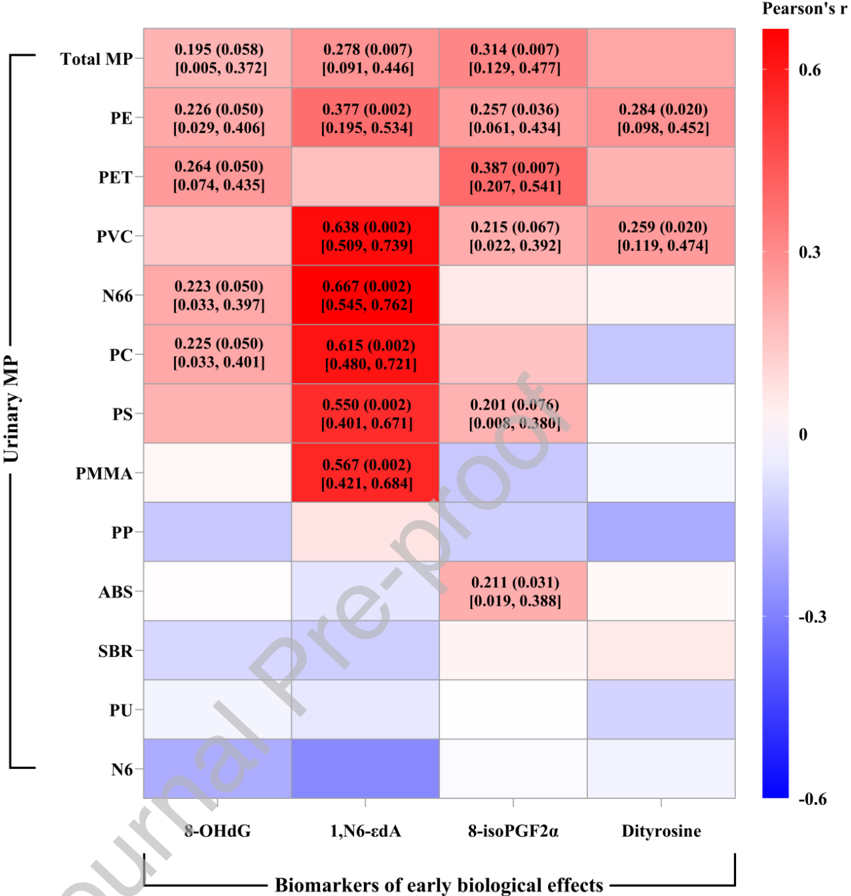
“As shown in Fig. 7, total urinary MP showed significant positive associations with urinary 1,N6-εdA (r = 0.278, 95%CI: 0.091, 0.446, q = 0.007) and 8-iso-PGF2α (r = 0.314, 95%CI: 0.129, 0.477, q = 0.007).”
§ biomarkers in populations living in traffic-congested areas > 3.4 Associations between and biomarkers of oxidative damage and exposure to MP 3.4.1 Bivariate regression analysis
plainstates an association- Asserted: passes — The authors put it forward as true.
- Checkable: passes — It can be checked against evidence.
- Load-bearing: passes — The paper’s conclusions depend on it.
- Based: passes — The paper gives a reason why it holds.
- Rests on an assumption: Urinary oxidative damage biomarkers reflect oxidative damage relevant to health effects from microplastic exposure.
A result the paper reports from its own data — it cites no other source for it, so there is none to check. The quote shows it is in the paper.
In the paper
“PE had the most significant association with urinary dityrosine (β = 0.255, 95% CI: 0.058, 0.362, q = 0.007), followed by urinary 8-OHdG (β = 0.221, 95% CI: 0.034, 0.333, q = 0.017) and urinary 1,N6-εdA (β = 0.210, 95% CI: 0.107, 0.386, q = 0.001).”
§ biomarkers in populations living in traffic-congested areas > 3.4.2 Multivariate regression analysis
plainstates an association- Asserted: passes — The authors put it forward as true.
- Checkable: passes — It can be checked against evidence.
- Load-bearing: passes — The paper’s conclusions depend on it.
- Based: passes — The paper gives a reason why it holds.
A result the paper reports from its own data — it cites no other source for it, so there is none to check. The quote shows it is in the paper.
In the paper
“After covariate adjustment, total MP was significantly positively associated with 1,N6-εdA (β = 0.331, 95% CI: 0.119, 1.949, q = 0.027).”
§ biomarkers in populations living in traffic-congested areas > 3.4.2 Multivariate regression analysis
plainstates an association- Asserted: passes — The authors put it forward as true.
- Checkable: passes — It can be checked against evidence.
- Load-bearing: passes — The paper’s conclusions depend on it.
- Based: passes — The paper gives a reason why it holds.
A result the paper reports from its own data — it cites no other source for it, so there is none to check. The quote shows it is in the paper.
In the paper
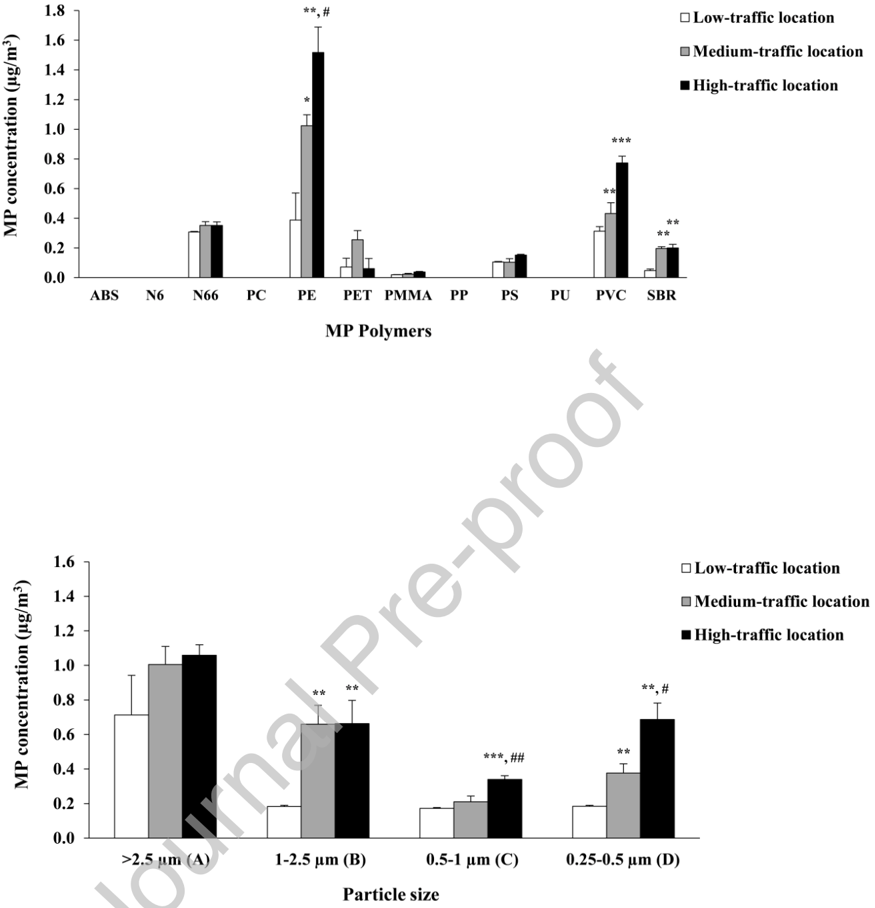
“The concentrations of SBR polymer were significantly increased (2-fold, p < 0.01) in the high-and medium-traffic density locations, compared to those in low-traffic density.”
§ biomarkers in populations living in traffic-congested areas > 3.1 Characterization and concentrations of MP in ambient air
plainstates an association- Asserted: passes — The authors put it forward as true.
- Checkable: passes — It can be checked against evidence.
- Load-bearing: unclear — It is unclear whether the paper’s conclusions depend on it.
- Based: passes — The paper gives a reason why it holds.
A result the paper reports from its own data — it cites no other source for it, so there is none to check. The quote shows it is in the paper.
In the paper
“SBR was the most significantly associated with 8-OHdG (β = 0.194, 95% CI: 0.002, 0.276, q = 0.047), followed by PE (β = 0.187, 95% CI: 0.007, 0.334, q = 0.039).”
§ biomarkers in populations living in traffic-congested areas > 3.4.2 Multivariate regression analysis
plainstates an association- Asserted: passes — The authors put it forward as true.
- Checkable: passes — It can be checked against evidence.
- Load-bearing: passes — The paper’s conclusions depend on it.
- Based: passes — The paper gives a reason why it holds.
In the paper
“The average number of vehicles per day during March to May 2024 showed that the Klongsan district experiences three times more traffic than Laksi district (104,000 vs.”
§ biomarkers in populations living in traffic-congested areas > 2.1 Study locations and subject recruitment
What the sources say
- Not matchedcites Traffic and Transportation Department, 2024
Couldn’t be matched to a paper in Crossref, so it can’t be checked.
plain- Asserted: passes — The authors put it forward as true.
- Checkable: passes — It can be checked against evidence.
- Load-bearing: passes — The paper’s conclusions depend on it.
- Based: passes — The paper gives a reason why it holds.
- Not matched
A result the paper reports from its own data — it cites no other source for it, so there is none to check. The quote shows it is in the paper.
In the paper
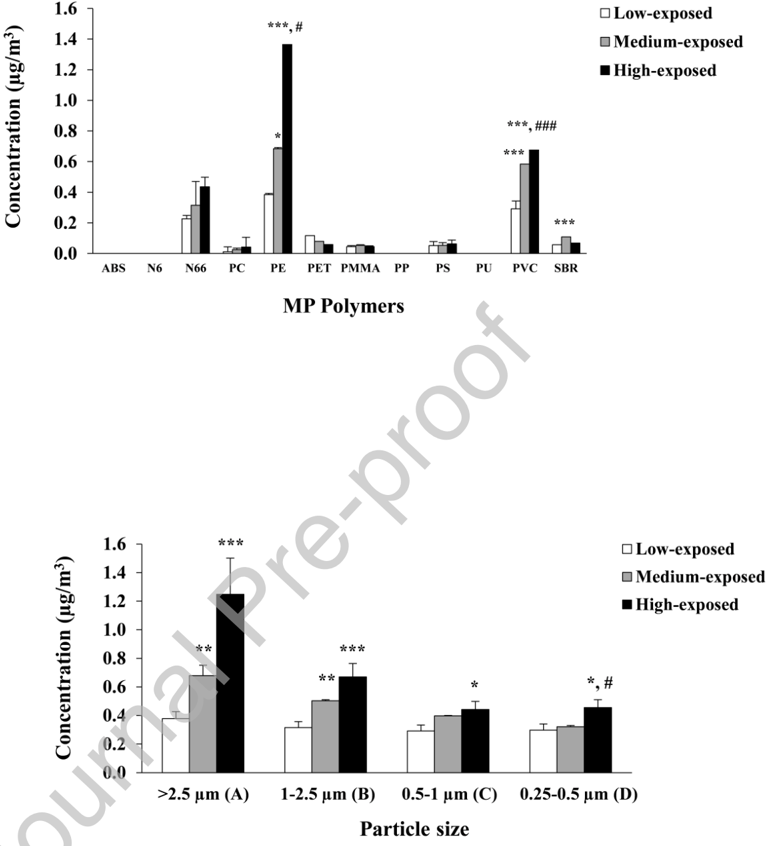
“A significant difference in personal exposure to airborne MP among the three study groups was observed (Table 3.1).”
§ biomarkers in populations living in traffic-congested areas > 3.2.2 Personal exposure to airborne MP
plain- Asserted: passes — The authors put it forward as true.
- Checkable: passes — It can be checked against evidence.
- Load-bearing: passes — The paper’s conclusions depend on it.
- Based: passes — The paper gives a reason why it holds.
A result the paper reports from its own data — it cites no other source for it, so there is none to check. The quote shows it is in the paper.
In the paper
“The level of 8-iso-PGF2α in the high-exposed group was 1.65-fold higher than that of the medium-exposed group (p = 0.034, q = 0.034), with a medium effect size (Cohen's dvalue = 0.488).”
§ biomarkers in populations living in traffic-congested areas > 3.3 Assessment of oxidative damage in study subjects
plainstates an association- Asserted: passes — The authors put it forward as true.
- Checkable: passes — It can be checked against evidence.
- Load-bearing: passes — The paper’s conclusions depend on it.
- Based: passes — The paper gives a reason why it holds.
- Rests on an assumption: Urinary oxidative damage biomarkers reflect oxidative damage relevant to health effects from microplastic exposure.
A result the paper reports from its own data — it cites no other source for it, so there is none to check. The quote shows it is in the paper.
In the paper
“PET was significantly associated with 8-OHdG (β = 0.242, 95% CI: 0.060, 0.424, q = 0.010).”
§ biomarkers in populations living in traffic-congested areas > 3.4.2 Multivariate regression analysis
plainstates an association- Asserted: passes — The authors put it forward as true.
- Checkable: passes — It can be checked against evidence.
- Load-bearing: passes — The paper’s conclusions depend on it.
- Based: passes — The paper gives a reason why it holds.
- It may state two separate claims as one. 51
- Probably not a substantial claim. 28
- The quote only partly states this claim. 1
A result the paper reports from its own data — it cites no other source for it, so there is none to check. The quote shows it is in the paper.
In the paper
“However, education level, occupation, and duration of traffic exposure differed significantly (p <0.001).”
§ biomarkers in populations living in traffic-congested areas > 3.2 Assessment of human exposure to airborne MP 3.2.1 Characteristics of study subjects
plainn = 120- Asserted: passes — The authors put it forward as true.
- Checkable: passes — It can be checked against evidence.
- Load-bearing: unclear — It is unclear whether the paper’s conclusions depend on it.
- Based: passes — The paper gives a reason why it holds.
It may state two separate claims as one.
A result the paper reports from its own data — it cites no other source for it, so there is none to check. The quote shows it is in the paper.
In the paper
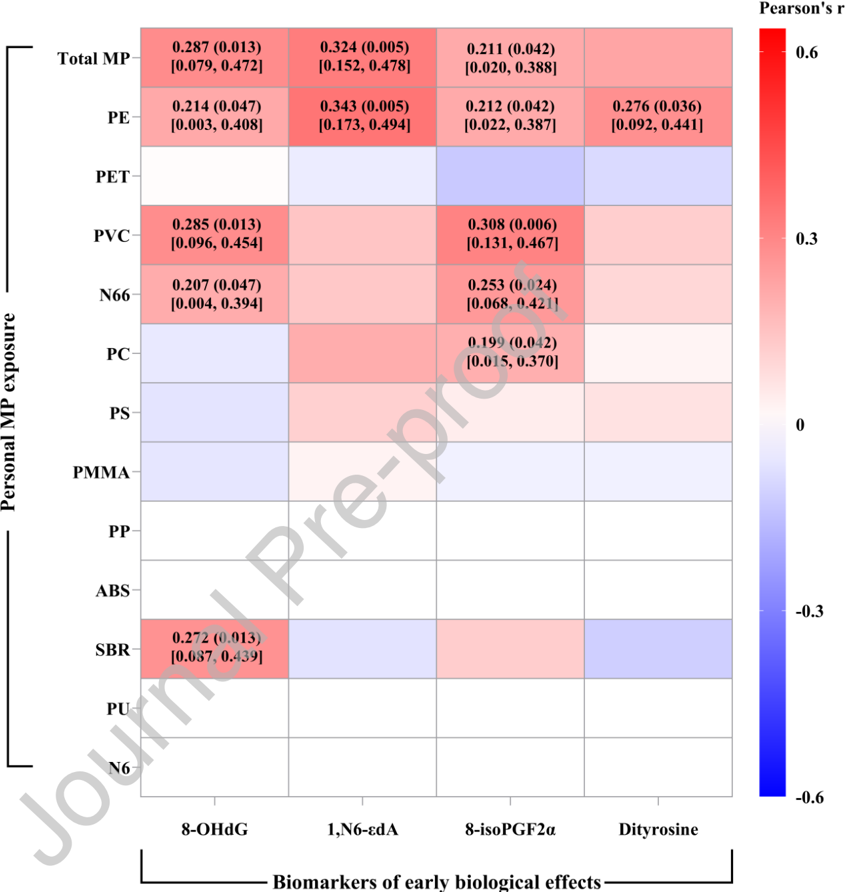
“In air samples, the predominant polymer, PE, was associated with all oxidative biomarkers; 8-OHdG (r = 0.214, 95%CI: 0.003, 0.408, q = 0.047), 1,N6-εdA (r = 0.343, 95%CI: 0.173, 0.494, q = 0.005), 8-iso-PGF2α (r = 0.212, 95%CI: 0.022, 0.387, q = 0.042) and dityrosine (r = 0.276, 95%CI: 0.092, 0.441, q = 0.036).”
§ biomarkers in populations living in traffic-congested areas > 3.4 Associations between and biomarkers of oxidative damage and exposure to MP 3.4.1 Bivariate regression analysis
plainstates an association- Asserted: passes — The authors put it forward as true.
- Checkable: passes — It can be checked against evidence.
- Load-bearing: passes — The paper’s conclusions depend on it.
- Based: passes — The paper gives a reason why it holds.
It may state two separate claims as one.
- Rests on an assumption: Urinary oxidative damage biomarkers reflect oxidative damage relevant to health effects from microplastic exposure.
A result the paper reports from its own data — it cites no other source for it, so there is none to check. The quote shows it is in the paper.
In the paper
“Total MP levels were significantly associated with 8-OHdG (r = 0.287, q = 0.013, 95%CI: 0.079, 0.472), 1,N6-εdA (r = 0.324, 95%CI: 0.152, 0.478, q = 0.005) and 8-iso-PGF2α (r = 0.211, 95%CI: 0.020, 0.388, q = 0.042).”
§ biomarkers in populations living in traffic-congested areas > 3.4 Associations between and biomarkers of oxidative damage and exposure to MP 3.4.1 Bivariate regression analysis
plainstates an association- Asserted: passes — The authors put it forward as true.
- Checkable: passes — It can be checked against evidence.
- Load-bearing: passes — The paper’s conclusions depend on it.
- Based: passes — The paper gives a reason why it holds.
It may state two separate claims as one.
- Rests on an assumption: Urinary oxidative damage biomarkers reflect oxidative damage relevant to health effects from microplastic exposure.
A result the paper reports from its own data — it cites no other source for it, so there is none to check. The quote shows it is in the paper.
In the paper
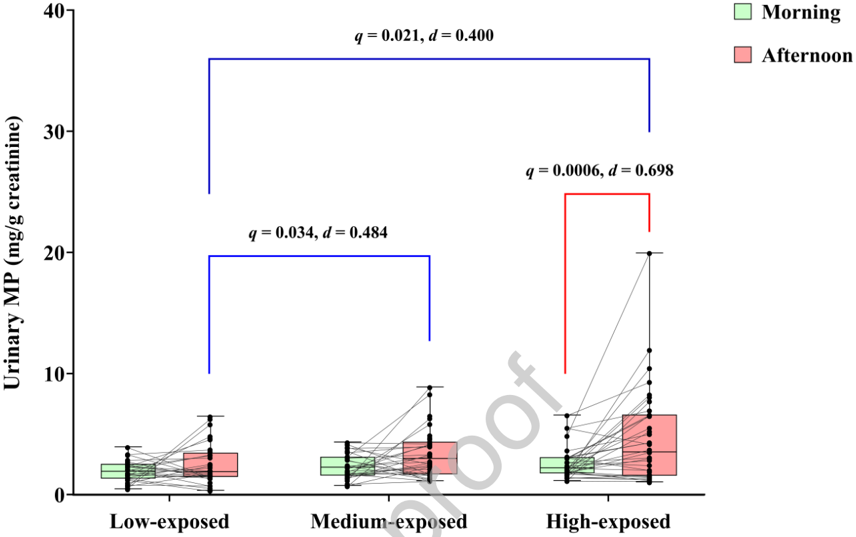
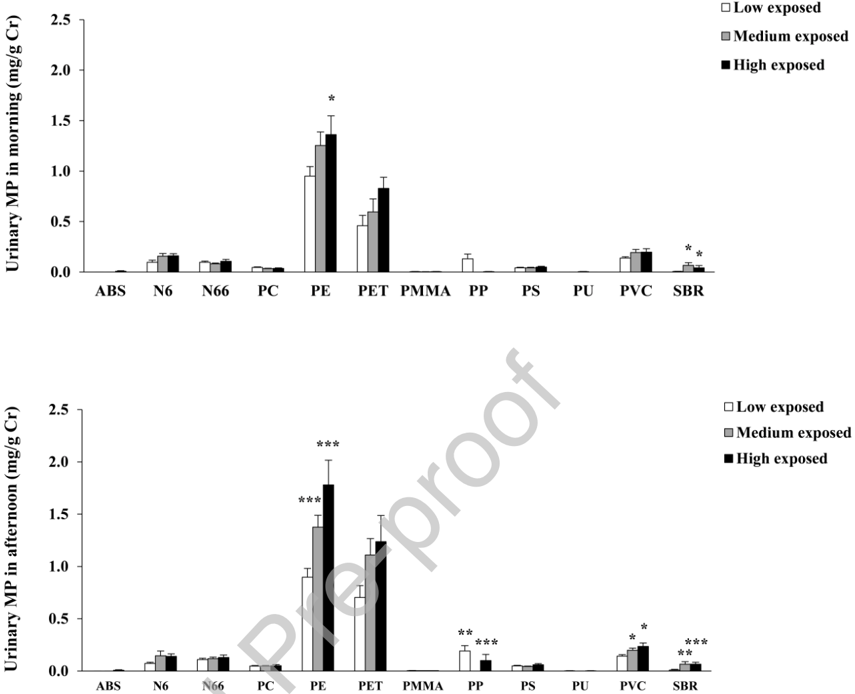
“When comparing pre-and post-shift results, post-shift urinary MP concentrations were 1.35-fold higher in the medium-exposed group (adjusted p-value, q = 0.034) and 1.85-fold higher in the high-exposed group (adjusted pvalue, q = 0.0006).”
§ biomarkers in populations living in traffic-congested areas > 3.2.3 Microplastics in urine samples
plainstates an association- Asserted: passes — The authors put it forward as true.
- Checkable: passes — It can be checked against evidence.
- Load-bearing: passes — The paper’s conclusions depend on it.
- Based: passes — The paper gives a reason why it holds.
It may state two separate claims as one.
A result the paper reports from its own data — it cites no other source for it, so there is none to check. The quote shows it is in the paper.
In the paper
“Consistent with the higher levels of airborne MP in locations with high traffic density, the mean levels of personal MP exposure were highest in the high-exposed group (2.82 µg/m 3 ) which was 1.5-fold higher than the medium-exposed group (1.90 µg/m 3 , p < 0. 01) and 2.2-fold higher than the low-exposed group (1.28 µg/m 3 , p < 0.001).”
§ biomarkers in populations living in traffic-congested areas > 3.2.2 Personal exposure to airborne MP
plainstates an association- Asserted: passes — The authors put it forward as true.
- Checkable: passes — It can be checked against evidence.
- Load-bearing: passes — The paper’s conclusions depend on it.
- Based: passes — The paper gives a reason why it holds.
It may state two separate claims as one.
A result the paper reports from its own data — it cites no other source for it, so there is none to check. The quote shows it is in the paper.
In the paper
“FDR-adjusted p-value, q-value, revealed a significant difference (q-value < 0.05) for all pairwise comparisons (low vs medium-exposed groups, low vs high-exposed groups, and medium vs high-exposed groups) with a medium effect size in which Cohen's d-values were 0.439, 0.648 and 0.772, respectively (Table 3.2).”
§ biomarkers in populations living in traffic-congested areas > 3.2.2 Personal exposure to airborne MP
plain- Asserted: passes — The authors put it forward as true.
- Checkable: passes — It can be checked against evidence.
- Load-bearing: unclear — It is unclear whether the paper’s conclusions depend on it.
- Based: passes — The paper gives a reason why it holds.
It may state two separate claims as one.
A result the paper reports from its own data — it cites no other source for it, so there is none to check. The quote shows it is in the paper.
In the paper
“N66, PC, PS and PMMA were also significantly associated with 1,N6-εdA, while ABS was significantly associated with 8-iso-PGF2α.”
§ biomarkers in populations living in traffic-congested areas > 3.4 Associations between and biomarkers of oxidative damage and exposure to MP 3.4.1 Bivariate regression analysis
plainstates an association- Asserted: passes — The authors put it forward as true.
- Checkable: passes — It can be checked against evidence.
- Load-bearing: passes — The paper’s conclusions depend on it.
- Based: passes — The paper gives a reason why it holds.
It may state two separate claims as one.
- Rests on an assumption: Urinary oxidative damage biomarkers reflect oxidative damage relevant to health effects from microplastic exposure.
A result the paper reports from its own data — it cites no other source for it, so there is none to check. The quote shows it is in the paper.
In the paper
“In addition, MP in personal exposure were detected in all particle sizes, with the highest concentrations in the >2.5 µm fraction, followed by the 1-2.5 µm, 0.5-1 µm, and 0.25-0.5 µm fractions (Fig. 2B).”
§ biomarkers in populations living in traffic-congested areas > 3.2.2 Personal exposure to airborne MP
plain- Asserted: passes — The authors put it forward as true.
- Checkable: passes — It can be checked against evidence.
- Load-bearing: unclear — It is unclear whether the paper’s conclusions depend on it.
- Based: passes — The paper gives a reason why it holds.
It may state two separate claims as one.
A result the paper reports from its own data — it cites no other source for it, so there is none to check. The quote shows it is in the paper.
In the paper
“Age and gender distribution showed no significant differences between the study groups.”
§ biomarkers in populations living in traffic-congested areas > 3.2 Assessment of human exposure to airborne MP 3.2.1 Characteristics of study subjects
plainn = 120- Asserted: passes — The authors put it forward as true.
- Checkable: passes — It can be checked against evidence.
- Load-bearing: unclear — It is unclear whether the paper’s conclusions depend on it.
- Based: passes — The paper gives a reason why it holds.
It may state two separate claims as one.
A result the paper reports from its own data — it cites no other source for it, so there is none to check. The quote shows it is in the paper.
In the paper
“The use of plastic bottles for drinking water and bottle reuse behavior also showed no significant difference among the groups (p > 0.05).”
§ biomarkers in populations living in traffic-congested areas > 3.2 Assessment of human exposure to airborne MP 3.2.1 Characteristics of study subjects
plainn = 120- Asserted: passes — The authors put it forward as true.
- Checkable: passes — It can be checked against evidence.
- Load-bearing: fails — The paper’s conclusions may not depend on it.
- Based: passes — The paper gives a reason why it holds.
Probably not a substantial claim. The paper’s conclusions may not depend on it.
A result the paper reports from its own data — it cites no other source for it, so there is none to check. The quote shows it is in the paper.
In the paper
“For instance, PVC was associated with 8-OHdG (r = 0.285, 95%CI: 0.096, 0.454, q = 0.013) and 8-iso-PGF2α (r = 0.308, 95%CI: 0.131, 0.467, q = 0.006), while N66 was associated with 8-OHdG (r = 0.207, 95%CI: 0.004, 0.394, q = 0.047) and 8-iso-PGF2α (r = 0.253, 95%CI: 0.068, 0.421, q = 0.024).”
§ biomarkers in populations living in traffic-congested areas > 3.4 Associations between and biomarkers of oxidative damage and exposure to MP 3.4.1 Bivariate regression analysis
plainstates an association- Asserted: passes — The authors put it forward as true.
- Checkable: passes — It can be checked against evidence.
- Load-bearing: passes — The paper’s conclusions depend on it.
- Based: passes — The paper gives a reason why it holds.
It may state two separate claims as one.
- Rests on an assumption: Urinary oxidative damage biomarkers reflect oxidative damage relevant to health effects from microplastic exposure.
A result the paper reports from its own data — it cites no other source for it, so there is none to check. The quote shows it is in the paper.
In the paper
“When compared to the low-exposed group, the levels of 8-OHdG were 1.53-fold higher in the medium-exposed group (9.10 µg/g Cr, p = 0.033, q-value = 0.049) with a medium effect size (Cohen's d-value =0.594), and 1.50-fold higher in the high-exposed group (10.62 µg/g Cr, p =0.001, q = 0.004), with a medium effect size (Cohen's d-value = 0.743).”
§ biomarkers in populations living in traffic-congested areas > 3.3 Assessment of oxidative damage in study subjects
plainstates an association- Asserted: passes — The authors put it forward as true.
- Checkable: passes — It can be checked against evidence.
- Load-bearing: passes — The paper’s conclusions depend on it.
- Based: passes — The paper gives a reason why it holds.
It may state two separate claims as one.
- Rests on an assumption: Urinary oxidative damage biomarkers reflect oxidative damage relevant to health effects from microplastic exposure.
A result the paper reports from its own data — it cites no other source for it, so there is none to check. The quote shows it is in the paper.
In the paper
“PE was the predominant polymer of airborne MP followed by PVC, N66 and SBR.”
§ biomarkers in populations living in traffic-congested areas > 3.1 Characterization and concentrations of MP in ambient air
plain- Asserted: passes — The authors put it forward as true.
- Checkable: passes — It can be checked against evidence.
- Load-bearing: unclear — It is unclear whether the paper’s conclusions depend on it.
- Based: passes — The paper gives a reason why it holds.
It may state two separate claims as one.
A result the paper reports from its own data — it cites no other source for it, so there is none to check. The quote shows it is in the paper.
In the paper
“For instance, PET was significantly associated with 8-OHdG (r = 0.264, q = 0.050, 95%CI: 0.074, 0.435) and 8-iso-PGF2α (r = 0.387, 95%CI: 0.207, 0.541, q = 0.007);”
§ biomarkers in populations living in traffic-congested areas > 3.4 Associations between and biomarkers of oxidative damage and exposure to MP 3.4.1 Bivariate regression analysis
plainstates an association- Asserted: passes — The authors put it forward as true.
- Checkable: passes — It can be checked against evidence.
- Load-bearing: passes — The paper’s conclusions depend on it.
- Based: passes — The paper gives a reason why it holds.
It may state two separate claims as one.
- Rests on an assumption: Urinary oxidative damage biomarkers reflect oxidative damage relevant to health effects from microplastic exposure.
A result the paper reports from its own data — it cites no other source for it, so there is none to check. The quote shows it is in the paper.
In the paper
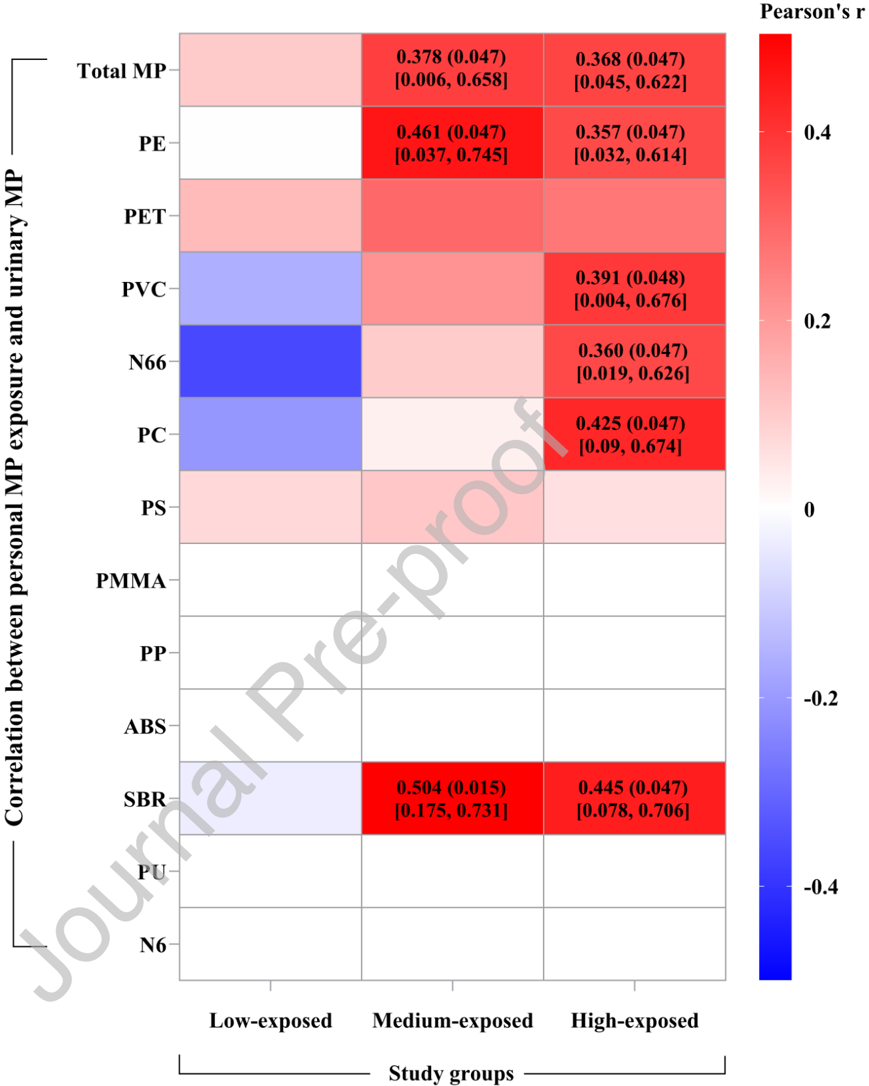
“The total MP concentrations for personal exposure to airborne MP were significantly correlated with those for urinary MP in the medium-exposed group (r = 0.378, adjusted p-value, q =0.047) and high-exposed group (r = 0.368, adjusted p-value, q = 0.047), but no significant associations were found in the low traffic-exposed group.”
§ biomarkers in populations living in traffic-congested areas > 3.2.4 Associations between personal exposure to airborne MP, urinary MP and polymers.
plainstates an association- Asserted: passes — The authors put it forward as true.
- Checkable: passes — It can be checked against evidence.
- Load-bearing: passes — The paper’s conclusions depend on it.
- Based: passes — The paper gives a reason why it holds.
It may state two separate claims as one.
- Rests on an assumption: Urinary microplastic concentration is a valid indicator of internal microplastic exposure.
A result the paper reports from its own data — it cites no other source for it, so there is none to check. The quote shows it is in the paper.
In the paper
“As shown in Fig. 1B, airborne MP were detected in varying sizes ranging from larger than 0.25 µm to 2.5 µm.The highest concentration of MP in all study areas was observed in the >2.5 µm particle size fraction, followed by 1.0-2.5 µm, 0.5-1.0µm, and 0.25-0.50µm.”
§ biomarkers in populations living in traffic-congested areas > 3.1 Characterization and concentrations of MP in ambient air
plain- Asserted: passes — The authors put it forward as true.
- Checkable: passes — It can be checked against evidence.
- Load-bearing: unclear — It is unclear whether the paper’s conclusions depend on it.
- Based: passes — The paper gives a reason why it holds.
It may state two separate claims as one.
A result the paper reports from its own data — it cites no other source for it, so there is none to check. The quote shows it is in the paper.
In the paper
“PVC was significantly associated with 1,N6-εdA (r = 0.638, 95%CI: 0.509, 0.739, q = 0.002,), and dityrosine (r = 0.259, 95%CI: 0.119, 0.474, q = 0.020);”
§ biomarkers in populations living in traffic-congested areas > 3.4 Associations between and biomarkers of oxidative damage and exposure to MP 3.4.1 Bivariate regression analysis
plainstates an association- Asserted: passes — The authors put it forward as true.
- Checkable: passes — It can be checked against evidence.
- Load-bearing: passes — The paper’s conclusions depend on it.
- Based: passes — The paper gives a reason why it holds.
It may state two separate claims as one.
- Rests on an assumption: Urinary oxidative damage biomarkers reflect oxidative damage relevant to health effects from microplastic exposure.
A result the paper reports from its own data — it cites no other source for it, so there is none to check. The quote shows it is in the paper.
In the paper
“seven polymers were detected including PE, PVC, N66, SBR, PS, PET and PMMA, while other known polymers in MP, i.e ABS, N6, PC, PP and PU were not detected.”
§ biomarkers in populations living in traffic-congested areas > 3.1 Characterization and concentrations of MP in ambient air
plain- Asserted: passes — The authors put it forward as true.
- Checkable: passes — It can be checked against evidence.
- Load-bearing: unclear — It is unclear whether the paper’s conclusions depend on it.
- Based: passes — The paper gives a reason why it holds.
It may state two separate claims as one.
A result the paper reports from its own data — it cites no other source for it, so there is none to check. The quote shows it is in the paper.
In the paper
“The high-traffic density location had the highest concentration of PE (1.52 µg/m 3 ) which was 1.5-and 3.8-fold higher than that in the medium-(1 µg/m 3 , p < 0.05) and low-(0.52µg/m 3 ) traffic density locations, respectively.”
§ biomarkers in populations living in traffic-congested areas > 3.1 Characterization and concentrations of MP in ambient air
plainstates an association- Asserted: passes — The authors put it forward as true.
- Checkable: passes — It can be checked against evidence.
- Load-bearing: unclear — It is unclear whether the paper’s conclusions depend on it.
- Based: passes — The paper gives a reason why it holds.
It may state two separate claims as one.
A result the paper reports from its own data — it cites no other source for it, so there is none to check. The quote shows it is in the paper.
In the paper
“The lipid peroxidation product, 8-iso-PGF2α, was increased markedly from 0.63 μg/g Cr in the low-exposed group to 2.97 µg/g Cr in the medium-exposed group (4.71-fold, p = 0.002, q = 0.003), with a high effect size (Cohen's d-value = 0.822) and 4.89 µg/g Cr in the high-exposed group (7.78-fold, p = 0.001, q = 0.003) with a high effect size (Cohen's d-value = 0.867).”
§ biomarkers in populations living in traffic-congested areas > 3.3 Assessment of oxidative damage in study subjects
plainstates a cause- Asserted: passes — The authors put it forward as true.
- Checkable: passes — It can be checked against evidence.
- Load-bearing: passes — The paper’s conclusions depend on it.
- Based: passes — The paper gives a reason why it holds.
It may state two separate claims as one.
- Rests on an assumption: Urinary oxidative damage biomarkers reflect oxidative damage relevant to health effects from microplastic exposure.
A result the paper reports from its own data — it cites no other source for it, so there is none to check. The quote shows it is in the paper.
In the paper
“The concentrations of urinary 1,N6-εdA were also 2.36-fold higher in the high-exposed group (0.033 µg/g Cr, p = 0.04, q = 0.06) and 1.71-fold higher in the medium-exposed group (0.02 µg/g Cr, p = 0.02, q = 0.052), when compared to the low-exposed group (0.01 µg/g Cr).”
§ biomarkers in populations living in traffic-congested areas > 3.3 Assessment of oxidative damage in study subjects
plainstates an association- Asserted: passes — The authors put it forward as true.
- Checkable: passes — It can be checked against evidence.
- Load-bearing: passes — The paper’s conclusions depend on it.
- Based: passes — The paper gives a reason why it holds.
It may state two separate claims as one.
- Rests on an assumption: Urinary oxidative damage biomarkers reflect oxidative damage relevant to health effects from microplastic exposure.
A result the paper reports from its own data — it cites no other source for it, so there is none to check. The quote shows it is in the paper.
In the paper
“The high-exposed group had the highest levels of afternoon urinary MP concentration, which was higher than the medium-exposed group by 1.36-fold (4.63 vs. 3.39 mg/g) and the low-exposed group by 1.84-fold (4.63 vs. 2.51 mg/g Cr; adjusted p-value, q = 0.021) with a medium effect size (Cohen's d-value = 0.40).”
§ biomarkers in populations living in traffic-congested areas > 3.2.3 Microplastics in urine samples
plainstates an association- Asserted: passes — The authors put it forward as true.
- Checkable: passes — It can be checked against evidence.
- Load-bearing: passes — The paper’s conclusions depend on it.
- Based: passes — The paper gives a reason why it holds.
It may state two separate claims as one.
A result the paper reports from its own data — it cites no other source for it, so there is none to check. The quote shows it is in the paper.
In the paper
“The total MP concentrations in high-traffic density areas were 1.20-fold (p < 0.05) and 2.20-fold (p < 0.01) higher than that of mediumand low-traffic density locations, respectively.”
§ biomarkers in populations living in traffic-congested areas > 3.1 Characterization and concentrations of MP in ambient air
plainstates an association- Asserted: passes — The authors put it forward as true.
- Checkable: passes — It can be checked against evidence.
- Load-bearing: passes — The paper’s conclusions depend on it.
- Based: passes — The paper gives a reason why it holds.
It may state two separate claims as one.
A result the paper reports from its own data — it cites no other source for it, so there is none to check. The quote shows it is in the paper.
In the paper
“At pre-shift, the morning urinary MP concentrations in the high-exposed group were 1.3-fold higher than that of the low-exposed group (2.60 vs.”
§ biomarkers in populations living in traffic-congested areas > 3.2.3 Microplastics in urine samples
plain- Asserted: passes — The authors put it forward as true.
- Checkable: passes — It can be checked against evidence.
- Load-bearing: unclear — It is unclear whether the paper’s conclusions depend on it.
- Based: passes — The paper gives a reason why it holds.
It may state two separate claims as one.
A result the paper reports from its own data — it cites no other source for it, so there is none to check. The quote shows it is in the paper.
In the paper
“The protein oxidation product, dityrosine, was 20.20-fold higher in the highexposed group (214.9 μg/g Cr, p = 0.001, q = 0.002) , with a high effect size (Cohen's d-value = 0.130), and 8.22-fold higher in the medium group (87.50 μg/g Cr, p = 0.001, q = 0.002), with a high effect size (Cohen's d-value = 1.526), when compared to the low-exposed group (10.64 μg/g Cr).”
§ biomarkers in populations living in traffic-congested areas > 3.3 Assessment of oxidative damage in study subjects
plainstates an association- Asserted: passes — The authors put it forward as true.
- Checkable: passes — It can be checked against evidence.
- Load-bearing: passes — The paper’s conclusions depend on it.
- Based: passes — The paper gives a reason why it holds.
It may state two separate claims as one.
- Rests on an assumption: Urinary oxidative damage biomarkers reflect oxidative damage relevant to health effects from microplastic exposure.
A result the paper reports from its own data — it cites no other source for it, so there is none to check. The quote shows it is in the paper.
In the paper
“The highest total concentrations of MP were found in the locations with high-traffic density (2.75±0.23 µg/m 3 ) followed by medium-traffic density (2.25±0.14µg/m 3 ) and lowtraffic density (1.25±0.23 µg/m 3 ) (Table 1).”
§ biomarkers in populations living in traffic-congested areas > 3.1 Characterization and concentrations of MP in ambient air
plainstates an association- Asserted: passes — The authors put it forward as true.
- Checkable: passes — It can be checked against evidence.
- Load-bearing: passes — The paper’s conclusions depend on it.
- Based: passes — The paper gives a reason why it holds.
It may state two separate claims as one.
A result the paper reports from its own data — it cites no other source for it, so there is none to check. The quote shows it is in the paper.
In the paper
“For instance, PVC was associated with 8-OHdG (r = 0.285, 95%CI: 0.096, 0.454, q = 0.013) and 8-iso-PGF2α (r = 0.308, 95%CI: 0.131, 0.467, q = 0.006), while N66 was associated with 8-OHdG (r = 0.207, 95%CI: 0.004, 0.394, q = 0.047) and 8-iso-PGF2α (r = 0.253, 95%CI: 0.068, 0.421, q = 0.024).”
§ biomarkers in populations living in traffic-congested areas > 3.4 Associations between and biomarkers of oxidative damage and exposure to MP 3.4.1 Bivariate regression analysis
plainstates an association- Asserted: passes — The authors put it forward as true.
- Checkable: passes — It can be checked against evidence.
- Load-bearing: passes — The paper’s conclusions depend on it.
- Based: passes — The paper gives a reason why it holds.
It may state two separate claims as one.
- Rests on an assumption: Urinary oxidative damage biomarkers reflect oxidative damage relevant to health effects from microplastic exposure.
A result the paper reports from its own data — it cites no other source for it, so there is none to check. The quote shows it is in the paper.
In the paper
“Among polymer types, PE was associated with all biomarkers: 8-OHdG (r = 0.226, 95%CI: 0.029, 0.406, q = 0.050), 1,N6-εdA (r = 0.377, 95%CI: 0.195, 0.534, q = 0.002,), 8-iso-PGF2α (r = 0.257, 95%CI: 0.061, 0.434, q = 0.036), and dityrosine (r = 0.284, 95%CI: 0.098, 0.452, q = 0.020).”
§ biomarkers in populations living in traffic-congested areas > 3.4 Associations between and biomarkers of oxidative damage and exposure to MP 3.4.1 Bivariate regression analysis
plainstates an association- Asserted: passes — The authors put it forward as true.
- Checkable: passes — It can be checked against evidence.
- Load-bearing: passes — The paper’s conclusions depend on it.
- Based: passes — The paper gives a reason why it holds.
It may state two separate claims as one.
- Rests on an assumption: Urinary oxidative damage biomarkers reflect oxidative damage relevant to health effects from microplastic exposure.
A result the paper reports from its own data — it cites no other source for it, so there is none to check. The quote shows it is in the paper.
In the paper
“All participants were nonsmokers with levels of urinary cotinine, a biomarker of nicotine, ranging from 5.36-5.91ng/g creatinine showing no significant difference among the study groups.”
§ biomarkers in populations living in traffic-congested areas > 3.2 Assessment of human exposure to airborne MP 3.2.1 Characteristics of study subjects
plainn = 120- Asserted: passes — The authors put it forward as true.
- Checkable: passes — It can be checked against evidence.
- Load-bearing: unclear — It is unclear whether the paper’s conclusions depend on it.
- Based: passes — The paper gives a reason why it holds.
It may state two separate claims as one.
A result the paper reports from its own data — it cites no other source for it, so there is none to check. The quote shows it is in the paper.
In the paper
“This study provides the human observational evidence suggesting that individuals exposed to high traffic levels have significantly higher exposure to airborne MP, which are associated with oxidative damage in an exposure-dependent manner.”
§ biomarkers in populations living in traffic-congested areas > 5. Conclusion
hedgedstates an association- Asserted: passes — The authors put it forward as true.
- Checkable: passes — It can be checked against evidence.
- Load-bearing: passes — The paper’s conclusions depend on it.
- Based: passes — The paper gives a reason why it holds.
It may state two separate claims as one.
- Rests on an assumption: Inhaled MP enter the urinary system via the blood circulation, and their toxic mechanisms primarily involve oxidative stress.
A result the paper reports from its own data — it cites no other source for it, so there is none to check. The quote shows it is in the paper.
In the paper
“Apart from oxidative DNA damage, this study also found an increase in both lipid peroxidation and protein oxidation in the medium-and high-traffic-exposed participants, as evidenced by their higher levels of urinary 8-iso-PGF2α and urinary dityrosine relative to those in the low-traffic exposed group.”
§ biomarkers in populations living in traffic-congested areas > 4.3 Oxidative damage biomarkers in subjects exposed to airborne MP
plainstates an association- Asserted: passes — The authors put it forward as true.
- Checkable: passes — It can be checked against evidence.
- Load-bearing: passes — The paper’s conclusions depend on it.
- Based: passes — The paper gives a reason why it holds.
It may state two separate claims as one.
A result the paper reports from its own data — it cites no other source for it, so there is none to check. The quote shows it is in the paper.
In the paper
“This study demonstrates that biomarkers of oxidative DNA damage, such as urinary 8-OHdG, and urinary 1,N6-εdA, were significantly elevated in individuals exposed to MP.”
§ biomarkers in populations living in traffic-congested areas > 4.3 Oxidative damage biomarkers in subjects exposed to airborne MP
boostedstates an association- Asserted: passes — The authors put it forward as true.
- Checkable: passes — It can be checked against evidence.
- Load-bearing: passes — The paper’s conclusions depend on it.
- Based: passes — The paper gives a reason why it holds.
It may state two separate claims as one.
A result the paper reports from its own data — it cites no other source for it, so there is none to check. The quote shows it is in the paper.
In the paper
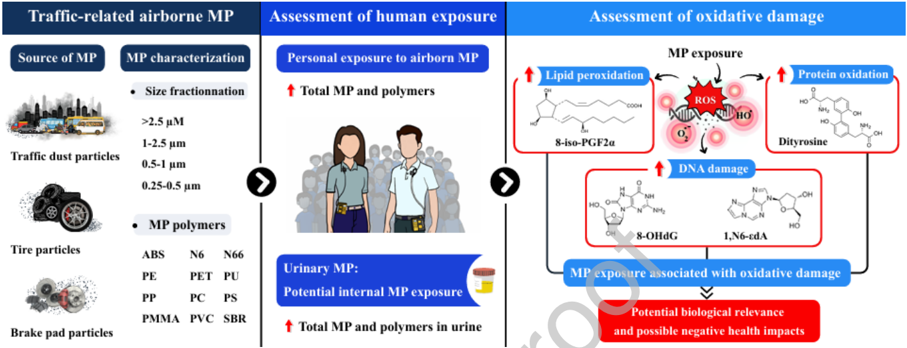
“Overall, these findings reveal significant and positive associations between personal exposure to airborne MP, urinary MP levels, and oxidative damage, thus highlighting the potential biological relevance and possible negative impacts of traffic-derived MP.”
§ biomarkers in populations living in traffic-congested areas > 5. Conclusion
plainstates an association- Asserted: passes — The authors put it forward as true.
- Checkable: passes — It can be checked against evidence.
- Load-bearing: passes — The paper’s conclusions depend on it.
- Based: passes — The paper gives a reason why it holds.
It may state two separate claims as one.
- Rests on an assumption: Inhaled MP enter the urinary system via the blood circulation, and their toxic mechanisms primarily involve oxidative stress.
A result the paper reports from its own data — it cites no other source for it, so there is none to check. The quote shows it is in the paper.
In the paper
“When comparing morning and afternoon urinary MP concentrations, a more pronounced increase was observed in the high-traffic exposed group (27% increase), compared to the medium-and low-exposed groups (17% increase), suggesting that high traffic is a significant source of airborne MP for human exposure.”
§ biomarkers in populations living in traffic-congested areas > 4.2 Personal MP exposure and MP in urine
plainstates an association- Asserted: passes — The authors put it forward as true.
- Checkable: passes — It can be checked against evidence.
- Load-bearing: passes — The paper’s conclusions depend on it.
- Based: passes — The paper gives a reason why it holds.
It may state two separate claims as one.
What the paper did — it cites no source for this, so there is none to check. The quote shows it is in the paper.
In the paper
“In this study, all Pearson's correlations were <0.75 and VIF < 5 (Supplementary Table S7-S8), indicating that there was no collinearity.”
§ biomarkers in populations living in traffic-congested areas > 2.7 Statistical analysis
hedged- Asserted: passes — The authors put it forward as true.
- Checkable: passes — It can be checked against evidence.
- Load-bearing: passes — The paper’s conclusions depend on it.
- Based: passes — The paper gives a reason why it holds.
It may state two separate claims as one.
What the paper did — it cites no source for this, so there is none to check. The quote shows it is in the paper.
In the paper
“The calibration curve was linear over the concentration range of 0.195-100 ng/mL with correlation coefficients >0.99.”
§ biomarkers in populations living in traffic-congested areas > 2.6 Determination of biomarkers of oxidative damage, lipid peroxidation, and protein oxidation in urine samples by LC-MS/MS
plain- Asserted: passes — The authors put it forward as true.
- Checkable: passes — It can be checked against evidence.
- Load-bearing: fails — The paper’s conclusions may not depend on it.
- Based: passes — The paper gives a reason why it holds.
Probably not a substantial claim. The paper’s conclusions may not depend on it. It may state two separate claims as one.
In the paper
“A major product of lipid peroxidation, 8-iso-prostaglandin F2α (8-iso-PGF2α), serves as a stable biomarker of lipid peroxidation.It is formed through ROS-induced peroxidation of arachidonic acid, a key polyunsaturated fatty acid in cell membranes.Elevated levels of 8-iso-PGF2α in plasma or urine indicate significant oxidative damage to lipids and elevated systemic oxidative stress (Di Minno et al”
§ biomarkers in populations living in traffic-congested areas > 1. Introduction
What the sources say
- Not checked — no full text of the sourcecites Di Minno et al., 2020 source
plainstates a cause- Asserted: passes — The authors put it forward as true.
- Checkable: passes — It can be checked against evidence.
- Load-bearing: passes — The paper’s conclusions depend on it.
- Based: passes — The paper gives a reason why it holds.
Probably not a substantial claim. It may state two separate claims as one.
In the paper
“The toxicity of MP depends on several factors such as polymer composition, size, and shape (Badea et al., 2023) .”
§ biomarkers in populations living in traffic-congested areas > 1. Introduction
What the sources say
- Check pendingcites Badea et al., 2023 source
plainstates a cause- Asserted: passes — The authors put it forward as true.
- Checkable: passes — It can be checked against evidence.
- Load-bearing: fails — The paper’s conclusions may not depend on it.
- Based: passes — The paper gives a reason why it holds.
Probably not a substantial claim. The paper’s conclusions may not depend on it.
What the paper did — it cites no source for this, so there is none to check. The quote shows it is in the paper.
In the paper
“The polypropylene (PP) tubes containing Milli-Q water showed non-detectable levels of PP polymer in the samples tested, as detailed in Supplementary Table S5.”
§ biomarkers in populations living in traffic-congested areas > 2.3. Urine sample collection
plain- Asserted: passes — The authors put it forward as true.
- Checkable: passes — It can be checked against evidence.
- Load-bearing: passes — The paper’s conclusions depend on it.
- Based: passes — The paper gives a reason why it holds.
It may state two separate claims as one. The quote only partly states this claim.
In the paper
“Moreover, ethenodeoxyadenosine (1,N6-ƐdA) is a mutagenic DNA adduct resulting from reactive oxygen and nitrogen species (ROS/RNS)-induced inflammation and lipid peroxidation (Cheng et al., 2023).”
§ biomarkers in populations living in traffic-congested areas > 1. Introduction
What the sources say
- Check pendingcites Cheng et al., 2023 source
plainstates a cause- Asserted: passes — The authors put it forward as true.
- Checkable: passes — It can be checked against evidence.
- Load-bearing: passes — The paper’s conclusions depend on it.
- Based: passes — The paper gives a reason why it holds.
Probably not a substantial claim.
What the paper did — it cites no source for this, so there is none to check. The quote shows it is in the paper.
In the paper
“It should be noted that low background levels of N66 and PVC were observed in the filter blanks.Therefore, blank correction was applied by subtracting the corresponding blank values from the measured sample concentrations.”
§ biomarkers in populations living in traffic-congested areas > Laboratory control
plain- Asserted: passes — The authors put it forward as true.
- Checkable: passes — It can be checked against evidence.
- Load-bearing: fails — The paper’s conclusions may not depend on it.
- Based: passes — The paper gives a reason why it holds.
Probably not a substantial claim. The paper’s conclusions may not depend on it. It may state two separate claims as one.
What the paper did — it cites no source for this, so there is none to check. The quote shows it is in the paper.
In the paper
“Our study was approved by the Thai Ethics Committee (approval No. 034/2565) and conducted in accordance with the Declaration of Helsinki.Informed consent was obtained from all participants prior to sample collection.”
§ biomarkers in populations living in traffic-congested areas > 2.1 Study locations and subject recruitment
plain- Asserted: passes — The authors put it forward as true.
- Checkable: passes — It can be checked against evidence.
- Load-bearing: fails — The paper’s conclusions may not depend on it.
- Based: passes — The paper gives a reason why it holds.
Probably not a substantial claim. The paper’s conclusions may not depend on it. It may state two separate claims as one.
In the paper
“ROS also induce protein oxidation in the form of dityrosine, which is the result of the cross-linking of tyrosine residues in ROSmediated radical reactions.Dityrosine levels in urine were reported to reflect the extent of oxidative protein damage and to correlate with overall oxidative stress levels (Il'yasova et al., 2012).”
§ biomarkers in populations living in traffic-congested areas > 1. Introduction
What the sources say
- Check pendingcites Il'yasova et al., 2012 source
plainstates an association- Asserted: passes — The authors put it forward as true.
- Checkable: passes — It can be checked against evidence.
- Load-bearing: passes — The paper’s conclusions depend on it.
- Based: passes — The paper gives a reason why it holds.
It may state two separate claims as one.
In the paper
“Urban air contains high levels of MP contamination with the most prevalent polymers reported to be polyethylene (PE), polypropylene (PP), polystyrene (PS), polyethylene terephthalate (PET), and polyvinyl chloride (PVC) (Facciolà et al., 2021).”
§ biomarkers in populations living in traffic-congested areas > 1. Introduction
What the sources say
- Check pendingcites Facciolà et al., 2021 source
plain- Asserted: passes — The authors put it forward as true.
- Checkable: passes — It can be checked against evidence.
- Load-bearing: fails — The paper’s conclusions may not depend on it.
- Based: passes — The paper gives a reason why it holds.
Probably not a substantial claim. The paper’s conclusions may not depend on it. It may state two separate claims as one.
A conclusion the paper draws from its own results — it cites no other source for it, so there is none to check. The quote shows it is in the paper.
In the paper
“Consequently, populations living or working near high traffic density areas may face increased exposure to airborne MP, potentially heightening adverse health effects.”
§ biomarkers in populations living in traffic-congested areas > 4. Discussion
hedgedstates a possible cause- Asserted: passes — The authors put it forward as true.
- Checkable: passes — It can be checked against evidence.
- Load-bearing: passes — The paper’s conclusions depend on it.
- Based: passes — The paper gives a reason why it holds.
It may state two separate claims as one.
In the paper
“DNA damage, in the form of 8-hydroxy-2'-deoxyguanosine (8-OHdG), is considered a useful biomarker of oxidative DNA damage that has been used to evaluate the risk of developing inflammatory-related diseases and cancer (Chiorcea-Paquim, 2022;Graille et al., 2020).”
§ biomarkers in populations living in traffic-congested areas > 1. Introduction
What the sources say
plain- Asserted: passes — The authors put it forward as true.
- Checkable: passes — It can be checked against evidence.
- Load-bearing: passes — The paper’s conclusions depend on it.
- Based: passes — The paper gives a reason why it holds.
Probably not a substantial claim.
What the paper did — it cites no source for this, so there is none to check. The quote shows it is in the paper.
In the paper
“The multivariate model was adjusted with the potential confounders including: gender, age, education, occupations, duration of traffic exposure, cigarette smoke exposure and drinking water.”
§ biomarkers in populations living in traffic-congested areas > 2.7 Statistical analysis
plain- Asserted: passes — The authors put it forward as true.
- Checkable: passes — It can be checked against evidence.
- Load-bearing: passes — The paper’s conclusions depend on it.
- Based: passes — The paper gives a reason why it holds.
Probably not a substantial claim.
In the paper
“Atmospheric MP are of low density, therefore they can be dispersed easily and pose widespread inhalation risks (Gasperi et al., 2018).”
§ biomarkers in populations living in traffic-congested areas > 1. Introduction
What the sources say
- Not checked — no full text of the sourcecites Gasperi et al., 2018 source
plainstates a cause- Asserted: passes — The authors put it forward as true.
- Checkable: passes — It can be checked against evidence.
- Load-bearing: fails — The paper’s conclusions may not depend on it.
- Based: passes — The paper gives a reason why it holds.
Probably not a substantial claim. The paper’s conclusions may not depend on it. It may state two separate claims as one.
In the paper
“From our recent review of publications, most research on MP has focused on marine environments, emphasizing their abundance and ecological impacts.However, there is growing evidence of increasing MP levels detected within multiple human tissues and biological compartments, thus requiring a comprehensive understanding of exposure levels, the fates of MP particles, and their health effects (Shruti &”
§ biomarkers in populations living in traffic-congested areas > 1. Introduction
What the sources say
- Check pendingcites Shruti & Kutralam-Muniasamy, 2025 source
plain- Asserted: passes — The authors put it forward as true.
- Checkable: passes — It can be checked against evidence.
- Load-bearing: fails — The paper’s conclusions may not depend on it.
- Based: passes — The paper gives a reason why it holds.
Probably not a substantial claim. The paper’s conclusions may not depend on it. It may state two separate claims as one.
A conclusion the paper draws from its own results — it cites no other source for it, so there is none to check. The quote shows it is in the paper.
In the paper
“Interestingly, the high-exposed group had the highest concentrations of MP particles in both micro and submicron sizes, suggesting they may be more vulnerable to the adverse health effects of exposure to submicron-sized MP.”
§ biomarkers in populations living in traffic-congested areas > 3.2.2 Personal exposure to airborne MP
hedgedstates a possible cause- Asserted: passes — The authors put it forward as true.
- Checkable: passes — It can be checked against evidence.
- Load-bearing: fails — The paper’s conclusions may not depend on it.
- Based: passes — The paper gives a reason why it holds.
Probably not a substantial claim. The paper’s conclusions may not depend on it.
- Rests on an assumption: Urinary oxidative damage biomarkers reflect oxidative damage relevant to health effects from microplastic exposure.
In the paper
“Smaller MP particles, particularly nanosized plastic particles, show a more extensive dispersion, enhanced cellular uptake, and increased toxicity (Płuciennik et al., 2024).”
§ biomarkers in populations living in traffic-congested areas > 1. Introduction
What the sources say
- Check pendingcites Płuciennik et al., 2024 source
plainstates a cause- Asserted: passes — The authors put it forward as true.
- Checkable: passes — It can be checked against evidence.
- Load-bearing: fails — The paper’s conclusions may not depend on it.
- Based: passes — The paper gives a reason why it holds.
Probably not a substantial claim. The paper’s conclusions may not depend on it. It may state two separate claims as one.
What the paper did — it cites no source for this, so there is none to check. The quote shows it is in the paper.
In the paper
“The model was adjusted for covariates of gender, age, education, occupation, duration of traffic exposure, cigarette smoking and drinking water.”
§ biomarkers in populations living in traffic-congested areas > 3.4.2 Multivariate regression analysis
plain- Asserted: passes — The authors put it forward as true.
- Checkable: passes — It can be checked against evidence.
- Load-bearing: passes — The paper’s conclusions depend on it.
- Based: passes — The paper gives a reason why it holds.
Probably not a substantial claim.
A check of a cited source is scheduled, or we don’t hold its full text yet; the claim is checked once it runs.
In the paper
“In addition, styrene-butadiene rubber (SBR) from tire abrasion can be found in road dust and airborne MP (Luo et al., 2021;Yoo et al., 2025).”
§ biomarkers in populations living in traffic-congested areas > 1. Introduction
What the sources say
plain- Asserted: passes — The authors put it forward as true.
- Checkable: passes — It can be checked against evidence.
- Load-bearing: fails — The paper’s conclusions may not depend on it.
- Based: passes — The paper gives a reason why it holds.
Probably not a substantial claim. The paper’s conclusions may not depend on it.
In the paper
“The excessive production of ROS during oxidative stress damages cellular lipids, proteins, and DNA (Huang et al., 2024).”
§ biomarkers in populations living in traffic-congested areas > 4.3 Oxidative damage biomarkers in subjects exposed to airborne MP
What the sources say
- Not matchedcites Huang et al., 2024
Couldn’t be matched to a paper in Crossref, so it can’t be checked.
plainstates a cause- Asserted: passes — The authors put it forward as true.
- Checkable: passes — It can be checked against evidence.
- Load-bearing: fails — The paper’s conclusions may not depend on it.
- Based: passes — The paper gives a reason why it holds.
Probably not a substantial claim. The paper’s conclusions may not depend on it.
- Not matched
A conclusion the paper draws from its own results — it cites no other source for it, so there is none to check. The quote shows it is in the paper.
In the paper
“Overall, these findings reveal significant and positive associations between personal exposure to airborne MP, urinary MP levels, and oxidative damage, thus highlighting the potential biological relevance and possible negative impacts of traffic-derived MP.”
§ biomarkers in populations living in traffic-congested areas > 5. Conclusion
hedgedstates an association- Asserted: passes — The authors put it forward as true.
- Checkable: passes — It can be checked against evidence.
- Load-bearing: passes — The paper’s conclusions depend on it.
- Based: passes — The paper gives a reason why it holds.
It may state two separate claims as one.
- Rests on an assumption: Inhaled MP enter the urinary system via the blood circulation, and their toxic mechanisms primarily involve oxidative stress.
In the paper
“This was in line with a recent finding that proinflammatory effects associated with traffic-related MP were related to increases in both total and differential WBCs in healthy subjects (Lenssen et al., 2025).”
§ biomarkers in populations living in traffic-congested areas > 4.3 Oxidative damage biomarkers in subjects exposed to airborne MP
What the sources say
- Not matchedcites Lenssen et al., 2025
Couldn’t be matched to a paper in Crossref, so it can’t be checked.
plainstates an association- Asserted: passes — The authors put it forward as true.
- Checkable: passes — It can be checked against evidence.
- Load-bearing: fails — The paper’s conclusions may not depend on it.
- Based: passes — The paper gives a reason why it holds.
Probably not a substantial claim. The paper’s conclusions may not depend on it.
- Not matched
In the paper
“Identifications of polymer types in airborne MP found in this study, including nylon, PMMA, PE, PS, PVC, and SBR, was in alignment with previous reports of the presence of these polymer types using µFTIR (Jahanzaib et al., 2025).”
§ biomarkers in populations living in traffic-congested areas > 4.1 Characterization of traffic-related airborne MP
What the sources say
- Not matchedcites Jahanzaib et al., 2025
Couldn’t be matched to a paper in Crossref, so it can’t be checked.
plain- Asserted: passes — The authors put it forward as true.
- Checkable: passes — It can be checked against evidence.
- Load-bearing: fails — The paper’s conclusions may not depend on it.
- Based: passes — The paper gives a reason why it holds.
Probably not a substantial claim. The paper’s conclusions may not depend on it.
- Not matched
What the paper did — it cites no source for this, so there is none to check. The quote shows it is in the paper.
In the paper
“However, this study has limitations including, uncertain validity of urinary MP as an exposure indicator, a limited number of ambient samples, non-specificity of oxidative biomarkers and the lack of measurement of co-pollutants (such as PAHs and metals), which may confound oxidative damage results.”
§ biomarkers in populations living in traffic-congested areas > 4.4 Strengths and limitations
plain- Asserted: passes — The authors put it forward as true.
- Checkable: passes — It can be checked against evidence.
- Load-bearing: fails — The paper’s conclusions may not depend on it.
- Based: passes — The paper gives a reason why it holds.
Probably not a substantial claim. The paper’s conclusions may not depend on it.
In the paper
“8-iso-PGF2α (8-isoprostane) is a stable and specific biomarker of oxidative stress and lipid peroxidation, formed when free radicals attack arachidonic acid in cellular lipids, which are vulnerable biological targets of oxidative stress (Van't Erve et al., 2016).”
§ biomarkers in populations living in traffic-congested areas > 4.3 Oxidative damage biomarkers in subjects exposed to airborne MP
What the sources say
- Check pendingcites Van't Erve et al., 2016 source
plainstates a cause- Asserted: passes — The authors put it forward as true.
- Checkable: passes — It can be checked against evidence.
- Load-bearing: passes — The paper’s conclusions depend on it.
- Based: passes — The paper gives a reason why it holds.
Probably not a substantial claim. It may state two separate claims as one.
What the paper did — it cites no source for this, so there is none to check. The quote shows it is in the paper.
In the paper
“However, this study has limitations including, uncertain validity of urinary MP as an exposure indicator, a limited number of ambient samples, non-specificity of oxidative biomarkers and the lack of measurement of co-pollutants (such as PAHs and metals), which may confound oxidative damage results.”
§ biomarkers in populations living in traffic-congested areas > 4.4 Strengths and limitations
plain- Asserted: passes — The authors put it forward as true.
- Checkable: passes — It can be checked against evidence.
- Load-bearing: fails — The paper’s conclusions may not depend on it.
- Based: passes — The paper gives a reason why it holds.
Probably not a substantial claim. The paper’s conclusions may not depend on it.
In the paper
“Elevated levels of dityrosine have been reported to be linked to inflammatory respiratory disease (Blaskovic et al., 2021;Pennathur et al., 2016).”
§ biomarkers in populations living in traffic-congested areas > 4.3 Oxidative damage biomarkers in subjects exposed to airborne MP
What the sources say
plainstates an association- Asserted: passes — The authors put it forward as true.
- Checkable: passes — It can be checked against evidence.
- Load-bearing: fails — The paper’s conclusions may not depend on it.
- Based: passes — The paper gives a reason why it holds.
Probably not a substantial claim. The paper’s conclusions may not depend on it.
In the paper
“Elevated levels of 8-iso-PGF2α in urine are associated with airway inflammation and asthma (Woo et al., 2024).”
§ biomarkers in populations living in traffic-congested areas > 4.3 Oxidative damage biomarkers in subjects exposed to airborne MP
What the sources say
- Check pendingcites Woo et al., 2024 source
plainstates an association- Asserted: passes — The authors put it forward as true.
- Checkable: passes — It can be checked against evidence.
- Load-bearing: fails — The paper’s conclusions may not depend on it.
- Based: passes — The paper gives a reason why it holds.
Probably not a substantial claim. The paper’s conclusions may not depend on it.
In the paper
“For instance, increased oxidative damage was also associated with exposure to toxic substances such as PAHs, PBDEs and toxic metals in workers exposed through informal recycling of electronic waste (e-waste) (Liao et al., 2024) and exposed children (Navasumrit et al., 2026).”
§ biomarkers in populations living in traffic-congested areas > 4.3 Oxidative damage biomarkers in subjects exposed to airborne MP
What the sources say
plainstates an association- Asserted: passes — The authors put it forward as true.
- Checkable: passes — It can be checked against evidence.
- Load-bearing: fails — The paper’s conclusions may not depend on it.
- Based: passes — The paper gives a reason why it holds.
Probably not a substantial claim. The paper’s conclusions may not depend on it.
In the paper
“In addition, airborne PE also generally originates from the physical degradation of everyday plastic products and packaging materials (Xie et al., 2022).”
§ biomarkers in populations living in traffic-congested areas > 4.1 Characterization of traffic-related airborne MP
What the sources say
- Check pendingcites Xie et al., 2022 source
plainstates a cause- Asserted: passes — The authors put it forward as true.
- Checkable: passes — It can be checked against evidence.
- Load-bearing: fails — The paper’s conclusions may not depend on it.
- Based: passes — The paper gives a reason why it holds.
Probably not a substantial claim. The paper’s conclusions may not depend on it.
In the paper
“SBR, which is a primary component of tires, has been reported as a significant source of environmental MP generated through tire wear and degradation (Järlskog et al., 2020).”
§ biomarkers in populations living in traffic-congested areas > 4.1 Characterization of traffic-related airborne MP
What the sources say
- Check pendingcites Järlskog et al., 2020 source
plainstates a cause- Asserted: passes — The authors put it forward as true.
- Checkable: passes — It can be checked against evidence.
- Load-bearing: unclear — It is unclear whether the paper’s conclusions depend on it.
- Based: passes — The paper gives a reason why it holds.
It may state two separate claims as one.
What the paper did — it cites no source for this, so there is none to check. The quote shows it is in the paper.
In the paper
“In addition, the cross-sectional study design limits the ability to establish causal relationships between airborne MP exposure and health effects, thereby impacting its generalizability.”
§ biomarkers in populations living in traffic-congested areas > 4.4 Strengths and limitations
plain- Asserted: passes — The authors put it forward as true.
- Checkable: passes — It can be checked against evidence.
- Load-bearing: unclear — It is unclear whether the paper’s conclusions depend on it.
- Based: passes — The paper gives a reason why it holds.
It may state two separate claims as one.
In the paper
“This may result from particle overload, which can impair clearance mechanisms and lead to oxidative stress, cytotoxicity, and other adverse effects (Gasperi et al., 2018).”
§ biomarkers in populations living in traffic-congested areas > 4.3 Oxidative damage biomarkers in subjects exposed to airborne MP
What the sources say
- Not checked — no full text of the sourcecites Gasperi et al., 2018 source
hedgedstates a cause- Asserted: passes — The authors put it forward as true.
- Checkable: passes — It can be checked against evidence.
- Load-bearing: passes — The paper’s conclusions depend on it.
- Based: passes — The paper gives a reason why it holds.
Probably not a substantial claim. It may state two separate claims as one.
None of the sources cited for this claim could be matched to a paper in Crossref, so there is nothing to check it against.
In the paper
“This was consistent with previous findings that PE induces toxicity to various human-derived cell lines, such as decreased cell viability and increased oxidative stress responses in intestinal epithelial Caco-2 and lung epithelial A549 cells (Gautam et al., 2022;Herrala et al., 2023), as well as an increased pro-inflammatory cytokine response in HaCaT keratinocyte cells (Gautam et al., 2022).”
§ biomarkers in populations living in traffic-congested areas > 4.3 Oxidative damage biomarkers in subjects exposed to airborne MP
What the sources say
- Not matchedcites Gautam et al., 2022
Couldn’t be matched to a paper in Crossref, so it can’t be checked.
- Not matchedcites Herrala et al., 2023
Couldn’t be matched to a paper in Crossref, so it can’t be checked.
plainstates a cause- Asserted: passes — The authors put it forward as true.
- Checkable: passes — It can be checked against evidence.
- Load-bearing: fails — The paper’s conclusions may not depend on it.
- Based: passes — The paper gives a reason why it holds.
Probably not a substantial claim. The paper’s conclusions may not depend on it. It may state two separate claims as one.
- Not matched
The paper relies on this without support.
Urinary microplastic concentration is a valid indicator of internal microplastic exposure.
“Measurement of the MP concentration in urine was used to assess the potential internal MP exposure indicaator in study subjects.”
The paper relies on this without support.
Urinary oxidative damage biomarkers reflect oxidative damage relevant to health effects from microplastic exposure.
“Urinary biomarkers of oxidative damage in DNA, lipids, and proteins were determined in study subjects to assess potential health effects.”
The paper relies on this without support.
Urinary microplastics detected in study subjects originate from inhaled airborne microplastics rather than other sources.
“These findings suggest that personal exposure to traffic-related airborne MP is associated with internal exposure to MP as indicated by urinary MP.”
The paper relies on this without support.
Submicron-sized MP can penetrate deep into the respiratory tract.
“suggesting the potential for significant health impacts of exposure due to the fact that submicron sized-MP can penetrate deep into the respiratory tract.”
The paper relies on this without support.
Inhaled MP enter the urinary system via the blood circulation, and their toxic mechanisms primarily involve oxidative stress.
“It has been reported that inhaled MP enter the urinary system via the blood circulation, and their toxic mechanisms primarily involve oxidative stress.”
The paper relies on this without support.
MP particles, particularly fibers, can reach and persist in the lungs, potentially triggering biological responses such as inflammation.
“In addition, MP particles, particularly fibers, can reach and persist in the lungs, potentially triggering biological responses such as inflammation.”
The paper relies on this without support.
Urinary etheno-DNA adducts are a biomarker for assessing DNA damage resulting from lipid peroxidation and oxidative stress.
“Urinary etheno-DNA adducts, a promutagenic DNA lesion, is a biomarker for assessing DNA damage resulting from lipid peroxidation and oxidative stress.”
The paper relies on this without support.
Dityrosine is a biomarker of protein oxidation formed by covalent cross-linking of two tyrosine radicals, often induced by ROS and inflammation.
“Dityrosine, is a biomarker of protein oxidation formed by the covalent cross-linking of two tyrosine radicals, often induced by ROS and inflammation.”
Self-check
Percentages, sums and reported differences re-computed from the paper’s own numbers.
Each contradiction between two passages listed here was confirmed by an independent check.
Rated major: it would touch a result — a value a result rests on, reported and recomputed p-values on opposite sides of the significance level, two passages that conflict with no sign which is right, or a cited work retracted before this paper was published.
In the paper
§ biomarkers in populations living in traffic-congested areas > 3.3 Assessment of oxidative damage in study subjects
“the levels of 8-OHdG were 1.53-fold higher in the medium-exposed group (9.10 µg/g Cr, p = 0.033, q-value = 0.049)”
§ biomarkers in populations living in traffic-congested areas > 3.3 Assessment of oxidative damage in study subjects
“and 1.50-fold higher in the high-exposed group (10.62 µg/g Cr, p =0.001, q = 0.004)”
Rated minor: it would not touch a result — a value no result rests on, a p-value that stays on the same side of the significance level, or a conflict that is clerical, resolved elsewhere in the paper, or outside its own findings.
In the paper
“The high-traffic density location had the highest concentration of PE (1.52 µg/m 3 ) which was 1.5-and 3.8-fold higher than that in the medium-(1 µg/m 3 , p < 0.05) and low-(0.52µg/m 3 ) traffic density locations, respectively.”
§ biomarkers in populations living in traffic-congested areas > 3.1 Characterization and concentrations of MP in ambient air
Reported 3.8 · recomputed 2.923077
Rated minor: it would not touch a result — a value no result rests on, a p-value that stays on the same side of the significance level, or a conflict that is clerical, resolved elsewhere in the paper, or outside its own findings.
In the paper
§ biomarkers in populations living in traffic-congested areas > 4.2 Personal MP exposure and MP in urine
“a more pronounced increase was observed in the high-traffic exposed group (27% increase), compared to the medium-and low-exposed groups (17% increase)”
§ biomarkers in populations living in traffic-congested areas > 3.2.3 Microplastics in urine samples
“post-shift urinary MP concentrations were 1.35-fold higher in the medium-exposed group (adjusted p-value, q = 0.034) and 1.85-fold higher in the high-exposed group (adjusted pvalue, q = 0.0006).”
Rated minor: it would not touch a result — a value no result rests on, a p-value that stays on the same side of the significance level, or a conflict that is clerical, resolved elsewhere in the paper, or outside its own findings.
In the paper
§ biomarkers in populations living in traffic-congested areas > 3.2.2 Personal exposure to airborne MP
“with a medium effect size in which Cohen's d-values were 0.439, 0.648 and 0.772, respectively”
§ biomarkers in populations living in traffic-congested areas > 2.7 Statistical analysis
“Effect sizes were calculated using Cohen's d (d-value), with the threshold defined as small (d = 0.2), medium (d = 0.5), and large (d = 0.8).”
Rated minor: it would not touch a result — a value no result rests on, a p-value that stays on the same side of the significance level, or a conflict that is clerical, resolved elsewhere in the paper, or outside its own findings.
In the paper
§ biomarkers in populations living in traffic-congested areas > 1. Introduction
“particles into the environment ranging from 1 μm to 5 mm in size, which are defined as microplastics, and 1-1000 nm in size, which are defined as nanoplastics”
§ biomarkers in populations living in traffic-congested areas > 3.1 Characterization and concentrations of MP in ambient air
“The highest concentration of MP in all study areas was observed in the >2.5 µm particle size fraction, followed by 1.0-2.5 µm, 0.5-1.0µm, and 0.25-0.50µm.”
Rated minor: it would not touch a result — a value no result rests on, a p-value that stays on the same side of the significance level, or a conflict that is clerical, resolved elsewhere in the paper, or outside its own findings.
In the paper
§ biomarkers in populations living in traffic-congested areas > 3.3 Assessment of oxidative damage in study subjects
“with a high effect size (Cohen's d-value = 0.130)”
§ biomarkers in populations living in traffic-congested areas > 2.7 Statistical analysis
“Effect sizes were calculated using Cohen's d (d-value), with the threshold defined as small (d = 0.2), medium (d = 0.5), and large (d = 0.8).”
Rated minor: it would not touch a result — a value no result rests on, a p-value that stays on the same side of the significance level, or a conflict that is clerical, resolved elsewhere in the paper, or outside its own findings.
In the paper
“At pre-shift, the morning urinary MP concentrations in the high-exposed group were 1.3-fold higher than that of the low-exposed group (2.60 vs. 1.96 mg/g Cr)”
§ biomarkers in populations living in traffic-congested areas > 3.2.3 Microplastics in urine samples
Reported 1.85 · recomputed 1.780769
Citations
Cites
Microplastics in air: are we breathing it in?
Gasperi, J., Wright, S. L., Dris, R., Collard, F., Mandin, C., Guerrouache, M., Langlois, V., Kelly, F. J., & Tassin, B. (2018) · Current Opinion in Environmental Science & Health · doi:10.1016/j.coesh.2017.10.002 · Cited by 1,080
Schirinzi, G. F., Pérez-Pomeda, I., Sanchís, J., Rossini, C., Farré, M., & Barceló, D. (2017) · Environmental Research · doi:10.1016/j.envres.2017.08.043 · Cited by 902
Tire Abrasion as a Major Source of Microplastics in the Environment
Sommer, F., Dietze, V., Baum, A., Sauer, J., Gilge, S., Maschowski, C., & Gieré, R. (2018) · Aerosol and Air Quality Research · doi:10.4209/aaqr.2018.03.0099 · Cited by 549
Prokić, M. D., Radovanović, T. B., Gavrić, J. P., & Faggio, C. (2018) · TrAC Trends in Analytical Chemistry · doi:10.1016/j.trac.2018.12.001 · Cited by 530
First Evidence of Microplastics in Human Urine, a Preliminary Study of Intake in the Human Body
Pironti, C., Notarstefano, V., Ricciardi, M., Motta, O., Giorgini, E., & Montano, L. (2022) · Toxics · doi:10.3390/toxics11010040 · Cited by 350
Urinary 8-OHdG as a biomarker for oxidative stress: a systematic literature review and meta-analysis
Graille, M., Wild, P., Sauvain, J.-J., Hemmendinger, M., Guseva Canu, I., & Hopf, N. B. (2020) · International Journal of Molecular Sciences · doi:10.3390/ijms21113743 · Cited by 330
Luo, Z., Zhou, X., Su, Y., Wang, H., Yu, R., Zhou, S., Xu, E. G., & Xing, B. (2021) · Science of The Total Environment · doi:10.1016/j.scitotenv.2021.148902 · Cited by 314
Occurrence of tire and bitumen wear microplastics on urban streets and in sweepsand and washwater
Järlskog, I., Strömvall, A.-M., Magnusson, K., Gustafsson, M., Polukarova, M., Galfi, H., Aronsson, M., & Andersson-Sköld, Y. (2020) · Science of The Total Environment · doi:10.1016/j.scitotenv.2020.138950 · Cited by 269
Urinary biomarkers of oxidative status
Il'yasova, D., Scarbrough, P., & Spasojevic, I. (2012) · Clinica Chimica Acta · doi:10.1016/j.cca.2012.06.012 · Cited by 235
In vitro genotoxicity of polystyrene nanoparticles on the human fibroblast Hs27 cell line
Poma, A., Vecchiotti, G., Colafarina, S., Zarivi, O., Aloisi, M., Arrizza, L., Chichiriccò, G., & Di Carlo, P. (2019) · Nanomaterials · doi:10.3390/nano9091299 · Cited by 227
Research works printed but not linked: 9
- Gautam, 2022, Evaluation of potential toxicity of polyethylene microplastics on human derived cell lines, Sci. Total. Env., 838
- Herrala, 2023, Micro-sized polyethylene particles affect cell viability and oxidative stress responses in human colorectal adenocarcinoma Caco-2 and HT-29 cells, Sci. Total. Enviorn., 867
- Huang, 2024, Micro/nano plastics in the urinary system: pathways, mechanisms, and health risks, Enviorn. Int., 193
- Jahanzaib, 2025, Microplastics comparison of indoor and outdoor air and ventilation rate effect in outskirts of the Seoul metropolitan city, Emerg. Contam., 11
- Lenssen, 2025, Traffic-related micro- and nanoplastics in air increase total and differential white blood cell counts in healthy young adults, Enviorn. Int., 203
- Leonard, 2024, Microplastics in human blood: polymer types, concentrations and characterisation using muFTIR, Enviorn. Int., 188
- Song, 2024, Internal and external microplastic exposure in young adults: a pilot study involving 26 college students in Changsha, China, Environ. Res., 263
- Vincenzo, 2023, Oxidative stress, environmental pollution, and lifestyle as determinants of asthma in children, Biology (Basel), 12, 133
- Zhang, 2024, Rewiring the nexus between urban traffic pollution-derived polycyclic aromatic hydrocarbon exposure and DNA injury via urinary metabolomics, Environ. Pollut., 363
Cited by
Still being checked.
Metadata
- Authors
- Navasumrit, P., Chompoobut, C., Rattanayut, P., Kuntinuguntanon, A., Waeya, S., Kanitwithayanun, J., & Ruchirawat, M.
- Affiliations
- Chulabhorn Graduate Institute (TH)
- Chulabhorn Research Institute (TH)
- Corresponding author
- Ruchirawat, Mathuros
- Venue
- Journal of Hazardous Materials Advances
- Publisher
- Elsevier BV
- Published
- 2026-11
- Volume
- 24
- Pages
- 101571
- ISSN
- 2772-4166 (ISSN-L)
- OpenAlex
- W7213406650
- Semantic Scholar
- db2969156faba7f9a3060dfb5a19522ffecbea19
- Cited by
- 0
- References
- 32
- FWCI
- 0.00
- Type
- journal article
- Language
- en
- Open access
- gold
- doi.org
- Licence
- Locations
- Journal of Hazardous Materials Advances (publishedVersion, cc-by-nc-nd)
- SSRN Electronic Journal (submittedVersion)
- Funders
- Chulabhorn Research Institute (312/3057)
- Thailand Science Research and Innovation (2538621)
- Topics
- Physical Sciences › Environmental Science › Pollution › Microplastics and Plastic Pollution
- Physical Sciences › Environmental Science › Health, Toxicology and Mutagenesis › Air Quality and Health Impacts
- Physical Sciences › Environmental Science › Health, Toxicology and Mutagenesis › Toxic Organic Pollutants Impact
- Keywords
- airborne microplastics, nanoplastics, traffic-related air pollution, personal exposure, urinary biomarkers, oxidative DNA damage, lipid peroxidation, protein oxidation, 8-hydroxy-2'-deoxyguanosine, 8-isoprostane, dityrosine, polyethylene, polyvinyl chloride, traffic congestion, Bangkok
About these checks
Registry, retraction, Cites and statistics results are computed, not judged, with one exception: a printed reference that no index lists is read once by a model before it counts as a citation error. Claims are extracted by a model and kept only when their quote appears verbatim in the text; each cited source is then checked, with a model’s help, for whether it says what the claim relies on. Those verdicts can be wrong — read the claim’s quote and the cited source before relying on one.
A language model drew the claims from the paper on 2026-11-12, under version 3 of the claim definition (model deepseek-v4.1-flash, prompt extract-v3).
A second model labelled each claim on 2026-11-12 (model jev-1.13-20260917, definition revision gold-guideline-v0.2).
Cited sources are checked with a language model’s help (gpt-6-sol).
Statistics and arithmetic are recomputed, not judged.
Confidence bands are shown only for fields calibrated on our annotated test set. None is calibrated yet, so no band is shown.
What counts as a claim ›How we measure confidence ›How we check this ›
Are you an author, or do you see a problem with this page? Request a review
How to cite
Cite CoChat for the checks on this page, and the paper for its own findings.
- This page
- CoChat. (2026). Citation check: Airborne microplastic exposure and urinary oxidative damage biomarkers in populations living in traffic-congested areas. https://app.cochat.ai/papers/10.1016/j.hazadv.2026.101571
- The paper
- Navasumrit, P., Chompoobut, C., Rattanayut, P., Kuntinuguntanon, A., Waeya, S., Kanitwithayanun, J., & Ruchirawat, M. (2026). Airborne microplastic exposure and urinary oxidative damage biomarkers in populations living in traffic-congested areas. Journal of Hazardous Materials Advances. https://doi.org/10.1016/j.hazadv.2026.101571
