

The DOI matches its Crossref record; 56 of the 58 references it cites were found in a registry or an index.
Comprehensive analysis of T cell immunodominance and immunoprevalence of SARS-CoV-2 epitopes in COVID-19 cases
Open accessPublished version of a preprint
Abstract
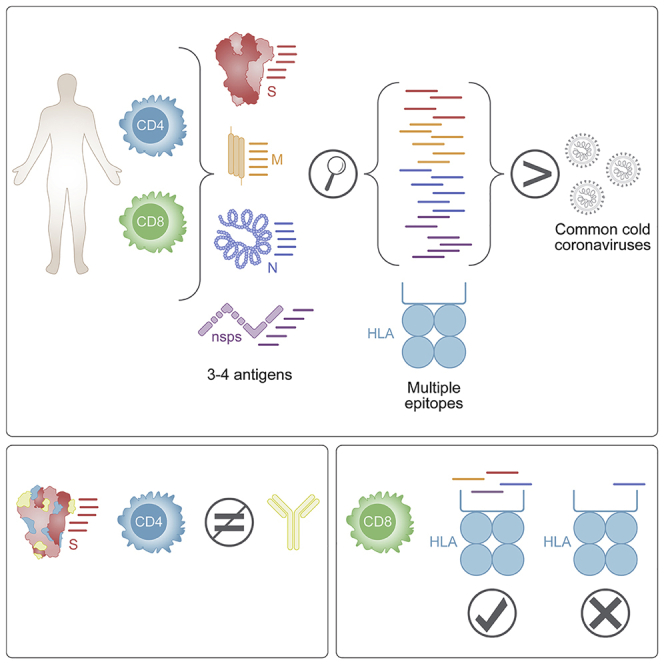
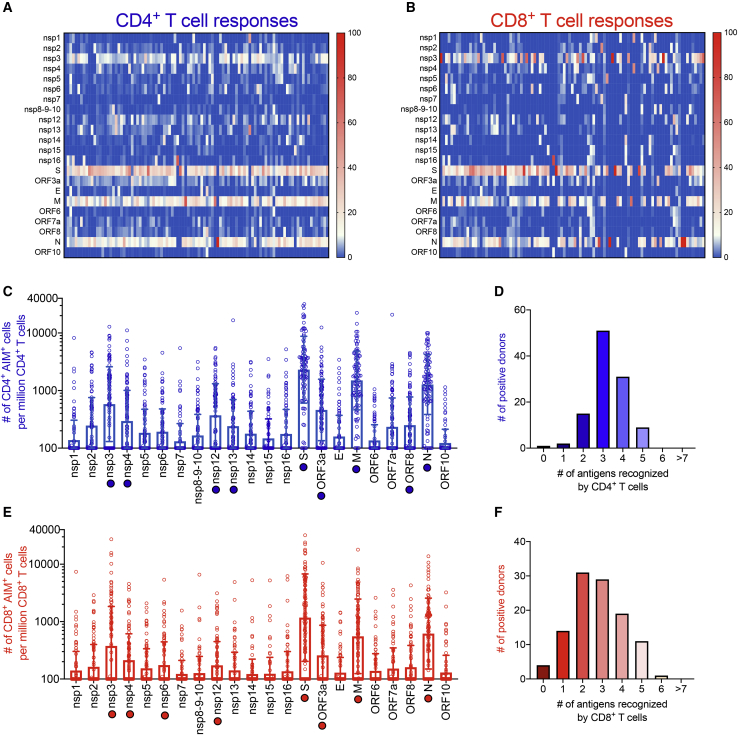
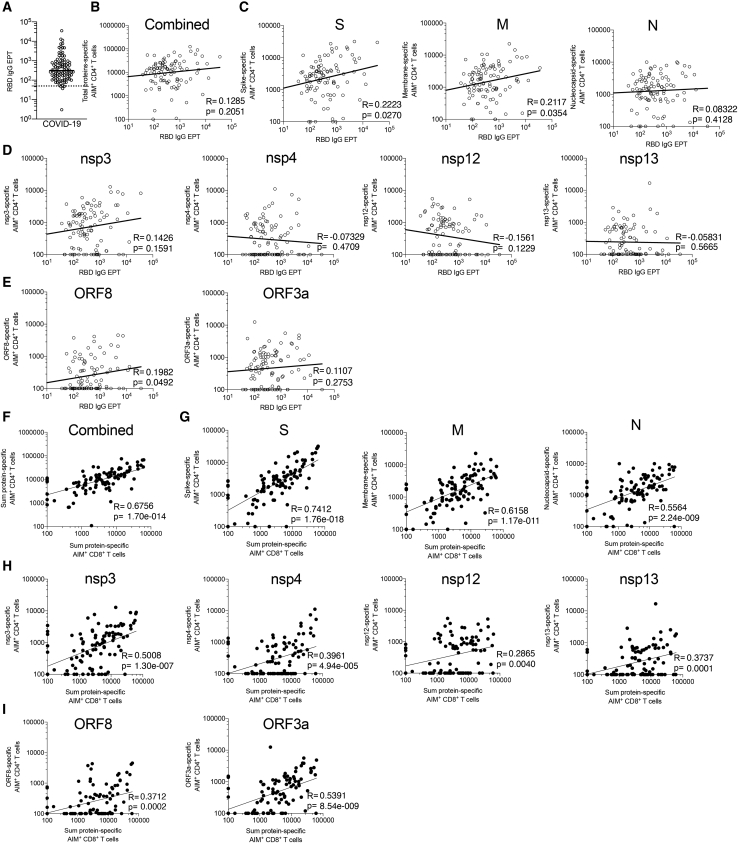
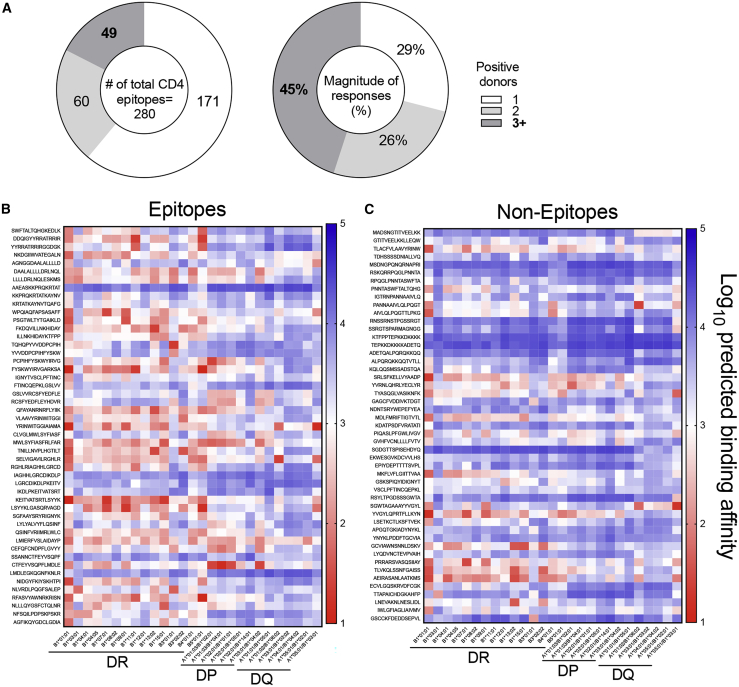
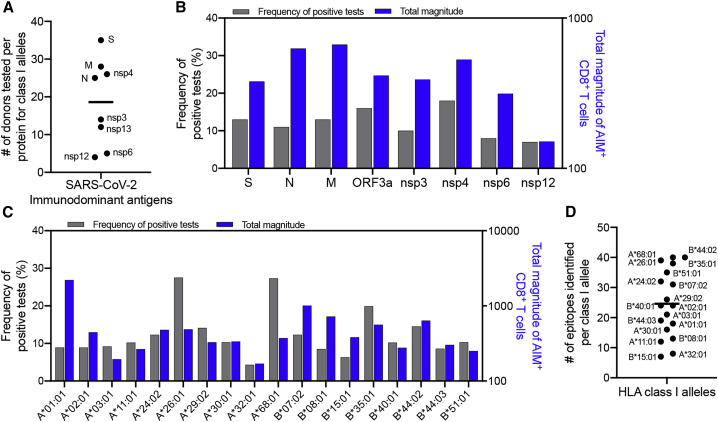
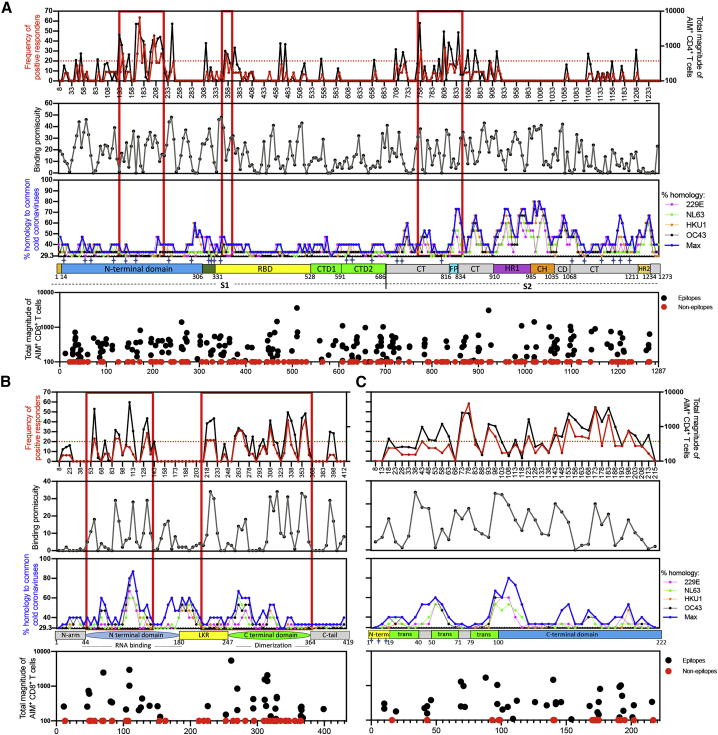
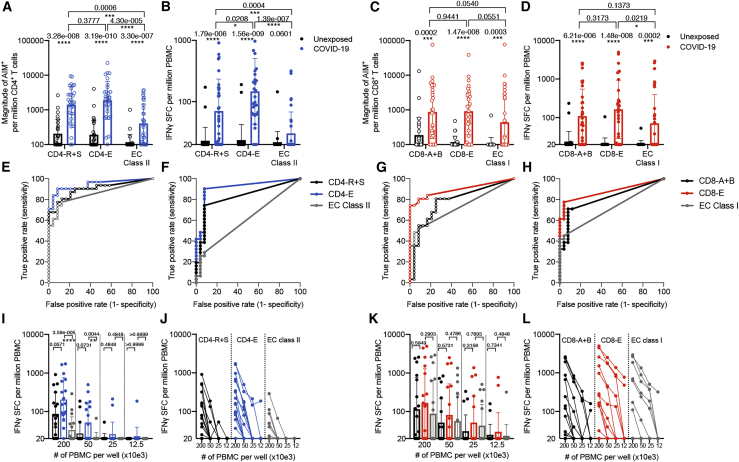
T cells are involved in control of SARS-CoV-2 infection. To establish the patterns of immunodominance of different SARS-CoV-2 antigens and precisely measure virus-specific CD4 + and CD8 + T cells, we study epitope-specific T cell responses of 99 convalescent coronavirus disease 2019 (COVID-19) cases. The SARS-CoV-2 proteome is probed using 1,925 peptides spanning the entire genome, ensuring an unbiased coverage of human leukocyte antigen (HLA) alleles for class II responses. For HLA class I, we study an additional 5,600 predicted binding epitopes for 28 prominent HLA class I alleles, accounting for wide global coverage. We identify several hundred HLA-restricted SARS-CoV-2-derived epitopes. Distinct patterns of immunodominance are observed, which differ for CD4 + T cells, CD8 + T cells, and antibodies. The class I and class II epitopes are combined into epitope megapools to facilitate identification and quantification of SARS-CoV-2-specific CD4 + and CD8 + T cells.
Overview
The claims and statistics of this paper haven’t been checked yet.
Run the check — free, no account needed. It reads the open-access text and checks the sources it cites.
Integrity signals
Registry
Cites
Statistics
Figures
Verification
Claims the paper makes
The claims and statistics of this paper haven’t been checked yet.
Run the check — free, no account needed. It reads the open-access text and checks the sources it cites.
Claims other papers make about this one
Each is checked against this paper’s own text: does it say what the citing paper says it does?
The source backs part of the claim, not all of it — or backs it for a different population, condition or comparison.
In the citing paper
“Using HLA class I and II predicted peptide “megapools,” circulating SARS-CoV-2-specific CD8+ and CD4+ T cells were identified in COVID-19 acute, mild and convalescent patients [110, 118-125].”
From Guidelines for the use of flow cytometry and cell sorting in immunological studies (third edition) (2021) · cites this paper as [121]
Experimental — accuracy not yet measuredIn the citing paper
“509 (97.3%) within the B.1.351 and P.1 variants”
From Impact of SARS-CoV-2 variants on the total CD4+ and CD8+ T cell reactivity in infected or vaccinated individuals (2021) · cites this paper as [51]
In the citing paper
“the T cell responses against SARS-CoV-2 are highly multi-antigenic and multi-specific, with tens of different epitopes recognized by CD4+ and CD8+ T cells in a given individual.”
From Impact of SARS-CoV-2 variants on the total CD4+ and CD8+ T cell reactivity in infected or vaccinated individuals (2021) · cites this paper as [51]
In the citing paper
“509 (97.3%) within the B.1.351 and P.1 variants”
From Impact of SARS-CoV-2 variants on the total CD4+ and CD8+ T cell reactivity in infected or vaccinated individuals (2021) · cites this paper as [51]
In the citing paper
“508 (97.1%) of these 523 CD8+ T cell epitopes are totally conserved within the B.1.1.7 variant”
From Impact of SARS-CoV-2 variants on the total CD4+ and CD8+ T cell reactivity in infected or vaccinated individuals (2021) · cites this paper as [51]
In the citing paper
“512 (97.9%) within the CAL.20C variant”
From Impact of SARS-CoV-2 variants on the total CD4+ and CD8+ T cell reactivity in infected or vaccinated individuals (2021) · cites this paper as [51]
Self-check
Percentages, sums and reported differences re-computed from the paper’s own numbers.
The self-check needs the paper’s full text.
Citations
Cites
Protein structure prediction on the Web: a case study using the Phyre server
Kelley, L. A., & Sternberg, M. J. E. (2009) · Nature Protocols · doi:10.1038/nprot.2009.2 · Cited by 4,154
Grifoni, A., Weiskopf, D., Ramirez, S. I., Mateus, J., Dan, J. M., Moderbacher, C. R., Rawlings, S. A., Sutherland, A., Premkumar, L., Jadi, R. S., et al. (2020) · Cell · doi:10.1016/j.cell.2020.05.015 · Cited by 3,595
Self-citationThe Immune Epitope Database (IEDB): 2018 update
Vita, R., Mahajan, S., Overton, J. A., Dhanda, S. K., Martini, S. R., Cantrell, J. R., Wheeler, D. K., Sette, A., & Peters, B. (2018) · Nucleic Acids Research · doi:10.1093/nar/gky1006 · Cited by 2,194
Self-citationSARS-CoV-2-specific T cell immunity in cases of COVID-19 and SARS, and uninfected controls
Le Bert, N., Tan, A. T., Kunasegaran, K., Tham, C. Y. L., Hafezi, M., Chia, A., Chng, M. H. Y., Lin, M., Tan, N., Linster, M., et al. (2020) · Nature · doi:10.1038/s41586-020-2550-z · Cited by 1,887
Rydyznski Moderbacher, C., Ramirez, S. I., Dan, J. M., Grifoni, A., Hastie, K. M., Weiskopf, D., Belanger, S., Abbott, R. K., Kim, C., Choi, J., et al. (2020) · Cell · doi:10.1016/j.cell.2020.09.038 · Cited by 1,790 · cited 3×
“A growing body of evidence points to a key role for SARS-CoV2-specific T cell responses in COVID-19 disease resolution and modulation of disease severity.(2,6,9) Milder cases of acute COVID-19 were associated with coordinated antibody, CD4 and CD8 T cell responses, whereas severe cases correlated with a lack of coordi…”
InfluentialSelf-citationRobust T Cell Immunity in Convalescent Individuals with Asymptomatic or Mild COVID-19
Sekine, T., Perez-Potti, A., Rivera-Ballesteros, O., Strålin, K., Gorin, J.-B., Olsson, A., Llewellyn-Lacey, S., Kamal, H., Bogdanovic, G., Muschiol, S., et al. (2020) · Cell · doi:10.1016/j.cell.2020.08.017 · Cited by 1,788
Jurtz, V. I., Paul, S., Andreatta, M., Marcatili, P., Peters, B., & Nielsen, M. (2017) · The Journal of Immunology · doi:10.4049/jimmunol.1700893 · Cited by 1,476
Self-citationSARS-CoV-2-reactive T cells in healthy donors and patients with COVID-19
Braun, J., Loyal, L., Frentsch, M., Wendisch, D., Georg, P., Kurth, F., Hippenstiel, S., Dingeldey, M., Kruse, B., Fauchere, F., et al. (2020) · Nature · doi:10.1038/s41586-020-2598-9 · Cited by 1,310
Distinct conformational states of SARS-CoV-2 spike protein
Cai, Y., Zhang, J., Xiao, T., Peng, H., Sterling, S. M., Walsh, R. M., Rawson, S., Rits-Volloch, S., & Chen, B. (2020) · Science · doi:10.1126/science.abd4251 · Cited by 1,221
Peng, Y., Mentzer, A. J., Liu, G., Yao, X., Yin, Z., Dong, D., Dejnirattisai, W., Rostron, T., Supasa, P., Liu, C., et al. (2020) · Nature Immunology · doi:10.1038/s41590-020-0782-6 · Cited by 1,179
Cited by
Sorted by citations
Adaptive immunity to SARS-CoV-2 and COVID-19
Sette, A., & Crotty, S. (2021) · Cell · doi:10.1016/j.cell.2021.01.007 · Cited by 1,860
Self-citationSARS-CoV-2 variant biology: immune escape, transmission and fitness
Carabelli, A. M., Peacock, T. P., Thorne, L., Harvey, W. T., Hughes, J., de Silva, T. I., Peacock, S. J., Barclay, W., de Silva, T. I., Towers, G. J., et al. (2023) · Nature Reviews Microbiology · doi:10.1038/s41579-022-00841-7 · Cited by 1,386
The T cell immune response against SARS-CoV-2
Moss, P. A. H. (2022) · Nature Immunology · doi:10.1038/s41590-021-01122-w · Cited by 1,243
The biological and clinical significance of emerging SARS-CoV-2 variants
Tao, K., Tzou, P. L., Nouhin, J., Gupta, R. K., de Oliveira, T., Kosakovsky Pond, S. L., Fera, D., & Shafer, R. W. (2021) · Nature Reviews Genetics · doi:10.1038/s41576-021-00408-x · Cited by 1,009
mRNA vaccines induce durable immune memory to SARS-CoV-2 and variants of concern
Goel, R. R., Painter, M. M., Apostolidis, S. A., Mathew, D., Meng, W., Rosenfeld, A. M., Lundgreen, K. A., Reynaldi, A., Khoury, D. S., Pattekar, A., et al. (2021) · Science · doi:10.1126/science.abm0829 · Cited by 873
Self-citation
Metadata
- Authors
- Tarke, A., Sidney, J., Kidd, C. K., Dan, J. M., Ramirez, S. I., Yu, E. D., Mateus, J., da Silva Antunes, R., Moore, E., Rubiro, P., Methot, N., Phillips, E., Mallal, S., Frazier, A., Rawlings, S. A., Greenbaum, J. A., Peters, B., Smith, D. M., Crotty, S., Weiskopf, D., Grifoni, A., & Sette, A.
- Affiliations
- La Jolla Institute for Immunology (US)
- Murdoch University (AU)
- University of California San Diego (US)
- Corresponding author
- Grifoni, Alba
- Sette, Alessandro
- ORCID
- Venue
- Cell Reports Medicine
- Publisher
- Elsevier BV
- Published
- 2021-02
- Volume
- 2
- Issue
- 2
- Pages
- 100204
- ISSN
- 2666-3791 (ISSN-L)
- PMC
- PMC7837622
- OpenAlex
- W3122458452
- Cited by
- 540
- References
- 58
- Citations by year
- 2026: 22 · 2025: 41 · 2024: 71 · 2023: 118 · 2022: 156 · 2021: 131
- FWCI
- 37.36
- Type
- journal article
- Language
- en
- Open access
- gold
- doi.org
- Licence
- Locations
- Cell Reports Medicine (publishedVersion, cc-by-nc-nd)
- bioRxiv (Cold Spring Harbor Laboratory) (acceptedVersion, other-oa)
- PubMed Central (publishedVersion, cc-by-nc-nd)
- PubMed (publishedVersion)
- eScholarship (California Digital Library) (submittedVersion, other-oa)
- PubMed Central (submittedVersion)
- Murdoch University Research Portal (submittedVersion)
- eScholarship (California Digital Library) (submittedVersion)
- ImmPort
- Funders
- University of California, San Diego (AI007036and AI007384)
- National Institute of Allergy and Infectious Diseases (75N93019C00001, AI42742, 75N9301900065)
- National Institutes of Health (AI036214, U01 CA260541-01, AI135078)
- John and Mary Tu Foundation
- Gilead Sciences
- Università degli Studi di Genova
- Topics
- Life Sciences › Biochemistry, Genetics and Molecular Biology › Molecular Biology › vaccines and immunoinformatics approaches
- Health Sciences › Medicine › Infectious Diseases › SARS-CoV-2 and COVID-19 Research
- Life Sciences › Immunology and Microbiology › Immunology › Immunotherapy and Immune Responses
- Keywords
- SARS-CoV-2, COVID-19 pandemic, epitope-specific T cell responses, HLA-restricted epitopes, CD4+ T cells, CD8+ T cells, HLA class II, convalescent patients, virus-specific T cells
About these checks
Registry, retraction, Cites and statistics results are computed, not judged, with one exception: a printed reference that no index lists is read once by a model before it counts as a citation error. Claims are extracted by a model and kept only when their quote appears verbatim in the text; each cited source is then checked, with a model’s help, for whether it says what the claim relies on. Those verdicts can be wrong — read the claim’s quote and the cited source before relying on one.
Statistics and arithmetic are recomputed, not judged.
Confidence bands are shown only for fields calibrated on our annotated test set. None is calibrated yet, so no band is shown.
What counts as a claim ›How we measure confidence ›How we check this ›
Are you an author, or do you see a problem with this page? Request a review
