

Intraneuronal Aβ42 Accumulation in Human Brain
Open accessThe DOI matches its Crossref record; 29 of the 29 references it cites were found in a registry or an index.
Abstract
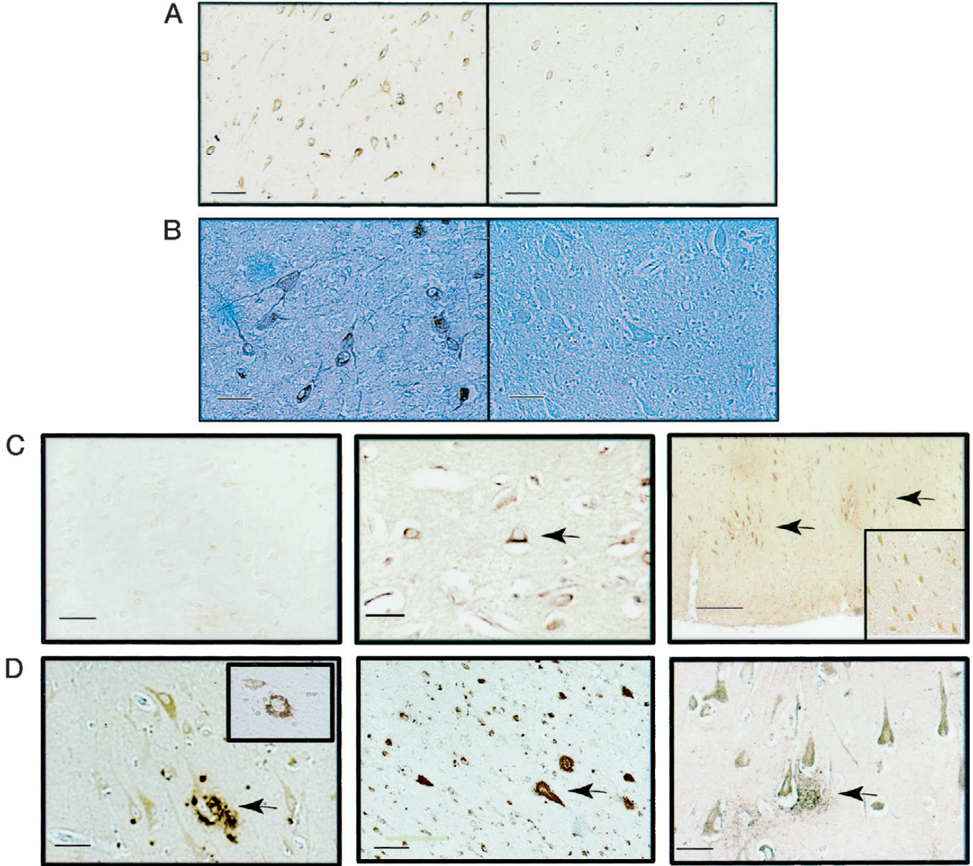
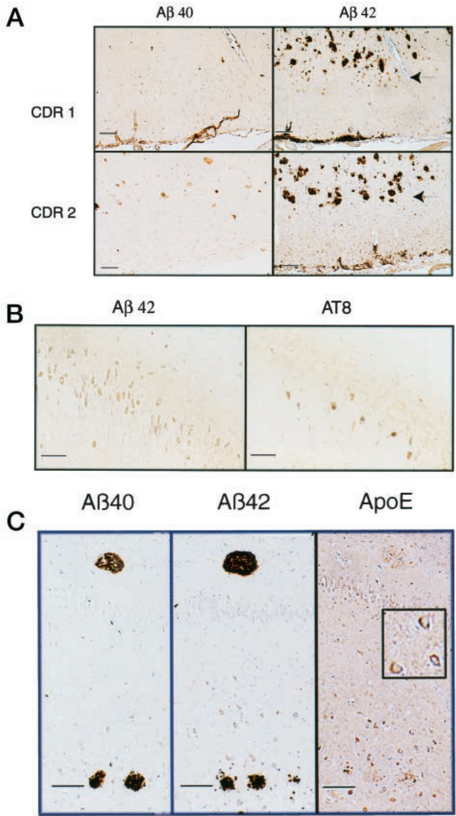
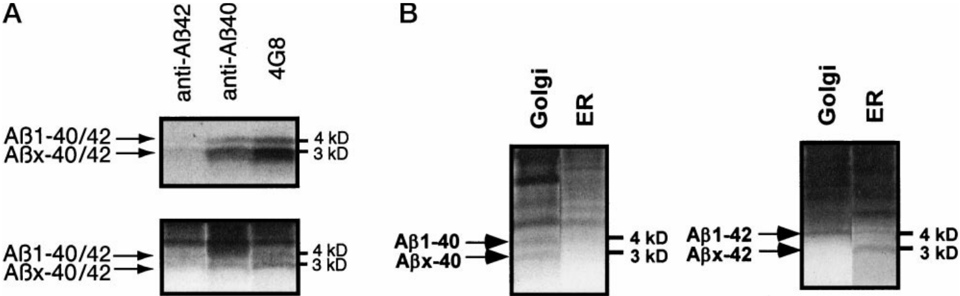
Alzheimer's disease (AD) is characterized by the deposition of senile plaques (SPs) and neurofibrillary tangles (NFTs) in vulnerable brain regions. SPs are composed of aggregated beta-amyloid (Abeta) 40/42(43) peptides. Evidence implicates a central role for Abeta in the pathophysiology of AD. Mutations in betaAPP and presenilin 1 (PS1) lead to elevated secretion of Abeta, especially the more amyloidogenic Abeta42. Immunohistochemical studies have also emphasized the importance of Abeta42 in initiating plaque pathology. Cell biological studies have demonstrated that Abeta is generated intracellularly. Recently, endogenous Abeta42 staining was demonstrated within cultured neurons by confocal immunofluorescence microscopy and within neurons of PS1 mutant transgenic mice. A central question about the role of Abeta in disease concerns whether extracellular Abeta deposition or intracellular Abeta accumulation initiates the disease process. Here we report that human neurons in AD-vulnerable brain regions specifically accumulate gamma-cleaved Abeta42 and suggest that this intraneuronal Abeta42 immunoreactivity appears to precede both NFT and Abeta plaque deposition. This study suggests that intracellular Abeta42 accumulation is an early event in neuronal dysfunction and that preventing intraneuronal Abeta42 aggregation may be an important therapeutic direction for the treatment of AD.
Overview
The claims and statistics of this paper haven’t been checked yet.
Free: it reads the open-access text and checks the first 5 claims that cite a source we can check. Create a free account to check every claim.
Integrity signals
Registry
Cites
Statistics
Figures
Verification
Claims the paper makes
The claims and statistics of this paper haven’t been checked yet.
Free: it reads the open-access text and checks the first 5 claims that cite a source we can check. Create a free account to check every claim.
Claims other papers make about this one
Each is checked against this paper’s own text: does it say what the citing paper says it does?
The source backs part of the claim, not all of it — or backs it for a different population, condition or comparison.
In the citing paper
“Additionally, it has been shown that intraneuronal Aβ accumulation in specific AD-vulnerable neurons precedes the formation of extracellular Aβ plaques both in AD patients [41, 78] and mouse models [22, 87, 110].”
From Senescence-related impairment of autophagy induces toxic intraneuronal amyloid-β accumulation in a mouse model of amyloid pathology (2023) · cites this paper as [41]
Experimental — accuracy not yet measuredThe source backs part of the claim, not all of it — or backs it for a different population, condition or comparison.
In the citing paper
“Two publications appeared in January 2000 on the intraneuronal accumulation of particularly Aβ42 by light microscopy within neurons of human brain.”
From Intraneuronal β-amyloid accumulation and synapse pathology in Alzheimer’s disease (2010) · cites this paper as [60]
Experimental — accuracy not yet measuredThe source backs part of the claim, not all of it — or backs it for a different population, condition or comparison.
In the citing paper
“N-terminal Aβ1-x/βCTF-specific antibodies also fail to label N-truncated Aβ42 peptides that appear to be particularly important in AD [60, 98, 157, 158, 206].”
From Intraneuronal β-amyloid accumulation and synapse pathology in Alzheimer’s disease (2010) · cites this paper as [60]
Experimental — accuracy not yet measuredThe source backs part of the claim, not all of it — or backs it for a different population, condition or comparison.
In the citing paper
“Specifically, immuno-histochemical data support that neuron cell bodies with early intraneuronal Aβ42 accumulation are those that go on to develop NFTs [60, 140], while their terminal fields are sites of early plaque pathology.”
From Intraneuronal β-amyloid accumulation and synapse pathology in Alzheimer’s disease (2010) · cites this paper as [60]
Experimental — accuracy not yet measuredThe source backs part of the claim, not all of it — or backs it for a different population, condition or comparison.
In the citing paper
“This aligns with work from multiple laboratories showing that plaque formation depends on neuronal Aβ [45–48]”
From Selective suppression of oligodendrocyte-derived amyloid beta rescues neuronal dysfunction in Alzheimer’s disease (2024) · cites this paper as [48]
Experimental — accuracy not yet measured
13 more claims about this paper
Create a free account to see every claim other papers make about this one.
Self-check
Percentages, sums and reported differences re-computed from the paper’s own numbers.
The self-check needs the paper’s full text.
Citations
Cites
Iwatsubo, T., Odaka, A., Suzuki, N., Mizusawa, H., Nukina, N., & Ihara, Y. (1994) · Neuron · doi:10.1016/0896-6273(94)90458-8 · Cited by 1,774
Borchelt, D. R., Thinakaran, G., Eckman, C. B., Lee, M. K., Davenport, F., Ratovitsky, T., Prada, C.-M., Kim, G., Seekins, S., Yager, D., et al. (1996) · Neuron · doi:10.1016/s0896-6273(00)80230-5 · Cited by 1,478
Plaque-independent disruption of neural circuits in Alzheimer’s disease mouse models
Hsia, A. Y., Masliah, E., McConlogue, L., Yu, G.-Q., Tatsuno, G., Hu, K., Kholodenko, D., Malenka, R. C., Nicoll, R. A., & Mucke, L. (1999) · Proceedings of the National Academy of Sciences · doi:10.1073/pnas.96.6.3228 · Cited by 1,123
Masters, C. L., Multhaup, G., Simms, G., Pottgiesser, J., Martins, R. N., & Beyreuther, K. (1985) · The EMBO Journal · doi:10.1002/j.1460-2075.1985.tb04000.x · Cited by 1,042
The cell biology of β-amyloid precursor protein and presenilin in Alzheimer's disease
Selkoe, D. (1998) · Trends in Cell Biology · doi:10.1016/s0962-8924(98)01363-4 · Cited by 862
Lack of apolipoprotein E dramatically reduces amyloid β-peptide deposition
Bales, K. R., Verina, T., Dodel, R. C., Du, Y., Altstiel, L., Bender, M., Hyslop, P., Johnstone, E. M., Little, S. P., Cummins, D. J., et al. (1997) · Nature Genetics · doi:10.1038/ng1197-263 · Cited by 830
Distinct sites of intracellular production for Alzheimer's disease Aβ40/42 amyloid peptides
Hartmann, T., Bieger, S. C., Brühl, B., Tienari, P. J., Ida, N., Allsop, D., Roberts, G. W., Masters, C. L., Dotti, C. G., Unsicker, K., et al. (1997) · Nature Medicine · doi:10.1038/nm0997-1016 · Cited by 709
Perforant pathway changes and the memory impairment of Alzheimer's disease
Hyman, B. T., Van Hoesen, G. W., Kromer, L. J., & Damasio, A. R. (1986) · Annals of Neurology · doi:10.1002/ana.410200406 · Cited by 672
Moechars, D., Dewachter, I., Lorent, K., Reversé, D., Baekelandt, V., Naidu, A., Tesseur, I., Spittaels, K., Haute, C. V. D., Checler, F., et al. (1999) · Journal of Biological Chemistry · doi:10.1074/jbc.274.10.6483 · Cited by 668
Self-citationSaido, T. C., Iwatsubo, T., Mann, D. M. A., Shimada, H., Ihara, Y., & Kawashima, S. (1995) · Neuron · doi:10.1016/0896-6273(95)90301-1 · Cited by 587
Cited by
Items 801–900 of 999
Rational Design of a Cu Chelator That Mitigates Cu‐Induced ROS Production by Amyloid Beta
Mitra, S., Talukdar, K., Prasad, P., Misra, S. K., Khan, S. I., Sharp, J. S., Jurss, J. W., & Chakraborty, S. (2021) · ChemBioChem · doi:10.1002/cbic.202100485 · Cited by 6
Ferdosh, S., Banerjee, S., Singh, J., & Barat, C. (2022) · FEBS Letters · doi:10.1002/1873-3468.14308 · Cited by 7
Madadi, S., Katebi, M., Eftekharzadeh, M., Mehdipour, A., Pourheydar, B., & Mehdizadeh, M. (2019) · Basic and Clinical Neuroscience Journal · doi:10.32598/bcn.9.10.90 · Cited by 6
Reactive oxidative species enhance amyloid toxicity in APP/PS1 mouse neurons
Yang, B., Sun, X., Lashuel, H. A., & Zhang, Y. (2012) · Neuroscience Bulletin · doi:10.1007/s12264-012-1239-1 · Cited by 6
“[4] Gouras GK, Tsai J, Naslund J, Vincent B, Edgar M, Checler F, et al.”
BackgroundTroubleshooting methods for APP processing in vitro
Sastre, M. (2010) · Journal of Pharmacological and Toxicological Methods · doi:10.1016/j.vascn.2010.02.003 · Cited by 9
La apoptosis en las enfermedades neurodegenerativas: evidencias y controversias
Jiménez-Del-Río, M., & Velez‐Pardo, C. (2001) · Revista de Neurología · doi:10.33588/rn.3209.2000495 · Cited by 9
Malik, N., Miah, M.-U., Galgani, A., McAleese, K. E., Walker, L., LeBeau, F. E. N., Attems, J., Outeiro, T. F., Thomas, A. J., & Koss, D. J. (2024) · Acta Neuropathologica · doi:10.1007/s00401-024-02691-4 · Cited by 6
Johnson, E. A., Nowar, R., Viola, K. L., Huang, W., Zhou, S., Bicca, M. A., Zhu, W., Kranz, D. L., Klein, W. L., & Silverman, R. B. (2025) · Proceedings of the National Academy of Sciences · doi:10.1073/pnas.2402117122 · Cited by 5
Xiao, R., Liang, R. S., Cai, Y., Dong, J. N., & Zhang, L. (2022) · Frontiers in Nutrition · doi:10.3389/fnut.2022.1061552 · Cited by 6
“In the senile plaque of the AD brain, aggregated A β is the main constituent (89).”
BackgroundGao, Y., Schedin‐Weiss, S., & Tjernberg, L. O. (2024) · Advanced technology in neuroscience . · doi:10.4103/atn.atn-d-24-00014 · Cited by 9
Emmerson, J. T., Carmo, S. D., Lavagna, A., Huang, C., Wong, T. P., Martínez-Trujillo, J., & Cuello, A. C. (2024) · Acta Neuropathologica Communications · doi:10.1186/s40478-024-01901-0 · Cited by 5
Alzheimer’s Disease and Diabetes
Brent, D. A., Gary, L., Aboud, Z., & Gordon, W. (2013) · InTech eBooks · doi:10.5772/54913 · Cited by 8
“Secretion of Aβ may be important in preventing neurodegeneration as intraneural Aβ accumulations have been found in brain regions prone to early AD in patients with mild cognitive impairment [334] and studies done with transgenic mice indicate that intracellular Aβ accumulation is an early event of the neuropathologic…”
BackgroundFas Apoptosis Inhibitory Molecule Blocks and Dissolves Pathological Amyloid-β Species
Kaku, H., Ludlow, A. V., Gutknecht, M. F., & Rothstein, T. L. (2021) · Frontiers in Molecular Neuroscience · doi:10.3389/fnmol.2021.750578 · Cited by 6
Garcia, M. G., Paulus, A., Vázquez‐Reyes, S., Klementieva, O. L., Gouras, G. K., Bachiller, S., & Deierborg, T. (2023) · Brain Behavior & Immunity - Health · doi:10.1016/j.bbih.2023.100663 · Cited by 8
Self-citationRusznák, Z., Kim, W. S., Hsiao, J.-H. T., Halliday, G. M., Paxinos, G., & Fu, Y. (2015) · Journal of Alzheimer s Disease · doi:10.3233/jad-150368 · Cited by 5
“It should be noted that olfactory deficits in early AD are not directly related to the A burden [48], although the neuronal processing and potential accumulation of A are well recognized in the human brain and have been proposed to precede both extracellular A accumulation and neurofibrillary tangle formation [49, 50].”
The novel amyloid-beta peptide aptamer inhibits intracellular amyloid-beta peptide toxicity.
Wang, X., Yang, Y., Jia, M., Ma, C., Wang, M., Che, L., Yu, Y., & Wu, J. (2013) · PubMed Central · doi:10.3969/j.issn.1673-5374.2013.01.005 · Cited by 5
Small-molecule aggregation inhibitors reduce excess amyloid in a trisomy 16 mouse cortical cell line
Paula-Lima, A. C., Arriagada, C., Toro, R., Cárdenas, A. M., Caviedes, R., Ferreira, S. T., & Caviedes, P. A. (2008) · Biological Research · doi:10.4067/s0716-97602008000200001 · Cited by 5
“Furthermore, early intracellular accumulation of Aβ has also been observed in DS (Gouras et al., 2000).”
BackgroundAre cardiomyocytes able to generate pre-amyloid peptides?
Fidziańska, A., Walczak, E., Bekta, P., & Chojnowska, L. (2011) · PubMed · Cited by 6
The role of amyloid beta 4-42 in the etiology of Alzheimer's disease
Bouter, Y. (2015) · eDiss (Georg-August-Universität Göttingen) · doi:10.53846/goediss-4849 · Cited by 7
Amyloid Hypothesis and Alzheimer's Disease
Sun, X., & Zhang, Y. (2011) · InTech eBooks · doi:10.5772/28947 · Cited by 4
“Second, this iAβ1-42 accumulation appears earlier than amyloid plaque formation (Gouras et al., 2000; D'Andrea et al., 2001; Tabira et al., 2002; Takahashi et al., 2002; Wang et al., 2002).”
BackgroundUchiumi, O., Zou, J., Yamaki, S., Hori, Y., Ono, M., Yamamoto, R., & Kato, N. (2024) · Brain Research · doi:10.1016/j.brainres.2024.148934 · Cited by 4
Saraceno, C., Pagano, L., Laganà, V., Geviti, A., Bagnoli, S., Ingannato, A., Mazzeo, S., Longobardi, A., Fostinelli, S., Bellini, S., et al. (2024) · International Journal of Molecular Sciences · doi:10.3390/ijms25137035 · Cited by 5
“…of AD remains unknown, two components have been identified thus far as key players in the disease: amyloid-β (A β ) plaques, formed by the aggregation of intra-and extra-cellular A β , and intracellular neurofibrillary tangles (NFT) composed of hyperphosphorylated tau protein accumulation [11–14].”
BackgroundRaggi, A., & Ferri, R. (2025) · Psychogeriatrics · doi:10.1111/psyg.70071 · Cited by 4
Preclinical MRI and NMR Biomarkers of Alzheimer's Disease: Concepts and Applications
Dhénain, M. (2008) · Magnetic Resonance Insights · doi:10.4137/mri.s971 · Cited by 4
“Recently, several studies also suggested a critical role of intracellular amyloid deposits in the physiopathogeny of AD (Gouras et al. 2000).”
Conformational Preferences of Aβ25-35 and Aβ35-25 in Membrane Mimicking Environments
Sambasivam, D., Sivanesan, S., Sultana, S. N., & Rajadas, J. (2019) · Protein and Peptide Letters · doi:10.2174/0929866526666190228122849 · Cited by 4
Ghorbani, M., Ghazalian, F., Ebrahim, K., & Abednatanzi, H. (2019) · Basic and Clinical Neuroscience Journal · doi:10.32598/bcn.9.10.440 · Cited by 6
Shokrzadeh, M., Javanmard, H., Zadeh, G. G., Asgarian‐Omran, H., Modanlou, M., Beklar, S. Y., & Ataee, R. (2019) · Basic and Clinical Neuroscience Journal · doi:10.32598/bcn.9.10.1159.2 · Cited by 4
Meinicke, A., Härtig, W., Winter, K., Puchta, J., Mages, B., Michalski, D., Emmer, A., Otto, M., Hoffmann, K., Reimann, W., et al. (2022) · Biomolecules · doi:10.3390/biom12010096 · Cited by 6
“Notably, intraneuronal accumulation of Aβ precedes extracellular Aβ deposition [47], which is in line with reports of early intracellular Aβx-42 in the human brain [48] and in APP/PS1 mice [49], and is considered as a predictor for synaptic dysfunction frequently caused by Aβ oligomers [23,50].”
Alterations of Neuronal Lysosomes in Alzheimer’s Disease and in APPxPS1-KI Mice
Androuin, A., Brainbank NeuroCEB Neuropathology Network, Thierry, M., Boluda, S., Baskaran, A., Langui, D., Duyckaerts, C. J., Potier, M., Hachimi, K. H. E., Delatour, B., et al. (2022) · Journal of Alzheimer s Disease · doi:10.3233/jad-215692 · Cited by 5
Malyshev, I. Y. (2013) · SpringerBriefs in biochemistry and molecular biology · doi:10.1007/978-94-007-5943-5_8 · Cited by 4
Broeck, B. V., Vanhoutte, G., Cuijt, I., Pereson, S., Joris, G., Timmermans, J., der Linden, A. V., Broeckhoven, C. V., & Kumar‐Singh, S. (2008) · Neuroscience Letters · doi:10.1016/j.neulet.2008.09.073 · Cited by 6
“Intraneuronal eposits predominantly consist of A 42 and not A 40 [8].”
BackgroundA review on molecular neuropathology of Alzheimer s disease in association with aging
Aka, T. D., Rashid, M. M. O., Paul, S. C., & Halim, M. A. (2018) · Journal of Research in Pharmacy · doi:10.12991/jrp.2018.103 · Cited by 5
“Current study noticed that not only intraneuronal Aβ42 accumulation occurred in neuronal cells but also Aβ42 immunoreactive senile plaque (SPs) development is occurred at the terminal of neurons [17].”
BackgroundCannavo, C., Tosh, J., Fisher, E., & Wiseman, F. K. (2019) · Progress in brain research · doi:10.1016/bs.pbr.2019.10.004 · Cited by 6
Wiart, C. (2014) · Elsevier eBooks · doi:10.1016/b978-0-12-398373-2.00001-7 · Cited by 8
Understanding and Ameliorating the TTR Amyloidoses
Johnson, S. M., Wiseman, R. L., Paulsson, J. F., Choi, S., Powers, E. T., Buxbaum, J. N., & Kelly, J. W. (2010) · Wiley eBooks · doi:10.1002/9780470572702.ch45 · Cited by 5
Self-citationNeuronal endolysosomal alterations induced by Apolipoprotein E4 emerge over time in primary neurons
Nyberg, E., Konings, S. C., Lindblom, N., Israelsson, B., Klementieva, O. L., Martinsson, I., & Gouras, G. K. (2025) · Journal of Biological Chemistry · doi:10.1016/j.jbc.2025.110479 · Cited by 4
Self-citationBrembati, V., Crescenti, D., Geviti, A., Rossini, E., Cazzaniga, F. A., Moda, F., Zanier, E. R., Guerrera, G., Battistini, L., Baiardi, S., et al. (2026) · Alzheimer s Research & Therapy · doi:10.1186/s13195-025-01897-2 · Cited by 6
“…characterized by the formation of intracellular amyloid beta (Aβ) peptide aggregates, the deposition of neurofibrillary tangles mainly composed of phosphorylated tau protein [1–5], and the progressive neuronal and synaptic damage, that leads to gradual loss of memory and cognitive abilities [6, 7].”
Extracellular Vesicles in Alzheimer’s Disease: Mechanisms, Biomarkers, and Therapeutic Engineering
Wang, L., Mao, L., & Zong, X. (2026) · International Journal of Molecular Sciences · doi:10.3390/ijms27093974 · Cited by 4
Intraneuronal binding of amyloid beta with reelin—Implications for the onset of Alzheimer’s disease
Kobro‐Flatmoen, A., & Omholt, S. W. (2025) · PLoS Computational Biology · doi:10.1371/journal.pcbi.1012709 · Cited by 2
Molecular studies on Aβ(42) induced genomic instability in aged rabbit brain
Narasingappa, R. B., Prahalad, R. K., Shamasundar, N. M., Sathyanarayana, R. T. S., Hanumanthappa, B. K., & Rao, K. S. J. (2010) · Neurochemistry International · doi:10.1016/j.neuint.2010.01.012 · Cited by 3
Rapid Surface–Biostructure Interaction Analysis Using Strong Metal-Based Nanomagnets
Rotzetter, A. C. C., Schumacher, C. M., Zako, T., Stark, W. J., & Maeda, M. (2013) · Langmuir · doi:10.1021/la4026427 · Cited by 4
Developing Persian version of Sensory Gating Inventory (SGI): Validity and Reliability
Mohebbi, M., Mahmoudian, S., Motevalian, S. A., Janani, L., Farhadi, M. R., & Daneshi, A. (2019) · Basic and Clinical Neuroscience Journal · doi:10.32598/bcn.9.10.360 · Cited by 3
Nemati, R., Sohrabi-Ashlaghi, A., Saberian, P., Sadeghi, M., Mardani, S., Abadi, A., Yaghoobpoor, A., Heydari, A., Khoshroo, N., Rahnama, Y., et al. (2025) · BMC Neurology · doi:10.1186/s12883-025-04140-5 · Cited by 7
Хмелёва, С. А., Mezentsev, Y. V., Kozin, S. A., Mitkevich, V. A., Медведев, А. Е., Ivanov, A. S., Bodoev, N. V., Makarov, A. А., & Radko, S. P. (2015) · Molecular Biology · doi:10.7868/s0026898415020068 · Cited by 3
Plasma Biomarkers in Alzheimer’s Disease
Sohma, H., & Kokai, Y. (2016) · InTech eBooks · doi:10.5772/64512 · Cited by 5
“Attenuated activity of Aβ-degrading catabolic enzymes including neprilysin and insulin-degrading enzymes with age or abnormal production of Aβ due to gene mutation(s) of related proteins such as on APP have been identified, which in turn leads to the accumulation of Aβ42 in the brain tissue [11].”
Apolipoproteins in Different Amyloidoses
Sadowski, M., & Wısnıewskı, T. (2007) · Springer eBooks · doi:10.1007/0-387-25919-8_6 · Cited by 3
Bengtsson, S. K. S. (2013) · DiVA at Umeå University (Umeå University) · Cited by 4
Riffo-Lepe, N., González-Sanmiguel, J., Armijo‐Weingart, L., Saavedra, P., Hernandez, D., Ramos, G., Martín, L. S., & Aguayo, L. G. (2025) · Neural Regeneration Research · doi:10.4103/nrr.nrr-d-24-01052 · Cited by 7
Amyloid‐β Seeds in Alzheimer's Disease: Research Challenges and Implications
Beschörner, N., Xu, Y., Jucker, M., & Ruiz‐Riquelme, A. (2025) · Journal of Neurochemistry · doi:10.1111/jnc.70267 · Cited by 3
“Although the association of neuronal lysosomes with the intra-cellular accumulation and aggregation of Aβ has been known for years (Olsson et al. 2018; Gouras et al. 2000; Hu et al. 2009; Yang et al. 2011), new research has brought these organelles into focus again.”
Sasanian, N., Halipi, V., Sjögren, M., Bengtsson, J., Bernson, D., & Esbjörner, E. K. (2025) · Communications Chemistry · doi:10.1038/s42004-025-01846-y · Cited by 4
“A β peptidesare likely to be affected by lipid alterations as they are produced and prevail in membrane-rich extra-and intracellular 12 locations of the brain, such as neuronal synapses 13 , mitochondria 14 , the trans-Golgi network 15 , the endoplasmic reticulum (ER) 16 , and endolysosomes 17 .”
Aβ antibodies target not only amyloid plaques but also distinct brain cells and vessels
Wen, G., Lindblom, N., Zhan, X., Garcia, M. G., Deierborg, T., Kobro‐Flatmoen, A., & Gouras, G. K. (2026) · Alzheimer s & Dementia · doi:10.1002/alz.71121 · Cited by 3
Self-citationHeat Shock Proteins, Unfolded Protein Response Chaperones and Alzheimer’s Disease
Magrané, J., & Querfurth, H. W. (2008) · Springer eBooks · doi:10.1007/978-1-4020-8231-3_2 · Cited by 3
“Indeed, although the formation of NFTs closely parallels the progression and anatomic distribution of neuronal loss in AD, intraneuronal A accumulation precedes the deposition of amyloid plaques and the appearance of NFTs, and correlates with the first indications of cognitive deficits (Gouras et al., 2000; D’Andrea e…”
BackgroundBai, L., & Li, F. (2024) · Medicine · doi:10.1097/md.0000000000040550 · Cited by 2
Free Cholesterol — A Double-Edge Sword in Alzheimer Disease
Fernández-Checa, J. C. (2015) · InTech eBooks · doi:10.5772/59935 · Cited by 3
“Furthermore, Aβ plaques could generate from the death of neurons that contained elevated amounts of Aβ and this release can account for the loss of intraneuronal Aβ immunoreactivity in areas of plaque formation [24, 27, 28].”
BackgroundIs intraneuronal amyloid β-peptide accumulation the trigger of Alzheimer's disease pathophysiology?
Moreira, P. I., Liu, Q., Honda, K., Smith, M. A., Santos, M. S., & Oliveira, C. R. (2004) · Journal of Alzheimer s Disease · doi:10.3233/jad-2004-6411 · Cited by 3
“mice models [2,3] and has been associated with synap-”
Prospects of Non-drug Approaches to Alzheimer's Disease
Manukhina, E. B., Wiegant, F. A. C., Torshin, V. I., Goryacheva, A. V., Khomenko, I. P., Круглов, С. В., Mashina, S. Y., Pokidyshev, D. A., Popkova, E. A., Pshennikova, M. G., et al. (2004) · Biology Bulletin · doi:10.1023/b:bibu.0000036943.66185.50 · Cited by 6
Evaluación de la producción de b-amiloide por la mutación E280A en el gen de la presenilina 1
Villegas, A., Castañeda, M. M., Arias, L. F., Vieco, B., Lopera, F. J., & Bedoya, G. (2007) · Biomédica · doi:10.7705/biomedica.v27i3.200 · Cited by 2
Origin(s) of Intraneuronal Amyloid
D’Andrea, M. R. (2016) · Elsevier eBooks · doi:10.1016/b978-0-12-804256-4.00002-4 · Cited by 2
Hoyer, S., & Frölich, L. (2007) · Springer eBooks · doi:10.1007/978-0-387-30377-2_12 · Cited by 2
Immunotherapy in Alzheimer’s Disease
Gupta, J., & Hoque, M. (2019) · Springer eBooks · doi:10.1007/978-981-13-9636-6_14 · Cited by 2
Amiri, S., Azadmaneshb, K., Shasaltaneh, M. D., Khoshkholgh-Sima, B., & Naghdi, N. (2019) · Basic and Clinical Neuroscience Journal · doi:10.32598/bcn.9.10.80.1 · Cited by 3
Furuse, M. (2021) · Elsevier eBooks · doi:10.1016/b978-0-12-817990-1.00009-3 · Cited by 2
Mitochondria in Alzheimer disease : regulatory mechanisms and cell death
Hedskog, L. (2012) · Figshare · Cited by 2
Kametani, F., Tanaka, K., Usami, M., Maruyama, K., & Mori, H. (2001) · Journal of the Neurological Sciences · doi:10.1016/s0022-510x(01)00543-3 · Cited by 2
Early Intraneuronal β-Amyloid Pathology: Do Transgenic Mice Represent Valid Model Systems?
Wirths, O., & Bayer, T. A. (2008) · Open Longevity Science · doi:10.2174/1874369200802010007 · Cited by 3
“There is increasing evidence that, in addition to the wellknown extracellular amyloid deposition in the parenchyma, A peptides accumulate inside neurons [3].”
BackgroundAlzheimer disease models and human neuropathology: similarities and diVerences
Duyckaerts, C. J., Potier, M., & Delatour, B. (2008) · Cited by 2
Bjorkli, C., Ebbesen, N. C., Julian, J. B., Witter, M. P., Sandvig, A., & Sandvig, I. (2022) · bioRxiv (Cold Spring Harbor Laboratory) · doi:10.1101/2022.07.05.498797 · Cited by 2
Intracellular Amyloid-β in the Normal Rat Brain and Human SubjectsPreprint
Kobro‐Flatmoen, A., Hormann, T. M., & Gouras, G. K. (2023) · bioRxiv (Cold Spring Harbor Laboratory) · doi:10.1101/2023.02.15.528693 · Cited by 2
Self-citationGong, Y., Haeri, M., Zhang, X., Li, Y., Liu, A., Wu, D., Zhang, Q., Jazwinski, S. M., Zhou, X., Wang, X., et al. (2024) · medRxiv · doi:10.1101/2024.05.21.24306783 · Cited by 2
Amyloid beta is released by lysosomal exocytosis from hiPSC-derived neuronsPreprint
Tsang, A. R., Medapati, M. R., Seah, C., Krupa, J. M., & Pasternak, S. (2025) · bioRxiv (Cold Spring Harbor Laboratory) · doi:10.1101/2025.03.01.640950 · Cited by 3
Majid, A., & Garg, S. (2025) · Process Safety and Environmental Protection · doi:10.1016/j.cherd.2025.04.043 · Cited by 1
Evidence of emerging transcriptome mediators of Alzheimer's disease in canine cognitive dysfunction
Osburn, S. C., Easterday, D., McEntee, C. M., Latham, A. S., Lark, D. S., McGrath, S., Moreno, J. A., & LaRocca, T. J. (2025) · Brain Pathology · doi:10.1111/bpa.70062 · Cited by 1
Pierzynowska, K., Gaffke, L., Cyske, Z., Jerzemowska, G., Węgrzyn, G., & Podlacha, M. (2026) · Nutritional Neuroscience · doi:10.1080/1028415x.2026.2634117 · Cited by 1
Algaidi, S. A. (2026) · Journal of Neuroimmunology · doi:10.1016/j.jneuroim.2026.578912 · Cited by 1
Cell-type-specific APOE4 cascade across the Alzheimer’s disease continuum
Shostak, D. M., Liang, Z., & Huang, Y. (2026) · Neuron · doi:10.1016/j.neuron.2026.04.024 · Cited by 1
CAENORHABDITIS ELEGANS AS A MODEL ORGANISM FOR ER-RELATED DISEASES
Ghenea, S. (2011) · Cited by 1
Biological Targeting and Activity of Pre-fibrillar Aβ Assemblies
Wilcox, K. C., Pitt, J. E., Sebollela, A. S., Martirosova, H., Lacor, P. N., & Klein, W. L. (2011) · Springer eBooks · doi:10.1007/978-94-007-2774-8_4 · Cited by 1
Amyloid Hypothesis: Molecular and Cellular Aspects of Toxicity
Kayed, R., & Lasagna‐Reeves, C. A. (2013) · Modecular medicine and medicinal · doi:10.1142/9781848167551_0001 · Cited by 3
“Intraneuronal Aβ accumulation has been identified in AD patients, transgenic mice, and cultured cells (LaFerla et al., 1997; Skovronsky et al., 1998; Gouras et al., 2000; D’Andrea et al., 2001; Gyure et al., 2001; Wirths et al., 2001; Langui et al., 2004).”
BackgroundThirty Years After the Launch of the Amyloid Cascade Hypothesis: Is there a Shift of Gears at Last?
Behl, C. (2023) · Springer eBooks · doi:10.1007/978-3-031-31570-1_20 · Cited by 1
Bansal, V. A., Tan, J. M., Soon, H. R., Zainolabidin, N., Saido, T. C., & Ch’ng, T. H. (2025) · eLife · doi:10.7554/elife.92069.3 · Cited by 4
Neurotoxicity of amyloid β proteins
Hattori, N., Kitagawa, K., Nakayama, Y., & Inagaki, C. (2008) · Folia Pharmacologica Japonica · doi:10.1254/fpj.131.326 · Cited by 1
Natural Intracellular Consequences of Amyloid
D’Andrea, M. R. (2016) · Elsevier eBooks · doi:10.1016/b978-0-12-804256-4.00003-6 · Cited by 1
New Insights for Hormone Therapy in Perimenopausal Women Neuroprotection
Russu, M. C., & Antonescu, A. C. (2018) · InTech eBooks · doi:10.5772/intechopen.74332 · Cited by 1
The Oligomer Species: Mechanistics and Biochemistry
Stefani, M. (2013) · Wiley eBooks · doi:10.1002/9783527654185.ch7 · Cited by 1
Intracellular Amyloid β: A Modification to the Amyloid Hypothesis in Alzheimer's Disease
Zhang, Y. (2011) · Wiley eBooks · doi:10.1002/9783527634323.ch6 · Cited by 1
Georgiev, D. D. (2002) · arXiv (Cornell University) · doi:10.48550/arxiv.quant-ph/0211171 · Cited by 1
“Gouras et al., 2000 [14] report that human neurons in AD-vulnerable brain regions specifically accumulate γ-cleaved Aβ42 and suggest that this intraneuronal Aβ42 immunoreactivity appears to precede both NFT and Aβ plaque deposition.”
BackgroundYeast as a Model for Studying Aβ Aggregation, Toxicity and Clearance
Bharadwaj, P. (2011) · Research Online (Edith Cowan University) · Cited by 2
Tachibana, T., & Kuwabara, T. (2019) · Drug Metabolism and Pharmacokinetics · doi:10.1016/j.dmpk.2019.01.006 · Cited by 1
Metabolic Abnormalities in Alzheimer Disease
Gebhardt, F. M., & Dodd, P. R. (2008) · Springer eBooks · doi:10.1007/978-0-387-79112-8_22 · Cited by 2
Arbez, N. (2005) · HAL · Cited by 2
Intercellular communication in the brain via dendritic nanotubular networkPreprint
Chang, M., Krüssel, S., Parajuli, L. K., Kim, J., Lee, D., Merodio, A., Kwon, J., Okabe, S., & Kwon, H. (2025) · bioRxiv (Cold Spring Harbor Laboratory) · doi:10.1101/2025.05.20.655147 · Cited by 1
Gomez-Sequeda, N., Jiménez-Del-Río, M., & Velez‐Pardo, C. (2025) · medRxiv · doi:10.1101/2025.09.17.25336024 · Cited by 1
Targeting Early Stages of Alzheimer’s Disease in a Transgenic Model
Lord, A. (2009) · Uppsala University Publications (Uppsala University)
Mutant ubiquitin and the proteasome in Alzheimer's disease
de Vrij, F. M. S. (2005) · UvA-DARE (University of Amsterdam)
Glial Cells and Aβ Peptides in Alzheimer’s Disease Pathogenesis
Siu, G., Clifford, P., Kosciuk, M. C., Venkataraman, V., & Nagele, R. G. (2006) · Springer eBooks · doi:10.1007/978-1-84628-440-3_13
Chapter 1 Amyloid and Amyloid-Like Protein Aggregates in Neurodegenerative Disease
Golde, T. E. (2007) · Blue books of neurology · doi:10.1016/s1877-184x(09)70052-8
Deregulation of oxidative phosphorylation system and energy homeostasis in Alzheimer's disease
Rhein, V. F. (2009) · edoc (University of Basel) · doi:10.5451/unibas-005042311
Intraneuronal Aβ and Alzheimer’s Disease
Billings, L. M., & LaFerla, F. M. (2007) · Springer eBooks · doi:10.1007/978-0-387-72076-0_31
ALPHA7 NICOTINIC ACETYLCHOLINE RECEPTOR REGULATION IN EXPERIMENTAL NEURODEGENERATIVE DISEASE
Charriez, C. M. (2010) · UKnowledge (University of Kentucky)
Pathogenic mechanisms of the Arctic Alzheimer mutation.
Sahlin, C. (2007) · Uppsala University Publications (Uppsala University)
Metadata
- Authors
- Gouras, G. K., Tsai, J., Naslund, J., Vincent, B., Edgar, M., Checler, F., Greenfield, J. P., Haroutunian, V., Buxbaum, J. D., Xu, H., Greengard, P., & Relkin, N. R.
- Affiliations
- Cornell University (US)
- Rockefeller University (US)
- Icahn School of Medicine at Mount Sinai (US)
- Corresponding author
- Gouras, Gunnar K.
- ORCID
- Venue
- The American Journal of Pathology
- Publisher
- Elsevier BV
- Published
- 2000-01
- Volume
- 156
- Issue
- 1
- Pages
- 15-20
- ISSN
- 0002-9440 (ISSN-L)
- PMC
- PMC1868613
- OpenAlex
- W2048975745
- Semantic Scholar
- 03a83b99a0eb1f384bfdb5f49c84e51b2317fcb6
- Cited by
- 991
- References
- 29
- Citations by year
- 2026: 16 · 2025: 30 · 2024: 26 · 2023: 25 · 2022: 37 · 2021: 32 · 2020: 43 · 2019: 39 · 2018: 34 · 2017: 37 · 2016: 26 · 2015: 46 · 2014: 33 · 2013: 39 · 2012: 43
- FWCI
- 24.26
- Type
- journal article
- Language
- en
- Open access
- hybrid
- doi.org
- Licence
- cc-by-nc-nd
- www.elsevier.com/tdm/userlicense/1.0/ (tdm)
- www.elsevier.com/legal/tdmrep-license (tdm)
- creativecommons.org/licenses/by-nc-nd/4.0/ (vor, 4375 d)
- Locations
- American Journal Of Pathology (publishedVersion, cc-by-nc-nd)
- Europe PMC (PubMed Central) (publishedVersion)
- PubMed Central (publishedVersion)
- PubMed (publishedVersion)
- HAL (submittedVersion)
- Lund University Publications (Lund University) (submittedVersion)
- Funders
- Alzheimer's Association
- American Health Assistance Foundation
- U.S. Public Health Service (AG09464, AG05138, NS02037)
- Ellison Medical Foundation
- Topics
- Life Sciences › Neuroscience › Cellular and Molecular Neuroscience › Alzheimer's disease research and treatments
- Health Sciences › Medicine › Psychiatry and Mental health › Dementia and Cognitive Impairment Research
- Life Sciences › Neuroscience › Neurology › Neuroinflammation and Neurodegeneration Mechanisms
- Keywords
- Alzheimer's disease, amyloid-beta 42, amyloid plaques, neurofibrillary tangles, presenilin 1 mutations, amyloid precursor protein, pathogenesis
- MeSH terms
- Adult, Aged, Aged, 80 and over, Brain, Cadaver, Cognition Disorders, Dementia, Down Syndrome, Humans, Immunohistochemistry, Infant, Middle Aged, Neurons, Peptide Fragments, Reference Values, Amyloid beta-Peptides, Neurofibrillary Tangles, Plaque, Amyloid
About these checks
Registry, retraction, Cites and statistics results are computed, not judged, with one exception: a printed reference that no index lists is read once by a model before it counts as a citation error. Claims are extracted by a model and kept only when their quote appears verbatim in the text; each cited source is then checked, with a model’s help, for whether it says what the claim relies on. Those verdicts can be wrong — read the claim’s quote and the cited source before relying on one.
Statistics and arithmetic are recomputed, not judged.
Confidence bands are shown only for fields calibrated on our annotated test set. None is calibrated yet, so no band is shown.
What counts as a claim ›How we measure confidence ›How we check this ›
Are you an author, or do you see a problem with this page? Request a review
Data sources
Bibliographic data: Semantic Scholar, OpenAlex, Crossref.
Contains information from the Semantic Scholar Academic Graph Datasets, made available under the ODC Attribution License (ODC-BY 1.0).
Semantic Scholar’s data is described in: Kinney, R., et al. (2023). The Semantic Scholar Open Data Platform. arXiv:2301.10140.
