

Intraneuronal Aβ42 Accumulation in Human Brain
Open accessThe DOI matches its Crossref record; 29 of the 29 references it cites were found in a registry or an index.
Abstract
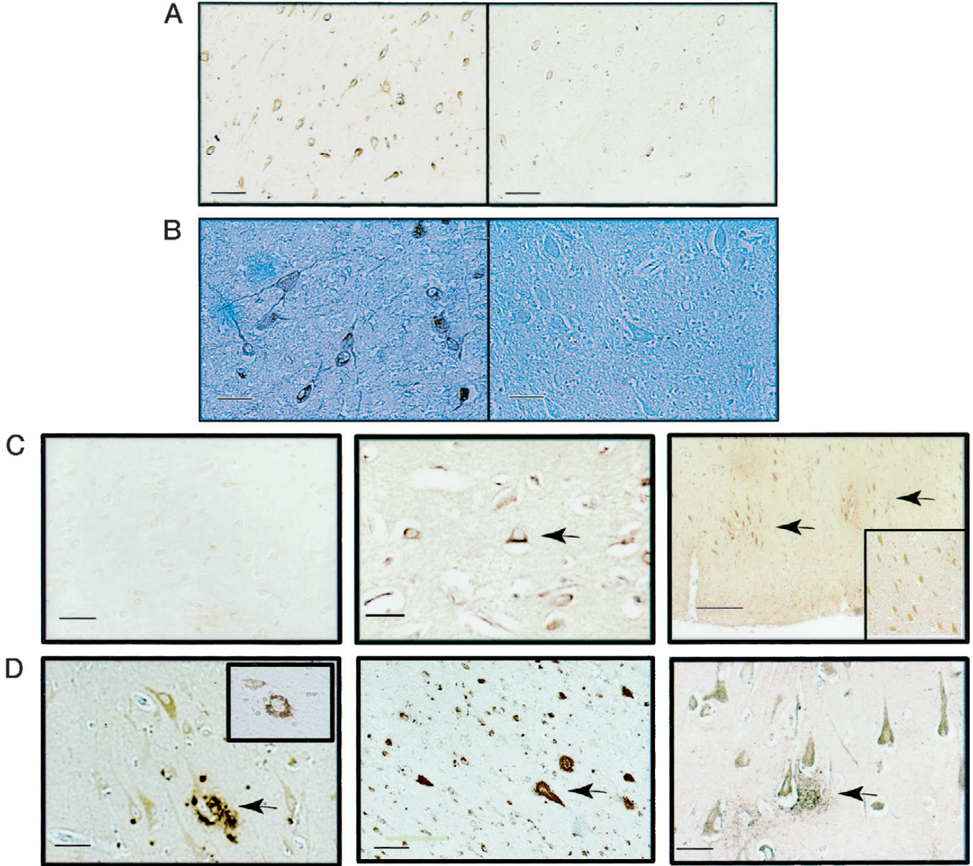
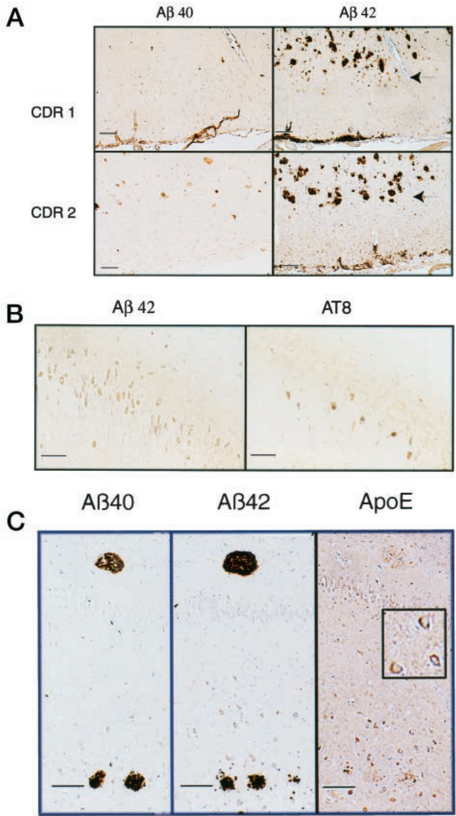
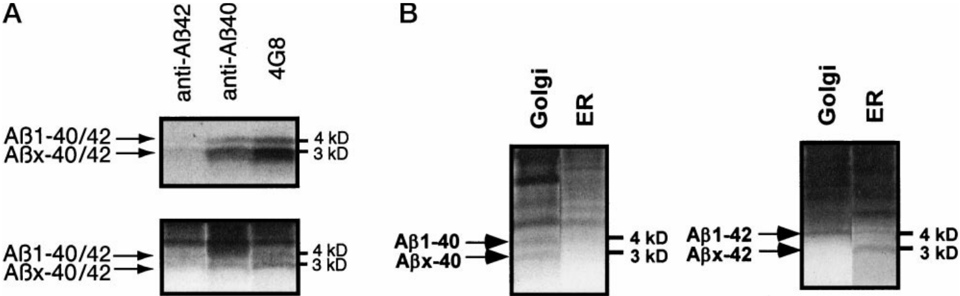
Alzheimer's disease (AD) is characterized by the deposition of senile plaques (SPs) and neurofibrillary tangles (NFTs) in vulnerable brain regions. SPs are composed of aggregated beta-amyloid (Abeta) 40/42(43) peptides. Evidence implicates a central role for Abeta in the pathophysiology of AD. Mutations in betaAPP and presenilin 1 (PS1) lead to elevated secretion of Abeta, especially the more amyloidogenic Abeta42. Immunohistochemical studies have also emphasized the importance of Abeta42 in initiating plaque pathology. Cell biological studies have demonstrated that Abeta is generated intracellularly. Recently, endogenous Abeta42 staining was demonstrated within cultured neurons by confocal immunofluorescence microscopy and within neurons of PS1 mutant transgenic mice. A central question about the role of Abeta in disease concerns whether extracellular Abeta deposition or intracellular Abeta accumulation initiates the disease process. Here we report that human neurons in AD-vulnerable brain regions specifically accumulate gamma-cleaved Abeta42 and suggest that this intraneuronal Abeta42 immunoreactivity appears to precede both NFT and Abeta plaque deposition. This study suggests that intracellular Abeta42 accumulation is an early event in neuronal dysfunction and that preventing intraneuronal Abeta42 aggregation may be an important therapeutic direction for the treatment of AD.
Overview
The claims and statistics of this paper haven’t been checked yet.
Free: it reads the open-access text and checks the first 5 claims that cite a source we can check. Create a free account to check every claim.
Integrity signals
Registry
Cites
Statistics
Figures
Verification
Claims the paper makes
The claims and statistics of this paper haven’t been checked yet.
Free: it reads the open-access text and checks the first 5 claims that cite a source we can check. Create a free account to check every claim.
Claims other papers make about this one
Each is checked against this paper’s own text: does it say what the citing paper says it does?
The source backs part of the claim, not all of it — or backs it for a different population, condition or comparison.
In the citing paper
“Additionally, it has been shown that intraneuronal Aβ accumulation in specific AD-vulnerable neurons precedes the formation of extracellular Aβ plaques both in AD patients [41, 78] and mouse models [22, 87, 110].”
From Senescence-related impairment of autophagy induces toxic intraneuronal amyloid-β accumulation in a mouse model of amyloid pathology (2023) · cites this paper as [41]
Experimental — accuracy not yet measuredThe source backs part of the claim, not all of it — or backs it for a different population, condition or comparison.
In the citing paper
“Two publications appeared in January 2000 on the intraneuronal accumulation of particularly Aβ42 by light microscopy within neurons of human brain.”
From Intraneuronal β-amyloid accumulation and synapse pathology in Alzheimer’s disease (2010) · cites this paper as [60]
Experimental — accuracy not yet measuredThe source backs part of the claim, not all of it — or backs it for a different population, condition or comparison.
In the citing paper
“N-terminal Aβ1-x/βCTF-specific antibodies also fail to label N-truncated Aβ42 peptides that appear to be particularly important in AD [60, 98, 157, 158, 206].”
From Intraneuronal β-amyloid accumulation and synapse pathology in Alzheimer’s disease (2010) · cites this paper as [60]
Experimental — accuracy not yet measuredThe source backs part of the claim, not all of it — or backs it for a different population, condition or comparison.
In the citing paper
“Specifically, immuno-histochemical data support that neuron cell bodies with early intraneuronal Aβ42 accumulation are those that go on to develop NFTs [60, 140], while their terminal fields are sites of early plaque pathology.”
From Intraneuronal β-amyloid accumulation and synapse pathology in Alzheimer’s disease (2010) · cites this paper as [60]
Experimental — accuracy not yet measuredThe source backs part of the claim, not all of it — or backs it for a different population, condition or comparison.
In the citing paper
“This aligns with work from multiple laboratories showing that plaque formation depends on neuronal Aβ [45–48]”
From Selective suppression of oligodendrocyte-derived amyloid beta rescues neuronal dysfunction in Alzheimer’s disease (2024) · cites this paper as [48]
Experimental — accuracy not yet measured
13 more claims about this paper
Create a free account to see every claim other papers make about this one.
Self-check
Percentages, sums and reported differences re-computed from the paper’s own numbers.
The self-check needs the paper’s full text.
Citations
Cites
Iwatsubo, T., Odaka, A., Suzuki, N., Mizusawa, H., Nukina, N., & Ihara, Y. (1994) · Neuron · doi:10.1016/0896-6273(94)90458-8 · Cited by 1,774
Borchelt, D. R., Thinakaran, G., Eckman, C. B., Lee, M. K., Davenport, F., Ratovitsky, T., Prada, C.-M., Kim, G., Seekins, S., Yager, D., et al. (1996) · Neuron · doi:10.1016/s0896-6273(00)80230-5 · Cited by 1,478
Plaque-independent disruption of neural circuits in Alzheimer’s disease mouse models
Hsia, A. Y., Masliah, E., McConlogue, L., Yu, G.-Q., Tatsuno, G., Hu, K., Kholodenko, D., Malenka, R. C., Nicoll, R. A., & Mucke, L. (1999) · Proceedings of the National Academy of Sciences · doi:10.1073/pnas.96.6.3228 · Cited by 1,123
Masters, C. L., Multhaup, G., Simms, G., Pottgiesser, J., Martins, R. N., & Beyreuther, K. (1985) · The EMBO Journal · doi:10.1002/j.1460-2075.1985.tb04000.x · Cited by 1,042
The cell biology of β-amyloid precursor protein and presenilin in Alzheimer's disease
Selkoe, D. (1998) · Trends in Cell Biology · doi:10.1016/s0962-8924(98)01363-4 · Cited by 862
Lack of apolipoprotein E dramatically reduces amyloid β-peptide deposition
Bales, K. R., Verina, T., Dodel, R. C., Du, Y., Altstiel, L., Bender, M., Hyslop, P., Johnstone, E. M., Little, S. P., Cummins, D. J., et al. (1997) · Nature Genetics · doi:10.1038/ng1197-263 · Cited by 830
Distinct sites of intracellular production for Alzheimer's disease Aβ40/42 amyloid peptides
Hartmann, T., Bieger, S. C., Brühl, B., Tienari, P. J., Ida, N., Allsop, D., Roberts, G. W., Masters, C. L., Dotti, C. G., Unsicker, K., et al. (1997) · Nature Medicine · doi:10.1038/nm0997-1016 · Cited by 709
Perforant pathway changes and the memory impairment of Alzheimer's disease
Hyman, B. T., Van Hoesen, G. W., Kromer, L. J., & Damasio, A. R. (1986) · Annals of Neurology · doi:10.1002/ana.410200406 · Cited by 672
Moechars, D., Dewachter, I., Lorent, K., Reversé, D., Baekelandt, V., Naidu, A., Tesseur, I., Spittaels, K., Haute, C. V. D., Checler, F., et al. (1999) · Journal of Biological Chemistry · doi:10.1074/jbc.274.10.6483 · Cited by 668
Self-citationSaido, T. C., Iwatsubo, T., Mann, D. M. A., Shimada, H., Ihara, Y., & Kawashima, S. (1995) · Neuron · doi:10.1016/0896-6273(95)90301-1 · Cited by 587
Cited by
Items 201–300 of 999
Yan, S. D., & Stern, D. M. (2005) · International Journal of Experimental Pathology · doi:10.1111/j.0959-9673.2005.00427.x · Cited by 129
“…al. 1997; Hartmann et al. 1997; Tienari et al. 1997; Wild-Bode et al. 1997), and intracellular Ab has been shown in brains from patients with AD and Down’s syndrome, as well as in transgenic mice overexpressing mAPP (Hammad et al. 1997; Gouras et al. 2000; D’Andrea et al. 2001; Gyure et al. 2001).”
BackgroundDown syndrome and beta-amyloid deposition
Head, E., & Lott, I. T. (2004) · Current Opinion in Neurology · doi:10.1097/00019052-200404000-00003 · Cited by 129
Zerbinatti, C. V., Wahrle, S. E., Kim, H., Cam, J. A., Bales, K., Paul, S. M., Holtzman, D. M., & Bu, G. (2006) · Journal of Biological Chemistry · doi:10.1074/jbc.m604436200 · Cited by 129
Christensen, D. Z., Kraus, S. L., Flohr, A., Cotel, M.-C., Wirths, O., & Bayer, T. A. (2008) · Acta Neuropathologica · doi:10.1007/s00401-008-0451-6 · Cited by 126
“In addition, another study claims that intraneuronal Ab42 in human AD is only detectable in patients with low Braak stages and short disease duration and that the intraneuronal immunoreactivity is lost in patients with more progressive AD [11].”
BackgroundGrimm, M. O. W., Grimm, H. S., Tomic, I., Beyreuther, K., Hartmann, T., & Bergmann, C. (2008) · Journal of Biological Chemistry · doi:10.1074/jbc.m801520200 · Cited by 128
Age-dependent axonal degeneration in an Alzheimer mouse model
Wirths, O., Weis, J., Kayed, R., Saido, T. C., & Bayer, T. A. (2007) · Neurobiology of Aging · doi:10.1016/j.neurobiolaging.2006.07.021 · Cited by 127
Nishitsuji, K., Tomiyama, T., Ishibashi, K., Ito, K., Teraoka, R., Lambert, M. P., Klein, W. L., & Mori, H. (2009) · The American Journal of Pathology · doi:10.2353/ajpath.2009.080480 · Cited by 127
“In AD brain, A 42 immunoreactivity was first detected within neurons in brain regions affected early in AD, preceding both plaque and tangle formation.(42) This intraneuronal A 42 was predominantly located in multivesicular bodies, a type of endosomal vesicle, within synaptic compartments and was associated with abnor…”
BackgroundTampellini, D., Rahman, N., Gallo, E. F., Huang, Z., Dumont, M., Capetillo-Zarate, E., Ma, T., Zheng, R., Lu, B., Nanus, D. M., et al. (2009) · The Journal of Neuroscience · doi:10.1523/jneurosci.2292-09.2009 · Cited by 127
“Brain accumulation of A with AD pathogenesis includes an intracellular pool (Gouras et al., 2000; D’Andrea et al., 2001; Gyureet al., 2001; Wirths et al., 2001; Busciglio et al., 2002; Mori et al., 2002; Oddo et al., 2003; Sheng et al., 2003; Cataldo et al., 2004; Echeverria et al., 2004; Lord et al., 2006) for which…”
BackgroundSelf-citationReactivity of Apolipoprotein E4 and Amyloid β Peptide
Ji, Z.-S., Müllendorff, K., Cheng, I. H., Miranda, R. D., Huang, Y., & Mahley, R. W. (2006) · Journal of Biological Chemistry · doi:10.1074/jbc.m506646200 · Cited by 127
Wirths, O., Multhaup, G., Czech, C., Feldmann, N., Blanchard, V., Tremp, G., Beyreuther, K., Pradier, L., & Bayer, T. A. (2002) · Brain Pathology · doi:10.1111/j.1750-3639.2002.tb00442.x · Cited by 125
Amyloid ?? peptide induces cytochrome c release from isolated mitochondria
Kim, H.-S., Lee, J.-H., Lee, J.-P., Kim, E.-M., Chang, K.-A., Park, C. H., Jeong, S.-J., Wittendorp, M. C., Seo, J.-H., Choi, S.-H., et al. (2002) · NeuroReport · doi:10.1097/00001756-200210280-00032 · Cited by 124
Lafaye, P. J., Achour, I., England, P., Duyckaerts, C. J., & Rougeon, F. (2008) · Molecular Immunology · doi:10.1016/j.molimm.2008.09.008 · Cited by 135
“These antiodies recognize specifically either A 42 or A 40 and label both laques and intraneuronal deposits (Gouras et al., 2000; Mochizuki t al., 2000; Takahashi et al., 2002; Wegiel et al., 2007), in transenic APP mice as well as in human brains, in contrast with the -terminal specific antibodies…”
BackgroundMitochondrial dysfunction and Alzheimer's disease
Maruszak, A., & Żekanowski, C. (2010) · Progress in Neuro-Psychopharmacology and Biological Psychiatry · doi:10.1016/j.pnpbp.2010.07.004 · Cited by 143
The Effect of Glycosaminoglycans (GAGs) on Amyloid Aggregation and Toxicity
Iannuzzi, C., Irace, G., & Sirangelo, I. (2015) · Molecules · doi:10.3390/molecules20022510 · Cited by 144
“trimers appear to cause disruption of cognitive functions [60] and seem to exert their toxicity intracellularly [61,62].”
BackgroundMajdi, A., Sadigh-Eteghad, S., Rahigh Aghsan, S., Farajdokht, F., Vatandoust, S. M., Namvaran, A., & Mahmoudi, J. (2020) · Reviews in the Neurosciences · doi:10.1515/revneuro-2019-0089 · Cited by 122
Chiang, M., Cheng, Y., Chen, S., Yen, C., & Huang, R. (2016) · Experimental Cell Research · doi:10.1016/j.yexcr.2016.08.013 · Cited by 131
Wilhelmus, M. M. M., de Waal, R. M. W., & Verbeek, M. M. (2007) · Molecular Neurobiology · doi:10.1007/s12035-007-0029-7 · Cited by 122
“affected earliest in AD suggests a possible relation between intracellular Aβ and development of AD [160].”
BackgroundPhosphorus Dendrimers Affect Alzheimer’s (Aβ1–28) Peptide and MAP-Tau Protein Aggregation
Wasiak, T., Йонов, М., Nieznański, K., Nieznańska, H., Klementieva, O. L., Granell, M., Cladera, J., Majoral, J., Caminade, A., & Klajnert‐Maculewicz, B. (2012) · Molecular Pharmaceutics · doi:10.1021/mp2005627 · Cited by 133
Pasternak, S. H., Callahan, J. W., & Mahuran, D. J. (2003) · Journal of Alzheimer's Disease · doi:10.3233/jad-2004-6107 · Cited by 122
“In these studies, the extracellular Aβ in plaques appears to occur as a result of the lysis of amyloid filled cells [30,41,46,73]; it has even been suggested that the center of a dense-core amyloid plaque contains a DAPI-stainable neuronal nucleus [30].”
Ripoli, C., Cocco, S., Li Puma, D. D., Piacentini, R., Mastrodonato, A., Scala, F., Puzzo, D., D'Ascenzo, M., & Grassi, C. (2014) · Journal of Neuroscience · doi:10.1523/jneurosci.1201-14.2014 · Cited by 122
“…of AD pathogenesis because it has been proposed to play a critical role in synaptic dysfunction underlying the cognitive impairment observed in AD (Gouras et al., 2000, 2010, 2012; Billings et al., 2005; LaFerla et al., 2007; Moreno et al., 2009; Bayer and Wirths, 2010; Nomura et al., 2012; Eimer…”
BackgroundAccumulation of intraneuronal Aβ correlates with ApoE4 genotype
Christensen, D. Z., Schneider-Axmann, T., Lucassen, P. J., Bayer, T. A., & Wirths, O. (2010) · Acta Neuropathologica · doi:10.1007/s00401-010-0666-1 · Cited by 120
“Despite the initial technical complications, several studies using Ab40/42 end-specific antibodies have later reported the presence of intraneuronal Ab in AD and healthy controls [17–19, 23, 26, 44, 46, 65], as well as in Down syndrome patients who are known to develop AD at an early age [29, 45].”
BackgroundIntracellular amyloid and the neuronal origin of Alzheimer neuritic plaques
Pensalfini, A., Albay, R., Rasool, S., Wu, J. W., Hatami, A., Arai, H., Margol, L., Milton, S., Poon, W. W., Corrada, M. M., et al. (2014) · Neurobiology of Disease · doi:10.1016/j.nbd.2014.07.011 · Cited by 120
Morishima-Kawashima, M., Oshima, N., Ogata, H., Yamaguchi, H., Yoshimura, M., Sugihara, S., & Ihara, Y. (2000) · The American Journal of Pathology · doi:10.1016/s0002-9440(10)64847-x · Cited by 119
Kobro-Flatmoen, A., Lagartos-Donate, M. J., Aman, Y., Edison, P., Witter, M. P., & Fang, E. F. (2021) · Ageing Research Reviews · doi:10.1016/j.arr.2021.101307 · Cited by 119
Salkovic-Petrisic, M., Osmanovic, J., Grünblatt, E., Riederer, P., & Hoyer, S. (2009) · Journal of Alzheimer's Disease · doi:10.3233/jad-2009-1184 · Cited by 119
“Such an intraneuronal accumulation of Aβ 1−42 has been shown in the human AD brain, as well as the tendency of its aggregation within the cytoplasm of neurons [301–303].”
BackgroundSolá, S., Castro, R. E., Laires, P. A., Steer, C. J., & Rodrigues, C. M. P. (2003) · Molecular Medicine · doi:10.2119/2003-00042.rodrigues · Cited by 118
“For example, intracellular Aβ aggregates or granules have been detected in the brains of patients with AD ( 17 ).”
BackgroundTampellini, D., Magrané, J., Takahashi, R. H., Li, F., Lin, M. T., Almeida, C. G., & Gouras, G. K. (2007) · Journal of Biological Chemistry · doi:10.1074/jbc.m700373200 · Cited by 118
Self-citationInternalization of β-Amyloid Peptide by Primary Neurons in the Absence of Apolipoprotein E
Saavedra, L., Mohamed, A., Ma, V., Kar, S., & de Chaves, E. P. (2007) · Journal of Biological Chemistry · doi:10.1074/jbc.m701823200 · Cited by 118
Cynis, H., Scheel, E., Saido, T. C., Schilling, S., & Demuth, H.-U. (2008) · Biochemistry · doi:10.1021/bi800250p · Cited by 118
Elevation of Cystatin C in Susceptible Neurons in Alzheimer's Disease
Deng, A., Irizarry, M. C., Nitsch, R. M., Growdon, J. H., & Rebeck, G. W. (2001) · American Journal Of Pathology · doi:10.1016/s0002-9440(10)61781-6 · Cited by 128
“These neurons have also been reported to possess vesicular accumulations of A 42.(28) We hypothesize that cystatin C is accumulating in endocytic vesicles to aid in inhibition of the increased levels of lysosoFigure 6.”
BackgroundWelikovitch, L. A., Do Carmo, S., Maglóczky, Z., Malcolm, J. C., Lőke, J., Klein, W. L., Freund, T., & Cuello, A. C. (2020) · Proceedings of the National Academy of Sciences · doi:10.1073/pnas.1914593117 · Cited by 116
The role of intracellular amyloid β in Alzheimer's disease
Li, M., Chen, L., Lee, D. H. S., Yu, L., & Zhang, Y. (2007) · Progress in Neurobiology · doi:10.1016/j.pneurobio.2007.08.002 · Cited by 138
Fuentealba, R. A., Liu, Q., Zhang, J., Kanekiyo, T., Hu, X., Lee, J.-M., LaDu, M. J., & Bu, G. (2010) · PLoS ONE · doi:10.1371/journal.pone.0011884 · Cited by 116
“precedes AD [2,3].”
Wesén, E., Jeffries, G. D. M., Matson Dzebo, M., & Esbjörner, E. K. (2017) · Scientific Reports · doi:10.1038/s41598-017-02227-9 · Cited by 108
LRP in Amyloid‐β Production and Metabolism
BU, G., CAM, J., & ZERBINATTI, C. (2006) · Annals of the New York Academy of Sciences · doi:10.1196/annals.1377.005 · Cited by 114
Insights into Alzheimer disease pathogenesis from studies in transgenic animal models
Schaeffer, E. L., Figueiró, M., & Gattaz, W. F. (2011) · Clinics · doi:10.1590/s1807-59322011001300006 · Cited by 114
Penke, B., Szűcs, M., & Bogár, F. (2020) · Molecules · doi:10.3390/molecules25071659 · Cited by 114
Magrané, J., Rosen, K. M., Smith, R. C., Walsh, K., Gouras, G. K., & Querfurth, H. W. (2005) · The Journal of Neuroscience · doi:10.1523/jneurosci.1723-05.2005 · Cited by 113
“Intraneuronal accumulation of A 42 has been detected in AD brains and in transgenic mice overexpressing familial AD mutations even before plaque deposition occurs (Gouras et al., 2000; D’Andrea et al., 2001; Wirths et al., 2001; Takahashi et al., 2002; Oddo et al., 2003; Casas et al., 2004).”
BackgroundSelf-citationmTor mediates tau localization and secretion: implication for Alzheimer’s disease
Tang, Z., Ioja, E., Bereczki, E., Hultenby, K., Li, C., Guan, Z., Winblad, B., & Pei, J.-J. (2015) · Biochimica et Biophysica Acta (BBA) - Molecular Cell Research · doi:10.1016/j.bbamcr.2015.03.003 · Cited by 112
Lindberg, D. J., Wesén, E. V., Björkeroth, J., Rocha, S., & Esbjörner, E. K. (2017) · Biochimica et Biophysica Acta (BBA) - Biomembranes · doi:10.1016/j.bbamem.2017.05.012 · Cited by 124
Heparan sulfate mediates amyloid-beta internalization and cytotoxicity
Sandwall, E., O'Callaghan, P., Zhang, X., Lindahl, U., Lannfelt, L., & Li, J.-P. (2010) · Glycobiology · doi:10.1093/glycob/cwp205 · Cited by 111
“Moreover, it has been suggested that Aβ exerts its toxicity intracellularly (Gouras et al. 2000; Wirths et al. 2004).”
BackgroundNeuron Loss in Transgenic Mouse Models of Alzheimer's Disease
Wirths, O., & Bayer, T. A. (2010) · International Journal of Alzheimer's Disease · doi:10.4061/2010/723782 · Cited by 111
“There is increasing evidence that, in addition to the wellknown extracellular amyloid deposition in the parenchyma, Aβ peptides accumulate within neurons [3].”
BackgroundOligomer-specific Aβ toxicity in cell models is mediated by selective uptake
Chafekar, S. M., Baas, F., & Scheper, W. (2008) · Biochimica et Biophysica Acta (BBA) - Molecular Basis of Disease · doi:10.1016/j.bbadis.2008.06.003 · Cited by 133
Pedersen, W. A., McCullers, D., Culmsee, C., Haughey, N. J., Herman, J. P., & Mattson, M. P. (2001) · Neurobiology of Disease · doi:10.1006/nbdi.2001.0395 · Cited by 109
Transgenic Drosophila models of Alzheimer’s disease and tauopathies
Iijima‐Ando, K., & Iijima, K. (2009) · Brain Structure and Function · doi:10.1007/s00429-009-0234-4 · Cited by 130
“Human AD brains show significant accumulation of intraneuronal Ab42 (Gouras et al. 2000; Takahashi et al. 2002), and, a few mouse models of AD have shown intraneuronal accumulation of Ab42 that was associated with memory defects (Oddo et al. 2003), significant neuron loss (Casas et al. 2004; Oakley…”
Pyroglutamate Abeta pathology in APP/PS1KI mice, sporadic and familial Alzheimer’s disease cases
Wirths, O., Bethge, T., Marcello, A., Harmeier, A., Jawhar, S., Lucassen, P. J., Multhaup, G., Brody, D. L., Esparza, T., Ingelsson, M., et al. (2010) · Journal of Neural Transmission · doi:10.1007/s00702-009-0314-x · Cited by 106
Philipson, O., Hammarström, P., Nilsson, K. P. R., Portelius, E., Olofsson, T., Ingelsson, M., Hyman, B. T., Blennow, K., Lannfelt, L., Kalimo, H., et al. (2008) · Neurobiology of Aging · doi:10.1016/j.neurobiolaging.2007.11.022 · Cited by 117
“Several observations, in AD (Gouras et al., 2000) and 1402 O. Philipson et al. / Neurobiology of Aging 30 (2009) 1393–1405 t a [ u s fi i d w 2 t fi s i l l t A i t A d m o i 1 p T i e t s p o onger wavelengths as compared to tgAPP-Swe (open symbols).”
BackgroundMaloney, B., & Lahiri, D. K. (2011) · Gene · doi:10.1016/j.gene.2011.06.004 · Cited by 105
“Aβ can accumulate in neurons without plaque formation in both human AD cases and transgenic AD models (Gouras et al., 2000; Shie et al., 2003).”
BackgroundSugarman, M. C., Yamasaki, T. R., Oddo, S., Echegoyen, J. C., Murphy, M. P., Golde, T. E., Jannatipour, M., Leissring, M. A., & LaFerla, F. M. (2002) · Proceedings of the National Academy of Sciences · doi:10.1073/pnas.082545599 · Cited by 105
Synaptic activity and Alzheimer's disease: a critical update
Tampellini, D. (2015) · Frontiers in Neuroscience · doi:10.3389/fnins.2015.00423 · Cited by 103
“Intraneuronal Aβ accumulation has been observed in human AD brains, in several rodent models of AD (Gouras et al., 2000; D’Andrea et al., 2001; Busciglio et al., 2002; Mori et al., 2002; Oddo et al., 2003; Cataldo et al., 2004; Echeverria et al., 2004; Cruz et al., 2006; Oakley et al., 2006;…”
BackgroundAutophagy: A double-edged sword in Alzheimer’s disease
Tung, Y.-T., Wang, B., Hu, M., Hsu, W., Lee, H., Huang, W., & Liao, Y. (2012) · Journal of Biosciences · doi:10.1007/s12038-011-9176-0 · Cited by 113
“In a Drosophila model expressing amyloid-β42 (Aβ42), autophagy activation can further exacerbate Aβ-induced neurotoxicity (Ling et al. 2009).”
InfluentialIulita, M. F., Allard, S., Richter, L., Munter, L.-M., Ducatenzeiler, A., Weise, C., Do Carmo, S., Klein, W. L., Multhaup, G., & Cuello, A. C. (2014) · Acta Neuropathologica Communications · doi:10.1186/2051-5960-2-61 · Cited by 103
“For instance, many studies in transgenic models have demonstrated that Aβ accumulates first intraneuronally, before amyloid plaques appear [8-13]; a finding that has been validated in postmortem AD and Down syndrome (DS) brains [14-20].”
BackgroundNovel Genetic Tools Reveal Cdk5's Major Role in Golgi Fragmentation in Alzheimer's Disease
Sun, K.-H., de Pablo, Y., Vincent, F., Johnson, E. O., Chavers, A. K., & Shah, K. (2008) · Molecular Biology of the Cell · doi:10.1091/mbc.e07-11-1106 · Cited by 102
“Intracellular A 1 42 has been detected in AD-vulnerable regions in human brains (Gouras et al., 2000) and Tg animal models of AD (Oddo et al., 2003; Casas et al., 2004; Billings et al., 2005; Cruz et al., 2006) and is closely associated with neuronal loss (Casas et al., 2004) and cognitive decline…”
BackgroundWang, H.-Y., Stucky, A., Liu, J., Shen, C., Trocme-Thibierge, C., & Morain, P. (2009) · The Journal of Neuroscience · doi:10.1523/jneurosci.6088-08.2009 · Cited by 102
“Hence, by removing A 42 from A 42– 7nAChR complexes, S 24795 should decrease intraneuronal A 42 aggregates and, thus, neurodegeneration and amyloid plaque formation resulting from lysis of neurons with excessive intraneuronal A aggregates (Gouras et al., 2000; D’Andrea et al., 2001).”
BackgroundMulthaup, G., Huber, O., Buée, L., & Galas, M.-C. (2015) · Journal of Biological Chemistry · doi:10.1074/jbc.r115.677211 · Cited by 101
Urano, T., & Tohda, C. (2010) · Phytotherapy Research · doi:10.1002/ptr.3183 · Cited by 101
“Aβ plaque is accumulated in the brain of AD cases (Takahashi et al., 2004; Gouras et al., 2000), and induces several of the pathologies of AD (Echeverria and Cuello, 2002; Tseng et al., 2004; Gouras et al., 2005).”
BackgroundPresenilins are not required for Aβ42 production in the early secretory pathway
Wilson, C., Doms, R. W., Zheng, H., & Lee, V. M. ‐. (2002) · Nature Neuroscience · doi:10.1038/nn898 · Cited by 112
“Alzheimer’s Aβ (1-42) is generated in the endoplasmic reticulum/intermediate compartment of NT2N cells.”
Echeverría, V., Ducatenzeiler, A., Dowd, E., Jänne, J., Grant, S. M., Szyf, M., Wandosell, F. G., Ávila, J., Grimm, H. S., Dunnett, S. B., et al. (2004) · Neuroscience · doi:10.1016/j.neuroscience.2004.07.036 · Cited by 122
Kumar, S., Wirths, O., Theil, S., Gerth, J., Bayer, T. A., & Walter, J. (2013) · Acta Neuropathologica · doi:10.1007/s00401-013-1107-8 · Cited by 99
“Interestingly, intraneuronal Ab42 accumulates in AD susceptible brain regions and precedes both extracellular amyloid deposition and neurofibrillary tangle formation [13].”
InfluentialThe effects of cardiovascular risk factors on cognitive compromise
Beeri, M. S., Ravona-Springer, R., Silverman, J. M., & Haroutunian, V. (2009) · Dialogues in Clinical Neuroscience · doi:10.31887/dcns.2009.11.2/msbeeri · Cited by 99
Self-citationParkin promotes intracellular A 1-42 clearance
Burns, M. P., Zhang, L., Rebeck, G. W., Querfurth, H. W., & Moussa, C. E.-H. (2009) · Human Molecular Genetics · doi:10.1093/hmg/ddp258 · Cited by 98
Liang, J., Fang, Z.-Y., Huang, Y., Liuyang, Z., Zhang, X., Wang, J., Wei, H., Wang, J., Wang, X., Zeng, J., et al. (2018) · Journal of Alzheimer s Disease · doi:10.3233/jad-180400 · Cited by 97
The JNK/c-Jun cascade and Alzheimer's disease
Okazawa, H., & Estus, S. (2002) · American Journal of Alzheimer s Disease & Other Dementias® · doi:10.1177/153331750201700209 · Cited by 105
Cellular Membrane Composition Defines Aβ-Lipid Interactions
Waschuk, S. A., Elton, E. A., Darabie, A. A., Fraser, P. E., & McLaurin, J. (2001) · Journal of Biological Chemistry · doi:10.1074/jbc.m103598200 · Cited by 98
Mechanisms of amyloid plaque pathogenesis
Fiala, J. C. (2007) · Acta Neuropathologica · doi:10.1007/s00401-007-0284-8 · Cited by 116
Invertebrate models of Alzheimer's disease
Link, C. D. (2005) · Genes, Brain and Behavior · doi:10.1111/j.1601-183x.2004.00105.x · Cited by 97
“Although much work in mammalian systems has been done on the mechanisms of Ab production and extracellular turnover, few studies have focused on the intracellular metabolism of Ab, despite evidence for intracellular Ab 1–42 in human neurons (Gouras et al. 2000).”
BackgroundAβ and NMDAR activation cause mitochondrial dysfunction involving ER calcium release
Ferreira, I. L., Ferreiro, E. B., Schmidt, J., Cardoso, J. M. R., Pereira, C., Carvalho, A. L., Oliveira, C. R., & Rego, A. C. (2014) · Neurobiology of Aging · doi:10.1016/j.neurobiolaging.2014.09.006 · Cited by 111
“Intraneuronal Ab accumulation occurs early in the neuropathologic phenotype of AD, before neurofibrillary tangle formation and plaque deposition (Gouras et al., 2000).”
The Pharmacological Properties and Therapeutic Use of Apomorphine
Ribarič, S. (2012) · Molecules · doi:10.3390/molecules17055289 · Cited by 110
“Tau hyperphosphorylation is promoted by Aβ42 (via activation of kinases and caspases) and by serine protease inhibitor α1-antichymotrypsin ACT [68,85–87].”
BackgroundSequestration of Toxic Oligomers by HspB1 as a Cytoprotective Mechanism
Ojha, J., Masilamoni, G., Dunlap, D., Udoff, R. A., & Cashikar, A. G. (2011) · Molecular and Cellular Biology · doi:10.1128/mcb.01187-10 · Cited by 96
Pyroglutamate and Isoaspartate modified Amyloid-Beta in ageing and Alzheimer’s disease
Moro, M. L., Phillips, A. S., Gaimster, K., Paul, C., Mudher, A., Nicoll, J. A. R., & Boche, D. (2018) · Acta Neuropathologica Communications · doi:10.1186/s40478-017-0505-x · Cited by 95
Reddy, P. H., Manczak, M., Yin, X., & Reddy, A. P. (2018) · Journal of Alzheimer’s Disease · doi:10.3233/jad-170988 · Cited by 95
Jin, Y., Sumsuzzman, D. M., Choi, J., Kang, H., Lee, S., & Hong, Y. (2018) · Molecules · doi:10.3390/molecules23123229 · Cited by 104
“This kind of Aβ is present in a certain amount in the CNS, however, AD patients may show markedly elevated intracellular Aβ [63,65].”
BackgroundInclusion-body myositis and myopathies: different etiologies, possibly similar pathogenic mechanisms
Askanas, V., & Engel, W. K. (2002) · Current Opinion in Neurology · doi:10.1097/00019052-200210000-00002 · Cited by 95
Parkin reverses intracellular β‐amyloid accumulation and its negative effects on proteasome function
Rosen, K. M., Moussa, C. E. ‐., Lee, H., Kumar, P., Kitada, T., Qin, G., Fu, Q., & Querfurth, H. W. (2010) · Journal of Neuroscience Research · doi:10.1002/jnr.22178 · Cited by 95
“There is also evidence to suggest that extracellular, parenchymal Ab plaques in the brain are derived from degenerating Ab42-laden neuronal cell bodies (Gouras et al., 2000; D’Andrea et al., 2001).”
BackgroundScala, F., Fusco, S., Ripoli, C., Piacentini, R., Li Puma, D. D., Spinelli, M., Laezza, F., Grassi, C., & D'Ascenzo, M. (2015) · Neurobiology of Aging · doi:10.1016/j.neurobiolaging.2014.10.034 · Cited by 94
“A uthor M anuscript A uthor M anuscript A uthor M anuscript A uthor M anuscript immunoreactivity of intracellular Aβ42 (iAβ42) has been identified in neurons of the hippocampus and entorhinal cortex (Gouras et al., 2000; Mori et al., 2002), the 2 main brain regions affected in early AD pathology.”
BackgroundChuang, J.-Y., Lee, C.-W., Shih, Y.-H., Yang, T., Yu, L., & Kuo, Y.-M. (2012) · PLoS ONE · doi:10.1371/journal.pone.0033120 · Cited by 95
Diotel, N., Lübke, L., Strähle, U., & Rastegar, S. (2020) · Frontiers in Neuroscience · doi:10.3389/fnins.2020.568930 · Cited by 110
“Neural death and synaptic impairment are partially due to deposition and accumulation of Amyloid beta (Aβ) peptides around and in neurons (Hardy and Higgins, 1992; Gouras et al., 2000; Bayer and Wirths, 2010).”
BackgroundCerebral amyloid angiopathy: pathogenetic mechanisms and link to dense amyloid plaques
Kumar‐Singh, S. (2008) · Genes, Brain and Behavior · doi:10.1111/j.1601-183x.2007.00380.x · Cited by 94
“Moreover, intracellular Ab is in equilibrium with the extracellular Ab pool and shifts from intraneuronal to extracellular compartment as the disease progresses (Gouras et al. 2000; LaFerla et al. 2007; Wirths et al. 2004).”
BackgroundIbuprofen Decreases Cytokine-Induced Amyloid Beta Production in Neuronal Cells
Blasko, I., Apochal, A., Boeck, G., Hartmann, T., Grubeck-Loebenstein, B., & Ransmayr, G. (2001) · Neurobiology of Disease · doi:10.1006/nbdi.2001.0451 · Cited by 92
Endoplasmic Reticulum Stress-induced Cysteine Protease Activation in Cortical Neurons
Siman, R. G., Flood, D. G., Thinakaran, G., & Neumar, R. W. (2001) · Journal of Biological Chemistry · doi:10.1074/jbc.m104092200 · Cited by 97
Marlatt, M. W., Potter, M. C., Bayer, T. A., van Praag, H., & Lucassen, P. J. (2013) · Current Topics in Behavioral Neurosciences · doi:10.1007/7854_2012_237 · Cited by 92
“A relatively novel aspect of the biochemistry and neuropathology of Ab is the accumulation of intraneuronal Ab as observed in human brain and several studies now suggest it is the intraneuronal Ab that forms one of the earliest pathological events in AD (Gouras et al. 2000; Wirths et al. 2004; Christensen et al. 2009,…”
Bi, X., Gall, C. M., Zhou, J., & Lynch, G. (2002) · Neuroscience · doi:10.1016/s0306-4522(02)00132-x · Cited by 92
Shih, Y.-H., Tu, L.-H., Chang, T.-Y., Ganesan, K., Chang, W.-W., Chang, P.-S., Fang, Y.-S., Lin, Y.-T., Jin, L.-W., & Chen, Y.-R. (2020) · Nature Communications · doi:10.1038/s41467-020-19786-7 · Cited by 91
Wegiel, J., Kuchna, I., Nowicki, K., Frackowiak, J., Mazur-Kolecka, B., Imaki, H., Wegiel, J., Mehta, P. D., Silverman, W. P., Reisberg, B., et al. (2007) · Acta Neuropathologica · doi:10.1007/s00401-006-0191-4 · Cited by 92
Mice as models: Transgenic approaches and Alzheimer's disease
Games, D., Buttini, M., Kobayashi, D., Schenk, D., & Seubert, P. (2006) · Journal of Alzheimer's Disease · doi:10.3233/jad-2006-9s316 · Cited by 92
“ogy [40,77] and AD [39].”
Intraneuronal Aβ accumulation and neurodegeneration: Lessons from transgenic models
Wirths, O., & Bayer, T. A. (2012) · Life Sciences · doi:10.1016/j.lfs.2012.02.001 · Cited by 86
HSP70 and HSP90 in neurodegenerative diseases
Gupta, A. A., Bansal, A., & Hashimoto‐Torii, K. (2019) · Neuroscience Letters · doi:10.1016/j.neulet.2019.134678 · Cited by 102
Lonskaya, I., Shekoyan, A. R., Hebron, M. L., Desforges, N., Algarzae, N. K., & Moussa, C. E.-H. (2012) · Journal of Alzheimer's Disease · doi:10.3233/jad-2012-121141 · Cited by 91
“Accumulation of A in AD may lead to build-up of extracellular A plaques [8, 14].”
BackgroundEvidence linking neuronal cell death to autoimmunity in Alzheimer’s disease
D’Andrea, M. R. (2003) · Brain Research · doi:10.1016/s0006-8993(03)02881-6 · Cited by 99
Yamaguchi, H., Maat-Schieman, M. L. C., van Duinen, S. G., Prins, F. A., Neeskens, P., Natté, R., & Roos, R. A. C. (2000) · Journal of Neuropathology & Experimental Neurology · doi:10.1093/jnen/59.8.723 · Cited by 91
“Recently, intraneuronal accumulation of Ab was reported as an initial deposition (44, 45), although current study did not show such neuronal labeling.”
ResultAbrahamson, E. E., Ikonomovic, M. D., Ciallella, J. R., Hope, C. E., Paljug, W. R., Isanski, B. A., Flood, D. G., Clark, R. S. B., & DeKosky, S. T. (2006) · Experimental Neurology · doi:10.1016/j.expneurol.2005.10.011 · Cited by 90
Role of amyloid beta in lipid homeostasis
Grösgen, S., Grimm, M. O. W., Frieß, P., & Hartmann, T. (2010) · Biochimica et Biophysica Acta (BBA) - Molecular and Cell Biology of Lipids · doi:10.1016/j.bbalip.2010.05.002 · Cited by 90
Kuo, Y.-M., Beach, T. G., Sue, L. I., Scott, S., Layne, K. J., Kokjohn, T. A., Kalback, W. M., Luehrs, D. C., Vishnivetskaya, T. A., Abramowski, D., et al. (2001) · Molecular Medicine · doi:10.1007/bf03401867 · Cited by 90
Protective Effects of Positive Lysosomal Modulation in Alzheimer's Disease Transgenic Mouse Models
Butler, D., Hwang, J., Estick, C., Nishiyama, A., Kumar, S. S., Baveghems, C., Young-Oxendine, H. B., Wisniewski, M. L., Charalambides, A., & Bahr, B. A. (2011) · PLoS ONE · doi:10.1371/journal.pone.0020501 · Cited by 90
A β Internalization by Neurons and Glia
Mohamed, A., & Posse de Chaves, E. (2011) · International Journal of Alzheimer’s Disease · doi:10.4061/2011/127984 · Cited by 90
“The intracellular pool of Aβ associates with tangles [43], and intracellular Aβ may disrupt the cytoskeleton and initiate the formation of aggregated intracellular Tau protein [12].”
BackgroundInfluentialPacheco-Quinto, J., & Eckman, E. A. (2013) · Journal of Biological Chemistry · doi:10.1074/jbc.m112.422964 · Cited by 88
Capsoni, S., Giannotta, S., & Cattaneo, A. (2002) · Molecular and Cellular Neuroscience · doi:10.1006/mcne.2002.1163 · Cited by 104
ets-2 Promotes the Activation of a Mitochondrial Death Pathway in Down's Syndrome Neurons
Helguera, P., Pelsman, A., Pigino, G., Wolvetang, E., Head, E., & Busciglio, J. (2005) · The Journal of Neuroscience · doi:10.1523/jneurosci.5107-04.2005 · Cited by 88
“A number of studies have characterized the presence of intracellular A in the brain of DS and AD patients as well as transgenic mouse models (Gouras et al., 2000; Busciglio et al., 2002; Oddo et al., 2003; Takahashi et al., 2004).”
Down syndrome and Alzheimer's disease: common molecular traits beyond the amyloid precursor protein
Gómez, W., Morales, R., Maracaja‐Coutinho, V., Parra, V., & Nassif, M. (2020) · Aging · doi:10.18632/aging.102677 · Cited by 105
Mechanism of Neuronal versus Endothelial Cell Uptake of Alzheimer's Disease Amyloid β Protein
Kandimalla, K. K., Scott, O. G., Fulzele, S., Davidson, M. W., & Poduslo, J. F. (2009) · PLoS ONE · doi:10.1371/journal.pone.0004627 · Cited by 88
“reported that cells, which were immunoreactive for Aβ42, colocalize with amyloid plaques in sporadic AD cases. Gouras et al.”
Background
Metadata
- Authors
- Gouras, G. K., Tsai, J., Naslund, J., Vincent, B., Edgar, M., Checler, F., Greenfield, J. P., Haroutunian, V., Buxbaum, J. D., Xu, H., Greengard, P., & Relkin, N. R.
- Affiliations
- Cornell University (US)
- Rockefeller University (US)
- Icahn School of Medicine at Mount Sinai (US)
- Corresponding author
- Gouras, Gunnar K.
- ORCID
- Venue
- The American Journal of Pathology
- Publisher
- Elsevier BV
- Published
- 2000-01
- Volume
- 156
- Issue
- 1
- Pages
- 15-20
- ISSN
- 0002-9440 (ISSN-L)
- PMC
- PMC1868613
- OpenAlex
- W2048975745
- Semantic Scholar
- 03a83b99a0eb1f384bfdb5f49c84e51b2317fcb6
- Cited by
- 991
- References
- 29
- Citations by year
- 2026: 16 · 2025: 30 · 2024: 26 · 2023: 25 · 2022: 37 · 2021: 32 · 2020: 43 · 2019: 39 · 2018: 34 · 2017: 37 · 2016: 26 · 2015: 46 · 2014: 33 · 2013: 39 · 2012: 43
- FWCI
- 24.26
- Type
- journal article
- Language
- en
- Open access
- hybrid
- doi.org
- Licence
- cc-by-nc-nd
- www.elsevier.com/tdm/userlicense/1.0/ (tdm)
- www.elsevier.com/legal/tdmrep-license (tdm)
- creativecommons.org/licenses/by-nc-nd/4.0/ (vor, 4375 d)
- Locations
- American Journal Of Pathology (publishedVersion, cc-by-nc-nd)
- Europe PMC (PubMed Central) (publishedVersion)
- PubMed Central (publishedVersion)
- PubMed (publishedVersion)
- HAL (submittedVersion)
- Lund University Publications (Lund University) (submittedVersion)
- Funders
- Alzheimer's Association
- American Health Assistance Foundation
- U.S. Public Health Service (AG09464, AG05138, NS02037)
- Ellison Medical Foundation
- Topics
- Life Sciences › Neuroscience › Cellular and Molecular Neuroscience › Alzheimer's disease research and treatments
- Health Sciences › Medicine › Psychiatry and Mental health › Dementia and Cognitive Impairment Research
- Life Sciences › Neuroscience › Neurology › Neuroinflammation and Neurodegeneration Mechanisms
- Keywords
- Alzheimer's disease, amyloid-beta 42, amyloid plaques, neurofibrillary tangles, presenilin 1 mutations, amyloid precursor protein, pathogenesis
- MeSH terms
- Adult, Aged, Aged, 80 and over, Brain, Cadaver, Cognition Disorders, Dementia, Down Syndrome, Humans, Immunohistochemistry, Infant, Middle Aged, Neurons, Peptide Fragments, Reference Values, Amyloid beta-Peptides, Neurofibrillary Tangles, Plaque, Amyloid
About these checks
Registry, retraction, Cites and statistics results are computed, not judged, with one exception: a printed reference that no index lists is read once by a model before it counts as a citation error. Claims are extracted by a model and kept only when their quote appears verbatim in the text; each cited source is then checked, with a model’s help, for whether it says what the claim relies on. Those verdicts can be wrong — read the claim’s quote and the cited source before relying on one.
Statistics and arithmetic are recomputed, not judged.
Confidence bands are shown only for fields calibrated on our annotated test set. None is calibrated yet, so no band is shown.
What counts as a claim ›How we measure confidence ›How we check this ›
Are you an author, or do you see a problem with this page? Request a review
Data sources
Bibliographic data: Semantic Scholar, OpenAlex, Crossref.
Contains information from the Semantic Scholar Academic Graph Datasets, made available under the ODC Attribution License (ODC-BY 1.0).
Semantic Scholar’s data is described in: Kinney, R., et al. (2023). The Semantic Scholar Open Data Platform. arXiv:2301.10140.
