

Technological transitions as evolutionary reconfiguration processes: a multi-level perspective and a case-study
Open accessThe DOI matches its Crossref record; 86 of the 94 references it cites were found in a registry or an index; 1 of the 45 sources its claims cite were checked for support.
Overview
CoChat Summary
TL;DR
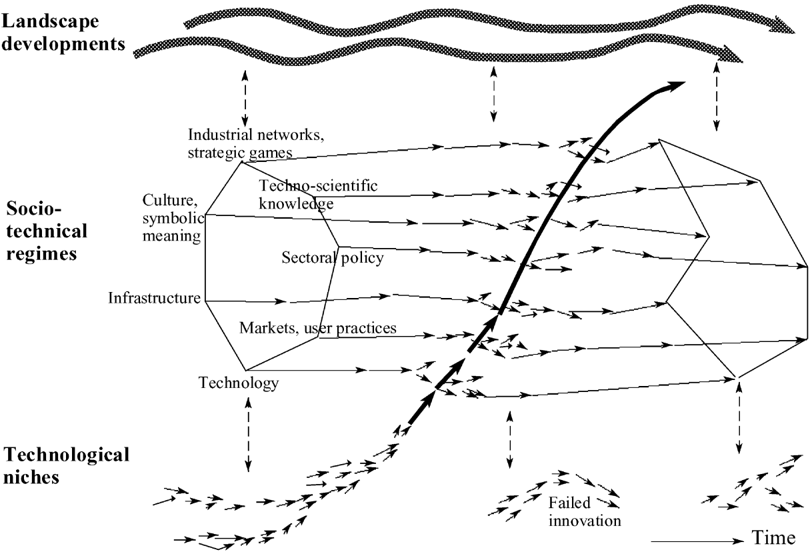
Geels proposes a multi-level perspective on technological transitions, combining evolutionary economics and technology studies around niches, sociotechnical regimes, and landscape. He illustrates it with a qualitative longitudinal case study of the transition from sailing ships to steamships, 1780–1900, identifying niche-cumulation, technological add-on/hybridisation, and riding along with market growth.
Key findings
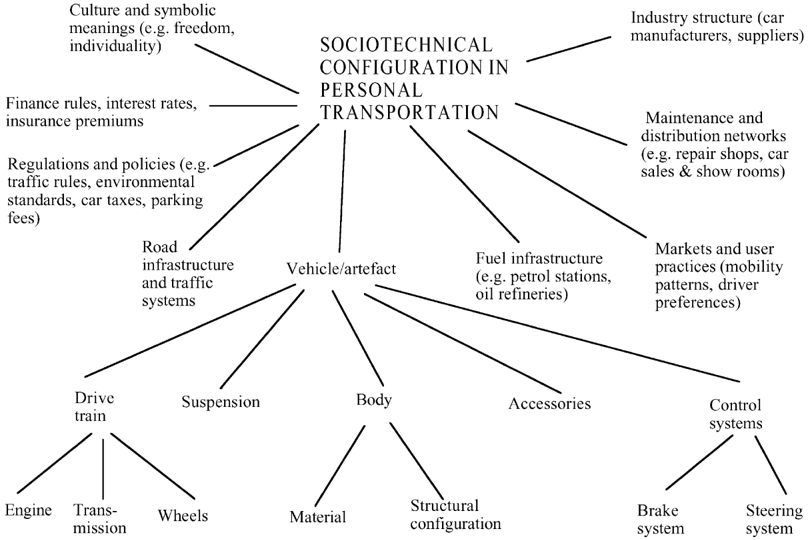
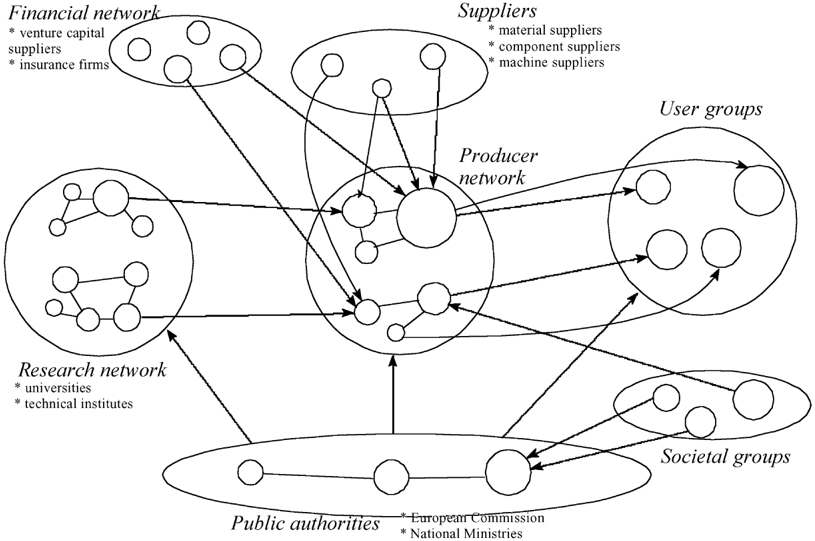
- Technological transitions are major, long-term changes in how societal functions are fulfilled; they involve not only technology but also user practices, regulation, industrial networks, infrastructure, and symbolic meaning or culture.
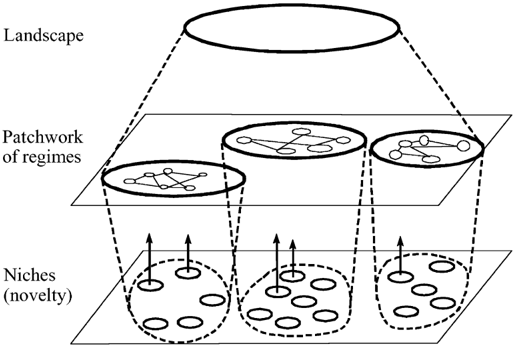
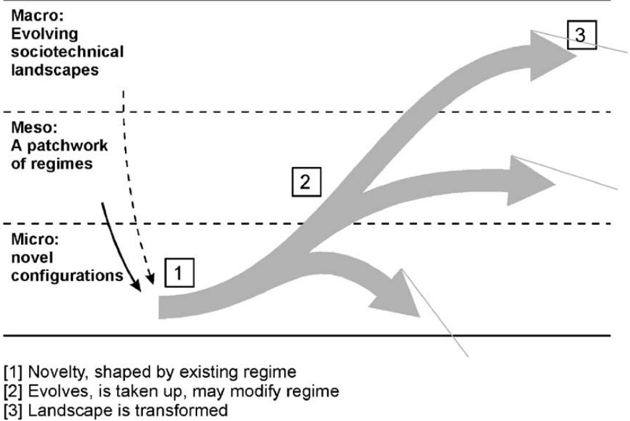
- The multi-level perspective treats niches as loci of radical variety, sociotechnical regimes as selection/retention mechanisms, and the landscape as slower external structure; breakthroughs occur when developments at multiple levels align and create a “window of opportunity.”
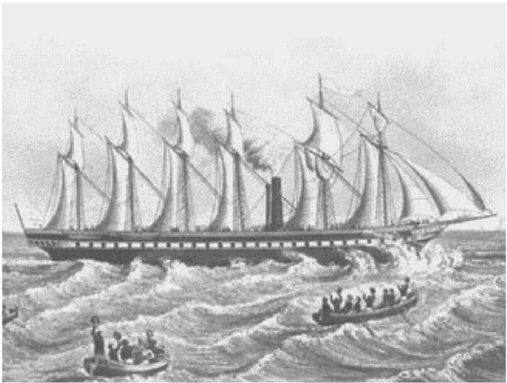
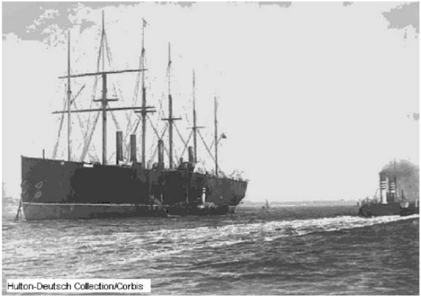
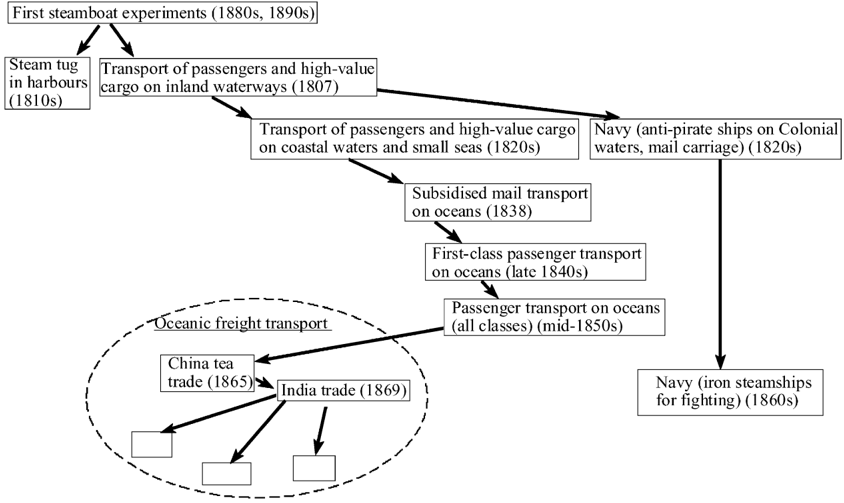
- In the steamship case, breakthrough followed niche-cumulation through inland waterways, coastal routes, mail subsidies, passenger transport, and freight; mechanisms included steam engines as auxiliary add-ons to sailing ships, hybrid sail/steam and iron/wood forms, and riding along with market growth.
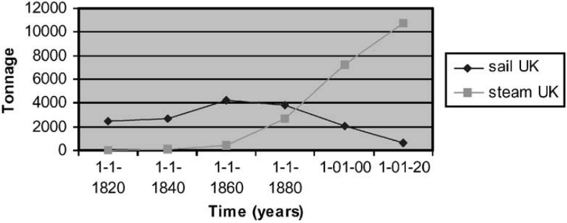
- Reported numbers include: European emigrants travelling by steamer rose from 45% in 1863 to 81% in 1866; compound engines enabled fuel-consumption reductions of 60%; the distance margin where steam was competitive reached 3000–3500 miles by the late 1860s; during the steamship mania (1869–1874), steamers rose from 17% to 31% of British registered tonnage.
Methods
- The paper uses “appreciative theory,” synthesising insights from evolutionary economics and technology studies into a multi-level perspective.
- It presents a qualitative longitudinal case study of the transition from sailing ships to steamships, 1780–1900, focused on Great Britain.
- The case is written in a mosaic style, shifting across markets, ship designs, insurance rules, actor groups, institutions, mail subsidies, persistent/emerging problems, and management practices to illustrate the conceptual framework.
Limitations
- The paper states that the multi-level perspective is fairly complex, requires many data, often qualitative, and that sociotechnical regimes are a broad unit of analysis with difficult-to-draw precise boundaries; boundary work deserves more attention.
- The paper states that the single case study has a drawback because 19th-century craft-based innovation differs from 20th-century science-based innovation, and the perspective would be more robust with more case studies varied over time periods and sectors.
- Evident in the text: the empirical analysis is focused on Great Britain and shipping, and the mechanisms are illustrated through selected historical examples rather than formal comparative or quantitative testing.
Model-written summary. Check it against the paper before relying on it.
Integrity signals
Registry
Cites
Statistics
Figures

Verification
Claims the paper makes
1 Valid · 5 Not valid · 42 Not checked · 63 Own results and interpretations
The cited sources support only part of this claim — read each source’s verdict below.
In the paper
“Aspecific mechanism in the breakthrough of radical innovations is technological add-on and hybridisation . It means that new technologies in their early phase physically link up with established technologies, often to solve particular bottlenecks. Thus, old and new technologies do not immediately compete head on, but form some sort of symbiosis (see also Pistorius and Utterback, 1997).”
What the sources say
- Partly supportedcites Pistorius and Utterback, 1997 matched to “Multi-mode interaction among technologies” (1997) sourceExperimental — accuracy not yet measured
Split into 2 atoms — 0 confirmed, 2 partially supported, 0 disputed, 0 misattributed, 0 unverifiable. Expand the claim to see per-atom verdicts.
plainstates a cause- Asserted: passes — The authors put it forward as true.
- Checkable: passes — It can be checked against evidence.
- Load-bearing: passes — The paper’s conclusions depend on it.
- Based: passes — The paper gives a reason why it holds.
- Partly supported
A result the paper states — it cites no source for it, so there is none to check. The quote shows it is in the paper.
In the paper
“These subsidies created a protective environment for the use and development of oceanic steamships.”
plainstates a cause- Asserted: passes — The authors put it forward as true.
- Checkable: passes — It can be checked against evidence.
- Load-bearing: unclear — It is unclear whether the paper’s conclusions depend on it.
- Based: passes — The paper gives a reason why it holds.
- Rests on an assumption not shown here.
In the paper
“Between 1838 and 1862 a global network of British intercontinental steam companies was created on the basis of imperial mail subsidies (Broeze, 1982).”
What the sources say
- Not matchedcites Broeze, 1982
An author–year citation the paper’s reference list doesn’t settle. We don’t search these by name.
plainstates a cause- Asserted: passes — The authors put it forward as true.
- Checkable: passes — It can be checked against evidence.
- Load-bearing: unclear — It is unclear whether the paper’s conclusions depend on it.
- Based: passes — The paper gives a reason why it holds.
- Rests on an assumption not shown here.
- Not matched
A result the paper states — it cites no source for it, so there is none to check. The quote shows it is in the paper.
In the paper
“Another innovation in the late 18th century shipping regime was the emergence of new social groups: professional shipowners, shipbrokers and insurance companies.”
plain- Asserted: passes — The authors put it forward as true.
- Checkable: passes — It can be checked against evidence.
- Load-bearing: unclear — It is unclear whether the paper’s conclusions depend on it.
- Based: passes — The paper gives a reason why it holds.
- Rests on an assumption not shown here.
A result the paper states — it cites no source for it, so there is none to check. The quote shows it is in the paper.
In the paper
“The emergence of professional shipowners was stimulated by the French Wars (1789-1815) which pushed up freight prices as demand for ships increased.”
plainstates a cause- Asserted: passes — The authors put it forward as true.
- Checkable: passes — It can be checked against evidence.
- Load-bearing: unclear — It is unclear whether the paper’s conclusions depend on it.
- Based: passes — The paper gives a reason why it holds.
- Rests on an assumption not shown here.
24 more claims
Create a free account to see all 111 claims and every source verdict.
- Probably not a substantial claim. 28
- It may state two separate claims as one. 69
- The quote only partly states this claim. 2
Claims other papers make about this one
Each is checked against this paper’s own text: does it say what the citing paper says it does?
In the citing paper
“The model of Geels (2002) describes new technologies as arising and maturing within existing technology systems [18].”
From Lessons Learned From a Living Lab on the Broad Adoption of eHealth in Primary Health Care (2018) · cites this paper as [18]
In the citing paper
“The multi-level perspective (Rip and Kemp, 1998;Geels, 2002;Geels, 2004;Geels and Schot, 2007) is a framework for understanding sustainability transitions that provides an overall view of the multi-dimensional complexity of changes in socio-technical systems.”
From Ontologies, socio-technical transitions (to sustainability), and the multi-level perspective (2010) · cites this paper as Geels, 2002
Citations
Cites
An Evolutionary Theory of Economic Change.
Loasby, B. J., Nelson, R. R., & Winter, S. G. (1983) · The Economic Journal · doi:10.2307/2232409 · Cited by 21,366
(1934) · SSRN Electronic Journal · Cited by 7,609
Technological Discontinuities and Organizational Environments
Tushman, M. L., & Anderson, P. (1986) · Administrative Science Quarterly · doi:10.2307/2392832 · Cited by 6,112
von Hippel, E. (2007) · Das Summa Summarum des Management · doi:10.1007/978-3-8349-9320-5_10 · Cited by 5,098
Technical Change and Economic Theory.
Swann, P., & Dosi, G. (1989) · The Economic Journal · doi:10.2307/2234048 · Cited by 4,041
Shaping Technology, Building Society: Studies in Sociotechnical Change.
Lynch, M., Bijker, W. E., & Law, J. (1993) · Contemporary Sociology · doi:10.2307/2074370 · Cited by 3,540
Technological Discontinuities and Dominant Designs: A Cyclical Model of Technological Change
Anderson, P., & Tushman, M. L. (1990) · Administrative Science Quarterly · doi:10.2307/2393511 · Cited by 3,255
Bijker, W. E., Hughes, T. P., & Pinch, T. (1987) · Cited by 2,957
Kemp, R., Schot, J., & Hoogma, R. (1998) · Technology Analysis & Strategic Management · doi:10.1080/09537329808524310 · Cited by 2,860
Innovation: Mapping the winds of creative destruction
Abernathy, W. J., & Clark, K. B. (1985) · Research Policy · doi:10.1016/0048-7333(85)90021-6 · Cited by 2,791
Research works printed but not linked: 9
- Broeze, F.J.A., 1982. The international diffusion of ocean steam navigation: the myth of the retardation of Netherlands steam navigation to the East Indies. Economisch-en Sociaal-Historisch Jaarboek 45, 77-95.
- Callon, M. (Ed.), 1998. The Laws of the Market. Blackwell, Oxford.
- Garrat, G.R.M., Goodman, D.C., Russel, C.A., 1973. Science and Engineering, Units 14 and 15. Open University Press, Bletchley.
- Jackson, G., 1998. Ports, ships and government in the nineteenth and twentieth centuries. In: Van Royen, P.C., Fischer, L.R., Williams, D.M. (Eds.), Proceedings of the Second International Congress of Maritime History on Frutta di Mare: Evolution and revolution in the maritime world in the 19th and 20th centuries. Amsterdam/Rotterdam, The Netherlands, 5-8 June, 1996. Batavian Lion International, Amsterdam, pp. 161-176.
- Lundvall, B.A., 1988. Innovation as an interactive process: from user-producer interaction to the national system of innovation. In: Dosi, G., Freeman, C., Nelson, R., Silverberg, G., Soete, L. (Eds.), Technical Change and Economic Theory. Pinter, London, pp. 349-369.
- Maddocks, M., 1982. De Grote Oversteek. Time-Life, London. Mayntz, R., Hughes, T.P. (Eds.), 1988. The Development of Large
- Mokyr, J., 1990. The Lever of Riches. Oxford University Press, New York.
- Rip, A., Kemp, R., 1996. Towards a Theory of Socio-Technical Change. Mimeo University of Twente, Report prepared for Batelle Pacific Northwest Laboratories, Washington, DC. (An edited version has been published as book chapter Rip and Kemp 1998).
- Sloan, E.W., 1998. Private enterprise as public utility: the management of capital in two centuries of shipping business. In: Van Royen, P.C., Fischer, L.R., Williams, D.M. (Eds.), Proceedings of the Second International Congress of Maritime History on Frutta di Mare: Evolution and Revolution in the Maritime World in the 19th and 20th Centuries. Amsterdam/Rotterdam, The Netherlands, 5-8 June, 1996. Batavian Lion International, Amsterdam, pp. 89-100.
Cited by
Items 1,701–1,800 of 7,210
Ullman, A. N., & Kittner, N. (2023) · Energy Research & Social Science · doi:10.1016/j.erss.2023.103371 · Cited by 49
Scaling mechanisms of energy communities: A comparison of 28 initiatives
Petrovics, D., Huitema, D., Giezen, M., & Vis, B. (2023) · Global Environmental Change · doi:10.1016/j.gloenvcha.2023.102780 · Cited by 51
Rethinking the diffusion of grassroots innovations: An embedding framework
Roysen, R., Bruehwiler, N., Kos, L., Boyer, R. H. W., & Koehrsen, J. (2023) · Technological Forecasting and Social Change · doi:10.1016/j.techfore.2023.123156 · Cited by 50
The transformative potential of circular agriculture initiatives in the North of the Netherlands
Hoogstra, A. G., Silvius, J., de Olde, E. M., Candel, J., Termeer, C. J. A. M., van Ittersum, M. K., & de Boer, I. J. M. (2023) · Agricultural Systems · doi:10.1016/j.agsy.2023.103833 · Cited by 48
Emergence of controversy in technology transitions: Green Revolution and Bt cotton in India
Ramani, S. V., & Thutupalli, A. (2015) · Technological Forecasting and Social Change · doi:10.1016/j.techfore.2015.06.018 · Cited by 43
Hot or not? The role of cycling in ASEAN megacities: Case studies of Bangkok and Manila
Bakker, S., Guillen, M. D., Nanthachatchavankul, P., Zuidgeest, M. H. P., Pardo, C., & van Maarseveen, M. F. A. M. (2018) · International Journal of Sustainable Transportation · doi:10.1080/15568318.2017.1384522 · Cited by 45
Grassroots innovations for sustainability in the United States: A spatial analysis
Nicolosi, E., Medina, R., & Feola, G. (2018) · Applied Geography · doi:10.1016/j.apgeog.2017.12.024 · Cited by 42
Redrawing the Geopolitical Map: International Relations and Renewable Energies
Stegen, K. S. (2018) · Lecture notes in energy · doi:10.1007/978-3-319-67855-9_3 · Cited by 55
Kruijf, J. V., Pahl‐Wostl, C., & Knieper, C. (2018) · Environmental Innovation and Societal Transitions · doi:10.1016/j.eist.2018.09.004 · Cited by 40
Sacchi, G., Cei, L., Stefani, G., Lombardi, G. V., Rocchi, B., Belletti, G., Padel, S., Sellars, A., Gagliardi, E., Nocella, G., et al. (2018) · Agriculture · doi:10.3390/agriculture8110173 · Cited by 50
Mock, M., Omann, I., Polzin, C., Spekkink, W., Schuler, J., Pandur, V., Brizi, A., & Panno, A. (2019) · Ecological Economics · doi:10.1016/j.ecolecon.2019.02.002 · Cited by 48
Energy transition and the future(s) of the electricity sector
Defeuilley, C. (2019) · Utilities Policy · doi:10.1016/j.jup.2019.03.002 · Cited by 49
Bhamidipati, P. L., Hansen, U. E., & Haselip, J. (2019) · Environmental Innovation and Societal Transitions · doi:10.1016/j.eist.2019.02.001 · Cited by 44
Technology-Driven Transition in Urban Food Production Practices: A Case Study of Shanghai
Farhangi, M., Turvani, M. E., van der Valk, A. J. J., & Carsjens, G. J. (2019) · Sustainability · doi:10.3390/su11216070 · Cited by 38
Bhatt, B., & Singh, A. (2019) · Energy Policy · doi:10.1016/j.enpol.2019.111064 · Cited by 39
Caprotti, F., Essex, S. J., Phillips, J., de Groot, J., & Baker, L. (2020) · Energy Research & Social Science · doi:10.1016/j.erss.2020.101700 · Cited by 50
In search of a network theory of innovations: Relations, positions, and perspectives
Leydesdorff, L., & Ahrweiler, P. (2014) · Journal of the Association for Information Science and Technology · doi:10.1002/asi.23127 · Cited by 39
Kihoro, E., Schoneveld, G. C., & Crane, T. (2021) · Agricultural Systems · doi:10.1016/j.agsy.2021.103073 · Cited by 36
Tackling Complexity of the Just Transition in the EU: Evidence from Romania
Voicu-Dorobanţu, R., Volintiru, C., Popescu, M.-F., Nerău, V., & Ștefan, G. (2021) · Energies · doi:10.3390/en14051509 · Cited by 41
A theory-based approach to evaluations intended to inform transitions toward sustainability
Mickwitz, P., Neij, L., Johansson, M. V., Benner, M., & Sandin, S. (2021) · Evaluation · doi:10.1177/1356389021997855 · Cited by 47
Peter, C. (2021) · Sustainability · doi:10.3390/su13137360 · Cited by 65
Escandon-Barbosa, D., Salas-Paramo, J., Meneses-Franco, A. I., & Giraldo- Gonzalez, C. (2021) · Technology in Society · doi:10.1016/j.techsoc.2021.101674 · Cited by 35
Aagaard, A., Lüdeke‐Freund, F., & Wells, P. (2021) · Springer eBooks · doi:10.1007/978-3-030-77580-3 · Cited by 51
Forecasting technological discontinuities in the ICT industry
Hoisl, K., Stelzer, T., & Biala, S. (2014) · Research Policy · doi:10.1016/j.respol.2014.10.004 · Cited by 37
An emerging innovation system for deployment of building-sited solar photovoltaics in Sweden
Palm, A. (2014) · Environmental Innovation and Societal Transitions · doi:10.1016/j.eist.2014.10.004 · Cited by 46
Faria, L., & Andersen, M. M. (2017) · Industry and Innovation · doi:10.1080/13662716.2017.1319801 · Cited by 47
Steward, F. (2008) · WestminsterResearch (University of Westminster) · Cited by 39
Novotny, B. (2015) · European Encyclopedia of Law (BETA) · Cited by 35
Jamieson, D. W., Wilson, R., Martin, M., Lowe, T., Kimmitt, J., Gibbon, J., & French, M. (2020) · Public Money & Management · doi:10.1080/09540962.2020.1714306 · Cited by 48
Tucho, G. T. (2022) · Journal of Engineering and Applied Science · doi:10.1186/s44147-022-00074-8 · Cited by 56
“The design and performance of any transport system are thus can only be understood and improved if both social and technical aspects of the system are brought together and treated as interdependent parts of a complex system [20, 33, 94].”
BackgroundAxes of contestation in sustainability transitions
Madsen, S. H. J., Miörner, J., & Hansen, T. (2022) · Environmental Innovation and Societal Transitions · doi:10.1016/j.eist.2022.11.001 · Cited by 42
Küpers, S., & Batel, S. (2023) · Energy Policy · doi:10.1016/j.enpol.2022.113358 · Cited by 45
Havas, A., Schartinger, D., & Weber, M. (2023) · Environmental Innovation and Societal Transitions · doi:10.1016/j.eist.2023.100754 · Cited by 52
Ajibade, I. M., Pelling, M., Agboola, J. I., & Garschagen, M. (2016) · Journal of Extreme Events · doi:10.1142/s2345737616500093 · Cited by 39
Beyond the tragedy of the commons: Reframing effective climate change governance
Patt, A. (2017) · Energy Research & Social Science · doi:10.1016/j.erss.2017.05.023 · Cited by 49
Moallemi, E. A., Aye, L., de Haan, F. J., & Webb, J. M. (2017) · Journal of Cleaner Production · doi:10.1016/j.jclepro.2017.06.118 · Cited by 35
Jørgensen, M. S., Jørgensen, U., & Jensen, J. S. (2017) · Energy Research & Social Science · doi:10.1016/j.erss.2017.09.034 · Cited by 40
Holtz, G., Xia-Bauer, C., Roelfes, M., Schüle, R., Vallentin, D., & Martens, L. (2017) · Journal of Cleaner Production · doi:10.1016/j.jclepro.2017.12.137 · Cited by 47
Marletto, G., & Sillig, C. (2019) · Ecological Economics · doi:10.1016/j.ecolecon.2018.12.019 · Cited by 39
Stalmokaitė, I., & Yliskylä‐Peuralahti, J. (2019) · Sustainability · doi:10.3390/su11071916 · Cited by 45
What does targeting ecological sustainability mean for company financial performance?
Mendonca, T. D., & Zhou, Y. (2019) · Business Strategy and the Environment · doi:10.1002/bse.2334 · Cited by 45
Lam, D. P. M., Horcea‐Milcu, A., Fischer, J., Peukert, D., & Lang, D. J. (2019) · AMBIO · doi:10.1007/s13280-019-01302-x · Cited by 38
Kagan, S., Hauerwaas, A., Helldorff, S., & Weisenfeld, U. (2019) · Journal of Cleaner Production · doi:10.1016/j.jclepro.2019.119595 · Cited by 48
Gottschamer, L., & Zhang, Q. (2020) · Energy Research & Social Science · doi:10.1016/j.erss.2020.101618 · Cited by 35
Amundsen, V. S., & Osmundsen, T. C. (2020) · Marine Policy · doi:10.1016/j.marpol.2020.104097 · Cited by 34
Bossink, B. A. G. (2020) · Renewable and Sustainable Energy Reviews · doi:10.1016/j.rser.2020.110025 · Cited by 40
Electric vehicles and rural business: Findings from the Warwickshire rural electric vehicle trial
Jones, A., Begley, J., Berkeley, N., Jarvis, D., & Bos, E. P. (2020) · Journal of Rural Studies · doi:10.1016/j.jrurstud.2020.08.007 · Cited by 39
Factors for metal additive manufacturing technology selection
Sobota, V., van de Kaa, G., Luomaranta, T., Martinsuo, M. M., & Ortt, R. (2020) · Journal of Manufacturing Technology Management · doi:10.1108/jmtm-12-2019-0448 · Cited by 37
The geography of innovation and technology news - An empirical study of the German news media
Özgun, B., & Broekel, T. (2021) · Technological Forecasting and Social Change · doi:10.1016/j.techfore.2021.120692 · Cited by 42
“Second, many instances of newly emerging technologies do not immediately meet existing markets and commonly lack structural components, such as regulations, infrastructure, user practices, and maintenance networks (Geels, 2002).”
BackgroundReconfiguring Aviation for a Climate-Safe Future: Are Airlines Sending the Wrong Message?
Higham, J. E. S., Hanna, P., Hopkins, D., Cohen, S., Gößling, S., & Cocolas, N. (2021) · Journal of Travel Research · doi:10.1177/00472875211033648 · Cited by 40
“Our research amplifies the need for structural reconfiguration of the global aviation regime (Geels 2002, 2007; Peeters et al. 2016; Rosenbloom et al. 2020) through component substitution (Geels 2018b) to move away from the current model based on volume and velocity (Young 2019).”
BackgroundMethodInfluentialBessi, A., Guidolin, M., & Manfredi, P. (2021) · Renewable and Sustainable Energy Reviews · doi:10.1016/j.rser.2021.111673 · Cited by 34
Lefvert, A., Rodriguez, E., Fridahl, M., Grönkvist, S., Haikola, S., & Hansson, A. (2021) · Energy Research & Social Science · doi:10.1016/j.erss.2021.102452 · Cited by 41
Low-carbon economy and policy implications: a systematic review and bibliometric analysis
Wang, J., Zhou, Y., & Cooke, F. L. (2022) · Environmental Science and Pollution Research · doi:10.1007/s11356-022-20381-0 · Cited by 44
“Geels (2002) put forward that niche-cumulation, technological add-on, and hybridization riding along with market growth, constitute particular mechanisms in technological transitions.”
BackgroundSeeds of the Future in the Present: Exploring Pathways for Navigating Towards “Good” Anthropocenes
Pereira, L. M., Bennett, E. M., Biggs, R., Peterson, G., McPhearson, T., Norström, A. V., Olsson, P., Preiser, R., Raudsepp‐Hearne, C., & Vervoort, J. (2018) · Cambridge University Press eBooks · doi:10.1017/9781316647554.018 · Cited by 77
Energy democracy: A digital future?
Judson, E., Fitch-Roy, O., & Soutar, I. (2022) · Energy Research & Social Science · doi:10.1016/j.erss.2022.102732 · Cited by 43
“• ‘Co-evolution’ (Foxon, 2014) or ‘mutual shaping of technology and society’ (Geels, 2002).”
Jensen, J. S., Lauridsen, E. H., Fratini, C. F., & Hoffmann, B. (2015) · Environment and Planning A Economy and Space · doi:10.1068/a130132p · Cited by 43
Overcoming Nontechnical Barriers to the Implementation of Sustainable Solutions in Industry
Satterfield, M. B., Kolb, C. E., Peoples, R., Adams, G. L., Schuster, D. S., Ramsey, H. C., Stechel, E. B., Wood-Black, F., Garant, R. J., & ABRAHAM, M. A. (2009) · Environmental Science & Technology · doi:10.1021/es802980j · Cited by 38
Gaziulusoy, İ. (2010) · ResearchSpace (University of Auckland) · Cited by 64
Stahlbrand, L. (2016) · Agriculture · doi:10.3390/agriculture6030046 · Cited by 33
“, are configured), as well as a mix of additional factors, such as climate change, wars, oil prices, water availability, emigration and cultural values [19].”
BackgroundDynamic consumer preferences for electric vehicles in China: A longitudinal approach
Qian, L., Huang, Y., Tyfield, D., & Soopramanien, D. (2023) · Transportation Research Part A Policy and Practice · doi:10.1016/j.tra.2023.103797 · Cited by 39
Weigl, L., Barbereau, T., & Fridgen, G. (2023) · Government Information Quarterly · doi:10.1016/j.giq.2023.101873 · Cited by 51
Bottom‐up dynamics in circular innovation systems: The perspective of circular start‐ups
Henry, M., Kirchherr, J., Raven, R. P. J. M., & Hekkert, M. P. (2024) · Journal of Industrial Ecology · doi:10.1111/jiec.13468 · Cited by 47
“…and the unit of analysis is the socio-technical system; TIS tries to capture how innovation systems emerge around focal technologies; SNM was introduced to understand how experimentation (portfolios) can help to create and scale niches (Hekkert et al, 2007; Geels, 2002, 2011; Schot & Geels, 2008).”
BackgroundZur Transformation des Energiesektors – ein Blick aus der Perspektive der Transition- Forschung
Schneidewind, U., & Scheck, H. (2011) · Springer eBooks · doi:10.1007/978-3-642-21820-0_2 · Cited by 59
Innovation and Policy for Bioenergy in the UK: A Co-Evolutionary Perspective
Laurentis, C. D. (2013) · Regional Studies · doi:10.1080/00343404.2013.834320 · Cited by 38
The Food-Energy-Climate Change Trilemma: Toward a Socio-Economic Analysis
Harvey, M. (2014) · Theory Culture & Society · doi:10.1177/0263276414537317 · Cited by 44
The Evolution of Cultural Complexity: Not by the Treadmill Alone
Andersson, C., & Read, D. (2016) · Current Anthropology · doi:10.1086/686317 · Cited by 38
Zhan, C., & de Jong, M. (2017) · Sustainability · doi:10.3390/su9020201 · Cited by 33
Novel urban water systems in Germany: governance structures to encourage transformation
Schramm, E., Kerber, H., Trapp, J. H., Zimmermann, M., & Winker, M. (2017) · Urban Water Journal · doi:10.1080/1573062x.2017.1293694 · Cited by 39
Governing system innovation: assisted living experiments in the UK and Norway
Bugge, M. M., Coenen, L., Marques, P., & Morgan, K. (2017) · European Planning Studies · doi:10.1080/09654313.2017.1349078 · Cited by 40
Ilieva, R. T., & Hernandez, A. (2018) · Sustainability · doi:10.3390/su10114057 · Cited by 47
Intergenerational Housing: The Case of Humanitas Netherlands
Arentshorst, M. E., Kloet, R. R., & Peine, A. (2019) · Journal of Housing for the Elderly · doi:10.1080/02763893.2018.1561592 · Cited by 35
Governance of interactions between infrastructure sectors: The making of smart grids in the UK
Hiteva, R. P., & Watson, J. (2019) · Environmental Innovation and Societal Transitions · doi:10.1016/j.eist.2019.02.006 · Cited by 39
Kao, Y.-S., Nawata, K., & Huang, C.-Y. (2019) · Sustainability · doi:10.3390/su11082342 · Cited by 47
Aalbers, C. B. E. M., Kamphorst, D. A., & Langers, F. (2019) · Urban forestry & urban greening · doi:10.1016/j.ufug.2019.04.019 · Cited by 40
Lempiälä, T. M., Apajalahti, E., Haukkala, T., & Lovio, R. (2019) · Research Policy · doi:10.1016/j.respol.2019.103830 · Cited by 43
Grassroots innovations in community-led housing in England: the role and evolution of intermediaries
Lang, R., Chatterton, P., & Mullins, D. (2019) · International Journal of Urban Sustainable Development · doi:10.1080/19463138.2019.1663525 · Cited by 52
Multi-Stakeholder Perspectives on Scaling up UK Fashion Upcycling Businesses
Sung, K. K., Cooper, T., Oehlmann, J., Singh, J., & Mont, O. (2020) · Fashion Practice · doi:10.1080/17569370.2019.1701398 · Cited by 47
Coroamă, V. C., Bergmark, P., Höjer, M., & Malmodin, J. (2020) · Proceedings of the 7th International Conference on ICT for Sustainability · doi:10.1145/3401335.3401716 · Cited by 33
Influences of technological and sectoral contexts on technological innovation systems
Ulmanen, J., & Bergek, A. (2021) · Environmental Innovation and Societal Transitions · doi:10.1016/j.eist.2021.04.007 · Cited by 49
“In the transitions literature, much attention has been given to the negative influence of sectors on novelty generation in niches and TISs (Geels, 2002; Klitkou et al., 2015; Unruh, 2000; Wesseling and Van der Vooren, 2017).”
BackgroundLife in the hole: practices and emotions in the cultural political economy of mitigation deterrence
Markusson, N. O., McLaren, D. P., Szerszynski, B., Tyfield, D., & Willis, R. (2022) · European Journal of Futures Research · doi:10.1186/s40309-021-00186-z · Cited by 39
“We here take a relatively encompassing view of innovation practices, to include not just apparently techno-economic, but also cultural and political ones (Geels 2002, Borup et al. 2006, Tyfield 2012).”
Ontological struggle over new product category: Transition potential of meat alternatives
Lonkila, A., & Kaljonen, M. (2021) · Environmental Innovation and Societal Transitions · doi:10.1016/j.eist.2021.11.002 · Cited by 40
Applying complex adaptive systems and risk society theory to understand energy transitions
Pearson, R. E., & Bardsley, D. K. (2021) · Environmental Innovation and Societal Transitions · doi:10.1016/j.eist.2021.11.006 · Cited by 38
Nijhof, A. H. J., Wins, A., Argyrou, A., & Chevrollier, N. (2022) · Environmental Innovation and Societal Transitions · doi:10.1016/j.eist.2022.01.010 · Cited by 40
Gebler, M., Juraschek, M., Thiede, S., Cerdas, F., & Herrmann, C. A. (2022) · Sustainability Science · doi:10.1007/s11625-022-01168-1 · Cited by 48
“1 These societal transformations can be understood as transformations of socio-technical systems or as “reconfiguration processes” (Geels 2002) of technologies, which are embedded in societies on systemic (or global), sub-systemic (or regional) and elementary (or local) levels (Geels 2002).”
BackgroundInfluentialPetrovics, D., Giezen, M., & Huitema, D. (2022) · Energy Research & Social Science · doi:10.1016/j.erss.2022.102860 · Cited by 62
Technologies in Decline: Socio-Technical Approaches to Discontinuation and Destabilisation
Koretsky, Z., Stegmaier, P., Turnheim, B., & van Lente, H. (2022) · Routledge eBooks · doi:10.4324/9781003213642 · Cited by 115
Cohen, M. J. (2006) · Mobilities · doi:10.1080/17450100500489106 · Cited by 42
Meso-level analysis, the missing link in energy strategies
Schenk, N. J., Moll, H. C., & Uiterkamp, A. J. M. S. (2006) · Energy Policy · doi:10.1016/j.enpol.2006.04.013 · Cited by 33
Innovation dialectics: an extended process perspective on innovation in services
Nardelli, G. (2017) · Service Industries Journal · doi:10.1080/02642069.2017.1289513 · Cited by 39
Audet, R., Lefèvre, S. A., Brisebois, É., & El-Jed, M. (2017) · Sustainability · doi:10.3390/su9030320 · Cited by 48
The Spanish Turn against Renewable Energy Development
Estevan, D. G., López, E. P., & Alfonso-Solar, D. (2018) · Sustainability · doi:10.3390/su10041208 · Cited by 38
Optimal diversity in investments with recombinant innovation
Zeppini, P., & van den Bergh, J. C. J. M. (2012) · Structural Change and Economic Dynamics · doi:10.1016/j.strueco.2012.09.002 · Cited by 32
Baumgartinger-Seiringer, S. (2022) · Regional Studies Regional Science · doi:10.1080/21681376.2022.2081597 · Cited by 42
“According to the MLP, socio-technical transitions are the outcome of top-down pressures from the landscape level and bottom-up developments in niches that together destabilize the regime (Geels, 2002).”
BackgroundDoes agrivoltaism reconcile energy and agriculture? Lessons from a French case study
Carrausse, R., & de Sartre, X. A. (2023) · Energy Sustainability and Society · doi:10.1186/s13705-023-00387-3 · Cited by 55
“The first relates to the challenges of deploying technology, summarised in the TIS framework referred to as the Multi-Level Perspective (MLP) and based on the path that an innovation must follow to be deployed, not only should it be technically viable; it may also fit within existing regimes, without excessively disru…”
BackgroundCaiafa, C., Hattori, T., Nam, H., & de Coninck, H. (2023) · Environmental Innovation and Societal Transitions · doi:10.1016/j.eist.2023.100766 · Cited by 40
Responsible mission governance: An integrative framework and research agenda
Wiarda, M., Janssen, M. J., Coenen, T. B. J., & Doorn, N. (2024) · Environmental Innovation and Societal Transitions · doi:10.1016/j.eist.2024.100820 · Cited by 49
Building on and contributing to sustainability transitions research with qualitative system dynamics
de Gooyert, V., Awan, A., Gürsan, C., Swennenhuis, F., Janipour, Z., & Gonella, S. (2024) · Sustainability Science · doi:10.1007/s11625-024-01548-9 · Cited by 45
Imagined futures in sustainability transitions: Towards diverse future-making
Friedrich, J., & Hendriks, A. (2024) · Futures · doi:10.1016/j.futures.2024.103502 · Cited by 36
Great expectations: The promises and limits of innovation policy in addressing societal challenges
Laatsit, M., Grillitsch, M., & Fünfschilling, L. (2025) · Research Policy · doi:10.1016/j.respol.2025.105184 · Cited by 43
Gee, S., & Uyarra, E. (2013) · Technology Analysis and Strategic Management · doi:10.1080/09537325.2013.843660 · Cited by 41
Metadata
- Authors
- Geels, F. W.
- Affiliations
- University of Twente (NL)
- Corresponding author
- Geels, Frank W.
- ORCID
- Geels, Frank W.
- Venue
- Research Policy
- Publisher
- Elsevier BV
- Published
- 2002-12
- Volume
- 31
- Issue
- 8-9
- Pages
- 1257-1274
- ISSN
- 0048-7333 (ISSN-L)
- OpenAlex
- W2099330597
- Cited by
- 7,275
- References
- 94
- Citations by year
- 2026: 983 · 2025: 624 · 2024: 502 · 2023: 504 · 2022: 503 · 2021: 598 · 2020: 526 · 2019: 417 · 2018: 493 · 2017: 357 · 2016: 301 · 2015: 293 · 2014: 241 · 2013: 201 · 2012: 204
- FWCI
- 16.68
- Type
- journal article
- Language
- en
- Open access
- bronze
- doi.org
- Licence
- www.elsevier.com/tdm/userlicense/1.0/ (tdm)
- Locations
- Research Policy (publishedVersion)
- Research Explorer (The University of Manchester) (submittedVersion, other-oa)
- University of Twente Research Information (submittedVersion)
- TU/e Research Portal (submittedVersion)
- RePEc: Research Papers in Economics (submittedVersion)
- Figshare (submittedVersion, cc-by)
- University of Twente Research Information (submittedVersion, other-oa)
- Funders
- Nederlandse Organisatie voor Wetenschappelijk Onderzoek
- Topics
- Physical Sciences › Environmental Science › Global and Planetary Change › Sustainability and Climate Change Governance
- Social Sciences › Decision Sciences › Management Science and Operations Research › Innovation Diffusion and Forecasting
- Social Sciences › Economics, Econometrics and Finance › Economics and Econometrics › Economic Theory and Institutions
- Keywords
- technological transition, multi-level perspective, evolutionary economics, technology studies, hybridization, market growth, industrial networks, user practices, regulation, infrastructure
About these checks
Registry, retraction, Cites and statistics results are computed, not judged, with one exception: a printed reference that no index lists is read once by a model before it counts as a citation error. Claims are extracted by a model and kept only when their quote appears verbatim in the text; each cited source is then checked, with a model’s help, for whether it says what the claim relies on. Those verdicts can be wrong — read the claim’s quote and the cited source before relying on one.
The claim verdicts this report counts are experimental: their accuracy is not yet measured.
A language model drew the claims from the paper on 2026-10-10, under version 3 of the claim definition (model deepseek-v4.1-flash, prompt extract-v3).
A second model labelled each claim on 2026-10-10 (model jev-1.13-20260917, definition revision gold-guideline-v0.2).
Cited sources are checked with a language model’s help (gpt-6-sol).
Statistics and arithmetic are recomputed, not judged.
Confidence bands are shown only for fields calibrated on our annotated test set. None is calibrated yet, so no band is shown.
What counts as a claim ›How we measure confidence ›How we check this ›
Are you an author, or do you see a problem with this page? Request a review
Data sources
Bibliographic data: Semantic Scholar, OpenAlex, Crossref.
Contains information from the Semantic Scholar Academic Graph Datasets, made available under the ODC Attribution License (ODC-BY 1.0).
Semantic Scholar’s data is described in: Kinney, R., et al. (2023). The Semantic Scholar Open Data Platform. arXiv:2301.10140.
