

Chapter 22 Illusory reduplications of the human body and self
Open accessThe DOI matches its Crossref record; 154 of the 157 references it cites were found in a registry or an index.
Overview
The claims and statistics of this paper haven’t been checked yet.
Free: it reads the open-access text and checks the first 5 claims that cite a source we can check. Create a free account to check every claim.
Integrity signals
Registry
Cites
Statistics
Figures
Verification
Claims the paper makes
The claims and statistics of this paper haven’t been checked yet.
Free: it reads the open-access text and checks the first 5 claims that cite a source we can check. Create a free account to check every claim.
Claims other papers make about this one
Each is checked against this paper’s own text: does it say what the citing paper says it does?
The source backs part of the claim, not all of it — or backs it for a different population, condition or comparison.
In the citing paper
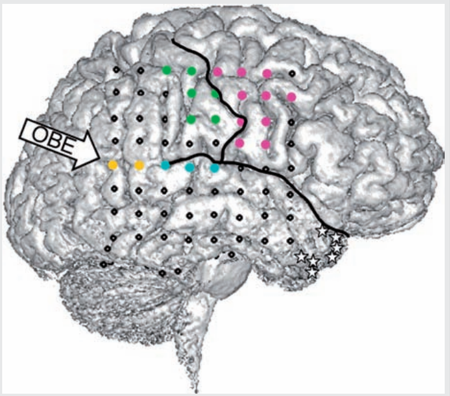
“Recent neuroanatomical analysis indicated that autoscopic hallucinations are preferentially caused by damage to right parieto-occipital or right temporo-occipital cortex, whereas heautoscopy and out-of-body experience are caused by damage to temporoparietal cortex of the left and right hemisphere, respectively [27,47].”
From Full-body illusions and minimal phenomenal selfhood (2009) · cites this paper as [47]
Experimental — accuracy not yet measuredThe cited source says what the claim attributes to it.
In the citing paper
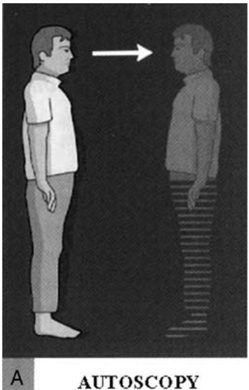
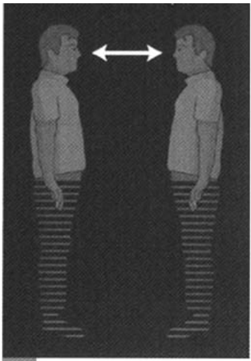
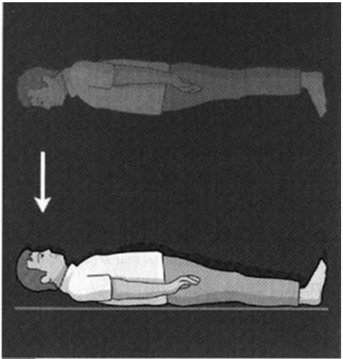
“MPS breaks down in neurological patients with illusory global own body perceptions, called autoscopic phenomena [23,27,37,47-49], that are characterized by seeing a second own body in extracorporeal space: autoscopic hallucination, heautoscopy, and out-of-body experience (Figure 1) (Box 2).”
From Full-body illusions and minimal phenomenal selfhood (2009) · cites this paper as [47]
Self-check
Percentages, sums and reported differences re-computed from the paper’s own numbers.
The self-check needs the paper’s full text.
Citations
Cites
Rubber hands ‘feel’ touch that eyes see
Botvinick, M., & Cohen, J. (1998) · Nature · doi:10.1038/35784 · Cited by 4,410
EPILEPSY AND THE FUNCTIONAL ANATOMY OF THE HUMAN BRAIN
Penfield, W., & Jasper, H. (1954) · Southern Medical Journal · doi:10.1097/00007611-195407000-00024 · Cited by 4,092
Philosophical conceptions of the self: implications for cognitive science.
Gallagher, S. (2000) · Trends in Cognitive Sciences · doi:10.1016/s1364-6613(99)01417-5 · Cited by 2,881
Critchley, M. (1966) · Medical Entomology and Zoology · Cited by 1,416
That's my hand! Activity in premotor cortex reflects feeling of ownership of a limb
Ehrsson, H. H., Spence, C., & Passingham, R. E. (2004) · Science · doi:10.1126/science.1097011 · Cited by 1,348
THE BRAIN’S RECORD OF AUDITORY AND VISUAL EXPERIENCE: A FINAL SUMMARY AND DISCUSSION
PENFIELD, W., & PEROT, P. (1963) · Brain · doi:10.1093/brain/86.4.595 · Cited by 1,230
The Image and Appearance of the Human Body
Schilder, P. (2013) · Routledge eBooks · doi:10.4324/9781315010410 · Cited by 1,123
The perception of phantom limbs. The D. O. Hebb lecture
Ramachandran, V. (1998) · Brain · doi:10.1093/brain/121.9.1603 · Cited by 1,064
Shared representations between self and other: a social cognitive neuroscience view
Decety, J., & Sommerville, J. A. (2003) · Trends in Cognitive Sciences · doi:10.1016/j.tics.2003.10.004 · Cited by 996
Shamanism: Archaic Techniques of Ecstasy
Éliade, M. (1951) · Medical Entomology and Zoology · Cited by 879
Research works printed but not linked: 55
- 3. Anton G (1898). U ¨ber Herderkrankungen des Gehirns, die vom Patienten selbst nicht wahrgenommen werden. Wien Klein Wochenschr 11: 227.
- Arzy, 2006, Induction of an illsory shadow person, Nature, 443, 287, 10.1038/443287a · DOI · Paper page
- 7. Assal G (1983). Non, je ne suis pas paralyse ´e, c'est la main de mon mari. Arch Suisses Neurol Neuroschir Psychiatr 133: 151-157.
- 8. Babinski A (1923). Sur l'anososgnosie. Rev Neurol 39(6): 731-731
- Babm Ski, 1914, Contribution a l'étude des troubles mentaut doms l'hémipégie organ lque (anosoqnosie)., Rev Neurol, 27, 845
- 15. Berson RJ (1983). Capgras' syndrome. Am J Psychiatry 140(8): 969-978. · DOI
- 17. Blanke O (2004). Illusions visuelles. In: AB Safran, A Vig- hetto, T Landis, E Cabanis (Eds.), Neurophtalmologie. Masson, Paris, pp. 147-150.
- 25. Bradford D (2005). Autoscopic hallucinations and disordered self-embodiment. Acta Neuropsychologica 3: 120-189.
- 29. Brugger P (2005). From mirror neurons to mirror. Acta Neu- ropsychologica 3: 190-201.
- 33. Brugger P, Regard M, and Landis T (1996). Unilaterally felt presences: The neuropsychiatry of one's invisible doppel- ga ¨nger. Neuropsychiatry Neuropsychol Behav Neurol 9: 114-122.
- 39. Carlson DA (1977). Dream mirrors. Psychoanal Q 46(1): 38-70. · DOI
- 40. Carp E (1952). Troubles de l'image du corps. Acta Neurolo- gica et Psychiatrica Belgica 52: 461-475.
- 47. Cohen H and Jones HW (1943). Reference of cardiac pain to a phantom left arm. Brit Heart J 2: 67. · doi:10.1136/hrt.5.1.67
- 49. Comar G (1901). L'autorepresentation de l'organisme chez quelques hysteriques. Rev Neurol 9: 490-495. 454
- 56. Crookall R (1964). More Astral Projections. Analyses of Case Histories. Aquarian Press, London.
- 59. David M, He ´caen H, Passouant P, et al. (1946). Asomatogno- sie partielle et algie paroxystique, seuls signes cliniques d'un angiome parie ´tal partiellement calcifie ´. Gue ´rison apre `s extirpation chirurgicale. Rev Neurol 78: 236-238.
- 61. Dening TR and Berrios GE (1994). Autoscopic phenomena. Br J Psychiatry 165(6): 808-817. · DOI · Paper page
- 69. Ehrenwald C (1931). Anosognosie und Depersonalisation. Nervenarzt 4: 681-688.
- 70. Ehrenwald H (1930). Vera ¨ndertes Erleben des Ko ¨rperbildes mit konsekutiver Wahnbildung bei linksseitiger Hemiple- gie. Zeitschr Neurol 118: 89-97.
- 75. Feinberg TE, Haber LD, and Leeds NE (1990). Verbal aso- matognosia. Neurology 40(9): 1391-1394. · DOI · Paper page
- 76. Feinberg TE and Roane DM (2005). Delusional misidentifi- cation. Psychiatr Clin North Am 28(3): 665-683, 678-669. · DOI
- 78. Feinberg TE and Shapiro TE (2000). Misidentification-Redu- plification and the right hemisphere. Neuropsychiatr Neu- ropsychol Behav Neurol 2(1): 39-48.
- 79. Fe ´re ´C (1891). Note sur les hallucinations autoscopiques ou spe ´culaires et sur les hallucinations altruistes. Comptes Rendues Hebdomedaires des Se ´ances et Me ´moirs de la Socie ´te ´de Biologie 3: 451-453.
- 80. Foley JM and Breslau L (1982). A new syndrome of delu- sional misidentification. Ann Neurol 12: 76.
- 86. Genner T (1947). Das Sehen des eigenen Spiegelbildes als epileptisches A ¨quivalent. Wien Klin Wochenschr 59: 656-658.
- 88. Gloning I, Gloning K, and Weingarten K (1954). Der Einfluss von kina ¨sthetischen Impulsen auf Ko ¨rperschemasto ¨rungen. Wien Z Nervenheilk 9: 481-495.
- 94. Gru ¨sser OJ and Landis T (1991). The splitting of "I" and "me": Heautoscopy and related phenomena. In: OJ Gru ¨s- ser, T Landis (Eds.), Visual Agnosias and other Distur- bances of Visual Perception and Cognition. MacMillan, Amsterdam, pp. 297-303.
- 98. Hall PF (1918). Experiments in astral projection. J Am Soc Psychical Res 12: 39-60.
- 103. He ´caen H and Ajuriaguerra J (1952). L'Heautoscopie, Meconnassiances et hallucinations corporelles, Masson, Paris, pp. 310-343.
- Hécaen, 1945, Syndrome pariétal traumatique: Asymbolie tactile et hémiasomatognosie paroxystique et douloureuse, Rev Neurol (Paris), 77, 113
- 108. Hoff H and Po ¨tzl O (1935/1988). Transformations between body image and external world. In: JW Brown (Ed.), Agno- sia and Apraxia: Selected Papers of Liepmann, Lange, and Po ¨tzl. Lawrence Erlbaum, Hillsdale, NJ, pp. 251-262.
- 113. Isnard J, Guenot M, Ostrowsky K, et al. (2000). The role of the insular cortex in temporal lobe epilepsy. Ann Neurol 48: 614-623. · DOI · Paper page
- 116. Jaspers K (1913). U ¨ber leibhaftige Bewusstheiten (Bewus- sheitsta ¨uschungen), ein psychopathologisches Elementar- symptom. Zeitschrift fu ¨r Psychopathologie 2: 150-161.
- 122. Kurth W (1941). Pseudohalluzination bei organischen Kran- kheiten. Acta Psychiatrica Nervenkr 112: 90-100. · doi:10.1007/bf01813843
- 128. Leischner A (1961). [Autoscopic hallucinations (heauto- scopy).]. Fortschr Neurol Psychiatr 29: 550-585.
- 130. Lhermitte J (1939). Les phenome `nes he ´autoscopiques, les hallucinations spe ´culaires et autoscopiques. In: L'image de notre corps. L'Harmattan, Paris, pp. 170-227.
- 131. Lhermitte J (1951). Les phenome `nes he ´autoscopiques, les hal- lucinations spe ´culaires. In: G Doin (Ed.), Les Hallucina- tions. Clinique et Physiopathologie, Cie, Paris, pp. 124-168.
- 133. Lukianowicz N (1958). Autoscopic phenomena. AMA Arch Neurol Psychiatry 80(2): 199-220. · DOI
- 138. Mahaluf J, Canales G, and Cattenaci M (1987). Heautoscopia: Description de un caso clinico. Revue Psychiatrico Clinico 24: 35-39.
- 139. Maupassant G de (1986/1961). Le Horla. In: E Boyd, S Jame- son (Eds.), 88 more stories by Guy de Maupassant. Cassell, London.
- 140. Maximov K (1973). Epilepsie occipitale avec hallucinations he ´autoscopiques. Acta Neurol Belg 73: 320-323.
- 141. Mayer-Gross W (1928). Psychopathologie und Klinik der Trug- wahrnehmungen. In: O Bumke (Ed.), Handbuch der Geiste- skrankheiten, Vol. I, Pt 1. Berlin, Springer, pp. 427-507.
- 146. Menninger-Lerchenthal E (1935). Das Truggebilde der eigenen Gestalt. Karger, Berlin.
- 149. Metzinger T (2003). Being No One MIT Press, Cambridge.
- 154. Naudascher MG (1910). Trois cas d'hallucinations spe ´cu- laires. Ann Me ´dico-Psychol 68: 284-296.
- 158. Noue ¨t H (1923). Hallucination speculaire et traumatisme cra ˆ- nien. Encephale 18: 327-329.
- 172. Ro ¨hrenbach C and Landis T (1995). Dreamjourneys: Living in woven realities, the syndrome of reduplicative paramne- sia. In: R Campbell, MA Conway (Eds.), Broken mem- ories: Case studies in memory impairment. Blackwell, Oxford, pp. 93-99.
- 173. Schilder P (1914). U ¨ber Autoskopie, u ¨ber die Lokalisation des Denkens und u ¨ber die "Ichverdoppelungen" der Hys- terie. In: Selbstbewusstsein und Perso ¨nlichkeitsbewusst- sein. Eine psychopathologische Studie. Springer, Berlin, pp. 229-246.
- 175. Schroter-Kunhardt M (2002). [Heautoscopy. Capgras phe- nomenon and rare hallucinations of own being. Comments on the contribution by D. Arenz]. Nervenarzt 73(3): 298-299; author reply 299.
- 178. Sherrard C (1978). The Everest message. J Soc Psychical Res 49: 797-804.
- 188. Skworzoff K (1931). Doppelga ¨nger-Halluzinationen bei Kranken mit Funktionssto ¨rungen des Labyrinths. Zeitschr Nervenheilk 133: 762-766.
- 192. Sollier P (1903b). L'autoscopie interne. Revue Philosophique 55: 1-41.
- 196. Strauss EW (1962). Phenomenology of hallucinations. In: LJ West (Ed.). Hallucinations. Grune and Stratton, New York.
- 197. Strindberg A (1897). Inferno. Penguin Books, New York.
- 206. Zingerle H (1913). U ¨ber Sto ¨rungen der Wahrnehmung des eigenen Ko ¨rpers bei organischen Gehirnerkrankungen. Monatsschrift Psychiatr Neurol 34: 3-36. 458 O. BLANKE ET AL.
Cited by
Full-body illusions and minimal phenomenal selfhood
Blanke, O., & Metzinger, T. (2009) · Trends in Cognitive Sciences · doi:10.1016/j.tics.2008.10.003 · Cited by 1,060
Self-citationBehavioral, Neural, and Computational Principles of Bodily Self-Consciousness
Blanke, O., Slater, M., & Serino, A. (2015) · Neuron · doi:10.1016/j.neuron.2015.09.029 · Cited by 698
Self-citationHeydrich, L., Dodds, T. J., Aspell, J. E., Herbelin, B., Bülthoff, H. H., Mohler, B. J., & Blanke, O. (2013) · Frontiers in Psychology · doi:10.3389/fpsyg.2013.00946 · Cited by 325
Self-citationBody ownership and embodiment: vestibular and multisensory mechanisms
Lopez, C., Halje, P., & Blanke, O. (2008) · Neurophysiologie Clinique/Clinical Neurophysiology · doi:10.1016/j.neucli.2007.12.006 · Cited by 270
Self-citationCoupling Inner and Outer Body for Self-Consciousness
Park, H.-D., & Blanke, O. (2019) · Trends in Cognitive Sciences · doi:10.1016/j.tics.2019.02.002 · Cited by 266
Self-citation
Metadata
- Authors
- Blanke, O., Arzy, S., & Landis, T.
- Affiliations
- University Hospital of Geneva (CH)
- Corresponding author
- Olaf Blanke
- Venue
- Handbook of Clinical Neurology
- Publisher
- Elsevier
- Published
- 2008
- Volume
- 88
- Pages
- 429-458
- ISSN
- 0072-9752 (ISSN-L)
- OpenAlex
- W1865930012
- Cited by
- 48
- References
- 157
- Citations by year
- 2026: 1 · 2025: 3 · 2024: 1 · 2023: 1 · 2022: 3 · 2021: 4 · 2020: 1 · 2019: 4 · 2018: 2 · 2017: 1 · 2016: 3 · 2015: 2 · 2014: 3 · 2013: 4
- FWCI
- 7.71
- Type
- book chapter
- Language
- en
- Open access
- bronze
- doi.org
- Licence
- www.elsevier.com/tdm/userlicense/1.0/ (tdm)
- www.elsevier.com/legal/tdmrep-license (tdm)
- Locations
- Handbook of clinical neurology (publishedVersion)
- PubMed (publishedVersion)
- Topics
- Life Sciences › Neuroscience › Cognitive Neuroscience › Hallucinations in medical conditions
- Physical Sciences › Computer Science › Human-Computer Interaction › Virtual Reality Applications and Impacts
- Health Sciences › Medicine › Psychiatry and Mental health › Psychosomatic Disorders and Their Treatments
- Keywords
- out-of-body experiences, body image, selfhood, embodiment, neurological disorders, subjectivity
- MeSH terms
- Brain Mapping, Humans, Illusions, Perceptual Disorders, Self Concept, Human Body
About these checks
Registry, retraction, Cites and statistics results are computed, not judged, with one exception: a printed reference that no index lists is read once by a model before it counts as a citation error. Claims are extracted by a model and kept only when their quote appears verbatim in the text; each cited source is then checked, with a model’s help, for whether it says what the claim relies on. Those verdicts can be wrong — read the claim’s quote and the cited source before relying on one.
Statistics and arithmetic are recomputed, not judged.
Confidence bands are shown only for fields calibrated on our annotated test set. None is calibrated yet, so no band is shown.
What counts as a claim ›How we measure confidence ›How we check this ›
Are you an author, or do you see a problem with this page? Request a review
Data sources
Bibliographic data: Semantic Scholar, OpenAlex, Crossref.
Contains information from the Semantic Scholar Academic Graph Datasets, made available under the ODC Attribution License (ODC-BY 1.0).
Semantic Scholar’s data is described in: Kinney, R., et al. (2023). The Semantic Scholar Open Data Platform. arXiv:2301.10140.
