

The DOI matches its Crossref record; 32 of the 33 references it cites were found in a registry or an index, and 1 are not checked yet.
Does happiness itself directly affect mortality? The prospective UK Million Women Study
Open accessAbstract
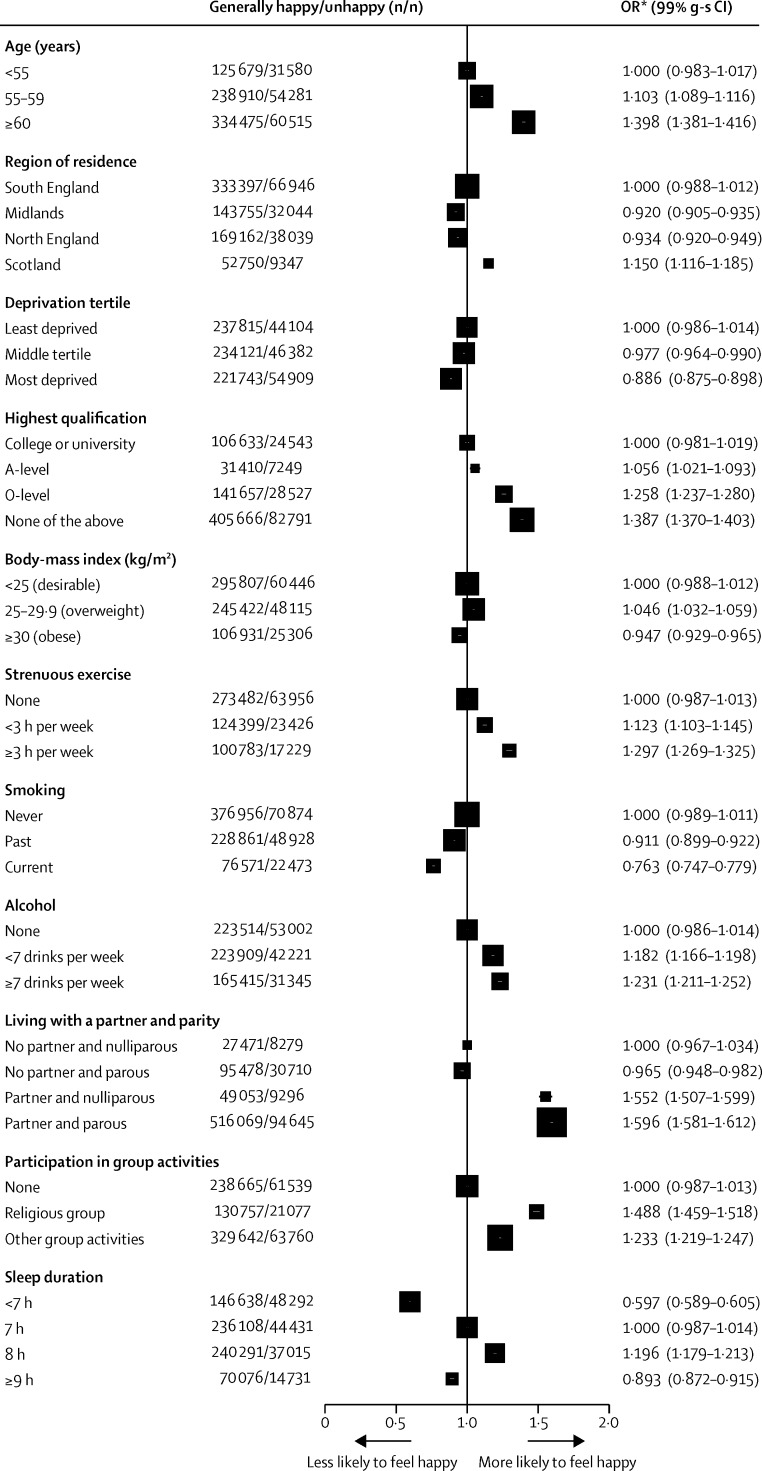
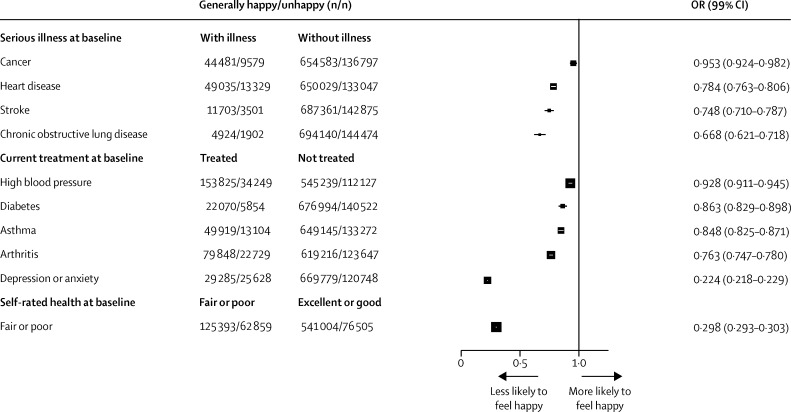
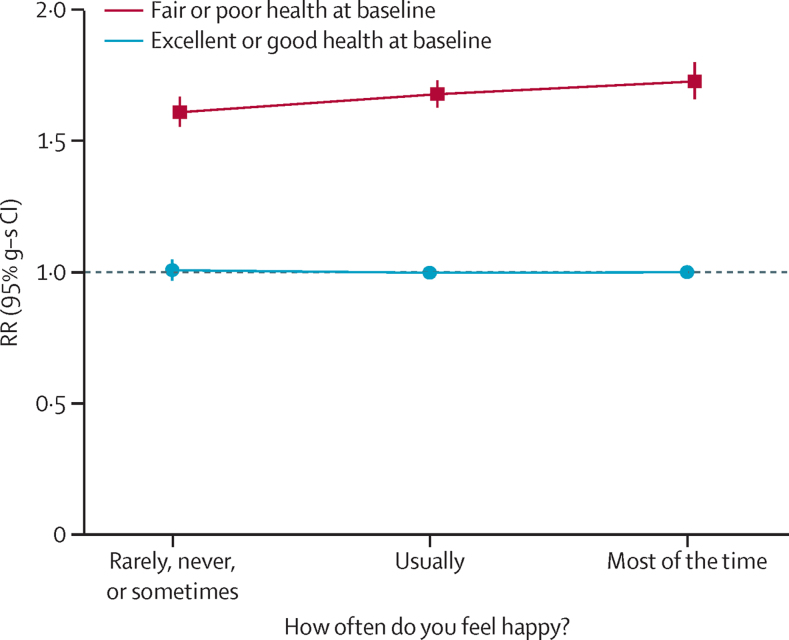
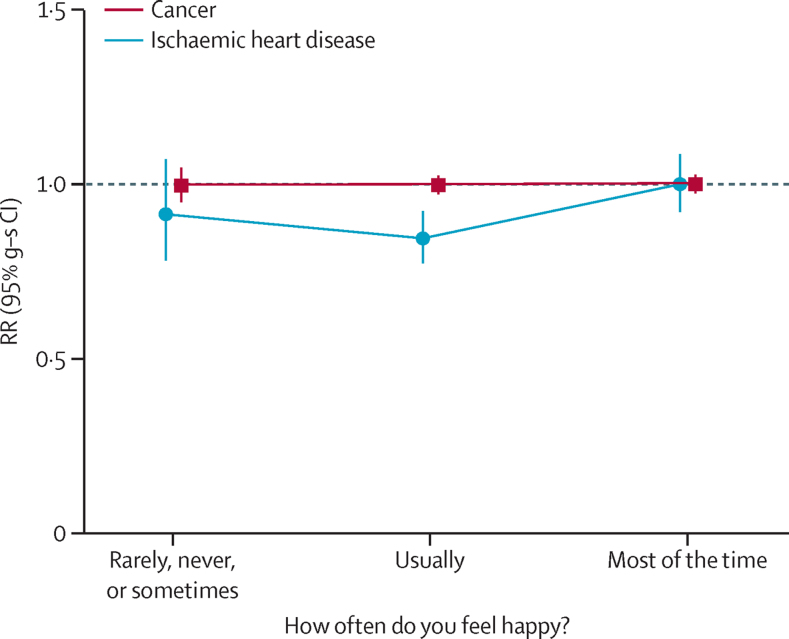
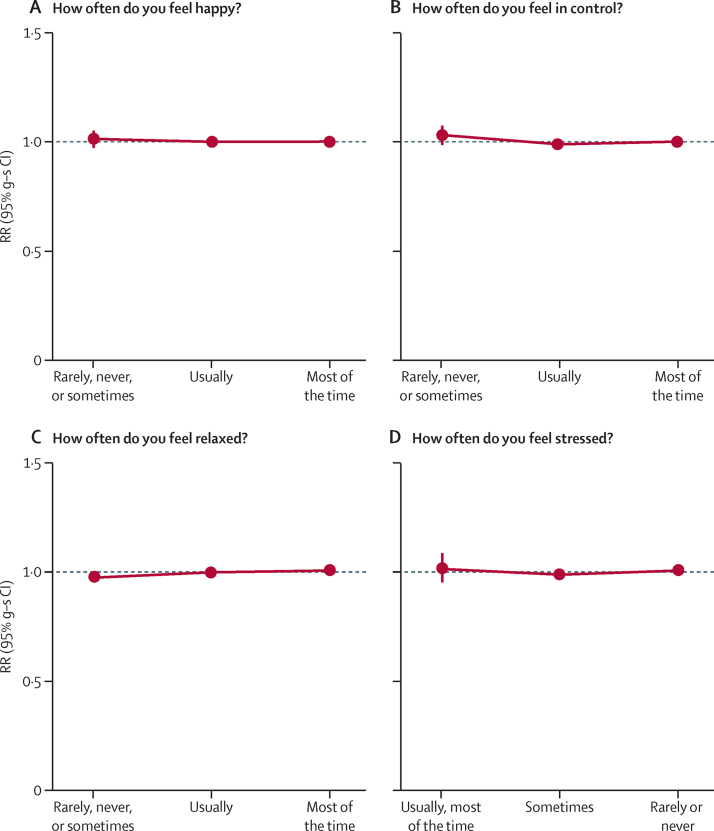
BACKGROUND: Poor health can cause unhappiness and poor health increases mortality. Previous reports of reduced mortality associated with happiness could be due to the increased mortality of people who are unhappy because of their poor health. Also, unhappiness might be associated with lifestyle factors that can affect mortality. We aimed to establish whether, after allowing for the poor health and lifestyle of people who are unhappy, any robust evidence remains that happiness or related subjective measures of wellbeing directly reduce mortality. METHODS: The Million Women Study is a prospective study of UK women recruited between 1996 and 2001 and followed electronically for cause-specific mortality. 3 years after recruitment, the baseline questionnaire for the present report asked women to self-rate their health, happiness, stress, feelings of control, and whether they felt relaxed. The main analyses were of mortality before Jan 1, 2012, from all causes, from ischaemic heart disease, and from cancer in women who did not have heart disease, stroke, chronic obstructive lung disease, or cancer at the time they answered this baseline questionnaire. We used Cox regression, adjusted for baseline self-rated health and lifestyle factors, to calculate mortality rate ratios (RRs) comparing mortality in women who reported being unhappy (ie, happy sometimes, rarely, or never) with those who reported being happy most of the time. FINDINGS: Of 719,671 women in the main analyses (median age 59 years [IQR 55-63]), 39% (282,619) reported being happy most of the time, 44% (315,874) usually happy, and 17% (121,178) unhappy. During 10 years (SD 2) follow-up, 4% (31,531) of participants died. Self-rated poor health at baseline was strongly associated with unhappiness. But after adjustment for self-rated health, treatment for hypertension, diabetes, asthma, arthritis, depression, or anxiety, and several sociodemographic and lifestyle factors (including smoking, deprivation, and body-mass index), unhappiness was not associated with mortality from all causes (adjusted RR for unhappy vs happy most of the time 0·98, 95% CI 0·94-1·01), from ischaemic heart disease (0·97, 0·87-1·10), or from cancer (0·98, 0·93-1·02). Findings were similarly null for related measures such as stress or lack of control. INTERPRETATION: In middle-aged women, poor health can cause unhappiness. After allowing for this association and adjusting for potential confounders, happiness and related measures of wellbeing do not appear to have any direct effect on mortality. FUNDING: UK Medical Research Council, Cancer Research UK.
Overview
The claims and statistics of this paper haven’t been checked yet.
Run the check — free, no account needed. It reads the open-access text and checks the sources it cites.
Integrity signals
Registry
Cites
Statistics
Figures
Verification
Claims the paper makes
The claims and statistics of this paper haven’t been checked yet.
Run the check — free, no account needed. It reads the open-access text and checks the sources it cites.
Claims other papers make about this one
Each is checked against this paper’s own text: does it say what the citing paper says it does?
The cited source says what the claim attributes to it.
In the citing paper
“However, in the Million Women Study, there was no association of happiness with risk of mortality after accounting for health status, although concerns have been raised about the study methodology. 79,80”
From Psychological Health, Well-Being, and the Mind-Heart-Body Connection: A Scientific Statement From the American Heart Association (2021) · cites this paper as [79]
Self-check
Percentages, sums and reported differences re-computed from the paper’s own numbers.
The self-check needs the paper’s full text.
Citations
Cites
Self-rated health and mortality: a review of twenty-seven community studies.
Idler, E. L., & Benyamini, Y. (1997) · Journal of Health and Social Behavior · doi:10.2307/2955359 · Cited by 8,598
Breast cancer and hormone-replacement therapy in the Million Women Study
Beral, V. (2003) · The Lancet · doi:10.1016/s0140-6736(03)14065-2 · Cited by 2,986
Self-citationWell-Being Over Time in Britain and the USA
Oswald, A. J., & Blanchflower, D. G. (1999) · Cited by 2,774
Subjective wellbeing, health, and ageing
Steptoe, A., Deaton, A., & Stone, A. A. (2014) · The Lancet · doi:10.1016/s0140-6736(13)61489-0 · Cited by 2,538
Happy People Live Longer: Subjective Well‐Being Contributes to Health and Longevity
Diener, E., & Chan, M. Y. (2011) · Applied Psychology: Health and Well-Being · doi:10.1111/j.1758-0854.2010.01045.x · Cited by 2,260
Does positive affect influence health?
Pressman, S. D., & Cohen, S. (2005) · Psychological Bulletin · doi:10.1037/0033-2909.131.6.925 · Cited by 2,087
Chida, Y., & Steptoe, A. (2008) · Psychosomatic Medicine · doi:10.1097/psy.0b013e31818105ba · Cited by 1,592
Health and Deprivation: Inequality and the North
Townsend, P. D., Phillimore, P., & Beattie, A. (1987) · DOAJ (DOAJ: Directory of Open Access Journals) · Cited by 1,473
Breast cancer and hormone-replacement therapy: the Million Women Study
Beral, V., Banks, E., REEVES, G. K., & Bull, D. (2003) · The Lancet · doi:10.1016/s0140-6736(03)14596-5 · Cited by 1,270
Self-citationPERCEIVED HEALTH AND MORTALITY: A NINE-YEAR FOLLOW-UP OF THE HUMAN POPULATION LABORATORY COHORT1
Kaplan, G. A., & Camacho, T. C. (1983) · American Journal of Epidemiology · doi:10.1093/oxfordjournals.aje.a113541 · Cited by 1,078
Cited by
Sorted by citations
Items 101–200 of 258
Wellness in the “U-bend” of life: why the core market is middle aged and female
Smith, M. (2018) · International Journal of Spa and Wellness · doi:10.1080/24721735.2018.1438480 · Cited by 12
“However, Liu et al. (2016) found that although poor health can cause unhappiness in middle-aged women, happiness and related measures of well-being did not appear to have any direct effect on mortality. An article in The Telegraph (Oxlade, 2014) suggested that 46 is the peak earning age for those born in 1968. This co…”
BackgroundInfluentialSfeir, M., Saliba, G., Akel, M., Hallit, S. R., & Obeïd, S. (2022) · Perspectives In Psychiatric Care · doi:10.1111/ppc.13087 · Cited by 12
Happiness and its molecular fingerprints
Probst-Hensch, N. M. (2017) · International Review of Economics · doi:10.1007/s12232-017-0269-4 · Cited by 12
“According to data from the large, prospective UK Million Women study being happy or being unhappy was not associated with overall mortality beyond its influence on behavioral risk factors and beyond its association with poor health at baseline (Liu et al. 2016).”
MethodOtsuka, Y., Kaneita, Y., Itani, O., Jike, M., Osaki, Y., Higuchi, S., Kanda, H., Kinjo, A., Kuwabara, Y., & Yoshimoto, H. (2020) · PLoS ONE · doi:10.1371/journal.pone.0235252 · Cited by 12
“A longitudinal study of adults found a J-shaped relationship between happiness and sleep duration [45], indicating that subjective unhappiness decreased with sleep duration.”
BackgroundHappiness and Longevity: Unhappy People Die Young, Otherwise Happiness Probably Makes No Difference
Headey, B., & Yong, J. (2018) · Social Indicators Research · doi:10.1007/s11205-018-1923-2 · Cited by 12
“Finally, recent evidence from the prospective Million Women Study in the UK was interpreted as showing that self-reported happiness does not affect longevity, because once health was ‘controlled’, the relationship with longevity was no longer statistically significant (Liu et al. 2016).”
BackgroundKraiss, J. T., Bohlmeijer, E. T., & Schotanus-Dijkstra, M. (2023) · International Journal of Applied Positive Psychology · doi:10.1007/s41042-023-00088-4 · Cited by 15
Happiness at the end of life: A qualitative study
Beng, T. S., Ghee, W. K., Hui, N. Y., Yin, O. C., Kelvin, K. W. S., Yiling, S. T., Huey, T. A., Capelle, D. P., Zainuddin, S. I., Chin, L. E., et al. (2021) · Palliative & Supportive Care · doi:10.1017/s1478951521000262 · Cited by 11
“A large prospective study also revealed that poor health could cause unhappiness (Liu et al., 2016).”
BackgroundThe Quality of Life of Older Adults in a Multiethnic Metropolitan: An Analysis of CASP-19
Lai, S. L., & Tey, N. P. (2021) · SAGE Open · doi:10.1177/21582440211029910 · Cited by 12
“There is ample evidence that points to the predominant effect of health on happiness (Blane et al., 2008; Boyle et al., 2010; Liu et al., 2016; Sexton et al., 2015).”
BackgroundEvolutionary Personality Psychology
Lewis, D. M. G., Al-Shawaf, L., & Buss, D. M. (2020) · Cambridge University Press eBooks · doi:10.1017/9781108264822.022 · Cited by 11
Development of Personality across the Life Span
Atherton, O. E., Donnellan, M. B., & Robins, R. W. (2020) · Cambridge University Press eBooks · doi:10.1017/9781108264822.017 · Cited by 15
The Scientific Study of Positive Psychology, Religion/Spirituality, and Physical Health
Masters, K. S., Boehm, J. K., Boylan, J. M., Vagnini, K. M., & Rush, C. L. (2022) · Springer eBooks · doi:10.1007/978-3-031-10274-5_21 · Cited by 9
Temperature and life satisfaction: Evidence from Chinese older adults
Li, H., Chen, Y., & Ma, M. (2024) · Ecological Economics · doi:10.1016/j.ecolecon.2024.108342 · Cited by 9
“It is increasingly being used to complement traditional objective welfare measures in studies of economics (Levinson, 2012), psychology (Ryan and Deci, 2001), sociology (Lim and Putnam, 2010), management (Erdogan et al., 2012), and medical sciences (Liu et al., 2016).”
Cancer-Induced Bone Pain Management Through Buddhist Beliefs
Cheng, F. K. (2017) · Journal of Religion and Health · doi:10.1007/s10943-017-0401-5 · Cited by 9
Subjective well‐being among rheumatoid arthritis patients
Kageyama, G., Ōnishi, A., Ueda, Y., Naka, I., Tsuda, K., Okano, T., Akashi, K., Nishimura, K., Sendo, S., Saegusa, J., et al. (2019) · International Journal of Rheumatic Diseases · doi:10.1111/1756-185x.13704 · Cited by 9
Association between Happiness and Economic Status among Older Adults in Two Myanmar Regions
Sasaki, Y., Shobugawa, Y., Nozaki, I., Takagi, D., Nagamine, Y., Funato, M., Chihara, Y., Shirakura, Y., Lwin, K. T., Zin, P. E., et al. (2022) · International Journal of Environmental Research and Public Health · doi:10.3390/ijerph19063216 · Cited by 9
Guevarra, D. A., Park, Y., Xu, X., Liou, J., Smith, J., Callahan, P., Simon-Thomas, E. R., & Epel, E. S. (2025) · Journal of Medical Internet Research · doi:10.2196/72053 · Cited by 10
Approach–Avoidance Theories of Personality
Corr, P. J., & Krupıć, D. (2020) · Cambridge University Press eBooks · doi:10.1017/9781108264822.025 · Cited by 12
Ageing Happily in Ghana : How Does Social Inclusion Contribute?
Gyasi, R. M., Hajek, A., Asante, F., Accam, B. T., Osei‐Tutu, S., Rahmati, M., Hervie, V. M., Abass, K., & Phillips, D. R. (2023) · Psychogeriatrics · doi:10.1111/psyg.13004 · Cited by 8
Subjective well-being and mortality among the older people in China
Xu, G., Zhao, C., & Li, Q. (2021) · China Population and Development Studies · doi:10.1007/s42379-021-00076-8 · Cited by 8
Subjective Successful Aging Predicts Probability of Mortality Over 9 Years Among Adults Aged 50–74
Pruchno, R. A., Sands, L. P., Cartwright, F. P., Rose, M. S., & Zhu, X. (2023) · The Gerontologist · doi:10.1093/geront/gnad148 · Cited by 8
Caprara, G. V., & Vecchione, M. (2020) · Cambridge University Press eBooks · doi:10.1017/9781108264822.038 · Cited by 9
Binder, M., & Buenstorf, G. (2018) · Economics & Human Biology · doi:10.1016/j.ehb.2018.08.004 · Cited by 10
“While recent studies have started paying closer attention to controlling for health at baseline (Liu et al., 2015; Wiest et al., 2011), neither the concerns of endogeneity nor the interaction of well-being with concrete health impairments have been analyzed to our knowledge so far.”
Heikkinen, S. M. M., Miettinen, J., Pukkala, ., Koskenvuo, M. J., Malila, N. K., & Pitkäniemi, J. M. (2017) · Cancer Epidemiology · doi:10.1016/j.canep.2017.03.008 · Cited by 8
“Accordingly, it has been postulated that happiness may lead into changes in serum cortisol concentrations or immune function that could thus affect mortality [17].”
BackgroundAre happy people healthier? An instrumental variable approach using data from Greece
Kyriopoulos, I., Athanasakis, K., & Kyriopoulos, J. E. (2018) · Journal of Epidemiology & Community Health · doi:10.1136/jech-2018-210568 · Cited by 8
Salsman, J. M., Murphy, K. M., Addington, E. L., Tooze, J. A., McLouth, L. E. S., Yang, D., Sanford, S. D., Wagner, L. I., Bunch, S. C., Rosenberg, A. R., et al. (2024) · Contemporary Clinical Trials · doi:10.1016/j.cct.2024.107783 · Cited by 8
Lin, T.-F., Zhao, Z.-Y., Yuan, C.-Z., Huang, Y., Liu, D., Li, F.-X., Jiang, Y.-W., Li, B., Wei, C., Sha, F., et al. (2024) · Journal of Affective Disorders · doi:10.1016/j.jad.2024.01.148 · Cited by 7
Bliddal, M., Pottegård, A., Kirkegaard, H., Olsen, J. H., Sørensen, T. I. A., & Nohr, E. A. (2016) · Obesity Science & Practice · doi:10.1002/osp4.75 · Cited by 6
Conceptual and Historical Perspectives
Cloninger, S. C. (2020) · Cambridge University Press eBooks · doi:10.1017/9781108264822.004 · Cited by 8
Song, I., & Lee, H.-J. (2022) · PLoS ONE · doi:10.1371/journal.pone.0263170 · Cited by 7
“However, having a serious illness or being treated for chronic conditions were not as important as self-rated general health in subjective well-being [19].”
BackgroundHappiness and unhappiness have no direct effect on mortality
Barreto, P. D. S., & Rolland, Y. (2015) · The Lancet · doi:10.1016/s0140-6736(15)01222-2 · Cited by 7
Psychotic-like experiences and happiness in the English general population
Koyanagi, A. (2017) · Journal of Affective Disorders · doi:10.1016/j.jad.2017.07.013 · Cited by 8
Religiosity and Overall Life Satisfaction: Muslim Arabs in Israel
Schellekens, J. J., & Okun, B. S. (2023) · Journal of Religion and Health · doi:10.1007/s10943-023-01937-x · Cited by 6
Personality, Preferences and Socioeconomic Behavior
Ferguson, E., Zhao, K., & Smillie, L. D. (2020) · Cambridge University Press eBooks · doi:10.1017/9781108264822.044 · Cited by 6
Kotova, M. B., Rozanov, V. B., Kiselev, A. R., Maksimov, S. A., & Drapkina, O. M. (2021) · International Journal of Environmental Research and Public Health · doi:10.3390/ijerph18189691 · Cited by 6
Wellbeing as a Protective Factor of Adolescent Health. The Up & Down Study
Esteban‐Gonzalo, L., Esteban‐Gonzalo, S., Esteban‐Cornejo, I., Izquierdo‐Gómez, R., Moledo, C. P., Castro‐Piñero, J., & Veiga, Ó. L. (2019) · Child Indicators Research · doi:10.1007/s12187-019-09711-w · Cited by 10
Golgher, A. B., & Coutinho, R. Z. (2020) · Revista Brasileira de Estudos de População · doi:10.20947/s0102-3098a0108 · Cited by 6
“Liu et al. (2016) observed that previous studies reported that mortality was negatively associated with happiness, possibly due to poor health and lifestyle factors that can affect happiness and mortality.”
ResultTemperament and Brain Networks of Attention
Rothbart, M. K., Posner, M. I., & Sheese, B. E. (2020) · Cambridge University Press eBooks · doi:10.1017/9781108264822.016 · Cited by 8
Improving the Language Specificity of Stress in Psychological and Population Health Science
Crosswell, A. D., Epel, E. S., Mendes, W. B., & Prather, A. A. (2022) · Psychosomatic Medicine · doi:10.1097/psy.0000000000001090 · Cited by 6
Biesanz, J. C., & Wallace, J. D. (2020) · Cambridge University Press eBooks · doi:10.1017/9781108264822.006 · Cited by 7
Nagai, M., Hikichi, H., Shiba, K., Kondo, K., Kawachi, I. I., & Aida, J. (2022) · International Journal of Public Health · doi:10.3389/ijph.2022.1604901 · Cited by 5
“While happiness itself is a highly valued outcome [3], it is also associated with health outcomes such asmental health [2, 4–6] and suicide [7–9] as well as health behaviors such as drinking [10, 11], healthy dietary habits [11–15], smoking [10, 11, 15], and physical activity [10–22].”
BackgroundHappiness and Health: An Intricate Relationship
Kar, N. (2023) · Springer eBooks · doi:10.1007/978-981-99-3493-5_9 · Cited by 7
Lee, K., & Singh, G. K. (2020) · International Journal of Translational Medical Research and Public Health · doi:10.21106/ijtmrph.206 · Cited by 5
Personality in Clinical Psychology
Widiger, T. A., & McCabe, G. A. (2020) · Cambridge University Press eBooks · doi:10.1017/9781108264822.042 · Cited by 5
States and Situations, Traits and Environments
Asendorpf, J. B., & Rauthmann, J. F. (2020) · Cambridge University Press eBooks · doi:10.1017/9781108264822.007 · Cited by 10
The economic recession and subjective well-being in older adults in the Republic of Ireland
Duffy, R. M., Mullin, K., O’Dwyer, S., Wrigley, M., & Kelly, B. D. (2016) · Irish Journal of Psychological Medicine · doi:10.1017/ipm.2016.21 · Cited by 5
Positive Mental Attitude Associated with Lower 35-Year Mortality: The Leisure World Cohort Study
Paganini‐Hill, A., Kawas, C. H., & Corrada, M. M. (2018) · Journal of Aging Research · doi:10.1155/2018/2126368 · Cited by 5
“Similar to our study, all previous studies except two [12, 28] found that persons with the most positive attitude (measured in different ways) had the lowest Table 2: Baseline characteristics in the Leisure World Cohort Study, 1980s.”
BackgroundResultHow Anxiety Shapes Students’ Self-Rated Health at Elite Universities: A Longitudinal Study
Liu, X., Zhang, X., & Liu, Y. (2026) · Behavioral Sciences · doi:10.3390/bs16020197 · Cited by 6
“Similarly, in the UK Million Women Study, Liu et al. reported a negative association between poor SRH and well-being and further indicated that SRH was an important adjustment factor in explaining the relationship between unhappiness and mortality (B. Liu et al., 2016).”
Bjegovic-Mikanovic, V. M., Wenzel, H., & Laaser, U. (2022) · Frontiers in Public Health · doi:10.3389/fpubh.2022.873845 · Cited by 4
Happiness as a Quality of Life Component for Active Ageing in Colombia
Arango, D. C., Cardona, A. S., Muñoz-Rodríguez, D. I., & Cardona, Á. M. S. (2021) · International handbooks of quality-of-life · doi:10.1007/978-3-030-58031-5_25 · Cited by 4
Effect of Income Inequality on Health in Quebec: New Insights from Panel Data
Bocoum, I., Tohon, A., Rukundo, R., Macombe, C., & Revéret, J. (2019) · Sustainability · doi:10.3390/su11205700 · Cited by 4
“However, Liu et al. 2016 have shown that when depressed people received adequate medical treatment, the relationship between mortality and depression disappeared [43].”
BackgroundResultInfluentialWhy does happiness matter? Understanding the relation between positive emotion and health outcomes
Barreto, S. M. (2017) · Social Science & Medicine · doi:10.1016/j.socscimed.2017.08.029 · Cited by 4
Work to live, to die, or to be happy?
Nakata, A. (2017) · Industrial Health · doi:10.2486/indhealth.55-93 · Cited by 4
The relationship between green tea consumption and happiness
Shibata, M., Ojima, T., & Aida, J. (2025) · Scientific Reports · doi:10.1038/s41598-025-25104-2 · Cited by 3
HOSTILITY, ANXIETY AND VITAL EXHAUSTION IN MYOCARDIAL INFARCTION PATHOGENESIS
Shmilovich, A. A., & Таратухин, Е. О. (2017) · Russian Journal of Cardiology · doi:10.15829/1560-4071-2017-6-173-177 · Cited by 3
de Camargos, M. G., Paiva, B. S. R., de Oliveira, M. A., de Almeida, C. S. L., Giacomoni, C. H., & Paiva, C. E. (2021) · Cadernos de Saúde Pública · doi:10.1590/0102-311x00164020 · Cited by 3
Kim, K., Chang, S. M., Hahm, B., & Kim, B. (2024) · Social Psychiatry and Psychiatric Epidemiology · doi:10.1007/s00127-024-02702-5 · Cited by 3
“In a meta-analysis, loneliness was associated with an approximately 26% increased risk of depression [12 , 13 ].”
Quek, F. Y. X., Tan, K., & Chan, D. K. (2025) · Applied Psychology Health and Well-Being · doi:10.1111/aphw.70055 · Cited by 3
Zhu, C., Lian, Z., Sun, J., Huang, Y., Li, S., Zhang, H., & Wang, J. (2025) · BMC Geriatrics · doi:10.1186/s12877-025-06345-2 · Cited by 3
“While several studies have examined the association between SWB and mortality [14, 15, 34, 35], most did not take the role of lifestyle factors or their potential interaction with SWB into consideration.”
He, J., Hu, Y. H., Wu, X., Yin, J., Cai, J., & Jin, Z. (2025) · Journal of Affective Disorders · doi:10.1016/j.jad.2025.120863 · Cited by 5
Nemani, L., Garre, I., Jyotsna, M., & Garg, S. (2020) · Journal of Clinical and Preventive Cardiology · doi:10.4103/jcpc.jcpc_1_20 · Cited by 3
Personality Traits and Mental Disorders
Hakulinen, C. A., Jokela, M. M., Mika Kivimaki, B., & Elovainio, M. J. (2020) · Cambridge University Press eBooks · doi:10.1017/9781108264822.018 · Cited by 4
Anxiety, Depression and Cognitive Dysfunction
Eysenck, M. W., & Holmes, A. (2020) · Cambridge University Press eBooks · doi:10.1017/9781108264822.033 · Cited by 3
Salgado, J. F., Anderson, N. R., & Moscoso, S. (2020) · Cambridge University Press eBooks · doi:10.1017/9781108264822.040 · Cited by 4
Happiness Program in Improving Sleep Quality in Multiple Sclerosis Patients
Masoudi, R., Zaheri, K., Deris, F., Solati, K., Jivad, N., & Zaheri, A. (2022) · Journal of Research Development in Nursing and Midwifery · doi:10.61186/jgbfnm.19.1.1 · Cited by 4
Samat, N., Zambri, N. A., Chea, C. C., Halim, N. A., & Nadzri, N. R. M. (2024) · International Journal of Academic Research in Business and Social Sciences · doi:10.6007/ijarbss/v14-i7/21923 · Cited by 3
“Meanwhile, the external environmental factors are economy, education, income, financial distress, and social status as well as positive perceptions of life influence happiness, particularly among middle-aged women (Liu et al., 2015).”
BackgroundModels of Personality Structure
Raad, B. D., & Barelds, D. P. H. (2020) · Cambridge University Press eBooks · doi:10.1017/9781108264822.012 · Cited by 4
Cognitive Processes and Models
Matthews, G. (2020) · Cambridge University Press eBooks · doi:10.1017/9781108264822.028 · Cited by 5
Basic Needs, Goals and Motivation
Szalma, J. L. (2020) · Cambridge University Press eBooks · doi:10.1017/9781108264822.030 · Cited by 3
Report from a large and comprehensive single-center Women’s Health Cardiology Clinic
Ludmir, S. S., Bental, T., Zadok, O. I. B., Eisen, A., Shochat, T., Heruti, I., Kornowski, R., & Porter, A. (2021) · Women s Health · doi:10.1177/17455065211013767 · Cited by 3
Personality in Cross-Cultural Perspective
Dragūns, J. G., & Tanaka‐Matsumi, J. (2020) · Cambridge University Press eBooks · doi:10.1017/9781108264822.037 · Cited by 4
Happiness, health, and mortality
Shiri, R. (2016) · The Lancet · doi:10.1016/s0140-6736(16)30895-9 · Cited by 3
Happiness, health, and mortality – Authors' reply
Liu, B. C., Pirie, K. L., Floud, S., Peto, R., & Beral, V. (2016) · The Lancet · doi:10.1016/s0140-6736(16)30771-1 · Cited by 3
Self-citationØrstavik, R. (2017) · Tidsskrift for Den norske legeforening · doi:10.4045/tidsskr.17.0376 · Cited by 3
Wootton, R., Lawn, R., Millard, L., Davies, N., Taylor, A., Munafo, M., Timpson, N., Davis, O., Smith, G., & Haworth, C. (2018) · bioRxiv · doi:10.1101/304741 · Cited by 1
Positive psychological well-being and psychological distress in higher education students
Lam, J. A., Seo, V., Overhage, L., Keane, E. P., Dobbins, A. R., Granoff, M. D., Progovac, A. M., & Amonoo, H. L. (2025) · Journal of Affective Disorders · doi:10.1016/j.jad.2025.120550 · Cited by 7
The interplay of shared living and well-being: a case study from Dhaka's informal settlements
Siddika, A., & Badhan, I. M. (2025) · Journal of Housing and the Built Environment · doi:10.1007/s10901-025-10249-3 · Cited by 3
Narrative Identity in the Social World
McLean, K. C., Syed, M., Haraldsson, K. G., & Lowe, L. (2020) · Cambridge University Press eBooks · doi:10.1017/9781108264822.035 · Cited by 2
Lynam, D. R., Vize, C. E., & Miller, J. D. (2020) · Cambridge University Press eBooks · doi:10.1017/9781108264822.043 · Cited by 2
Jayawickreme, E., & Zachry, C. E. (2020) · Cambridge University Press eBooks · doi:10.1017/9781108264822.032 · Cited by 2
Shojaei, M., Branch, A., motlagh, F. Z., Branch, A., Zolfaghari, A., & Branch, T. (2021) · The Journal Of Psychological Science · doi:10.52547/jps.20.104.1437 · Cited by 2
Mendes, M., Simões, P. A., Simões, J. A., Santiago, L. M., Prazeres, F., & Maricoto, T. (2023) · Family Medicine & Primary Care Review · doi:10.5114/fmpcr.2023.130090 · Cited by 3
Meng, D., & Sun, C. Q. (2024) · Frontiers in Public Health · doi:10.3389/fpubh.2023.1286627 · Cited by 2
“The relevance between self-rated health and the well-being of older adults has been demonstrated in different cultural backgrounds (30, 48, 49).”
BackgroundInfluentialDai, Y., Cui, N., Ji, X., Raine, A., Richmond, T. S., & Liu, J. (2025) · World Journal of Pediatrics · doi:10.1007/s12519-025-00903-9 · Cited by 2
“For adults, increased happiness is associated with decreased risks of all-cause mortality and various chronic illnesses [7] and is a protective factor for sleep, such as adequate sleep duration [8].”
Nainggolan, O., Nainggolan, E., & Sihotang, U. (2021) · Media Penelitian dan Pengembangan Kesehatan · doi:10.22435/mpk.v31i3.4036 · Cited by 4
“…tidak sehat seperti kurangnya aktivitas fisik, pola makan yang tidak sehat, merokok, dan obesitas.24,25 Studi yang dilakukan di Inggris oleh Liu et al. (2016) dengan jumlah responden sebanyak 719.671 orang perempuan, menyimpulkan bahwa tidak terdapat bukti yang cukup kuat untuk menyatakan…”
BackgroundInfluentialMetadiscourse markers in research article abstracts. An interlingual and interdisciplinary study
Šandová, J. K. (2023) · LINGUISTICA SILESIANA · doi:10.24425/linsi.2017.117053 · Cited by 2
Positive affect predicts cerebral glucose metabolism in late middle-aged adults
Nicholas, C. R. N., Hoscheidt, S. M., Clark, L. R., Racine, A. M., Berman, S. E., Koscik, R. L., Dowling, N. M., Asthana, S., Christian, B. T., Sager, M. A., et al. (2017) · Social Cognitive and Affective Neuroscience · doi:10.1093/scan/nsx027 · Cited by 3
“A mean score of perceived health status over the two visits was calculated and included to control for potential confounding effects of ill health on positive affect (Liu et al., 2016).”
BackgroundMethodInfluentialEm busca da felicidade: uma narrativa
Mendes, L. (2018) · Estudos em Comunicação · doi:10.20287/ec.n27.v2.a06 · Cited by 2
Mikulincer, M., & Shaver, P. R. (2020) · Cambridge University Press eBooks · doi:10.1017/9781108264822.020 · Cited by 4
Kulturelle Dimensionen und Subjektives Wohlbefinden im Kulturvergleich
Genkova, P. (2020) · Springer eBooks · doi:10.1007/978-3-658-27825-0_22-1 · Cited by 2
", AMBRUSZ, A., & aliz.ambrusz@gmail.com" (2023) · Studia Universitatis Babeș-Bolyai Psychologia-Paedagogia · doi:10.24193/subbpsyped.2023.1.03 · Cited by 2
Models of Physical Health and Personality
Heilmayr, D., & Friedman, H. S. (2020) · Cambridge University Press eBooks · doi:10.1017/9781108264822.019 · Cited by 2
Association of Affect and Performance in Dual-Task Walking in Non-demented Older Adults
Guharajan, D., & Holtzer, R. (2022) · Journal of Aging and Health · doi:10.1177/08982643221087836 · Cited by 2
“While surprising, our nonsignificant PA findings contribute to recent research that raises questions regarding the protective nature of PA (Liu et al., 2016).”
ResultGlioma patient-reported outcome assessment in clinical care
Tuleasca, C., Knisely, J. P. S., Leroy, H., Hottinger, A. F., Peciu-Florianu, I., Levivier, M., & Reyns, N. (2020) · The Lancet Oncology · doi:10.1016/s1470-2045(20)30141-8 · Cited by 2
The Effectiveness of Laughter Yoga to Improve Individual and Peer Happiness Among Cancer Patients
Werdani, Y. D. W. (2023) · Indonesian Journal of Cancer · doi:10.33371/ijoc.v17i1.940 · Cited by 1
Iuga, I. C., Jafri, S. R., & Iuga, H. (2025) · Frontiers in Medicine · doi:10.3389/fmed.2025.1667645 · Cited by 1
With happy we are more productive: Evidence from total factor productivity
Su, K., Fan, Y., & Yan, J. (2025) · Journal of Contemporary Accounting & Economics · doi:10.1016/j.jcae.2025.100536 · Cited by 1
Role models and health of Serbian Roma women
Čvorović, J., & Coe, K. (2018) · Glasnik Etnografskog instituta · doi:10.2298/gei1802367c
Sallis, H., Smith, G. D., & Munafo, M. R. (2020) · Cambridge University Press eBooks · doi:10.1017/9781108264822.024 · Cited by 1
Self-Regulation and Control in Personality Functioning
Carver, C. S., & Scheier, M. F. (2020) · Cambridge University Press eBooks · doi:10.1017/9781108264822.029 · Cited by 1
Ljaljević, A., Wenzel, H., & Laaser, U. (2023) · South Eastern European Journal of Public Health · doi:10.56801/seejph.vi.170 · Cited by 1
Metadata
- Authors
- Liu, B., Floud, S., Pirie, K., Green, J., Peto, R., & Beral, V.
- Affiliations
- UNSW Sydney (AU)
- University of Oxford (GB)
- Corresponding author
- Liu, Bette
- Venue
- The Lancet
- Publisher
- Elsevier BV
- Published
- 2016-02
- Volume
- 387
- Issue
- 10021
- Pages
- 874-881
- ISSN
- 0099-5355 (ISSN-L)
- 0140-6736
- PMC
- PMC5075047
- OpenAlex
- W2192905344
- Cited by
- 259
- References
- 32
- Citations by year
- 2026: 11 · 2025: 15 · 2024: 14 · 2023: 20 · 2022: 19 · 2021: 18 · 2020: 64 · 2019: 19 · 2018: 27 · 2017: 33 · 2016: 18
- FWCI
- 43.20
- Type
- journal article
- Language
- en
- Open access
- hybrid
- doi.org
- Locations
- The Lancet (publishedVersion, cc-by)
- Europe PMC (PubMed Central) (publishedVersion, cc-by)
- PubMed Central (publishedVersion, cc-by)
- PubMed (publishedVersion)
- UNSWorks (UNSW Sydney) (submittedVersion, cc-by)
- The Sydney eScholarship Repository (The University of Sydney) (submittedVersion)
- UNSWorks (University of New South Wales, Sydney, Australia) (submittedVersion, cc-by)
- Funders
- Cancer Research UK (16491)
- British Heart Foundation
- Medical Research Council (MR/K02700X/1)
- National Health and Medical Research Council
- Topics
- Social Sciences › Psychology › Social Psychology › Psychological Well-being and Life Satisfaction
- Social Sciences › Health › Health disparities and outcomes
- Health Sciences › Health Professions › General Health Professions › Health, psychology, and well-being
- Keywords
- happiness, mortality, subjective well-being, self-rated health, ischemic heart disease, cancer mortality, stress, perceived control, relaxation, lifestyle factors, women's health, Million Women Study, anxiety and depression, smoking, socioeconomic deprivation, body mass index, hypertension, diabetes mellitus, asthma, arthritis, cause-specific mortality
- MeSH terms
- Aged, Female, Follow-Up Studies, United Kingdom, Happiness, Health Status, Humans, Middle Aged, Mortality, Neoplasms, Prospective Studies, Proportional Hazards Models, Myocardial Ischemia
About these checks
Registry, retraction, Cites and statistics results are computed, not judged, with one exception: a printed reference that no index lists is read once by a model before it counts as a citation error. Claims are extracted by a model and kept only when their quote appears verbatim in the text; each cited source is then checked, with a model’s help, for whether it says what the claim relies on. Those verdicts can be wrong — read the claim’s quote and the cited source before relying on one.
Statistics and arithmetic are recomputed, not judged.
Confidence bands are shown only for fields calibrated on our annotated test set. None is calibrated yet, so no band is shown.
What counts as a claim ›How we measure confidence ›How we check this ›
Are you an author, or do you see a problem with this page? Request a review
