

The DOI matches its Crossref record; 32 of the 33 references it cites were found in a registry or an index, and 1 are not checked yet.
Does happiness itself directly affect mortality? The prospective UK Million Women Study
Open accessAbstract
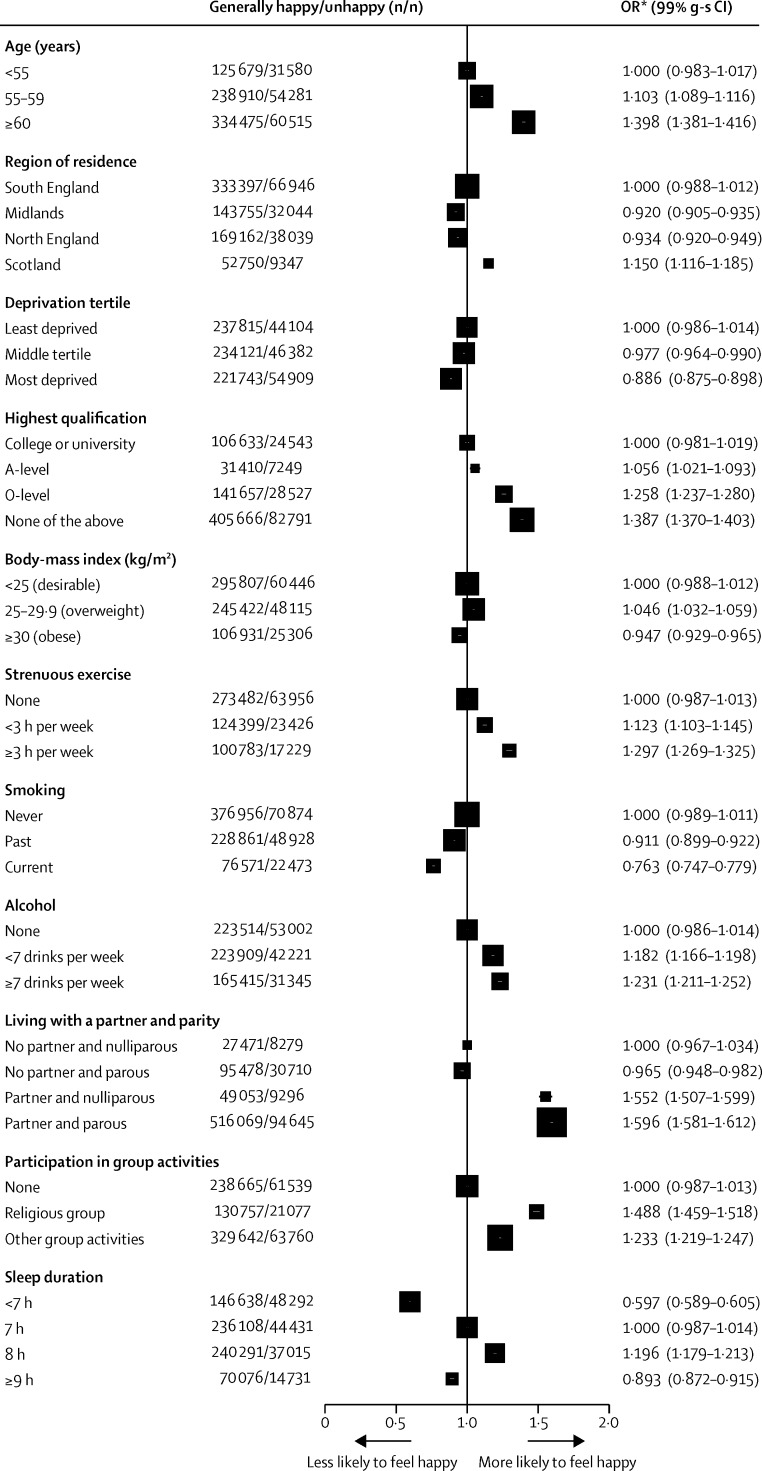
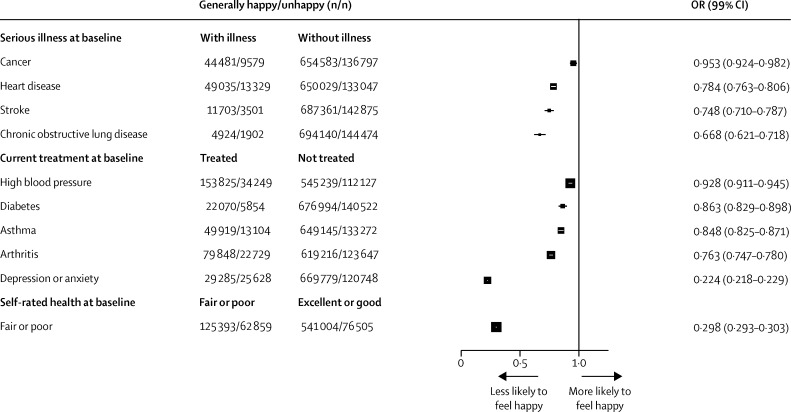
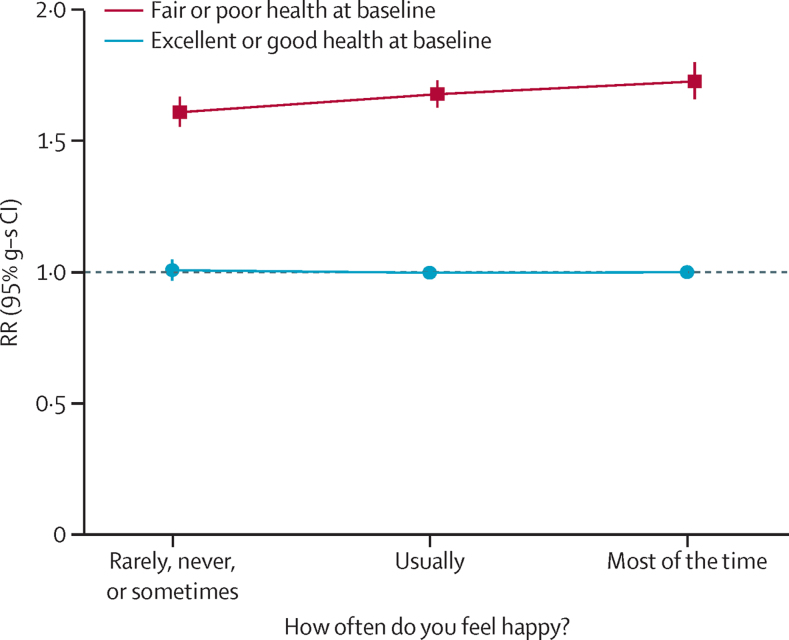
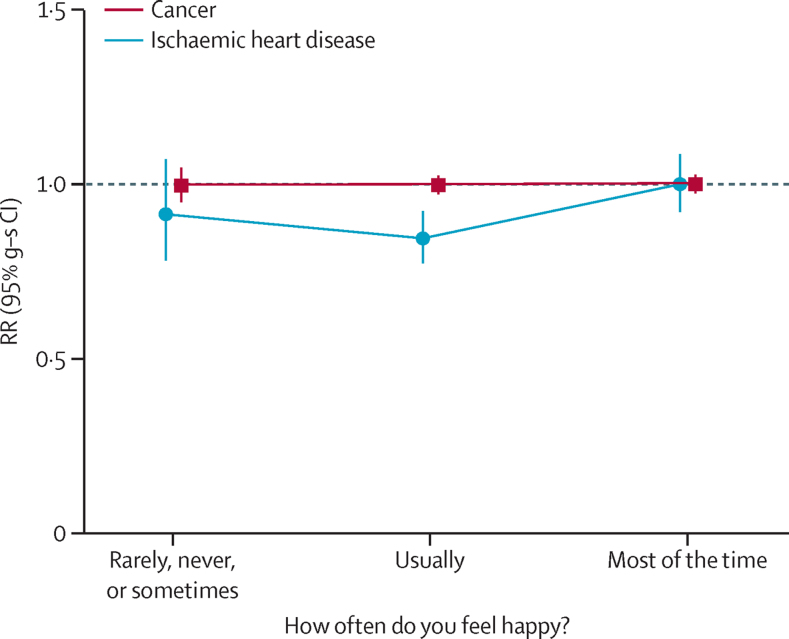
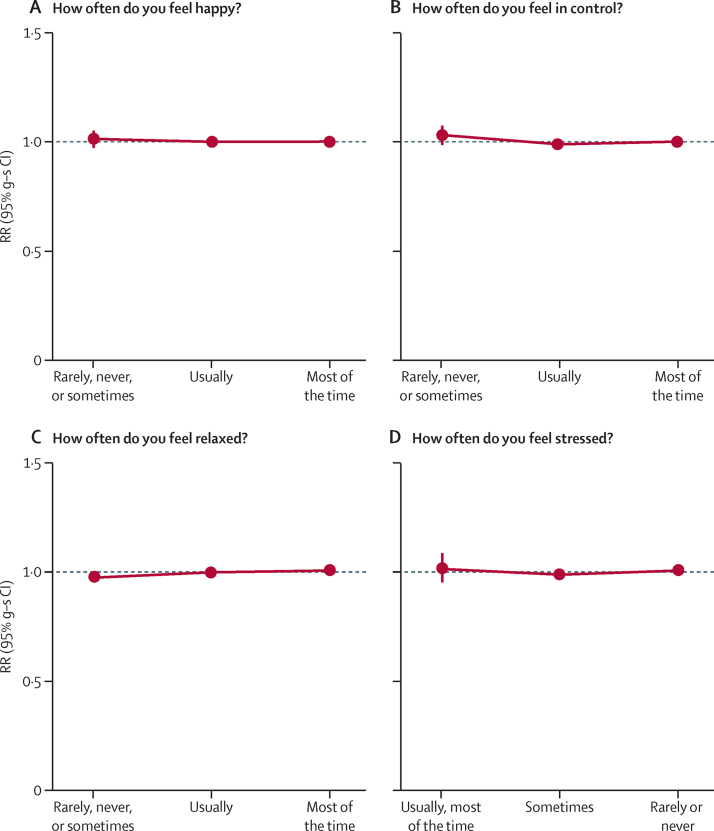
BACKGROUND: Poor health can cause unhappiness and poor health increases mortality. Previous reports of reduced mortality associated with happiness could be due to the increased mortality of people who are unhappy because of their poor health. Also, unhappiness might be associated with lifestyle factors that can affect mortality. We aimed to establish whether, after allowing for the poor health and lifestyle of people who are unhappy, any robust evidence remains that happiness or related subjective measures of wellbeing directly reduce mortality. METHODS: The Million Women Study is a prospective study of UK women recruited between 1996 and 2001 and followed electronically for cause-specific mortality. 3 years after recruitment, the baseline questionnaire for the present report asked women to self-rate their health, happiness, stress, feelings of control, and whether they felt relaxed. The main analyses were of mortality before Jan 1, 2012, from all causes, from ischaemic heart disease, and from cancer in women who did not have heart disease, stroke, chronic obstructive lung disease, or cancer at the time they answered this baseline questionnaire. We used Cox regression, adjusted for baseline self-rated health and lifestyle factors, to calculate mortality rate ratios (RRs) comparing mortality in women who reported being unhappy (ie, happy sometimes, rarely, or never) with those who reported being happy most of the time. FINDINGS: Of 719,671 women in the main analyses (median age 59 years [IQR 55-63]), 39% (282,619) reported being happy most of the time, 44% (315,874) usually happy, and 17% (121,178) unhappy. During 10 years (SD 2) follow-up, 4% (31,531) of participants died. Self-rated poor health at baseline was strongly associated with unhappiness. But after adjustment for self-rated health, treatment for hypertension, diabetes, asthma, arthritis, depression, or anxiety, and several sociodemographic and lifestyle factors (including smoking, deprivation, and body-mass index), unhappiness was not associated with mortality from all causes (adjusted RR for unhappy vs happy most of the time 0·98, 95% CI 0·94-1·01), from ischaemic heart disease (0·97, 0·87-1·10), or from cancer (0·98, 0·93-1·02). Findings were similarly null for related measures such as stress or lack of control. INTERPRETATION: In middle-aged women, poor health can cause unhappiness. After allowing for this association and adjusting for potential confounders, happiness and related measures of wellbeing do not appear to have any direct effect on mortality. FUNDING: UK Medical Research Council, Cancer Research UK.
Overview
The claims and statistics of this paper haven’t been checked yet.
Run the check — free, no account needed. It reads the open-access text and checks the sources it cites.
Integrity signals
Registry
Cites
Statistics
Figures
Verification
Claims the paper makes
The claims and statistics of this paper haven’t been checked yet.
Run the check — free, no account needed. It reads the open-access text and checks the sources it cites.
Claims other papers make about this one
Each is checked against this paper’s own text: does it say what the citing paper says it does?
The cited source says what the claim attributes to it.
In the citing paper
“However, in the Million Women Study, there was no association of happiness with risk of mortality after accounting for health status, although concerns have been raised about the study methodology. 79,80”
From Psychological Health, Well-Being, and the Mind-Heart-Body Connection: A Scientific Statement From the American Heart Association (2021) · cites this paper as [79]
Self-check
Percentages, sums and reported differences re-computed from the paper’s own numbers.
The self-check needs the paper’s full text.
Citations
Cites
Self-rated health and mortality: a review of twenty-seven community studies.
Idler, E. L., & Benyamini, Y. (1997) · Journal of Health and Social Behavior · doi:10.2307/2955359 · Cited by 8,598
Breast cancer and hormone-replacement therapy in the Million Women Study
Beral, V. (2003) · The Lancet · doi:10.1016/s0140-6736(03)14065-2 · Cited by 2,986
Self-citationWell-Being Over Time in Britain and the USA
Oswald, A. J., & Blanchflower, D. G. (1999) · Cited by 2,774
Subjective wellbeing, health, and ageing
Steptoe, A., Deaton, A., & Stone, A. A. (2014) · The Lancet · doi:10.1016/s0140-6736(13)61489-0 · Cited by 2,538
Happy People Live Longer: Subjective Well‐Being Contributes to Health and Longevity
Diener, E., & Chan, M. Y. (2011) · Applied Psychology: Health and Well-Being · doi:10.1111/j.1758-0854.2010.01045.x · Cited by 2,260
Does positive affect influence health?
Pressman, S. D., & Cohen, S. (2005) · Psychological Bulletin · doi:10.1037/0033-2909.131.6.925 · Cited by 2,087
Chida, Y., & Steptoe, A. (2008) · Psychosomatic Medicine · doi:10.1097/psy.0b013e31818105ba · Cited by 1,592
Health and Deprivation: Inequality and the North
Townsend, P. D., Phillimore, P., & Beattie, A. (1987) · DOAJ (DOAJ: Directory of Open Access Journals) · Cited by 1,473
Breast cancer and hormone-replacement therapy: the Million Women Study
Beral, V., Banks, E., REEVES, G. K., & Bull, D. (2003) · The Lancet · doi:10.1016/s0140-6736(03)14596-5 · Cited by 1,270
Self-citationPERCEIVED HEALTH AND MORTALITY: A NINE-YEAR FOLLOW-UP OF THE HUMAN POPULATION LABORATORY COHORT1
Kaplan, G. A., & Camacho, T. C. (1983) · American Journal of Epidemiology · doi:10.1093/oxfordjournals.aje.a113541 · Cited by 1,078
Cited by
Sorted by citations
Advances and Open Questions in the Science of Subjective Well-Being
Diener, E., Lucas, R. E., & Oishi, S. (2018) · Collabra Psychology · doi:10.1525/collabra.115 · Cited by 1,333
“Earlier we described a study by Liu et al. (2016) in which they attempted to determine whether happiness can affect longevity after controlling many other variables such as self-rated health at baseline, having a partner, income, exercise, and smoking.”
Levine, G. N., Cohen, B. E., Commodore-Mensah, Y., Fleury, J., Huffman, J. C., Khalid, U., Labarthe, D. R., Lavretsky, H., Michos, E. D., Spatz, E. S., et al. (2021) · Circulation · doi:10.1161/cir.0000000000000947 · Cited by 865
If, Why, and When Subjective Well‐Being Influences Health, and Future Needed Research
Diener, E., Pressman, S. D., Hunter, J. F., & Delgadillo‐Chase, D. (2017) · Applied Psychology Health and Well-Being · doi:10.1111/aphw.12090 · Cited by 816
“An example of statistical controls, and the issues they present, is the study by Liu et al. (2016) on the Million Women sample in the United Kingdom.”
BackgroundFindings all psychologists should know from the new science on subjective well-being.
Diener, E., Heintzelman, S. J., Kushlev, K., Tay, L., Wirtz, D., Lutes, L. D., & Oishi, S. (2016) · Canadian Psychology/Psychologie canadienne · doi:10.1037/cap0000063 · Cited by 786
“, & Lucas, R. E. (2014). Testing set-point theory in a Swiss national sample: Reaction and adaptation to major life events.”
BackgroundPositive Affect and Health: What Do We Know and Where Next Should We Go?
Pressman, S. D., Jenkins, B. N., & Moskowitz, J. T. (2019) · Annual Review of Psychology · doi:10.1146/annurev-psych-010418-102955 · Cited by 452
Hinz, A., Klein, A. M., Brähler, E., Glaesmer, H., Luck, T., Riedel-Heller, S. G., Wirkner, K., & Hilbert, A. (2017) · Journal of Affective Disorders · doi:10.1016/j.jad.2016.12.012 · Cited by 443
Positive Psychological Well-Being and Cardiovascular Disease
Kubzansky, L. D., Huffman, J. C., Boehm, J. K., Hernandez, R., Kim, E. S., Koga, H. K., Feig, E. H., Lloyd-Jones, D. M., Seligman, M. E. P., & Labarthe, D. R. (2018) · Journal of the American College of Cardiology · doi:10.1016/j.jacc.2018.07.042 · Cited by 429
“Earlier studies identified a protective effect of positive affect on CVD risk, but one recent large study showed null results (25).”
ResultSteptoe, A. (2019) · Annual Review of Public Health · doi:10.1146/annurev-publhealth-040218-044150 · Cited by 474
“Simple ratings of happiness on a single occasion are the least robust, and associations with health outcomes have been inconsistent (83).”
BackgroundMartín‐María, N., Miret, M., Caballero, F. F., Rico‐Uribe, L. A., Steptoe, A., Chatterji, S., & Ayuso‐Mateos, J. L. (2016) · Psychosomatic Medicine · doi:10.1097/psy.0000000000000444 · Cited by 276
“However, a more recent large study of older women has found that subjective well-being has no direct effect on mortality after adjusting for self-rated health, treatment for several chronic conditions, and sociodemographic and life-style factors (20).”
Trudel‐Fitzgerald, C., Millstein, R. A., von Hippel, C. D., Howe, C. J., Tomasso, L. P., Wagner, G. R., & VanderWeele, T. J. (2019) · BMC Public Health · doi:10.1186/s12889-019-8029-x · Cited by 327
Is subjective social status a unique correlate of physical health? A meta-analysis.
Cundiff, J. M., & Matthews, K. A. (2017) · Health Psychology · doi:10.1037/hea0000534 · Cited by 271
“…er an d is no t to be di ss em in at ed br oa dl y. rated health with mortality has been shown to be similar to or greater than a panel of biomarkers (Haring et al., 2011) and may account for or capture much of the association between positive psychological factors and mortality (Liu et al., 2016).”
Psychological Well-Being and Physical Health: Associations, Mechanisms, and Future Directions
Hernandez, R., Bassett, S. M., Boughton, S. W., Schuette, S. A., Shiu, E. W., & Moskowitz, J. T. (2018) · Emotion Review · doi:10.1177/1754073917697824 · Cited by 259
“Our review of the literature reveals that researchers often statistically control for a number of constructs, including some of the variables that are hypothesized as potential mediators of the association between psychological well-being and health (e.g., B. Liu et al., 2016).”
BackgroundResultEudaimonic and Hedonic Well-Being
Ryff, C. D., Boylan, J. M., & Kirsch, J. A. (2021) · Oxford University Press eBooks · doi:10.1093/oso/9780197512531.003.0005 · Cited by 305
“However, happiness predicted lower mortality when self- rated health was not included as a covariate (Liu et al., 2016), suggesting that overlap between happiness and self- rated health is relevant in interpreting these findings.”
BackgroundMarital Happiness, Marital Status, Health, and Longevity
Lawrence, E., Rogers, R. G., Zajacova, A., & Wadsworth, T. (2018) · Journal of Happiness Studies · doi:10.1007/s10902-018-0009-9 · Cited by 241
Randomized controlled trial of a positive affect intervention for people newly diagnosed with HIV.
Moskowitz, J. T., Carrico, A. W., Duncan, L. G., Cohn, M. A., Cheung, E. O., Batchelder, A., Martinez, L., Segawa, E., Acree, M., & Folkman, S. (2017) · Journal of Consulting and Clinical Psychology · doi:10.1037/ccp0000188 · Cited by 220
“…behavior (Lyubomirsky, King, & Diener, 2005), better physical health (Pressman & Cohen, 2005) and even a lower risk of mortality in healthy as well as chronically ill samples (Chida & Steptoe, 2008; Liu et al., 2016; Moskowitz, 2003; Moskowitz, Epel, & Acree, 2008; Steptoe & Wardle, 2011).”
BackgroundSassarini, J. (2016) · Maturitas · doi:10.1016/j.maturitas.2016.09.004 · Cited by 214
“The Million Women Study, a prospective study of UK women recruited between 1996 and 2001, demons trated that poor health can cause unhappiness in middle-aged women, but after adjustm ent for potential confounders, happiness and other measures of wellbeing did not a ppear to have any effect on mortality (71).”
BackgroundMoskowitz, J. T., Cheung, E. O., Snowberg, K. E., Verstaen, A., Merrilees, J. J., Salsman, J. M., & Dowling, G. A. (2019) · Health Psychology · doi:10.1037/hea0000680 · Cited by 167
“Positive emotion is associated with a host of beneficial outcomes, including better relationships, more creativity, better quality of work, higher likelihood of prosocial behavior (Lyubomirsky, King, & Diener, 2005), better physical health (Pressman & Cohen, 2005), and even a lower risk of mortality in healthy as well…”
Social isolation and risk of heart disease and stroke: analysis of two large UK prospective studies
Smith, R. W., Barnes, I. M., Green, J., REEVES, G. K., Beral, V., & Floud, S. (2021) · The Lancet Public Health · doi:10.1016/s2468-2667(20)30291-7 · Cited by 141
Self-citationWootton, R. E., Lawn, R. B., Millard, L. A. C., Davies, N. M., Taylor, A. E., Munafò, M. R., Timpson, N. J., Davis, O. S. P., Davey Smith, G., & Haworth, C. M. A. (2018) · BMJ · doi:10.1136/bmj.k3788 · Cited by 132
The Cambridge Handbook of Personality Psychology
(2020) · Cambridge University Press eBooks · doi:10.1017/9781108264822 · Cited by 148
Sin, N. L. (2016) · Current Cardiology Reports · doi:10.1007/s11886-016-0792-z · Cited by 139
Zaninotto, P., Wardle, J., & Steptoe, A. (2016) · British medical journal · doi:10.1136/bmj.i6267 · Cited by 81
How the Growing Gap in Life Expectancy May Affect Retirement Benefits and Reforms
Auerbach, A. J., Charles, K., Coile, C., Gale, W. G., Goldman, D. P., Lee, R. D., Lucas, C., Orszag, P. R., Sheiner, L., Tysinger, B., et al. (2017) · National Bureau of Economic Research · doi:10.3386/w23329 · Cited by 108
Association Between Subjective Well-being and Living Longer Without Disability or Illness
Zaninotto, P., & Steptoe, A. (2019) · JAMA Network Open · doi:10.1001/jamanetworkopen.2019.6870 · Cited by 113
Does Happiness Improve Health? Evidence From a Randomized Controlled Trial
Kushlev, K., Heintzelman, S. J., Lutes, L. D., Wirtz, D., Kanippayoor, J. M., Leitner, D., & Diener, E. (2020) · Psychological Science · doi:10.1177/0956797620919673 · Cited by 102
Temperament and brain networks of attention
Posner, M. I., & Rothbart, M. K. (2018) · Philosophical Transactions of the Royal Society B Biological Sciences · doi:10.1098/rstb.2017.0254 · Cited by 95
“Social Ties, Health and Wellbeing: A Literature Review and Model”,
Kemp, A. H., Arias, J. A., & Fisher, Z. (2017) · Neuroscience and Social Science · doi:10.1007/978-3-319-68421-5_17 · Cited by 79
How the Growing Gap in Life Expectancy May Affect Retirement Benefits and Reforms
Auerbach, A. J., Charles, K., Coile, C., Gale, W. G., Goldman, D. P., Lee, R. D., Lucas, C. M., Orszag, P. R., Sheiner, L., Tysinger, B., et al. (2017) · The Geneva Papers on Risk and Insurance Issues and Practice · doi:10.1057/s41288-017-0057-0 · Cited by 68
The relationship between subjective happiness and sleep problems in Japanese adolescents
Otsuka, Y., Kaneita, Y., Itani, O., Jike, M., Osaki, Y., Higuchi, S., Kanda, H., Kinjo, A., Kuwabara, Y., & Yoshimoto, H. (2020) · Sleep Medicine · doi:10.1016/j.sleep.2020.01.008 · Cited by 72
Achdut, N., & Sarid, O. (2020) · Israel Journal of Health Policy Research · doi:10.1186/s13584-019-0359-8 · Cited by 67
Prior, A., Fenger‐Grøn, M., Davydow, D. S., Olsen, J., Li, J., Guldin, M., & Vestergaard, M. (2017) · Psychological Medicine · doi:10.1017/s0033291717002380 · Cited by 58
Ness, K. K., Hudson, M. M., Jones, K., Leisenring, W. M., Yasui, Y., Chen, Y., Stovall, M. A., Gibson, T. M., Green, D. M., Neglia, J. P., et al. (2017) · Annals of Internal Medicine · doi:10.7326/m16-0742 · Cited by 52
Intergenerational Family Relations
Tanskanen, A. O., & Danielsbacka, M. (2018) · Routledge eBooks · doi:10.4324/9781315107806 · Cited by 92
Hülür, G., Heckhausen, J., Hoppmann, C. A., Infurna, F. J., Wagner, G. G., Ram, N., & Gerstorf, D. (2017) · Psychology and Aging · doi:10.1037/pag0000187 · Cited by 52
“…& Hybels, 2004; Collins, Glei, & Goldman, 2009; Kimm, Sull, Gombojav, Yi, & Ohrr, 2012; Kotter-Grühn, Kleinspehn-Ammerlahn, Gerstorf, & Smith, 2009; Liu et al., 2016; Maier & Smith, 1999; Niklasson et al., 2015; Xu & Roberts, 2010; for overviews, see Chida & Steptoe, 2008; Diener & Chan, 2011).”
The State of Health and the Quality of Life in Women Suffering from Endometriosis
Ruszała, M., Dłuski, D. F., Winkler, I., Kotarski, J., Rechberger, T., & Gogacz, M. (2022) · Journal of Clinical Medicine · doi:10.3390/jcm11072059 · Cited by 57
Social Participation Among Older Adults Receiving Community Care Services
Siette, J., Berry, H. L., Jorgensen, M. L., Brett, L., Georgiou, A., McClean, T., & Westbrook, J. I. (2020) · Journal of Applied Gerontology · doi:10.1177/0733464820938973 · Cited by 47
“Most commonly, studies use an index of the number of social participation activities someone engages in (Liu et al., 2016).”
BackgroundTrust, happiness and mortality: Findings from a prospective US population-based survey
Miething, A., Mewes, J., & Giordano, G. N. (2020) · Social Science & Medicine · doi:10.1016/j.socscimed.2020.112809 · Cited by 50
Pressman, S. D., Jenkins, B. N., Kraft-Feil, T. L., Rasmussen, H. N., & Scheier, M. F. (2017) · Emotion · doi:10.1037/emo0000256 · Cited by 45
“There has been concern that some general health benefits of PA are due to the conceptual overlap between measures of high arousal positive psychological constructs with better health and/or physical fitness (Pressman & Cohen, 2005; Liu et al., 2016).”
BackgroundHappy older people live longer
Chei, C., Lee, J., Ma, S., & Malhotra, R. (2018) · Age and Ageing · doi:10.1093/ageing/afy128 · Cited by 54
Positive psychology and health: Well-being interventions in the context of illness
Moskowitz, J. T., Addington, E. L., & Cheung, E. O. (2019) · General Hospital Psychiatry · doi:10.1016/j.genhosppsych.2019.11.001 · Cited by 45
If, Why, and When Subjective Well-Being Influences Health, and Future Needed ResearchPreprint
Diener, E. F. (2017) · PsyArXiv (OSF Preprints) · doi:10.31234/osf.io/k6tvg · Cited by 46
Subjective wellbeing and longevity: Findings from a 22-year cohort study
Gana, K., Broc, G., Saada, Y., Amieva, H., & Quintard, B. (2016) · Journal of Psychosomatic Research · doi:10.1016/j.jpsychores.2016.04.004 · Cited by 48
Wen, X., Sun, H., Zhu, B., Bai, W., Yu, X., Duan, R., Kou, C., & Li, W. (2019) · International Journal of Environmental Research and Public Health · doi:10.3390/ijerph16142566 · Cited by 42
“Poor health leads to increased mortality rather than joy [6].”
BackgroundLife Satisfaction and Noncognitive Skills: Effects on the Likelihood of Unemployment
O’Connor, K. J. (2020) · Kyklos · doi:10.1111/kykl.12226 · Cited by 46
Psychosocial stress and cancer risk: a narrative review
Mohan, A., Huybrechts, I., & Michels, N. (2022) · European Journal of Cancer Prevention · doi:10.1097/cej.0000000000000752 · Cited by 42
Investing in Happiness: The Gerontological Perspective
Steptoe, A. (2019) · Gerontology · doi:10.1159/000501124 · Cited by 28
Petrie, K. J., Pressman, S. D., Pennebaker, J. W., Øverland, S. N., Tell, G. S., & Sivertsen, B. (2018) · Annals of Behavioral Medicine · doi:10.1093/abm/kax018 · Cited by 39
Sun, Y. B., Zhang, H., Wang, B., Chen, C., Chen, Y., Chen, Y., Xia, F., Tan, X. W., Zhang, J., Li, Q., et al. (2022) · Atherosclerosis · doi:10.1016/j.atherosclerosis.2022.08.007 · Cited by 36
Appleton, A., James, R., & LARSEN, J. A. (2018) · International Journal of Environmental Research and Public Health · doi:10.3390/ijerph15071333 · Cited by 34
“Mental well-being is increasingly recognized, along with other non-clinical terms, such as “happiness” [15], as being significant in the consideration of a population’s health and well-being [16], and it is of particular interest to behaviour change efforts aiming to improve lifestyles in a population [17].”
BackgroundBen‐Eliyahu, A., & Zeidner, M. (2020) · Cambridge University Press eBooks · doi:10.1017/9781108264822.041 · Cited by 33
Hazrati-Meimaneh, Z., Amini-Tehrani, M., Pourabbasi, A., Gharlipour, Z., Rahimi, F., Ranjbar-Shams, P., Nasli-Esfahani, E., & Zamanian, H. (2020) · Journal of Psychosomatic Research · doi:10.1016/j.jpsychores.2020.110178 · Cited by 36
Stenlund, S., Junttila, N., Koivumaa-Honkanen, H. T., Sillanmäki, L. H., Stenlund, D., Suominen, S., Lagström, H., & Rautava, P. T. (2021) · PLoS ONE · doi:10.1371/journal.pone.0259280 · Cited by 32
Association between subjective well-being and all-cause mortality among older adults in China
Zhu, C., Lian, Z., Huang, Y., Zhong, Q., & Wang, J. (2023) · BMC Psychiatry · doi:10.1186/s12888-023-05079-y · Cited by 31
“However, the evidence is inconsistent and incomparable [15] due to the broad variety of SWB measures (e.g., the majority of existing studies focus on only one aspect of SWB, such as happiness or optimism) [16] and differences in study methodology (e.g., adjusting confounders).”
BackgroundInfluentialMoving Beyond a One-Size-Fits-All View of Positive Affect in Health Research
Pressman, S. D., & Cross, M. P. (2018) · Current Directions in Psychological Science · doi:10.1177/0963721418760214 · Cited by 33
“All too often, vague time assessments or even singleday assessments of state affect are used to predict mortality years later (Liu et al., 2016; Steptoe & Wardle, 2011).”
BackgroundChanged health behavior improves subjective well-being and vice versa in a follow-up of 9 years
Stenlund, S., Koivumaa-Honkanen, H. T., Sillanmäki, L. H., Lagström, H., Rautava, P. T., & Suominen, S. (2022) · Health and Quality of Life Outcomes · doi:10.1186/s12955-022-01972-4 · Cited by 31
Relationship between social capital and happiness in a Japanese community: A cross‐sectional study
Tsuruta, K., Shiomitsu, T., Hombu, A., & Fujii, Y. (2018) · Nursing and Health Sciences · doi:10.1111/nhs.12589 · Cited by 30
A Review of Psychological Well-Being and Mortality Risk
Trudel‐Fitzgerald, C., Kubzansky, L. D., & VanderWeele, T. J. (2021) · doi:10.1093/oso/9780197512531.003.0006 · Cited by 30
DeYoung, C. G., & Blain, S. D. (2020) · Cambridge University Press eBooks · doi:10.1017/9781108264822.026 · Cited by 34
Johnson, M., & Johnson, E. (2018) · Social Theory & Health · doi:10.1057/s41285-018-0076-3 · Cited by 30
Murakami, M., Tsubokura, M., Ono, K., & Maeda, M. (2017) · The Science of The Total Environment · doi:10.1016/j.scitotenv.2017.09.132 · Cited by 28
Bennett-Britton, I., Teyhan, A., Macleod, J., Sattar, N. A., Smith, G. D., & Ben‐Shlomo, Y. (2017) · Journal of Epidemiology & Community Health · doi:10.1136/jech-2017-209178 · Cited by 28
Tamošiūnas, A., Sapranavičiūtė-Zabazlajeva, L., Lukšienė, D., Virvičiūtė, D., & Peasey, A. (2019) · Social Psychiatry and Psychiatric Epidemiology · doi:10.1007/s00127-019-01657-2 · Cited by 36
Positive affect and cognitive decline: a 12‐year follow‐up of the Maastricht Aging Study
Berk, L., van Boxtel, M. P. J., Köhler, S., & van Os, J. (2016) · International Journal of Geriatric Psychiatry · doi:10.1002/gps.4611 · Cited by 29
“, 2006), and increased longevity (Pressman and Cohen, 2005)—although recent research did not confirm this (Liu et al., 2015).”
BackgroundResultLee, K., & Singh, G. K. (2020) · International Journal of Maternal and Child Health and AIDS · doi:10.21106/ijma.392 · Cited by 26
Life Satisfaction of Career Women and Housewives
Okulicz‐Kozaryn, A., & Valente, R. R. (2017) · Applied Research in Quality of Life · doi:10.1007/s11482-017-9547-2 · Cited by 26
“Recent research seems to indicate that health causes happiness (Liu et al. 2016), and we treat it this way here, and also postpone health to later stages in our model elaboration. workers (2.8 v 3.2 on the 4-step health measure), and hence, the effect of housewifery has a downward bias picking up…”
BackgroundInfluentialOkulicz‐Kozaryn, A., & Golden, L. M. (2017) · Applied Research in Quality of Life · doi:10.1007/s11482-017-9525-8 · Cited by 27
“The most recent evidence suggests that the health causing happiness is predominant (Liu et al. 2016), and we follow it here.”
Does stress increase risk of breast cancer? A 15‐year prospective study
Butow, P. N., Price, M. A., Coll, J. R., Tucker, K., Meiser, B., Milne, R. L., Wilson, J. P., Heiniger, L. E., Baylock, B., Bullen, T., et al. (2018) · Psycho-Oncology · doi:10.1002/pon.4740 · Cited by 25
Hudson, N. W., Lucas, R. E., & Donnellan, M. B. (2019) · Personality and Social Psychology Bulletin · doi:10.1177/0146167219838547 · Cited by 25
“In contrast, other longitudinal studies have found little evidence that well-being predicts subsequent health—especially once baseline health is controlled (Gana et al., 2013; Liu et al., 2016; Martín-María et al., 2016).”
ResultDing, J., Jia, Y., Zhao, J., Yang, F., Ma, R., & Yang, X. (2020) · Quality of Life Research · doi:10.1007/s11136-020-02414-8 · Cited by 26
“This theory posits that positive psychological resources such as resilience and RE [15, 16] can help individuals build their personal capabilities, are associated with better psychological and physical health, independent of the effects of negative affect [17, 18].”
BackgroundVecchi, M., Elf, P., Ueno, A., Dilmperi, A., Dennis, C., & Devereux, L. (2022) · Journal of International Marketing · doi:10.1177/1069031x221079609 · Cited by 30
“…promote sustainable growth internationally.5 Research shows ample evidence that higher SWB is associated with better health and lower mortality (e.g., Acosta-González and Marcenaro-Gutiérrez 2021; Liu et al. 2016), a relationship that holds across cultures (Ngamaba, Panagioti, and Armitage 2017).”
BackgroundReisenzein, R., Hildebrandt, A., & Weber, H. (2020) · Cambridge University Press eBooks · doi:10.1017/9781108264822.009 · Cited by 26
Esch, T., Stefano, G. B., & Michaelsen, M. M. (2024) · Stress and Health · doi:10.1002/smi.3387 · Cited by 33
Kim, S. J., & Hur, M. (2019) · Psychiatry Investigation · doi:10.30773/pi.2019.04.25.2 · Cited by 23
Who is happier among preclinical medical students: the impact of chronotype preference
Tan, M. N., Mevsim, V., Cifci, M. P., Sayan, H., Ercan, A. E., Ergin, O. F., Oksuz, U., & Ensari, S. (2020) · Chronobiology International · doi:10.1080/07420528.2020.1761373 · Cited by 23
Welsh, J., Korda, R., Joshy, G., Butterworth, P., Brown, A. D. H., & Banks, E. (2017) · Journal of Epidemiology & Community Health · doi:10.1136/jech-2017-209535 · Cited by 21
Moving more, ageing happy: findings from six low- and middle-income countries
Félez-Nóbrega, M., Haro, J. M., Stubbs, B., Smith, L., & Koyanagi, A. (2020) · Age and Ageing · doi:10.1093/ageing/afaa137 · Cited by 25
“In turn, according to a large study examining sociodemographic and health correlates of happiness, anxiety was one of the strongest correlates of unhappiness [53].”
BackgroundHappy people live longer because they are healthy people
Song, C. F., Tay, P. K. C., Gwee, X., Wee, S. L., & Ng, T. P. (2023) · BMC Geriatrics · doi:10.1186/s12877-023-04030-w · Cited by 20
“On the other hand, analyzing data from 719,671 women in the United Kingdom, Liu, Floud [20] concluded that happiness was not related to mortality after controlling for similar covariates which included self-rated health, various physical and mental health condition, and lifestyle and sociodemographic variables.”
MethodResultInfluentialWhat’s in a smile? A review of the benefits of the clinician’s smile
Beamish, A., Foster, J. J., Edwards, H., & Olbers, T. (2019) · Postgraduate medical journal · doi:10.1136/postgradmedj-2018-136286 · Cited by 17
Reprint of: Positive Psychological Well-Being and Cardiovascular Disease
Kubzansky, L. D., Huffman, J. C., Boehm, J. K., Hernández, R., Kim, E. S., Koga, H. K., Feig, E. H., Lloyd‐Jones, D. M., Seligman, M. E. P., & Labarthe, D. R. (2018) · Journal of the American College of Cardiology · doi:10.1016/j.jacc.2018.10.023 · Cited by 21
“Earlier studies identified a protective effect of positive affect on CVD risk, but one recent large study showed null results (25).”
ResultHealth Effects of Happiness in China
Wang, W., Sun, Y., Yong, C., Bu, Y., & Li, G. (2022) · International Journal of Environmental Research and Public Health · doi:10.3390/ijerph19116686 · Cited by 19
“, (2016) recently reported that although chronic illness caused unhappiness, unhappiness itself had no direct effect on mortality [22].”
BackgroundHernández, R., Wilund, K., Solai, K., Tamayo, D., Fast, D., Venkatesan, P., Lash, J. P., Lora, C. M., Martinez, L., Alemañy, G. M., et al. (2023) · JMIR Research Protocols · doi:10.2196/45100 · Cited by 19
Unravelling the associations between social isolation, loneliness, and mortality
Liu, B. C., & Floud, S. (2017) · The Lancet Public Health · doi:10.1016/s2468-2667(17)30090-7 · Cited by 18
Self-citationPsychological Wellbeing and Aortic Stiffness
Ikeda, A., Steptoe, A., Shipley, M., Wilkinson, I., Mceniery, C., Tanigawa, T., Singh-Manoux, A., Kivimaki, M., & Brunner, E. (2020) · HYPERTENSION · doi:10.1161/hypertensionaha.119.14284 · Cited by 9
Positive Affect Is Inversely Associated with Mortality in Individuals without Depression
Martín‐María, N., Caballero, F. F., Olaya, B., Rodríguez‐Artalejo, F., Haro, J. M., Miret, M., & Ayuso‐Mateos, J. L. (2016) · Frontiers in Psychology · doi:10.3389/fpsyg.2016.01040 · Cited by 18
“Hedges’ g (unpaired t-test) and Cramer’s V (χ2-test) were reported as effect size measures in case of significant differences at the 95% confidence level.”
MethodBarger, S. D., Broom, T. W., Esposito, M. V., & Lane, T. S. (2020) · BMJ Open · doi:10.1136/bmjopen-2019-031776 · Cited by 17
Salsman, J. M., McLouth, L. E. S., Cohn, M., Tooze, J. A., Sorkin, M., & Moskowitz, J. T. (2020) · JMIR Research Protocols · doi:10.2196/17078 · Cited by 18
“Psychological well-being is significantly associated with better health outcomes (better physical health [25] and lower risk of mortality in healthy and chronically ill samples [26-30]), is unique from the influence of distress, and includes domains that are inherently valued by patients (better relationships, more cr…”
Duque, L., Brown, L., Celano, C. M., Healy, B. C., & Huffman, J. C. (2019) · General Hospital Psychiatry · doi:10.1016/j.genhosppsych.2019.06.001 · Cited by 19
Does exercise participation promote happiness?: Mediations and heterogeneities
Li, C., Ning, G., & Xia, Y. (2023) · Frontiers in Public Health · doi:10.3389/fpubh.2023.1033157 · Cited by 19
“Model (13) 2SLS (14) 2SLS (15) 2SLS (16) 2SLS (17) 2SLS (18) 2SLS”
BackgroundFontesse, S., Fournier, V., Gérain, P., Dassonneville, C., Lelorain, S., Duprez, C., Christophe, V., Piessen, G., & Grynberg, D. (2023) · Psycho-Oncology · doi:10.1002/pon.6224 · Cited by 17
“13 Noteworthy, discrepancies in the observations could be explained by diversity of positive affect, measures of interest, or cancer localizations.”
BackgroundMontgomery, R. M., Boucher, E. M., Honomichl, R. D., Powell, T. A., Guyton, S. L., Bernecker, S. L., Stoeckl, S. E., & Parks, A. C. (2021) · JMIR Cardio · doi:10.2196/32351 · Cited by 19
Optimism during pregnancy and obstetrical outcomes: A systematic review
Giangiordano, I., Sahani, H., Mascio, D. D., Saccone, G., Bellussi, F., Berghella, A. P., Braverman, A. M., & Berghella, V. (2020) · European Journal of Obstetrics & Gynecology and Reproductive Biology · doi:10.1016/j.ejogrb.2020.03.029 · Cited by 16
Robinson, M. D., & Sedikides, C. (2020) · Cambridge University Press eBooks · doi:10.1017/9781108264822.031 · Cited by 18
The Five-Factor Model of Personality: Consensus and Controversy
McCrae, R. R. (2020) · Cambridge University Press eBooks · doi:10.1017/9781108264822.013 · Cited by 20
Dual trajectories of depression and social participation among Chinese older adults
Pan, C., & Cao, N. (2023) · Geriatric Nursing · doi:10.1016/j.gerinurse.2023.07.013 · Cited by 17
The Role of Affect on Physical Health Over Time: A Cross‐Lagged Panel Analysis Over 20 Years
Wiese, C. W., Chen, Z. J., Tay, L., Friedman, E. M., & Rector, J. L. (2018) · Applied Psychology Health and Well-Being · doi:10.1111/aphw.12149 · Cited by 14
“Despite this interest, research on this topic remains equivocal (e.g. Diener, Pressman, & Lyubomirsky, 2015; Liu et al., 2016) and there is a need for additional research to explore extended temporal dynamics between affect and health.”
BackgroundHappiness, health, and mortality
Kubzansky, L. D., Kim, E. S., Salinas, J., Huffman, J. C., & Kawachi, I. (2016) · The Lancet · doi:10.1016/s0140-6736(16)30896-0 · Cited by 14
Counterfactual and interventionist approach to cure risk factor epidemiology
Chioléro, A. (2016) · International Journal of Epidemiology · doi:10.1093/ije/dyw159 · Cited by 14
Freak‐Poli, R., Ikram, M. A., Franco, O. H., Albert Hofman, D., & Tiemeier, H. W. (2017) · Depression and Anxiety · doi:10.1002/da.22689 · Cited by 13
“Finally, it is important to specify that mental health (whether it be depression or positive affect) may not directly impact CVD or mortality [46], but rather may contribute to microlevel changes such as worse or better health behavior, which over time contribute to mortality or survival.”
BackgroundHistoria, investigación y discurso de la Psicología Positiva: Un abordaje crítico
Ríos, L. F., & Vázquez, M. V. (2018) · Terapia psicológica · doi:10.4067/s0718-48082018000200123 · Cited by 16
Metadata
- Authors
- Liu, B., Floud, S., Pirie, K., Green, J., Peto, R., & Beral, V.
- Affiliations
- UNSW Sydney (AU)
- University of Oxford (GB)
- Corresponding author
- Liu, Bette
- Venue
- The Lancet
- Publisher
- Elsevier BV
- Published
- 2016-02
- Volume
- 387
- Issue
- 10021
- Pages
- 874-881
- ISSN
- 0099-5355 (ISSN-L)
- 0140-6736
- PMC
- PMC5075047
- OpenAlex
- W2192905344
- Cited by
- 259
- References
- 32
- Citations by year
- 2026: 11 · 2025: 15 · 2024: 14 · 2023: 20 · 2022: 19 · 2021: 18 · 2020: 64 · 2019: 19 · 2018: 27 · 2017: 33 · 2016: 18
- FWCI
- 43.20
- Type
- journal article
- Language
- en
- Open access
- hybrid
- doi.org
- Locations
- The Lancet (publishedVersion, cc-by)
- Europe PMC (PubMed Central) (publishedVersion, cc-by)
- PubMed Central (publishedVersion, cc-by)
- PubMed (publishedVersion)
- UNSWorks (UNSW Sydney) (submittedVersion, cc-by)
- The Sydney eScholarship Repository (The University of Sydney) (submittedVersion)
- UNSWorks (University of New South Wales, Sydney, Australia) (submittedVersion, cc-by)
- Funders
- Cancer Research UK (16491)
- British Heart Foundation
- Medical Research Council (MR/K02700X/1)
- National Health and Medical Research Council
- Topics
- Social Sciences › Psychology › Social Psychology › Psychological Well-being and Life Satisfaction
- Social Sciences › Health › Health disparities and outcomes
- Health Sciences › Health Professions › General Health Professions › Health, psychology, and well-being
- Keywords
- happiness, mortality, subjective well-being, self-rated health, ischemic heart disease, cancer mortality, stress, perceived control, relaxation, lifestyle factors, women's health, Million Women Study, anxiety and depression, smoking, socioeconomic deprivation, body mass index, hypertension, diabetes mellitus, asthma, arthritis, cause-specific mortality
- MeSH terms
- Aged, Female, Follow-Up Studies, United Kingdom, Happiness, Health Status, Humans, Middle Aged, Mortality, Neoplasms, Prospective Studies, Proportional Hazards Models, Myocardial Ischemia
About these checks
Registry, retraction, Cites and statistics results are computed, not judged, with one exception: a printed reference that no index lists is read once by a model before it counts as a citation error. Claims are extracted by a model and kept only when their quote appears verbatim in the text; each cited source is then checked, with a model’s help, for whether it says what the claim relies on. Those verdicts can be wrong — read the claim’s quote and the cited source before relying on one.
Statistics and arithmetic are recomputed, not judged.
Confidence bands are shown only for fields calibrated on our annotated test set. None is calibrated yet, so no band is shown.
What counts as a claim ›How we measure confidence ›How we check this ›
Are you an author, or do you see a problem with this page? Request a review
