

The DOI matches its Crossref record; 30 of the 33 references it cites were found in a registry or an index.
Cost and Outcome of Behavioural Activation versus Cognitive Behavioural Therapy for Depression (COBRA): a randomised, controlled, non-inferiority trial
Open accessAbstract
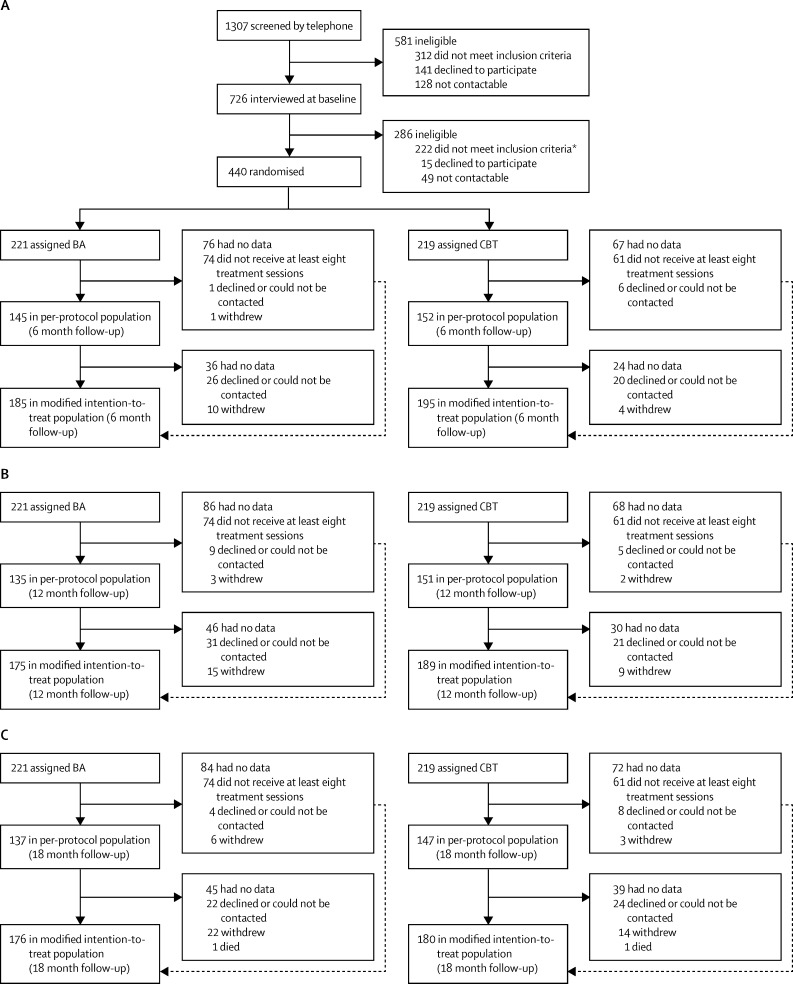
BACKGROUND: Depression is a common, debilitating, and costly disorder. Many patients request psychological therapy, but the best-evidenced therapy-cognitive behavioural therapy (CBT)-is complex and costly. A simpler therapy-behavioural activation (BA)-might be as effective and cheaper than is CBT. We aimed to establish the clinical efficacy and cost-effectiveness of BA compared with CBT for adults with depression. METHODS: In this randomised, controlled, non-inferiority trial, we recruited adults aged 18 years or older meeting Diagnostic and Statistical Manual of Mental Disorders IV criteria for major depressive disorder from primary care and psychological therapy services in Devon, Durham, and Leeds (UK). We excluded people who were receiving psychological therapy, were alcohol or drug dependent, were acutely suicidal or had attempted suicide in the previous 2 months, or were cognitively impaired, or who had bipolar disorder or psychosis or psychotic symptoms. We randomly assigned participants (1:1) remotely using computer-generated allocation (minimisation used; stratified by depression severity [Patient Health Questionnaire 9 (PHQ-9) score of <19 vs ≥19], antidepressant use, and recruitment site) to BA from junior mental health workers or CBT from psychological therapists. Randomisation done at the Peninsula Clinical Trials Unit was concealed from investigators. Treatment was given open label, but outcome assessors were masked. The primary outcome was depression symptoms according to the PHQ-9 at 12 months. We analysed all those who were randomly allocated and had complete data (modified intention to treat [mITT]) and also all those who were randomly allocated, had complete data, and received at least eight treatment sessions (per protocol [PP]). We analysed safety in the mITT population. The non-inferiority margin was 1·9 PHQ-9 points. This trial is registered with the ISCRTN registry, number ISRCTN27473954. FINDINGS: Between Sept 26, 2012, and April 3, 2014, we randomly allocated 221 (50%) participants to BA and 219 (50%) to CBT. 175 (79%) participants were assessable for the primary outcome in the mITT population in the BA group compared with 189 (86%) in the CBT group, whereas 135 (61%) were assessable in the PP population in the BA group compared with 151 (69%) in the CBT group. BA was non-inferior to CBT (mITT: CBT 8·4 PHQ-9 points [SD 7·5], BA 8·4 PHQ-9 points [7·0], mean difference 0·1 PHQ-9 points [95% CI -1·3 to 1·5], p=0·89; PP: CBT 7·9 PHQ-9 points [7·3]; BA 7·8 [6·5], mean difference 0·0 PHQ-9 points [-1·5 to 1·6], p=0·99). Two (1%) non-trial-related deaths (one [1%] multidrug toxicity in the BA group and one [1%] cancer in the CBT group) and 15 depression-related, but not treatment-related, serious adverse events (three in the BA group and 12 in the CBT group) occurred in three [2%] participants in the BA group (two [1%] patients who overdosed and one [1%] who self-harmed) and eight (4%) participants in the CBT group (seven [4%] who overdosed and one [1%] who self-harmed). INTERPRETATION: We found that BA, a simpler psychological treatment than CBT, can be delivered by junior mental health workers with less intensive and costly training, with no lesser effect than CBT. Effective psychological therapy for depression can be delivered without the need for costly and highly trained professionals. FUNDING: National Institute for Health Research.
Overview
The claims and statistics of this paper haven’t been checked yet.
Run the check — free, no account needed. It reads the open-access text and checks the sources it cites.
Integrity signals
Registry
Cites
Statistics
Figures
Verification
Claims the paper makes
The claims and statistics of this paper haven’t been checked yet.
Run the check — free, no account needed. It reads the open-access text and checks the sources it cites.
Claims other papers make about this one
Each is checked against this paper’s own text: does it say what the citing paper says it does?
The source backs part of the claim, not all of it — or backs it for a different population, condition or comparison.
In the citing paper
“they can be readily employed in assistant psychologist (AP) roles at lower cost than more specialist therapists”
From Increasing access to CBT for psychosis patients: A feasibility, randomised controlled trial evaluating brief, targeted CBT for distressing voices delivered by assistant psychologists (GiVE2) (2020) · cites this paper as [20]
Experimental — accuracy not yet measuredThe source backs part of the claim, not all of it — or backs it for a different population, condition or comparison.
In the citing paper
“Psychology graduates, however, are well-positioned to undertake such a role [18, 20]”
From Increasing access to CBT for psychosis patients: A feasibility, randomised controlled trial evaluating brief, targeted CBT for distressing voices delivered by assistant psychologists (GiVE2) (2020) · cites this paper as [20]
Experimental — accuracy not yet measuredThe check wasn’t confident either way, so it gives no verdict — never disputed.
In the citing paper
“their degree provides them with training in psychological models of emotion and behaviour”
From Increasing access to CBT for psychosis patients: A feasibility, randomised controlled trial evaluating brief, targeted CBT for distressing voices delivered by assistant psychologists (GiVE2) (2020) · cites this paper as [20]
Experimental — accuracy not yet measuredThe check wasn’t confident either way, so it gives no verdict — never disputed.
In the citing paper
“there is a large number of psychology graduates in the UK, the USA and elsewhere”
From Increasing access to CBT for psychosis patients: A feasibility, randomised controlled trial evaluating brief, targeted CBT for distressing voices delivered by assistant psychologists (GiVE2) (2020) · cites this paper as [20]
Experimental — accuracy not yet measured
Self-check
Percentages, sums and reported differences re-computed from the paper’s own numbers.
The self-check needs the paper’s full text.
Citations
Cites
The PHQ-9: Validity of a brief depression severity measure
Kroenke, K., Spitzer, R. L., & Williams, J. B. W. (2001) · Journal of General Internal Medicine · doi:10.1046/j.1525-1497.2001.016009606.x · Cited by 44,910
A Brief Measure for Assessing Generalized Anxiety Disorder: The GAD-7
Spitzer, R. L., Kroenke, K., Williams, J. B. W., & Löwe, B. (2006) · Archives of Internal Medicine · doi:10.1001/archinte.166.10.1092 · Cited by 31,765
Multiple Imputation for Nonresponse in Surveys
Rubin, D. B. (1987) · Wiley Series in Probability and Statistics · doi:10.1002/9780470316696 · Cited by 20,701
SF-36 health survey: Manual and interpretation guide
Ware, J. (2003) · Medical Entomology and Zoology · Cited by 11,424
EuroQol: the current state of play
Brooks, R. (1996) · Health Policy · doi:10.1016/0168-8510(96)00822-6 · Cited by 5,815
Ferrari, A. J., Charlson, F. J., Norman, R. E., Patten, S. B., Freedman, G., Murray, C. J. L., Vos, T., & Whiteford, H. A. (2013) · PLoS Medicine · doi:10.1371/journal.pmed.1001547 · Cited by 3,115
Multiple imputation of discrete and continuous data by fully conditional specification
van Buuren, S. (2007) · Statistical Methods in Medical Research · doi:10.1177/0962280206074463 · Cited by 2,827
Multiple Imputation for Nonresponse in Surveys.
Lynn, P. J., & Rubin, D. B. (1988) · Journal of the Royal Statistical Society Series D (The Statistician) · doi:10.2307/2348774 · Cited by 2,330
Cognitive Therapy: Basics and Beyond
Beck, J. S. (1995) · Medical Entomology and Zoology · Cited by 2,208
(2012) · RePEc: Research Papers in Economics · Cited by 1,951
Cited by
Sorted by citations
Items 301–400 of 595
Adapted Behavioural Activation for Bipolar Depression: A Randomised Multiple Baseline Case Series
Wright, K. A., Mostazir, M., Bailey, E., Dunn, B. D., O’Mahen, H., Sibsey, M., & Thomas, Z. (2022) · Brain Sciences · doi:10.3390/brainsci12101407 · Cited by 7
Self-citationCommunity pharmacists as a resource in task-shifted interventions for depression
Aluh, D. O., & Norberg, M. M. (2020) · The Lancet Psychiatry · doi:10.1016/s2215-0366(20)30096-1 · Cited by 6
Behavioural activation training for depression
Vieta, E., & Sánchez‐Moreno, J. (2017) · The Lancet · doi:10.1016/s0140-6736(17)30159-9 · Cited by 6
Velasquez Reyes, D., Patel, H., Lautenschlager, N., Ford, A. H., Curran, E., Kelly, R., Lai, R., Chong, T., Flicker, L., Ekers, D., et al. (2019) · BMJ Open · doi:10.1136/bmjopen-2019-032421 · Cited by 5
Self-citationSullivan, M. J. L., Wideman, T. H., Gauthier, N., Thibault, P., Ellis, T., & Adams, H. (2022) · Pilot and Feasibility Studies · doi:10.1186/s40814-022-01040-0 · Cited by 5
Living with depression and diabetes: A qualitative study in Bangladesh and Pakistan
Jennings, H. M., Anas, A., Asmat, S., Naz, A., Afaq, S., Ahmed, N., Aslam, F., Zavala, G. A., Siddiqi, N., & Ekers, D. (2024) · PLOS Global Public Health · doi:10.1371/journal.pgph.0002846 · Cited by 5
Self-citationTakagaki, K., Yokoyama, S., & Kambara, K. (2021) · Frontiers in Psychology · doi:10.3389/fpsyg.2021.566181 · Cited by 8
Whittenbury, K., Kroll, L., Dubicka, B., & Bull, E. R. (2022) · BJPsych Open · doi:10.1192/bjo.2022.7 · Cited by 5
FACT effectiveness in primary care; a single visit RCT for depressive symptoms
Arroll, B., Frischtak, H., Roskvist, R. P., Mount, V., Sundram, F., Fletcher, S. L., Kingsford, D. W., Buttrick, L., Bricker, J. B., & van der Werf, B. (2021) · The International Journal of Psychiatry in Medicine · doi:10.1177/00912174211010536 · Cited by 5
Renn, B. N., Sams, N., Areán, P. A., & Raue, P. J. (2022) · Aging & Mental Health · doi:10.1080/13607863.2022.2084709 · Cited by 5
A Cross-Cultural Conceptual Comparison of Behavioral Activation and Ikigai
Rochelle, N. S., & Hoyer, J. (2023) · Journal of Contemporary Psychotherapy · doi:10.1007/s10879-023-09592-9 · Cited by 5
Borrelli, B., Bartlett, Y. K., Fulford, D., Frasco, G., Armitage, C. J., & Wearden, A. J. (2024) · JMIR Formative Research · doi:10.2196/54912 · Cited by 5
Brief behavioural activation therapy for adolescent depression in schools: two case examples
Brett, S., Reynolds, S. A., Totman, J., & Pass, L. (2020) · Emotional and Behavioural Difficulties · doi:10.1080/13632752.2020.1861853 · Cited by 5
IsHak, W. W., Korouri, S., Darwish, T., Vanle, B., Dang, J., Edwards, G. G., Black, J. T., Aronow, H. U., Kimchi, A., Spiegel, B. M. R., et al. (2021) · PLoS ONE · doi:10.1371/journal.pone.0244453 · Cited by 5
Owens, M., Watkins, E. R., Bot, M., Brouwer, I. A., Roca, M., Kohls, E., Penninx, B. W. J. H., van Grootheest, G., Hegerl, U., Gili, M., et al. (2021) · Clinical Psychological Science · doi:10.1177/2167702620979785 · Cited by 6
Self-citationMoriarty, A. S., Paton, L. W., Snell, K. I. E., Riley, R. D., Buckman, J. E. J., Gilbody, S. M., Chew-Graham, C. A., Ali, S., Pilling, S., Meader, N., et al. (2021) · Diagnostic and Prognostic Research · doi:10.1186/s41512-021-00101-x · Cited by 5
Self-citationA Qualitative Content Analysis of Online Public Mental Health Resources for COVID-19
Martin, F., & Oliver, T. (2022) · Frontiers in Psychiatry · doi:10.3389/fpsyt.2022.553158 · Cited by 7
Woodard, G. S., Mraz, A., & Renn, B. N. (2023) · BMC Psychiatry · doi:10.1186/s12888-023-04528-y · Cited by 5
Myhre, M. Ø., Strømgren, B., Arnesen, E. F., & Veland, M. C. (2018) · Journal of Psychiatric Intensive Care · doi:10.20299/jpi.2018.001 · Cited by 5
Mergl, R., Allgaier, A., Hautzinger, M., Coyne, J. C., Hegerl, U., & Henkel, V. (2018) · Journal of Affective Disorders · doi:10.1016/j.jad.2017.12.084 · Cited by 5
Fitzpatrick, S. (2021) · Journal of Mental Health · doi:10.1080/09638237.2021.1952961 · Cited by 5
Sandery, P., Baranoff, J., & Dorstyn, D. (2024) · Journal of Contextual Behavioral Science · doi:10.1016/j.jcbs.2024.100841 · Cited by 4
Hill, E., Tonta, K. E., Boyes, M. E., Norbury, C., Griffiths, S., Yew, S. G. K., & Ryan, B. (2025) · International Journal of Cognitive Behavioral Therapy · doi:10.1007/s41811-025-00254-3 · Cited by 4
Papola, D., Tedeschi, F., Efthimiou, O., Harrer, M., Ramia, J. A., Acartürk, C., Akhtar, A., Alkneme, M. S., Bryant, R. A., Burchert, S., et al. (2026) · The Lancet Psychiatry · doi:10.1016/s2215-0366(26)00193-8 · Cited by 4
Kor, P. P. K., Chou, K., Zarit, S. H., Gallagher-Thompson, D. E., Galante, J., Wong, S. Y. S., Cheung, D. S. K., Leung, A. Y. M., & Chu, L. (2023) · BMJ Open · doi:10.1136/bmjopen-2023-072410 · Cited by 4
The Influence of Big Five Personality Traits on Depression and Suicidal Behavior
Chen, J., & Huang, H. (2024) · IntechOpen eBooks · doi:10.5772/intechopen.1006564 · Cited by 5
PRO: CBT-I for insomnia treatment can be delivered by a range of healthcare providers
Espie, C. A., Grandner, M. A., & Drake, C. L. (2025) · SLEEP · doi:10.1093/sleep/zsaf124 · Cited by 4
Imai, H., Yamada, M., Inagaki, M., Watanabe, N., Chino, B., Mantani, A., & Furukawa, T. A. (2020) · Europe PMC (PubMed Central) · Cited by 4
Cognitive Behavioral Therapy for Depression
Todd, G., & Branch, R. (2021) · Cambridge University Press eBooks · doi:10.1017/9781108355605.021 · Cited by 5
Hayward, M., Berry, K., Bremner, S. A., Cavanagh, K., Dodgson, G., Fowler, D. G., Gage, H., Greenwood, K., Hazell, C. M., Bibby-Jones, A.-M., et al. (2023) · Trials · doi:10.1186/s13063-023-07611-7 · Cited by 4
Papola, D., Karyotaki, E., Purgato, M., Sijbrandij, M., Tedeschi, F., Cuijpers, P. J., Orestis, E., Furukawa, T. A., Patel, V., & Barbui, C. (2023) · BMJ Open · doi:10.1136/bmjopen-2023-077037 · Cited by 4
Yi, L., Chen, J., Li, S., Cui, W., Li, J., Peng, L., & Peng, C. (2024) · Journal of Psychiatric Research · doi:10.1016/j.jpsychires.2024.06.017 · Cited by 4
Li, A. (2025) · American Journal of Cancer Research · doi:10.62347/pnhn9442 · Cited by 4
Carey, M., Kerr‐Gaffney, J., Strawbridge, R., Hieronymus, F., McCutcheon, R. A., Young, A. H., & Jauhar, S. (2025) · Journal of Affective Disorders · doi:10.1016/j.jad.2025.04.070 · Cited by 5
Burroughs, H., Bartlam, B., Ray, M., Kingstone, T., Shepherd, T., Ogollah, R. O., Proctor, J., Waheed, W., Bower, P., Bullock, P., et al. (2018) · Trials · doi:10.1186/s13063-018-2550-6 · Cited by 4
Self-citationTrajectories of Change in a Group Behavioral Activation Treatment for Severe, Recurrent Depression
O’Mahen, H., Moberly, N. J., & Wright, K. A. (2018) · Behavior Therapy · doi:10.1016/j.beth.2018.08.007 · Cited by 4
Self-citationTime-intensive behavioural activation for depression: A multiple baseline study
Miles, S., Brown, G. P., Corfe, A., Hallett, C., Wingrove, J., Wheatley, J., & Veale, D. M. (2018) · Journal of Behavior Therapy and Experimental Psychiatry · doi:10.1016/j.jbtep.2018.12.008 · Cited by 4
Wang, X., Zhou, X., & Yang, H. (2020) · JMIR Research Protocols · doi:10.2196/18259 · Cited by 4
Lewis-Smith, I., Pass, L., Jones, D. J. W., & Reynolds, S. A. (2021) · Psychotherapy Research · doi:10.1080/10503307.2021.1898692 · Cited by 4
Muyambi, K., Gillam, M., Dennis, S., Gray, R. J., Martinez, L., & Jones, M. (2021) · Australian Journal of Rural Health · doi:10.1111/ajr.12685 · Cited by 4
An Evaluation of an ACT-Based “Aging Resiliently” Group
Goetz, D. B., & Hirschhorn, E. W. (2021) · Clinical Gerontologist · doi:10.1080/07317115.2021.1932001 · Cited by 4
Shadan, S., Almarzooqi, S., & Sultan, M. A. (2021) · Case Reports in Psychiatry · doi:10.1155/2021/7112034 · Cited by 4
Marzorati, C., Pizzoli, S. F. M., Grasso, R., & Pravettoni, G. (2021) · Frontiers in Psychology · doi:10.3389/fpsyg.2021.710861 · Cited by 4
Therapy of the Adjustment Disorder
Baumeister, H., Bachem, R., & Domhardt, M. (2022) · Springer eBooks · doi:10.1007/978-3-662-64057-9_21 · Cited by 4
Byrne, M. K., Easpaig, B. N. G., Gray, R. J., Creek, R., Jones, M., Brown, E., Mitchell, D., Zhai, J., Tan, J.-Y. B., Dennis, S., et al. (2023) · PLoS ONE · doi:10.1371/journal.pone.0280559 · Cited by 4
Bosmans, J. E., Bruijniks, S. J. E., Alili, M. E., Hollon, S. D., Peeters, F. P. M. L., Arntz, A. R., Cuijpers, P. J., Lemmens, L. H. J. M., Dingemanse, P., Willems, L., et al. (2023) · BJPsych Open · doi:10.1192/bjo.2023.548 · Cited by 5
Self-citationStein, A. T., Shumake, J., Beevers, C. G., & Smits, J. A. J. (2020) · Cognitive Therapy and Research · doi:10.1007/s10608-020-10095-3 · Cited by 4
Ross, V., Brijs, K., Dirix, H., Wets, G., Neven, A., Vanrompay, Y., Claes, N., & Jacobs, N. (2023) · Journal of Evidence-Based Psychotherapies · doi:10.24193/jebp.2023.1.5 · Cited by 3
Tuck, D., Berger, E., Patlamazoglou, L., & Wiley, J. F. (2024) · Australian Psychologist · doi:10.1080/00050067.2024.2379939 · Cited by 5
The effectiveness of virtual reality to improve depression: A systematic evidence map
Lü, X. Y., You, J., Xia, T., Huang, Y., & Xu, R. S. (2025) · Digital Health · doi:10.1177/20552076251390555 · Cited by 3
Huang, X., Luo, W., Luo, J., Zhang, Y., Chen, Y., Luo, Y., Sun, B., & Zhou, Y. (2026) · Journal of the American Academy of Child & Adolescent Psychiatry · doi:10.1016/j.jaac.2025.12.019 · Cited by 3
Cognitive Behavioral Therapy in South Africa
Andersen, L. S., Rossouw, J., & Kagee, A. (2022) · Springer eBooks · doi:10.1007/978-3-030-82555-3_28 · Cited by 3
Yisma, E., Walsh, S., Steen, M., Gray, R. J., Dennis, S., Gillam, M., Parange, N., & Jones, M. (2024) · Nursing Reports · doi:10.3390/nursrep14010007 · Cited by 4
Aberrant effort-based reward dynamics in anhedonia
Wen, H., Wu, M., Wang, Z., Gao, B., & Zheng, Y. (2024) · Cerebral Cortex · doi:10.1093/cercor/bhae193 · Cited by 5
Ferreira, R. J. O., Henriques, M. A., Moe, R. H., Matos, C., Tveter, A. T., Østerås, N., Nogueira, P., da Costa, A. C. J. S., Haavardsholm, E. A., Carmona, L., et al. (2024) · BMJ Open · doi:10.1136/bmjopen-2023-081864 · Cited by 3
Self-citationLau, T., Schild, S., Klos, B., Schraml, J., Archid, R., Stengel, A., Niess, A. M., Erz, G., Zipfel, S., & Mack, I. (2024) · Obesity Facts · doi:10.1159/000539797 · Cited by 4
Varese, F., Allsopp, K., Carter, L., Shields, G., Hind, D., Davies, L. M., Barrett, A., Bhutani, G., McGuirk, K., Huntley, F., et al. (2024) · Health and Social Care Delivery Research · doi:10.3310/hgqr5133 · Cited by 4
Kato, S., Tanoue, H., Fukuzoe, J., & Ishida, Y. (2024) · SAGE Open Nursing · doi:10.1177/23779608241290717 · Cited by 3
Patient experiences of behavioural therapy for bipolar depression: A qualitative study
Yilmaz, S., Hancox, A., Price, M., Regan, J. L., Dunn, B., O’Mahen, H., & Wright, K. A. (2024) · British Journal of Clinical Psychology · doi:10.1111/bjc.12515 · Cited by 3
Self-citationTherapie der Anpassungsstörung
Baumeister, H., Bachem, R., & Domhardt, M. (2019) · Springer eBooks · doi:10.1007/978-3-662-58470-5_21 · Cited by 3
Sugg, H. V. R., Frost, J., & Richards, D. A. (2020) · Trials · doi:10.1186/s13063-019-3788-3 · Cited by 3
Self-citationBenefits of Using Activity Recommender Technology for Self-management of Depressive Symptoms
Rohani, D. A., Faurholt‐Jepsen, M., Kessing, L. V., & Bardram, J. E. (2021) · ACM Transactions on Computing for Healthcare · doi:10.1145/3462212 · Cited by 3
Andersen, L. S., Stanton, A. M., Magidson, J. F., Joska, J. A., O’Cleirigh, C. M., Lee, J. S., Kagee, A., Witten, J. A., & Safren, S. A. (2022) · Behavior Therapy · doi:10.1016/j.beth.2022.07.003 · Cited by 3
Effects of Behavioral Activation Group Treatment Prior to Individual Therapy for Depression
Limpächer, C., Ziem, M., & Hoyer, J. (2023) · Zeitschrift für Klinische Psychologie und Psychotherapie · doi:10.1026/1616-3443/a000707 · Cited by 3
An Analysis of Primary Hyperparathyroidism in Association with Depression or Anxiety
Gheorghe, A.-M., Nistor, C., Ranetti, A.-E., & Carşote, M. (2025) · Diseases · doi:10.3390/diseases13020054 · Cited by 3
Behavioural activation therapies for depression in adults with non-communicable diseases
Uphoff, E., Pires, M., Barbui, C., Barua, D., Churchill, R. C., Ekers, D., Fottrell, E. F., Mazumdar, P., Purgato, M., Rana, R. Z., et al. (2019) · Cochrane Database of Systematic Reviews · doi:10.1002/14651858.cd013461 · Cited by 4
Self-citationNon-specialist health workers to treat excessive alcohol consumption and depression
Agabio, R. (2016) · The Lancet · doi:10.1016/s0140-6736(16)32566-1 · Cited by 3
An Evaluation of the Behavioral Activation Model of Psychotherapy in a Community Sample in Japan
Yamamoto, T., Hikida, I., Shudo, Y., & Sakai, M. (2018) · Psychological Reports · doi:10.1177/0033294118795144 · Cited by 3
Bolinski, F., Hendriks, G., Bardoel, S., Hollon, S. D., Martell, C. R., & Huibers, M. J. H. (2018) · International Journal of Cognitive Therapy · doi:10.1007/s41811-018-0027-8 · Cited by 3
Self-citationBowins, B. E. (2020) · Elsevier eBooks · doi:10.1016/b978-0-12-819625-0.00008-3 · Cited by 3
Vilca, L. W., Echabaudes-Ilizarbe, R. I., Aquino-Hidalgo, J. M., Ventura‐León, J., Martinez‐Munive, R., & White, M. (2020) · Psychological Reports · doi:10.1177/0033294120981930 · Cited by 4
Relations Among Clinical Factors After Behavioral Activation for Subthreshold Depression
Takagaki, K., Jinnin, R., Yokoyama, S., Mori, A., Kambara, K., Okamoto, Y., Miyake, Y., Kagawa, F., & Okamoto, Y. (2021) · International Journal of Cognitive Therapy · doi:10.1007/s41811-021-00108-8 · Cited by 4
Gómez‐Pérez, L., Verges, A. J., Vázquez-Taboada, A. R., Durán, J., & Tugas, M. G. (2018) · Trials · doi:10.1186/s13063-018-3037-1 · Cited by 3
Clignet, F., van Straten, A., Cuijpers, P. J., & van Meijel, B. (2021) · Research Square · doi:10.21203/rs.3.rs-533935/v1 · Cited by 3
Wang, C., Su, K., Hu, L., Wu, S., Zhan, Y., Yang, C., & Xiang, J. (2024) · Indoor Environments · doi:10.1016/j.indenv.2024.100015 · Cited by 2
Staab, E. M., Wan, W., Campbell, A., Gedeon, S., Schaefer, C. T., Quinn, M. T., & Laiteerapong, N. (2022) · Journal of General Internal Medicine · doi:10.1007/s11606-021-07294-3 · Cited by 3
Haakana, R., Rosenström, T. H., Parkkinen, L., Tuomisto, M. T., & Isometsä, E. T. (2024) · Frontiers in Psychiatry · doi:10.3389/fpsyt.2024.1284363 · Cited by 2
Boczor, S., Ashrafi, S., Bjerregaard, F., Bleich, C., Grochtdreis, T., Lühmann, D., Härter, M. C., Hölzel, L. P., Hüll, M., Tinsel, I., et al. (2025) · Behavioral Sciences · doi:10.3390/bs15040462 · Cited by 2
Tindall, L., Hayward, E., Li, J., Kerrigan, P., Metcalfe, S., & Gega, L. (2025) · Frontiers in Child and Adolescent Psychiatry · doi:10.3389/frcha.2025.1596294 · Cited by 2
Engage & connect psychotherapy improves social reward responsivity and reduces postpartum depression
Solomonov, N., Bein, O., Himelfarb, A., Schier, M. M., Mir, Z., Brown, S., McDarby, M., Osborne, L. M., Gunning, F. M., Turchioe, M. R., et al. (2025) · Psychotherapy Research · doi:10.1080/10503307.2025.2569046 · Cited by 2
So, Y., Shin, J., Won, S.-D., Im, W. Y., Seok, K.-H., Jin, M. J., Lee, S. H., & Bae, S. (2025) · Behavioral Sciences · doi:10.3390/bs15111496 · Cited by 2
Antifragility and Growth Through Adversity: A Scoping Review
Holton, N., Cottin, M., Wright, A., Michael, M., Antonio, D. S., & Bigliassi, M. (2026) · Psychological Reports · doi:10.1177/00332941261416041 · Cited by 4
Meyer, J. D., Kelly, S. J. E., Gidley, J. M., Lansing, J. E., Smith, S. L., Churchill, S. L., Connolly, M. L., Thomas, E. B. K., Goldberg, S. B., Abercrombie, H. C., et al. (2026) · Journal of Affective Disorders · doi:10.1016/j.jad.2026.121606 · Cited by 2
Brakemeier, E., Klein, J. P., Zimmermann, J., Hollandt, M., Reinhard, M. A., Boger, S., Daldrup, L., Eldem, L., Gebhardt, P., Heinrich, S. M., et al. (2026) · BMJ Open · doi:10.1136/bmjopen-2025-107051 · Cited by 2
Tiba, A., Drugas, M. I., Sîrbu, I., Trip, S., Bora, C. H., & Voss, L. (2026) · Behaviour Research and Therapy · doi:10.1016/j.brat.2026.105025 · Cited by 2
Strategies for Establishing Clinical-Decision Thresholds in Psychiatry
Kotelnikova, Y., Clark, L. A., Ruggero, C. J., Ringwald, W. R., Narrow, W. E., Reed, G. M., Skodol, A. E., Tyrer, P., Zimmerman, M., & Kotov, R. (2026) · JAMA Psychiatry · doi:10.1001/jamapsychiatry.2026.1078 · Cited by 2
Behavioral activation for depression: A comprehensive systematic review and meta-analysis
Cuijpers, P. J., Čihařová, M., Tong, L., Liu, Y., Sprenger, A. A., Miguel, C., Karyotaki, E., & Harrer, M. (2026) · Clinical Psychology Review · doi:10.1016/j.cpr.2026.102783 · Cited by 2
Methodological Flaws and the Evidence of Efficacy
Giraldi, T. (2019) · Springer eBooks · doi:10.1007/978-3-030-29003-0_7 · Cited by 2
Behavioural activation for depression in rural Australia: Challenges and opportunities
Jones, M., Walsh, S., Lyle, D. M., Schlicht, K., & Gray, R. J. (2021) · Australian Journal of Rural Health · doi:10.1111/ajr.12727 · Cited by 2
Psychiatric rehabilitation and cognitive deficit for treatment-resistant depression
Cheng, C., & Jeng, J. (2023) · Progress in brain research · doi:10.1016/bs.pbr.2023.02.006 · Cited by 2
Borrelli, B., Endrighi, R., DUNSIGER, S. I., Busch, A. M., Bock, B. C., Risica, P. M., Hughes, R. B., & Lasater, T. M. (2023) · Disability and health journal · doi:10.1016/j.dhjo.2023.101480 · Cited by 2
Hirayama, T., Ogawa, Y., Yanai, Y., Shindo, A., Tanaka, M., & Suzuki, S. (2023) · Palliative Medicine Reports · doi:10.1089/pmr.2023.0020 · Cited by 2
Phillips, J. L., Blier, P., & Talbot, J. D. (2023) · Journal of Affective Disorders Reports · doi:10.1016/j.jadr.2023.100613 · Cited by 3
Huang, X., Chen, Y., Luo, J., Wang, D., Yang, C., Luo, W., & Zhou, Y. (2024) · PLoS ONE · doi:10.1371/journal.pone.0304084 · Cited by 3
Alilou, M. M., & Maleki, S. (2024) · Brain and Behavior · doi:10.1002/brb3.3651 · Cited by 1
Simmonds‐Buckley, M., Kellett, S., Hague, J., & Waller, G. (2025) · The Cognitive Behaviour Therapist · doi:10.1017/s1754470x24000412 · Cited by 2
Heart Rate Variability Changes in Elderly Patients with Depression: A Systematic Review
Aydın, L., & Kabakçı, S. G. (2025) · Psikiyatride Guncel Yaklasimlar - Current Approaches in Psychiatry · doi:10.18863/pgy.1556204 · Cited by 2
Maitland, D. W. M., & Neilson, E. C. (2021) · Current Psychology · doi:10.1007/s12144-021-01766-9 · Cited by 3
Chinese music therapy to treat depression in children and adolescents: The BARIT-Model
Mastnak, W. (2022) · World Journal of Advanced Research and Reviews · doi:10.30574/wjarr.2022.13.1.0035 · Cited by 2
Metadiscourse markers in research article abstracts. An interlingual and interdisciplinary study
Šandová, J. K. (2023) · LINGUISTICA SILESIANA · doi:10.24425/linsi.2017.117053 · Cited by 2
Metadata
- Authors
- Richards, D. A., Ekers, D., McMillan, D., Taylor, R. S., Byford, S., Warren, F. C., Barrett, B., Farrand, P. A., Gilbody, S., Kuyken, W., O'Mahen, H., Watkins, E. R., Wright, K. A., Hollon, S. D., Reed, N., Rhodes, S., Fletcher, E., & Finning, K.
- Affiliations
- University of Exeter (GB)
- Tees, Esk and Wear Valleys NHS Foundation Trust (GB)
- University of York (GB)
- King's College London (GB)
- Warneford Hospital (GB)
- Vanderbilt University (US)
- Corresponding author
- Richards, David A
- ORCID
- Venue
- The Lancet
- Publisher
- Elsevier BV
- Published
- 2016-08
- Volume
- 388
- Issue
- 10047
- Pages
- 871-880
- ISSN
- 0099-5355 (ISSN-L)
- 0140-6736
- PMC
- PMC5007415
- OpenAlex
- W2502560620
- Cited by
- 595
- References
- 33
- Citations by year
- 2026: 41 · 2025: 44 · 2024: 59 · 2023: 53 · 2022: 51 · 2021: 92 · 2020: 64 · 2019: 60 · 2018: 69 · 2017: 48 · 2016: 13
- FWCI
- 90.14
- Type
- journal article
- Language
- en
- Open access
- hybrid
- doi.org
- Locations
- The Lancet (publishedVersion, cc-by)
- Europe PMC (PubMed Central) (publishedVersion, cc-by)
- PubMed Central (publishedVersion, cc-by)
- PubMed (publishedVersion)
- ENLIGHTEN (Jurnal Bimbingan dan Konseling Islam) (acceptedVersion)
- Durham Research Online (Durham University) (acceptedVersion, other-oa)
- White Rose Research Online (University of Leeds, The University of Sheffield, University of York) (submittedVersion)
- Research Portal (King's College London) (submittedVersion, cc-by)
- Open Research Exeter (University of Exeter) (submittedVersion, cc-by)
- Funders
- National Institute for Health and Care Research (NF-SI-0514-10037, NF-SI-0611-10203, NF-SI-0514-10155, 10/50/14)
- European Science Foundation
- Collaboration for Leadership in Applied Health Research and Care - Greater Manchester
- Topics
- Social Sciences › Psychology › Experimental and Cognitive Psychology › Anxiety, Depression, Psychometrics, Treatment, Cognitive Processes
- Social Sciences › Psychology › Clinical Psychology › Psychotherapy Techniques and Applications
- Social Sciences › Psychology › Applied Psychology › Digital Mental Health Interventions
- Keywords
- behavioral activation, cognitive behavioral therapy, depression, major depressive disorder, cost-effectiveness, non-inferiority, PHQ-9, psychotherapy, primary care, treatment safety, depression severity, antidepressant use, remote treatment delivery, hopelessness
- MeSH terms
- Adult, Aged, Antidepressive Agents, Cost-Benefit Analysis, Depression, Depressive Disorder, Major, Major Depressive Disorder, Direct Service Costs, Educational Status, England, Female, Humans, Male, Middle Aged, Quality of Life, Comorbidity, Cognitive Behavioral Therapy, Linear Models, Treatment Outcome, Quality-Adjusted Life Years, Directive Counseling, Diagnostic and Statistical Manual of Mental Disorders
About these checks
Registry, retraction, Cites and statistics results are computed, not judged, with one exception: a printed reference that no index lists is read once by a model before it counts as a citation error. Claims are extracted by a model and kept only when their quote appears verbatim in the text; each cited source is then checked, with a model’s help, for whether it says what the claim relies on. Those verdicts can be wrong — read the claim’s quote and the cited source before relying on one.
Statistics and arithmetic are recomputed, not judged.
Confidence bands are shown only for fields calibrated on our annotated test set. None is calibrated yet, so no band is shown.
What counts as a claim ›How we measure confidence ›How we check this ›
Are you an author, or do you see a problem with this page? Request a review
