

The DOI matches its Crossref record; 30 of the 33 references it cites were found in a registry or an index.
Cost and Outcome of Behavioural Activation versus Cognitive Behavioural Therapy for Depression (COBRA): a randomised, controlled, non-inferiority trial
Open accessAbstract
BACKGROUND: Depression is a common, debilitating, and costly disorder. Many patients request psychological therapy, but the best-evidenced therapy-cognitive behavioural therapy (CBT)-is complex and costly. A simpler therapy-behavioural activation (BA)-might be as effective and cheaper than is CBT. We aimed to establish the clinical efficacy and cost-effectiveness of BA compared with CBT for adults with depression. METHODS: In this randomised, controlled, non-inferiority trial, we recruited adults aged 18 years or older meeting Diagnostic and Statistical Manual of Mental Disorders IV criteria for major depressive disorder from primary care and psychological therapy services in Devon, Durham, and Leeds (UK). We excluded people who were receiving psychological therapy, were alcohol or drug dependent, were acutely suicidal or had attempted suicide in the previous 2 months, or were cognitively impaired, or who had bipolar disorder or psychosis or psychotic symptoms. We randomly assigned participants (1:1) remotely using computer-generated allocation (minimisation used; stratified by depression severity [Patient Health Questionnaire 9 (PHQ-9) score of <19 vs ≥19], antidepressant use, and recruitment site) to BA from junior mental health workers or CBT from psychological therapists. Randomisation done at the Peninsula Clinical Trials Unit was concealed from investigators. Treatment was given open label, but outcome assessors were masked. The primary outcome was depression symptoms according to the PHQ-9 at 12 months. We analysed all those who were randomly allocated and had complete data (modified intention to treat [mITT]) and also all those who were randomly allocated, had complete data, and received at least eight treatment sessions (per protocol [PP]). We analysed safety in the mITT population. The non-inferiority margin was 1·9 PHQ-9 points. This trial is registered with the ISCRTN registry, number ISRCTN27473954. FINDINGS: Between Sept 26, 2012, and April 3, 2014, we randomly allocated 221 (50%) participants to BA and 219 (50%) to CBT. 175 (79%) participants were assessable for the primary outcome in the mITT population in the BA group compared with 189 (86%) in the CBT group, whereas 135 (61%) were assessable in the PP population in the BA group compared with 151 (69%) in the CBT group. BA was non-inferior to CBT (mITT: CBT 8·4 PHQ-9 points [SD 7·5], BA 8·4 PHQ-9 points [7·0], mean difference 0·1 PHQ-9 points [95% CI -1·3 to 1·5], p=0·89; PP: CBT 7·9 PHQ-9 points [7·3]; BA 7·8 [6·5], mean difference 0·0 PHQ-9 points [-1·5 to 1·6], p=0·99). Two (1%) non-trial-related deaths (one [1%] multidrug toxicity in the BA group and one [1%] cancer in the CBT group) and 15 depression-related, but not treatment-related, serious adverse events (three in the BA group and 12 in the CBT group) occurred in three [2%] participants in the BA group (two [1%] patients who overdosed and one [1%] who self-harmed) and eight (4%) participants in the CBT group (seven [4%] who overdosed and one [1%] who self-harmed). INTERPRETATION: We found that BA, a simpler psychological treatment than CBT, can be delivered by junior mental health workers with less intensive and costly training, with no lesser effect than CBT. Effective psychological therapy for depression can be delivered without the need for costly and highly trained professionals. FUNDING: National Institute for Health Research.
Overview
The claims and statistics of this paper haven’t been checked yet.
Run the check — free, no account needed. It reads the open-access text and checks the sources it cites.
Integrity signals
Registry
Cites
Statistics
Figures
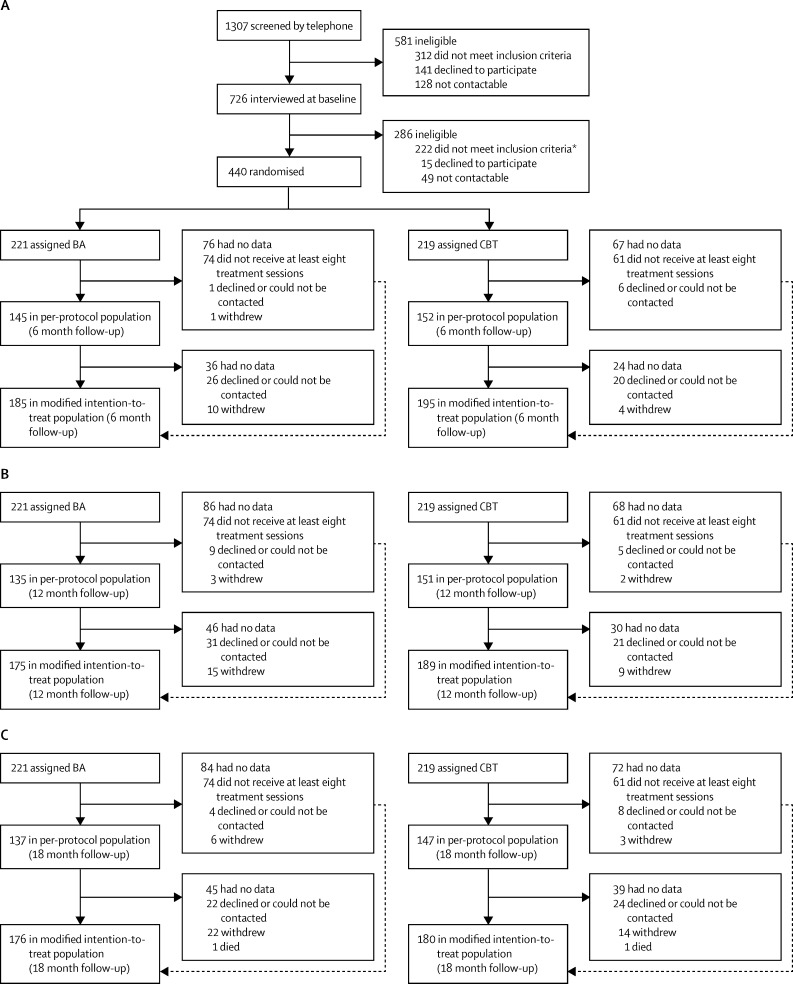
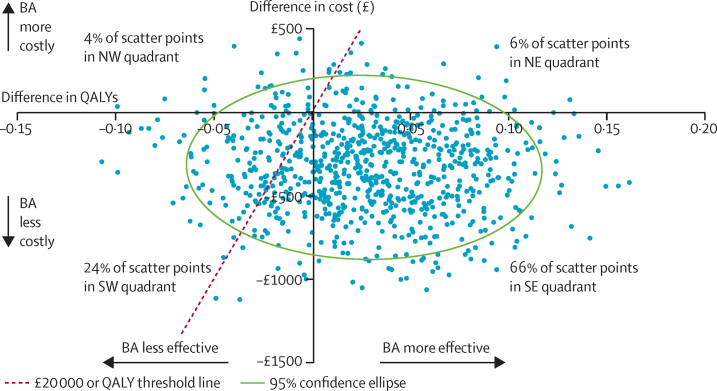
Verification
Claims the paper makes
The claims and statistics of this paper haven’t been checked yet.
Run the check — free, no account needed. It reads the open-access text and checks the sources it cites.
Claims other papers make about this one
Each is checked against this paper’s own text: does it say what the citing paper says it does?
The source backs part of the claim, not all of it — or backs it for a different population, condition or comparison.
In the citing paper
“they can be readily employed in assistant psychologist (AP) roles at lower cost than more specialist therapists”
From Increasing access to CBT for psychosis patients: A feasibility, randomised controlled trial evaluating brief, targeted CBT for distressing voices delivered by assistant psychologists (GiVE2) (2020) · cites this paper as [20]
Experimental — accuracy not yet measuredThe source backs part of the claim, not all of it — or backs it for a different population, condition or comparison.
In the citing paper
“Psychology graduates, however, are well-positioned to undertake such a role [18, 20]”
From Increasing access to CBT for psychosis patients: A feasibility, randomised controlled trial evaluating brief, targeted CBT for distressing voices delivered by assistant psychologists (GiVE2) (2020) · cites this paper as [20]
Experimental — accuracy not yet measuredThe check wasn’t confident either way, so it gives no verdict — never disputed.
In the citing paper
“their degree provides them with training in psychological models of emotion and behaviour”
From Increasing access to CBT for psychosis patients: A feasibility, randomised controlled trial evaluating brief, targeted CBT for distressing voices delivered by assistant psychologists (GiVE2) (2020) · cites this paper as [20]
Experimental — accuracy not yet measuredThe check wasn’t confident either way, so it gives no verdict — never disputed.
In the citing paper
“there is a large number of psychology graduates in the UK, the USA and elsewhere”
From Increasing access to CBT for psychosis patients: A feasibility, randomised controlled trial evaluating brief, targeted CBT for distressing voices delivered by assistant psychologists (GiVE2) (2020) · cites this paper as [20]
Experimental — accuracy not yet measured
Self-check
Percentages, sums and reported differences re-computed from the paper’s own numbers.
The self-check needs the paper’s full text.
Citations
Cites
The PHQ-9: Validity of a brief depression severity measure
Kroenke, K., Spitzer, R. L., & Williams, J. B. W. (2001) · Journal of General Internal Medicine · doi:10.1046/j.1525-1497.2001.016009606.x · Cited by 44,910
A Brief Measure for Assessing Generalized Anxiety Disorder: The GAD-7
Spitzer, R. L., Kroenke, K., Williams, J. B. W., & Löwe, B. (2006) · Archives of Internal Medicine · doi:10.1001/archinte.166.10.1092 · Cited by 31,765
Multiple Imputation for Nonresponse in Surveys
Rubin, D. B. (1987) · Wiley Series in Probability and Statistics · doi:10.1002/9780470316696 · Cited by 20,701
SF-36 health survey: Manual and interpretation guide
Ware, J. (2003) · Medical Entomology and Zoology · Cited by 11,424
EuroQol: the current state of play
Brooks, R. (1996) · Health Policy · doi:10.1016/0168-8510(96)00822-6 · Cited by 5,815
Ferrari, A. J., Charlson, F. J., Norman, R. E., Patten, S. B., Freedman, G., Murray, C. J. L., Vos, T., & Whiteford, H. A. (2013) · PLoS Medicine · doi:10.1371/journal.pmed.1001547 · Cited by 3,115
Multiple imputation of discrete and continuous data by fully conditional specification
van Buuren, S. (2007) · Statistical Methods in Medical Research · doi:10.1177/0962280206074463 · Cited by 2,827
Multiple Imputation for Nonresponse in Surveys.
Lynn, P. J., & Rubin, D. B. (1988) · Journal of the Royal Statistical Society Series D (The Statistician) · doi:10.2307/2348774 · Cited by 2,330
Cognitive Therapy: Basics and Beyond
Beck, J. S. (1995) · Medical Entomology and Zoology · Cited by 2,208
(2012) · RePEc: Research Papers in Economics · Cited by 1,951
Cited by
Sorted by citations
Advances and Open Questions in the Science of Subjective Well-Being
Diener, E., Lucas, R. E., & Oishi, S. (2018) · Collabra Psychology · doi:10.1525/collabra.115 · Cited by 1,333
Neuroscience of apathy and anhedonia: a transdiagnostic approach
Husain, M., & Roiser, J. P. (2018) · Nature reviews. Neuroscience · doi:10.1038/s41583-018-0029-9 · Cited by 682
Patel, V., Weobong, B., Weiss, H. A., Anand, A., Bhat, B., Katti, B., Dimidjian, S., Araya, R., Hollon, S. D., King, M., et al. (2017) · The Lancet · doi:10.1016/s0140-6736(16)31589-6 · Cited by 448
Self-citationEconomics and mental health: the current scenario
Knapp, M., & Wong, G. (2020) · World Psychiatry · doi:10.1002/wps.20692 · Cited by 409
Psychological Treatment of Depression in Primary Care: Recent Developments
Cuijpers, P., Quero, S., Dowrick, C., & Arroll, B. (2019) · Current Psychiatry Reports · doi:10.1007/s11920-019-1117-x · Cited by 296
Steinert, C., Munder, T., Rabung, S., Hoyer, J., & Leichsenring, F. (2017) · American Journal of Psychiatry · doi:10.1176/appi.ajp.2017.17010057 · Cited by 244
Wakefield, S., Kellett, S., Simmonds‐Buckley, M., Stockton, D., Bradbury, A., & Delgadillo, J. (2021) · British Journal of Clinical Psychology · doi:10.1111/bjc.12259 · Cited by 222
Stein, A. T., Carl, E., Cuijpers, P., Karyotaki, E., & Smits, J. A. J. (2021) · Psychological Medicine · doi:10.1017/s0033291720000239 · Cited by 213
Daughters, S. B., Magidson, J. F., Anand, D., Seitz‐Brown, C. J., Chen, Y., & Baker, S. M. (2017) · Addiction · doi:10.1111/add.14049 · Cited by 191
Effect of treatments for depression on quality of life: a meta-analysis
Hofmann, S. G., Curtiss, J., Carpenter, J. K., & Kind, S. (2017) · Cognitive Behaviour Therapy · doi:10.1080/16506073.2017.1304445 · Cited by 189
Rathnayaka, P., Mills, N., Burnett, D., Silva, D. D., Alahakoon, D., & Gray, R. J. (2022) · Sensors · doi:10.3390/s22103653 · Cited by 169
Huibers, M. J. H., Lorenzo‐Luaces, L., Cuijpers, P. J., & Kazantzis, N. (2021) · Frontiers in Psychiatry · doi:10.3389/fpsyt.2020.607508 · Cited by 139
Hooker, S. A., Masters, K. S., Vagnini, K. M., & Rush, C. L. (2020) · The Journal of Positive Psychology · doi:10.1080/17439760.2019.1651895 · Cited by 122
Behavioural activation for depression in older people: systematic review and meta-analysis
Orgeta, V., Brede, J., & Livingston, G. (2017) · The British Journal of Psychiatry · doi:10.1192/bjp.bp.117.205021 · Cited by 120
Behavioral activation for children and adolescents: a systematic review of progress and promise
Martin, F., & Oliver, T. (2019) · European Child & Adolescent Psychiatry · doi:10.1007/s00787-018-1126-z · Cited by 111
Domhardt, M., Steubl, L., Boettcher, J., Buntrock, C., Karyotaki, E., Ebert, D. D., Cuijpers, P., & Baumeister, H. (2021) · Clinical Psychology Review · doi:10.1016/j.cpr.2020.101953 · Cited by 106
Behavioural activation therapy for depression in adults
Uphoff, E., Ekers, D., Robertson, L., Dawson, S., Sanger, E., South, E., Samaan, Z., Richards, D., Meader, N., & Churchill, R. (2020) · Cochrane Database of Systematic Reviews · doi:10.1002/14651858.cd013305.pub2 · Cited by 98
Self-citationTan, C., Qiao, M., Ma, Y., Luo, Y., Fang, J., & Yang, Y. (2023) · Journal of Affective Disorders · doi:10.1016/j.jad.2023.05.048 · Cited by 96
Hvenegaard, M., Møeller, S. B., Poulsen, S., Gondan, M., Grafton, B., Austin, S. F., Kistrup, M., Rosenberg, N. G., Howard, H., & Watkins, E. R. (2019) · Psychological Medicine · doi:10.1017/s0033291718003835 · Cited by 93
Self-citationGreenway, K. T., Garel, N., Jerome, L., & Feduccia, A. A. (2020) · Expert Review of Clinical Pharmacology · doi:10.1080/17512433.2020.1772054 · Cited by 94
Dunn, B. D., German, R. E., Khazanov, G., Xu, C., Hollon, S. D., & DeRubeis, R. J. (2020) · Clinical Psychological Science · doi:10.1177/2167702619863427 · Cited by 92
Self-citationBurnout: Moving beyond the status quo.
Bianchi, R., Schonfeld, I. S., & Laurent, E. (2019) · International Journal of Stress Management · doi:10.1037/str0000088 · Cited by 93
Individual behavioral activation in the treatment of depression: A meta analysis
Cuijpers, P. J., Karyotaki, E., Harrer, M., & Stikkelbroek, Y. A. J. (2023) · Psychotherapy Research · doi:10.1080/10503307.2023.2197630 · Cited by 105
Jahoda, A. J., Hastings, R. P., Hatton, C., Cooper, S., Dagnan, D., Zhang, R., McConnachie, A., McMeekin, N., Appleton, K., Jones, R., et al. (2017) · The Lancet Psychiatry · doi:10.1016/s2215-0366(17)30426-1 · Cited by 94
(2017) · Europe PMC (PubMed Central) · Cited by 86
A systematic review and meta-analysis on the efficacy of Internet-delivered behavioral activation
Huguet, A., Miller, A., Kisely, S. R., Rao, S., Saadat, N., & McGrath, P. J. (2018) · Journal of Affective Disorders · doi:10.1016/j.jad.2018.02.073 · Cited by 90
Preventing depression using a smartphone app: a randomized controlled trial
Deady, M., Glozier, N., Calvo, R., Johnston, D., Mackinnon, A., Milne, D., Choi, I., Gayed, A., Peters, D., Bryant, R., et al. (2022) · Psychological Medicine · doi:10.1017/s0033291720002081 · Cited by 85
Cognitive workload estimation using physiological measures: a review
Chakladar, D. D., & Roy, P. P. (2023) · Cognitive Neurodynamics · doi:10.1007/s11571-023-10051-3 · Cited by 93
Choi, N. G., Marti, C. N., WILSON, N. L., Chen, G. J., Sirrianni, L., Hegel, M. T., BRUCE, M. L., & Kunik, M. E. (2020) · JAMA Network Open · doi:10.1001/jamanetworkopen.2020.15648 · Cited by 80
Lambert, J. D., Greaves, C. J., Farrand, P. A., Price, L., Haase, A. M., & Taylor, A. H. (2018) · Journal of Medical Internet Research · doi:10.2196/10112 · Cited by 80
Self-citationScaling up psychological treatments for common mental disorders: a call to action
Singla, D. R., Raviola, G., & Patel, V. (2018) · World Psychiatry · doi:10.1002/wps.20532 · Cited by 69
Singla, D. R., MacKinnon, D. P., Fuhr, D. C., Sikander, S., Rahman, A., & Patel, V. (2019) · The British Journal of Psychiatry · doi:10.1192/bjp.2019.184 · Cited by 83
Salagre, E., Solé, B., Tomioka, Y., Fernandes, B. S., Hidalgo-Mazzei, D., Garriga, M., Jimenez, E., Sanchez-Moreno, J., Vieta, E., & Grande, I. (2017) · Journal of Affective Disorders · doi:10.1016/j.jad.2017.06.034 · Cited by 71
Dunn, B. D., Widnall, E., Reed, N., Owens, C., Campbell, J., & Kuyken, W. (2019) · Behaviour Research and Therapy · doi:10.1016/j.brat.2019.103418 · Cited by 70
Self-citationBehavioural activation therapy for post-stroke depression: the BEADS feasibility RCT
Thomas, S., Drummond, A. E., Lincoln, N. B., Palmer, R., das Nair, R., Latimer, N. R., Hackney, G., Mandefield, L., Walters, S. J., Hatton, R. D., et al. (2019) · Health Technology Assessment · doi:10.3310/hta23470 · Cited by 67
How Does Behavioural Activation Work? A Systematic Review of the Evidence on Potential Mediators
Janssen, N. P., Hendriks, G.-J., Baranelli, C. T., Lucassen, P., Oude Voshaar, R., Spijker, J., & Huibers, M. J. H. (2021) · Psychotherapy and Psychosomatics · doi:10.1159/000509820 · Cited by 71
Malik, K., Ibrahim, M., Bernstein, A., Venkatesh, R. K., Rai, T., Chorpita, B. F., & Patel, V. (2021) · BMC Psychology · doi:10.1186/s40359-021-00655-x · Cited by 72
Effects of behavioural activation on substance use and depression: a systematic review
Martínez-Vispo, C., Martínez, Ú., López‐Durán, A., del Río, E. F., & Becoña, E. (2018) · Substance Abuse Treatment Prevention and Policy · doi:10.1186/s13011-018-0173-2 · Cited by 67
Alsayednasser, B., Widnall, E., O’Mahen, H., Wright, K. A., Warren, F. C., Ladwa, A., Khazanov, G. K., Byford, S., Kuyken, W., Watkins, E. R., et al. (2022) · Behaviour Research and Therapy · doi:10.1016/j.brat.2022.104185 · Cited by 70
Self-citationDogrucu, A., Perucic, A., Isaro, A., Ball, D., Toto, E., Rundensteiner, E. A., Agu, E., Davis-Martin, R. E., & Boudreaux, E. D. (2020) · Smart Health · doi:10.1016/j.smhl.2020.100118 · Cited by 66
Wong, S. Y. S., Sun, Y. Y., Chan, A. T. Y., Leung, M. K. W., Chao, D. V. K., Li, C. C. K., Chan, K. K. H., Tang, W. K., Mazzucchelli, T., Au, A. M. L., et al. (2018) · The Annals of Family Medicine · doi:10.1370/afm.2206 · Cited by 60
Psychological treatments for depression and anxiety in dementia and mild cognitive impairment
Orgeta, V., Leung, P., del-Pino-Casado, R., Qazi, A., Orrell, M., Spector, A. E., & Methley, A. M. (2022) · Cochrane Database of Systematic Reviews · doi:10.1002/14651858.cd009125.pub3 · Cited by 103
When and How to Treat Subthreshold Depression
Kroenke, K. (2017) · JAMA · doi:10.1001/jama.2017.0233 · Cited by 60
Stiles-Shields, C., Montague, E., Kwasny, M. J., & Mohr, D. C. (2019) · Psychological Services · doi:10.1037/ser0000261 · Cited by 59
Cognitive Behavioral Therapy for Late-Life Depression: Evidence, Issues, and Recommendations
Bilbrey, A. C., Laidlaw, K., Cassidy‐Eagle, E. L., Thompson, L. W., & Gallagher-Thompson, D. E. (2020) · Cognitive and Behavioral Practice · doi:10.1016/j.cbpra.2020.02.003 · Cited by 60
Feliu‐Soler, A., Cebolla, A., McCracken, L. M., D’Amico, F., Knapp, M. R. J., López-Montoyo, A., García‐Campayo, J., Soler, J., Baños, R., Pérez‐Aranda, A., et al. (2017) · Behavior Therapy · doi:10.1016/j.beth.2017.07.001 · Cited by 59
Psychotherapy of adjustment disorders: Current state and future directions
Domhardt, M., & Baumeister, H. (2018) · The World Journal of Biological Psychiatry · doi:10.1080/15622975.2018.1467041 · Cited by 61
Martínez-Vispo, C., Rodríguez-Cano, R., López-Durán, A., Senra, C., Fernández del Río, E., & Becoña, E. (2019) · PLoS ONE · doi:10.1371/journal.pone.0214252 · Cited by 56
Brief Behavioural Activation (Brief BA) for Adolescent Depression: A Pilot Study
Pass, L., Lejuez, C. W., & Reynolds, S. A. (2017) · Behavioural and Cognitive Psychotherapy · doi:10.1017/s1352465817000443 · Cited by 57
Behavioral activation for PTSD: A meta-analysis.
Etherton, J. L., & Farley, R. (2020) · Psychological Trauma Theory Research Practice and Policy · doi:10.1037/tra0000566 · Cited by 56
Bruijniks, S. J. E., DeRubeis, R. J., Hollon, S. D., & Huibers, M. J. H. (2019) · Clinical Psychological Science · doi:10.1177/2167702619830391 · Cited by 57
Self-citationNi, M. Y., Yao, X. I., Cheung, F., Wu, J. T. K., Schooling, C. M., Pang, H., & Leung, G. M. (2019) · International Journal of Epidemiology · doi:10.1093/ije/dyz238 · Cited by 68
Internet‐based interventions for postpartum depression: A systematic review and meta‐analysis
Mu, T., Li, Y., Xu, R., Chen, J., Wang, Y., & Shen, C. (2020) · Nursing Open · doi:10.1002/nop2.724 · Cited by 58
Walker, I. F., Khanal, S., Hicks, J. P., Lamichhane, B., Thapa, A., Elsey, H., Baral, S. C., & Newell, J. N. (2018) · PLOS ONE · doi:10.1371/journal.pone.0201163 · Cited by 46
Screening For Depression With Retrospectively Harvested Private Versus Public Text
Tlachac, M., & Rundensteiner, E. A. (2020) · IEEE Journal of Biomedical and Health Informatics · doi:10.1109/jbhi.2020.2983035 · Cited by 54
MUBS: A Personalized Recommender System for Behavioral Activation in Mental Health
Rohani, D. A., Lopategui, A. Q., Tuxen, N., Faurholt‐Jepsen, M., Kessing, L. V., & Bardram, J. E. (2020) · CHI Conference on Human Factors in Computing Systems · doi:10.1145/3313831.3376879 · Cited by 60
Withdrawal of unnecessary antidepressant medication: a randomised controlled trial in primary care
Eveleigh, R. M., Muskens, E., Lucassen, P. L., Verhaak, P. F. M., Spijker, J., van Weel, C., Voshaar, R. C. O., & Speckens, A. E. M. (2017) · BJGP Open · doi:10.3399/bjgpopen17x101265 · Cited by 52
Reassurance for patients with non-specific conditions – a user's guide
Traeger, A. C., O’Hagan, E. T., Cashin, A. G., & McAuley, J. H. (2017) · Brazilian Journal of Physical Therapy · doi:10.1016/j.bjpt.2016.12.007 · Cited by 50
Richards, D. A., Rhodes, S., Ekers, D., McMillan, D., Taylor, R. S., Byford, S., Barrett, B. M., Finning, K., Ganguli, P., Warren, F. C., et al. (2017) · Health Technology Assessment · doi:10.3310/hta21460 · Cited by 56
Self-citationZabihi, S., Lemmel, F. K., & Orgeta, V. (2020) · Journal of Affective Disorders · doi:10.1016/j.jad.2020.03.124 · Cited by 49
Santini, Z. I., Koyanagi, A., Tyrovolas, S., Haro, J. M., Donovan, R. J., Nielsen, L., & Koushede, V. (2017) · Experimental Gerontology · doi:10.1016/j.exger.2017.02.074 · Cited by 49
Brown, F. L., Aoun, M., Taha, K., Steen, F., Hansen, P., Bird, M., Dawson, K. S., Watts, S., Chammay, R. E., Sijbrandij, M., et al. (2020) · Frontiers in Psychiatry · doi:10.3389/fpsyt.2020.00212 · Cited by 52
Magidson, J. F., Andersen, L. S., Satinsky, E. N., MYERS, B. J., Kagee, A., Anvari, M. S., & Joska, J. A. (2019) · Psychotherapy · doi:10.1037/pst0000257 · Cited by 53
Zhang, X., Yao, S., Wang, M., Yin, X., Bi, Z., Jing, Y., & Cheng, H. (2022) · Journal of Oncology · doi:10.1155/2022/1012813 · Cited by 49
Szuhany, K. L., & Otto, M. W. (2019) · Cognitive Behaviour Therapy · doi:10.1080/16506073.2019.1641145 · Cited by 46
Singla, D. R., Silver, R. K., Vigod, S. N., Schoueri‐Mychasiw, N., Kim, J., Porte, L. M. L., Ravitz, P., Schiller, C. E., Lawson, A., Kiss, A., et al. (2025) · Nature Medicine · doi:10.1038/s41591-024-03482-w · Cited by 52
Self-citationUnraveling the Mysteries of Motivation
O’Reilly, R. C. (2020) · Trends in Cognitive Sciences · doi:10.1016/j.tics.2020.03.001 · Cited by 49
Nishi, D., Imamura, K., Watanabe, K., Obikane, E., Sasaki, N., Yasuma, N., Sekiya, Y., Matsuyama, Y., & Kawakami, N. (2022) · Psychiatry and Clinical Neurosciences · doi:10.1111/pcn.13458 · Cited by 45
Global dissemination and implementation of behavioural activation
Kanter, J. W., & Puspitasari, A. J. (2016) · The Lancet · doi:10.1016/s0140-6736(16)31131-x · Cited by 46
Pellas, J., Renner, F., Ji, J. L., & Damberg, M. (2021) · International Journal of Geriatric Psychiatry · doi:10.1002/gps.5646 · Cited by 45
Tampubolon, G., & Maharani, A. (2017) · American Journal of Geriatric Psychiatry · doi:10.1016/j.jagp.2017.06.006 · Cited by 49
“Gold Standards,” Plurality and Monocultures: The Need for Diversity in Psychotherapy
Leichsenring, F., Abbass, A. A., Hilsenroth, M. J., Luyten, P., Münder, T., Rabung, S., & Steinert, C. (2018) · Frontiers in Psychiatry · doi:10.3389/fpsyt.2018.00159 · Cited by 57
Scazufca, M., Couto, M. C. P. D. P., Henrique, M. G., Mendes, A. V., Matijasevich, A., Pereda, P. C., Franzin, R. M., Seabra, A. C., van de Ven, P. W. J., Hollingworth, W., et al. (2019) · BMC Public Health · doi:10.1186/s12889-019-7495-5 · Cited by 44
Dunn, B. D., Widnall, E., Warbrick, L. A., Warner, F. R., Reed, N., Price, A., Kock, M., Courboin, C., Stevens, R., Wright, K. A., et al. (2023) · EClinicalMedicine · doi:10.1016/j.eclinm.2023.102084 · Cited by 50
Self-citationJameel, L., Valmaggia, L., Barnes, G., & Cella, M. (2022) · Journal of Psychiatric Research · doi:10.1016/j.jpsychires.2021.11.033 · Cited by 43
Pott, S. L., Delgadillo, J., & Kellett, S. (2021) · Journal of Substance Abuse Treatment · doi:10.1016/j.jsat.2021.108478 · Cited by 44
Boyd, L., Baker, E., & Reilly, J. G. (2019) · PLoS ONE · doi:10.1371/journal.pone.0214715 · Cited by 42
Behavioral activation versus physical activity via the internet: A randomized controlled trial
Nyström, M. B. T., Stenling, A., Sjöström, E., Neely, G., Lindner, P., Hassmén, P., Andersson, G., Martell, C. R., & Carlbring, P. (2017) · Journal of Affective Disorders · doi:10.1016/j.jad.2017.03.018 · Cited by 43
Woodford, J., Farrand, P. A., Watkins, E. R., & Llewellyn, D. J. (2017) · Clinical Gerontologist · doi:10.1080/07317115.2017.1363104 · Cited by 50
Self-citationTurner, K. M., Winder, R. E., Campbell, J. L., Richards, D. A., Gandhi, M., Dickens, C. M., & Richards, S. H. (2017) · BMJ Open · doi:10.1136/bmjopen-2017-017510 · Cited by 42
Self-citationYang, X., Zhao, J., Chen, Y., Zu, S., & Zhao, J. (2018) · Journal of Affective Disorders · doi:10.1016/j.jad.2017.10.014 · Cited by 40
Lovell, K., Bower, P., Gellatly, J. L., Byford, S., Bee, P., McMillan, D., Arundel, C., Gilbody, S. M., Gega, L., Hardy, G. E., et al. (2017) · PLoS Medicine · doi:10.1371/journal.pmed.1002337 · Cited by 40
Self-citationSimmonds‐Buckley, M., Kellett, S., & Waller, G. (2019) · Behavior Therapy · doi:10.1016/j.beth.2019.01.003 · Cited by 41
Singla, D. R., Meltzer-Brody, S. E., Silver, R. K., Vigod, S. N., Kim, J. J., Porte, L. M. L., Ravitz, P., Schiller, C. E., Schoueri‐Mychasiw, N., Hollon, S. D., et al. (2021) · Trials · doi:10.1186/s13063-021-05075-1 · Cited by 39
Self-citationSocial rhythm therapy—A potentially translatable psychosocial intervention for bipolar disorder
Crowe, M., Inder, M., Swartz, H. A., Murray, G., & Porter, R. (2019) · Bipolar Disorders · doi:10.1111/bdi.12840 · Cited by 39
Lyon, K. A., Juhász, G., BROWN, L. J. E., & Elliott, R. (2020) · Journal of Affective Disorders · doi:10.1016/j.jad.2020.05.047 · Cited by 39
Valuation in major depression is intact and stable in a non-learning environment
Chung, D., Kadlec, K. M., Aimone, J. A., McCurry, K. L., King‐Casas, B., & Chiu, P. H. (2017) · Scientific Reports · doi:10.1038/srep44374 · Cited by 37
Hylton, E., Malley, A., & Ironson, G. H. (2019) · The Arts in Psychotherapy · doi:10.1016/j.aip.2019.101586 · Cited by 53
Luttenberger, K., Karg‐Hefner, N., Berking, M., Kind, L., Weiss, M., Kornhuber, J., & Dorscht, L. (2021) · British Journal of Clinical Psychology · doi:10.1111/bjc.12347 · Cited by 36
Au, A. M. L., Yip, H.-M., Lai, S., Ngai, S. Y. S., Cheng, S., Losada‐Baltar, A., Thompson, L. W., & Gallagher-Thompson, D. E. (2019) · Patient Education and Counseling · doi:10.1016/j.pec.2019.06.009 · Cited by 40
Nishi, D., Imamura, K., Watanabe, K., Obikane, E., Sasaki, N., Yasuma, N., Sekiya, Y., Matsuyama, Y., & Kawakami, N. (2020) · BMJ Open · doi:10.1136/bmjopen-2019-036482 · Cited by 31
Internet-Based Behavioral Activation for Depression: Systematic Review and Meta-Analysis
Alber, C. S., Krämer, L. V., Rosar, S. M., & Mueller-Weinitschke, C. (2023) · Journal of Medical Internet Research · doi:10.2196/41643 · Cited by 38
Physical activity and specific symptoms of depression: A pooled analysis of six cohort studies
Soini, E., Rosenström, T. H., Määttänen, I., & Jokela, M. M. (2023) · Journal of Affective Disorders · doi:10.1016/j.jad.2023.12.039 · Cited by 37
Identifying active ingredients in cognitive-behavioral therapies: What if we didn't?Preprint
Lorenzo‐Luaces, L. (2022) · Behaviour Research and Therapy · doi:10.1016/j.brat.2023.104365 · Cited by 33
Behavioural activation therapy for depression in adults with non-communicable diseases
Uphoff, E., Pires, M., Barbui, C., Barua, D., Churchill, R., Cristofalo, D., Ekers, D., Fottrell, E., Mazumdar, P., Purgato, M., et al. (2020) · Cochrane Database of Systematic Reviews · doi:10.1002/14651858.cd013461.pub2 · Cited by 33
Self-citationRohani, D. A., Tuxen, N., Lopategui, A. Q., Faurholt-Jepsen, M., Kessing, L. V., & Bardram, J. E. (2019) · Proceedings of the 13th EAI International Conference on Pervasive Computing Technologies for Healthcare · doi:10.1145/3329189.3329214 · Cited by 33
Petersen, I., Fairall, L. R., Zani, B., Bhana, A., Lombard, C. J., Folb, N., Selohilwe, O., Georgeu-Pepper, D., Petrus, R., Mntambo, N., et al. (2020) · Journal of Affective Disorders · doi:10.1016/j.jad.2020.12.123 · Cited by 36
Can Simple Psychological Interventions Increase Preventive Health Investment?
John, A., & Orkin, K. (2021) · Journal of the European Economic Association · doi:10.1093/jeea/jvab052 · Cited by 32
Magidson, J. F., Kleinman, M. B., Bradley, V. D., Anvari, M. S., Abidogun, T. M., Belcher, A. M., Greenblatt, A. D., Dean, D., Hines, A. C., Seitz‐Brown, C. J., et al. (2022) · International Journal of Drug Policy · doi:10.1016/j.drugpo.2022.103813 · Cited by 35
Furukawa, T. A., Horikoshi, M., Fujita, H., Tsujino, N., Jinnin, R., Kako, Y., Ogawa, S., Sato, H., Kitagawa, N., Shinagawa, Y., et al. (2018) · JMIR Mental Health · doi:10.2196/mental.9092 · Cited by 32
Metadata
- Authors
- Richards, D. A., Ekers, D., McMillan, D., Taylor, R. S., Byford, S., Warren, F. C., Barrett, B., Farrand, P. A., Gilbody, S., Kuyken, W., O'Mahen, H., Watkins, E. R., Wright, K. A., Hollon, S. D., Reed, N., Rhodes, S., Fletcher, E., & Finning, K.
- Affiliations
- University of Exeter (GB)
- Tees, Esk and Wear Valleys NHS Foundation Trust (GB)
- University of York (GB)
- King's College London (GB)
- Warneford Hospital (GB)
- Vanderbilt University (US)
- Corresponding author
- Richards, David A
- ORCID
- Venue
- The Lancet
- Publisher
- Elsevier BV
- Published
- 2016-08
- Volume
- 388
- Issue
- 10047
- Pages
- 871-880
- ISSN
- 0099-5355 (ISSN-L)
- 0140-6736
- PMC
- PMC5007415
- OpenAlex
- W2502560620
- Cited by
- 595
- References
- 33
- Citations by year
- 2026: 41 · 2025: 44 · 2024: 59 · 2023: 53 · 2022: 51 · 2021: 92 · 2020: 64 · 2019: 60 · 2018: 69 · 2017: 48 · 2016: 13
- FWCI
- 90.14
- Type
- journal article
- Language
- en
- Open access
- hybrid
- doi.org
- Locations
- The Lancet (publishedVersion, cc-by)
- Europe PMC (PubMed Central) (publishedVersion, cc-by)
- PubMed Central (publishedVersion, cc-by)
- PubMed (publishedVersion)
- ENLIGHTEN (Jurnal Bimbingan dan Konseling Islam) (acceptedVersion)
- Durham Research Online (Durham University) (acceptedVersion, other-oa)
- White Rose Research Online (University of Leeds, The University of Sheffield, University of York) (submittedVersion)
- Research Portal (King's College London) (submittedVersion, cc-by)
- Open Research Exeter (University of Exeter) (submittedVersion, cc-by)
- Funders
- National Institute for Health and Care Research (NF-SI-0514-10037, NF-SI-0611-10203, NF-SI-0514-10155, 10/50/14)
- European Science Foundation
- Collaboration for Leadership in Applied Health Research and Care - Greater Manchester
- Topics
- Social Sciences › Psychology › Experimental and Cognitive Psychology › Anxiety, Depression, Psychometrics, Treatment, Cognitive Processes
- Social Sciences › Psychology › Clinical Psychology › Psychotherapy Techniques and Applications
- Social Sciences › Psychology › Applied Psychology › Digital Mental Health Interventions
- Keywords
- behavioral activation, cognitive behavioral therapy, depression, major depressive disorder, cost-effectiveness, non-inferiority, PHQ-9, psychotherapy, primary care, treatment safety, depression severity, antidepressant use, remote treatment delivery, hopelessness
- MeSH terms
- Adult, Aged, Antidepressive Agents, Cost-Benefit Analysis, Depression, Depressive Disorder, Major, Major Depressive Disorder, Direct Service Costs, Educational Status, England, Female, Humans, Male, Middle Aged, Quality of Life, Comorbidity, Cognitive Behavioral Therapy, Linear Models, Treatment Outcome, Quality-Adjusted Life Years, Directive Counseling, Diagnostic and Statistical Manual of Mental Disorders
About these checks
Registry, retraction, Cites and statistics results are computed, not judged, with one exception: a printed reference that no index lists is read once by a model before it counts as a citation error. Claims are extracted by a model and kept only when their quote appears verbatim in the text; each cited source is then checked, with a model’s help, for whether it says what the claim relies on. Those verdicts can be wrong — read the claim’s quote and the cited source before relying on one.
Statistics and arithmetic are recomputed, not judged.
Confidence bands are shown only for fields calibrated on our annotated test set. None is calibrated yet, so no band is shown.
What counts as a claim ›How we measure confidence ›How we check this ›
Are you an author, or do you see a problem with this page? Request a review
