

Morbidity and mortality in homeless individuals, prisoners, sex workers, and individuals with substance use disorders in high-income countries: a systematic review and meta-analysis
Open accessThe DOI matches its Crossref record; 61 of the 66 references it cites were found in a registry or an index; 6 of the 35 sources its claims cite were checked for support.
Abstract
Inclusion health focuses on people in extremely poor health due to poverty, marginalisation, and multimorbidity.
Overview
CoChat Summary
TL;DR
This systematic review and meta-analysis found extreme morbidity and mortality inequities among homeless populations, prisoners, sex workers, and people with substance use disorders in high-income countries. All-cause mortality SMRs were 7.88 in men and 11.86 in women, with especially high excess mortality from injury, poisoning, and other external causes.
Key findings
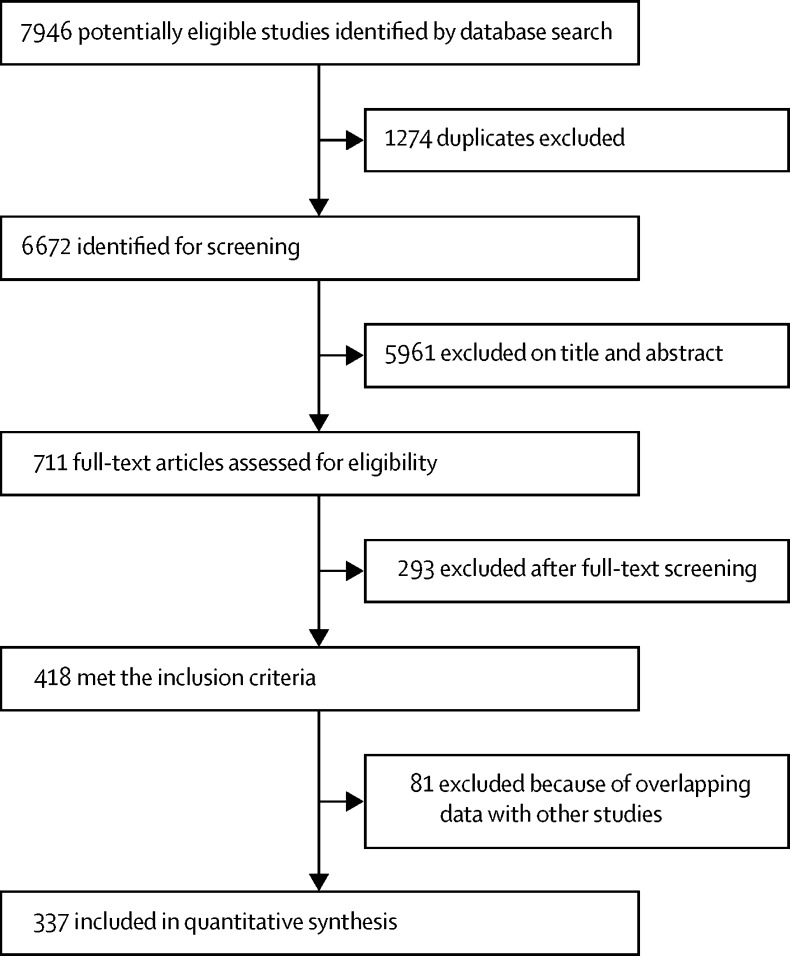
- The review included 337 studies from 38 countries out of 7,946 articles identified; after duplicate removal, the analysis included 2,835 datapoints.
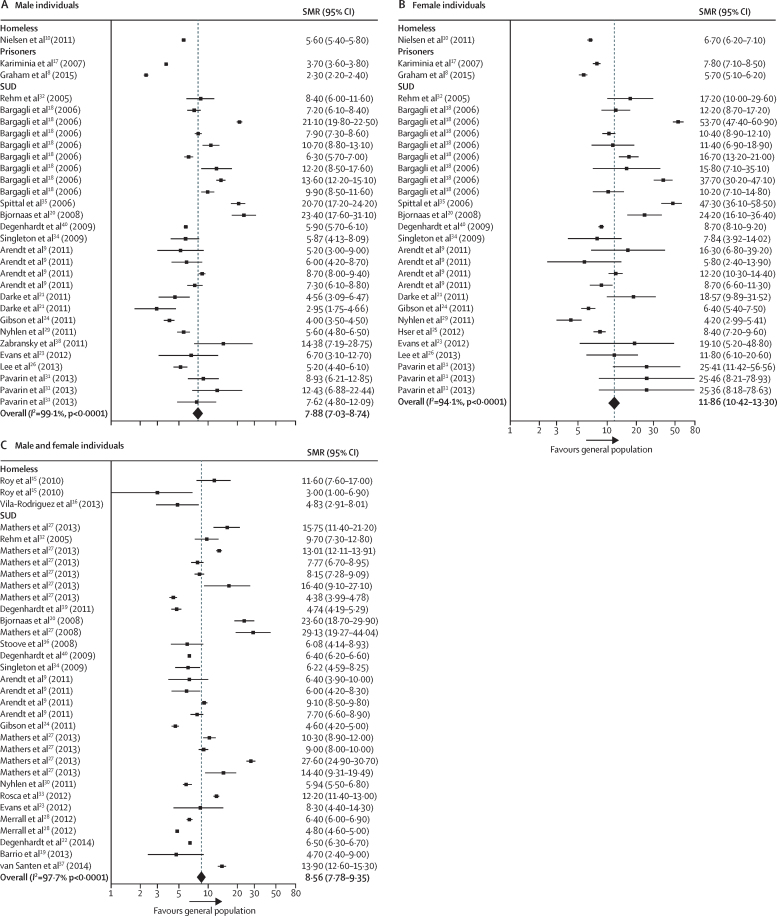
- All-cause mortality was elevated in 91 of 92 datapoints (99%); pooled all-cause SMRs were 11.86 (95% CI 10.42–13.30) in women and 7.88 (7.03–8.74) in men.
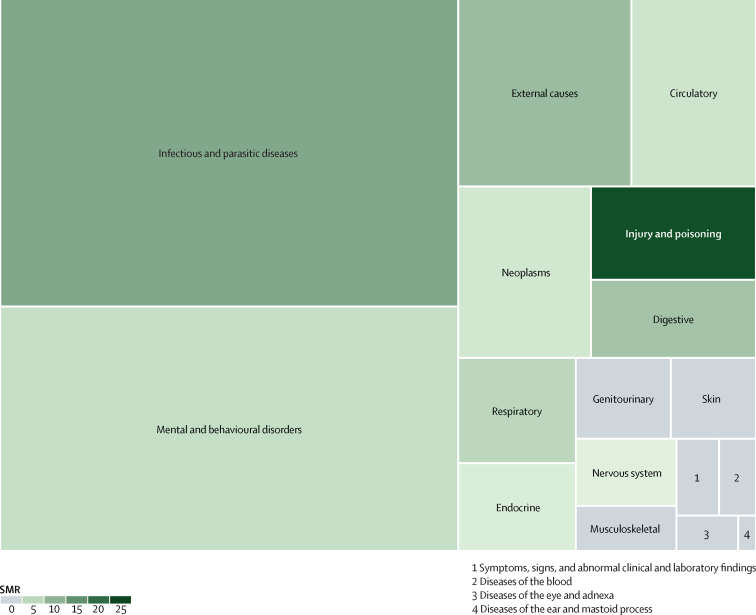
- The highest pooled SMRs were for injury, poisoning, and other external causes: 18.72 (13.73–23.71) in women and 7.89 (6.40–9.37) in men.
- Morbidity was consistently raised across multiple conditions, including infections (e.g., hepatitis C up to 90%, hepatitis B 67/103 [65%], latent tuberculosis infection 133/263 [51%]), mental health, cardiovascular, and respiratory conditions.
Methods
- Systematic review and meta-analysis of systematic reviews, meta-analyses, interventional studies, and observational studies published in English from Jan 1, 2005 to Oct 1, 2015 in high-income countries.
- Populations studied were people with a history of homelessness, imprisonment, sex work, or substance use disorder (excluding cannabis and alcohol use), with morbidity and mortality outcomes.
- Searches used MEDLINE, Embase, and the Cochrane Library; data were extracted from published reports, duplicates were removed, and random-effects models were used with I² to assess heterogeneity.
Limitations
- The paper states that heterogeneity was high across studies, so summary estimates should be interpreted with caution.
- The paper states that comparison groups varied and studies differed in definitions of inclusion health groups and in adjustment for deprivation and other risk factors.
- The paper states it searched only studies from 2005 onward, so it did not examine longer-term trends; it also could not assess other inclusion health groups.
- Evident from the text: sex workers were the least well investigated, and some outcomes had very sparse data (for example, only 44 studies reported cardiovascular outcomes; mental and behavioural disorder SMRs for some sex/sex-combined strata came from very few studies).
Model-written summary. Check it against the paper before relying on it.
Integrity signals
Registry
Cites
Statistics
Figures
Verification
Claims the paper makes
5 Valid · 0 Not valid · 17 Not checked · 74 Own results and interpretations
Every source the paper cites for this claim was checked and supports it.
In the paper
“highest reported was 32 [13%] of 247 individuals for coronary heart disease”
- Also stated in: § Results · plain
“The prevalence of coronary artery disease was 13% (32 of 247 individuals).53”
§ Morbidity and mortality in homeless individuals, prisoners, sex workers, and individuals with substance use disorders in high-income countries: a systematic review and meta-analysis > Abstract > Findings
What the sources say
- Supportedcites [53] Brown RT Kiely DK Bharel M Mitchell SL Geriatric syndromes in older homeless adults J Gen Intern Med 27 2012 16 22 21879368 PMC3250555 source
Table 1 (listed under Discussion; page not provided) reports coronary artery disease in 32 (13.1%) of the 247 homeless participants. The claim rounds this to 13%. Whether it was the highest prevalence across studies is the citing paper’s comparison, not a finding attributed to this source. (LLM, conf=0.92)
plainn = 247- Asserted: passes — The authors put it forward as true.
- Checkable: passes — It can be checked against evidence.
- Load-bearing: unclear — It is unclear whether the paper’s conclusions depend on it.
- Based: passes — The paper gives a reason why it holds.
- Also stated in: § Results · plain
Every source the paper cites for this claim was checked and supports it.
In the paper
“133 [51%] of 263 individuals for latent tuberculosis infection”
- Also stated in: § Results · plain
“51% (133 of 263)47 for latent tuberculosis infection”
§ Morbidity and mortality in homeless individuals, prisoners, sex workers, and individuals with substance use disorders in high-income countries: a systematic review and meta-analysis > Abstract > Findings
What the sources say
- Supportedcites [47] Tabuchi T Takatorige T Hirayama Y Tuberculosis infection among homeless persons and caregivers in a high-tuberculosis-prevalence area in Japan: a cross-sectional study BMC Infect Dis 11 2011 22 21255421 PMC3037881 source
Table 1 in the Results reports 133 positive QFT results among 263 homeless persons (50.6%, rounded to 51%). The Discussion treats QFT positivity as a measure of latent TB infection prevalence. (LLM, conf=0.93)
plainn = 263- Asserted: passes — The authors put it forward as true.
- Checkable: passes — It can be checked against evidence.
- Load-bearing: unclear — It is unclear whether the paper’s conclusions depend on it.
- Based: passes — The paper gives a reason why it holds.
- Also stated in: § Results · plain
Every source the paper cites for this claim was checked and supports it.
In the paper
“The prevalence of coronary artery disease was 13% (32 of 247 individuals).53”
§ Morbidity and mortality in homeless individuals, prisoners, sex workers, and individuals with substance use disorders in high-income countries: a systematic review and meta-analysis > Results
What the sources say
- Supportedcites [53] Brown RT Kiely DK Bharel M Mitchell SL Geriatric syndromes in older homeless adults J Gen Intern Med 27 2012 16 22 21879368 PMC3250555 source
Table 1 (shown under Discussion) reports coronary artery disease in 32 homeless subjects (13.1%), and its header gives the homeless sample as n=247. The citing sentence rounds 13.1% to 13%. (LLM, conf=0.95)
plainn = 247- Asserted: passes — The authors put it forward as true.
- Checkable: passes — It can be checked against evidence.
- Load-bearing: unclear — It is unclear whether the paper’s conclusions depend on it.
- Based: passes — The paper gives a reason why it holds.
- Supported
The cited sources support only part of this claim — read each source’s verdict below.
In the paper
“from 1% (one of 82)46 to 51% (133 of 263)47 for latent tuberculosis infection”
§ Morbidity and mortality in homeless individuals, prisoners, sex workers, and individuals with substance use disorders in high-income countries: a systematic review and meta-analysis > Results
What the sources say
- Partly supportedcites [46] Carbonara S Babudieri S Longo B Correlates of Mycobacterium tuberculosis infection in a prison population Eur Respir J 25 2005 1070 1076 15929964 sourceExperimental — accuracy not yet measured
Our copy of Carbonara et al. (2005) does contain the exact figure the citation is attached to: Table 1 (RESULTS/DISCUSSION section) reports tuberculin skin-test positivity of 1/82 (1.2%) among female inmates, i.e. the '1% (one of 82)' endpoint. However, that is a subgroup (female prisoners) rate, not the study's prevalence of latent TB infection: the paper states overall TST positivity of 80/448 (17.9%, 95% CI 14.3-21.4) in the RESULTS, and a range of 0-36.11% across the nine participating prisons in the DISCUSSION. So presenting 1/82 as this study's LTBI prevalence in a pooled range overstates the level at which the source reports it; the upper bound '51% (133 of 263)' carries a separate citation and appears nowhere in our copy (searched: '133 of 263', 'one of 82', prevalence ranges). (LLM, conf=0.78)
- Supportedcites [47] Tabuchi T Takatorige T Hirayama Y Tuberculosis infection among homeless persons and caregivers in a high-tuberculosis-prevalence area in Japan: a cross-sectional study BMC Infect Dis 11 2011 22 21255421 PMC3037881 source
The Results report 263 homeless participants and 50.6% QFT positivity, equivalent to 133 of 263 and rounded to 51%. The 1% figure is followed by a different citation (46), so it is not attributed to this paper. (LLM, conf=0.92)
plain- Asserted: passes — The authors put it forward as true.
- Checkable: passes — It can be checked against evidence.
- Load-bearing: unclear — It is unclear whether the paper’s conclusions depend on it.
- Based: passes — The paper gives a reason why it holds.
- Partly supported
A result the paper reports from its own data — it cites no other source for it, so there is none to check. The quote shows it is in the paper.
In the paper
“were 11·86 (95% CI 10·42–13·30; I2=94·1%) in female individuals”
- Also stated in: § Results · plain
“summary all-cause SMRs were higher in female individuals (11·86 [95% CI 10·42–13·30]; I2=94·1%; figure 3)”
§ Morbidity and mortality in homeless individuals, prisoners, sex workers, and individuals with substance use disorders in high-income countries: a systematic review and meta-analysis > Abstract > Findings
plain- Asserted: passes — The authors put it forward as true.
- Checkable: passes — It can be checked against evidence.
- Load-bearing: unclear — It is unclear whether the paper’s conclusions depend on it.
- Based: passes — The paper gives a reason why it holds.
- Also stated in: § Results · plain
53 more claims
Create a free account to see all 96 claims and to verify the 10 references still open.
- Probably not a substantial claim. 31
- The quote only partly states this claim. 1
- It may state two separate claims as one. 14
Claims other papers make about this one
Each is checked against this paper’s own text: does it say what the citing paper says it does?
The check wasn’t confident either way, so it gives no verdict — never disputed.
In the citing paper
“Risk of asthma is also increased in autism.18”
From The Lancet Psychiatry Commission: a blueprint for protecting physical health in people with mental illness (2019) · cites this paper as [18]
Experimental — accuracy not yet measuredThe check wasn’t confident either way, so it gives no verdict — never disputed.
In the citing paper
“Homeless people living in high-income countries have more untreated dental caries, more severe tooth loss, and are more likely to experience toothache compared to the general population.[45][46][47][48][49]”
From Oral diseases: a global public health challenge (2019) · cites this paper as [47]
Experimental — accuracy not yet measuredIn the citing paper
“Homelessness is associated with some of the highest levels of cross-sectoral inequities, including health care outcomes, in high-income countries.”
From Hospital Readmissions Among Patients Experiencing Homelessness: An Electronic Health Record Data Study (2024) · cites this paper as [1]
In the citing paper
“The theme Unmet human needs contributes to the mounting evidence of the extent to which social and economic disadvantages lead to huge health inequities (Aldridge et al., 2018;van Dongen et al., 2019;Fazel et al., 2014).”
From Homeless persons' experiences of health‐ and social care: A systematic integrative review (2020) · cites this paper as Aldridge et al., 2018
In the citing paper
“The Sustainable Development Agenda emphasises partnership to reach the Agenda 2030 goals, and in line with the findings of this review and previous research (Aldridge et al., 2018;Fazel et al., 2014;Slockers et al., 2018), partnership is crucial to adequately address the existing inequalities in health and well-being for individuals experiencing homelessness.”
From Homeless persons' experiences of health‐ and social care: A systematic integrative review (2020) · cites this paper as Aldridge et al., 2018
Citations
Cites
Quantifying heterogeneity in a meta‐analysis
Higgins, J. P. T., & Thompson, S. G. (2002) · Statistics in Medicine · doi:10.1002/sim.1186 · Cited by 36,763
Barnett, K., Mercer, S. W., Norbury, M., Watt, G., Wyke, S., & Guthrie, B. (2012) · The Lancet · doi:10.1016/s0140-6736(12)60240-2 · Cited by 6,972
Marmot, M. G., Allen, J., Goldblatt, P., Boyce, T., McNeish, D., Grady, M., & Geddes, I. (2010) · Europe PMC (PubMed Central) · Cited by 1,404
Substance abuse and dependence in prisoners: a systematic review
Fazel, S., Bains, P., & Doll, H. (2006) · Addiction · doi:10.1111/j.1360-0443.2006.01316.x · Cited by 839
Mortality among people who inject drugs: a systematic review and meta-analysis
Mathers, B. M., Degenhardt, L., Bucello, C., Lemon, J., Wiessing, L., & Hickman, M. (2013) · Bulletin of the World Health Organization · doi:10.2471/blt.12.108282 · Cited by 476
Reasons or excuses for avoiding meta-analysis in forest plots
Ioannidis, J. P. A., Patsopoulos, N. A., & Rothstein, H. R. (2008) · BMJ · doi:10.1136/bmj.a117 · Cited by 457
Luchenski, S., Maguire, N., Aldridge, R. W., Hayward, A., Story, A., Perri, P., Withers, J., Clint, S., Fitzpatrick, S., & Hewett, N. (2018) · The Lancet · doi:10.1016/s0140-6736(17)31959-1 · Cited by 430 · cited 2×
“In preparation for this Review, we searched the Cochrane Library, MEDLINE, and Embase databases for articles published between Jan 1, 2005, and Sept 30, 2013.”
BackgroundSelf-citationDegenhardt, L., Randall, D., Hall, W., Law, M., Butler, T., & Burns, L. (2009) · Drug and Alcohol Dependence · doi:10.1016/j.drugalcdep.2009.05.021 · Cited by 338
Social Exclusion: A Concept in Need of Definition?
Peace, R. (2001) · Social policy journal of New Zealand · Cited by 299
Pathways into Multiple Exclusion Homelessness in Seven UK Cities
Fitzpatrick, S., Bramley, G., & Johnsen, S. (2013) · Urban Studies · doi:10.1177/0042098012452329 · Cited by 265
Cited by
Items 101–200 of 878
Marinucci, M., Mazzoni, D., Pancani, L., & Riva, P. (2021) · Journal of Experimental Social Psychology · doi:10.1016/j.jesp.2021.104275 · Cited by 40
The Prevalence and Nature of Violence Against Women Experiencing Homelessness: A Quantitative Study
Calvo, F., Watts, B., Panadero, S., Giralt, C., Rived‐Ocaña, M., & Carbonell, X. (2021) · Violence Against Women · doi:10.1177/10778012211022780 · Cited by 92
“, 2013), and added to these “extreme health inequities” (Aldridge et al., 2018) is the increased risk of violence faced by IEH (Ellsworth, 2019; Gaetz, 2004).”
BackgroundDavey, C., Cowan, F. M., & Hargreaves, J. (2018) · Social Science & Medicine · doi:10.1016/j.socscimed.2018.06.017 · Cited by 41
Adams, E. A., Parker, J., Jablonski, T., Kennedy, J., Tasker, F., Hunter, D. J., Denham, K., Smiles, C., Muir, C., O'Donnell, A. J., et al. (2022) · International Journal of Environmental Research and Public Health · doi:10.3390/ijerph19063459 · Cited by 51
Adeyemi, I., Sanders, C., Ong, B. N., Howells, K., Quinlivan, L. M., Gorman, L. S., Giles, S. J., Amp, M., Monaghan, E., Naseem, S., et al. (2022) · Research Involvement and Engagement · doi:10.1186/s40900-022-00345-x · Cited by 39
“Context Studies indicate that people experiencing homelessness have higher levels of co-morbidity and shorter life expectancy than the general population, but are less likely to have access to safe and quality healthcare [25].”
BackgroundBajis, S., Grebely, J., Cooper, L., Smith, J. R., Owen, G., Chudleigh, A., Hajarizadeh, B., Martinello, M., Adey, S., Read, P. J., et al. (2019) · Journal of Viral Hepatitis · doi:10.1111/jvh.13112 · Cited by 38
The Anabolic Androgenic Steroid Treatment Gap: A National Study of Substance Use Disorder Treatment
Havnes, I. A., Jørstad, M. L., McVeigh, J., Hout, M. C. V., & Bjørnebekk, A. (2020) · Substance Abuse Research and Treatment · doi:10.1177/1178221820904150 · Cited by 37
“5% (46) reported plans to use AAS in the future, whereas only 3.”
BackgroundLenzi, M., Santinello, M., Gaboardi, M., Disperati, F., Vieno, A., Calcagnì, A., Greenwood, R. M., Rogowska, A. M., Wolf, J., Loubière, S., et al. (2020) · American Journal of Community Psychology · doi:10.1002/ajcp.12470 · Cited by 46
Potter, L. C., Horwood, J. P., & Feder, G. S. (2022) · BMC Health Services Research · doi:10.1186/s12913-022-07581-7 · Cited by 40
COVID-19 vaccine deliberation among people who inject drugs
Cioffi, C. C., Kosty, D. B., Nachbar, S., et al. (2022) · Drug and Alcohol Dependence Reports · doi:10.1016/j.dadr.2022.100046 · Cited by 34
“These conditions include infectious diseases such viral hepatitis A, B, and C; human immunodeficiency virus (HIV); and sexually transmitted infections as well as cardiovascular and respiratory conditions ( Aldridge et al., 2018 ; Bradshaw et al., 2005 ; Hagan et al., 2005 ; Koslik et al., 2020 ).”
The cost-effectiveness of an HCV outreach intervention for at-risk populations in London, UK
Ward, Z., Campbell, L., Surey, J., Platts, S., Glass, R., Hickman, M., Story, A., & Vickerman, P. T. (2019) · Journal of Antimicrobial Chemotherapy · doi:10.1093/jac/dkz451 · Cited by 34
Self-citationJagpal, P., Barnes, N., Lowrie, R., Banerjee, A., & Paudyal, V. (2019) · Pharmacy · doi:10.3390/pharmacy7040153 · Cited by 37
“People experiencing homelessness face up to twelve times higher mortality rates compared to the general population [4].”
BackgroundGicas, K. M., Jones, A. A., Thornton, A. E., Petersson, A. M., Livingston, E. M., Waclawik, K., Panenka, W. J., Barr, A. M., Lang, D. J., Vila‐Rodriguez, F., et al. (2020) · BJPsych Open · doi:10.1192/bjo.2020.3 · Cited by 38
Paudyal, V., Ghani, A., Shafi, T., Punj, E., Saunders, K., Vohra, N., Hughes, H. E., Elliot, A. J., Lowrie, R., & Pucci, M. (2021) · Public Health · doi:10.1016/j.puhe.2021.05.007 · Cited by 38
Mosites, E. M., Zulz, T., Bruden, D. J. T., Nolen, L. D., Frick, A., Castrodale, L. J., McLaughlin, J. B., Beneden, C. V., Hennessy, T. W., & Bruce, M. G. (2019) · Emerging infectious diseases · doi:10.3201/eid2510.181408 · Cited by 32
“PEH experience unmanaged chronic disease, undernutrition, substance abuse, mental health disorders, crowding, exposure to weather, and limited access to hygiene resources, all of which can increase their risk for infectious disease (5,6).”
BackgroundGuttmann, A., Blackburn, R. M., Amartey, A., Zhou, L., Wijlaars, L. P. M. M., Saunders, N. R., Harron, K. L., Chiu, M., & Gilbert, R. E. (2019) · PLoS Medicine · doi:10.1371/journal.pmed.1002974 · Cited by 35
“The higher risk of all-cause mortality we report is not surprising and has been shown in other marginalized groups or those with mental health problems [21,41].”
BackgroundLazarus, J. V., Baker, L., Cascio, M., Onyango, D., Schatz, E., Smith, A. C., & Spinnewijn, F. (2020) · BMJ Open · doi:10.1136/bmjopen-2019-035621 · Cited by 43
Howells, K., Burrows, M., Amp, M., Brennan, R., Yeung, W.-L., Jackson, S., Dickinson, J., Draper, J., Campbell, S., Ashcroft, D. M., et al. (2021) · International Journal for Equity in Health · doi:10.1186/s12939-020-01364-4 · Cited by 37
Ly, T. D. A., Castaneda, S., Hoang, V. T., Dao, T. L., & Gautret, P. (2021) · Vaccine · doi:10.1016/j.vaccine.2021.01.035 · Cited by 34
O’Gurek, D. T., Jatres, J. M., Gibbs, J., Latham, I., Udegbe, B., & Reeves, K. A. (2021) · Journal of Substance Abuse Treatment · doi:10.1016/j.jsat.2021.108342 · Cited by 32
Miller, J., Hutton, J., Doherty, C., Vallesi, S., Currie, J., Rushworth, K., Larkin, M., Scott, M. P., Morrow, J. R., & Wood, L. J. (2024) · BMC Health Services Research · doi:10.1186/s12913-024-10971-8 · Cited by 36
Parkes, T., Matheson, C., Carver, H., Foster, R., Budd, J., Liddell, D., Wallace, J., Pauly, B., Fotopoulou, M., Burley, A., et al. (2022) · Health Technology Assessment · doi:10.3310/wvvl4786 · Cited by 42
Paudyal, V., Smith, K. G., MacLure, K., Forbes‐McKay, K., Radley, A., & Stewart, D. C. (2019) · International Journal of Clinical Pharmacy · doi:10.1007/s11096-019-00789-4 · Cited by 31
COVID ‐19 vaccination among people who inject drugs: Leaving no one behind
Iversen, J., Peacock, A., Price, O. H., Byrne, J., Dunlop, A. J., & Maher, L. (2021) · Drug and Alcohol Review · doi:10.1111/dar.13273 · Cited by 34
“People reporting problematic use of alcohol and other drugs may represent a high-risk population in this respect, given their high prevalence of comorbid health conditions [8].”
BackgroundAlexiou, A., Mason, K., Fahy, K., Taylor-Robinson, D. C., & Barr, B. (2021) · International Journal of Housing Policy · doi:10.1080/19491247.2021.2002660 · Cited by 59
“Homeless people have higher rates of premature mortality and increased risk of drug- and alcohol-related deaths (Aldridge et al., 2018; Fazel et al., 2014; Ivers et al., 2019; Morrison, 2009).”
Formánek, T., Krupchanka, D., Mladá, K., Winkler, P., & Jones, P. B. (2022) · The Lancet Psychiatry · doi:10.1016/s2215-0366(22)00335-2 · Cited by 31
Field, H., Hudson, B. F., Hewett, N., & Khan, Z. (2019) · BMC Health Services Research · doi:10.1186/s12913-019-4620-1 · Cited by 31
Carter, A., Butler, A., Willoughby, M., Janca, E. K., Kinner, S. A., Southalan, L., Fazel, S., & Borschmann, R. (2022) · EClinicalMedicine · doi:10.1016/j.eclinm.2021.101266 · Cited by 45
The bidirectional association between psychiatric disorders and sheltered homelessness
Nilsson, S. F., Wimberley, T., Speyer, H., Hjorthøj, C. R., Fazel, S., Nordentoft, M., & Laursen, T. M. (2023) · Psychological Medicine · doi:10.1017/s0033291723002428 · Cited by 32
Self-citationPoverty and inequality in real-world schizophrenia: a national study
Fond, G. B., Yon, D. K., Tran, B. X., Mallet, J., Urbach, M., Leignier, S., Rey, R., Misdrahi, D., Llorca, P., Schürhoff, F., et al. (2023) · Frontiers in Public Health · doi:10.3389/fpubh.2023.1182441 · Cited by 39
Patterns and Epidemiology of Illicit Drug Use Among Sex Workers Globally: A Systematic Review
Iversen, J., Long, P., Lutnick, A., & Maher, L. (2021) · Springer eBooks · doi:10.1007/978-3-030-64171-9_6 · Cited by 34
Nilsson, S. F., Laursen, T. M., Osler, M., Hjorthøj, C. R., Benros, M. E., Ethelberg, S., Mølbak, K., & Nordentoft, M. (2021) · The Lancet Regional Health - Europe · doi:10.1016/j.lanepe.2022.100421 · Cited by 35
“10 11-13 In a systematic review of people experiencing homelessness, increased risk of SARS-CoV-2 infection, morbidity and mortality has been suggested, but the literature is scarce.”
Self-citationSchreiter, S., Speerforck, S., Schomerus, G., & Gutwinski, S. (2021) · Current Opinion in Psychiatry · doi:10.1097/yco.0000000000000715 · Cited by 27
“A variety of studies show higher rates of premature mortality compared to the rest of the population [2].”
BackgroundStewart, A. C., Cossar, R. D., Wilkinson, A. L., Quinn, B., Dietze, P., Walker, S., Butler, T. G., Curtis, M., Aitken, C. K., Kirwan, A., et al. (2021) · Drug and Alcohol Dependence · doi:10.1016/j.drugalcdep.2021.108970 · Cited by 32
Schreiter, S., Heidrich, S., Zulauf, J., Saathoff, U., Brückner, A., Majic, T., Rössler, W., Schouler-Ocak, M., Krausz, M. R., Bermpohl, F., et al. (2019) · BMJ Open · doi:10.1136/bmjopen-2019-032576 · Cited by 25
Kayrouz, R., Karin, E., Staples, L., Dear, B. F., Nielssen, O. B., & Titov, N. (2025) · BMC Psychiatry · doi:10.1186/s12888-025-06848-7 · Cited by 54
Ungpakorn, R., & Rae, B. (2019) · Journal of Advanced Nursing · doi:10.1111/jan.14225 · Cited by 32
Arya, S., Wilton, P., Page, D., Boma‐Fischer, L., Floros, G., Dainty, K. N., Winikoff, R., & Sholzberg, M. (2020) · PLoS ONE · doi:10.1371/journal.pone.0229099 · Cited by 28
“While the influence of SDOH has been documented in a myriad of clinical contexts including adverse pregnancy outcomes [5], mental health disorders [6], infectious diseases [7], cardiovascular health [7], and more historically cancer screening [8,9], diabetes [10], HIV [11,12], prenatal care utilization [13], ambulator…”
BackgroundImproving care transfers for homeless patients after hospital discharge: a realist evaluation
Cornes, M., Aldridge, R. W., Biswell, E., Byng, R., Clark, M., Foster, G. R., Fuller, J. S., Hayward, A. C., Hewett, N., Kilmister, A., et al. (2021) · Health Services and Delivery Research · doi:10.3310/hsdr09170 · Cited by 33
Self-citationEriksen, A. R. R., Fogh, K., Hasselbalch, R. B., Bundgaard, H., Nielsen, S. D., Jørgensen, C. S., Scharff, B. F. S. S., Erikstrup, C., Sækmose, S. G., Holm, D. K., et al. (2022) · BMC Public Health · doi:10.1186/s12889-022-13642-7 · Cited by 26
“PEH have more physical and mental health issues than the background population [9, 10] and often engage in substance abuse [7], which could increase their risk of infection and of a serious course of disease by SARSCoV-2 [11, 12].”
BackgroundCrowley, D., Cullen, W., Lambert, J. S., & Hout, M. C. V. (2019) · PLoS ONE · doi:10.1371/journal.pone.0222186 · Cited by 27
Das‐Munshi, J., Chang, C., Dregan, A., Hatch, S. L., Morgan, C., Thornicroft, G., Stewart, R. J., & Hotopf, M. H. (2020) · Psychological Medicine · doi:10.1017/s0033291720001087 · Cited by 34
“health inequalities, due to being marginalised and socially excluded (Aldridge et al., 2018).”
BackgroundMontgomery, M. P., Carry, M., Garcia‐Williams, A. G., Marshall, B. N., Besrat, B. N., Bejarano, F., Carlson, J., Rutledge, T., & Mosites, E. M. (2021) · Journal of Community Psychology · doi:10.1002/jcop.22583 · Cited by 29
“Furthermore, PEH might be at increased risk for severe illness from COVID‐19 due to the increased prevalence of chronic medical conditions and barriers to accessing healthcare that can lead to delays in seeking care (Aldridge et al., 2018; Baggett et al., 2010; Fryling et al., 2015).”
BackgroundNegotiating Multiple Stigmas: Substance Use in the Lives of Women Experiencing Homelessness
Thomas, N., & Menih, H. (2021) · International Journal of Mental Health and Addiction · doi:10.1007/s11469-021-00560-9 · Cited by 36
Harland, J., Adams, E. A., Boobis, S., Cheetham, M., Wiseman, A., & Ramsay, S. E. (2021) · European Journal of Public Health · doi:10.1093/eurpub/ckab142 · Cited by 25
Lindner, A. K., Sarma, N., Rust, L. M., Hellmund, T., Krasovski-Nikiforovs, S., Wintel, M., Klaes, S. M., Hörig, M., Monert, S., Schwarzer, R., et al. (2021) · BMC Infectious Diseases · doi:10.1186/s12879-021-06945-4 · Cited by 25
“Due to poor linkage-to-healthcare as well as lack of fulfilment of basic needs, they have higher occurrence of chronic mental and physical conditions, and higher mortality rates [1-3].”
BackgroundCoombs, T., Abdelkader, A. M., Ginige, T., Calster, P. V., Harper, M., Al‐Jumeily, D., & Assi, S. A. (2023) · Emerging Trends in Drugs Addictions and Health · doi:10.1016/j.etdah.2023.100059 · Cited by 36
Illicit Substance Use and Treatment Access Among Adults Experiencing Homelessness
Assaf, R. D., Morris, M. D., Straus, E. R., Martinez, P., Philbin, M. M., & Kushel, M. (2025) · JAMA · doi:10.1001/jama.2024.27922 · Cited by 26
The vulnerability of young homeless people
Heerde, J. A., & Patton, G. C. (2020) · The Lancet Public Health · doi:10.1016/s2468-2667(20)30121-3 · Cited by 26
HCV micro‐elimination in two prisons in Milan, Italy: A model of care
Giuliani, R., Casigliani, V., Fornili, M., et al. (2020) · Journal of Viral Hepatitis · doi:10.1111/jvh.13376 · Cited by 24
Paisi, M., March‐McDonald, J., Burns, L., Snelgrove‐Clarke, E., Withers, L., & Shawe, J. (2020) · BMJ Sexual & Reproductive Health · doi:10.1136/bmjsrh-2020-200799 · Cited by 30
Traumatic brain injury and homelessness: from prevalence to prevention
Young, J. T., & Hughes, N. (2019) · The Lancet Public Health · doi:10.1016/s2468-2667(19)30225-7 · Cited by 26
Contrasting traditions in homelessness research between the UK and US
Culhane, D. P., Fitzpatrick, S., & Treglia, D. (2020) · Policy Press eBooks · doi:10.2307/j.ctv10kmc3j.12 · Cited by 28
Richardson, L., Dong, H., Kerr, T. H., Milloy, M., & Hayashi, K. (2020) · Addiction · doi:10.1111/add.15182 · Cited by 24
Chan, V., Estrella, M. J., Baddeliyanage, R., Shah, R., Babineau, J., & Colantonio, A. (2022) · Frontiers in Medicine · doi:10.3389/fmed.2022.916602 · Cited by 29
Currie, J., Stafford, A., Hutton, J., & Wood, L. J. (2023) · International Journal of Environmental Research and Public Health · doi:10.3390/ijerph20032424 · Cited by 28
“People experiencing homelessness have vastly higher mortality and morbidity rates compared with people who are housed [1] and a sobering three-decade gap in average life expectancy [2–4].”
BackgroundChang, J. S., Saxton, K. B., Bright, G., Jorden, M. A., Gutierrez, A., & Xia, K. (2023) · PLoS ONE · doi:10.1371/journal.pone.0281912 · Cited by 29
“This is in contrast to most studies that have shown unhoused women have increased risk of mortality compared to the general population [31, 32].”
ResultEvaluation of training on palliative care for staff working within a homeless hostel
Shulman, C. E., Hudson, B. F., Kennedy, P., Brophy, N., & Stone, P. C. (2018) · Nurse Education Today · doi:10.1016/j.nedt.2018.09.022 · Cited by 24
Campos-Matos, I., Stannard, J., de Sousa, E., et al. (2019) · The Lancet Public Health · doi:10.1016/s2468-2667(19)30227-0 · Cited by 23
Mazher, S., & Arai, T. (2025) · European Journal of Trauma & Dissociation · doi:10.1016/j.ejtd.2025.100516 · Cited by 39
Fujita, M., Matsuoka, S., Kiyohara, H., Kumakura, Y., Takeda, Y., Goishi, N., Tarui, M., Inaba, M., Nagai, M., Hachiya, M., et al. (2020) · Tropical Medicine and Health · doi:10.1186/s41182-020-00281-0 · Cited by 22
Heaslip, V., Green, S. M., Simkhada, B., Doğan, H., & Richer, S. (2021) · International Journal of Environmental Research and Public Health · doi:10.3390/ijerph19010046 · Cited by 27
“This pattern is also reflected internationally as a systematic review and meta-analysis across 38 countries by Aldridge et al. (2018) [15], who identified all-cause mortality and standardised mortality ratios of 7.9 for men and 11.9 for women.”
BackgroundMethodInfluentialOral health inequalities and disability: Closing the gap
Faulks, D. (2023) · Community Dentistry And Oral Epidemiology · doi:10.1111/cdoe.12843 · Cited by 26
Hartmann, C. F., Neiva-Silva, L., Corrêa, M. L., et al. (2021) · Journal of Community Health · doi:10.1007/s10900-021-01010-2 · Cited by 21
Moss, C., Sutton, M., Cheraghi‐Sohi, S., Sanders, C., & Allen, T. (2021) · BMJ Open · doi:10.1136/bmjopen-2021-049811 · Cited by 21
Dugre, J. R., Orban, P., & Potvin, S. (2022) · Addiction Biology · doi:10.1111/adb.13257 · Cited by 26
Street Medicine: Creating a “Classroom Without Walls” for Teaching Population Health
Doohan, N. C., & Mishori, R. (2019) · Medical Science Educator · doi:10.1007/s40670-019-00849-4 · Cited by 21
Using evidence to end homelessness
Teixeira, L. (2023) · Policy Press eBooks · doi:10.51952/9781447365112.ch012 · Cited by 21
Stewart, A. C., Cossar, R. D., Walker, S., Wilkinson, A. L., Quinn, B., Dietze, P., Winter, R., Kirwan, A., Curtis, M., Ogloff, J. R. P., et al. (2021) · BMC Medical Research Methodology · doi:10.1186/s12874-021-01380-0 · Cited by 20
Systemic barriers to care coordination for marginalized and vulnerable populations
Santos, P., Faughnan, K., Prost, C. A., & Tschampl, C. A. (2021) · Journal of Social Distress and the Homeless · doi:10.1080/10530789.2021.2021361 · Cited by 26
“People living with serious mental illnesses and/or substance use disorders have a higher incidence of and worse outcomes from a variety of physical illnesses compared with people without those conditions (Aldridge et al., 2018; Onyeka et al., 2019; Viron & Stern, 2010).”
BackgroundAmundsen, E. J., Bretteville‐Jensen, A. L., & Rossow, I. M. (2022) · BMC Public Health · doi:10.1186/s12889-022-13199-5 · Cited by 23
Social capital and women’s narratives of homelessness and multiple exclusion in northern England
McGrath, J., Crossley, S. J., Lhussier, M., & Forster, N. (2023) · International Journal for Equity in Health · doi:10.1186/s12939-023-01846-1 · Cited by 30
Crooks, J., Flemming, K., Shulman, C., & Hudson, B. F. (2023) · Research Involvement and Engagement · doi:10.1186/s40900-023-00436-3 · Cited by 21
Witham, G., Galvani, S., & Peacock, M. (2019) · Health & Social Care in the Community · doi:10.1111/hsc.12807 · Cited by 31
Latif, A., Mandane, B., Ali, A., Ghumra, S., & Gulzar, N. (2020) · Pharmacy · doi:10.3390/pharmacy8020073 · Cited by 25
Youm, Y., Baldina, E., & Baek, J. (2021) · Scientific Reports · doi:10.1038/s41598-020-80684-5 · Cited by 21
Adolescent Antecedents of Young Adult Homelessness: a Cross-national Path Analysis
Heerde, J. A., Bailey, J. A., Toumbourou, J. W., Rowland, B., & Catalano, R. F. (2021) · Prevention Science · doi:10.1007/s11121-021-01267-y · Cited by 20
Experiences of heat stress while homeless on hot summer days in Adelaide
Every, D., McLennan, J., Osborn, E., & Cook, C. (2021) · Australian Journal of Emergency Management · doi:10.47389/36.4.55 · Cited by 22
“Another group that is at risk from extreme weather is the homeless (Aldridge et al. 2018).”
BackgroundNicholas, W., Greenwell, L., Henwood, B. F., & Simon, P. (2021) · American Journal of Public Health · doi:10.2105/ajph.2021.306502 · Cited by 27
Measuring oral health—How can the International Classification of Functioning help?
Faulks, D., Scambler, S., Daly, B., Jamieson, L., Hennèquin, M., & Tsakos, G. (2022) · Community Dentistry And Oral Epidemiology · doi:10.1111/cdoe.12732 · Cited by 24
Porter, N. A. C., Brosnan, H. K., Chang, A. H., Henwood, B. F., & Kuhn, R. (2022) · JAMA Network Open · doi:10.1001/jamanetworkopen.2022.45263 · Cited by 20
Siersbaek, R., Ford, J. A., Cheallaigh, C. N., Thomas, S., & Burke, S. (2023) · International Journal for Equity in Health · doi:10.1186/s12939-023-02029-8 · Cited by 23
“…long-term homelessness often have poorer health outcomes than their housed peers [1, 2] and as a result, they have a need for more frequent and more comprehensive healthcare interventions and at the same time, as a population group, they experience more difficulties in accessing healthcare [1–6].”
BackgroundNilsson, S. F., Laursen, T. M., Hjorthøj, C. R., & Nordentoft, M. (2019) · Acta Psychiatrica Scandinavica · doi:10.1111/acps.13082 · Cited by 19
“Homelessness has been suggested to be at the most extreme end of the scale of health inequality in high-income societies (7).”
BackgroundSelf-citationComparing the Impact of Primary Care Practice Design in Two Inner City UK Homelessness Services
Zeitler, M., Williamson, A. E., Budd, J., Spencer, R. E., Queen, A., & Lowrie, R. (2020) · Journal of Primary Care & Community Health · doi:10.1177/2150132720910568 · Cited by 20
Parkes, T., Carver, H., Masterton, W., Falzon, D., Dumbrell, J., Grant, S., & Wilson, I. (2021) · Harm Reduction Journal · doi:10.1186/s12954-021-00508-1 · Cited by 19
Rhee, T. G., & Rosenheck, R. A. (2020) · Journal of Epidemiology & Community Health · doi:10.1136/jech-2020-214305 · Cited by 20
Currie, J., Grech, E., Longbottom, E., Yee, J., Hastings, R., Aitkenhead, A., Cason, A., & Obrecht, K. (2021) · PLoS ONE · doi:10.1371/journal.pone.0254100 · Cited by 20
Barriers to Accessing Addiction Treatment for Women at Risk of Homelessness
Rizzo, D., Mu, T., Cotroneo, S., & Arunogiri, S. (2022) · Frontiers in Global Women s Health · doi:10.3389/fgwh.2022.795532 · Cited by 27
Depression, aging, and immunity: implications for COVID-19 vaccine immunogenicity
Ford, B. N., & Savitz, J. B. (2022) · Immunity & Ageing · doi:10.1186/s12979-022-00288-7 · Cited by 19
Conway, A., Valerio, H., Alavi, M., Silk, D., Treloar, C., Hajarizadeh, B., Marshall, A. D., Martinello, M., Milat, A., Dunlop, A. J., et al. (2022) · Viruses · doi:10.3390/v14071555 · Cited by 27
“lack of appropriate housing [44] are detrimental to health and access to health services, likely slowing progress to HCV elimination.”
BackgroundLuchenski, S. A., Dawes, J., Aldridge, R. W., Stevenson, F. A., Tariq, S., Hewett, N., & Hayward, A. C. (2022) · EClinicalMedicine · doi:10.1016/j.eclinm.2022.101657 · Cited by 23
Self-citationInclusion health patient perspectives on remote access to general practice: a qualitative study
Verity, A., & Brown, V. T. (2023) · BJGP Open · doi:10.3399/bjgpo.2023.0023 · Cited by 21
Anderson, A., Noyes, K., & Hewner, S. J. (2023) · Frontiers in Health Services · doi:10.3389/frhs.2023.1124054 · Cited by 21
Knerich, V., Jones, A. A., Seyedin, S., Siu, C., Dinh, L., Mostafavi, S., Barr, A. M., Panenka, W. J., Thornton, A. E., Honer, W. G., et al. (2019) · PLoS ONE · doi:10.1371/journal.pone.0222611 · Cited by 26
“Substance use disorders, along with mental and physical illness form the “tri-morbidity” affecting socially marginalized people living in precarious housing or homelessness [1,2].”
BackgroundLy, T. D. A., Dao, T. L., Hoang, V. T., Braunstein, D., Brouqui, P., Lagier, J., Parola, P., & Gautret, P. (2020) · Travel Medicine and Infectious Disease · doi:10.1016/j.tmaid.2020.101768 · Cited by 19
Wang, A., Pridham, K. F., Nisenbaum, R. A., Pedersen, C., Brown, R. J., & Hwang, S. W. (2021) · Journal of General Internal Medicine · doi:10.1007/s11606-020-06483-w · Cited by 26
Self-citationKaushal, R., Jagpal, P., Khanal, S., Vohra, N., Lowrie, R., Johal, J., Jenkins, D., Saunders, K., & Paudyal, V. (2021) · BJGP Open · doi:10.3399/bjgpo.2021.0050 · Cited by 17
Oosman, S. N., Weber, G., Ogunson, M., & Bath, B. L. (2019) · Physiotherapy Canada · doi:10.3138/ptc.2017-85.pc · Cited by 19
Mental wellbeing among people in prison in Scotland: an analysis of repeat cross-sectional surveys
Tweed, E., Gounari, X., & Graham, L. (2019) · Journal of Public Health · doi:10.1093/pubmed/fdz106 · Cited by 22
“9 People with experience of prison are known to experience much poorer health compared to the general population, 10,11 even after accounting for socioeconomic position and other potential confounding factors.”
Self-citationPalliative care for homeless and vulnerably housed people: scoping review and thematic synthesis
James, R., Flemming, K., Hodson, M., & Oxley, T. (2021) · BMJ Supportive & Palliative Care · doi:10.1136/bmjspcare-2021-003020 · Cited by 17
Metadata
- Authors
- Aldridge, R. W., Story, A., Hwang, S. W., Nordentoft, M., Luchenski, S. A., Hartwell, G., Tweed, E. J., Lewer, D., Vittal Katikireddi, S., & Hayward, A. C.
- Affiliations
- Farr Institute (GB)
- University College London Hospitals NHS Foundation Trust (GB)
- St. Michael's Hospital (CA)
- University of Copenhagen (DK)
- London School of Hygiene & Tropical Medicine (GB)
- Chief Scientist Office (GB)
- Corresponding author
- Aldridge, Robert W
- ORCID
- Venue
- The Lancet
- Publisher
- Elsevier BV
- Published
- 2018-01
- Volume
- 391
- Issue
- 10117
- Pages
- 241-250
- ISSN
- 0099-5355 (ISSN-L)
- 0140-6736
- PMC
- PMC5803132
- OpenAlex
- W2767478650
- Semantic Scholar
- 539f6280f7c6141ef52a95f9ca66923feacd517c
- Cited by
- 905
- References
- 66
- Citations by year
- 2026: 92 · 2025: 122 · 2024: 126 · 2023: 127 · 2022: 110 · 2021: 121 · 2020: 99 · 2019: 68 · 2018: 35
- FWCI
- 9.87
- Type
- journal article
- Language
- en
- Open access
- hybrid
- doi.org
- Licence
- cc-by
- www.elsevier.com/tdm/userlicense/1.0/ (tdm)
- creativecommons.org/licenses/by/4.0/ (vor)
- Locations
- The Lancet (publishedVersion, cc-by)
- Europe PMC (PubMed Central) (publishedVersion, cc-by)
- PubMed Central (publishedVersion, cc-by)
- PubMed (publishedVersion)
- Research at the University of Copenhagen (University of Copenhagen) (publishedVersion, cc-by)
- ENLIGHTEN (Jurnal Bimbingan dan Konseling Islam) (acceptedVersion, cc-by-sa)
- LSHTM Research Online (London School of Hygiene and Tropical Medicine) (acceptedVersion)
- UCL Discovery (University College London) (submittedVersion)
- HRB National Drugs Library (Health Research Board) (submittedVersion)
- Funders
- Wellcome Trust (Z/17/Z, 206602, 206602/Z/17/Z)
- National Institute for Health and Care Research (ICA-CDRF-2015-01-017, 206602/Z/17/Z, CL-2015-18-011)
- University College London
- Lundbeckfonden (R155-2014-1724, R248‐2017‐2003)
- University College London Hospitals NHS Foundation Trust
- National Institutes of Health
- Medical Research Council (MC_UU_12017/13, MC_UU_12017/15)
- Topics
- Social Sciences › Sociology and Political Science › Homelessness and Social Issues
- Health Sciences › Medicine › Epidemiology › HIV, Drug Use, Sexual Risk
- Social Sciences › Sociology and Political Science › Criminal Justice and Corrections Analysis
- Keywords
- homelessness, incarceration, sex workers, substance use disorders, morbidity, mortality, standardized mortality ratio, hepatitis C, hepatitis B, HIV, tuberculosis, sexually transmitted infections, social exclusion, poverty, marginalization, multimorbidity, inclusion health, high-income countries, sex differences in mortality, hepatitis B screening, tuberculosis screening, HIV screening, STI screening
- MeSH terms
- Ill-Housed Persons, Humans, Morbidity, Mortality, Prisoners, Socioeconomic Factors, Developed Countries, Substance-Related Disorders, Health Status Disparities, Sex Workers, Social Marginalization
About these checks
Registry, retraction, Cites and statistics results are computed, not judged, with one exception: a printed reference that no index lists is read once by a model before it counts as a citation error. Claims are extracted by a model and kept only when their quote appears verbatim in the text; each cited source is then checked, with a model’s help, for whether it says what the claim relies on. Those verdicts can be wrong — read the claim’s quote and the cited source before relying on one.
The claim verdicts this report counts are experimental: their accuracy is not yet measured.
A language model drew the claims from the paper on 2026-10-10, under version 3 of the claim definition (model deepseek-v4.1-flash, prompt extract-v3).
A second model labelled each claim on 2026-10-10 (model jev-1.13-20260917, definition revision gold-guideline-v0.2).
Cited sources are checked with a language model’s help (gpt-6-sol and qwen3.8-omni-flash).
Statistics and arithmetic are recomputed, not judged.
Confidence bands are shown only for fields calibrated on our annotated test set. None is calibrated yet, so no band is shown.
What counts as a claim ›How we measure confidence ›How we check this ›
Are you an author, or do you see a problem with this page? Request a review
Data sources
Bibliographic data: Semantic Scholar, OpenAlex, Crossref.
Contains information from the Semantic Scholar Academic Graph Datasets, made available under the ODC Attribution License (ODC-BY 1.0).
Semantic Scholar’s data is described in: Kinney, R., et al. (2023). The Semantic Scholar Open Data Platform. arXiv:2301.10140.
