

Morbidity and mortality in homeless individuals, prisoners, sex workers, and individuals with substance use disorders in high-income countries: a systematic review and meta-analysis
Open accessThe DOI matches its Crossref record; 61 of the 66 references it cites were found in a registry or an index; 6 of the 35 sources its claims cite were checked for support.
Abstract
Inclusion health focuses on people in extremely poor health due to poverty, marginalisation, and multimorbidity.
Overview
CoChat Summary
TL;DR
This systematic review and meta-analysis found extreme morbidity and mortality inequities among homeless populations, prisoners, sex workers, and people with substance use disorders in high-income countries. All-cause mortality SMRs were 7.88 in men and 11.86 in women, with especially high excess mortality from injury, poisoning, and other external causes.
Key findings
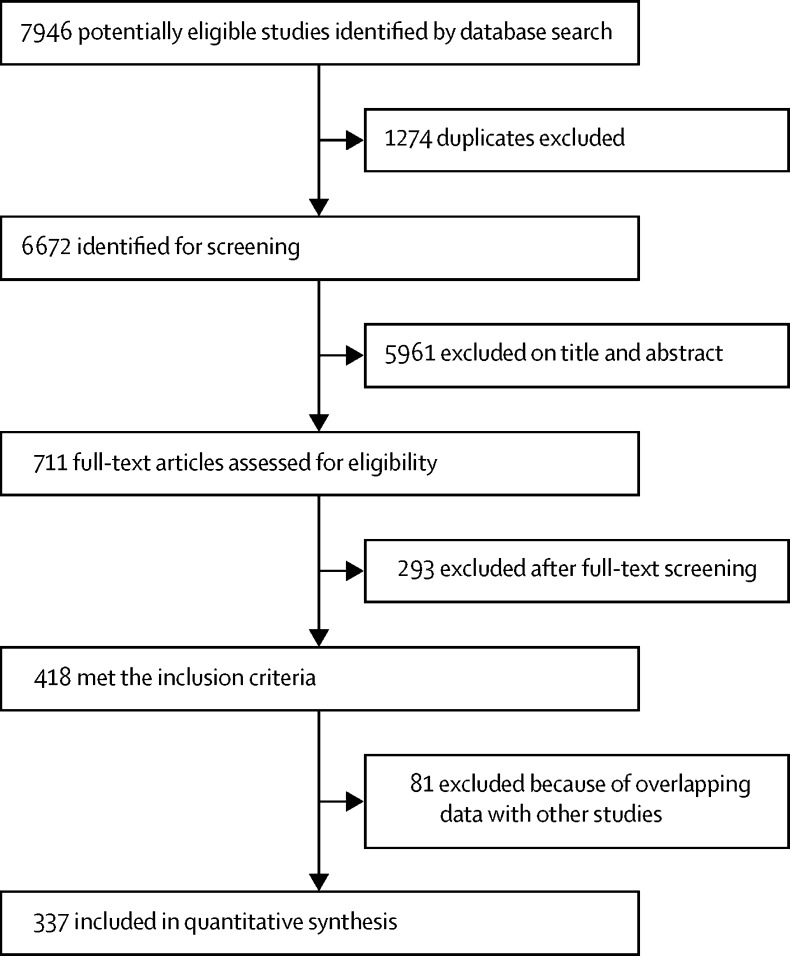
- The review included 337 studies from 38 countries out of 7,946 articles identified; after duplicate removal, the analysis included 2,835 datapoints.
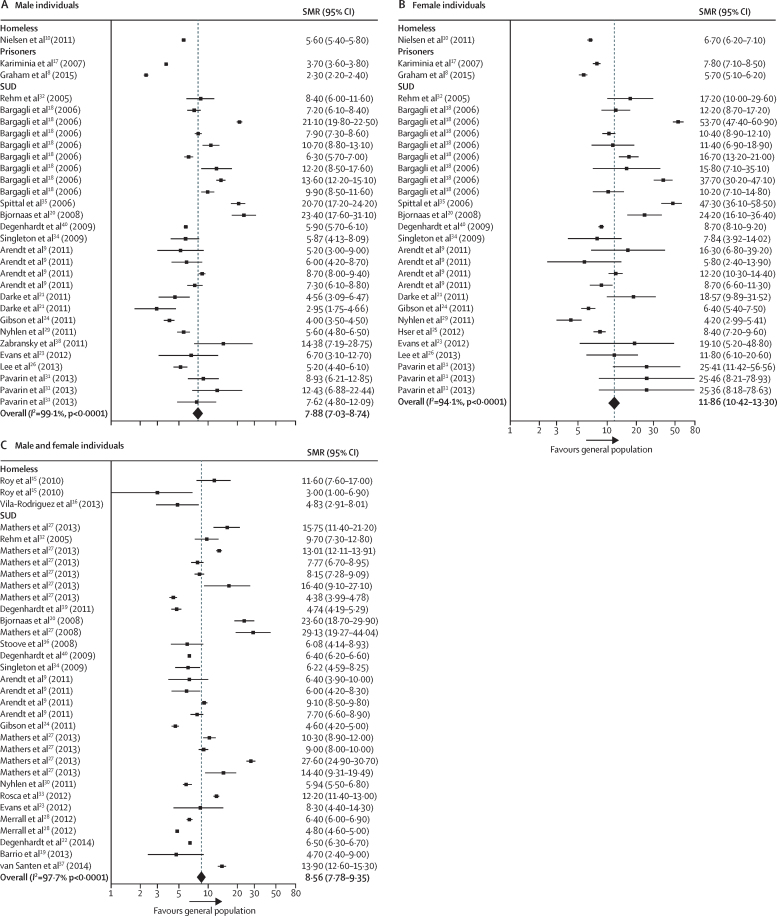
- All-cause mortality was elevated in 91 of 92 datapoints (99%); pooled all-cause SMRs were 11.86 (95% CI 10.42–13.30) in women and 7.88 (7.03–8.74) in men.
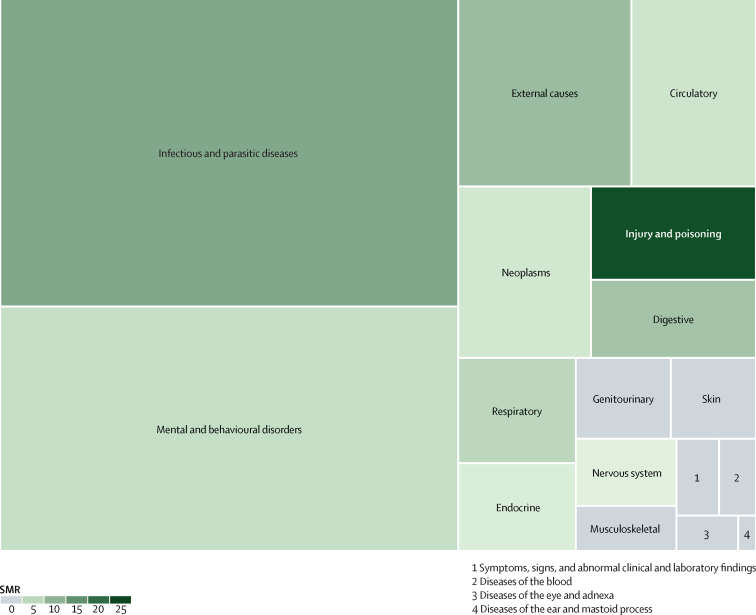
- The highest pooled SMRs were for injury, poisoning, and other external causes: 18.72 (13.73–23.71) in women and 7.89 (6.40–9.37) in men.
- Morbidity was consistently raised across multiple conditions, including infections (e.g., hepatitis C up to 90%, hepatitis B 67/103 [65%], latent tuberculosis infection 133/263 [51%]), mental health, cardiovascular, and respiratory conditions.
Methods
- Systematic review and meta-analysis of systematic reviews, meta-analyses, interventional studies, and observational studies published in English from Jan 1, 2005 to Oct 1, 2015 in high-income countries.
- Populations studied were people with a history of homelessness, imprisonment, sex work, or substance use disorder (excluding cannabis and alcohol use), with morbidity and mortality outcomes.
- Searches used MEDLINE, Embase, and the Cochrane Library; data were extracted from published reports, duplicates were removed, and random-effects models were used with I² to assess heterogeneity.
Limitations
- The paper states that heterogeneity was high across studies, so summary estimates should be interpreted with caution.
- The paper states that comparison groups varied and studies differed in definitions of inclusion health groups and in adjustment for deprivation and other risk factors.
- The paper states it searched only studies from 2005 onward, so it did not examine longer-term trends; it also could not assess other inclusion health groups.
- Evident from the text: sex workers were the least well investigated, and some outcomes had very sparse data (for example, only 44 studies reported cardiovascular outcomes; mental and behavioural disorder SMRs for some sex/sex-combined strata came from very few studies).
Model-written summary. Check it against the paper before relying on it.
Integrity signals
Registry
Cites
Statistics
Figures
Verification
Claims the paper makes
5 Valid · 0 Not valid · 17 Not checked · 74 Own results and interpretations
Every source the paper cites for this claim was checked and supports it.
In the paper
“highest reported was 32 [13%] of 247 individuals for coronary heart disease”
- Also stated in: § Results · plain
“The prevalence of coronary artery disease was 13% (32 of 247 individuals).53”
§ Morbidity and mortality in homeless individuals, prisoners, sex workers, and individuals with substance use disorders in high-income countries: a systematic review and meta-analysis > Abstract > Findings
What the sources say
- Supportedcites [53] Brown RT Kiely DK Bharel M Mitchell SL Geriatric syndromes in older homeless adults J Gen Intern Med 27 2012 16 22 21879368 PMC3250555 source
Table 1 (listed under Discussion; page not provided) reports coronary artery disease in 32 (13.1%) of the 247 homeless participants. The claim rounds this to 13%. Whether it was the highest prevalence across studies is the citing paper’s comparison, not a finding attributed to this source. (LLM, conf=0.92)
plainn = 247- Asserted: passes — The authors put it forward as true.
- Checkable: passes — It can be checked against evidence.
- Load-bearing: unclear — It is unclear whether the paper’s conclusions depend on it.
- Based: passes — The paper gives a reason why it holds.
- Also stated in: § Results · plain
Every source the paper cites for this claim was checked and supports it.
In the paper
“133 [51%] of 263 individuals for latent tuberculosis infection”
- Also stated in: § Results · plain
“51% (133 of 263)47 for latent tuberculosis infection”
§ Morbidity and mortality in homeless individuals, prisoners, sex workers, and individuals with substance use disorders in high-income countries: a systematic review and meta-analysis > Abstract > Findings
What the sources say
- Supportedcites [47] Tabuchi T Takatorige T Hirayama Y Tuberculosis infection among homeless persons and caregivers in a high-tuberculosis-prevalence area in Japan: a cross-sectional study BMC Infect Dis 11 2011 22 21255421 PMC3037881 source
Table 1 in the Results reports 133 positive QFT results among 263 homeless persons (50.6%, rounded to 51%). The Discussion treats QFT positivity as a measure of latent TB infection prevalence. (LLM, conf=0.93)
plainn = 263- Asserted: passes — The authors put it forward as true.
- Checkable: passes — It can be checked against evidence.
- Load-bearing: unclear — It is unclear whether the paper’s conclusions depend on it.
- Based: passes — The paper gives a reason why it holds.
- Also stated in: § Results · plain
Every source the paper cites for this claim was checked and supports it.
In the paper
“The prevalence of coronary artery disease was 13% (32 of 247 individuals).53”
§ Morbidity and mortality in homeless individuals, prisoners, sex workers, and individuals with substance use disorders in high-income countries: a systematic review and meta-analysis > Results
What the sources say
- Supportedcites [53] Brown RT Kiely DK Bharel M Mitchell SL Geriatric syndromes in older homeless adults J Gen Intern Med 27 2012 16 22 21879368 PMC3250555 source
Table 1 (shown under Discussion) reports coronary artery disease in 32 homeless subjects (13.1%), and its header gives the homeless sample as n=247. The citing sentence rounds 13.1% to 13%. (LLM, conf=0.95)
plainn = 247- Asserted: passes — The authors put it forward as true.
- Checkable: passes — It can be checked against evidence.
- Load-bearing: unclear — It is unclear whether the paper’s conclusions depend on it.
- Based: passes — The paper gives a reason why it holds.
- Supported
The cited sources support only part of this claim — read each source’s verdict below.
In the paper
“from 1% (one of 82)46 to 51% (133 of 263)47 for latent tuberculosis infection”
§ Morbidity and mortality in homeless individuals, prisoners, sex workers, and individuals with substance use disorders in high-income countries: a systematic review and meta-analysis > Results
What the sources say
- Partly supportedcites [46] Carbonara S Babudieri S Longo B Correlates of Mycobacterium tuberculosis infection in a prison population Eur Respir J 25 2005 1070 1076 15929964 sourceExperimental — accuracy not yet measured
Our copy of Carbonara et al. (2005) does contain the exact figure the citation is attached to: Table 1 (RESULTS/DISCUSSION section) reports tuberculin skin-test positivity of 1/82 (1.2%) among female inmates, i.e. the '1% (one of 82)' endpoint. However, that is a subgroup (female prisoners) rate, not the study's prevalence of latent TB infection: the paper states overall TST positivity of 80/448 (17.9%, 95% CI 14.3-21.4) in the RESULTS, and a range of 0-36.11% across the nine participating prisons in the DISCUSSION. So presenting 1/82 as this study's LTBI prevalence in a pooled range overstates the level at which the source reports it; the upper bound '51% (133 of 263)' carries a separate citation and appears nowhere in our copy (searched: '133 of 263', 'one of 82', prevalence ranges). (LLM, conf=0.78)
- Supportedcites [47] Tabuchi T Takatorige T Hirayama Y Tuberculosis infection among homeless persons and caregivers in a high-tuberculosis-prevalence area in Japan: a cross-sectional study BMC Infect Dis 11 2011 22 21255421 PMC3037881 source
The Results report 263 homeless participants and 50.6% QFT positivity, equivalent to 133 of 263 and rounded to 51%. The 1% figure is followed by a different citation (46), so it is not attributed to this paper. (LLM, conf=0.92)
plain- Asserted: passes — The authors put it forward as true.
- Checkable: passes — It can be checked against evidence.
- Load-bearing: unclear — It is unclear whether the paper’s conclusions depend on it.
- Based: passes — The paper gives a reason why it holds.
- Partly supported
A result the paper reports from its own data — it cites no other source for it, so there is none to check. The quote shows it is in the paper.
In the paper
“were 11·86 (95% CI 10·42–13·30; I2=94·1%) in female individuals”
- Also stated in: § Results · plain
“summary all-cause SMRs were higher in female individuals (11·86 [95% CI 10·42–13·30]; I2=94·1%; figure 3)”
§ Morbidity and mortality in homeless individuals, prisoners, sex workers, and individuals with substance use disorders in high-income countries: a systematic review and meta-analysis > Abstract > Findings
plain- Asserted: passes — The authors put it forward as true.
- Checkable: passes — It can be checked against evidence.
- Load-bearing: unclear — It is unclear whether the paper’s conclusions depend on it.
- Based: passes — The paper gives a reason why it holds.
- Also stated in: § Results · plain
53 more claims
Create a free account to see all 96 claims and to verify the 10 references still open.
- Probably not a substantial claim. 31
- The quote only partly states this claim. 1
- It may state two separate claims as one. 14
Claims other papers make about this one
Each is checked against this paper’s own text: does it say what the citing paper says it does?
The check wasn’t confident either way, so it gives no verdict — never disputed.
In the citing paper
“Risk of asthma is also increased in autism.18”
From The Lancet Psychiatry Commission: a blueprint for protecting physical health in people with mental illness (2019) · cites this paper as [18]
Experimental — accuracy not yet measuredThe check wasn’t confident either way, so it gives no verdict — never disputed.
In the citing paper
“Homeless people living in high-income countries have more untreated dental caries, more severe tooth loss, and are more likely to experience toothache compared to the general population.[45][46][47][48][49]”
From Oral diseases: a global public health challenge (2019) · cites this paper as [47]
Experimental — accuracy not yet measuredIn the citing paper
“Homelessness is associated with some of the highest levels of cross-sectoral inequities, including health care outcomes, in high-income countries.”
From Hospital Readmissions Among Patients Experiencing Homelessness: An Electronic Health Record Data Study (2024) · cites this paper as [1]
In the citing paper
“The theme Unmet human needs contributes to the mounting evidence of the extent to which social and economic disadvantages lead to huge health inequities (Aldridge et al., 2018;van Dongen et al., 2019;Fazel et al., 2014).”
From Homeless persons' experiences of health‐ and social care: A systematic integrative review (2020) · cites this paper as Aldridge et al., 2018
In the citing paper
“The Sustainable Development Agenda emphasises partnership to reach the Agenda 2030 goals, and in line with the findings of this review and previous research (Aldridge et al., 2018;Fazel et al., 2014;Slockers et al., 2018), partnership is crucial to adequately address the existing inequalities in health and well-being for individuals experiencing homelessness.”
From Homeless persons' experiences of health‐ and social care: A systematic integrative review (2020) · cites this paper as Aldridge et al., 2018
Citations
Cites
Quantifying heterogeneity in a meta‐analysis
Higgins, J. P. T., & Thompson, S. G. (2002) · Statistics in Medicine · doi:10.1002/sim.1186 · Cited by 36,763
Barnett, K., Mercer, S. W., Norbury, M., Watt, G., Wyke, S., & Guthrie, B. (2012) · The Lancet · doi:10.1016/s0140-6736(12)60240-2 · Cited by 6,972
Marmot, M. G., Allen, J., Goldblatt, P., Boyce, T., McNeish, D., Grady, M., & Geddes, I. (2010) · Europe PMC (PubMed Central) · Cited by 1,404
Substance abuse and dependence in prisoners: a systematic review
Fazel, S., Bains, P., & Doll, H. (2006) · Addiction · doi:10.1111/j.1360-0443.2006.01316.x · Cited by 839
Mortality among people who inject drugs: a systematic review and meta-analysis
Mathers, B. M., Degenhardt, L., Bucello, C., Lemon, J., Wiessing, L., & Hickman, M. (2013) · Bulletin of the World Health Organization · doi:10.2471/blt.12.108282 · Cited by 476
Reasons or excuses for avoiding meta-analysis in forest plots
Ioannidis, J. P. A., Patsopoulos, N. A., & Rothstein, H. R. (2008) · BMJ · doi:10.1136/bmj.a117 · Cited by 457
Luchenski, S., Maguire, N., Aldridge, R. W., Hayward, A., Story, A., Perri, P., Withers, J., Clint, S., Fitzpatrick, S., & Hewett, N. (2018) · The Lancet · doi:10.1016/s0140-6736(17)31959-1 · Cited by 430 · cited 2×
“In preparation for this Review, we searched the Cochrane Library, MEDLINE, and Embase databases for articles published between Jan 1, 2005, and Sept 30, 2013.”
BackgroundSelf-citationDegenhardt, L., Randall, D., Hall, W., Law, M., Butler, T., & Burns, L. (2009) · Drug and Alcohol Dependence · doi:10.1016/j.drugalcdep.2009.05.021 · Cited by 338
Social Exclusion: A Concept in Need of Definition?
Peace, R. (2001) · Social policy journal of New Zealand · Cited by 299
Pathways into Multiple Exclusion Homelessness in Seven UK Cities
Fitzpatrick, S., Bramley, G., & Johnsen, S. (2013) · Urban Studies · doi:10.1177/0042098012452329 · Cited by 265
Cited by
Items 501–600 of 878
Mobile addiction treatment units: a narrative review
Barrera, I., Wang, G., Rajakumar, B., Muthupalaniappan, S., Cronin, A. E., & Chatterjee, A. (2025) · Addiction Science & Clinical Practice · doi:10.1186/s13722-025-00619-1 · Cited by 5
“Over-dose rates are historically high among marginalized populations, especially people experiencing homeless-ness [5, 6].”
McKee, M., Howden‐Chapman, P., Braithwaite, I., & Bentley, R. (2025) · Health Promotion International · doi:10.1093/heapro/daaf238 · Cited by 9
“Those without a stable shelter are more exposed to violence, illness, and discrimination (Aldridge et al. 2018).”
The healthcare plight of offenders in the community
Skinner, G. C. M., & Farrington, D. P. (2022) · Criminal Behaviour and Mental Health · doi:10.1002/cbm.2258 · Cited by 3
Tweed, E., Leyland, A. H., Morrison, D. S., & Katikireddi, S. V. (2023) · European Journal of Public Health · doi:10.1093/eurpub/ckad034 · Cited by 3
Self-citationPotter, L. C., McDonagh, L., Horwood, J. P., Farr, M., Feder, G. S., & Wong, G. (2023) · Wellcome Open Research · doi:10.12688/wellcomeopenres.19460.2 · Cited by 3
Dawes, J., Walters, K. R., Frost, R., Bagkeris, E., Burton, A., Hertzberg, D., & Hayward, A. C. (2024) · NIHR Open Research · doi:10.3310/nihropenres.13545.1 · Cited by 4
Self-citationHodwitz, K., Ginocchio, G. F., Fedorovsky, T., Girdler, H., Bossin, B., Juandó‐Prats, C., Dell, E. M., Somers, A., & Hulme, J. (2024) · Canadian Journal of Emergency Medicine · doi:10.1007/s43678-024-00735-y · Cited by 3
Paulus, K., Bass, S. B., Kelly, P. J. A., Pilla, J., Otor, A., Scialanca, M., Arroyo, A., & Faison, N. (2024) · Advances in Drug and Alcohol Research · doi:10.3389/adar.2024.12197 · Cited by 3
Mourad, A., McGeer, R., Gray, E., Bibby-Jones, A.-M., Gage, H., Salvaggio, L., Charles, V., Sanderson, N., O'Sullivan, M., Bird, T. D., et al. (2024) · JHEP Reports · doi:10.1016/j.jhepr.2024.101183 · Cited by 3
Morin, K. A., Molke, D., Aubin, N., et al. (2024) · BMC Health Services Research · doi:10.1186/s12913-024-12027-3 · Cited by 3
Isabel, M., Turgeon, D., Lessard, É., Panaite, A., Ballu, G., Desroches, O., Rouly, G., & Boivin, A. (2025) · International Journal of Integrated Care · doi:10.5334/ijic.8594 · Cited by 5
Deimel, D., Feldmann, L., Scherbaum, N., Firk, C., & Fleißner, S. (2025) · Harm Reduction Journal · doi:10.1186/s12954-025-01256-2 · Cited by 5
“Homeless individuals face a higher mortality rate [42].”
Morin, K. A., Hill, L. C., Knowlan, S., Bodson, A., Nikodem, P., Aubin, N., Marsh, D. C., & Leary, T. (2025) · PLoS ONE · doi:10.1371/journal.pone.0325083 · Cited by 3
“Previous studies have independently explored hospital admissions associated with alcohol-related presentations [22] and opioid-related presentations [6,8,21], yet few have directly compared these two groups within the same analytical framework.”
Social Inclusion, Social Exclusion and Health Promotion
Liamputtong, P., & Rice, Z. S. (2025) · Springer eBooks · doi:10.1007/978-981-97-0821-5_14-2 · Cited by 7
Broderick, J. M., Waugh, A., Govern, M. M., Alpine, L., Kiernan, S., Murphy, N., Hodalova, S., Feehan, S., & Cheallaigh, C. N. (2019) · HRB Open Research · doi:10.12688/hrbopenres.12939.2 · Cited by 3
“Socially excluded populations have a mortality rate eight times higher than the average for men, and nearly 12 times higher for women (Aldridge et al., 2018).”
BackgroundMongiatti, M., Bayle, P., Lagarrigue, A., Fabre, D., Telmon, N., Lapeyre‐Mestre, M., & Jouanjus, É. (2020) · Therapies · doi:10.1016/j.therap.2020.06.017 · Cited by 3
Templeton, L. J., Galvani, S., & Peacock, M. (2021) · International Journal of Mental Health and Addiction · doi:10.1007/s11469-020-00445-3 · Cited by 4
Disparities affecting incarcerated burn-injured patients: Insight from the National Burn Repository
Nosanov, L. S., McLawhorn, M. M., Banda, A. M., Johnson, L. S., & Shupp, J. W. (2021) · Burns · doi:10.1016/j.burns.2021.07.005 · Cited by 4
The health of individuals experiencing homelessness: a 15-year retrospective cohort study
Calvo, F., Alfranca, R., Carbonell, X., Molina, E., & Font‐Mayolas, S. (2022) · Journal of Social Distress and the Homeless · doi:10.1080/10530789.2022.2069404 · Cited by 3
Grech, E., Longbottom, E., Yee, J., Hastings, R., Aitkenhead, A., Cason, A., Obrecht, K., & Currie, J. (2022) · Journal of Social Distress and the Homeless · doi:10.1080/10530789.2022.2130590 · Cited by 3
“(Aldridge et al., 2018) While, their health needs are greater than general population, people experiencing homelessness often have reduced capacity to access healthcare.”
BackgroundDawes, J., May, T., Fancourt, D. E., & Burton, A. (2022) · International Journal of Environmental Research and Public Health · doi:10.3390/ijerph192315526 · Cited by 4
“It is known that PEH have substantially poorer health than the general population, with cohort studies showing a three- to six-fold increased mortality risk, high levels of chronic illness and mental health problems [8,9].”
BackgroundO’Leary, C., Teixeira, L., Coren, E., Kiss, Z., Roberts, A., & Amitage, H. (2022) · Campbell Systematic Reviews · doi:10.1002/cl2.1290 · Cited by 3
“They often have repeated, but intermittent, contact with a range of publicly funded services, particularly health (Aldridge et al., 2018), criminal justice (Bramley et al., 2020), and local government (Dobson, 2019).”
BackgroundHomelessness: partnerships and approaches to tackling complex needs
Woods, A., Hughes, B., Lace, R., et al. (2023) · Mental Health and Social Inclusion · doi:10.1108/mhsi-11-2022-0081 · Cited by 3
Holmes, C., Holmes, K. A., Scarborough, J., Hunt, J. J., d’Etienne, J. P., Ho, A. F., Alanis, N., Kirby, R., Schrader, C. D., & Wang, H. (2023) · The American Journal of Emergency Medicine · doi:10.1016/j.ajem.2023.01.029 · Cited by 4
Gicas, K. M., Benitah, K. C., Thornton, A. E., Petersson, A. M., Jones, P., Stubbs, J. L., Jones, A. A., Panenka, W. J., Lang, D. J., Leonova, O., et al. (2023) · The Clinical Neuropsychologist · doi:10.1080/13854046.2023.2178513 · Cited by 5
“Homeless and precariously housed persons comprise a heterogeneous, socially impoverished population who face high rates of severe mental illness, substance use disorders, and premature mortality in comparison to the general population (Aldridge et al., 2018; Gutwinski et al., 2021).”
BackgroundRich, K. M., Guardado, R., Bigham, Z. R., et al. (2023) · Gastro Hep Advances · doi:10.1016/j.gastha.2023.03.016 · Cited by 3
Calvo, F., Guillén, A., Carbonell, X., Alfranca, R., Beranuy, M., Parés-Bayerri, A., & Font‐Mayolas, S. (2023) · BMC Public Health · doi:10.1186/s12889-023-16109-5 · Cited by 5
“Individuals experiencing homelessness (IEHs) suffer from severe inequities in a wide range of biological, psychological, and social conditions [1].”
BackgroundBridges to Elders: A Program to Improve Outcomes for Older Women Experiencing Homelessness
Flike, K., Means, R., Chou, J., Shi, L., & Hayman, L. L. (2023) · Health Promotion Practice · doi:10.1177/15248399231192992 · Cited by 3
Shulman, C., Rogans-Watson, R., Palipane, N., Lewer, D., Yeung, M., & Hudson, B. F. (2024) · Housing Care and Support · doi:10.1108/hcs-06-2023-0012 · Cited by 3
Self-citationCytogenotoxicity effects in addicts with multidrug consumption
Santiago, A. E. G., Gómez‐Cabrera, A. S., Baptista-Rosas, R. C., Zúñiga‐González, G. M., Gómez‐Meda, B. C., Sobrevilla-Navarro, A. A., & Parada, M. G. S. (2024) · Environmental and Molecular Mutagenesis · doi:10.1002/em.22584 · Cited by 3
Pinto, G. L. B., Santarém, V. Á., Ribeiro, J., et al. (2024) · Transboundary and Emerging Diseases · doi:10.1155/2024/9390381 · Cited by 3
“Incarcerated persons, along with refugees and homeless, have been considered the three most vulnerable populations in disease morbidity and mortality [4].”
Goldstein, S. C., Newberger, N. G., Schick, M. R., Ferguson, J. J., Collins, S. E., Haeny, A. M., & Weiss, N. H. (2024) · The American Journal of Drug and Alcohol Abuse · doi:10.1080/00952990.2024.2308087 · Cited by 4
Rathod, S. D., Annand, P., Hosseini, P., Guise, A., & Platt, L. (2024) · BJPsych Open · doi:10.1192/bjo.2024.34 · Cited by 3
“16 The combination of social exclusion and medical vulnerability results in inequit-able health outcomes, culminating in premature mortality 16 – 18 and standardised mortality ratios 2 – 5 times higher than in the general population.”
BackgroundRetractedKlarare, A., Vamstad, J., Mattsson, E., Kneck, Å., & Salzmann‐Erikson, M. (2024) · Critical Public Health · doi:10.1080/09581596.2024.2342334 · Cited by 9
“…rights perpetuates health inequities (Marmot et al., 2012), and since women experiencing homelessness are disproportionally affected by physical and mental illness, sexual violence, increased morbidity, and premature death (Aldridge et al., 2018; Chambers et al., 2014), this is urgent to address.”
The use of health services by women living homeless in Madrid, Spain
Lenta, M., Panadero, S., Iorio, J. D., & Vázquez, J. J. (2024) · Poverty & Public Policy · doi:10.1002/pop4.401 · Cited by 3
Sharifi, E., Ghelbash, Z., Karami, A., & Musarezaie, A. (2024) · Middle East Current Psychiatry · doi:10.1186/s43045-024-00432-7 · Cited by 6
“On the other hand, since drug users, particularly chronic users, are exposed to weaker health conditions and have less access to healthcare services due to social factors such as rejection and fear of social stigma, it is essential to provide education in line with increasing awareness [23].”
BackgroundPalliative Care Support in People Experiencing Homelessness
Shulman, C., & Hudson, B. F. (2024) · Springer eBooks · doi:10.1007/978-3-319-31738-0_124-1 · Cited by 1
Fair space for life: A dynamic care monitor working up to growth and flourishing for all
van Everdingen, C., Peerenboom, P. B., van de Giessen, I., van der Velden, K., & Delespaul, P. (2024) · International Journal of Social Psychiatry · doi:10.1177/00207640241264657 · Cited by 6
“Besides, research disclosed the extent and transgenerational effects of health inequity in socially deprived populations (Aldridge et al., 2018; Nilsson et al., 2017; Termorshuizen et al., 2014).”
BackgroundVariables associated with higher community integration among permanent supportive housing residents
Armoon, B., & Fleury, M. (2024) · Journal of Social Distress and the Homeless · doi:10.1080/10530789.2024.2411477 · Cited by 3
“Individuals experiencing homelessness encounter many challenges (Aldridge et al., 2018).”
Social Inclusion, Social Exclusion and Health Promotion
Liamputtong, P., & Rice, Z. S. (2024) · Springer eBooks · doi:10.1007/978-981-97-0821-5_14-1 · Cited by 4
Restroom access and health among people experiencing homelessness: A focus on San Diego, CA
Calzo, J. P., Carson, J., Swayne, M. R. E., Felner, J. K., & Carroll, M. W. (2024) · Journal of Water Sanitation and Hygiene for Development · doi:10.2166/washdev.2024.160 · Cited by 5
Gibbs, D., Shakeshaft, A. P., Walker, S., Larney, S., & Farnbach, S. (2024) · International Journal of Offender Therapy and Comparative Criminology · doi:10.1177/0306624x241290626 · Cited by 3
“…(Baldry et al., 2018; Graffam & Shinkfield, 2012), mental health (Binswanger et al., 2007; Forsyth et al., 2018), and alcohol and other drug (Aldridge et al., 2018; Graffam & Shinkfield, 2012; Stewart et al., 2018; Wildeman & Wang, 2017; Yukhnenko et al.,2019) challenges typically…”
Homelessness, inclusion health, and gender
Johnsen, S. (2025) · International Journal of Housing Policy · doi:10.1080/19491247.2025.2455794 · Cited by 4
Alcohol consumption and all‐cause mortality: Further implications
Rehm, J. T. (2018) · Drug and Alcohol Review · doi:10.1111/dar.12889 · Cited by 3
Dezman, Z. D. W., Gorelick, D. A., Buchanan, L. S., & Soderstrom, C. A. (2020) · Injury · doi:10.1016/j.injury.2020.10.048 · Cited by 4
Stewart, A. C., Cossar, R. D., Wilkinson, A. L., Scott, N., Dietze, P., Quinn, B., Kinner, S. A., Aitken, C. K., Walker, S., Curtis, M., et al. (2021) · Australian & New Zealand Journal of Psychiatry · doi:10.1177/00048674211048143 · Cited by 5
“, 2015) and underscores the importance of post-release accommodation support, particularly given the association between homelessness and experiencing physical health morbidity and reimprisonment (Aldridge et al., 2018; Baldry et al., 2016).”
BackgroundInfluentialConway, B., Rodríguez‐Tajes, S., García-Retortillo, M., Pérez-Hernandez, P., Teti, E., Ryan, P., Fraser, C., Macedo, G., Morano, L. E., de Lédinghen, V., et al. (2021) · Future Virology · doi:10.2217/fvl-2021-0266 · Cited by 3
Salas, F. T. T. (2021) · Investigación e Innovación Revista Científica de Enfermería · doi:10.33326/27905543.2021.2.1222 · Cited by 3
Scheibe, A. P., Gloeck, N. R., Madela-Mntla, E. N., Renkin, W., Shelly, S., Lalla, S., Kroukamp, L., Beer, S. F. D., & Hugo, J. F. M. (2022) · South African Health Review · doi:10.61473/001c.75405 · Cited by 7
Victorian systems will not solve modern prison health problems
Price, K., & Godfrey, B. (2019) · The Lancet · doi:10.1016/s0140-6736(19)30112-6 · Cited by 4
Karadzhov, D. (2019) · Journal of Psychiatric and Mental Health Nursing · doi:10.1111/jpm.12575 · Cited by 4
“public health and a human rights emergency (Aldridge et al., 2018).”
BackgroundMedicine on the margins: learning opportunities for undergraduates within inclusion health
Sharman, M., Clark, E., Gure-Klinke, H., et al. (2020) · Education for Primary Care · doi:10.1080/14739879.2020.1812439 · Cited by 3
Daundasekara, S. S., Iwundu, C. N., Hernandez, D. C., Maria, D. S., Zvolensky, M. J., Kendzor, D. E., & Businelle, M. S. (2021) · Journal of Social Distress and the Homeless · doi:10.1080/10530789.2021.1908488 · Cited by 3
O’Leary, C., Roberts, A., Teixeira, L., & Coren, E. (2022) · Campbell Systematic Reviews · doi:10.1002/cl2.1289 · Cited by 3
“They can have repeated, but intermittent, contact with a range of publicly funded services, particularly health (Aldridge et al., 2018), criminal justice (Bramley et al., 2020), and local government (Dobson, 2019).”
BackgroundMiller, J., Hutton, J., Doherty, C., et al. (2023) · Research Square · doi:10.21203/rs.3.rs-3201609/v1 · Cited by 3
Social care in prisons: Urgent development required
O’Neill, A., Shaw, J. J., Plugge, E., Brimblecombe, N., Hargreaves, C., Robinson, C., & Forsyth, K. (2024) · Medicine Science and the Law · doi:10.1177/00258024241233462 · Cited by 5
“Whilst social care in prison remains dysfunctional, impri-soned people will continue to suffer disadvantage, margin-alisation, and vulnerability, on top of that which many have already endured, 14,16 – 18 , 21”
BackgroundEvaluation of a Pathway team for homeless mental health in-patients
Tulloch, A. D., Khan, Z., Hewett, N., Koehne, S., & Rao, R. (2023) · BJPsych Bulletin · doi:10.1192/bjb.2022.61 · Cited by 3
Health status and self-perception of health among homeless people in Spain: a mixed-methods study
Bedmar, M. A., Capitán‐Moyano, L., Bennasar‐Veny, M., Moreno, C., Carrero‐Planells, A., & Yáñez, A. M. (2024) · Frontiers in Public Health · doi:10.3389/fpubh.2024.1444888 · Cited by 10
“Homeless people (HP) have increased rates of mortality and morbidity (10, 11) that can be attributed to substantial health inequities (12, 13).”
BackgroundD’Andrea, G., Ouellet‐Plamondon, C., Villeneuve, M., Shah, J. L., Iyer, S. N., & Abdel‐Baki, A. (2024) · Psychiatry Research · doi:10.1016/j.psychres.2024.116184 · Cited by 3
“Homelessness also has a strong bi-directional association with substance use (Aldridge et al., 2018) and severe mental illness (Nilsson et al., 2024); poverty, family conflicts, and victimization are among the highest prevalent drivers of homelessness among youth (Embleton et al., 2016).”
Simón, M., Latečková, B., & Potluka, O. (2024) · International Journal of Nursing Studies · doi:10.1016/j.ijnurstu.2024.104929 · Cited by 6
Canham, S. L., Rehn, K., Rice, E. R. W., Guo, J., Wu, C., Emerson, J., Olsen, J., Norton, D., Berner-Davis, L., & Greenwood, E. (2024) · Journal of Social Distress and the Homeless · doi:10.1080/10530789.2024.2426286 · Cited by 2
Conte, M., Imbert, E., Avila, R., Christopoulos, K., Taylor, G., Erguera, X. A., Charlebois, E. D., Havlir, D. V., Gandhi, M., Koester, K. A., et al. (2025) · AIDS Patient Care and STDs · doi:10.1089/apc.2024.0228 · Cited by 2
Jubinville, W., Ducharme, R., Hendryckx, C., Roy, L., & Bottari, C. L. (2025) · Disability and Rehabilitation · doi:10.1080/09638288.2025.2496359 · Cited by 4
“…faced by people experiencing homelessness with a TBI [2]; A lack of trust of people experiencing homelessness in the ability of the healthcare system to provide adequate support [3]; A responsibility that falls into the hands of an already overstretched community sector [4]; Transforming care.”
Klarare, A., Mattsson, E., Gaber, S. N., Rapaport, P., & Rosenblad, A. (2025) · Violence Against Women · doi:10.1177/10778012251351935 · Cited by 7
“Inclusion health is a service, research, and policy agenda aimed at addressing signi fi cant health disparities and the reduced life expectancy experienced by marginalized groups through collaborative efforts across sectors — nationally and internationally (Aldridge et al., 2018).”
Grief and love: Responses to death and disjuncture in homelessness research and practice
Malenfant, J. (2025) · Social Science & Medicine · doi:10.1016/j.socscimed.2025.118887 · Cited by 2
Mundt, A. P., Rozas-Serri, E., Rojas, B. I. A., Morales-Rojas, A., Cifuentes-Gramajo, P. A., Alvarado, S., Baranyi, G., Borschmann, R., Fazel, S., & Kinner, S. A. (2025) · BMJ Open · doi:10.1136/bmjopen-2025-111125 · Cited by 3
Eshetu, H. B., Blackford, K., Lobo, R. C., Alemu, M. B., Tessema, G. A., & Crawford, G. (2026) · Journal of Immigrant and Minority Health · doi:10.1007/s10903-026-01849-4 · Cited by 5
Nacht, C. L., Skaathun, B., Ogarrio, K., Durbin-Matrone, R., Wright, L., Reich, R. R., Reich, K., & Stojanovski, K. (2026) · Harm Reduction Journal · doi:10.1186/s12954-025-01376-9 · Cited by 2
“Housing instability is a major social determinant of health, linked with lower access to healthcare and both adverse mental and physical health outcomes [74, 75].”
Dorrans, B., Tindall, M., Thomson, R., Mackinnon, S., Broadbent, P., Wells, V., Williamson, A. E., & Katikireddi, S. V. (2026) · Journal of Epidemiology & Community Health · doi:10.1136/jech-2025-225296 · Cited by 2
“57 It is beyond the scope of this review and meta-analysis to determine the causal effect of imprisonment itself on NCDs.”
Self-citationCruz-Piedrahita, C., Luna-Martinez, M., & Delgado-Serrano, M. D. M. (2026) · BMC Public Health · doi:10.1186/s12889-026-27282-8 · Cited by 2
The biology of marginalization
Slagstad, K. (2018) · Tidsskrift for Den norske legeforening · doi:10.4045/tidsskr.18.0056 · Cited by 1
Hepatitis C treatment in patients with substance use disorder: the faster the better
Saviano, A., Héroin, L., Mayer, P., & Baumert, T. F. (2022) · HepatoBiliary Surgery and Nutrition · doi:10.21037/hbsn-21-507 · Cited by 2
Prioritizing homelessness in emergency medicine education: A concept paper
Buono, B. D., Salhi, B. A., Kimmel, A. E., Santen, S. A., Jarrell, K. L., White, M. H., Brown, C. K., & Moll, J. L. (2022) · AEM Education and Training · doi:10.1002/aet2.10753 · Cited by 3
Cost-Effectiveness of a Homeless Care Transition Program: Durham Homeless Care Transitions
Biederman, D. J., Harker, M. J., Schmid, L., et al. (2022) · North Carolina Medical Journal · doi:10.18043/ncm.83.6.454 · Cited by 2
Using Evidence to End Homelessness
Teixeira, L., Cartwright, J., & Halpern, D. (2020) · Policy Press eBooks · doi:10.56687/9781447354109 · Cited by 5
Gittins, R., Teck, J. T. W., Knowles, R., Clarke, N., & Baldacchino, A. (2023) · Frontiers in Psychiatry · doi:10.3389/fpsyt.2023.1224376 · Cited by 2
Engaging Populations Experiencing Homelessness in Nursing Research: Barriers and Best Practices
Lashley, M. E. (2023) · Journal of Radiology Nursing · doi:10.1016/j.jradnu.2023.07.001 · Cited by 6
Vallersnes, O. M., Dines, A. M., Wood, D. M., Heyerdahl, F., Hovda, K. E., Yates, C., Giraudon, I., Cagáňová, B., Ceschi, A., Galícia, M., et al. (2023) · International Journal of Emergency Medicine · doi:10.1186/s12245-023-00566-1 · Cited by 3
“Furthermore, many patients treated for recreational drug toxicity would benefit from referral to follow-up for substance use disorders, mental health issues, and somatic co-morbidity [27, 28].”
BackgroundMethodKonduru, L., & Das, N. (2023) · PLoS ONE · doi:10.1371/journal.pone.0295164 · Cited by 2
Homelessness Among Acute Care Patients Within a Large Health Care System in Northern California
Mudiganti, S., Nasrallah, C., Brown, S., Pressman, A. R., Kiger, A. J., Casey, J. A., LaMori, J. C., Pesa, J. A., & Azar, K. M. J. (2024) · Population Health Management · doi:10.1089/pop.2023.0190 · Cited by 2
“11 In addition, people experiencing homelessness are less likely to access primary and preventive care, which increase their risk for later-stage diagnosis and control of diseases such as diabetes and hypertension.”
Pedersen, P. V., Rod, M. H., & Tjørnhøj‐Thomsen, T. (2024) · SSM - Qualitative Research in Health · doi:10.1016/j.ssmqr.2024.100415 · Cited by 4
Homelessness is a health emergency: criminalising homeless people will only make it worse
Bax, A., & Middleton, J. (2024) · BMJ · doi:10.1136/bmj.q1165 · Cited by 2
Enayat, Q., Yorke, K., Mullen, D., Talebi, A., Willner, S., Dunn, J., Chan, S. Y., Heskin, J., Sinka, K., Migchelsen, S. J., et al. (2024) · International Journal of Prison Health · doi:10.1108/ijoph-11-2023-0073 · Cited by 3
Factors influencing the length of hospital stay of people experiencing homelessness
Karpenko, R., Lech, S., Schenk, L., & Schindel, D. (2025) · Frontiers in Public Health · doi:10.3389/fpubh.2025.1545377 · Cited by 3
O’Leary, C., Coren, E., & Roberts, A. (2025) · Campbell Systematic Reviews · doi:10.1002/cl2.70036 · Cited by 3
Jain, N., Adams, E. A., Haddow, K., Brown, J., Bleksley, D., Morrison, S., Kesten, J. M., Howells, K., Sanders, C., Adamson, A., et al. (2025) · BMC Health Services Research · doi:10.1186/s12913-025-12713-w · Cited by 3
“Global literature indicates that people experiencing homelessness have 8 to 12 times higher mortality than the general population, largely due to drug-related deaths, accidents, cardiovascular diseases, and infectious diseases [1].”
Scobie, H., Mackinnon, S., Wood, K., Albanese, A., Cunningham, Y., Williamson, A. E., Moir, J., McPherson, A., Lombard, C., Ross, S., et al. (2025) · PLoS ONE · doi:10.1371/journal.pone.0324654 · Cited by 4
“People experiencing homelessness (PEH) face complex health and social care needs, contributing to premature mortality [4].”
Inclusion health: respiratory health among people affected by social exclusion
Tweed, E., & Katikireddi, S. V. (2023) · European Respiratory Society eBooks · doi:10.1183/2312508x.10004822 · Cited by 2
Self-citationYoung, J. T., Borschmann, R., Camacho, X., et al. (2018) · International Journal for Population Data Science · doi:10.23889/ijpds.v3i4.597 · Cited by 2
Emergency Management of Acute Psychosis
Freudenreich, O. (2019) · Current clinical psychiatry · doi:10.1007/978-3-030-29450-2_10 · Cited by 2
Player, E., Clark, E., Gure-Klinke, H., et al. (2020) · Journal of Public Mental Health · doi:10.1108/jpmh-05-2020-0047 · Cited by 2
Huang, C.-L., Tsai, I., Lin, W., Ho, I.-K., Wang, R., & Lee, C. W. (2021) · Advances in Therapy · doi:10.1007/s12325-021-01633-w · Cited by 2
Are poverty and deprivation relevant to general practice in 2021?
Butler, D. (2021) · InnovAiT Education and inspiration for general practice · doi:10.1177/17557380211033318 · Cited by 3
Cossar, R. D., Stewart, A. C., Wilkinson, A. L., Dietze, P., Ogloff, J. R. P., Aitken, C. K., Butler, T. G., Kinner, S. A., Curtis, M., Walker, S., et al. (2021) · International Journal of Drug Policy · doi:10.1016/j.drugpo.2021.103532 · Cited by 6
Social Inclusion, Research, and Practices in the Health and Social Sciences: Setting the Scene
Liamputtong, P. (2022) · Springer eBooks · doi:10.1007/978-3-030-89594-5_1 · Cited by 5
Childhood abuse and substance use in Canada: does religion ameliorate or intensify that association?
Chai, L., & Xue, J. (2022) · Journal of Substance Use · doi:10.1080/14659891.2022.2103466 · Cited by 3
“Given its direct link to mortality and morbidity (Aldridge et al., 2018), research that documents the association of childhood abuse with substance use has proliferated in recent years.”
BackgroundMental and Physical Well Being in Prisoners
Presley, B., & Cuthrell, K. M. (2022) · International Neuropsychiatric Disease Journal · doi:10.9734/indj/2022/v18i4360 · Cited by 3
Wickramatilake, C. M., Silva, B. D., Nanayakkara, T. D., Nanayakkara, R., & Gayashani, K. P. K. (2023) · Sri Lanka Journal of Medicine · doi:10.4038/sljm.v32i1.366 · Cited by 3
The Burden of Treatment Among Delhi’s Homeless: An Analysis of Street Medicine Consultations
Coleman, H. L. S., Tattersall, T. L., Alkazi, A. M., Bunders, J., Syurina, E. V., Agyemang, C. O., & Mander, H. (2023) · International Journal on Homelessness · doi:10.5206/ijoh.2023.3.14821 · Cited by 3
Chaib, F. B., Hernández, S. J., Ayaso, M. C., et al. (2024) · Emergencias · doi:10.55633/s3me/028.2024 · Cited by 2
Metadata
- Authors
- Aldridge, R. W., Story, A., Hwang, S. W., Nordentoft, M., Luchenski, S. A., Hartwell, G., Tweed, E. J., Lewer, D., Vittal Katikireddi, S., & Hayward, A. C.
- Affiliations
- Farr Institute (GB)
- University College London Hospitals NHS Foundation Trust (GB)
- St. Michael's Hospital (CA)
- University of Copenhagen (DK)
- London School of Hygiene & Tropical Medicine (GB)
- Chief Scientist Office (GB)
- Corresponding author
- Aldridge, Robert W
- ORCID
- Venue
- The Lancet
- Publisher
- Elsevier BV
- Published
- 2018-01
- Volume
- 391
- Issue
- 10117
- Pages
- 241-250
- ISSN
- 0099-5355 (ISSN-L)
- 0140-6736
- PMC
- PMC5803132
- OpenAlex
- W2767478650
- Semantic Scholar
- 539f6280f7c6141ef52a95f9ca66923feacd517c
- Cited by
- 905
- References
- 66
- Citations by year
- 2026: 92 · 2025: 122 · 2024: 126 · 2023: 127 · 2022: 110 · 2021: 121 · 2020: 99 · 2019: 68 · 2018: 35
- FWCI
- 9.87
- Type
- journal article
- Language
- en
- Open access
- hybrid
- doi.org
- Licence
- cc-by
- www.elsevier.com/tdm/userlicense/1.0/ (tdm)
- creativecommons.org/licenses/by/4.0/ (vor)
- Locations
- The Lancet (publishedVersion, cc-by)
- Europe PMC (PubMed Central) (publishedVersion, cc-by)
- PubMed Central (publishedVersion, cc-by)
- PubMed (publishedVersion)
- Research at the University of Copenhagen (University of Copenhagen) (publishedVersion, cc-by)
- ENLIGHTEN (Jurnal Bimbingan dan Konseling Islam) (acceptedVersion, cc-by-sa)
- LSHTM Research Online (London School of Hygiene and Tropical Medicine) (acceptedVersion)
- UCL Discovery (University College London) (submittedVersion)
- HRB National Drugs Library (Health Research Board) (submittedVersion)
- Funders
- Wellcome Trust (Z/17/Z, 206602, 206602/Z/17/Z)
- National Institute for Health and Care Research (ICA-CDRF-2015-01-017, 206602/Z/17/Z, CL-2015-18-011)
- University College London
- Lundbeckfonden (R155-2014-1724, R248‐2017‐2003)
- University College London Hospitals NHS Foundation Trust
- National Institutes of Health
- Medical Research Council (MC_UU_12017/13, MC_UU_12017/15)
- Topics
- Social Sciences › Sociology and Political Science › Homelessness and Social Issues
- Health Sciences › Medicine › Epidemiology › HIV, Drug Use, Sexual Risk
- Social Sciences › Sociology and Political Science › Criminal Justice and Corrections Analysis
- Keywords
- homelessness, incarceration, sex workers, substance use disorders, morbidity, mortality, standardized mortality ratio, hepatitis C, hepatitis B, HIV, tuberculosis, sexually transmitted infections, social exclusion, poverty, marginalization, multimorbidity, inclusion health, high-income countries, sex differences in mortality, hepatitis B screening, tuberculosis screening, HIV screening, STI screening
- MeSH terms
- Ill-Housed Persons, Humans, Morbidity, Mortality, Prisoners, Socioeconomic Factors, Developed Countries, Substance-Related Disorders, Health Status Disparities, Sex Workers, Social Marginalization
About these checks
Registry, retraction, Cites and statistics results are computed, not judged, with one exception: a printed reference that no index lists is read once by a model before it counts as a citation error. Claims are extracted by a model and kept only when their quote appears verbatim in the text; each cited source is then checked, with a model’s help, for whether it says what the claim relies on. Those verdicts can be wrong — read the claim’s quote and the cited source before relying on one.
The claim verdicts this report counts are experimental: their accuracy is not yet measured.
A language model drew the claims from the paper on 2026-10-10, under version 3 of the claim definition (model deepseek-v4.1-flash, prompt extract-v3).
A second model labelled each claim on 2026-10-10 (model jev-1.13-20260917, definition revision gold-guideline-v0.2).
Cited sources are checked with a language model’s help (gpt-6-sol and qwen3.8-omni-flash).
Statistics and arithmetic are recomputed, not judged.
Confidence bands are shown only for fields calibrated on our annotated test set. None is calibrated yet, so no band is shown.
What counts as a claim ›How we measure confidence ›How we check this ›
Are you an author, or do you see a problem with this page? Request a review
Data sources
Bibliographic data: Semantic Scholar, OpenAlex, Crossref.
Contains information from the Semantic Scholar Academic Graph Datasets, made available under the ODC Attribution License (ODC-BY 1.0).
Semantic Scholar’s data is described in: Kinney, R., et al. (2023). The Semantic Scholar Open Data Platform. arXiv:2301.10140.
