

Morbidity and mortality in homeless individuals, prisoners, sex workers, and individuals with substance use disorders in high-income countries: a systematic review and meta-analysis
Open accessThe DOI matches its Crossref record; 61 of the 66 references it cites were found in a registry or an index; 6 of the 35 sources its claims cite were checked for support.
Abstract
Inclusion health focuses on people in extremely poor health due to poverty, marginalisation, and multimorbidity.
Overview
CoChat Summary
TL;DR
This systematic review and meta-analysis found extreme morbidity and mortality inequities among homeless populations, prisoners, sex workers, and people with substance use disorders in high-income countries. All-cause mortality SMRs were 7.88 in men and 11.86 in women, with especially high excess mortality from injury, poisoning, and other external causes.
Key findings
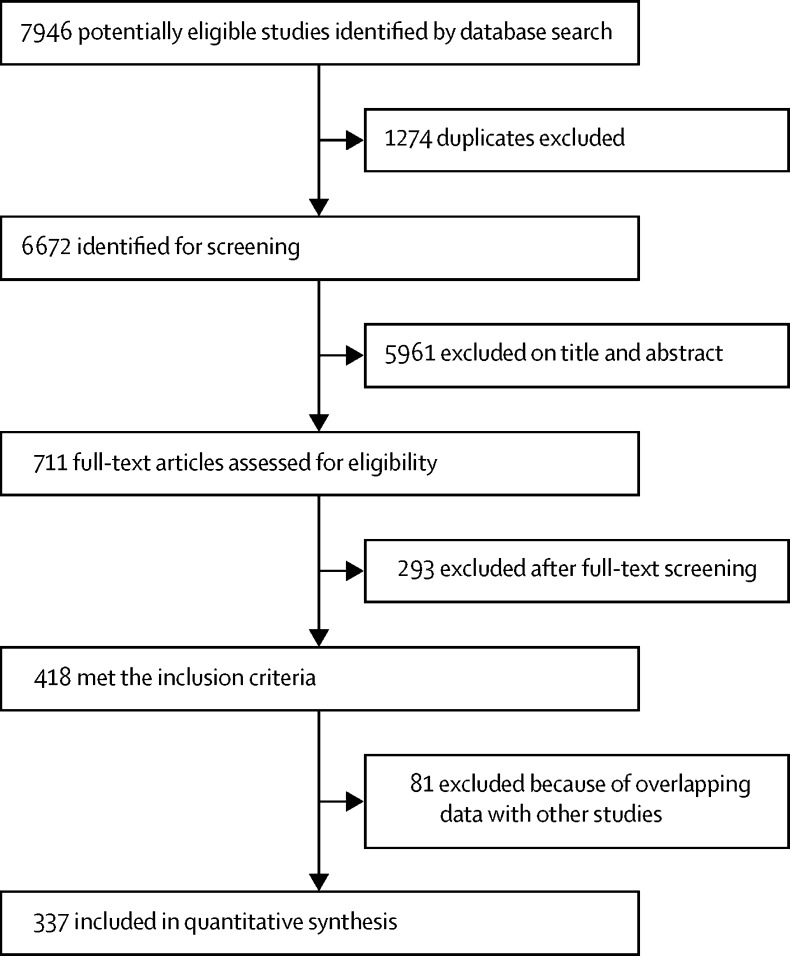
- The review included 337 studies from 38 countries out of 7,946 articles identified; after duplicate removal, the analysis included 2,835 datapoints.
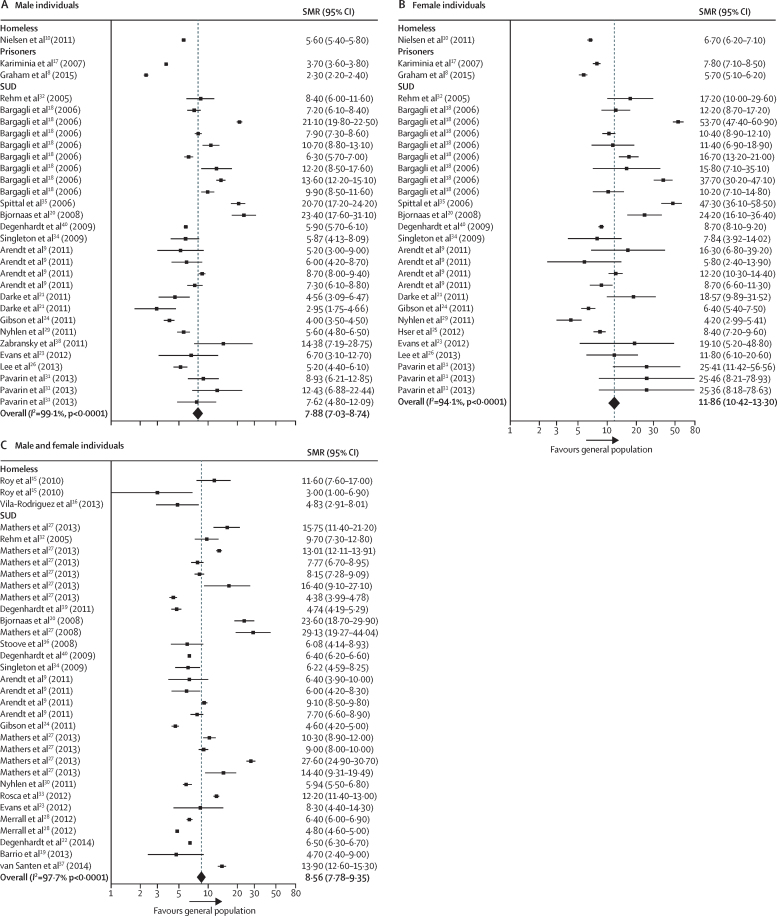
- All-cause mortality was elevated in 91 of 92 datapoints (99%); pooled all-cause SMRs were 11.86 (95% CI 10.42–13.30) in women and 7.88 (7.03–8.74) in men.
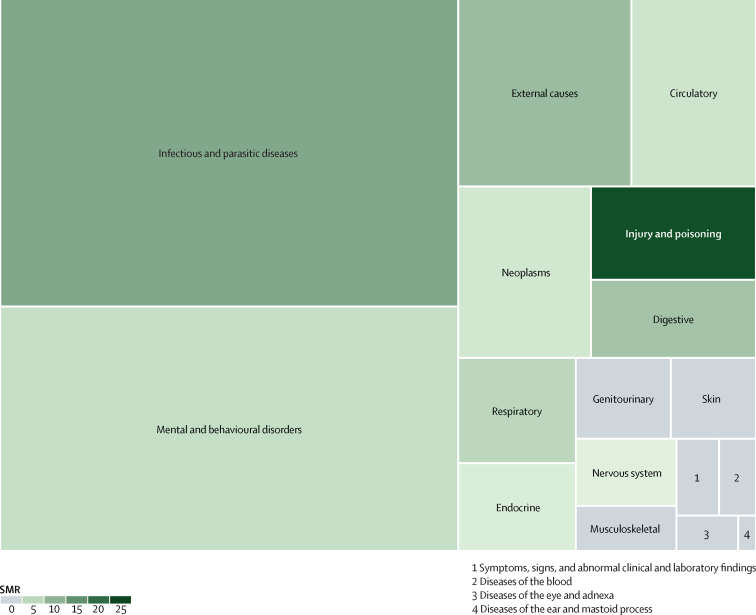
- The highest pooled SMRs were for injury, poisoning, and other external causes: 18.72 (13.73–23.71) in women and 7.89 (6.40–9.37) in men.
- Morbidity was consistently raised across multiple conditions, including infections (e.g., hepatitis C up to 90%, hepatitis B 67/103 [65%], latent tuberculosis infection 133/263 [51%]), mental health, cardiovascular, and respiratory conditions.
Methods
- Systematic review and meta-analysis of systematic reviews, meta-analyses, interventional studies, and observational studies published in English from Jan 1, 2005 to Oct 1, 2015 in high-income countries.
- Populations studied were people with a history of homelessness, imprisonment, sex work, or substance use disorder (excluding cannabis and alcohol use), with morbidity and mortality outcomes.
- Searches used MEDLINE, Embase, and the Cochrane Library; data were extracted from published reports, duplicates were removed, and random-effects models were used with I² to assess heterogeneity.
Limitations
- The paper states that heterogeneity was high across studies, so summary estimates should be interpreted with caution.
- The paper states that comparison groups varied and studies differed in definitions of inclusion health groups and in adjustment for deprivation and other risk factors.
- The paper states it searched only studies from 2005 onward, so it did not examine longer-term trends; it also could not assess other inclusion health groups.
- Evident from the text: sex workers were the least well investigated, and some outcomes had very sparse data (for example, only 44 studies reported cardiovascular outcomes; mental and behavioural disorder SMRs for some sex/sex-combined strata came from very few studies).
Model-written summary. Check it against the paper before relying on it.
Integrity signals
Registry
Cites
Statistics
Figures
Verification
Claims the paper makes
5 Valid · 0 Not valid · 17 Not checked · 74 Own results and interpretations
Every source the paper cites for this claim was checked and supports it.
In the paper
“highest reported was 32 [13%] of 247 individuals for coronary heart disease”
- Also stated in: § Results · plain
“The prevalence of coronary artery disease was 13% (32 of 247 individuals).53”
§ Morbidity and mortality in homeless individuals, prisoners, sex workers, and individuals with substance use disorders in high-income countries: a systematic review and meta-analysis > Abstract > Findings
What the sources say
- Supportedcites [53] Brown RT Kiely DK Bharel M Mitchell SL Geriatric syndromes in older homeless adults J Gen Intern Med 27 2012 16 22 21879368 PMC3250555 source
Table 1 (listed under Discussion; page not provided) reports coronary artery disease in 32 (13.1%) of the 247 homeless participants. The claim rounds this to 13%. Whether it was the highest prevalence across studies is the citing paper’s comparison, not a finding attributed to this source. (LLM, conf=0.92)
plainn = 247- Asserted: passes — The authors put it forward as true.
- Checkable: passes — It can be checked against evidence.
- Load-bearing: unclear — It is unclear whether the paper’s conclusions depend on it.
- Based: passes — The paper gives a reason why it holds.
- Also stated in: § Results · plain
Every source the paper cites for this claim was checked and supports it.
In the paper
“133 [51%] of 263 individuals for latent tuberculosis infection”
- Also stated in: § Results · plain
“51% (133 of 263)47 for latent tuberculosis infection”
§ Morbidity and mortality in homeless individuals, prisoners, sex workers, and individuals with substance use disorders in high-income countries: a systematic review and meta-analysis > Abstract > Findings
What the sources say
- Supportedcites [47] Tabuchi T Takatorige T Hirayama Y Tuberculosis infection among homeless persons and caregivers in a high-tuberculosis-prevalence area in Japan: a cross-sectional study BMC Infect Dis 11 2011 22 21255421 PMC3037881 source
Table 1 in the Results reports 133 positive QFT results among 263 homeless persons (50.6%, rounded to 51%). The Discussion treats QFT positivity as a measure of latent TB infection prevalence. (LLM, conf=0.93)
plainn = 263- Asserted: passes — The authors put it forward as true.
- Checkable: passes — It can be checked against evidence.
- Load-bearing: unclear — It is unclear whether the paper’s conclusions depend on it.
- Based: passes — The paper gives a reason why it holds.
- Also stated in: § Results · plain
Every source the paper cites for this claim was checked and supports it.
In the paper
“The prevalence of coronary artery disease was 13% (32 of 247 individuals).53”
§ Morbidity and mortality in homeless individuals, prisoners, sex workers, and individuals with substance use disorders in high-income countries: a systematic review and meta-analysis > Results
What the sources say
- Supportedcites [53] Brown RT Kiely DK Bharel M Mitchell SL Geriatric syndromes in older homeless adults J Gen Intern Med 27 2012 16 22 21879368 PMC3250555 source
Table 1 (shown under Discussion) reports coronary artery disease in 32 homeless subjects (13.1%), and its header gives the homeless sample as n=247. The citing sentence rounds 13.1% to 13%. (LLM, conf=0.95)
plainn = 247- Asserted: passes — The authors put it forward as true.
- Checkable: passes — It can be checked against evidence.
- Load-bearing: unclear — It is unclear whether the paper’s conclusions depend on it.
- Based: passes — The paper gives a reason why it holds.
- Supported
The cited sources support only part of this claim — read each source’s verdict below.
In the paper
“from 1% (one of 82)46 to 51% (133 of 263)47 for latent tuberculosis infection”
§ Morbidity and mortality in homeless individuals, prisoners, sex workers, and individuals with substance use disorders in high-income countries: a systematic review and meta-analysis > Results
What the sources say
- Partly supportedcites [46] Carbonara S Babudieri S Longo B Correlates of Mycobacterium tuberculosis infection in a prison population Eur Respir J 25 2005 1070 1076 15929964 sourceExperimental — accuracy not yet measured
Our copy of Carbonara et al. (2005) does contain the exact figure the citation is attached to: Table 1 (RESULTS/DISCUSSION section) reports tuberculin skin-test positivity of 1/82 (1.2%) among female inmates, i.e. the '1% (one of 82)' endpoint. However, that is a subgroup (female prisoners) rate, not the study's prevalence of latent TB infection: the paper states overall TST positivity of 80/448 (17.9%, 95% CI 14.3-21.4) in the RESULTS, and a range of 0-36.11% across the nine participating prisons in the DISCUSSION. So presenting 1/82 as this study's LTBI prevalence in a pooled range overstates the level at which the source reports it; the upper bound '51% (133 of 263)' carries a separate citation and appears nowhere in our copy (searched: '133 of 263', 'one of 82', prevalence ranges). (LLM, conf=0.78)
- Supportedcites [47] Tabuchi T Takatorige T Hirayama Y Tuberculosis infection among homeless persons and caregivers in a high-tuberculosis-prevalence area in Japan: a cross-sectional study BMC Infect Dis 11 2011 22 21255421 PMC3037881 source
The Results report 263 homeless participants and 50.6% QFT positivity, equivalent to 133 of 263 and rounded to 51%. The 1% figure is followed by a different citation (46), so it is not attributed to this paper. (LLM, conf=0.92)
plain- Asserted: passes — The authors put it forward as true.
- Checkable: passes — It can be checked against evidence.
- Load-bearing: unclear — It is unclear whether the paper’s conclusions depend on it.
- Based: passes — The paper gives a reason why it holds.
- Partly supported
A result the paper reports from its own data — it cites no other source for it, so there is none to check. The quote shows it is in the paper.
In the paper
“were 11·86 (95% CI 10·42–13·30; I2=94·1%) in female individuals”
- Also stated in: § Results · plain
“summary all-cause SMRs were higher in female individuals (11·86 [95% CI 10·42–13·30]; I2=94·1%; figure 3)”
§ Morbidity and mortality in homeless individuals, prisoners, sex workers, and individuals with substance use disorders in high-income countries: a systematic review and meta-analysis > Abstract > Findings
plain- Asserted: passes — The authors put it forward as true.
- Checkable: passes — It can be checked against evidence.
- Load-bearing: unclear — It is unclear whether the paper’s conclusions depend on it.
- Based: passes — The paper gives a reason why it holds.
- Also stated in: § Results · plain
53 more claims
Create a free account to see all 96 claims and to verify the 10 references still open.
- Probably not a substantial claim. 31
- The quote only partly states this claim. 1
- It may state two separate claims as one. 14
Claims other papers make about this one
Each is checked against this paper’s own text: does it say what the citing paper says it does?
The check wasn’t confident either way, so it gives no verdict — never disputed.
In the citing paper
“Risk of asthma is also increased in autism.18”
From The Lancet Psychiatry Commission: a blueprint for protecting physical health in people with mental illness (2019) · cites this paper as [18]
Experimental — accuracy not yet measuredThe check wasn’t confident either way, so it gives no verdict — never disputed.
In the citing paper
“Homeless people living in high-income countries have more untreated dental caries, more severe tooth loss, and are more likely to experience toothache compared to the general population.[45][46][47][48][49]”
From Oral diseases: a global public health challenge (2019) · cites this paper as [47]
Experimental — accuracy not yet measuredIn the citing paper
“Homelessness is associated with some of the highest levels of cross-sectoral inequities, including health care outcomes, in high-income countries.”
From Hospital Readmissions Among Patients Experiencing Homelessness: An Electronic Health Record Data Study (2024) · cites this paper as [1]
In the citing paper
“The theme Unmet human needs contributes to the mounting evidence of the extent to which social and economic disadvantages lead to huge health inequities (Aldridge et al., 2018;van Dongen et al., 2019;Fazel et al., 2014).”
From Homeless persons' experiences of health‐ and social care: A systematic integrative review (2020) · cites this paper as Aldridge et al., 2018
In the citing paper
“The Sustainable Development Agenda emphasises partnership to reach the Agenda 2030 goals, and in line with the findings of this review and previous research (Aldridge et al., 2018;Fazel et al., 2014;Slockers et al., 2018), partnership is crucial to adequately address the existing inequalities in health and well-being for individuals experiencing homelessness.”
From Homeless persons' experiences of health‐ and social care: A systematic integrative review (2020) · cites this paper as Aldridge et al., 2018
Citations
Cites
Quantifying heterogeneity in a meta‐analysis
Higgins, J. P. T., & Thompson, S. G. (2002) · Statistics in Medicine · doi:10.1002/sim.1186 · Cited by 36,763
Barnett, K., Mercer, S. W., Norbury, M., Watt, G., Wyke, S., & Guthrie, B. (2012) · The Lancet · doi:10.1016/s0140-6736(12)60240-2 · Cited by 6,972
Marmot, M. G., Allen, J., Goldblatt, P., Boyce, T., McNeish, D., Grady, M., & Geddes, I. (2010) · Europe PMC (PubMed Central) · Cited by 1,404
Substance abuse and dependence in prisoners: a systematic review
Fazel, S., Bains, P., & Doll, H. (2006) · Addiction · doi:10.1111/j.1360-0443.2006.01316.x · Cited by 839
Mortality among people who inject drugs: a systematic review and meta-analysis
Mathers, B. M., Degenhardt, L., Bucello, C., Lemon, J., Wiessing, L., & Hickman, M. (2013) · Bulletin of the World Health Organization · doi:10.2471/blt.12.108282 · Cited by 476
Reasons or excuses for avoiding meta-analysis in forest plots
Ioannidis, J. P. A., Patsopoulos, N. A., & Rothstein, H. R. (2008) · BMJ · doi:10.1136/bmj.a117 · Cited by 457
Luchenski, S., Maguire, N., Aldridge, R. W., Hayward, A., Story, A., Perri, P., Withers, J., Clint, S., Fitzpatrick, S., & Hewett, N. (2018) · The Lancet · doi:10.1016/s0140-6736(17)31959-1 · Cited by 430 · cited 2×
“In preparation for this Review, we searched the Cochrane Library, MEDLINE, and Embase databases for articles published between Jan 1, 2005, and Sept 30, 2013.”
BackgroundSelf-citationDegenhardt, L., Randall, D., Hall, W., Law, M., Butler, T., & Burns, L. (2009) · Drug and Alcohol Dependence · doi:10.1016/j.drugalcdep.2009.05.021 · Cited by 338
Social Exclusion: A Concept in Need of Definition?
Peace, R. (2001) · Social policy journal of New Zealand · Cited by 299
Pathways into Multiple Exclusion Homelessness in Seven UK Cities
Fitzpatrick, S., Bramley, G., & Johnsen, S. (2013) · Urban Studies · doi:10.1177/0042098012452329 · Cited by 265
Cited by
Items 601–700 of 878
Druckrey-Fiskaaen, K. T., Vold, J. H., Madebo, T., Midgard, H., Dalgård, O., Leiva, R. A., Fadnes, L. T., for the INTRO-HCV Study Group, Buljovcic, V. B., Daltveit, J. T., et al. (2024) · Substance Abuse Treatment Prevention and Policy · doi:10.1186/s13011-024-00603-z · Cited by 3
“In contrast, another study from 2018 found HCV-antibody positive rates of up to 90 percent in similar populations in high-income countries [10].”
BackgroundResultInfluentialNurses have new ‘duty to refer’ homeless people
Dorney-Smith, S. (2018) · Emergency Nurse · doi:10.7748/en.26.4.10.s9 · Cited by 2
Nahvi, S., & Arnsten, J. H. (2018) · Drug and Alcohol Dependence · doi:10.1016/j.drugalcdep.2018.02.001 · Cited by 2
“Over 75% of individuals in treatment for SUD smoke cigarettes (Guydish et al., 2011) and smokers with SUD face a disproportionate burden of tobacco-related disease and death (Aldridge et al., 2017; Apollonio, 2016; Hurt et al., 1996).”
BackgroundViolence-related deaths among people released from incarceration: protocol for a systematic review
Willoughby, M., Young, J. T., Spittal, M. J., Borschmann, R., Janca, E. K., & Kinner, S. A. (2021) · BMJ Open · doi:10.1136/bmjopen-2020-045601 · Cited by 2
Gagné, M. E., Têtu, I., Grégoire, J., et al. (2021) · International Journal of Nursing Studies Advances · doi:10.1016/j.ijnsa.2021.100029 · Cited by 2
“In high-income countries, up to 90% of vulnerable people (e.g. those experiencing imprisonment or substance use disorders) are infected with hepatitis C virus ( Aldridge et al., 2018 ).”
BackgroundOn Looking Ahead to Mitigate Threats to Population Health: A Public Health of Consequence, June 2018
Galea, S., & Vaughan, R. D. (2018) · American Journal of Public Health · doi:10.2105/ajph.2018.304422 · Cited by 2
Dawkins, L., Bauld, L., Ford, A., et al. (2020) · doi:10.32388/vsy13h · Cited by 2
Medical psychiatry units: Improving their organization, focus, and value
van Schijndel, M. A. (2020) · EUR Research Repository (Erasmus University Rotterdam) · Cited by 2
Six degrees of freedom vibration isolation using electromagnetic suspension
Lee, S.-I., DeBra, D., Michelson, P. F., Taber, R. C., & Price, J. C. (1993) · NASA Technical Reports Server (NASA) · Cited by 2
Gray, A. T., Surey, J., Esmail, H., et al. (2022) · Research Square · doi:10.21203/rs.3.rs-1899140/v1 · Cited by 2
Self-citationBrandon, J., & Bagnall, A. (2024) · medRxiv · doi:10.1101/2024.10.04.24313099 · Cited by 2
Dawes, J., Bagkeris, E., Walters, K. R., Burton, A., Hertzberg, D., Frost, R., Palipane, N., & Hayward, A. C. (2025) · SSRN Electronic Journal · doi:10.2139/ssrn.5125469 · Cited by 2
Self-citationWhite, J., Moriarty, Y., Lau, M., Cannings-John, R. L., Palmer, A., Weightman, A. L., Kiseleva, M., & Batty, G. D. (2025) · medRxiv · doi:10.1101/2025.04.22.25326193 · Cited by 14
Arwan, A., Syam, S., Fadjriah, R. N., et al. (2023) · Journal of Health and Nutrition Research · doi:10.56303/jhnresearch.v2i2.140 · Cited by 1
“The findings of this study contradict the findings of Aldridge et al. (2018) (8), who found that the identified inequalities of the homeless population, drug users, sex workers, and persons in prison experience for females than for males.”
van Loenen, T., Sow, J., & van den Muijsenbergh, M. E. T. C. (2024) · Frontiers in Medicine · doi:10.3389/fmed.2024.1305834 · Cited by 1
Health promotion efforts for people experiencing homelessness in England: a scoping review
Simkhada, B., Singh, D. R., Sah, R. K., Barclay, H., Duke, M., & Brown, P. (2024) · Journal of Social Distress and the Homeless · doi:10.1080/10530789.2024.2395163 · Cited by 3
Morris, D., Thompson, C., Hernández, A. V., et al. (2024) · Collegian Journal of the Royal College of Nursing Australia · doi:10.1016/j.colegn.2024.08.001 · Cited by 1
Results of a Process Evaluation of the Implementation of a Housing First Program in Waterloo, Canada
Kirst, M. J., Bigioni, S., Douglin, M., Rozycki, V., Nelson, G. B., Toope, E., & Tamcsu, L. G. (2024) · Canadian Journal of Community Mental Health · doi:10.7870/cjcmh-2024-014 · Cited by 2
Johnson, I. M., Doran, R., Sullivan, N., Enich, M., & Light, M. A. (2024) · International Journal of Environmental Research and Public Health · doi:10.3390/ijerph21121596 · Cited by 2
O’Callaghan, C., Clenaghan, P., Putra, A. D. M., Haigh, F., Amanatidis, S., Raffan, F., Lynch, N., & Barr, M. L. (2024) · International Journal of Environmental Research and Public Health · doi:10.3390/ijerph21121593 · Cited by 1
“Individuals experiencing homelessness face a range of complex health needs, and higher rates of chronic and mental health conditions, and mortality [3–6].”
Kennedy, F., Murray, D., Cheallaigh, C. N., Romero‐Ortuño, R., & Broderick, J. M. (2025) · PLoS ONE · doi:10.1371/journal.pone.0300412 · Cited by 1
Collins, S. P., Iles-Shih, M., & Clifasefi, S. L. (2024) · Journal of Substance Use and Addiction Treatment · doi:10.1016/j.josat.2025.209656 · Cited by 1
Morin, K. A., Aubin, N., Molke, D., Marsh, D. C., Jean, N. S., Carter, J., & Leary, T. (2025) · Substance Abuse Treatment Prevention and Policy · doi:10.1186/s13011-025-00649-7 · Cited by 2
People receiving the emergency housing special needs grant in Aotearoa New Zealand
Yu, C., Buchanan, M., Jenkins, M., et al. (2025) · International Journal of Housing Policy · doi:10.1080/19491247.2025.2497118 · Cited by 1
“The relationship between emergency housing admission and government service utilisation is complex and bidirectional. risk factors often co-occur and share common underlying causes (Aldridge et al., 2018; Narendorf, 2017).”
Radó, N., Németh, O., & Békási, S. (2025) · JMIR Formative Research · doi:10.2196/68316 · Cited by 3
“According to previous research, homelessness is associated with significantly higher disease burden [1-3] and higher mortality rates for both women and men than the average population [4].”
Heerde, J. A., Olsson, C. A., & Sawyer, S. M. (2025) · BMJ Open · doi:10.1136/bmjopen-2024-095164 · Cited by 1
Alckmin-Carvalho, F., Camargo, P. H. F., de Moraes, J. V. G. N., Silva, P., Pereira, H., & Vitorino, L. M. (2025) · Psychiatric Quarterly · doi:10.1007/s11126-025-10163-5 · Cited by 5
Homeless shelter contacts and suicide risk: a critical window for intervention
Christiansen, E., & Reilev, M. (2025) · The Lancet Public Health · doi:10.1016/s2468-2667(25)00121-5 · Cited by 1
Polysubstance use among the homeless in Germany
Heinrich, F., Manthey, J., Wulff, B., Bertram, F., Dost, K., Graf, W., Kowalski, V., Brennecke, A., Hajek, A., König, H., et al. (2025) · Deutsches Ärzteblatt international · doi:10.3238/arztebl.m2025.0132 · Cited by 1
Physician explanation of Z-coded homelessness in medicaid claims
Enich, M., Tiderington, E., & Cantor, J. C. (2025) · Health Services and Outcomes Research Methodology · doi:10.1007/s10742-025-00360-x · Cited by 2
“PEH also have a deep socioeconomic disadvantage and an elevated risk of infectious disease, mental illness, substance use, traumatic injury, and other serious conditions (Aldridge et al. 2018).”
Roberge, M., Dugre, J. R., Boisvert, M., & Potvin, S. (2025) · Neuroscience & Biobehavioral Reviews · doi:10.1016/j.neubiorev.2025.106437 · Cited by 4
Luchenski, S. A., Böhning, D., Aldridge, R. W., Stevenson, F. A., Tariq, S., & Hayward, A. C. (2025) · BMJ Public Health · doi:10.1136/bmjph-2025-002978 · Cited by 6
Self-citationCleynen, E., Ingelbeen, B., Lenormand, A., Kerami, J., & Nöstlinger, C. (2025) · International Journal for Equity in Health · doi:10.1186/s12939-025-02695-w · Cited by 2
“The four key access dimensions operated synergistically aggravating health outcomes [1]: Acceptability of care, with provider attitudes and practices often poorly aligned with the needs of a population, struggling with competing priorities and a tendency to delay care [2].”
Lowrie, R., McPherson, A., Moir, J., McGilvery, E., Vickery, K. D., O’Loan, J., Rushworth, G. F., Paudyal, V., Adam, A., Thomson, E., et al. (2025) · BMJ Open · doi:10.1136/bmjopen-2025-106640 · Cited by 1
Wells, C., Dewar-Haggart, R., Glyn‐Owen, K., Stevens, H., Parkes, J., Kim, Y., & Buchanan, R. M. (2025) · Alcohol and Alcoholism · doi:10.1093/alcalc/agaf071 · Cited by 2
“2014, Aldridge et al .”
Meda, F., Oprea, N., & Sottoriva, C. B. (2025) · Health & Justice · doi:10.1186/s40352-025-00384-y · Cited by 3
“People experiencing homelessness face significant health inequalities compared to the housed population (Aldridge et al., 2018), as they are disproportionately affected by physical and mental illness, substance abuse, and the long-term burden of chronic diseases (Fazel et al., 2014; Lewer et al.,…”
Witte, L., Tsai, J., Arredondo, K., Kamdar-Sharif, A., Paterson-Roberts, A., & Godwin, K. M. (2026) · Academic Medicine · doi:10.1093/acamed/wvag009 · Cited by 3
Moreheart, S., Shannon, K., Hayashi, K., Bartels, W., Pearson, J., Krüsi, A., & Goldenberg, S. M. (2026) · Harm Reduction Journal · doi:10.1186/s12954-026-01398-x · Cited by 1
“Sex workers who use drugs face the burdens of criminalization due to their involvement in both sex work and criminalized drug use, and are burdened with health and social disparities [26–28].”
Knittel, A. K., Bullington, B. W., Edmonds, A., Ramirez, C. B., Rahangdale, L., Neal-Perry, G. S., Konkle‐Parker, D. J., Jones, D. L., Moran, C. A., Topper, E. F., et al. (2026) · International Journal of Gynecology & Obstetrics · doi:10.1002/ijgo.70805 · Cited by 1
Near-source wastewater surveillance as a non-invasive tool for disease detection in prisons
O’Mara, O., Hassard, F., Jobling, K., et al. (2026) · Scientific Reports · doi:10.1038/s41598-026-35801-1 · Cited by 1
Santo, T., Hickman, M., Altice, F. L., et al. (2026) · International Journal of Drug Policy · doi:10.1016/j.drugpo.2025.105069 · Cited by 1
“…of sex work (Aldridge et al., 2018), and injecting drug use, which is 53 times more common among incarcerated people than in the general population (Aldridge et al., 2018; Degenhardt, 2025), as well as structural conditions including overcrowding and inadequate healthcare (Puglisi & Wang, 2021;…”
Interventions to increase vaccine uptake among socially excluded groups: A systematic review
Sidebotham, E., Caldwell, D. M., Davies, S. R., Thornton, Z. A., Aiton, E., Emsley, E., Rose-Innes, E., Dawson, S., Yates, J. F., Letley, L. H., et al. (2026) · Vaccine · doi:10.1016/j.vaccine.2026.128314 · Cited by 1
When training reinforces inequity: the case for inclusion health education
Ashwell, G. (2026) · Clinics in Integrated Care · doi:10.1016/j.intcar.2026.100297 · Cited by 1
Ethical and relational injustice in health care for people experiencing homelessness
la Torre, V. N.-D., Sánchez-Solís, P., Córdoba, M. G. D. Q., Malumbres-Talavera, J., Bazo‐Hernández, L., de Mingo-Fernández, E., & Jimenez-Herrera, M. F. (2026) · Nursing Ethics · doi:10.1177/09697330261418154 · Cited by 1
“8,9 These conditions are associated with more frequent use of emergency services rather than primary care, re fl ecting reactive rather than preventive care, and raising ethical dilemmas about distributive justice and the effective right to care.”
Holland, E.-J., Ash, E., Titchener, E., Schonewald, S., O'Donnell, A. J., Hosseini-Jebeli, S., Adams, E. A., Lonbay, S., Jong, F. C.-D., Norman, S., et al. (2026) · Healthcare · doi:10.3390/healthcare14050670 · Cited by 2
“SUDs are associated with social and economic harms to individuals and communities, and a range of acute and chronic health conditions, including liver disease, respiratory infections/disease, cardiovascular disease, infectious diseases including HIV, certain cancers and wounds [2,3].”
Preventing homelessness in adults with acquired brain injury: a mixed-methods rapid review
Ducharme, R., Jubinville, W., Bottari, C. L., Salazar, A. P., Thibault, G., Wagner, V., Lamontagne, M., Pan, H., & Roy, L. (2026) · Annals of Physical and Rehabilitation Medicine · doi:10.1016/j.rehab.2026.102105 · Cited by 1
Gorski, D., da Costa, F. A., Fuertes, R., Marques, J. G., Tavoschi, L., & Tonin, F. S. (2026) · International Journal for Equity in Health · doi:10.1186/s12939-026-02840-z · Cited by 6
“Mortality rates among PEH can be up to ten times higher than those reported in the housed population [16, 17].”
Tian, L., Guo, L., Jiang, Z., Zhu, X., Luo, M., & Chen, Z. (2026) · BMC Palliative Care · doi:10.1186/s12904-026-02004-4 · Cited by 1
Anderson, A., Edwards, E. R., Weber, J. J., Edwards‐Stewart, A., & Tsai, J. (2026) · Journal of the American Psychiatric Nurses Association · doi:10.1177/10783903261440181 · Cited by 1
Health Entitlement Index for Refugees and Migrants: A Comparative Analysis Across 41 Countries
Pkhakadze, G., Tabagari, N., Pkhakadze, I., Glonti, S., Inaishvili, S., Vashadze, S., Talakvadze, T., Bolkvadze, A., Kutateladze, S., Kraveishvili, T., et al. (2026) · Georgian Medical Journal · doi:10.66636/gmj.v1.i2.a32 · Cited by 1
“Empirical evidence demonstrates that migrants and refugees subject to restricted entitlement experience delayed care-seeking, increased emergency department utilization, and higher unmet health needs [11,36,53].”
Jiménez-Solomon, O., & López‐Aybar, L. (2026) · Harvard Review of Psychiatry · doi:10.1097/hrp.0000000000000466 · Cited by 1
Accuracy of administrative data in ascertaining health conditions: a systematic review
Campbell, A. C., Tyler, J., Shuttleworth, R. R., Pearce, L. A., Heerde, J. A., Borschmann, R., Sawyer, S. M., Preen, D. B., Kinner, S. A., & Calais‐Ferreira, L. (2026) · JAMIA Open · doi:10.1093/jamiaopen/ooag109 · Cited by 2
“6,10,11 Despite these advantages, using administrative data in health and medical research is not without its challenges, as these data are not primarily collected for research purposes.”
Humphries, C., Anand, A., Casey, A., Chapman, W. W., Harrison, K., Hillis, J. M., James, E., MacIntyre, D. J., Nicholson, K., Schölin, L., et al. (2026) · Frontiers in Public Health · doi:10.3389/fpubh.2026.1901339 · Cited by 1
Hemphill, S., Normandin, A., & Rothenberg, D. A. (2020) · Journal of Maine Medical Center · doi:10.46804/2641-2225.1038 · Cited by 2
“Employed part time 55 (6) Self employed 24 (3)”
MethodHomelessness and Social Inclusion
Cuthill, F. M. (2021) · Springer eBooks · doi:10.1007/978-3-030-48277-0_39-1 · Cited by 1
Social Inclusion, Research, and Practices in the Health and Social Sciences: Setting the Scene
Liamputtong, P. (2022) · Springer eBooks · doi:10.1007/978-3-030-48277-0_1-2 · Cited by 3
Drogues et santé : perspectives de personnes qui consomment par injection à Montréal
Poliquin, H., Bertrand, K., & Perreault, M. (2021) · Drogues santé et société · doi:10.7202/1085168ar · Cited by 3
Broderick, J. M., Waugh, A., Govern, M. M., et al. (2019) · HRB Open Research · doi:10.12688/hrbopenres.12939.1 · Cited by 1
Contrasting traditions in homelessness research between the UK and US
Culhane, D., Fitzpatrick, S., & Treglia, D. (2020) · Using Evidence to End Homelessness · doi:10.51952/9781447354109.ch007 · Cited by 5
Meray, V., Motorwala, A., Sellers, K. P., Suarez, A., & Schneider, G. W. (2022) · Cureus · doi:10.7759/cureus.31528 · Cited by 1
Kennedy, F., Cheallaigh, C. N., Romero‐Ortuño, R., Doyle, S. L., & Broderick, J. M. (2023) · HRB Open Research · doi:10.12688/hrbopenres.13678.1 · Cited by 3
“Related to non-communicable diseases and a complex interaction of other factors such as addiction and accidental death, socially excluded populations have a mortality rate that is almost eight times higher than the average for men, and nearly 12 times higher for women 3 .”
Protts, H. S., Sharman, S., & Roberts, A. D. L. (2023) · Journal of Social Distress and the Homeless · doi:10.1080/10530789.2023.2205189 · Cited by 4
Kongats, K., Paulden, M., Pabayo, R., Campbell, S., & Nykiforuk, C. I. J. (2023) · Health Promotion International · doi:10.1093/heapro/daad055 · Cited by 1
Kastrup, M. C. (2023) · doi:10.1093/med/9780197521359.003.0019 · Cited by 1
Thomas, I., & Mackie, P. (2023) · BMC Public Health · doi:10.1186/s12889-023-16432-x · Cited by 2
“Experiencing homelessness is associated with increased morbidity such as infections, cardiovascular and respiratory conditions [5], as well as mental health and substance use related issues [6, 7].”
BackgroundMental Health Among Homeless People
Heerde, J. A., & Bailey, J. A. (2023) · Springer eBooks · doi:10.1007/978-3-031-25110-8_113 · Cited by 1
Kurdil, N. V., Ворошилов, К., Rozhkova, O. N., Voitenko, M. Y., Novostroina, P. S., & Розовик, І. В. (2023) · Ukrainian Journal of Modern Toxicological Aspects · doi:10.33273/2663-4570-2023-94-1-7-20 · Cited by 1
Syunyakov, T., Khayredinova, I. I., & Ashurov, Z. (2023) · Personalized Psychiatry and Neurology · doi:10.52667/2712-9179-2023-3-2-120-133 · Cited by 1
Alang, S., Letcher, A. S., Mitsdarffer, M. L., Kieber-Emmons, A. M., Rivera, J. A., Moeller, C., Biery, N., & Batts, H. (2024) · Health Promotion Practice · doi:10.1177/15248399231223744 · Cited by 2
Healthcare for those who (live) in the shadows
Pereira, A. G., de Oliveira, T. B., Caldas, A. L. F. R., et al. (2024) · Ciência & Saúde Coletiva · doi:10.1590/1413-812320242911.04182024en · Cited by 1
Sandoval, L. A. P., & Tricas, J. G. (2024) · Violence Against Women · doi:10.1177/10778012241307332 · Cited by 3
“…stemming from social stigma, and the lack of MH promotion based on the contextual and intersubjective reality of this group that provides practical tools to cope with adverse experiences in family, community, and social life (Aldridge et al., 2018; Beattie et al., 2020; Zehnder et al., 2019).”
Health Situation Among Women Experiencing Homelessness Who Have Been Involved in Prostitution
González‐Arribas, O., Panadero, S., Torrego, S., et al. (2025) · Journal of Community & Applied Social Psychology · doi:10.1002/casp.70046 · Cited by 1
Farr, M., Eyles, E., Stone, T. J., Redaniel, M. T., Traub, T., Burrowes, J., Halsley, R., Williams, K. N., Edwards, A., & Redwood, S. (2025) · BMC Health Services Research · doi:10.1186/s12913-025-13339-8 · Cited by 4
“Experiences of multiple disadvantage can be traumatic in themselves and can compound earlier adverse childhood experiences [2] and cause considerable ill-health, frailty and premature mortality [6, 7].”
Glennerster, R., & Sales, K. (2019) · Housing Care and Support · doi:10.1108/hcs-09-2018-0022 · Cited by 1
Johnsen, S., Cuthill, F. M., & Blenkinsopp, J. (2019) · Cited by 7
Clinical Practice of Palliative Care: Current Concepts and Future Perspectives
Saxena, A. K., Saxena, A., Chopra, A., Talwar, H., Bajaj, M., & Yadav, N. (2019) · Annals of the National Academy of Medical Sciences (India) · doi:10.1055/s-0039-1697241 · Cited by 1
Using Evidence to End Homelessness
Teixeira, J. C. L. (2020) · Policy Press eBooks · doi:10.2307/j.ctv10kmc3j · Cited by 4
Last call? Alcohol intoxication in the emergency department
Wood, L., & DeLaney, M. (2021) · Journal of the American College of Emergency Physicians Open · doi:10.1002/emp2.12444 · Cited by 1
Influenza Vaccination Rates, and Barriers to Influenza Vaccination, in People who are Homeless
Karnik, V. A., McCosker, L. K., Downes, M., Ware, R. S., Kelso-Ribbe, J., Hunt, J., Bates, H., & Toussaint, P. (2022) · Social Science Protocols · doi:10.7565/ssp.v5.6938
Social Inclusion and Medical Practitioners
Abbott, P., & Hu, W. C. Y. (2022) · Springer eBooks · doi:10.1007/978-3-030-89594-5_126 · Cited by 1
Li, Z., Ma, M., Yang, Y., Li, Y., Guo, K., Yang, M., Liu, G., & Yang, K. (2023) · Campbell Systematic Reviews · doi:10.1002/cl2.1372 · Cited by 3
Editorial: Improving healthcare for our homeless patients matters
Herrmann, S. (2018) · International Emergency Nursing · doi:10.1016/j.ienj.2018.02.005 · Cited by 1
Borschmann, R., & Kinner, S. A. (2021) · Addiction · doi:10.1111/add.15679 · Cited by 1
“Linked administrative data provide exceptional opportunities to study rare and stigmatized outcomes such as overdose [10].”
BackgroundNilsson, S. F., Laursen, T. M., Osler, M., Hjorthøj, C. R., Benros, M. E., Ethelberg, S., Mølbak, K., & Nordentoft, M. (2021) · SSRN Electronic Journal · doi:10.2139/ssrn.3932954 · Cited by 1
Self-citationFelipetto, L. G., Teider-Junior, P. I., da Silva, F. F. V., et al. (2020) · doi:10.21203/rs.2.22570/v2 · Cited by 1
McNeill, S. G., O’Donovan, D. T., & Hart, N. D. (2022) · Medicine Conflict & Survival · doi:10.1080/13623699.2022.2116553 · Cited by 1
“Although this means that there is proportional political representation of the two traditional communities (McGarry and O’Leary 1995), it can also create political stalemates where parties have veto power and can prevent the opposing party from passing legislation (Aughey 2012).”
BackgroundDawes, J., Rogans-Watson, R., & Broderick, J. M. (2023) · medRxiv · doi:10.1101/2023.07.26.23293203 · Cited by 1
“3,614 records screened, generating 17 reports [16 studies, 11 qualitative and 5 quantitative (1 RCT, 3 quasi-experimental, 1 analytical cross-sectional)] from UK, USA, Denmark and Australia, including 539 participants (501 PEH, 38 staff).”
BackgroundInfluentialHomelessness and housing insecurity
Heerde, J. A., Begun, S., Pearce, L. A., Kacholia, V., Logie, C. H., Patton, G. C., & Sawyer, S. M. (2023) · Elsevier eBooks · doi:10.1016/b978-0-323-96023-6.00032-4 · Cited by 3
Luchenski, S. A., Böhning, D., Aldridge, R. W., et al. (2024) · SSRN Electronic Journal · doi:10.2139/ssrn.5051977 · Cited by 1
Self-citationHirsch, K. (2018) · Journal of Gerontological Nursing · doi:10.3928/00989134-20171213-01 · Cited by 1
The inclusion health awareness month at University College Hospital Galway (UCHG)
Connell, J. A. O. (2018) · Irish Journal of Medical Science (1971 -) · doi:10.1007/s11845-018-1916-9
Chronic Homelessness and the Aging Population: Findings in a Homeless Sample from Arkansas
Chekuri, L. (2018) · University of North Texas Digital Library (University of North Texas) · doi:10.12794/metadc1404608
Pearce, J., Andrews, G. J., & Crooks, V. A. (2018) · Routledge eBooks · doi:10.4324/9781315104584-22
Dopamine Genetics: Substance Use Disorders vs. Parkinson’s Disease
Lin, Z., Hall, F. S., & Bell, R. L. (2019) · V M BEKHTEREV REVIEW OF PSYCHIATRY AND MEDICAL PSYCHOLOGY · doi:10.31363/2313-7053-2019-4-1-36-38
“Substance use disorders (SUDs) are the leading cause of chronic diseases, generating enormous global economic burden [1-4] and are a major public health concern.[5-9] Unfortunately, there are few clinically accepted medications to treat SUDs.”
BackgroundElliott, K. (2020) · UWSpace (University of Waterloo)
Risk Factors and Public Assistance Role in Hypertension among Homeless Population: A Cohort Study
Naser, S. A. (2020) · Biomedical Journal of Scientific & Technical Research · doi:10.26717/bjstr.2020.24.004099
Kiernan, S. (2020) · Trinity's Access to Research Output (TARA) (Trinity College Dublin)
Tsehay, M., Necho, M., & Belete, A. (2020) · doi:10.21203/rs.3.rs-24816/v1
“This is a common finding in alcohol and chat use studies where males use substances more and show higher tendency for dependence than females[43, 44].”
BackgroundTran, C., Lu, T., Doughty, J., Khan, Z., Noctor, A., & Movahedi, S. (2021) · Community Dental Health · doi:10.1922/cdh_000782020tran05 · Cited by 2
Metadata
- Authors
- Aldridge, R. W., Story, A., Hwang, S. W., Nordentoft, M., Luchenski, S. A., Hartwell, G., Tweed, E. J., Lewer, D., Vittal Katikireddi, S., & Hayward, A. C.
- Affiliations
- Farr Institute (GB)
- University College London Hospitals NHS Foundation Trust (GB)
- St. Michael's Hospital (CA)
- University of Copenhagen (DK)
- London School of Hygiene & Tropical Medicine (GB)
- Chief Scientist Office (GB)
- Corresponding author
- Aldridge, Robert W
- ORCID
- Venue
- The Lancet
- Publisher
- Elsevier BV
- Published
- 2018-01
- Volume
- 391
- Issue
- 10117
- Pages
- 241-250
- ISSN
- 0099-5355 (ISSN-L)
- 0140-6736
- PMC
- PMC5803132
- OpenAlex
- W2767478650
- Semantic Scholar
- 539f6280f7c6141ef52a95f9ca66923feacd517c
- Cited by
- 905
- References
- 66
- Citations by year
- 2026: 92 · 2025: 122 · 2024: 126 · 2023: 127 · 2022: 110 · 2021: 121 · 2020: 99 · 2019: 68 · 2018: 35
- FWCI
- 9.87
- Type
- journal article
- Language
- en
- Open access
- hybrid
- doi.org
- Licence
- cc-by
- www.elsevier.com/tdm/userlicense/1.0/ (tdm)
- creativecommons.org/licenses/by/4.0/ (vor)
- Locations
- The Lancet (publishedVersion, cc-by)
- Europe PMC (PubMed Central) (publishedVersion, cc-by)
- PubMed Central (publishedVersion, cc-by)
- PubMed (publishedVersion)
- Research at the University of Copenhagen (University of Copenhagen) (publishedVersion, cc-by)
- ENLIGHTEN (Jurnal Bimbingan dan Konseling Islam) (acceptedVersion, cc-by-sa)
- LSHTM Research Online (London School of Hygiene and Tropical Medicine) (acceptedVersion)
- UCL Discovery (University College London) (submittedVersion)
- HRB National Drugs Library (Health Research Board) (submittedVersion)
- Funders
- Wellcome Trust (Z/17/Z, 206602, 206602/Z/17/Z)
- National Institute for Health and Care Research (ICA-CDRF-2015-01-017, 206602/Z/17/Z, CL-2015-18-011)
- University College London
- Lundbeckfonden (R155-2014-1724, R248‐2017‐2003)
- University College London Hospitals NHS Foundation Trust
- National Institutes of Health
- Medical Research Council (MC_UU_12017/13, MC_UU_12017/15)
- Topics
- Social Sciences › Sociology and Political Science › Homelessness and Social Issues
- Health Sciences › Medicine › Epidemiology › HIV, Drug Use, Sexual Risk
- Social Sciences › Sociology and Political Science › Criminal Justice and Corrections Analysis
- Keywords
- homelessness, incarceration, sex workers, substance use disorders, morbidity, mortality, standardized mortality ratio, hepatitis C, hepatitis B, HIV, tuberculosis, sexually transmitted infections, social exclusion, poverty, marginalization, multimorbidity, inclusion health, high-income countries, sex differences in mortality, hepatitis B screening, tuberculosis screening, HIV screening, STI screening
- MeSH terms
- Ill-Housed Persons, Humans, Morbidity, Mortality, Prisoners, Socioeconomic Factors, Developed Countries, Substance-Related Disorders, Health Status Disparities, Sex Workers, Social Marginalization
About these checks
Registry, retraction, Cites and statistics results are computed, not judged, with one exception: a printed reference that no index lists is read once by a model before it counts as a citation error. Claims are extracted by a model and kept only when their quote appears verbatim in the text; each cited source is then checked, with a model’s help, for whether it says what the claim relies on. Those verdicts can be wrong — read the claim’s quote and the cited source before relying on one.
The claim verdicts this report counts are experimental: their accuracy is not yet measured.
A language model drew the claims from the paper on 2026-10-10, under version 3 of the claim definition (model deepseek-v4.1-flash, prompt extract-v3).
A second model labelled each claim on 2026-10-10 (model jev-1.13-20260917, definition revision gold-guideline-v0.2).
Cited sources are checked with a language model’s help (gpt-6-sol and qwen3.8-omni-flash).
Statistics and arithmetic are recomputed, not judged.
Confidence bands are shown only for fields calibrated on our annotated test set. None is calibrated yet, so no band is shown.
What counts as a claim ›How we measure confidence ›How we check this ›
Are you an author, or do you see a problem with this page? Request a review
Data sources
Bibliographic data: Semantic Scholar, OpenAlex, Crossref.
Contains information from the Semantic Scholar Academic Graph Datasets, made available under the ODC Attribution License (ODC-BY 1.0).
Semantic Scholar’s data is described in: Kinney, R., et al. (2023). The Semantic Scholar Open Data Platform. arXiv:2301.10140.
