

Morbidity and mortality in homeless individuals, prisoners, sex workers, and individuals with substance use disorders in high-income countries: a systematic review and meta-analysis
Open accessThe DOI matches its Crossref record; 61 of the 66 references it cites were found in a registry or an index; 6 of the 35 sources its claims cite were checked for support.
Abstract
Inclusion health focuses on people in extremely poor health due to poverty, marginalisation, and multimorbidity.
Overview
CoChat Summary
TL;DR
This systematic review and meta-analysis found extreme morbidity and mortality inequities among homeless populations, prisoners, sex workers, and people with substance use disorders in high-income countries. All-cause mortality SMRs were 7.88 in men and 11.86 in women, with especially high excess mortality from injury, poisoning, and other external causes.
Key findings
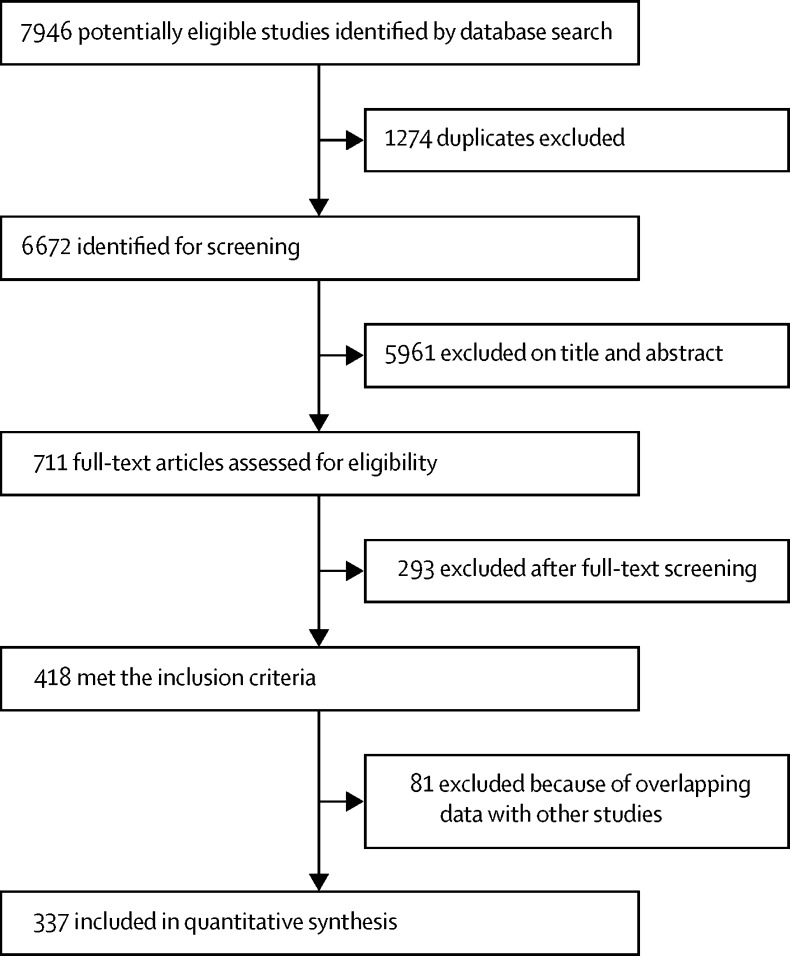
- The review included 337 studies from 38 countries out of 7,946 articles identified; after duplicate removal, the analysis included 2,835 datapoints.
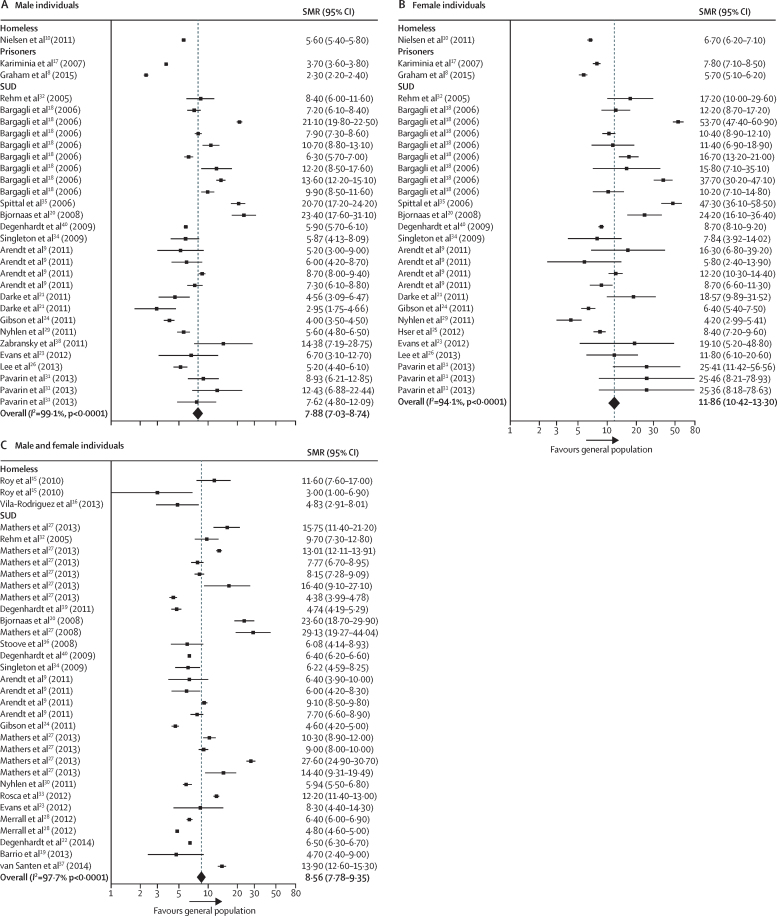
- All-cause mortality was elevated in 91 of 92 datapoints (99%); pooled all-cause SMRs were 11.86 (95% CI 10.42–13.30) in women and 7.88 (7.03–8.74) in men.
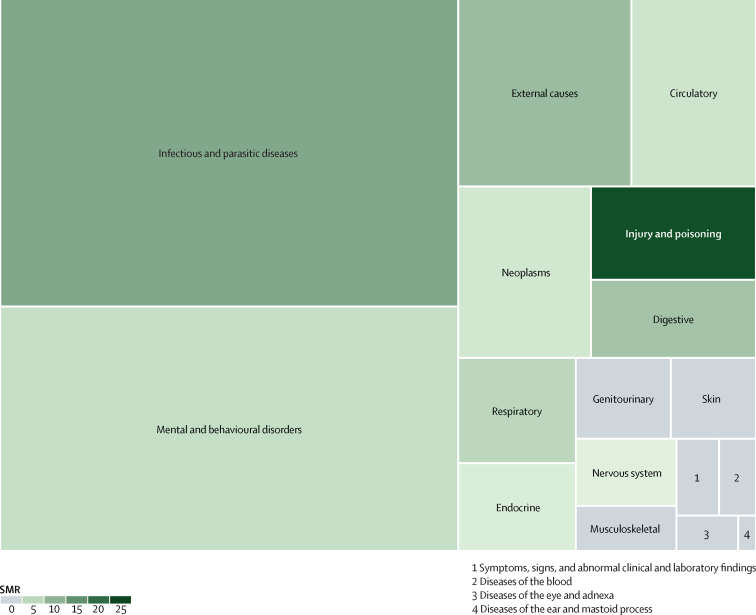
- The highest pooled SMRs were for injury, poisoning, and other external causes: 18.72 (13.73–23.71) in women and 7.89 (6.40–9.37) in men.
- Morbidity was consistently raised across multiple conditions, including infections (e.g., hepatitis C up to 90%, hepatitis B 67/103 [65%], latent tuberculosis infection 133/263 [51%]), mental health, cardiovascular, and respiratory conditions.
Methods
- Systematic review and meta-analysis of systematic reviews, meta-analyses, interventional studies, and observational studies published in English from Jan 1, 2005 to Oct 1, 2015 in high-income countries.
- Populations studied were people with a history of homelessness, imprisonment, sex work, or substance use disorder (excluding cannabis and alcohol use), with morbidity and mortality outcomes.
- Searches used MEDLINE, Embase, and the Cochrane Library; data were extracted from published reports, duplicates were removed, and random-effects models were used with I² to assess heterogeneity.
Limitations
- The paper states that heterogeneity was high across studies, so summary estimates should be interpreted with caution.
- The paper states that comparison groups varied and studies differed in definitions of inclusion health groups and in adjustment for deprivation and other risk factors.
- The paper states it searched only studies from 2005 onward, so it did not examine longer-term trends; it also could not assess other inclusion health groups.
- Evident from the text: sex workers were the least well investigated, and some outcomes had very sparse data (for example, only 44 studies reported cardiovascular outcomes; mental and behavioural disorder SMRs for some sex/sex-combined strata came from very few studies).
Model-written summary. Check it against the paper before relying on it.
Integrity signals
Registry
Cites
Statistics
Figures
Verification
Claims the paper makes
5 Valid · 0 Not valid · 17 Not checked · 74 Own results and interpretations
Every source the paper cites for this claim was checked and supports it.
In the paper
“highest reported was 32 [13%] of 247 individuals for coronary heart disease”
- Also stated in: § Results · plain
“The prevalence of coronary artery disease was 13% (32 of 247 individuals).53”
§ Morbidity and mortality in homeless individuals, prisoners, sex workers, and individuals with substance use disorders in high-income countries: a systematic review and meta-analysis > Abstract > Findings
What the sources say
- Supportedcites [53] Brown RT Kiely DK Bharel M Mitchell SL Geriatric syndromes in older homeless adults J Gen Intern Med 27 2012 16 22 21879368 PMC3250555 source
Table 1 (listed under Discussion; page not provided) reports coronary artery disease in 32 (13.1%) of the 247 homeless participants. The claim rounds this to 13%. Whether it was the highest prevalence across studies is the citing paper’s comparison, not a finding attributed to this source. (LLM, conf=0.92)
plainn = 247- Asserted: passes — The authors put it forward as true.
- Checkable: passes — It can be checked against evidence.
- Load-bearing: unclear — It is unclear whether the paper’s conclusions depend on it.
- Based: passes — The paper gives a reason why it holds.
- Also stated in: § Results · plain
Every source the paper cites for this claim was checked and supports it.
In the paper
“133 [51%] of 263 individuals for latent tuberculosis infection”
- Also stated in: § Results · plain
“51% (133 of 263)47 for latent tuberculosis infection”
§ Morbidity and mortality in homeless individuals, prisoners, sex workers, and individuals with substance use disorders in high-income countries: a systematic review and meta-analysis > Abstract > Findings
What the sources say
- Supportedcites [47] Tabuchi T Takatorige T Hirayama Y Tuberculosis infection among homeless persons and caregivers in a high-tuberculosis-prevalence area in Japan: a cross-sectional study BMC Infect Dis 11 2011 22 21255421 PMC3037881 source
Table 1 in the Results reports 133 positive QFT results among 263 homeless persons (50.6%, rounded to 51%). The Discussion treats QFT positivity as a measure of latent TB infection prevalence. (LLM, conf=0.93)
plainn = 263- Asserted: passes — The authors put it forward as true.
- Checkable: passes — It can be checked against evidence.
- Load-bearing: unclear — It is unclear whether the paper’s conclusions depend on it.
- Based: passes — The paper gives a reason why it holds.
- Also stated in: § Results · plain
Every source the paper cites for this claim was checked and supports it.
In the paper
“The prevalence of coronary artery disease was 13% (32 of 247 individuals).53”
§ Morbidity and mortality in homeless individuals, prisoners, sex workers, and individuals with substance use disorders in high-income countries: a systematic review and meta-analysis > Results
What the sources say
- Supportedcites [53] Brown RT Kiely DK Bharel M Mitchell SL Geriatric syndromes in older homeless adults J Gen Intern Med 27 2012 16 22 21879368 PMC3250555 source
Table 1 (shown under Discussion) reports coronary artery disease in 32 homeless subjects (13.1%), and its header gives the homeless sample as n=247. The citing sentence rounds 13.1% to 13%. (LLM, conf=0.95)
plainn = 247- Asserted: passes — The authors put it forward as true.
- Checkable: passes — It can be checked against evidence.
- Load-bearing: unclear — It is unclear whether the paper’s conclusions depend on it.
- Based: passes — The paper gives a reason why it holds.
- Supported
The cited sources support only part of this claim — read each source’s verdict below.
In the paper
“from 1% (one of 82)46 to 51% (133 of 263)47 for latent tuberculosis infection”
§ Morbidity and mortality in homeless individuals, prisoners, sex workers, and individuals with substance use disorders in high-income countries: a systematic review and meta-analysis > Results
What the sources say
- Partly supportedcites [46] Carbonara S Babudieri S Longo B Correlates of Mycobacterium tuberculosis infection in a prison population Eur Respir J 25 2005 1070 1076 15929964 sourceExperimental — accuracy not yet measured
Our copy of Carbonara et al. (2005) does contain the exact figure the citation is attached to: Table 1 (RESULTS/DISCUSSION section) reports tuberculin skin-test positivity of 1/82 (1.2%) among female inmates, i.e. the '1% (one of 82)' endpoint. However, that is a subgroup (female prisoners) rate, not the study's prevalence of latent TB infection: the paper states overall TST positivity of 80/448 (17.9%, 95% CI 14.3-21.4) in the RESULTS, and a range of 0-36.11% across the nine participating prisons in the DISCUSSION. So presenting 1/82 as this study's LTBI prevalence in a pooled range overstates the level at which the source reports it; the upper bound '51% (133 of 263)' carries a separate citation and appears nowhere in our copy (searched: '133 of 263', 'one of 82', prevalence ranges). (LLM, conf=0.78)
- Supportedcites [47] Tabuchi T Takatorige T Hirayama Y Tuberculosis infection among homeless persons and caregivers in a high-tuberculosis-prevalence area in Japan: a cross-sectional study BMC Infect Dis 11 2011 22 21255421 PMC3037881 source
The Results report 263 homeless participants and 50.6% QFT positivity, equivalent to 133 of 263 and rounded to 51%. The 1% figure is followed by a different citation (46), so it is not attributed to this paper. (LLM, conf=0.92)
plain- Asserted: passes — The authors put it forward as true.
- Checkable: passes — It can be checked against evidence.
- Load-bearing: unclear — It is unclear whether the paper’s conclusions depend on it.
- Based: passes — The paper gives a reason why it holds.
- Partly supported
A result the paper reports from its own data — it cites no other source for it, so there is none to check. The quote shows it is in the paper.
In the paper
“were 11·86 (95% CI 10·42–13·30; I2=94·1%) in female individuals”
- Also stated in: § Results · plain
“summary all-cause SMRs were higher in female individuals (11·86 [95% CI 10·42–13·30]; I2=94·1%; figure 3)”
§ Morbidity and mortality in homeless individuals, prisoners, sex workers, and individuals with substance use disorders in high-income countries: a systematic review and meta-analysis > Abstract > Findings
plain- Asserted: passes — The authors put it forward as true.
- Checkable: passes — It can be checked against evidence.
- Load-bearing: unclear — It is unclear whether the paper’s conclusions depend on it.
- Based: passes — The paper gives a reason why it holds.
- Also stated in: § Results · plain
53 more claims
Create a free account to see all 96 claims and to verify the 10 references still open.
- Probably not a substantial claim. 31
- The quote only partly states this claim. 1
- It may state two separate claims as one. 14
Claims other papers make about this one
Each is checked against this paper’s own text: does it say what the citing paper says it does?
The check wasn’t confident either way, so it gives no verdict — never disputed.
In the citing paper
“Risk of asthma is also increased in autism.18”
From The Lancet Psychiatry Commission: a blueprint for protecting physical health in people with mental illness (2019) · cites this paper as [18]
Experimental — accuracy not yet measuredThe check wasn’t confident either way, so it gives no verdict — never disputed.
In the citing paper
“Homeless people living in high-income countries have more untreated dental caries, more severe tooth loss, and are more likely to experience toothache compared to the general population.[45][46][47][48][49]”
From Oral diseases: a global public health challenge (2019) · cites this paper as [47]
Experimental — accuracy not yet measuredIn the citing paper
“Homelessness is associated with some of the highest levels of cross-sectoral inequities, including health care outcomes, in high-income countries.”
From Hospital Readmissions Among Patients Experiencing Homelessness: An Electronic Health Record Data Study (2024) · cites this paper as [1]
In the citing paper
“The theme Unmet human needs contributes to the mounting evidence of the extent to which social and economic disadvantages lead to huge health inequities (Aldridge et al., 2018;van Dongen et al., 2019;Fazel et al., 2014).”
From Homeless persons' experiences of health‐ and social care: A systematic integrative review (2020) · cites this paper as Aldridge et al., 2018
In the citing paper
“The Sustainable Development Agenda emphasises partnership to reach the Agenda 2030 goals, and in line with the findings of this review and previous research (Aldridge et al., 2018;Fazel et al., 2014;Slockers et al., 2018), partnership is crucial to adequately address the existing inequalities in health and well-being for individuals experiencing homelessness.”
From Homeless persons' experiences of health‐ and social care: A systematic integrative review (2020) · cites this paper as Aldridge et al., 2018
Citations
Cites
Quantifying heterogeneity in a meta‐analysis
Higgins, J. P. T., & Thompson, S. G. (2002) · Statistics in Medicine · doi:10.1002/sim.1186 · Cited by 36,763
Barnett, K., Mercer, S. W., Norbury, M., Watt, G., Wyke, S., & Guthrie, B. (2012) · The Lancet · doi:10.1016/s0140-6736(12)60240-2 · Cited by 6,972
Marmot, M. G., Allen, J., Goldblatt, P., Boyce, T., McNeish, D., Grady, M., & Geddes, I. (2010) · Europe PMC (PubMed Central) · Cited by 1,404
Substance abuse and dependence in prisoners: a systematic review
Fazel, S., Bains, P., & Doll, H. (2006) · Addiction · doi:10.1111/j.1360-0443.2006.01316.x · Cited by 839
Mortality among people who inject drugs: a systematic review and meta-analysis
Mathers, B. M., Degenhardt, L., Bucello, C., Lemon, J., Wiessing, L., & Hickman, M. (2013) · Bulletin of the World Health Organization · doi:10.2471/blt.12.108282 · Cited by 476
Reasons or excuses for avoiding meta-analysis in forest plots
Ioannidis, J. P. A., Patsopoulos, N. A., & Rothstein, H. R. (2008) · BMJ · doi:10.1136/bmj.a117 · Cited by 457
Luchenski, S., Maguire, N., Aldridge, R. W., Hayward, A., Story, A., Perri, P., Withers, J., Clint, S., Fitzpatrick, S., & Hewett, N. (2018) · The Lancet · doi:10.1016/s0140-6736(17)31959-1 · Cited by 430 · cited 2×
“In preparation for this Review, we searched the Cochrane Library, MEDLINE, and Embase databases for articles published between Jan 1, 2005, and Sept 30, 2013.”
BackgroundSelf-citationDegenhardt, L., Randall, D., Hall, W., Law, M., Butler, T., & Burns, L. (2009) · Drug and Alcohol Dependence · doi:10.1016/j.drugalcdep.2009.05.021 · Cited by 338
Social Exclusion: A Concept in Need of Definition?
Peace, R. (2001) · Social policy journal of New Zealand · Cited by 299
Pathways into Multiple Exclusion Homelessness in Seven UK Cities
Fitzpatrick, S., Bramley, G., & Johnsen, S. (2013) · Urban Studies · doi:10.1177/0042098012452329 · Cited by 265
Cited by
Oral diseases: a global public health challenge
Peres, M. A., Macpherson, L. M. D., Weyant, R. J., Daly, B., Venturelli, R., Mathur, M. R., Listl, S., Celeste, R. K., Guarnizo-Herreño, C. C., Kearns, C., et al. (2019) · The Lancet · doi:10.1016/s0140-6736(19)31146-8 · Cited by 4,054
Firth, J., Siddiqi, N., Koyanagi, A., Siskind, D., Rosenbaum, S., Galletly, C., Allan, S., Caneo, C., Carney, R., Carvalho, A. F., et al. (2019) · The Lancet Psychiatry · doi:10.1016/s2215-0366(19)30132-4 · Cited by 1,531
“Some large-scale, multinational studies have shown that people with severe mental illness, 123,150 common mental disorders, 151,152 and substance use disorders 18,153 are at a greatly increased risk of physical multimorbidity from the point of onset of the mental illness.”
Luchenski, S., Maguire, N., Aldridge, R. W., Hayward, A., Story, A., Perri, P., Withers, J., Clint, S., Fitzpatrick, S., & Hewett, N. (2018) · The Lancet · doi:10.1016/s0140-6736(17)31959-1 · Cited by 430
Self-citationNiedzwiedz, C. L., O’Donnell, C. A., Jani, B. D., Demou, E., Ho, F. K., Celis-Morales, C., Nicholl, B. I., Mair, F. S., Welsh, P., Sattar, N., et al. (2020) · BMC Medicine · doi:10.1186/s12916-020-01640-8 · Cited by 403
Self-citationHomeless persons' experiences of health‐ and social care: A systematic integrative review
Omerov, P., Craftman, Å. G., Mattsson, E., & Klarare, A. (2020) · Health & Social Care in the Community · doi:10.1111/hsc.12857 · Cited by 391
Gutwinski, S., Schreiter, S., Deutscher, K., & Fazel, S. (2021) · PLOS Medicine · doi:10.1371/journal.pmed.1003750 · Cited by 390
Baxter, A. J., Tweed, E. J., Katikireddi, S. V., & Thomson, H. (2019) · Journal of Epidemiology and Community Health · doi:10.1136/jech-2018-210981 · Cited by 380
Self-citationMongelli, F., Georgakopoulos, P., & Pato, M. T. (2020) · Focus · doi:10.1176/appi.focus.20190028 · Cited by 331
Berk, M., Köhler‐Forsberg, O., Turner, M., Penninx, B. W. J. H., Wrobel, A., Firth, J., Loughman, A., Reavley, N. J., McGrath, J. J., Momen, N. C., et al. (2023) · World Psychiatry · doi:10.1002/wps.21110 · Cited by 336
Global patterns of mortality in international migrants: a systematic review and meta-analysis
Aldridge, R. W., Nellums, L. B., Bartlett, S., Barr, A. L., Patel, P., Burns, R., Hargreaves, S., Miranda, J. J., Tollman, S., Friedland, J. S., et al. (2018) · The Lancet · doi:10.1016/s0140-6736(18)32781-8 · Cited by 294
Self-citationCOVID-19 and people experiencing homelessness: challenges and mitigation strategies
Perri, M., Dosani, N., & Hwang, S. W. (2020) · Canadian Medical Association Journal · doi:10.1503/cmaj.200834 · Cited by 246
Self-citationA systematic review of the effect of stigma on the health of people experiencing homelessness
Reilly, J., Ho, I., & Williamson, A. (2022) · Health & Social Care in the Community · doi:10.1111/hsc.13884 · Cited by 225
Arum, C., Fraser, H., Artenie, A. A., Bivegete, S., Trickey, A., Alary, M., Astemborski, J., Iversen, J., Lim, A. G., MacGregor, L., et al. (2021) · The Lancet Public Health · doi:10.1016/s2468-2667(21)00013-x · Cited by 215
Kinner, S. A., & Young, J. T. (2018) · Epidemiologic Reviews · doi:10.1093/epirev/mxx018 · Cited by 190
“Because of the number of people who cycle through prisons each year globally, improving the health of this population is important to global health and to reducing health inequalities (13).”
BackgroundInclusion health: addressing the causes of the causes
Marmot, M. (2018) · The Lancet · doi:10.1016/s0140-6736(17)32848-9 · Cited by 175
Bueno, H., Deaton, C., Farrero, M., Forsyth, F., Braunschweig, F., Buccheri, S., Dragan, S., Gevaert, S., Held, C., Kurpas, D., et al. (2025) · European Heart Journal · doi:10.1093/eurheartj/ehaf191 · Cited by 178
Stubbs, J. L., Thornton, A. E., Sevick, J. M., Silverberg, N. D., Barr, A. M., Honer, W. G., & Panenka, W. J. (2020) · The Lancet Public Health · doi:10.1016/s2468-2667(19)30188-4 · Cited by 173
Homeless health care: meeting the challenges of providing primary care
Davies, A., & Wood, L. J. (2018) · Medical Journal of Australia · doi:10.5694/mja17.01264 · Cited by 169
Lewer, D., Freer, J., King, E., Larney, S., Degenhardt, L., Tweed, E. J., Hope, V. D., Harris, M., Millar, T., Hayward, A., et al. (2020) · Addiction · doi:10.1111/add.14892 · Cited by 161
“People who are dependent on illicit drugs generally have poor health outcomes, with cohort studies finding mortality rates of up to 15 times the general population, although this varies widely by population and setting [1,2].”
Self-citationLarney, S., Tran, L. T., Leung, J., Santo, T., Santomauro, D., Hickman, M., Peacock, A., Stockings, E., & Degenhardt, L. (2020) · JAMA Psychiatry · doi:10.1001/jamapsychiatry.2019.4170 · Cited by 160
Mental and physical health morbidity among people in prisons: an umbrella review
Favril, L., Rich, J. D., Hard, J., & Fazel, S. (2024) · The Lancet Public Health · doi:10.1016/s2468-2667(24)00023-9 · Cited by 160
Lewer, D., Aldridge, R. W., Menezes, D., Sawyer, C., Zaninotto, P., Dedicoat, M., Ahmed, I., Luchenski, S., Hayward, A., & Story, A. (2019) · BMJ Open · doi:10.1136/bmjopen-2018-025192 · Cited by 159
Self-citationThe health of adolescents in detention: a global scoping review
Borschmann, R., Janca, E., Carter, A., Willoughby, M., Hughes, N., Snow, K., Stockings, E., Hill, N. T. M., Hocking, J., Love, A., et al. (2020) · The Lancet Public Health · doi:10.1016/s2468-2667(19)30217-8 · Cited by 161
Nilsson, S. F., Nordentoft, M., & Hjorthøj, C. R. (2019) · Journal of Urban Health · doi:10.1007/s11524-019-00377-x · Cited by 189
Self-citationColledge‐Frisby, S., Ottaviano, S., Webb, P., Grebely, J., Wheeler, A., Cunningham, E. B., Hajarizadeh, B., Leung, J., Peacock, A., Vickerman, P. T., et al. (2023) · The Lancet Global Health · doi:10.1016/s2214-109x(23)00058-x · Cited by 146
Gunner, E., Chandan, S. K., Marwick, S., Saunders, K., Burwood, S., Yahyouche, A., & Paudyal, V. (2019) · British Journal of General Practice · doi:10.3399/bjgp19x704633 · Cited by 118
Liu, M., Luong, L., Lachaud, J., Edalati, H., Reeves, A., & Hwang, S. W. (2021) · The Lancet Public Health · doi:10.1016/s2468-2667(21)00189-4 · Cited by 174
Self-citationHirdes, J. P., van Everdingen, C., Ferris, J., Franco-Martin, M., Fries, B. E., Heikkilä, J., Hirdes, A., Hoffman, R., James, M. L., Martin, L., et al. (2020) · Frontiers in Psychiatry · doi:10.3389/fpsyt.2019.00926 · Cited by 124
Prevalence of mental disorders among people who are homeless: an umbrella review
Hossain, M. M., Sultana, A., Tasnim, S., Fan, Q., Ma, P., McKyer, E. L. J., & Purohit, N. (2020) · International Journal of Social Psychiatry · doi:10.1177/0020764020924689 · Cited by 105
Broadbent, P., Thomson, R., Kopasker, D., McCartney, G., Meier, P., Richiardi, M., McKee, M., & Katikireddi, S. V. (2023) · The Lancet Regional Health - Europe · doi:10.1016/j.lanepe.2023.100585 · Cited by 121
“25 – 28 We have now entered another period of economic recession as people and businesses face higher costs and must consume less, reducing aggregate demand in the economy and triggering job losses.”
Self-citationMagwood, O., Salvalaggio, G., Beder, M., Kendall, C., Kpade, V., Daghmach, W., Habonimana, G., Marshall, Z., Snyder, E., O’Shea, T., et al. (2020) · PLOS ONE · doi:10.1371/journal.pone.0227298 · Cited by 118
“Harm reduction approaches are particularly relevant for homeless populations given the extreme health inequities and stigma impacting both substance use and homelessness [1,22,23].”
Ramsay, N., Hossain, R., Moore, M., Milo, M., & Brown, A. (2019) · Qualitative Health Research · doi:10.1177/1049732319829434 · Cited by 104
Bowen, M., Marwick, S., Marshall, T., Saunders, K., Burwood, S., Yahyouche, A., Stewart, D., & Paudyal, V. (2019) · British Journal of General Practice · doi:10.3399/bjgp19x704609 · Cited by 97
Tinland, A., Loubière, S., Boucekine, M., Boyer, L., Fond, G., Girard, V., & Auquier, P. (2020) · Epidemiology and Psychiatric Sciences · doi:10.1017/s2045796020000785 · Cited by 71
“Homelessness has been recognised as a persistent public health concern since the late 1980s, with extreme health inequalities, and increased morbidity and mortality compared to housed populations (Rossi et al., 1987; Hwang et al., 2009; Aldridge et al., 2017).”
BackgroundMartyn, E. M., Eisen, S., Longley, N., Harris, P., Surey, J., Norman, J., Brown, M., Sultan, B., Maponga, T. G., Iwuji, C. C., et al. (2023) · eLife · doi:10.7554/elife.81070 · Cited by 99
Self-citationPatient safety in marginalised groups: a narrative scoping review
Cheraghi‐Sohi, S., Panagioti, M., Daker‐White, G., Giles, S. J., Riste, L., Kirk, S. A., Ong, B. N., Poppleton, A., Campbell, S., & Sanders, C. (2020) · International Journal for Equity in Health · doi:10.1186/s12939-019-1103-2 · Cited by 88
O’Carroll, A., & Wainwright, D. (2019) · International Journal for Equity in Health · doi:10.1186/s12939-019-1002-6 · Cited by 66
Inclusion oral health: Advancing a theoretical framework for policy, research and practice
Freeman, R., Doughty, J., Macdonald, M. E., & Muirhead, V. (2019) · Community Dentistry And Oral Epidemiology · doi:10.1111/cdoe.12500 · Cited by 95
Young, J. T., Heffernan, E., Borschmann, R., Ogloff, J. R. P., Spittal, M. J., Kouyoumdjian, F. G., Preen, D. B., Butler, A., Brophy, L. M., Crilly, J. L., et al. (2018) · The Lancet Public Health · doi:10.1016/s2468-2667(18)30052-5 · Cited by 90
Bardwell, G., Boyd, J., Kerr, T. H., & McNeil, R. (2018) · Health & Place · doi:10.1016/j.healthplace.2018.07.011 · Cited by 85
Al-Shakarchi, N. J., Evans, H. E. R., Luchenski, S. A., Story, A., & Banerjee, A. (2020) · Heart · doi:10.1136/heartjnl-2020-316706 · Cited by 88
Self-citationReflections on oral health inequalities: Theories, pathways and next steps for research priorities
Tsakos, G., Watt, R. G., & Guarnizo-Herreño, C. C. (2023) · Community Dentistry And Oral Epidemiology · doi:10.1111/cdoe.12830 · Cited by 95
“45 Using some of the frameworks, studies in this area have tried to understand inequalities by assessing the potential role of different pathways.”
BackgroundHadden, K. B., Puglisi, L. B., Prince, L. Y., Aminawung, J. A., Shavit, S., Pflaum, D., Calderon, J., Wang, E. A., & Zaller, N. D. (2018) · Journal of Urban Health · doi:10.1007/s11524-018-0276-0 · Cited by 84
McAuley, A., Palmateer, N. E., Goldberg, D. J., Trayner, K. M. A., Shepherd, S. J., Gunson, R. N., Metcalfe, R., Milosevic, C., Taylor, A., Munro, A., et al. (2019) · The Lancet HIV · doi:10.1016/s2352-3018(19)30036-0 · Cited by 80
Ivsins, A., Warnock, A., Small, W., Strıke, C., Kerr, T. H., & Bardwell, G. (2022) · International Journal of Drug Policy · doi:10.1016/j.drugpo.2022.103910 · Cited by 79
Locked up While Locked Down: Prisoners’ Experiences of the COVID-19 Pandemic
Suhomlinova, O., Ayres, T. C., Tonkin, M. J., O’Reilly, M., Wertans, E., & O’Shea, S. C. (2022) · The British Journal of Criminology · doi:10.1093/bjc/azab060 · Cited by 65
“…(World Health Organization Europe 2014; House of Commons 2018; Heard 2019); confined unhygienic spaces with inadequate ventilation (European Centre for Disease Prevention and Control 2020) and poor physical (Aldridge et al. 2018) and mental health (Fazel and Seewald 2012) of the prison population.”
BackgroundMiler, J. A., Carver, H., Masterton, W., Parkes, T., Maden, M., Jones, L., & Sumnall, H. R. (2021) · PLoS ONE · doi:10.1371/journal.pone.0254729 · Cited by 79
“They are more likely to experience physical and mental health problems [19], and are at increased risk of drug related harms and early death than the general population [73, 74].”
BackgroundFord, E. M., Boyd, A., Bowles, J., Havard, A., Aldridge, R. W., Ćurčin, V., Greiver, M., Harron, K. L., Katikireddi, S. V., Rodgers, S., et al. (2019) · Learning Health Systems · doi:10.1002/lrh2.10191 · Cited by 83
“44 Communication and clarity of argument is key here however, as GDPR has created an expectation of opt ‐ in mechanisms, which are now required in online and commercial contexts but not for researchers using data for the performance of a task carried out in the public interest and for scientific…”
Self-citationFooter, K. H. A., White, R. H., Park, J. N., Decker, M. R., Lutnick, A., & Sherman, S. G. (2020) · Journal of Urban Health · doi:10.1007/s11524-019-00410-z · Cited by 76
“Research has documented the consequences for increased mortality and morbidities including poorer outcomes for both chronic and infectious disease as well as mental health [33, 34].”
BackgroundNovisky, M. A., Nowotny, K. M., Jackson, D. B., Testa, A. M., & Vaughn, M. G. (2021) · The British Journal of Criminology · doi:10.1093/bjc/azab023 · Cited by 84
Cheng, Y., Fang, Y., Zheng, J., Guan, S., Wang, M., & Hong, W. (2024) · General Psychiatry · doi:10.1136/gpsych-2023-101078 · Cited by 83
“Third, the burden of these three mental disorders was confined to six countries, and the risk factors in different countries and regions were not explored.”
BackgroundHomelessness and Hepatitis A—San Diego County, 2016–2018
Peak, C. M., Stous, S., Healy, J. M., Hofmeister, M. G., Lin, Y., Ramachandran, S., Foster, M. A., Kao, A. S., & McDonald, E. C. (2019) · Clinical Infectious Diseases · doi:10.1093/cid/ciz788 · Cited by 59
“Homelessness is a recognized risk factor for a range of health conditions and diseases [22] and has been associated with outbreaks of hepatitis A in the past [23–25], but homelessness was not recognized by the ACIP as an independent risk factor for hepatitis A infection at the time of the outbreak [4, 5].”
BackgroundTweed, E., Thomson, R., Lewer, D., Sumpter, C., Kirolos, A., Southworth, P., Purba, A. K., Aldridge, R. W., Hayward, A. C., Story, A., et al. (2021) · Journal of Epidemiology & Community Health · doi:10.1136/jech-2020-215975 · Cited by 72
Self-citationAccess to healthcare for people experiencing homelessness in the UK and Ireland: a scoping review
McNeill, S. G., O’Donovan, D. T., & Hart, N. D. (2022) · BMC Health Services Research · doi:10.1186/s12913-022-08265-y · Cited by 75
Soar, K., Dawkins, L., Robson, D., & Cox, S. (2020) · The Journal of Smoking Cessation · doi:10.1017/jsc.2020.11 · Cited by 62
Paisi, M., Crombag, N. M. T. H., Burns, L., Bogaerts, A., Withers, L., Bates, L., Crowley, D., Witton, R., & Shawe, J. (2021) · Health Expectations · doi:10.1111/hex.13400 · Cited by 62
“Homeless shelter users reported that education is crucial in motivating people to get tested and treated for HCV. 18 Preventing transmission to others, along with awareness of the adverse effects of untreated HCV can significantly motivate people to be tested and treated to prevent their own disease from progressing.”
BackgroundInfluentialAccess to palliative care for homeless people: complex lives, complex care
de Veer, A. J. E., Stringer, B., van Meijel, B., Verkaik, R., & Francke, A. L. (2018) · BMC Palliative Care · doi:10.1186/s12904-018-0368-3 · Cited by 76
Nanjo, A., Evans, H., Direk, K., Hayward, A. C., Story, A., & Banerjee, A. (2020) · European Heart Journal · doi:10.1093/eurheartj/ehaa795 · Cited by 56
Self-citationMantell, R., Hwang, Y. I., Radford, K. A., Perkovic, S., Cullen, P., & Withall, A. (2023) · Frontiers in Public Health · doi:10.3389/fpubh.2023.1086215 · Cited by 67
Marinucci, M., & Riva, P. (2020) · British Journal of Social Psychology · doi:10.1111/bjso.12410 · Cited by 64
Health inequalities in infectious diseases: a systematic overview of reviews
Ayorinde, A., Ghosh, I., Ali, I., Zahair, I., Olarewaju, O. K., Singh, M., Meehan, E., Anjorin, S., Rotheram, S., Barr, B., et al. (2023) · BMJ Open · doi:10.1136/bmjopen-2022-067429 · Cited by 77
Cianetti, S., Valenti, C., Orso, M., Lomurno, G., Nardone, M., Lomurno, A. P., Pagano, S., & Lombardo, G. (2021) · International Journal of Environmental Research and Public Health · doi:10.3390/ijerph182312360 · Cited by 73
“One of the most common aspects of socio-economically disadvantaged people is poverty, with shared features such as low education [3], unemployment, strenuous and precarious jobs [4], uncertain housing [5], lack of health insurance [6], immigration [7] and incarceration [8].”
BackgroundLi, L., Yao, H., Zhang, L., Garcia‐Argibay, M., Du Rietz, E., Brikell, I., Solmi, M., Cortese, S., Ramos‐Quiroga, J. A., Ribasés, M., et al. (2023) · JCPP Advances · doi:10.1002/jcv2.12158 · Cited by 55
“…that several psychiatric comorbidities of ADHD, for example, depression (Hare et al., 2014; Nicholson et al., 2006), substance use disorders (Aldridge et al., 2018; Roerecke & Rehm, 2014), schizophrenia (Hennekens et al., 2005), bipolar disorder (Swartz & Fagiolini, 2012), and anxiety…”
Five-year standardised mortality ratios in a cohort of homeless people in Dublin
Ivers, J., Zgaga, L., Hynes, B. O., Heary, A., Gallwey, B., & Barry, J. M. (2019) · BMJ Open · doi:10.1136/bmjopen-2018-023010 · Cited by 63
“2 Excess mortality is associated with extensive social exclusion.(3) Studies in the USA suggest that one fifth of persons experiencing homelessness will go on to become chronically homeless.”
BackgroundMultimorbidity among People Experiencing Homelessness—Insights from Primary Care Data
Vallesi, S., Tuson, M., Davies, A., & Wood, L. J. (2021) · International Journal of Environmental Research and Public Health · doi:10.3390/ijerph18126498 · Cited by 59
“International corroboration of this finding can be found in a systematic review of morbidity and mortality in people experiencing homelessness, where many of the morbidities identified were preventable or would be diminished in impact if there was earlier intervention [2]; for example, a third of deaths among homeless…”
BackgroundYoon, J. C., Montgomery, M. P., Buff, A. M., Boyd, A. T., Jamison, C., Hernandez, A., Schmit, K. M., Shah, S., Ajoku, S., Holland, D. P., et al. (2020) · Clinical Infectious Diseases · doi:10.1093/cid/ciaa1340 · Cited by 54
Paudyal, V., MacLure, K., Forbes‐McKay, K., McKenzie, M., MacLeod, J., Smith, A., & Stewart, D. C. (2019) · Health & Social Care in the Community · doi:10.1111/hsc.12850 · Cited by 60
“103 104 People experiencing homelessness face significant disadvantages in attaining and 105 maintaining a healthy lifestyle (Baggett et al. 2013; Aldridge et al. 2017; 106 University of Sheffield, 2012; Fazel et al. 2014).”
BackgroundJones, A. A., Gicas, K. M., Seyedin, S., Willi, T. S., Leonova, O., Vila-Rodriguez, F., Procyshyn, R. M., Smith, G. N., Schmitt, T. A., Vertinsky, A. T., et al. (2020) · PLOS Medicine · doi:10.1371/journal.pmed.1003172 · Cited by 46
Dawkins, L., Bauld, L., Ford, A., Robson, D., Hájek, P., Parrott, S., Best, C., Li, J., Tyler, A., Uny, I., et al. (2020) · PLoS ONE · doi:10.1371/journal.pone.0240968 · Cited by 53
“Nevertheless, the high prevalence of illicit drug and alcohol use and other physical and mental health conditions among those experiencing homelessness[36][37][38] provides a further challenge for research.”
BackgroundStubbs, B., Siddiqi, K., Elsey, H., Siddiqi, N., Ma, R., Romano, E., Siddiqi, S., & Koyanagi, A. (2020) · International Journal of Environmental Research and Public Health · doi:10.3390/ijerph18052439 · Cited by 58
O’Shea, T. M., Bodkin, C., Mokashi, V., et al. (2020) · Clinical Infectious Diseases · doi:10.1093/cid/ciaa743 · Cited by 48
“Furthermore, the higher prevalence of comorbidities amongst shelter residents places them at higher risk of severe COVID-19 disease (5).”
BackgroundPaul, D. W., Knight, K. R., Olsen, P., Weeks, J., Yen, I. H., & Kushel, M. B. (2020) · Journal of Social Distress and Homelessness · doi:10.1080/10530789.2019.1702248 · Cited by 47
Homelessness and police-recorded crime victimisation: a nationwide, register-based cohort study
Nilsson, S. F., Nordentoft, M., Fazel, S., & Laursen, T. M. (2020) · The Lancet Public Health · doi:10.1016/s2468-2667(20)30075-x · Cited by 68
Self-citationHarm reduction outcomes and practices in Housing First: A mixed-methods systematic review
Kerman, N., Polillo, A., Bardwell, G., Gran-Ruaz, S., Savage, C., Felteau, C., & Tsemberis, S. (2021) · Drug and Alcohol Dependence · doi:10.1016/j.drugalcdep.2021.109052 · Cited by 42
Surey, J., Menezes, D., Francis, M., Gibbons, J., Sultan, B., Miah, A., Abubakar, I. I., & Story, A. (2019) · Journal of Antimicrobial Chemotherapy · doi:10.1093/jac/dkz452 · Cited by 51
Self-citationEdge, C., Stockley, R., Swabey, M. L., King, M. E., Decodts, F., Hard, J., & Black, G. B. (2020) · EClinicalMedicine · doi:10.1016/j.eclinm.2020.100416 · Cited by 77
“We identified five major themes that described prominent experiences in accessing secondary care, relevant to the principle of equivalence: [1] Security overriding healthcare need or experience [2]; Security creating public humiliation and fear [3]; Difficulties relating to the prison officer’s role in medical consult…”
BackgroundHousing First: Unsuppressed Viral Load Among Women Living with HIV in San Francisco
Riley, E. D., Vittinghoff, E., Koss, C. A., Christopoulos, K., Clemenzi-Allen, A., Dilworth, S. E., & Carrico, A. W. (2019) · AIDS and Behavior · doi:10.1007/s10461-019-02601-w · Cited by 50
Fornaro, M., Dragioti, E., Prisco, M. D., Billeci, M., Mondin, A. M., Calati, R., Smith, L., Hatcher, S., Kaluzienski, M., Fiedorowicz, J. G., et al. (2022) · BMC Medicine · doi:10.1186/s12916-022-02423-z · Cited by 65
Peer support critical elements and experiences in supporting the homeless: A qualitative study
Barker, S. L., Maguire, N., Bishop, F. L., & Stopa, L. L. (2018) · Journal of Community & Applied Social Psychology · doi:10.1002/casp.2353 · Cited by 55
How intergroup social connections shape immigrants’ responses to social exclusion
Marinucci, M., & Riva, P. (2020) · Group Processes & Intergroup Relations · doi:10.1177/1368430219894620 · Cited by 51
Johnsen, S., Cuthill, F. M., & Blenkinsopp, J. (2021) · BMC Health Services Research · doi:10.1186/s12913-020-06013-8 · Cited by 46
Homeless population: characterization and contextualization by census research
Hungaro, A. A., Gavioli, A., Christóphoro, R., Marangoni, S. R., Altrão, R. F., Rodrigues, A. L., & de Oliveira, M. L. F. (2020) · Revista Brasileira de Enfermagem · doi:10.1590/0034-7167-2019-0236 · Cited by 68
“2020;73(5): e20190236 8 of Homeless population: characterization and contextualization by census research”
BackgroundTweed, E. J., Leyland, A. H., Morrison, D., & Katikireddi, S. V. (2022) · The Lancet Public Health · doi:10.1016/s2468-2667(22)00159-1 · Cited by 40
Self-citationPreventive care recommendations to promote health equity
Persaud, N., Sabir, A., Woods, H., Sayani, A., Agarwal, A., Chowdhury, M., de Leon-Demare, K., Ibezi, S., Jan, S. H., Katz, A., et al. (2023) · Canadian Medical Association Journal · doi:10.1503/cmaj.230237 · Cited by 56
“146,236 For example, improved access to preventive care such as screening must be matched with improvements in connecting patients to management options in the case of a positive screen, which includes access to sufficient travel grants for those living in rural or remote areas, if the care needed…”
BackgroundPaisi, M., Baines, R., Worle, C., Withers, L., & Witton, R. (2020) · Health Expectations · doi:10.1111/hex.13111 · Cited by 48
Kneck, Å., Mattsson, E., Salzmann‐Erikson, M., & Klarare, A. (2021) · International Journal of Nursing Studies · doi:10.1016/j.ijnurstu.2021.103974 · Cited by 53
Vallersnes, O. M., Jacobsen, D., Ekeberg, Ø., & Brekke, M. (2018) · Scandinavian Journal of Public Health · doi:10.1177/1403494818779955 · Cited by 42
Lewer, D., Tweed, E., Aldridge, R. W., & Morley, K. I. (2019) · Drug and Alcohol Dependence · doi:10.1016/j.drugalcdep.2019.06.027 · Cited by 54
“There are fewer studies of morbidity in this population, with most focusing on blood borne viral infections and mental health problems (Aldridge et al., 2018).”
Self-citationDifferences in stressful life events between men and women experiencing homelessness
Rodriguez‐Moreno, S., Vázquez, J. J., Roca, P., & Panadero, S. (2020) · Journal of Community Psychology · doi:10.1002/jcop.22465 · Cited by 52
Substance Use-related Emergency Department Visits and Resource Utilization
Beckerleg, W., & Hudgins, J. D. (2022) · Western Journal of Emergency Medicine · doi:10.5811/westjem.2022.1.53834 · Cited by 45
“Journal Western Journal of Emergency Medicine: Integrating Emergency Care with Population Health, 23(2)”
BackgroundCauses of mortality among female sex workers: Results of a multi-country study
Willis, B. M., Perttu, E., Fitzgerald, M. R., Thompson, H., Weerasinghe, S. D. S., & Macias‐Konstantopoulos, W. (2022) · EClinicalMedicine · doi:10.1016/j.eclinm.2022.101658 · Cited by 44
Defining and measuring complex multimorbidity: a critical analysis
Pati, S., MacRae, C., Henderson, D., Weller, D., Guthrie, B., & Mercer, S. W. (2023) · British Journal of General Practice · doi:10.3399/bjgp23x734661 · Cited by 47
Anthonj, C., Poague, K. I. H. M., Fleming, L., & Stanglow, S. N. (2023) · International Journal of Hygiene and Environmental Health · doi:10.1016/j.ijheh.2023.114285 · Cited by 56
Wood, L. J., Wood, N. J. R., Vallesi, S., Stafford, A., Davies, A., & Cumming, C. (2018) · Housing Care and Support · doi:10.1108/hcs-09-2018-0023 · Cited by 51
Edge, C., George, J., Black, G. B., Gallagher, M., Ala, A., Patel, S., Edwards, S., & Hayward, A. C. (2020) · BMJ Open · doi:10.1136/bmjopen-2019-035837 · Cited by 45
Self-citationGordon, A. C. T., Lehane, D., Burr, J. A., & Mitchell, C. A. (2019) · British Journal of General Practice · doi:10.3399/bjgp19x705557 · Cited by 38
“2,32 The findings also echoed previous studies that described unsuitable housing offered to homeless pregnant women and young mothers, and the stress associated with this.”
Redditt, V. J., Wright, V., Rashid, M., et al. (2020) · CMAJ Open · doi:10.9778/cmajo.20200165 · Cited by 37
Aboriginal mothers in prison in Australia: a study of social, emotional and physical wellbeing
Sullivan, E. A., Kendall, S., Chang, S., Baldry, E., Zeki, R., Gilles, M. T., Wilson, M., Butler, T. G., Levy, M., Wayland, S., et al. (2019) · Australian and New Zealand Journal of Public Health · doi:10.1111/1753-6405.12892 · Cited by 41
Health assessments and screening tools for adults experiencing homelessness: a systematic review
Gordon, S. J., Grimmer, K. A., Bradley, A., Direen, T., Baker, N., Marin, T. S., Kelly, M. T., Gardner, S. P., Steffens, M., Burgess, T. A., et al. (2019) · BMC Public Health · doi:10.1186/s12889-019-7234-y · Cited by 37
Bramley, G., Fitzpatrick, S., & Sosenko, F. (2020) · Geographical Journal · doi:10.1111/geoj.12358 · Cited by 46
Metadata
- Authors
- Aldridge, R. W., Story, A., Hwang, S. W., Nordentoft, M., Luchenski, S. A., Hartwell, G., Tweed, E. J., Lewer, D., Vittal Katikireddi, S., & Hayward, A. C.
- Affiliations
- Farr Institute (GB)
- University College London Hospitals NHS Foundation Trust (GB)
- St. Michael's Hospital (CA)
- University of Copenhagen (DK)
- London School of Hygiene & Tropical Medicine (GB)
- Chief Scientist Office (GB)
- Corresponding author
- Aldridge, Robert W
- ORCID
- Venue
- The Lancet
- Publisher
- Elsevier BV
- Published
- 2018-01
- Volume
- 391
- Issue
- 10117
- Pages
- 241-250
- ISSN
- 0099-5355 (ISSN-L)
- 0140-6736
- PMC
- PMC5803132
- OpenAlex
- W2767478650
- Semantic Scholar
- 539f6280f7c6141ef52a95f9ca66923feacd517c
- Cited by
- 905
- References
- 66
- Citations by year
- 2026: 92 · 2025: 122 · 2024: 126 · 2023: 127 · 2022: 110 · 2021: 121 · 2020: 99 · 2019: 68 · 2018: 35
- FWCI
- 9.87
- Type
- journal article
- Language
- en
- Open access
- hybrid
- doi.org
- Licence
- cc-by
- www.elsevier.com/tdm/userlicense/1.0/ (tdm)
- creativecommons.org/licenses/by/4.0/ (vor)
- Locations
- The Lancet (publishedVersion, cc-by)
- Europe PMC (PubMed Central) (publishedVersion, cc-by)
- PubMed Central (publishedVersion, cc-by)
- PubMed (publishedVersion)
- Research at the University of Copenhagen (University of Copenhagen) (publishedVersion, cc-by)
- ENLIGHTEN (Jurnal Bimbingan dan Konseling Islam) (acceptedVersion, cc-by-sa)
- LSHTM Research Online (London School of Hygiene and Tropical Medicine) (acceptedVersion)
- UCL Discovery (University College London) (submittedVersion)
- HRB National Drugs Library (Health Research Board) (submittedVersion)
- Funders
- Wellcome Trust (Z/17/Z, 206602, 206602/Z/17/Z)
- National Institute for Health and Care Research (ICA-CDRF-2015-01-017, 206602/Z/17/Z, CL-2015-18-011)
- University College London
- Lundbeckfonden (R155-2014-1724, R248‐2017‐2003)
- University College London Hospitals NHS Foundation Trust
- National Institutes of Health
- Medical Research Council (MC_UU_12017/13, MC_UU_12017/15)
- Topics
- Social Sciences › Sociology and Political Science › Homelessness and Social Issues
- Health Sciences › Medicine › Epidemiology › HIV, Drug Use, Sexual Risk
- Social Sciences › Sociology and Political Science › Criminal Justice and Corrections Analysis
- Keywords
- homelessness, incarceration, sex workers, substance use disorders, morbidity, mortality, standardized mortality ratio, hepatitis C, hepatitis B, HIV, tuberculosis, sexually transmitted infections, social exclusion, poverty, marginalization, multimorbidity, inclusion health, high-income countries, sex differences in mortality, hepatitis B screening, tuberculosis screening, HIV screening, STI screening
- MeSH terms
- Ill-Housed Persons, Humans, Morbidity, Mortality, Prisoners, Socioeconomic Factors, Developed Countries, Substance-Related Disorders, Health Status Disparities, Sex Workers, Social Marginalization
About these checks
Registry, retraction, Cites and statistics results are computed, not judged, with one exception: a printed reference that no index lists is read once by a model before it counts as a citation error. Claims are extracted by a model and kept only when their quote appears verbatim in the text; each cited source is then checked, with a model’s help, for whether it says what the claim relies on. Those verdicts can be wrong — read the claim’s quote and the cited source before relying on one.
The claim verdicts this report counts are experimental: their accuracy is not yet measured.
A language model drew the claims from the paper on 2026-10-10, under version 3 of the claim definition (model deepseek-v4.1-flash, prompt extract-v3).
A second model labelled each claim on 2026-10-10 (model jev-1.13-20260917, definition revision gold-guideline-v0.2).
Cited sources are checked with a language model’s help (gpt-6-sol and qwen3.8-omni-flash).
Statistics and arithmetic are recomputed, not judged.
Confidence bands are shown only for fields calibrated on our annotated test set. None is calibrated yet, so no band is shown.
What counts as a claim ›How we measure confidence ›How we check this ›
Are you an author, or do you see a problem with this page? Request a review
Data sources
Bibliographic data: Semantic Scholar, OpenAlex, Crossref.
Contains information from the Semantic Scholar Academic Graph Datasets, made available under the ODC Attribution License (ODC-BY 1.0).
Semantic Scholar’s data is described in: Kinney, R., et al. (2023). The Semantic Scholar Open Data Platform. arXiv:2301.10140.
