

Health effects of dietary risks in 195 countries, 1990-2017: a systematic analysis for the Global Burden of Disease Study 2017
Open accessThe DOI matches its Crossref record; 39 of the 41 references it cites were found in a registry or an index.
Abstract
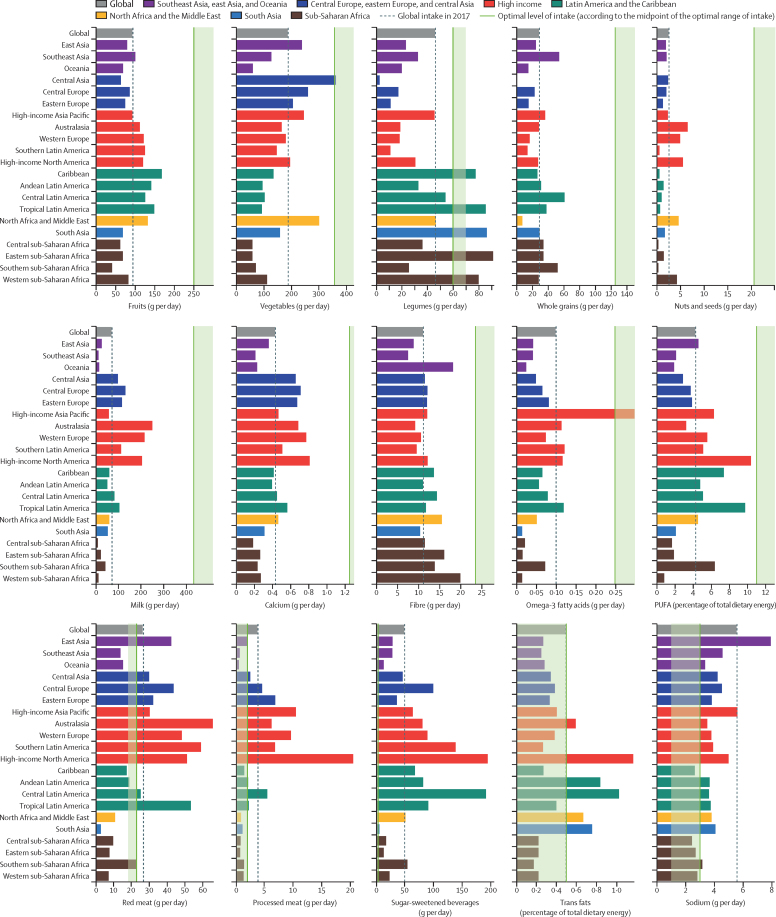
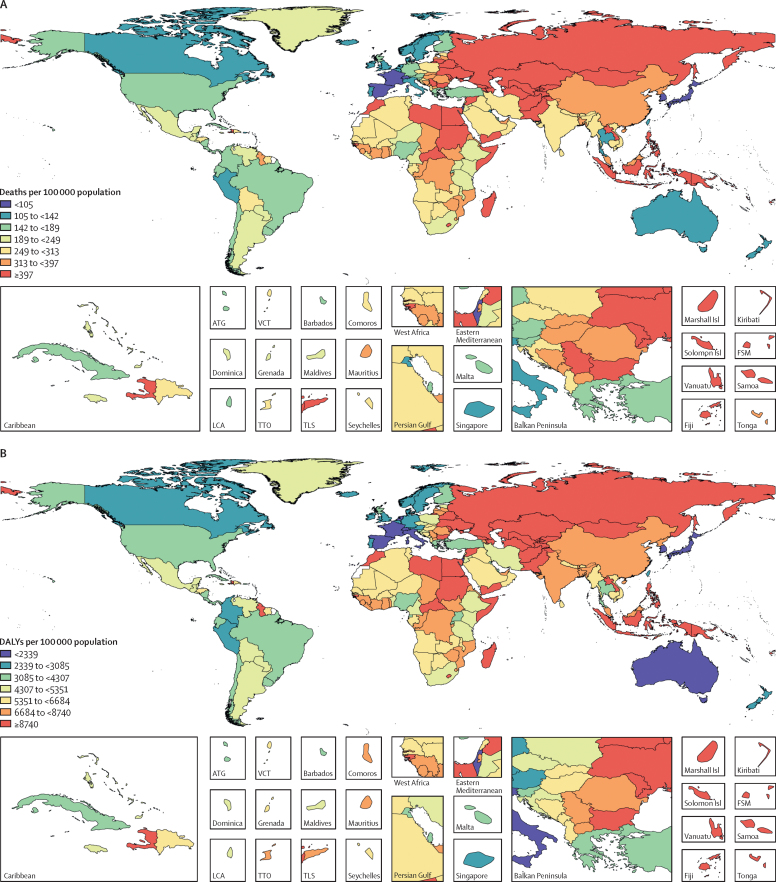
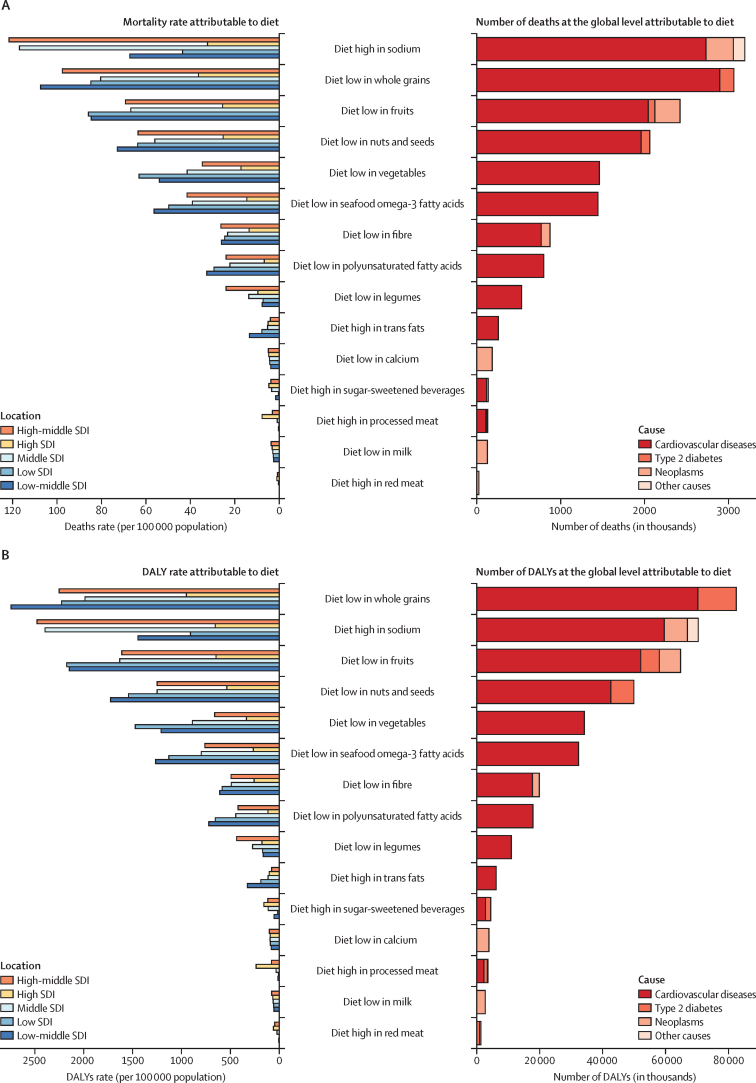
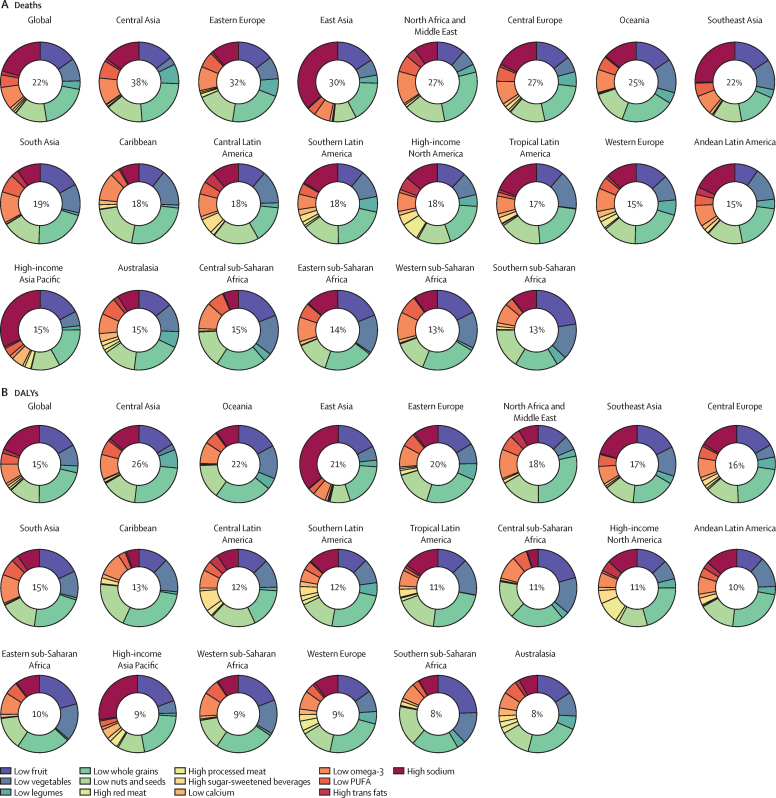
BACKGROUND: Suboptimal diet is an important preventable risk factor for non-communicable diseases (NCDs); however, its impact on the burden of NCDs has not been systematically evaluated. This study aimed to evaluate the consumption of major foods and nutrients across 195 countries and to quantify the impact of their suboptimal intake on NCD mortality and morbidity. METHODS: By use of a comparative risk assessment approach, we estimated the proportion of disease-specific burden attributable to each dietary risk factor (also referred to as population attributable fraction) among adults aged 25 years or older. The main inputs to this analysis included the intake of each dietary factor, the effect size of the dietary factor on disease endpoint, and the level of intake associated with the lowest risk of mortality. Then, by use of disease-specific population attributable fractions, mortality, and disability-adjusted life-years (DALYs), we calculated the number of deaths and DALYs attributable to diet for each disease outcome. FINDINGS: In 2017, 11 million (95% uncertainty interval [UI] 10-12) deaths and 255 million (234-274) DALYs were attributable to dietary risk factors. High intake of sodium (3 million [1-5] deaths and 70 million [34-118] DALYs), low intake of whole grains (3 million [2-4] deaths and 82 million [59-109] DALYs), and low intake of fruits (2 million [1-4] deaths and 65 million [41-92] DALYs) were the leading dietary risk factors for deaths and DALYs globally and in many countries. Dietary data were from mixed sources and were not available for all countries, increasing the statistical uncertainty of our estimates. INTERPRETATION: This study provides a comprehensive picture of the potential impact of suboptimal diet on NCD mortality and morbidity, highlighting the need for improving diet across nations. Our findings will inform implementation of evidence-based dietary interventions and provide a platform for evaluation of their impact on human health annually. FUNDING: Bill & Melinda Gates Foundation.
Overview
The claims and statistics of this paper haven’t been checked yet.
Free: it reads the open-access text and checks the first 5 claims that cite a source we can check. Create a free account to check every claim.
Integrity signals
Registry
Cites
Statistics
Figures
Verification
Claims the paper makes
The claims and statistics of this paper haven’t been checked yet.
Free: it reads the open-access text and checks the first 5 claims that cite a source we can check. Create a free account to check every claim.
Claims other papers make about this one
Each is checked against this paper’s own text: does it say what the citing paper says it does?
The source backs part of the claim, not all of it — or backs it for a different population, condition or comparison.
In the citing paper
“a recent systematic analysis of dietary data from 195 different countries identified poor diet as the main risk factor for death in 2017, with excessive sodium intake being responsible for more than half of diet-related deaths146”
From Chronic inflammation in the etiology of disease across the life span (2019) · cites this paper as [146]
Experimental — accuracy not yet measuredThe cited source says what the claim attributes to it.
In the citing paper
“A large portion of cardiovascular disease (CVD) and type 2 diabetes (T2D)-related death or disability is attributed to suboptimal dietary practices.”
From Micronutrient Supplementation to Reduce Cardiovascular Risk (2022) · cites this paper as [1]
The cited source says what the claim attributes to it.
In the citing paper
“A suboptimal diet is responsible for more deaths globally than any other risk factors, such as tobacco smoking.”
The cited source says what the claim attributes to it.
In the citing paper
“Suboptimal and low-quality dietary intakes play a key role in developing chronic diseases highlighted in the reviewed guidelines [1,2].”
In the citing paper
“According to a 2019 systematic analysis of dietary risks in 195 countries, more than half of these diet-related deaths were attributed to nonoptimal intake of whole grains, fruit, and sodium [1].”
1 more claim about this paper
Create a free account to see every claim other papers make about this one.
Self-check
Percentages, sums and reported differences re-computed from the paper’s own numbers.
The self-check needs the paper’s full text.
Citations
Cites
Lim, S. S., Vos, T., Flaxman, A. D., Danaei, G., Shibuya, K., Adair-Rohani, H., AlMazroa, M. A., Amann, M., Anderson, H. R., Andrews, K. G., et al. (2012) · The Lancet · doi:10.1016/s0140-6736(12)61766-8 · Cited by 11,805
Self-citationForouzanfar, M. H., Afshin, A., Alexander, L. T., Anderson, H. R., Bhutta, Z. A., Biryukov, S., Brauer, M., Burnett, R., Cercy, K., Charlson, F. J., et al. (2016) · The Lancet · doi:10.1016/s0140-6736(16)31679-8 · Cited by 7,698
Self-citationNaghavi, M., Abajobir, A. A., Abbafati, C., Abbas, K. M., Abd-Allah, F., Abera, S. F., Aboyans, V., Adetokunboh, O., Afshin, A., Agrawal, A., et al. (2017) · The Lancet · doi:10.1016/s0140-6736(17)32152-9 · Cited by 4,821
Self-citationLloyd-Jones, D. M., Hong, Y., Labarthe, D., Mozaffarian, D., Appel, L. J., Van Horn, L., Greenlund, K., Daniels, S., Nichol, G., Tomaselli, G. F., et al. (2010) · Circulation · doi:10.1161/circulationaha.109.192703 · Cited by 4,750
Self-citationGlobal diets link environmental sustainability and human health
Tilman, D., & Clark, M. (2014) · Nature · doi:10.1038/nature13959 · Cited by 3,026
Forouzanfar, M. H., Alexander, L., Anderson, H. R., Bachman, V. F., Biryukov, S., Brauer, M., Burnett, R., Casey, D., Coates, M. M., Cohen, A., et al. (2015) · The Lancet · doi:10.1016/s0140-6736(15)00128-2 · Cited by 2,701
Self-citationGakidou, E., Afshin, A., Abajobir, A. A., Abate, K. H., Abbafati, C., Abbas, K. M., Abd-Allah, F., Abdulle, A. M., Abera, S. F., Aboyans, V., et al. (2017) · The Lancet · doi:10.1016/s0140-6736(17)32366-8 · Cited by 2,406
Self-citationProjected effect of dietary salt reductions on future cardiovascular disease
Bibbins-Domingo, K., Chertow, G. M., Coxson, P. G., Moran, A., Lightwood, J. M., Pletcher, M. J., & Goldman, L. (2010) · New England Journal of Medicine · doi:10.1056/nejmoa0907355 · Cited by 1,253
Global Sodium Consumption and Death from Cardiovascular Causes
Mozaffarian, D., Fahimi, S., Singh, G. M., Micha, R., Khatibzadeh, S., Engell, R. E., Lim, S., Danaei, G., Ezzati, M., & Powles, J. (2014) · New England Journal of Medicine · doi:10.1056/nejmoa1304127 · Cited by 1,218
Self-citationMcGuire, S. (2011) · Advances in Nutrition · doi:10.3945/an.111.000430 · Cited by 1,028
Research works printed but not linked: 3
- Gakidou E Afshin A Abajobir AA Global, regional, and national comparative risk assessment of 84 behavioural, environmental and occupational, and metabolic risks or clusters of risks, 1990–2016: a systematic analysis for the Global Burden of Disease Study 2016 Lancet 390 2017 1345 1422 28919119 PMC5614451 · DOI · Paper page
- WHO Interventions on diet and physical activity: what works. Summary report 2009 World Health Organization Geneva 24432437
- Brown GW Yamey G Wamala S The handbook of global health policy 2014 Wiley Hoboken
Cited by
Items 801–900 of 1,023
How food choices link sociodemographic and lifestyle factors with sustainability impacts
Frehner, A., van Zanten, H. H. E., Schader, C., de Boer, I. J. M., Pestoni, G., Rohrmann, S., & Müller, A. W. (2021) · Journal of Cleaner Production · doi:10.1016/j.jclepro.2021.126896 · Cited by 48
“Several studies found that certain dietary patterns increase the risk for non-communicable diseases, such as diabetes, cardiovascular disease, stroke, and cancer (Afshin et al., 2019; Organization, 2017).”
BackgroundDietary diversity and social determinants of nutrition among late adolescent girls in rural Pakistan
Baxter, J. B., Wasan, Y., Islam, M., Cousens, S., Soofi, S. B., Ahmed, I., Sellen, D., & Bhutta, Z. A. (2021) · Maternal and Child Nutrition · doi:10.1111/mcn.13265 · Cited by 47
“Consuming an inadequate diet is an important underlying risk factor for morbidity and mortality (GBD 2017 Diet Collaborators, 2019).”
BackgroundTrieu, K., Coyle, D. H., Afshin, A., Neal, B. C., Marklund, M., & Wu, J. H. Y. (2021) · PLoS Medicine · doi:10.1371/journal.pmed.1003806 · Cited by 47
“Almost all adult populations worldwide consume more sodium than recommended [3].”
BackgroundResultSelf-citationBromage, S., Zhang, Y., Holmes, M. D., Sachs, S. E., Fanzo, J., Remans, R., Sachs, J. D., Batis, C., Bhupathiraju, S. N., Fung, T. T., et al. (2021) · Journal of Nutrition · doi:10.1093/jn/nxab161 · Cited by 47
Self-citationConsumer strategies towards a more sustainable food system: insights from Switzerland
Frehner, A., de Boer, I. J. M., Müller, A. W., van Zanten, H. H. E., & Schader, C. (2021) · American Journal of Clinical Nutrition · doi:10.1093/ajcn/nqab401 · Cited by 48
“Dietary patterns are important factors for human health, and their roles in noncommunicable diseases, such as diabetes, cardiovascular disease, stroke, and cancer, are well established (3).”
Lazarova, S. V., Sutherland, J. M., & Jessri, M. (2022) · American Journal of Clinical Nutrition · doi:10.1093/ajcn/nqac062 · Cited by 47
Health and sustainability co-benefits of eating behaviors: Towards a science of dietary eco-wellness
Barrett, B. P. (2022) · Preventive Medicine Reports · doi:10.1016/j.pmedr.2022.101878 · Cited by 48
Egnell, M., Boutron, I., Péneau, S., Ducrot, P., Touvier, M., Galan, P., Fezeu, L., Porcher, R., Ravaud, P., Herçberg, S., et al. (2022) · BMJ Open · doi:10.1136/bmjopen-2021-058139 · Cited by 47
Self-citationGao, M., Jebb, S. A., Aveyard, P., Ambrosini, G. L., Perez-Cornago, A., Papier, K., Carter, J., & Piernas, C. (2022) · Diabetes Care · doi:10.2337/dc21-2258 · Cited by 46
“Reduced rank regression (RRR) is a data-driven approach that derives dietary patterns by using a priori knowledge to select nutrients that are hypothesized to be on the causal pathway to examine how specific combinations of foods are associated with disease outcomes (16; 17).”
BackgroundWang, Z.-Q., Zhang, L., Zheng, H., Guo, W., Gao, Y., Zhao, Y., Liu, D., Zhou, M., & Li, M. (2021) · European Journal of Nutrition · doi:10.1007/s00394-021-02556-6 · Cited by 46
“A systematic review of scientific literature was conducted to identify nationally and sub-nationally representative nutrition surveys of dietary factors, and more detailed description could be found in the appendix [27].”
BackgroundHansen, K. L., Golubovic, S., Eriksen, C. U., Jørgensen, T., & Toft, U. (2021) · European Journal of Clinical Nutrition · doi:10.1038/s41430-021-01008-y · Cited by 46
Plant-Based Diets and Cancer Risk: What is the Evidence?
DeClercq, V., Nearing, J. T., & Sweeney, E. (2022) · Current Nutrition Reports · doi:10.1007/s13668-022-00409-0 · Cited by 47
Can the 5-colour nutrition label “Nutri-Score” improve the health value of food?
Hau, R. C., & Lange, K. W. (2023) · Journal of Future Foods · doi:10.1016/j.jfutfo.2023.03.002 · Cited by 47
The environmental impact of beef and ultra-processed food consumption in Brazil
da Cruz, G. L., Louzada, M. L. D. C., da Silva, J. T., Garzillo, J. M. F., Rauber, F., Rivera, X. C. S., Reynolds, C. J., & Levy, R. B. (2024) · Public Health Nutrition · doi:10.1017/s1368980023002975 · Cited by 47
Sotos‐Prieto, M., Ortolá, R., Maroto-Rodríguez, J., Carballo‐Casla, A., Kales, S. N., & Rodríguez‐Artalejo, F. (2024) · European Journal of Preventive Cardiology · doi:10.1093/eurjpc/zwae282 · Cited by 46
Cai, H., Talsma, E. F., Chang, Z., Wen, X., Fan, S., Veer, P. V., & Biesbroek, S. (2024) · The Lancet Planetary Health · doi:10.1016/s2542-5196(24)00285-7 · Cited by 50
Xie, D., You, F., Li, C., Zhou, D., Yang, L., & Liu, F. (2025) · Scientific Reports · doi:10.1038/s41598-025-98022-y · Cited by 46
“This not only promotes the occurrence of chronic non-communicable diseases but also accelerates the growth of ASDR associated with T2D 39 .”
Ma, H., Wang, M., Chu, Q., Shi, Y., Mandizadza, O. O., Ni, H., & Ji, C. (2025) · Frontiers in Nutrition · doi:10.3389/fnut.2025.1570321 · Cited by 49
Backholer, K., Sacks, G., & Cameron, A. J. (2019) · Current Nutrition Reports · doi:10.1007/s13668-019-00287-z · Cited by 46
Sports Sponsorship as a Cause of Obesity
Dixon, H., Lee, A., & Scully, M. L. (2019) · Current Obesity Reports · doi:10.1007/s13679-019-00363-z · Cited by 46
Fernandez, M. A., Bertolo, R. F. P., Duncan, A. M., Phillips, S. M., Elango, R., David, W. L., Desroches, S., Grantham, A., & House, J. D. (2020) · Applied Physiology, Nutrition, and Metabolism · doi:10.1139/apnm-2020-0192 · Cited by 47
Henriksson, H., Alexandrou, C., Henriksson, P., Henström, M., Bendtsen, M., Thomas, K., Müssener, U., Nilsén, P., & Löf, M. (2020) · BMC Public Health · doi:10.1186/s12889-020-09808-w · Cited by 46
Associations between Dietary Patterns and Inflammatory Markers during Pregnancy: A Systematic Review
Yeh, K., Kautz, A., Lohse, B., & Groth, S. W. (2021) · Nutrients · doi:10.3390/nu13030834 · Cited by 47
Ocké, M. C., Westenbrink, S., van Rossum, C. T. M., Temme, E. H. M., van der Vossen-Wijmenga, W. P., & Verkaik-Kloosterman, J. (2021) · Journal of Food Composition and Analysis · doi:10.1016/j.jfca.2021.103967 · Cited by 46
Figueroa, C., Echeverría, G., Villarreal, G. A., Martínez, X., Ferreccio, C., & Rigotti, A. (2021) · Frontiers in Nutrition · doi:10.3389/fnut.2021.680452 · Cited by 48
Castellanos-Gutiérrez, A., Rodríguez‐Ramírez, S., Bromage, S., Fung, T. T., Li, Y., Bhupathiraju, S. N., Deitchler, M., Willett, W. C., & Batis, C. (2021) · Journal of Nutrition · doi:10.1093/jn/nxab202 · Cited by 47
Self-citationNutrition policies in Germany: a systematic assessment with the Food Environment Policy Index
von Philipsborn, P., Geffert, K., Klinger, C., Hebestreit, A., Stratil, J., & Rehfuess, E. A. (2021) · Public Health Nutrition · doi:10.1017/s1368980021004742 · Cited by 46
“Unhealthy dietary patterns are among the most important preventable risk factors for disease and premature death worldwide (1).”
BackgroundInfluentialImpact and distributional effects of a home garden and nutrition intervention in Cambodia
Depenbusch, L., Schreinemachers, P., Brown, S. C., & Roothaert, R. L. (2022) · Food Security · doi:10.1007/s12571-021-01235-y · Cited by 48
“According to data from the Global Burden of Disease study, the mean vegetable consumption per person in Cambodia is about 91 g/day (Afshin et al., 2019).”
BackgroundMethodHan, K., Feng, G., Li, T., Deng, Z.-Y., Zhang, Z., Wang, J., & Yang, X. (2022) · Journal of Agricultural and Food Chemistry · doi:10.1021/acs.jafc.2c02603 · Cited by 46
Musazadeh, V., Kavyani, Z., Naghshbandi, B., Dehghan, P., & Vajdi, M. (2022) · Frontiers in Nutrition · doi:10.3389/fnut.2022.985451 · Cited by 46
Shi, Z., Li, X., Shuai, Y., Lu, Y., & Liu, Q. (2022) · Nutrition Bulletin · doi:10.1111/nbu.12581 · Cited by 47
Elvevoll, E. O., James, D., Toppe, J., Gamarro, E. G., & Jensen, I. (2022) · Foods · doi:10.3390/foods11243992 · Cited by 46
“Seafood consumption has been documented as reducing the incidence of cardiometabolic diseases [47,48], primarily through epidemiological evidence and meta-analyses [49] but also by preclinical and clinical studies on the impact of long-chain marine omega-3 polyunsaturated fatty acids (PUFAs), EPA (eicosapentaenoic aci…”
BackgroundA Whole Earth Approach to Nature-Positive Food: Biodiversity and Agriculture
DeClerck, F., Koziell, I., Benton, T. G., Garibaldi, L. A., Kremen, C., Maron, M., del Rio, C. R., Sidhu, A., Wirths, J., Clark, M., et al. (2023) · Springer eBooks · doi:10.1007/978-3-031-15703-5_25 · Cited by 47
Altered dietary salt intake for preventing diabetic kidney disease and its progression
Hodson, E. M., & Cooper, T. E. (2023) · Cochrane Database of Systematic Reviews · doi:10.1002/14651858.cd006763.pub3 · Cited by 47
Impact of Dairy Products and Plant-Based Alternatives on Dental Health: Food Matrix Effects
Shkembi, B., & Huppertz, T. (2023) · Nutrients · doi:10.3390/nu15061469 · Cited by 47
“, the consumption of milk as well as legumes (but not of ingredients derived from these products) [14].”
BackgroundCacau, L. T., Hanley‐Cook, G., Huybrechts, I., Henauw, S. D., Kersting, M., González‐Gross, M., Gottrand, F., Ferrari, M., Nova, E., Castillo, M. J., et al. (2023) · European Journal of Nutrition · doi:10.1007/s00394-023-03171-3 · Cited by 47
“Global food systems are major contributors to adverse environmental impacts [1, 2] and poor-quality diets are the primary driver of morbidity and mortality worldwide [3].”
The Role of Small and Medium-Sized Enterprises in Nutritious Food Supply Chains in Africa
Demmler, K. (2020) · doi:10.36072/wp.2 · Cited by 46
“Diets low in FV increase the risk of several major diseases and are one of the top five dietary risk factors worldwide (18).”
BackgroundBarons, M. J., & Aspinall, W. P. (2020) · BMJ Open · doi:10.1136/bmjopen-2019-032376 · Cited by 45
A Global Review of National Strategies to Reduce Sodium Concentrations in Packaged Foods
Rosewarne, E., Santos, J. A., Trieu, K., Tekle, D., Mhurchú, C. N., Jones, A., Ide, N., Yamamoto, R., Nishida, C., & Webster, J. L. (2022) · Advances in Nutrition · doi:10.1093/advances/nmac048 · Cited by 45
Astilbin from Smilax glabra Roxb. alleviates high-fat diet-induced metabolic dysfunction
Wang, T., Ye, Y., Ji, J., Zhang, S., Yang, X., Xu, J., Wang, J.-S., Chen, Z., Xia, B., Shen, H., et al. (2022) · Food & Function · doi:10.1039/d2fo00060a · Cited by 45
Baral, J., Karki, K. B., Thapa, P., Timalsina, A., Bhandari, R., Bhandari, R., Kharel, B., & Adhikari, N. (2022) · Journal of Diabetes Research · doi:10.1155/2022/6136059 · Cited by 48
“Appropriate dietary practices for type 2 diabetes patients include the intake of less fat, more fiber, less sodium, and more foods that have health-promoting properties such as fish, soy products, fruits, and vegetable [4].”
BackgroundJust, D. R., & Goddard, J. M. (2022) · Agribusiness · doi:10.1002/agr.21778 · Cited by 45
Illavina, I., & Kusumaningati, W. (2022) · Muhammadiyah Journal of Nutrition and Food Science (MJNF) · doi:10.24853/mjnf.3.1.27-35 · Cited by 45
“manis (49 gram/hari) dan asupan garam (6 g/hari) jauh lebih tinggi dari asupan optimal (2).”
BackgroundEmmert-Fees, K. M. F., Amies‐Cull, B., Wawro, N., Linseisen, J., Staudigel, M., Peters, A., Cobiac, L. J., O’Flaherty, M., Scarborough, P., Kypridemos, C., et al. (2023) · PLoS Medicine · doi:10.1371/journal.pmed.1004311 · Cited by 46
Elliott, P. S., Devine, L. D., Gibney, E. R., & O’Sullivan, A. M. (2024) · Nutrition Research · doi:10.1016/j.nutres.2024.03.004 · Cited by 46
Tao, Y., Wall, M. M., Larson, N., Neumark‐Sztainer, D., & Winpenny, E. M. (2024) · American Journal of Clinical Nutrition · doi:10.1016/j.ajcnut.2024.08.017 · Cited by 46
The dichotomy between functional and functionalized foods – A critical characterization of concepts
Frumuzachi, O., Flanagan, A., Rohn, S., & Mocan, A. (2025) · Food Research International · doi:10.1016/j.foodres.2025.116173 · Cited by 46
Nutrition care by primary-care physicians: advancing our understanding using the COM-B framework
Crowley, J., Ball, L., & Hiddink, G. J. (2019) · Public Health Nutrition · doi:10.1017/s1368980019003148 · Cited by 45
Gebreslassie, M., Sampaio, F., Nystrand, C., Ssegonja, R., & Feldman, I. (2020) · Preventive Medicine · doi:10.1016/j.ypmed.2020.106100 · Cited by 45
Sun, H. J., Gong, T., Xia, Y., Wen, Z.-Y., Zhao, L., Zhao, Y., & Wu, Q. (2020) · Clinical Nutrition · doi:10.1016/j.clnu.2020.11.032 · Cited by 45
Rodríguez‐Ramírez, S., Pineda, E. B. G., Martínez‐Tapia, B., Arango‐Angarita, A., Kim-Herrera, E., Valdez-Sánchez, A., Medina-Zacarías, M. C., Shamah‐Levy, T., & Ramírez‐Silva, C. I. (2020) · Salud Pública de México · doi:10.21149/11529 · Cited by 45
“(1) Centro de Investigación en Nutrición y Salud, Instituto Nacional de Salud Pública.”
BackgroundSelf-citationSacks, G., Riesenberg, D., Mialon, M., Dean, S., & Cameron, A. J. (2020) · PLoS ONE · doi:10.1371/journal.pone.0243144 · Cited by 46
the ASPREE Investigator Group, Phyo, A. Z. Z., Ryan, J. L., González‐Chica, D. A., Woods, R. L., Reid, C. M., Nelson, M. R., Murray, A. M., Gašević, D., Stocks, N. P., et al. (2021) · Quality of Life Research · doi:10.1007/s11136-020-02723-y · Cited by 45
Sponselee, H. C. S., Kroeze, W., Poelman, M. P., Renders, C. M., Ball, K., & Steenhuis, I. H. (2021) · BMC Public Health · doi:10.1186/s12889-021-11322-6 · Cited by 47
Quality and environmental footprints of diets by socio-economic status in Argentina
Arrieta, E. M., Geri, M., Coquet, J. B., Scavuzzo, C. M., Zapata, M. E., & González, A. D. (2021) · The Science of The Total Environment · doi:10.1016/j.scitotenv.2021.149686 · Cited by 45
ter Borg, S., Steenbergen, E., Milder, I. E. J., & Temme, E. H. M. (2021) · Nutrients · doi:10.3390/nu13124536 · Cited by 45
“on the existing evidence on associations between food consumption and risk and mortality from chronic diseases [9].”
BackgroundAl‐Mubarak, A. A., Beverborg, N. G., Suthahar, N., Gansevoort, R. T., Bakker, S. J. L., Touw, D. J., de Boer, R. A., van der Meer, P., & Bömer, N. (2021) · European Journal of Heart Failure · doi:10.1002/ejhf.2405 · Cited by 45
Interventions That Successfully Reduced Adults Salt Intake—A Systematic Review
Silva-Santos, T., Moreira, P. A. M., Rodrigues, M., Padrão, P., Pinho, O., Norton, P. M. P. N. S., Ndrio, A., & Gonçalves, C. (2021) · Nutrients · doi:10.3390/nu14010006 · Cited by 45
Advances in Phenotyping Obesity and in Its Dietary and Pharmacological Treatment: A Narrative Review
Pujia, R., Tarsitano, M. G., Arturi, F., LORENZO, A. D., Lenzi, A., Pujia, A., & Montalcini, T. (2022) · Frontiers in Nutrition · doi:10.3389/fnut.2022.804719 · Cited by 45
The sustainability challenges of fresh food supply chains: An integrative framework
de Castro Moura Duarte, A. L., Picanço Rodrigues, V., & Bonome Message Costa, L. (2024) · Environment, Development and Sustainability · doi:10.1007/s10668-024-04850-9 · Cited by 44
Cara, K. C., Goldman, D. M., Kollman, B. K., Amato, S. S., Tull, M. D., & Karlsen, M. C. (2023) · Advances in Nutrition · doi:10.1016/j.advnut.2023.03.007 · Cited by 44
Lin, C.-H., Hsia, K., Su, C.-K., Chen, C.-C., Yeh, C.-C., Ma, H., & Lu, J.-H. (2021) · Polymers · doi:10.3390/polym13111699 · Cited by 44
Rosewarne, E., Huang, L., Farrand, C., Coyle, D. H., Pettigrew, S., Jones, A., Moore, M., & Webster, J. L. (2020) · Nutrients · doi:10.3390/nu12051346 · Cited by 44
“Unhealthy diets increase the risk of many NCDs including cardiovascular diseases (CVDs), diabetes, and some cancers [3,4], through a myriad of metabolic”
BackgroundA Systematic Review of Trans Fat Reduction Initiatives in the Eastern Mediterranean Region
Al‐Jawaldeh, A., Taktouk, M., Chatila, A., Naalbandian, S., Abdollahi, Z., Ajlan, B. Y., Hamad, N. A., Alkhalaf, M. M., Almamary, S., Alobaid, R., et al. (2021) · Frontiers in Nutrition · doi:10.3389/fnut.2021.771492 · Cited by 44
Madlala, S. S., Hill, J., Kunneke, E., Lopes, T., & Faber, M. (2023) · BMC Public Health · doi:10.1186/s12889-023-15996-y · Cited by 46
Leydon, C. L., Leonard, U. M., McCarthy, S. N., & Harrington, J. M. (2023) · Advances in Nutrition · doi:10.1016/j.advnut.2023.07.007 · Cited by 44
Cheng, Y., Lu, Z., Mao, T., Song, Y., Qu, Y., Chen, X., Chen, K., Liu, K., & Zhang, C. (2024) · Journal of Agricultural and Food Chemistry · doi:10.1021/acs.jafc.3c09634 · Cited by 44
He, J., & Sui, D. (2024) · Frontiers in Sustainable Food Systems · doi:10.3389/fsufs.2024.1404465 · Cited by 46
Li, M., Ma, S., Zheng, X., & Li, L. (2025) · Food Bioscience · doi:10.1016/j.fbio.2025.106219 · Cited by 44
Artificial intelligence for microbiology and microbiome research.
Wang, X.-W., Wang, T., & Liu, Y.-Y. (2026) · Cell Systems · doi:10.1016/j.cels.2026.101531 · Cited by 15
Vanderlee, L., Goorang, S., Karbasy, K., Vandevijvere, S., & L’Abbé, M. R. (2019) · International Journal of Environmental Research and Public Health · doi:10.3390/ijerph16224473 · Cited by 47
Deeb, M. A., Abduljabbar, T. S., Vohra, F. A., Zafar, M. S., & Hussain, M. (2019) · Pakistan Journal of Medical Sciences · doi:10.12669/pjms.36.2.1257 · Cited by 44
Dickie, S., Woods, J. L., Baker, P., Elizabeth, L., & Lawrence, M. A. (2020) · Nutrients · doi:10.3390/nu12051463 · Cited by 38
Lee, A., Kane, S., Herron, L., Matsuyama, M., & Lewis, M. (2020) · International Journal of Behavioral Nutrition and Physical Activity · doi:10.1186/s12966-020-00981-0 · Cited by 46
Pinton, M. B., dos Santos, B. A., Correa, L. P., Leães, Y. S. V., Cichoski, A. J., Lorenzo, J. M., dos Santos, M., Pollonio, M. A. R., & Campagnol, P. C. B. (2020) · Meat Science · doi:10.1016/j.meatsci.2020.108244 · Cited by 44
Prediction of Chronic Diseases With Multi-Label Neural Network
Ge, R., Zhang, R., & Wang, P. (2020) · IEEE Access · doi:10.1109/access.2020.3011374 · Cited by 44
Exploring the carcinogenic and non-carcinogenic risk of chemicals present in vegetable oils
Taghizadeh, S. F., Rezaee, R., Boskabady, M., Mashayekhi‐Sardoo, H., & Karimi, G. (2020) · International Journal of Environmental & Analytical Chemistry · doi:10.1080/03067319.2020.1803848 · Cited by 44
Moran, A. J., Gu, Y., Clynes, S., Goheer, A. A., Roberto, C. A., & Palmer, A. (2020) · International Journal of Environmental Research and Public Health · doi:10.3390/ijerph17207493 · Cited by 45
Granado, F. S., Maia, E. G., Mendes, L. L., & Claro, R. M. (2020) · Public Health Nutrition · doi:10.1017/s1368980020005066 · Cited by 45
“The global NCD deaths attributable to dietary risk have increased from 8 to 11 million between 1990 and 2017 (5) , which is relevant considering food consumption as the major modifiable determinant of NCD (6) .”
Territorial and Sustainable Healthy Diets
Hachem, F., Vanham, D., & Moreno, L. A. (2020) · Food and Nutrition Bulletin · doi:10.1177/0379572120976253 · Cited by 45
“An MD leads to WF reductions of 19% to 43% with respect to the current diet.”
BackgroundPlanting seeds of change: reconceptualizing what people eat as eating practices and patterns
Olstad, D. L., & Kirkpatrick, S. I. (2021) · International Journal of Behavioral Nutrition and Physical Activity · doi:10.1186/s12966-021-01102-1 · Cited by 46
“As suboptimal diet quality is a leading cause of global morbidity and mortality [23], the framing of food consumption warrants consideration in efforts to improve population health.”
BackgroundHarris, J., Tan, W., Raneri, J. E., Schreinemachers, P., & Herforth, A. (2022) · Food and Nutrition Bulletin · doi:10.1177/03795721211068652 · Cited by 44
Reeve, E., Lamichhane, P., McKenzie, B. L., Waqa, G., Webster, J. L., Snowdon, W., & Bell, C. (2022) · BMC Public Health · doi:10.1186/s12889-022-13808-3 · Cited by 44
Global Scientific Trends on Healthy Eating from 2002 to 2021: A Bibliometric and Visualized Analysis
Fang, T., Cao, H., Wang, Y., Gong, Y., & Wang, Z. (2023) · Nutrients · doi:10.3390/nu15061461 · Cited by 45
Susceptibility Assessment of Flash Floods: A Bibliometrics Analysis and Review
Le, D., Liu, C., Xu, H., Huali, H., Liu, H., Yan, X., Liu, T., Yang, Z., Liu, G., Dai, X., et al. (2022) · Remote Sensing · doi:10.3390/rs14215432 · Cited by 44
Kwon, Y., Lee, H. S., Park, G., & Lee, J. (2022) · Frontiers in Nutrition · doi:10.3389/fnut.2022.1053585 · Cited by 44
Barnett, A., Wright, C., Stone, C., Ho, N. Y., Adhyaru, P., Kostjasyn, S., Hickman, I. J., Campbell, K. L., Mayr, H. L., & Kelly, J. T. (2023) · Journal of Human Nutrition and Dietetics · doi:10.1111/jhn.13125 · Cited by 45
The Political Economy of Food System Transformation: Pathways to Progress in a Polarized World
Resnick, D., & Swinnen, D. R. J. (2023) · doi:10.1093/oso/9780198882121.001.0001 · Cited by 45
Maternal Malnutrition and Elevated Disease Risk in Offspring
Thornburg, K. L. R., & Valent, A. M. (2024) · Nutrients · doi:10.3390/nu16162614 · Cited by 44
Chen, Y., Wang, G., Hou, Z., Liu, X., Ma, S., & Jiang, M. (2025) · Scientific Reports · doi:10.1038/s41598-025-96175-4 · Cited by 43
“Previous studies have identified obesity, dietary risks, tobacco, physical inactivity and air pollution as major risk factors for the development of T2DM 7,29,30 .”
Lewis, E., Steenson, S., Haslam, R. P., McDonald, E., Sharman, M., Τράκα, Μ., Stanton, A. V., Napier, J. A., Sweeting, A., Saleh, R. N. M., et al. (2025) · Nutrition Research Reviews · doi:10.1017/s0954422425100127 · Cited by 43
Forde, H., White, M., Levy, L., Greaves, F., Hammond, D. G., Vanderlee, L., Sharp, S. J., & Adams, J. (2019) · Nutrients · doi:10.3390/nu11123047 · Cited by 44
“In 2017, 11 million deaths worldwide were attributable to dietary risk factors [1].”
BackgroundFontanelli, M. D. M., Micha, R., Sales, C. H., Liu, J., Mozaffarian, D., & Fisberg, R. M. (2019) · European Journal of Nutrition · doi:10.1007/s00394-019-02165-4 · Cited by 45
Self-citationFuture Directions for Integrative Objective Assessment of Eating Using Wearable Sensing Technology
Skinner, A., Toumpakari, Z., Stone, C., & Johnson, L. (2020) · Frontiers in Nutrition · doi:10.3389/fnut.2020.00080 · Cited by 44
Castro, P. D., Reynolds, C. M. E., Kennelly, S., Geraghty, A. A., Finnigan, K., McCullagh, L., Gibney, E. R., Perrotta, C., & Corish, C. A. (2020) · Clinical Nutrition · doi:10.1016/j.clnu.2020.12.024 · Cited by 43
Fruit and vegetable consumption, cardiovascular disease, and all-cause mortality in China
Wang, J., Liu, F., Li, J., Huang, K., Yang, X., Chen, J., Liu, X., Cao, J., Chen, S., Shen, C., et al. (2021) · Science China Life Sciences · doi:10.1007/s11427-020-1896-x · Cited by 43
Reeve, E., Thow, A. M., Huse, O., Bell, C., Peeters, A., & Sacks, G. (2021) · Bulletin of the World Health Organization · doi:10.2471/blt.20.283366 · Cited by 43
Liu, K. S. N., Chen, J. Y., Sun, K. S., Tsang, J. P. Y., Ip, P., & Lam, C. L. K. (2022) · Nutrients · doi:10.3390/nu14142857 · Cited by 43
Islam, M. R., Rahman, S. M., Rahman, M., Pervin, J., Rahman, A. M., & Ekström, E. (2022) · PLoS ONE · doi:10.1371/journal.pone.0272275 · Cited by 45
Intuitive Eating Intervention and Diet Quality in Adults: A Systematic Literature Review
Hensley-Hackett, K., Bosker, J., Keefe, A. G., Reidlinger, D. P., Warner, M. M., D’Arcy, A., & Utter, J. (2022) · Journal of Nutrition Education and Behavior · doi:10.1016/j.jneb.2022.08.008 · Cited by 45
Metadata
- Authors
- Afshin, A., Sur, P. J., Fay, K. A., Cornaby, L., Ferrara, G., Salama, J. S., Mullany, E. C., Abate, K. H., Abbafati, C., Abebe, Z., Afarideh, M., Aggarwal, A., Agrawal, S., Akinyemiju, T., Alahdab, F., Bacha, U., Bachman, V. F., Badali, H., Badawi, A., Bensenor, I. M., Bernabe, E., Biadgilign, S. K. K., Biryukov, S. H., Cahill, L. E., Carrero, J. J., Cercy, K. M., Dandona, L., Dandona, R., Dang, A. K., Degefa, M. G., El Sayed Zaki, M., Esteghamati, A., Esteghamati, S., Fanzo, J., Farinha, C. S. E. S., Farvid, M. S., Farzadfar, F., Feigin, V. L., Fernandes, J. C., Flor, L. S., Foigt, N. A., Forouzanfar, M. H., Ganji, M., Geleijnse, J. M., Gillum, R. F., Goulart, A. C., Grosso, G., Guessous, I., Hamidi, S., Hankey, G. J., Harikrishnan, S., Hassen, H. Y., Hay, S. I., Hoang, C. L., Horino, M., Ikeda, N., Islami, F., Jackson, M. D., James, S. L., Johansson, L., Jonas, J. B., Kasaeian, A., Khader, Y. S., Khalil, I. A., Khang, Y.-H., Kimokoti, R. W., Kokubo, Y., Kumar, G. A., Lallukka, T., Lopez, A. D., Lorkowski, S., Lotufo, P. A., Lozano, R., Malekzadeh, R., März, W., Meier, T., Melaku, Y. A., Mendoza, W., Mensink, G. B. M., Micha, R., Miller, T. R., Mirarefin, M., Mohan, V., Mokdad, A. H., Mozaffarian, D., Nagel, G., Naghavi, M., Nguyen, C. T., Nixon, M. R., Ong, K. L., Pereira, D. M., Poustchi, H., Qorbani, M., Rai, R. K., Razo-García, C., Rehm, C. D., Rivera, J. A., Rodríguez-Ramírez, S., Roshandel, G., Roth, G. A., Sanabria, J., Sánchez-Pimienta, T. G., Sartorius, B., Schmidhuber, J., Schutte, A. E., Sepanlou, S. G., Shin, M.-J., Sorensen, R. J. D., Springmann, M., Szponar, L., Thorne-Lyman, A. L., Thrift, A. G., Touvier, M., Tran, B. X., Tyrovolas, S., Ukwaja, K. N., Ullah, I., Uthman, O. A., Vaezghasemi, M., Vasankari, T. J., Vollset, S. E., Vos, T., Vu, G. T., Vu, L. G., Weiderpass, E., Werdecker, A., Wijeratne, T., Willett, W. C., Wu, J. H., Xu, G., Yonemoto, N., Yu, C., & Murray, C. J. L.
- Affiliations
- University of Gondar (ET)
- Mayo Clinic (US)
- Cancer Registry of Norway (NO)
- Brigham and Women's Hospital (US)
- Corresponding author
- Murray, Christopher J L
- ORCID
- Afshin, Ashkan
- Sur, Patrick John
- Fay, Kairsten A.
- Ferrara, Giannina
- Salama, Joseph S
- Abate, Kalkidan Hassen
- Abbafati, Cristiana
- Afarideh, Mohsen
- Agrawal, Sutapa
- Akinyemiju, Tomi
- Alahdab, Fares
- Badali, Hamid
- Badawi, Alaa
- Biadgilign, Sibhatu Kassa K
- Cahill, Leah E
- Carrero, Juan J
- Dandona, Lalit
- Dandona, Rakhi
- Dang, Anh Kim
- Degefa, Meaza Girma
- Esteghamati, Alireza
- Esteghamati, Sadaf
- Fanzo, Jessica
- Farinha, Carla Sofia e Sá
- Farvid, Maryam S
- Farzadfar, Farshad
- Feigin, Valery L.
- Foigt, Nataliya A.
- Forouzanfar, Mohammad H
- Ganji, Morsaleh
- Geleijnse, Johanna M.
- Goulart, Alessandra C
- Grosso, Giuseppe
- Guessous, Idris
- Hamidi, Samer
- Hankey, Graeme J.
- Harikrishnan, Sivadasanpillai
- Hassen, Hamid Yimam
- Hay, Simon I.
- Hoang, Chi Linh
- Horino, Masako
- Ikeda, Nayu
- Islami, Farhad
- Jackson, Maria D.
- James, Spencer L.
- Kasaeian, Amir
- Khader, Yousef Saleh
- Khang, Young-Ho
- Kimokoti, Ruth W
- Kokubo, Yoshihiro
- Kumar, G Anil
- Lallukka, Tea
- Lotufo, Paulo A.
- Lozano, Rafael
- Malekzadeh, Reza
- März, Winfried
- Meier, Toni
- Melaku, Yohannes A
- Mensink, Gert B.M.
- Micha, Renata
- Miller, Ted R
- Mohan, Viswanathan
- Mokdad, Ali H
- Mozaffarian, Dariush
- Nagel, Gabriele
- Naghavi, Mohsen
- Nguyen, Cuong Tat
- Pereira, David M.
- Qorbani, Mostafa
- Rehm, Colin D
- Roshandel, Gholamreza
- Roth, Gregory A
- Sanabria, Juan
- Sánchez-Pimienta, Tania G
- Sartorius, Benn
- Schmidhuber, Josef
- Schutte, Aletta Elisabeth
- Sepanlou, Sadaf G.
- Shin, Min-Jeong
- Sorensen, Reed J.D.
- Springmann, Marco
- Szponar, Lucjan
- Thrift, Amanda G
- Touvier, Mathilde
- Tran, Bach Xuan
- Tyrovolas, Stefanos
- Ukwaja, Kingsley Nnanna
- Ullah, Irfan
- Uthman, Olalekan A
- Vaezghasemi, Masoud
- Vasankari, Tommi Juhani
- Vos, Theo
- Vu, Giang Thu
- Vu, Linh Gia
- Weiderpass, Elisabete
- Werdecker, Andrea
- Wijeratne, Tissa
- Willett, Walter C
- Wu, Jason H
- Xu, Gelin
- Yonemoto, Naohiro
- Yu, Chuanhua
- Murray, Christopher J L
- Venue
- The Lancet
- Publisher
- Elsevier BV
- Published
- 2019-05
- Volume
- 393
- Issue
- 10184
- Pages
- 1958-1972
- ISSN
- 0099-5355 (ISSN-L)
- 0140-6736
- PMC
- PMC6899507
- OpenAlex
- W2928467655
- Semantic Scholar
- f1a45c16fc1e3e36884646d1b50239fcedacdb7d
- Cited by
- 5,811
- References
- 41
- Citations by year
- 2026: 597 · 2025: 849 · 2024: 917 · 2023: 875 · 2022: 894 · 2021: 830 · 2020: 635 · 2019: 208
- FWCI
- 590.75
- Type
- journal article
- Language
- en
- Update notices
- erratum (2021-06-26)
- Open access
- hybrid
- doi.org
- Licence
- cc-by
- www.elsevier.com/tdm/userlicense/1.0/ (tdm)
- www.elsevier.com/legal/tdmrep-license (tdm)
- creativecommons.org/licenses/by/4.0/ (vor)
- Locations
- The Lancet (publishedVersion, cc-by)
- PubMed Central (publishedVersion, cc-by)
- PubMed (publishedVersion)
- Socio-Environmental Systems Modeling (acceptedVersion, cc-by)
- LSHTM Research Online (London School of Hygiene and Tropical Medicine) (acceptedVersion)
- Monash University Research Portal (Monash University) (submittedVersion, cc-by)
- UNSWorks (UNSW Sydney) (submittedVersion, cc-by-nc-nd)
- IRIS Research product catalog (Sapienza University of Rome) (submittedVersion, other-oa)
- Federal Open Science Repository of Canada / Le Dépôt fédéral de science ouverte du Canada (submittedVersion, cc-by)
- Tuwhera (Auckland University of Technology) (submittedVersion, cc-by)
- UWA Profiles and Research Repository (UWA) (submittedVersion, cc-by)
- DiVA at Umeå University (Umeå University) (submittedVersion, other-oa)
- Työväentutkimus Vuosikirja (submittedVersion)
- Research Portal (King's College London) (submittedVersion, cc-by)
- GoeScholar The Publication Server of the Georg-August-Universität Göttingen (Georg-August-Universität Göttingen) (submittedVersion, other-oa)
- Portuguese National Funding Agency for Science, Research and Technology (RCAAP Project by FCT) (submittedVersion, cc-by)
- Boloka Institutional Repository (North-west University) (submittedVersion)
- Seoul National University Open Repository (Seoul National University) (submittedVersion)
- Warwick Research Archive Portal (University of Warwick) (submittedVersion)
- Data Archiving and Networked Services (DANS) (submittedVersion, cc-by)
- Columbia Academic Commons (Columbia University)
- Funders
- Academy of Finland (grants number 287488, number 319200)
- German Federal Ministry of Education and Research (01EA1411A)
- Topics
- Health Sciences › Medicine › Public Health, Environmental and Occupational Health › Nutritional Studies and Diet
- Health Sciences › Medicine › Cardiology and Cardiovascular Medicine › Cardiovascular Health and Risk Factors
- Life Sciences › Agricultural and Biological Sciences › Food Science › Nutrition, Health, and Society Studies
- Keywords
- dietary risk factors, non-communicable diseases, sodium intake, whole grains, fruit consumption, population attributable fraction, disability-adjusted life years, disease burden, global health, dietary intervention
- MeSH terms
- Global Burden of Disease, Adult, Aged, Diet, Female, Humans, Male, Middle Aged, Risk Factors, Global Health, Nutrition Assessment, Risk Assessment, Quality-Adjusted Life Years
About these checks
Registry, retraction, Cites and statistics results are computed, not judged, with one exception: a printed reference that no index lists is read once by a model before it counts as a citation error. Claims are extracted by a model and kept only when their quote appears verbatim in the text; each cited source is then checked, with a model’s help, for whether it says what the claim relies on. Those verdicts can be wrong — read the claim’s quote and the cited source before relying on one.
Statistics and arithmetic are recomputed, not judged.
Confidence bands are shown only for fields calibrated on our annotated test set. None is calibrated yet, so no band is shown.
What counts as a claim ›How we measure confidence ›How we check this ›
Are you an author, or do you see a problem with this page? Request a review
Data sources
Bibliographic data: Semantic Scholar, OpenAlex, Crossref.
Contains information from the Semantic Scholar Academic Graph Datasets, made available under the ODC Attribution License (ODC-BY 1.0).
Semantic Scholar’s data is described in: Kinney, R., et al. (2023). The Semantic Scholar Open Data Platform. arXiv:2301.10140.
