

Physical distancing, face masks, and eye protection to prevent person-to-person transmission of SARS-CoV-2 and COVID-19: a systematic review and meta-analysis
Open accessThe DOI matches its Crossref record; 92 of the 104 references it cites were found in a registry or an index; 6 of the 17 sources its claims cite were checked for support.
Abstract
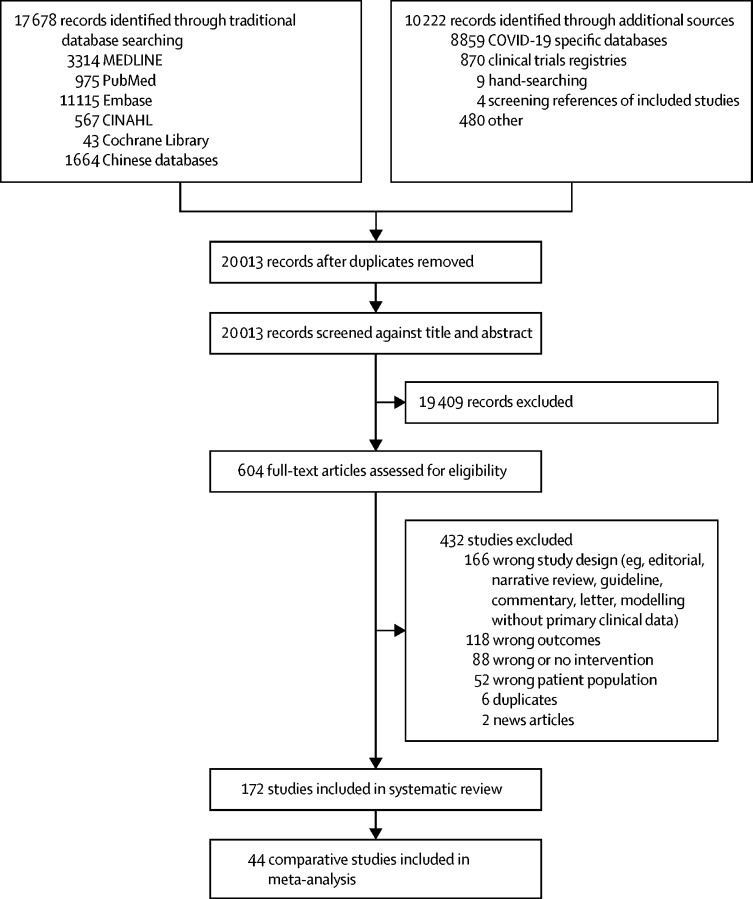
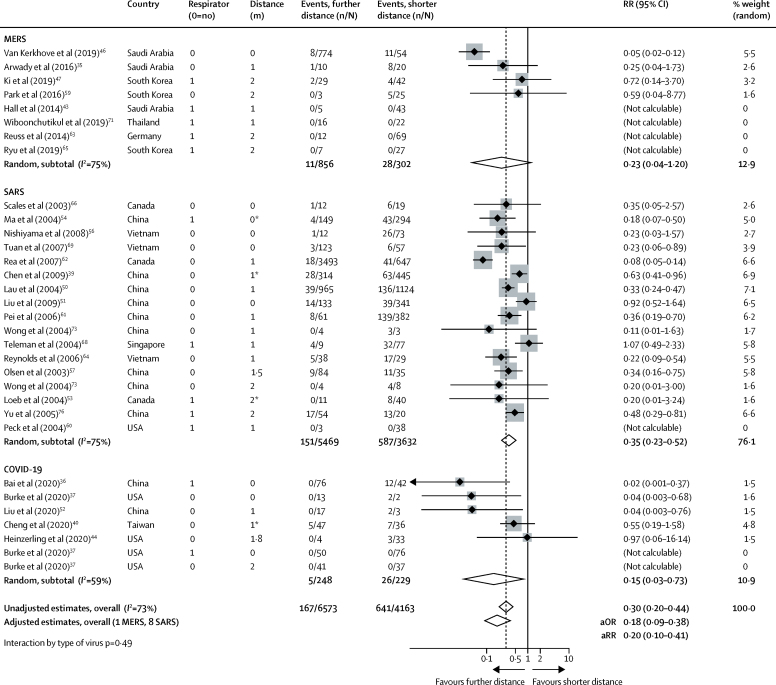
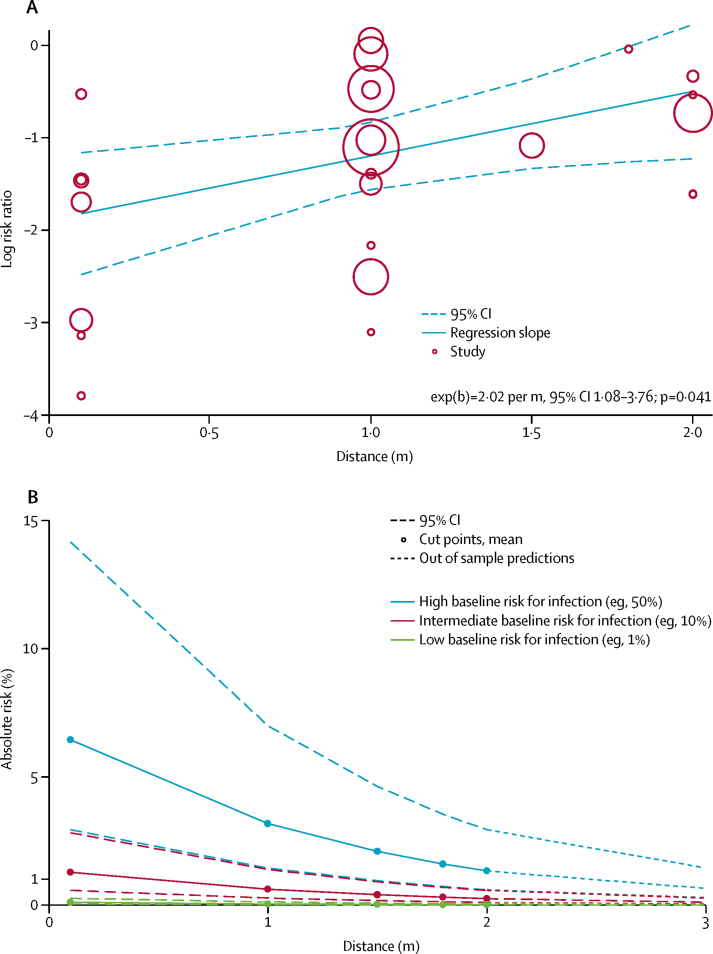
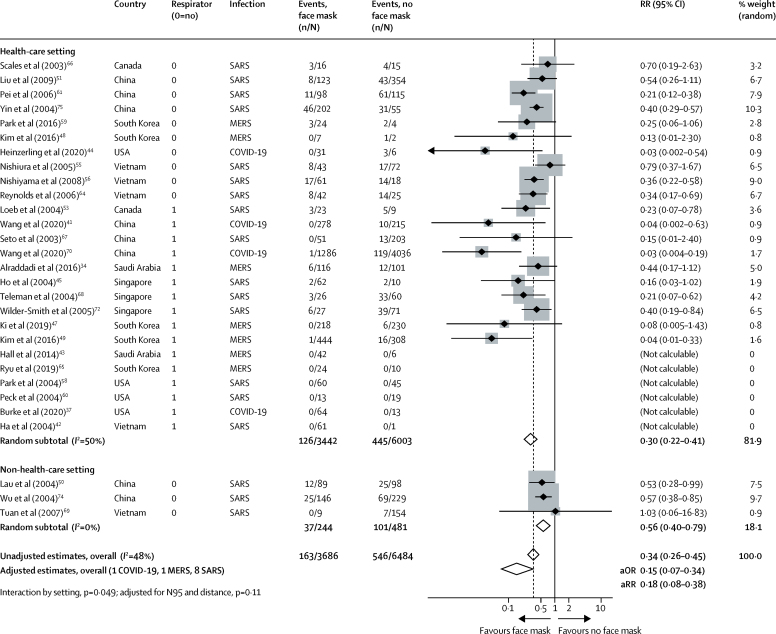
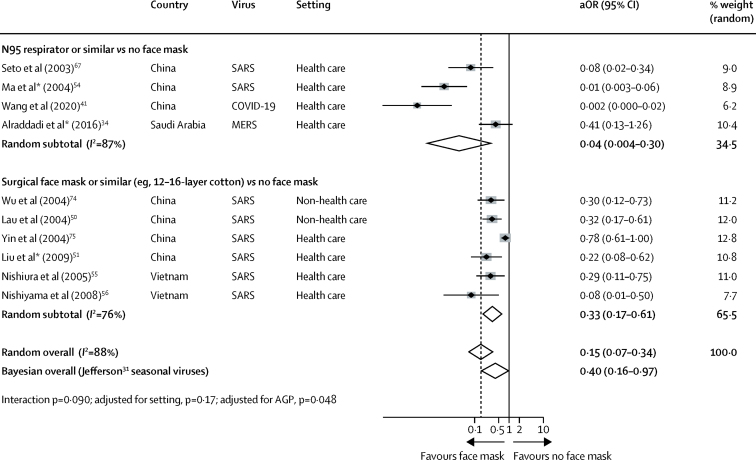
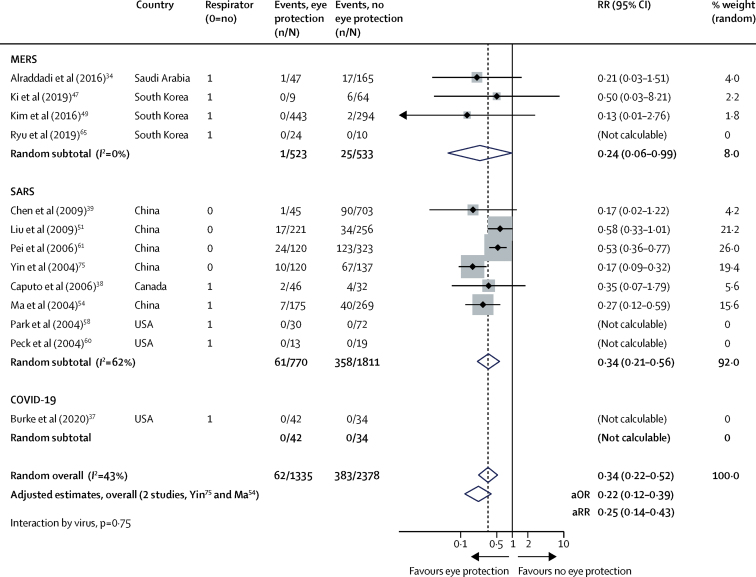
Background Severe acute respiratory syndrome coronavirus 2 (SARS-CoV-2) causes COVID-19 and is spread personto-person through close contact.We aimed to investigate the effects of physical distance, face masks, and eye protection on virus transmission in health-care and non-health-care (eg, community) settings. MethodsWe did a systematic review and meta-analysis to investigate the optimum distance for avoiding person-toperson virus transmission and to assess the use of face masks and eye protection to prevent transmission of viruses.We obtained data for SARS-CoV-2 and the betacoronaviruses that cause severe acute respiratory syndrome, and Middle East respiratory syndrome from 21 standard WHO-specific and COVID-19-specific sources.We searched these data sources from database inception to May 3, 2020, with no restriction by language, for comparative studies and for contextual factors of acceptability, feasibility, resource use, and equity.We screened records, extracted data, and assessed risk of bias in duplicate.We did frequentist and Bayesian meta-analyses and random-effects metaregressions.We rated the certainty of evidence according to Cochrane methods and the GRADE approach.This study is registered with PROSPERO, CRD42020177047.Findings Our search identified 172 observational studies across 16 countries and six continents, with no randomised controlled trials and 44 relevant comparative studies in health-care and non-health-care settings (n=25 697 patients).Transmission of viruses was lower with physical distancing of 1 m or more, compared with a distance of less than 1 m (n=10 736, pooled adjusted odds ratio [aOR] 0•18, 95% CI 0•09 to 0•38; risk difference [RD] -10•2%, 95% CI -11•5 to -7•5; moderate certainty); protection was increased as distance was lengthened (change in relative risk [RR] 2•02 per m; p interaction =0•041; moderate certainty).Face mask use could result in a large reduction in risk of infection (n=2647; aOR 0•15, 95% CI 0•07 to 0•34, RD -14•3%, -15•9 to -10•7; low certainty), with stronger associations with N95 or similar respirators compared with disposable surgical masks or similar (eg, reusable 12-16-layer cotton masks; p interaction =0•090; posterior probability >95%, low certainty).Eye protection also was associated with less infection (n=3713; aOR 0•22, 95% CI 0•12 to 0•39, RD -10•6%, 95% CI -12•5 to -7•7; low certainty).Unadjusted studies and subgroup and sensitivity analyses showed similar findings.Interpretation The findings of this systematic review and meta-analysis support physical distancing of 1 m or more and provide quantitative estimates for models and contact tracing to inform policy.Optimum use of face masks, respirators, and eye protection in public and health-care settings should be informed by these findings and contextual factors.Robust randomised trials are needed to better inform the evidence for these interventions, but this systematic appraisal of currently best available evidence might inform interim guidance.
Overview
CoChat Summary
TL;DR
This systematic review and meta-analysis of 172 observational studies found that physical distancing of at least 1 m, face masks, and eye protection were each associated with lower risk of SARS-CoV-2, SARS-CoV, or MERS-CoV infection. No randomised trials were identified, and certainty ranged from moderate for distancing to low for face masks and eye protection.
Key findings
- Among 44 comparative studies (n=25,697), physical distancing of ≥1 m versus <1 m was associated with lower infection risk (unadjusted n=10,736, RR 0·30, 95% CI 0·20–0·44; adjusted n=7782, aOR 0·18, 95% CI 0·09–0·38; RD −10·2%, 95% CI −11·5 to −7·5; moderate certainty), with protection increasing as distance lengthened (change in RR 2·02 per m; pinteraction=0·041).
- Face mask use was associated with a large reduction in infection risk (adjusted n=2647, aOR 0·15, 95% CI 0·07–0·34; RD −14·3%, 95% CI −15·9 to −10·7; low certainty), with stronger associations for N95 or similar respirators than disposable surgical masks or similar (pinteraction=0·090; posterior probability >95%, low certainty).
- Eye protection was associated with less infection (unadjusted n=3713, RR 0·34, 95% CI 0·22–0·52; adjusted n=701, aOR 0·22, 95% CI 0·12–0·39; RD −10·6%, 95% CI −12·5 to −7·7; low certainty).
- Across 24 contextual-factor studies, most stakeholders found these strategies acceptable, feasible, and reassuring, but reported discomfort, resource use and equity concerns, communication difficulty, and perceived reduced empathy.
Methods
- Systematic review and meta-analysis searching 21 WHO-specific and COVID-19-specific sources from database inception to May 3, 2020, with no language restriction, for studies of confirmed or probable COVID-19, SARS, or MERS and close contacts.
- Duplicate screening, data extraction, and risk-of-bias assessment; frequentist and Bayesian meta-analyses and random-effects meta-regressions; certainty rated with Cochrane methods and GRADE; registered with PROSPERO, CRD42020177047.
- Outcomes included transmission and contextual factors; no randomised controlled trials were identified, so the meta-analysis included 44 comparative observational studies.
Limitations
- The paper states that all included studies were non-randomised, not always fully adjusted, and might suffer recall and measurement bias; many studies lacked precise distances, direct contact was equated to 0 m, and no eligible study quantitatively evaluated whether distances >2 m were more effective.
- The paper also states that few studies assessed non-health-care settings, most evidence came from SARS and MERS (n=6674 patients with COVID-19 of 25,697 total), duration of exposure was not specifically assessed, and reporting was inconsistent for aerosol-generating procedures and masks worn by infected patients.
- Evident from the text: observational designs preclude causal inference, and certainty was low for face masks and eye protection, with residual heterogeneity and imprecision noted.
Model-written summary. Check it against the paper before relying on it.
Integrity signals
Registry
Cites
Statistics
Figures
Verification
Claims the paper makes
3 Valid · 0 Not valid · 7 Not checked · 82 Own results and interpretations
The sources with a verdict support this claim; the rest weren’t checked yet, have no full text we could read, or their verdicts aren’t rated yet.
In the paper
“In 13 unadjusted studies and two adjusted studies,34, 37, 38, 39, 47, 49, 51, 54, 58, 60, 61, 65, 75 eye protection was associated with lower risk of infection (unadjusted n=3713, RR 0·34, 95% CI 0·22 to 0·52; AR 5·5% with eye protection vs 16·0% with no eye protection, RD −10·6%, 95% CI −12·5 to −7·7; adjusted n=701, aOR 0·22, 95% CI 0·12 to 0·39; low certainty; figure 6; table 2; appendix pp 16–”
§ Physical distancing, face masks, and eye protection to prevent person-to-person transmission of SARS-CoV-2 and COVID-19: a systematic review and meta-analysis > Results
What the sources say
- Supportedcites [34] Alraddadi BM Al-Salmi HS Jacobs-Slifka K Risk factors for Middle East respiratory syndrome coronavirus infection among healthcare personnel Emerg Infect Dis 22 2016 1915 1920 27767011 PMC5088034 source
Split into 2 atoms — 2 confirmed, 0 partially supported, 0 disputed, 0 misattributed, 0 unverifiable. Expand the claim to see per-atom verdicts.
- Not checked yetcites [37] Burke RM Balter S Barnes E Enhanced contact investigations for nine early travel-related cases of SARS-CoV-2 in the United States medRxiv 2020 published online May 3. 10.1101/2020.04.27.20081901 (preprint). PMC7467265 32877446
- Supportedcites [38] Caputo KM Byrick R Chapman MG Orser BJ Orser BA Intubation of SARS patients: infection and perspectives of healthcare workers Can J Anaesth 53 2006 122 129 16434750 source
Split into 2 atoms — 2 confirmed, 0 partially supported, 0 disputed, 0 misattributed, 0 unverifiable. Expand the claim to see per-atom verdicts.
plainstates an associationn = 3,713- Asserted: passes — The authors put it forward as true.
- Checkable: passes — It can be checked against evidence.
- Load-bearing: passes — The paper’s conclusions depend on it.
- Based: passes — The paper gives a reason why it holds.
- Supported
Every source the paper cites for this claim was checked and supports it.
In the paper
“This finding is inconsistent with conclusions of a review of four randomised trials,13 in which low certainty of evidence for no larger effect was suggested.”
§ Physical distancing, face masks, and eye protection to prevent person-to-person transmission of SARS-CoV-2 and COVID-19: a systematic review and meta-analysis > Discussion
What the sources say
- Supportedcites [13] Bartoszko JJ Farooqi MAM Alhazzani W Loeb M Medical masks vs N95 respirators for preventing COVID-19 in healthcare workers: a systematic review and meta-analysis of randomized trials Influenza Other Respir Viruses 2020 published online April 4. 10.1111/irv.12745 PMC7298295 32246890 source
The Abstract Conclusions (Bartoszko et al. 2020) state verbatim that 'Low certainty evidence suggests that medical masks and N95 respirators offer similar protection against viral respiratory infection including coronavirus in healthcare workers during non–aerosol–generating care' — i.e., no larger effect of one mask type, hedged at low certainty. The Abstract Data Synthesis and Results (Search results and study characteristics; Effect on outcomes) confirm the review/meta-analysis pooled exactly four RCTs (OR 1.06, 95% CI 0.90–1.25, I² = 0%, low certainty for laboratory-confirmed viral respiratory infection), and the Quality assessment section attributes the 'low' GRADE rating to that four-trial outcome. The citing sentence's paraphrase ('review of four randomised trials', 'low certainty of evidence for no larger effect') therefore matches what this source says. (LLM, conf=0.85)
plain- Asserted: passes — The authors put it forward as true.
- Checkable: passes — It can be checked against evidence.
- Load-bearing: unclear — It is unclear whether the paper’s conclusions depend on it.
- Based: passes — The paper gives a reason why it holds.
- Supported
A result the paper reports from its own data — it cites no other source for it, so there is none to check. The quote shows it is in the paper.
In the paper
“Transmission of viruses was lower with physical distancing of 1 m or more, compared with a distance of less than 1 m (n=10 736, pooled adjusted odds ratio [aOR] 0·18, 95% CI 0·09 to 0·38; risk difference [RD] −10·2%, 95% CI −11·5 to −7·5; moderate certainty)”
- Also stated in: § Results · boosted
“a strong association was found of proximity of the exposed individual with the risk of infection (unadjusted n=10 736, RR 0·30, 95% CI 0·20 to 0·44; adjusted n=7782, aOR 0·18, 95% CI 0·09 to 0·38; absolute risk [AR] 12·8% with shorter distance vs 2·6% with further distance, risk difference [RD] −10·2%, 95% CI −11·5 to −7·5; moderate certainty; figure 2; table 2; appendix p 16).”
§ Physical distancing, face masks, and eye protection to prevent person-to-person transmission of SARS-CoV-2 and COVID-19: a systematic review and meta-analysis > Abstract > Findings
boostedstates a causen = 10- Asserted: passes — The authors put it forward as true.
- Checkable: passes — It can be checked against evidence.
- Load-bearing: passes — The paper’s conclusions depend on it.
- Based: passes — The paper gives a reason why it holds.
- Rests on an assumption not shown here.
- Also stated in: § Results · boosted
A result the paper reports from its own data — it cites no other source for it, so there is none to check. The quote shows it is in the paper.
In the paper
“When differential N95 or similar respirator use, which was more frequent in health-care settings than in non-health-care settings, was adjusted for the possibility that face masks were less effective in non-health-care settings, the subgroup effect was slightly less credible (pinteraction=0·11, adjusted for differential respirator use; figure 4).”
§ Physical distancing, face masks, and eye protection to prevent person-to-person transmission of SARS-CoV-2 and COVID-19: a systematic review and meta-analysis > Results
plain- Asserted: passes — The authors put it forward as true.
- Checkable: passes — It can be checked against evidence.
- Load-bearing: unclear — It is unclear whether the paper’s conclusions depend on it.
- Based: passes — The paper gives a reason why it holds.
A result the paper reports from its own data — it cites no other source for it, so there is none to check. The quote shows it is in the paper.
In the paper
“Our search did not identify any randomised trials of COVID-19, SARS, or MERS.”
- Also stated in: § Results · plain
“Studies were all observational in nature; no randomised trials were identified of any interventions that directly addressed the included study populations.”
§ Physical distancing, face masks, and eye protection to prevent person-to-person transmission of SARS-CoV-2 and COVID-19: a systematic review and meta-analysis > Methods > Data analysis
plain- Asserted: passes — The authors put it forward as true.
- Checkable: passes — It can be checked against evidence.
- Load-bearing: passes — The paper’s conclusions depend on it.
- Based: passes — The paper gives a reason why it holds.
- Also stated in: § Results · plain
30 more claims
Create a free account to see all 92 claims and to verify the 11 references still open.
- It may state two separate claims as one. 40
- The quote only partly states this claim. 1
- Probably not a substantial claim. 23
Claims other papers make about this one
Each is checked against this paper’s own text: does it say what the citing paper says it does?
The source backs part of the claim, not all of it — or backs it for a different population, condition or comparison.
In the citing paper
“The review by Chu 2020 did not consider RCTs of influenza transmission, but only the observational studies examining impact on SARS, MERS, or SARS‐CoV‐2.”
From Physical interventions to interrupt or reduce the spread of respiratory viruses (2023) · cites this paper as Chu 2020
Experimental — accuracy not yet measuredThe source backs part of the claim, not all of it — or backs it for a different population, condition or comparison.
In the citing paper
“For N95 masks versus no mask in HCWs, there was a large protective effective with an OR of 0.04 (95% CI 0.004 to 0.30); for surgical masks versus no masks, there was an OR of 0.33 (0.17 to 0.61) overall, but four of these studies were in healthcare settings.”
From Physical interventions to interrupt or reduce the spread of respiratory viruses (2023) · cites this paper as Chu 2020
Experimental — accuracy not yet measuredThe source backs part of the claim, not all of it — or backs it for a different population, condition or comparison.
In the citing paper
“Chu 2020 has been criticised for several reasons: use of an outdated 'Risk of bias' tool; inaccuracy of distance measures; and not adequately addressing multiple sources of bias, including recall and classification bias and in particular confounding.”
From Physical interventions to interrupt or reduce the spread of respiratory viruses (2023) · cites this paper as Chu 2020
Experimental — accuracy not yet measuredThe cited source says what the claim attributes to it.
In the citing paper
“Social distancing has been shown to be an important component of measures designed to reduce the spread and impact of COVID-19.”
From Facilitators and barriers to social distancing for young people during the COVID-19 pandemic (2022) · cites this paper as [5]
The cited source says what the claim attributes to it.
In the citing paper
“A systematic review of early efforts to control the spread of COVID-19 additionally estimated that physical distancing of over one meter was important in reducing transmission (pooled adjusted OR 0.18, 95% CI 0·09 to 0·38) [5].”
From Facilitators and barriers to social distancing for young people during the COVID-19 pandemic (2022) · cites this paper as [5]
1 more claim about this paper
Create a free account to see every claim other papers make about this one.
Self-check
Percentages, sums and reported differences re-computed from the paper’s own numbers.
Each contradiction between two passages listed here was confirmed by an independent check.
Rated minor: it would not touch a result — a value no result rests on, a p-value that stays on the same side of the significance level, or a conflict that is clerical, resolved elsewhere in the paper, or outside its own findings.
In the paper
§ Physical distancing, face masks, and eye protection to prevent person-to-person transmission of SARS-CoV-2 and COVID-19: a systematic review and meta-analysis > Abstract > Findings
“Transmission of viruses was lower with physical distancing of 1 m or more, compared with a distance of less than 1 m (n=10 736, pooled adjusted odds ratio [aOR] 0·18”
§ Physical distancing, face masks, and eye protection to prevent person-to-person transmission of SARS-CoV-2 and COVID-19: a systematic review and meta-analysis > Results
“unadjusted n=10 736, RR 0·30, 95% CI 0·20 to 0·44; adjusted n=7782, aOR 0·18, 95% CI 0·09 to 0·38”
Citations
Cites
Preferred Reporting Items for Systematic Reviews and Meta-Analyses: the PRISMA statement
Moher, D., Liberati, A., Tetzlaff, J., Altman, D. G., & for the PRISMA Group (2009) · BMJ · doi:10.1136/bmj.b2535 · Cited by 83,823
Preferred reporting items for systematic reviews and meta-analyses: the PRISMA Statement.
(2009) · PubMed Central · Cited by 44,859
RoB 2: a revised tool for assessing risk of bias in randomised trials
Sterne, J. A. C., Savović, J., Page, M. J., Elbers, R. G., Blencowe, N. S., Boutron, I., Cates, C. J., Cheng, H.-Y., Corbett, M. S., Eldridge, S. M., et al. (2019) · BMJ · doi:10.1136/bmj.l4898 · Cited by 34,787
Dermyshi, E., Wang, Y., Yan, C., Hong, W., Qiu, G., Gong, X., & Zhang, T. (2017) · Neonatology · doi:10.1159/000454668 · Cited by 24,451
GRADE: an emerging consensus on rating quality of evidence and strength of recommendations
Guyatt, G. H., Oxman, A. D., Vist, G. E., Kunz, R., Falck-Ytter, Y., Alonso-Coello, P., & Schünemann, H. J. (2008) · BMJ · doi:10.1136/bmj.39489.470347.ad · Cited by 23,305
Self-citationMeta-analysis of Observational Studies in Epidemiology<SUBTITLE>A Proposal for Reporting</SUBTITLE>
Stroup, D. F. (2000) · JAMA · doi:10.1001/jama.283.15.2008 · Cited by 20,623
Preferred Reporting Items for Systematic Reviews and Meta-Analyses: The PRISMA Statement
Moher, D., Liberati, A., Tetzlaff, J., & Altman, D. G. (2009) · Journal of Clinical Epidemiology · doi:10.1016/j.jclinepi.2009.06.005 · Cited by 19,575
(2014) · Medical Entomology and Zoology · Cited by 17,633
GRADE guidelines: 1. Introduction—GRADE evidence profiles and summary of findings tables
Guyatt, G., Oxman, A. D., Akl, E. A., Kunz, R., Vist, G., Brozek, J., Norris, S., Falck-Ytter, Y., Glasziou, P., & deBeer, H. (2011) · Journal of Clinical Epidemiology · doi:10.1016/j.jclinepi.2010.04.026 · Cited by 10,681
Self-citationCumpston, M., Li, T., Page, M. J., Chandler, J., Welch, V. A., Higgins, J. P., & Thomas, J. (2019) · Cochrane Database of Systematic Reviews · doi:10.1002/14651858.ed000142 · Cited by 7,218
Research works printed but not linked: 3
- Liu ZQ Ye Y Zhang H Guohong X Yang J Wang JL Analysis of the spatio-temporal characteristics and transmission path of COVID-19 cluster cases in Zhuhai Trop Geogr 2020 published online March 12. 10.13284/j.cnki.rddl.003228 · doi:10.13284/j.cnki.rddl.003228
- Park JY Kim BJ Chung KH Hwang YI Factors associated with transmission of Middle East respiratory syndrome among Korean healthcare workers: infection control via extended healthcare contact management in a secondary outbreak hospital Respirology 21 suppl 3 2016 89 (abstr APSR6-0642).
- Campbell A Chapter eight: it's not about the mask: SARS Commission final report, volume 3 http://www.archives.gov.on.ca/en/e_records/sars/report/v3-pdf/Vol3Chp8.pdf December, 2006
Cited by
Items 901–1,000 of 4,035
Chen, Y., Wang, Y., Quan, N., Yang, J. J., & Wu, Y. (2022) · Frontiers in Public Health · doi:10.3389/fpubh.2022.874693 · Cited by 28
Beyond the biomedical, towards the agentic: A paradigm shift for population health science
Acolin, J., & Fishman, P. A. (2023) · Social Science & Medicine · doi:10.1016/j.socscimed.2023.115950 · Cited by 41
Return to Work: Managing Employee Population Health During the COVID-19 Pandemic
Fragala, M. S., Goldberg, Z. N., & Goldberg, S. E. (2021) · Population Health Management · doi:10.1089/pop.2020.0261 · Cited by 26
Bayesian network meta-analysis of face masks' impact on human physiology
Litwinowicz, K., Choroszy, M., Ornat, M., Wróbel, A., & Waszczuk, E. (2022) · Scientific Reports · doi:10.1038/s41598-022-09747-z · Cited by 23
Yang, L., Iwami, M., Chen, Y., Wu, M., & van Dam, K. H. (2022) · Progress in Planning · doi:10.1016/j.progress.2022.100657 · Cited by 31
SARS-CoV-2 Transmission and Prevention in the Era of the Delta Variant
Meyerowitz, E. A., & Richterman, A. G. (2022) · Infectious Disease Clinics of North America · doi:10.1016/j.idc.2022.01.007 · Cited by 37
Face masks reduce emotion-recognition accuracy and perceived closenessPreprint
Grundmann, F., Epstude, K., & Scheibe, S. (2020) · doi:10.31234/osf.io/xpzs3 · Cited by 17
Collaborating in response to COVID-19: editorial and methods initiatives across Cochrane
Grimshaw, J. M., Tovey, D. I., Lavis, J. N., & Covid-End (2020) · doi:10.1002/14651858.cd202002 · Cited by 21
Exploring factors affecting English language teacher wellbeing: insights from positive psychology
Sadeghi, K., & Pourbahram, R. (2024) · System · doi:10.1016/j.system.2024.103274 · Cited by 35
Xu, J., Wang, J., Su, X., Qiu, G., Zhong, Q., Li, T., Zhang, D., Zhang, S., He, S., Ge, S., et al. (2021) · Talanta · doi:10.1016/j.talanta.2021.122797 · Cited by 24
Zeng, Z., Guan, W., Liu, Y., Lin, Z., Liang, W., Liang, J., Chen, B., Wu, T. T., Wang, Y., Yang, C., et al. (2022) · Frontiers in Microbiology · doi:10.3389/fmicb.2021.801946 · Cited by 22
Self-citationScheduling Diagnostic Testing Kit Deliveries with the Mothership and Drone Routing Problem
Park, H. J., Mirjalili, R., Côté, M. J., & Lim, G. J. (2022) · Journal of Intelligent & Robotic Systems · doi:10.1007/s10846-022-01632-1 · Cited by 28
Face Masks, Public Policies and Slowing the Spread of COVID-19: Evidence from Canada
Karaivanov, A. K., Lu, S. E., Shigeoka, H., Chen, C., & Pamplona, S. (2020) · National Bureau of Economic Research · doi:10.3386/w27891 · Cited by 24
Self-citationThe Effect of Surgical Masks on the Featural and Configural Processing of Emotions
Maiorana, N. V., Dini, M., Poletti, B., Tagini, S., Reitano, M. R., Pravettoni, G., Priori, A., & Ferrucci, R. (2022) · International Journal of Environmental Research and Public Health · doi:10.3390/ijerph19042420 · Cited by 25
Digital proximity tracing on empirical contact networks for pandemic control
(2020) · doi:10.1101/2020.05.29.20115915 · Cited by 123
SARS-CoV-2 therapeutics: how far do we stand from a remedy?
Singh, A. K., & Gupta, V. (2021) · Pharmacological Reports · doi:10.1007/s43440-020-00204-0 · Cited by 24
Simpson, R., & Sandrin, R. (2021) · Journal of Experimental Criminology · doi:10.1007/s11292-020-09451-w · Cited by 23
Biochemical composition, transmission and diagnosis of SARS-CoV-2
Ahirwar, R., Gandhi, S., Komal, K., Dhaniya, G., Tripathi, P. P., Shingatgeri, V., Kumar, K., Sharma, J. G., & Kumar, S. (2021) · Bioscience Reports · doi:10.1042/bsr20211238 · Cited by 25
COVID-19: interpreting scientific evidence – uncertainty, confusion and delays
Tang, J. W.-T. (2020) · BMC Infectious Diseases · doi:10.1186/s12879-020-05387-8 · Cited by 21
Serresse, L., Simon‐Tillaux, N., Decavèle, M., Gay, F., Nion, N., Lavault, S., Guerder, A., Châtelet, A., Dabi, F., Demoule, A., et al. (2021) · European Respiratory Journal · doi:10.1183/13993003.01459-2021 · Cited by 26
GoCoronaGo: Privacy Respecting Contact Tracing for COVID-19 Management
Simmhan, Y. L., Rambha, T., Khochare, A., Ramesh, S., Baranawal, A., George, J. V., Bhope, R. A., Namtirtha, A., Sundararajan, A., Bhargav, S. S., et al. (2020) · Journal of the Indian Institute of Science · doi:10.1007/s41745-020-00201-5 · Cited by 24
Rheumatology practice amidst the COVID-19 pandemic: a pragmatic view
Romão, V. C., Cordeiro, I. M., Macieira, C., Oliveira‐Ramos, F., Romeu, J. C., Rosa, C. M., Saavedra, M. J., Saraiva, F., Vieira‐Sousa, E., & Fonseca, J. E. (2020) · RMD Open · doi:10.1136/rmdopen-2020-001314 · Cited by 25
Fan, H., He, C., Yin, G., Qin, Y., Jiang, N., Lu, G., & Li, X. (2021) · Pediatric Pulmonology · doi:10.1002/ppul.25335 · Cited by 26
Yin, Y., Li, D., Zhang, S., & Wu, L. (2021) · Urban Rail Transit · doi:10.1007/s40864-021-00140-z · Cited by 38
Jiang, A., Pei, W., Zhang, R., Shah, K. J., & You, Z. (2023) · The Science of The Total Environment · doi:10.1016/j.scitotenv.2023.165607 · Cited by 23
Infectious Respiratory Diseases Decreased during the COVID-19 Pandemic in South Korea
Kim, D. H., Nguyen, M., & Kim, J. H. (2021) · International Journal of Environmental Research and Public Health · doi:10.3390/ijerph18116008 · Cited by 21
Reuse of face masks among adults in Hong Kong during the COVID-19 pandemic
Lee, L. Y. K., Chan, I. C.-W., Wong, O. P.-M., Ng, Y. H.-Y., Ng, C. K.-Y., Chan, M. H.-W., Ng, J. K.-C., Koo, H. H.-T., Lam, S. K., Chu, A. C.-W., et al. (2021) · BMC Public Health · doi:10.1186/s12889-021-11346-y · Cited by 23
Kusama, T., Kiuchi, S., Takeuchi, K., Ikeda, T., Nakazawa, N., Kinugawa, A., Osaka, K., & Tabuchi, T. (2022) · Healthcare · doi:10.3390/healthcare10030521 · Cited by 23
Máscaras de tecido em locais públicos: intervenção essencial na prevenção da COVID-19 no Brasil
Ortelan, N., Ferreira, A. J. F., Leite, L., Pescarini, J. M., Souto, A. C., Barreto, M. L., & Aquino, E. M. L. (2021) · Ciência & Saúde Coletiva · doi:10.1590/1413-81232021262.36702020 · Cited by 43
Blomquist, P. B., Bolt, H., Packer, S., Schaefer, U., Platt, S., Dabrera, G., Gobin, M., & Oliver, I. (2021) · Influenza and Other Respiratory Viruses · doi:10.1111/irv.12846 · Cited by 20
Deressa, W. A., Worku, A., Abebe, W., Getachew, S., & Amogne, W. (2021) · PLoS ONE · doi:10.1371/journal.pone.0257112 · Cited by 26
Chen, X.-F., Zhang, D., Liu, Q.-M., Liu, S., Li, H., & Li, Z. (2023) · Analytical Chemistry · doi:10.1021/acs.analchem.3c00591 · Cited by 21
Ma, L., Zheng, X., Guo, Y., Zhong, W., Zhang, Y., & Qian, H. (2022) · Building and Environment · doi:10.1016/j.buildenv.2022.108931 · Cited by 23
Self-citationObligations of Australian health services as employers during COVID-19
(2021) · doi:10.1071/ah20334 · Cited by 22
Giardina, J., Bilinski, A., Fitzpatrick, M. C., Kendall, E. A., Linas, B. P., Salomon, J. A., & Ciaranello, A. L. (2022) · JAMA Network Open · doi:10.1001/jamanetworkopen.2021.47827 · Cited by 24
Rhinovirus prevalence as indicator for efficacy of measures against SARS-CoV-2
Kitanovski, S., Horemheb-Rubio, G., Adams, O., Gärtner, B. C., Lengauer, T., Hoffmann, D. E., Kaiser, R., & Respiratory Virus Network (2021) · BMC Public Health · doi:10.1186/s12889-021-11178-w · Cited by 20
Tatapudi, H., Das, R., & Das, T. K. (2021) · BMC Medical Research Methodology · doi:10.1186/s12874-021-01458-9 · Cited by 21
Ambrosch, A., Rockmann, F., Klawonn, F., & Lampl, B. M. J. (2020) · Journal of Infection and Public Health · doi:10.1016/j.jiph.2020.10.005 · Cited by 24
Er, S. G., Tabish, T. A., Edirisinghe, M. J., & Matharu, R. K. (2022) · Frontiers in Medicine · doi:10.3389/fmed.2022.1032899 · Cited by 23
What can we learn from Covid-19 pandemic’s impact on human behaviour? The case of France’s lockdown
Atkinson-Clément, C., & Pigalle, É. (2021) · Humanities and Social Sciences Communications · doi:10.1057/s41599-021-00749-2 · Cited by 25
Scarpa, R., Caso, F., Costa, L., Passavanti, S., Vitale, M. G., Trojaniello, C., PUENTE, A. D., & Ascierto, P. A. (2020) · Journal of Translational Medicine · doi:10.1186/s12967-020-02673-6 · Cited by 21
COVID-19 severity in relation to sociodemographics and vitamin D use
Abdulateef, D. S., Rahman, H. S., Salih, J. M., Osman, S. M., Mahmood, T. A., Omer, S. H. S., & Ahmed, R. A. (2021) · Open Medicine · doi:10.1515/med-2021-0273 · Cited by 25
The Psychology of Wearing Face Masks in Times of the COVID-19 PandemicPreprint
Carbon, C. (2020) · SSRN Electronic Journal · doi:10.2139/ssrn.3584834 · Cited by 21
Anatomy of digital contact tracing: role of age, transmission setting, adoption and case detectionPreprint
López, J. A. M., García, B. A., Bentkowski, P., Bioglio, L., Pinotti, F., Boëlle, P., Barrat, A., Vittoria Colizza, A., & Poletto, C. (2020) · medRxiv · doi:10.1101/2020.07.22.20158352 · Cited by 18
The Type I interferon antiviral gene program is impaired by lockdown and preserved by caregiving
Cole, S. W., Cacioppo, J. T., Cacioppo, S., Bone, K. J., Rosso, L. A. D., Spinner, A., Arevalo, J. M. G., Dizon, T., & Capitanio, J. P. (2021) · Proceedings of the National Academy of Sciences · doi:10.1073/pnas.2105803118 · Cited by 24
COVID-19 no Brasil: tendências, desafios e perspectivas após 18 meses de pandemia
Siqueira, C. A. D. S., de Freitas, Y. N. L., Cancela, M. D. C., Carvalho, M., da Silva, L. P., Dantas, N. C. D., & de Souza, D. L. B. (2022) · Revista Panamericana de Salud Pública · doi:10.26633/rpsp.2022.74 · Cited by 45
Runde, D. P., Harland, K. K., Heukelom, P. G. V., Faine, B. A., O’Shaughnessy, P. T., & Mohr, N. M. (2020) · Journal of the American College of Emergency Physicians Open · doi:10.1002/emp2.12335 · Cited by 21
Zhou, W., Tang, B., Bai, Y., Shao, Y., Xiao, Y., & Tang, S. (2022) · Vaccine · doi:10.1016/j.vaccine.2022.10.043 · Cited by 27
The Safety of Slaughterhouse Workers during the Pandemic Crisis
Ursachi, C. Ș., Munteanu, F., & Cioca, G. (2021) · International Journal of Environmental Research and Public Health · doi:10.3390/ijerph18052633 · Cited by 26
Gonçalves, B. V., Mendes, R., Folgado, H., Figueiredo, P., Travassos, B. F. R., Barros, H., Fernandes, A. C., Beckert, P., & Brito, J. (2020) · Sensors · doi:10.3390/s20216163 · Cited by 22
Bergamo and Covid-19: How the Dark Can Turn to Light
Perico, N., FAGIUOLI, S., Marco, F. D., Laghi, A., Cosentini, R., Rizzo, M., Gianatti, A., Rambaldi, A., Ruggenenti, P. L., Vecchia, C. L., et al. (2021) · Frontiers in Medicine · doi:10.3389/fmed.2021.609440 · Cited by 22
Shah, V. P., Breeher, L. E., Hainy, C. M., & Swift, M. D. (2021) · Infection Control and Hospital Epidemiology · doi:10.1017/ice.2021.219 · Cited by 24
Factors related to compliance with the COVID-19 health regulations among young people
Jaureguizar, J., Redondo, I., Pérez, N. G., & Ozamiz-Etxebarria, N. (2021) · World Journal of Psychiatry · doi:10.5498/wjp.v11.i12.1247 · Cited by 22
Controlling COVID-19 Outbreaks with Financial Incentives
Lee, C., Kwak, S., & Kim, J. (2021) · International Journal of Environmental Research and Public Health · doi:10.3390/ijerph18020724 · Cited by 18
Controlling the COVID-19 pandemic in Brazil: a challenge of continental proportions
de Oliveira, M. M., Fuller, T. L., Brasil, P., Gabaglia, C. R., & Nielsen‐Saines, K. (2020) · Nature Medicine · doi:10.1038/s41591-020-1071-5 · Cited by 22
Risk factors for SARS-CoV-2 infection among health care workers
Paris, C., Tadié, É., Heslan, C., Gary-Bobo, P., Oumari, S., Saade, A., Sitruk, A., Wild, P. P., Thibault, V., Tattevin, P., et al. (2021) · American Journal of Infection Control · doi:10.1016/j.ajic.2021.11.001 · Cited by 23
Street Experiments and COVID ‐19: Challenges, Responses and Systemic Change
Verhulst, L., Casier, C., & Witlox, F. (2022) · Tijdschrift voor Economische en Sociale Geografie · doi:10.1111/tesg.12542 · Cited by 26
Phengma, P., Khamrin, P., Jampanil, N., Yodmeeklin, A., D, N. U. M., Maneekarn, N., & Kumthip, K. (2022) · Journal of Infection and Public Health · doi:10.1016/j.jiph.2022.08.006 · Cited by 21
Unmasking the Ethics of Public Health Messaging in a Pandemic
Ho, A., & Huang, V. (2021) · Journal of Bioethical Inquiry · doi:10.1007/s11673-021-10126-y · Cited by 23
Telehealth during COVID‐19: The perspective of alcohol and other drug nurses
Searby, A., & Burr, D. (2021) · Journal of Advanced Nursing · doi:10.1111/jan.14939 · Cited by 25
Uppala, R., Sitthikarnkha, P., Niamsanit, S., Sutra, S., Thepsuthammarat, K., Techasatian, L., Anantasit, N., & Teeratakulpisarn, J. (2022) · Tropical Medicine and Infectious Disease · doi:10.3390/tropicalmed7080151 · Cited by 17
Ghoroghi, A., Rezgui, Y., & Wallace, R. (2022) · The Science of The Total Environment · doi:10.1016/j.scitotenv.2022.156518 · Cited by 23
Mask-Wearing During the COVID-19 Pandemic
Aravindakshan, A., Boehnke, J., Gholami, E., & Nayak, A. (2020) · PLOS Global Public Health · doi:10.1371/journal.pgph.0000954 · Cited by 35
Impact of SARS-CoV-2 Virus (COVID-19) Preventative Measures on Communication: A Scoping Review
Oosthuizen, I., Saunders, G. H., Manchaiah, V. K. C., & Swanepoel, D. W. (2022) · Frontiers in Public Health · doi:10.3389/fpubh.2022.815259 · Cited by 20
Prehospital identification of Covid-19: an observational study
Spangler, D., Blomberg, H., & Smékal, D. (2021) · Scandinavian Journal of Trauma Resuscitation and Emergency Medicine · doi:10.1186/s13049-020-00826-6 · Cited by 22
Zhou, F., Hu, T., Zhang, X., Lai, K., Chen, J., & Zhou, X. (2022) · Journal of Infection and Public Health · doi:10.1016/j.jiph.2022.03.011 · Cited by 22
COVID-19 and Speech-Language Pathology Clinical Practice of Voice and Upper Airway Disorders
Doll, E. J., Braden, M. N., & Thibeault, S. L. (2020) · American Journal of Speech-Language Pathology · doi:10.1044/2020_ajslp-20-00228 · Cited by 22
Impacts of a COVID-19 E-Service-Learning Module in a Non-Major Biology Course †
Adkins-Jablonsky, S. J., Fleming, R., Esteban, M. S., Bucio, D., Morris, J., & Raut, S. A. (2021) · Journal of Microbiology and Biology Education · doi:10.1128/jmbe.v22i1.2489 · Cited by 27
Impact of essential workers in the context of social distancing for epidemic control
Milligan, W. R., Fuller, Z. L., Agarwal, I., Eisen, M. B., Przeworski, M., & Sella, G. (2021) · PLoS ONE · doi:10.1371/journal.pone.0255680 · Cited by 25
Wang, H., Wei, W., Wang, K., Kong, H., Vieira, C. L. Z., Koutrakis, P., Huang, S., Xiong, J., & Giorio, C. (2025) · One Earth · doi:10.1016/j.oneear.2024.11.010 · Cited by 31
Li, I. W. S., Fan, J. K.-M., Lai, A. C. K., & Lo, C.-M. (2020) · Public Health · doi:10.1016/j.puhe.2020.08.018 · Cited by 23
Agent-based epidemiological modeling of COVID-19 in localized environments
Ciunkiewicz, P., Brooke, W., Rogers, M., & Yanushkevich, S. N. (2022) · Computers in Biology and Medicine · doi:10.1016/j.compbiomed.2022.105396 · Cited by 26
Coronavirus disease 2019 (COVID-19) research agenda for healthcare epidemiology
Mody, L., Akinboyo, I., Babcock, H. M., Bischoff, W. E., Cheng, V. C., Chiotos, K., Claeys, K. C., Coffey, K., Diekema, D. J., Donskey, C. J., et al. (2021) · Infection Control and Hospital Epidemiology · doi:10.1017/ice.2021.25 · Cited by 18
Influence of tourists' well-being in the post-COVID-19 era: Moderating effect of physical distancing
Sun, J., & Guo, Y. (2022) · Tourism Management Perspectives · doi:10.1016/j.tmp.2022.101029 · Cited by 25
Optimal adaptive testing for epidemic control: Combining molecular and serology tests
Acemoğlu, D., Fallah, A., Giometto, A., Huttenlocher, D. P., Ozdaglar, A., Parise, F., & Pattathil, S. (2023) · Automatica · doi:10.1016/j.automatica.2023.111391 · Cited by 30
Whisenant, J. G., Baena, J., Cortellini, A., Huang, L., Russo, G. L., Porcu, L., Wong, S. K., Bestvina, C. M., Hellmann, M. D., Roca, E., et al. (2022) · Journal of Thoracic Oncology · doi:10.1016/j.jtho.2021.12.015 · Cited by 21
Choi, W. S., Kim, N.-S., Kim, A. Y., & Woo, H. (2021) · International Journal of Environmental Research and Public Health · doi:10.3390/ijerph18136892 · Cited by 29
Moral reframing of messages about mask-wearing during the COVID-19 pandemic
Kaplan, J., Vaccaro, A. G., Henning, M., & Christov‐Moore, L. (2023) · Scientific Reports · doi:10.1038/s41598-023-37075-3 · Cited by 38
Espinoza, D. A. K. E., Dulanto-Vargas, J. A., Torre, A. C. L., Lamas-Castillo, F. E., Flores‐Mir, C., Cervantes‐Ganoza, L., López‐Gurreonero, C., Castañeda, M. I. L., & Cayo-Rojas, C. F. (2021) · Journal of International Society of Preventive and Community Dentistry · doi:10.4103/jispcd.jispcd_189_21 · Cited by 23
Gurram, M. K., Wang, M. X., Wang, Y., & Pang, J. (2022) · Scientific Reports · doi:10.1038/s41598-022-12941-8 · Cited by 21
Prevention and control of COVID-19 in India: Strategies and options
Joshi, R. K., & Mehendale, S. M. (2021) · Medical Journal Armed Forces India · doi:10.1016/j.mjafi.2021.05.009 · Cited by 27
Mousa, A., Winskill, P., Watson, O. J., Ratmann, O., Monod, M., Ajelli, M., Diallo, A., Dodd, P. J., Grijalva, C. G., Kiti, M. C., et al. (2021) · medRxiv · doi:10.1101/2021.06.10.21258720 · Cited by 18
KN95 filtering facepiece respirators distributed in South Africa fail safety testing protocols
Mottay, L., Le Roux, J., Perumal, R., Esmail, A., Timm, L., Sivarasu, S., & Dheda, K. (2020) · South African Medical Journal · doi:10.7196/samj.2021.v111i3.15381 · Cited by 20
Importance of public health tools in emerging infectious diseases
Tang, J.-L., & Li, L. (2021) · BMJ · doi:10.1136/bmj.n2374 · Cited by 21
SEIR Model to address the impact of face masks amid COVID‐19 pandemic
Maged, A., Ahmed, A., Haridy, S., Baker, A. W., & Xie, M. (2022) · Risk Analysis · doi:10.1111/risa.13958 · Cited by 23
Preventing a cluster from becoming a new wave in settings with zero community COVID-19 cases
Abeysuriya, R., Delport, D., Stuart, R. M., Sacks‐Davis, R., Kerr, C. C., Mistry, D., Klein, D. J., Hellard, M. E., & Scott, N. (2022) · BMC Infectious Diseases · doi:10.1186/s12879-022-07180-1 · Cited by 21
Misconceptions of biology education students in Biochemistry Course during the COVID-19 pandemic
Wahyono, P., & Susetyorini, E. (2021) · JPBI (Jurnal Pendidikan Biologi Indonesia) · doi:10.22219/jpbi.v7i2.17093 · Cited by 23
Post COVID-19: Health crisis management for the cruise industry
Li, Z., Wang, X., Li, X., & Yuen, K. F. (2022) · International Journal of Disaster Risk Reduction · doi:10.1016/j.ijdrr.2022.102792 · Cited by 24
Blanken, T. F., Tanis, C. C., Nauta, F. H., Dablander, F., Zijlstra, B. J. H., Bouten, R. R. M., Oostvogel, Q. H., Boersma, M. J., Steenhoven, M. V. V. D., van Harreveld, F., et al. (2021) · Scientific Reports · doi:10.1038/s41598-021-98964-z · Cited by 19
Coroiu, A., Moran, C., Lindsay, B. L., & Geller, A. C. (2021) · Preventive Medicine Reports · doi:10.1016/j.pmedr.2021.101533 · Cited by 29
The Role of Internet of Things (IoT) in the Containment and Spread of the Novel COVID-19 Pandemic
Mohammed, I. B., & Isa, S. M. (2020) · Studies in computational intelligence · doi:10.1007/978-981-15-8534-0_6 · Cited by 20
The COVID-19 global pandemic: a review of the Vietnamese Government response
Tran, L. N., Manuama, E. O., Vo, N. D. P., Huy, N. V., Cassim, R., Pham, M. D., & Bui, D. (2021) · Journal of Global Health Reports · doi:10.29392/001c.21951 · Cited by 24
Prevalence of dry eye during the COVID-19 pandemic: A systematic review and meta-analysis
Ji, H., Yang, Y., Lu, Y., Kong, X., Yang, G., Liu, J., Yang, Y., Wang, X., & Ma, X. (2023) · PLoS ONE · doi:10.1371/journal.pone.0288523 · Cited by 21
Metadata
- Authors
- Chu, D. K., Akl, E. A., Duda, S., Solo, K., Yaacoub, S., Schünemann, H. J., Chu, D. K., Akl, E. A., El-harakeh, A., Bognanni, A., Lotfi, T., Loeb, M., Hajizadeh, A., Bak, A., Izcovich, A., Cuello-Garcia, C. A., Chen, C., Harris, D. J., Borowiack, E., Chamseddine, F., Schünemann, F., Morgano, G. P., Muti Schünemann, G. E. U., Chen, G., Zhao, H., Neumann, I., Chan, J., Khabsa, J., Hneiny, L., Harrison, L., Smith, M., Rizk, N., Giorgi Rossi, P., AbiHanna, P., El-khoury, R., Stalteri, R., Baldeh, T., Piggott, T., Zhang, Y., Saad, Z., Khamis, A., Reinap, M., Duda, S., Solo, K., Yaacoub, S., & Schünemann, H. J.
- Affiliations
- McMaster University (CA)
- Samsung (China) (CN)
- Cochrane Canada (CA)
- ORCID
- Bognanni, Antonio
- Lotfi, Tamara
- Loeb, Mark
- Hajizadeh, Anisa
- Izcovich, Ariel
- Chen, Chen
- Harris, David J
- Borowiack, Ewa
- Chamseddine, Fatimah
- Morgano, Gian Paolo
- Chen, Guang
- Zhao, Hong
- Neumann, Ignacio
- Chan, Jeffrey
- Khabsa, Joanne
- Hneiny, Layal
- Harrison, Leila
- Smith, Maureen
- Rizk, Nesrine
- El-khoury, Rayane
- Baldeh, Tejan
- Piggott, Thomas
- Zhang, Yuan
- Khamis, Assem
- Reinap, Marge
- Venue
- The Lancet
- Publisher
- Elsevier BV
- Published
- 2020-06
- Volume
- 395
- Issue
- 10242
- Pages
- 1973-1987
- ISSN
- 0099-5355 (ISSN-L)
- 0140-6736
- PMC
- PMC7263814
- OpenAlex
- W3032742287
- Semantic Scholar
- 5af6b87d035e64d44ff43c277f06e1a2f21e23df
- Cited by
- 3,843
- References
- 104
- Citations by year
- 2026: 82 · 2025: 151 · 2024: 259 · 2023: 483 · 2022: 765 · 2021: 1366 · 2020: 729
- FWCI
- 117.07
- Type
- journal article
- Language
- en
- Open access
- hybrid
- doi.org
- Licence
- cc-by
- www.elsevier.com/tdm/userlicense/1.0/ (tdm)
- www.elsevier.com/legal/tdmrep-license (tdm)
- creativecommons.org/licenses/by/3.0/igo/ (vor)
- Locations
- The Lancet (publishedVersion, cc-by)
- PubMed Central (publishedVersion, cc-by)
- PubMed (publishedVersion)
- HAL (submittedVersion)
- Funders
- Canadian Allergy, Asthma and Immunology Foundation
- Lanzhou University
- Topics
- Health Sciences › Medicine › Pulmonary and Respiratory Medicine › Infection Control and Ventilation
- Physical Sciences › Mathematics › Modeling and Simulation › COVID-19 epidemiological studies
- Social Sciences › Sociology and Political Science › COVID-19 Prevention and Impact
- Keywords
- social distancing, face masks, eye protection, SARS-CoV-2, COVID-19 pandemic, human-to-human transmission, betacoronaviruses, SARS, MERS, respiratory virus transmission, N95 respirators, healthcare settings, community settings, infection control, droplet transmission, airborne transmission, acceptability
- MeSH terms
- Betacoronavirus, Physical Distancing, COVID-19, SARS-CoV-2, Communicable Disease Control, Eye Protective Devices, Humans, Masks, Pneumonia, Viral, Social Isolation, Coronavirus Infections, Pandemics
About these checks
Registry, retraction, Cites and statistics results are computed, not judged, with one exception: a printed reference that no index lists is read once by a model before it counts as a citation error. Claims are extracted by a model and kept only when their quote appears verbatim in the text; each cited source is then checked, with a model’s help, for whether it says what the claim relies on. Those verdicts can be wrong — read the claim’s quote and the cited source before relying on one.
The claim verdicts this report counts are experimental: their accuracy is not yet measured.
A language model drew the claims from the paper on 2026-10-06, under version 3 of the claim definition (model deepseek-v4.1-flash, prompt extract-v3).
A second model labelled each claim on 2026-10-06 (model jev-1.13-20260917, definition revision gold-guideline-v0.2).
Cited sources are checked with a language model’s help (gpt-6-sol and qwen3.8-omni-flash).
Statistics and arithmetic are recomputed, not judged.
Confidence bands are shown only for fields calibrated on our annotated test set. None is calibrated yet, so no band is shown.
What counts as a claim ›How we measure confidence ›How we check this ›
Are you an author, or do you see a problem with this page? Request a review
Data sources
Bibliographic data: Semantic Scholar, OpenAlex, Crossref.
Contains information from the Semantic Scholar Academic Graph Datasets, made available under the ODC Attribution License (ODC-BY 1.0).
Semantic Scholar’s data is described in: Kinney, R., et al. (2023). The Semantic Scholar Open Data Platform. arXiv:2301.10140.
