

Physical distancing, face masks, and eye protection to prevent person-to-person transmission of SARS-CoV-2 and COVID-19: a systematic review and meta-analysis
Open accessThe DOI matches its Crossref record; 92 of the 104 references it cites were found in a registry or an index; 6 of the 17 sources its claims cite were checked for support.
Abstract
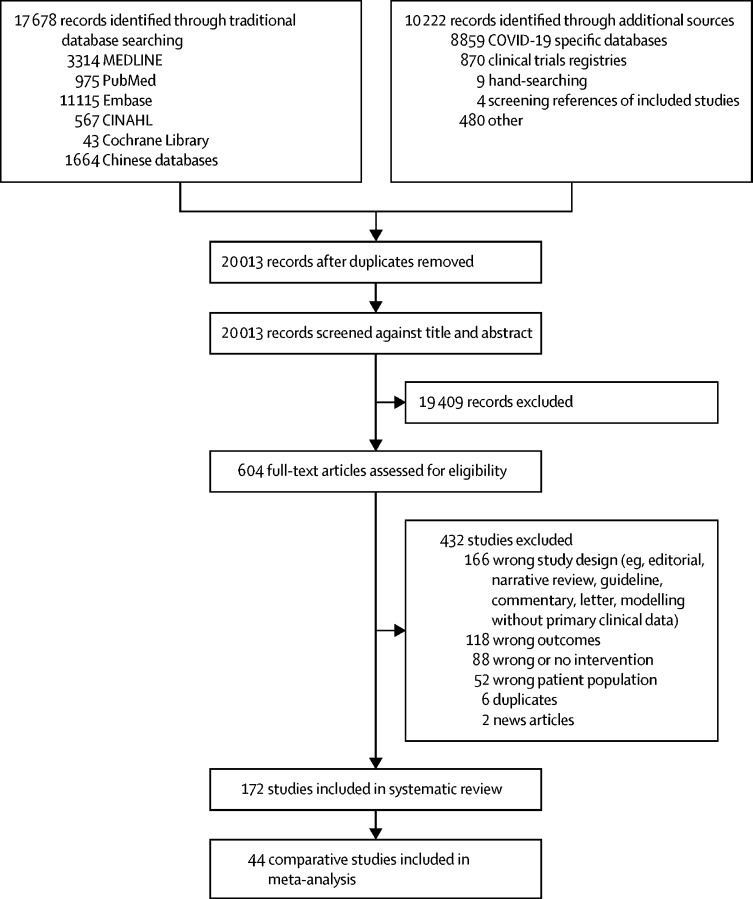
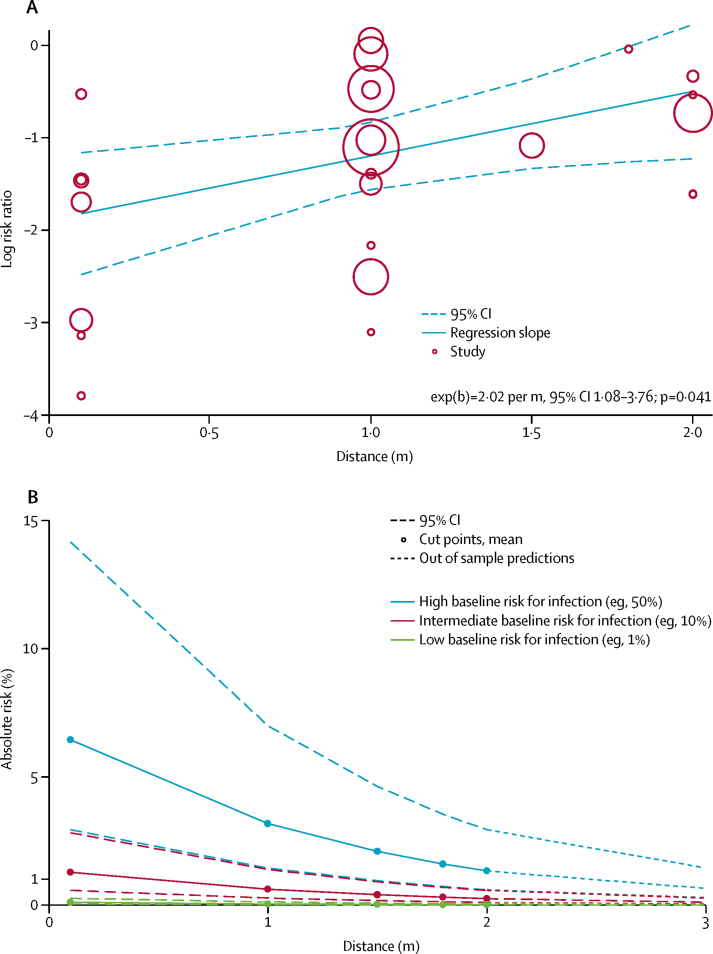
Background Severe acute respiratory syndrome coronavirus 2 (SARS-CoV-2) causes COVID-19 and is spread personto-person through close contact.We aimed to investigate the effects of physical distance, face masks, and eye protection on virus transmission in health-care and non-health-care (eg, community) settings. MethodsWe did a systematic review and meta-analysis to investigate the optimum distance for avoiding person-toperson virus transmission and to assess the use of face masks and eye protection to prevent transmission of viruses.We obtained data for SARS-CoV-2 and the betacoronaviruses that cause severe acute respiratory syndrome, and Middle East respiratory syndrome from 21 standard WHO-specific and COVID-19-specific sources.We searched these data sources from database inception to May 3, 2020, with no restriction by language, for comparative studies and for contextual factors of acceptability, feasibility, resource use, and equity.We screened records, extracted data, and assessed risk of bias in duplicate.We did frequentist and Bayesian meta-analyses and random-effects metaregressions.We rated the certainty of evidence according to Cochrane methods and the GRADE approach.This study is registered with PROSPERO, CRD42020177047.Findings Our search identified 172 observational studies across 16 countries and six continents, with no randomised controlled trials and 44 relevant comparative studies in health-care and non-health-care settings (n=25 697 patients).Transmission of viruses was lower with physical distancing of 1 m or more, compared with a distance of less than 1 m (n=10 736, pooled adjusted odds ratio [aOR] 0•18, 95% CI 0•09 to 0•38; risk difference [RD] -10•2%, 95% CI -11•5 to -7•5; moderate certainty); protection was increased as distance was lengthened (change in relative risk [RR] 2•02 per m; p interaction =0•041; moderate certainty).Face mask use could result in a large reduction in risk of infection (n=2647; aOR 0•15, 95% CI 0•07 to 0•34, RD -14•3%, -15•9 to -10•7; low certainty), with stronger associations with N95 or similar respirators compared with disposable surgical masks or similar (eg, reusable 12-16-layer cotton masks; p interaction =0•090; posterior probability >95%, low certainty).Eye protection also was associated with less infection (n=3713; aOR 0•22, 95% CI 0•12 to 0•39, RD -10•6%, 95% CI -12•5 to -7•7; low certainty).Unadjusted studies and subgroup and sensitivity analyses showed similar findings.Interpretation The findings of this systematic review and meta-analysis support physical distancing of 1 m or more and provide quantitative estimates for models and contact tracing to inform policy.Optimum use of face masks, respirators, and eye protection in public and health-care settings should be informed by these findings and contextual factors.Robust randomised trials are needed to better inform the evidence for these interventions, but this systematic appraisal of currently best available evidence might inform interim guidance.
Overview
CoChat Summary
TL;DR
This systematic review and meta-analysis of 172 observational studies found that physical distancing of at least 1 m, face masks, and eye protection were each associated with lower risk of SARS-CoV-2, SARS-CoV, or MERS-CoV infection. No randomised trials were identified, and certainty ranged from moderate for distancing to low for face masks and eye protection.
Key findings
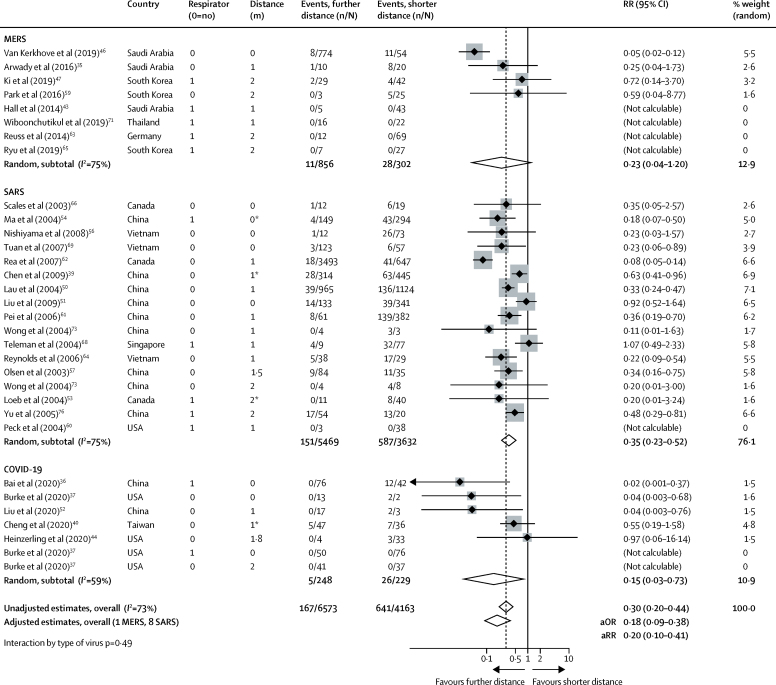
- Among 44 comparative studies (n=25,697), physical distancing of ≥1 m versus <1 m was associated with lower infection risk (unadjusted n=10,736, RR 0·30, 95% CI 0·20–0·44; adjusted n=7782, aOR 0·18, 95% CI 0·09–0·38; RD −10·2%, 95% CI −11·5 to −7·5; moderate certainty), with protection increasing as distance lengthened (change in RR 2·02 per m; pinteraction=0·041).
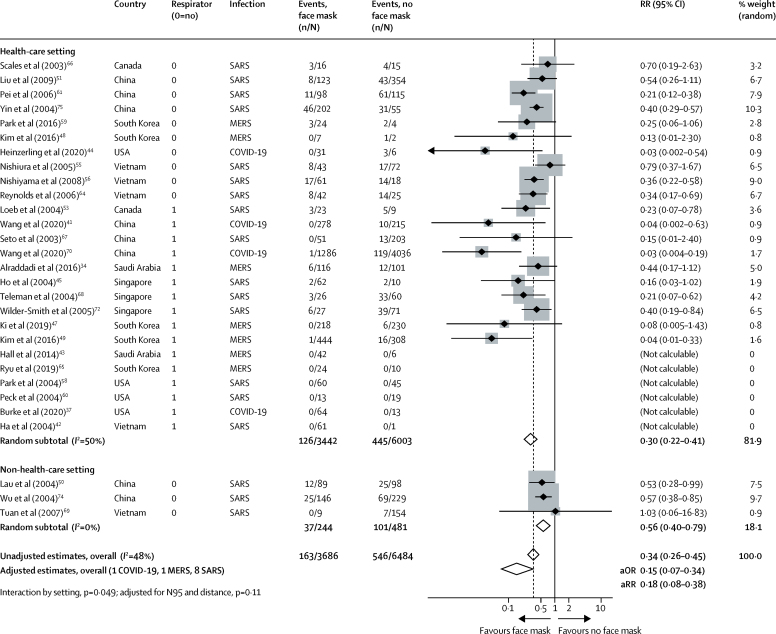
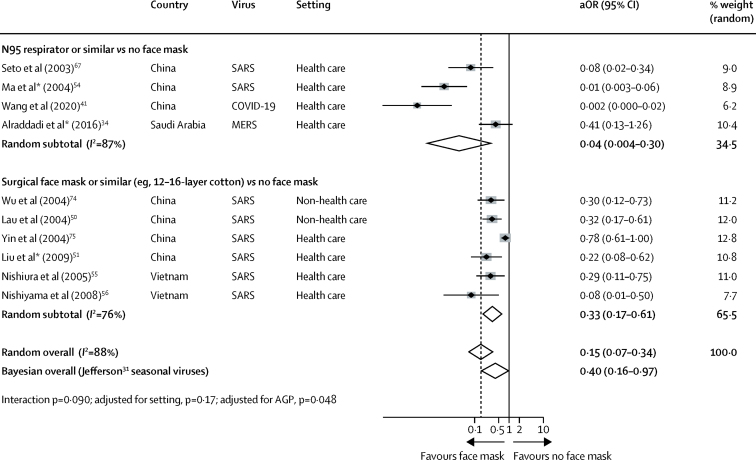
- Face mask use was associated with a large reduction in infection risk (adjusted n=2647, aOR 0·15, 95% CI 0·07–0·34; RD −14·3%, 95% CI −15·9 to −10·7; low certainty), with stronger associations for N95 or similar respirators than disposable surgical masks or similar (pinteraction=0·090; posterior probability >95%, low certainty).
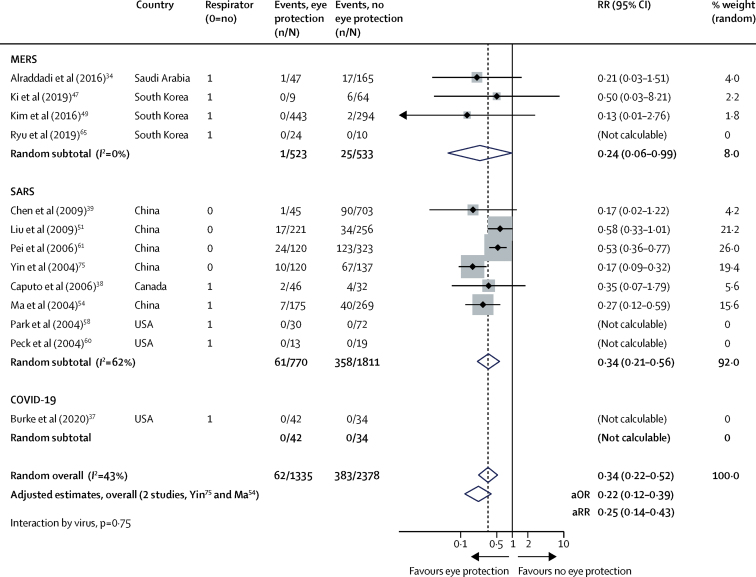
- Eye protection was associated with less infection (unadjusted n=3713, RR 0·34, 95% CI 0·22–0·52; adjusted n=701, aOR 0·22, 95% CI 0·12–0·39; RD −10·6%, 95% CI −12·5 to −7·7; low certainty).
- Across 24 contextual-factor studies, most stakeholders found these strategies acceptable, feasible, and reassuring, but reported discomfort, resource use and equity concerns, communication difficulty, and perceived reduced empathy.
Methods
- Systematic review and meta-analysis searching 21 WHO-specific and COVID-19-specific sources from database inception to May 3, 2020, with no language restriction, for studies of confirmed or probable COVID-19, SARS, or MERS and close contacts.
- Duplicate screening, data extraction, and risk-of-bias assessment; frequentist and Bayesian meta-analyses and random-effects meta-regressions; certainty rated with Cochrane methods and GRADE; registered with PROSPERO, CRD42020177047.
- Outcomes included transmission and contextual factors; no randomised controlled trials were identified, so the meta-analysis included 44 comparative observational studies.
Limitations
- The paper states that all included studies were non-randomised, not always fully adjusted, and might suffer recall and measurement bias; many studies lacked precise distances, direct contact was equated to 0 m, and no eligible study quantitatively evaluated whether distances >2 m were more effective.
- The paper also states that few studies assessed non-health-care settings, most evidence came from SARS and MERS (n=6674 patients with COVID-19 of 25,697 total), duration of exposure was not specifically assessed, and reporting was inconsistent for aerosol-generating procedures and masks worn by infected patients.
- Evident from the text: observational designs preclude causal inference, and certainty was low for face masks and eye protection, with residual heterogeneity and imprecision noted.
Model-written summary. Check it against the paper before relying on it.
Integrity signals
Registry
Cites
Statistics
Figures
Verification
Claims the paper makes
3 Valid · 0 Not valid · 7 Not checked · 82 Own results and interpretations
The sources with a verdict support this claim; the rest weren’t checked yet, have no full text we could read, or their verdicts aren’t rated yet.
In the paper
“In 13 unadjusted studies and two adjusted studies,34, 37, 38, 39, 47, 49, 51, 54, 58, 60, 61, 65, 75 eye protection was associated with lower risk of infection (unadjusted n=3713, RR 0·34, 95% CI 0·22 to 0·52; AR 5·5% with eye protection vs 16·0% with no eye protection, RD −10·6%, 95% CI −12·5 to −7·7; adjusted n=701, aOR 0·22, 95% CI 0·12 to 0·39; low certainty; figure 6; table 2; appendix pp 16–”
§ Physical distancing, face masks, and eye protection to prevent person-to-person transmission of SARS-CoV-2 and COVID-19: a systematic review and meta-analysis > Results
What the sources say
- Supportedcites [34] Alraddadi BM Al-Salmi HS Jacobs-Slifka K Risk factors for Middle East respiratory syndrome coronavirus infection among healthcare personnel Emerg Infect Dis 22 2016 1915 1920 27767011 PMC5088034 source
Split into 2 atoms — 2 confirmed, 0 partially supported, 0 disputed, 0 misattributed, 0 unverifiable. Expand the claim to see per-atom verdicts.
- Not checked yetcites [37] Burke RM Balter S Barnes E Enhanced contact investigations for nine early travel-related cases of SARS-CoV-2 in the United States medRxiv 2020 published online May 3. 10.1101/2020.04.27.20081901 (preprint). PMC7467265 32877446
- Supportedcites [38] Caputo KM Byrick R Chapman MG Orser BJ Orser BA Intubation of SARS patients: infection and perspectives of healthcare workers Can J Anaesth 53 2006 122 129 16434750 source
Split into 2 atoms — 2 confirmed, 0 partially supported, 0 disputed, 0 misattributed, 0 unverifiable. Expand the claim to see per-atom verdicts.
plainstates an associationn = 3,713- Asserted: passes — The authors put it forward as true.
- Checkable: passes — It can be checked against evidence.
- Load-bearing: passes — The paper’s conclusions depend on it.
- Based: passes — The paper gives a reason why it holds.
- Supported
Every source the paper cites for this claim was checked and supports it.
In the paper
“This finding is inconsistent with conclusions of a review of four randomised trials,13 in which low certainty of evidence for no larger effect was suggested.”
§ Physical distancing, face masks, and eye protection to prevent person-to-person transmission of SARS-CoV-2 and COVID-19: a systematic review and meta-analysis > Discussion
What the sources say
- Supportedcites [13] Bartoszko JJ Farooqi MAM Alhazzani W Loeb M Medical masks vs N95 respirators for preventing COVID-19 in healthcare workers: a systematic review and meta-analysis of randomized trials Influenza Other Respir Viruses 2020 published online April 4. 10.1111/irv.12745 PMC7298295 32246890 source
The Abstract Conclusions (Bartoszko et al. 2020) state verbatim that 'Low certainty evidence suggests that medical masks and N95 respirators offer similar protection against viral respiratory infection including coronavirus in healthcare workers during non–aerosol–generating care' — i.e., no larger effect of one mask type, hedged at low certainty. The Abstract Data Synthesis and Results (Search results and study characteristics; Effect on outcomes) confirm the review/meta-analysis pooled exactly four RCTs (OR 1.06, 95% CI 0.90–1.25, I² = 0%, low certainty for laboratory-confirmed viral respiratory infection), and the Quality assessment section attributes the 'low' GRADE rating to that four-trial outcome. The citing sentence's paraphrase ('review of four randomised trials', 'low certainty of evidence for no larger effect') therefore matches what this source says. (LLM, conf=0.85)
plain- Asserted: passes — The authors put it forward as true.
- Checkable: passes — It can be checked against evidence.
- Load-bearing: unclear — It is unclear whether the paper’s conclusions depend on it.
- Based: passes — The paper gives a reason why it holds.
- Supported
A result the paper reports from its own data — it cites no other source for it, so there is none to check. The quote shows it is in the paper.
In the paper
“Transmission of viruses was lower with physical distancing of 1 m or more, compared with a distance of less than 1 m (n=10 736, pooled adjusted odds ratio [aOR] 0·18, 95% CI 0·09 to 0·38; risk difference [RD] −10·2%, 95% CI −11·5 to −7·5; moderate certainty)”
- Also stated in: § Results · boosted
“a strong association was found of proximity of the exposed individual with the risk of infection (unadjusted n=10 736, RR 0·30, 95% CI 0·20 to 0·44; adjusted n=7782, aOR 0·18, 95% CI 0·09 to 0·38; absolute risk [AR] 12·8% with shorter distance vs 2·6% with further distance, risk difference [RD] −10·2%, 95% CI −11·5 to −7·5; moderate certainty; figure 2; table 2; appendix p 16).”
§ Physical distancing, face masks, and eye protection to prevent person-to-person transmission of SARS-CoV-2 and COVID-19: a systematic review and meta-analysis > Abstract > Findings
boostedstates a causen = 10- Asserted: passes — The authors put it forward as true.
- Checkable: passes — It can be checked against evidence.
- Load-bearing: passes — The paper’s conclusions depend on it.
- Based: passes — The paper gives a reason why it holds.
- Rests on an assumption not shown here.
- Also stated in: § Results · boosted
A result the paper reports from its own data — it cites no other source for it, so there is none to check. The quote shows it is in the paper.
In the paper
“When differential N95 or similar respirator use, which was more frequent in health-care settings than in non-health-care settings, was adjusted for the possibility that face masks were less effective in non-health-care settings, the subgroup effect was slightly less credible (pinteraction=0·11, adjusted for differential respirator use; figure 4).”
§ Physical distancing, face masks, and eye protection to prevent person-to-person transmission of SARS-CoV-2 and COVID-19: a systematic review and meta-analysis > Results
plain- Asserted: passes — The authors put it forward as true.
- Checkable: passes — It can be checked against evidence.
- Load-bearing: unclear — It is unclear whether the paper’s conclusions depend on it.
- Based: passes — The paper gives a reason why it holds.
A result the paper reports from its own data — it cites no other source for it, so there is none to check. The quote shows it is in the paper.
In the paper
“Our search did not identify any randomised trials of COVID-19, SARS, or MERS.”
- Also stated in: § Results · plain
“Studies were all observational in nature; no randomised trials were identified of any interventions that directly addressed the included study populations.”
§ Physical distancing, face masks, and eye protection to prevent person-to-person transmission of SARS-CoV-2 and COVID-19: a systematic review and meta-analysis > Methods > Data analysis
plain- Asserted: passes — The authors put it forward as true.
- Checkable: passes — It can be checked against evidence.
- Load-bearing: passes — The paper’s conclusions depend on it.
- Based: passes — The paper gives a reason why it holds.
- Also stated in: § Results · plain
30 more claims
Create a free account to see all 92 claims and to verify the 11 references still open.
- It may state two separate claims as one. 40
- The quote only partly states this claim. 1
- Probably not a substantial claim. 23
Claims other papers make about this one
Each is checked against this paper’s own text: does it say what the citing paper says it does?
The source backs part of the claim, not all of it — or backs it for a different population, condition or comparison.
In the citing paper
“The review by Chu 2020 did not consider RCTs of influenza transmission, but only the observational studies examining impact on SARS, MERS, or SARS‐CoV‐2.”
From Physical interventions to interrupt or reduce the spread of respiratory viruses (2023) · cites this paper as Chu 2020
Experimental — accuracy not yet measuredThe source backs part of the claim, not all of it — or backs it for a different population, condition or comparison.
In the citing paper
“For N95 masks versus no mask in HCWs, there was a large protective effective with an OR of 0.04 (95% CI 0.004 to 0.30); for surgical masks versus no masks, there was an OR of 0.33 (0.17 to 0.61) overall, but four of these studies were in healthcare settings.”
From Physical interventions to interrupt or reduce the spread of respiratory viruses (2023) · cites this paper as Chu 2020
Experimental — accuracy not yet measuredThe source backs part of the claim, not all of it — or backs it for a different population, condition or comparison.
In the citing paper
“Chu 2020 has been criticised for several reasons: use of an outdated 'Risk of bias' tool; inaccuracy of distance measures; and not adequately addressing multiple sources of bias, including recall and classification bias and in particular confounding.”
From Physical interventions to interrupt or reduce the spread of respiratory viruses (2023) · cites this paper as Chu 2020
Experimental — accuracy not yet measuredThe cited source says what the claim attributes to it.
In the citing paper
“Social distancing has been shown to be an important component of measures designed to reduce the spread and impact of COVID-19.”
From Facilitators and barriers to social distancing for young people during the COVID-19 pandemic (2022) · cites this paper as [5]
The cited source says what the claim attributes to it.
In the citing paper
“A systematic review of early efforts to control the spread of COVID-19 additionally estimated that physical distancing of over one meter was important in reducing transmission (pooled adjusted OR 0.18, 95% CI 0·09 to 0·38) [5].”
From Facilitators and barriers to social distancing for young people during the COVID-19 pandemic (2022) · cites this paper as [5]
1 more claim about this paper
Create a free account to see every claim other papers make about this one.
Self-check
Percentages, sums and reported differences re-computed from the paper’s own numbers.
Each contradiction between two passages listed here was confirmed by an independent check.
Rated minor: it would not touch a result — a value no result rests on, a p-value that stays on the same side of the significance level, or a conflict that is clerical, resolved elsewhere in the paper, or outside its own findings.
In the paper
§ Physical distancing, face masks, and eye protection to prevent person-to-person transmission of SARS-CoV-2 and COVID-19: a systematic review and meta-analysis > Abstract > Findings
“Transmission of viruses was lower with physical distancing of 1 m or more, compared with a distance of less than 1 m (n=10 736, pooled adjusted odds ratio [aOR] 0·18”
§ Physical distancing, face masks, and eye protection to prevent person-to-person transmission of SARS-CoV-2 and COVID-19: a systematic review and meta-analysis > Results
“unadjusted n=10 736, RR 0·30, 95% CI 0·20 to 0·44; adjusted n=7782, aOR 0·18, 95% CI 0·09 to 0·38”
Citations
Cites
Preferred Reporting Items for Systematic Reviews and Meta-Analyses: the PRISMA statement
Moher, D., Liberati, A., Tetzlaff, J., Altman, D. G., & for the PRISMA Group (2009) · BMJ · doi:10.1136/bmj.b2535 · Cited by 83,823
Preferred reporting items for systematic reviews and meta-analyses: the PRISMA Statement.
(2009) · PubMed Central · Cited by 44,859
RoB 2: a revised tool for assessing risk of bias in randomised trials
Sterne, J. A. C., Savović, J., Page, M. J., Elbers, R. G., Blencowe, N. S., Boutron, I., Cates, C. J., Cheng, H.-Y., Corbett, M. S., Eldridge, S. M., et al. (2019) · BMJ · doi:10.1136/bmj.l4898 · Cited by 34,787
Dermyshi, E., Wang, Y., Yan, C., Hong, W., Qiu, G., Gong, X., & Zhang, T. (2017) · Neonatology · doi:10.1159/000454668 · Cited by 24,451
GRADE: an emerging consensus on rating quality of evidence and strength of recommendations
Guyatt, G. H., Oxman, A. D., Vist, G. E., Kunz, R., Falck-Ytter, Y., Alonso-Coello, P., & Schünemann, H. J. (2008) · BMJ · doi:10.1136/bmj.39489.470347.ad · Cited by 23,305
Self-citationMeta-analysis of Observational Studies in Epidemiology<SUBTITLE>A Proposal for Reporting</SUBTITLE>
Stroup, D. F. (2000) · JAMA · doi:10.1001/jama.283.15.2008 · Cited by 20,623
Preferred Reporting Items for Systematic Reviews and Meta-Analyses: The PRISMA Statement
Moher, D., Liberati, A., Tetzlaff, J., & Altman, D. G. (2009) · Journal of Clinical Epidemiology · doi:10.1016/j.jclinepi.2009.06.005 · Cited by 19,575
(2014) · Medical Entomology and Zoology · Cited by 17,633
GRADE guidelines: 1. Introduction—GRADE evidence profiles and summary of findings tables
Guyatt, G., Oxman, A. D., Akl, E. A., Kunz, R., Vist, G., Brozek, J., Norris, S., Falck-Ytter, Y., Glasziou, P., & deBeer, H. (2011) · Journal of Clinical Epidemiology · doi:10.1016/j.jclinepi.2010.04.026 · Cited by 10,681
Self-citationCumpston, M., Li, T., Page, M. J., Chandler, J., Welch, V. A., Higgins, J. P., & Thomas, J. (2019) · Cochrane Database of Systematic Reviews · doi:10.1002/14651858.ed000142 · Cited by 7,218
Research works printed but not linked: 3
- Liu ZQ Ye Y Zhang H Guohong X Yang J Wang JL Analysis of the spatio-temporal characteristics and transmission path of COVID-19 cluster cases in Zhuhai Trop Geogr 2020 published online March 12. 10.13284/j.cnki.rddl.003228 · doi:10.13284/j.cnki.rddl.003228
- Park JY Kim BJ Chung KH Hwang YI Factors associated with transmission of Middle East respiratory syndrome among Korean healthcare workers: infection control via extended healthcare contact management in a secondary outbreak hospital Respirology 21 suppl 3 2016 89 (abstr APSR6-0642).
- Campbell A Chapter eight: it's not about the mask: SARS Commission final report, volume 3 http://www.archives.gov.on.ca/en/e_records/sars/report/v3-pdf/Vol3Chp8.pdf December, 2006
Cited by
Page, M. J., Moher, D., Bossuyt, P. M., Boutron, I., Hoffmann, T. C., Mulrow, C. D., Shamseer, L., Tetzlaff, J. M., Akl, E. A., Brennan, S. E., et al. (2021) · BMJ · doi:10.1136/bmj.n160 · Cited by 13,262
Self-citationWiersinga, W. J., Rhodes, A., Cheng, A. C., Peacock, S. J., & Prescott, H. C. (2020) · JAMA · doi:10.1001/jama.2020.12839 · Cited by 4,609
Gandhi, R. T., Lynch, J. B., & del Rio, C. (2020) · New England Journal of Medicine · doi:10.1056/nejmcp2009249 · Cited by 1,307
An evidence review of face masks against COVID-19
Howard, J., Huang, A., Li, Z., Tufekci, Z., Zdimal, V., van der Westhuizen, H.-M., von Delft, A., Price, A., Fridman, L., Tang, L.-H., et al. (2021) · Proceedings of the National Academy of Sciences · doi:10.1073/pnas.2014564118 · Cited by 1,529
Inferring the effectiveness of government interventions against COVID-19
Brauner, J. M., Mindermann, S., Sharma, M., Johnston, D., Salvatier, J., Gavenčiak, T., Stephenson, A. B., Leech, G., Altman, G., Mikulik, V., et al. (2021) · Science · doi:10.1126/science.abd9338 · Cited by 1,065
Transmissibility and transmission of respiratory viruses
Leung, N. H. L. (2021) · Nature Reviews Microbiology · doi:10.1038/s41579-021-00535-6 · Cited by 890
The Lancet Commission on lessons for the future from the COVID-19 pandemic
Sachs, J. D., Karim, S. S. A., Aknin, L., Allen, J., Brosbøl, K., Colombo, F., Barron, G. C., Espinosa, M. F., Gaspar, V., Gaviria, A., et al. (2022) · The Lancet · doi:10.1016/s0140-6736(22)01585-9 · Cited by 842
Transmission of SARS-CoV-2: A Review of Viral, Host, and Environmental Factors
Meyerowitz, E. A., Richterman, A., Gandhi, R. T., & Sax, P. E. (2021) · Annals of Internal Medicine · doi:10.7326/m20-5008 · Cited by 747
COVID-19 and Public Transportation: Current Assessment, Prospects, and Research Needs
Tirachini, A., & Cats, O. (2020) · Journal of Public Transportation · doi:10.5038/2375-0901.22.1.1 · Cited by 781
“A distance of at least one meter has been found to significantly reduce the probability of COVID-19 contagion (Chu et al. 2020).”
InfluentialVijenthira, A., Gong, I. Y., Fox, T. A., Booth, S., Cook, G., Fattizzo, B., Martín-Moro, F., Razanamahery, J., Riches, J. C., Zwicker, J., et al. (2020) · Blood · doi:10.1182/blood.2020008824 · Cited by 625
Islam, N., Sharp, S. J., Chowell, G., Shabnam, S., Kawachi, I., Lacey, B., Massaro, J. M., D’Agostino, R. B., & White, M. (2020) · BMJ · doi:10.1136/bmj.m2743 · Cited by 601
Modeling COVID-19 scenarios for the United States
IHME COVID-19 Forecasting Team, Reiner, R. C., Barber, R. M., Collins, J. K., Zheng, P., Adolph, C., Albright, J., Antony, C. M., Aravkin, A. Y., Bachmeier, S. D., et al. (2021) · Nature Medicine · doi:10.1038/s41591-020-1132-9 · Cited by 556
COVID-19 scenarios for the United States
(2020) · doi:10.1101/2020.07.12.20151191 · Cited by 556
SARS-CoV-2 N protein promotes NLRP3 inflammasome activation to induce hyperinflammation
Pan, P., Shen, M., Yu, Z., Ge, W., Chen, K., Tian, M., Xiao, F., Wang, Z., Wang, J., Jia, Y., et al. (2021) · Nature Communications · doi:10.1038/s41467-021-25015-6 · Cited by 501
Who is wearing a mask? Gender-, age-, and location-related differences during the COVID-19 pandemic
Haischer, M. H., Beilfuss, R., Hart, M. R., Opielinski, L., Wrucke, D., Zirgaitis, G., Uhrich, T. D., & Hunter, S. K. (2020) · PLOS ONE · doi:10.1371/journal.pone.0240785 · Cited by 513
Face Masks in the New COVID-19 Normal: Materials, Testing, and Perspectives
Chua, M. H., Cheng, W., Goh, S. S., Kong, J., Li, B., Lim, J. Y. C., Mao, L., Wang, S., Xue, K., Yang, L., et al. (2020) · Research · doi:10.34133/2020/7286735 · Cited by 495
“, reducing close contact between individuals [4, 5].”
Asadi, S., Cappa, C. D., Barreda, S., Wexler, A. S., Bouvier, N. M., & Ristenpart, W. D. (2020) · Scientific Reports · doi:10.1038/s41598-020-72798-7 · Cited by 480
Heinzerling, A., Stuckey, M. J., Scheuer, T., Xu, K., Perkins, K. M., Resseger, H., Magill, S., Verani, J. R., Jain, S., Acosta, M., et al. (2020) · MMWR. Morbidity and Mortality Weekly Report · doi:10.15585/mmwr.mm6915e5 · Cited by 464
Islam, N., Shkolnikov, V. M., Acosta, R. J., Klimkin, I., Kawachi, I., Irizarry, R. A., Alicandro, G., Khunti, K., Yates, T., Jdanov, D. A., et al. (2021) · BMJ · doi:10.1136/bmj.n1137 · Cited by 468
Two metres or one: what is the evidence for physical distancing in covid-19?
Jones, N. R., Qureshi, Z. U., Temple, R. J., Larwood, J. P. J., Greenhalgh, T., & Bourouiba, L. (2020) · BMJ · doi:10.1136/bmj.m3223 · Cited by 419
Airborne Transmission of SARS-CoV-2: Theoretical Considerations and Available Evidence
Klompas, M., Baker, M. A., & Rhee, C. (2020) · JAMA · doi:10.1001/jama.2020.12458 · Cited by 393
Effective public health measures to mitigate the spread of COVID-19: a systematic review
Ayouni, I., Maatoug, J., Dhouib, W., Zammit, N., Fredj, S. B., Ghammam, R., & Ghannem, H. (2021) · BMC Public Health · doi:10.1186/s12889-021-11111-1 · Cited by 418
Silva, P. C. L., Batista, P. V. C., Lima, H. S., Alves, M. A., Guimarães, F. G., & Silva, R. C. P. (2020) · Chaos, Solitons & Fractals · doi:10.1016/j.chaos.2020.110088 · Cited by 389
SARS-CoV-2 seroprevalence worldwide: a systematic review and meta-analysis
Rostami, A., Sepidarkish, M., Leeflang, M. M. G., Riahi, S. M., Nourollahpour Shiadeh, M., Esfandyari, S., Mokdad, A. H., Hotez, P. J., & Gasser, R. B. (2021) · Clinical Microbiology and Infection · doi:10.1016/j.cmi.2020.10.020 · Cited by 369
“A global metaanalysis [74] showed that applying physical distancing of 1 m and usage of personal protective equipment (PPE, including face mask, eye and body protection) results in a major reduction in transmission/infection risk.”
BackgroundFace masks considerably reduce COVID-19 cases in Germany
Mitze, T., Kosfeld, R., Rode, J., & Wälde, K. (2020) · Proceedings of the National Academy of Sciences · doi:10.1073/pnas.2015954117 · Cited by 411
Causal Impact of Masks, Policies, Behavior on Early Covid-19 Pandemic in the U.S
(2020) · doi:10.1101/2020.05.27.20115139 · Cited by 403
Causal impact of masks, policies, behavior on early COVID-19 pandemic in the U.S
Chernozhukov, V., Kasahara, H., & Schrimpf, P. (2021) · Journal of Econometrics · doi:10.1016/j.jeconom.2020.09.003 · Cited by 403
Impact of the COVID-19 Pandemic on Older Adults: Rapid Review
Lebrasseur, A., Fortin-Bédard, N., Lettre, J., Raymond, E., Bussières, E.-L., Lapierre, N., Faieta, J., Vincent, C., Duchesne, L., Ouellet, M.-C., et al. (2021) · JMIR Aging · doi:10.2196/26474 · Cited by 383
Slater, S. J., Christiana, R. W., & Gustat, J. (2020) · Preventing Chronic Disease · doi:10.5888/pcd17.200204 · Cited by 388
Bundgaard, H., Bundgaard, J. S., Raaschou-Pedersen, D. E. T., von Buchwald, C., Todsen, T., Norsk, J. B., Pries-Heje, M. M., Vissing, C. R., Nielsen, P. B., Winsløw, U. C., et al. (2021) · Annals of Internal Medicine · doi:10.7326/m20-6817 · Cited by 388
Transmission of COVID-19 in 282 clusters in Catalonia, Spain: a cohort study
Marks, M., Millat-Martinez, P., Ouchi, D., Roberts, C. H., Alemany, A., Corbacho-Monné, M., Ubals, M., Tobias, A., Tebé, C., Ballana, E., et al. (2021) · The Lancet Infectious Diseases · doi:10.1016/s1473-3099(20)30985-3 · Cited by 347
Face mask use in the general population and optimal resource allocation during the COVID-19 pandemic
Worby, C. J., & Chang, H.-H. (2020) · Nature Communications · doi:10.1038/s41467-020-17922-x · Cited by 379
Face masks effectively limit the probability of SARS-CoV-2 transmission
Cheng, Y., Ma, N., Witt, C., Rapp, S., Wild, P. S., Andreae, M. O., Pöschl, U., & Su, H. (2021) · Science · doi:10.1126/science.abg6296 · Cited by 338
Age groups that sustain resurging COVID-19 epidemics in the United States
Monod, M., Blenkinsop, A., Xi, X., Hebert, D., Bershan, S., Tietze, S., Baguelin, M., Bradley, V. C., Chen, Y., Coupland, H., et al. (2021) · Science · doi:10.1126/science.abe8372 · Cited by 331
“9%] increase in infec ons among children aged 0-11, 24 [13-42] excess COVID-19 a ributable deaths among children aged 0-11, and 6,181 [3,287-11,924] excess COVID-19 a ributable deaths in the total popula on by November 24, 2020 (Table S4).”
Photocatalytic Antimicrobials: Principles, Design Strategies, and Applications
Ran, B., Ran, L., Wang, Z., Liao, J., Li, D., Chen, K., Cai, W., Hou, J., & Peng, X. (2023) · Chemical Reviews · doi:10.1021/acs.chemrev.3c00326 · Cited by 357
Rayleigh–Taylor and Richtmyer–Meshkov instabilities: A journey through scales
Zhou, Y., Williams, R. J. R., Ramaprabhu, P., Groom, M., Thornber, B., Hillier, A., Mostert, W., Rollin, B., Balachandar, S., Powell, P. D., et al. (2021) · Physica D: Nonlinear Phenomena · doi:10.1016/j.physd.2020.132838 · Cited by 347
Conspiracy Theories and Their Societal Effects During the COVID-19 Pandemic
Pummerer, L., Böhm, R., Lilleholt, L., Winter, K., Zettler, I., & Sassenberg, K. (2022) · Social Psychological and Personality Science · doi:10.1177/19485506211000217 · Cited by 329
“More recently, experimental studies started to provide evidence for the effects of the confrontation with conspiracy theories with the aim to establish causality (e.g., Einstein & Glick, 2015; Jolly & Douglas, 2014a; Van der Linden, 2015).”
BackgroundCollectivism predicts mask use during COVID-19
Lu, J. G., Jin, P., & English, A. S. (2021) · Proceedings of the National Academy of Sciences · doi:10.1073/pnas.2021793118 · Cited by 342
Ludvigsson, J. F. (2020) · Acta Paediatrica · doi:10.1111/apa.15582 · Cited by 315
Physical interventions to interrupt or reduce the spread of respiratory viruses
Jefferson, T., Del Mar, C. B., Dooley, L., Ferroni, E., Al-Ansary, L. A., Bawazeer, G. A., van Driel, M. L., Jones, M. A., Thorning, S., Beller, E. M., et al. (2020) · Cochrane Database of Systematic Reviews · doi:10.1002/14651858.cd006207.pub5 · Cited by 318
Bo, Y., Guo, C., Lin, C., Zeng, Y., Li, H. B., Zhang, Y., Hossain, M. S., Chan, J. W. M., Yeung, D. W., Kwok, K. O., et al. (2021) · International Journal of Infectious Diseases · doi:10.1016/j.ijid.2020.10.066 · Cited by 293
COVID-19 Transmission, Current Treatment, and Future Therapeutic Strategies
Salian, V. S., Wright, J. A., Vedell, P. T., Nair, S., Li, C., Kandimalla, M., Tang, X., Carmona Porquera, E. M., Kalari, K. R., & Kandimalla, K. K. (2021) · Molecular Pharmaceutics · doi:10.1021/acs.molpharmaceut.0c00608 · Cited by 315
Low-cost measurement of face mask efficacy for filtering expelled droplets during speech
Fischer, E. P., Fischer, M. C., Grass, D., Henrion, I., Warren, W. S., & Westman, E. (2020) · Science Advances · doi:10.1126/sciadv.abd3083 · Cited by 298
Hoernke, K., Djellouli, N., Andrews, L., Lewis-Jackson, S., Manby, L., Martin, S., Vanderslott, S., & Vindrola-Padros, C. (2021) · BMJ Open · doi:10.1136/bmjopen-2020-046199 · Cited by 297
Tea and tea drinking: China’s outstanding contributions to the mankind
Pan, S.-Y., Nie, Q., Tai, H.-C., Song, X.-L., Tong, Y.-F., Zhang, L.-J.-F., Wu, X.-W., Lin, Z.-H., Zhang, Y.-Y., Ye, D.-Y., et al. (2022) · Chinese Medicine · doi:10.1186/s13020-022-00571-1 · Cited by 297
Chiu, N.-C., Chi, H., Tai, Y.-L., Peng, C.-C., Tseng, C.-Y., Chen, C.-C., Tan, B. F., & Lin, C.-Y. (2020) · Journal of Medical Internet Research · doi:10.2196/21257 · Cited by 288
Self-citationPhysical interventions to interrupt or reduce the spread of respiratory viruses
Jefferson, T., Dooley, L., Ferroni, E., Al-Ansary, L. A., van Driel, M. L., Bawazeer, G. A., Jones, M. A., Hoffmann, T. C., Clark, J., Beller, E. M., et al. (2023) · Cochrane Database of Systematic Reviews · doi:10.1002/14651858.cd006207.pub6 · Cited by 291
Taylor, S., & Asmundson, G. J. G. (2021) · PLOS ONE · doi:10.1371/journal.pone.0246317 · Cited by 319
“Such concerns proved to be unfounded [7– 9] and evidence steadily emerged to support the wearing of masks by members of the general public [10, 11].”
BackgroundCOVID-19 pandemic and air transportation: Successfully navigating the paper hurricane
Sun, X., Wandelt, S., Zheng, C., & Zhang, A. (2021) · Journal of Air Transport Management · doi:10.1016/j.jairtraman.2021.102062 · Cited by 279
Face masks to prevent transmission of COVID-19: A systematic review and meta-analysis
Li, Y., Liang, M., Gao, L., Ayaz Ahmed, M., Uy, J. P., Cheng, C., Zhou, Q., & Sun, C. (2021) · American Journal of Infection Control · doi:10.1016/j.ajic.2020.12.007 · Cited by 275
“Inclusion and exclusion criteria The studies meeting the following criteria were included: (1) concerning the relationship between the face mask and preventing COVID-19; (2) diagnosis of SARS-CoV-2 must have laboratory evidence; (3) providing complete data of cases and controls for calculating an odds ratio (OR) with…”
Sommerstein, R., Fux, C. A., Vuichard-Gysin, D., Abbas, M., Marschall, J., Balmelli, C., Troillet, N., Harbarth, S., Schlegel, M., Widmer, A., et al. (2020) · Antimicrobial Resistance & Infection Control · doi:10.1186/s13756-020-00763-0 · Cited by 259
Face Masks Against COVID-19: An Evidence Review
(2020) · doi:10.20944/preprints202004.0203.v1 · Cited by 272
“The review from Chu at al (11) included three observational studies of use for SARS-CoV-2 in healthcare environments, all showing a risk ratio of 0.”
BackgroundMethodCommentary: Physiological and Psychological Impact of Face Mask Usage during the COVID-19 Pandemic
Scheid, J. L., Lupien, S. P., Ford, G. S., & West, S. L. (2020) · International Journal of Environmental Research and Public Health · doi:10.3390/ijerph17186655 · Cited by 259
“Chu and colleagues’ recent meta-analysis of 172 observational studies examined the impact of face masks and physical distancing on the transmission of SARS-CoV-2, and reported that face masks (in addition to physical distancing) decreased the transmission of the virus [16].”
BackgroundIslam, N., Jdanov, D. A., Shkolnikov, V. M., Khunti, K., Kawachi, I., White, M., Lewington, S., & Lacey, B. (2021) · BMJ · doi:10.1136/bmj-2021-066768 · Cited by 251
Face masks reduce emotion-recognition accuracy and perceived closeness
Grundmann, F., Epstude, K., & Scheibe, S. (2021) · PLOS ONE · doi:10.1371/journal.pone.0249792 · Cited by 251
“As individuals seek out more information about the virus, its consequences, and protective measures, they do not only learn more about the dangers of COVID-19 but also about the merit of face masks.”
BackgroundInfluentialPrevention and control of COVID-19 in public transportation: Experience from China
Shen, J., Duan, H., Zhang, B., Wang, J., Ji, J. S., Wang, J., Pan, L., Wang, X., Zhao, K., Ying, B., et al. (2020) · Environmental Pollution · doi:10.1016/j.envpol.2020.115291 · Cited by 242
Face masks: benefits and risks during the COVID-19 crisis
Matuschek, C., Moll, F., Fangerau, H., Fischer, J. C., Zänker, K., van Griensven, M., Schneider, M., Kindgen-Milles, D., Knoefel, W. T., Lichtenberg, A., et al. (2020) · European Journal of Medical Research · doi:10.1186/s40001-020-00430-5 · Cited by 242
Ng, O. T., Marimuthu, K., Koh, V., Pang, J., Linn, K. Z., Sun, J., De Wang, L., Chia, W. N., Tiu, C., Chan, M., et al. (2021) · The Lancet Infectious Diseases · doi:10.1016/s1473-3099(20)30833-1 · Cited by 208
Dynamics of the COVID-19 epidemic in urban and rural areas in the United States
Cuadros, D. F., Branscum, A. J., Mukandavire, Z., Miller, F. D., & MacKinnon, N. (2021) · Annals of Epidemiology · doi:10.1016/j.annepidem.2021.04.007 · Cited by 233
MacIntyre, C. R., Nguyen, P.-Y., Chughtai, A. A., Trent, M., Gerber, B., Steinhofel, K., & Seale, H. (2021) · International Journal of Infectious Diseases · doi:10.1016/j.ijid.2021.03.056 · Cited by 220
Kaushik, A. K., Dhau, J. S., Gohel, H., Mishra, Y. K., Kateb, B., Kim, N.-Y., & Goswami, D. Y. (2020) · ACS Applied Bio Materials · doi:10.1021/acsabm.0c01004 · Cited by 222
Doung-ngern, P., Suphanchaimat, R., Panjangampatthana, A., Janekrongtham, C., Ruampoom, D., Daochaeng, N., Eungkanit, N., Pisitpayat, N., Srisong, N., Yasopa, O., et al. (2020) · Emerging Infectious Diseases · doi:10.3201/eid2611.203003 · Cited by 227
Model Calculations of Aerosol Transmission and Infection Risk of COVID-19 in Indoor Environments
Lelieveld, J., Helleis, F., Borrmann, S., Cheng, Y., Drewnick, F., Haug, G., Klimach, T., Sciare, J., Su, H., & Pöschl, U. (2020) · International Journal of Environmental Research and Public Health · doi:10.3390/ijerph17218114 · Cited by 212
Lockdown timing and efficacy in controlling COVID-19 using mobile phone tracking
Vinceti, M., Filippini, T., Rothman, K. J., Ferrari, F., Goffi, A., Maffeis, G., & Orsini, N. (2020) · EClinicalMedicine · doi:10.1016/j.eclinm.2020.100457 · Cited by 203
Challenges of COVID-19 in children in low- and middle-income countries
Zar, H. J., Dawa, J., Fischer, G. B., & Castro-Rodriguez, J. A. (2020) · Paediatric Respiratory Reviews · doi:10.1016/j.prrv.2020.06.016 · Cited by 210
Association between 2019-nCoV transmission and N95 respirator use
(2020) · doi:10.1016/j.jhin.2020.02.021 · Cited by 213
The reproduction number of COVID-19 and its correlation with public health interventions
Linka, K., Peirlinck, M., & Kuhl, E. (2020) · Computational Mechanics · doi:10.1007/s00466-020-01880-8 · Cited by 203
COVID-19 and its Challenges for the Healthcare System in Pakistan
Khalid, A., & Ali, S. (2020) · Asian Bioethics Review · doi:10.1007/s41649-020-00139-x · Cited by 203
Hensen, B., Mackworth-Young, C. R. S., Simwinga, M., Abdelmagid, N., Banda, J., Mavodza, C., Doyle, A. M., Bonell, C., & Weiss, H. A. (2021) · Health Policy and Planning · doi:10.1093/heapol/czaa158 · Cited by 197
“In response to outbreaks, physical distancing measures, national lockdowns and travel restrictions to control the spread of COVID-19 have been implemented in many countries (Chu et al., 2020).”
BackgroundModeling the Epidemic Trend of the 2019 Novel Coronavirus Outbreak in China
Shen, M., Peng, Z., Xiao, Y., & Zhang, L. (2020) · The Innovation · doi:10.1016/j.xinn.2020.100048 · Cited by 293
Association of social distancing and face mask use with risk of COVID-19
Kwon, S., Joshi, A. D., Lo, C.-H., Drew, D. A., Nguyen, L. H., Guo, C.-G., Ma, W., Mehta, R. S., Shebl, F. M., Warner, E. T., et al. (2021) · Nature Communications · doi:10.1038/s41467-021-24115-7 · Cited by 206
COVID-19: Performance study of microplastic inhalation risk posed by wearing masks
Li, L., Zhao, X., Li, Z., & Song, K. (2021) · Journal of Hazardous Materials · doi:10.1016/j.jhazmat.2020.124955 · Cited by 202
“As the coronavirus disease 2019 (COVID-19) spreads throughout the entire world, face masks have become a necessity for the citizens of many countries (Greenhalgh and Howard, 2020; Chu et al., 2020).”
Fundamental protective mechanisms of face masks against droplet infections
Kähler, C. J., & Hain, R. (2020) · Journal of Aerosol Science · doi:10.1016/j.jaerosci.2020.105617 · Cited by 191
“Some recent studies show that even the simple materials we have tested have some filtering ability (Davies et al., 2013; Drewnick, 2020; Konda et al., 2020 and van der Sande et al., 2008), We do not question these results, although the pressure drops in one study is anomalously low (see supporting…”
Causal impact of masks, policies, behavior on early COVID-19 pandemic in the U.S.
Schrimpf, P., Kasahara, H., & Chernozhukov, V. (2020) · doi:10.1920/wp.cem.2020.2420 · Cited by 187
Drewnick, F., Pikmann, J., Fachinger, F., Moormann, L., Sprang, F., & Borrmann, S. (2021) · Aerosol Science and Technology · doi:10.1080/02786826.2020.1817846 · Cited by 199
Escandón, K., Rasmussen, A. L., Bogoch, I. I., Murray, E. J., Escandón, K., Popescu, S. V., & Kindrachuk, J. (2021) · BMC Infectious Diseases · doi:10.1186/s12879-021-06357-4 · Cited by 187
Abella, B. S., Jolkovsky, E. L., Biney, B. T., Uspal, J. E., Hyman, M. C., Frank, I., Hensley, S. E., Gill, S., Vogl, D. T., Maillard, I., et al. (2021) · JAMA Internal Medicine · doi:10.1001/jamainternmed.2020.6319 · Cited by 182
Infectious diseases and social distancing in nature
Stockmaier, S., Stroeymeyt, N., Shattuck, E. C., Hawley, D. M., Meyers, L. A., & Bolnick, D. I. (2021) · Science · doi:10.1126/science.abc8881 · Cited by 185
Girum, T., Lentiro, K., Geremew, M., Migora, B., & Shewamare, S. (2020) · Tropical Medicine and Health · doi:10.1186/s41182-020-00285-w · Cited by 179
A rapid review of the use of face mask in preventing the spread of COVID-19
Abboah-Offei, M., Salifu, Y., Adewale, B., Bayuo, J., Ofosu-Poku, R., & Opare-Lokko, E. B. A. (2021) · International Journal of Nursing Studies Advances · doi:10.1016/j.ijnsa.2020.100013 · Cited by 185
Madjunkov, M., Dviri, M., & Librach, C. (2020) · Journal of Ovarian Research · doi:10.1186/s13048-020-00737-1 · Cited by 183
Government responses and COVID-19 deaths: Global evidence across multiple pandemic waves
Hale, T., Angrist, N., Hale, A. J., Kira, B., Majumdar, S., Petherick, A., Phillips, T., Sridhar, D., Thompson, R. N., Webster, S., et al. (2021) · PLOS ONE · doi:10.1371/journal.pone.0253116 · Cited by 174
Inward and Outward Effectiveness of Cloth Masks, a Surgical Mask, and a Face Shield
Pan, J., Harb, C., Leng, W., & Marr, L. C. (2021) · Aerosol Science and Technology · doi:10.1080/02786826.2021.1890687 · Cited by 186
Inward and outward effectiveness of cloth masks, a surgical mask, and a face shield
(2020) · doi:10.1101/2020.11.18.20233353 · Cited by 186
Spitzer, M. (2020) · Trends in Neuroscience and Education · doi:10.1016/j.tine.2020.100138 · Cited by 179
Magee, M., Lewis, C., Noffs, G., Reece, H., Chan, J. C. S., Zaga, C. J., Paynter, C., Birchall, O., Rojas Azocar, S., Ediriweera, A., et al. (2020) · The Journal of the Acoustical Society of America · doi:10.1121/10.0002873 · Cited by 187
“Face masks (alongside physical distancing) provide some protection against infection from Coronavirus disease (COVID-19) (Chu et al., 2020).”
BackgroundShaw, K., Butcher, S., Ko, J., Zello, G. A., & Chilibeck, P. D. (2020) · International Journal of Environmental Research and Public Health · doi:10.3390/ijerph17218110 · Cited by 175
Review of indoor aerosol generation, transport, and control in the context of COVID‐19
Kohanski, M. A., Lo, L. J., & Waring, M. S. (2020) · International Forum of Allergy & Rhinology · doi:10.1002/alr.22661 · Cited by 176
Kisielinski, K., Giboni, P., Prescher, A., Klosterhalfen, B., Graessel, D., Funken, S., Kempski, O., & Hirsch, O. (2021) · International Journal of Environmental Research and Public Health · doi:10.3390/ijerph18084344 · Cited by 169
“In a meta-analysis study commissioned by the WHO (evidence level Ia), no clear, scientifically graspable benefit of moderate or strong evidence was derived from wearing masks [3].”
BackgroundTracing surface and airborne SARS-CoV-2 RNA inside public buses and subway trains
Moreno, T., Pintó, R. M., Bosch, A., Moreno, N., Alastuey, A., Minguillón, M. C., Anfruns-Estrada, E., Guix, S., Fuentes, C., Buonanno, G., et al. (2021) · Environment International · doi:10.1016/j.envint.2020.106326 · Cited by 161
Poustchi, H., Darvishian, M., Mohammadi, Z., Shayanrad, A., Delavari, A., Bahadorimonfared, A., Eslami, S., Javanmard, S. H., Shakiba, E., Somi, M. H., et al. (2021) · The Lancet Infectious Diseases · doi:10.1016/s1473-3099(20)30858-6 · Cited by 164
Porat, T., Nyrup, R., Calvo, R. A., Paudyal, P., & Ford, E. (2020) · Frontiers in Public Health · doi:10.3389/fpubh.2020.573397 · Cited by 171
Tan-Torres Edejer, T., Hanssen, O., Mirelman, A., Verboom, P., Lolong, G., Watson, O. J., Boulanger, L. L., & Soucat, A. (2020) · The Lancet Global Health · doi:10.1016/s2214-109x(20)30383-1 · Cited by 171
Bidra, A. S., Pelletier, J. S., Westover, J. B., Frank, S., Brown, S. M., & Tessema, B. (2020) · Journal of Prosthodontics · doi:10.1111/jopr.13220 · Cited by 172
“Therefore, a significant amount of attention has been paid during the COVID19 pandemic towards enhancing personal protection equipment (PPE) for dental professionals.(9) Some examples include higher particulate filtration masks (N-95), respirators and face shields.”
BackgroundFace Masks During the COVID-19 Pandemic: A Simple Protection Tool With Many Meanings
Martinelli, L., Kopilaš, V., Vidmar, M., Heavin, C., Machado, H., Todorović, Z., Buzas, N., Pot, M., Prainsack, B., & Gajović, S. (2021) · Frontiers in Public Health · doi:10.3389/fpubh.2020.606635 · Cited by 169
Techasatian, L., Lebsing, S., Uppala, R., Thaowandee, W., Chaiyarit, J., Supakunpinyo, C., Panombualert, S., Mairiang, D., Saengnipanthkul, S., Wichajarn, K., et al. (2020) · Journal of Primary Care & Community Health · doi:10.1177/2150132720966167 · Cited by 170
The Structure of the Membrane Protein of SARS-CoV-2 Resembles the Sugar Transporter SemiSWEET
Thomas, S. (2020) · Pathogens and Immunity · doi:10.20411/pai.v5i1.377 · Cited by 174
Estimating the impact of physical distancing measures in containing COVID-19: an empirical analysis
Koh, W. C., Naing, L., & Wong, J. (2020) · International Journal of Infectious Diseases · doi:10.1016/j.ijid.2020.08.026 · Cited by 170
“Current evidence suggests that the effectiveness of case isolation and contact tracing strategies can be enhanced when combined with physical distancing measures in public settings (Chu et al. 2020; Kucharski et al. 2020).”
Bertuzzo, E., Mari, L., Pasetto, D., Miccoli, S., Casagrandi, R., Gatto, M., & Rinaldo, A. (2020) · Nature Communications · doi:10.1038/s41467-020-18050-2 · Cited by 167
Villeneuve, P. J., & Goldberg, M. S. (2020) · Environmental Health Perspectives · doi:10.1289/ehp7411 · Cited by 161
“A recent systematic review and meta-analysis provides evidence that the use of physical distancing, face masks, and eye protection greatly reduces the spread of COVID-19 in health care and community settings (Chu et al. 2020).”
Background
Metadata
- Authors
- Chu, D. K., Akl, E. A., Duda, S., Solo, K., Yaacoub, S., Schünemann, H. J., Chu, D. K., Akl, E. A., El-harakeh, A., Bognanni, A., Lotfi, T., Loeb, M., Hajizadeh, A., Bak, A., Izcovich, A., Cuello-Garcia, C. A., Chen, C., Harris, D. J., Borowiack, E., Chamseddine, F., Schünemann, F., Morgano, G. P., Muti Schünemann, G. E. U., Chen, G., Zhao, H., Neumann, I., Chan, J., Khabsa, J., Hneiny, L., Harrison, L., Smith, M., Rizk, N., Giorgi Rossi, P., AbiHanna, P., El-khoury, R., Stalteri, R., Baldeh, T., Piggott, T., Zhang, Y., Saad, Z., Khamis, A., Reinap, M., Duda, S., Solo, K., Yaacoub, S., & Schünemann, H. J.
- Affiliations
- McMaster University (CA)
- Samsung (China) (CN)
- Cochrane Canada (CA)
- ORCID
- Bognanni, Antonio
- Lotfi, Tamara
- Loeb, Mark
- Hajizadeh, Anisa
- Izcovich, Ariel
- Chen, Chen
- Harris, David J
- Borowiack, Ewa
- Chamseddine, Fatimah
- Morgano, Gian Paolo
- Chen, Guang
- Zhao, Hong
- Neumann, Ignacio
- Chan, Jeffrey
- Khabsa, Joanne
- Hneiny, Layal
- Harrison, Leila
- Smith, Maureen
- Rizk, Nesrine
- El-khoury, Rayane
- Baldeh, Tejan
- Piggott, Thomas
- Zhang, Yuan
- Khamis, Assem
- Reinap, Marge
- Venue
- The Lancet
- Publisher
- Elsevier BV
- Published
- 2020-06
- Volume
- 395
- Issue
- 10242
- Pages
- 1973-1987
- ISSN
- 0099-5355 (ISSN-L)
- 0140-6736
- PMC
- PMC7263814
- OpenAlex
- W3032742287
- Semantic Scholar
- 5af6b87d035e64d44ff43c277f06e1a2f21e23df
- Cited by
- 3,843
- References
- 104
- Citations by year
- 2026: 82 · 2025: 151 · 2024: 259 · 2023: 483 · 2022: 765 · 2021: 1366 · 2020: 729
- FWCI
- 117.07
- Type
- journal article
- Language
- en
- Open access
- hybrid
- doi.org
- Licence
- cc-by
- www.elsevier.com/tdm/userlicense/1.0/ (tdm)
- www.elsevier.com/legal/tdmrep-license (tdm)
- creativecommons.org/licenses/by/3.0/igo/ (vor)
- Locations
- The Lancet (publishedVersion, cc-by)
- PubMed Central (publishedVersion, cc-by)
- PubMed (publishedVersion)
- HAL (submittedVersion)
- Funders
- Canadian Allergy, Asthma and Immunology Foundation
- Lanzhou University
- Topics
- Health Sciences › Medicine › Pulmonary and Respiratory Medicine › Infection Control and Ventilation
- Physical Sciences › Mathematics › Modeling and Simulation › COVID-19 epidemiological studies
- Social Sciences › Sociology and Political Science › COVID-19 Prevention and Impact
- Keywords
- social distancing, face masks, eye protection, SARS-CoV-2, COVID-19 pandemic, human-to-human transmission, betacoronaviruses, SARS, MERS, respiratory virus transmission, N95 respirators, healthcare settings, community settings, infection control, droplet transmission, airborne transmission, acceptability
- MeSH terms
- Betacoronavirus, Physical Distancing, COVID-19, SARS-CoV-2, Communicable Disease Control, Eye Protective Devices, Humans, Masks, Pneumonia, Viral, Social Isolation, Coronavirus Infections, Pandemics
About these checks
Registry, retraction, Cites and statistics results are computed, not judged, with one exception: a printed reference that no index lists is read once by a model before it counts as a citation error. Claims are extracted by a model and kept only when their quote appears verbatim in the text; each cited source is then checked, with a model’s help, for whether it says what the claim relies on. Those verdicts can be wrong — read the claim’s quote and the cited source before relying on one.
The claim verdicts this report counts are experimental: their accuracy is not yet measured.
A language model drew the claims from the paper on 2026-10-06, under version 3 of the claim definition (model deepseek-v4.1-flash, prompt extract-v3).
A second model labelled each claim on 2026-10-06 (model jev-1.13-20260917, definition revision gold-guideline-v0.2).
Cited sources are checked with a language model’s help (gpt-6-sol and qwen3.8-omni-flash).
Statistics and arithmetic are recomputed, not judged.
Confidence bands are shown only for fields calibrated on our annotated test set. None is calibrated yet, so no band is shown.
What counts as a claim ›How we measure confidence ›How we check this ›
Are you an author, or do you see a problem with this page? Request a review
Data sources
Bibliographic data: Semantic Scholar, OpenAlex, Crossref.
Contains information from the Semantic Scholar Academic Graph Datasets, made available under the ODC Attribution License (ODC-BY 1.0).
Semantic Scholar’s data is described in: Kinney, R., et al. (2023). The Semantic Scholar Open Data Platform. arXiv:2301.10140.
