

Physical distancing, face masks, and eye protection to prevent person-to-person transmission of SARS-CoV-2 and COVID-19: a systematic review and meta-analysis
Open accessThe DOI matches its Crossref record; 92 of the 104 references it cites were found in a registry or an index; 6 of the 17 sources its claims cite were checked for support.
Abstract
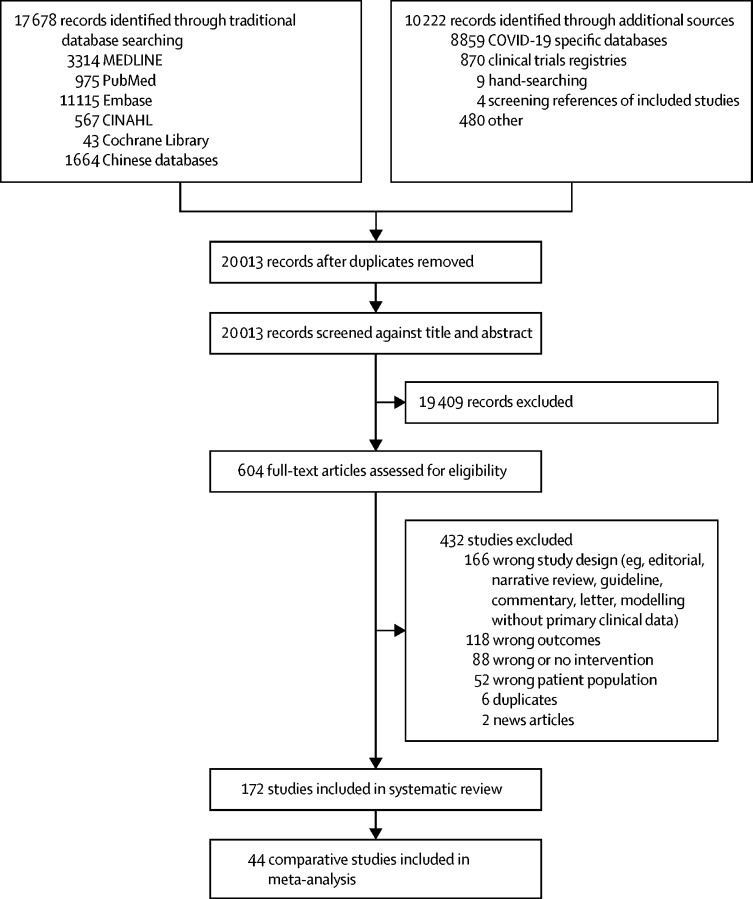
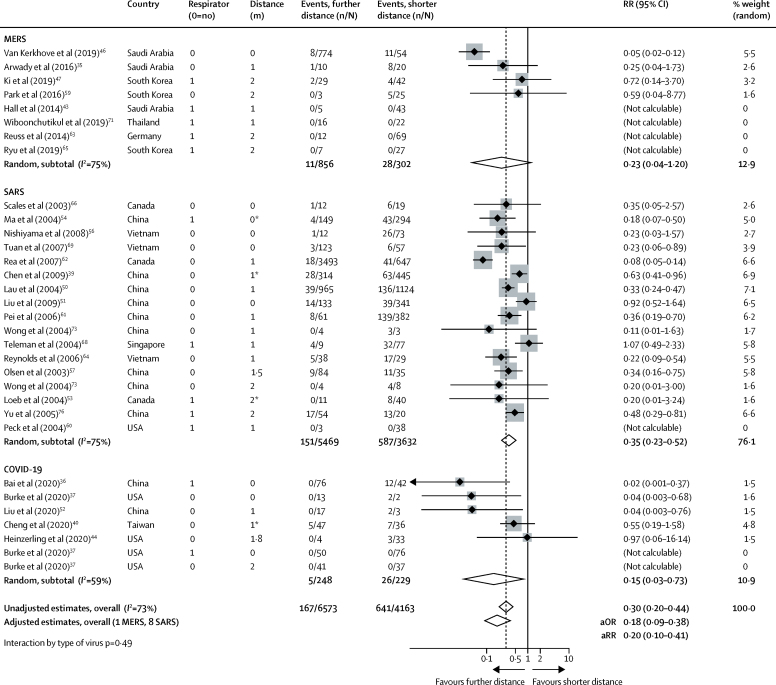
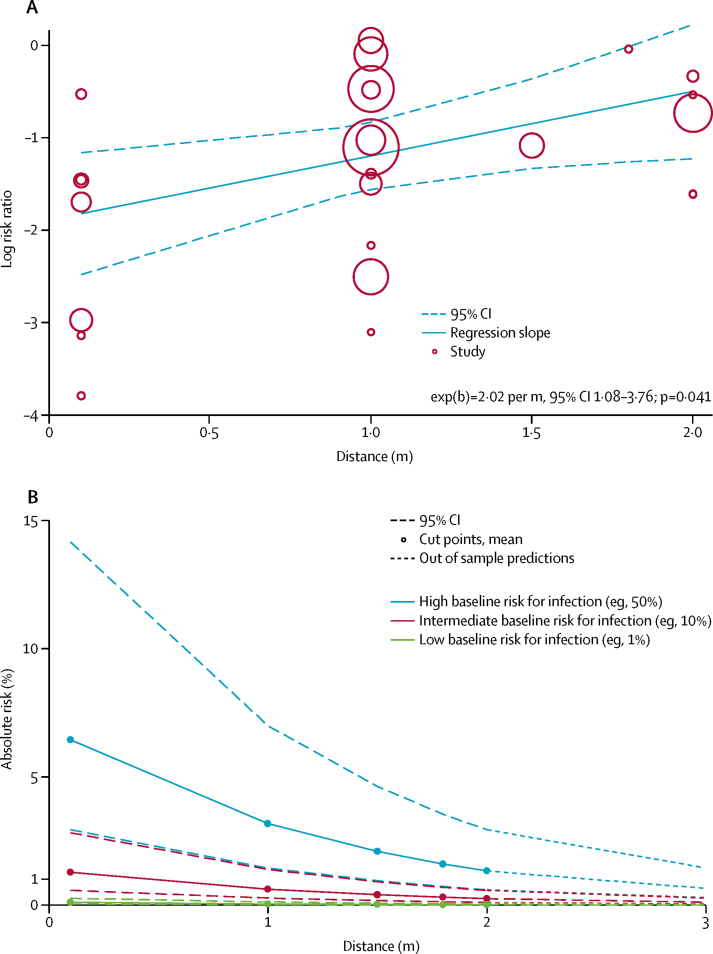
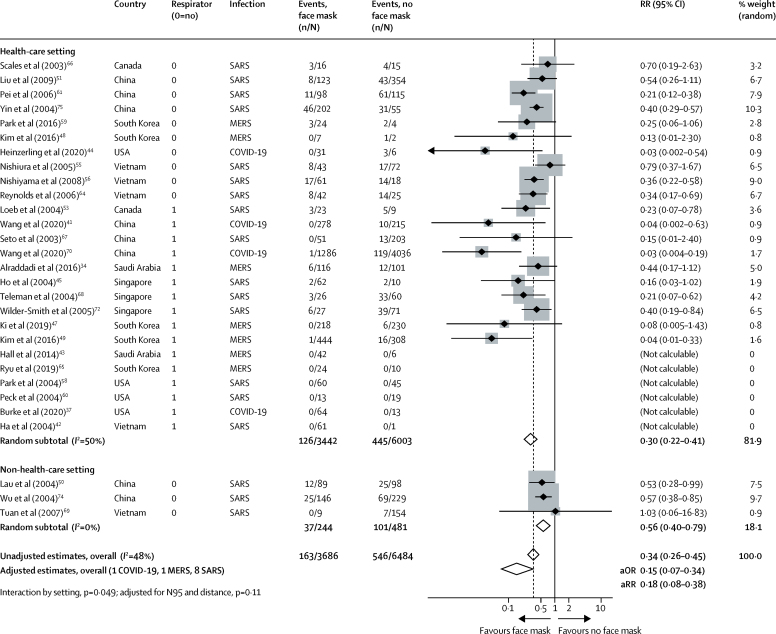
Background Severe acute respiratory syndrome coronavirus 2 (SARS-CoV-2) causes COVID-19 and is spread personto-person through close contact.We aimed to investigate the effects of physical distance, face masks, and eye protection on virus transmission in health-care and non-health-care (eg, community) settings. MethodsWe did a systematic review and meta-analysis to investigate the optimum distance for avoiding person-toperson virus transmission and to assess the use of face masks and eye protection to prevent transmission of viruses.We obtained data for SARS-CoV-2 and the betacoronaviruses that cause severe acute respiratory syndrome, and Middle East respiratory syndrome from 21 standard WHO-specific and COVID-19-specific sources.We searched these data sources from database inception to May 3, 2020, with no restriction by language, for comparative studies and for contextual factors of acceptability, feasibility, resource use, and equity.We screened records, extracted data, and assessed risk of bias in duplicate.We did frequentist and Bayesian meta-analyses and random-effects metaregressions.We rated the certainty of evidence according to Cochrane methods and the GRADE approach.This study is registered with PROSPERO, CRD42020177047.Findings Our search identified 172 observational studies across 16 countries and six continents, with no randomised controlled trials and 44 relevant comparative studies in health-care and non-health-care settings (n=25 697 patients).Transmission of viruses was lower with physical distancing of 1 m or more, compared with a distance of less than 1 m (n=10 736, pooled adjusted odds ratio [aOR] 0•18, 95% CI 0•09 to 0•38; risk difference [RD] -10•2%, 95% CI -11•5 to -7•5; moderate certainty); protection was increased as distance was lengthened (change in relative risk [RR] 2•02 per m; p interaction =0•041; moderate certainty).Face mask use could result in a large reduction in risk of infection (n=2647; aOR 0•15, 95% CI 0•07 to 0•34, RD -14•3%, -15•9 to -10•7; low certainty), with stronger associations with N95 or similar respirators compared with disposable surgical masks or similar (eg, reusable 12-16-layer cotton masks; p interaction =0•090; posterior probability >95%, low certainty).Eye protection also was associated with less infection (n=3713; aOR 0•22, 95% CI 0•12 to 0•39, RD -10•6%, 95% CI -12•5 to -7•7; low certainty).Unadjusted studies and subgroup and sensitivity analyses showed similar findings.Interpretation The findings of this systematic review and meta-analysis support physical distancing of 1 m or more and provide quantitative estimates for models and contact tracing to inform policy.Optimum use of face masks, respirators, and eye protection in public and health-care settings should be informed by these findings and contextual factors.Robust randomised trials are needed to better inform the evidence for these interventions, but this systematic appraisal of currently best available evidence might inform interim guidance.
Overview
CoChat Summary
TL;DR
This systematic review and meta-analysis of 172 observational studies found that physical distancing of at least 1 m, face masks, and eye protection were each associated with lower risk of SARS-CoV-2, SARS-CoV, or MERS-CoV infection. No randomised trials were identified, and certainty ranged from moderate for distancing to low for face masks and eye protection.
Key findings
- Among 44 comparative studies (n=25,697), physical distancing of ≥1 m versus <1 m was associated with lower infection risk (unadjusted n=10,736, RR 0·30, 95% CI 0·20–0·44; adjusted n=7782, aOR 0·18, 95% CI 0·09–0·38; RD −10·2%, 95% CI −11·5 to −7·5; moderate certainty), with protection increasing as distance lengthened (change in RR 2·02 per m; pinteraction=0·041).
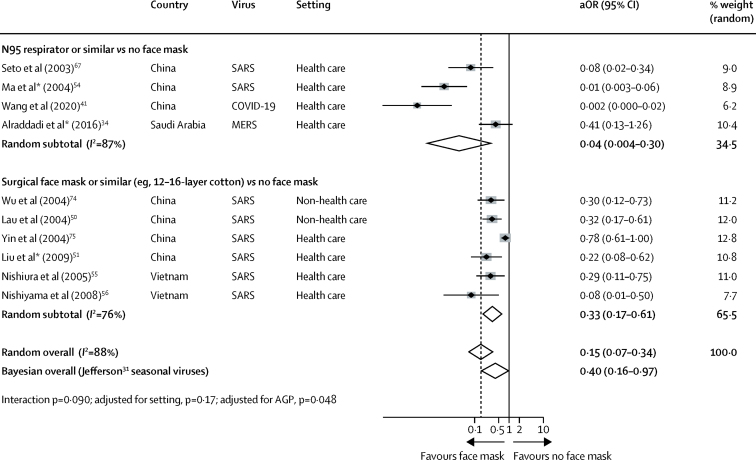
- Face mask use was associated with a large reduction in infection risk (adjusted n=2647, aOR 0·15, 95% CI 0·07–0·34; RD −14·3%, 95% CI −15·9 to −10·7; low certainty), with stronger associations for N95 or similar respirators than disposable surgical masks or similar (pinteraction=0·090; posterior probability >95%, low certainty).
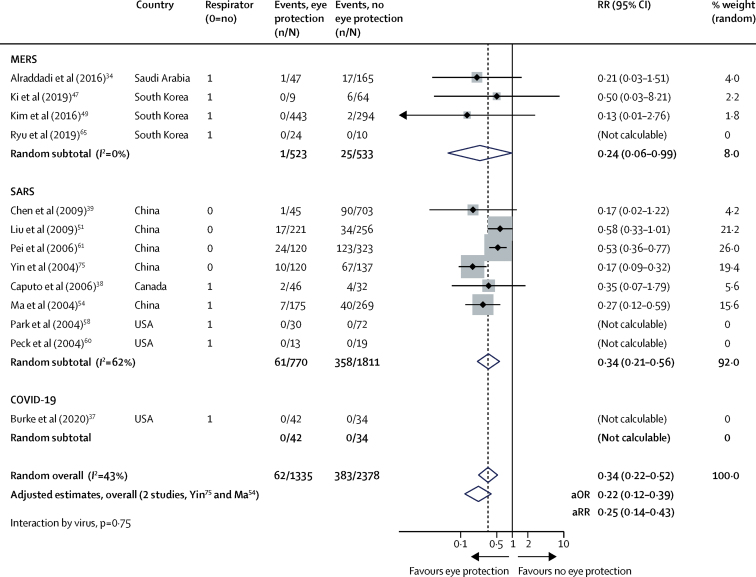
- Eye protection was associated with less infection (unadjusted n=3713, RR 0·34, 95% CI 0·22–0·52; adjusted n=701, aOR 0·22, 95% CI 0·12–0·39; RD −10·6%, 95% CI −12·5 to −7·7; low certainty).
- Across 24 contextual-factor studies, most stakeholders found these strategies acceptable, feasible, and reassuring, but reported discomfort, resource use and equity concerns, communication difficulty, and perceived reduced empathy.
Methods
- Systematic review and meta-analysis searching 21 WHO-specific and COVID-19-specific sources from database inception to May 3, 2020, with no language restriction, for studies of confirmed or probable COVID-19, SARS, or MERS and close contacts.
- Duplicate screening, data extraction, and risk-of-bias assessment; frequentist and Bayesian meta-analyses and random-effects meta-regressions; certainty rated with Cochrane methods and GRADE; registered with PROSPERO, CRD42020177047.
- Outcomes included transmission and contextual factors; no randomised controlled trials were identified, so the meta-analysis included 44 comparative observational studies.
Limitations
- The paper states that all included studies were non-randomised, not always fully adjusted, and might suffer recall and measurement bias; many studies lacked precise distances, direct contact was equated to 0 m, and no eligible study quantitatively evaluated whether distances >2 m were more effective.
- The paper also states that few studies assessed non-health-care settings, most evidence came from SARS and MERS (n=6674 patients with COVID-19 of 25,697 total), duration of exposure was not specifically assessed, and reporting was inconsistent for aerosol-generating procedures and masks worn by infected patients.
- Evident from the text: observational designs preclude causal inference, and certainty was low for face masks and eye protection, with residual heterogeneity and imprecision noted.
Model-written summary. Check it against the paper before relying on it.
Integrity signals
Registry
Cites
Statistics
Figures
Verification
Claims the paper makes
3 Valid · 0 Not valid · 7 Not checked · 82 Own results and interpretations
The sources with a verdict support this claim; the rest weren’t checked yet, have no full text we could read, or their verdicts aren’t rated yet.
In the paper
“In 13 unadjusted studies and two adjusted studies,34, 37, 38, 39, 47, 49, 51, 54, 58, 60, 61, 65, 75 eye protection was associated with lower risk of infection (unadjusted n=3713, RR 0·34, 95% CI 0·22 to 0·52; AR 5·5% with eye protection vs 16·0% with no eye protection, RD −10·6%, 95% CI −12·5 to −7·7; adjusted n=701, aOR 0·22, 95% CI 0·12 to 0·39; low certainty; figure 6; table 2; appendix pp 16–”
§ Physical distancing, face masks, and eye protection to prevent person-to-person transmission of SARS-CoV-2 and COVID-19: a systematic review and meta-analysis > Results
What the sources say
- Supportedcites [34] Alraddadi BM Al-Salmi HS Jacobs-Slifka K Risk factors for Middle East respiratory syndrome coronavirus infection among healthcare personnel Emerg Infect Dis 22 2016 1915 1920 27767011 PMC5088034 source
Split into 2 atoms — 2 confirmed, 0 partially supported, 0 disputed, 0 misattributed, 0 unverifiable. Expand the claim to see per-atom verdicts.
- Not checked yetcites [37] Burke RM Balter S Barnes E Enhanced contact investigations for nine early travel-related cases of SARS-CoV-2 in the United States medRxiv 2020 published online May 3. 10.1101/2020.04.27.20081901 (preprint). PMC7467265 32877446
- Supportedcites [38] Caputo KM Byrick R Chapman MG Orser BJ Orser BA Intubation of SARS patients: infection and perspectives of healthcare workers Can J Anaesth 53 2006 122 129 16434750 source
Split into 2 atoms — 2 confirmed, 0 partially supported, 0 disputed, 0 misattributed, 0 unverifiable. Expand the claim to see per-atom verdicts.
plainstates an associationn = 3,713- Asserted: passes — The authors put it forward as true.
- Checkable: passes — It can be checked against evidence.
- Load-bearing: passes — The paper’s conclusions depend on it.
- Based: passes — The paper gives a reason why it holds.
- Supported
Every source the paper cites for this claim was checked and supports it.
In the paper
“This finding is inconsistent with conclusions of a review of four randomised trials,13 in which low certainty of evidence for no larger effect was suggested.”
§ Physical distancing, face masks, and eye protection to prevent person-to-person transmission of SARS-CoV-2 and COVID-19: a systematic review and meta-analysis > Discussion
What the sources say
- Supportedcites [13] Bartoszko JJ Farooqi MAM Alhazzani W Loeb M Medical masks vs N95 respirators for preventing COVID-19 in healthcare workers: a systematic review and meta-analysis of randomized trials Influenza Other Respir Viruses 2020 published online April 4. 10.1111/irv.12745 PMC7298295 32246890 source
The Abstract Conclusions (Bartoszko et al. 2020) state verbatim that 'Low certainty evidence suggests that medical masks and N95 respirators offer similar protection against viral respiratory infection including coronavirus in healthcare workers during non–aerosol–generating care' — i.e., no larger effect of one mask type, hedged at low certainty. The Abstract Data Synthesis and Results (Search results and study characteristics; Effect on outcomes) confirm the review/meta-analysis pooled exactly four RCTs (OR 1.06, 95% CI 0.90–1.25, I² = 0%, low certainty for laboratory-confirmed viral respiratory infection), and the Quality assessment section attributes the 'low' GRADE rating to that four-trial outcome. The citing sentence's paraphrase ('review of four randomised trials', 'low certainty of evidence for no larger effect') therefore matches what this source says. (LLM, conf=0.85)
plain- Asserted: passes — The authors put it forward as true.
- Checkable: passes — It can be checked against evidence.
- Load-bearing: unclear — It is unclear whether the paper’s conclusions depend on it.
- Based: passes — The paper gives a reason why it holds.
- Supported
A result the paper reports from its own data — it cites no other source for it, so there is none to check. The quote shows it is in the paper.
In the paper
“Transmission of viruses was lower with physical distancing of 1 m or more, compared with a distance of less than 1 m (n=10 736, pooled adjusted odds ratio [aOR] 0·18, 95% CI 0·09 to 0·38; risk difference [RD] −10·2%, 95% CI −11·5 to −7·5; moderate certainty)”
- Also stated in: § Results · boosted
“a strong association was found of proximity of the exposed individual with the risk of infection (unadjusted n=10 736, RR 0·30, 95% CI 0·20 to 0·44; adjusted n=7782, aOR 0·18, 95% CI 0·09 to 0·38; absolute risk [AR] 12·8% with shorter distance vs 2·6% with further distance, risk difference [RD] −10·2%, 95% CI −11·5 to −7·5; moderate certainty; figure 2; table 2; appendix p 16).”
§ Physical distancing, face masks, and eye protection to prevent person-to-person transmission of SARS-CoV-2 and COVID-19: a systematic review and meta-analysis > Abstract > Findings
boostedstates a causen = 10- Asserted: passes — The authors put it forward as true.
- Checkable: passes — It can be checked against evidence.
- Load-bearing: passes — The paper’s conclusions depend on it.
- Based: passes — The paper gives a reason why it holds.
- Rests on an assumption not shown here.
- Also stated in: § Results · boosted
A result the paper reports from its own data — it cites no other source for it, so there is none to check. The quote shows it is in the paper.
In the paper
“When differential N95 or similar respirator use, which was more frequent in health-care settings than in non-health-care settings, was adjusted for the possibility that face masks were less effective in non-health-care settings, the subgroup effect was slightly less credible (pinteraction=0·11, adjusted for differential respirator use; figure 4).”
§ Physical distancing, face masks, and eye protection to prevent person-to-person transmission of SARS-CoV-2 and COVID-19: a systematic review and meta-analysis > Results
plain- Asserted: passes — The authors put it forward as true.
- Checkable: passes — It can be checked against evidence.
- Load-bearing: unclear — It is unclear whether the paper’s conclusions depend on it.
- Based: passes — The paper gives a reason why it holds.
A result the paper reports from its own data — it cites no other source for it, so there is none to check. The quote shows it is in the paper.
In the paper
“Our search did not identify any randomised trials of COVID-19, SARS, or MERS.”
- Also stated in: § Results · plain
“Studies were all observational in nature; no randomised trials were identified of any interventions that directly addressed the included study populations.”
§ Physical distancing, face masks, and eye protection to prevent person-to-person transmission of SARS-CoV-2 and COVID-19: a systematic review and meta-analysis > Methods > Data analysis
plain- Asserted: passes — The authors put it forward as true.
- Checkable: passes — It can be checked against evidence.
- Load-bearing: passes — The paper’s conclusions depend on it.
- Based: passes — The paper gives a reason why it holds.
- Also stated in: § Results · plain
30 more claims
Create a free account to see all 92 claims and to verify the 11 references still open.
- It may state two separate claims as one. 40
- The quote only partly states this claim. 1
- Probably not a substantial claim. 23
Claims other papers make about this one
Each is checked against this paper’s own text: does it say what the citing paper says it does?
The source backs part of the claim, not all of it — or backs it for a different population, condition or comparison.
In the citing paper
“The review by Chu 2020 did not consider RCTs of influenza transmission, but only the observational studies examining impact on SARS, MERS, or SARS‐CoV‐2.”
From Physical interventions to interrupt or reduce the spread of respiratory viruses (2023) · cites this paper as Chu 2020
Experimental — accuracy not yet measuredThe source backs part of the claim, not all of it — or backs it for a different population, condition or comparison.
In the citing paper
“For N95 masks versus no mask in HCWs, there was a large protective effective with an OR of 0.04 (95% CI 0.004 to 0.30); for surgical masks versus no masks, there was an OR of 0.33 (0.17 to 0.61) overall, but four of these studies were in healthcare settings.”
From Physical interventions to interrupt or reduce the spread of respiratory viruses (2023) · cites this paper as Chu 2020
Experimental — accuracy not yet measuredThe source backs part of the claim, not all of it — or backs it for a different population, condition or comparison.
In the citing paper
“Chu 2020 has been criticised for several reasons: use of an outdated 'Risk of bias' tool; inaccuracy of distance measures; and not adequately addressing multiple sources of bias, including recall and classification bias and in particular confounding.”
From Physical interventions to interrupt or reduce the spread of respiratory viruses (2023) · cites this paper as Chu 2020
Experimental — accuracy not yet measuredThe cited source says what the claim attributes to it.
In the citing paper
“Social distancing has been shown to be an important component of measures designed to reduce the spread and impact of COVID-19.”
From Facilitators and barriers to social distancing for young people during the COVID-19 pandemic (2022) · cites this paper as [5]
The cited source says what the claim attributes to it.
In the citing paper
“A systematic review of early efforts to control the spread of COVID-19 additionally estimated that physical distancing of over one meter was important in reducing transmission (pooled adjusted OR 0.18, 95% CI 0·09 to 0·38) [5].”
From Facilitators and barriers to social distancing for young people during the COVID-19 pandemic (2022) · cites this paper as [5]
1 more claim about this paper
Create a free account to see every claim other papers make about this one.
Self-check
Percentages, sums and reported differences re-computed from the paper’s own numbers.
Each contradiction between two passages listed here was confirmed by an independent check.
Rated minor: it would not touch a result — a value no result rests on, a p-value that stays on the same side of the significance level, or a conflict that is clerical, resolved elsewhere in the paper, or outside its own findings.
In the paper
§ Physical distancing, face masks, and eye protection to prevent person-to-person transmission of SARS-CoV-2 and COVID-19: a systematic review and meta-analysis > Abstract > Findings
“Transmission of viruses was lower with physical distancing of 1 m or more, compared with a distance of less than 1 m (n=10 736, pooled adjusted odds ratio [aOR] 0·18”
§ Physical distancing, face masks, and eye protection to prevent person-to-person transmission of SARS-CoV-2 and COVID-19: a systematic review and meta-analysis > Results
“unadjusted n=10 736, RR 0·30, 95% CI 0·20 to 0·44; adjusted n=7782, aOR 0·18, 95% CI 0·09 to 0·38”
Citations
Cites
Preferred Reporting Items for Systematic Reviews and Meta-Analyses: the PRISMA statement
Moher, D., Liberati, A., Tetzlaff, J., Altman, D. G., & for the PRISMA Group (2009) · BMJ · doi:10.1136/bmj.b2535 · Cited by 83,823
Preferred reporting items for systematic reviews and meta-analyses: the PRISMA Statement.
(2009) · PubMed Central · Cited by 44,859
RoB 2: a revised tool for assessing risk of bias in randomised trials
Sterne, J. A. C., Savović, J., Page, M. J., Elbers, R. G., Blencowe, N. S., Boutron, I., Cates, C. J., Cheng, H.-Y., Corbett, M. S., Eldridge, S. M., et al. (2019) · BMJ · doi:10.1136/bmj.l4898 · Cited by 34,787
Dermyshi, E., Wang, Y., Yan, C., Hong, W., Qiu, G., Gong, X., & Zhang, T. (2017) · Neonatology · doi:10.1159/000454668 · Cited by 24,451
GRADE: an emerging consensus on rating quality of evidence and strength of recommendations
Guyatt, G. H., Oxman, A. D., Vist, G. E., Kunz, R., Falck-Ytter, Y., Alonso-Coello, P., & Schünemann, H. J. (2008) · BMJ · doi:10.1136/bmj.39489.470347.ad · Cited by 23,305
Self-citationMeta-analysis of Observational Studies in Epidemiology<SUBTITLE>A Proposal for Reporting</SUBTITLE>
Stroup, D. F. (2000) · JAMA · doi:10.1001/jama.283.15.2008 · Cited by 20,623
Preferred Reporting Items for Systematic Reviews and Meta-Analyses: The PRISMA Statement
Moher, D., Liberati, A., Tetzlaff, J., & Altman, D. G. (2009) · Journal of Clinical Epidemiology · doi:10.1016/j.jclinepi.2009.06.005 · Cited by 19,575
(2014) · Medical Entomology and Zoology · Cited by 17,633
GRADE guidelines: 1. Introduction—GRADE evidence profiles and summary of findings tables
Guyatt, G., Oxman, A. D., Akl, E. A., Kunz, R., Vist, G., Brozek, J., Norris, S., Falck-Ytter, Y., Glasziou, P., & deBeer, H. (2011) · Journal of Clinical Epidemiology · doi:10.1016/j.jclinepi.2010.04.026 · Cited by 10,681
Self-citationCumpston, M., Li, T., Page, M. J., Chandler, J., Welch, V. A., Higgins, J. P., & Thomas, J. (2019) · Cochrane Database of Systematic Reviews · doi:10.1002/14651858.ed000142 · Cited by 7,218
Research works printed but not linked: 3
- Liu ZQ Ye Y Zhang H Guohong X Yang J Wang JL Analysis of the spatio-temporal characteristics and transmission path of COVID-19 cluster cases in Zhuhai Trop Geogr 2020 published online March 12. 10.13284/j.cnki.rddl.003228 · doi:10.13284/j.cnki.rddl.003228
- Park JY Kim BJ Chung KH Hwang YI Factors associated with transmission of Middle East respiratory syndrome among Korean healthcare workers: infection control via extended healthcare contact management in a secondary outbreak hospital Respirology 21 suppl 3 2016 89 (abstr APSR6-0642).
- Campbell A Chapter eight: it's not about the mask: SARS Commission final report, volume 3 http://www.archives.gov.on.ca/en/e_records/sars/report/v3-pdf/Vol3Chp8.pdf December, 2006
Cited by
Items 2,401–2,500 of 4,035
Factores humanos y seguridad del personal de salud en tiempos de pandemia
Ricardo-Zapata, A., Cimadevilla, B., Salazar-Ocampo, D. F., Medina, V., Santillán-Roldan, P. A., Barrientos, E. R., & Díaz-Guio, D. A. (2020) · Revista Latinoamericana de Simulación Clínica · doi:10.35366/95232 · Cited by 6
Spaeth, A., Masetto, T., Brehm, J., Wey, L., Kochem, C., Brehm, M., Peter, C., & Grimmler, M. (2021) · Diagnostics · doi:10.3390/diagnostics11081332 · Cited by 4
Jang, Y., Jung, J., Park, N. S., Kim, M. T., & Chung, S. (2023) · PLoS ONE · doi:10.1371/journal.pone.0290824 · Cited by 3
Yang, S., Zhang, H., Chen, F., & Liu, C. (2022) · Nursing Open · doi:10.1002/nop2.1254 · Cited by 4
Does mask usage correlate with excess mortality? Findings from 24 European countries
Tausk, D., & Spira, B. (2025) · BMC Public Health · doi:10.1186/s12889-025-22172-x · Cited by 8
COVID-19 Treatments: Then and Now
Mustafa, S. S., Stern, R. A., Patel, P. C., & Chu, D. K. (2023) · The Journal of Allergy and Clinical Immunology In Practice · doi:10.1016/j.jaip.2023.07.045 · Cited by 4
Self-citationSuminski, R. R., Jr., Dominick, G. M., & Wagner, N. J. (2021) · International Journal of Environmental Research and Public Health · doi:10.3390/ijerph18179329 · Cited by 4
Kim, D., Kim, S. B., Jeon, S., Kim, S., Lee, K. H., Lee, H. S., & Han, S. H. (2021) · Journal of Fungi · doi:10.3390/jof7110990 · Cited by 4
R < 1 as an economic constraint
Budish, E. B. (2025) · Review of Economic Design · doi:10.1007/s10058-025-00379-z · Cited by 6
Arvelo, M. C., de, M. M., Sánchez-Traslaviña, L., Pujol, F. H., Jaspe, R. C., Silva, I. C., Stulin, I., Blanco, G., Quevedo, J., Valera, N., et al. (2022) · Revista Peruana de Medicina Experimental y Salud Pública · doi:10.17843/rpmesp.2022.393.11195 · Cited by 4
Wikantiyoso, R., Wikananda, T. P., Triyosoputri, E., Cahyaningsih, D. S., & Sulaksono, A. G. (2022) · International Review for Spatial Planning and Sustainable Development · doi:10.14246/irspsd.10.3_50 · Cited by 5
Paulik, E., Molnár, R., Zsiros, V., et al. (2023) · Orvosi Hetilap · doi:10.1556/650.2023.32774 · Cited by 4
Potisk, T., Remškar, M., Pirker, L., Filipič, G., Mihelič, I., Ješelnik, M., Čoko, U., & Ravnik, M. (2023) · ACS Applied Nano Materials · doi:10.1021/acsanm.3c02592 · Cited by 4
Meng, Y., Ho, H. C., & Wong, M. S. (2024) · Cities · doi:10.1016/j.cities.2024.105205 · Cited by 5
Association between social capital and COVID-19 preventive behaviors: Country-level ecological study
Khin, Y. P., Matsuyama, Y., & Fujiwara, T. (2022) · International Journal of Disaster Risk Reduction · doi:10.1016/j.ijdrr.2022.103335 · Cited by 5
In masks we trust: explicit and implicit reactions to masked faces vary by political orientation
Ingram, G., Chuquichambi, E. G., Jiménez‐Leal, W., & Rosa, A. O. L. (2024) · BMC Psychology · doi:10.1186/s40359-024-01556-5 · Cited by 7
Frazer, J. S. (2021) · Lecture notes in bioengineering · doi:10.1007/978-981-33-6703-6_2 · Cited by 5
Yen, C. F., van den Berg, P., & Pepe, D. E. (2021) · Current Opinion in Infectious Diseases · doi:10.1097/qco.0000000000000738 · Cited by 5
Hua, L., Wang, Y., Mo, B., Guo, Z., Wang, Y., Su, Z., Huang, M., Chen, H., Ma, X., Xie, J., et al. (2023) · Frontiers in Public Health · doi:10.3389/fpubh.2023.1163428 · Cited by 7
Yamamura, O., Onishi, H., Sakamaki, I., Fujita, R., Miyashita, H., & Iwasaki, H. (2023) · Asian Biomedicine · doi:10.2478/abm-2023-0051 · Cited by 5
„Verstehen mich mit der Maske noch alle?“
Schuster, M. E., Arias‐Vergara, T., Müller-Hörner, R., Winterholler, C., & Bocklet, T. (2020) · MMW - Fortschritte der Medizin · doi:10.1007/s15006-020-0749-4 · Cited by 4
Engaging Communities in Emerging Infectious Disease Mitigation to Improve Public Health and Safety
Barak, M. E. M., Wu, S., Luria, G., Schnyder, L. P., Liu, R. M., Nguyen, A., & Kaplan, C. D. (2024) · Emerging infectious diseases · doi:10.3201/eid3007.230932 · Cited by 4
Rodrigues, L. G., Campos, F. L., Alonso, L. S., Silva, R. S., Oliveira, B. C., Rhodes, G. A. C., da Silva, D. M., Sampaio, A. A., & Ferreira, R. C. (2022) · Cadernos Saúde Coletiva · doi:10.1590/1414-462x202230030343 · Cited by 7
Impact of Government Intervention in Response to Coronavirus Disease 2019
Won, J.-Y., Lee, Y., Cho, M.-H., Kim, Y., & Heo, B.-Y. (2022) · International Journal of Environmental Research and Public Health · doi:10.3390/ijerph192316070 · Cited by 3
Epidemiologische Ansätze zur Klärung wichtiger Forschungsfragen zu COVID-19 – eine Übersicht
Zeeb, H., Ahrens, W., Haug, U., Grabenhenrich, L., & Pigeot, I. (2021) · Bundesgesundheitsblatt - Gesundheitsforschung - Gesundheitsschutz · doi:10.1007/s00103-021-03378-x · Cited by 3
Akram, F., Pidcock, M., Oake, D., Sholler, G. F., Farrar, M. A., & Kasparian, N. A. (2022) · International Journal of Cardiology Congenital Heart Disease · doi:10.1016/j.ijcchd.2022.100434 · Cited by 2
Korkusuz, R., Şenoğlu, S., Polat, Ö., & Yaşar, K. K. (2021) · Bezmialem Science · doi:10.14235/bas.galenos.2020.4832 · Cited by 5
Increased Incidence of COVID-19 Infections Amongst Interpersonal Violence Patients
Henry, R., Matsushima, K., Baertsch, H., Henry, R. N., Ghafil, C. A., Roberts, S., Cutri, R., Liasidis, P., Inaba, K., & Δημητριάδης, Δ. (2021) · Journal of Surgical Research · doi:10.1016/j.jss.2021.04.024 · Cited by 3
Can virus–virus interactions impact the dynamics of the covid-19 pandemic?
Hendaus, M. A., & Jomha, F. A. (2021) · Journal of Biomolecular Structure and Dynamics · doi:10.1080/07391102.2021.1926327 · Cited by 3
Chen, Y., Hsu, C., & Rahman, A. (2025) · Healthcare · doi:10.3390/healthcare13161956 · Cited by 5
Ji, J., Winnett, A. V., Shelby, N., Reyes, J. A., Schlenker, N. W., Davich, H., Caldera, S., Tognazzini, C., Goh, Y.-Y., Feaster, M., et al. (2023) · medRxiv · doi:10.1101/2023.03.09.23286855 · Cited by 3
Li, Y., Wang, S., Yang, N., Shi, Y., Yang, Y., Zhu, Z., & Li, X. (2023) · Frontiers in Public Health · doi:10.3389/fpubh.2023.1197889 · Cited by 4
Asai, T., Kurosaki, E., Kimachi, K., Nakayama, M., Koido, M., & Hong, S. (2023) · Scientific Reports · doi:10.1038/s41598-023-44967-x · Cited by 3
Meintjes, R., Makapela, T., Hobbs, M., & Jantjies, N. (2023) · ACM International Conference on Interaction Design and Children (IDC) · doi:10.1145/3585088.3589372 · Cited by 5
End-to-end SARS-CoV-2 transmission risks in sport: Current evidence and practical recommendations
Jones, B. L., Phillips, G., Valeriani, F., Edwards, T., Adams, E. R., Bonadonna, L., Copeland, R., Cross, M., Dalton, C., Hodgson, L., et al. (2021) · South African Journal of Sports Medicine · doi:10.17159/2078-516x/2021/v33i1a11210 · Cited by 4
Avwioro, G. O., Egwunyenga, A. O., Iyiola, S., Odibo, E. O., Onyije, F. M., Oyinbo, C. A., Avwioro, T. O., Enitan, S. S., & Mgbere, O. O. (2021) · Scientific African · doi:10.1016/j.sciaf.2021.e01065 · Cited by 3
Is COVID-19 a turning point? Evidence from CEOs' investment behavior and risk tolerance
Rahman, M. J., Zhu, H., & Beiyi, S. (2023) · International Journal of Emerging Markets · doi:10.1108/ijoem-02-2023-0264 · Cited by 5
General Awareness Regarding Face Masks to Combat Covid-19: A Comprehensive Review
Kumaraswamy, M., Shaji, J. S., S, S. V., & Paul, P. (2021) · International Journal of Pharmaceutical Sciences Review and Research · doi:10.47583/ijpsrr.2021.v67i01.004 · Cited by 3
Zhang, H., Shen, L., Sun, M., Zhao, C., Li, Q., Yang, Z., Liu, J., Liu, K., & Xiao, B. (2022) · Frontiers in Public Health · doi:10.3389/fpubh.2022.1011592 · Cited by 3
Shen, W. (2020) · Frontiers in Public Health · doi:10.3389/fpubh.2020.00364 · Cited by 3
BERGAMO AND COVID-19: HOW THE DARK CAN TURN TO LIGHT
(2020) · doi:10.31219/osf.io/bupgn · Cited by 3
(2020) · doi:10.1055/a-1199-4525 · Cited by 3
Wu, S. X., & Wu, X. Y. (2022) · Frontiers in Public Health · doi:10.3389/fpubh.2022.990400 · Cited by 5
Liu, Y., Xu, N., Liu, C., Zhao, J., & Zheng, Y. (2024) · Sustainability · doi:10.3390/su162210038 · Cited by 4
The role of vitamin D in prevention OF COVID-19 and its severity: an umbrella review.
Margarucci, L. M., Montanari, E., Gianfranceschi, G., Caprara, C., Valeriani, F., Piccolella, A., Lombardi, V., Scaramucci, E., & Spica, V. R. (2021) · Acta bio-medica dell'Ateneo parmense/Acta biomedica · doi:10.23750/abm.v92is6.12216 · Cited by 5
Responsiveness to risk explains large variation in COVID-19 mortality across countriesPreprint
Lim, T. Y., & Rahmandad, H. (2020) · medRxiv · doi:10.1101/2020.12.11.20247924 · Cited by 3
Kwon, J. A., Bretaña, N. A., Kronfli, N., Dussault, C., Grant, L., Galouzis, J. J., Hoey, W., Blogg, J., Lloyd, A. R., & Gray, R. T. (2024) · Frontiers in Public Health · doi:10.3389/fpubh.2024.1279572 · Cited by 6
Impact of COVID-19 on Clinicopathological Spectrum of Pityriasis Rosea in Korea
Kim, D. H., Cho, J. H., Park, S. J., Seo, S. H., & Ahn, H. H. (2022) · Journal of Korean Medical Science · doi:10.3346/jkms.2022.37.e190 · Cited by 3
Parlin, A. F., Yermakov, M., Stratton, S. M., Reutman, S. R., Culley, T. M., Guerra, P. A., & Grinshpun, S. A. (2022) · Aerosol and Air Quality Research · doi:10.4209/aaqr.220036 · Cited by 3
Duncan, N. A., L’Her, G., Osborne, A., Sawyer, S. L., & Deinert, M. (2022) · Royal Society Open Science · doi:10.1098/rsos.210875 · Cited by 2
Gritzka, S., Angerer, P., & Diebig, M. (2022) · Research Square · doi:10.21203/rs.3.rs-1688799/v1 · Cited by 2
Gama, L. M. D. P., de Souza, V. S., Lopes, S. G. R., de Arruda, G. O., Lima, H. D. P., & Baptista, C. J. (2022) · Online Brazilian Journal of Nursing · doi:10.17665/1676-4285.20226577 · Cited by 8
Chen, G., Palmer, J. R. B., Bartumeus, F., & Alba, A. (2022) · Infectious Disease Modelling · doi:10.1016/j.idm.2022.11.001 · Cited by 2
Self-citationBennett, B., Freckelton, I. R., & Wolf, G. (2023) · Oxford University Press eBooks · doi:10.1093/oso/9780192896742.003.0004 · Cited by 3
Yin, L., Zhang, H., Li, Y., Liu, K., Chen, T., Luo, W. P., Lai, S., Li, Y., Tang, X., Li, N., et al. (2021) · SSRN Electronic Journal · doi:10.2139/ssrn.3750214 · Cited by 3
Coronavirus testing in women attending antenatal care
Rolnik, D. L., Korman, T. M., Rindt, A., Stuart, R. L., Giles, M., Rawlins, J., Palmer, K. R., Stripp, A. M., Wallace, E. M., & Hodges, R. J. (2020) · Women and Birth · doi:10.1016/j.wombi.2020.09.024 · Cited by 4
Kim, S. H., Baek, J. Y., Han, M., Lee, M., Lim, S. M., Lee, J. Y., Kang, J., Jung, I., Kang, H., & Ahn, J. G. (2023) · Journal of Medical Virology · doi:10.1002/jmv.28490 · Cited by 4
Forecasting COVID-19 New Cases Using Transformer Deep Learning ModelPreprint
Patil, S., Mollaei, P., & Farimani, A. B. (2023) · medRxiv · doi:10.1101/2023.11.02.23297976 · Cited by 4
Castro‐Calvo, J., Schoeps, K., Montoya‐Castilla, I., del Rosario, C., & Fundación Relaciones Inteligentes, S. (2022) · Revista Latinoamericana de Psicología · doi:10.14349/rlp.2022.v54.17 · Cited by 4
Safe Return to Work for Domestic Workers in the Time of COVID-19
Bardhan, R., Byrd, T., & Boyd, J. (2021) · COVID · doi:10.3390/covid1030048 · Cited by 3
Wang, Y., Liu, Z., Jiang, C., Jiang, L., Liu, J., Rong, R., Li, S., Wu, W., & Cao, G. (2025) · Journal of Hazardous Materials · doi:10.1016/j.jhazmat.2025.139076 · Cited by 4
Manan, K. A., Tajuddin, S. N. A. A., Ali, R., Bahari, K. A., Ahmad, Z. A., & Downing, K. J. (2022) · International Journal of Public Health Science (IJPHS) · doi:10.11591/ijphs.v11i2.21232 · Cited by 3
The massive spreads and fatalities of COVID-19 pandemic in the USA: symptoms of leadership failure
Owoye, O., & Onafowora, O. A. (2021) · International Journal of Public Leadership · doi:10.1108/ijpl-08-2021-0048 · Cited by 5
Use of facemask during the COVID-19 pandemic in Southeastern Nigeria: an observational study
Chukwuocha, U. M., Ogboeze, J. C., Bosede, A. O., Dozie, U. W., Ekeleme, U. G., Akam, N. V., & Chukwu, R. O. (2022) · Journal of Public Health and Development · doi:10.55131/jphd/2022/200209 · Cited by 4
Perceived interpersonal distance changes in young Taiwanese pre and post SARS-CoV-2 pandemic
Chen, Y., Lee, Y., Hsu, C., & Rahman, A. (2024) · Scientific Reports · doi:10.1038/s41598-024-51278-2 · Cited by 4
Sadłowska-Wrzesińska, J., Piosik, K., & Nejman, Ż. (2022) · International Journal of Environmental Research and Public Health · doi:10.3390/ijerph192214783 · Cited by 9
SARS-CoV-2 Antibody Seroprevalence in Jakarta, Indonesia
Ariawan, I., Jusril, H., Farid, M. N., Riono, P., Wahyuningsih, W., Widyastuti, W., Handayani, D. O. T. L., Wahyuningsih, E. S., Daulay, R., Henderiawati, R., et al. (2022) · Kesmas National Public Health Journal · doi:10.21109/kesmas.v17i3.6070 · Cited by 7
Possible Opportunities in Face Mask Manufacturing During the COVID-19 Pandemic: A Study From India
Mishra, D., Chauhan, H., Mishra, D. K., & Satapathy, S. (2021) · International Journal of Sociotechnology and Knowledge Development · doi:10.4018/ijskd.2022040106 · Cited by 4
Abbasi, M., Naserirad, M., & Barzoki, M. H. (2022) · Journal of Prevention · doi:10.1007/s10935-022-00713-z · Cited by 4
Capturing Time Dynamics From Speech Using Neural Networks for Surgical Mask Detection
Liu, S., Mallol-Ragolta, A., Yan, T., Qian, K., Parada‐Cabaleiro, E., Hu, B., & Schuller, B. W. (2022) · IEEE Journal of Biomedical and Health Informatics · doi:10.1109/jbhi.2022.3173128 · Cited by 8
Sarmadi, M., Bakhtiyaridovvombaygi, M., Ahmadi‐Soleimani, S. M., Ebrahimipour, H., Rezaiemanesh, M. R., Alizadeh-Siuki, H., Barzanouni, S., Torkzadeh, M., Askari, M., & Rahimi, S. (2023) · Environmental Health Engineering and Management · doi:10.34172/ehem.2023.09 · Cited by 3
Shimbashi, R., Shiino, T., Ainai, A., Moriyama, S., Arai, S., Morino, S., Takanashi, S., Arashiro, T., Suzuki, M., Matsuzawa, Y., et al. (2023) · Global Health & Medicine · doi:10.35772/ghm.2022.01060 · Cited by 3
Amraei, M., & Khiavi, F. F. (2020) · Health Monitor Journal of the Iranian Institute for Health Sciences Research · doi:10.29252/payesh.19.6.633 · Cited by 6
Hope, health and cure: the meanings of the vaccine against COVID-19
Melo, C. D. F., Ferreira, M. P. A., Costa, Í. M., Lins, S., & Eberhardt, A. C. (2023) · Psico-USF · doi:10.1590/1413-82712023280310 · Cited by 4
Changes in the national prevalence of asthma and coronavirus disease 2019 fatality
Bedolla‐Barajas, M., Morales‐Romero, J., Robles‐Figueroa, M., et al. (2023) · Annals of Allergy Asthma & Immunology · doi:10.1016/j.anai.2023.04.028 · Cited by 3
The Impact of “Flatten the Curve” on Interdependent Economic Sectors
Santos, J. R., & Pagsuyoin, S. A. (2021) · Risk, systems and decisions · doi:10.1007/978-3-030-71587-8_10 · Cited by 3
Meng, Y. (2021) · Cybergeo · doi:10.4000/cybergeo.36057 · Cited by 3
Metadata
- Authors
- Chu, D. K., Akl, E. A., Duda, S., Solo, K., Yaacoub, S., Schünemann, H. J., Chu, D. K., Akl, E. A., El-harakeh, A., Bognanni, A., Lotfi, T., Loeb, M., Hajizadeh, A., Bak, A., Izcovich, A., Cuello-Garcia, C. A., Chen, C., Harris, D. J., Borowiack, E., Chamseddine, F., Schünemann, F., Morgano, G. P., Muti Schünemann, G. E. U., Chen, G., Zhao, H., Neumann, I., Chan, J., Khabsa, J., Hneiny, L., Harrison, L., Smith, M., Rizk, N., Giorgi Rossi, P., AbiHanna, P., El-khoury, R., Stalteri, R., Baldeh, T., Piggott, T., Zhang, Y., Saad, Z., Khamis, A., Reinap, M., Duda, S., Solo, K., Yaacoub, S., & Schünemann, H. J.
- Affiliations
- McMaster University (CA)
- Samsung (China) (CN)
- Cochrane Canada (CA)
- ORCID
- Bognanni, Antonio
- Lotfi, Tamara
- Loeb, Mark
- Hajizadeh, Anisa
- Izcovich, Ariel
- Chen, Chen
- Harris, David J
- Borowiack, Ewa
- Chamseddine, Fatimah
- Morgano, Gian Paolo
- Chen, Guang
- Zhao, Hong
- Neumann, Ignacio
- Chan, Jeffrey
- Khabsa, Joanne
- Hneiny, Layal
- Harrison, Leila
- Smith, Maureen
- Rizk, Nesrine
- El-khoury, Rayane
- Baldeh, Tejan
- Piggott, Thomas
- Zhang, Yuan
- Khamis, Assem
- Reinap, Marge
- Venue
- The Lancet
- Publisher
- Elsevier BV
- Published
- 2020-06
- Volume
- 395
- Issue
- 10242
- Pages
- 1973-1987
- ISSN
- 0099-5355 (ISSN-L)
- 0140-6736
- PMC
- PMC7263814
- OpenAlex
- W3032742287
- Semantic Scholar
- 5af6b87d035e64d44ff43c277f06e1a2f21e23df
- Cited by
- 3,843
- References
- 104
- Citations by year
- 2026: 82 · 2025: 151 · 2024: 259 · 2023: 483 · 2022: 765 · 2021: 1366 · 2020: 729
- FWCI
- 117.07
- Type
- journal article
- Language
- en
- Open access
- hybrid
- doi.org
- Licence
- cc-by
- www.elsevier.com/tdm/userlicense/1.0/ (tdm)
- www.elsevier.com/legal/tdmrep-license (tdm)
- creativecommons.org/licenses/by/3.0/igo/ (vor)
- Locations
- The Lancet (publishedVersion, cc-by)
- PubMed Central (publishedVersion, cc-by)
- PubMed (publishedVersion)
- HAL (submittedVersion)
- Funders
- Canadian Allergy, Asthma and Immunology Foundation
- Lanzhou University
- Topics
- Health Sciences › Medicine › Pulmonary and Respiratory Medicine › Infection Control and Ventilation
- Physical Sciences › Mathematics › Modeling and Simulation › COVID-19 epidemiological studies
- Social Sciences › Sociology and Political Science › COVID-19 Prevention and Impact
- Keywords
- social distancing, face masks, eye protection, SARS-CoV-2, COVID-19 pandemic, human-to-human transmission, betacoronaviruses, SARS, MERS, respiratory virus transmission, N95 respirators, healthcare settings, community settings, infection control, droplet transmission, airborne transmission, acceptability
- MeSH terms
- Betacoronavirus, Physical Distancing, COVID-19, SARS-CoV-2, Communicable Disease Control, Eye Protective Devices, Humans, Masks, Pneumonia, Viral, Social Isolation, Coronavirus Infections, Pandemics
About these checks
Registry, retraction, Cites and statistics results are computed, not judged, with one exception: a printed reference that no index lists is read once by a model before it counts as a citation error. Claims are extracted by a model and kept only when their quote appears verbatim in the text; each cited source is then checked, with a model’s help, for whether it says what the claim relies on. Those verdicts can be wrong — read the claim’s quote and the cited source before relying on one.
The claim verdicts this report counts are experimental: their accuracy is not yet measured.
A language model drew the claims from the paper on 2026-10-06, under version 3 of the claim definition (model deepseek-v4.1-flash, prompt extract-v3).
A second model labelled each claim on 2026-10-06 (model jev-1.13-20260917, definition revision gold-guideline-v0.2).
Cited sources are checked with a language model’s help (gpt-6-sol and qwen3.8-omni-flash).
Statistics and arithmetic are recomputed, not judged.
Confidence bands are shown only for fields calibrated on our annotated test set. None is calibrated yet, so no band is shown.
What counts as a claim ›How we measure confidence ›How we check this ›
Are you an author, or do you see a problem with this page? Request a review
Data sources
Bibliographic data: Semantic Scholar, OpenAlex, Crossref.
Contains information from the Semantic Scholar Academic Graph Datasets, made available under the ODC Attribution License (ODC-BY 1.0).
Semantic Scholar’s data is described in: Kinney, R., et al. (2023). The Semantic Scholar Open Data Platform. arXiv:2301.10140.
