

Parental education and inequalities in child mortality: a global systematic review and meta-analysis
Open accessThe DOI matches its Crossref record; 69 of the 69 references it cites were found in a registry or an index.
Abstract
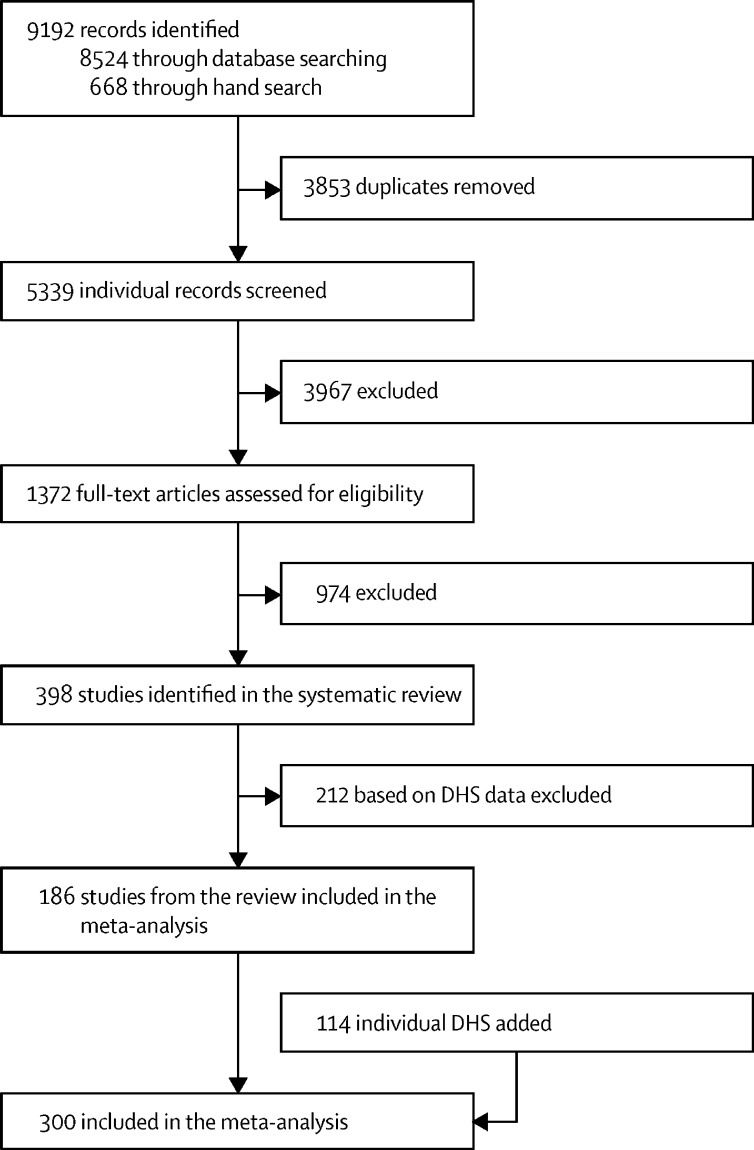
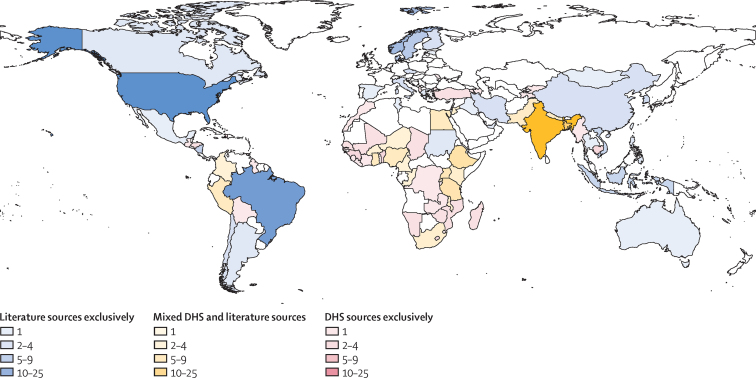
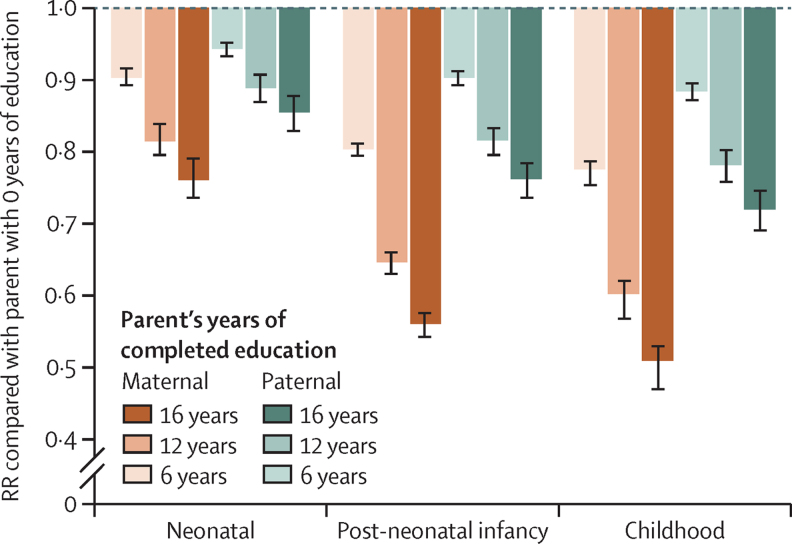
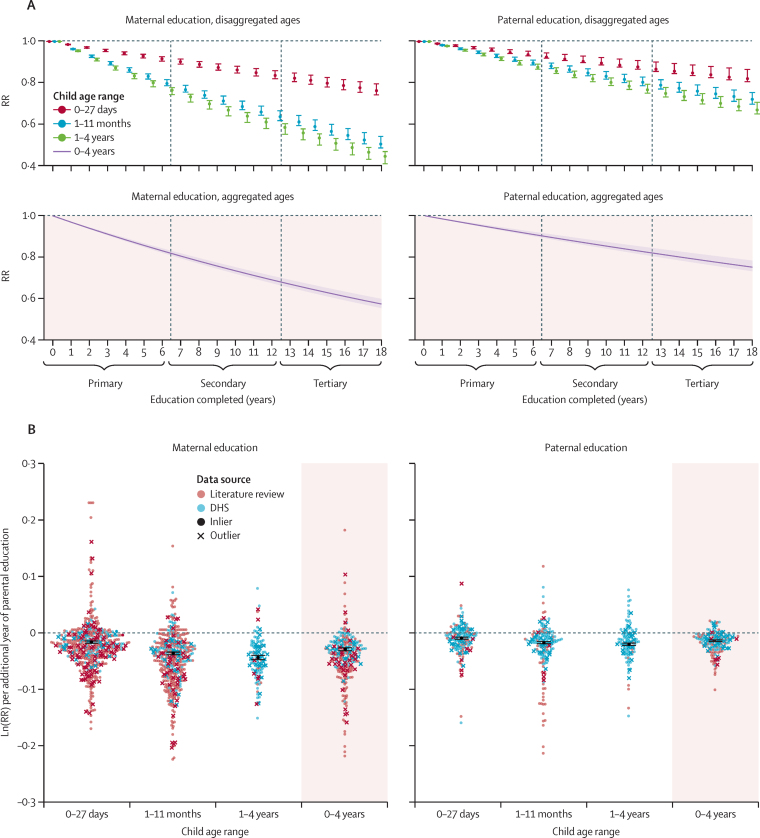
BACKGROUND: The educational attainment of parents, particularly mothers, has been associated with lower levels of child mortality, yet there is no consensus on the magnitude of this relationship globally. We aimed to estimate the total reductions in under-5 mortality that are associated with increased maternal and paternal education, during distinct age intervals. METHODS: This study is a comprehensive global systematic review and meta-analysis of all existing studies of the effects of parental education on neonatal, infant, and under-5 child mortality, combined with primary analyses of Demographic and Health Survey (DHS) data. The literature search of seven databases (CINAHL, Embase, MEDLINE, PsycINFO, PubMed, Scopus, and Web of Science) was done between Jan 23 and Feb 8, 2019, and updated on Jan 7, 2021, with no language or publication date restrictions. Teams of independent reviewers assessed each record for its inclusion of individual-level data on parental education and child mortality and excluded articles on the basis of study design and availability of relevant statistics. Full-text screening was done in 15 languages. Data extracted from these studies were combined with primary microdata from the DHS for meta-analyses relating maternal or paternal education with mortality at six age intervals: 0-27 days, 1-11 months, 1-4 years, 0-4 years, 0-11 months, and 1 month to 4 years. Novel mixed-effects meta-regression models were implemented to address heterogeneity in referent and exposure measures among the studies and to adjust for study-level covariates (wealth or income, partner's years of schooling, and sex of the child). This study was registered with PROSPERO (CRD42020141731). FINDINGS: The systematic review returned 5339 unique records, yielding 186 included studies after exclusions. DHS data were compiled from 114 unique surveys, capturing 3 112 474 livebirths. Data extracted from the systematic review were synthesized together with primary DHS data, for meta-analysis on a total of 300 studies from 92 countries. Both increased maternal and paternal education showed a dose-response relationship linked to reduced under-5 mortality, with maternal education emerging as a stronger predictor. We observed a reduction in under-5 mortality of 31·0% (95% CI 29·0-32·6) for children born to mothers with 12 years of education (ie, completed secondary education) and 17·3% (15·0-18·8) for children born to fathers with 12 years of education, compared with those born to a parent with no education. We also showed that a single additional year of schooling was, on average, associated with a reduction in under-5 mortality of 3·04% (2·82-3·23) for maternal education and 1·57% (1·35-1·72) for paternal education. The association between higher parental education and lower child mortality was significant for both parents at all ages studied and was largest after the first month of life. The meta-analysis framework incorporated uncertainty associated with each individual effect size into the model fitting process, in an effort to decrease the risk of bias introduced by study design and quality. INTERPRETATION: To our knowledge, this study is the first effort to systematically quantify the transgenerational importance of education for child survival at the global level. The results showed that lower maternal and paternal education are both risk factors for child mortality, even after controlling for other markers of family socioeconomic status. This study provides robust evidence for universal quality education as a mechanism to achieve the Sustainable Development Goal target 3.2 of reducing neonatal and child mortality. FUNDING: Research Council of Norway, Bill & Melinda Gates Foundation, and Rockefeller Foundation-Boston University Commission on Social Determinants, Data, and Decision Making (3-D Commission).
Overview
The claims and statistics of this paper haven’t been checked yet.
Free: it reads the open-access text and checks the first 5 claims that cite a source we can check. Create a free account to check every claim.
Integrity signals
Registry
Cites
Statistics
Figures
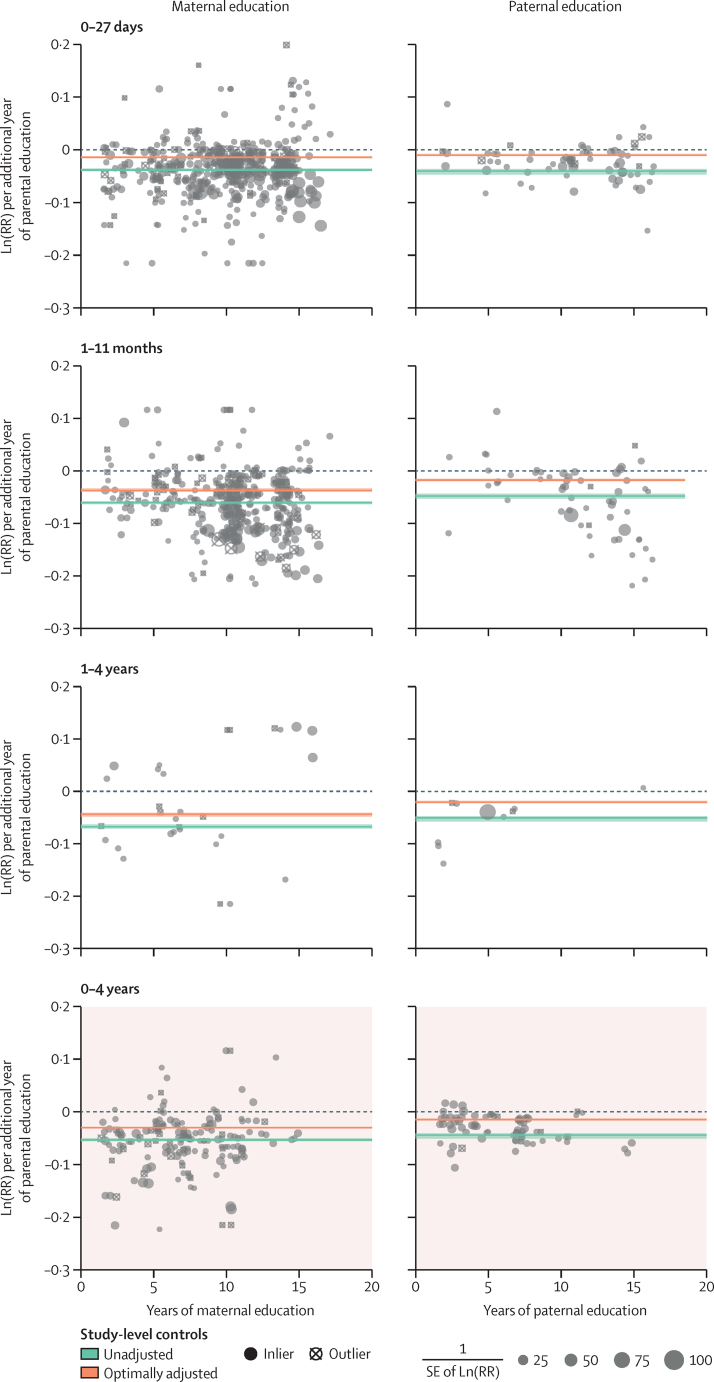
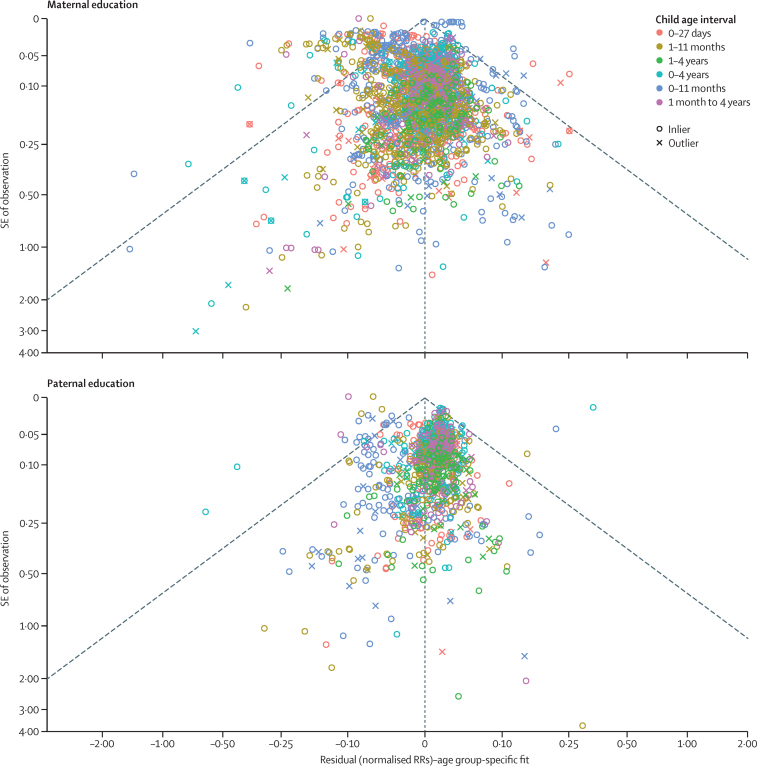
Verification
Claims the paper makes
The claims and statistics of this paper haven’t been checked yet.
Free: it reads the open-access text and checks the first 5 claims that cite a source we can check. Create a free account to check every claim.
Claims other papers make about this one
Each is checked against this paper’s own text: does it say what the citing paper says it does?
The source backs part of the claim, not all of it — or backs it for a different population, condition or comparison.
In the citing paper
“this finding is supported by many studies showing that social determinants of health are key drivers of mortality,50, 51, 52, 53, 54”
From Global age-sex-specific mortality, life expectancy, and population estimates in 204 countries and territories and 811 subnational locations, 1950–2021, and the impact of the COVID-19 pandemic: a comprehensive demographic analysis for the Global Burden of Disease Study 2021 (2024) · cites this paper as [54]
Experimental — accuracy not yet measured
Self-check
Percentages, sums and reported differences re-computed from the paper’s own numbers.
The self-check needs the paper’s full text.
Citations
Cites
Preferred Reporting Items for Systematic Reviews and Meta-Analyses: the PRISMA statement
Moher, D., Liberati, A., Tetzlaff, J., Altman, D. G., & for the PRISMA Group (2009) · BMJ · doi:10.1136/bmj.b2535 · Cited by 83,823
Preferred Reporting Items for Systematic Reviews and Meta-Analyses: The PRISMA Statement
Moher, D., Liberati, A., Tetzlaff, J., Altman, D. G., & The PRISMA Group (2009) · PLoS Medicine · doi:10.1371/journal.pmed.1000097 · Cited by 64,042
Preferred reporting items for systematic reviews and meta-analyses: the PRISMA Statement.
(2009) · PubMed Central · Cited by 44,859
Wang, H., Naghavi, M., Allen, C., Barber, R. M., Bhutta, Z. A., Carter, A., Casey, D. C., Charlson, F. J., Chen, A. Z., Coates, M. M., et al. (2016) · The Lancet · doi:10.1016/s0140-6736(16)31012-1 · Cited by 6,596
Self-citationClosing the gap in a generation: health equity through action on the social determinants of health
Marmot, M., Friel, S., Bell, R., Houweling, T. A., & Taylor, S. (2008) · The Lancet · doi:10.1016/s0140-6736(08)61690-6 · Cited by 3,247
Women Empowerment and Economic Development
Duflo, E. (2012) · Journal of Economic Literature · doi:10.1257/jel.50.4.1051 · Cited by 2,978
Every Newborn: progress, priorities, and potential beyond survival
Lawn, J. E., Blencowe, H., Oza, S., You, D., Lee, A. C., Waiswa, P., Lalli, M., Bhutta, Z., Barros, A. J., Christian, P., et al. (2014) · The Lancet · doi:10.1016/s0140-6736(14)60496-7 · Cited by 1,929
Gama e Colombo, D. (2010) · Revista de Direito Sanitário · doi:10.11606/issn.2316-9044.v10i3p253-266 · Cited by 1,788
An Analytical Framework for the Study of Child Survival in Developing Countries
Mosley, W. H., & Chen, L. C. (1984) · Population and Development Review · doi:10.2307/2807954 · Cited by 1,471
Still too far to walk: Literature review of the determinants of delivery service use
Gabrysch, S., & Campbell, O. M. (2009) · BMC Pregnancy and Childbirth · doi:10.1186/1471-2393-9-34 · Cited by 1,255
Research works printed but not linked: 1
- Sen A Chapter 8. In: Development as freedom 2001 Oxford University Press Oxford
Cited by
Schumacher, A. E., Kyu, H. H., Aali, A., Abbafati, C., Abbas, J., Abbasgholizadeh, R., Abbasi, M. A., Abbasian, M., Abd ElHafeez, S., Abdelmasseh, M., et al. (2024) · The Lancet · doi:10.1016/s0140-6736(24)00476-8 · Cited by 1,045
Self-citationGréaux, M., Moro, M. F., Kamenov, K., Russell, A. M., Barrett, D., & Cieza, A. (2023) · International Journal for Equity in Health · doi:10.1186/s12939-023-02035-w · Cited by 213
“The population-wide structural and social determinants of health that generate, sustain and even widen health inequities are well-documented [18–20], and disproportionately impact persons with disabilities (2).”
Effects of education on adult mortality: A global systematic review and meta-analysis
Balaj, M., Henson, C. A., Aronsson, A., Aravkin, A., Beck, K., Degail, C., Donadello, L., Eikemo, K., Friedman, J., Giouleka, A., et al. (2024) · The Lancet Public Health · doi:10.1016/s2468-2667(23)00306-7 · Cited by 192
“14 This focus on social determinants of population health is reflected in the UN Sustainable Development Goals (SDGs) in their entirety and, especially, in SDGs 4.1 and 4.3, which aim to ensure that children complete primary and secondary education, and adults have equal access to tertiary…”
BackgroundMethodInfluentialSelf-citationCavalcanti, D. M., de Oliveira Ferreira de Sales, L., da Silva, A. F., Basterra, E. L., Pena, D., Monti, C., Barreix, G., Silva, N. J., Vaz, P., Saute, F., et al. (2025) · The Lancet · doi:10.1016/s0140-6736(25)01186-9 · Cited by 178
Rezaeizadeh, G., Mansournia, M. A., Keshtkar, A., Farahani, Z., Zarepour, F., Sharafkhah, M., Kelishadi, R., & Poustchi, H. (2024) · EClinicalMedicine · doi:10.1016/j.eclinm.2024.102574 · Cited by 105
Coverage and Equity of Childhood Vaccines in China
Zhang, H., Lai, X., Mak, J., Sriudomporn, S., Zhang, H., Fang, H., & Patenaude, B. (2022) · JAMA Network Open · doi:10.1001/jamanetworkopen.2022.46005 · Cited by 79
Measuring education in the context of health inequalities
Khalatbari‐Soltani, S., Maccora, J., Blyth, F., Joannès, C., & Kelly‐Irving, M. (2022) · International Journal of Epidemiology · doi:10.1093/ije/dyac058 · Cited by 81
“For instance, a 2021 global systematic review and meta-analysis highlighted that maternal education is a stronger predictor of child mortality than paternal education.(31)”
Amouzou, A., Barros, A. J. D., Requejo, J. H., Fayé, C., Akseer, N., Bendavid, E., Blumenberg, C., Borghi, J., Baz, S. E., Federspiel, F., et al. (2025) · The Lancet · doi:10.1016/s0140-6736(25)00151-5 · Cited by 76
“53 Primary and upper secondary school completion rates increased between 2010 and 2015 and have continued to increase since 2015, albeit at a slower rate, according to survey-based and census-based global estimates (appendix pp 11,12).”
The Political Economy of Health: Bringing Political Science In
Lynch, J. F. (2023) · Annual Review of Political Science · doi:10.1146/annurev-polisci-051120-103015 · Cited by 77
Parental education level and adolescent depression: A multi-country meta-analysis
Xiang, Y., Cao, R., & Li, X. (2023) · Journal of Affective Disorders · doi:10.1016/j.jad.2023.11.081 · Cited by 69
Wulandari, R. D., Laksono, A. D., Prasetyo, Y. B., & Nandini, N. (2022) · Journal of Primary Care & Community Health · doi:10.1177/21501319211072679 · Cited by 51
Plaß, D., Hilderink, H. B. M., Lehtomäki, H., Øverland, S. N., Eikemo, T. A., Lai, T., Gorasso, V., & Devleesschauwer, B. (2022) · Archives of Public Health · doi:10.1186/s13690-022-00900-8 · Cited by 50
“Definition of the exposure and exposure assessment What is the key feature of education that links it to health? Number of years of education? The level of education? The quality of education? Your own education or parental education? Attaining a diploma? Better grades than your peers? Is it the end sum of declarative…”
BackgroundSelf-citationA Systematic Review of Factors Associated with Under‐Five Child Mortality
Bhusal, M. K., & Khanal, S. P. (2022) · BioMed Research International · doi:10.1155/2022/1181409 · Cited by 52
“Moreover, it is observed that even after controlling the family socioeconomic status, lower maternal and paternal education are both risk factors for under-fi ve mortality [41, 42].”
Munhoz, T. N., Santos, I. S., Blumenberg, C., Barcelos, R. S., Bortolotto, C. C., Matijasevich, A., Júnior, H. G. S., dos Santos, L. M., Correa, L. L., de Souza, M. R., et al. (2022) · Cadernos de Saúde Pública · doi:10.1590/0102-311x00316920 · Cited by 87
Whitman, E. T., Elliott, M. L., Knodt, A. R., Abraham, W. C., Anderson, T. J., Cutfield, N. J., Hogan, S., Ireland, D., Melzer, T. R., Ramrakha, S., et al. (2025) · Nature Aging · doi:10.1038/s43587-025-00897-z · Cited by 37
Foláyan, M. O., Coelho, E. M. R. D. B., Ayouni, I., Nguweneza, A., Al-Batayneh, O. B., Daryanavard, H. A., Duangthip, D., Sun, I. G., Arheiam, A., Virtanen, J. I., et al. (2024) · BMC Oral Health · doi:10.1186/s12903-024-04291-w · Cited by 59
“Low parental health literacy increased the risk of under-5 mortality [15], child malnutrition [14], unnecessary visits to emergency departments, mistakes in the administration of medication, as well as increased risk of exposure to secondhand tobacco smoke [13].”
BackgroundQuality improvement programmes in paediatric sepsis from a global perspective
de Souza, D. C., Paul, R. M., Mozún, R., Sankar, J., Jabornisky, R., Lim, E. J., Harley, A., Amri, S. A., Aljuaid, M. H., Qian, S., et al. (2024) · The Lancet Child & Adolescent Health · doi:10.1016/s2352-4642(24)00142-1 · Cited by 37
Differential impact of maternal education on under-five mortality in rural and urban India
Moradhvaj, & Samir, K. C. (2023) · Health & Place · doi:10.1016/j.healthplace.2023.102987 · Cited by 35
“An analysis conducted by Balaj et al. (2021) on 114 unique surveys across 58 DHS countries found that a single additional year of education for mothers resulted in a 34% reduction in U5M.”
BackgroundMethodResultInfluentialRisk factors of under-five mortality in Ethiopia using count data regression models, 2021
Argawu, A. S., & Mekebo, G. G. (2022) · Annals of Medicine and Surgery · doi:10.1016/j.amsu.2022.104764 · Cited by 29
“In addition, some variables like weight of child at birth [47,53,54], maternal anemia [54–56], child’s breastfeeding status [7,47,57], diarrhea [48,58,59], pregnancy desire [60,61], mother’s employment status [48,62,63] and fathers’ educational status [64,65] were not included in the study because of large number of m…”
BackgroundChinnakotla, B., Susarla, S. M., Mohan, D. C., Turton, B. J., Husby, H. M., Morales, C. P., & Sokal‐Gutierrez, K. (2022) · International Journal of Environmental Research and Public Health · doi:10.3390/ijerph20010473 · Cited by 36
Chen, S., Richardson, S., Kong, Y., Ma, N., Zhao, A., Song, Y., Lu, C., Subramanian, S. V., & Li, Z. (2023) · JAMA Network Open · doi:10.1001/jamanetworkopen.2022.51727 · Cited by 38
da Silva, A. F., Anderle, R. V. R., Barreix, G., de Sales, L. D. O. F., Pena, D., Monti, C., García-Vaz, C., Santa-Ramírez, H.-A., de Jesus, G. D. S., Cavalcanti, D. M., et al. (2026) · The Lancet Global Health · doi:10.1016/s2214-109x(26)00008-2 · Cited by 37
Dandona, R., George, S., & Kumar, G. A. (2023) · The Lancet Public Health · doi:10.1016/s2468-2667(23)00028-2 · Cited by 22
Spatiotemporal analysis of the effect of global development indicators on child mortality
Amegbor, P. M., & Addae, A. (2023) · International Journal of Health Geographics · doi:10.1186/s12942-023-00330-x · Cited by 29
“The research shows that 12 years of maternal and paternal education is associated with 31% and 17%, respectively, reduction in U5MR [9].”
BackgroundInfluentialRelationship between parents' health literacy and child health: systematic review
Batool, S. H., Safdar, M., & Eman, S. (2022) · Library Hi Tech · doi:10.1108/lht-11-2021-0398 · Cited by 25
Do education, urbanization, and green growth promote life expectancy?
Zhang, H., Zhan, Y., & Chen, K. (2025) · Frontiers in Public Health · doi:10.3389/fpubh.2024.1517716 · Cited by 30
Melariri, H., Els, T., Oyedele, O., Suttle, T. K., Bermosky, K. T., Freitas, A. D., Murtaza, A., Moosajee, M., & Melariri, P. E. (2023) · EClinicalMedicine · doi:10.1016/j.eclinm.2023.101964 · Cited by 17
Infant and child mortality in Afghanistan: A scoping review
Qamar, K., Essar, M. Y., Siddiqui, J. A., Salman, A., Salman, Y., & Head, M. (2024) · Health Science Reports · doi:10.1002/hsr2.2224 · Cited by 18
“26 Furthermore. mobile health apps and other digital tools can be used to educate people about health and hygiene, provide information about healthcare services, and connect people with healthcare providers.”
BackgroundMarthias, T., Anindya, K., Saputri, N. S., Putri, L. P., Atun, R. A., & Lee, J. T. (2025) · BMJ Global Health · doi:10.1136/bmjgh-2024-016549 · Cited by 20
Rattay, P., Blume, M., Wachtler, B., Wollgast, L., Spallek, J., Hoffmann, S., Sander, L., Herr, R. M., Herke, M., Reuter, M., et al. (2022) · PLoS ONE · doi:10.1371/journal.pone.0266463 · Cited by 23
“Some previous studies have reported that the impacts of mothers and fathers on adolescents’ health can be different [49,79].”
BackgroundBreaking down silos between health and education to improve adolescent wellbeing
Gray, N. J., Desmond, N. A., Ganapathee, D. S., Beadle, S., & Bundy, D. A. P. (2022) · BMJ · doi:10.1136/bmj-2021-067683 · Cited by 21
Chen, J., Wang, S., Han, Y., Zhang, Y., Li, Y., Zhang, B., Li, X., & Zhang, J. (2024) · Scientific Reports · doi:10.1038/s41598-024-52282-2 · Cited by 17
Air Pollution and Health in Africa: The Burden Falls on Children
Mlambo, C., Ngonisa, P., Ntshangase, B. A., Ndlovu, N., & Mvuyana, B. Y. C. (2023) · Economies · doi:10.3390/economies11070196 · Cited by 20
Bigirinama, R. N., Mothupi, M. C., Mwene-Batu, P. L., Kozuki, N., Chiribagula, C. Z., Chimanuka, C., Ngaboyeka, G. A., & Bisimwa, G. B. (2024) · Health Research Policy and Systems · doi:10.1186/s12961-024-01138-2 · Cited by 22
“As the choice of place of delivery is often linked to women’s degree of autonomy [64, 65], literature reports how interventions aimed at empowering women, particularly at the social and educational levels, have had a direct positive impact on MNH [66, 67].”
BackgroundFlood exposure contributes to under-five mortality in low- and middle-income countries
Li, P., Tong, M., Wu, J., Meng, X., Fan, X., Sun, X., Li, J., & Xue, T. (2025) · One Earth · doi:10.1016/j.oneear.2025.101305 · Cited by 18
“32 Considering the sex inequity and subsequent insufficient education among women in LMICs, educating women on how to cope with health risks after natural disasters could reduce the effect of flood exposure on child health.”
Bangay, C. (2021) · Development Policy Review · doi:10.1111/dpr.12615 · Cited by 16
Wani, I. U., & Khanday, I. N. (2024) · Journal of the Knowledge Economy · doi:10.1007/s13132-024-01761-y · Cited by 21
“The direct channels include the availability of a larger and more educated labor force while the indirect channels include the stabilizing impact of gender equality on long-run fertility rates and an improvement in child development indicators (Balaj et al., 2021; Hobcraft, 1993).”
Bayesian network modelling to identify on-ramps to childhood obesity
Zhu, W., Marchant, R., Morris, R. W., Baur, L. A., Simpson, S. J., & Cripps, S. (2023) · BMC Medicine · doi:10.1186/s12916-023-02789-8 · Cited by 13
“It is well recognised that low levels of maternal and paternal high school levels are associated with inequalities in child health status and mortality [27, 28].”
BackgroundImplementation of Character Education through Children's Language Development in Elementary Schools
Mustoip, S., Ghozali, M. I. A., As, U. S., & Sanhaji, S. Y. (2023) · IJECA (International Journal of Education and Curriculum Application) · doi:10.31764/ijeca.v6i2.14192 · Cited by 63
UNEQUAL CHANCES? INEQUALITIES IN MORTALITY IN IRELAND
Duffy, K., Connolly, S., Nolan, A., & Maître, B. (2022) · doi:10.26504/rs145 · Cited by 16
Inequalities in anemia among Peruvian children aged 6–59 months: A decomposition analysis
Al‐kassab‐Córdova, A., Méndez-Guerra, C., Robles-Valcárcel, P., Iberico-Bellomo, L., Alva, K., Herrera‐Añazco, P., & Benites-Zapata, V. A. (2023) · Frontiers in Public Health · doi:10.3389/fpubh.2023.1068083 · Cited by 21
Krause, B. L. (2023) · Journal of Rural Studies · doi:10.1016/j.jrurstud.2023.103169 · Cited by 12
Voget-Kleschin, L., Baatz, C., Heyward, C., van Vuuren, D. P., & Mengis, N. (2024) · Global Sustainability · doi:10.1017/sus.2023.21 · Cited by 16
“Moreover, increasing educational attainment for women in particular is also linked to reduced risk of domestic abuse, reduced child mortality (Balaj et al., 2021), increased child educational performance (Mak Arvin & Summers, 1999), and improved economic performance (Klasen, 2018).”
Inequalities in COVID-19 mortality: defining a global research agenda
Friedman, J. R., Balaj, M., Islam, N., Gu, Y., Nahmia, P., Santamaría‐Ulloa, C., Rojas, A. G., Rasanathan, K., Hosseinpoor, A. R., Emina, J. B. O., et al. (2022) · Bulletin of the World Health Organization · doi:10.2471/blt.22.288211 · Cited by 12
Self-citationUnderstanding the social determinants of health
Vart, P. (2022) · The Lancet · doi:10.1016/s0140-6736(21)02660-x · Cited by 12
Sasmoko, Shabnam, S., Handayani, W., Nassani, A. A., Haffar, M., & Zaman, K. (2022) · PLoS ONE · doi:10.1371/journal.pone.0269575 · Cited by 11
“[10] revealed significant correlations between parental education and a reduction in child mortality.”
BackgroundRetractedPopescu, G. H., Nica, E., Klieštik, T., Alpopi, C., Potcovaru, A.-M., & Niţă, S. C. (2024) · International Journal of Environmental Research and Public Health · doi:10.3390/ijerph21101379 · Cited by 21
“Rahman and Alam [46] in Bangladesh, Asif et al. [84] in Pakistan, Kiross et al. [85] in Ethiopia, and Balaj et al. [86] demonstrated that education mitigated infant mortality rates.”
BackgroundPan, T. S., Li, C., & Zhou, Y. (2024) · EClinicalMedicine · doi:10.1016/j.eclinm.2024.102994 · Cited by 15
Khan, M. A., & Mahajan, R. (2023) · Environment Development and Sustainability · doi:10.1007/s10668-023-04267-w · Cited by 19
“Similarly, by applying fertilisers and pesticides based on crop needs and pest infestation levels, the firm can minimise excess usage and reduce potential environmental contamination (Balaj et al., 2021).”
Jochim, J., Cluver, L. D., Sidloyi, L., Kelly, J., Ornellas, A., Mangqalaza, H., Coakley, C., Nogoduka, C., Pillay, M., Nokama, B., et al. (2023) · Global Public Health · doi:10.1080/17441692.2023.2206465 · Cited by 12
“…whilst mitigating risks for mortality, poor development for the infant, repeat pregnancy in adolescent and adolescent childbearing in the next generation (Andriano & Monden, 2019; Balaj et al., 2021; Coughlin et al., 2022; Gakidou et al., 2010; Hendrick & Maslowsky, 2019; Sullivan et al., 2011).”
BackgroundNoghanibehambari, H., & Fletcher, J. M. (2024) · Population Studies · doi:10.1080/00324728.2023.2284766 · Cited by 11
“Several studies suggest that parental education and family socio-economic status (SES) shape early childhood mortality (Hatt and Waters 2006; Gakidou et al. 2010; Gage et al. 2013; Balaj et al. 2021).”
Kefale, B., Jancey, J. M., Gebremedhin, A. T., Nyadanu, S. D., Belay, D. G., Pereira, G. F., & Tessema, G. A. (2024) · Journal of Global Health · doi:10.7189/jogh.14.04260 · Cited by 10
“Of the total reviews, only five [24,29,30,49,62] were rated as moderate quality, as they did not have critical weaknesses.”
InfluentialOkyere, J., Hey, D. H., & Yaya, S. (2025) · Reproductive Health · doi:10.1186/s12978-025-02086-y · Cited by 13
“Education empowers women with knowledge about preventive healthcare, enhances their decision-making autonomy, and indirectly influences health outcomes through improved socioeconomic conditions [13, 14].”
Risk factors for neonatal mortality: an umbrella review of systematic reviews and meta-analyses
Kefale, B., Jancey, J. M., Gebremedhin, A. T., Belay, D. G., Nyadanu, S. D., Pereira, G. F., & Tessema, G. A. (2025) · EClinicalMedicine · doi:10.1016/j.eclinm.2025.103525 · Cited by 18
“Nine meta-analyses 6,11,26–33 identified 17 associations between socio-demographic, economic, and environmental factors and NM.”
Muhammad, F. S., Shahabudin, S. M., & Talib, M. A. (2024) · BMC Public Health · doi:10.1186/s12889-024-19682-5 · Cited by 14
“The second strategy relied on examining previous theoretical and empirical research that has shown the impact of the aforementioned factors on mortality rates [25, 27, 52–54].”
BackgroundZhao, X., Zheng, Q., & Maes, J. H. R. (2022) · Aging & Mental Health · doi:10.1080/13607863.2022.2141194 · Cited by 10
“It is well established that growing up in a family with a low socioeconomic status (SES) is associated with compromised physical and mental health throughout the individual’s life (e.g. Angelini et al., 2019; Balaj et al., 2021; Milaniak & Jaffee, 2019; Murray et al., 2011).”
BackgroundEltayib, R. A. A., Al‐Alawi, K. S., Wirayuda, A. A. B., Al-Azri, M. H., & Chan, M. F. (2023) · Journal of Neonatal Nursing · doi:10.1016/j.jnn.2023.01.008 · Cited by 10
Pereira, P. A. D. S., & Zhao, W. (2025) · Geography and sustainability · doi:10.1016/j.geosus.2025.100267 · Cited by 13
Educational inequality: A country-level comparison between OECD and non-OECD countries
Maheshwari, A., & Koria, A. (2025) · Policy Futures in Education · doi:10.1177/14782103251328399 · Cited by 14
“Previous literature has examined educational inequality ’ s impact on various outcomes, including educational attainment (Montt, 2011) and child mortality (Balaj et al., 2021).”
Anteneh, R. M., Gashu, Z. E., Baffa, L. D., Bitew, D. A., Yenew, C., Demissie, K. A., Terefe, B., Jejaw, M., Zegeye, A. F., Tiruneh, M. G., et al. (2025) · BMC Public Health · doi:10.1186/s12889-025-23683-3 · Cited by 11
“This is supported by global systematic review meta-analysis finding [44].”
Saberian, S., Gale, C. P., Subhedar, N. V., Gallagher, N., Esan, O. B., Sinha, I. P., Harvey, K., Schlüter, D. K., & Taylor-Robinson, D. C. (2025) · The Lancet Child & Adolescent Health · doi:10.1016/s2352-4642(25)00243-3 · Cited by 7
Schlapbach, L. J., Reinhart, K., & Kissoon, N. “. (2021) · American Journal of Physiology-Lung Cellular and Molecular Physiology · doi:10.1152/ajplung.00331.2021 · Cited by 7
Ma, Z., Zhang, Y. P., Chen, Z., Liu, D., Gu, S., & Zuo, H. (2023) · Neurological Research · doi:10.1080/01616412.2023.2176630 · Cited by 7
“A meta analysis including 300 studies showed that increasing levels of both paternal and maternal education can significantly reduce the under-5 mortality in a dose-response manner, with the maternal education acting as a stronger predictor [19].”
BackgroundZahangir, M. S., Lisa, F. K., Neyma, M. A., Hossain, M. R., Tabassum, S., Rakin, T. F., Faruk, M. O., & Hossain, K. (2025) · BMC Public Health · doi:10.1186/s12889-025-22191-8 · Cited by 8
“A prior investigation examining geographical disparities in infant and child mortality in West Africa showed that the probability of under-five mortality is substantially higher in the Southern region of Sierra Leone [47].”
Okui, T. (2023) · PLoS ONE · doi:10.1371/journal.pone.0286530 · Cited by 7
“The result is similar to previous studies in other countries, which showed that infant mortality rate was higher in mothers with lower educational level [13, 14], and it is consistent with the worldwide trend [16].”
ResultKundu, S., Nizum, M. W. R., Fayeza, F., Chowdhury, S. S. A., Bakchi, J., & Sharif, A. B. (2023) · Health Science Reports · doi:10.1002/hsr2.1744 · Cited by 10
Under-five mortality burden in low- and middle-income countries set to increase under future warming
Zhu, Y., He, C., Bachwenkizi, J., Fatmi, Z., Zhou, L., Liu, C., Liu, S., Kan, H., & Chen, R. (2025) · One Earth · doi:10.1016/j.oneear.2025.101424 · Cited by 10
Kawakatsu, Y., Adolph, C., Mosser, J. F., Baffoe, P., Cheshi, F., Aiga, H., Watkins, D., & Sherr, K. (2022) · BMJ Open · doi:10.1136/bmjopen-2022-061747 · Cited by 11
“…facility using friction surface’ and ‘the number of health facilities within 20 km from local residence’ were assumed as the time-invariant variables in this study, due to its poor data availability, although the relationship between these variables and service utilisation might vary over time.”
BackgroundAvoidable deaths in the first 24 hours of life: health care reflexes
Silva, A. B. D. S., Araújo, A. C. D. M., de Frias, P. G., Vilela, M. B. R., & do Bonfim, C. V. (2022) · Revista Brasileira de Enfermagem · doi:10.1590/0034-7167-2022-0027 · Cited by 6
Zhao, X., Cao, W., & Maes, J. H. R. (2023) · Journal of Research on Adolescence · doi:10.1111/jora.12848 · Cited by 9
Time to death and its determinants of under-five children in rural Ethiopia by using shared frailty
Yemane, G. D., Tareke, A. A., Zakaria, H. F., Takele, B. A., & Jemal, S. S. (2024) · Scientific Reports · doi:10.1038/s41598-024-56063-9 · Cited by 6
“Furthermore, it is noted that lower maternal and father education are both is a significant factor in under-five mortality even after controlling the family’s socioeconomic situation 52,53 .”
BackgroundWard, I. L., Barrett, S. L., Razieh, C., Standeven, C., Zylbersztejn, A., John, E., Zaccardi, F., Modi, N., Khunti, K., Ayoubkhani, D., et al. (2025) · The Lancet Public Health · doi:10.1016/s2468-2667(25)00167-7 · Cited by 7
Cluver, L. D., Jochim, J., Mapukata, Y., Wittesaele, C., Shenderovich, Y., Mafuya, S., Roberts, K. J. S., Banougnin, B. H., Sherr, L., & Toska, E. (2023) · Child Care Health and Development · doi:10.1111/cch.13138 · Cited by 8
Gao, T., Farag, M., Li, G., & Zeng, W. (2025) · Global Health Research and Policy · doi:10.1186/s41256-025-00459-1 · Cited by 7
“Every additional year of maternal education is associated with a 3.0% reduction in the U5MR [57].”
InfluentialMartin, S., Kyosovska-Peshtenska, G., Audi, J., Zarakowska, K., Grauman, Å., Veldwijk, J., Hauber, B., Coulter, J., Fürer, A., Wagner, A., et al. (2026) · Orphanet Journal of Rare Diseases · doi:10.1186/s13023-025-04179-0 · Cited by 7
“Moreover, gNBS may risk widening existing inequalities, including racial ones [27, 123, 124].”
Conti, M. V., Itani, L., Beretta, A., Bono, E., Yaghi, K., Filosa, A., Monti, C., & Cena, H. (2024) · Public Health Nutrition · doi:10.1017/s1368980024000259 · Cited by 7
“Women ’ s food literacy, including nutrition knowledge, is greatly related to a variety of human development indicators, including infant mortality and agricultural productivity (49) .”
BackgroundBaek, Y., Ademi, Z., Tran, T. D., Owen, A. J., Nguyen, T. T., Luchters, S. M. F., Hipgrave, D. B., Hanieh, S., Tran, T., Ha, T. T., et al. (2023) · Health Policy and Planning · doi:10.1093/heapol/czad057 · Cited by 7
Zhu, Y., Zhang, H., Qi, J., Liu, Y., Yan, Y., Wang, T., & Zeng, P. (2023) · SSM - Population Health · doi:10.1016/j.ssmph.2023.101587 · Cited by 5
“…mating (Domingue, Fletcher, Conley, & Boardman, 2014; Noghanibehambari et al., 2022) and is also relevant to offspring outcomes including birth-weight (Alio, Salihu, Kornosky, Richman, & Marty, 2010; Balaj et al., 2021; Guarnizo-Herre ˜ no, Torres, & Buitrago, 2021; Shapiro et al., 2017).”
BackgroundResultThe first 1000 days: the price of inequalities in high and middle-income countries
Bono, C. D., Candela, E., Parini, L., Zama, D., Pierantoni, L., Bodini, C. F., Dondi, A., & Lanari, M. (2025) · Pediatric Research · doi:10.1038/s41390-025-03880-x · Cited by 5
Gulzar, S. A., Saeed, S., Kirmani, S. T., & Karmaliani, R. (2022) · PLOS Global Public Health · doi:10.1371/journal.pgph.0000500 · Cited by 9
“In this study, the results showed that parental education was directly associated with reducing under-five mortality, with the mothers’ education being a more robust predictor [11].”
BackgroundResultIddrisu, A., & Boanyo, E. (2025) · PLOS Global Public Health · doi:10.1371/journal.pgph.0005179 · Cited by 7
“Educated mothers are more likely to access healthcare, practice proper child nutrition, and adopt hygienic practices, all of which contribute to improved child survival [57,54,55,60,61].”
Tessema, N. S., & Geda, N. R. (2024) · Discover Social Science and Health · doi:10.1007/s44155-024-00122-z · Cited by 4
“Maternal education, recognized as a key driver of inequality in under-five mortality based on previous studies [7, 11], was selected as the primary exposure variable at the individual level.”
Trends in socioeconomic inequality in mortality during childhood between 1993 and 2021 in India
Jain, A., Kumar, A., Pullum, T. W., Kim, R., Swaminathan, S., & Subramanian, S. V. (2025) · BMJ Global Health · doi:10.1136/bmjgh-2024-016386 · Cited by 6
Wersäll, J. H., Adolfsson, P., Ekelund, J., Forsander, G., Åkesson, K., & Hanås, R. (2025) · Diabetes Research and Clinical Practice · doi:10.1016/j.diabres.2025.112282 · Cited by 8
Karri, B., & Mathew, G. S. (2022) · Cogent Social Sciences · doi:10.1080/23311886.2022.2106649 · Cited by 8
“Child mortality conveyed high rates among populations with low socioeconomic levels than those having higher economic standards (Balaj et al., 2021; Baqui et al., 2007; Cutler et al., 2006; Rao et al., 2005) and probably the rates reported less among educated mothers than their counterparts (Das &…”
BackgroundA Paradigm Shift in Plain Sight? AI and the Future of Healthcare in the Nordic States
Strange, M., & Tucker, J. (2024) · Nordisk välfärdsforskning | Nordic Welfare Research · doi:10.18261/nwr.9.2.5 · Cited by 7
Aivey, S. A., Rahman, M. M., Fukushima, Y., Ahmed, A., Prihanto, J. B., Hawlader, M. D. H., & Moriyama, M. (2024) · Journal of Education and Health Promotion · doi:10.4103/jehp.jehp_2060_23 · Cited by 6
“[20] Health education to minimize the knowledge gap among the children, including their parents, is significant, especially in the school areas.”
“Has the Climate Changed?”: How Education Shapes Beliefs in Emerging Scientific Phenomena
Ma, S., & Harris, P. L. (2025) · Journal of Cognition and Development · doi:10.1080/15248372.2025.2506066 · Cited by 6
“For example, in a meta-analysis of data from 300 studies conducted in 92 countries, Balaj et al. (2021) report that, as years of maternal education increased, the probability of mortality declined, particularly for infants and children as opposed to neonates.”
Time to tackle early-onset sepsis in low-income and middle-income countries
Schlapbach, L. J., Hagmann, C. F., & Giannoni, É. (2022) · The Lancet Global Health · doi:10.1016/s2214-109x(22)00086-9 · Cited by 4
Kale, P. L., & Fonseca, S. C. (2022) · Revista Brasileira de Epidemiologia · doi:10.1590/1980-549720220038 · Cited by 4
Understanding inequities in child mortality in Egypt: Socioeconomic and proximate factors
Abdelhady, M., & Farag, M. (2023) · Global Public Health · doi:10.1080/17441692.2023.2276861 · Cited by 4
“Children born to mothers with completed secondary education (12 years) had a 31% lower risk of mortality, while the same education level in fathers resulted in a 17.3% decrease, compared to parents with no education (Balaj et al., 2021).”
ResultInfluentialBevione, F., Martini, M., Longo, P., Toppino, F., Musetti, A., Amodeo, L., Abbate-Daga, G., & Panero, M. (2024) · Frontiers in Psychology · doi:10.3389/fpsyg.2024.1408695 · Cited by 4
Belza, C., Szentkúti, P., Horváth–Puhó, E., Ray, J. G., Nelson, K., Grandi, S. M., Brown, H. K., Sørensen, H. T., & Cohen, E. (2024) · The Journal of Pediatrics · doi:10.1016/j.jpeds.2024.114013 · Cited by 4
Exploring Education-Induced Bargaining Power of Women on Household Welfare in Sub-Saharan Africa
Frempong, R. B., & Stadelmann, D. (2024) · Economies · doi:10.3390/economies12110293 · Cited by 7
“The importance of women’s empowerment in intra-household decision-making and its impact on household and child welfare has been a central theme in the global development discourse (see, for example, Balaj et al. 2021; Davis 2024; Duflo 2012; Grown et al. 2005; Malhotra and Schuler 2005).”
Foláyan, M. O., Zúñiga, R. A. A., Mohebbi, S. Z., & Khami, M. R. (2025) · Frontiers in Oral Health · doi:10.3389/froh.2025.1581589 · Cited by 3
Li, X., Wang, Z., Wang, Q., Fu, C., Xie, B., Zhang, L., Zhang, X., & Zhu, D. (2025) · BMC Medicine · doi:10.1186/s12916-025-04510-3 · Cited by 3
“This measure served as a proxy for early-life socioeconomic conditions and intergenerational support, with higher parental education reflecting more favorable early-life environments [25, 26].”
Calleja, A. P., Aguilar, V. B., & Castillo-Reyes, M. L. (2023) · Acta Medica Philippina · doi:10.47895/amp.vi0.5851 · Cited by 3
“28 Our assumption that may need further research is that low parental educational attainment increases the risk of dying from SAM via several mechanisms.”
BackgroundRenzi, P., & Franci, A. (2023) · Social Indicators Research · doi:10.1007/s11205-023-03170-1 · Cited by 6
“The socioeconomic variable used to order populations, represented by the number of resident women, is the level of education (Balaj et al., 2021) while accessibility to the service was used as a socio-sanitary variable, through the number of obstetrics visits carried out.”
MethodYou, W., & Donnelly, F. (2023) · Journal of Nursing Scholarship · doi:10.1111/jnu.12951 · Cited by 4
Kisenge, R. R., Ideh, R. C., Kamara, J., Coleman-Nekar, Y.-J. G., Samma, A., Godfrey, E. K., Manji, H. K., Sudfeld, C. R., Westbrook, A. L., Niescierenko, M. L., et al. (2024) · BMJ Paediatrics Open · doi:10.1136/bmjpo-2024-002613 · Cited by 4
“Such an approach may present opportunities for intervention, including follow-up telephone calls and community healthcare volunteer/worker home visits, to reduce the burden of post-discharge mortality among young children in sub-Saharan Africa.”
Background
Metadata
- Authors
- Balaj, M., York, H. W., Sripada, K., Besnier, E., Vonen, H. D., Aravkin, A., Friedman, J., Griswold, M., Jensen, M. R., Mohammad, T., Mullany, E. C., Solhaug, S., Sorensen, R., Stonkute, D., Tallaksen, A., Whisnant, J., Zheng, P., Gakidou, E., & Eikemo, T. A.
- Affiliations
- Norwegian University of Science and Technology (NO)
- Princeton University (US)
- University of Washington (US)
- University of California, Los Angeles (US)
- RAND Corporation (US)
- Norwegian Institute of Public Health (NO)
- Corresponding author
- Gakidou, Emmanuela
- Eikemo, Terje Andreas
- ORCID
- Venue
- The Lancet
- Publisher
- Elsevier BV
- Published
- 2021-08
- Volume
- 398
- Issue
- 10300
- Pages
- 608-620
- ISSN
- 0099-5355 (ISSN-L)
- 0140-6736
- PMC
- PMC8363948
- OpenAlex
- W3171528151
- Cited by
- 274
- References
- 69
- Citations by year
- 2026: 63 · 2025: 68 · 2024: 58 · 2023: 44 · 2022: 34 · 2021: 7
- FWCI
- 8.68
- Type
- journal article
- Language
- en
- Open access
- hybrid
- doi.org
- Licence
- cc-by
- www.elsevier.com/tdm/userlicense/1.0/ (tdm)
- www.elsevier.com/legal/tdmrep-license (tdm)
- creativecommons.org/licenses/by/4.0/ (vor)
- Locations
- The Lancet (publishedVersion, cc-by)
- PubMed Central (publishedVersion, cc-by)
- PubMed (publishedVersion)
- NORA - Norwegian Open Research Archives (submittedVersion, cc-by)
- Funders
- Bill and Melinda Gates Foundation
- Rockefeller Foundation
- Topics
- Health Sciences › Medicine › Pediatrics, Perinatology and Child Health › Global Maternal and Child Health
- Health Sciences › Medicine › Pediatrics, Perinatology and Child Health › Maternal and Neonatal Healthcare
- Health Sciences › Nursing › Nutrition and Dietetics › Child Nutrition and Water Access
- Keywords
- parental education, maternal education, paternal education, child mortality, under-five mortality, neonatal mortality, infant mortality, educational attainment, dose-response relationship, socioeconomic inequalities in health, Demographic and Health Surveys, child health outcomes, global health disparities, income and wealth, child mortality reduction
- MeSH terms
- Child, Preschool, Educational Status, Fathers, Female, Humans, Infant, Infant, Newborn, Male, Mothers, Parents, Social Class, Global Health, Child Mortality
About these checks
Registry, retraction, Cites and statistics results are computed, not judged, with one exception: a printed reference that no index lists is read once by a model before it counts as a citation error. Claims are extracted by a model and kept only when their quote appears verbatim in the text; each cited source is then checked, with a model’s help, for whether it says what the claim relies on. Those verdicts can be wrong — read the claim’s quote and the cited source before relying on one.
Statistics and arithmetic are recomputed, not judged.
Confidence bands are shown only for fields calibrated on our annotated test set. None is calibrated yet, so no band is shown.
What counts as a claim ›How we measure confidence ›How we check this ›
Are you an author, or do you see a problem with this page? Request a review
Data sources
Bibliographic data: Semantic Scholar, OpenAlex, Crossref.
Contains information from the Semantic Scholar Academic Graph Datasets, made available under the ODC Attribution License (ODC-BY 1.0).
Semantic Scholar’s data is described in: Kinney, R., et al. (2023). The Semantic Scholar Open Data Platform. arXiv:2301.10140.
