

Parental education and inequalities in child mortality: a global systematic review and meta-analysis
Open accessThe DOI matches its Crossref record; 69 of the 69 references it cites were found in a registry or an index.
Abstract
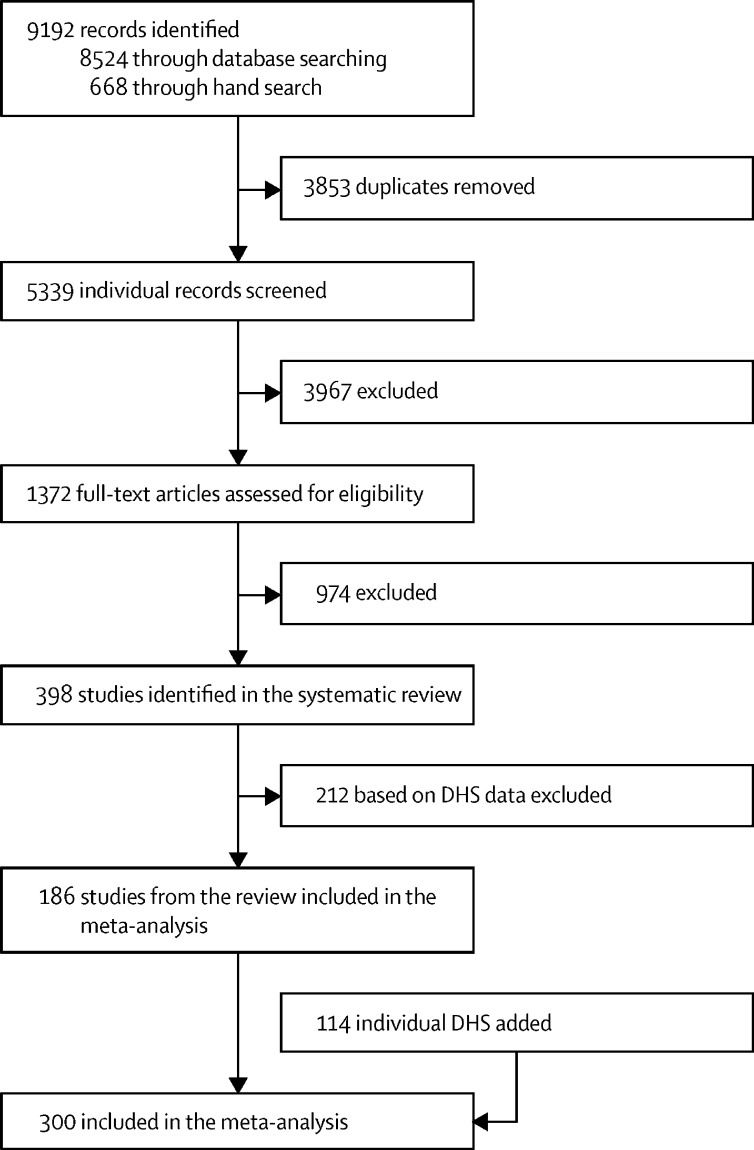
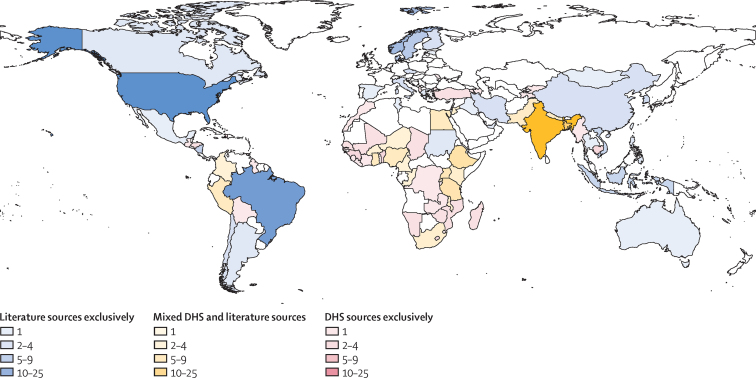
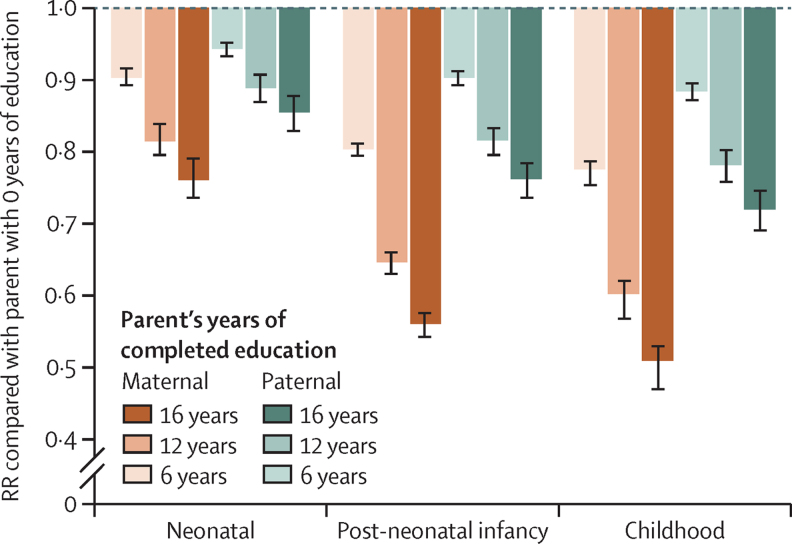
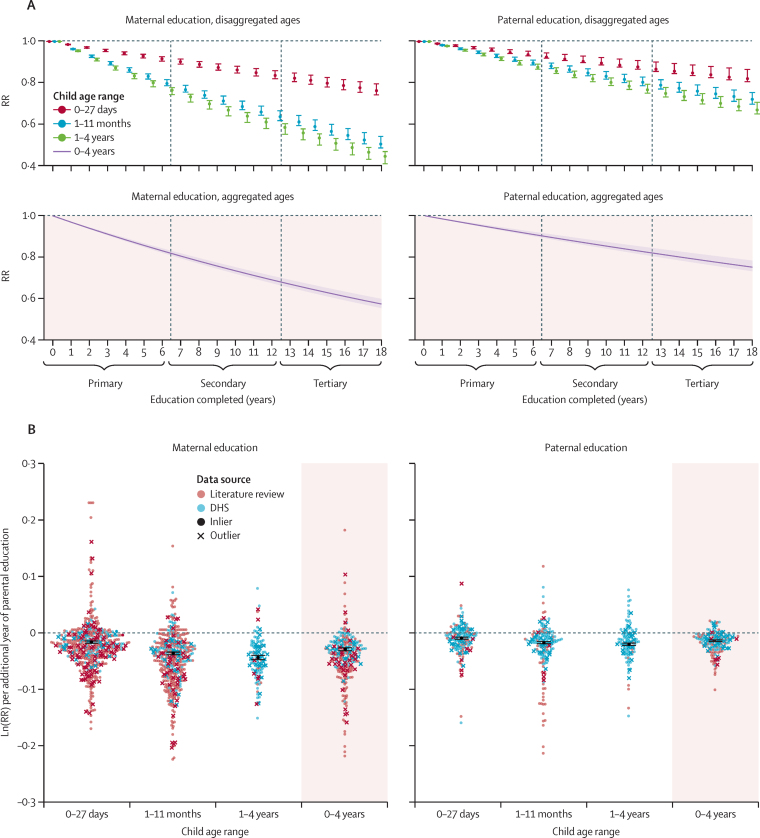
BACKGROUND: The educational attainment of parents, particularly mothers, has been associated with lower levels of child mortality, yet there is no consensus on the magnitude of this relationship globally. We aimed to estimate the total reductions in under-5 mortality that are associated with increased maternal and paternal education, during distinct age intervals. METHODS: This study is a comprehensive global systematic review and meta-analysis of all existing studies of the effects of parental education on neonatal, infant, and under-5 child mortality, combined with primary analyses of Demographic and Health Survey (DHS) data. The literature search of seven databases (CINAHL, Embase, MEDLINE, PsycINFO, PubMed, Scopus, and Web of Science) was done between Jan 23 and Feb 8, 2019, and updated on Jan 7, 2021, with no language or publication date restrictions. Teams of independent reviewers assessed each record for its inclusion of individual-level data on parental education and child mortality and excluded articles on the basis of study design and availability of relevant statistics. Full-text screening was done in 15 languages. Data extracted from these studies were combined with primary microdata from the DHS for meta-analyses relating maternal or paternal education with mortality at six age intervals: 0-27 days, 1-11 months, 1-4 years, 0-4 years, 0-11 months, and 1 month to 4 years. Novel mixed-effects meta-regression models were implemented to address heterogeneity in referent and exposure measures among the studies and to adjust for study-level covariates (wealth or income, partner's years of schooling, and sex of the child). This study was registered with PROSPERO (CRD42020141731). FINDINGS: The systematic review returned 5339 unique records, yielding 186 included studies after exclusions. DHS data were compiled from 114 unique surveys, capturing 3 112 474 livebirths. Data extracted from the systematic review were synthesized together with primary DHS data, for meta-analysis on a total of 300 studies from 92 countries. Both increased maternal and paternal education showed a dose-response relationship linked to reduced under-5 mortality, with maternal education emerging as a stronger predictor. We observed a reduction in under-5 mortality of 31·0% (95% CI 29·0-32·6) for children born to mothers with 12 years of education (ie, completed secondary education) and 17·3% (15·0-18·8) for children born to fathers with 12 years of education, compared with those born to a parent with no education. We also showed that a single additional year of schooling was, on average, associated with a reduction in under-5 mortality of 3·04% (2·82-3·23) for maternal education and 1·57% (1·35-1·72) for paternal education. The association between higher parental education and lower child mortality was significant for both parents at all ages studied and was largest after the first month of life. The meta-analysis framework incorporated uncertainty associated with each individual effect size into the model fitting process, in an effort to decrease the risk of bias introduced by study design and quality. INTERPRETATION: To our knowledge, this study is the first effort to systematically quantify the transgenerational importance of education for child survival at the global level. The results showed that lower maternal and paternal education are both risk factors for child mortality, even after controlling for other markers of family socioeconomic status. This study provides robust evidence for universal quality education as a mechanism to achieve the Sustainable Development Goal target 3.2 of reducing neonatal and child mortality. FUNDING: Research Council of Norway, Bill & Melinda Gates Foundation, and Rockefeller Foundation-Boston University Commission on Social Determinants, Data, and Decision Making (3-D Commission).
Overview
The claims and statistics of this paper haven’t been checked yet.
Free: it reads the open-access text and checks the first 5 claims that cite a source we can check. Create a free account to check every claim.
Integrity signals
Registry
Cites
Statistics
Figures
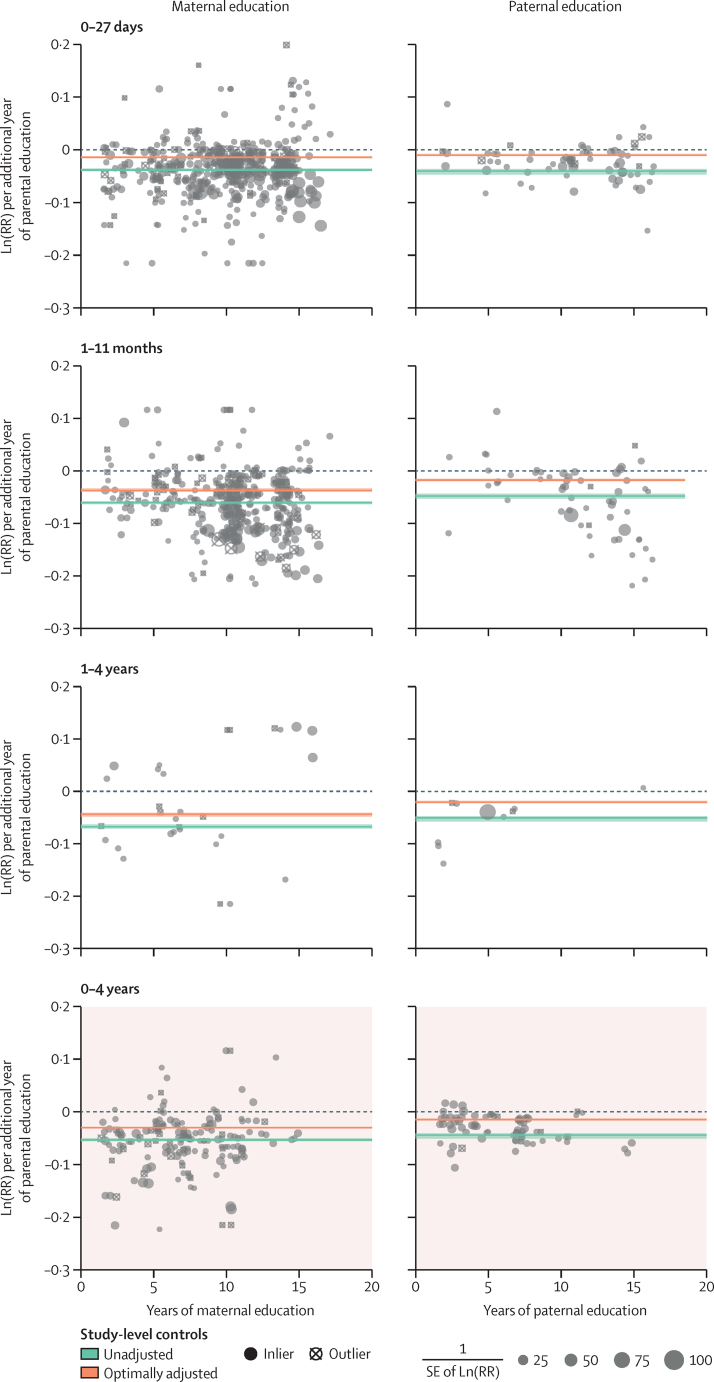
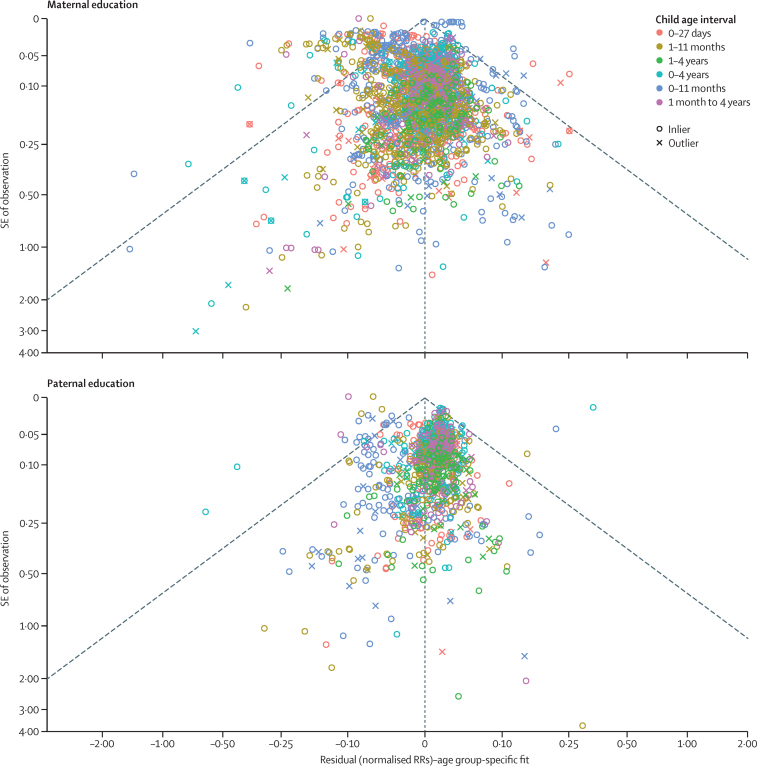
Verification
Claims the paper makes
The claims and statistics of this paper haven’t been checked yet.
Free: it reads the open-access text and checks the first 5 claims that cite a source we can check. Create a free account to check every claim.
Claims other papers make about this one
Each is checked against this paper’s own text: does it say what the citing paper says it does?
The source backs part of the claim, not all of it — or backs it for a different population, condition or comparison.
In the citing paper
“this finding is supported by many studies showing that social determinants of health are key drivers of mortality,50, 51, 52, 53, 54”
From Global age-sex-specific mortality, life expectancy, and population estimates in 204 countries and territories and 811 subnational locations, 1950–2021, and the impact of the COVID-19 pandemic: a comprehensive demographic analysis for the Global Burden of Disease Study 2021 (2024) · cites this paper as [54]
Experimental — accuracy not yet measured
Self-check
Percentages, sums and reported differences re-computed from the paper’s own numbers.
The self-check needs the paper’s full text.
Citations
Cites
Preferred Reporting Items for Systematic Reviews and Meta-Analyses: the PRISMA statement
Moher, D., Liberati, A., Tetzlaff, J., Altman, D. G., & for the PRISMA Group (2009) · BMJ · doi:10.1136/bmj.b2535 · Cited by 83,823
Preferred Reporting Items for Systematic Reviews and Meta-Analyses: The PRISMA Statement
Moher, D., Liberati, A., Tetzlaff, J., Altman, D. G., & The PRISMA Group (2009) · PLoS Medicine · doi:10.1371/journal.pmed.1000097 · Cited by 64,042
Preferred reporting items for systematic reviews and meta-analyses: the PRISMA Statement.
(2009) · PubMed Central · Cited by 44,859
Wang, H., Naghavi, M., Allen, C., Barber, R. M., Bhutta, Z. A., Carter, A., Casey, D. C., Charlson, F. J., Chen, A. Z., Coates, M. M., et al. (2016) · The Lancet · doi:10.1016/s0140-6736(16)31012-1 · Cited by 6,596
Self-citationClosing the gap in a generation: health equity through action on the social determinants of health
Marmot, M., Friel, S., Bell, R., Houweling, T. A., & Taylor, S. (2008) · The Lancet · doi:10.1016/s0140-6736(08)61690-6 · Cited by 3,247
Women Empowerment and Economic Development
Duflo, E. (2012) · Journal of Economic Literature · doi:10.1257/jel.50.4.1051 · Cited by 2,978
Every Newborn: progress, priorities, and potential beyond survival
Lawn, J. E., Blencowe, H., Oza, S., You, D., Lee, A. C., Waiswa, P., Lalli, M., Bhutta, Z., Barros, A. J., Christian, P., et al. (2014) · The Lancet · doi:10.1016/s0140-6736(14)60496-7 · Cited by 1,929
Gama e Colombo, D. (2010) · Revista de Direito Sanitário · doi:10.11606/issn.2316-9044.v10i3p253-266 · Cited by 1,788
An Analytical Framework for the Study of Child Survival in Developing Countries
Mosley, W. H., & Chen, L. C. (1984) · Population and Development Review · doi:10.2307/2807954 · Cited by 1,471
Still too far to walk: Literature review of the determinants of delivery service use
Gabrysch, S., & Campbell, O. M. (2009) · BMC Pregnancy and Childbirth · doi:10.1186/1471-2393-9-34 · Cited by 1,255
A future for the world's children? A WHO–UNICEF–Lancet Commission
Clark, H., Coll-Seck, A. M., Banerjee, A., Peterson, S., Dalglish, S. L., Ameratunga, S., Balabanova, D., Bhan, M. K., Bhutta, Z. A., Borrazzo, J., et al. (2020) · The Lancet · doi:10.1016/s0140-6736(19)32540-1 · Cited by 1,105
Education as a Factor in Mortality Decline An Examination of Nigerian Data
Caldwell, J. C. (1979) · Population Studies · doi:10.2307/2173888 · Cited by 1,093
Hug, L., Alexander, M., You, D., & Alkema, L. (2019) · The Lancet Global Health · doi:10.1016/s2214-109x(19)30163-9 · Cited by 857
Bloom, S. S., Wypij, D., & Das Gupta, M. (2001) · Demography · doi:10.1353/dem.2001.0001 · Cited by 842
Wang, H., Abajobir, A. A., Abate, K. H., Abbafati, C., Abbas, K. M., Abd-Allah, F., Abera, S. F., Abraha, H. N., Abu-Raddad, L. J., Abu-Rmeileh, N. M. E., et al. (2017) · The Lancet · doi:10.1016/s0140-6736(17)31833-0 · Cited by 801
Self-citationWang, H., Liddell, C. A., Coates, M. M., Mooney, M. D., Levitz, C. E., Schumacher, A. E., Apfel, H., Iannarone, M., Phillips, B., Lofgren, K. T., et al. (2014) · The Lancet · doi:10.1016/s0140-6736(14)60497-9 · Cited by 799
Gakidou, E., Cowling, K., Lozano, R., & Murray, C. J. (2010) · The Lancet · doi:10.1016/s0140-6736(10)61257-3 · Cited by 796
Self-citationMaternal education and child survival in developing countries: The search for pathways of influence
Cleland, J. G., & van Ginneken, J. K. (1988) · Social Science & Medicine · doi:10.1016/0277-9536(88)90201-8 · Cited by 781
Maternal education and child health: Is there a strong causal relationship?
Desai, S., & Alva, S. (1998) · Demography · doi:10.2307/3004028 · Cited by 781
Wang, H., Bhutta, Z. A., Coates, M. M., Coggeshall, M., Dandona, L., Diallo, K., Franca, E. B., Fraser, M., Fullman, N., Gething, P. W., et al. (2016) · The Lancet · doi:10.1016/s0140-6736(16)31575-6 · Cited by 770
Self-citationAn analytical framework for the study of child survival in developing countries. 1984.
Mosley, W. H., & Chen, L.-C. (2003) · Europe PMC (PubMed Central) · Cited by 596
Countdown to 2015: a decade of tracking progress for maternal, newborn, and child survival
Victora, C. G., Requejo, J. H., Barros, A. J. D., Berman, P., Bhutta, Z., Boerma, T., Chopra, M., de Francisco, A., Daelmans, B., Hazel, E., et al. (2016) · The Lancet · doi:10.1016/s0140-6736(15)00519-x · Cited by 495
Women's Education and Fertility: Results from 26 Demographic and Health Surveys
Martin, T. C. (1995) · Studies in Family Planning · doi:10.2307/2137845 · Cited by 480
Breierova, L., & Duflo, E. (2004) · National Bureau of Economic Research · doi:10.3386/w10513 · Cited by 459
Women's education, child welfare and child survival: a review of the evidence.
Hobcraft, J. (1993) · PubMed · Cited by 377
Maternal education and child nutritional status in Bolivia: finding the links
Frost, M. B., Forste, R., & Haas, D. W. (2005) · Social Science & Medicine · doi:10.1016/j.socscimed.2004.05.010 · Cited by 365
An Integrated Scientific Framework for Child Survival and Early Childhood Development
Shonkoff, J. P., Richter, L., van der Gaag, J., & Bhutta, Z. A. (2012) · Pediatrics · doi:10.1542/peds.2011-0366 · Cited by 351
Global Maternal, Newborn, and Child Health — So Near and Yet So Far
Bhutta, Z. A., & Black, R. E. (2013) · New England Journal of Medicine · doi:10.1056/nejmra1111853 · Cited by 334
Maternal education and child survival: A comparative study of survey data from 17 countries
Bicego, G. T., & Ties Boerma, J. (1993) · Social Science & Medicine · doi:10.1016/0277-9536(93)90241-u · Cited by 324
Parental Education and Child Health: Evidence from a Natural Experiment in Taiwan
Chou, S.-Y., Liu, J.-T., Grossman, M., & Joyce, T. (2010) · American Economic Journal: Applied Economics · doi:10.1257/app.2.1.33 · Cited by 320
Finlay, J. E., Özaltin, E., & Canning, D. (2011) · BMJ Open · doi:10.1136/bmjopen-2011-000226 · Cited by 297
Education and the use of maternal health care in Thailand
Raghupathy, S. (1996) · Social Science & Medicine · doi:10.1016/0277-9536(95)00411-4 · Cited by 286
Linkages between maternal education and childhood immunization in India
Vikram, K., Vanneman, R., & Desai, S. (2012) · Social Science & Medicine · doi:10.1016/j.socscimed.2012.02.043 · Cited by 262
Boyle, M. H., Racine, Y., Georgiades, K., Snelling, D., Hong, S., Omariba, W., Hurley, P., & Rao-Melacini, P. (2006) · Social Science & Medicine · doi:10.1016/j.socscimed.2006.04.034 · Cited by 238
Neonatal mortality in Ethiopia: trends and determinants
Mekonnen, Y., Tensou, B., Telake, D. S., Degefie, T., & Bekele, A. (2013) · BMC Public Health · doi:10.1186/1471-2458-13-483 · Cited by 234
Influence of maternal education on infant and child mortality: Levels and causes
Caldwell, J., & McDonald, P. (1982) · Health Policy and Education · doi:10.1016/0165-2281(82)90012-1 · Cited by 218
Houweling, T. A. J., & Kunst, A. E. (2010) · British Medical Bulletin · doi:10.1093/bmb/ldp048 · Cited by 209
Determinants of child mortality in LDCs
Wang, L. (2003) · Health Policy · doi:10.1016/s0168-8510(03)00039-3 · Cited by 208
Evidence for causal links between education and maternal and child health: systematic review
Mensch, B. S., Chuang, E. K., Melnikas, A. J., & Psaki, S. R. (2019) · Tropical Medicine & International Health · doi:10.1111/tmi.13218 · Cited by 190
Mothers and others: who invests in children’s health?
Case, A., & Paxson, C. (2001) · Journal of Health Economics · doi:10.1016/s0167-6296(00)00088-6 · Cited by 188
Houweling, T. A., Kunst, A. E., Huisman, M., & Mackenbach, J. P. (2007) · International Journal for Equity in Health · doi:10.1186/1475-9276-6-15 · Cited by 186
Singh, G. K., & Kogan, M. D. (2007) · Pediatrics · doi:10.1542/peds.2005-2181 · Cited by 183
Richards, E., Theobald, S., George, A., Kim, J. C., Rudert, C., Jehan, K., & Tolhurst, R. (2013) · Social Science & Medicine · doi:10.1016/j.socscimed.2012.06.015 · Cited by 181
Directional dominance on stature and cognition in diverse human populations
The BioBank Japan Project, Joshi, P. K., Esko, T., Mattsson, H., Eklund, N., Gandin, I., Nutile, T., Jackson, A. U., Schurmann, C., Smith, A. V., et al. (2015) · Nature · doi:10.1038/nature14618 · Cited by 178
Trimmed constrained mixed effects models: formulations and algorithms
Zheng, P., Barber, R., Sorensen, R. J. D., Murray, C. J. L., & Aravkin, A. Y. (2021) · Journal of Computational and Graphical Statistics · doi:10.1080/10618600.2020.1868303 · Cited by 174
Self-citationSocial factors and infant mortality: Identifying high-risk groups and proximate causes
Cramer, J. C. (1987) · Demography · doi:10.2307/2061300 · Cited by 152
Measuring and forecasting progress towards the education-related SDG targets
Friedman, J., York, H., Graetz, N., Woyczynski, L., Whisnant, J., Hay, S. I., & Gakidou, E. (2020) · Nature · doi:10.1038/s41586-020-2198-8 · Cited by 138
Self-citationMcKinnon, B., Harper, S., Kaufman, J. S., & Bergevin, Y. (2014) · The Lancet Global Health · doi:10.1016/s2214-109x(14)70008-7 · Cited by 133
Education or wealth: which matters more for reducing child mortality in developing countries?
Fuchs, R. (2010) · Vienna Yearbook of Population Research · doi:10.1553/populationyearbook2010s175 · Cited by 102
Maternal Education and the Incidence and Duration of Breast Feeding: A Prospective Study
Bertini, G., Perugi, S., Dani, C., Pezzati, M., Tronchin, M., & Rubaltelli, F. F. (2003) · Journal of Pediatric Gastroenterology and Nutrition · doi:10.1002/j.1536-4801.2003.tb12036.x · Cited by 101
Pamuk, E. R., Fuchs, R., & Lutz, W. (2011) · Population and Development Review · doi:10.1111/j.1728-4457.2011.00451.x · Cited by 100
Cooper, J. E., Benmarhnia, T., Koski, A., & King, N. B. (2020) · Social Science & Medicine · doi:10.1016/j.socscimed.2020.112806 · Cited by 80
Guillot, M., Gerland, P., Pelletier, F., & Saabneh, A. (2012) · PLoS Medicine · doi:10.1371/journal.pmed.1001299 · Cited by 73
Joshi, A. R. (1994) · PubMed · Cited by 69
Maternal Nutritional Status as a Determinant of Child Health
Rahman, M. M., Sk, R., Ali, M., Mitra, A. K., Alam, A. N., & Akbar, M. S. (1993) · Journal of Tropical Pediatrics · doi:10.1093/tropej/39.2.86 · Cited by 68
Lohela, T. J., Nesbitt, R., Pekkanen, J., & Gabrysch, S. (2019) · Scientific Reports · doi:10.1038/s41598-019-45148-5 · Cited by 64
Parental Education and Child Health: Evidence from a Natural Experiment in Taiwan
Chou, S., Liu, J., Grossman, M. B., & Joyce, T. (2007) · National Bureau of Economic Research · doi:10.3386/w13466 · Cited by 63
Maternal Health Literacy and Late Initiation of Immunizations Among an Inner-City Birth Cohort
Pati, S., Feemster, K. A., Mohamad, Z., Fiks, A., Grundmeier, R. W., & Cnaan, A. (2010) · Maternal and Child Health Journal · doi:10.1007/s10995-010-0580-0 · Cited by 62
Reducing socio-economic inequalities in all-cause mortality: a counterfactual mediation approach
Laine, J. E., Baltar, V. T., Stringhini, S., Gandini, M., Chadeau‐Hyam, M., Kivimäki, M., Severi, G., Perduca, V., Hodge, A. M., Dugué, P., et al. (2019) · International Journal of Epidemiology · doi:10.1093/ije/dyz248 · Cited by 59
Ronsmans, C., Chowdhury, M. E., Alam, N., Koblinsky, M., & Arifeen, S. E. (2008) · Paediatric and Perinatal Epidemiology · doi:10.1111/j.1365-3016.2008.00939.x · Cited by 52
Son preference, use of maternal health care, and infant mortality in rural China, 1989–2000
Chen, J., Xie, Z., & Liu, H. (2007) · Population Studies · doi:10.1080/00324720701340194 · Cited by 51
Bawah, A. A., Phillips, J. F., Adjuik, M., Vaughan-Smith, M., MacLeod, B., & Binka, F. N. (2009) · Scandinavian Journal of Public Health · doi:10.1177/1403494809352532 · Cited by 44
Akinyemi, J. O., Adedini, S. A., Wandera, S. O., & Odimegwu, C. O. (2016) · Tropical Medicine & International Health · doi:10.1111/tmi.12779 · Cited by 43
Different effects of maternal and paternal education on early mortality in Norway
Arntzen, A., Magnus, P. M., & Bakketeig, L. S. (1993) · Paediatric and Perinatal Epidemiology · doi:10.1111/j.1365-3016.1993.tb00417.x · Cited by 40
Life expectancy and parental education
Huebener, M. (2019) · Social Science & Medicine · doi:10.1016/j.socscimed.2019.04.034 · Cited by 36
Ma, C., Claude, K. M., Kibendelwa, Z. T., Brooks, H. M., Zheng, X., & Hawkes, M. (2017) · Pathogens and Global Health · doi:10.1080/20477724.2017.1288971 · Cited by 34
AN INDIVIDUAL-LEVEL APPROACH TO HEALTH INEQUALITY: CHILD SURVIVAL IN 50 COUNTRIES
Gakidou, E. E., King, G., Murray, C. J. L., Frenk, J., López, A. D., Palmquist, B., Salomon, J. A., & Tomašković, L. (2000) · Cited by 22
Self-citationSocioeconomic Inequality and Its Determinants Regarding Infant Mortality in Iran
Damghanian, M., Shariati, M., Najmabadi, K. M., Yunesian, M., & Emamian, M. H. (2014) · Iranian Red Crescent Medical Journal · doi:10.5812/ircmj.17602 · Cited by 18
Puglisi, C., & Busetta, A. (2019) · Statistica · doi:10.6092/issn.1973-2201/8584 · Cited by 3
Research works printed but not linked: 1
- Sen A Chapter 8. In: Development as freedom 2001 Oxford University Press Oxford
Cited by
Schumacher, A. E., Kyu, H. H., Aali, A., Abbafati, C., Abbas, J., Abbasgholizadeh, R., Abbasi, M. A., Abbasian, M., Abd ElHafeez, S., Abdelmasseh, M., et al. (2024) · The Lancet · doi:10.1016/s0140-6736(24)00476-8 · Cited by 1,045
Self-citationGréaux, M., Moro, M. F., Kamenov, K., Russell, A. M., Barrett, D., & Cieza, A. (2023) · International Journal for Equity in Health · doi:10.1186/s12939-023-02035-w · Cited by 213
“The population-wide structural and social determinants of health that generate, sustain and even widen health inequities are well-documented [18–20], and disproportionately impact persons with disabilities (2).”
Effects of education on adult mortality: A global systematic review and meta-analysis
Balaj, M., Henson, C. A., Aronsson, A., Aravkin, A., Beck, K., Degail, C., Donadello, L., Eikemo, K., Friedman, J., Giouleka, A., et al. (2024) · The Lancet Public Health · doi:10.1016/s2468-2667(23)00306-7 · Cited by 192
“14 This focus on social determinants of population health is reflected in the UN Sustainable Development Goals (SDGs) in their entirety and, especially, in SDGs 4.1 and 4.3, which aim to ensure that children complete primary and secondary education, and adults have equal access to tertiary…”
BackgroundMethodInfluentialSelf-citationCavalcanti, D. M., de Oliveira Ferreira de Sales, L., da Silva, A. F., Basterra, E. L., Pena, D., Monti, C., Barreix, G., Silva, N. J., Vaz, P., Saute, F., et al. (2025) · The Lancet · doi:10.1016/s0140-6736(25)01186-9 · Cited by 178
Rezaeizadeh, G., Mansournia, M. A., Keshtkar, A., Farahani, Z., Zarepour, F., Sharafkhah, M., Kelishadi, R., & Poustchi, H. (2024) · EClinicalMedicine · doi:10.1016/j.eclinm.2024.102574 · Cited by 105
Metadata
- Authors
- Balaj, M., York, H. W., Sripada, K., Besnier, E., Vonen, H. D., Aravkin, A., Friedman, J., Griswold, M., Jensen, M. R., Mohammad, T., Mullany, E. C., Solhaug, S., Sorensen, R., Stonkute, D., Tallaksen, A., Whisnant, J., Zheng, P., Gakidou, E., & Eikemo, T. A.
- Affiliations
- Norwegian University of Science and Technology (NO)
- Princeton University (US)
- University of Washington (US)
- University of California, Los Angeles (US)
- RAND Corporation (US)
- Norwegian Institute of Public Health (NO)
- Corresponding author
- Gakidou, Emmanuela
- Eikemo, Terje Andreas
- ORCID
- Venue
- The Lancet
- Publisher
- Elsevier BV
- Published
- 2021-08
- Volume
- 398
- Issue
- 10300
- Pages
- 608-620
- ISSN
- 0099-5355 (ISSN-L)
- 0140-6736
- PMC
- PMC8363948
- OpenAlex
- W3171528151
- Cited by
- 274
- References
- 69
- Citations by year
- 2026: 63 · 2025: 68 · 2024: 58 · 2023: 44 · 2022: 34 · 2021: 7
- FWCI
- 8.68
- Type
- journal article
- Language
- en
- Open access
- hybrid
- doi.org
- Licence
- cc-by
- www.elsevier.com/tdm/userlicense/1.0/ (tdm)
- www.elsevier.com/legal/tdmrep-license (tdm)
- creativecommons.org/licenses/by/4.0/ (vor)
- Locations
- The Lancet (publishedVersion, cc-by)
- PubMed Central (publishedVersion, cc-by)
- PubMed (publishedVersion)
- NORA - Norwegian Open Research Archives (submittedVersion, cc-by)
- Funders
- Bill and Melinda Gates Foundation
- Rockefeller Foundation
- Topics
- Health Sciences › Medicine › Pediatrics, Perinatology and Child Health › Global Maternal and Child Health
- Health Sciences › Medicine › Pediatrics, Perinatology and Child Health › Maternal and Neonatal Healthcare
- Health Sciences › Nursing › Nutrition and Dietetics › Child Nutrition and Water Access
- Keywords
- parental education, maternal education, paternal education, child mortality, under-five mortality, neonatal mortality, infant mortality, educational attainment, dose-response relationship, socioeconomic inequalities in health, Demographic and Health Surveys, child health outcomes, global health disparities, income and wealth, child mortality reduction
- MeSH terms
- Child, Preschool, Educational Status, Fathers, Female, Humans, Infant, Infant, Newborn, Male, Mothers, Parents, Social Class, Global Health, Child Mortality
About these checks
Registry, retraction, Cites and statistics results are computed, not judged, with one exception: a printed reference that no index lists is read once by a model before it counts as a citation error. Claims are extracted by a model and kept only when their quote appears verbatim in the text; each cited source is then checked, with a model’s help, for whether it says what the claim relies on. Those verdicts can be wrong — read the claim’s quote and the cited source before relying on one.
Statistics and arithmetic are recomputed, not judged.
Confidence bands are shown only for fields calibrated on our annotated test set. None is calibrated yet, so no band is shown.
What counts as a claim ›How we measure confidence ›How we check this ›
Are you an author, or do you see a problem with this page? Request a review
Data sources
Bibliographic data: Semantic Scholar, OpenAlex, Crossref.
Contains information from the Semantic Scholar Academic Graph Datasets, made available under the ODC Attribution License (ODC-BY 1.0).
Semantic Scholar’s data is described in: Kinney, R., et al. (2023). The Semantic Scholar Open Data Platform. arXiv:2301.10140.
