

Global minimum estimates of children affected by COVID-19-associated orphanhood and deaths of caregivers: a modelling study
Open accessThe DOI matches its Crossref record; 28 of the 28 references it cites were found in a registry or an index; 10 of the 46 sources its claims cite were checked for support.
Abstract
BACKGROUND: The COVID-19 pandemic priorities have focused on prevention, detection, and response. Beyond morbidity and mortality, pandemics carry secondary impacts, such as children orphaned or bereft of their caregivers. Such children often face adverse consequences, including poverty, abuse, and institutionalisation. We provide estimates for the magnitude of this problem resulting from COVID-19 and describe the need for resource allocation. METHODS: We used mortality and fertility data to model minimum estimates and rates of COVID-19-associated deaths of primary or secondary caregivers for children younger than 18 years in 21 countries. We considered parents and custodial grandparents as primary caregivers, and co-residing grandparents or older kin (aged 60-84 years) as secondary caregivers. To avoid overcounting, we adjusted for possible clustering of deaths using an estimated secondary attack rate and age-specific infection-fatality ratios for SARS-CoV-2. We used these estimates to model global extrapolations for the number of children who have experienced COVID-19-associated deaths of primary and secondary caregivers. FINDINGS: Globally, from March 1, 2020, to April 30, 2021, we estimate 1 134 000 children (95% credible interval 884 000-1 185 000) experienced the death of primary caregivers, including at least one parent or custodial grandparent. 1 562 000 children (1 299 000-1 683 000) experienced the death of at least one primary or secondary caregiver. Countries in our study set with primary caregiver death rates of at least one per 1000 children included Peru (10·2 per 1000 children), South Africa (5·1), Mexico (3·5), Brazil (2·4), Colombia (2·3), Iran (1·7), the USA (1·5), Argentina (1·1), and Russia (1·0). Numbers of children orphaned exceeded numbers of deaths among those aged 15-50 years. Between two and five times more children had deceased fathers than deceased mothers. INTERPRETATION: Orphanhood and caregiver deaths are a hidden pandemic resulting from COVID-19-associated deaths. Accelerating equitable vaccine delivery is key to prevention. Psychosocial and economic support can help families to nurture children bereft of caregivers and help to ensure that institutionalisation is avoided. These data show the need for an additional pillar of our response: prevent, detect, respond, and care for children. FUNDING: UK Research and Innovation (Global Challenges Research Fund, Engineering and Physical Sciences Research Council, Medical Research Council), UK National Institute for Health Research, US National Institutes of Health, and Imperial College London.
Overview
CoChat Summary
TL;DR
This modelling study estimates that from March 1, 2020, to April 30, 2021, at least 1,134,000 children globally experienced the death of a primary caregiver and 1,562,000 experienced the death of a primary or secondary caregiver due to COVID-19-associated deaths. The authors argue that COVID-19-associated orphanhood and caregiver death is an overlooked consequence requiring equitable vaccines, family-based care, and psychosocial and economic support.
Key findings
- Globally, an estimated 1,134,000 children (95% CrI 884,000–1,185,000) experienced death of primary caregivers, including at least one parent or custodial grandparent; 1,562,000 children (1,299,000–1,683,000) experienced death of at least one primary or secondary caregiver; and 1,042,000 children (806,000–1,083,000) experienced orphanhood.
- In the 21 included countries, 862,365 children lost primary caregivers, and 1,217,648 children were orphaned or bereft of custodial grandparents or other co-residing grandparents.
- Countries with primary caregiver death rates of at least one per 1000 children included Peru (10·2), South Africa (5·1), Mexico (3·5), Brazil (2·4), Colombia (2·3), Iran (1·7), the USA (1·5), Argentina (1·1), and Russia (1·0).
- Between two and five times more children had deceased fathers than deceased mothers; across the 21 countries, paternal versus maternal orphan ratios ranged from 1·6-times to 5·9-times higher.
Methods
- Modelling study using mortality and fertility data for 21 countries that accounted for 76·4% of global COVID-19 deaths up to April 30, 2021, with global extrapolations.
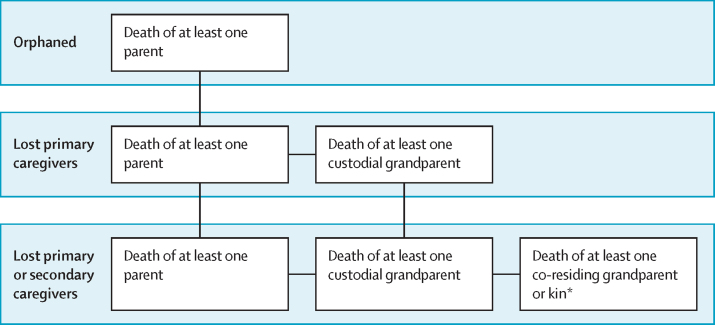
- Primary caregivers were parents and custodial grandparents; secondary caregivers were co-residing grandparents or older kin aged 60–84 years. The authors used excess deaths and COVID-19 deaths, adjusted for possible clustering of deaths using an estimated secondary attack rate and age-specific infection–fatality ratios.
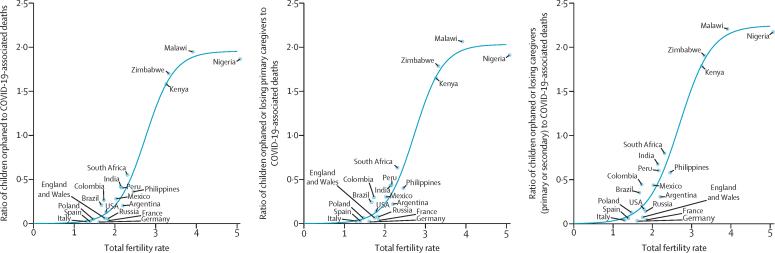
- Global extrapolation used a logistic model based on the correlation between total fertility rate and the ratio of orphans to deaths (Pearson r²=0·93), sampling TFRs 1000 times for uncertainty; analyses were done in R version 4.0.2.
Limitations
- The authors state that they underestimated total numbers of children affected because some countries’ estimates were based on COVID-19 mortality, which is under-reported due to variable testing and reporting.
- They state that age-and-sex-stratified COVID-19 death data were not available for every country, but a stable infection–fatality ratio makes substantial bias unlikely; fertility-rate variations were also unlikely to bias global extrapolations based on leave-one-out analyses.
- They state that lack of data on pre-existing single orphans limited double-orphan estimates to children whose parents both died during the pandemic; they also note limited global household composition data, truncation of grandparent deaths at age 85 years, and a maximum of two grandparents or older kin per child. Evident from the text: these are modelled minimum estimates, not direct counts, and global figures are extrapolated from 21 countries.
Model-written summary. Check it against the paper before relying on it.
Integrity signals
Registry
Cites
Statistics
Figures
Verification
Claims the paper makes
7 Valid · 1 Not valid · 31 Not checked · 48 Own results and interpretations
The cited sources support only part of this claim — read each source’s verdict below.
In the paper
“Evidence from previous epidemics shows that ineffective responses to the death of a parent or caregiver, even when there is a surviving parent or caregiver, can lead to deleterious psychosocial, neurocognitive, socioeconomic, and biomedical outcomes for children.31”
§ Global minimum estimates of children affected by COVID-19-associated orphanhood and deaths of caregivers: a modelling study > Discussion
What the sources say
- Partly supportedcites [31] Barenbaum E Smith T Social support as a protective factor for children impacted by HIV/AIDS across varying living environments in southern Africa AIDS Care 28 suppl 2 2016 92 99 PMC4991218 27392004 sourceExperimental — accuracy not yet measured
The Bereavement section (page unavailable) links parental death, disrupted caregiving, and inadequate support to children’s psychosocial difficulties, and mentions financial hardship even when a parent survives. The Attachment and caregiving section (page unavailable) also describes developmental consequences of inconsistent care. Our copy does not establish the claimed neurocognitive or biomedical outcomes, so the full range of outcomes attributed to this paper is not supported. (LLM, conf=0.86)
plainstates a cause- Asserted: passes — The authors put it forward as true.
- Checkable: passes — It can be checked against evidence.
- Load-bearing: passes — The paper’s conclusions depend on it.
- Based: passes — The paper gives a reason why it holds.
- Partly supported
A result the paper reports from its own data — it cites no other source for it, so there is none to check. The quote shows it is in the paper.
In the paper
“Of these, 788 704 children were orphaned of a mother, father, or both, with most losing one parent;”
§ Global minimum estimates of children affected by COVID-19-associated orphanhood and deaths of caregivers: a modelling study > Results
plainn = 862,365- Asserted: passes — The authors put it forward as true.
- Checkable: passes — It can be checked against evidence.
- Load-bearing: passes — The paper’s conclusions depend on it.
- Based: passes — The paper gives a reason why it holds.
A result the paper reports from its own data — it cites no other source for it, so there is none to check. The quote shows it is in the paper.
In the paper
“73 661 lost at least one custodial grandparent;”
§ Global minimum estimates of children affected by COVID-19-associated orphanhood and deaths of caregivers: a modelling study > Results
plainn = 73,661- Asserted: passes — The authors put it forward as true.
- Checkable: passes — It can be checked against evidence.
- Load-bearing: unclear — It is unclear whether the paper’s conclusions depend on it.
- Based: passes — The paper gives a reason why it holds.
A result the paper reports from its own data — it cites no other source for it, so there is none to check. The quote shows it is in the paper.
In the paper
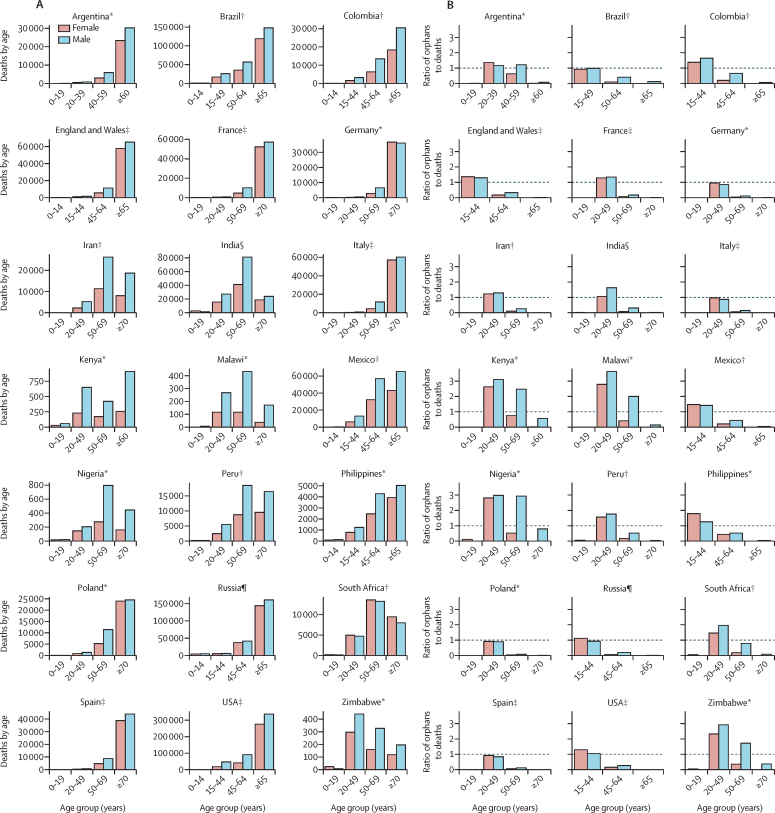
“In England and Wales, France, the USA, India, and Latin American and African countries, the number of children whose parents died before middle age (ie, between around 15 and 50 years of age) was greater than the number of COVID-19-associated adult deaths before middle age (figure 2B).”
§ Global minimum estimates of children affected by COVID-19-associated orphanhood and deaths of caregivers: a modelling study > Results
plain- Asserted: passes — The authors put it forward as true.
- Checkable: passes — It can be checked against evidence.
- Load-bearing: passes — The paper’s conclusions depend on it.
- Based: passes — The paper gives a reason why it holds.
A result the paper reports from its own data — it cites no other source for it, so there is none to check. The quote shows it is in the paper.
In the paper
“355 283 lost at least one co-residing grandparent or older kin (Table 1, Table 2).”
§ Global minimum estimates of children affected by COVID-19-associated orphanhood and deaths of caregivers: a modelling study > Results
plainn = 355,283- Asserted: passes — The authors put it forward as true.
- Checkable: passes — It can be checked against evidence.
- Load-bearing: passes — The paper’s conclusions depend on it.
- Based: passes — The paper gives a reason why it holds.
- Rests on an assumption not shown here.
31 more claims
Create a free account to see all 87 claims and to verify the 7 references still open.
- Probably not a substantial claim. 38
- It may state two separate claims as one. 26
- The quote only partly states this claim. 1
Claims other papers make about this one
Each is checked against this paper’s own text: does it say what the citing paper says it does?
The cited source says what the claim attributes to it.
In the citing paper
“High coronavirus disease 2019 (COVID-19) mortality rates may have severe unrecognized consequences: large-scale death of parents and caregivers for children.1,2”
From COVID-19–Associated Orphanhood and Caregiver Death in the United States (2021) · cites this paper as [2]
The cited source says what the claim attributes to it.
In the citing paper
“To date, little attention has focused on children who suffer COVID-19–associated death of parents and coresiding grandparents serving as caregivers and the attendant loss of salient nurturing, financial support, and care.1,2,5”
From COVID-19–Associated Orphanhood and Caregiver Death in the United States (2021) · cites this paper as [2]
Self-check
Percentages, sums and reported differences re-computed from the paper’s own numbers.
Each contradiction between two passages listed here was confirmed by an independent check.
Rated minor: it would not touch a result — a value no result rests on, a p-value that stays on the same side of the significance level, or a conflict that is clerical, resolved elsewhere in the paper, or outside its own findings.
In the paper
§ Global minimum estimates of children affected by COVID-19-associated orphanhood and deaths of caregivers: a modelling study > Abstract > Findings
“Between two and five times more children had deceased fathers than deceased mothers.”
§ Global minimum estimates of children affected by COVID-19-associated orphanhood and deaths of caregivers: a modelling study > Results
“the greater number of paternal versus maternal orphans, which ranged from 1·6-times to 5·9-times higher across the 21 countries (table 1).”
Citations
Cites
Assessing differential impacts of COVID-19 on black communities
Millett, G. A., Jones, A. T., Benkeser, D., Baral, S., Mercer, L., Beyrer, C., Honermann, B., Lankiewicz, E., Mena, L., Crowley, J. S., et al. (2020) · Annals of Epidemiology · doi:10.1016/j.annepidem.2020.05.003 · Cited by 1,217 · cited 1×
“40 Due to lack of data on country-specific prevalence of pre-existing single orphans from other causes, our estimates of double orphans are limited to deaths of both parents during the pandemic.”
Detecting hidden diversification shifts in models of trait-dependent speciation and extinction
Beaulieu, J. M., & O’Meara, B. C. (2016) · Systematic Biology · doi:10.1093/sysbio/syw022 · Cited by 579
A kinetic model of Phanerozoic taxonomic diversity I. Analysis of marine orders
Sepkoski, J. J. (1978) · Paleobiology · doi:10.1017/s0094837300005972 · Cited by 548
The Shifting Balance of Diversity Among Major Marine Animal Groups
Alroy, J. (2010) · Science · doi:10.1126/science.1189910 · Cited by 467
The million-year wait for macroevolutionary bursts
Uyeda, J. C., Hansen, T. F., Arnold, S. J., & Pienaar, J. (2011) · Proceedings of the National Academy of Sciences · doi:10.1073/pnas.1014503108 · Cited by 358
van IJzendoorn, M. H., Bakermans-Kranenburg, M. J., Duschinsky, R., Fox, N. A., Goldman, P. S., Gunnar, M. R., Johnson, D. E., Nelson, C. A., Reijman, S., Skinner, G. C. M., et al. (2020) · The Lancet Psychiatry · doi:10.1016/s2215-0366(19)30399-2 · Cited by 306
Self-citationHow do grandparents influence child health and development? A systematic review
Sadruddin, A. F. A., Ponguta, L. A., Zonderman, A. L., Wiley, K. S., Grimshaw, A., & Panter-Brick, C. (2019) · Social Science & Medicine · doi:10.1016/j.socscimed.2019.112476 · Cited by 228 · cited 4×
“16 Because the death of a parent or abrupt death of a close family member is the most frequently cited type of trauma exposure experienced by children, we considered the abrupt death of either co-residing grandparents or other co-residing extended family aged 60 years or older to represent a…”
InfluentialSocial Protection and Jobs Responses to COVID-19: A Real-Time Review of Country Measures
Gentilini, U., Almenfi, M. B. A., Iyengar, T., Okamura, Y., Downes, J. A., Dale, P., Weber, M., Newhouse, D. L., Rodriguez Alas, C. P., Kamran, M., et al. (2022) · World Bank, Washington, DC eBooks · doi:10.1596/37186 · Cited by 184
Goldman, P. S., Bakermans-Kranenburg, M. J., Bradford, B., Christopoulos, A., Ken, P. L. A., Cuthbert, C., Duchinsky, R., Fox, N. A., Grigoras, S., Gunnar, M. R., et al. (2020) · The Lancet Child & Adolescent Health · doi:10.1016/s2352-4642(20)30060-2 · Cited by 140 · cited 2×
“28 Negative socioeconomic impacts are strongly associated with adult deaths.”
Self-citationDolbin-MacNab, M. L., & Yancura, L. A. (2018) · The International Journal of Aging and Human Development · doi:10.1177/0091415016689565 · Cited by 99 · cited 1×
“29 Childcare by grandparents is associated with increased parental labour-force participation, school attendance, educational attainment, and communication skills.”
Research works printed but not linked: 1
- Lotka AJ Théorie analytique des associations biologiques. Deuxième Partie. Analyse démographique avec application particulière à l'espèce humaine Actualités Sci Industr 780 1939 1 149
Cited by
COVID-19–Associated Orphanhood and Caregiver Death in the United States
Hillis, S. D., Blenkinsop, A., Villaveces, A., Annor, F. B., Liburd, L., Massetti, G. M., Demissie, Z., Mercy, J. A., Nelson III, C. A., Cluver, L., et al. (2021) · Pediatrics · doi:10.1542/peds.2021-053760 · Cited by 235
“Nationally, COVID-19–associated deaths were distributed across racial and ethnic groups in proportions similar to racial and ethnic distributions of the population (Fig 3A).”
Self-citationGlobal and regional estimates of orphans attributed to maternal cancer mortality in 2020
Guida, F., Kidman, R., Ferlay, J., Schüz, J., Soerjomataram, I., Kithaka, B., Ginsburg, O., Mailhot Vega, R. B., Galukande, M., Parham, G., et al. (2022) · Nature Medicine · doi:10.1038/s41591-022-02109-2 · Cited by 186
Is the cure really worse than the disease? The health impacts of lockdowns during COVID-19
Meyerowitz‐Katz, G., Bhatt, S., Ratmann, O., Brauner, J., Flaxman, S. R., Mishra, S., Sharma, M., Mindermann, S., Bradley, V. C., Vollmer, M., et al. (2021) · BMJ Global Health · doi:10.1136/bmjgh-2021-006653 · Cited by 118
Self-citationFink, E. L., Robertson, C., Wainwright, M. S., Roa, J. D., Lovett, M. E., Stulce, C., Yacoub, M., Potera, R. M., Zivick, E. E., Holloway, A., et al. (2021) · Pediatric Neurology · doi:10.1016/j.pediatrneurol.2021.12.010 · Cited by 115
Mental health and wellbeing of children and adolescents during the covid-19 pandemic
Rider, E. A., Ansari, E., Varrin, P., & Sparrow, J. (2021) · BMJ · doi:10.1136/bmj.n1730 · Cited by 136
Unwin, H. J. T., Hillis, S. D., Cluver, L. D., Flaxman, S. R., Goldman, P., Butchart, A., Bachman, G. L., Rawlings, L. B., Donnelly, C. A., Ratmann, O., et al. (2022) · The Lancet Child & Adolescent Health · doi:10.1016/s2352-4642(22)00005-0 · Cited by 114
Self-citationPenna, A. L., de Aquino, C. M., Pinheiro, M. S. N., do Nascimento, R. L. F., Farías-Antúnez, S., Araújo, D. A. B. S., Mita, C., Machado, M. M. T., & Castro, M. C. (2023) · BMC Public Health · doi:10.1186/s12889-023-15003-4 · Cited by 112
“Global and regional robust and current estimates of the added morbidity and mortality burden of COVID‑19 and com‑ municable and non‑communicable diseases, especially in LMICs undergoing humanitarian crisis 2.”
BackgroundInfluentialSun, T., Di, K., Hu, J., Shi, Q., & Irfan, M. (2024) · Journal of Retailing and Consumer Services · doi:10.1016/j.jretconser.2024.104216 · Cited by 86
COVID‐19 in Latin America and the Caribbean: Two years of the pandemic
Schwalb, A., Armyra, E., Méndez‐Aranda, M., & Ugarte‐Gil, C. (2022) · Journal of Internal Medicine · doi:10.1111/joim.13499 · Cited by 89
Buonsenso, D., Munblit, D., Pazukhina, E., Ricchiuto, A., Sinatti, D., Zona, M., Matteis, A. D., D’Ilario, F., Gentili, C., Lanni, R., et al. (2022) · Frontiers in Pediatrics · doi:10.3389/fped.2022.834875 · Cited by 61
Children and adolescents' emotional problems during the COVID-19 pandemic in Brazil
Zuccolo, P. F., Casella, C. B., Fatori, D., Shephard, E., Sugaya, L. S., Gurgel, W. D. S., Farhat, L. C., Argeu, A., Teixeira, M., Otoch, L. N., et al. (2022) · European Child & Adolescent Psychiatry · doi:10.1007/s00787-022-02006-6 · Cited by 69
Early adversity alters brain architecture and increases susceptibility to mental health disorders
Nelson, C. A., Sullivan, E., & Valdes, V. (2025) · Nature reviews. Neuroscience · doi:10.1038/s41583-025-00948-9 · Cited by 75
“7,8).”
Self-citationVaccinating adolescents against SARS-CoV-2 in England: a risk–benefit analysis
Gurdasani, D., Bhatt, S., Costello, A. M. D. L., Denaxas, S., Flaxman, S. R., Greenhalgh, T., Griffin, S. D. C., Hyde, Z., Katzourakis, A., McKee, M., et al. (2021) · Journal of the Royal Society of Medicine · doi:10.1177/01410768211052589 · Cited by 47
“Almost 9000 children in England and Wales have lost at least one primary carer to COVID-19 during the pandemic.(51) The impact of bereavement at an early age cannot be overstated.”
BackgroundSelf-citationThe Impact of COVID-19 on Anxiety Disorders in Youth
Fortuna, L. R., Brown, I. C., Woods, G. G., & Porche, M. V. M. (2023) · Child and Adolescent Psychiatric Clinics of North America · doi:10.1016/j.chc.2023.02.002 · Cited by 40
“Recent published estimates suggest that more than 200,000 children in the United States have lost a parent or grandparent caregiver to COVID-19.(11) COVID-19 disproportionately affected the Black, Latinx, and other children and adolescents of color, where adult family members were more likely to be affected front-line…”
BackgroundThe potential effects of the COVID-19 pandemic on learnings
Monroy-Gómez-Franco, L. Á., Vélez-Grajales, R., & López-Calva, L. F. (2022) · International Journal of Educational Development · doi:10.1016/j.ijedudev.2022.102581 · Cited by 50
Coker, T. R., Cheng, T. L., & Ybarra, M. (2023) · JAMA · doi:10.1001/jama.2023.4371 · Cited by 41
Fäldt, A. E., Nejat, S., Sollander, S. E., Durbeej, N., & Holmgren, A. (2022) · European Journal of Public Health · doi:10.1093/eurpub/ckac181 · Cited by 47
Foster care leads to sustained cognitive gains following severe early deprivation
Humphreys, K. L., King, L. S., Guyon-Harris, K. L., Sheridan, M. A., McLaughlin, K. A., Radulescu, A., Nelson, C. A., Fox, N. A., & Zeanah, C. H. (2022) · Proceedings of the National Academy of Sciences · doi:10.1073/pnas.2119318119 · Cited by 36
Self-citationUnified protocol vs trauma-focused cognitive behavioral therapy among adolescents with PTSD
Mohajerin, B., Lynn, S. J., & Cassiello-Robbins, C. (2023) · Behavior Therapy · doi:10.1016/j.beth.2023.03.003 · Cited by 35
“From March 1, 2020, to April 30, 2021, nearly 1,134,000 children lost their parents or primary caregivers to the pandemic (Hillis et al., 2021).”
BackgroundHaag, K., Toit, S. D., Skeen, S., Roberts, K. J. S., Chideya, Y., Notholi, V., Sambudla, A., Gordon, S. L., Sherr, L., & Tomlinson, M. (2022) · Psychology Health & Medicine · doi:10.1080/13548506.2022.2108087 · Cited by 35
“This comprised the possibility of direct virus exposure, with its associated risks of illness and mortality not only for the young people themselves, but also for their families and caretakers (Coker et al., 2021; Hillis et al., 2021; Unwin et al., 2022).”
BackgroundSelf-citationChildren’s Psychological Reactions to the COVID-19 Pandemic
Pfefferbaum, B. J. (2021) · Current Psychiatry Reports · doi:10.1007/s11920-021-01289-x · Cited by 36
Toward complementarity: Specificity and commonality in social-emotional development
Malti, T., Cheah, C. S. L., & Special Section Editors, S. A. C. S. G. I. S.-E. D. (2021) · Child Development · doi:10.1111/cdev.13690 · Cited by 40
Potential of Microneedle Systems for COVID-19 Vaccination: Current Trends and Challenges
Hassan, J., Haigh, C., Ahmed, T., Uddin, M. J., & Das, D. B. (2022) · Pharmaceutics · doi:10.3390/pharmaceutics14051066 · Cited by 39
“Coronaviruses are single-stranded RNA viruses with an enclosed surface glycoprotein spike that facilitates receptor binding and cell penetration during infection [112,113].”
BackgroundCritical life course interventions for children and adolescents to promote mental health
Laurenzi, C. A., Mamutse, S., Marlow, M., Mawoyo, T. L., Katzen, L. S., Carvajal-Vélez, L., Lai, J., Luitel, N. P., Servili, C., Sinha, M., et al. (2022) · Cambridge Prisms Global Mental Health · doi:10.1017/gmh.2022.58 · Cited by 42
“Shocks stemming from the COVID-19 pandemic include disruptions to education and missed opportunities for social development (Pfefferbaum, 2021; Almeida et al., 2022), linked with experiences of ongoing economic precarity and family bereavement (Hillis et al., 2021).”
BackgroundRIG-I-induced innate antiviral immunity protects mice from lethal SARS-CoV-2 infection
Marx, S., Kümmerer, B. M., Grützner, C., Kato, H., Schlee, M., Renn, M., Bartok, E., & Hartmann, G. (2022) · Molecular Therapy — Nucleic Acids · doi:10.1016/j.omtn.2022.02.008 · Cited by 37
Zima, B. T., Edgcomb, J. B., Rodean, J., Cochran, S. D., Harle, C. A., Pathak, J., Tseng, C., & Bussing, R. (2022) · Psychiatric Services · doi:10.1176/appi.ps.202100582 · Cited by 31
King, L. S., Guyon-Harris, K. L., Valadez, E. A., Radulescu, A., Fox, N. A., Nelson, C. A., Zeanah, C. H., & Humphreys, K. L. (2023) · American Journal of Psychiatry · doi:10.1176/appi.ajp.20220672 · Cited by 29
Self-citationProtecting Africa's children from extreme risk: a runway of sustainability for PEPFAR programmes
Cluver, L. D., Makangila, G., Hillis, S. D., N’konzi, J.-P. N., Flaxman, S. R., Unwin, H. J. T., Eaton, J. W., Chtimbire, V., Sherr, L., Ng'ang'a, J., et al. (2025) · The Lancet · doi:10.1016/s0140-6736(25)00401-5 · Cited by 39
“39 We reviewed new data to determine burden, levels of risk, associations with HIV/AIDS, and outcomes for children living with HIV.”
Self-citationChachar, A. S., Younus, S., & Ali, W. (2021) · Frontiers in Psychiatry · doi:10.3389/fpsyt.2021.654584 · Cited by 51
Wray, A., Pickwell‐Smith, B., Greenley, S. L., Pask, S., Bamidele, O. O., Wright, B., Murtagh, F. E., & Boland, J. W. (2022) · BMJ Supportive & Palliative Care · doi:10.1136/spcare-2022-003793 · Cited by 53
Answering the call to support youth orphaned by COVID-19
Kentor, R. A., & Thompson, A. L. (2021) · The Lancet · doi:10.1016/s0140-6736(21)01446-x · Cited by 32
Breen, L. J., Greene, D., Rees, C. S., Black, A., Cawthorne, M., & Egan, S. J. (2023) · Journal of Affective Disorders · doi:10.1016/j.jad.2023.05.032 · Cited by 42
Miller, A. L., Stein, S. F., Sokol, R. L., Varisco, R., Trout, P., Julian, M. M., Ribaudo, J., Kay, J. B., Pilkauskas, N., Gardner‐Neblett, N., et al. (2022) · Infant Mental Health Journal · doi:10.1002/imhj.21996 · Cited by 30
Snyder, M., Alburez‐Gutierrez, D., Williams, I., & Zagheni, E. (2022) · Proceedings of the National Academy of Sciences · doi:10.1073/pnas.2202686119 · Cited by 26
Treglia, D., Cutuli, J. J., Arasteh, K., Bridgeland, J. M., Edson, G., Phillips, S., & Balakrishna, A. (2022) · SocArXiv (OSF Preprints) · doi:10.31235/osf.io/jnr93 · Cited by 29
Adaptive systems for student resilience in the context of COVID-19.
Herbers, J. E., Hayes, K. R., & Cutuli, J. J. (2021) · School Psychology · doi:10.1037/spq0000471 · Cited by 35
Preparing for the Next Pandemic to Protect Public Mental Health
Morganstein, J. C. (2021) · Psychiatric Clinics of North America · doi:10.1016/j.psc.2021.11.012 · Cited by 39
Demombynes, G., de Walque, D., Gubbins, P., Urdinola, P., & Veillard, J. H. M. (2022) · BMJ Open · doi:10.1136/bmjopen-2022-061589 · Cited by 28
Roumeliotis, N., Carwana, M., Trudeau-Ferrin, O., Charland, K., Zinszer, K., Benigeri, M., Diop, M., Papenburg, J., Ali, S., Yaskina, M., et al. (2024) · JAMA Network Open · doi:10.1001/jamanetworkopen.2024.22833 · Cited by 30
Resting brain activity in early childhood predicts IQ at 18 years
Tan, E., Tang, A., Debnath, R., Humphreys, K. L., Zeanah, C. H., Nelson, C. A., & Fox, N. A. (2023) · Developmental Cognitive Neuroscience · doi:10.1016/j.dcn.2023.101287 · Cited by 22
“Among various forms of early adversity, psychosocial deprivation due to institutional rearing—which affects millions of children across the globe (Hillis et al., 2021)—is particularly detrimental.”
Self-citationSkeen, S., Marlow, M., Toit, S. D., Meléndez‐Torres, G. J., Mudekunye, L., Mapalala, E., Ngoma, K., Ntanda, B. M., Maketha, M., Grieve, C. M., et al. (2023) · Digital Health · doi:10.1177/20552076231203893 · Cited by 31
“10 Yet, the onset of the pandemic also provided impetus for the scale-up of digital solutions to improve service access and necessitated new models of reaching and supporting caregivers.”
BackgroundChildren’s perceptions of their neighbourhoods during COVID-19 lockdown in Aotearoa New Zealand
Smith, M., Donnellan, N., Zhao, J., Egli, V., Ma, C., & Clark, T. C. (2022) · Children s Geographies · doi:10.1080/14733285.2022.2026887 · Cited by 27
“From 1 March 2020 to 30 April 2021, an estimated 1,562,000 children in the United States alone experienced the COVID-19 related death of a primary or secondary caregiver (Hillis et al. 2021).”
BackgroundDiez‐Canseco, F., Carbonel, A., Bernabé‐Ortiz, A., Olivar, N., Gómez–Restrepo, C., Toyama, M., Uribe-Restrepo, J. M., Brusco, L. I., Hidalgo-Padilla, L., Ramirez-Meneses, D., et al. (2024) · Frontiers in Psychology · doi:10.3389/fpsyg.2024.1466378 · Cited by 32
Treglia, D., Cutuli, J. J., Arasteh, K., & Bridgeland, J. (2023) · Journal of Community Health · doi:10.1007/s10900-022-01160-x · Cited by 19
“had lost at least one primary or secondary caregiver to COVID-19 through April 2021 [14, 15].”
BackgroundCOVID-19 in children and the importance of COVID-19 vaccination
Xue, F.-X., & Shen, K. (2021) · World Journal of Pediatrics · doi:10.1007/s12519-021-00466-5 · Cited by 22
Covid-19 as a long multiwave event: implications for responses to safeguard younger generations
Dhaliwal, M., Small, R., Webb, D., Cluver, L. D., Ibrahim, M. M., Bok, L., Nascimento, C., Cheng, W., Garagic, A., & Jensen, L. (2022) · BMJ · doi:10.1136/bmj-2021-068123 · Cited by 17
Self-citationWhat Bereaved Children Want to Know About Death and Grief
Joy, C., Staniland, L., Mazzucchelli, T. G., Skinner, S., Cuddeford, L., & Breen, L. J. (2023) · Journal of Child and Family Studies · doi:10.1007/s10826-023-02694-x · Cited by 33
“Of emerging concern is the effect of COVID-19, with an estimated 1.1 million children globally experiencing the death of a parent in the fi rst 14 months of the pandemic (Hillis et al., 2021).”
InfluentialLiang, N., Becker, T. D., & Rice, T. (2021) · Clinical Child Psychology and Psychiatry · doi:10.1177/13591045211061802 · Cited by 22
Hearst, M. O., Hughey, L., Magoon, J., et al. (2021) · PLoS ONE · doi:10.1371/journal.pone.0260486 · Cited by 18
“Furthermore, COVID-19 has resulted in over 1 million children losing a primary caregiver [30].”
BackgroundHagquist, C. (2023) · Journal of Adolescent Health · doi:10.1016/j.jadohealth.2022.12.013 · Cited by 16
“In addition to school closures many children have also been affected by devastating family events with an estimated one million children globally having lost a parent because of deaths associated with COVID-19 [17].”
BackgroundDorn, F., Lange, B., Braml, M., Gstrein, D., Nyirenda, J. L. Z., Vanella, P., Winter, J., Fuest, C., & Krause, G. (2022) · Economics & Human Biology · doi:10.1016/j.ehb.2022.101198 · Cited by 22
Severe Acute Respiratory Syndrome Coronavirus 2 Infections in Children
Chow, E. J., & Englund, J. A. (2022) · Infectious Disease Clinics of North America · doi:10.1016/j.idc.2022.01.005 · Cited by 28
Takeuchi, H., Napier-Raman, S., Asemota, O. A., & Raman, S. (2022) · BMJ Paediatrics Open · doi:10.1136/bmjpo-2021-001310 · Cited by 17
Okegbe, T., Williams, J., Plourde, K. F., Oliver, K., Ddamulira, B., Caparrelli, K., & USAID/PEPFAR Adolescent Group (2023) · JAIDS Journal of Acquired Immune Deficiency Syndromes · doi:10.1097/qai.0000000000003201 · Cited by 15
Chipalo, E. (2024) · Current Psychology · doi:10.1007/s12144-024-06385-8 · Cited by 13
“…affected more adults than children in Zimbabwe and other LMICs (Gwenzi & Ringson, 2023; Lemeyu et al., 2022), many parents have died, rendering millions of children orphaned and without consistent care-givers to support them during their development (Dorsey et al., 2015; Hillis et al., 2021).”
Penna, A. L., de Aquino, C. M., Pinheiro, M. S. N., et al. (2022) · Research Square · doi:10.21203/rs.3.rs-1787279/v1 · Cited by 14
Gender Equality in Peru: Towards a Better Sharing of Paid and Unpaid Work
OECD (2022) · Gender equality at work · doi:10.1787/e53901b5-en · Cited by 23
Biological expressions of early life trauma in the immune system of older adults
Noppert, G. A., Duchowny, K. A., Stebbins, R. C., Aiello, A. E., Dowd, J. B., & Clarke, P. J. (2023) · PLoS ONE · doi:10.1371/journal.pone.0286141 · Cited by 13
“These results are set against the backdrop of an acute and unprecedented rise in childhood trauma from COVID-19, specifically related to the loss and disruption of caregiving, underscoring both the public health and clinical importance of these findings [29].”
Paediatric pneumonia research priorities in the context of COVID-19: An eDelphi study
King, C., Baker, K. S., Richardson, S., Wharton–Smith, A., Bakare, A. A., Jehan, F., Chisti, M. J., Zar, H. J., Awasthi, S., Smith, H. J. J., et al. (2022) · Journal of Global Health · doi:10.7189/jogh.12.09001 · Cited by 14
Warren, J. L., Antle, A. N., Kitson, A., & Davoodi, A. (2022) · ACM International Conference on Interaction Design and Children (IDC) · doi:10.1145/3501712.3529722 · Cited by 15
“Stressors associated with the pandemic come in many forms: caregiver (un)employment [16], access to education [68] or childcare [26, 79], access to social services [63, 68], access to basic needs like food [2, 63, 68] and housing [2, 63], access to resources that support health and wellbeing [4, 22, 63, 68], abilities…”
BackgroundFrei-Landau, R. (2023) · Frontiers in Psychiatry · doi:10.3389/fpsyt.2023.1290967 · Cited by 15
Egan, S., & Pope, J. (2022) · Educating the young child · doi:10.1007/978-3-030-96977-6_2 · Cited by 18
Relative pandemic severity in Canada and four peer nations during the SARS-CoV-2 pandemic
Peng, A., Simmons, A. E., Amoako, A., Tuite, A. R., & Fisman, D. N. (2023) · Canada Communicable Disease Report · doi:10.14745/ccdr.v49i05a05 · Cited by 14
“Other important costs and impacts that we do not include, and which would likely further widen the gap in health and economic consequences between these peer countries, include disutility and lost earnings associated with hospitalization, long-term costs of chronic disease, including cardiac, respiratory and neurologi…”
BackgroundSchools and Society During the COVID-19 Pandemic: How Education Systems Changed and the Road Ahead
Reimers, F. M. (2023) · Springer eBooks · doi:10.1007/978-3-031-42671-1 · Cited by 21
The response to COVID 19 across countries and the implications for future pandemics
Haque, M., Gowere, M., Nusrat, N., Chowdhury, K., & Godman, B. (2021) · Bangladesh Journal of Medical Science · doi:10.3329/bjms.v20i5.55417 · Cited by 13
Gray, T. F., Zanville, N., Cohen, B., Cooley, M. E., Starkweather, A. R., & Linder, L. A. (2021) · Journal of Adolescent Health · doi:10.1016/j.jadohealth.2021.10.016 · Cited by 13
“Most COVID-19 deaths have occurred in adults, and what limited resources we have allocated toward grief have mostly been directed to them [1].”
BackgroundInfluentialFruhauf, C. A., Yancura, L. A., Greenwood‐Junkermeier, H., Riggs, N. R., Fox, A., Mendoza, N., & Ooki, N. (2022) · Family Relations · doi:10.1111/fare.12672 · Cited by 12
Covid-19 in the UK: policy on children and schools
Gurdasani, D., Pagel, C., McKee, M., Michie, S., Greenhalgh, T., Yates, C. A., Scally, G., & Ziauddeen, H. (2022) · BMJ · doi:10.1136/bmj-2022-071234 · Cited by 18
The Silent Pandemic: the Impact of COVID-19 on the Mental Health of Adolescents Living with HIV
Anabwani-Richter, F., Swanson, T., Dlamini, S., Katulege, K., Daire, C., & Singhal, G. (2022) · Current Tropical Medicine Reports · doi:10.1007/s40475-022-00270-9 · Cited by 10
Warren, J. L., Antle, A. N., Kitson, A., & Davoodi, A. (2023) · International Journal of Child-Computer Interaction · doi:10.1016/j.ijcci.2023.100596 · Cited by 14
Impact of COVID-19 on child health and healthcare services
Bhattacharyya, H., Agarwalla, R., & Khandelwal, A. (2022) · Medical Journal Armed Forces India · doi:10.1016/j.mjafi.2021.10.006 · Cited by 12
“Around 1,562,000 children (1,299,000e1,683,000) experienced the death of at least one primary or secondary caregiver.(22) As per the BBC news reports, many children have been orphaned in India too.”
BackgroundCOVID‐19 and children: medical impact and collateral damage
Brüssow, H. (2022) · Microbial Biotechnology · doi:10.1111/1751-7915.14018 · Cited by 10
“Economic support is needed to avoid the institutionalization of the affected children (Hillis et al., 2021).”
BackgroundOrphanhood and caregiver death among children in the United States by all-cause mortality, 2000–2021
Villaveces, A., Chen, Y., Tucker, S., Blenkinsop, A., Cluver, L. D., Sherr, L., Losby, J. L., Graves, L., Noonan, R. K., Annor, F., et al. (2025) · Nature Medicine · doi:10.1038/s41591-024-03343-6 · Cited by 13
“…46,47 proposes life-course approaches to guide individual, familial, community and societal interventions, including addressing legal strategies, norm changes, safe environments, parenting support, income strengthening, improving response services, and education and life skills 19,20,48,49 .”
Self-citationKarunarathne, M., Buddhika, P., Priyamantha, A., Mayogya, P., Jayathilaka, R., & Dayapathirana, N. (2025) · BMC Public Health · doi:10.1186/s12889-025-22109-4 · Cited by 13
“On the other hand, the CMR shows the ability to maintain the levels and report lower deaths of children below five years of age during the pandemic [39, 42, 43].”
Bosco, S., Peng, A., Tuite, A. R., et al. (2025) · BMC Infectious Diseases · doi:10.1186/s12879-025-10968-6 · Cited by 9
“Introduction The 2019 emergence of SARS-CoV-2 resulted in a global pandemic with severe impacts on mortality, life expectancy, population health status, and economies (1-9).”
COVID-19 and HIV among children and adolescents: Current inequalities
Silva, F. S. M., Machado, S. S. F., Moreira, J. L. D. S., et al. (2021) · Journal of Pediatric Nursing · doi:10.1016/j.pedn.2021.12.003 · Cited by 9
“The impact of these deaths on parents and caregivers differs across families, ar from over and global population vaccination delayed, COVID-19 is expected to continue bringing compressed grief mass in short periods - particularly during the highest periods - with severe consequences that last at least until the age of…”
BackgroundRoberts, K. J. S., Toit, S. D., Mawoyo, T. L., Tomlinson, M., Cluver, L. D., Skeen, S., Laurenzi, C. A., & Sherr, L. (2023) · BMJ Open · doi:10.1136/bmjopen-2022-071023 · Cited by 7
Self-citationFrei-Landau, R. (2024) · Frontiers in Pediatrics · doi:10.3389/fped.2024.1320106 · Cited by 9
COVID-19 induced shocks and its implications for human capital development
Omotayo, A. O., & Ogunniyi, A. I. (2024) · International Journal for Equity in Health · doi:10.1186/s12939-024-02119-1 · Cited by 14
“The rise in mortality rates associated with the pandemic has translated to the loss of primary care givers that has further made households susceptible to the threats of poverty, malnutrition, poor health, depression, violence, and child marriage [36, 37].”
BackgroundUse HIV’s lessons to help children orphaned by COVID-19
Kidman, R. C. (2021) · Nature · doi:10.1038/d41586-021-02155-9 · Cited by 9
Pan, T., Gallo, M. E., Donald, K. A., Webb, K., & Bath, K. G. (2024) · Brain Behavior & Immunity - Health · doi:10.1016/j.bbih.2024.100760 · Cited by 10
“Adverse childhood experiences (ACEs) – specifically food insecurity (Huizar et al., 2021), loss of primary caregivers (Hillis et al., 2021), incidences of domestic violence (Piquero et al., 2021), substance use (Schmidt et al., 2021a), social isolation (Kılınç et al., 2021), and child abuse…”
BackgroundFrei-Landau, R., Mirsky, C., & Ben-Yehoshua, N. S. (2024) · Current Psychology · doi:10.1007/s12144-024-06080-8 · Cited by 12
The COVID-19 pandemic and pediatric mental health: advocating for improved access and recognition
Dalabih, A. R., Bennett, E., Javier, J. R., Shah, S. I., Raphael, J. L., Patel, M. S., Davis, J. W., Pursley, D. M., Cheng, T. L., Devaskar, S. U., et al. (2022) · Pediatric Research · doi:10.1038/s41390-022-01952-w · Cited by 9
Villaveces, A., Shankar, V., Palomeque, F. S., Padilla, M., & Kress, H. C. (2022) · Injury Prevention · doi:10.1136/injuryprev-2021-044510 · Cited by 11
Self-citationCaring for nontraditional families: Kinship, foster, and adoptive
Foli, K. J., VanGraafeiland, B., Snethen, J., & Greenberg, C. S. (2022) · Journal for Specialists in Pediatric Nursing · doi:10.1111/jspn.12388 · Cited by 9
Orphans in Syria and Iraq Juggling Balls: Wars, COVID-19, and the NGO’s financial crisis
Abu-Ras, W. M., AbuLaban, A. A., AlQaisi, S. T., AlQaisi, M. T. H., & Decker, E. (2023) · International Journal of Qualitative Studies on Health and Well-Being · doi:10.1080/17482631.2023.2170010 · Cited by 10
COVID-19, Law & Regulation: Rights, Freedoms, and Obligations in a Pandemic
Bennett, B., Freckelton, I. R., & Wolf, G. (2023) · doi:10.1093/oso/9780192896742.001.0001 · Cited by 16
Closson, K., Zharima, C., Kuchena, M., Dietrich, J. J., Gadermann, A., Zulu, B., Ogilvie, G. S., Beksinska, M. E., & Kaida, A. (2022) · The Journal of Sex Research · doi:10.1080/00224499.2022.2129561 · Cited by 11
“Societal structures, historical legacies of apartheid, ongoing epidemics (Hillis et al., 2021; Kidman, 2021; Mejia-Pailles et al., 2020), and inequities faced by many Black South Africans have also shaped family and household dynamics.”
BackgroundHaller, S. P., Archer, C., Jeong, A. L., Jaffe, A., Jones, E., Harrewijn, A., Naim, R., Linke, J. O., Stoddard, J., & Brotman, M. A. (2022) · Child Psychiatry & Human Development · doi:10.1007/s10578-022-01382-z · Cited by 8
“The COVID-19 pandemic has had great impact on the lives of children and adolescents, for instance, over 140,000 children under age 18 in the U.S. [1] and over 1.1 M globally have lost a parent or custodial grandparent to COVID-19 [2].”
InfluentialDenckla, C. A., Averkamp, N. M., Slopen, N. B., Dice, A. L. E., Williams, D. R., Shear, M. K., & Koenen, K. C. (2022) · JAMA Network Open · doi:10.1001/jamanetworkopen.2022.39616 · Cited by 12
Eyal, N., Gheaus, A., Gosseries, A., Magalhaes, M., Ngosso, T., Steuwer, B., Tangcharoensathien, V., Trifan, I., & Williams, A. (2022) · Clinical Infectious Diseases · doi:10.1093/cid/ciac398 · Cited by 6
“children than losing a grandparent [33].”
Grzejszczak, J., Gabryelska, A., Gmitrowicz, A., Kotlicka‐Antczak, M., & Strzelecki, D. (2022) · International Journal of Environmental Research and Public Health · doi:10.3390/ijerph192113958 · Cited by 13
“Thus, they are exposed to poverty, violence, and institutionalization [51].”
BackgroundThe South African Response to COVID-19: The Early Years
Fourie, P. P., & Lamb, G. (2023) · Routledge eBooks · doi:10.4324/9781003294931 · Cited by 13
Frimpong‐Manso, K., Cudjoe, E., Agbadi, P., Abdullah, A., Deliege, A., & Bansal, A. (2023) · Child & Family Social Work · doi:10.1111/cfs.13081 · Cited by 6
Mortality variability and differentials by age and causes of death in rural South Africa, 1994–2018
Houle, B. C., Kabudula, C. W., Mojola, S. A., Angotti, N., Gómez-Olivé, F. X., Gareta, D., Herbst, K., Clark, S. J., MENKEN, J. A., & Canudas‐Romo, V. (2024) · BMJ Global Health · doi:10.1136/bmjgh-2023-013539 · Cited by 7
Omotayo, A. O., & Ogunniyi, A. I. (2024) · Journal of African Economies · doi:10.1093/jae/ejae015 · Cited by 11
¿Es prioritario vacunar a niños de 3-11 años contra COVID-19 en Colombia?
Bautista, L. E., Rodríguez-Villamizar, L. A., Herrera, V., Martínez-Vega, R. A., Ávila, L. M. S., Arenas, M. O., Vera-Cala, L. M., Alvarado-Socarrás, J. L., & Idrovo, Á. J. (2021) · Salud UIS · doi:10.18273/saluduis.53.e:21038 · Cited by 8
Children orphaned by COVID-19: A grim picture and the need of urgent actions
Chu, D., Thị, H. V., Al‐Tawfiq, J. A., et al. (2022) · Travel Medicine and Infectious Disease · doi:10.1016/j.tmaid.2022.102446 · Cited by 6
“Furthermore, according to the Orphanhood report by the Centers for Disease Control and Prevention (CDC), for every two deaths due to this pandemic worldwide, one child is left behind and faced with the death of their parent or caregiver [6].”
InfluentialReali, L., Nijman, R., Hadjipanayis, A., del Torso, S., Calamita, P., Rafele, I., Katz, M., Barak, S., & Grossman, Z. (2022) · Frontiers in Pediatrics · doi:10.3389/fped.2022.1006596 · Cited by 6
Metadata
- Authors
- Hillis, S. D., Unwin, H. J. T., Chen, Y., Cluver, L., Sherr, L., Goldman, P. S., Ratmann, O., Donnelly, C. A., Bhatt, S., Villaveces, A., Butchart, A., Bachman, G., Rawlings, L., Green, P., Nelson, C. A., & Flaxman, S.
- Affiliations
- Centers for Disease Control and Prevention (US)
- Imperial College London (GB)
- University of Cape Town (ZA)
- University College London (GB)
- University of Oxford (GB)
- University of Copenhagen (DK)
- World Health Organization (CH)
- United States Agency for International Development (US)
- World Bank Group (US)
- Boston Children's Hospital (US)
- Corresponding author
- Hillis, Susan D
- ORCID
- Venue
- The Lancet
- Publisher
- Elsevier BV
- Published
- 2021-07
- Volume
- 398
- Issue
- 10298
- Pages
- 391-402
- ISSN
- 0099-5355 (ISSN-L)
- 0140-6736
- PMC
- PMC8293949
- OpenAlex
- W3186829581
- Cited by
- 317
- References
- 25
- Citations by year
- 2026: 23 · 2025: 29 · 2024: 38 · 2023: 75 · 2022: 110 · 2021: 40
- FWCI
- 90.50
- Type
- journal article
- Language
- en
- Open access
- hybrid
- doi.org
- Licence
- cc-by-nc-nd
- www.elsevier.com/tdm/userlicense/1.0/ (tdm)
- www.elsevier.com/legal/tdmrep-license (tdm)
- creativecommons.org/licenses/by-nc-nd/3.0/igo/ (vor)
- Locations
- The Lancet (publishedVersion, cc-by-nc-nd)
- PubMed Central (publishedVersion, cc-by-nc-nd)
- PubMed (publishedVersion)
- Edinburgh Research Explorer (University of Edinburgh) (publishedVersion, other-oa)
- Explore Bristol Research (publishedVersion, cc-by-nc-nd)
- Oxford University Research Archive (ORA) (University of Oxford) (submittedVersion, cc-by-nc-nd)
- UCL Discovery (University College London) (submittedVersion)
- Bristol Research (University of Bristol) (submittedVersion, cc-by-nc-nd)
- Spiral (Imperial College London) (submittedVersion, other-oa)
- Funders
- Government of South Australia
- World Health Organization
- National Institutes of Health
- National Institute for Health Research (HPRU200907)
- Engineering and Physical Sciences Research Council (EP/V002910/1)
- UK Research and Innovation
- Medical Research Council
- Imperial College London
- Inyuvesi Yakwazulu-Natali
- United States Agency for International Development
- Centers for Disease Control and Prevention
- Topics
- Social Sciences › Development › Poverty, Education, and Child Welfare
- Physical Sciences › Mathematics › Modeling and Simulation › COVID-19 epidemiological studies
- Social Sciences › Psychology › Clinical Psychology › Grief, Bereavement, and Mental Health
- Keywords
- COVID-19 pandemic, child mortality, SARS-CoV-2, primary caregivers, secondary caregivers, grandparent caregivers, global estimates, secondary attack rate, infection fatality rate, vaccine equity, psychosocial support, resource allocation, Latin America, South Africa, Peru, Brazil, Mexico, Colombia, Iran, United States
- MeSH terms
- COVID-19, Adolescent, Adult, Aged, Child, Female, Humans, Male, Middle Aged, Global Health, Models, Statistical, Caregivers, Child, Orphaned, Young Adult
About these checks
Registry, retraction, Cites and statistics results are computed, not judged, with one exception: a printed reference that no index lists is read once by a model before it counts as a citation error. Claims are extracted by a model and kept only when their quote appears verbatim in the text; each cited source is then checked, with a model’s help, for whether it says what the claim relies on. Those verdicts can be wrong — read the claim’s quote and the cited source before relying on one.
The claim verdicts this report counts are experimental: their accuracy is not yet measured.
A language model drew the claims from the paper on 2026-10-10, under version 3 of the claim definition (model deepseek-v4.1-flash, prompt extract-v3).
A second model labelled each claim on 2026-10-10 (model jev-1.13-20260917, definition revision gold-guideline-v0.2).
Cited sources are checked with a language model’s help (gpt-6-sol).
Statistics and arithmetic are recomputed, not judged.
Confidence bands are shown only for fields calibrated on our annotated test set. None is calibrated yet, so no band is shown.
What counts as a claim ›How we measure confidence ›How we check this ›
Are you an author, or do you see a problem with this page? Request a review
Data sources
Bibliographic data: Semantic Scholar, OpenAlex, Crossref.
Contains information from the Semantic Scholar Academic Graph Datasets, made available under the ODC Attribution License (ODC-BY 1.0).
Semantic Scholar’s data is described in: Kinney, R., et al. (2023). The Semantic Scholar Open Data Platform. arXiv:2301.10140.
