

Estimating global and regional disruptions to routine childhood vaccine coverage during the COVID-19 pandemic in 2020: a modelling study
Open accessThe DOI matches its Crossref record; 36 of the 39 references it cites were found in a registry or an index.
Abstract
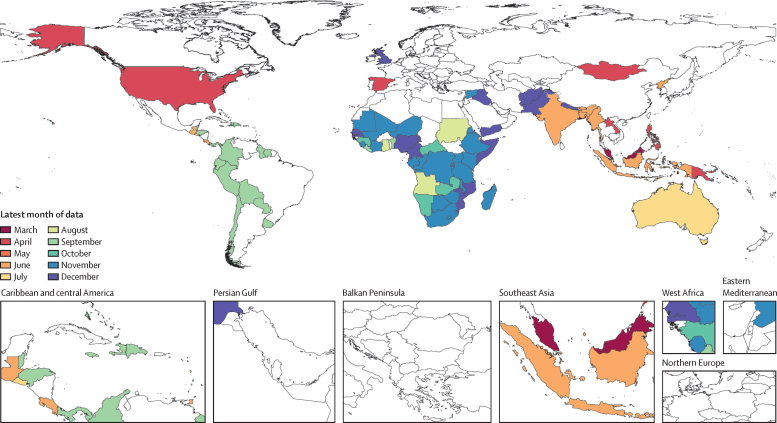
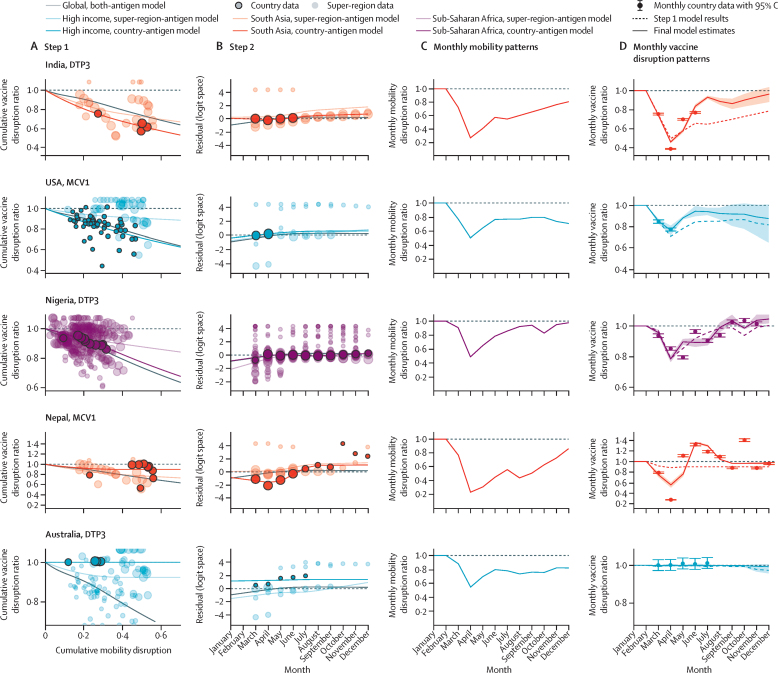
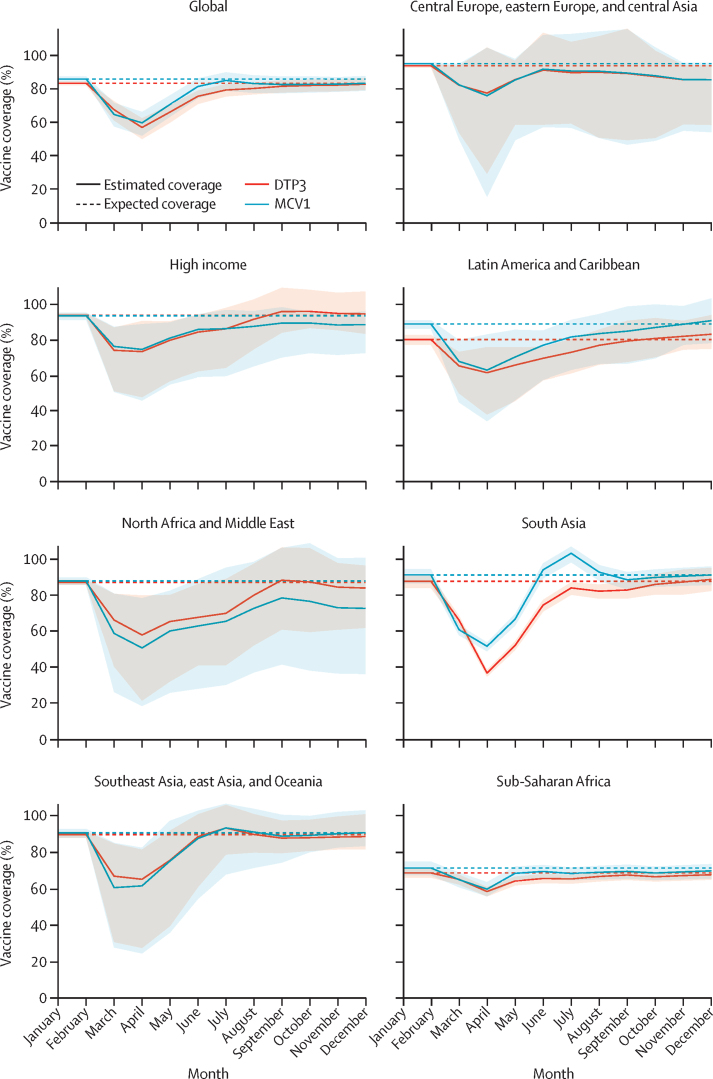
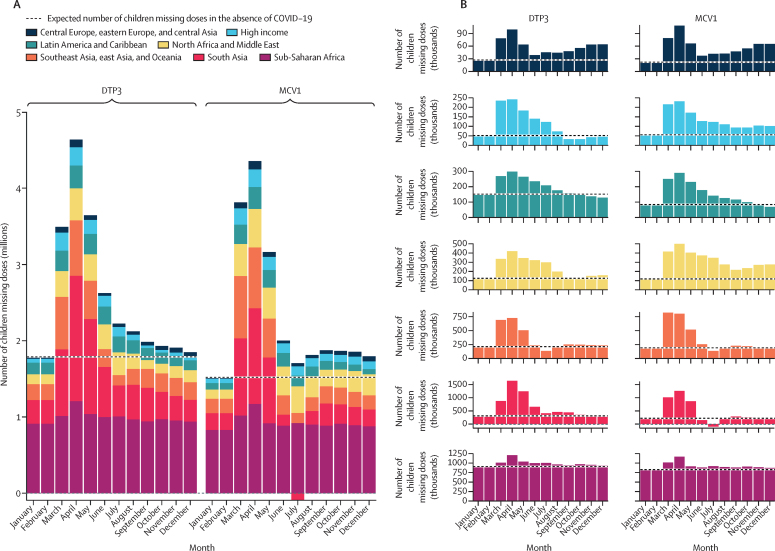
BACKGROUND: The COVID-19 pandemic and efforts to reduce SARS-CoV-2 transmission substantially affected health services worldwide. To better understand the impact of the pandemic on childhood routine immunisation, we estimated disruptions in vaccine coverage associated with the pandemic in 2020, globally and by Global Burden of Disease (GBD) super-region. METHODS: For this analysis we used a two-step hierarchical random spline modelling approach to estimate global and regional disruptions to routine immunisation using administrative data and reports from electronic immunisation systems, with mobility data as a model input. Paired with estimates of vaccine coverage expected in the absence of COVID-19, which were derived from vaccine coverage models from GBD 2020, Release 1 (GBD 2020 R1), we estimated the number of children who missed routinely delivered doses of the third-dose diphtheria-tetanus-pertussis (DTP3) vaccine and first-dose measles-containing vaccine (MCV1) in 2020. FINDINGS: Globally, in 2020, estimated vaccine coverage was 76·7% (95% uncertainty interval 74·3-78·6) for DTP3 and 78·9% (74·8-81·9) for MCV1, representing relative reductions of 7·7% (6·0-10·1) for DTP3 and 7·9% (5·2-11·7) for MCV1, compared to expected doses delivered in the absence of the COVID-19 pandemic. From January to December, 2020, we estimated that 30·0 million (27·6-33·1) children missed doses of DTP3 and 27·2 million (23·4-32·5) children missed MCV1 doses. Compared to expected gaps in coverage for eligible children in 2020, these estimates represented an additional 8·5 million (6·5-11·6) children not routinely vaccinated with DTP3 and an additional 8·9 million (5·7-13·7) children not routinely vaccinated with MCV1 attributable to the COVID-19 pandemic. Globally, monthly disruptions were highest in April, 2020, across all GBD super-regions, with 4·6 million (4·0-5·4) children missing doses of DTP3 and 4·4 million (3·7-5·2) children missing doses of MCV1. Every GBD super-region saw reductions in vaccine coverage in March and April, with the most severe annual impacts in north Africa and the Middle East, south Asia, and Latin America and the Caribbean. We estimated the lowest annual reductions in vaccine delivery in sub-Saharan Africa, where disruptions remained minimal throughout the year. For some super-regions, including southeast Asia, east Asia, and Oceania for both DTP3 and MCV1, the high-income super-region for DTP3, and south Asia for MCV1, estimates suggest that monthly doses were delivered at or above expected levels during the second half of 2020. INTERPRETATION: Routine immunisation services faced stark challenges in 2020, with the COVID-19 pandemic causing the most widespread and largest global disruption in recent history. Although the latest coverage trajectories point towards recovery in some regions, a combination of lagging catch-up immunisation services, continued SARS-CoV-2 transmission, and persistent gaps in vaccine coverage before the pandemic still left millions of children under-vaccinated or unvaccinated against preventable diseases at the end of 2020, and these gaps are likely to extend throughout 2021. Strengthening routine immunisation data systems and efforts to target resources and outreach will be essential to minimise the risk of vaccine-preventable disease outbreaks, reach children who missed routine vaccine doses during the pandemic, and accelerate progress towards higher and more equitable vaccination coverage over the next decade. FUNDING: Bill & Melinda Gates Foundation.
Overview
The claims and statistics of this paper haven’t been checked yet.
Free: it reads the open-access text and checks the first 5 claims that cite a source we can check. Create a free account to check every claim.
Integrity signals
Registry
Cites
Statistics
Figures
Verification
Claims the paper makes
The claims and statistics of this paper haven’t been checked yet.
Free: it reads the open-access text and checks the first 5 claims that cite a source we can check. Create a free account to check every claim.
Claims other papers make about this one
Each is checked against this paper’s own text: does it say what the citing paper says it does?
In the citing paper
“In a previous analysis using partial-year data from the first months of the pandemic, Causey and colleagues estimated 2020 global DTP3 coverage at approximately 76.7%, which is 7.7 pp lower than was expected in the absence of the pandemic.18”
In the citing paper
“The COVID-19 pandemic has disrupted routine health services globally, resulting in decreased vaccination rates affecting millions of children [8]”
Self-check
Percentages, sums and reported differences re-computed from the paper’s own numbers.
The self-check needs the paper’s full text.
Citations
Cites
Wang, H., Abbas, K. M., Abbasifard, M., Abbasi-Kangevari, M., Abbastabar, H., Abd-Allah, F., Abdelalim, A., Abolhassani, H., Abreu, L. G., Abrigo, M. R. M., et al. (2020) · The Lancet · doi:10.1016/s0140-6736(20)30977-6 · Cited by 1,971 · cited 2×
“…C , and the estimated monthly number of eligible children calculated from GBD 2020 R1 annual target population estimates (updated from GBD 2019 36 as part of the GBD continuous update cycle), pop m : 1000 draws of N were calculated from draws of MDR and C to incorporate uncertainty in both…”
Self-citationGuidelines for accurate and transparent health estimates reporting: the GATHER statement
Stevens, G. A., Alkema, L., Black, R. E., Boerma, J. T., Collins, G. S., Ezzati, M., Grove, J. T., Hogan, D. R., Hogan, M. C., Horton, R., et al. (2016) · The Lancet · doi:10.1016/s0140-6736(16)30388-9 · Cited by 1,798 · cited 1×
“This analysis complies with the Guidelines for Accurate and Transparent Health Estimates Reporting (GATHER) statement, 17 with further information provided in the appendix (section 1); all source codes used to generate estimates and corres ponding data will be made accessible upon publication, on…”
Fullman, N., Yearwood, J., Abay, S. M., Abbafati, C., Abd-Allah, F., Abdela, J., Abdelalim, A., Abebe, Z., Abebo, T. A., Aboyans, V., et al. (2018) · The Lancet · doi:10.1016/s0140-6736(18)30994-2 · Cited by 1,013 · cited 1×
“Other covariates were considered in addition to our mobility measure (eg, total COVID-19 deaths and cases to date, indices of development, 36 and health-system performance 37 ), but they provided no meaningful associations with disruptions to vaccine coverage.”
Self-citationMobile phone data for informing public health actions across the COVID-19 pandemic life cycle
Oliver, N., Lepri, B., Sterly, H., Lambiotte, R., Deletaille, S., De Nadai, M., Letouzé, E., Salah, A. A., Benjamins, R., Cattuto, C., et al. (2020) · Science Advances · doi:10.1126/sciadv.abc0764 · Cited by 631 · cited 1×
“30 Full methodological details about generating mobility estimates have been published elsewhere, 31 but in brief, we synthesised daily human movement data obtained from mobile phones from Descartes Labs, 32 Facebook, 33 Google, 34 and SafeGraph 35 in 134 countries and territories into cohesive…”
Modeling COVID-19 scenarios for the United States
IHME COVID-19 Forecasting Team, Reiner, R. C., Barber, R. M., Collins, J. K., Zheng, P., Adolph, C., Albright, J., Antony, C. M., Aravkin, A. Y., Bachmeier, S. D., et al. (2021) · Nature Medicine · doi:10.1038/s41591-020-1132-9 · Cited by 556
Self-citationStatistical Meta‐Analysis with Applications
Hartung, J., Knapp, G., & Sinha, B. K. (2008) · Wiley Series in Probability and Statistics · doi:10.1002/9780470386347 · Cited by 418 · cited 1×
“27 We used qualitative data collected by WHO and partners, including two sets of Pulse poll results, 4,28 essential health services polls, 7 and additional data from WHO regional offices, to evaluate estimated CDRs.”
Abbas, K., Procter, S. R., van Zandvoort, K., Clark, A., Funk, S., Mengistu, T., Hogan, D., Dansereau, E., Jit, M., Flasche, S., et al. (2020) · The Lancet Global Health · doi:10.1016/s2214-109x(20)30308-9 · Cited by 362 · cited 1×
“As evidenced by past epidemics and modelling exercises, 45,46 substantive gaps in vaccine coverage increase the risk of vaccine-preventable disease outbreaks once COVID-19 prevention measures subside and individuals resume pre-pandemic social contact patterns.”
McDonald, H. I., Tessier, E., White, J. M., Woodruff, M., Knowles, C., Bates, C., Parry, J., Walker, J. L., Scott, J. A., Smeeth, L., et al. (2020) · Eurosurveillance · doi:10.2807/1560-7917.es.2020.25.19.2000848 · Cited by 337
Statistical meta-analysis with applications
(2009) · Choice Reviews Online · doi:10.5860/choice.46-4497 · Cited by 311
Turner, N. (2009) · PubMed · Cited by 306
Research works printed but not linked: 1
- The DHS Program COVID-19 update: some DHS surveys return to the field; others postponed until 2021. Press release https://www.dhsprogram.com/Who-We-Are/News-Room/COVID-19-Update-Some-DHS-surveys-return-to-the-field-others-postponed-until-2021.cfm Sept 2, 2020
Cited by
Items 101–200 of 470
Pandemic’s influence on parents’ attitudes and behaviors toward meningococcal vaccination
Tan, L., Sáfadi, M. A. P., Horn, M. R., Balboa, C. R., Moya, E., Schanbaum, J., Pimenta, P., Lambert, E., Soumahoro, L., Sohn, W.-Y., et al. (2023) · Human Vaccines & Immunotherapeutics · doi:10.1080/21645515.2023.2179840 · Cited by 18
“2 million children missing their first dose in 2020.(27) Meningococcal vaccination rates have also declined during the pandemic, and achieving the rates seen during pre-COVID times might be challenging, especially in certain countries.”
BackgroundAheto, J. M. K., Olowe, I., Chan, H. M. T., Ekeh, A., Dieng, B., Fafunmi, B., Setayesh, H., Atuhaire, B., Crawford, J., Tatem, A. J., et al. (2023) · Vaccines · doi:10.3390/vaccines11121830 · Cited by 21
“These and other interventions are also thought to have further impacted immunization services negatively in the form of reduced access to vaccination, decreases in vaccine demand and uptake, the cessation of outreach services, and the postponement of vaccination campaigns [3,20,30–32].”
BackgroundCharania, N. A., Tonumaipe’a, D., Barbarich-Unasa, T. W., Iusitini, L., Davis, G., Pacheco, G. A., & Wilson, D. (2024) · Human Vaccines & Immunotherapeutics · doi:10.1080/21645515.2023.2301626 · Cited by 20
Mancarella, M., Natarelli, F., Bertolini, C., Zagari, A., Bettinelli, M. E., & Castaldi, S. (2022) · Vaccine · doi:10.1016/j.vaccine.2022.05.005 · Cited by 18
“2 million of firstdose Measles-containing vaccine (MCV1) were missed [11].”
BackgroundCOVID-19 Impact on DTP Vaccination Trends in Africa: A Joinpoint Regression Analysis
Aguinaga-Ontoso, I., Guillén-Aguinaga, S., Guillén-Aguinaga, L., Alas-Brun, R., Onambele, L., Aguinaga-Ontoso, E., & Guillén‐Grima, F. (2023) · Vaccines · doi:10.3390/vaccines11061103 · Cited by 18
“9% in the coverage of DTP3 and the first dose of the Measles-Containing Vaccine (MCV1), respectively [24].”
BackgroundCollateral effects of COVID-19 pandemic control on the US infectious disease landscape
Brett, T. S., & Rohani, P. (2025) · Science · doi:10.1126/science.adw4964 · Cited by 18
Yang, Y., Kostandova, N., Mwansa, F. D., Nakazwe, C., Namukoko, H., Sakala, C., Bobo, P. M., Penelope, K.-M., Nachinga, B., Ngula, D., et al. (2023) · Vaccines · doi:10.3390/vaccines11030608 · Cited by 18
Trends of measles in Tanzania: A 5-year review of case-based surveillance data, 2018-2022
Michael, F. S., Mirambo, M. M., Misinzo, G., Minzi, O., Beyanga, M., Mujuni, D., Kalabamu, F. S., Nyanda, E. N., Mwanyika‐Sando, M., Ndiyo, D., et al. (2023) · International Journal of Infectious Diseases · doi:10.1016/j.ijid.2023.12.007 · Cited by 18
Abdaljaleel, M., Barakat, M. M., Mahafzah, A. M., Hallit, R. R., Hallit, S. R., & Sallam, M. (2024) · Narra J · doi:10.52225/narra.v4i2.877 · Cited by 21
Fu, H. J., Abbas, K., Klepac, P., van Zandvoort, K., Tanvir, H., Portnoy, A., & Jit, M. (2021) · BMC Medicine · doi:10.1186/s12916-021-02157-4 · Cited by 19
The utilisation of vaccines in humanitarian crises, 2015–2019: A review of practice
Leach, K., & Checchi, F. (2022) · Vaccine · doi:10.1016/j.vaccine.2022.03.034 · Cited by 19
Menna, T., Endale, S. Z., Demie, T. G., & Dinka, T. G. (2022) · Risk Management and Healthcare Policy · doi:10.2147/rmhp.s386717 · Cited by 18
“The main aim of this study, therefore, was to assess the impact of COVID-19 on the availability of supplies of routine childhood immunization at the Oromia Regional State in Ethiopia.”
BackgroundResultInfluentialPereira, M. A. D., Arroyo, L. H., Serrano‐Gallardo, P., Arcêncio, R. A., Gusmão, J. D., Amaral, G. G., de Oliveira, V. C., & Guimarães, E. A. D. A. (2023) · Revista Brasileira de Enfermagem · doi:10.1590/0034-7167-2022-0734 · Cited by 17
“The latter has exacerbated pre-existing health inequalities, exposing social inequalities, discrimination and health gradients in human populations between and within countries(12,31,42).”
BackgroundInfluentialEwald, L. M., Bellettiere, J., Farag, T. H., Lee, K. M., Palani, S., Castro, E., Deen, A., Gillespie, C. W., Huntley, B. M., Tracy, A., et al. (2025) · International Journal of Public Health · doi:10.3389/ijph.2025.1607884 · Cited by 21
“Additionally, COVID-19 negatively impacted the delivery of care in many health systems across the globe [4 – 10].”
Self-citationLedesma, J. R., Basting, A. V. L., Chu, H. T., Ma, J., Zhang, M., Vongpradith, A., Novotney, A., Dalos, J., Zheng, P., Murray, C. J. L., et al. (2023) · Microorganisms · doi:10.3390/microorganisms11092191 · Cited by 20
“…pandemic responses, generally in the form of public health and social measures (PHSM) [6], combined with unanticipated surges in care, have resulted in substantial disruptions to various health services across multiple settings [7–9], as well as millions of global excess deaths [10–12].”
Self-citationFu, H. J., Abbas, K., Malvolti, S., Gregory, C., Ko, M., Amorij, J., & Jit, M. (2023) · BMJ Global Health · doi:10.1136/bmjgh-2023-012204 · Cited by 17
Riccio, M. D., Guida, A., Boudewijns, B., Heemskerk, S., van Summeren, J., Schneeberger, C., Stelma, F. F., van der Velden, K., Timen, A., & Caini, S. (2025) · Influenza and Other Respiratory Viruses · doi:10.1111/irv.70057 · Cited by 17
Disruptions to childhood immunisation due to the COVID-19 pandemic
Abbas, K., & Mogasale, V. (2021) · The Lancet · doi:10.1016/s0140-6736(21)01418-5 · Cited by 16
Ferreira, C. D. S., Dantés, H. G., Bellei, N., López, E. L., Crespo, K. A. N., O’Ryan, M., & Villegas, J. (2021) · Viruses · doi:10.3390/v13122391 · Cited by 18
“The dramatic shift in health priorities has also led to a relocation of health budgets and priorities and a lag in vaccination schedules that target other vaccine-preventable diseases [19,20].”
BackgroundAlhaddad, A., Ahmadnezhad, E., & Fotouhi, A. (2022) · Epidemiology and Health · doi:10.4178/epih.e2022035 · Cited by 19
“Studies in other settings have reported this issue as well [13-16].”
BackgroundUnveiling the contributions of immunization for progressing towards Universal Health Coverage
Ota, M. O. C., de Moraes, J. C., Vojtek, I., Constenla, D. O., Doherty, T. M., Cintra, O. A. L., & Kirigia, J. M. (2022) · Human Vaccines & Immunotherapeutics · doi:10.1080/21645515.2022.2036048 · Cited by 16
“9 million children missed DTP3 and MCV1 doses, respectively, by the end of 2020 due to the COVID pandemic.(40) In high-burden settings, a recent study has suggested that deaths due to tuberculosis and malaria over the next 5 years could increase by up to 20% and 36%, respectively, as a result of the disruption to heal…”
BackgroundDerqui, N., Blake, I. M., Gray, E. J., Cooper, L., Grassly, N. C., Pons-Salort, M., & Gaythorpe, K. A. M. (2024) · PLOS Global Public Health · doi:10.1371/journal.pgph.0003749 · Cited by 15
Measles: Contemporary considerations for the emergency physician
Blutinger, E. J., Schmitz, G., Kang, C., Comp, G. B., Wagner, E., Finnell, J. T., Cozzi, N. P., & Haddock, A. J. (2023) · Journal of the American College of Emergency Physicians Open · doi:10.1002/emp2.13032 · Cited by 15
A Scoping Review and Taxonomy of Epidemiological-Macroeconomic Models of COVID-19
Bonnet, G., Pearson, C. A. B., Rueda, S. T., Ruiz, F. J., Lines, J., Jit, M., Vassall, A., & Sweeney, S. (2023) · Value in Health · doi:10.1016/j.jval.2023.10.008 · Cited by 15
Itiakorit, H., Sathyamoorthi, A., O’Brien, B. E., & Nguyen, D. D. T. (2022) · Current Tropical Medicine Reports · doi:10.1007/s40475-022-00273-6 · Cited by 16
Martínez, M., Zabaleta‐del‐Olmo, E., Durán, E. L. G., Reñé, A., & Cabezas, C. (2023) · Public Health · doi:10.1016/j.puhe.2023.02.017 · Cited by 15
Herrera, C. A., Kerr, A. C., Dayton, J. M., & Kakietek, J. J. (2023) · Journal of Global Health · doi:10.7189/jogh.13.06023 · Cited by 18
“Globally, disruptions during the COVID-19 pandemic have been studied for childhood vaccine coverage [5], elective surgeries [6], hospital services for patients with cardiac diseases [7], and for several routine services [8-10].”
BackgroundCooper, S., Bicaba, F., Tiendrebeogo, C. O., Bila, A., Bicaba, A., & Druetz, T. (2023) · BMC Health Services Research · doi:10.1186/s12913-023-10029-1 · Cited by 15
“…vaccination efforts would likely put ~ 80 million children at risk of vaccine-preventable diseases (such as poliomyelitis, measles, and diphtheria) and could result in a 45% increase in child mortality, the WHO and other organizations rapidly recommended to resume vaccination campaigns [11–13].”
BackgroundThe Impact of the Coronavirus Pandemic on Vaccination Coverage in Latin America and the Caribbean
Castro-Aguirre, I., Alvarez, D., Contreras, M., Trumbo, S. P., Mújica, Ó. J., Peraza, D. S., & Velandia-González, M. (2024) · Vaccines · doi:10.3390/vaccines12050458 · Cited by 16
Self-citationGiglio, N., Lasalvia, P., Pawaskar, M. D., Parellada, C., Gil-Rojas, Y., Micone, P., Babic, V. V., & Neyro, S. E. (2022) · Vaccines · doi:10.3390/vaccines10071151 · Cited by 15
Measles vaccine uptake among Italian medical students compared to the pre-COVID-19 era
Ferrari, C., Somma, G., Olesen, O. F., Buonomo, E., Pasanisi, M., Mazza, A., Rizza, S., Giampaolo, L. D., Magrini, A., Ponzani, F., et al. (2023) · Human Vaccines & Immunotherapeutics · doi:10.1080/21645515.2023.2252681 · Cited by 14
Utazi, C. E., Olowe, I., Chan, H. M. T., Dotse‐Gborgbortsi, W., Wagai, J. N., Umar, J. A., Etamesor, S., Atuhaire, B., Fafunmi, B., Crawford, J., et al. (2024) · Vaccines · doi:10.3390/vaccines12121299 · Cited by 18
“However, vaccination coverage remains suboptimal in many places [3]—a situation further exacerbated by the COVID-19 pandemic with major disruptions to immunization and other health services [4,5], although gradual recovery is being made [6].”
Blukacz, A., Alexandra Obach, K., Vásquez, P., Campaña, C., Huerta, C., Bernal, Y. A., & Cabieses, B. (2024) · Vaccine · doi:10.1016/j.vaccine.2024.126546 · Cited by 15
Kostandova, N., Loisate, S., Winter, A. K., Moss, W. J., Giles, J. R., Metcalf, C. J. E., Mutembo, S., & Wesolowski, A. (2022) · Epidemics · doi:10.1016/j.epidem.2022.100647 · Cited by 14
Facchin, G., Bella, A., Manso, M. D., Rota, M. C., & Filia, A. (2023) · Vaccine · doi:10.1016/j.vaccine.2023.01.021 · Cited by 15
Isonne, C., Petrone, D., Manso, M. D., Iera, J., Caramia, A., Bandini, L., Fadda, G., Grossi, A., Baccolini, V., Costantino, C., et al. (2023) · Vaccines · doi:10.3390/vaccines11061037 · Cited by 14
“Recent evidence showed that the difficulty in accessing routine vaccination services that occurred during the COVID-19 pandemic led to a worldwide reduction in vaccination coverage, leaving millions of children undervaccinated or unvaccinated against preventable diseases [39].”
Gómez-Pérez, G. P., de Graaff, A. E., Dekker, J. T., Agyei, B. B., Dada, I., Milimo, E., Ommeh, M. S., Risha, P., de Wit, T. F. R., & Spieker, N. (2024) · BMC Health Services Research · doi:10.1186/s12913-024-10761-2 · Cited by 14
“Importantly, basic healthcare services as child vaccinations and ante-natal care were also compromised [16, 21], due to lack of offer (overpassed capacity) or demand (change in care-seeking behaviour) of these services.”
Clarke‐Deelder, E., Suharlim, C., Chatterjee, S., Portnoy, A., Brenzel, L., Ray, A., Cohen, J. L., Menzies, N. A., & Resch, S. (2024) · Health Policy and Planning · doi:10.1093/heapol/czae024 · Cited by 13
“…(World Health Organization: Immunization, Vaccines, and Biologicals, 2018), the COVID-19 pandemic caused significant disruptions to immunization programmes worldwide, leading to sharp reductions in coverage and leaving many children exposed to vaccine-preventable diseases (Causey et al ., 2021).”
COVID-19 related disruption and resilience in immunisation activities in LMICs: a rapid review
Hartner, A.-M., Li, X., & Gaythorpe, K. A. M. (2024) · BMJ Open · doi:10.1136/bmjopen-2023-076607 · Cited by 14
Eskenazi, B., Rauch, S. A., Elsiwi, B., Bornman, R. M. S., Obida, M., Brewer, A., Ward, B. J., & Chevrier, J. (2024) · Vaccine · doi:10.1016/j.vaccine.2024.126564 · Cited by 13
Chen, W., Du, M., Deng, J., Liu, M., & Liu, J. (2025) · International Journal of Infectious Diseases · doi:10.1016/j.ijid.2025.107908 · Cited by 14
Paediatric pneumonia research priorities in the context of COVID-19: An eDelphi study
King, C., Baker, K. S., Richardson, S., Wharton–Smith, A., Bakare, A. A., Jehan, F., Chisti, M. J., Zar, H. J., Awasthi, S., Smith, H. J. J., et al. (2022) · Journal of Global Health · doi:10.7189/jogh.12.09001 · Cited by 14
Özçelik, E. A., Doucet, C., Kang, H., Levy, N., Feldhaus, I., Oliveira, T. C., Lerouge, A., & Cecchini, M. (2022) · Health Policy · doi:10.1016/j.healthpol.2022.03.011 · Cited by 15
Al‐kassab‐Córdova, A., Silva-Perez, C., Méndez-Guerra, C., Sangster-Carrasco, L., Arroyave, I., Cabieses, B., & Mezones‐Holguín, E. (2022) · Vaccine · doi:10.1016/j.vaccine.2022.11.067 · Cited by 15
“Likewise, MCV1 is administered in combination with the rubella and mumps vaccine (MMR) [23].”
InfluentialMudenda, S., Meyer, J. C., Fadare, J. O., Ogunleye, O. O., Saleem, Z., Matafwali, S. K., Daka, V., Chabalenge, B., Chama, J., Mukosha, M., et al. (2023) · PLOS Global Public Health · doi:10.1371/journal.pgph.0002385 · Cited by 14
Goff, D. A., Gauthier, T. P., Langford, B. J., Prusakov, P. A., Chukwuemka, M. U., Nwomeh, B. C., Yunis, K. A., Saad, T., van den Bergh, D., Villegas, M. V., et al. (2022) · JACCP JOURNAL OF THE AMERICAN COLLEGE OF CLINICAL PHARMACY · doi:10.1002/jac5.1622 · Cited by 13
“Substantial and persistent disruptions to childhood vaccinations have occurred.(4) ASP pharmacists from nine high-income countries (HIC) and low-middle income countries (LMIC) reported their resources were diverted to support labor-intensive commitments related to COVID-19.”
BackgroundEffect of COVID-19 Pandemic on Well Child Care and Vaccination
Onimoe, G., Angappan, D., Chandar, M. C. R., & Rikleen, S. (2022) · Frontiers in Pediatrics · doi:10.3389/fped.2022.873482 · Cited by 12
Zou, C., Xue, X., & Qian, J. (2022) · Frontiers in Medicine · doi:10.3389/fmed.2022.826327 · Cited by 14
Lucinde, R. K., Karia, B., Ouma, N., Amadi, D., Nyundo, C., Mataza, C., Nyaguara, A., Scott, J. A. G., Gallagher, K. E., & Kagucia, E. W. (2022) · Vaccine · doi:10.1016/j.vaccine.2022.10.074 · Cited by 12
“For all regions, the drop in vaccine doses delivered was modelled to be highest during the early months of the pandemic, March to May, with a gradual recovery between May and December 2020 [32].”
BackgroundMariani, F., Valentini, P., Yamba, M., Turay, A. S., Bulubisi, H., Moscato, U., Raffaelli, F., Iodice, F., & Buonsenso, D. (2022) · Frontiers in Pediatrics · doi:10.3389/fped.2022.774281 · Cited by 12
Pawaskar, M. D., Gil-Rojas, Y., Parellada, C., Rey-Velasco, A., Beltrán-Arroyave, C., Prieto, E., & Lasalvia, P. (2022) · Vaccine · doi:10.1016/j.vaccine.2022.07.012 · Cited by 12
Bender, R. G., Shen, J., Aravkin, A. Y., Fouda, A. A. B., Bwaka, A. M., Galles, N. C., Haeuser, E., Hay, S. I., Latt, A., Mwenda, J. M., et al. (2023) · EClinicalMedicine · doi:10.1016/j.eclinm.2022.101797 · Cited by 13
Self-citationRoutine pediatric vaccinations during the COVID-19 pandemic: A review of the global impact
Locke, J., Marinkovic, A., Hamdy, K. A., Balendra, V., & Sanyaolu, A. O. (2023) · World Journal of Virology · doi:10.5501/wjv.v12.i5.256 · Cited by 11
White, P. M., Alberti, H., Rowlands, G., Tang, E. Y. H., Gagnon, D., & Dubé, È. (2024) · Human Vaccines & Immunotherapeutics · doi:10.1080/21645515.2024.2397875 · Cited by 15
Multilevel Analysis of Zero-Dose Children in Sub-Saharan Africa: A Three Delays Model Study
Wiysonge, C. S., Uthman, M. M. B., Ndwandwe, D. E., & Uthman, O. A. (2025) · Vaccines · doi:10.3390/vaccines13090987 · Cited by 15
“The COVID-19 pandemic has exacerbated existing vaccination inequities, with routine immunization services experiencing significant disruptions across the region [5].”
Global Vaccine Access Demands Combating Both Inequity And Hesitancy
Hotez, P. J. (2023) · Health Affairs · doi:10.1377/hlthaff.2023.00775 · Cited by 11
Ongoing measles outbreak, the Federation of Bosnia and Herzegovina, December 2023 to February 2024
Musa, S., Salimović-Bešić, I., Džambić, J. B., Tihić, N., Bajramović, A., Arapčić, S., Dedeić-Ljubović, A., & Skočibušić, S. (2024) · Eurosurveillance · doi:10.2807/1560-7917.es.2024.29.9.2400107 · Cited by 11
“…from this outbreak (green triangles), WHO reference sequences (non-marked), the Basic Local Alignment Search Tool (BLAST+; version 2.15.0) fits (blue circles) and two variants of the D8 virus genotype from an outbreak in 2014–2015, the Federation of Bosnia and Herzegovina [4] (purple squares).”
BackgroundInfluentialPeer learning in immunisation programmes
Adamu, A. A., Ndwandwe, D. E., Jalo, R. I., Ndoutabé, M., & Wiysonge, C. S. (2024) · The Lancet · doi:10.1016/s0140-6736(24)01340-0 · Cited by 11
COVID-19 vaccines for children in LMICs: another equity issue
Kampmann, B., & Okomo, U. A. (2021) · The Lancet · doi:10.1016/s0140-6736(21)01748-7 · Cited by 11
Sophian, A., Normasari, Harumanto, A., & Abinawanto, A. (2026) · Reviews in Medical Virology · doi:10.1002/rmv.70149 · Cited by 11
Driving Paediatric Vaccine Recovery in Europe
Alexander, C., Cabrera, M., Moore, M. J., & Lomazzi, M. (2023) · Vaccines · doi:10.3390/vaccines11010184 · Cited by 10
“Delays in vaccine procurement [16,40,41] Outreach services and catch-up campaigns [16,42]”
BackgroundHaeuser, E., Nguyen, J. Q., Rolfe, S., Nesbit, O. D., Fullman, N., & Mosser, J. F. (2023) · Vaccines · doi:10.3390/vaccines11040802 · Cited by 11
“In addition, disruptions to immunization delivery efforts due to the COVID-19 pandemic have resulted in additional, persistent declines in global vaccine coverage, with the coverage of key vaccines such as diphtheria– tetanus–pertussis (DTP) falling in many countries to the lowest levels in decades [5,6].”
BackgroundSelf-citationMalvolti, S., Ko, M., Menozzi-Arnaud, M., Mantel, C. F., Jarrahian, C., Amorij, J., Giersing, B. K., & Hasso-Agopsowicz, M. (2023) · Frontiers in Public Health · doi:10.3389/fpubh.2023.1165110 · Cited by 11
Ángeles, G., Silverstein, H. A., Ahsan, K. Z., Kibria, M. G., Rakib, N. A., Escudero, G., Singh, K., Mpiima, J., Simmons, E., & Weiss, W. (2023) · Frontiers in Public Health · doi:10.3389/fpubh.2023.1129581 · Cited by 10
Zürcher, S., Signorell, A., Léchot-Huser, A., Aebi, C., & Huber, C. (2023) · Vaccine · doi:10.1016/j.vaccine.2023.10.043 · Cited by 6
Estimating the optimal age for infant measles vaccination
Goult, E., Guevara, L. A. B., Briga, M., & de Cellès, M. D. (2024) · Nature Communications · doi:10.1038/s41467-024-53415-x · Cited by 13
COVID‐19 and children: medical impact and collateral damage
Brüssow, H. (2022) · Microbial Biotechnology · doi:10.1111/1751-7915.14018 · Cited by 10
“This translates into a worldwide 8% decline in vaccine coverage, putting children at higher risk of infection most notably in north Africa and the Middle East, south Asia and Latin America (Causey et al., 2021).”
BackgroundLearning from the COVID-19 pandemic to strengthen routine immunization systems
Causey, K., & Mosser, J. F. (2022) · PLoS Medicine · doi:10.1371/journal.pmed.1003934 · Cited by 10
“Global estimates suggest that millions more children missed doses of important vaccines than would have in the absence of the COVID-19 pandemic [5,6].”
BackgroundResultInfluentialSelf-citationPatterns of cutaneous leishmaniasis during the COVID-19 pandemic in four endemic regions of Iran
Mazaherifar, S., Solhjoo, K., Rasti, S., Heidarnejadi, S. M., & Abdoli, A. (2022) · Transactions of the Royal Society of Tropical Medicine and Hygiene · doi:10.1093/trstmh/trac081 · Cited by 11
Changes in parents' attitudes towards childhood vaccines during COVID ‐19 pandemic
Duran, S., Duran, R., Acunaş, B., & Şahin, E. M. (2023) · Pediatrics International · doi:10.1111/ped.15520 · Cited by 12
“7,8,30,31 Studies have shown that parents who have at least one member of their family directly infected with COVID-19 are more likely to have their children vaccinated against COVID-19.”
BackgroundResultInfluentialFullman, N., Correa, G. C., Ikilezi, G., Phillips, D. E., & Reynolds, H. W. (2023) · Vaccines · doi:10.3390/vaccines11030647 · Cited by 10
“Importantly, this analysis does not account for the ongoing effects of the COVID-19 pandemic, of which has had differential impacts across countries and communities since March 2020 [3,60,61].”
BackgroundSelf-citationSumman, A., Nandi, A., & Bloom, D. E. (2022) · National Bureau of Economic Research · doi:10.3386/w30173 · Cited by 13
Gilder, M. E., Pateekhum, C., Hashmi, A., Aramrat, C., Aung, K. K., Miket, W., Chu, C. S., Win, D., Bierhoff, M., Wiwattanacharoen, W., et al. (2022) · International Journal for Equity in Health · doi:10.1186/s12939-022-01802-5 · Cited by 9
“The COVID-19 pandemic has disrupted routine health services globally, resulting in decreased vaccination rates affecting millions of children [8], but differential effects on marginalized populations have not been explored.”
BackgroundGuo, Y., Gu, K., Garber, P. A., Zhang, R., Zhao, Z., & Xu, L. (2024) · Biosafety and Health · doi:10.1016/j.bsheal.2024.10.001 · Cited by 10
“…both England and the United States indicated a marked reduction in vaccination coverage during the initial months of the COVID ‐ 19 pandemic [50], and the roll ‐ out of effective COVID ‐ 19 vaccines in 2021 led to a decline of 2 % – 4 % in global basic pediatric vaccination coverage and fl u…”
Wariri, O., Utazi, C. E., Okomo, U. A., Sowe, A., Sogur, M., Fofana, S., Ezeani, E., Saidy, L., Sarwar, G., Dondeh, B. L., et al. (2023) · BMJ Global Health · doi:10.1136/bmjgh-2023-014225 · Cited by 9
“7 16 These guidance strongly recommended that, to the extent feasible and in alignment with local contexts and COVID-19 responses, routine immunisation activities for all eligible individuals should maintain their status as a priority.”
BackgroundSoble, A., Ko, M., Gilchrist, S., Malvolti, S., Hasso-Agopsowicz, M., Giersing, B. K., Amorij, J., Jarrahian, C., Sheikh, F. E., Menozzi-Arnaud, M., et al. (2024) · Vaccine · doi:10.1016/j.vaccine.2023.12.047 · Cited by 11
Os desafios para o controle da Tuberculose no Brasil
do Carmo, I. A., Maia, J. C., Novaes, J. V. C. D., Almeida, L. D. S., Pereira, N. A. D. C., da Costa, G. V. R., Rodrigues, M. S. D. L., & Leite, C. C. M. (2022) · Brazilian Journal of Health Review · doi:10.34119/bjhrv5n6-168 · Cited by 9
Vaccination rates are falling, and it’s not just the COVID-19 vaccine that people are refusing
Eisenstein, M. S. (2022) · Nature · doi:10.1038/d41586-022-04341-9 · Cited by 9
COVID-19, Law & Regulation: Rights, Freedoms, and Obligations in a Pandemic
Bennett, B., Freckelton, I. R., & Wolf, G. (2023) · doi:10.1093/oso/9780192896742.001.0001 · Cited by 15
COVID-19 in Children—Learning From the Past, Planning for the Future
Chiotos, K., & Fitzgerald, J. C. (2023) · Archives of Pediatrics and Adolescent Medicine · doi:10.1001/jamapediatrics.2023.2354 · Cited by 9
Lewis, S., Ewald, L. M., Duber, H. C., Mokdad, A. H., & Gakidou, E. E. (2024) · International Journal of Public Health · doi:10.3389/ijph.2024.1607639 · Cited by 8
Global Trends and Attributable Risk Factors in the Disease Burden of Lower Respiratory Infections
Yu, E., & Li, C. (2025) · Tropical Medicine and Infectious Disease · doi:10.3390/tropicalmed10070180 · Cited by 10
COVID-19 impact on AMR: a rapid scoping review, equity analysis and evidence gap map study
Emdin, F., Orubu, E. S. F., Katwyk, S. R. V., Strong, K. M., Shaver, N., Abdullah, K., Asamoah, G. D., Skidmore, B., Chan, E., & Poirier, M. J. P. (2025) · BMJ Global Health · doi:10.1136/bmjgh-2024-018118 · Cited by 8
Epidemiological trends and determinants of mumps outbreaks: a systematic review and meta-analysis
Agrawal, R., Rehman, T., Sinha, D., Chakraborty, P., Sakthivel, M., Kumar, D., Mitra, S., Afeeq, K., Kanungo, S., & Pati, S. (2025) · Frontiers in Public Health · doi:10.3389/fpubh.2025.1711759 · Cited by 10
Assefa, N., Abdullahi, Y. Y., Hemler, E. C., Lankoandé, B., Wang, D., Madzorera, I., Millogo, O., Abokyi, L. N., Dasmane, D., Dianou, K., et al. (2022) · Journal of Global Health · doi:10.7189/jogh.12.05046 · Cited by 8
Evans, A., Mahar, A. L., Deb, B., Boblitz, A., Brownell, M. D., Guttmann, A., Stukel, T. A., Cohen, E., Sarkar, J., Eze, N., et al. (2023) · Canadian Journal of Public Health · doi:10.17269/s41997-023-00797-y · Cited by 8
Abenova, M., Shaltynov, A., Jamedinova, U., Ospanov, E., & Semenova, Y. M. (2024) · Vaccines · doi:10.3390/vaccines12040429 · Cited by 8
“These disruptions affected approximately 80 million children under the age of 1 worldwide due to the COVID-19 pandemic [30,31].”
BackgroundAn evaluation of the early impact of the COVID-19 pandemic on Zambia’s routine immunization program
Winter, A. K., Takahashi, S., Carcelen, A. C., Hayford, K. T., Mutale, W., Mwansa, F. D., Sinyange, N., Ngula, D., Moss, W. J., & Mutembo, S. (2023) · PLOS Global Public Health · doi:10.1371/journal.pgph.0000554 · Cited by 8
“Disruptions of particular concern are to routine immunization programs used to control the spread of other infectious diseases (2).”
BackgroundInfluentialLow vaccine coverage and varicella outbreaks in Brazil − 2019-2022
Fujita, D. M., Nali, L. H. D. S., da Costa, R. R., de Andrade, H. F., & Luna, E. J. D. A. (2024) · Vaccine · doi:10.1016/j.vaccine.2024.04.021 · Cited by 8
Islam, M. R., Rahman, M. M., Rahman, M. S., Abe, S. K., Akmatov, M. K., & Hashizume, M. (2024) · Frontiers in Public Health · doi:10.3389/fpubh.2024.1371258 · Cited by 7
Childhood Immunization Coverage Before, During and After the COVID-19 Pandemic in Italy
Pennisi, F., Silenzi, A., Mammone, A., Siddu, A., Odone, A., Sabbatucci, M., Orioli, R., D’Amelio, A. C., Maraglino, F. P., Rezza, G., et al. (2025) · Vaccines · doi:10.3390/vaccines13070683 · Cited by 8
“The emergence of SARS-CoV-2 in late 2019 and its rapid global spread had profound repercussions on healthcare systems, including routine immunization services [1,2].”
El-Banna, G., Braun, N., Baker, N. M., Peacker, B. L., Sheng‐Kai, K., Kibbi, A., & Chen, S. T. (2025) · International Journal of Dermatology · doi:10.1111/ijd.17953 · Cited by 7
Zhu, W., He, X., Xiang, S., Lv, Q., Chen, N., Lv, D., Xu, Y., & Jiang, Y. (2025) · Paediatric and Perinatal Epidemiology · doi:10.1111/ppe.70064 · Cited by 9
“According to estimates from the World Health Organization and United Nations Children's Fund (UNICEF), the global coverage rate for the final dose of pneumococcal vaccine among children under 1 year old was only 60% in 2022 [45].”
Hazan, A., Lee, H. Y., Tiong, V., & AbuBakar, S. (2025) · Vaccines · doi:10.3390/vaccines13100995 · Cited by 7
Oduwole, E. O., Laurenzi, C. A., Mahomed, H., & Wiysonge, C. S. (2022) · Vaccines · doi:10.3390/vaccines10030453 · Cited by 9
“While routine childhood vaccinations have lagged in the last two years due to the effect of the pandemic [2], a number of persistent underlying challenges have long led to uneven coverage of childhood vaccinations, especially in LMIC settings.”
BackgroundMeasles seroprevalence in persons over one year of age in Chandigarh, India
Mathew, J. L., Riopelle, D., Ratho, R. K., Bharti, B., Singh, M. P., Suri, V., Carlson, B. F., Wagner, A. L., & Boulton, M. L. (2022) · Human Vaccines & Immunotherapeutics · doi:10.1080/21645515.2022.2136453 · Cited by 7
“The COVID-19 pandemic resulted in disruption of childhood vaccination programs, reducing routine vaccination coverage globally.(13) In India, there are few well-designed community-level studies exploring the status of population immunity against measles.”
BackgroundHerrera, C. A., Kerr, A. C., Eberwein, J. D., Bedregal, P., Kringos, D. S., & Klazinga, N. (2024) · International Journal for Equity in Health · doi:10.1186/s12939-024-02337-7 · Cited by 7
Lota-Salvado, R., Padua, J. R., Agrupis, K. A., Malijan, G. M., Sayo, A. R., Suzuki, S., Gomez-Go, G. D., & Smith, C. E. (2023) · Tropical Medicine and Health · doi:10.1186/s41182-023-00507-x · Cited by 7
Zhang, C., Hu, W., Li, Y., Lv, Y., & Zhang, S. (2023) · Human Vaccines & Immunotherapeutics · doi:10.1080/21645515.2023.2251826 · Cited by 7
Metadata
- Authors
- Causey, K., Fullman, N., Sorensen, R. J. D., Galles, N. C., Zheng, P., Aravkin, A., Danovaro-Holliday, M. C., Martinez-Piedra, R., Sodha, S. V., Velandia-González, M. P., Gacic-Dobo, M., Castro, E., He, J., Schipp, M., Deen, A., Hay, S. I., Lim, S. S., & Mosser, J. F.
- Affiliations
- University of Washington (US)
- World Health Organization Regional Office for the Americas (US)
- Seattle Children's Hospital (US)
- Corresponding author
- Mosser, Jonathan F
- ORCID
- Venue
- The Lancet
- Publisher
- Elsevier BV
- Published
- 2021-08
- Volume
- 398
- Issue
- 10299
- Pages
- 522-534
- ISSN
- 0099-5355 (ISSN-L)
- 0140-6736
- PMC
- PMC8285122
- OpenAlex
- W3183723118
- Cited by
- 450
- References
- 39
- Citations by year
- 2026: 58 · 2025: 61 · 2024: 79 · 2023: 123 · 2022: 103 · 2021: 25
- FWCI
- 45.58
- Type
- journal article
- Language
- en
- Open access
- hybrid
- doi.org
- Licence
- cc-by
- www.elsevier.com/tdm/userlicense/1.0/ (tdm)
- www.elsevier.com/legal/tdmrep-license (tdm)
- creativecommons.org/licenses/by/3.0/igo/ (vor)
- Locations
- The Lancet (publishedVersion, cc-by)
- PubMed Central (publishedVersion, cc-by)
- PubMed (publishedVersion)
- Funders
- Bill and Melinda Gates Foundation
- World Health Organization
- Topics
- Social Sciences › Health › Vaccine Coverage and Hesitancy
- Physical Sciences › Mathematics › Modeling and Simulation › COVID-19 epidemiological studies
- Health Sciences › Medicine › Oncology › COVID-19 and healthcare impacts
- Keywords
- COVID-19 pandemic, childhood immunization, measles-containing vaccine, missed vaccine doses, mobility data, vaccine hesitancy, healthcare disruption, child health outcomes
- MeSH terms
- Vaccination Coverage, COVID-19, Child, Humans, Measles Vaccine, Global Health, Models, Statistical, Diphtheria-Tetanus-Pertussis Vaccine
About these checks
Registry, retraction, Cites and statistics results are computed, not judged, with one exception: a printed reference that no index lists is read once by a model before it counts as a citation error. Claims are extracted by a model and kept only when their quote appears verbatim in the text; each cited source is then checked, with a model’s help, for whether it says what the claim relies on. Those verdicts can be wrong — read the claim’s quote and the cited source before relying on one.
Statistics and arithmetic are recomputed, not judged.
Confidence bands are shown only for fields calibrated on our annotated test set. None is calibrated yet, so no band is shown.
What counts as a claim ›How we measure confidence ›How we check this ›
Are you an author, or do you see a problem with this page? Request a review
Data sources
Bibliographic data: Semantic Scholar, OpenAlex, Crossref.
Contains information from the Semantic Scholar Academic Graph Datasets, made available under the ODC Attribution License (ODC-BY 1.0).
Semantic Scholar’s data is described in: Kinney, R., et al. (2023). The Semantic Scholar Open Data Platform. arXiv:2301.10140.
