

Estimating global and regional disruptions to routine childhood vaccine coverage during the COVID-19 pandemic in 2020: a modelling study
Open accessThe DOI matches its Crossref record; 36 of the 39 references it cites were found in a registry or an index.
Abstract
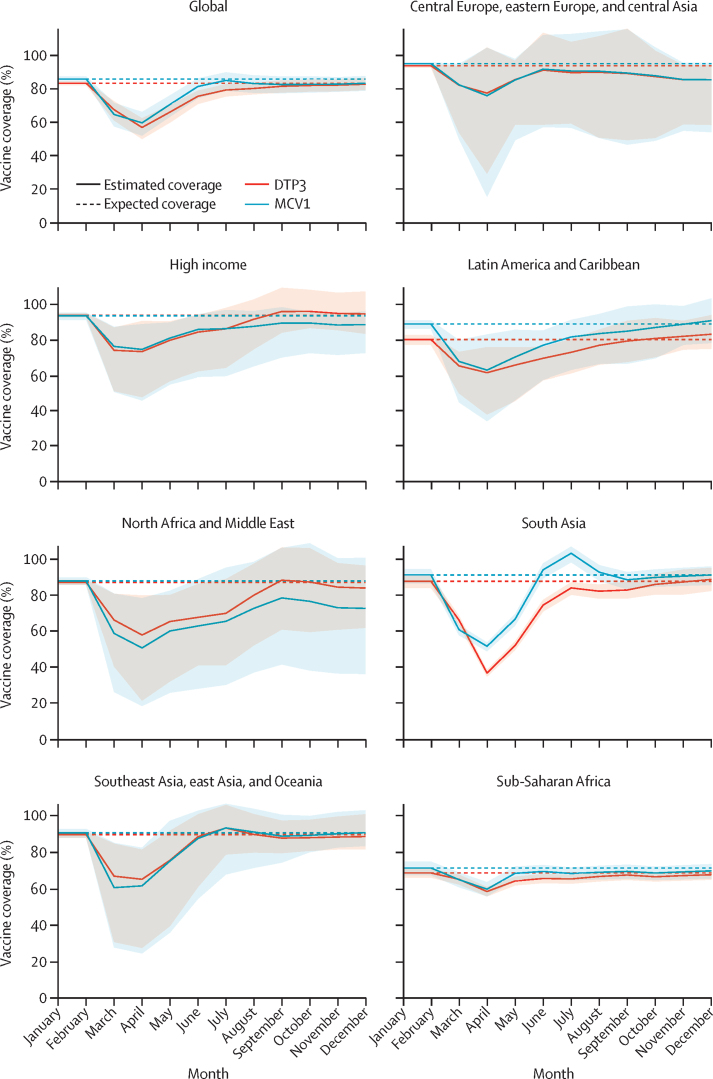
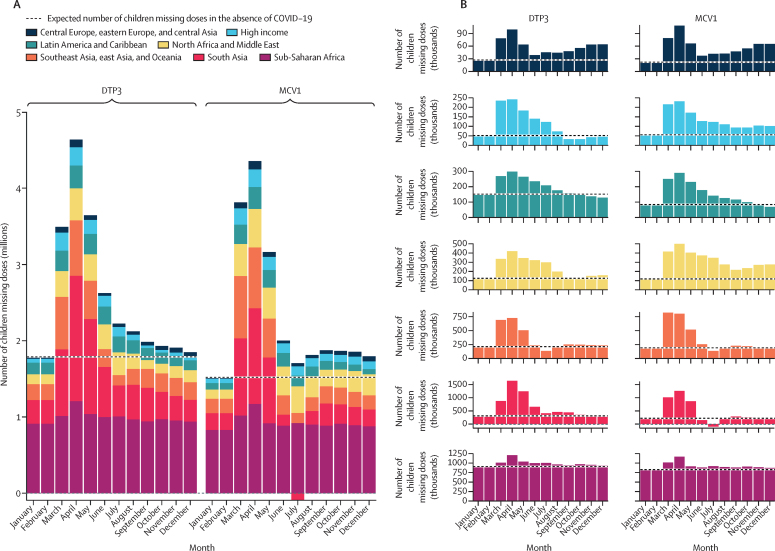
BACKGROUND: The COVID-19 pandemic and efforts to reduce SARS-CoV-2 transmission substantially affected health services worldwide. To better understand the impact of the pandemic on childhood routine immunisation, we estimated disruptions in vaccine coverage associated with the pandemic in 2020, globally and by Global Burden of Disease (GBD) super-region. METHODS: For this analysis we used a two-step hierarchical random spline modelling approach to estimate global and regional disruptions to routine immunisation using administrative data and reports from electronic immunisation systems, with mobility data as a model input. Paired with estimates of vaccine coverage expected in the absence of COVID-19, which were derived from vaccine coverage models from GBD 2020, Release 1 (GBD 2020 R1), we estimated the number of children who missed routinely delivered doses of the third-dose diphtheria-tetanus-pertussis (DTP3) vaccine and first-dose measles-containing vaccine (MCV1) in 2020. FINDINGS: Globally, in 2020, estimated vaccine coverage was 76·7% (95% uncertainty interval 74·3-78·6) for DTP3 and 78·9% (74·8-81·9) for MCV1, representing relative reductions of 7·7% (6·0-10·1) for DTP3 and 7·9% (5·2-11·7) for MCV1, compared to expected doses delivered in the absence of the COVID-19 pandemic. From January to December, 2020, we estimated that 30·0 million (27·6-33·1) children missed doses of DTP3 and 27·2 million (23·4-32·5) children missed MCV1 doses. Compared to expected gaps in coverage for eligible children in 2020, these estimates represented an additional 8·5 million (6·5-11·6) children not routinely vaccinated with DTP3 and an additional 8·9 million (5·7-13·7) children not routinely vaccinated with MCV1 attributable to the COVID-19 pandemic. Globally, monthly disruptions were highest in April, 2020, across all GBD super-regions, with 4·6 million (4·0-5·4) children missing doses of DTP3 and 4·4 million (3·7-5·2) children missing doses of MCV1. Every GBD super-region saw reductions in vaccine coverage in March and April, with the most severe annual impacts in north Africa and the Middle East, south Asia, and Latin America and the Caribbean. We estimated the lowest annual reductions in vaccine delivery in sub-Saharan Africa, where disruptions remained minimal throughout the year. For some super-regions, including southeast Asia, east Asia, and Oceania for both DTP3 and MCV1, the high-income super-region for DTP3, and south Asia for MCV1, estimates suggest that monthly doses were delivered at or above expected levels during the second half of 2020. INTERPRETATION: Routine immunisation services faced stark challenges in 2020, with the COVID-19 pandemic causing the most widespread and largest global disruption in recent history. Although the latest coverage trajectories point towards recovery in some regions, a combination of lagging catch-up immunisation services, continued SARS-CoV-2 transmission, and persistent gaps in vaccine coverage before the pandemic still left millions of children under-vaccinated or unvaccinated against preventable diseases at the end of 2020, and these gaps are likely to extend throughout 2021. Strengthening routine immunisation data systems and efforts to target resources and outreach will be essential to minimise the risk of vaccine-preventable disease outbreaks, reach children who missed routine vaccine doses during the pandemic, and accelerate progress towards higher and more equitable vaccination coverage over the next decade. FUNDING: Bill & Melinda Gates Foundation.
Overview
The claims and statistics of this paper haven’t been checked yet.
Free: it reads the open-access text and checks the first 5 claims that cite a source we can check. Create a free account to check every claim.
Integrity signals
Registry
Cites
Statistics
Figures
Verification
Claims the paper makes
The claims and statistics of this paper haven’t been checked yet.
Free: it reads the open-access text and checks the first 5 claims that cite a source we can check. Create a free account to check every claim.
Claims other papers make about this one
Each is checked against this paper’s own text: does it say what the citing paper says it does?
In the citing paper
“In a previous analysis using partial-year data from the first months of the pandemic, Causey and colleagues estimated 2020 global DTP3 coverage at approximately 76.7%, which is 7.7 pp lower than was expected in the absence of the pandemic.18”
In the citing paper
“The COVID-19 pandemic has disrupted routine health services globally, resulting in decreased vaccination rates affecting millions of children [8]”
Self-check
Percentages, sums and reported differences re-computed from the paper’s own numbers.
The self-check needs the paper’s full text.
Citations
Cites
Wang, H., Abbas, K. M., Abbasifard, M., Abbasi-Kangevari, M., Abbastabar, H., Abd-Allah, F., Abdelalim, A., Abolhassani, H., Abreu, L. G., Abrigo, M. R. M., et al. (2020) · The Lancet · doi:10.1016/s0140-6736(20)30977-6 · Cited by 1,971 · cited 2×
“…C , and the estimated monthly number of eligible children calculated from GBD 2020 R1 annual target population estimates (updated from GBD 2019 36 as part of the GBD continuous update cycle), pop m : 1000 draws of N were calculated from draws of MDR and C to incorporate uncertainty in both…”
Self-citationGuidelines for accurate and transparent health estimates reporting: the GATHER statement
Stevens, G. A., Alkema, L., Black, R. E., Boerma, J. T., Collins, G. S., Ezzati, M., Grove, J. T., Hogan, D. R., Hogan, M. C., Horton, R., et al. (2016) · The Lancet · doi:10.1016/s0140-6736(16)30388-9 · Cited by 1,798 · cited 1×
“This analysis complies with the Guidelines for Accurate and Transparent Health Estimates Reporting (GATHER) statement, 17 with further information provided in the appendix (section 1); all source codes used to generate estimates and corres ponding data will be made accessible upon publication, on…”
Fullman, N., Yearwood, J., Abay, S. M., Abbafati, C., Abd-Allah, F., Abdela, J., Abdelalim, A., Abebe, Z., Abebo, T. A., Aboyans, V., et al. (2018) · The Lancet · doi:10.1016/s0140-6736(18)30994-2 · Cited by 1,013 · cited 1×
“Other covariates were considered in addition to our mobility measure (eg, total COVID-19 deaths and cases to date, indices of development, 36 and health-system performance 37 ), but they provided no meaningful associations with disruptions to vaccine coverage.”
Self-citationMobile phone data for informing public health actions across the COVID-19 pandemic life cycle
Oliver, N., Lepri, B., Sterly, H., Lambiotte, R., Deletaille, S., De Nadai, M., Letouzé, E., Salah, A. A., Benjamins, R., Cattuto, C., et al. (2020) · Science Advances · doi:10.1126/sciadv.abc0764 · Cited by 631 · cited 1×
“30 Full methodological details about generating mobility estimates have been published elsewhere, 31 but in brief, we synthesised daily human movement data obtained from mobile phones from Descartes Labs, 32 Facebook, 33 Google, 34 and SafeGraph 35 in 134 countries and territories into cohesive…”
Modeling COVID-19 scenarios for the United States
IHME COVID-19 Forecasting Team, Reiner, R. C., Barber, R. M., Collins, J. K., Zheng, P., Adolph, C., Albright, J., Antony, C. M., Aravkin, A. Y., Bachmeier, S. D., et al. (2021) · Nature Medicine · doi:10.1038/s41591-020-1132-9 · Cited by 556
Self-citationStatistical Meta‐Analysis with Applications
Hartung, J., Knapp, G., & Sinha, B. K. (2008) · Wiley Series in Probability and Statistics · doi:10.1002/9780470386347 · Cited by 418 · cited 1×
“27 We used qualitative data collected by WHO and partners, including two sets of Pulse poll results, 4,28 essential health services polls, 7 and additional data from WHO regional offices, to evaluate estimated CDRs.”
Abbas, K., Procter, S. R., van Zandvoort, K., Clark, A., Funk, S., Mengistu, T., Hogan, D., Dansereau, E., Jit, M., Flasche, S., et al. (2020) · The Lancet Global Health · doi:10.1016/s2214-109x(20)30308-9 · Cited by 362 · cited 1×
“As evidenced by past epidemics and modelling exercises, 45,46 substantive gaps in vaccine coverage increase the risk of vaccine-preventable disease outbreaks once COVID-19 prevention measures subside and individuals resume pre-pandemic social contact patterns.”
McDonald, H. I., Tessier, E., White, J. M., Woodruff, M., Knowles, C., Bates, C., Parry, J., Walker, J. L., Scott, J. A., Smeeth, L., et al. (2020) · Eurosurveillance · doi:10.2807/1560-7917.es.2020.25.19.2000848 · Cited by 337
Statistical meta-analysis with applications
(2009) · Choice Reviews Online · doi:10.5860/choice.46-4497 · Cited by 311
Turner, N. (2009) · PubMed · Cited by 306
Research works printed but not linked: 1
- The DHS Program COVID-19 update: some DHS surveys return to the field; others postponed until 2021. Press release https://www.dhsprogram.com/Who-We-Are/News-Room/COVID-19-Update-Some-DHS-surveys-return-to-the-field-others-postponed-until-2021.cfm Sept 2, 2020
Cited by
Items 201–300 of 470
Cao, Z., Yu, R., Yuan, Q., Ji, W., Li, X., Gao, P., Miao, L., Wen, X., & Suo, L. (2023) · Vaccine · doi:10.1016/j.vaccine.2023.12.014 · Cited by 7
Missed opportunities for vaccination in Peru 2010–2020: A study of socioeconomic inequalities
Matta-Chuquisapon, J., Gianella, C., & Carrasco‐Escobar, G. (2022) · The Lancet Regional Health - Americas · doi:10.1016/j.lana.2022.100321 · Cited by 8
Stefanizzi, P., Ferorelli, D., Scazzi, F. L., Lorenzo, A. D., Martinelli, A., Trinchera, C., Moscara, L., Miniello, E., Bona, D. D., & Tafuri, S. (2023) · Frontiers in Immunology · doi:10.3389/fimmu.2023.1074246 · Cited by 7
Schlapbach, L. J., Reinhart, K., & Kissoon, N. “. (2021) · American Journal of Physiology-Lung Cellular and Molecular Physiology · doi:10.1152/ajplung.00331.2021 · Cited by 7
Li, D., Sang, X.-Q., Huang, Q., Wang, L., Ren, Y., Deng, L., Lu, W., Wu, X., Xu, Y., Guo, X., et al. (2025) · BMC Public Health · doi:10.1186/s12889-025-24787-6 · Cited by 7
“Studies have shown that the global Hib and PCV13 coverage in 2020 decreased by 5–7% compared with 2019, especially in low-income countries [9], which may have led to a resurgence or re-emergence of vaccine-prevent-able diseases.”
Zhang, X., Zhao, T., Xie, T., Zhang, S., Xu, Q., Cheng, Y., Wei, H., He, A., Liu, B., Lu, Q., et al. (2025) · EClinicalMedicine · doi:10.1016/j.eclinm.2025.103651 · Cited by 6
“Given the documented reduction in childhood routine vaccine coverage, including DTaP, since 2020, 19 we hypothesized that MPV might also have fluctuated around this time-stamp.”
Alrasheedy, A. A., Alharbi, A. T., Alturaifi, H. A., Alkhamis, R. A., Almazyad, R. S., Almozaini, S. S., Godman, B., & Meyer, J. C. (2024) · Human Vaccines & Immunotherapeutics · doi:10.1080/21645515.2024.2414551 · Cited by 7
Análise da cobertura vacinal no Brasil no período de 2018 a 2024
Seyboth, M. A., & Breda, D. (2025) · Research Society and Development · doi:10.33448/rsd-v14i6.48989 · Cited by 6
Buck, E., Burt, J., Karampatsas, K., Hsia, Y., Whyte, G., Amirthalingam, G., Skirrow, H., & Doaré, K. L. (2023) · Public Health · doi:10.1016/j.puhe.2023.09.026 · Cited by 6
Risk of vaccine preventable diseases in UK migrants: A serosurvey and concordance analysis
Gogoi, M., Martin, C., Bird, P. W., Wiselka, M. J., Gardener, J., Ellis, K., Renals, V., Lewszuk, A., Hargreaves, S., & Pareek, M. (2024) · Journal of Migration and Health · doi:10.1016/j.jmh.2024.100217 · Cited by 6
“Furthermore, there have been disruptions to national vaccination programmes in many countries due to the COVID-19 pandemic, resulting in millions of children missing out on crucial vaccine doses (Causey et al., 2021).”
BackgroundHas COVID-19 Affected DTP3 Vaccination in the Americas?
Aguinaga-Ontoso, I., Guillén-Aguinaga, S., Guillén-Aguinaga, L., Alas-Brun, R., Aguinaga-Ontoso, E., Rayón-Valpuesta, E., & Guillén‐Grima, F. (2024) · Vaccines · doi:10.3390/vaccines12030238 · Cited by 7
“Research has shown a global decline of 7.7% in DTP3 coverage and of 7.9% in MCV1 (first dose of measles-containing vaccine) coverage up to December 2020 [32].”
BackgroundInfluentialDhaliwal, B. K., Mathew, J. L., Obiagwu, P., Hill, R., Wonodi, C. B., Best, T., & Shet, A. (2024) · Vaccines · doi:10.3390/vaccines12080884 · Cited by 6
Sánchez, J. D., Cuello, K. P. M., & Proaño, A. A. R. (2025) · JMIRx Med · doi:10.2196/75293 · Cited by 6
“In low-and middle-income countries, where health care infrastructure may be fragile and resources limited, the pandemic exacerbated preexisting challenges in vaccination delivery [7].”
Sefah, I. A., Sarkodie, S. A., Pichierri, G., Schellack, N., & Godman, B. (2023) · Antibiotics · doi:10.3390/antibiotics12020283 · Cited by 6
“The lack of routine vaccinations in children in Africa has been an appreciable concern with some authors predicting that for every one excess death from COVID-19 that could occur among parents and others when children visit vaccination clinics, 84 deaths could be prevented by sustaining routine childhood immunization…”
BackgroundSilva, A. C. E., Bernardes, A. T., Barbosa, E. A. G., das Chagas, I. A. S., Dáttilo, W., Reis, A. B., & Ribeiro, S. P. (2022) · Vaccines · doi:10.3390/vaccines10030343 · Cited by 7
“gories: (1) extrapolation or estimation using real epidemiological data, for example [45],”
BackgroundMethodMeasles outbreaks during the COVID-19 pandemic: medico-legal and public health implications
Cioffi, A., & Cecannecchia, C. (2022) · Cadernos de Saúde Pública · doi:10.1590/0102-311xen095122 · Cited by 6
Hansen, B. T., Østlie, I. B., Greve‐Isdahl, M., & Gleditsch, R. N. (2025) · Vaccine · doi:10.1016/j.vaccine.2025.127809 · Cited by 5
Zhang, W., Cowling, B. J., Tam, J. S. L., Abraham, T., Chen, H., Duggal, K., Khong, W. X., Maurer‐Stroh, S., Monto, A. S., Nikisins, S., et al. (2025) · Vaccines · doi:10.3390/vaccines13121206 · Cited by 5
“Human expertise and laboratory infrastructure were often diverted to COVID-19 projects, slowing progress in other areas of infectious disease prevention and control (e.g., research activities, diagnostic capacities, treatment programmes and routine immunization services) [22].”
Disparities and barriers to life-course vaccination in Ethiopia: Evidence from a household survey
Assefa, G. M., Tarekegn, M., Negash, K., Mulugeta, B., Wgebriel, A., Denekew, B., Argaw, M. D., Semahegn, A., Teferi, M., Awell, T., et al. (2026) · Human Vaccines & Immunotherapeutics · doi:10.1080/21645515.2026.2620890 · Cited by 5
Taks, E., Föhse, K., Moorlag, S. J. C. F. M., Hoogerwerf, J. J., van Crevel, R., van Werkhoven, C. H., Netea, M. G., & ten Oever, J. (2023) · Vaccine X · doi:10.1016/j.jvacx.2023.100344 · Cited by 5
“During the COVID-19 pandemic many vaccination programmes were halted or delayed while health care systems learned to cope with the pandemic, leading to additional burdens of disease and threats of outbreak of infectious diseases [15].”
BackgroundGaitán‐Rossi, P., Vilar‐Compte, M., & Bustamante, A. V. (2023) · International Journal for Equity in Health · doi:10.1186/s12939-023-01911-9 · Cited by 5
Iwu, C. D., Iwu, C. J., Jaca, A., & Wiysonge, C. S. (2023) · Vaccines · doi:10.3390/vaccines11091507 · Cited by 5
“Furthermore, routine immunization services faced disruptions due to the COVID-19 pandemic, which may have resulted in a further decline of vaccination coverage [4].”
BackgroundImmunization of Children in Africa: Strides and Challenges
Olawuyi, D. A., Esanju, D., Olowolayemo, S. A., Asogwa, C. S., Salako, O. O., Kolajo, A. E., Akano, O. S., Ibekwe, J. L., Mbey, A. N., & Raji, A. H. (2023) · Nigerian Journal of Medicine · doi:10.4103/njm.njm_42_23 · Cited by 5
Burgess, C., Lisul, B., Pawaskar, M. D., Petigara, T., Murtagh, J., Kanazir, M., Lončarević, G., & Carias, C. (2024) · The Pediatric Infectious Disease Journal · doi:10.1097/inf.0000000000004487 · Cited by 5
Inequalities in measles immunization coverage among two-year-olds in Sierra Leone, 2008–2019
Osborne, A., Bai-Sesay, A. U., Sesay, U., Tommy, A., Bangura, C., & Ahinkorah, B. O. (2024) · BMC Infectious Diseases · doi:10.1186/s12879-024-10088-7 · Cited by 5
Boisson-Walsh, A. J. N., Morgan, C., Stover, A. M., Ngimbi, P., Mbonze, N., Ntambua, S., Matondo, J., Parr, J. B., Yotebieng, M., Mwandagalirwa, K., et al. (2022) · Vaccine · doi:10.1016/j.vaccine.2022.12.028 · Cited by 5
“4 %, [1] and, most strikingly, the first dose of the pentavalent vaccine (including HBV) by 41 %.”
BackgroundCOVID-19 y coberturas de vacunación del calendario regular del Paraguay, efecto de la pandemia
Araya, S., Perez, T., Troche, A. V., Nissen, J., Cousirat, L., Caro, L. N., Revolero, D., Salas, I., Battaglia, S., Horoch, M. V., et al. (2021) · Pediatría (Asunción) · doi:10.31698/ped.48032021003 · Cited by 5
Moss, W. J., & Griffin, D. E. (2014) · Springer eBooks · doi:10.1007/978-1-4899-7448-8_23 · Cited by 6
Summan, A., Nandi, A., & Bloom, D. E. (2022) · American Journal of Health Economics · doi:10.1086/723591 · Cited by 10
“…and April 2020, during the beginning of the COVID-19 pandemic, and the regions hit the hardest were North Africa, the Middle East, South Asia, and Latin America and the Caribbean (Causey et al. 2021) — the same regions with the lowest overall vaccination rates prior to the pandemic (UNICEF 2021a).”
BackgroundInfluentialKisanga, A., Stamidis, K. V., Rumbe, S., Lamunu, D., Ben, A., Thomas, G. R., & Berchmans, J. (2023) · Global Health Science and Practice · doi:10.9745/ghsp-d-23-00178 · Cited by 5
An Alarming Emergence of Measles in Europe: Gaps and Future Directions
Keske, Ş., Özsürekçi, Y., & Ergönül, Ö. (2024) · Balkan Medical Journal · doi:10.4274/balkanmedj.galenos.2024.060824 · Cited by 5
Measles resurgence in Bangladesh, 2026: A warning of fragile immunization gains
Haider, N., Hassan, M. Z., & Khan, R. A. (2026) · International Journal of Infectious Diseases · doi:10.1016/j.ijid.2026.108765 · Cited by 5
Villacreses, C. J. B., Izquierdo‐Condoy, J. S., Vásconez-González, J., Rosero, M. G. D., Tello-De-la-Torre, A., López‐Cortés, A., & Ortiz‐Prado, E. (2025) · Vaccine X · doi:10.1016/j.jvacx.2025.100770 · Cited by 4
Mohammed, Y., Olowo‐okere, A., Bawa, S. B., Onah, J. O., Saad, A., Oteri, A. J., Yusufari, Y., Wonodi, C. B., Umar, Z. A., Kolawole, A. A., et al. (2026) · International Journal of Infectious Diseases · doi:10.1016/j.ijid.2026.108569 · Cited by 4
Wiysonge, C. S., Adamu, A. A., Bwaka, A., Wiysonge, C. N., Ticha, J. M., Katsande, R., Fouda, A. A. B., Safdar, N., Bekele, A. T., Iwu, C. J., et al. (2026) · Vaccines · doi:10.3390/vaccines14050386 · Cited by 4
“Lockdowns, movement restrictions, diversion of health personnel, supply chain interruptions, and reduced healthcare utilization contributed to sharp declines in vaccination coverage and delays in outbreak detection and response [4,5].”
Atkinson, K. M., Ntacyabukura, B., Hawken, S., Laflamme, L., & Wilson, K. R. (2022) · Human Vaccines & Immunotherapeutics · doi:10.1080/21645515.2022.2158005 · Cited by 4
Mankhwala, C. S., Chifungo, C., Mzembe, T., Ngwira, T. N., Peterson, M., Khundi, M., Madise, N., & Chipeta, M. G. (2024) · BMJ Public Health · doi:10.1136/bmjph-2023-000857 · Cited by 4
“It could only identify when and where disruptions occurred and review the literature on COVID- 19-related occurrences and challenges occurring simultaneously.”
Evaluating the impact of COVID-19 on routine childhood immunizations coverage in Zambia
Mwangilwa, K., Chileshe, C., Simwanza, J., Chipoya, M., Simwaba, D., Kapata, N., Mazaba, M. L., Mbewe, N., Kapina, M., Sinyange, N., et al. (2024) · PLOS Global Public Health · doi:10.1371/journal.pgph.0003407 · Cited by 4
“Most regions and nations have been affected by widespread global disruption in normal childhood immunization, particularly in the early pandemic periods [3,4].”
BackgroundAkter, E., Sayeed, A., Siddique, A. B., Ahamed, B., Manna, R. M., Hossain, L., Tanvir, K., Sanim, M. A. I., Rahman, H., Chowdhury, S., et al. (2024) · Journal of Global Health · doi:10.7189/jogh.14.05028 · Cited by 6
Vedel, J. O., Furtado, O., Almeida, L. L., Nehal, K. R., Nanque, L. M., Damerow, S. M., Bassat, Q., Jensen, A. K. G., & Fisker, A. B. (2025) · Vaccine · doi:10.1016/j.vaccine.2025.127011 · Cited by 4
Evans, B., Kaiser, L., Keiser, O., & Jombart, T. (2025) · Vaccines · doi:10.3390/vaccines13040388 · Cited by 6
“Such disruptions and declines occurred during the SARS-CoV-2 (COVID-19) pandemic from 2020 to 2022, according to both health worker and parental/guardian surveys [3–5] and quantitative modelling [6,7].”
Yasobant, S., Patel, K., Tadvi, R., Thacker, H., Bruchhausen, W., & Saxena, D. (2025) · BMC Health Services Research · doi:10.1186/s12913-025-13147-0 · Cited by 4
“In line with previous studies, our data from the present study also demonstrated that the primary reason for the collapse of routine services was regular staff from other health services deployed to provide COVID-19 relief [17, 26].”
Locati, L., Bottero, D., Carriquiriborde, F., López, O., Pschunder, B., Zurita, E., Aispuro, P. M., Gaillard, M. E., & Hozbor, D. F. (2025) · Frontiers in Immunology · doi:10.3389/fimmu.2025.1655910 · Cited by 4
Optimal control strategy to control pandemic Covid-19 using MSILIHR_V Model
Chaharborj, S. S., Asl, J. H., & Mohammadi, B. (2022) · Mathematical Modelling of Natural Phenomena · doi:10.1051/mmnp/2022015 · Cited by 4
“Recent analyses suggest that various countries experienced disruptions to routine immunisation programmes or corresponding decreases in vaccine coverage, or both, in 2020, especially during the earlier phases of the COVID-19 pandemic [4, 7, 29, 31, 32, 45, 46, 48].”
BackgroundAggarwal, A., Maroof, K. A., Patra, S., & Shah, D. (2024) · Cureus · doi:10.7759/cureus.52156 · Cited by 5
Multilevel approaches to immunization equity
Williams, J. T. B., & O’Leary, S. T. (2024) · Current Opinion in Immunology · doi:10.1016/j.coi.2024.102496 · Cited by 5
Current State of Vaccine Prophylaxis and Its Resource Supply in the Post-Pandemic Period: a Review
Minaeva, V. A., & Golubkova, A. A. (2025) · Epidemiology and Infectious Diseases · doi:10.17816/eid636229 · Cited by 4
Adamu, A. A., Nnaji, C. A., & Wiysonge, C. S. (2025) · Discover Public Health · doi:10.1186/s12982-025-00627-1 · Cited by 4
“The disruption of health systems by the COVID-19 pandemic further resulted in a significant accumulation of zero-dose (i.e. unvaccinated) and under-vaccinated children across the African Region [4, 6].”
Mellado-Sola, I., Rodríguez-Molino, P., Armas, E.-A., López, J. N., Falces‐Romero, I., Rey, C. C., Grasa, C. D., Mellado, M. J., López‐Hortelano, M. G., & Sainz, T. (2022) · Tropical Medicine and Infectious Disease · doi:10.3390/tropicalmed8010028 · Cited by 4
Melaku, T., Assefa, D., Gashe, F., Getachew, M., Chala, T. K., & Mekonnen, Z. (2023) · Journal of Pharmaceutical Policy and Practice · doi:10.1186/s40545-023-00541-4 · Cited by 4
Moss, W. J., & Griffin, D. E. (2022) · Springer eBooks · doi:10.1007/978-1-4939-9544-8_23-1 · Cited by 6
COVID-19-related excess mortality – an overview of the current evidence
Zińczuk, A., Rorat, M., & Jurek, T. (2023) · Archives of Forensic Medicine and Criminology · doi:10.4467/16891716amsik.22.004.18214 · Cited by 5
A Graph Based Deep Learning Framework for Predicting Spatio-Temporal Vaccine HesitancyPreprint
Moon, S. A., Datta, R., Ferdousi, T., Baek, H., Adiga, A., Marathe, A., & Vullikanti, A. K. S. (2023) · medRxiv · doi:10.1101/2023.10.24.23297488 · Cited by 6
“…significant drops in routine immunizations have been reported (Seither et al. 2022; Causey et al. 2021; Iacobucci 2022) In 2020 and 2021, over 27 and 25 million children were estimated to have missed their first dose of the measles vaccine, respectively (Causey et al. 2021; Guglielmi 2022).”
BackgroundDruetz, T., Bicaba, F., Zainabou, C., & Bicaba, A. (2024) · Community Health Equity Research & Policy · doi:10.1177/2752535x241256414 · Cited by 4
“15 – 17 Informational campaigns to educate citizens on COVID-19 were launched in communities and on television and radio.”
Dadari, I., Vilajeliu, A., Berdaga, V., Rozario, S., Meyer, P., Lochlainn, L. N., Horemans, D., Toro, N., Lihemo, G., Bhardwaj, S., et al. (2024) · Vaccines · doi:10.3390/vaccines12020196 · Cited by 3
“This approach put a strain on essential immunization and other programs [5–8, 10 , 12, 15 By 2022, some countries had already taken steps towards integrating COVID-19 vaccination and exploring new entry points for COVID-19 vaccination to identify and reach high-priority populations, mainly adults…”
BackgroundAnalysis of Beijing's cold and heat risks based on infectious disease trends
Zhou, Y., & Wan, E. (2024) · Sustainable Cities and Society · doi:10.1016/j.scs.2024.106117 · Cited by 3
Microbiological aetiology of paediatric respiratory tract infections in Kyrgyzstan
Osmonbaeva, N., Bloch, J., Erkinbaeva, A., Tilebalieva, A., Тolobekova, R., Zhaparova, M., Rogbo-Bengtsson, A., Isaeva, E., Akylbekov, A., Mademilov, M., et al. (2025) · BMC Infectious Diseases · doi:10.1186/s12879-025-10668-1 · Cited by 5
“This difference could be due to delays in vaccination for the smaller children or due to external factors such as the COVID-19 lockdown [26].”
Williams, A. L., Musse, I., Mitrovich, R., Shanmugam, P., Vohra, D., Lansdale, A. J., Benčina, G., Fevre, T. L., & Eiden, A. L. (2025) · Research in Social and Administrative Pharmacy · doi:10.1016/j.sapharm.2025.06.100 · Cited by 3
Tian, J., Lü, L., Wang, Y., Wang, Y., Tian, S., Hu, X., Liu, Y., Li, S., Zhu, S., & Wang, W. (2025) · Neuroepidemiology · doi:10.1159/000548366 · Cited by 3
“Countries outside of Africa, particularly in South Asia, continue to face significant challenges with meningitis epidemics [25].”
Safety, Reactogenicity, and Acceptability of a Placebo Dissolving Microneedle Patch in Children
Kao, C., Rostad, C. A., Kettle, P., Tippett, A., Yi, J., Yildirim, I. B., Stephens, K., Korski, C., Pollack, B. P., Prausnitz, M. R., et al. (2026) · Journal of the Pediatric Infectious Diseases Society · doi:10.1093/jpids/piag007 · Cited by 5
Measles Outbreak in Children: Experience of the Children's Hospital of Rabat (2024-2025)
Abassi, K. B., Aminou, S., Ilyla, K., Benchekroun, S., Meiouet, Z., Hafidi, N. E., & Mahraoui, C. (2026) · Cureus · doi:10.7759/cureus.102886 · Cited by 3
“Fragile health systems, population displacement, and interruptions in routine immunization programs-further aggravated by the COVID-19 pandemic-have contributed to the re-emergence of measles in multiple regions [4].”
Mobile phone data show spatial and socioeconomic inequalities in hospital utilization
Xia, J., Ye, P., Pan, L., Zhang, D. G., Zihao, W. U., Deng, Q., Chen, X., Li, Q., Ratti, C., Batty, M., et al. (2026) · Nature Health · doi:10.1038/s44360-026-00100-6 · Cited by 6
Mwinnyaa, G., Peters, M. A., Shapira, G., Neill, R., Sadat, H., Yuma, S., Akilimali, P. Z., Hossain, S., Wendrad, N., Atiwoto, W. K., et al. (2023) · Vaccines · doi:10.3390/vaccines11091415 · Cited by 3
“A failure to earmark such countries for global support would result in chronic inequality in immunization service delivery which might go unnoticed by the current global and national-level focused immunization monitoring programs [38–41].”
Impact of the COVID-19 Pandemic on Routine Immunization Programs in Northern Nigeria
Aigbogun, E., Ibrahim, R., Yusufari, Y., Igbokwe, U., Okongwu, C., Abdulkarim, A., Tijanni, H., Modu, M., Fagge, R., & Aina, M. (2023) · Sustainability · doi:10.3390/su151712966 · Cited by 3
Graph-Based Prediction of Spatio-Temporal Vaccine Hesitancy From Insurance Claims Data
Moon, S. A., Datta, R., Ferdousi, T., Baek, H., Adiga, A., Marathe, A., & Vullikanti, A. K. S. (2025) · IEEE Access · doi:10.1109/access.2025.3550775 · Cited by 3
“In 2020 and 2021 alone, over 27 and 25 million children were estimated to have missed their first dose of the measles vaccine, respectively [2], [4].”
Cataldi, J. R., O’Leary, S. T., Beaty, B. L., Hurley, L. P., Crane, L. A., Brtnikova, M., Gorman, C., & Kempe, A. (2022) · The Journal of Pediatrics · doi:10.1016/j.jpeds.2022.04.004 · Cited by 3
Mohammed, T. A., Mostafa, A. H., Ahmad, J. Q., Yahya, N. B., & Tayib, G. A. (2022) · Human Vaccines & Immunotherapeutics · doi:10.1080/21645515.2022.2128610 · Cited by 3
Miyano, S., Vynnycky, E., Pattamavone, C., Ichimura, Y., Mori, Y., Nouanthong, P., Phounphenghack, K., Tengbriacheu, C., Khamphaphongphane, B., Franzel, L., et al. (2023) · International Journal of Infectious Diseases · doi:10.1016/j.ijid.2023.01.044 · Cited by 3
Bennett, B., Freckelton, I. R., & Wolf, G. (2023) · Oxford University Press eBooks · doi:10.1093/oso/9780192896742.003.0004 · Cited by 3
Walls, T., Hagedoorn, N. N., & Anglemyer, A. T. (2023) · New Zealand Medical Journal · doi:10.26635/6965.6009 · Cited by 3
Bagshaw, S. M., Abbott, A. G., Beesoon, S., Bowker, S. L., Zuege, D. J., & Thành, N. X. (2023) · Canadian Journal of Public Health · doi:10.17269/s41997-023-00777-2 · Cited by 4
Vaccine hesitancy in families of children during the COVID-19 pandemic
Viana, I. D. S., Cursino, E. G., da Silva, L. F., Machado, M. E. D., & Vaz, E. M. C. (2023) · Rev Rene · doi:10.15253/2175-6783.20232489253 · Cited by 3
“We must make sure that no visit to a health unit is a lost opportunity by resorting to simultaneous vaccination, which leads to the best possible time usage in the completion of the child’s vaccination booklets(22).”
Zeidan, M. A. K., & Hassoon, S. M. (2023) · Journal of the Pakistan Medical Association · doi:10.47391/jpma.iq-03 · Cited by 3
Hobani, F. O., & Alharbi, M. F. (2024) · Vaccines · doi:10.3390/vaccines12040391 · Cited by 5
“Routine childhood vaccination coverage rates have declined in many countries during the COVID-19 pandemic [9], with global coverage estimated at 76.7% [10].”
BackgroundInfluentialCheng, L., Chan, W. K., Lijie, Z., Chao, M. H., & Wang, Y. (2024) · Vaccines · doi:10.3390/vaccines12050552 · Cited by 3
“Marginalized groups in LMICs often experience financial barriers to healthcare, including limited health insurance coverage and high out-of-pocket costs [2,3,9–11].”
BackgroundAdegoke, A. A., & Balogun, F. M. (2024) · BMJ Open · doi:10.1136/bmjopen-2023-073272 · Cited by 3
Kostandova, N., Prosperi, C., Mutembo, S., Nakazwe, C., Namukoko, H., Nachinga, B., Chongwe, G., Chilumba, I., Kabalo, E. N., Makungo, K., et al. (2024) · American Journal of Epidemiology · doi:10.1093/aje/kwae304 · Cited by 4
“5 In many settings, a combination of both routine childhood vaccination and additional campaigns, primarily preventative supplementary immunization activities (SIAs) and reactive SIAs during an outbreak, is needed to achieve high measles vaccine coverage.”
Childhood Humoral Immunity During and After COVID-19 Lockdowns
Mallebranche, C., Vinatier, E., Lejeune, J., Bousser, T., Alyanakian, M., Beauvillain, C., Giacobbi, V., Pellier, I., & Miot, C. (2025) · The Pediatric Infectious Disease Journal · doi:10.1097/inf.0000000000004869 · Cited by 3
Danovaro-Holliday, M. C., Castro-Aguirre, I., Koh, M., Kim, I., Nedelec, Y., Contreras, M., Bar‐Zeev, N., Velandia-González, M., & Gacic-Dobo, M. (2026) · Gates Open Research · doi:10.12688/gatesopenres.16398.1 · Cited by 3
Self-citationA importância da intervenção acerca da prática de imunização na infância
Medeiros, L. D. O., Filho, J. M. M., Filho, M. R. D. O. L., Lima, A. B., de Águila, D. X., Maciel, L. D. S., Tavares, P. C., Nascimento, L. M. D. O., & Fernandes, J. M. (2022) · Research Society and Development · doi:10.33448/rsd-v11i5.28401 · Cited by 3
Al-Ayyadhi, N., Al-Awadhi, S., Al‐Mathkoori, R., & Al-Tayar, E. B. A. (2022) · AJPM Focus · doi:10.1016/j.focus.2022.100031 · Cited by 3
“Previous outbreaks, such as the 2014 Ebola virus epidemic in West Africa, disrupted immunization programs and resulted in subsequent measles outbreaks and an increase in polio cases.(6,10) In Kuwait, all vaccines are administered free of charge regardless of nationality or area of residence, that is, whether the indiv…”
BackgroundAdamu, A. A., Jalo, R. I., Muhammad, I. D., Essoh, T.-A., Ndwandwe, D. E., & Wiysonge, C. S. (2024) · Human Vaccines & Immunotherapeutics · doi:10.1080/21645515.2024.2320505 · Cited by 3
“32 Overall coverage with three doses of diphtheria-tetanus-pertussis containing vaccine (DTP3) decreased from 77% in 2019 to 72% in 2022.”
BackgroundFu, H. J., Abbas, K., Malvolti, S., Gregory, C., Ko, M., Amorij, J.-P., & Jit, M. (2023) · medRxiv · doi:10.1101/2023.03.10.23287067 · Cited by 3
“pandemic posed further challenges to national immunisation programmes, as seen in a 5% drop in the global 56 coverage of first-dose MCV from 2019 to 2021.(4) 5 The coverage of the second MCV dose has steadily 57”
BackgroundWahab, N. A., Awaluddin, S. M., Shamsuddin, N., Rosslan, N. H., Adnan, M. A. A., & Ahmad, N. A. (2025) · Asian Pacific Journal of Tropical Medicine · doi:10.4103/apjtm.apjtm_511_24 · Cited by 2
Pattyn, J., Hanning, N., Valckx, S., Claessens, T., Karafillakis, E., Jong, V., Theeten, H., Hendrickx, G., & Damme, P. V. (2025) · Vaccine · doi:10.1016/j.vaccine.2025.127250 · Cited by 2
Vaccines: A global perspective
García-Mauriño, C., & Bassat, Q. (2025) · Vacunas (English Edition) · doi:10.1016/j.vacune.2025.500457 · Cited by 2
Gangwar, S. S., Sahu, R., Singh, H., Chatterjee, K., Nayak, R., & Panigrahi, C. (2025) · International Journal of Community Medicine and Public Health · doi:10.18203/2394-6040.ijcmph20253272 · Cited by 2
The impacts of COVID-19 on routine immunization for children in Rwanda
Mbonigaba, E., Yu, F., Reñosa, M. D. C., Cho, F. N., Chen, Q., Chen, W., Denkinger, C. M., McMahon, S. A., & Chen, S. (2026) · BMC Infectious Diseases · doi:10.1186/s12879-026-12623-0 · Cited by 2
“…observed in Rwanda, where routine immunization coverage temporarily dropped compared to pre-pandemic levels., 30 million missed the recommended doses of diphtheria, tetanus and pertussis (DPT3), and 27.2 million children missed the recommended doses of measles-containing-vaccine (MCV1) [10, 13–15].”
InfluentialYang, Q., Yang, Y., Liu, B., Xu, L., Ma, Y., Zhou, J. W., Wang, Y., Hao, C., & Jiang, W. (2026) · Journal of Microbiology Immunology and Infection · doi:10.1016/j.jmii.2026.03.002 · Cited by 2
Michael, F. S., Peter, J., Mirambo, M. M., Misinzo, G., & Mshana, S. E. (2026) · Frontiers in Public Health · doi:10.3389/fpubh.2026.1818581 · Cited by 2
Ramakrishnan, S., Vignesh, U., & Parvathi, R. (2026) · Frontiers in Health Services · doi:10.3389/frhs.2026.1745633 · Cited by 2
Akingbola, A., Adegbesan, A., Adewole, O. A., Emmanuel, N., Alabi, O. S., & Mariaria, P. K. (2026) · Human Vaccines & Immunotherapeutics · doi:10.1080/21645515.2026.2684092 · Cited by 2
Soegiarto, G., Sutanto, H., Elisa, E., Baskoro, A., Fetarayani, D., Endaryanto, A., Pawarti, D. R., Umborowati, M. A., Rahmawati, L. D., Nurani, W. K., et al. (2026) · Allergy medicine. · doi:10.1016/j.allmed.2026.100125 · Cited by 2
Manan, A. H., Wessels, T., & Finlayson, H. (2023) · Frontiers in Health Services · doi:10.3389/frhs.2023.1242796 · Cited by 3
Melchinger, H. C., Winters, M., Christie, S., Arias, N., Lirman, L., Abeyesekera, S., Thomson, A., & Omer, S. B. (2024) · Vaccine · doi:10.1016/j.vaccine.2024.126235 · Cited by 3
Al-Dahir, S., Hassan, T. A. L., Moss, W. J., Khalil, A., Burnham, G. M., Knoll, M. D., Hossain, S. M. M., & Talaat, K. R. (2024) · Vaccine · doi:10.1016/j.vaccine.2024.126383 · Cited by 2
Tabarani, C., Fletcher, S. A., Heresi, G. P., & Wootton, S. H. (2021) · The Pediatric Infectious Disease Journal · doi:10.1097/inf.0000000000003343 · Cited by 2
Assessment of Disruption of Routine Childhood Immunization in Developing Countries Due to Pandemic
Poshattiwar, R. S., & Anjankar, A. P. (2022) · Cureus · doi:10.7759/cureus.30845 · Cited by 2
“7%) for the MCV1, differentiated to anticipated doses administered when the COVID-19 pandemic was not present [16].”
BackgroundSamel‐Kowalik, P., Jankowski, M., Tomaszewska, A., Sobeczek, K., Rakocy, K., Samolinski, B. K., Gujski, M., Pinkas, J., Vatsenko, A. I., & Raciborski, F. (2023) · Annals of Agricultural and Environmental Medicine · doi:10.26444/aaem/172887 · Cited by 3
“I Global trends in vaccine hesitancy and disruptions in routine vaccination programmes during the COVID-19 pandemic interrupted the global MMR vaccine uptake [10, 11, 21].”
BackgroundEvolutionary optimization of policy responses to COVID-19 pandemic via surrogate models
Tayarani-N., M.-H. (2024) · Applied Soft Computing · doi:10.1016/j.asoc.2024.111359 · Cited by 3
Metadata
- Authors
- Causey, K., Fullman, N., Sorensen, R. J. D., Galles, N. C., Zheng, P., Aravkin, A., Danovaro-Holliday, M. C., Martinez-Piedra, R., Sodha, S. V., Velandia-González, M. P., Gacic-Dobo, M., Castro, E., He, J., Schipp, M., Deen, A., Hay, S. I., Lim, S. S., & Mosser, J. F.
- Affiliations
- University of Washington (US)
- World Health Organization Regional Office for the Americas (US)
- Seattle Children's Hospital (US)
- Corresponding author
- Mosser, Jonathan F
- ORCID
- Venue
- The Lancet
- Publisher
- Elsevier BV
- Published
- 2021-08
- Volume
- 398
- Issue
- 10299
- Pages
- 522-534
- ISSN
- 0099-5355 (ISSN-L)
- 0140-6736
- PMC
- PMC8285122
- OpenAlex
- W3183723118
- Cited by
- 450
- References
- 39
- Citations by year
- 2026: 58 · 2025: 61 · 2024: 79 · 2023: 123 · 2022: 103 · 2021: 25
- FWCI
- 45.58
- Type
- journal article
- Language
- en
- Open access
- hybrid
- doi.org
- Licence
- cc-by
- www.elsevier.com/tdm/userlicense/1.0/ (tdm)
- www.elsevier.com/legal/tdmrep-license (tdm)
- creativecommons.org/licenses/by/3.0/igo/ (vor)
- Locations
- The Lancet (publishedVersion, cc-by)
- PubMed Central (publishedVersion, cc-by)
- PubMed (publishedVersion)
- Funders
- Bill and Melinda Gates Foundation
- World Health Organization
- Topics
- Social Sciences › Health › Vaccine Coverage and Hesitancy
- Physical Sciences › Mathematics › Modeling and Simulation › COVID-19 epidemiological studies
- Health Sciences › Medicine › Oncology › COVID-19 and healthcare impacts
- Keywords
- COVID-19 pandemic, childhood immunization, measles-containing vaccine, missed vaccine doses, mobility data, vaccine hesitancy, healthcare disruption, child health outcomes
- MeSH terms
- Vaccination Coverage, COVID-19, Child, Humans, Measles Vaccine, Global Health, Models, Statistical, Diphtheria-Tetanus-Pertussis Vaccine
About these checks
Registry, retraction, Cites and statistics results are computed, not judged, with one exception: a printed reference that no index lists is read once by a model before it counts as a citation error. Claims are extracted by a model and kept only when their quote appears verbatim in the text; each cited source is then checked, with a model’s help, for whether it says what the claim relies on. Those verdicts can be wrong — read the claim’s quote and the cited source before relying on one.
Statistics and arithmetic are recomputed, not judged.
Confidence bands are shown only for fields calibrated on our annotated test set. None is calibrated yet, so no band is shown.
What counts as a claim ›How we measure confidence ›How we check this ›
Are you an author, or do you see a problem with this page? Request a review
Data sources
Bibliographic data: Semantic Scholar, OpenAlex, Crossref.
Contains information from the Semantic Scholar Academic Graph Datasets, made available under the ODC Attribution License (ODC-BY 1.0).
Semantic Scholar’s data is described in: Kinney, R., et al. (2023). The Semantic Scholar Open Data Platform. arXiv:2301.10140.
