

Estimating global and regional disruptions to routine childhood vaccine coverage during the COVID-19 pandemic in 2020: a modelling study
Open accessThe DOI matches its Crossref record; 36 of the 39 references it cites were found in a registry or an index.
Abstract
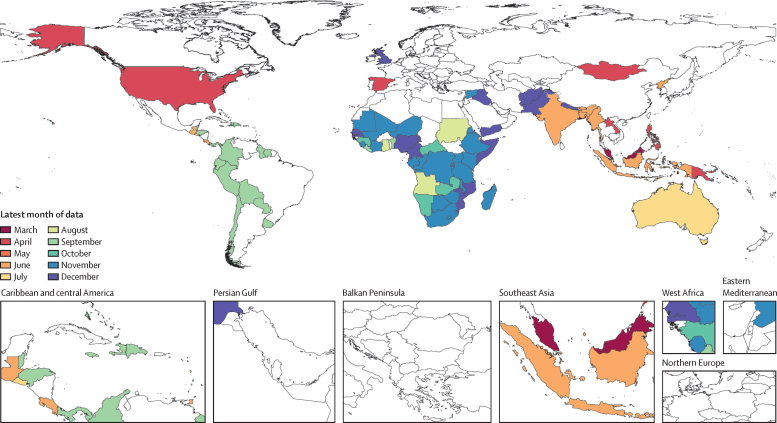
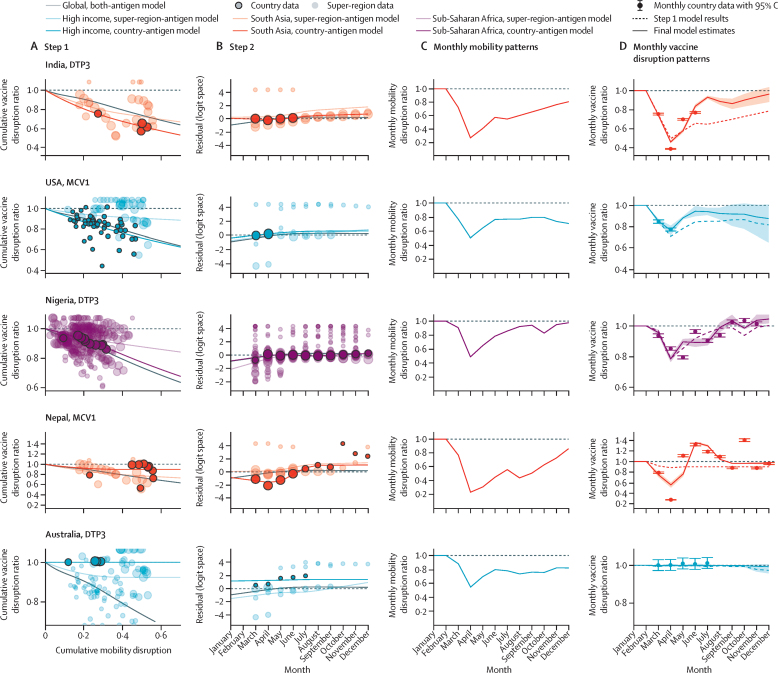
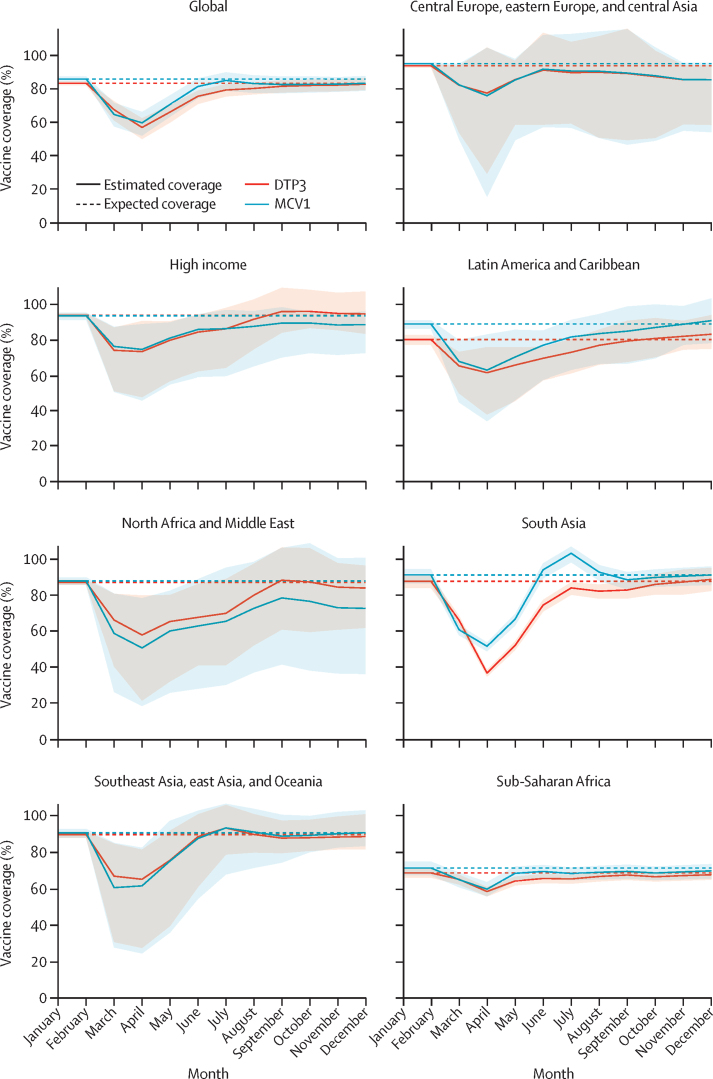
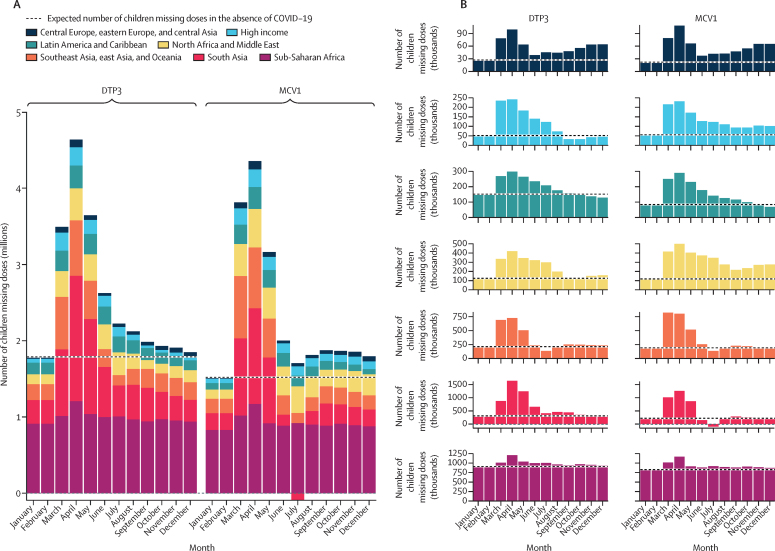
BACKGROUND: The COVID-19 pandemic and efforts to reduce SARS-CoV-2 transmission substantially affected health services worldwide. To better understand the impact of the pandemic on childhood routine immunisation, we estimated disruptions in vaccine coverage associated with the pandemic in 2020, globally and by Global Burden of Disease (GBD) super-region. METHODS: For this analysis we used a two-step hierarchical random spline modelling approach to estimate global and regional disruptions to routine immunisation using administrative data and reports from electronic immunisation systems, with mobility data as a model input. Paired with estimates of vaccine coverage expected in the absence of COVID-19, which were derived from vaccine coverage models from GBD 2020, Release 1 (GBD 2020 R1), we estimated the number of children who missed routinely delivered doses of the third-dose diphtheria-tetanus-pertussis (DTP3) vaccine and first-dose measles-containing vaccine (MCV1) in 2020. FINDINGS: Globally, in 2020, estimated vaccine coverage was 76·7% (95% uncertainty interval 74·3-78·6) for DTP3 and 78·9% (74·8-81·9) for MCV1, representing relative reductions of 7·7% (6·0-10·1) for DTP3 and 7·9% (5·2-11·7) for MCV1, compared to expected doses delivered in the absence of the COVID-19 pandemic. From January to December, 2020, we estimated that 30·0 million (27·6-33·1) children missed doses of DTP3 and 27·2 million (23·4-32·5) children missed MCV1 doses. Compared to expected gaps in coverage for eligible children in 2020, these estimates represented an additional 8·5 million (6·5-11·6) children not routinely vaccinated with DTP3 and an additional 8·9 million (5·7-13·7) children not routinely vaccinated with MCV1 attributable to the COVID-19 pandemic. Globally, monthly disruptions were highest in April, 2020, across all GBD super-regions, with 4·6 million (4·0-5·4) children missing doses of DTP3 and 4·4 million (3·7-5·2) children missing doses of MCV1. Every GBD super-region saw reductions in vaccine coverage in March and April, with the most severe annual impacts in north Africa and the Middle East, south Asia, and Latin America and the Caribbean. We estimated the lowest annual reductions in vaccine delivery in sub-Saharan Africa, where disruptions remained minimal throughout the year. For some super-regions, including southeast Asia, east Asia, and Oceania for both DTP3 and MCV1, the high-income super-region for DTP3, and south Asia for MCV1, estimates suggest that monthly doses were delivered at or above expected levels during the second half of 2020. INTERPRETATION: Routine immunisation services faced stark challenges in 2020, with the COVID-19 pandemic causing the most widespread and largest global disruption in recent history. Although the latest coverage trajectories point towards recovery in some regions, a combination of lagging catch-up immunisation services, continued SARS-CoV-2 transmission, and persistent gaps in vaccine coverage before the pandemic still left millions of children under-vaccinated or unvaccinated against preventable diseases at the end of 2020, and these gaps are likely to extend throughout 2021. Strengthening routine immunisation data systems and efforts to target resources and outreach will be essential to minimise the risk of vaccine-preventable disease outbreaks, reach children who missed routine vaccine doses during the pandemic, and accelerate progress towards higher and more equitable vaccination coverage over the next decade. FUNDING: Bill & Melinda Gates Foundation.
Overview
The claims and statistics of this paper haven’t been checked yet.
Free: it reads the open-access text and checks the first 5 claims that cite a source we can check. Create a free account to check every claim.
Integrity signals
Registry
Cites
Statistics
Figures
Verification
Claims the paper makes
The claims and statistics of this paper haven’t been checked yet.
Free: it reads the open-access text and checks the first 5 claims that cite a source we can check. Create a free account to check every claim.
Claims other papers make about this one
Each is checked against this paper’s own text: does it say what the citing paper says it does?
In the citing paper
“In a previous analysis using partial-year data from the first months of the pandemic, Causey and colleagues estimated 2020 global DTP3 coverage at approximately 76.7%, which is 7.7 pp lower than was expected in the absence of the pandemic.18”
In the citing paper
“The COVID-19 pandemic has disrupted routine health services globally, resulting in decreased vaccination rates affecting millions of children [8]”
Self-check
Percentages, sums and reported differences re-computed from the paper’s own numbers.
The self-check needs the paper’s full text.
Citations
Cites
Wang, H., Abbas, K. M., Abbasifard, M., Abbasi-Kangevari, M., Abbastabar, H., Abd-Allah, F., Abdelalim, A., Abolhassani, H., Abreu, L. G., Abrigo, M. R. M., et al. (2020) · The Lancet · doi:10.1016/s0140-6736(20)30977-6 · Cited by 1,971 · cited 2×
“…C , and the estimated monthly number of eligible children calculated from GBD 2020 R1 annual target population estimates (updated from GBD 2019 36 as part of the GBD continuous update cycle), pop m : 1000 draws of N were calculated from draws of MDR and C to incorporate uncertainty in both…”
Self-citationGuidelines for accurate and transparent health estimates reporting: the GATHER statement
Stevens, G. A., Alkema, L., Black, R. E., Boerma, J. T., Collins, G. S., Ezzati, M., Grove, J. T., Hogan, D. R., Hogan, M. C., Horton, R., et al. (2016) · The Lancet · doi:10.1016/s0140-6736(16)30388-9 · Cited by 1,798 · cited 1×
“This analysis complies with the Guidelines for Accurate and Transparent Health Estimates Reporting (GATHER) statement, 17 with further information provided in the appendix (section 1); all source codes used to generate estimates and corres ponding data will be made accessible upon publication, on…”
Fullman, N., Yearwood, J., Abay, S. M., Abbafati, C., Abd-Allah, F., Abdela, J., Abdelalim, A., Abebe, Z., Abebo, T. A., Aboyans, V., et al. (2018) · The Lancet · doi:10.1016/s0140-6736(18)30994-2 · Cited by 1,013 · cited 1×
“Other covariates were considered in addition to our mobility measure (eg, total COVID-19 deaths and cases to date, indices of development, 36 and health-system performance 37 ), but they provided no meaningful associations with disruptions to vaccine coverage.”
Self-citationMobile phone data for informing public health actions across the COVID-19 pandemic life cycle
Oliver, N., Lepri, B., Sterly, H., Lambiotte, R., Deletaille, S., De Nadai, M., Letouzé, E., Salah, A. A., Benjamins, R., Cattuto, C., et al. (2020) · Science Advances · doi:10.1126/sciadv.abc0764 · Cited by 631 · cited 1×
“30 Full methodological details about generating mobility estimates have been published elsewhere, 31 but in brief, we synthesised daily human movement data obtained from mobile phones from Descartes Labs, 32 Facebook, 33 Google, 34 and SafeGraph 35 in 134 countries and territories into cohesive…”
Modeling COVID-19 scenarios for the United States
IHME COVID-19 Forecasting Team, Reiner, R. C., Barber, R. M., Collins, J. K., Zheng, P., Adolph, C., Albright, J., Antony, C. M., Aravkin, A. Y., Bachmeier, S. D., et al. (2021) · Nature Medicine · doi:10.1038/s41591-020-1132-9 · Cited by 556
Self-citationStatistical Meta‐Analysis with Applications
Hartung, J., Knapp, G., & Sinha, B. K. (2008) · Wiley Series in Probability and Statistics · doi:10.1002/9780470386347 · Cited by 418 · cited 1×
“27 We used qualitative data collected by WHO and partners, including two sets of Pulse poll results, 4,28 essential health services polls, 7 and additional data from WHO regional offices, to evaluate estimated CDRs.”
Abbas, K., Procter, S. R., van Zandvoort, K., Clark, A., Funk, S., Mengistu, T., Hogan, D., Dansereau, E., Jit, M., Flasche, S., et al. (2020) · The Lancet Global Health · doi:10.1016/s2214-109x(20)30308-9 · Cited by 362 · cited 1×
“As evidenced by past epidemics and modelling exercises, 45,46 substantive gaps in vaccine coverage increase the risk of vaccine-preventable disease outbreaks once COVID-19 prevention measures subside and individuals resume pre-pandemic social contact patterns.”
McDonald, H. I., Tessier, E., White, J. M., Woodruff, M., Knowles, C., Bates, C., Parry, J., Walker, J. L., Scott, J. A., Smeeth, L., et al. (2020) · Eurosurveillance · doi:10.2807/1560-7917.es.2020.25.19.2000848 · Cited by 337
Statistical meta-analysis with applications
(2009) · Choice Reviews Online · doi:10.5860/choice.46-4497 · Cited by 311
Turner, N. (2009) · PubMed · Cited by 306
Research works printed but not linked: 1
- The DHS Program COVID-19 update: some DHS surveys return to the field; others postponed until 2021. Press release https://www.dhsprogram.com/Who-We-Are/News-Room/COVID-19-Update-Some-DHS-surveys-return-to-the-field-others-postponed-until-2021.cfm Sept 2, 2020
Cited by
Items 301–400 of 470
Summan, A., Nandi, A., & Bloom, D. E. (2022) · SSRN Electronic Journal · doi:10.2139/ssrn.4147244 · Cited by 2
Sporišević, L., Jorunčić, A., Oručević, S., & Musa, S. (2022) · Liječnički vjesnik · doi:10.26800/lv-144-supl1-21 · Cited by 2
Vilbrun, S. C., Souroutzidis, A., Walsh, K. F., Ellis, J., Guiteau, C., Delva, S., Joissaint, G., Joseph, P., Pape, J. W., & Koenig, S. P. (2023) · PLOS Global Public Health · doi:10.1371/journal.pgph.0002356 · Cited by 1
Farahani, P. V., & Öztürk, C. (2024) · Journal of Pediatrics Review · doi:10.32598/jpr.12.1.1136.1 · Cited by 1
van Rooyen, S., Lubbe, M. S., Kotzé, I., & Motaze, N. V. (2024) · Vaccines · doi:10.3390/vaccines12060582 · Cited by 1
“On the contrary, sub-Saharan Africa witnessed the most modest annual declines in vaccine coverage, characterised by a relatively undisturbed operational landscape throughout the year [3–6].”
BackgroundTosyalı, M., & Koç, F. U. (2024) · Pakistan Journal of Medical Sciences · doi:10.12669/pjms.41.1.9689 · Cited by 1
“2,15 During this period, strict home quarantine to reduce viral exposure and the closure of health centres other than emergency departments significantly disadvantaged newborns and young children.”
Concurrent diphtheria and COVID-19 infection in an unvaccinated child
Gundalli, S., Pujari, S., Balasubramanian, A., & Das, S. K. (2025) · BMJ Case Reports · doi:10.1136/bcr-2024-264530 · Cited by 1
Vacunas: una perspectiva global
García-Mauriño, C., & Bassat, Q. (2025) · Vacunas · doi:10.1016/j.vacun.2025.500457 · Cited by 1
Mahanta, T. G., Nirmolia, N., Mahanta, B., Baruah, S. D., & Biswas, A. B. (2025) · Indian Journal of Community Medicine · doi:10.4103/ijcm.ijcm_399_24 · Cited by 1
Lee, D., Kim, T. T., Griffiths, U. K., Seidel, M., Attaran, M. F., Lavayen, M. C., & Cabrera-Clerget, A. (2025) · BMJ Open · doi:10.1136/bmjopen-2025-104188 · Cited by 1
“12 Using a quasi-experimental difference- in-differences (DiD) study design, we investigate the safeguarding role of government commitment to health and immunisation financing in mitigating disruptions to routine immunisation services (ie, smaller reductions in vaccination coverage rates) during…”
Ozigbu, C. E., Li, Z., Olatosi, B., Hardin, J. W., & Hair, N. L. (2025) · PLoS ONE · doi:10.1371/journal.pone.0338568 · Cited by 1
“COVID-19 pandemic-related disruptions led to more children missing essential vaccines [2,3].”
Baroutsou, V., Wymann, M. N., Fehr, J. S., & Lang, P. (2025) · Swiss Medical Weekly · doi:10.57187/s.4525 · Cited by 1
Has the Epidemiological Transition Occurred in Children? Fifty Years After Omran’s Theory
Anza‐Ramirez, C., Miranda, J. J., Spall, H. G. C. V., Mendoza, W., Beran, D., & Collaborators, G. 2. E. T. I. C. (2026) · Wellcome Open Research · doi:10.12688/wellcomeopenres.25541.1 · Cited by 1
Xiao, Y., Dekyi, Zhang, S., Feng, S., Wang, X., Liao, L., Zheng, J., & Zhao, D. (2026) · BMC Infectious Diseases · doi:10.1186/s12879-026-12878-7 · Cited by 1
“Additionally, there has been a decline in vaccination coverage [14, 15].”
Olulaja, O., & Jaber, R. (2026) · Public Health Challenges · doi:10.1002/puh2.70214
“…disruptions—including lockdown measures, movement restrictions, diversion of health resources toward COVID-19 response, fear of infection in health facilities, and temporary suspension of outreach immunization services—likely compounded preexisting structural barriers to vaccine access [ 18, 24 ].”
Dellie, E., Tsehay, C. T., Teshale, G., Aschalew, A. Y., Hagos, A., Tafere, T. Z., Baykemagn, N. D., & Worku, N. (2026) · INQUIRY The Journal of Health Care Organization Provision and Financing · doi:10.1177/00469580261441758 · Cited by 2
“7-11 These setbacks have worsened existing inequities, particularly in sub-Saharan Africa, where health systems are often fragile and under-resourced.”
Togola, S., Diarra, S. S., Sarro, Y. D. S., Diarra, B., Coulibaly, C. A., Salia, Bah, I., & Doumbia, S. (2026) · Journal of Interventional Epidemiology and Public Health · doi:10.37432/jieph-d-25-00100 · Cited by 1
Ko, J., Sun, J., Cheung, A., Ridwan, M., & Lee, H. F. (2026) · Global Public Health · doi:10.1080/17441692.2026.2672825 · Cited by 1
Parental vaccine hesitancy and immunization practices in children with food allergy
Yiğit, E. Ş., BAĞ, Ö., Tunca, S., & Tunçel, T. (2026) · European Journal of Pediatrics · doi:10.1007/s00431-026-07093-0 · Cited by 1
“However, as of 2023, according to data from the WHO and the United Nations Children’s Fund (UNICEF), approximately 14.5 million children have received none of the routine childhood vaccines, classifying them as “zero-dose.””
InfluentialZhao, X., Liu, Z. C., Wang, Y., Wang, Y., Zhang, W., Wang, X., Song, D., Zhao, Z., & Liu, X. (2026) · Infection · doi:10.1007/s15010-026-02863-2 · Cited by 1
Global polio vaccination research in the eradication endgame
Kar, S., Jamal, B. R., & Wei, L. K. (2026) · Discover Public Health · doi:10.1186/s12982-026-02445-5 · Cited by 1
“In parallel, the COVID-19 pandemic disrupted routine childhood vaccination services and supplementary immunization campaigns across more than 170 countries, widening immunity gaps and exposing vulnerabilities in disease-control systems [3, 4].”
Alsalahi, S. E., Almari, M., Jaleel, L. A. A., Albazzaz, N. A., Sarraj, Y. A., Akkad, H. S., Aziz, S., & Alhenaidi, A. (2026) · Frontiers in Health Services · doi:10.3389/frhs.2026.1850596 · Cited by 1
“This is consistent with international observations of the pandemic’s impact on vaccination rates and is also reflected in declines in children’s vaccination rates (64).”
Bobo, F. T., Negasa, A. G., Bobo, H. T., Yitbarek, K., Dinsa, G. D., & Woldie, M. K. (2026) · International Journal for Equity in Health · doi:10.1186/s12939-026-02955-3 · Cited by 1
“ZD prevalence increased in ; [13] deep-rooted socioeconomic inequities and health system weaknesses remain the more persistent drivers [29, 30].”
Freitas, M. A. V., Fiorelli, L. L., Brun, L. S., Francisco, M. F. B., de Miranda, L. C. M., & Tavares, D. S. A. (2026) · Aracê. · doi:10.56238/arev8n9-065 · Cited by 1
Pham, Q. D., Ly, N. T., Mital, S., Kim, L., Thuy, N. T. P., Hiển, N. T., Toan, N. V., Thai, T. T., Trung, N. V., Thuong, N. V., et al. (2026) · Vaccine X · doi:10.1016/j.jvacx.2026.100911 · Cited by 1
Healthcare provider and medical student impressions of vaccine hesitancy in Romania
Strickland, C. J., & Horney, J. A. (2022) · Public Health in Practice · doi:10.1016/j.puhip.2022.100261 · Cited by 1
“Reduced capacity of healthcare systems, missed and cancelled appointments, and concerns about exposure to COVID-19 have disrupted access to routine vaccinations, increasing the risk of an outbreak when public health systems have the least capacity to effectively respond [21 – 23].”
How COVID‐19 has impacted immunisation service delivery in Australia: a national study
Giles, M., O'Bryan, J., Angliss, M., Lee, S., & Krishnaswamy, S. (2022) · Australian and New Zealand Journal of Public Health · doi:10.1111/1753-6405.13260 · Cited by 1
“<1 year 65 (8) 12 (40) 16 (4) 3 (50) 6 (10) 5 (21) 2 (3) 14 (14) 7 (10) 0 (0)”
Hare, J., Riggall, G., Bongers, A., Ramesh, K., Kokareva, L., & Chin, B. (2023) · Frontiers in Public Health · doi:10.3389/fpubh.2023.1143790 · Cited by 1
Velasco‐Hernández, J. X. (2023) · Elsevier eBooks · doi:10.1016/b978-0-323-95064-0.00002-6 · Cited by 1
Clostridium tetani Infection in a Geriatric Patient: Do Not Let Your Guard Off!
Piscitelli, A., Cacciatore, S., Ambrosio, F., Ragozzino, R., Pasquini, F. M., Incordino, F., D’Angelo, E., Gerardino, L., Maggi, L., & Landi, F. (2023) · Annals of Geriatric Medicine and Research · doi:10.4235/agmr.23.0067 · Cited by 1
Effectiveness of a vaccine recovery plan after the COVID-19 pandemic. Results of one year follow-up.
Contarino, F. M., Pietro, E. D., Randazzo, C., Bella, F., & Contrino, M. L. (2023) · Journal of preventive medicine and hygiene · doi:10.15167/2421-4248/jpmh2023.64.3.3001 · Cited by 1
Abdi, A. O. (2024) · International Journal of Science and Research (IJSR) · doi:10.21275/sr24201202216 · Cited by 1
Prioritising immunisation across the life course
Saso, A., Skirrow, H., & Kampmann, B. (2021) · The Lancet · doi:10.1016/s0140-6736(21)02331-x · Cited by 1
Summan, A., Nandi, A., & Bloom, D. E. (2022) · SSRN Electronic Journal · doi:10.2139/ssrn.4113444 · Cited by 1
Shaw, D., Abad, R., Almeida, S. C. G., Amin‐Chowdhury, Z., Bautista, A., Bennett, D. E., Bradley, D., Broughton, K., Casanova, C., Choi, E. H., et al. (2025) · medRxiv · doi:10.1101/2025.07.10.25331197 · Cited by 1
Papelian, S. (2025) · Research Square · doi:10.21203/rs.3.rs-7340665/v1 · Cited by 2
Resilience to shocks in national vaccination delivery systems
Ismail, S. (2023) · LSHTM Research Online (London School of Hygiene and Tropical Medicine) · doi:10.17037/pubs.04670033 · Cited by 3
Moloro, A. H., Kase, B. F., Asnake, A. A., Gebrehana, A. K., Anbesu, E. W., Sabo, K. G., Sabo, Shibeshi, A. H., Birlie, A. A., & Asebe, H. A. (2026) · Research Square · doi:10.21203/rs.3.rs-8945443/v1 · Cited by 1
Ventura, A. (2020) · Medico e Bambino · doi:10.53126/meb39417
Les vaccinations infantiles bouleversées par la pandémie
Manus, J.-M. (2021) · Revue Francophone des Laboratoires · doi:10.1016/s1773-035x(21)00241-0
Prioritising immunisation across the life course – Authors' reply
Mosser, J. F., Causey, K., & Fullman, N. (2021) · The Lancet · doi:10.1016/s0140-6736(21)02330-8
Self-citationVentura, A. (2021) · Medico e Bambino · doi:10.53126/meb40485
Facultative Respiratory Pathogens in Children in the Context of Anti-epidemic Measures
Blechová, Z. (2022) · Pediatrie pro praxi · doi:10.36290/ped.2022.005
Elizagaray, M. L. (2022) · El Servicio de Difusión de la Creación Intelectual (National University of La Plata) · doi:10.35537/10915/134431 · Cited by 1
Vaccine pragmatism in the 21st century
Keddy, K. H. (2022) · The Lancet Infectious Diseases · doi:10.1016/s1473-3099(22)00181-5
Modeling vaccine allocation and equity implications of COVID-19 containment strategiesPreprint
Nakamoto, I., & Zhang, J. (2022) · medRxiv · doi:10.1101/2022.09.05.22279623
Summan, A., Nandi, A., & Bloom, D. E. (2022) · SSRN Electronic Journal · doi:10.2139/ssrn.4136925
Uma análise da reemergência do sarampo no território brasileiro
de Miranda, H. R., Ramos, G. L. C. A., Azevedo, I. A., Tolentino, S. L., Tosi, M. C., Figueiredo, J. N. D., Medeiros, A. J. G., & Andraos, L. B. (2022) · Brazilian Journal of Health Review · doi:10.34119/bjhrv5n4-252
A spatial decision support system for optimizing expansion of COVID immunization servicesPreprint
Ouma, P., Ngom, R., Oyugi, B., Atuhebwe, P. L., Okeibunor, J., Baldé, T., & Nanyunja, M. (2022) · Research Square · doi:10.21203/rs.3.rs-1968259/v1
Scenario modelling for diminished influenza seasons during 2020/2021 and 2021/2022 in EnglandPreprint
Hill, E. M., & Keeling, M. J. (2022) · medRxiv · doi:10.1101/2022.10.27.22281628 · Cited by 1
Moura, H. S. D., de Araújo, J. S. T., Delpino, F. M., Soares, D. D. A., Ramos, A. C. V., Berra, T. Z., Souza, R. M. P., Pinto, L. W., Fuentealba-Torres, M., de Freitas, G. L., et al. (2022) · Research Square · doi:10.21203/rs.3.rs-2248336/v1
Essays on the economics of childhood vaccinations
Summan, A. (2022) · doi:10.18174/579890
Mustafa, Z., Memeti, S., Pollozhani, A., Arsova‐Sarafinovska, Z., Stravrik, K., & Grozdanova, A. (2022) · Macedonian Pharmaceutical Bulletin · doi:10.33320/maced.pharm.bull.2022.68.03.247
Criminal Justice Issues and the COVID-19 Pandemic
Bennett, B., Freckelton, I. R., & Wolf, G. (2023) · Oxford University Press eBooks · doi:10.1093/oso/9780192896742.003.0008
Litigation and Legal Challenges to Emergency Orders
Bennett, B., Freckelton, I. R., & Wolf, G. (2023) · Oxford University Press eBooks · doi:10.1093/oso/9780192896742.003.0006
Production, Regulation, and Distribution of COVID-19 Treatments and Vaccines
Bennett, B., Freckelton, I. R., & Wolf, G. (2023) · Oxford University Press eBooks · doi:10.1093/oso/9780192896742.003.0012
Gostin, L. O. (2023) · Oxford University Press eBooks · doi:10.1093/oso/9780192896742.002.0006
Risk, Impact, and Disadvantage
Bennett, B., Freckelton, I. R., & Wolf, G. (2023) · Oxford University Press eBooks · doi:10.1093/oso/9780192896742.003.0007
Bennett, B., Freckelton, I. R., & Wolf, G. (2023) · Oxford University Press eBooks · doi:10.1093/oso/9780192896742.003.0001
Bennett, B., Freckelton, I. R., & Wolf, G. (2023) · Oxford University Press eBooks · doi:10.1093/oso/9780192896742.002.0008
Bennett, B., Freckelton, I. R., & Wolf, G. (2023) · Oxford University Press eBooks · doi:10.1093/oso/9780192896742.002.0009
Past Legal and Regulatory Responses to Infectious Diseases
Bennett, B., Freckelton, I. R., & Wolf, G. (2023) · Oxford University Press eBooks · doi:10.1093/oso/9780192896742.003.0002
Domestic Laws and Emergency Measures
Bennett, B., Freckelton, I. R., & Wolf, G. (2023) · Oxford University Press eBooks · doi:10.1093/oso/9780192896742.003.0005
Law, Regulation, and Rights: Reflections on the COVID-19 Pandemic
Bennett, B., Freckelton, I. R., & Wolf, G. (2023) · Oxford University Press eBooks · doi:10.1093/oso/9780192896742.003.0013
Bennett, B., Freckelton, I. R., & Wolf, G. (2023) · Oxford University Press eBooks · doi:10.1093/oso/9780192896742.002.0011
Bennett, B., Freckelton, I. R., & Wolf, G. (2023) · Oxford University Press eBooks · doi:10.1093/oso/9780192896742.003.0003
Bennett, B., Freckelton, I. R., & Wolf, G. (2023) · Oxford University Press eBooks · doi:10.1093/oso/9780192896742.002.0010
Bennett, B., Freckelton, I. R., & Wolf, G. (2023) · Oxford University Press eBooks · doi:10.1093/oso/9780192896742.002.0004
Bennett, B., Freckelton, I. R., & Wolf, G. (2023) · Oxford University Press eBooks · doi:10.1093/oso/9780192896742.002.0003
Civil Liability, Regulation, and Accountability
Bennett, B., Freckelton, I. R., & Wolf, G. (2023) · Oxford University Press eBooks · doi:10.1093/oso/9780192896742.003.0009
Bennett, B., Freckelton, I. R., & Wolf, G. (2023) · Oxford University Press eBooks · doi:10.1093/oso/9780192896742.002.0005
COVID-19 and Workplace and Occupational Health and Safety
Bennett, B., Freckelton, I. R., & Wolf, G. (2023) · Oxford University Press eBooks · doi:10.1093/oso/9780192896742.003.0010
Development of COVID-19 Treatments and Vaccines
Bennett, B., Freckelton, I. R., & Wolf, G. (2023) · Oxford University Press eBooks · doi:10.1093/oso/9780192896742.003.0011
Online Immunization Class during the Covid–19 Pandemic
Agustina, S., Ambarwati, K., Sangadji, I., & Ariyanti, I. (2023) · Indonesia Berdaya · doi:10.47679/ib.2023454
AVALIAÇÃO DA ANTICOAGULAÇÃO ORAL COM VARFARINA EM HOSPITAL UNIVERSITÁRIO
Oliveira, A. C. A., Barreto, D. A., Ferreira, I. P. O., Carvalho, J. C. M. R., Pires, L. B., de Melo, E. V., Sousa, A. C. S., & Campos, M. D. S. B. (2023) · Brazilian Journals Editora eBooks · doi:10.35587/brj.ed.0002204
Souza, V. A. B., & Leite, D. C. F. (2023) · Brazilian Journals Editora eBooks · doi:10.35587/brj.ed.0002203
Castiñeiras, A. C. (2023) · Digital Library of Theses and Dissertations (Universidade de São Paulo) · doi:10.11606/d.5.2023.tde-21082023-161616
Estimating the maximum risk of measles outbreaks due to heterogeneous fall in immunization ratesPreprint
Wu, N., Moon, S. A., Falk, A., Marathe, A., & Vullikanti, A. K. S. (2023) · medRxiv · doi:10.1101/2023.10.24.23297486
“In the US, as well as in many parts of the world, there has been a significant drop in routine immunizations during the pandemic, e.g., [38, 9, 24].”
BackgroundREPERCUSSÕES DA PANDEMIA DA COVID-19: DESAFIOS E RETROCESSOS GLOBAIS NA VACINAÇÃO INFANTIL
Laguna, G. G. D. C., Fonseca, Y. S., Monção, C. D. P. M., da Silveira, N. S., Coelho, L. S., Aguiar, G. D. S., & Borges, G. F. (2023) · Revista Interfaces Saúde Humanas e Tecnologia · doi:10.16891/2317-434x.v11.e3.a2023.pp3139-3150
Vaccines and Immunization Services During the Pandemic Era and Beyond
Amponsah‐Dacosta, E., Wariri, O., Awuah, A. A.-A., & Fulurija, A. (2024) · Frontiers research topics · doi:10.3389/978-2-8325-4675-8
Nizamani, S., Rahman, S., Siddiqui, M. I., Thebo, A. A., & Rutba (2023) · Annals of Punjab Medical College · doi:10.29054/apmc/2023.1463
“A study conducted in Nepal found that the economic impact of the pandemic was a significant factor in the decline in measles vaccination coverage rates (5).”
BackgroundAnkermann, T., & Liese, J. G. (2024) · Kinder- und Jugendmedizin · doi:10.1055/a-2295-9948
Routine Immunization During the Covid-19 Pandemic: Need for Improved Strategies for Future Threats
Vashishtha, V. M. (2024) · Indian Pediatrics · doi:10.1007/s13312-024-3224-y
“According to a research based on adminis-tered dose data, India’s DPT3 immunization rate fell by 15.8% in 2020 compared to prior projections [9].”
InfluentialPercepção de pais e cuidadores sobre imunização em crianças
Damasceno, R. M., Lima, M. M. D. S., Brito, J. M. P. D., Moreira, R. M. M., Cavalcanti, E. P. L., de Moraes, A. J. N., de Aguiar, L. C., Araújo, A. S., Lima, A. V. S., Venâncio, D. O., et al. (2024) · Contribuciones a las Ciencias Sociales · doi:10.55905/revconv.17n.7-372
Messora, T. C. D. C., & Sato, A. P. S. (2024) · BEPA Boletim Epidemiológico Paulista · doi:10.57148/bepa.2024.v.21.40774
Khoubfekr, H., Dehani, H., Sarabi, R. E., & manesh, Z. V. (2023) · Taḥqīq va tusi̒ah-i salāmata · doi:10.61186/jhrd.1.2.24 · Cited by 1
Markhof, Y. V., Wollburg, P. R., & Zezza, A. (2025) · Journal of Development Economics · doi:10.1016/j.jdeveco.2024.103449 · Cited by 2
Impairment of Routine Childhood Vaccination During COVID-19 Pandemic in Southeast Iran
Sargolzaei, N., Sarhadi, S., Hashemzehi, G., & Lakzaee, S. (2024) · International Journal of Infection · doi:10.5812/iji-148164
Cui, W., Guo, Y., Zhang, J., & Yan, J. (2025) · SSRN Electronic Journal · doi:10.2139/ssrn.5153328
Amberbir, A., Sayinzoga, F., Uwimana, A., VanderZanden, A., Ntawukuriryayo, J. T., Tambo, E., Krishna, A. K. I., Hirschhorn, L. R., & Binagwaho, A. (2025) · medRxiv · doi:10.1101/2025.03.28.25324830
Kumar, S., chandila, N., Kashyap, M., & Dutta, S. R. (2025) · Current Functional Foods · doi:10.2174/0126668629372555250406180345
Carasek, V. P., Sergio, M. G. D. M., da Silva, J. C., Françoloso, M. R., Rodrigues, K. D. S., Istilli, P. T., Uehara, S. C. D. S. A., & Yamamura, M. (2025) · Hygeia - Revista Brasileira de Geografia Médica e da Saúde · doi:10.14393/hygeia2175042
Evans, B., Kaiser, L., Keiser, O., & Jombart, T. (2025) · Public Health · doi:10.1016/j.puhe.2025.105813
Kabwama, S. N., Razaz, N., Ssenkusu, J. M., Lindgren, H. E., Wanyenze, R. K., Driwale, A., & Alfvén, T. (2025) · PLOS Global Public Health · doi:10.1371/journal.pgph.0004731 · Cited by 1
“Our results are consistent with previous global [30] and national assessments in Uganda [31] and other low and middle-income countries [32,33] that found that the COVID-19 pandemic was associated with challenges such as fear of infection in health settings, reluctance to access services, reduced…”
Idro, R., & Newton, C. R. J. C. (2025) · Cambridge University Press eBooks · doi:10.1017/9781009052733.035
Trends and disparities in HPV vaccination among U.S. adolescents, 2018–2023
Agboli, V. I., Usman, I. A., Alabi, A., & Amusa, T. (2025) · Open Health · doi:10.1515/ohe-2025-0073
Manyanga, D. P., Byabamazima, C. R., Teboh, C., Weldegebriel, G. G., Muitherero, C., Masvikeni, B., Ochieng, M., & Wanyoike, S. W. (2025) · Pan African Medical Journal · doi:10.11604/pamj.supp.2025.51.1.49027 · Cited by 2
Ndubuka, N., Dankwah, E., Dankwah, P., Woods, S., Akinjobi, G., Gardipy-Mckenzie, C., Ndubuka, J., Abati, A., Chow, A. F., Maina, G., et al. (2025) · medRxiv · doi:10.1101/2025.10.08.25337612
“Global studies have documented sharp declines in routine vaccinations during the pandemic, as families avoided healthcare facilities due to fear of infection (35,36).”
Doğan, G., Baydan, F., Güzin, Y., & Uzan, G. S. (2025) · Research Square · doi:10.21203/rs.3.rs-7978965/v1
Metadata
- Authors
- Causey, K., Fullman, N., Sorensen, R. J. D., Galles, N. C., Zheng, P., Aravkin, A., Danovaro-Holliday, M. C., Martinez-Piedra, R., Sodha, S. V., Velandia-González, M. P., Gacic-Dobo, M., Castro, E., He, J., Schipp, M., Deen, A., Hay, S. I., Lim, S. S., & Mosser, J. F.
- Affiliations
- University of Washington (US)
- World Health Organization Regional Office for the Americas (US)
- Seattle Children's Hospital (US)
- Corresponding author
- Mosser, Jonathan F
- ORCID
- Venue
- The Lancet
- Publisher
- Elsevier BV
- Published
- 2021-08
- Volume
- 398
- Issue
- 10299
- Pages
- 522-534
- ISSN
- 0099-5355 (ISSN-L)
- 0140-6736
- PMC
- PMC8285122
- OpenAlex
- W3183723118
- Cited by
- 450
- References
- 39
- Citations by year
- 2026: 58 · 2025: 61 · 2024: 79 · 2023: 123 · 2022: 103 · 2021: 25
- FWCI
- 45.58
- Type
- journal article
- Language
- en
- Open access
- hybrid
- doi.org
- Licence
- cc-by
- www.elsevier.com/tdm/userlicense/1.0/ (tdm)
- www.elsevier.com/legal/tdmrep-license (tdm)
- creativecommons.org/licenses/by/3.0/igo/ (vor)
- Locations
- The Lancet (publishedVersion, cc-by)
- PubMed Central (publishedVersion, cc-by)
- PubMed (publishedVersion)
- Funders
- Bill and Melinda Gates Foundation
- World Health Organization
- Topics
- Social Sciences › Health › Vaccine Coverage and Hesitancy
- Physical Sciences › Mathematics › Modeling and Simulation › COVID-19 epidemiological studies
- Health Sciences › Medicine › Oncology › COVID-19 and healthcare impacts
- Keywords
- COVID-19 pandemic, childhood immunization, measles-containing vaccine, missed vaccine doses, mobility data, vaccine hesitancy, healthcare disruption, child health outcomes
- MeSH terms
- Vaccination Coverage, COVID-19, Child, Humans, Measles Vaccine, Global Health, Models, Statistical, Diphtheria-Tetanus-Pertussis Vaccine
About these checks
Registry, retraction, Cites and statistics results are computed, not judged, with one exception: a printed reference that no index lists is read once by a model before it counts as a citation error. Claims are extracted by a model and kept only when their quote appears verbatim in the text; each cited source is then checked, with a model’s help, for whether it says what the claim relies on. Those verdicts can be wrong — read the claim’s quote and the cited source before relying on one.
Statistics and arithmetic are recomputed, not judged.
Confidence bands are shown only for fields calibrated on our annotated test set. None is calibrated yet, so no band is shown.
What counts as a claim ›How we measure confidence ›How we check this ›
Are you an author, or do you see a problem with this page? Request a review
Data sources
Bibliographic data: Semantic Scholar, OpenAlex, Crossref.
Contains information from the Semantic Scholar Academic Graph Datasets, made available under the ODC Attribution License (ODC-BY 1.0).
Semantic Scholar’s data is described in: Kinney, R., et al. (2023). The Semantic Scholar Open Data Platform. arXiv:2301.10140.
