

Estimating global and regional disruptions to routine childhood vaccine coverage during the COVID-19 pandemic in 2020: a modelling study
Open accessThe DOI matches its Crossref record; 36 of the 39 references it cites were found in a registry or an index.
Abstract
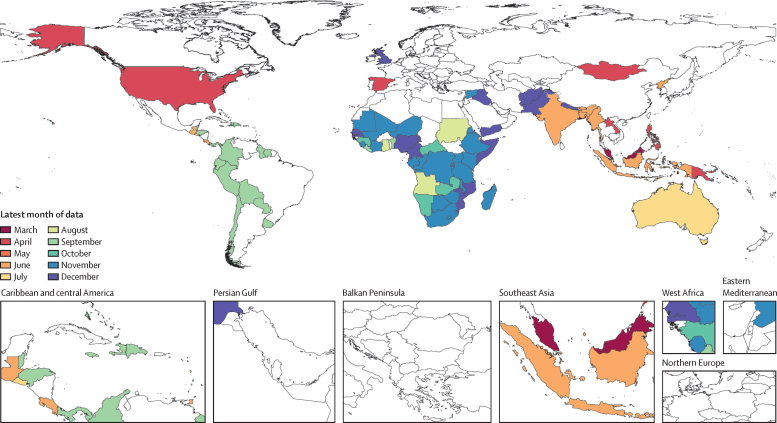
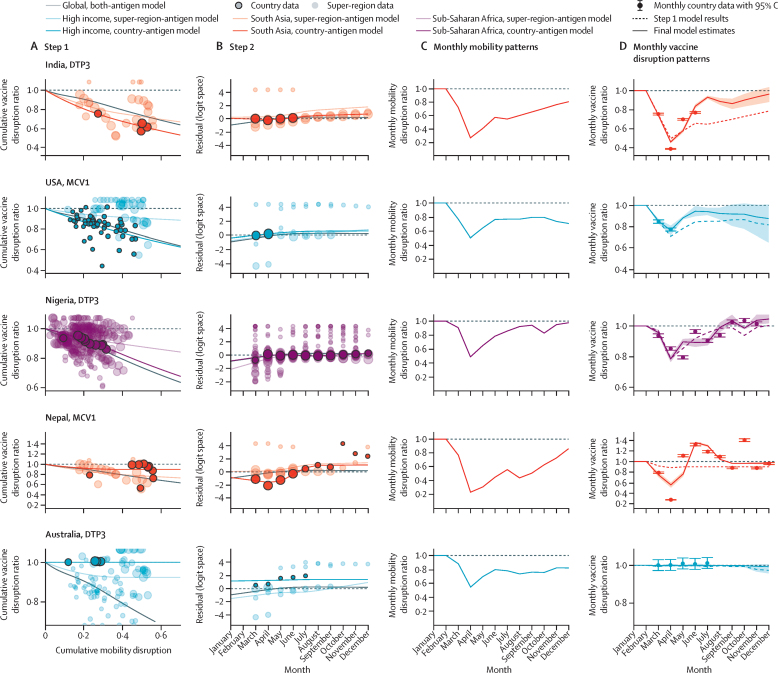
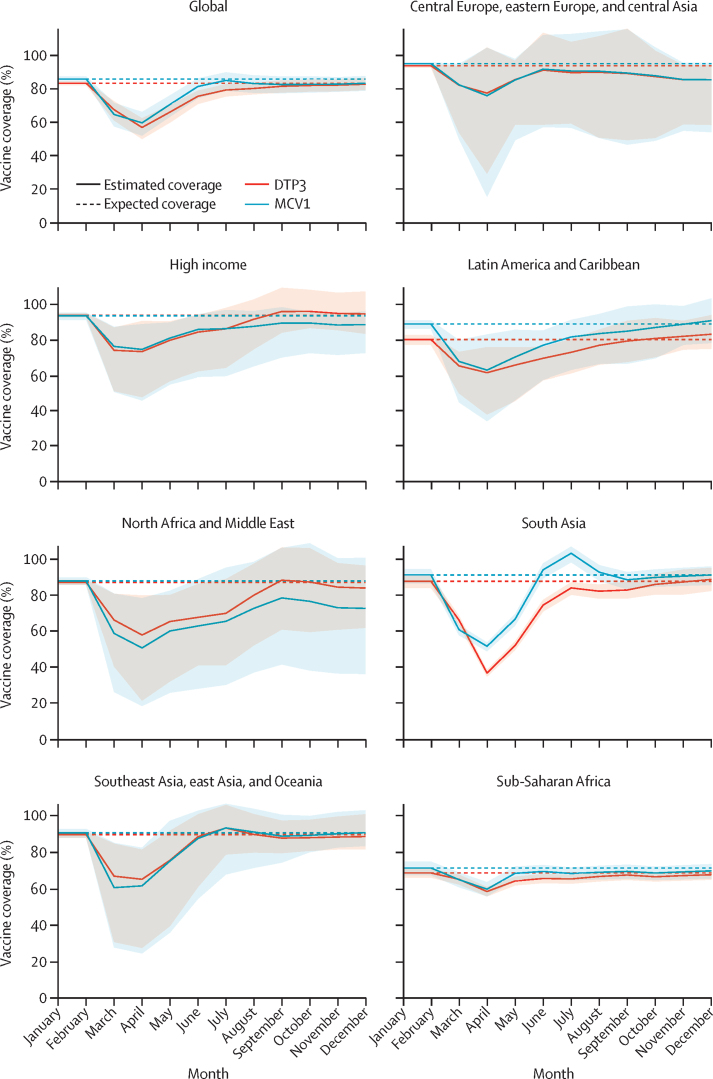
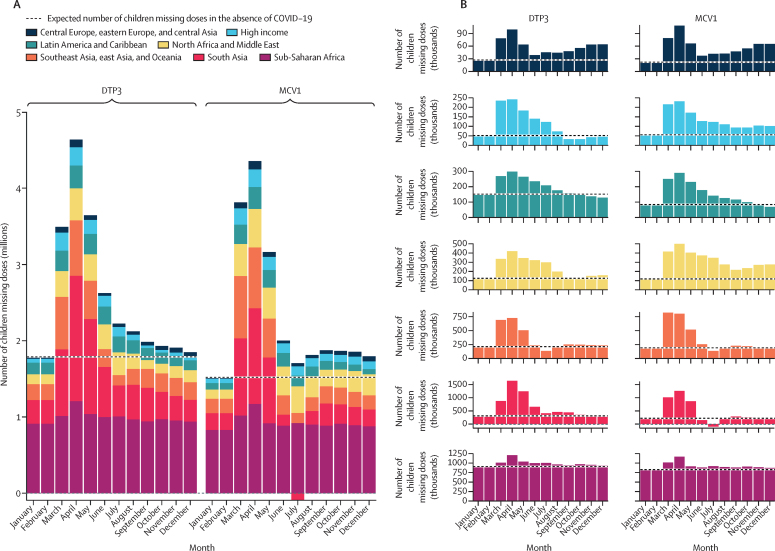
BACKGROUND: The COVID-19 pandemic and efforts to reduce SARS-CoV-2 transmission substantially affected health services worldwide. To better understand the impact of the pandemic on childhood routine immunisation, we estimated disruptions in vaccine coverage associated with the pandemic in 2020, globally and by Global Burden of Disease (GBD) super-region. METHODS: For this analysis we used a two-step hierarchical random spline modelling approach to estimate global and regional disruptions to routine immunisation using administrative data and reports from electronic immunisation systems, with mobility data as a model input. Paired with estimates of vaccine coverage expected in the absence of COVID-19, which were derived from vaccine coverage models from GBD 2020, Release 1 (GBD 2020 R1), we estimated the number of children who missed routinely delivered doses of the third-dose diphtheria-tetanus-pertussis (DTP3) vaccine and first-dose measles-containing vaccine (MCV1) in 2020. FINDINGS: Globally, in 2020, estimated vaccine coverage was 76·7% (95% uncertainty interval 74·3-78·6) for DTP3 and 78·9% (74·8-81·9) for MCV1, representing relative reductions of 7·7% (6·0-10·1) for DTP3 and 7·9% (5·2-11·7) for MCV1, compared to expected doses delivered in the absence of the COVID-19 pandemic. From January to December, 2020, we estimated that 30·0 million (27·6-33·1) children missed doses of DTP3 and 27·2 million (23·4-32·5) children missed MCV1 doses. Compared to expected gaps in coverage for eligible children in 2020, these estimates represented an additional 8·5 million (6·5-11·6) children not routinely vaccinated with DTP3 and an additional 8·9 million (5·7-13·7) children not routinely vaccinated with MCV1 attributable to the COVID-19 pandemic. Globally, monthly disruptions were highest in April, 2020, across all GBD super-regions, with 4·6 million (4·0-5·4) children missing doses of DTP3 and 4·4 million (3·7-5·2) children missing doses of MCV1. Every GBD super-region saw reductions in vaccine coverage in March and April, with the most severe annual impacts in north Africa and the Middle East, south Asia, and Latin America and the Caribbean. We estimated the lowest annual reductions in vaccine delivery in sub-Saharan Africa, where disruptions remained minimal throughout the year. For some super-regions, including southeast Asia, east Asia, and Oceania for both DTP3 and MCV1, the high-income super-region for DTP3, and south Asia for MCV1, estimates suggest that monthly doses were delivered at or above expected levels during the second half of 2020. INTERPRETATION: Routine immunisation services faced stark challenges in 2020, with the COVID-19 pandemic causing the most widespread and largest global disruption in recent history. Although the latest coverage trajectories point towards recovery in some regions, a combination of lagging catch-up immunisation services, continued SARS-CoV-2 transmission, and persistent gaps in vaccine coverage before the pandemic still left millions of children under-vaccinated or unvaccinated against preventable diseases at the end of 2020, and these gaps are likely to extend throughout 2021. Strengthening routine immunisation data systems and efforts to target resources and outreach will be essential to minimise the risk of vaccine-preventable disease outbreaks, reach children who missed routine vaccine doses during the pandemic, and accelerate progress towards higher and more equitable vaccination coverage over the next decade. FUNDING: Bill & Melinda Gates Foundation.
Overview
The claims and statistics of this paper haven’t been checked yet.
Free: it reads the open-access text and checks the first 5 claims that cite a source we can check. Create a free account to check every claim.
Integrity signals
Registry
Cites
Statistics
Figures
Verification
Claims the paper makes
The claims and statistics of this paper haven’t been checked yet.
Free: it reads the open-access text and checks the first 5 claims that cite a source we can check. Create a free account to check every claim.
Claims other papers make about this one
Each is checked against this paper’s own text: does it say what the citing paper says it does?
In the citing paper
“In a previous analysis using partial-year data from the first months of the pandemic, Causey and colleagues estimated 2020 global DTP3 coverage at approximately 76.7%, which is 7.7 pp lower than was expected in the absence of the pandemic.18”
In the citing paper
“The COVID-19 pandemic has disrupted routine health services globally, resulting in decreased vaccination rates affecting millions of children [8]”
Self-check
Percentages, sums and reported differences re-computed from the paper’s own numbers.
The self-check needs the paper’s full text.
Citations
Cites
Wang, H., Abbas, K. M., Abbasifard, M., Abbasi-Kangevari, M., Abbastabar, H., Abd-Allah, F., Abdelalim, A., Abolhassani, H., Abreu, L. G., Abrigo, M. R. M., et al. (2020) · The Lancet · doi:10.1016/s0140-6736(20)30977-6 · Cited by 1,971 · cited 2×
“…C , and the estimated monthly number of eligible children calculated from GBD 2020 R1 annual target population estimates (updated from GBD 2019 36 as part of the GBD continuous update cycle), pop m : 1000 draws of N were calculated from draws of MDR and C to incorporate uncertainty in both…”
Self-citationGuidelines for accurate and transparent health estimates reporting: the GATHER statement
Stevens, G. A., Alkema, L., Black, R. E., Boerma, J. T., Collins, G. S., Ezzati, M., Grove, J. T., Hogan, D. R., Hogan, M. C., Horton, R., et al. (2016) · The Lancet · doi:10.1016/s0140-6736(16)30388-9 · Cited by 1,798 · cited 1×
“This analysis complies with the Guidelines for Accurate and Transparent Health Estimates Reporting (GATHER) statement, 17 with further information provided in the appendix (section 1); all source codes used to generate estimates and corres ponding data will be made accessible upon publication, on…”
Fullman, N., Yearwood, J., Abay, S. M., Abbafati, C., Abd-Allah, F., Abdela, J., Abdelalim, A., Abebe, Z., Abebo, T. A., Aboyans, V., et al. (2018) · The Lancet · doi:10.1016/s0140-6736(18)30994-2 · Cited by 1,013 · cited 1×
“Other covariates were considered in addition to our mobility measure (eg, total COVID-19 deaths and cases to date, indices of development, 36 and health-system performance 37 ), but they provided no meaningful associations with disruptions to vaccine coverage.”
Self-citationMobile phone data for informing public health actions across the COVID-19 pandemic life cycle
Oliver, N., Lepri, B., Sterly, H., Lambiotte, R., Deletaille, S., De Nadai, M., Letouzé, E., Salah, A. A., Benjamins, R., Cattuto, C., et al. (2020) · Science Advances · doi:10.1126/sciadv.abc0764 · Cited by 631 · cited 1×
“30 Full methodological details about generating mobility estimates have been published elsewhere, 31 but in brief, we synthesised daily human movement data obtained from mobile phones from Descartes Labs, 32 Facebook, 33 Google, 34 and SafeGraph 35 in 134 countries and territories into cohesive…”
Modeling COVID-19 scenarios for the United States
IHME COVID-19 Forecasting Team, Reiner, R. C., Barber, R. M., Collins, J. K., Zheng, P., Adolph, C., Albright, J., Antony, C. M., Aravkin, A. Y., Bachmeier, S. D., et al. (2021) · Nature Medicine · doi:10.1038/s41591-020-1132-9 · Cited by 556
Self-citationStatistical Meta‐Analysis with Applications
Hartung, J., Knapp, G., & Sinha, B. K. (2008) · Wiley Series in Probability and Statistics · doi:10.1002/9780470386347 · Cited by 418 · cited 1×
“27 We used qualitative data collected by WHO and partners, including two sets of Pulse poll results, 4,28 essential health services polls, 7 and additional data from WHO regional offices, to evaluate estimated CDRs.”
Abbas, K., Procter, S. R., van Zandvoort, K., Clark, A., Funk, S., Mengistu, T., Hogan, D., Dansereau, E., Jit, M., Flasche, S., et al. (2020) · The Lancet Global Health · doi:10.1016/s2214-109x(20)30308-9 · Cited by 362 · cited 1×
“As evidenced by past epidemics and modelling exercises, 45,46 substantive gaps in vaccine coverage increase the risk of vaccine-preventable disease outbreaks once COVID-19 prevention measures subside and individuals resume pre-pandemic social contact patterns.”
McDonald, H. I., Tessier, E., White, J. M., Woodruff, M., Knowles, C., Bates, C., Parry, J., Walker, J. L., Scott, J. A., Smeeth, L., et al. (2020) · Eurosurveillance · doi:10.2807/1560-7917.es.2020.25.19.2000848 · Cited by 337
Statistical meta-analysis with applications
(2009) · Choice Reviews Online · doi:10.5860/choice.46-4497 · Cited by 311
Turner, N. (2009) · PubMed · Cited by 306
Research works printed but not linked: 1
- The DHS Program COVID-19 update: some DHS surveys return to the field; others postponed until 2021. Press release https://www.dhsprogram.com/Who-We-Are/News-Room/COVID-19-Update-Some-DHS-surveys-return-to-the-field-others-postponed-until-2021.cfm Sept 2, 2020
Cited by
Naghavi, M., Ong, K. L., Aali, A., Ababneh, H. S., Abate, Y. H., Abbafati, C., Abbasgholizadeh, R., Abbasian, M., Abbasi-Kangevari, M., Abbastabar, H., et al. (2024) · The Lancet · doi:10.1016/s0140-6736(24)00367-2 · Cited by 2,889
“51 55 Our study also found that some vaccine-preventable diseases, such as measles, have shown widespread reductions in mortality rates and were geographically concen trated.”
BackgroundWang, H., Paulson, K. R., Pease, S. A., Watson, S., Comfort, H., Zheng, P., Aravkin, A. Y., Bisignano, C., Barber, R. M., Alam, T., et al. (2022) · The Lancet · doi:10.1016/s0140-6736(21)02796-3 · Cited by 2,069
“Many mechanisms have been proposed, including reduced vaccination rates 26 and reduced births in hospitals.”
Self-citationBender, R. G., Sirota, S. B., Swetschinski, L. R., Dominguez, R.-M. V., Novotney, A., Wool, E. E., Ikuta, K. S., Vongpradith, A., Rogowski, E. L. B., Doxey, M., et al. (2024) · The Lancet Infectious Diseases · doi:10.1016/s1473-3099(24)00176-2 · Cited by 596
Self-citationCOVID-19 and resilience of healthcare systems in ten countries
Arsenault, C., Gage, A., Kim, M. K., Kapoor, N. R., Akweongo, P., Amponsah, F., Aryal, A., Asai, D., Awoonor-Williams, J. K., Ayele, W., et al. (2022) · Nature Medicine · doi:10.1038/s41591-022-01750-1 · Cited by 554
Bardosh, K., de Figueiredo, A., Gur-Arie, R., Jamrozik, E., Doidge, J., Lemmens, T., Keshavjee, S., Graham, J. E., & Baral, S. (2022) · BMJ Global Health · doi:10.1136/bmjgh-2022-008684 · Cited by 318
Flor, L. S., Friedman, J., Spencer, C. N., Cagney, J., Arrieta, A., Herbert, M. E., Stein, C., Mullany, E. C., Hon, J., Patwardhan, V., et al. (2022) · The Lancet · doi:10.1016/s0140-6736(22)00008-3 · Cited by 364
“54 In low-income and middle-income countries, HIV, tuberculosis, and malaria programmes, 55 as well as childhood routine immunisation, 56 also face ongoing challenges, threatening decades of progress.”
Self-citationShet, A., Carr, K., Danovaro-Holliday, M. C., Sodha, S. V., Prosperi, C., Wunderlich, J., Wonodi, C., Reynolds, H. W., Mirza, I., Gacic-Dobo, M., et al. (2022) · The Lancet Global Health · doi:10.1016/s2214-109x(21)00512-x · Cited by 363
Self-citationKyu, H. H., Vongpradith, A., Sirota, S. B., Novotney, A., Troeger, C. E., Doxey, M. C., Bender, R. G., Ledesma, J. R., Biehl, M. H., Albertson, S. B., et al. (2022) · The Lancet Infectious Diseases · doi:10.1016/s1473-3099(22)00510-2 · Cited by 330
Wunrow, H. Y., Bender, R. G., Vongpradith, A., Sirota, S. B., Swetschinski, L. R., Novotney, A., Gray, A. P., Ikuta, K. S., Sharara, F., Wool, E. E., et al. (2023) · The Lancet Neurology · doi:10.1016/s1474-4422(23)00195-3 · Cited by 219
“63 Although this disruption is unlikely to affect meningitis rates due to persistent herd immunity, growing vaccine hesitancy fuelled by the pandemic will pose a challenge to preventing and controlling meningitis in the years ahead.”
Self-citationNandi, A., Pecetta, S., & Bloom, D. E. (2023) · eClinicalMedicine · doi:10.1016/j.eclinm.2023.101848 · Cited by 220
Hafeez, A., Dangel, W. J., Ostroff, S. M., Kiani, A. G., Glenn, S. D., Abbas, J., Afzal, M. S., Afzal, S., Ahmad, S., Ahmed, A., et al. (2023) · The Lancet Global Health · doi:10.1016/s2214-109x(22)00497-1 · Cited by 181
Self-citationGalles, N. C., Liu, P. Y., Updike, R. L., Fullman, N., Nguyen, J., Rolfe, S., Sbarra, A. N., Schipp, M. F., Marks, A., Abady, G. G., et al. (2021) · The Lancet · doi:10.1016/s0140-6736(21)00984-3 · Cited by 215
Self-citationShaw, D., Abad, R., Amin-Chowdhury, Z., Bautista, A., Bennett, D., Broughton, K., Cao, B., Casanova, C., Choi, E. H., Chu, Y.-W., et al. (2023) · The Lancet Digital Health · doi:10.1016/s2589-7500(23)00108-5 · Cited by 162
Mokdad, A. H., Bisignano, C., Hsu, J. M., Ababneh, H. S., Abbasgholizadeh, R., Abdelkader, A., PubMed, M., Abiodun, O. O., Aboagye, R. G., Abu‐Zaid, A., et al. (2024) · The Lancet · doi:10.1016/s0140-6736(24)01446-6 · Cited by 192
Self-citationHaeuser, E., Byrne, S., Nguyen, J., Raggi, C., McLaughlin, S. A., Bisignano, C., Harris, A. A., Smith, A. E., Lindstedt, P. A., Smith, G., et al. (2025) · The Lancet · doi:10.1016/s0140-6736(25)01037-2 · Cited by 143
“18 In contrast, with the benefit of time to account for delayed reporting from many countries and data sources, our present estimates using more complete data indicate that global DTP3 coverage in 2020 was 78·5%, or just 2.7 pp lower than expected without the pandemic.”
InfluentialArndt, M. B., Abate, Y. H., Abbasi‐Kangevari, M., ElHafeez, S. A., Abdelmasseh, M., Abd-Elsalam, S. M., Abdulah, D. M., Abdulkader, R. S., Abidi, H., Abiodun, O. A., et al. (2024) · The Lancet · doi:10.1016/s0140-6736(24)01821-x · Cited by 182
“We then fit a cascading random spline model to optimise location-year-specific fit of the relational model 53 (appendix 1 pp 42–44).”
Self-citationMeasles vaccination in Brazil: where have we been and where are we headed?
Sato, A. P. S., Boing, A. C., de Almeida, R. L. F., Xavier, M. O., Moreira, R. D. S., Martínez, E. Z., Matijasevich, A., & Donalísio, M. R. (2023) · Ciência & Saúde Coletiva · doi:10.1590/1413-81232023282.19172022 · Cited by 152
“Cad Saude Publica 2020; 36(4):e00015619.”
The Economics of the COVID-19 Pandemic in Poor Countries
Miguel, E. A., & Mobarak, A. M. (2022) · Annual Review of Economics · doi:10.1146/annurev-economics-051520-025412 · Cited by 133
Strategies for Improving Vaccine Communication and Uptake
O’Leary, S. T., Opel, D. J., Cataldi, J. R., Hackell, J. M., O’Leary, S. T., Campbell, J. D., Ardura, M. I., Banerjee, R., Bryant, K. A., Caserta, M. T., et al. (2024) · PEDIATRICS · doi:10.1542/peds.2023-065483 · Cited by 126
Reemergence of Invasive Pneumococcal Disease in Germany During the Spring and Summer of 2021
Perniciaro, S., van der Linden, M., & Weinberger, D. M. (2022) · Clinical Infectious Diseases · doi:10.1093/cid/ciac100 · Cited by 103
“Reports of disruptions to routine immunizations during the pandemic pose a further threat to ensuring adequate population-level protection against pneumococcal disease [31].”
BackgroundImpact of the COVID-19 pandemic on routine vaccine landscape: A global perspective
Basu, S., Ashok, G., Debroy, R., Ramaiah, S., Livingstone, P. G., & Anbarasu, A. (2023) · Human Vaccines & Immunotherapeutics · doi:10.1080/21645515.2023.2199656 · Cited by 98
Factors Affecting Vaccine Attitudes Influenced by the COVID-19 Pandemic
Altman, J. D., Miner, D. S., Lee, A. A., Asay, A. E., Nielson, B. U., Rose, A. M., Hinton, K., & Poole, B. D. (2023) · Vaccines · doi:10.3390/vaccines11030516 · Cited by 82
“a reduction of 90% in their vaccination rates [12].”
BackgroundHamson, E., Forbes, C. A., Wittkopf, P. G., Pandey, A., Mendes, D., Kowalik, J. C., Czudek, C., & Mugwagwa, T. (2023) · Human Vaccines & Immunotherapeutics · doi:10.1080/21645515.2023.2219577 · Cited by 81
“…definitive causality between low vaccination levels, disease rates, and COVID-19 control measures, some speculated on potential causes, 48,50,52,72 with the suggestion of a trend toward larger declines in disease in areas with more stringent COVID-19 response measures and in lower-income…”
BackgroundImpact of the SARS-CoV-2 Pandemic on Vaccine Preventable Disease Campaigns
Ho, L. L., Gurung, S., Mirza, I. R., Nicolas, H. D., Steulet, C., Burman, A. L., Danovaro-Holliday, M. C., Sodha, S. V., & Kretsinger, K. (2021) · International Journal of Infectious Diseases · doi:10.1016/j.ijid.2022.04.005 · Cited by 71
Self-citationWilliams, S. V., Akande, T. M., & Abbas, K. (2024) · PLoS ONE · doi:10.1371/journal.pone.0297326 · Cited by 82
“The COVID-19 pandemic has disrupted vaccination globally and coverage 328 was lower than expected in Nigeria in 2020 [44], thereby highlighting the urgent need for catch-up 329 .”
BackgroundThe pattern of childhood infections during and after the COVID-19 pandemic
Nygaard, U., Holm, M., Rabie, H., & Rytter, M. J. H. (2024) · The Lancet Child & Adolescent Health · doi:10.1016/s2352-4642(24)00236-0 · Cited by 73
SARS-CoV-2 infection in children and implications for vaccination
Nathanielsz, J., Toh, Z. Q., Do, L. A. H., Mulholland, K., & Licciardi, P. V. (2022) · Pediatric Research · doi:10.1038/s41390-022-02254-x · Cited by 71
Pertussis epidemic in Denmark, August 2023 to February 2024
Nordholm, A. C., Emborg, H., Nørgaard, S. K., Nygaard, U., Ronayne, A., Nielsen, L. B., Søborg, B., Andersen, P. H., & Dalby, T. (2024) · Eurosurveillance · doi:10.2807/1560-7917.es.2024.29.14.2400160 · Cited by 67
“The vaccination coverage among children during the COVID-19 pandemic has declined in many countries [11].”
BackgroundDonalísio, M. R., Boing, A. C., Sato, A. P. S., Martínez, E. Z., Xavier, M. O., de Almeida, R. L. F., Moreira, R. D. S., Queiroz, R. C. D. S., & Matijasevich, A. (2023) · Ciência & Saúde Coletiva · doi:10.1590/1413-81232023282.17842022 · Cited by 83
Pavia, G., Branda, F., Ciccozzi, A., Romano, C., Locci, C., Azzena, I., Pascale, N., Marascio, N., Quirino, A., Matera, G., et al. (2024) · Vaccines · doi:10.3390/vaccines12080847 · Cited by 74
Summan, A., Nandi, A., Shet, A., & Laxminarayan, R. (2022) · The Lancet Regional Health - Southeast Asia · doi:10.1016/j.lansea.2022.100099 · Cited by 59
Alshammari, M. K., Ramadan, M., Haif, H., Abdullah, B., Mubarak, J., Ahmad, W., Mari, S., Hassan, S., Eid, R., Hasan, M. Y., et al. (2023) · Antibiotics · doi:10.3390/antibiotics12101504 · Cited by 63
“Unfortunately, the COVID-19 pandemic has led to immunization program disruptions in over 100 countries, leading to heightened cases of vaccine-preventable diseases and excessive antibiotic usage, especially in LMICs [118–120].”
BackgroundRetractedJi, C., Piché‐Renaud, P., Apajee, J., Stephenson, E., Forte, M., Friedman, J., Science, M. E., Zlotkin, S. H., Morris, S. K., & Tu, K. (2022) · Vaccine · doi:10.1016/j.vaccine.2022.02.008 · Cited by 57
“reported significant declines in childhood vaccines administered and immunization coverage in the months following the pandemic declaration [4-12].”
Siena, L. M., Isonne, C., Sciurti, A., Blasiis, M. R. D., Migliara, G., Marzuillo, C., Vito, C. D., Villari, P., & Baccolini, V. (2022) · Vaccines · doi:10.3390/vaccines10111832 · Cited by 59
“In addition, the COVID-19 pandemic has negatively impacted routine immunization services in most countries, interrupting vaccination demand and supply [10], with consequences yet to be fully quantified [11].”
BackgroundMostert, S., Hoogland, M., Huibers, M. H. W., & Kaspers, G. J. L. (2024) · BMJ Public Health · doi:10.1136/bmjph-2023-000282 · Cited by 63
RetractedUnintended impacts of COVID-19 on the epidemiology and burden of paediatric respiratory infections
Burrell, R., Saravanos, G. L., & Britton, P. N. (2023) · Paediatric Respiratory Reviews · doi:10.1016/j.prrv.2023.07.004 · Cited by 71
Ozigbu, C. E., Olatosi, B., Li, Z., Hardin, J. W., & Hair, N. L. (2022) · Vaccines · doi:10.3390/vaccines10071052 · Cited by 58
“Therefore, the number of zero-dose children is expected to double as a result of the COVID-19 pandemic [54].”
BackgroundOgunleye, O. O., Godman, B., Fadare, J. O., Mudenda, S., Adeoti, A. O., Yinka-Ogunleye, A. F., Ogundele, S. O., Oyawole, M. R., Schönfeldt, M., Rashed, W. M., et al. (2022) · Vaccines · doi:10.3390/vaccines10091553 · Cited by 54
“studies, as concerns with vaccinating children with the COVID-19 vaccines may negatively impact routine immunisation programmes among children, which were already severely compromised by the pandemic [54,55,230].”
BackgroundIsmail, S., Lam, S. T., Bell, S., Fouad, F. M., Blanchet, K., & Borghi, J. (2022) · BMC Health Services Research · doi:10.1186/s12913-022-08653-4 · Cited by 56
Lai, X., Zhang, H., Pouwels, K. B., Patenaude, B., Jit, M., & Fang, H. (2023) · eClinicalMedicine · doi:10.1016/j.eclinm.2023.102042 · Cited by 49
O’Brien, K. L., & Lemango, E. T. (2023) · The Lancet · doi:10.1016/s0140-6736(23)01468-x · Cited by 48
Nie, Y., Zhang, Y., Yang, Z., Wang, N., Wang, S., Liu, Y., Jiang, H., & Wu, L. (2024) · BMC Public Health · doi:10.1186/s12889-024-18968-y · Cited by 51
Arambepola, R., Yang, Y., Hutchinson, K., Mwansa, F. D., Doherty, J. A., Bwalya, F., Ndubani, P., Musukwa, G., Moss, W. J., Wesolowski, A., et al. (2021) · BMJ Global Health · doi:10.1136/bmjgh-2021-007479 · Cited by 53
“98 Widespread disruption to vaccine delivery due to the COVID-19 pandemic has compounded this 99 problem, with global coverage of the first dose of a diphtheria-tetanus-pertussis-containing 100 vaccine (DTP1) and first-dose of a measles-containing vaccine (MCV1) falling from 90% and 101 86% in 2019 to 87% and 84% in 2…”
Briga, M., Goult, E., Brett, T. S., Rohani, P., & de Cellès, M. D. (2024) · Nature Communications · doi:10.1038/s41467-024-44943-7 · Cited by 50
“We obtained estimates of the changes in immunization coverage during the COVID-19 pandemic from three empirical studies 64 – 66 .”
Impact of COVID-19 on vaccine confidence and uptake: A systematic literature review
Vojtek, I., van Wouw, M., & Thomson, A. (2024) · Human Vaccines & Immunotherapeutics · doi:10.1080/21645515.2024.2384180 · Cited by 44
Feasibility of measles and rubella vaccination programmes for disease elimination: a modelling study
Winter, A. K., Lambert, B. W., Klein, D. J., Klepac, P., Papadopoulos, T., Truelove, S., Burgess, C., Santos, H., Knapp, J. K., Reef, S. E., et al. (2022) · The Lancet Global Health · doi:10.1016/s2214-109x(22)00335-7 · Cited by 44
Spencer, N. J., Markham, W. A., Johnson, S. A., Arpin, E., Nathawad, R., Gunnlaugsson, G., Homaira, N., Rubio, M. L. M., & Trujillo, C. J. (2022) · Vaccines · doi:10.3390/vaccines10071013 · Cited by 47
“Methodologically robust research covering a wide range of LMICs and HICs using routine vaccination coverage data is available for many countries [1,32].”
BackgroundEstimates of the global burden of Congenital Rubella Syndrome, 1996-2019
Vynnycky, E., Knapp, J. K., Papadopoulos, T., Cutts, F. T., Hachiya, M., Miyano, S., & Reef, S. E. (2023) · International Journal of Infectious Diseases · doi:10.1016/j.ijid.2023.09.003 · Cited by 47
“…the COVID pandemic has disrupted immunization delivery services, with approximately 27.2 million (95% CI: 23.4-32.5) children missing their first dose of measles-containing vaccine (MCV) in 2019 [5] and an estimated 7.9% re-https duction in the global MCV coverage in 2020 compared to that expected.”
BackgroundInfluentialHaakenstad, A., Bintz, C., Knight, M., Bienhoff, K., Chacón‐Torrico, H., Curioso, W. H., Dieleman, J. L., Gage, A. D., Gakidou, E. E., Hay, S. I., et al. (2023) · The Lancet Global Health · doi:10.1016/s2214-109x(23)00330-3 · Cited by 42
Self-citationBiks, G. A., Shiferie, F., Tsegaye, D. A., Alemayehu, W. A., Mekuria, L. A., Wondie, T., Zelalem, M., Lakew, Y., Belete, K., & Gebremedhin, S. (2024) · BMC Public Health · doi:10.1186/s12889-024-18077-w · Cited by 45
“A similar study found that socioeconomic and maternal/caregivers’ regional-and context-specific wealth index inequalities also pose a huge threat to early childhood vaccination [59, 66, 67].”
BackgroundBurton, L., Rush, K. L., Smith, M. A., Davis, S., Echeverria, P. R., Hidalgo, L. S., & Görges, M. (2022) · JMIR Formative Research · doi:10.2196/32528 · Cited by 45
“As the acute phase of the COVID-19 pandemic subsides, this issue may resolve; however, health care providers may need to strategize ways to address this issue for future emergencies [49] and plan for catching up on preventive activities such as immunizations [50,51] and cancer screening [52,53].”
Backgroundde Figueiredo, A., Temfack, E., Raji, T., & Larson, H. J. (2023) · Human Vaccines & Immunotherapeutics · doi:10.1080/21645515.2023.2213117 · Cited by 39
“Disruptions in vaccination supply chains, reallocation of limited but already stretched health-care resources to tackle the COVID-19 pandemic, and travel restrictions have played a substantial role in lowering uptake of routine childhood immunizations.(6,7) Yet the role of demand-side barriers – such as vaccine confid…”
BackgroundSelf-healing hydrogel with multiple dynamic interactions for multifunctional epidermal sensor
Huang, X., Ge, G., She, M., Ma, Q., Lü, Y., Zhao, W. J., Shen, Q., Wang, Q., & Shao, J. (2022) · Applied Surface Science · doi:10.1016/j.apsusc.2022.153803 · Cited by 39
Improving vaccination rates in older adults and at-risk groups: focus on pertussis
Choi, J., de Sousa, J. C., Fletcher, M. J., Gabutti, G., Harrington, L., Holden, M., Kim, H.-W., Michel, J., Mukherjee, P., Nolan, T. M., et al. (2022) · Aging Clinical and Experimental Research · doi:10.1007/s40520-021-02018-3 · Cited by 40
Bergen, N., Cata-Preta, B. O., Schlotheuber, A., Santos, T. M., Danovaro-Holliday, M. C., Mengistu, T., Sodha, S. V., Hogan, D. R., Barros, A. J. D., & Hosseinpoor, A. R. (2022) · Vaccines · doi:10.3390/vaccines10040633 · Cited by 42
Self-citationLalla‐Edward, S. T., Mosam, A., Hove, J., Erzse, A., Rwafa-Ponela, T., Price, J. E., Nyatela, A., Nqakala, S., Kahn, K., Tollman, S. M., et al. (2022) · Frontiers in Public Health · doi:10.3389/fpubh.2022.992481 · Cited by 44
Ghaznavi, C., Eguchi, A., Lwin, K. S., Yoneoka, D., Tanoue, Y., Rauniyar, S. K., Horiuchi, S., Hashizume, M., & Nomura, S. (2022) · Vaccine · doi:10.1016/j.vaccine.2023.05.034 · Cited by 37
“Lessons learned from COVID-19 Vaccines Global Access (COVAX), which was established specifically to minimize these inequities, should be applied to future routine immunization programs [8].”
Wang, Q., Wang, W., Winter, A. K., Zhan, Z., Ajelli, M., Trentini, F., Wang, L., Li, F., Yang, J., Xiang, X., et al. (2023) · Nature Communications · doi:10.1038/s41467-023-37407-x · Cited by 36
Childhood Immunisation Coverage during the COVID-19 Epidemic in Italy
Sabbatucci, M., Odone, A., Signorelli, C., Siddu, A., Silenzi, A., Maraglino, F. P., & Rezza, G. (2022) · Vaccines · doi:10.3390/vaccines10010120 · Cited by 35
“Although the latest VC trajectories point towards recovery in some regions, a combination of lagging catch-up immunisation services, continued SARS-CoV-2 transmission, and previous gaps in VC before the pandemic still left millions of children under-vaccinated or unvaccinated against VPD at the end of 2020 [1,2,39,40]…”
BackgroundThe Economics of the COVID-19 Pandemic in Poor Countries
Miguel, E. A., & Mobarak, A. M. (2021) · National Bureau of Economic Research · doi:10.3386/w29339 · Cited by 45
“The combination of these factors has contributed to delayed or cancelled vaccination drives for other non-COVID illnesses in most countries (Causey et al. 2021; WHO 2020b), with tens of millions of missed doses, and disruption of medical care for other infectious diseases (e.”
BackgroundGlobal vaccine coverage and childhood survival estimates: 1990–2019
Zhang, H., Patenaude, B., Zhang, H., Jit, M., & Fang, H. (2024) · Bulletin of the World Health Organization · doi:10.2471/blt.23.290129 · Cited by 37
Chen, C., Zhou, W., Cui, Y., Cao, K., Chen, M., Qu, R., Miao, J., Qi, J., Wu, X., Chen, J., et al. (2025) · BMJ · doi:10.1136/bmj-2024-083868 · Cited by 34
“8-10 This situation had an important impact on the burden of various causes, including communicable, maternal, neonatal, and nutritional diseases; non-communicable diseases; and injuries.”
Wariri, O., Okomo, U. A., Kwarshak, Y. K., Utazi, C. E., Murray, K. A., Grundy, C., & Kampmann, B. (2022) · PLOS Global Public Health · doi:10.1371/journal.pgph.0000325 · Cited by 33
Meningococcal disease in North America: Updates from the Global Meningococcal Initiative
Asturias, E. J., Bai, X., Bettinger, J. A., Borrow, R., Castillo, D. N., Caugant, D. A., Chacón, G. C., Dinleyici, E. Ç., Echániz-Avilés, G., García, L. G., et al. (2022) · Journal of Infection · doi:10.1016/j.jinf.2022.10.022 · Cited by 33
Dixit, S. M., Sarr, M., Gueye, D. M., Muther, K., Yarnko, T. R., Bednarczyk, R. A., Clarke, A. T., Diakhite, F., Diallo, A., Dounebaine, B., et al. (2021) · BMJ Global Health · doi:10.1136/bmjgh-2021-005031 · Cited by 32
Self-citationCOVID-19 pandemic impact on childhood vaccination coverage in Quebec, Canada
Kiely, M., Mansour, T., Brousseau, N., Rafferty, E., Paudel, Y. R., Sadarangani, M., Svenson, L. W., Robinson, J., Gagneur, A., Driedger, S. M., et al. (2021) · Human Vaccines & Immunotherapeutics · doi:10.1080/21645515.2021.2007707 · Cited by 32
“the risk of vaccine preventable disease outbreak in the population and determine next steps for vaccine programs.(6) Few published studies have examined this issue; however, results from both England and the United States (U.”
ResultBimpong, K. A., Nuertey, B. D., Seidu, A. S., Ajinkpang, S., & Abdul‐Mumin, A. (2021) · BioMed Research International · doi:10.1155/2021/6995096 · Cited by 32
“Although earlier studies had predicted that sub-Saharan Africa will be worst affected due to its weak health systems [18], this has not exactly been so [24].”
ResultKuznetsova, L. B., Cortassa, G. M., & Trilla, A. (2021) · Vaccines · doi:10.3390/vaccines9101173 · Cited by 29
“As regards vaccinations according to vaccination schedules, many countries have experienced significant vaccination coverage reduction during the pandemic [6].”
BackgroundWilliams, A. L., Skolnik, A., Bhatti, A. A., & Mitrovich, R. (2021) · Human Vaccines & Immunotherapeutics · doi:10.1080/21645515.2021.1975453 · Cited by 29
“also ensure that individuals who missed recommended vaccinations are identified and offered vaccinations.(43,44)”
BackgroundWilkirson, E. C., Li, D., & Lillehoj, P. B. (2024) · ACS Sensors · doi:10.1021/acssensors.4c00956 · Cited by 28
Vaccine hesitancy and cognitive biases: Evidence for tailored communication with parents
Casigliani, V., Menicagli, D., Fornili, M., Lippi, V., Chinelli, A., Stacchini, L., Arzilli, G., Scardina, G., Baglietto, L., Lopalco, P. L., et al. (2022) · Vaccine X · doi:10.1016/j.jvacx.2022.100191 · Cited by 33
Elbert, B., Zainumi, C. M., Pujiastuti, R. A. D., Yaznil, M. R., Yanni, G. N., Alona, I., & Lubis, I. N. D. (2023) · IJID Regions · doi:10.1016/j.ijregi.2023.03.014 · Cited by 28
“However, other factors, including staff redeployment to the COVID-19 response, PPE shortages, and non-established safety protocols in health-care settings might have limited the availability of immunization services [ 2 , 5 , 11 ].”
BackgroundData quality of reported child immunization coverage in 194 countries between 2000 and 2019
Rau, C., Lüdecke, D., Dumolard, L. B., Grevendonk, J., Wiernik, B. M., Kobbe, R., Gacic-Dobo, M., & Danovaro-Holliday, M. C. (2022) · PLOS Global Public Health · doi:10.1371/journal.pgph.0000140 · Cited by 28
“Early estimates suggest major backslides during the COVID-19 pandemic [15, 16].”
BackgroundSelf-citationAchieving the IA2030 Coverage and Equity Goals through a Renewed Focus on Urban Immunization
Dadari, I., Belt, R. V., Iyengar, A., Ray, A., Hossain, I., Ali, D., Danielsson, N., Sodha, S. V., & The Global Urban Immunization Working Group (2023) · Vaccines · doi:10.3390/vaccines11040809 · Cited by 27
“The routine immunization coverage trajectories as of the end of 2021 indicate some level of recovery but still show warning signs that without concerted efforts to strengthen immunization systems, gaps in coverage will persist [5,7] A 2022 estimation of the number and distribution of zero-dose and under-immunized chil…”
BackgroundSelf-citationEtim, E.-O. E., Odiachi, A., Dougherty, L., Alabi, M. A., Adetunji, A., & Adedimeji, A. (2025) · BMC Public Health · doi:10.1186/s12889-025-22710-7 · Cited by 26
“The COVID-19 pandemic response was also projected to result in a further decline in vaccination rates in Nigeria [8–10].”
How can we tackle the overuse of antibiotics in low- and middle-income countries?
Sulis, G., Sayood, S. J., & Gandra, S. (2023) · Expert Review of Anti-infective Therapy · doi:10.1080/14787210.2023.2263643 · Cited by 34
“Since the start of the COVID-19 pandemic, over 100 countries have reported disruptions in their childhood immunization programs, resulting in an increased incidence of vaccine-preventable diseases and contributing to the overuse of anti-biotics particularly in LMICs [117–119].”
BackgroundModifiable risk factors for diphtheria: A systematic review and meta-analysis
Ikejezie, J., Adebusoye, B., Ekezie, W. C., Langley, T. E., Lewis, S., & Phalkey, R. K. (2023) · Global Epidemiology · doi:10.1016/j.gloepi.2023.100100 · Cited by 32
“Such research is needed more than ever given the impact of the COVID19 pandemic, which has caused the largest global disruption to routine immunization services in recent history, leaving millions of children unvaccinated or under-vaccinated against diphtheria – including in countries that had previously controlled th…”
BackgroundVaccination and vaccine-preventable diseases in Africa
Sinumvayo, J. P., Munezero, P. C., Adegboyega, T. T., Adeyemo, R. O., Bale, M. I., Mutsaka‐Makuvaza, M. J., Daba, T. M., Nyandwi, J. B., Lambert, N., Mutumwinka, D., et al. (2024) · Scientific African · doi:10.1016/j.sciaf.2024.e02199 · Cited by 25
Worldwide routine immunisation coverage regressed during the first year of the COVID-19 pandemic
Evans, B., & Jombart, T. (2022) · Vaccine · doi:10.1016/j.vaccine.2022.01.044 · Cited by 25
Arsenault, C., Ravishankar, S., Lewis, T., Armeni, P., Croke, K. G., Doubova, S. V., McKee, M., Tarricone, R., & Kruk, M. E. (2025) · Vaccine · doi:10.1016/j.vaccine.2025.127134 · Cited by 24
Maternal and Neonatal Tetanus Elimination: Where are We Now?
Dhir, S., Dewan, P., & Gupta, P. (2021) · Research and Reports in Tropical Medicine · doi:10.2147/rrtm.s201989 · Cited by 24
“In last two years, the COVID-19 pandemic has also resulted in decreased vaccination, more home deliveries, less SIAs, and diversion of resources, thereby causing a setback to the MNTE strategies.(46) Even developed countries like USA witnessed a more than 50% decline in childhood vaccinations during the COVID-19 pande…”
BackgroundAuzenbergs, M., Fu, H. J., Abbas, K., Procter, S. R., Cutts, F. T., & Jit, M. (2023) · The Lancet Global Health · doi:10.1016/s2214-109x(23)00220-6 · Cited by 27
Evans, B., Keiser, O., Kaiser, L., & Jombart, T. (2023) · Vaccine X · doi:10.1016/j.jvacx.2023.100383 · Cited by 31
“[12] to over 7% globally in 2020 [13] and estimates of further declines of 1 – 3% in 2021 [5 – 7].”
Zweig, S. A., Zapf, A. J., Beyrer, C., Guha‐Sapir, D., & Haar, R. J. (2021) · PubMed · Cited by 53
Getting Things Right; Diagnose and Design in The Evolution of Community Provisioning Systems
Layton, R., Domegan, C. T., & Duffy, S. M. (2022) · Journal of Macromarketing · doi:10.1177/02761467221109136 · Cited by 23
“…exchange system, hints emerge of a shift in delivery systems that open up provisioning to a wider set of providers, such as chemists in the adjacent marketing exchange system (Traynor 2021) or pop up tents in community centres or outside schools and banks, and supermarkets (Causey et al. 2021).”
BackgroundDadari, I., Sharkey, A., Hoare, I., & Izurieta, R. (2023) · BMJ Open · doi:10.1136/bmjopen-2023-076154 · Cited by 24
“18 As of April 2022, the government of Nigeria reported over 255 000 cases of COVID-19, with some states such as Kaduna, Kano and the Federal Capital Territory (FCT) having large burdens.”
BackgroundNdondo, A. P., Eley, B., Wilmshurst, J. M., Kakooza‐Mwesige, A., Giannoccaro, M. P., Willison, H. J., Cruz, P. M. R., Heckmann, J. M., Bateman, K. J., & Vincent, A. C. (2022) · Frontiers in Immunology · doi:10.3389/fimmu.2022.833548 · Cited by 24
“Glycine receptor (GlyR) (8) 50 (1-75) 1:1 Progressive”
BackgroundSkirrow, H., Barnett, S. M., Bell, S., Mounier‐Jack, S., Kampmann, B., & Holder, B. S. (2022) · Vaccine · doi:10.1016/j.vaccine.2022.06.076 · Cited by 21
“The COVID-19 pandemic has affected the delivery and uptake of routine vaccination programmes for pregnant women and children worldwide [1–6] increasing the risk of infectious disease outbreaks [7].”
Suárez-Rodríguez, G. L., Salazar-Loor, J., Rivas-Condo, J. R., Rodriguez-Morales, A. J., Navarro, J. C., & Ramírez-Iglesias, J. R. (2022) · Vaccines · doi:10.3390/vaccines10060857 · Cited by 24
“Nevertheless, the increasing number of immunizations applied in the last months of 2020 is a behavior observed in several countries and regional studies [27,38].”
BackgroundBenčina, G., Costantino, C., Mameli, C., Sabale, U., Murtagh, J., Newman, R., Ahern, A., Bhaila, R., Orrico‐Sánchez, A., Martinón‐Torres, F., et al. (2022) · Expert Review of Vaccines · doi:10.1080/14760584.2022.2075851 · Cited by 21
Invasive Meningococcal Disease in the Post-COVID World: Patterns of Disease Rebound
Findlow, J., Htar, M. T. T., Villena, R., & Balmer, P. (2025) · Vaccines · doi:10.3390/vaccines13020165 · Cited by 20
Why many African countries may not achieve the 2022 COVID-19 vaccination coverage target
Idris, I. O., Ayeni, G. O., & Adebisi, Y. A. (2022) · Tropical Medicine and Health · doi:10.1186/s41182-022-00407-6 · Cited by 20
“Amid the pandemic, there has been a surge in outbreak of a number of vaccine-preventable diseases which in a way competing with the COVID-19 response efforts including vaccination [9, 10].”
BackgroundChiu, N., Lo, K.-H., Chen, C.-C., Huang, S.-Y., Weng, S., Wang, C.-J., Kuo, H., Chi, H., Lien, C.-H., Tai, Y., et al. (2022) · Human Vaccines & Immunotherapeutics · doi:10.1080/21645515.2022.2071079 · Cited by 21
Firman, N., Marszalek, M., Gutiérrez, A., Homer, K., Williams, C., Harper, G., Dostal, I., Ahmed, Z., Robson, J. P., & Dezateux, C. A. (2022) · BMJ Open · doi:10.1136/bmjopen-2022-066288 · Cited by 20
Routine child immunizations in India during the COVID-19 pandemic
Chakrabarti, A., Bair, E. F., & Thirumurthy, H. (2023) · SSM - Population Health · doi:10.1016/j.ssmph.2023.101383 · Cited by 22
“…to the growing literature demonstrating that COVID-19 has likely increased the risk of preventable infectious diseases world-wide for years to come (Causey et al., 2021; Evans & Jombart, 2022), more so in countries that faced high mortality and morbidity burdens even in the pre-COVID era…”
Carcelen, A. C., Winter, A. K., Moss, W. J., Chilumba, I., Mutale, I., Chongwe, G., Monze, M., Mulundu, G., Nkamba, H., Mwansa, F. D., et al. (2022) · Scientific Reports · doi:10.1038/s41598-022-14493-3 · Cited by 20
COVID’s collateral damage: likelihood of measles resurgence in the United States
Thakur, M., Zhou, R., Mohan, M. R., Marathe, A., Chen, J., Hoops, S., Machi, D., Lewis, B. L., & Vullikanti, A. K. S. (2022) · BMC Infectious Diseases · doi:10.1186/s12879-022-07703-w · Cited by 22
“Globally, over 27 million children are estimated to have missed the first dose of the measles vaccine, just in 2020 [7].”
BackgroundPadmaja, M., & Behera, D. K. (2023) · Maternal and Child Health Journal · doi:10.1007/s10995-022-03585-1 · Cited by 19
“Despite all these innovations and alternative options, health services continued to face disruption due to a lag in the adaptability of new platforms along with travel and other restrictions in the movement of people (Bateson et al., 2020; Causey et al., 2021).”
BackgroundCommunication interventions to reduce parental vaccine hesitancy: A systematic review
Jwa, S., Imanishi, Y., Ascher, M. T., & Dudley, M. Z. (2025) · Vaccine · doi:10.1016/j.vaccine.2025.127401 · Cited by 23
Toor, J., Li, X., Jit, M., Trotter, C. L., Londono, S. E., Hartner, A.-M., Roth, J., Portnoy, A., Abbas, K., Ferguson, N. M., et al. (2022) · Vaccine · doi:10.1016/j.vaccine.2022.05.074 · Cited by 19
“For example, the most severe reductions in DTP3 and MCV1 coverage in 2020 were seen in north Africa and the Middle East, south Asia, Latin America and the Caribbean, with the lowest reductions in sub-Saharan Africa [7].”
Metadata
- Authors
- Causey, K., Fullman, N., Sorensen, R. J. D., Galles, N. C., Zheng, P., Aravkin, A., Danovaro-Holliday, M. C., Martinez-Piedra, R., Sodha, S. V., Velandia-González, M. P., Gacic-Dobo, M., Castro, E., He, J., Schipp, M., Deen, A., Hay, S. I., Lim, S. S., & Mosser, J. F.
- Affiliations
- University of Washington (US)
- World Health Organization Regional Office for the Americas (US)
- Seattle Children's Hospital (US)
- Corresponding author
- Mosser, Jonathan F
- ORCID
- Venue
- The Lancet
- Publisher
- Elsevier BV
- Published
- 2021-08
- Volume
- 398
- Issue
- 10299
- Pages
- 522-534
- ISSN
- 0099-5355 (ISSN-L)
- 0140-6736
- PMC
- PMC8285122
- OpenAlex
- W3183723118
- Cited by
- 450
- References
- 39
- Citations by year
- 2026: 58 · 2025: 61 · 2024: 79 · 2023: 123 · 2022: 103 · 2021: 25
- FWCI
- 45.58
- Type
- journal article
- Language
- en
- Open access
- hybrid
- doi.org
- Licence
- cc-by
- www.elsevier.com/tdm/userlicense/1.0/ (tdm)
- www.elsevier.com/legal/tdmrep-license (tdm)
- creativecommons.org/licenses/by/3.0/igo/ (vor)
- Locations
- The Lancet (publishedVersion, cc-by)
- PubMed Central (publishedVersion, cc-by)
- PubMed (publishedVersion)
- Funders
- Bill and Melinda Gates Foundation
- World Health Organization
- Topics
- Social Sciences › Health › Vaccine Coverage and Hesitancy
- Physical Sciences › Mathematics › Modeling and Simulation › COVID-19 epidemiological studies
- Health Sciences › Medicine › Oncology › COVID-19 and healthcare impacts
- Keywords
- COVID-19 pandemic, childhood immunization, measles-containing vaccine, missed vaccine doses, mobility data, vaccine hesitancy, healthcare disruption, child health outcomes
- MeSH terms
- Vaccination Coverage, COVID-19, Child, Humans, Measles Vaccine, Global Health, Models, Statistical, Diphtheria-Tetanus-Pertussis Vaccine
About these checks
Registry, retraction, Cites and statistics results are computed, not judged, with one exception: a printed reference that no index lists is read once by a model before it counts as a citation error. Claims are extracted by a model and kept only when their quote appears verbatim in the text; each cited source is then checked, with a model’s help, for whether it says what the claim relies on. Those verdicts can be wrong — read the claim’s quote and the cited source before relying on one.
Statistics and arithmetic are recomputed, not judged.
Confidence bands are shown only for fields calibrated on our annotated test set. None is calibrated yet, so no band is shown.
What counts as a claim ›How we measure confidence ›How we check this ›
Are you an author, or do you see a problem with this page? Request a review
Data sources
Bibliographic data: Semantic Scholar, OpenAlex, Crossref.
Contains information from the Semantic Scholar Academic Graph Datasets, made available under the ODC Attribution License (ODC-BY 1.0).
Semantic Scholar’s data is described in: Kinney, R., et al. (2023). The Semantic Scholar Open Data Platform. arXiv:2301.10140.
