

Global prevalence and burden of depressive and anxiety disorders in 204 countries and territories in 2020 due to the COVID-19 pandemic
Open accessThe DOI matches its Crossref record; 41 of the 42 references it cites were found in a registry or an index; 8 of the 24 sources its claims cite were checked for support.
Abstract
BACKGROUND: Before 2020, mental disorders were leading causes of the global health-related burden, with depressive and anxiety disorders being leading contributors to this burden. The emergence of the COVID-19 pandemic has created an environment where many determinants of poor mental health are exacerbated. The need for up-to-date information on the mental health impacts of COVID-19 in a way that informs health system responses is imperative. In this study, we aimed to quantify the impact of the COVID-19 pandemic on the prevalence and burden of major depressive disorder and anxiety disorders globally in 2020. METHODS: We conducted a systematic review of data reporting the prevalence of major depressive disorder and anxiety disorders during the COVID-19 pandemic and published between Jan 1, 2020, and Jan 29, 2021. We searched PubMed, Google Scholar, preprint servers, grey literature sources, and consulted experts. Eligible studies reported prevalence of depressive or anxiety disorders that were representative of the general population during the COVID-19 pandemic and had a pre-pandemic baseline. We used the assembled data in a meta-regression to estimate change in the prevalence of major depressive disorder and anxiety disorders between pre-pandemic and mid-pandemic (using periods as defined by each study) via COVID-19 impact indicators (human mobility, daily SARS-CoV-2 infection rate, and daily excess mortality rate). We then used this model to estimate the change from pre-pandemic prevalence (estimated using Disease Modelling Meta-Regression version 2.1 [known as DisMod-MR 2.1]) by age, sex, and location. We used final prevalence estimates and disability weights to estimate years lived with disability and disability-adjusted life-years (DALYs) for major depressive disorder and anxiety disorders. FINDINGS: We identified 5683 unique data sources, of which 48 met inclusion criteria (46 studies met criteria for major depressive disorder and 27 for anxiety disorders). Two COVID-19 impact indicators, specifically daily SARS-CoV-2 infection rates and reductions in human mobility, were associated with increased prevalence of major depressive disorder (regression coefficient [B] 0·9 [95% uncertainty interval 0·1 to 1·8; p=0·029] for human mobility, 18·1 [7·9 to 28·3; p=0·0005] for daily SARS-CoV-2 infection) and anxiety disorders (0·9 [0·1 to 1·7; p=0·022] and 13·8 [10·7 to 17·0; p<0·0001]. Females were affected more by the pandemic than males (B 0·1 [0·1 to 0·2; p=0·0001] for major depressive disorder, 0·1 [0·1 to 0·2; p=0·0001] for anxiety disorders) and younger age groups were more affected than older age groups (-0·007 [-0·009 to -0·006; p=0·0001] for major depressive disorder, -0·003 [-0·005 to -0·002; p=0·0001] for anxiety disorders). We estimated that the locations hit hardest by the pandemic in 2020, as measured with decreased human mobility and daily SARS-CoV-2 infection rate, had the greatest increases in prevalence of major depressive disorder and anxiety disorders. We estimated an additional 53·2 million (44·8 to 62·9) cases of major depressive disorder globally (an increase of 27·6% [25·1 to 30·3]) due to the COVID-19 pandemic, such that the total prevalence was 3152·9 cases (2722·5 to 3654·5) per 100 000 population. We also estimated an additional 76·2 million (64·3 to 90·6) cases of anxiety disorders globally (an increase of 25·6% [23·2 to 28·0]), such that the total prevalence was 4802·4 cases (4108·2 to 5588·6) per 100 000 population. Altogether, major depressive disorder caused 49·4 million (33·6 to 68·7) DALYs and anxiety disorders caused 44·5 million (30·2 to 62·5) DALYs globally in 2020. INTERPRETATION: This pandemic has created an increased urgency to strengthen mental health systems in most countries. Mitigation strategies could incorporate ways to promote mental wellbeing and target determinants of poor mental health and interventions to treat those with a mental disorder. Taking no action to address the burden of major depressive disorder and anxiety disorders should not be an option. FUNDING: Queensland Health, National Health and Medical Research Council, and the Bill and Melinda Gates Foundation.
Overview
CoChat Summary
TL;DR
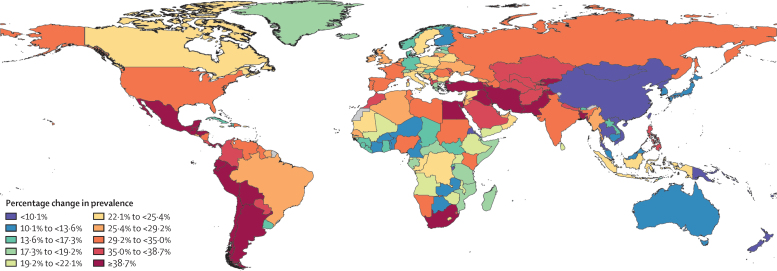
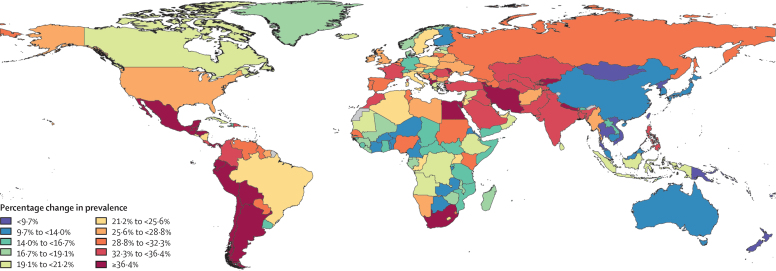
The COVID-19 pandemic was associated with substantial global increases in major depressive disorder and anxiety disorders in 2020, with the largest increases in locations hit hardest by reduced mobility and higher SARS-CoV-2 infection rates. The study estimates an additional 53·2 million major depressive disorder cases and 76·2 million anxiety disorder cases globally in 2020.
Key findings
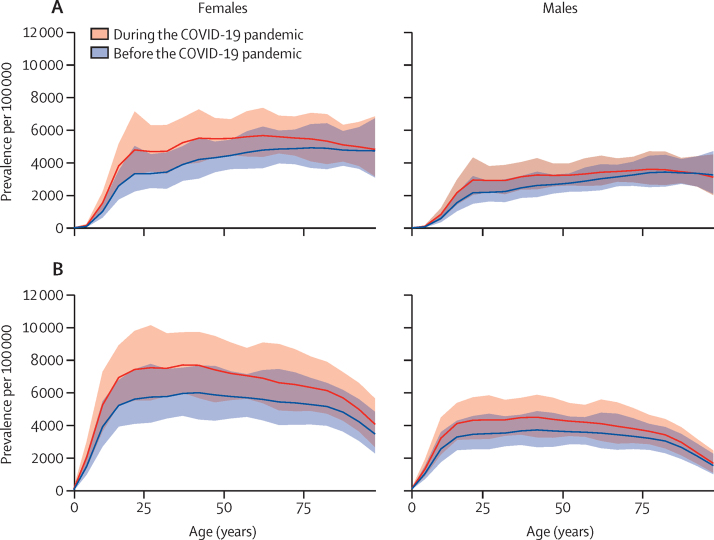
- Major depressive disorder prevalence rose by an estimated 27·6% (25·1–30·3), an additional 53·2 million (44·8–62·9) cases, to 3152·9 cases (2722·5–3654·5) per 100 000 population.
- Anxiety disorders rose by an estimated 25·6% (23·2–28·0), an additional 76·2 million (64·3–90·6) cases, to 4802·4 cases (4108·2–5588·6) per 100 000 population.
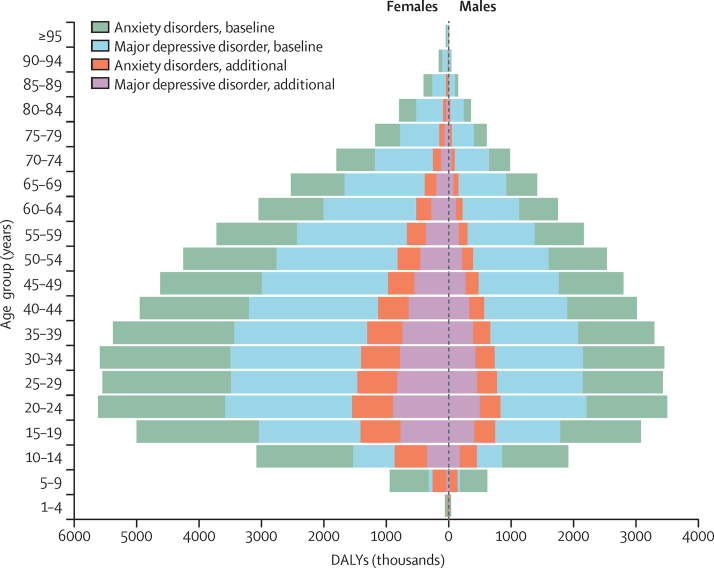
- In 2020, major depressive disorder caused 49·4 million (33·6–68·7) DALYs and anxiety disorders caused 44·5 million (30·2–62·5) DALYs globally.
- Females and younger age groups were more affected than males and older age groups; daily SARS-CoV-2 infection rates and reductions in human mobility were significantly associated with increased prevalence.
Methods
- Systematic review of data published Jan 1, 2020–Jan 29, 2021; 5683 unique sources were identified, and 48 studies met inclusion criteria (46 for major depressive disorder, 27 for anxiety disorders).
- Meta-regression using MR-BRT estimated change in logit prevalence before versus during the pandemic via COVID-19 impact indicators: human mobility, daily SARS-CoV-2 infection rate, and daily excess mortality rate.
- Pre-pandemic prevalence was estimated with DisMod-MR 2.1 by age, sex, and location; final prevalence estimates and disability weights were used to estimate YLDs and DALYs for 204 countries and territories in 2020.
Limitations
- The paper states that human mobility and SARS-CoV-2 infection rates are unlikely to capture the full mental health impact of the pandemic across all countries, and that mobile phone tracking may be inaccurate where subgroups have little or no mobile phone use.
- The paper states that few surveys from low-income and middle-income countries met inclusion criteria, limiting generalisability; it cautions against direct country rankings because of wide uncertainty intervals and data availability.
- The paper states that most surveys used symptom scales estimating probable cases, requiring the assumption that predictive validity remained constant; it also assumed unchanged severity distribution and could not assess how existing cases changed in severity. The text also makes evident that daily excess mortality was not associated with prevalence change after controlling for the other indicators, likely due to high collinearity.
Model-written summary. Check it against the paper before relying on it.
Integrity signals
Registry
Cites
Statistics
Figures
Verification
Claims the paper makes
7 Valid · 1 Not valid · 4 Not checked · 13 Own results and interpretations
The cited sources support only part of this claim — read each source’s verdict below.
In the paper
“The Global Burden of Diseases, Injuries, and Risk Factors Study (GBD) 2019 showed that the two most disabling mental disorders were depressive and anxiety disorders, both ranked among the top 25 leading causes of burden worldwide in 2019.1, 2”
§ Global prevalence and burden of depressive and anxiety disorders in 204 countries and territories in 2020 due to the COVID-19 pandemic > Introduction
What the sources say
- Partly supportedcites [1] GBD 2019 Disease and Injuries Collaborators Global burden of 369 diseases and injuries in 204 countries and territories, 1990–2019: a systematic analysis for the Global Burden of Disease Study 2019 Lancet 396 2020 1204 1222 33069326 PMC7567026 sourceExperimental — accuracy not yet measured
The Results (Global trends; page unavailable) place depressive and anxiety disorders among the top ten causes of DALYs globally for ages 10–24 in 2019, and the Discussion (Main findings; page unavailable) describes mental disorders as major contributors to disability. These passages do not establish that depression and anxiety were the two most disabling mental disorders or that both ranked among the top 25 causes of burden worldwide across all ages. (LLM, conf=0.84)
- Not matchedcites [2] GBD 2019 Mental Disorders Collaborators. Global, regional, and national burden of mental disorders in 204 countries and territories, 1990–2019: a systematic analysis from the Global Burden of Disease Study 2019. Lancet Psychiatry (in press). PMC8776563 35026139
We searched by its title and found no matching paper.
- Partly supported
Every source the paper cites for this claim was checked and supports it.
In the paper
“We used the Preferred Reporting Items for Systematic Reviews and Meta-Analyses (PRISMA) guidelines;9 our PRISMA checklist is in the appendix (pp 28–31), and the search protocol was registered with the International Prospective Register of Systematic Reviews (PROSPERO, CRD42021216590).”
§ Global prevalence and burden of depressive and anxiety disorders in 204 countries and territories in 2020 due to the COVID-19 pandemic > Methods > Data sources
What the sources say
- Supportedcites [9] Page MJ McKenzie JE Bossuyt PM The PRISMA 2020 statement: an updated guideline for reporting systematic reviews BMJ 372 2021 n71 33782057 PMC8005924 source
The citation is attached to the citing authors’ use of PRISMA guidelines, not to their separate statement about PROSPERO registration. The paper’s Abstract identifies PRISMA 2020 as a guideline for reporting systematic reviews and presents its checklist, so it supports the cited identification. (LLM, conf=0.92)
- Supported
The cited sources support only part of this claim — read each source’s verdict below.
In the paper
“The estimation of human mobility, daily SARS-CoV-2 infection rate, and daily excess mortality rate was done by the Institute for Health Metrics and Evaluation (IHME) COVID-19 Forecasting Team and is described in detail elsewhere.13”
§ Global prevalence and burden of depressive and anxiety disorders in 204 countries and territories in 2020 due to the COVID-19 pandemic > Methods > Data sources
What the sources say
- Partly supportedcites [13] Institute for Health Metrics and Evaluation COVID-19 Forecasting Team Modeling COVID-19 scenarios for the United States Nat Med 27 2021 94 105 33097835 PMC7806509 sourceExperimental — accuracy not yet measured
The Data identification and processing section describes a mobility covariate and estimates of total infections by day and state; the Deterministic modeling framework also describes estimated daily infections and deaths. The paper reports daily COVID-19 death rates, however, not daily excess mortality rates, so that part of the attribution is unsupported. (LLM, conf=0.87)
- Partly supported
The cited sources support only part of this claim — read each source’s verdict below.
In the paper
“Both major depressive disorder and anxiety disorders increase the risk of other diseases and suicide.28, 29”
§ Global prevalence and burden of depressive and anxiety disorders in 204 countries and territories in 2020 due to the COVID-19 pandemic > Discussion
What the sources say
- Not checked — no full text of the sourcecites [28] Clarke DM Currie KC Depression, anxiety and their relationship with chronic diseases: a review of the epidemiology, risk and treatment evidence Med J Aust 190 2009 S54 S60 19351294 source
- Partly supportedcites [29] Moitra M Santomauro D Degenhardt L Estimating the risk of suicide associated with mental disorders: a systematic review and meta-regression analysis J Psychiatr Res 137 2021 242 249 33714076 PMC8095367 sourceExperimental — accuracy not yet measured
The Discussion reports that major depressive disorder and anxiety disorders were significantly associated with suicide risk. It also says the analysis was confined to suicide deaths; it does not support the claim that these disorders increase the risk of other diseases. Page numbers were not provided in our copy. (LLM, conf=0.90)
The sources with a verdict support this claim; the rest weren’t checked yet, have no full text we could read, or their verdicts aren’t rated yet.
In the paper
“Women are more likely to be financially disadvantaged during the pandemic due to lower salaries, less savings, and less secure employment than their male counterparts.17, 18, 19”
§ Global prevalence and burden of depressive and anxiety disorders in 204 countries and territories in 2020 due to the COVID-19 pandemic > Discussion
What the sources say
- Not matchedcites [17] UN Policy brief: the impact of COVID-19 on women April 9, 2020 United Nations
Its entry has no title and year that we can search by.
- Not checked — no full text of the sourcecites [18] Wenham C Smith J Davies SE Women are most affected by pandemics - lessons from past outbreaks Nature 583 2020 194 198 32641809 source
- Supportedcites [19] Burki T The indirect impact of COVID-19 on women Lancet Infect Dis 20 2020 904 905 32738239 PMC7836874 source
The passage labelled Abstract states that women earn and save less, hold less secure jobs, and have less capacity than men to absorb economic shocks. It directly supports the claim about greater financial disadvantage during the pandemic. (LLM, conf=0.94)
- Not matched
20 more claims · 3 with their cited sources checked
Create a free account to see all 25 claims and to verify the 1 reference still open.
Claims other papers make about this one
Each is checked against this paper’s own text: does it say what the citing paper says it does?
The source backs part of the claim, not all of it — or backs it for a different population, condition or comparison.
In the citing paper
“The urgency to bridge this gap is further intensified by rising neurological and psychiatric disorders, climate-related stressors and the lingering effects of COVID-19, which disproportionately impact lower-resource environments27,28.”
From Resilience and brain health in global populations (2025) · cites this paper as [27]
Experimental — accuracy not yet measuredThe source backs part of the claim, not all of it — or backs it for a different population, condition or comparison.
In the citing paper
“GBD 2023 incorporated the effects of the COVID-19 pandemic on anxiety disorders and major depressive disorder, which exacerbated the mental health of many around the world, especially women and young people, through loss of employment, increased carer responsibilities, social restrictions, gender-based violence, and disruption to education.7”
From Updated trends in the global prevalence and burden of mental disorders, 1990–2023: a systematic analysis for the Global Burden of Disease Study 2023 (2026) · cites this paper as [7]
Experimental — accuracy not yet measuredThe source backs part of the claim, not all of it — or backs it for a different population, condition or comparison.
In the citing paper
“The non-communicable disease burden was distributed widely across the world's populations, irrespective of age, sex, or socioeconomic circumstance”
From Global incidence, prevalence, years lived with disability (YLDs), disability-adjusted life-years (DALYs), and healthy life expectancy (HALE) for 371 diseases and injuries in 204 countries and territories and 811 subnational locations, 1990–2021: a systematic analysis for the Global Burden of Disease Study 2021 (2024) · cites this paper as [16]
Experimental — accuracy not yet measuredThe source backs part of the claim, not all of it — or backs it for a different population, condition or comparison.
In the citing paper
“The efficacy and cost-effectiveness of treatment options for depressive disorders across low-income, middle-income, and high-income settings have been established by existing research.16”
From Global incidence, prevalence, years lived with disability (YLDs), disability-adjusted life-years (DALYs), and healthy life expectancy (HALE) for 371 diseases and injuries in 204 countries and territories and 811 subnational locations, 1990–2021: a systematic analysis for the Global Burden of Disease Study 2021 (2024) · cites this paper as [16]
Experimental — accuracy not yet measuredThe source backs part of the claim, not all of it — or backs it for a different population, condition or comparison.
In the citing paper
“Additionally, many mental disorders are prevalent during childhood or early adulthood, when other risk factors such as bullying victimisation and childhood maltreatment can occur.16, 42”
From Global incidence, prevalence, years lived with disability (YLDs), disability-adjusted life-years (DALYs), and healthy life expectancy (HALE) for 371 diseases and injuries in 204 countries and territories and 811 subnational locations, 1990–2021: a systematic analysis for the Global Burden of Disease Study 2021 (2024) · cites this paper as [16]
Experimental — accuracy not yet measured
12 more claims about this paper
Create a free account to see every claim other papers make about this one.
Self-check
Percentages, sums and reported differences re-computed from the paper’s own numbers.
Self-check results appear here once an independent check has confirmed them.
Cited works that were retracted
Works this paper cites that were later retracted, from the retraction notices publishers deposit. Major when the notice came out before this paper was published.
A note, not an issue: for example, a cited work that was retracted only after this paper was published, which its authors could not have known.
In the paper
“Emerging evidence suggests people with post-acute sequelae of COVID-19 (sometimes known as long COVID) might develop depressive and anxiety disorder symptoms, 37,38 and so prevalence of long COVID might be a potential indicator in future work.”
Cited work 10.1016/s0140-6736(20)32656-8 · retracted 2023-06-09 · notice 10.1016/s0140-6736(23)01175-3 · this paper published 2021-11
A note, not an issue: for example, a cited work that was retracted only after this paper was published, which its authors could not have known.
In the paper
“39,40 The study that did not report an increased prevalence was conducted in one specific city in Norway (Trondheim) using very small cross-sectional samples.”
Cited work 10.1017/s2045796021000408 · retracted 2023-03-13 · notice 10.1017/s2045796023000082 · this paper published 2021-11
Citations
Cites
2 retracted
RETRACTED: 6-month consequences of COVID-19 in patients discharged from hospital: a cohort study
Huang, C., Huang, L., Wang, Y., Li, X., Ren, L., Gu, X., Kang, L., Guo, L., Liu, M., Zhou, X., et al. (2021) · The Lancet · doi:10.1016/s0140-6736(20)32656-8 · Cited by 4,084 · cited 1×
“Emerging evidence suggests people with post-acute sequelae of COVID-19 (sometimes known as long COVID) might develop depressive and anxiety disorder symptoms, 37,38 and so prevalence of long COVID might be a potential indicator in future work.”
RetractedAyuso-Mateos, J. L., Morillo, D., Haro, J. M., Olaya, B., Lara, E., & Miret, M. (2021) · Epidemiology and Psychiatric Sciences · doi:10.1017/s2045796021000408 · Cited by 53 · cited 1×
“39,40 The study that did not report an increased prevalence was conducted in one specific city in Norway (Trondheim) using very small cross-sectional samples.”
RetractedThe PRISMA 2020 statement: An updated guideline for reporting systematic reviews
Page, M. J., McKenzie, J. E., Bossuyt, P. M., Boutron, I., Hoffmann, T. C., Mulrow, C. D., Shamseer, L., Tetzlaff, J. M., Akl, E. A., Brennan, S. E., et al. (2021) · BMJ · doi:10.1136/bmj.n71 · Cited by 108,283
Vos, T., Lim, S. S., Abbafati, C., Abbas, K. M., Abbasi, M., Abbasifard, M., Abbasi-Kangevari, M., Abbastabar, H., Abd-Allah, F., Abdelalim, A., et al. (2020) · The Lancet · doi:10.1016/s0140-6736(20)30925-9 · Cited by 19,358
Self-citationThe PRISMA 2020 statement: an updated guideline for reporting systematic reviews
Page, M. J., McKenzie, J., Bossuyt, P., Boutron, I., Hoffmann, T., mulrow, C., Shamseer, L., Tetzlaff, J., Akl, E., Brennan, S. E., et al. (2020) · doi:10.31222/osf.io/v7gm2_v1 · Cited by 8,090
The PRISMA 2020 statement: an updated guideline for reporting systematic reviews
Page, M. J., McKenzie, J., Bossuyt, P., Boutron, I., Hoffmann, T., mulrow, C., Shamseer, L., Tetzlaff, J., Akl, E., Brennan, S. E., et al. (2020) · doi:10.31222/osf.io/v7gm2 · Cited by 5,177
Taquet, M., Geddes, J. R., Husain, M., Luciano, S., & Harrison, P. J. (2021) · The Lancet Psychiatry · doi:10.1016/s2215-0366(21)00084-5 · Cited by 2,189
How mental health care should change as a consequence of the COVID-19 pandemic
Moreno, C., Wykes, T., Galderisi, S., Nordentoft, M., Crossley, N., Jones, N., Cannon, M., Correll, C. U., Byrne, L., Carr, S., et al. (2020) · The Lancet Psychiatry · doi:10.1016/s2215-0366(20)30307-2 · Cited by 1,840 · cited 3×
“36 They should consider public health messaging about the mental health impacts of COVID-19, how individuals can best manage their mental health, and well defined pathways to assessment and service access.”
Guidelines for accurate and transparent health estimates reporting: the GATHER statement
Stevens, G. A., Alkema, L., Black, R. E., Boerma, J. T., Collins, G. S., Ezzati, M., Grove, J. T., Hogan, D. R., Hogan, M. C., Horton, R., et al. (2016) · The Lancet · doi:10.1016/s0140-6736(16)30388-9 · Cited by 1,798
Self-citation
Research works printed but not linked: 1
- Flaxman AD Vos T Murray CJL An integrative metaregression framework for descriptive epidemiology 1st edn. 2015 University of Washington Press Seattle, WA
Cited by
Items 4,401–4,500 of 5,424
iCCBT, an Interactive Approach of CBT for Online Psychological Intervention
Liao, Y., Liu, F., Lin, L., Hou, M., She, Y., Wu, H., Hu, B., & Wu, Q. (2024) · International Conference on Computer Supported Cooperative Work in Design (CSCWD) · doi:10.1109/cscwd61410.2024.10580063 · Cited by 1
“Due to the enormous academic and employment pressures, the incidence of psychological problems among young adults has increased [17].”
BackgroundHYPNOTHERAPY FOR MAJOR DEPRESSIVE DISORDER: A SYSTEMATIC REVIEW OF RANDOMIZED CLINICAL TRIALSPreprint
Souza, F. L., Moura, M., Elkins, G., & Silva, J. V. (2024) · medRxiv · doi:10.1101/2024.07.15.24310435
Méndez-López, F., Matovelle, P., García, M. D., & de la Pisa, B. P. (2024) · Acciones e Investigaciones Sociales · doi:10.26754/ojs_ais/accionesinvestigsoc.2024459727 · Cited by 1
Emerging Adulthood and Depression: An Overview of Chronic Illness and Treatment
Riddle, D. B., Appenzeller, Z. S., & Storch, E. A. (2024) · Springer eBooks · doi:10.1007/978-3-031-54281-7_17
Yin, P., Feng, Q., Bai, C., Zhang, X., Liu, M., Mo, Y., Tang, D., Lei, X., Chen, M., Li, M., et al. (2024) · SSRN Electronic Journal · doi:10.2139/ssrn.4898489
Hernández-Mariano, J. Á., de Durango, U. J. D. E., Cano-Estrada, E. A., Castañeda-Márquez, A. C., Roa, K. J. A., Metropolitana, U. A., de Juárez, U., & de Cundinamarca, U. (2024) · doi:10.61728/ae20241056
Anxiety symptoms and risk factors in patients with SARS‐CoV‐2 Omicron variant in Shanghai, China
Chen, Q., Chen, Y., Huang, Y., Yang, Q., He, D.-Y., Fang, B., Ren, Y., & Liu, J. (2024) · The International Journal of Psychiatry in Medicine · doi:10.1177/00912174241264671
Depressive Disorder and Trimalleolar Fractures: An Analysis of Outcomes and Costs
Fudala, M., Blank, L., Tabbaa, A., Rodriguez, A. N., Conway, C. A., Lam, A. W., Razi, A. E., & Abdelgawad, A. H. K. (2024) · Foot & Ankle Specialist · doi:10.1177/19386400241267019
Ołdakowska, I., & Oniszczenko, W. (2024) · Journal of Forensic Psychiatry and Psychology · doi:10.1080/14789949.2024.2385965
Moon, S. S., Um, M. Y., Anderson, L., Kim, Y. K., Yu, M., & Maleku, A. (2024) · Death Studies · doi:10.1080/07481187.2024.2386068
Костюк, І. А., & Косяченко, К. Л. (2024) · Farmatsevtychnyi zhurnal · doi:10.32352/0367-3057.3.24.03
Gaioti, C. S., da Silva, M. R. R., Meira, E. F., et al. (2024) · Brazilian Journal of Production Engineering · doi:10.47456/bjpe.v10i3.44927
Paz‐Graniel, I., Babió, N., Nishi, S. K., Martínez‐González, M. Á., Corella, D., Fitó, M., Martínez, J. A., Alonso‐Gómez, Á. M., Wärnberǵ, J., Vioqué, J., et al. (2024) · doi:10.32920/26520673
Paz‐Graniel, I., Babió, N., Nishi, S. K., Martínez‐González, M. Á., Corella, D., Fitó, M., Martínez, J. A., Alonso‐Gómez, Á. M., Wärnberǵ, J., Vioqué, J., et al. (2024) · doi:10.32920/26520673.v1
Khan, A., Madihie, A., Khan, S. U., Haider, S., & Haider, M. (2024) · doi:10.2196/preprints.65098
Krüger-Malpartida, H., Arévalo-Flores, M., Anculle-Arauco, V., Dancuart-Mendoza, M., & Petrozzi, B. P. (2024) · Revista Colombiana de Psiquiatría (English ed ) · doi:10.1016/j.rcpeng.2022.04.004
Fawzy, A., Wang, J. G., Krings, J. G., He, J., Offor, O. L., Eakin, M. N., Holbrook, J. T., & Wise, R. A. (2024) · Chronic Obstructive Pulmonary Diseases Journal of the COPD Foundation · doi:10.15326/jcopdf.2024.0537
Self-citationDEPRESIJOS SIMPTOMŲ IR DANTŲ ĖDUONIES RYŠYS
Gladkauskaitė, J. (2024) · Health Sciences · doi:10.35988/sm-hs.2024.199
Couto, R. F. (2024) · AusArt · doi:10.1387/ausart.26129
Zheng, J., Li, X., Xu, L., Xu, H., Qiao, P., Ding, L., & Wang, W. (2024) · Discover Public Health · doi:10.1186/s12982-024-00181-2
Professional, educational and psychosocial impacts of the COVID-19 pandemic on pediatricians
Murğ, İ., Leventoğlu, E., Bıdecı, A., Boduroğlu, K., Hasanoğlu, E., & Bakkaloglu, S. A. (2024) · Postgraduate Medicine · doi:10.1080/00325481.2024.2396798
Parent-Child Interaction and Developing Resilience in Young Children
Yum, S. (2024) · ISU Red - Research and eData (Illinois State University) · doi:10.30707/etd2024.20240827063558288187.999960
Anxiety-inducing factors among educators in the Capricorn district of Limpopo, South Africa
Maaga, K. C., & Mokwena, K. E. (2024) · International Journal of Innovative Research and Scientific Studies · doi:10.53894/ijirss.v7i4.3444
“It is further asserted that this rate has increased, largely due to the COVID-19 pandemic [4].”
BackgroundAngststörungen bei Kindern und Jugendlichen
Kasperzack, D. (2024) · Oralprophylaxe & Kinderzahnmedizin · doi:10.1007/s44190-024-1044-3
“Angststörungen gehören zu den am weitesten verbreiteten psychischen Störungen und nehmen in den letzten Jahren zu [4, 5, 6].”
Are women really at a 2-fold increased risk to develop lifetime depression, compared to men?Preprint
Miché, M. (2024) · PsyArXiv (OSF Preprints) · doi:10.31234/osf.io/tcbj3
Current Status and Prospects of Research on Insomnia Disorder
孟, 雨. (2024) · Advances in Clinical Medicine · doi:10.12677/acm.2024.1482276
A Systematic Review of the Effects of Depressive States on Inflammatory Bowel Disease
鲁, 惠. (2024) · Medical Diagnosis · doi:10.12677/md.2024.143037
Managing Workplace Mental Health: Multiple Approaches at Patient, Provider, and Systems Levels
Taubman, D. S., Dewa, C. S., & Parikh, S. V. (2024) · Springer eBooks · doi:10.1007/978-3-030-51366-5_9
Vedova, A. M. D., Covolo, L., Fiammenghi, C., Marconi, S., Gelatti, U., Castellano, M., & Zanini, B. (2024) · Behavioral Sciences · doi:10.3390/bs14090775 · Cited by 2
“This result places our study in line with the other studies carried out in Italy and elsewhere in the world, finding a worrying increase in the psychological distress of young people during the pandemic and in its subsequent phases [15,16,18].”
BackgroundResultYin, Y., Sun, Q., Geeraert, N., & Sun, Q. (2024) · International Journal of Intercultural Relations · doi:10.1016/j.ijintrel.2024.102052
Lifestyle Medicine: Mental Health and Nutrition
Merlo, G., & Bachtel, G. (2024) · Springer eBooks · doi:10.1007/978-3-031-63083-5_29
The impact of the COVID-19 pandemic on individuals with pre-existing diabetes mellitus
Farrell, A., Srikumar, K., Farmer, G., Liew, A., & Hallahan, B. P. (2024) · Irish Journal of Psychological Medicine · doi:10.1017/ipm.2024.21
A Review of the Impact of the COVID-19 Pandemic on Lifestyle Behaviors
Mehraeen, E., Pashaei, A., Mousavi, H., & Yarmohammadi, S. (2024) · Coronaviruses · doi:10.2174/0126667975307093240909080735
McMahon, J., Dowling, K., Gallagher, E. A., Donnellan, A., Houghton, S., Ryan, M., O’Connor, C., & Walsh, E. H. (2024) · Frontiers in Psychology · doi:10.3389/fpsyg.2023.1095892 · Cited by 1
Procuring Mental Health Through Yoga and Meditation: A Study of Patañjali’s Yoga Sūtras
Verma, P. K., Gupta, R. K., & Singh, S. K. (2024) · New approaches to the scientific study of religion · doi:10.1007/978-3-031-67360-3_18
Older Adults with Disease: Cancer, Depression, and Anxiety
Chen, M. Z. (2024) · Springer eBooks · doi:10.1007/978-3-031-32046-0_72-1 · Cited by 1
Schiavetti, I., RUSSO, D., Piccinini, G., BERRA, C., CILIBERTI, P., Gotelli, S., Guglieri, I., MASNATA, B., OGGIONI, D., Picci, R. L., et al. (2024) · Minerva Psychiatry · doi:10.23736/s2724-6612.23.02462-4
Chen, Q., Pan, L., Zhan, Y., Chen, L., Chen, L., Zeng, Y., Huang, J., Chen, H., & Zeng, Z. (2024) · Research Square · doi:10.21203/rs.3.rs-5109929/v1
Værøy, H., Skar-Fröding, R., Hareton, E., & Fetissov, S. O. (2024) · Frontiers in Psychiatry · doi:10.3389/fpsyt.2024.1419574
de Oliveira, B. L. C. A., Soares, F. A., Aquino, P. D. S., Pinheiro, P. N. D. C., Alves, G. S., & Pinheiro, A. K. B. (2024) · Revista Brasileira de Epidemiologia · doi:10.1590/1980-549720240045.2
Sterbefälle wohnungsloser Menschen vor und während der COVID-19-Pandemie in Hamburg
Laudien, C., Püschel, K., Lohner, L., et al. (2024) · Rechtsmedizin · doi:10.1007/s00194-024-00723-7
Benedetti, F., Franzon, E. C., Mastella, G. A., & Zugno, A. I. (2024) · Research Square · doi:10.21203/rs.3.rs-4984327/v1
Jiang, Y., Chen, Y., Wei, L., Liu, F., Zheng, Z., Zhang, Z., Li, Z., Tang, Y., Wang, J., Xie, Q., et al. (2024) · bioRxiv (Cold Spring Harbor Laboratory) · doi:10.1101/2024.09.28.615621
Brainwave Patterns and Anxiety Symptoms Among Young Adult Females: An Exploratory Study
Wong, M.-Y., Cheong, S. K., & Lee, P. F. (2024) · IEEE International Conference on Control System, Computing and Engineering · doi:10.1109/iccsce61582.2024.10696855
“Anxiety and depression are mood disorders which affect millions worldwide, representing a significant global health burden [1].”
BackgroundWu, D., Wei, Y., Chen, Q., Fu, X., & Song, H. (2024) · BMC Psychiatry · doi:10.1186/s12888-024-06128-w
“According to a World Health Organization report, the global prevalence of anxiety and depression increased by more than 25% during the COVID-19 pandemic [11].”
BackgroundLeveraging a Global Partnership to Address COVID‐19‐Related Mental Health Challenges
Pandian, V., Sathiyaseelan, M., Chiu, A. C., Ravindran, V. P., Kverno, K. S., Durai, S., Wilson, P., Sony, A., Rodney, T. W., Rediger, K., et al. (2024) · Journal of Psychiatric and Mental Health Nursing · doi:10.1111/jpm.13115
Ji, Z., Chen, Q., Yang, J., Hou, J., & Zhang, L. (2024) · SSRN Electronic Journal · doi:10.2139/ssrn.4974187
Acute onset psychiatric diseases after SARS-CoV-2 virus infection among pediatric patients
Yang, L., Li, J., & Zhang, D. (2024) · Frontiers in Neurology · doi:10.3389/fneur.2024.1445903
“The pandemic-related stress caused an increased incidence of anxiety and depression (3).”
BackgroundGenes Associated with One-Carbon Metabolic Pathway and Depression
Dahal, S., & Devi, N. K. (2024) · Springer eBooks · doi:10.1007/978-3-031-32035-4_32-1 · Cited by 1
Circulating adipokines and major depressive disorder: a two-sample Mendelian randomization studyPreprint
Qiu, S., Dou, B., Guo, J., Li, J., Li, C., Yuan, Z., Hu, X., Pan, J., & Duan, Y. (2024) · Research Square · doi:10.21203/rs.3.rs-5043023/v1
Curing and Healing: Two Goals of Medicine
Szawarska, D. (2024) · Springer eBooks · doi:10.1007/978-94-017-8706-2_59-2
Varshney, K., & Panhwar, M. A. (2024) · COVID · doi:10.3390/covid4100117
Dealing with overwhelming life situations - young people’s experiences of becoming depressed
Ekbäck, E., Strömbäck, M., Rådmark, L., Öjebrandt, J., Molin, J., & Henje, E. (2024) · Scandinavian Journal of Child and Adolescent Psychiatry and Psychology · doi:10.2478/sjcapp-2024-0007 · Cited by 1
“Depression is one of the most common and most debilitating health problems of today (1).”
BackgroundKoomson, I. (2024) · Sustainable development goals series · doi:10.1007/978-981-97-6132-6_4 · Cited by 2
Factors Influencing Depressive Symptoms in the Post-COVID-19 Pandemic Period
Hirokawa-Ueda, H., Sawamura, Y., Taketani, R., Tojo, Y., & Ono, H. (2024) · Cureus · doi:10.7759/cureus.72394
Diverging mental health trends in the postpandemic era: results from the HUNT Study, Norway
Weiß, D., Lowenstein, C., Sund, E. R., Vethe, D., & Krokstad, S. (2024) · Journal of Epidemiology & Community Health · doi:10.1136/jech-2024-222626 · Cited by 1
Martínez-Vispo, C., García-Huércano, C., Cerón, S. C., Morejón, A. R., & Moreno-Peral, P. (2024) · Digital Health · doi:10.1177/20552076241292418 · Cited by 1
“4 Furthermore, anxiety disorders have a signi fi cant economic impact on healthcare systems, as demonstrated by a recent study showing that anxiety disorders account for an average of $135 billion in healthcare expenses annually among countries in the Organization for Economic Cooperation and…”
BackgroundShamas, H., Ragi, M.-E. E., Zeid, B. A., DeJong, J., McCall, S. J., & with the CAEP Study Group (2024) · medRxiv · doi:10.1101/2024.10.25.24316097
Laskowska-Wronarowicz, A., Olszewska-Turek, K., Micek, A., & Bętkowska-Korpała, B. (2024) · Psychiatria i Psychologia Kliniczna · doi:10.15557/pipk.2024.0018
Ferreira, P. (2024) · Frontiers in Sociology · doi:10.3389/fsoc.2024.1436979
Zhang, D., Wei, J., Xin, X., Liu, Y., Zhu, Y., Li, S., Chen, H., & Meng, G. (2024) · Research Square · doi:10.21203/rs.3.rs-5327030/v1
Quattrone, A., Petkari, E., Spinazzola, E., et al. (2024) · SSRN Electronic Journal · doi:10.2139/ssrn.5002817
Murtala, A. A., Oyinloye, E. O., Oladoja, F. A., Fageyinbo, M. S., Olasore, H. S. A., Ogunjimi, L., Alabi, A. A., Olooto, W. E., Soyinka, O. O., Faponle, A. S., et al. (2024) · Pharmacological Research - Modern Chinese Medicine · doi:10.1016/j.prmcm.2024.100541
Harastova-Pavlova, I., Dražanová, E., Krátká, L., Amchová, P., Hrickova, M., Macíček, O., Vitouš, J., Jiřík, R., & Kučerová, J. (2024) · Biomedicine & Pharmacotherapy · doi:10.1016/j.biopha.2024.117656 · Cited by 1
García-Martínez, D., Mínguez, I., Rocha, D. G., et al. (2024) · Nutrición Hospitalaria · doi:10.20960/nh.05401
Scholing, J. M., Lambregts, B. I. H. M., van den Bosch, R., Aarts, E., & van der Schaaf, M. E. (2024) · bioRxiv (Cold Spring Harbor Laboratory) · doi:10.1101/2024.11.04.621806
Ibáñez, D., Condominas, E., Haro, J. M., Giné-Vázquez, I., RADAR-MDD-Spain, Bailón, R., Pagès, E. G., Kontaxis, S., Peñarrubia‐María, M. T., Arranz, B., et al. (2024) · Frontiers in Psychology · doi:10.3389/fpsyg.2024.1436611 · Cited by 1
Borges, G. L. G., Orozco, R., & Salas, B. (2024) · Salud Mental · doi:10.17711/sm.0185-3325.2024.035 · Cited by 1
la Rosa-Gómez, A. D., Hernández-Posadas, A., Valencia, P. D., Flores-Plata, L. A., & Elvira, A. I. F. (2024) · Salud Mental · doi:10.17711/sm.0185-3325.2024.032 · Cited by 2
“…post-traumatic stress, confusion, worry and anger (Brooks et al., 2020; Czeisler et al., 2021; Chávez-Valdez et al., 2021; Rodríguez-Quiroga et al., 2020; Santomauro et al., 2021), mainly in individuals with a pre - vious psychiatric diagnosis or vulnerability factor (Campos et al., 2021).”
Yin, J., Wu, M., Yang, P., Liu, Z., & Zhang, Y. (2024) · Research Square · doi:10.21203/rs.3.rs-5312131/v1
Castelpietra, G., Niyonsenga, T., Iruín, Á., Albert, U., Gabilondo, A., & Salvador‐Carulla, L. (2024) · The European Journal of Psychiatry · doi:10.1016/j.ejpsy.2024.100278
Optimal Sleep Durations for Depression Prevention: Evidence from the China Family Panel StudiesPreprint
Song, Y., Chen, L., Liu, H., & Liu, Y. (2024) · Research Square · doi:10.21203/rs.3.rs-5460471/v1
Alibudbud, R. C. (2024) · SAGE Open · doi:10.1177/21582440241299925 · Cited by 2
Change in Global Burden of Depressive and Anxiety Disorders Due to Pandemic: Insight from GBD 2021Preprint
Fan, H., & Zhou, B. (2024) · SSRN Electronic Journal · doi:10.2139/ssrn.5024384
Navigating Criminal Dynamics: Effects of COVID-19 on Tourism in Minas Gerais
Borges, C. D. O., da Silva, B. F. A., Machado, D. F. C., & Silva, J. (2024) · Lecture notes in networks and systems · doi:10.1007/978-3-031-74828-8_44
Rodrigues, A. F. D. A., Sampaio, M. A. L., de Moraes, M. A. M., Coêlho, M. A., & Filho, K. H. D. A. (2024) · Debates em Psiquiatria · doi:10.25118/2763-9037.2024.v14.1266
Keller, K., Taubner, S., & Georg, A. K. (2024) · Frontiers in Child and Adolescent Psychiatry · doi:10.3389/frcha.2024.1441969
Cainamarks-Alejandro, J. A., Cruz-Ausejo, L., Burgos-Flores, M. A., Ambrosio-Melgarejo, J., Rosales‐Rimache, J., Astete, J., & Villarreal‐Zegarra, D. (2024) · JMIR Formative Research · doi:10.2196/60144
Guo, Q., Wang, Y., Guo, L., & Shang, S. (2024) · Interdisciplinary Nursing Research · doi:10.1097/nr9.0000000000000080
Depression as a Risk Factor for Gynecological Cancers: Evidence from a National StudyPreprint
Wang, C., Xu, J., Li, X., & Jiang, L. (2024) · Research Square · doi:10.21203/rs.3.rs-5357794/v1
Rosolen, V., Beorchia, Y., Castriotta, L., Fanizza, C., Profili, F., Floridia, M., Giuliano, M., Pricci, F., Villa, M., Grisetti, T., et al. (2024) · Psychiatry Research · doi:10.1016/j.psychres.2024.116290
“( Salari et al., 2020) In one meta-analysis the estimated prevalence of anxiety and depression in the general population (independently of COVID-19 status) during the pandemic exceeded 30%, (Salari et al., 2020) and the Global Burden of Disease 2020 study (COVID-19 Mental Disorders Collaborators., 2021) estimated that…”
InfluentialYe, N., Peng, L., Deng, B., Hu, H., Wang, Y., Zheng, T., Ai, Y., Liu, X., Zhou, S., & Li, Y. (2024) · Early Intervention in Psychiatry · doi:10.1111/eip.13629 · Cited by 2
Enhancing hospital protection measures reduces frontline medical workers’ stress during the pandemic
Xiaoxia, Z., Yan, F., Junwei, W., Bingyao, Z., & Fei, X. (2024) · BMC Psychology · doi:10.1186/s40359-024-02185-8 · Cited by 1
Humayun, A., Najmussaqib, A., & Muneeb, N. U. A. (2024) · medRxiv · doi:10.1101/2024.11.29.24317879
“Unsurprisingly, over half of the cases were reported to suffer from depressive disorder, which is known to be the leading cause of mental health burden globally and in Pakistan (34, 36).”
Ahmed, M. S., Bartram, M. H., Gabrys, R. L., Mela, M., & Muhajarine, N. (2024) · International Journal of Environmental Research and Public Health · doi:10.3390/ijerph21121644 · Cited by 2
“A systematic review published at the end of 2021 reported that the global prevalences of major depressive disorder and anxiety disorder increased by 27.6% and 25.6%, respectively, during the first year of the pandemic compared to before the pandemic [5].”
InfluentialSpear, M. A., Wang, G., Aguado, M., Alphs, L. D., Chen, C., Huang, H., Lu, X., Doostzadeh, J., Wu, S., Wang, S., et al. (2024) · Research Square · doi:10.21203/rs.3.rs-5569323/v1
Global Happiness and Humanitarian Assistance
Spowart, S. (2024) · Integrated science · doi:10.1007/978-3-031-71789-5_3
Okonkwo, U. P., Udechukwu, R.-T. C., Amaechi, I. A., Mbanuzuru, A. V., Okafor, C. N., Tamu, J. B. M., & Daniel, J. A. (2024) · Research Square · doi:10.21203/rs.3.rs-5299928/v1
Gutiérrez-Ruiz, K., Salas, J. D. N., & Pérez, I. N. (2024) · Salud Uninorte · doi:10.14482/sun.40.03.618.922 · Cited by 1
Shu, X., Sun, Z., Yang, Y., Huang, H., Guo, Q., Ye, L., Qiu, W., Zhang, Z., & Wu, S. (2024) · Research Square · doi:10.21203/rs.3.rs-5452833/v1
Chau, L. W., Lou, H., Murphy, J., Nguyen, V. C., Small, W., Samji, H., & O’Neil, J. (2024) · BMC Health Services Research · doi:10.1186/s12913-024-12036-2 · Cited by 4
Deng, Y., Tong, Y., Zhang, Y., & Liu, M. (2024) · The Journal of Psychology · doi:10.1080/00223980.2024.2437382
“In the greatly increased prevalence of anxiety and depression during the pandemic, younger age is an important risk factor (Santomauro et al., 2021).”
The frailty status and health progression caused by physical aging
Miao, X., Xu, F., Lu, X., Zhu, Y., Zhao, H., Guo, X., Meng, Q., & Leng, S. (2025) · Scientia Sinica Vitae · doi:10.1360/ssv-2024-0325
Analisis Keperluan Pembangunan Modul Pencegahan Kemurungan Menurut Perspektif Hadis
Rusli, A. R. M., Aziz, A. A., Sawai, R. P., et al. (2024) · al-Irsyad Journal of Islamic and Contemporary Issues · doi:10.53840/alirsyad.v9i2.477
Yi, L., Chen, R., Yan, H., Wu, H.-M., Wang, Y., & Xu, J. W. (2024) · Research Square · doi:10.21203/rs.3.rs-5164891/v1
Krisenfest aufwachsen in Zeiten von Klimawandel, Krieg und Pandemie
Asbrand, J., & Christiansen, H. (2024) · Kindheit und Entwicklung · doi:10.1026/0942-5403/a000467
Vijh, R., Waheed, Z., Peterson, S., Bunka, M., Pang, N., Edwards, L., Ghanbarian, S., Wong, G. W. K., Cressman, S., Riches, L., et al. (2024) · BMJ Open · doi:10.1136/bmjopen-2023-078287 · Cited by 1
Incorporating technology in smoking cessation interventions: In-person vs. Video-call formats
López‐Durán, A., Martínez-Vispo, C., Barroso-Hurtado, M., Suárez-Castro, D., & Becoña, E. (2024) · International Journal of Medical Informatics · doi:10.1016/j.ijmedinf.2024.105774 · Cited by 1
Ospina‐Pinillos, L., Shambo-Rodríguez, D. L., Riaño-Fonseca, M. I., Sánchez-Nítola, M. N., Ramírez-Castro, M. F., Calvo-Valderrama, M. G., Camacho, S., Gómez–Restrepo, C., Navarro-Mancilla, Á. A., Hickie, I. B., et al. (2024) · doi:10.2196/preprints.69749
Bijulakshmi, P., & Kumar, V. V. B. (2024) · Indian Journal of Psychiatric Nursing · doi:10.4103/iopn.iopn_86_23 · Cited by 3
Metadata
- Authors
- Santomauro, D. F., Mantilla Herrera, A. M., Shadid, J., Zheng, P., Ashbaugh, C., Pigott, D. M., Abbafati, C., Adolph, C., Amlag, J. O., Aravkin, A. Y., Bang-Jensen, B. L., Bertolacci, G. J., Bloom, S. S., Castellano, R., Castro, E., Chakrabarti, S., Chattopadhyay, J., Cogen, R. M., Collins, J. K., Dai, X., Dangel, W. J., Dapper, C., Deen, A., Erickson, M., Ewald, S. B., Flaxman, A. D., Frostad, J. J., Fullman, N., Giles, J. R., Giref, A. Z., Guo, G., He, J., Helak, M., Hulland, E. N., Idrisov, B., Lindstrom, A., Linebarger, E., Lotufo, P. A., Lozano, R., Magistro, B., Malta, D. C., Månsson, J. C., Marinho, F., Mokdad, A. H., Monasta, L., Naik, P., Nomura, S., O'Halloran, J. K., Ostroff, S. M., Pasovic, M., Penberthy, L., Reiner Jr, R. C., Reinke, G., Ribeiro, A. L. P., Sholokhov, A., Sorensen, R. J. D., Varavikova, E., Vo, A. T., Walcott, R., Watson, S., Wiysonge, C. S., Zigler, B., Hay, S. I., Vos, T., Murray, C. J. L., Whiteford, H. A., & Ferrari, A. J.
- Affiliations
- The University of Queensland (AU)
- Corresponding author
- Santomauro, Damian F
- ORCID
- Santomauro, Damian F
- Shadid, Jamileh
- Pigott, David M
- Abbafati, Cristiana
- Adolph, Christopher
- Aravkin, Aleksandr Y
- Bang-Jensen, Bree L
- Castellano, Rachel
- Chakrabarti, Suman
- Collins, James K
- Dai, Xiaochen
- Ewald, Samuel B
- Flaxman, Abraham D
- Fullman, Nancy
- Giles, John R
- Guo, Gaorui
- He, Jiawei
- Hulland, Erin N
- Idrisov, Bulat
- Lindstrom, Akiaja
- Lotufo, Paulo A
- Lozano, Rafael
- Magistro, Beatrice
- Mokdad, Ali H
- Monasta, Lorenzo
- Naik, Paulami
- Nomura, Shuhei
- Pasovic, Maja
- Reinke, Grace
- Sholokhov, Aleksei
- Sorensen, Reed J D
- Varavikova, Elena
- Vo, Anh Truc
- Walcott, Rebecca
- Wiysonge, Charles Shey
- Hay, Simon I
- Vos, Theo
- Murray, Christopher J L
- Whiteford, Harvey A
- Ferrari, Alize J
- Venue
- The Lancet
- Publisher
- Elsevier BV
- Published
- 2021-11
- Volume
- 398
- Issue
- 10312
- Pages
- 1700-1712
- ISSN
- 0099-5355 (ISSN-L)
- 0140-6736
- PMC
- PMC8500697
- OpenAlex
- W3203310594
- Semantic Scholar
- b3a95f28a5079ceb81f1d1361c0f99356006f136
- Cited by
- 5,444
- References
- 42
- Citations by year
- 2026: 663 · 2025: 1095 · 2024: 1383 · 2023: 1359 · 2022: 901 · 2021: 36
- FWCI
- 122.91
- Type
- journal article
- Language
- en
- Open access
- hybrid
- doi.org
- Licence
- cc-by
- www.elsevier.com/tdm/userlicense/1.0/ (tdm)
- www.elsevier.com/legal/tdmrep-license (tdm)
- creativecommons.org/licenses/by/4.0/ (vor)
- Locations
- The Lancet (publishedVersion, cc-by)
- PubMed Central (publishedVersion, cc-by)
- PubMed (publishedVersion)
- IRIS Research product catalog (Sapienza University of Rome) (submittedVersion, other-oa)
- Funders
- Bill & Melinda Gates Foundation
- Topics
- Social Sciences › Psychology › Clinical Psychology › COVID-19 and Mental Health
- Health Sciences › Medicine › Psychiatry and Mental health › Mental Health Treatment and Access
- Health Sciences › Medicine › Public Health, Environmental and Occupational Health › Maternal Mental Health During Pregnancy and Postpartum
- Keywords
- major depressive disorder, anxiety disorders, COVID-19 pandemic, mental health burden, prevalence, disability-adjusted life years, years lived with disability, SARS-CoV-2 infection rates, human mobility, excess mortality, age and sex differences, global mental health, health system response, mental health professionals, access to mental health care, mental health stigma
- MeSH terms
- Global Burden of Disease, COVID-19, SARS-CoV-2, Anxiety Disorders, Depression, Humans, Surveys and Questionnaires, Global Health, Prevalence, Pandemics
About these checks
Registry, retraction, Cites and statistics results are computed, not judged, with one exception: a printed reference that no index lists is read once by a model before it counts as a citation error. Claims are extracted by a model and kept only when their quote appears verbatim in the text; each cited source is then checked, with a model’s help, for whether it says what the claim relies on. Those verdicts can be wrong — read the claim’s quote and the cited source before relying on one.
The claim verdicts this report counts are experimental: their accuracy is not yet measured.
A language model drew the claims from the paper on 2026-09-27 (prompt extract-v2).
Cited sources are checked with a language model’s help (gpt-6-sol).
Statistics and arithmetic are recomputed, not judged.
Confidence bands are shown only for fields calibrated on our annotated test set. None is calibrated yet, so no band is shown.
What counts as a claim ›How we measure confidence ›How we check this ›
Are you an author, or do you see a problem with this page? Request a review
Data sources
Bibliographic data: Semantic Scholar, OpenAlex, Crossref.
Contains information from the Semantic Scholar Academic Graph Datasets, made available under the ODC Attribution License (ODC-BY 1.0).
Semantic Scholar’s data is described in: Kinney, R., et al. (2023). The Semantic Scholar Open Data Platform. arXiv:2301.10140.
