

Impact of diabetes on the effects of sodium glucose co-transporter-2 inhibitors on kidney outcomes: collaborative meta-analysis of large placebo-controlled trials
Open accessThe DOI matches its Crossref record; 56 of the 59 references it cites were found in a registry or an index; 30 of the 47 sources its claims cite were checked for support.
Abstract
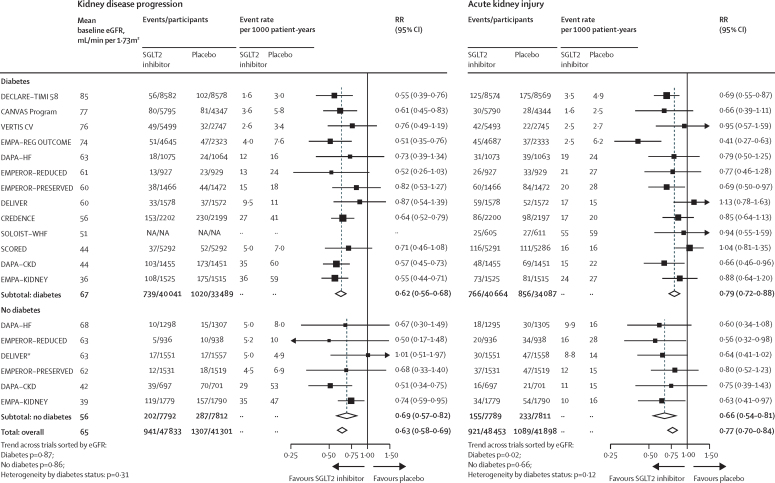
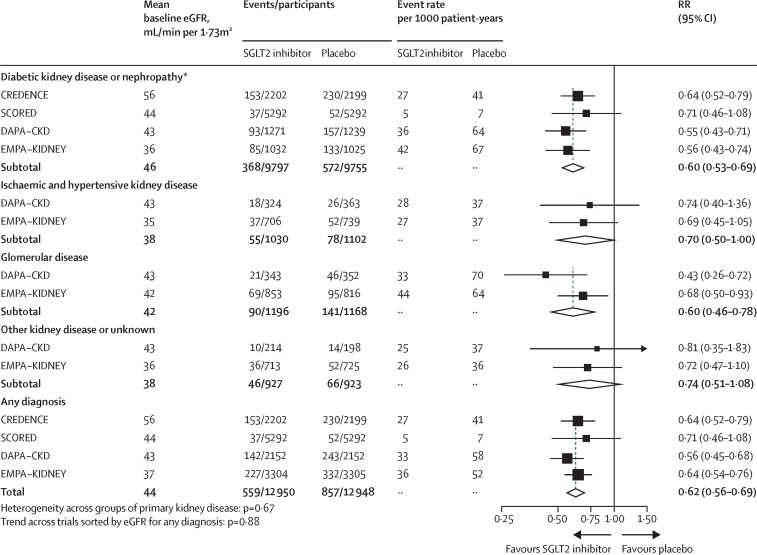
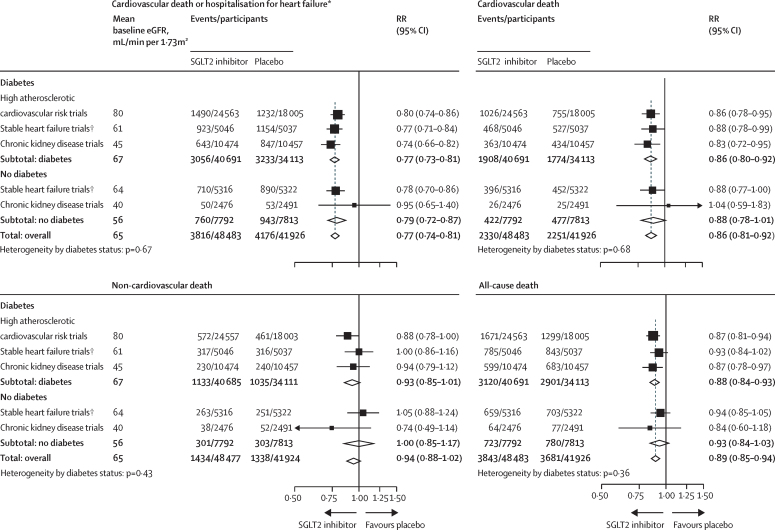
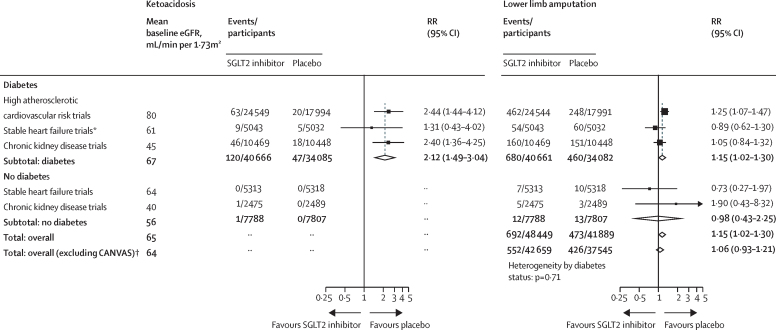
BACKGROUND: Large trials have shown that sodium glucose co-transporter-2 (SGLT2) inhibitors reduce the risk of adverse kidney and cardiovascular outcomes in patients with heart failure or chronic kidney disease, or with type 2 diabetes and high risk of atherosclerotic cardiovascular disease. None of the trials recruiting patients with and without diabetes were designed to assess outcomes separately in patients without diabetes. METHODS: We did a systematic review and meta-analysis of SGLT2 inhibitor trials. We searched the MEDLINE and Embase databases for trials published from database inception to Sept 5, 2022. SGLT2 inhibitor trials that were double-blind, placebo-controlled, performed in adults (age ≥18 years), large (≥500 participants per group), and at least 6 months in duration were included. Summary-level data used for analysis were extracted from published reports or provided by trial investigators, and inverse-variance-weighted meta-analyses were conducted to estimate treatment effects. The main efficacy outcomes were kidney disease progression (standardised to a definition of a sustained ≥50% decrease in estimated glomerular filtration rate [eGFR] from randomisation, a sustained low eGFR, end-stage kidney disease, or death from kidney failure), acute kidney injury, and a composite of cardiovascular death or hospitalisation for heart failure. Other outcomes were death from cardiovascular and non-cardiovascular disease considered separately, and the main safety outcomes were ketoacidosis and lower limb amputation. This study is registered with PROSPERO, CRD42022351618. FINDINGS: ). Compared with placebo, allocation to an SGLT2 inhibitor reduced the risk of kidney disease progression by 37% (relative risk [RR] 0·63, 95% CI 0·58-0·69) with similar RRs in patients with and without diabetes. In the four chronic kidney disease trials, RRs were similar irrespective of primary kidney diagnosis. SGLT2 inhibitors reduced the risk of acute kidney injury by 23% (0·77, 0·70-0·84) and the risk of cardiovascular death or hospitalisation for heart failure by 23% (0·77, 0·74-0·81), again with similar effects in those with and without diabetes. SGLT2 inhibitors also reduced the risk of cardiovascular death (0·86, 0·81-0·92) but did not significantly reduce the risk of non-cardiovascular death (0·94, 0·88-1·02). For these mortality outcomes, RRs were similar in patients with and without diabetes. For all outcomes, results were broadly similar irrespective of trial mean baseline eGFR. Based on estimates of absolute effects, the absolute benefits of SGLT2 inhibition outweighed any serious hazards of ketoacidosis or amputation. INTERPRETATION: In addition to the established cardiovascular benefits of SGLT2 inhibitors, the randomised data support their use for modifying risk of kidney disease progression and acute kidney injury, not only in patients with type 2 diabetes at high cardiovascular risk, but also in patients with chronic kidney disease or heart failure irrespective of diabetes status, primary kidney disease, or kidney function. FUNDING: UK Medical Research Council and Kidney Research UK.
Overview
CoChat Summary
TL;DR
In a collaborative meta-analysis of 13 large placebo-controlled SGLT2 inhibitor trials including 90,409 participants, SGLT2 inhibitors reduced kidney disease progression by 37% and acute kidney injury by 23%, with similar relative effects in patients with and without diabetes. Cardiovascular death or heart failure hospitalisation was reduced by 23%, and absolute benefits outweighed serious hazards of ketoacidosis or amputation in the studied populations.
Key findings
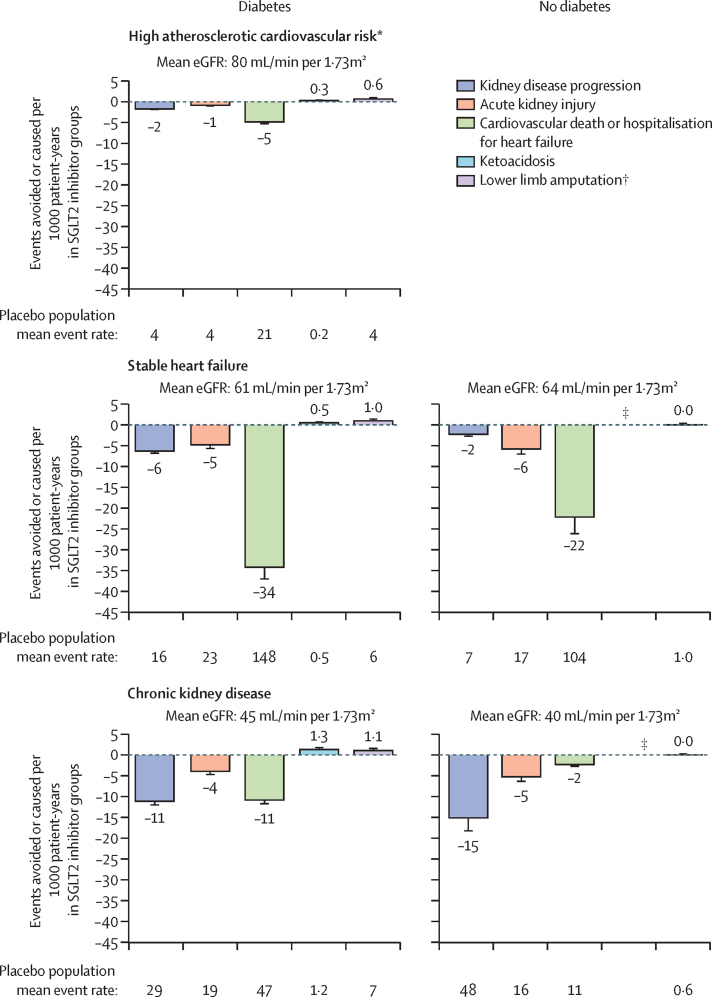
- Among 90,409 analysed participants (74,804 [82.7%] with diabetes, >99% type 2; 15,605 [17.3%] without diabetes), SGLT2 inhibitors reduced kidney disease progression by 37% overall (RR 0.63, 95% CI 0.58–0.69), with similar RRs in patients with diabetes (0.62, 0.56–0.68) and without diabetes (0.69, 0.57–0.82; heterogeneity p=0.31).
- SGLT2 inhibitors reduced acute kidney injury by 23% overall (RR 0.77, 95% CI 0.70–0.84), with similar effects in patients with diabetes (0.79, 0.72–0.88) and without diabetes (0.66, 0.54–0.81; heterogeneity p=0.12), and reduced cardiovascular death or hospitalisation for heart failure by 23% (0.77, 0.74–0.81), again similar by diabetes status.
- Cardiovascular death was reduced by 14% (RR 0.86, 95% CI 0.81–0.92), while non-cardiovascular death was not significantly reduced (0.94, 0.88–1.02); ketoacidosis RR in patients with diabetes was 2.12 (1.49–3.04), and lower limb amputation overall was 1.15 (1.02–1.30), driven by CANVAS, with no significant association in the other 12 trials (1.06, 0.93–1.21).
- In chronic kidney disease trials, kidney disease progression RRs were similar by primary kidney diagnosis: diabetic kidney disease 0.60 (0.53–0.69), ischaemic/hypertensive kidney disease 0.70 (0.50–1.00), glomerular disease 0.60 (0.46–0.78), and other/unknown 0.74 (0.51–1.08).
Methods
- Systematic review and meta-analysis; MEDLINE and Embase were searched from database inception to Sept 5, 2022, for double-blind, placebo-controlled SGLT2 inhibitor trials in adults (age ≥18 years), with ≥500 participants per group and ≥6 months duration; 13 trials were included.
- Summary-level data were extracted from published reports or provided by trial investigators; kidney disease progression was standardised to a sustained ≥50% eGFR decrease from randomisation, sustained low eGFR, end-stage kidney disease, or death from kidney failure, and inverse-variance-weighted meta-analyses estimated treatment effects.
- Main outcomes were kidney disease progression, acute kidney injury, and cardiovascular death or hospitalisation for heart failure; other outcomes included cardiovascular and non-cardiovascular death, with safety outcomes of ketoacidosis and lower limb amputation; analyses were by diabetes status, primary kidney diagnosis, and trial mean baseline eGFR. PROSPERO registration CRD42022351618.
Limitations
- Stated in the paper: there were low numbers of cardiovascular deaths and heart failure hospitalisations in patients with chronic kidney disease without diabetes; acute kidney injury adjudication was not performed in most trials; individual participant-level data were not available, precluding detailed eGFR slope analyses; efficacy and safety in dialysis or transplant patients, other kidney diagnoses (e.g., polycystic kidney disease), and type 1 diabetes remain unevaluated; absolute effect estimates are specific to the recruited trial populations.
- Stated in the paper: some subgroup data were limited, with wide confidence intervals for non-diabetic kidney diagnoses, and ketoacidosis events in patients without diabetes were too few to estimate absolute effects.
- Evident from the text: the meta-analysis relies on summary-level trial data rather than individual participant data; diabetes status is baseline-defined and >99% of participants with diabetes had type 2 diabetes; outcome definitions varied across trials despite standardisation, and several analyses (e.g., by primary kidney diagnosis, eGFR trend) were exploratory with multiple testing.
Model-written summary. Check it against the paper before relying on it.
Integrity signals
Registry
Cites
Statistics
Figures
Verification
Claims the paper makes
11 Valid · 1 Not valid · 11 Not checked · 64 Own results and interpretations
The cited sources support only part of this claim — read each source’s verdict below.
In the paper
“There is good evidence to support the use of SGLT2 inhibitors as a foundational therapy to prevent cardiovascular death or hospitalisation for heart failure in patients with heart failure, irrespective of ejection fraction or history of previous diabetes.1, 2, 3, 4, 5”
§ Impact of diabetes on the effects of sodium glucose co-transporter-2 inhibitors on kidney outcomes: collaborative meta-analysis of large placebo-controlled trials > Introduction
What the sources say
- Supportedcites [1] Staplin N Roddick AJ Emberson J Net effects of sodium-glucose co-transporter-2 inhibition in different patient groups: a meta-analysis of large placebo-controlled randomized trials EClinicalMedicine 41 2021 101163 PMC8571171 34765951 source
The Results (Relative effects of SGLT-2 inhibitors) report a 23% reduction in hospitalization for heart failure or cardiovascular death. The Results (Estimates of absolute effects) estimate benefits in heart failure with both reduced and preserved ejection fraction, including in people without diabetes; the paper also describes strong evidence of net benefit for people with heart failure. Page numbers were not available in our copy. (LLM, conf=0.91)
- Partly supportedcites [2] Zannad F Ferreira JP Pocock SJ SGLT2 inhibitors in patients with heart failure with reduced ejection fraction: a meta-analysis of the EMPEROR-Reduced and DAPA-HF trials Lancet 396 2020 819 829 32877652 sourceExperimental — accuracy not yet measured
The Conclusion reports that empagliflozin and dapagliflozin reduce heart-failure hospitalisations in patients with reduced ejection fraction (HFrEF), whether or not they have diabetes, and suggests a reduction in cardiovascular mortality. The paper does not establish benefit irrespective of ejection fraction: its meta-analysis covers HFrEF, not all patients with heart failure. (LLM, conf=0.90)
- Partly supportedcites [3] Anker SD Butler J Filippatos G Empagliflozin in heart failure with a preserved ejection fraction N Engl J Med 385 2021 1451 1461 34449189 sourceExperimental — accuracy not yet measured
Split into 2 atoms — 0 confirmed, 2 partially supported, 0 disputed, 0 misattributed, 0 unverifiable. Expand the claim to see per-atom verdicts.
- Supportedcites [4] Solomon SD McMurray JJV Claggett B Dapagliflozin in heart failure with mildly reduced or preserved ejection fraction N Engl J Med 387 2022 1089 1098 36027570 source
The Discussion describes SGLT2 inhibition as essential therapy for heart failure regardless of ejection fraction or type 2 diabetes status. The Results report a lower risk of the composite outcome of worsening heart failure or cardiovascular death with dapagliflozin; worsening heart failure included hospitalization or an urgent heart-failure visit. (LLM, conf=0.92)
- Supportedcites [5] Vaduganathan M Docherty KF Claggett BL SGLT-2 inhibitors in patients with heart failure: a comprehensive meta-analysis of five randomised controlled trials Lancet 400 2022 757 767 36041474 source
The Abstract reports a reduced risk of cardiovascular death or hospitalisation for heart failure across five trials and explicitly supports SGLT2 inhibitors as a foundational therapy irrespective of ejection fraction. The Outcomes and subgroups section includes history of diabetes in the primary-endpoint analysis; the Results report consistent effects across the examined subgroups except NYHA class, and the diabetes subgroup data show no evidence of a treatment-by-diabetes interaction (p=0.93). (LLM, conf=0.92)
boostedstates a cause- Asserted: passes — The authors put it forward as true.
- Checkable: passes — It can be checked against evidence.
- Load-bearing: unclear — It is unclear whether the paper’s conclusions depend on it.
- Based: passes — The paper gives a reason why it holds.
- Supported
The cited sources support only part of this claim — read each source’s verdict below.
In the paper
“Since 2021, two placebo-controlled SGLT2 inhibitor trials (EMPA-KIDNEY and DELIVER) have studied a large number of people without diabetes.”
§ Impact of diabetes on the effects of sodium glucose co-transporter-2 inhibitors on kidney outcomes: collaborative meta-analysis of large placebo-controlled trials > Introduction
What the sources say
- Partly supportedcites [4] Solomon SD McMurray JJV Claggett B Dapagliflozin in heart failure with mildly reduced or preserved ejection fraction N Engl J Med 387 2022 1089 1098 36027570 sourceExperimental — accuracy not yet measured
Our copy of DELIVER supports half of the attribution: the Trial Design and Oversight section describes a phase 3, double-blind, randomized trial of dapagliflozin versus matching placebo, the Trial Patients section states eligibility 'with or without type 2 diabetes mellitus', and Table 1 shows 6263 patients randomised with type 2 diabetes in only ~45% of each arm (i.e. a large number of people without diabetes). However, no passage of our copy mentions EMPA-KIDNEY at all (searches for 'EMPA-KIDNEY', 'empagliflozin chronic kidney disease trial' returned nothing); the only other SGLT2-inhibitor trial our copy names is EMPEROR-Preserved (empagliflozin in heart failure with LVEF >40%, Discussion). The EMPA-KIDNEY half of the claim therefore rests on another source. (LLM, conf=0.72)
- Partly supportedcites [12] Herrington WG Wanner C Green JB Design, recruitment, and baseline characteristics of the EMPA-KIDNEY trial Nephrol Dial Transplant 37 2022 1317 1329 35238940 PMC9217655 sourceExperimental — accuracy not yet measured
Our copy supports the EMPA-KIDNEY half of the sentence: the Abstract > Methods describes it as an 'international randomized, double-blind, placebo-controlled trial' of empagliflozin, and the Abstract > Results / Results > Recruitment (p. Recruitment) give 6609 randomized between 15 May 2019 and 16 April 2021, of whom 3570 (54%) had no prior history of DM, with the Discussion noting 'The larger number of people without DM in EMPA-KIDNEY will provide valuable additional information...'. However, nothing in our copy mentions DELIVER (or dapagliflozin in heart failure with mildly reduced/preserved EF): searches for DELIVER returned only references to DAPA-HF, EMPEROR-Preserved, DAPA-CKD and CREDENCE. The attribution of a second, large placebo-controlled SGLT2-inhibitor trial without diabetes since 2021 to this source is therefore unsupported. (LLM, conf=0.80)
- Not checked yetcites [13] The EMPA-KIDNEY Collaborative Group. Empagliflozin in patients with chronic kidney disease. N Engl J Med (in press).
plainn = 3,569- Asserted: passes — The authors put it forward as true.
- Checkable: passes — It can be checked against evidence.
- Load-bearing: passes — The paper’s conclusions depend on it.
- Based: passes — The paper gives a reason why it holds.
- Partly supported
The cited sources support only part of this claim — read each source’s verdict below.
In the paper
“a previous meta-analysis had limited power as only 98 kidney disease progression outcomes were reported in participants without diabetes in such trials.1, 11”
§ Impact of diabetes on the effects of sodium glucose co-transporter-2 inhibitors on kidney outcomes: collaborative meta-analysis of large placebo-controlled trials > Introduction
What the sources say
- Partly supportedcites [1] Staplin N Roddick AJ Emberson J Net effects of sodium-glucose co-transporter-2 inhibition in different patient groups: a meta-analysis of large placebo-controlled randomized trials EClinicalMedicine 41 2021 101163 PMC8571171 34765951 sourceExperimental — accuracy not yet measured
Our copy of Staplin et al. (2021) is the meta-analysis the citing sentence describes, and it does report kidney disease progression analysed by diabetes status in participants without DM from three HF trials (n=7529) plus one CKD trial (n=1398), with 'nearly 9000 participants without DM' (Results > Relative effects; Discussion). It also concedes limited evidence in people without DM — 'further data on in HFpEF and certain CKD patient groups are awaited ... these ongoing trials will provide more information in people without DM' (Discussion, limitations). But no passage states the figure of 98 kidney disease progression outcomes, nor characterises the renal analyses as underpowered; the only 'too few events' statements in our copy concern ketoacidosis and amputations in people without DM, and the reported HF heterogeneity test by DM status for kidney progression (p=0.53) is presented without a power caveat. The specific number and the 'limited power' conclusion attributed here are therefore not supported by our copy. (LLM, conf=0.62)
- Could not verifycites [11] Packer M Butler J Zannad F Empagliflozin and major renal outcomes in heart failure N Engl J Med 385 2021 1531 1533 34449179 sourceExperimental — accuracy not yet measured
Our copy of Packer et al. (2021, NEJM correspondence) is a prospective patient-level pooled analysis of EMPEROR-Reduced and EMPEROR-Preserved; its opening (Introduction) only states that SGLT2 inhibitors reduce adverse renal outcomes in type 2 diabetes but that 'the renal effects of these drugs in patients with heart failure remain uncertain'. No passage in our copy refers to a previous meta-analysis, to its statistical power, or to a count of 98 kidney disease progression outcomes in participants without diabetes — the only event numbers given are the pooled analysis's own 138 vs. 170 major adverse renal outcomes (Results). Searches for '98 kidney disease progression outcomes', 'limited power', 'meta-analysis', and 'underpowered' returned nothing on point, so the attributed detail cannot be checked against this source. (LLM, conf=0.70)
plain- Asserted: passes — The authors put it forward as true.
- Checkable: passes — It can be checked against evidence.
- Load-bearing: passes — The paper’s conclusions depend on it.
- Based: passes — The paper gives a reason why it holds.
- Partly supported
Every source the paper cites for this claim was checked and supports it.
In the paper
“Large trials have also shown that SGLT2 inhibitors reduce the risk of kidney disease progression in patients with type 2 diabetes and proteinuric chronic kidney disease,1, 6, 7, 8”
§ Impact of diabetes on the effects of sodium glucose co-transporter-2 inhibitors on kidney outcomes: collaborative meta-analysis of large placebo-controlled trials > Introduction
What the sources say
- Supportedcites [1] Staplin N Roddick AJ Emberson J Net effects of sodium-glucose co-transporter-2 inhibition in different patient groups: a meta-analysis of large placebo-controlled randomized trials EClinicalMedicine 41 2021 101163 PMC8571171 34765951 source
The Introduction states that trials found SGLT-2 inhibitors slow CKD progression and substantially reduce end-stage kidney disease risk in people with albuminuric diabetic nephropathy. The Results report a reduced risk of kidney disease progression compared with placebo. These passages support the claim about patients with type 2 diabetes and proteinuric CKD. (LLM, conf=0.93)
- Supportedcites [6] Neuen BL Young T Heerspink HJL SGLT2 inhibitors for the prevention of kidney failure in patients with type 2 diabetes: a systematic review and meta-analysis Lancet Diabetes Endocrinol 7 2019 845 854 31495651 source
The Results report that SGLT2 inhibitors reduced substantial loss of kidney function, end-stage kidney disease, or death due to kidney disease. They also identify CREDENCE as a trial requiring substantial albuminuria, and the Overall section reports no evidence that the treatment effect differed across albuminuria subgroups. Together, these passages support the claim for patients with type 2 diabetes and proteinuric chronic kidney disease. (LLM, conf=0.92)
- Supportedcites [7] Perkovic V Jardine MJ Neal B Canagliflozin and renal outcomes in type 2 diabetes and nephropathy N Engl J Med 380 2019 2295 2306 30990260 source
The Methods describe a randomized trial of the SGLT2 inhibitor canagliflozin in patients with type 2 diabetes and albuminuric chronic kidney disease. The Discussion reports a lower risk of end-stage kidney disease with canagliflozin than with placebo. This paper supports the claim as one of the trials cited; page numbers are not available in the supplied copy. (LLM, conf=0.92)
- Supportedcites [8] Heerspink HJL Stefánsson BV Correa-Rotter R Dapagliflozin in patients with chronic kidney disease N Engl J Med 383 2020 1436 1446 32970396 source
The Abstract (p. 1437) reports that this large trial enrolled patients with chronic kidney disease and elevated urinary albumin, and that dapagliflozin reduced the risk of the kidney-related composite outcome versus placebo. It also states that effects were similar in participants with and without type 2 diabetes; the Discussion describes these as kidney-protective effects of an SGLT2 inhibitor. (LLM, conf=0.91)
plainstates a cause- Asserted: passes — The authors put it forward as true.
- Checkable: passes — It can be checked against evidence.
- Load-bearing: passes — The paper’s conclusions depend on it.
- Based: passes — The paper gives a reason why it holds.
- Supported
The cited sources support only part of this claim — read each source’s verdict below.
In the paper
“the DAPA-CKD trial in patients with proteinuric chronic kidney disease reported just 109 kidney disease progression outcomes in patients without diabetes.1, 8, 10”
§ Impact of diabetes on the effects of sodium glucose co-transporter-2 inhibitors on kidney outcomes: collaborative meta-analysis of large placebo-controlled trials > Introduction
What the sources say
- Partly supportedcites [1] Staplin N Roddick AJ Emberson J Net effects of sodium-glucose co-transporter-2 inhibition in different patient groups: a meta-analysis of large placebo-controlled randomized trials EClinicalMedicine 41 2021 101163 PMC8571171 34765951 sourceExperimental — accuracy not yet measured
The Results (Eligible trial characteristics; page unavailable) identify DAPA-CKD as a trial involving 1,398 participants without diabetes and list albuminuria among its eligibility criteria. The Results (Relative effects of SGLT-2 inhibitors; page unavailable) discuss kidney disease progression in that subgroup, but our copy does not report the claimed total of 109 outcomes (searched: “109” and DAPA-CKD progression events without diabetes). (LLM, conf=0.85)
- Partly supportedcites [8] Heerspink HJL Stefánsson BV Correa-Rotter R Dapagliflozin in patients with chronic kidney disease N Engl J Med 383 2020 1436 1446 32970396 sourceExperimental — accuracy not yet measured
The Participants section confirms that DAPA-CKD enrolled people with albuminuric chronic kidney disease, including people without diabetes. Table 2 in Efficacy Outcomes reports 109 end-stage kidney disease events in the dapagliflozin group overall, not 109 kidney disease progression outcomes specifically among participants without diabetes. The claimed subgroup count is therefore not supported by this paper's reported figures. (LLM, conf=0.86)
- Not checked yetcites [10] Wheeler DC Stefánsson BV Jongs N Effects of dapagliflozin on major adverse kidney and cardiovascular events in patients with diabetic and non-diabetic chronic kidney disease: a prespecified analysis from the DAPA-CKD trial Lancet Diabetes Endocrinol 9 2021 22 31 33338413 source
plain- Asserted: passes — The authors put it forward as true.
- Checkable: passes — It can be checked against evidence.
- Load-bearing: passes — The paper’s conclusions depend on it.
- Based: passes — The paper gives a reason why it holds.
- Partly supported
55 more claims · 4 with their cited sources checked
Create a free account to see all 87 claims and to verify the 17 references still open.
- It may state two separate claims as one. 18
- Probably not a substantial claim. 10
Claims other papers make about this one
Each is checked against this paper’s own text: does it say what the citing paper says it does?
The source backs part of the claim, not all of it — or backs it for a different population, condition or comparison.
In the citing paper
“whilst in the non‐operative setting, is greater in patients with diabetes mellitus than those without (1 in 339 vs. 1 in 15,592) [96, 97].”
Experimental — accuracy not yet measuredThe source backs part of the claim, not all of it — or backs it for a different population, condition or comparison.
In the citing paper
“Outcomes trials confirmed that SGLT2i effectively prevented kidney failure as well as heart failure events, with more modest effects on atherosclerotic CV outcomes3.”
From Effects of semaglutide with and without concomitant SGLT2 inhibitor use in participants with type 2 diabetes and chronic kidney disease in the FLOW trial (2024) · cites this paper as [3]
Experimental — accuracy not yet measuredThe cited source says what the claim attributes to it.
In the citing paper
“Glucagon-like peptide-1 receptor agonists and sodium-glucose cotransporter-2 inhibitors (SGLT2i) independently reduce CV and kidney events.”
In the citing paper
“In patients with T1DM and CKD, the absence of large trials with sufficient follow-up means it is unclear whether the absolute benefits of SGLT2 inhibitors on kidney failure and CVD outcomes are outweighed by the high absolute risk of ketoacidosis with SGLT2 inhibitors.715,716”
From 2023 ESC guidelines for the management of cardiovascular disease in patients with diabetes. (2023) · cites this paper as [716]
Self-check
Percentages, sums and reported differences re-computed from the paper’s own numbers.
Each contradiction between two passages listed here was confirmed by an independent check.
Rated minor: it would not touch a result — a value no result rests on, a p-value that stays on the same side of the significance level, or a conflict that is clerical, resolved elsewhere in the paper, or outside its own findings.
In the paper
§ Impact of diabetes on the effects of sodium glucose co-transporter-2 inhibitors on kidney outcomes: collaborative meta-analysis of large placebo-controlled trials > Results
“shortest for the heart failure trials (0·8–2·2 years).”
§ Impact of diabetes on the effects of sodium glucose co-transporter-2 inhibitors on kidney outcomes: collaborative meta-analysis of large placebo-controlled trials > Results
“| DELIVER4 (dapagliflozin 10 mg) | 6263 | 2·3 |”
Citations
Cites
RoB 2: a revised tool for assessing risk of bias in randomised trials
Sterne, J. A. C., Savović, J., Page, M. J., Elbers, R. G., Blencowe, N. S., Boutron, I., Cates, C. J., Cheng, H.-Y., Corbett, M. S., Eldridge, S. M., et al. (2019) · BMJ · doi:10.1136/bmj.l4898 · Cited by 34,787
Self-citationEmpagliflozin, Cardiovascular Outcomes, and Mortality in Type 2 Diabetes
Zinman, B., Wanner, C., Lachin, J. M., Fitchett, D., Bluhmki, E., Hantel, S., Mattheus, M., Devins, T., Johansen, O. E., Woerle, H. J., et al. (2015) · New England Journal of Medicine · doi:10.1056/nejmoa1504720 · Cited by 12,315
Self-citationWan, X., Wang, W., Liu, J., & Tong, T. (2014) · BMC Medical Research Methodology · doi:10.1186/1471-2288-14-135 · Cited by 11,735
Canagliflozin and Cardiovascular and Renal Events in Type 2 Diabetes
Neal, B., Perkovic, V., Mahaffey, K. W., de Zeeuw, D., Fulcher, G., Erondu, N., Shaw, W., Law, G., Desai, M., & Matthews, D. R. (2017) · New England Journal of Medicine · doi:10.1056/nejmoa1611925 · Cited by 7,830 · cited 1×
“(20) Additional information on urinary tract infections (all and restricted to the subset which are serious), mycotic genital infections, severe hypoglycaemia and bone fractures are included for completeness (Webtable 2 provides details of derivation of each outcome by trial).”
Self-citationDapagliflozin in Patients with Heart Failure and Reduced Ejection Fraction
McMurray, J. J. V., Solomon, S. D., Inzucchi, S. E., Køber, L., Kosiborod, M. N., Martinez, F. A., Ponikowski, P., Sabatine, M. S., Anand, I. S., Bělohlávek, J., et al. (2019) · New England Journal of Medicine · doi:10.1056/nejmoa1911303 · Cited by 7,140
Self-citationDapagliflozin and Cardiovascular Outcomes in Type 2 Diabetes
Wiviott, S. D., Raz, I., Bonaca, M. P., Mosenzon, O., Kato, E. T., Cahn, A., Silverman, M. G., Zelniker, T. A., Kuder, J. F., Murphy, S. A., et al. (2019) · New England Journal of Medicine · doi:10.1056/nejmoa1812389 · Cited by 6,382 · cited 1×
“…so individual trial investigators provided a re-analysis of eGFR data to derive this meta-analysis’ pre-selected composite kidney disease progression outcome as well as any other unavailable outcomes of interest (3, 4, 7, 8, 12, 17, 21, 41) (excluding the short duration SOLOIST-WHF trial (18)).”
Self-citationCanagliflozin and Renal Outcomes in Type 2 Diabetes and Nephropathy
Perkovic, V., Jardine, M. J., Neal, B., Bompoint, S., Heerspink, H. J. L., Charytan, D. M., Edwards, R., Agarwal, R., Bakris, G., Bull, S., et al. (2019) · New England Journal of Medicine · doi:10.1056/nejmoa1811744 · Cited by 6,189 · cited 3×
“…so individual trial investigators provided a re-analysis of eGFR data to derive this meta-analysis’ pre-selected composite kidney disease progression outcome as well as any other unavailable outcomes of interest (3, 4, 7, 8, 12, 17, 21, 41) (excluding the short duration SOLOIST-WHF trial (18)).”
Self-citationDapagliflozin in Patients with Chronic Kidney Disease
Heerspink, H. J. L., Stefánsson, B. V., Correa-Rotter, R., Chertow, G. M., Greene, T., Hou, F.-F., Mann, J. F. E., McMurray, J. J. V., Lindberg, M., Rossing, P., et al. (2020) · New England Journal of Medicine · doi:10.1056/nejmoa2024816 · Cited by 5,618
Self-citationCardiovascular and renal outcomes with empagliflozin in heart failure
Packer, M., Anker, S. D., Butler, J., Filippatos, G., Pocock, S. J., Carson, P., Januzzi, J., Verma, S., Tsutsui, H., Brueckmann, M., et al. (2020) · New England Journal of Medicine · doi:10.1056/nejmoa2022190 · Cited by 5,206 · cited 1×
“…so individual trial investigators provided a re-analysis of eGFR data to derive this meta-analysis’ pre-selected composite kidney disease progression outcome as well as any other unavailable outcomes of interest (3, 4, 7, 8, 12, 17, 21, 41) (excluding the short duration SOLOIST-WHF trial (18)).”
Self-citationEmpagliflozin in heart failure with a preserved ejection fraction
Anker, S. D., Butler, J., Filippatos, G., Ferreira, J. P., Bocchi, E., Böhm, M., Brunner–La Rocca, H.-P., Choi, D.-J., Chopra, V., Chuquiure-Valenzuela, E., et al. (2021) · New England Journal of Medicine · doi:10.1056/nejmoa2107038 · Cited by 4,874 · cited 2×
“…so individual trial investigators provided a re-analysis of eGFR data to derive this meta-analysis’ pre-selected composite kidney disease progression outcome as well as any other unavailable outcomes of interest (3, 4, 7, 8, 12, 17, 21, 41) (excluding the short duration SOLOIST-WHF trial (18)).”
Self-citation
Research works printed but not linked: 4
- The EMPA-KIDNEY Collaborative Group. Empagliflozin in patients with chronic kidney disease. N Engl J Med (in press).
- Early Breast Cancer Trialists' Collaborative Group Treatment of early breast cancer. Vol 1. Worldwide evidence 1985–1990 vol 1 1990 Oxford University Press Oxford
- Deeks JJ Higgins JPT Altman DG on behalf of the Cochrane Statistical Methods Group Chapter 10: Analysing data and undertaking meta-analyses Higgins JPT Thomas J Chandler J Cumpston M Li T Page MJ Welch VA Cochrane Handbook for Systematic Reviews of Interventions version 6.1 2019 John Wiley & Sons Chichester
- National Institute for Health and Care Excellence Dapagliflozin for treating chronic kidney disease. Technology appraisal guidance [TA775] www.nice.org.uk/guidance/ta775 March 9, 2022 40455906
Cited by
Items 401–500 of 999
Lamb, E. J., Barratt, J., Brettell, E. A., Cockwell, P., Dalton, R. N., Deeks, J. J., Eaglestone, G., Pellatt‐Higgins, T., Kalra, P. A., Khunti, K., et al. (2024) · Health Technology Assessment · doi:10.3310/hyhn1078 · Cited by 20
Russo, G. T., Giandalia, A., Lucisano, G., Rossi, M. C., Piscitelli, P. A., Pontremoli, R., Viazzi, F. C., Rocca, A., Manicardi, V., Cianni, G. D., et al. (2024) · European Journal of Internal Medicine · doi:10.1016/j.ejim.2024.07.034 · Cited by 10
Sridhar, V. S., Cosentino, F., Dagogo-Jack, S. E., McGuire, D. K., Pratley, R. E., Cater, N. B., Essex, M. N., Mancuso, J. P., Zhao, Y., & Cherney, D. Z. I. (2024) · Diabetes Obesity and Metabolism · doi:10.1111/dom.15895 · Cited by 13
“17,18 The VERTIS CV trial (NCT01986881) assessed the effects of the SGLT2 inhibitor ertugliflozin on cardiovascular and kidney outcomes in participants with T2D and established ASCVD.”
Self-citationGeng, S., Li, Y., Ge, J., Liu, Y., Li, Q., Chen, X., Zhu, Y., Guo, X., Yuan, H., Wang, X., et al. (2024) · Postgraduate Medicine · doi:10.1080/00325481.2024.2426442 · Cited by 8
Cao, M.-J., Liang, T., Xu, L., & Shi, F. (2025) · Diabetology & Metabolic Syndrome · doi:10.1186/s13098-024-01547-x · Cited by 11
Raven, L. M., Greenfield, J. R., Jabbour, A., Macdonald, P. S., & Muir, C. A. (2025) · JHLT Open · doi:10.1016/j.jhlto.2025.100255 · Cited by 8
Montero, N., Oliveras, L., Martínez‐Castelao, A., Górriz, J. L., Soler, M. J., Fernández‐Fernández, B., Quero, M., García-Carro, C., García-Sancho, P., Goicoechea, M., et al. (2025) · Nefrología (English Edition) · doi:10.1016/j.nefroe.2025.04.005 · Cited by 18
Wang, M., & Zuo, L. (2025) · Cardiorenal Medicine · doi:10.1159/000545622 · Cited by 11
An, Y., & Zhang, H. (2025) · American Journal of Nephrology · doi:10.1159/000546079 · Cited by 10
Song, S. M., Kim, M., Jang, M., Kim, M., Lee, K. H., Jeon, J., Jin, S., Jang, H. R., Huh, W., & Lee, J. E. (2025) · Kidney International Reports · doi:10.1016/j.ekir.2025.06.036 · Cited by 11
Mark, P. B., Sousa‐Amorim, E. D., Eriksson, A. L., Leonsson‐Zachrisson, M., Guzman, N. J., Miller, M. T., Jiang, Y., & Heerspink, H. J. L. (2025) · Nephrology Dialysis Transplantation · doi:10.1093/ndt/gfaf119 · Cited by 12
Self-citationDelaying Progression of Chronic Kidney Disease
Song, R. M., Alexander, J. T., & Prochaska, M. (2025) · JAMA · doi:10.1001/jama.2025.9532 · Cited by 10
Sodium-glucose cotransporter 2 inhibitors and atherosclerosis
Ceasovschih, A., Balta, A., Aldeen, E. S., Bianconi, V., Barkas, F., Şener, Y. Z., Jakubová, M., Yılmaz, M. B., Banach, M., Șorodoc, L., et al. (2025) · American Journal of Preventive Cardiology · doi:10.1016/j.ajpc.2025.101061 · Cited by 12
“The Nuffield Department of Population Health Renal Studies Group highlighted reductions in CKD progression and CV death, but did not observe a significant reduction in non-CV mortality [78,116].”
Nephroprotective Mechanisms of SGLT2i: Beyond the Glucose-Lowering Effect
Mazzieri, A., & Marcon, L. M. R. (2025) · Biomedicines · doi:10.3390/biomedicines13092123 · Cited by 13
“…range of 37–85 mL/min/1.73 m 2 and of which 82.7% had T2DM showed that SGLT2i reduced the risk of kidney disease progression by 37%, with similar effects in patients with DKD or other causes of CKD, also demonstrating a statistically significant reduction in the risk of cardiovascular death [103].”
InfluentialAddressing unmet needs for chronic kidney disease treatment in type 1 diabetes: A review
Tuttle, K. R., Ji, L., Mathieu, C., & Rosen, J. (2025) · Diabetes Obesity and Metabolism · doi:10.1111/dom.70180 · Cited by 8
Taliercio, J. J., & Mehdi, A. (2023) · Cleveland Clinic Journal of Medicine · doi:10.3949/ccjm.90.e-s1.02 · Cited by 10
Jhund, P. S. (2023) · Diabetes Obesity and Metabolism · doi:10.1111/dom.15171 · Cited by 8
“Estimates for type 2 diabetes (T2DM) taken from Bhatia et al. 23 for heart failure from Vaduganathan et al. 39 for chronic kidney disease (CKD) from Qui et al. 43 and for T2DM and HF and CKD from Baigent et al. 1 HR, hazard ratio.”
BackgroundInfluentialKidneys in heart failure: Impact of flozins
Stompór, T. P., & Winiarska, A. (2023) · Kardiologia Polska · doi:10.33963/v.kp.97844 · Cited by 9
Spasovski, G. B., Rroji, M., Hristov, G., Bushljetikj, O., Spahia, N., & Bushletikj, I. R. (2024) · Metabolic Syndrome and Related Disorders · doi:10.1089/met.2023.0227 · Cited by 13
Nangaku, M., Herrington, W. G., Goto, S., Maruyama, S., Kashihara, N., Ueki, K., Wada, J., Watada, H., Nakashima, E., Lee, R., et al. (2024) · Clinical and Experimental Nephrology · doi:10.1007/s10157-024-02489-4 · Cited by 10
“Effects on kidney outcomes from all three trials have been combined in a collaborative meta-analysis [1].”
BackgroundInfluentialSelf-citationMasuda, T., Yoshida, M., Onaka, T., & Nagata, D. (2024) · Hypertension Research · doi:10.1038/s41440-024-01893-3 · Cited by 8
“SGLT2 inhibitors exhibit cardio-renal protective properties in patients with various clinical backgrounds, including diabetes, early to advanced chronic kidney disease (CKD), and a wide range of heart failures (heart failure with reduced ejection fraction and preserved ejection fraction) [3, 4].”
An update on corticosteroid treatment for IgA nephropathy
Ghaddar, M., Barratt, J., & Barbour, S. J. (2023) · Current Opinion in Nephrology & Hypertension · doi:10.1097/mnh.0000000000000881 · Cited by 10
A novel risk factor for malignancy: Albuminuria
Kanbay, M., Çöpür, S., Yilmaz, Z. Y., Tanrıöver, C., Hasbal, N. B., Ortíz, A., & Perazella, M. A. (2023) · European Journal of Internal Medicine · doi:10.1016/j.ejim.2023.09.010 · Cited by 9
Effect of dapagliflozin on renal haemodynamics in hyperfiltering T2D patients
Cersósimo, E., YueJuan, Q., Baskoy, G., Chávez, A. O., Barkhordarian, M., HANSIS-DIARTE, A. A., Triplitt, C. L., & DeFronzo, R. A. (2024) · Diabetes Obesity and Metabolism · doi:10.1111/dom.16094 · Cited by 8
Minutolo, R., Borrelli, S., Ambrosini, A., Amoroso, L., Aucella, F., Batini, V., Battaglia, Y., Bregoli, L., Cantaluppi, V., Cianciolo, G., et al. (2024) · Clinical Kidney Journal · doi:10.1093/ckj/sfae396 · Cited by 7
Masajtis‐Zagajewska, A., Kurek, R., Modrzyńska, K., Coker, T. L. R., & Nowicki, M. P. (2024) · Journal of Clinical Medicine · doi:10.3390/jcm14010054 · Cited by 8
Boonpiraks, K., Krisanapan, P., Anumas, S., Thongprayoon, C., Cheungpasitporn, W., & Pattharanitima, P. (2025) · F1000Research · doi:10.12688/f1000research.162502.1 · Cited by 8
Chen, I., Pai, Y., Lin, J., Chen, Y., Lin, K., Chen, H., & Lin, C. (2025) · Diabetes Research and Clinical Practice · doi:10.1016/j.diabres.2025.112167 · Cited by 10
Santos, G. L., dos Santos, C. F., Rocha, G. R., Calmon, M. S., Lemos, F. F. B., Silva, L. G., Luz, M. S., Pinheiro, S. L. R., Botelho, A. C., & de Melo, F. F. (2025) · World Journal of Diabetes · doi:10.4239/wjd.v16.i6.104706 · Cited by 12
Zhou, J., Williams, C., Staplin, N., Judge, P. K., Mayne, K. J., Agrawal, N., Arimoto, R., Green, J. B., Cherney, D. Z. I., Tuttle, K. R., et al. (2025) · EClinicalMedicine · doi:10.1016/j.eclinm.2025.103338 · Cited by 13
Self-citationVargas-Brochero, M. J., Russo, I., Mazzierli, T., Cara, A., Berti, G. M., Milheiro, J., Thongprayoon, C., Allinovi, M., Somma, C., Raglianti, V., et al. (2025) · Nephrology Dialysis Transplantation · doi:10.1093/ndt/gfaf197 · Cited by 16
“Randomized controlled trials have demonstrated the impact of SGLT2is in delaying progression of CKD and improving cardiovascular outcomes in patients with or without diabetes [13 ].”
SGLT2 Inhibitor Use and Cardiorenal Outcomes in Type 2 Diabetes With Liver Cirrhosis
Chung, M., Yu, T., Wu, L.-Y., Wu, M.-J., Shieh, J., & Chung, C. (2026) · JAMA Network Open · doi:10.1001/jamanetworkopen.2025.60429 · Cited by 10
Weaning Maintenance Therapy in Lupus Nephritis: For Whom, When, and How?
Jourde‐Chiche, N., Bobot, M., Burtey, S., Chiche, L., & Daugas, É. (2023) · Kidney International Reports · doi:10.1016/j.ekir.2023.05.012 · Cited by 7
Saito, Y., Tanaka, A., Imai, T., Nakamura, I., Kanda, J., Matsuhisa, M., Uehara, H., Kario, K., Kobayashi, Y., Node, K., et al. (2023) · Hypertension Research · doi:10.1038/s41440-023-01494-6 · Cited by 8
Nagori, A., Segar, M. W., Keshvani, N., Patel, L., Patel, K. V., Chandra, A., Willett, D. L., & Pandey, A. (2023) · Journal of Diabetes Science and Technology · doi:10.1177/19322968231212219 · Cited by 8
“25 More recently, treatment with the mineralocorticoid receptor antagonist finerenone has been shown to reduce the risk of HF among patients with type 2 diabetes and chronic kidney disease.”
CHOI, S., Sarker, M. K., Yu, M. R., Lee, H., Kwon, S. H., Jeon, J. S., Noh, H., & Kim, H. (2024) · BMJ Open Diabetes Research & Care · doi:10.1136/bmjdrc-2023-003784 · Cited by 8
Ten tips on immunosuppression in primary membranous nephropathy
Trujillo, H., Caravaca‐Fontán, F., & Praga, M. (2024) · Clinical Kidney Journal · doi:10.1093/ckj/sfae129 · Cited by 7
Paving a Path to Equity in Cardiorenal Care
Mohottige, D. (2024) · Seminars in Nephrology · doi:10.1016/j.semnephrol.2024.151519 · Cited by 8
Ezhumalai, B., Modi, R., Panchanatham, M., & Kaliyamoorthy, D. (2024) · Indian Heart Journal · doi:10.1016/j.ihj.2024.07.005 · Cited by 11
“75 The results indicated a consistent reduction in HHF and CV death across all these patients, including HF and CKD trials.”
Nicola, L. D., Cupisti, A., D’Alessandro, C., Gesualdo, L., Santoro, D., & Bellizzi, V. (2024) · Journal of Nephrology · doi:10.1007/s40620-024-02135-y · Cited by 10
Kidney benefits of SLGT2 inhibitors: evidence from clinical trials
Wang, M. (2022) · Nature Reviews Nephrology · doi:10.1038/s41581-022-00659-9 · Cited by 7
Tanaka, A., Okada, Y., Torimoto, K., Kamei, N., Hirai, H., Kono, T., Sugimoto, K., Teragawa, H., Taguchi, I., Maruhashi, T., et al. (2023) · Diabetes & Metabolism · doi:10.1016/j.diabet.2023.101447 · Cited by 7
Myette, R. L., Lamarche, C., Odutayo, A., Verdin, N., & Canney, M. (2024) · Canadian Journal of Kidney Health and Disease · doi:10.1177/20543581241232472 · Cited by 10
Talha, K. M., Green, J., Filippatos, G. S., Pocock, S., Zannad, F. M., Brueckmann, M., Schueler, E., Ofstad, A. P., Ferreira, J. P., Anker, S. D., et al. (2024) · Diabetes Obesity and Metabolism · doi:10.1111/dom.15572 · Cited by 6
“28,29 31 Packer et al. discuss that the attenuation of the beneficial effects of empagliflozin in patients with HF may be explained by the competing risk of more frequent HF hospitalizations and CV death in patients with HF, the short duration of trials resulting in a lower number of renal AEs, and…”
BackgroundSelf-citationWang, D., Mo, Y., Tan, X., Xie, J.-Y., Wang, H., & Wen, F. (2024) · Acta Diabetologica · doi:10.1007/s00592-024-02289-y · Cited by 7
Tan, G. S. Q., Maro, J. C., Wang, S. V., Toh, S., Morton, J. I., Ilomäki, J., Wong, J., & Li, X. (2024) · American Journal of Epidemiology · doi:10.1093/aje/kwae355 · Cited by 6
Hypertension in Cardiovascular and Kidney Disease: Recent Trends – Treating Two Diseases as One
Pascalis, A. D., Tomassetti, A., Vetrano, D., Tringali, E., Lullo, L. D., Napoli, M., Manna, G. L., & Cianciolo, G. (2024) · Cardiorenal Medicine · doi:10.1159/000541876 · Cited by 7
Protein restriction in CKD: an outdated strategy in the modern era
Bawazir, A., Topf, J. M., & Hiremath, S. S. (2025) · Brazilian Journal of Nephrology · doi:10.1590/2175-8239-jbn-2024-po03en · Cited by 8
Diabetes and Glucose Management in People on Hemodialysis
Agarwal, S., Mader, J. K., Arevalo, G., Avula, S., Chavez, E., Sloan, L. A., & Galindo, R. J. (2025) · Diabetes Spectrum · doi:10.2337/dsi24-0015 · Cited by 7
Klabuzai, Á., Bekő, V., Sütő, Z., Horváth, M., Wagner, Z., Vágási, K., Pfeil, V., Süle, M., Grósz, G., Wittmann, I., et al. (2025) · Antioxidants · doi:10.3390/antiox14030289 · Cited by 8
“Clinical trials demonstrated a clear benefit on heart failure and renal endpoints in both people with and without diabetes [18,19] while their effect on atherosclerotic endpoints is less clear and supported mainly by observational data [20].”
Albuminuria Responses to Dapagliflozin in Patients With Type 2 Diabetes: A Crossover Trial
Beernink, J. M., Jongs, N., Doelman, C. J. A., Laverman, G. D., & Heerspink, H. J. L. (2025) · JAMA Network Open · doi:10.1001/jamanetworkopen.2025.1689 · Cited by 9
Self-citationJones, T. L. Z., Kusmartseva, I., Litovsky, S. H., Thakar, R. G., Posgai, A. L., Eckel, R. H., & Atkinson, M. A. (2025) · Diabetes · doi:10.2337/db25-0017 · Cited by 15
Rethinking Models of Chronic Kidney Disease Care: A Narrative Review
Wallace, H., Daly, J. O., Jun, M., & Nelson, C. (2025) · Kidney & Blood Pressure Research · doi:10.1159/000546562 · Cited by 6
Ono, R., & Falcão, L. M. (2025) · Revista Portuguesa de Cardiologia · doi:10.1016/j.repc.2025.02.007 · Cited by 11
Wang, Y., Wang, Y., He, X., & Li, X. (2025) · Frontiers in Endocrinology · doi:10.3389/fendo.2025.1554637 · Cited by 19
Yen, F., Huang, J., Dong, C., Hwu, C., Hsu, C., & Wei, J. C.-C. (2025) · Diabetes Research and Clinical Practice · doi:10.1016/j.diabres.2025.112357 · Cited by 7
SGLT2 inhibitors in autoimmune diseases: emerging therapeutic potential and clinical challenges
Luo, T., Zhang, L., Tu, K., Li, G. L., Su, H., Gong, G., Huang, Y., Li, M., & Yang, X. (2025) · Frontiers in Immunology · doi:10.3389/fimmu.2025.1589341 · Cited by 9
Wright, E. E., Cuenca, A. M. C., & Ngui, D. (2025) · Primary care diabetes · doi:10.1016/j.pcd.2025.05.005 · Cited by 6
Vaduganathan, M., Green, J. B., Heerspink, H. J. L., Kim, S. G., Mann, J. F. E., McGill, J. B., Mottl, A. K., Nangaku, M., Rosenstock, J., Rossing, P. R., et al. (2025) · Nephrology Dialysis Transplantation · doi:10.1093/ndt/gfaf160 · Cited by 14
Self-citationAgarwal, R., Green, J. B., Heerspink, H. J. L., Mann, J. F. E., McGill, J. B., Mottl, A. K., Osonoi, T., Pal, A., Rossing, P. R., Rosenstock, J., et al. (2025) · Clinical Journal of the American Society of Nephrology · doi:10.2215/cjn.0000000865 · Cited by 10
Self-citationMasuda, T., Asakura, M., Oka, K., Ohara, K., Sakai, M., Miura, M., Misawa, K., Hirai, K., Morinari, M., Akimoto, T., et al. (2025) · Hypertension Research · doi:10.1038/s41440-025-02388-5 · Cited by 7
“In addition to their glucose-lowering effects, these agents have demonstrated cardiorenal protective bene fi ts in patients with type 2 diabetes mellitus, chronic kidney disease (CKD), and heart failure, as evidenced by multiple large-scale clinical trials [1, 3, 4].”
Grilo, R. M., & Falcão, L. M. (2025) · The American Journal of Cardiology · doi:10.1016/j.amjcard.2025.10.013 · Cited by 9
Mottl, A. K., Scott, C. A. B., Green, J. B., Heerspink, H. J. L., Mann, J. F. E., McGill, J. B., Nangaku, M., Rosenstock, J., Rossing, P. R., Li, L., et al. (2025) · Journal of the American Society of Nephrology · doi:10.1681/asn.0000000928 · Cited by 8
Self-citationEfficacy and safety of dapagliflozin in inactive lupus nephritis: a randomized crossover trial
Vajgel, G., Júnior, B. M. D. S., Filho, C. R., de Oliveira, C. B. L., Costa, D. M. D. N., de Lima, C. A. D., Valente, L. M., & Sandrin‐Garcia, P. (2025) · Nephrology Dialysis Transplantation · doi:10.1093/ndt/gfaf257 · Cited by 7
Heart Failure in the Modern Era: A Narrative Overview of Recent Research from 2022–2025
Wilk, M. M., & Tymków, R. (2025) · Journal of Cardiovascular Development and Disease · doi:10.3390/jcdd12120484 · Cited by 12
“The results of SGLT2i studies are consistent with the previous results of research on their effectiveness in HFrEF, indicating precisely their multifaceted beneficial effect on the course of HF [101,103,120,126].”
Kang, A., Smyth, B. J., Neuen, B. L., Heerspink, H. J. L., Tanna, G. L. D., Zhang, H., Arnott, C. G., Hockham, C., Agarwal, R., Bakris, G. L., et al. (2023) · Diabetes Obesity and Metabolism · doi:10.1111/dom.15091 · Cited by 6
Self-citationShi, Y., Dong, S., Xu, Y., Ji, D., Yang, L., & Zhao, R. (2024) · Acta Diabetologica · doi:10.1007/s00592-024-02252-x · Cited by 10
Barreto, J., Martins, M., Páscoa, M. A., Kimura-Medorima, S. T., Bonilha, I., Jesus, D. C., Carbonara, C. E. M., Quadros, K. R. D. S., Assato, B., Campos‐Staffico, A. M., et al. (2024) · Expert Opinion on Drug Safety · doi:10.1080/14740338.2024.2412228 · Cited by 8
Mascolo, A., Zinzi, A., Gaio, M., Ruggiero, D., Scavone, C., Rossi, F., & Capuano, A. (2024) · Pharmacological Reports · doi:10.1007/s43440-024-00668-4 · Cited by 7
“Diabetic keto - acidosis was another risk associated with the entire class of SGLT-2 inhibitors and attributed to their effect in reducing insulin secretion and increasing ketogenesis [18 ].”
Jiang, F., Wu, B., Qin, Z., Xie, Y., Na, Y., Chen, W., & Xu, H. (2024) · American Journal of Translational Research · doi:10.62347/eshe6987 · Cited by 7
Zhu, D., Judge, P. K., Staplin, N., Haynes, R., & Herrington, W. G. (2025) · Nephrology Dialysis Transplantation · doi:10.1093/ndt/gfae210 · Cited by 7
Self-citationFong, J. M. N., Sia, C., & See, K. C. (2025) · Singapore Medical Journal · doi:10.4103/singaporemedj.smj-2025-012 · Cited by 5
“Sodium–glucose cotransporter-2 inhibitor (e.g. empagliflozin) DM or non‑DM, with CKD : eGFR ≥20, any UACR (stronger recommendation if albuminuric) ↓ Composite of death, ESKD and GFR decline [25,26] ↓ Mortality, hospitalisation for heart failure [27] 3.”
Dobashi, N., Sada, K., Kudo, M., Morishita, S., Sasaki, S., & Suganuma, N. (2025) · Lara D. Veeken · doi:10.1093/rheumatology/keaf580 · Cited by 6
Effect of sotagliflozin on albuminuria in patients with type 2 diabetes and chronic kidney disease
Cherney, D. Z. I., Bhatt, D. L., Szarek, M. J., Sun, F., Girard, M., Davies, M. J., Pitt, B., Steg, P. G., & for the SCORED Investigators (2023) · Diabetes Obesity and Metabolism · doi:10.1111/dom.15203 · Cited by 8
Self-citationVidigal, A. C., de Lucena, D. D., Beyerstedt, S., & Rangel, É. B. (2023) · Expert Opinion on Drug Metabolism & Toxicology · doi:10.1080/17425255.2023.2243808 · Cited by 6
Merker, L., Ebert, T., Schleicher, E. D., Guthoff, M., & Isermann, B. (2023) · Diabetologie und Stoffwechsel · doi:10.1055/a-2076-0202 · Cited by 6
Berezin, A. Е., & Berezina, T. A. (2024) · Journal of International Medical Research · doi:10.1177/03000605241227659 · Cited by 7
Heidegger, I. M., Zwierzina, M., Boeckhaus, J., Krane, V., & Groß, O. (2024) · Kidney International Reports · doi:10.1016/j.ekir.2024.02.1404 · Cited by 6
Landgraf, R., Aberle, J., Birkenfeld, A. L., Gallwitz, B., Kellerer, M., Klein, H. H., Müller‐Wieland, D., Nauck, M. A., Wiesner, T., & Siegel, E. G. (2024) · Experimental and Clinical Endocrinology & Diabetes · doi:10.1055/a-2166-6755 · Cited by 7
Global Health & Population Project on Access to Care for Cardiometabolic Diseases (HPACC) (2025) · PLoS Medicine · doi:10.1371/journal.pmed.1004559 · Cited by 8
“…cardiovascular events (relative risk 0.85; 95% CI, 0.77–0.93) [44], a 37% reduction in the risk of kidney disease (relative risk 0.63; 95% CI, 0.58–0.69) [45], and a 21% reduction in all-cause mortality (relative risk 0.79; 95% CI, 0.70–0.88) [44], with the same disutilities for each condition.”
InfluentialEarly prescription of SGLT2i for acute patient care: from current evidence to future directions
Ricci, F., Saraullo, S., Boccatonda, A., Sorella, A., Cipollone, A., Simeone, P., Gallina, S., Santilli, F., Cipollone, F., & D’Ardes, D. (2025) · Current Problems in Cardiology · doi:10.1016/j.cpcardiol.2025.103081 · Cited by 6
Ketosis and ketoacidosis in hospitalized patients receiving SGLT2 inhibitor therapy
Gao, F. M., Kishore, K., Pandey, D. B., Jahanabadi, H., Stevens, M., Lecamwasam, A., Bellomo, R., Churilov, L. P., & Ekinci, E. I. (2025) · Diabetes Obesity and Metabolism · doi:10.1111/dom.70029 · Cited by 9
Liu, T., Fan, Z., Li, Y., Xiao, B., & Chang, H. (2025) · Journal of the American Heart Association · doi:10.1161/jaha.124.040382 · Cited by 5
“44 The real-world study CVD-REAL3 (Comparative Effectiveness of Cardiovascular Outcomes in New Users of Sodium–Glucose Cotransporter-2 Inhibitors) reported a 51% reduction in the likelihood of a decline in eGFR of >50% or the onset of end-stage renal disease among patients receiving SGLT2is.”
What do clinical trials teach us about the pathophysiology of human IgA nephropathy?
Konda, R., Rajasekaran, A., & Rizk, D. V. (2025) · Nephrology Dialysis Transplantation · doi:10.1093/ndt/gfaf144 · Cited by 6
2025 Update on resistant hypertension in CKD: where do we stand and where do we go?
Schmieder, R. E. (2025) · Clinical Kidney Journal · doi:10.1093/ckj/sfaf285 · Cited by 9
“Often forgotten to emphasize, both therapies effectively lower BP in hypertensive patients, and their consistently strong renal effects, especially in trials with kidney outcomes as the primary endpoint, strongly support their place in the updated antihypertensive treatment strategies [17 ].”
Precision medicine in type 2 diabetes: targeting SGLT2 inhibitor treatment for kidney protection
Jansz, T. T., Young, K., Hopkins, R., McGovern, A. P., Shields, B. M., Hattersley, A. T., Jones, A. G., Pearson, E. R., Bingham, C., Oram, R. A., et al. (2025) · Diabetologia · doi:10.1007/s00125-025-06577-2 · Cited by 6
Paolillo, S., Marzano, F., Bruzzese, D., Santo, M. D., Nardi, E., Asile, G., Cotticelli, C., Filardi, F. P., Fontanarosa, S., Smarrazzo, M., et al. (2025) · Nutrition Metabolism and Cardiovascular Diseases · doi:10.1016/j.numecd.2025.104366 · Cited by 5
SGLT2 inhibitors: Do they have antiarrhythmic properties?
Caballero, R., Tamargo, J. L., & Delpón, E. (2026) · Pharmacology & Therapeutics · doi:10.1016/j.pharmthera.2025.108973 · Cited by 7
Immunoglobulin A Nephropathy: New Treatment Options
Rajasekaran, A., Rizk, D. V., & Campbell, K. N. (2026) · Annual Review of Medicine · doi:10.1146/annurev-med-043024-015024 · Cited by 7
Advances in understanding the impact of sex on kidney health and disease
Lees, J. S., Stevens, K. I., Kotwal, S. S., Bruchfeld, A. N., & Levin, A. (2026) · The Lancet · doi:10.1016/s0140-6736(26)00654-9 · Cited by 6
Dapagliflozin and Acute Kidney Injury Following Cardiac Surgery: A Randomized Clinical Trial
Oosterom-Eijmael, M. J. P., Hulst, A. H., de Oliveira, N. P. M., Niesten, E. D., Wietsma, N. E., Gerritse, B. M., Scohy, T. V., Rettig, T. C. D., Snellen, F. T., Voogd, M. F., et al. (2026) · JAMA · doi:10.1001/jama.2026.9268 · Cited by 12
Ikeda, S., Shinohara, K., Tagawa, K., Tohyama, T., Kishimoto, J., Kazurayama, M., Tanaka, S., Yamaizumi, M., Nagayoshi, H., Toyama, K., et al. (2024) · Scientific Reports · doi:10.1038/s41598-023-51085-1 · Cited by 6
Mind the Gap in Kidney Care: Translating What We Know Into What We Do
Luyckx, V. A., Tuttle, K. R., Abdellatif, D. A., Correa‐Rotter, R., Fung, W. W., Haris, A., Hsiao, L., Khalife, M., Kumaraswami, L. A., Loud, F. C., et al. (2024) · American Journal of Hypertension · doi:10.1093/ajh/hpae056 · Cited by 7
“…proven to provide kidney protection were the renin – angiotensin – aldosterone system inhibitors in the form of angiotensin ‐ converting enzyme inhibitors (ACEIs) and the angiotensin receptor blockers (Kidney Disease: Improving Global Outcomes KDIGO Diabetes Work Group, 2022; Levin et al., 2017).”
InfluentialAre Your Kidneys Ok? Detect Early to Protect Kidney Health
Vassalotti, J. A., Francis, A., dos Santos, A. C. S., Correa‐Rotter, R., Abdellatif, D. A., Hsiao, L., Roumeliotis, S. K., Haris, A., Kumaraswami, L. A., Lui, S., et al. (2025) · Kidney International Reports · doi:10.1016/j.ekir.2025.01.033 · Cited by 6
Geist, B. K., Brath, H., Zisser, L., Yu, J., Fueger, B. J., Nics, L., Patronas, E., Kautzky‐Willer, A., Hacker, M., & Rasul, S. (2023) · European Journal of Nuclear Medicine and Molecular Imaging · doi:10.1007/s00259-023-06256-7 · Cited by 5
Diévart, F., Darmon, P., Halimi, J., Hadjadj, S., Angoulvant, D., Prévost, G., Delanaye, P., & Boivin, J. (2023) · Néphrologie & Thérapeutique · doi:10.1684/ndt.2023.25 · Cited by 12
Landgraf, R., Aberle, J., Birkenfeld, A. L., Gallwitz, B., Kellerer, M., Klein, H. H., Müller‐Wieland, D., Nauck, M. A., Wiesner, T., & Siegel, E. G. (2023) · Diabetologie und Stoffwechsel · doi:10.1055/a-2076-0024 · Cited by 10
Should we enlarge the indication for kidney biopsy in diabetics? The con part
Ortíz, A. (2023) · Clinical Kidney Journal · doi:10.1093/ckj/sfad267 · Cited by 6
Schumacher, C., Chorpash, A., Bolch, C., Eagan, K., Nimer, S., & Dril, E. V. (2024) · Pharmacotherapy The Journal of Human Pharmacology and Drug Therapy · doi:10.1002/phar.2902 · Cited by 6
Cardiovascular Outcomes With Empagliflozin and Dapagliflozin in Patients Without Diabetes
Singh, S. T., Garg, A., Tantry, U. S., Bliden, K. P., Gurbel, P. A., & Gulati, M. (2024) · The American Journal of Cardiology · doi:10.1016/j.amjcard.2024.02.039 · Cited by 6
Metadata
- Authors
- Baigent, C., Emberson, J., Haynes, R., Herrington, W. G., Judge, P., Landray, M. J., Mayne, K. J., Ng, S. Y. A., Preiss, D., Roddick, A. J., Staplin, N., Zhu, D., Anker, S. D., Bhatt, D. L., Brueckmann, M., Butler, J., Cherney, D. Z. I., Green, J. B., Hauske, S. J., Haynes, R., Heerspink, H. J. L., Herrington, W. G., Inzucchi, S. E., Jardine, M. J., Liu, C.-C., Mahaffey, K. W., McCausland, F. R., McGuire, D. K., McMurray, J. J. V., Neal, B., Neuen, B. L., Packer, M., Perkovic, V., Sabatine, M. S., Solomon, S. D., Vaduganathan, M., Wanner, C., Wheeler, D. C., Wiviott, S. D., & Zannad, F.
- ORCID
- Baigent, Colin
- Judge, Parminder
- Landray, Martin J.
- Mayne, Kaitlin J.
- Preiss, David
- Roddick, Alistair J.
- Staplin, Natalie
- Zhu, Doreen
- Anker, Stefan D.
- Bhatt, Deepak L.
- Brueckmann, Martina
- Butler, Javed
- Cherney, David Z.I.
- Green, Jennifer B.
- Hauske, Sibylle J.
- Heerspink, Hiddo J.L.
- Inzucchi, Silvio E.
- Jardine, Meg J.
- Mahaffey, Kenneth W.
- McGuire, Darren K.
- McMurray, John J.V.
- Neal, Bruce
- Neuen, Brendon L.
- Packer, Milton
- Perkovic, Vlado
- Sabatine, Marc S.
- Solomon, Scott D.
- Vaduganathan, Muthiah
- Wanner, Christoph
- Wheeler, David C.
- Wiviott, Stephen D.
- Zannad, Faiez
- Venue
- The Lancet
- Publisher
- Elsevier BV
- Published
- 2022-11
- Volume
- 400
- Issue
- 10365
- Pages
- 1788-1801
- ISSN
- 0099-5355 (ISSN-L)
- 0140-6736
- PMC
- PMC7613836
- OpenAlex
- W4308291843
- Cited by
- 1,020
- References
- 59
- Citations by year
- 2026: 157 · 2025: 293 · 2024: 319 · 2023: 242 · 2022: 8
- FWCI
- 30.86
- Type
- journal article
- Language
- en
- Open access
- hybrid
- doi.org
- Licence
- cc-by
- www.elsevier.com/tdm/userlicense/1.0/ (tdm)
- www.elsevier.com/legal/tdmrep-license (tdm)
- creativecommons.org/licenses/by/4.0/ (vor)
- Locations
- The Lancet (publishedVersion, cc-by)
- PubMed Central (publishedVersion, cc-by)
- PubMed (publishedVersion)
- ENLIGHTEN (Jurnal Bimbingan dan Konseling Islam) (acceptedVersion, cc-by-sa)
- UNSWorks (University of New South Wales, Sydney, Australia) (submittedVersion, cc-by-nc-nd)
- Funders
- Medical Research Council (MR/R007764/1, MC_UU_00017/3, MC_UU_00017/4)
- Kidney Research UK
- Topics
- Health Sciences › Medicine › Endocrinology, Diabetes and Metabolism › Diabetes Treatment and Management
- Health Sciences › Medicine › Nephrology › Chronic Kidney Disease and Diabetes
- Health Sciences › Medicine › Cardiology and Cardiovascular Medicine › Heart Failure Treatment and Management
- Keywords
- SGLT2 inhibitors, diabetes mellitus, renal outcomes, chronic kidney disease, acute kidney injury, cardiovascular outcomes, heart failure, estimated glomerular filtration rate decline, end-stage renal disease, cardiovascular mortality, heart failure hospitalization, ketoacidosis, lower limb amputation, non-diabetic patients, drug safety and efficacy
- MeSH terms
- Sodium-Glucose Transporter 2 Inhibitors, Adolescent, Adult, Diabetes Mellitus, Type 2, Glucose, Heart Failure, Humans, Ketosis, Kidney, Sodium, Randomized Controlled Trials as Topic, Disease Progression, Sodium-Glucose Transporter 2, Renal Insufficiency, Chronic, Acute Kidney Injury
About these checks
Registry, retraction, Cites and statistics results are computed, not judged, with one exception: a printed reference that no index lists is read once by a model before it counts as a citation error. Claims are extracted by a model and kept only when their quote appears verbatim in the text; each cited source is then checked, with a model’s help, for whether it says what the claim relies on. Those verdicts can be wrong — read the claim’s quote and the cited source before relying on one.
The claim verdicts this report counts are experimental: their accuracy is not yet measured.
A language model drew the claims from the paper on 2026-10-04, under version 3 of the claim definition (model deepseek-v4.1-flash, prompt extract-v3).
A second model labelled each claim on 2026-10-04 (model jev-1.13-20260917, definition revision gold-guideline-v0.2).
Cited sources are checked with a language model’s help (gpt-6-sol and qwen3.8-omni-flash).
Statistics and arithmetic are recomputed, not judged.
Confidence bands are shown only for fields calibrated on our annotated test set. None is calibrated yet, so no band is shown.
What counts as a claim ›How we measure confidence ›How we check this ›
Are you an author, or do you see a problem with this page? Request a review
Data sources
Bibliographic data: Semantic Scholar, OpenAlex, Crossref.
Contains information from the Semantic Scholar Academic Graph Datasets, made available under the ODC Attribution License (ODC-BY 1.0).
Semantic Scholar’s data is described in: Kinney, R., et al. (2023). The Semantic Scholar Open Data Platform. arXiv:2301.10140.
