

Persistent physical symptoms: definition, genesis, and management
Open accessThe DOI matches its Crossref record; 138 of the 138 references it cites were found in a registry or an index; 75 of the 149 sources its claims cite were checked for support.
Abstract
Persistent physical symptoms (synonymous with persistent somatic symptoms) is an umbrella term for distressing somatic complaints that last several months or more, regardless of their cause. These symptoms are associated with substantial disability and represent a major burden for patients, health-care professionals, and society. Persistent physical symptoms can follow infections, injuries, medical diseases, stressful life events, or arise de novo. As symptoms persist, their link to clearly identifiable pathophysiology often weakens, making diagnosis and treatment challenging. Multiple biological and psychosocial risk factors and mechanisms contribute to the persistence of somatic symptoms, including persistent inflammation; epigenetic profiles; immune, metabolic and microbiome dysregulation; early adverse life experiences; depression; illness-related anxiety; dysfunctional symptom expectations; symptom focusing; symptom learning; and avoidance behaviours, with many factors being common across symptoms and diagnoses. Basic care consists of addressing underlying pathophysiology and using person-centred communication techniques with validation, appropriate reassurance, and biopsychosocial explanation. If basic care is insufficient, targeted psychological and pharmacological interventions can be beneficial. A better understanding of the multifactorial persistence of somatic symptoms should lead to more specific, personalised, and mechanism-based treatment, and a reduction in the stigma patients commonly face.
Overview
CoChat Summary
TL;DR
Persistent physical symptoms are distressing somatic complaints lasting several months or more regardless of cause, common across somatic, functional, and mental disorders, and best understood through multifactorial biopsychosocial mechanisms. Management starts with diagnosis-specific treatment plus person-centred communication, with targeted psychological and pharmacological options when basic care is insufficient.
Key findings
- Persistent physical symptoms are defined as distressing somatic complaints present on most days for at least several months, regardless of cause. They account for up to 50% of all consultations in Western primary care; approximately a third cannot be attributed to a recognised disease, and prevalence is also high in chronic diseases (e.g., 70% of patients with chronic kidney disease have persistent fatigue, 63% with coronary heart disease have persistent arm, leg, or joint pain, and 31% with ulcerative colitis in remission have persistent gastrointestinal symptoms).
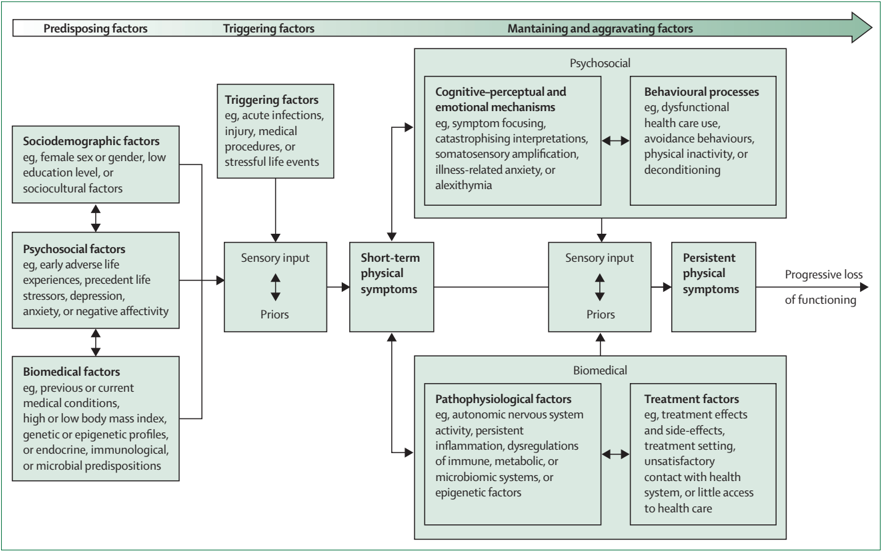
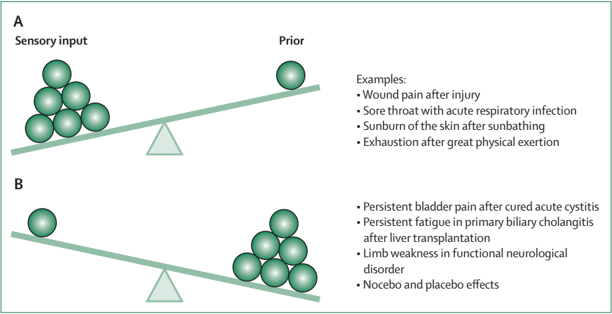
- Genesis is multifactorial and transdiagnostic. Predisposing factors include female sex or gender, lower socioeconomic status, lower education, chronic medical conditions, previous somatic symptom burden, sleep disturbance, elevated body mass index, genetic or epigenetic profiles, early adverse life experiences, depression, and anxiety. Maintaining factors include persistent inflammation; immune, metabolic, and microbiome dysregulation; symptom focusing; catastrophising; dysfunctional expectations; avoidance behaviours; and predictive coding processes in which strong priors can sustain symptoms even when ascending sensory input is diminished.
- Basic care consists of diagnosis-specific treatment of underlying pathophysiology plus person-centred communication with validation, appropriate reassurance, and a biopsychosocial explanation. If basic care is insufficient, targeted psychological and pharmacological interventions can be beneficial: a 2023 meta-analysis found psychological interventions had a small, statistically significant effect on reducing somatic symptoms; CBT trials showed small-to-moderate positive effects; short-term psychodynamic psychotherapy had medium effect sizes in a range of medical conditions and a large effect size for functional somatic symptoms; antidepressant evidence is limited, with very low-quality evidence for somatoform disorders, though some antidepressants are effective for specific symptoms and comorbid depressive or anxiety disorders.
Methods
- This is a narrative Review. The authors searched PubMed, Scopus, and PsycInfo for “persistent somatic symptom*” or “persistent physical symptom*” in titles or abstracts, from database inception to Jan 27, 2024, with no filters or language restrictions and without excluding grey literature. The search was combined with keywords related to individual Review topics, and related terms were also sought in the same databases and in reference lists of journal articles and book chapters.
- For the final reference list, articles most relevant to the Review sections were selected, prioritising systematic reviews and meta-analyses, randomised controlled trials, and prospective studies over cross-sectional studies and other publication types. Disagreements over inclusion were resolved by discussion between BL, AT, and PH.
- The Review presents a conceptual working model of risk factors and mechanisms, a predictive coding model of symptom perception, treatment principles, a case scenario, and research needs.
Limitations
- The paper states that the Review is largely based on the current state of knowledge on persistent physical symptoms, where the aetiopathogenesis is not yet fully understood. It also states that the list of exemplary risk factors and mechanisms is clearly incomplete, and not every risk factor or mechanism has been studied in all symptoms and conditions; more prospective studies are needed, including in conditions with poorly understood pathophysiology such as post-COVID-19 condition.
- Evident from the text: as a narrative Review, it does not conduct a formal systematic quality appraisal or quantitative synthesis, and treatment evidence is described as still fragmentary, with insufficient availability and effectiveness of treatment and little knowledge among treating physicians.
Model-written summary. Check it against the paper before relying on it.
Integrity signals
Registry
Cites
Statistics
Figures
Verification
Claims the paper makes
48 Valid · 5 Not valid · 24 Not checked · 23 Own results and interpretations
The cited sources support only part of this claim — read each source’s verdict below.
In the paper
“Persistent physical symptoms remain the major unmet need in the management of many chronic conditions”
What the sources say
- Partly supportedcites [16] 16 McGing JJ, Radford SJ, Francis ST, Serres S, Greenhaff PL, Moran GW. Review article: the aetiology of fatigue in inflammatory bowel disease and potential therapeutic management strategies. Aliment Pharmacol Ther 2021; 54: 368-87 . sourceExperimental — accuracy not yet measured
The Introduction (page unavailable) describes fatigue persisting during IBD remission, being rarely prioritised in consultations, and having limited treatment options. This supports an unmet need for persistent fatigue in IBD, but not the broader claim about physical symptoms across many chronic conditions or their being the major unmet need. (LLM, conf=0.85)
- Partly supportedcites [17] 17 Pope JE. Management of fatigue in rheumatoid arthritis. RMD Open 2020; 6: e001084. sourceExperimental — accuracy not yet measured
The Scope of the Problem section (page not available in our copy) describes fatigue as common in rheumatoid arthritis despite available treatments, and the Summary says more effective treatment is needed. This supports an unmet need for one persistent symptom in RA, but not the claim that persistent physical symptoms are the major unmet need across many chronic conditions. (LLM, conf=0.86)
plain- Asserted: passes — The authors put it forward as true.
- Checkable: passes — It can be checked against evidence.
- Load-bearing: passes — The paper’s conclusions depend on it.
- Based: passes — The paper gives a reason why it holds.
- Partly supported
The cited sources support only part of this claim — read each source’s verdict below.
In the paper
“the criterion of the medical unexplainability of symptoms has been abandoned because the reliability of assessing whether or not there is a pathophysiological explanation for a particular symptom is very low”
What the sources say
- Partly supportedcites [36] 36 Tack M. Medically unexplained symptoms (MUS): faults and implications. Int J Environ Res Public Health 2019; 16: 16. sourceExperimental — accuracy not yet measured
Split into 2 atoms — 0 confirmed, 2 partially supported, 0 disputed, 0 misattributed, 0 unverifiable. Expand the claim to see per-atom verdicts.
plainstates a cause- Asserted: passes — The authors put it forward as true.
- Checkable: passes — It can be checked against evidence.
- Load-bearing: passes — The paper’s conclusions depend on it.
- Based: passes — The paper gives a reason why it holds.
- Partly supported
The cited sources support only part of this claim — read each source’s verdict below.
In the paper
“Six stable clusters of interrelated symptoms are repeatedly described in clinical and general population samples”
What the sources say
- Not checked — no full text of the sourcecites [28] 28 Senger K, Heider J, Kleinstäuber M, Sehlbrede M, Witthöft M, Schröder A. Network analysis of persistent somatic symptoms in two clinical patient samples. Psychosom Med 2022; 84: 74-85. source
- Not checked — no full text of the sourcecites [29] 29 Petersen MW, Schröder A, Jørgensen T, et al. The unifying diagnostic construct of bodily distress syndrome (BDS) was confirmed in the general population. J Psychosom Res 2020; 128: 109868. source
- Partly supportedcites [30] 30 Burton C, Fink P, Henningsen P, Löwe B, Rief W. Functional somatic disorders: discussion paper for a new common classification for research and clinical use. BMC Med 2020; 18: 34. sourceExperimental — accuracy not yet measured
In “Symptoms within system clusters” (page unavailable), the paper proposes six clusters derived from clinical descriptive and epidemiological studies. It does not establish that they are stable or repeatedly found in both clinical and general-population samples. Its proposed list also says “fatigue-related” and “cardiorespiratory,” rather than “general” and “cardiopulmonary.” (LLM, conf=0.86)
plainstates an association- Asserted: passes — The authors put it forward as true.
- Checkable: passes — It can be checked against evidence.
- Load-bearing: unclear — It is unclear whether the paper’s conclusions depend on it.
- Based: passes — The paper gives a reason why it holds.
The cited sources support only part of this claim — read each source’s verdict below.
In the paper
“the diagnostic criteria for functional somatic disorders usually do not require that the symptoms cause distress”
What the sources say
- Partly supportedcites [33] 33 Lacy BE, Patel NK. Rome criteria and a diagnostic approach to irritable bowel syndrome. J Clin Med 2017; 6: 6. sourceExperimental — accuracy not yet measured
The Introduction describes the Rome IV criteria for IBS in terms of recurrent abdominal pain, bowel habits, and symptom duration, without a requirement that symptoms cause distress. The paper addresses IBS, however, not whether diagnostic criteria for functional somatic disorders usually omit a distress requirement. (LLM, conf=0.82)
plain- Asserted: passes — The authors put it forward as true.
- Checkable: passes — It can be checked against evidence.
- Load-bearing: passes — The paper’s conclusions depend on it.
- Based: passes — The paper gives a reason why it holds.
- Partly supported
The cited sources support only part of this claim — read each source’s verdict below.
In the paper
“Multiple biological, psychological, and social risk factors contribute to the persistence of somatic symptoms”
What the sources say
- Partly supportedcites [1] 1 Löwe B, Andresen V, Van den Bergh O, et al. Persistent somatic symptoms across diseases - from risk factors to modification: scientific framework and overarching protocol of the interdisciplinary SOMACROSS research unit (RU 5211). BMJ Open 2022; 12: e057596. sourceExperimental — accuracy not yet measured
The Introduction’s ‘Working hypotheses of the overall project’ states that biological, psychological and social factors contribute to symptom persistence individually or in interplay. The cited paper presents this as a hypothesis, however, and the ‘State of the art’ says the applicability of these risk factors across diseases has yet to be investigated; the claim states the contribution more definitively. (LLM, conf=0.84)
- Partly supportedcites [48] 48 Kitselaar WM, van der Vaart R, Perschl J, Numans ME, Evers AWM. Predictors of persistent somatic symptoms in the general population: a systematic review of cohort studies. Psychosom Med 2023; 85: 71-78. sourceExperimental — accuracy not yet measured
The Abstract (p. 2) identifies biological, psychological, and social-domain predictors of persistent somatic symptom onset. The review does not establish that these factors cause symptoms to persist once present; the Discussion (p. 7) treats interactions between predictors as a hypothesis, not a demonstrated finding. (LLM, conf=0.86)
- Partly supportedcites [49] 49 Knezevic NN, Candido KD, Vlaeyen JWS, Van Zundert J, Cohen SP. Low back pain. Lancet 2021; 398: 78-92. sourceExperimental — accuracy not yet measured
The risk-factor panel (page not available in our copy) lists genetic, lifestyle, and psychosocial factors associated with progression from acute to chronic low back pain. The Conclusions endorse a biopsychosocial model of chronic pain. The source supports the claim for low back pain, but does not establish it for somatic symptoms generally. (LLM, conf=0.85)
plainstates a cause- Asserted: passes — The authors put it forward as true.
- Checkable: passes — It can be checked against evidence.
- Load-bearing: passes — The paper’s conclusions depend on it.
- Based: passes — The paper gives a reason why it holds.
- Partly supported
36 more claims · 21 with their cited sources checked
Create a free account to see all 100 claims and to verify the 1 reference still open.
- It may state two separate claims as one. 38
- The quote only partly states this claim. 6
- Probably not a substantial claim. 30
Claims other papers make about this one
Each is checked against this paper’s own text: does it say what the citing paper says it does?
The source backs part of the claim, not all of it — or backs it for a different population, condition or comparison.
In the citing paper
“Health anxiety often coexists with PPS and is associated with increased healthcare utilization, poorer health, and lower recovery rates [4, 16].”
From Work Ability and Functioning Among Individuals with Persistent Indoor Environment-Related Symptoms or Chronic Fatigue: Nine-Month Follow-Up of a Web-Based Randomized Controlled Trial. (2026) · cites this paper as [4]
Experimental — accuracy not yet measuredThe source backs part of the claim, not all of it — or backs it for a different population, condition or comparison.
In the citing paper
“PPS warrant attention due to their prevalence and association with poorer health, work disability, increased healthcare use, and high societal costs [1, 4].”
From Work Ability and Functioning Among Individuals with Persistent Indoor Environment-Related Symptoms or Chronic Fatigue: Nine-Month Follow-Up of a Web-Based Randomized Controlled Trial. (2026) · cites this paper as [4]
Experimental — accuracy not yet measuredThe cited source says what the claim attributes to it.
In the citing paper
“These findings highlight the complexity of participants' life situations, where both direct and indirect issues due to symptoms affect overall functioning and well-being, with various factors possibly contributing to the symptom maintenance [4].”
Citations
Cites
Pharmacological interventions for somatoform disorders in adults
Kleinstäuber, M., Witthöft, M., Steffanowski, A., van Marwijk, H., Hiller, W., & Lambert, M. J. (2014) · Cochrane Database of Systematic Reviews · doi:10.1002/14651858.cd010628.pub2 · Cited by 11,335
Vos, T., Barber, R. M., Bell, B., Bertozzi-Villa, A., Biryukov, S., Bolliger, I., Charlson, F., Davis, A., Degenhardt, L., Dicker, D., et al. (2015) · The Lancet · doi:10.1016/s0140-6736(15)60692-4 · Cited by 6,414
Hughes, K., Bellis, M. A., Hardcastle, K. A., Sethi, D., Butchart, A., Mikton, C., Jones, L., & Dunne, M. P. (2017) · The Lancet Public Health · doi:10.1016/s2468-2667(17)30118-4 · Cited by 5,255
Central sensitization: implications for the diagnosis and treatment of pain
Woolf, C. J. (2011) · Pain · doi:10.1016/j.pain.2010.09.030 · Cited by 4,771
Treede, R.-D., Rief, W., Barke, A., Aziz, Q., Bennett, M. I., Benoliel, R., Cohen, M., Evers, S., Finnerup, N. B., First, M. B., et al. (2019) · Pain · doi:10.1097/j.pain.0000000000001384 · Cited by 3,478
Chronic pain: an update on burden, best practices, and new advances
Cohen, S. P., Vase, L., & Hooten, W. M. (2021) · The Lancet · doi:10.1016/s0140-6736(21)00393-7 · Cited by 2,614
Psychosomatic medicine in Germany: more timely than ever
Zipfel, S., Herzog, W., Kruse, J., & Henningsen, P. (2016) · Psychotherapy and Psychosomatics · doi:10.1159/000447701 · Cited by 2,323
Self-citationMeasuring the global burden of disease
Murray, C. J. L., & Lopez, A. D. (2013) · New England Journal of Medicine · doi:10.1056/nejmra1201534 · Cited by 1,818
The potential role of hypocortisolism in the pathophysiology of stress-related bodily disorders
Heim, C., Ehlert, U., & Hellhammer, D. H. (2000) · Psychoneuroendocrinology · doi:10.1016/s0306-4530(99)00035-9 · Cited by 1,688
Knezevic, N. N., Candido, K. D., Vlaeyen, J. W. S., Van Zundert, J., & Cohen, S. P. (2021) · The Lancet · doi:10.1016/s0140-6736(21)00733-9 · Cited by 1,345
Cited by
Psychological factors associated with Long COVID: a systematic review and meta-analysis
Engelmann, P., Reinke, M., Stein, C., Salzmann, S., Löwe, B., Toussaint, A. C., & Mora, M. C. S. (2024) · EClinicalMedicine · doi:10.1016/j.eclinm.2024.102756 · Cited by 106
Self-citationThe overlooked burden of persistent physical symptoms: a call for action in European healthcare
Toussaint, A., Weigel, A., Löwe, B., Blanch, J., Bogaerts, K., Boye, B., Burton, C., Cosci, F., Engelmann, P., Fink, P., et al. (2025) · The Lancet Regional Health - Europe · doi:10.1016/j.lanepe.2024.101140 · Cited by 44
“1,2,58,62 For instance, chronic pain may be exacerbated by stress or lack of social support, whether it arises from tissue damage or in fl ammation or not.”
InfluentialSelf-citationHybelius, J., Kosic, A., Salomonsson, S., Wachtler, C., Wallert, J., Nordin, S., & Axelsson, E. (2024) · JAMA Network Open · doi:10.1001/jamanetworkopen.2024.46603 · Cited by 55
Keter, D. L., Esteves, J. E., Loghmani, M. T., Rossettini, G., & Cook, C. E. (2025) · International journal of osteopathic medicine · doi:10.1016/j.ijosm.2025.100750 · Cited by 19
Functional neurological disorder: Practical management
Dworetzky, B. A., & Baslet, G. C. (2025) · Neurotherapeutics · doi:10.1016/j.neurot.2025.e00612 · Cited by 15
Reconsidering Persistent Somatic Symptoms: A Transdiagnostic and Transsymptomatic Approach
Löwe, B., Zipfel, S., den Bergh, O. V., & Henningsen, P. (2024) · Psychotherapy and Psychosomatics · doi:10.1159/000541741 · Cited by 18
Self-citationCognitive and mental health outcomes in long covid
Aretouli, E., Malik, M., Widmann, C., Parker, A. M., Oh, E. S., & Vannorsdall, T. D. (2025) · BMJ · doi:10.1136/bmj-2024-081349 · Cited by 24
Henningsen, P., & Löwe, B. (2025) · Journal of Psychosomatic Research · doi:10.1016/j.jpsychores.2025.112161 · Cited by 12
Self-citationCarvalho, S. A., Eulálio, I., & Guiomar, R. (2025) · Journal of Psychosomatic Research · doi:10.1016/j.jpsychores.2025.112205 · Cited by 19
Symptoms and pathophysiology of post-acute sequelae following COVID-19 (PASC): a cohort study
Robineau, O., Hüe, S., Surénaud, M., Lemogne, C., Dorival, C., Wiernik, E., Brami, S., Nicol, J. T. J., de Lamballerie, X. N., Blanché, H., et al. (2025) · EBioMedicine · doi:10.1016/j.ebiom.2025.105792 · Cited by 10
Smakowski, A., Rosmalen, J. G. M., Löwe, B., Burton, C., & Toussaint, A. C. (2025) · BMC Medicine · doi:10.1186/s12916-025-04042-w · Cited by 12
“Determining aetiology for persistent symptoms can be challenging as they can arise through a multitude of biopsychosocial factors that vary by individual [9].”
Self-citationTo feel is to heal—introduction to Emotional Awareness and Expression Therapy
Maroti, D., Frisch, S., & Lumley, M. A. (2025) · Der Schmerz · doi:10.1007/s00482-025-00878-6 · Cited by 12
Nestoriuc, Y., Pauls, F., Blankenburg, K., Hahn, S., Wittenbecher, H., Löwe, B., & Toussaint, A. C. (2024) · BMJ Open · doi:10.1136/bmjopen-2023-083500 · Cited by 10
Self-citationGureje, O., Guzman, M. L. R. D., Khaled, S. M., Ni, M. Y., Woodruff, P. W. R., Reed, G. M., Wong, C. S. M., Leung, C. M. C., Crisostomo, M. E., Borowski, S. C., et al. (2025) · World Psychiatry · doi:10.1002/wps.21353 · Cited by 12
A multidimensional network of factors associated with long COVID in the French population
Coste, J., Delpierre, C., Robineau, O., Rushyizekera, M., Richard, J., Alleaume, C., Gallay, A., Tebeka, S., Steichen, O., Lemogne, C., et al. (2025) · Communications Medicine · doi:10.1038/s43856-025-00846-2 · Cited by 8
Non-pharmacological treatment options for fatigue: A systematic review of RCTs in adults
Steen, C., Zalpur, A., Bentele, M., Zipfel, S., & Stengel, A. (2025) · Journal of Psychosomatic Research · doi:10.1016/j.jpsychores.2025.112084 · Cited by 11
Houte, M. V. D., Ramakers, I., Oudenhove, L. V., den Bergh, O. V., & Bogaerts, K. (2024) · Journal of Psychosomatic Research · doi:10.1016/j.jpsychores.2024.112025 · Cited by 10
Kustra-Mulder, A., McGhie-Fraser, B., Petzke, T. M., Fila-Witecka, K., Rosmalen, J. G. M., Cosci, F., Löwe, B., & Weigel, A. (2025) · BMC Health Services Research · doi:10.1186/s12913-025-12986-1 · Cited by 7
“Persistent Somatic Symptoms (PSS) are subjectively distressing physical complaints that persist on most days for several months or more, regardless of their cause [1, 2].”
Self-citationBermpohl, F. M. G., & Martin, A. (2025) · Psychotherapy and Psychosomatics · doi:10.1159/000544825 · Cited by 14
“…[6], or precursor versions), newer classi fi cations like somatic symptom disorder (DSM-5 [7]), bodily distress disorder (ICD-11 [8]), and functional somatic syndromes, such as irritable bowel syndrome, chronic fatigue syndrome, and fi bromyalgia [9], since they share transdiagnostic mechanisms [4].”
Somatic symptom disorder, psychiatric comorbidities, and suicide
Hsu, J.-W., Lin, W., Tsai, S., Cheng, C., Chang, W.-H., Bai, Y., Su, T., Chen, T., & Chen, M. (2024) · Journal of Affective Disorders · doi:10.1016/j.jad.2024.12.105 · Cited by 13
Yiming, S., Liao, Y., Li, Y., Zhou, W., Zhao, H., Chen, R., Zhang, Q., Liu, Y., Zhang, H., Dri, C. E., et al. (2025) · Frontiers in Psychiatry · doi:10.3389/fpsyt.2025.1634899 · Cited by 10
Child and adolescent mental health policy advancement in China
Sun, J., Rose‐Clarke, K., Bao, Y., et al. (2025) · The Lancet Psychiatry · doi:10.1016/s2215-0366(25)00240-8 · Cited by 6
Perceived discrimination in fatigue: a qualitative interview study in the SOMA.SOC project
Barbek, R., Makowski, A. C., & Knesebeck, O. V. D. (2025) · Frontiers in Sociology · doi:10.3389/fsoc.2025.1528312 · Cited by 6
Komariah, M., Maulana, S., Amirah, S., Platini, H., Rahayuwati, L., Yusuf, A., & Firdaus, M. K. Z. H. (2025) · JMIR Cancer · doi:10.2196/54154 · Cited by 13
“Physical symptoms are defined as the subjective experiences of distressing somatic symptoms (eg fatigue, insomnia, pain, and nausea), regardless of the cause [12].”
Lamm, T. T., von Schrottenberg, V., Rauch, A., Bach, B., Pedersen, H. F., Rask, M. T., Ørnbøl, E., Wellnitz, K. B., & Frostholm, L. (2024) · Clinical Psychology Review · doi:10.1016/j.cpr.2024.102529 · Cited by 11
Buck, L., Peters, L., Maehder, K., Hartel, F., Hoven, H., Harth, V., Härter, M. C., Löwe, B., & Toussaint, A. C. (2024) · Journal of Psychosomatic Research · doi:10.1016/j.jpsychores.2024.111997 · Cited by 9
Self-citationTebeka, S., Coste, J., Makovski, T. T., Alleaume, C., Delpierre, C., Gallay, A., Pignon, B., Gouraud, C., Vedrines, C. O., Pitron, V., et al. (2024) · Journal of Psychosomatic Research · doi:10.1016/j.jpsychores.2024.111961 · Cited by 6
Leaviss, J., Booth, A., Coyle, D., Daly, G., Davis, S., Dawes, H., Deary, V., Dwivedi, K., Forsyth, J. E., Fryer, K., et al. (2026) · BMJ Medicine · doi:10.1136/bmjmed-2025-001746 · Cited by 7
Self-citationPeters, L., Matysiak, A., Hübener, S., Lohse, A. W., Nestoriuc, Y., Maehder, K., & Löwe, B. (2025) · Journal of Psychosomatic Research · doi:10.1016/j.jpsychores.2025.112395 · Cited by 7
Self-citationBIGLER, E., Allder, S. J., Dunkley, B. T., & Victoroff, J. (2025) · Brain Injury · doi:10.1080/02699052.2025.2551162 · Cited by 7
“All of this has to be achieved via an understanding and integration of individual differences, demographics, medical history, non-brain injury factors that influence outcome and sociobiological factors (48,49).”
The role of sensory attenuation in symptomatic and healthy individuals: a scoping review
Rossi, L. C., Cerritelli, F., Thacker, M. A., & Esteves, J. E. (2025) · Frontiers in Neuroscience · doi:10.3389/fnins.2025.1590127 · Cited by 12
Inflammation and depressive mood
Lemogne, C., Vedrines, C. O., Capuron, L., & Hoertel, N. (2024) · Joint Bone Spine · doi:10.1016/j.jbspin.2024.105832 · Cited by 6
Henningsen, P., & Löwe, B. (2024) · Psychotherapy and Psychosomatics · doi:10.1159/000542424 · Cited by 9
“As bodily distress and/or persistent physical symptoms are a feature in many of these areas and across the somatic-mental divide [5, 6], the question arises how to achieve an unambiguous and logically consistent mapping of these frequent clinical phenomena.”
Self-citationWhy Symptom Burden in Non-Dialysis CKD Matters
Mora, M. C. S., Jessen, B., & Huber, T. B. (2024) · American Journal of Kidney Diseases · doi:10.1053/j.ajkd.2024.07.005 · Cited by 6
Embodied wisdom: towards acceptable and helpful explanations for functional somatic symptoms
Saunders, C., Pedersen, H. F., Rask, C. U., Greco, M., & Frostholm, L. (2025) · Medical Humanities · doi:10.1136/medhum-2025-013380 · Cited by 8
“Increasing public understanding of the transdiagnostic mechanisms by which symptoms can be maintained has been identified as a priority in moving forward the care for people with persistent physical symptoms (Löwe et al .”
Huang, W., Chiu, Y., Löwe, B., Wu, C., & Liao, S. (2025) · Psychiatry and Clinical Neurosciences · doi:10.1111/pcn.13881 · Cited by 4
“29 The primary developers were a psychiatrist (W.L.H.) and a psychologist (Y.T.C.).”
Self-citationLebrun, H., Zablith, I., Stone, J., Vasilache, A., Gouraud, C., Ancellin-Geay, A., Kachaner, A., Ranque, B., Lemogne, C., & Pitron, V. (2025) · Journal of Psychosomatic Research · doi:10.1016/j.jpsychores.2025.112197 · Cited by 6
Huang, W.-L., Chiu, Y., Löwe, B., Wu, C., & Liao, S. (2025) · Journal of Affective Disorders · doi:10.1016/j.jad.2025.119521 · Cited by 7
Self-citationBallering, A., Lucassen, P. L., van Tol, D. G., Goubert, L., & Bracke, P. (2025) · Social Science & Medicine · doi:10.1016/j.socscimed.2025.118232 · Cited by 5
Seifert, M. H., Šebela, A., & Hartman, T. O. (2025) · BMC Family Practice · doi:10.1186/s12875-025-02768-3 · Cited by 4
“Patients with persistent somatic symptoms (PSS) make up a significant proportion of patients in general practice, and can be very burdensome for doctors as well as the whole health and social care system [1, 2].”
Zimmermann‐Schlegel, V., Gronewold, N., Stengel, S., Hartmann, M., Merle, U., Friederich, H., Ditzen, B., & Tesarz, J. (2024) · Frontiers in Psychiatry · doi:10.3389/fpsyt.2024.1500210 · Cited by 5
Dietsche, S., Weeren, F., Meinlschmidt, G., Toussaint, A. C., Baenteli, I., Bahmane, S., Frick, A., Karpf, C., Studer, A., Wyss, K., et al. (2026) · General Hospital Psychiatry · doi:10.1016/j.genhosppsych.2025.12.023 · Cited by 7
Self-citationMaehder, K., Peters, L., Hübener, S., Matysiak, A., Huber, S., Toussaint, A. C., Zapf, A., Vettorazzi, E., Weber, P., Stahlmann, K., et al. (2025) · EClinicalMedicine · doi:10.1016/j.eclinm.2025.103663 · Cited by 4
Self-citationStigmatisation in medical encounters for patients with fibromyalgia: A focus group study
Treufeldt, H., & Burton, C. D. (2025) · Patient Education and Counseling · doi:10.1016/j.pec.2025.109381 · Cited by 4
Self-citationKahnert, S., Kämpfer, N., Ramm, M., Geiser, F., & Conrad, R. (2025) · Journal of Psychosomatic Research · doi:10.1016/j.jpsychores.2025.112381 · Cited by 5
Bravo, R. G., León-Herrera, S., Guisado‐Clavero, M., Larrondo, I. G., Wostmann, X., Wössner, N., Vinker, S., Ferla, F. V. L., Üçüncü, E. K., Tsigarovski, G., et al. (2025) · European Journal of General Practice · doi:10.1080/13814788.2025.2535618 · Cited by 6
Can the pain field learn from the functional somatic disorder field?
Gormsen, L. K., Fink, P., Butler, S. H., Henningsen, P., Loeser, J. D., Rief, W., & Finnerup, N. B. (2025) · Pain · doi:10.1097/j.pain.0000000000003733 · Cited by 4
Self-citationSamuelsson, C., Gunnarsson, L., Svärdman, F., Rück, C., & Lindsäter, E. (2025) · BMC Family Practice · doi:10.1186/s12875-025-02891-1 · Cited by 5
“Although multi-factorial biopsychosocial models have emerged as viable options to guide assessment and interventions for fatigue and other persistent physical symptoms in the past decades [4], it remains unknown to what extent such models currently inform Swedish primary care practice.”
Somatic Symptom Disorder After Mild Traumatic Brain Injury
Silverberg, N. D., Rioux, M., Mikolić, A., Perez, D. L., Burke, M. J., & Howard, A. K. (2025) · Journal of Head Trauma Rehabilitation · doi:10.1097/htr.0000000000001068 · Cited by 5
Hüsing, P., Löwe, B., & Biedermann, S. V. (2025) · Journal of Psychosomatic Research · doi:10.1016/j.jpsychores.2025.112151 · Cited by 5
Self-citationTonini, E., Crouse, J. J., Shin, M., Carpenter, J. S., Lloyd, A. R., Hindmarsh, G., McKenna, S., Nichles, A., Zmicerevska, N., Scott, J. L., et al. (2025) · Journal of Psychosomatic Research · doi:10.1016/j.jpsychores.2025.112141 · Cited by 3
Maroti, D. (2025) · Frontiers in Psychiatry · doi:10.3389/fpsyt.2025.1481405 · Cited by 4
Hausteiner‐Wiehle, C., & Henningsen, P. (2025) · PPmP - Psychotherapie · Psychosomatik · Medizinische Psychologie · doi:10.1055/a-2564-6206 · Cited by 4
Self-citationHuang, W., Chiu, Y., Wu, C., Löwe, B., & Liao, S. (2025) · Psychotherapy and Psychosomatics · doi:10.1159/000545409 · Cited by 4
“This is because persistent somatic symptoms are a very common clinical issue in such settings in Taiwan, and both SSSPD and persistent somatization are conceptually consistent with persistent somatic symptoms [37, 38].”
Self-citationRometsch, C., Martin, A., & Cosci, F. (2025) · Clinical Psychology & Psychotherapy · doi:10.1002/cpp.70075 · Cited by 8
Funk, M., Reinke, M., Löwe, B., & Engelmann, P. (2025) · PLoS ONE · doi:10.1371/journal.pone.0317905 · Cited by 7
“In line with the structure of the manual, topics discussed in the focus groups included the biopsychosocial model [9–11], cognitive restructuring of dysfunctional symptom expectations, an imagination exercise, the vicious circle of fear (acc. to [24]), a behavior change exercise, as well as further…”
InfluentialSelf-citationGarde, V., Churchill, M., Greenslade, J. H., Watt, K., Mallett, A. J., & Morel, D. (2025) · Emergency Medicine Australasia · doi:10.1111/1742-6723.70009 · Cited by 3
Lewis, H., Jinadu, H., Kelley, R., Medford, N., Trigwell, P. J., & Guthrie, E. (2024) · Disability and Rehabilitation · doi:10.1080/09638288.2024.2420833 · Cited by 4
“Both purely biomedical or purely psychological models are now widely viewed as out-dated and simplistic, and the causes are formulated as complex and multifactorial [3], involving an interplay of physical and psychological factors [4,5].”
Koller, K., Kastel-Hoffmann, S., Herold, R., Morawa, E., Lieb, M., Krehbiel, J., Hohberger, B., & Erim, Y. (2024) · BMC Psychology · doi:10.1186/s40359-024-01974-5 · Cited by 5
“Psychosocial factors can include cognitive-perceptual and emotional mechanisms such as symptom focusing, catastrophizing interpretations, and disease-related fears or behavioral processes such as avoidance behavior, physical inactivity, and deconditioning [23].”
BackgroundBos, P., Monden, R., Benraad, C. E. M., Groot, J., Voshaar, R. C. O., & Hanssen, D. J. C. (2024) · Comprehensive Psychiatry · doi:10.1016/j.comppsych.2024.152527 · Cited by 3
Davis, C. N., Toikumo, S., Hatoum, A. S., Khan, Y., Pham, B. K., Pakala, S. R., Feuer, K. L., Gelernter, J. E., Sanchez‐Roige, S., Kember, R. L., et al. (2024) · medRxiv · doi:10.1101/2024.07.29.24310991 · Cited by 2
“72 Amid calls for improved classification and treatment of PPS and growing recognition of the complex interactions between mind and body, 72,73 our findings provide unique insights into the shared genetic architecture underlying these traits, opening new avenues for improved clinical care.”
BackgroundKoller, K., Hanc, E., Herold, R., Kastel-Hoffmann, S., Morawa, E., & Erim, Y. (2026) · Journal of Psychosomatic Research · doi:10.1016/j.jpsychores.2026.112605 · Cited by 2
Chen, J., Ma, D., Cao, J., & Wei, J. (2026) · Frontiers in Psychiatry · doi:10.3389/fpsyt.2025.1680463 · Cited by 2
“Difficult Patients,” Persistent Symptoms, and the Biopsychosocial Model
Lemogne, C., & Cathébras, P. J. (2026) · Annals of Internal Medicine · doi:10.7326/annals-25-05280 · Cited by 2
Ali, A. M., AL-Dossary, S. A., Atout, M. M. W., Laranjeira, C., Alharrasi, M., Ayed, A., El‐Gazar, H. E., El‐Sayed, M. M., Khatatbeh, H., Zoromba, M. A., et al. (2026) · SAGE Open Nursing · doi:10.1177/23779608261426824 · Cited by 3
“…the mere presence of symptoms; rather, it is a sum-mary measure that captures the subjective and quanti fi able prevalence, severity, frequency, distress, and overall impact of multiple co-occurring symptoms on a person ’ s well-being and daily life functioning (Gapstur, 2007; Löwe et al., 2024).”
Gouraud, C., Ancellin-Geay, A., Verot, C., Bergeras, I., Poudevigne, L., Cormier, L., Gilbert, S., Limosin, F., Lacoste, L., Ribayrol, D., et al. (2025) · BMC Psychology · doi:10.1186/s40359-025-03820-8 · Cited by 4
Engelmann, P., Busmann, M., Löwe, B., & Hüsing, P. (2025) · Journal of Psychosomatic Research · doi:10.1016/j.jpsychores.2025.112500 · Cited by 3
Self-citationIntegrating Traditional Medicine to Improve the Care of Persistent Physical Symptom
Wang, H., Wang, J., & Wang, Q. (2025) · Health care science · doi:10.1002/hcs2.70045 · Cited by 2
Vedrines, C. O., Gouraud, C., Scherlinger, M., Betouche, S., Carrat, F., Caumes, É., Pitron, V., Robineau, O., Sibilia, J., Thoreux, P., et al. (2025) · BMC Public Health · doi:10.1186/s12889-025-25417-x · Cited by 2
“These psychosocial mechanisms may have increased the risk of persistent physical symptoms after COVID-19, as it is frequently observed in other conditions [39].”
Klein, E. M., Kruse, J., Löwe, B., Brähler, E., Lahmann, C., Witthöft, M., & Krakau, L. (2025) · Annals of Medicine · doi:10.1080/07853890.2025.2578726 · Cited by 4
“…vulnerability to psychological distress among immigrants [30], which arises not from immigration status per se but from the interplay of systemic disadvantages, migration-related stressors, and contextual conditions, thereby underscoring the multifactorial nature of somatic symptom severity [46].”
Self-citationRoyeck, S., Meß, C., Weigel, A., Löwe, B., Toussaint, A. C., Schramm, C., Mora, M. C. S., Huber, T. B., Zeidler, C., Witte, F., et al. (2025) · Dermatology and Therapy · doi:10.1007/s13555-025-01539-3 · Cited by 2
“Supple-mental psychological interventions (e.g. stress coping interventions) may be beneficial in reducing psychological distress and improving overall QoL and to establish a patient-centred, holistic approach [13, 14, 16, 40].”
Self-citationLiira, H., Varonen, M., Venäläinen, M. S., Arokoski, J. P., Kvarnström, K., Vuokko, A., & Malmivaara, A. O. V. (2025) · Journal of Psychosomatic Research · doi:10.1016/j.jpsychores.2025.112374 · Cited by 3
Mental and behavioral health care access and satisfaction among older sexual minority women
Scheer, J. R., Epshteyn, G., Girard, R., Stage, M. A., Chadbourne, E. M., Caceres, B. A., Wall, M. M., & Hughes, T. L. (2025) · Academia Mental Health and Well-Being · doi:10.20935/mhealthwellb7867 · Cited by 2
“In addition, older SMW with greater mental health symptom burden may enter treatment with heightened expectations for relief [60].”
Childhood Emotional Abuse and Somatic Symptoms: The Mediating Effect of Self‐Hate
Rossini, P. G., Gazzillo, F., & Kealy, D. (2025) · Scandinavian Journal of Psychology · doi:10.1111/sjop.70008 · Cited by 5
A Network Analysis of Depression, Anxiety, and Stress Symptoms in Chinese Adolescents
Hu, Y. Y., Wang, L., Tang, X., Zhang, Q., Qiang, W., & Yang, H. (2025) · Psychopathology · doi:10.1159/000547479 · Cited by 3
“Previous evidences have shown that stress can trigger somatic symptoms, such as dry mouth and muscle tension, which in turn exacerbate psychological distress [47, 48].”
Awakening the sense of the possible: the Symptoms Clinic as liminal affective technology
Greco, M., Deary, V., Fryer, K., Sanders, T., & Burton, C. D. (2025) · Social Science & Medicine · doi:10.1016/j.socscimed.2025.118395 · Cited by 4
Self-citationInternal medicine at the crossroads of long COVID diagnosis and management
Ranque, B., & Cogan, E. (2025) · Frontiers in Medicine · doi:10.3389/fmed.2025.1521472 · Cited by 2
Hybelius, J., Kosic, A., Salomonsson, S., Wachtler, C., Wallert, J., Nordin, S., & Axelsson, E. (2025) · International Journal of Behavioral Medicine · doi:10.1007/s12529-025-10365-y · Cited by 3
“This clinical problem is associated with substantial challenges for the individual, healthcare, and society at large [1].”
Fostini, A., Zaravinos-Tsakos, F., Kolaitis, G. A., & Giannakopoulos, G. (2025) · Psychology International · doi:10.3390/psycholint7020031 · Cited by 6
Bobak, L., Dorney, I., Kovacevich, A., & Barnett, B. S. (2025) · Journal of Psychoactive Drugs · doi:10.1080/02791072.2025.2478097 · Cited by 2
“This Bayesian account may to some extent explain the persistent perception of symptoms no longer caused by organic failures but still highly expected by the brain (Gouraud et al. 2023; Kachaner et al. 2022; Lemogne et al. 2023; Löwe et al. 2024).”
Patient Needs and Treatment Goals in Chronic Atopic Pruritus: Does Eczema Make a Difference?
Müller, S., Zeidler, C., Meß, C., Kahnert, S., Löwe, B., Weigel, A., Witte, F., Huck, V., Nguyen, L., Augustin, M., et al. (2025) · Acta Dermato Venereologica · doi:10.2340/actadv.v105.42773 · Cited by 3
“As such, CP can persist for several months to years independently of its primary cause (3), and constitutes a significant burden for patients, healthcare professionals, and society as a whole (4).”
Self-citationMamo, N., Kustra-Mulder, A., Hanssen, D. J. C., Weigel, A., Tak, L. M., Hartman, T. O., Löwe, B., & Rosmalen, J. G. M. (2025) · BMJ Open · doi:10.1136/bmjopen-2024-097593 · Cited by 6
Self-citationHybelius, J., Hammarberg, S. A. W., Salomonsson, S., Wachtler, C., Epstein, M., Olsson, A., Strand, E., Winter, L. S., Åkerlund, T., Björkander, D., et al. (2025) · Psychological Medicine · doi:10.1017/s0033291725101244 · Cited by 3
“Persistent physical symptoms is an umbrella term for somatic complaints that persist over time and give rise to distress, regardless of etiology (Löwe et al., 2024).”
Mizrachi, N., Κube, T., & Rozenkrantz, L. (2024) · British Journal of Health Psychology · doi:10.1111/bjhp.12772 · Cited by 3
Raasthøj, I., Jarbøl, D. E., Rasmussen, S., Carstensen, T. B. W., & Rosendal, M. (2024) · General Hospital Psychiatry · doi:10.1016/j.genhosppsych.2024.10.005 · Cited by 2
Cathébras, P. J., Ranque, B., & Lemogne, C. (2024) · La Revue de Médecine Interne · doi:10.1016/j.revmed.2024.08.005 · Cited by 2
van Twillert, E., Hulsman, M. M. C., & Tak, L. M. (2024) · Journal of Psychosomatic Research · doi:10.1016/j.jpsychores.2024.111887 · Cited by 2
Steinmann, L. A., Claaß, L. V., Rau, M., Massag, J., Diexer, S., Klee, B., Gottschick, C., Binder, M., Sedding, D., Frese, T., et al. (2024) · Psychiatry Research · doi:10.1016/j.psychres.2024.116140 · Cited by 3
Chaabouni, A., Houwen, J., Akkermans, R., van Boven, K., Walraven, I., Blanker, M. H., Schers, H., & Hartman, T. O. (2024) · Journal of Psychosomatic Research · doi:10.1016/j.jpsychores.2024.111859 · Cited by 2
Dufrenois, F., Loisel-Fleuriot, L., Moumen, C., Rousselle, M., Danel, J., Lamer, A., & Horn, M. (2026) · General Hospital Psychiatry · doi:10.1016/j.genhosppsych.2026.06.008 · Cited by 1
Fatigue in Sjögren’s Disease - Integrating Biomedical and Psychosocial Aspects: A Narrative Review
Zhou, X., Chen, J., Cathébras, P. J., & Killian, M. (2026) · Rheumatology and Therapy · doi:10.1007/s40744-026-00865-y · Cited by 1
“The concept of persistent somatic symptoms (PSS) provides such a perspective, encompassing predisposing, triggering, and maintaining factors [11, 12].”
Kachaner, A., Wiernik, E., Kab, S., Zins, M., Duclos, A., Perez, T., Roche, N., Nadif, R., Gouraud, C., Pitron, V., et al. (2026) · Journal of Psychosomatic Research · doi:10.1016/j.jpsychores.2026.112887 · Cited by 1
Kliem, S., Lohmann, A., Fischer, S., Zenger, M., Baier, D., Kruse, J., Brähler, E., & Kampling, H. (2026) · Frontiers in Psychiatry · doi:10.3389/fpsyt.2026.1851921 · Cited by 3
“The Patient Health Questionnaire-15 (9) has been widely used as a self-report measure of somatic symptom severity.”
Valiente-Gómez, A., Bücker, J., Fontana-McNally, M., Gatto, D. L., Guinart, D., Moreno‐Alcázar, A., Rodriguez, C. C., Gil, C. D. C., Padberg, F., Pardina-Torner, H., et al. (2026) · EClinicalMedicine · doi:10.1016/j.eclinm.2026.103987 · Cited by 2
“61 Regarding sex differences, a substantial body of research indicates that women exposed to ACEs are at a higher risk of developing adverse physical outcomes.”
Kitselaar, W. M., Hartmann, L., Evers, A. W. M., & Numans, M. E. (2026) · General Hospital Psychiatry · doi:10.1016/j.genhosppsych.2026.05.015 · Cited by 1
Niederlohmann, E. (2026) · Frontiers in Psychiatry · doi:10.3389/fpsyt.2026.1843250 · Cited by 3
Hybelius, J., Hammarberg, S. A. W., Hoffmann, A. A., Spansk, E., Olsson, A., Strand, E., Winter, L. S., Åkerlund, T., Björkander, D., Kosic, A., et al. (2026) · Scientific Reports · doi:10.1038/s41598-026-50290-y · Cited by 2
Huang, W., Huang, W.-C., Lin, I.-M., Chen, J., & Liao, S.-C. (2026) · Journal of Psychosomatic Research · doi:10.1016/j.jpsychores.2026.112654 · Cited by 2
Self-citationMohammed, I. N., Sharif, H. A., Kizilhan, J. I., Hasin, B., Papiol, S., Ruebekeil, M., Heilbronner, U., Schulze, T. G., & Hautzinger, M. (2026) · BMC Psychiatry · doi:10.1186/s12888-026-08020-1 · Cited by 1
“These differences may indicate a combination of biological factors, exposure to chronic disease and care-giving roles, and greater readiness to report bodily distress, although the present design cannot distinguish between these mechanisms [14, 35–38].”
Maroti, D., Ljungdahl, M., Petersen, H., Rööst, M., Lumley, M. A., Falkenström, F., & Lilliengren, P. (2026) · Internet Interventions · doi:10.1016/j.invent.2026.100942 · Cited by 3
Metadata
- Authors
- Löwe, B., Toussaint, A., Rosmalen, J. G. M., Huang, W.-L., Burton, C., Weigel, A., Levenson, J. L., & Henningsen, P.
- Affiliations
- University Medical Center Hamburg-Eppendorf (DE)
- University Medical Center Groningen (NL)
- National Taiwan University (TW)
- University of Sheffield (GB)
- Virginia Commonwealth University (US)
- Technical University of Munich (DE)
- Corresponding author
- Löwe, Bernd
- ORCID
- Venue
- The Lancet
- Publisher
- Elsevier BV
- Published
- 2024-06
- Volume
- 403
- Issue
- 10444
- Pages
- 2649-2662
- ISSN
- 0099-5355 (ISSN-L)
- 0140-6736
- OpenAlex
- W4399611661
- Cited by
- 280
- References
- 136
- Citations by year
- 2026: 122 · 2025: 123 · 2024: 35
- FWCI
- 22.31
- Type
- journal article
- Language
- en
- Open access
- hybrid
- doi.org
- Licence
- cc-by
- www.elsevier.com/tdm/userlicense/1.0/ (tdm)
- www.elsevier.com/legal/tdmrep-license (tdm)
- creativecommons.org/licenses/by/4.0/ (vor)
- Locations
- The Lancet (publishedVersion, cc-by)
- PubMed (publishedVersion)
- White Rose Research Online (University of Leeds, The University of Sheffield, University of York) (acceptedVersion)
- mediaTUM – the media and publications repository of the Technical University Munich (Technical University Munich) (submittedVersion)
- University of Groningen research database (University of Groningen / Centre for Information Technology) (submittedVersion, cc-by)
- Funders
- Deutsche Forschungsgemeinschaft (RU 5211)
- Topics
- Health Sciences › Medicine › Psychiatry and Mental health › Psychosomatic Disorders and Their Treatments
- Health Sciences › Medicine › Psychiatry and Mental health › Fibromyalgia and Chronic Fatigue Syndrome Research
- Social Sciences › Arts and Humanities › History and Philosophy of Science › Medicine, History, and Philosophy
- Keywords
- persistent physical symptoms, symptom persistence, psychosomatic disorders, chronic pain, disability, chronic inflammation, epigenetics, life events, depression, health anxiety, symptom expectations, avoidance behavior, person-centred communication, biopsychosocial model, stigma, psychological intervention, pharmacotherapy
- MeSH terms
- Medically Unexplained Symptoms, Humans, Risk Factors, Somatoform Disorders
About these checks
Registry, retraction, Cites and statistics results are computed, not judged, with one exception: a printed reference that no index lists is read once by a model before it counts as a citation error. Claims are extracted by a model and kept only when their quote appears verbatim in the text; each cited source is then checked, with a model’s help, for whether it says what the claim relies on. Those verdicts can be wrong — read the claim’s quote and the cited source before relying on one.
The claim verdicts this report counts are experimental: their accuracy is not yet measured.
A language model drew the claims from the paper on 2026-09-28, under version 3 of the claim definition (prompt extract-v3).
A second model labelled each claim on 2026-09-28 (model jev-1.13-20260917, definition revision gold-guideline-v0.2).
Cited sources are checked with a language model’s help (gpt-6-sol).
Statistics and arithmetic are recomputed, not judged.
Confidence bands are shown only for fields calibrated on our annotated test set. None is calibrated yet, so no band is shown.
What counts as a claim ›How we measure confidence ›How we check this ›
Are you an author, or do you see a problem with this page? Request a review
Data sources
Bibliographic data: Semantic Scholar, OpenAlex, Crossref.
Contains information from the Semantic Scholar Academic Graph Datasets, made available under the ODC Attribution License (ODC-BY 1.0).
Semantic Scholar’s data is described in: Kinney, R., et al. (2023). The Semantic Scholar Open Data Platform. arXiv:2301.10140.
