

Structural and functional insights provided by crystal structures of DNA polymerases and their substrate complexes
Open accessThe DOI matches its Crossref record; 50 of the 50 references it cites were found in a registry or an index.
Abstract
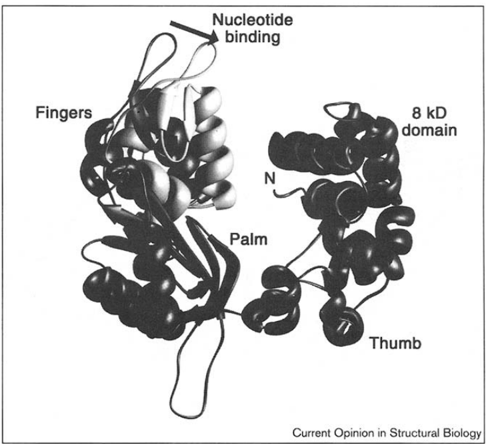
New levels in the understanding of DNA replication have been achieved from recent crystal structure determinations of several DNA polymerases and their substrate complexes. The structure of an alpha family DNA polymerase from bacteriophage RB69 shows some similarities, but also considerable differences in structure and organization from the pol I family DNA polymerases. Also, the functions of three polymerase domains and their conserved residues have been clarified by studying structures of pol I family DNA polymerases complexed to their substrates. These structures also confirm that an identical two-metal ion catalytic mechanism proposed previously is used by both the nonhomologous pol I and pol beta family DNA polymerases.
Overview
The claims and statistics of this paper haven’t been checked yet.
Free: it reads the open-access text and checks the first 5 claims that cite a source we can check. Create a free account to check every claim.
Integrity signals
Registry
Cites
Statistics
Figures
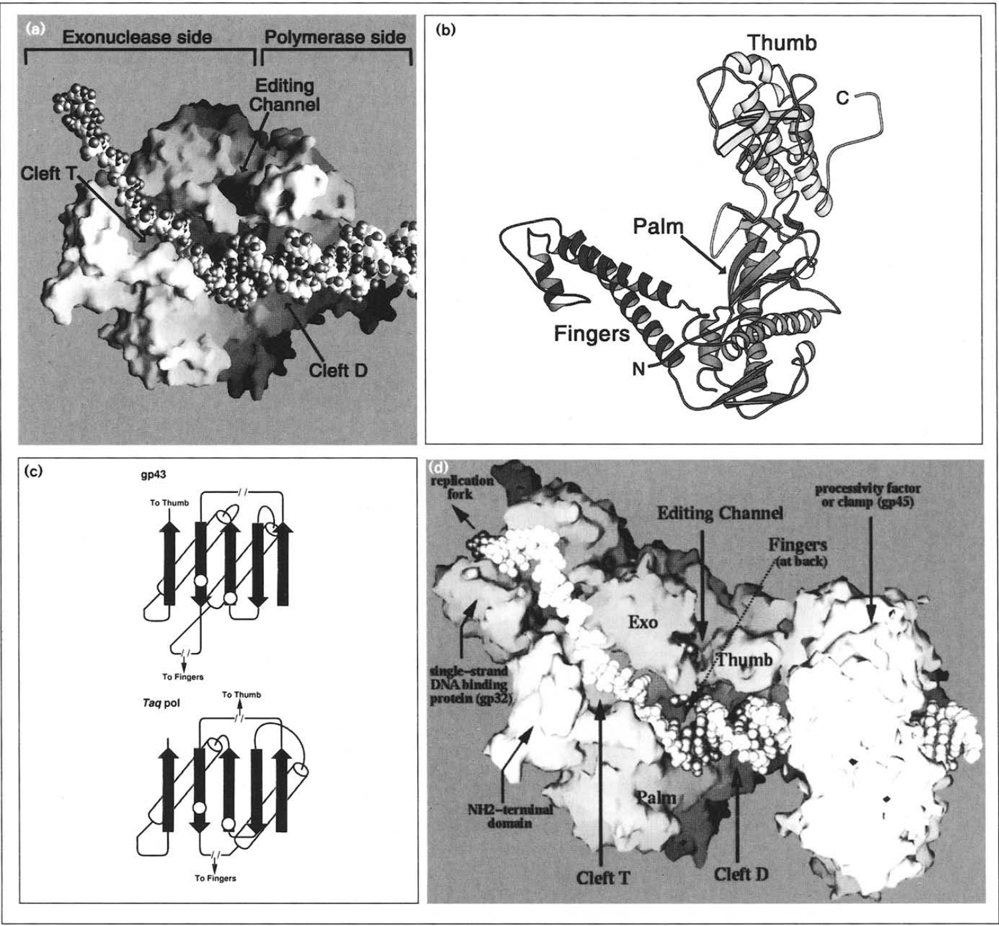
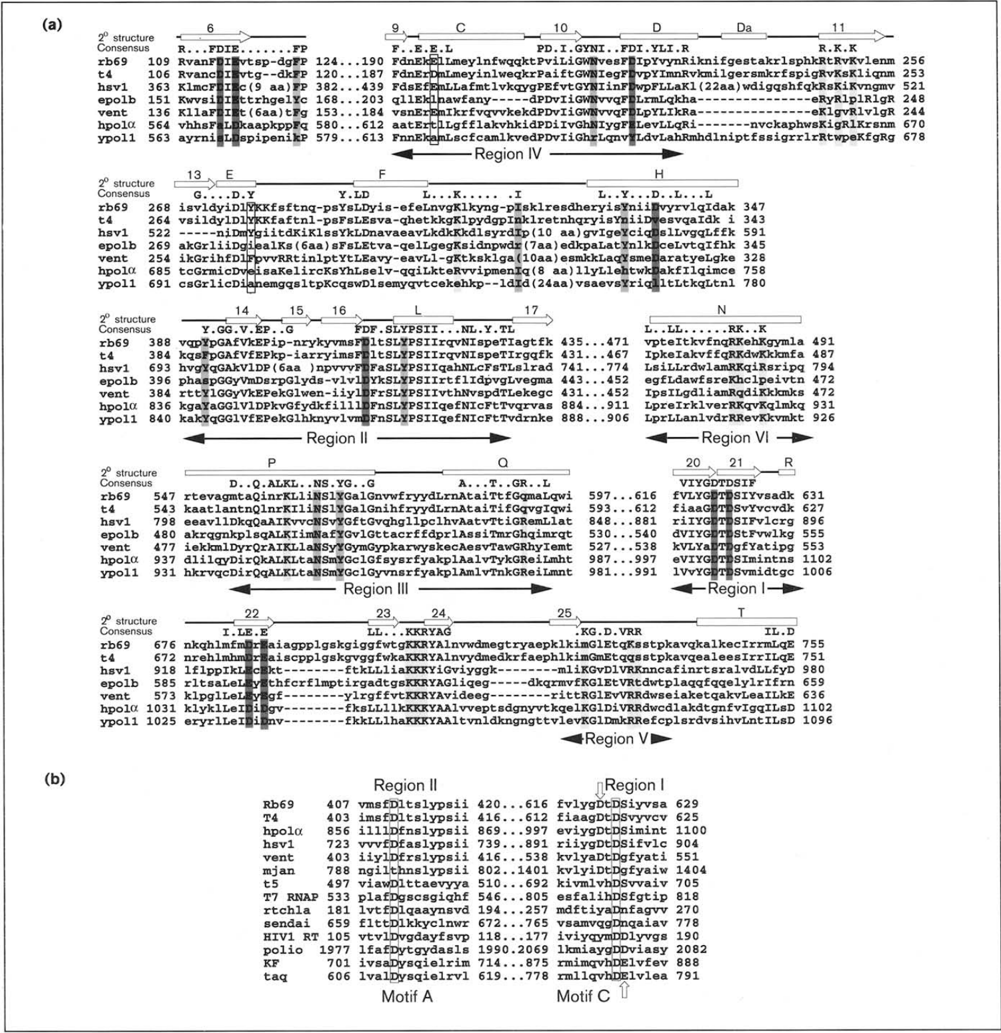
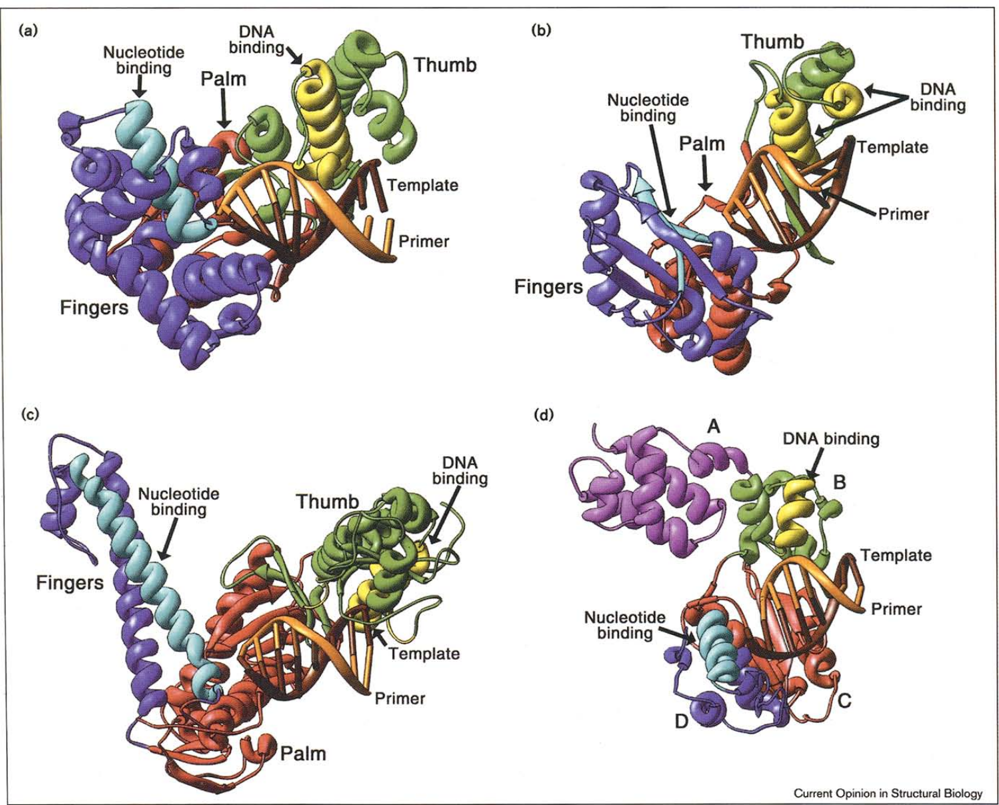
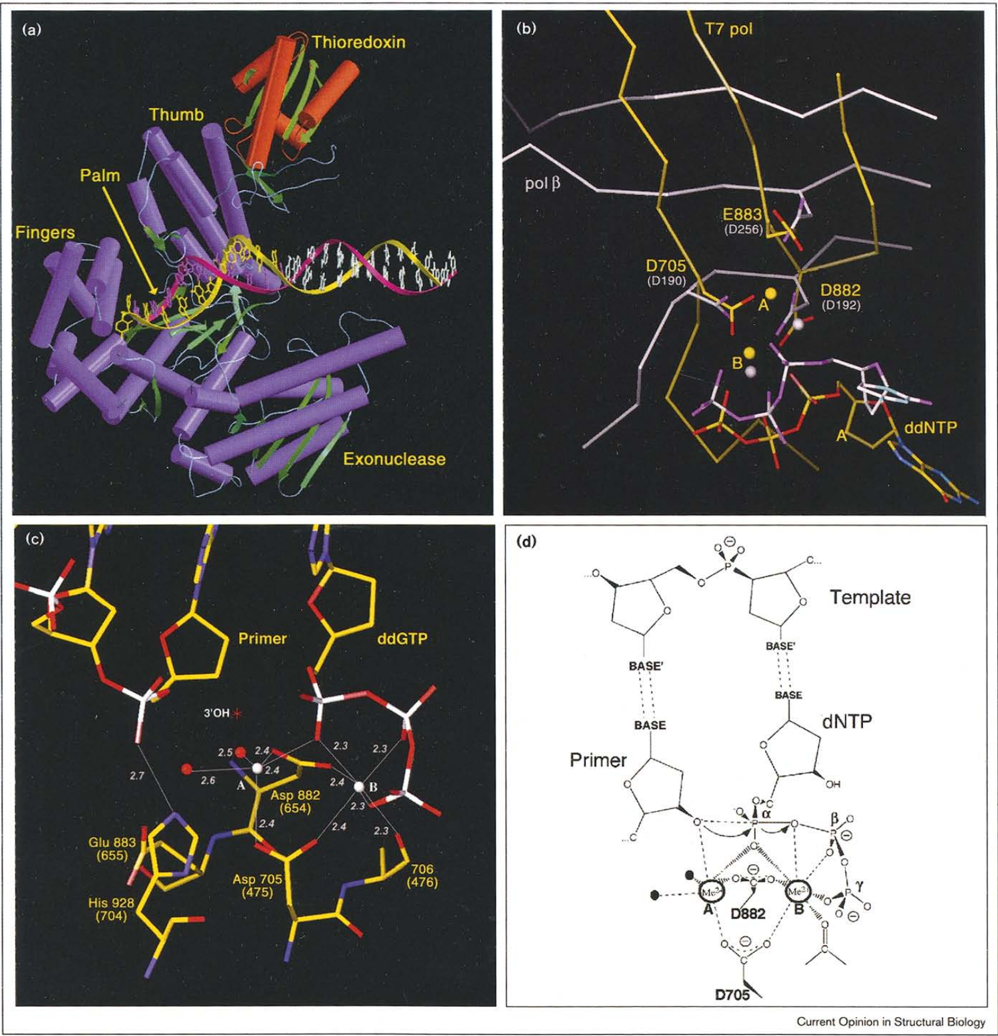
Verification
Claims the paper makes
The claims and statistics of this paper haven’t been checked yet.
Free: it reads the open-access text and checks the first 5 claims that cite a source we can check. Create a free account to check every claim.
Claims other papers make about this one
Each is checked against this paper’s own text: does it say what the citing paper says it does?
In the citing paper
“One interesting possibility comes from a consideration of the mechanism of ribozymes [57] and protein DNA polymerases [58], which act as phosphoryl transferases in part by binding and properly positioning metal ions so as to catalyze the desired reaction.”
From The eightfold path to non-enzymatic RNA replication (2012) · cites this paper as [58]
Self-check
Percentages, sums and reported differences re-computed from the paper’s own numbers.
The self-check needs the paper’s full text.
Citations
Cites
Crystal structure at 3.5 A resolution of HIV-1 reverse transcriptase complexed with an inhibitor
Kohlstaedt, L. A., Wang, J., Friedman, J. M., Rice, P. A., & Steitz, T. A. (1992) · Science · doi:10.1126/science.1377403 · Cited by 1,914
Self-citationCrystal structure of a bacteriophage T7 DNA replication complex at 2.2 Å resolution
Doublié, S., Tabor, S., Long, A. M., Richardson, C. C., & Ellenberger, T. (1998) · Nature · doi:10.1038/34593 · Cited by 1,175
Jacobo-Molina, A., Ding, J., Nanni, R. G., Clark, A. D., Lu, X., Tantillo, C., Williams, R. L., Kamer, G., Ferris, A. L., Clark, P., et al. (1993) · Proceedings of the National Academy of Sciences · doi:10.1073/pnas.90.13.6320 · Cited by 1,115
Beese, L. S., & Steitz, T. A. (1991) · The EMBO Journal · doi:10.1002/j.1460-2075.1991.tb07917.x · Cited by 1,048
Self-citationStructure of large fragment of Escherichia coli DNA polymerase I complexed with dTMP
Ollis, D. L., Brick, P., Hamlin, R., Xuong, N. G., & Steitz, T. A. (1985) · Nature · doi:10.1038/313762a0 · Cited by 848
Self-citationKong, X.-P., Onrust, R., O'Donnell, M., & Kuriyan, J. (1992) · Cell · doi:10.1016/0092-8674(92)90445-i · Cited by 753
STRUCTURES OF TERNARY COMPLEXES OF RAT DNA POLYMERASE BETA, A DNA TEMPLATE-PRIMER, AND DDCTP: 2bpf
Pelletier, H., Sawaya, M. R., Kumar, A., Wilson, S. H., & Kraut, J. (1994) · Worldwide Protein Data Bank · doi:10.2210/pdb2bpf/pdb · Cited by 692
An attempt to unify the structure of polymerases
Delarue, M., Poch, O., Tordo, N., Moras, D., & Argos, P. (1990) · "Protein Engineering, Design and Selection" · doi:10.1093/protein/3.6.461 · Cited by 637
Structures of Ternary Complexes of Rat DNA Polymerase β, a DNA Template-Primer, and ddCTP
Pelletier, H., Sawaya, M. R., Kumar, A., Wilson, S. H., & Kraut, J. (1994) · Science · doi:10.1126/science.7516580 · Cited by 598
Mechanism of Inhibition of HIV-1 Reverse Transcriptase by Nonnucleoside Inhibitors
Spence, R. A., Kati, W. M., Anderson, K. S., & Johnson, K. A. (1995) · Science · doi:10.1126/science.7532321 · Cited by 522
Cited by
Items 201–300 of 378
Sigel, A., Operschall, B. P., & Sigel, H. (2014) · JBIC Journal of Biological Inorganic Chemistry · doi:10.1007/s00775-013-1082-5 · Cited by 22
Cherney, M. M., Cherney, L. T., Garen, C. R., & James, M. N. G. (2011) · Journal of Molecular Biology · doi:10.1016/j.jmb.2011.09.007 · Cited by 22
Crespan, E., Alexandrova, L., Khandazhinskaya, A. L., Jasko, M. V., Kukhanova, M. K., Villani, G., Hübscher, U., Spadari, S., & Maga, G. (2006) · Nucleic Acids Research · doi:10.1093/nar/gkl1016 · Cited by 22
DNA Polymerases at the Eukaryotic Replication Fork Thirty Years after: Connection to Cancer
Pavlov, Y., Zhuk, A., & Stepchenkova, E. (2020) · Cancers · doi:10.3390/cancers12123489 · Cited by 19
Yokota, A., Tsumoto, K., Shiroishi, M., Nakanishi, T., Kondo, H., & Kumagai, I. (2009) · Journal of Biological Chemistry · doi:10.1074/jbc.m109.089623 · Cited by 24
Function and Assembly of the Bacteriophage T4 DNA Replication Complex
Delagoutte, E., & von Hippel, P. H. (2003) · Journal of Biological Chemistry · doi:10.1074/jbc.m303370200 · Cited by 25
Martín, M. J., García‐Ortiz, M. V., Gomez-Bedoya, A., Esteban, V., Guerra, S., & Blanco, L. (2013) · Nucleic Acids Research · doi:10.1093/nar/gkt681 · Cited by 21
“The structure of free Polß showed that the polymerization domain (31 kDa), composed of subdomains fingers, palm and thumb, adopts a structure in space similar to a partially left hand, like other DNA polymerases evolutionarily unrelated (5,6); conversely its N-terminal domain (8 kDa) is shown to be located away from t…”
Bartl, S., Miracle, A. L., Rumfelt, L. L., Kepler, T. B., Mochon, E., Litman, G. W., & Flajnik, M. F. (2003) · Immunogenetics · doi:10.1007/s00251-003-0608-3 · Cited by 22
“This absolute conservation suggests a general two-metal-ion mechanism for nucleotidyl transfer in this family and is a standard feature of nucleotidyltransferases (Brautigam and Steitz 1998).”
BackgroundZhang, L. (2006) · Nucleic Acids Research · doi:10.1093/nar/gkl425 · Cited by 20
“5 s) between O30 of the primer-terminus and Pa of the dNTP (Supplementary Table S7); (v) angle O30 (primer 30 end)-Pa(dNTP)-O3a(dNTP), ideally 180 for in-line attack of O30 on Pa (66) (Supplementary Table S7); (vi) the chelation of Mg ions (Figures 2 and 3); (vii) the distance between the two Mg ions (Supplementary Ta…”
How Mg 2+ ions lower the S N 2@P barrier in enzymatic triphosphate hydrolysis
van Bochove, M. A., Roos, G., Guerra, C. F., Hamlin, T. A., & Bickelhaupt, F. M. (2018) · Chemical Communications · doi:10.1039/c8cc00700d · Cited by 20
Role of the C-terminal Residue of the DNA Polymerase of Bacteriophage T7
Kumar, J. K., Tabor, S., & Richardson, C. C. (2001) · Journal of Biological Chemistry · doi:10.1074/jbc.m104151200 · Cited by 21
Kirk, B. W., & Kuchta, R. D. (1999) · Biochemistry · doi:10.1021/bi990351u · Cited by 20
Sigel, A., Operschall, B. P., & Sigel, H. (2011) · Coordination Chemistry Reviews · doi:10.1016/j.ccr.2011.06.030 · Cited by 19
Lin, T., Wang, C. X., Joyce, C. M., & Konigsberg, W. H. (2001) · Biochemistry · doi:10.1021/bi0105936 · Cited by 23
Jadaun, A., Raja Sudhakar, D., Subbarao, N., & Dixit, A. (2015) · PLoS ONE · doi:10.1371/journal.pone.0119760 · Cited by 18
“The third aspartate amino acid residue plays a major role in the nucleophilic reaction, during the interaction of incoming nucleotides [39].”
BackgroundTehrani, Z. A., Fattahi, A., & Pourjavadi, A. (2009) · Carbohydrate Research · doi:10.1016/j.carres.2009.02.007 · Cited by 19
Eisenbrandt, R., Lázaro, J. M., Salas, M., & de Vega, M. (2002) · Nucleic Acids Research · doi:10.1093/nar/30.6.1379 · Cited by 18
Wang, C. X., Zakharova, E., Li, J., Joyce, C. M., Wang, J., & Konigsberg, W. H. (2004) · Biochemistry · doi:10.1021/bi0302292 · Cited by 18
Primus inter pares (first among equals).
Berger, J. M., & Keck, J. L. (2001) · Nature Structural Biology · doi:10.1038/82996 · Cited by 18
Wang, L., Wu, M., Yan, S. F., Patel, D. J., Geacintov, N. E., & Broyde, S. B. (2005) · Chemical Research in Toxicology · doi:10.1021/tx049786v · Cited by 17
“Mg2+ Ion Chelation Is Preserved in All Simulations—Conserved carboxylates, Asp7, Asp105, and Glu106, which play a key role in Y-family polymerase activity (13, 82), are chelated by the two positively charged Mg2+ ions in the active site of the Dpo4 DNA polymerase.”
BackgroundSchmidt, H., Mesters, J. R., Wu, J., Woodard, R. W., Hilgenfeld, R., & Mamat, U. (2011) · PLoS ONE · doi:10.1371/journal.pone.0023231 · Cited by 17
Gadkari, V. V., Harvey, S. R., Raper, A. T., Chu, W., Wang, J., Wysocki, V. H., & Suo, Z. (2018) · Nucleic Acids Research · doi:10.1093/nar/gky125 · Cited by 17
“The resulting dwell times were compiled to generate survivor functions as previously described (35,36) which were fit to a single exponential decay equation (Equation 2), where f(t) is the fraction of molecules in the designated FRET state after time t, A is the amplitude of the function, and k is the decay rate const…”
InfluentialHuman Immunodeficiency Virus Reverse Transcriptase
Wendeler, M., Miller, J. T., & Grice, S. F. J. L. (2009) · Springer eBooks · doi:10.1007/b135974_19 · Cited by 18
Solution Structure and Stability of Tryptophan‐Containing Nucleopeptide Duplexes
Gómez‐Pinto, I., Marchán, V., Gago, F., Grandas, A., & González, C. (2003) · ChemBioChem · doi:10.1002/cbic.200390012 · Cited by 18
Fernández‐Botello, A., Operschall, B. P., Holý, A., Moreno, V., & Sigel, H. (2010) · Dalton Transactions · doi:10.1039/c005238h · Cited by 16
Picard‐Jean, F., Bougie, I., & Bisaillon, M. (2007) · Biochemical Journal · doi:10.1042/bj20070853 · Cited by 16
Bohlayer, W. P., & DeStefano, J. J. (2006) · Biochemistry · doi:10.1021/bi051770w · Cited by 20
“Since RNA-DNA and DNA-DNA hybrids bound to RT follow the same trajectory and have the same bend angle (21, 22, 44), differential binding likely results from additional interactions with amino acids.”
BackgroundSouquet, M., Restle, T., Krebs, R., Grice, S. F. J. L., Goody, R. S., & Wöhrl, B. M. (1998) · Biochemistry · doi:10.1021/bi9731596 · Cited by 18
Asturias, F. J., & Kornberg, R. D. (1999) · Journal of Biological Chemistry · doi:10.1074/jbc.274.11.6813 · Cited by 16
Wu, Z., Peng, L., Hu, Y., Xie, T., Yan, H., Wan, H., Liu, W., Liang, L., Xie, Z., Liu, K., et al. (2020) · Food and Chemical Toxicology · doi:10.1016/j.fct.2020.111325 · Cited by 15
Structure of the PolIIIα-τc-DNA Complex Suggests an Atomic Model of the Replisome
Liu, B., Lin, J., & Steitz, T. A. (2013) · Structure · doi:10.1016/j.str.2013.02.002 · Cited by 15
“, 2008), the catalytic palm domain, the incoming nucleotide-interacting fingers domain (Brautigam and Steitz, 1998), the nascent DNA gripping-thumb domain (Steitz, 1999), the b-sliding clamp-binding domain, and the CTD, which contains an oligonucleotide-binding (OB) fold and a possible external clamp-binding site at t…”
Self-citationEffect of the methyltransferase domain of Japanese encephalitis virus NS5 on the polymerase activity
Wang, Q., Weng, L., Tian, X., Counor, D., Sun, J. C., Mao, Y., Deubel, V., Okada, H., & Toyoda, T. (2012) · Biochimica et Biophysica Acta (BBA) - Gene Regulatory Mechanisms · doi:10.1016/j.bbagrm.2012.01.003 · Cited by 15
“DNA and RNA polymerases require 2 divalent cations to catalyze phosphoryl transfer, and Mg is the most commonly employed cation [26].”
BackgroundAmino Acid Phosphoramidate Nucleotides as Alternative Substrates for HIV‐1 Reverse Transcriptase
Adelfinskaya, O., & Herdewijn, P. A. (2007) · Angewandte Chemie · doi:10.1002/ange.200605016 · Cited by 15
DNA replication at high resolution
Keck, J. L., & Berger, J. M. (2000) · Chemistry & Biology · doi:10.1016/s1074-5521(00)00094-6 · Cited by 15
“The folds of these domains vary significantly among polymerases but seem to carry out conserved mechanistic functions [45].”
BackgroundNelson, S. W., Yang, J., & Benkovic, S. J. (2006) · Journal of Biological Chemistry · doi:10.1074/jbc.m512185200 · Cited by 15
McClure, M. A. (1999) · Elsevier eBooks · doi:10.1016/b978-012220360-2/50009-x · Cited by 15
Richardson, T. T., Wu, X., Keith, B. J., Heslop, P., Jones, A. C., & Connolly, B. A. (2013) · Nucleic Acids Research · doi:10.1093/nar/gks1364 · Cited by 14
Structural organization of viral RNA-dependent RNA polymerases
Shatskaya, G. S., & Dmitrieva, T. M. (2013) · Biochemistry (Moscow) · doi:10.1134/s0006297913030036 · Cited by 14
Selective disruption of the DNA polymerase III - complex by the umuD gene products
Silva, M. C., Nevin, P., Ronayne, E. A., & Beuning, P. J. (2012) · Nucleic Acids Research · doi:10.1093/nar/gks229 · Cited by 19
“3 Å, it is possible to distinguish the characteristic domains of DNA polymerases including the palm domain containing the conserved aspartic acid residues of the active site and the fingers and thumb domains (12,13).”
BackgroundSingle-molecule imaging of DNA polymerase I (Klenow fragment) activity by atomic force microscopy
Chao, J., Zhang, P., Wang, Q., Wu, N., Zhang, F., Hu, J., Fan, C., & Li, B. (2016) · Nanoscale · doi:10.1039/c5nr06544e · Cited by 14
Metal‐mediated Targeting in the Body
Tang, X., & Liang, X. (2013) · Chemical Biology & Drug Design · doi:10.1111/cbdd.12090 · Cited by 15
“DNA polymerases require metal ions for catalysis of the phosphoryl transfer (100,101).”
BackgroundXu, P., Oum, L., Beese, L. S., Geacintov, N. E., & Broyde, S. B. (2007) · Nucleic Acids Research · doi:10.1093/nar/gkm416 · Cited by 15
“chemical reaction (62) (Figure S9 and Table S10); (xii) distance between the two Mg ions (Table S11): normal values are 3.”
BackgroundCrespan, E., Zanoli, S., Khandazhinskaya, A., Shevelev, I., Jasko, M., Alexandrova, L., Kukhanova, M., Blanca, G., Villani, G., Hübscher, U., et al. (2005) · Nucleic Acids Research · doi:10.1093/nar/gki723 · Cited by 15
Zarrouk, K., Zhu, X., Phạm, V. D., Goyette, N., Piret, J., Shi, R., & Boivin, G. (2021) · Antimicrobial Agents and Chemotherapy · doi:10.1128/aac.00390-21 · Cited by 13
“, the palm, thumb, fingers, exonuclease and NH2-terminal domains (11, 12).”
Sigel, A., Sigel, H., & Sigel, R. K. O. (2022) · Molecules · doi:10.3390/molecules27092625 · Cited by 14
Marín, R., Abad, C., Rojas, D., Chiarello, D. I., Rangel, H., Teppa-Garrán, A., Fernández, M., & Ruette, F. (2023) · Journal of Trace Elements and Minerals · doi:10.1016/j.jtemin.2023.100071 · Cited by 15
Ren, Q., Guo, X., Dong, Y., Zhao, C., Zhang, X., & Xia, X. (2024) · Current Research in Toxicology · doi:10.1016/j.crtox.2024.100152 · Cited by 13
“…of HMs with DNA polymerase has been investigated by numerous fundamental studies, demonstrated by crystal structures of various DNA polymerase containing metal ions at the active sites (Asmuss et al., 2000; Brautigam and Steitz, 1998; Kim et al., 1995; Li et al., 1998; Franklin et al., 2001).”
BackgroundNakamura, T., Zhao, Y., Yamagata, Y., Hua, Y., & Yang, W. (2013) · BIOPHYSICS · doi:10.2142/biophysics.9.31 · Cited by 14
Gómez-Coca, R. B., Blindauer, C. A., Sigel, A., Operschall, B. P., Holý, A., & Sigel, H. (2012) · Chemistry & Biodiversity · doi:10.1002/cbdv.201200022 · Cited by 13
Jóźwiakowski, S. K., Keith, B. J., Gilroy, L., Doherty, A. J., & Connolly, B. A. (2014) · Nucleic Acids Research · doi:10.1093/nar/gku683 · Cited by 14
“The primers allow synthesis to commence from: (1) the base directly before the lesion; (2) the 3′ base of the 6–4 photoproduct; (3) the 5′ base of the 6–4 photoproduct; (4) the base immediately following the lesion.”
BackgroundXie, P. (2009) · Journal of Theoretical Biology · doi:10.1016/j.jtbi.2009.04.009 · Cited by 13
Incorporation of 4-thiothymidine into DNA by the klenow fragment and HIV-1 reverse transcriptase
Rao, T. V. S., Haber, M. T., Sayer, J. M., & Jerina, D. M. (2000) · Bioorganic & Medicinal Chemistry Letters · doi:10.1016/s0960-894x(00)00123-2 · Cited by 13
The complexities of genome analysis, the Retroid agent perspective
McClure, M. A. (2000) · Bioinformatics · doi:10.1093/bioinformatics/16.2.79 · Cited by 15
“Recent analysis of DNA polymerase structures indicates that there are four unrelated DNA polymerase families, one of which is the RT domain family (Brautigam and Steitz, 1998).”
BackgroundA Well-Conserved Archaeal B-Family Polymerase Functions as an Extender in Translesion Synthesis
Feng, X., Zhang, B.-C., Gao, Z.-F., Xu, R., Liu, X., Ishino, S., Feng, M., Shen, Y.-L., Ishino, Y., & She, Q.-X. (2022) · mBio · doi:10.1128/mbio.02659-21 · Cited by 9
Cheek, M. A., Sharaf, M. L., Dobrikov, M. I., & Shaw, B. R. (2013) · Antiviral Research · doi:10.1016/j.antiviral.2013.02.014 · Cited by 12
“This lower apicophilicity is important considering that RNA polymerases purportedly facilitate the addition of NTP’s to a growing strand via a trigonal bipyramidal transition state (Brautigam and Steitz, 1998).”
BackgroundDNA polymerases of herpesviruses and their inhibitors
Piret, J., & Boivin, G. (2021) · The Enzymes · doi:10.1016/bs.enz.2021.07.003 · Cited by 14
Bioinformatic prediction of polymerase elements in the rotavirus VP1 protein
Carpio, R. V., MORALES, J. L., Barro, M., Ricardo, A., & Spencer, E. (2006) · Biological Research · doi:10.4067/s0716-97602006000500008 · Cited by 12
“Their domains have a similar overall architecture, with a conformation resembling a right-hand (Brautigam & Steitz, 1998, Cramer, 2002).”
BackgroundResultStructures and Functions of Qβ Replicase: Translation Factors beyond Protein Synthesis
Tomita, K. (2014) · International Journal of Molecular Sciences · doi:10.3390/ijms150915552 · Cited by 15
“Conventional template-dependent DNA/RNA polymerization proceeds by a two-metal catalytic mechanism for the nucleotidyl transfer [42,43].”
BackgroundJadaun, A., Raja Sudhakar, D., Subbarao, N., & Dixit, A. (2015) · PLoS ONE · doi:10.1371/journal.pone.0128613 · Cited by 12
Zheng, R., Matsui, E., Shen, Y., Krishnasastry, M. V., Feng, Y. F., Darnis, S., Kawarabayasi, Y., Kikuchi, H., Harata, K., & Matsui, I. (2001) · Extremophiles · doi:10.1007/s007920100178 · Cited by 11
“DNA polymerase from Pyrococcus horikoshii (Pho DNA polymerase) contains six conserved regions: motifs Exo I, II, and III in the 3 ′ -5 ′ exonuclease domain, and motifs A, B, and C in the polymerase domain, which are indicative of family B DNA polymerases (Braithwaite and Ito 1993; Kunkel and Wilson 1998; Brautigam and…”
BackgroundReplisome Dynamics during Chromosome Duplication
Kurth, I., & O’Donnell, M. E. (2009) · EcoSal Plus · doi:10.1128/ecosalplus.4.4.2 · Cited by 13
“The recently resolved crystal structures of the α subunits from E. coli (26) and Thermus aquaticus (28) reveal that the catalytic region assumes the shape of a right hand, with finger, palm, and thumb domains, an organization observed for all DNA polymerases (29) (Fig.”
BackgroundFunction of the C-terminus of 29 DNA polymerase in DNA and terminal protein binding
Truniger, V., Lazaro, J. M., & Salas, M. (2004) · Nucleic Acids Research · doi:10.1093/nar/gkh184 · Cited by 13
Kathuria, P., Singh, P., Sharma, P., & Wetmore, S. D. (2020) · Chemical Research in Toxicology · doi:10.1021/acs.chemrestox.0c00183 · Cited by 11
Structures of the Leishmania infantum polymerase beta
Mejía, E., Burak, M. J., Alonso, A., Larraga, V., Kunkel, T. A., Bębenek, K., & García–Díaz, M. (2014) · DNA repair · doi:10.1016/j.dnarep.2014.03.001 · Cited by 11
Gómez-Coca, R. B., Kapinos, L. E., Holý, A., Vilaplana, R. A., González-Vílchez, F., & Sigel, H. (2004) · JBIC Journal of Biological Inorganic Chemistry · doi:10.1007/s00775-004-0591-7 · Cited by 11
Horton, J. R., Blumenthal, R., & Cheng, X. (2004) · Nucleic acids and molecular biology · doi:10.1007/978-3-642-18851-0_14 · Cited by 11
Structure and function of 2:1 DNA polymerase·DNA complexes
Tang, K., & Tsai, M. (2008) · Journal of Cellular Physiology · doi:10.1002/jcp.21458 · Cited by 10
“…knowledge in the mechanism of DNA polymerases has been enormously enhanced by the crystallographic studies (Sawaya et al., 1997; Wang et al., 1997; Brautigam and Steitz, 1998; Doublie et al., 1998; Ling et al., 2001; Garcia-Diaz et al., 2005; Nair et al., 2005), and much useful information about…”
Computational insights into the mutagenicity of two tobacco-derived carcinogenic DNA lesions
Wilson, K. A., Garden, J. L., Wetmore, N. T., & Wetmore, S. D. (2018) · Nucleic Acids Research · doi:10.1093/nar/gky1071 · Cited by 10
Unusual Occurrence of Two Bona-Fide CCA-Adding Enzymes in Dictyostelium discoideum
Erber, L., Hoffmann, A., Fallmann, J., Hagedorn, M., Hammann, C., Stadler, P. F., Betat, H., Prohaska, S. J., & Mörl, M. (2020) · International Journal of Molecular Sciences · doi:10.3390/ijms21155210 · Cited by 11
“While motif A is involved in the positioning of the catalytically essential magnesium ions [18,19], motifs B and D are important for discrimination against dNTPs and specific recognition of ATP and CTP, respectively [11].”
BackgroundLoundras, E.-A., Streetley, J., Herod, M. R., Thompson, R. F., Harris, M., Bhella, D., & Stonehouse, N. J. (2022) · Communications Biology · doi:10.1038/s42003-021-02989-z · Cited by 10
Attenuation of DNA Replication by HIV-1 Reverse Transcriptase near the Central Termination Sequence
Ignatov, M. E., Berdis, A. J., Grice, S. F. J. L., & Barkley, M. D. (2005) · Biochemistry · doi:10.1021/bi048000p · Cited by 15
Poongavanam, V., Madala, P. K., Højland, T., & Veedu, R. N. (2014) · PLoS ONE · doi:10.1371/journal.pone.0102126 · Cited by 9
“These interactions were also in line to previous reports of crystal structure analysis for polymerase docking of nucleotides [33,38,43,44].”
ResultLaatri, S., Khayari, S. E., & Qriouet, Z. (2024) · International Journal of Biological Macromolecules · doi:10.1016/j.ijbiomac.2024.133924 · Cited by 11
Wilson, K. A., Holland, C. D., & Wetmore, S. D. (2019) · Nucleic Acids Research · doi:10.1093/nar/gky1265 · Cited by 9
“))] of ∼ 180 ◦ (57– 59).”
Tu, Y., Liu, H., Shi, G., Zhang, F., Su, T., Wu, Y., Sun, J., Zhang, L., Zhang, S., & Fang, H. (2020) · Physical review. E · doi:10.1103/physreve.101.022410 · Cited by 9
Truniger, V., Lázaro, J. M., & Salas, M. (2003) · Journal of Molecular Biology · doi:10.1016/j.jmb.2003.10.024 · Cited by 9
Matsumoto, Y., Ohta, K., Yumine, N., Goto, H., & Nishio, M. (2015) · Microbiology and Immunology · doi:10.1111/1348-0421.12329 · Cited by 9
Kumar, J. K., Kremsdorf, R. A., Tabor, S., & Richardson, C. C. (2001) · Journal of Biological Chemistry · doi:10.1074/jbc.m106319200 · Cited by 9
Chhabra, G., Dixit, A., & Garg, L. C. (2011) · Bioinformation · doi:10.6026/97320630006069 · Cited by 9
DNA and RNA Folds in Transcription Complex as Evidenced by Iodine-125 Radioprobing
Karamychev, V. N., Panyutin, I. G., Neumann, R. D., & Zhurkin, V. B. (2000) · Journal of Biomolecular Structure and Dynamics · doi:10.1080/07391102.2000.10506616 · Cited by 10
Nucleotide-Dependent Isomerization of Escherichia coli RNA Polymerase
Lew, C. M., & Gralla, J. D. (2004) · Biochemistry · doi:10.1021/bi0492814 · Cited by 9
Polymerase Mechanism-Based Method of Viral Attenuation
Lee, C. A., August, A., Arnold, J. J., & Cameron, C. E. (2015) · Methods in molecular biology · doi:10.1007/978-1-4939-3008-1_6 · Cited by 8
“Nucleic acid polymerases use a two-metal-ion mechanism for nucleotidyl transfer [ 19 ] .”
MethodHIV-1 Reverse Transcriptase: a potential target for marine products
Miceli, L. A., de Souza, A. M. T., Rodrigues, C. R., Paixão, I. C. N. D. P., Teixeira, V. L., & Castro, H. C. (2012) · Revista Brasileira de Farmacognosia · doi:10.1590/s0102-695x2012005000084 · Cited by 8
Closing of the Fingers Domain Generates Motor Forces in the HIV Reverse Transcriptase
Lu, H., Macosko, J. C., Habel-Rodriguez, D., Keller, R. W., Brozik, J. A., & Keller, D. J. (2004) · Journal of Biological Chemistry · doi:10.1074/jbc.m407193200 · Cited by 8
Timsit, Y. (2001) · Journal of Biomolecular Structure and Dynamics · doi:10.1080/07391102.2001.10506733 · Cited by 8
Yang, R., Li, X., Wang, X., Jing, W., Xu, C., Jiang, J., Lin, Y., Yin, H., Gui, P., & Ma, F. (2025) · International Journal of Biological Macromolecules · doi:10.1016/j.ijbiomac.2025.148691 · Cited by 7
Wilson, K. A., & Wetmore, S. D. (2017) · Chemical Research in Toxicology · doi:10.1021/acs.chemrestox.7b00179 · Cited by 8
Barut, B., Seyhan, G., Keleş, T., Kulein, B., & Bıyıklıoğlu, Z. (2024) · Applied Organometallic Chemistry · doi:10.1002/aoc.7421 · Cited by 7
Catalytically inactive T7 DNA polymerase imposes a lethal replication roadblock
Hernandez, A. J., Lee, S., Chang, S., Lee, J. A., Loparo, J. J., & Richardson, C. C. (2020) · Journal of Biological Chemistry · doi:10.1074/jbc.ra120.013738 · Cited by 7
Truniger, V., Lázaro, J. M., Blanco, L., & Salas, M. (2002) · Journal of Molecular Biology · doi:10.1016/s0022-2836(02)00022-0 · Cited by 7
Chemotherapeutic intervention by inhibiting DNA polymerases
Dasari, A., Choi, J.-S., & Berdis, A. J. (2016) · Elsevier eBooks · doi:10.1016/b978-0-12-803582-5.00007-3 · Cited by 9
Rapid evolution of a highly efficient RNA polymerase by homologous recombination
Medina, E. L., Maola, V. A., Hajjar, M., Ko, G. K., Ho, E. J., Horton, A. R., Chim, N., & Chaput, J. C. (2026) · Nature Chemical Biology · doi:10.1038/s41589-025-02124-7 · Cited by 11
“…enzymes follow a complex reaction mechanism in which each cycle of nucleotide addition involves a set of dynamic conformational changes that allow the enzyme to form a covalent phosphodiester bond between the growing daughter strand and the incoming 2′-deoxyribonucleoside triphosphate (dNTP) 1–3 .”
Role of Disulfide Bridges in Archaeal Family‐B DNA Polymerases
Killelea, T., & Connolly, B. A. (2011) · ChemBioChem · doi:10.1002/cbic.201100145 · Cited by 6
Song, J.-G., Kil, E., Cho, S. S., Kim, I. H., & Kwon, S.-T. (2010) · Protein Engineering Design and Selection · doi:10.1093/protein/gzq059 · Cited by 6
“…the tip of the fingers subdomain, which is twisted outward by 468 in the open position (Li et al., 1998). dNTP incorporation leads to a closed conformational change (Doublie et al., 1998) and the fingers subdomain rotates toward the palm to form a dNTP-binding pocket (Brautigam and Steitz, 1998).”
BackgroundSolvent induced selective response to metal ions of three HNBO-based chemosensors
Paderni, D., Lopez, D., Macedi, E., Ambrosi, G., Ricci, A., Palazzetti, E., Giorgi, L., Formica, M., & Fusi, V. (2023) · Inorganica Chimica Acta · doi:10.1016/j.ica.2023.121400 · Cited by 7
“Mg 2 + is indeed involved in many cellular processes, being important for the activity of enzymes, receptors and ionic channels and for the bone metabolism [1 – 9].”
Wilson, K. A., & Wetmore, S. D. (2017) · Biochemistry · doi:10.1021/acs.biochem.6b01247 · Cited by 6
Dorawa, S., Werbowy, O., Płotka, M., Kaczorowska, A., Makowska, J., Kozlowski, L. P., Friðjónsson, Ó. H., Hreggviðsson, G. Ó., Aevarsson, A., & Kaczorowski, T. (2022) · International Journal of Molecular Sciences · doi:10.3390/ijms23147945 · Cited by 6
“A structural and functional analysis of DNA polymerases of all types allowed each subdomain to propose a particular role [65].”
BackgroundTruniger, V., Lázaro, J. M., de Vega, M., Blanco, L., & Salas, M. (2003) · Journal of Biological Chemistry · doi:10.1074/jbc.m303052200 · Cited by 6
Niu, X., Nong, S., Gong, J., Zhang, X., Tang, H. R., Zhou, T., & Li, W. (2020) · Journal of Microbiology and Biotechnology · doi:10.4014/jmb.2002.02039 · Cited by 6
“In comparison with the multiple roles for HBVx, HBV DNA polymerase (Pol), a viral genome P-encoded protein with a molecular mass weight of approximately 91 kDa, possesses transcriptase activity and functions as RNA-dependent DNA polymerase, which plays an essential role in HBV replication within a cytoplasmic nucleoca…”
BackgroundGestl, E. E., & Eckert, K. A. (2005) · Biochemistry · doi:10.1021/bi047591g · Cited by 6
Metadata
- Authors
- Brautigam, C. A., & Steitz, T. A.
- Affiliations
- Yale University (US)
- Howard Hughes Medical Institute (US)
- Venue
- Current Opinion in Structural Biology
- Publisher
- Elsevier BV
- Published
- 1998-02
- Volume
- 8
- Issue
- 1
- Pages
- 54-63
- ISSN
- 0959-440X (ISSN-L)
- OpenAlex
- W1968034613
- Semantic Scholar
- a76d3b8e59a8c020491eccd6ae7a8e0c0608e0c8
- Cited by
- 377
- References
- 50
- Citations by year
- 2026: 4 · 2025: 4 · 2024: 5 · 2023: 6 · 2022: 8 · 2021: 5 · 2020: 11 · 2019: 3 · 2018: 6 · 2017: 10 · 2016: 5 · 2015: 7 · 2014: 16 · 2013: 15 · 2012: 12
- FWCI
- 3.59
- Type
- journal article
- Language
- en
- Open access
- hybrid
- doi.org
- Licence
- cc-by-nc-nd
- www.elsevier.com/tdm/userlicense/1.0/ (tdm)
- www.elsevier.com/legal/tdmrep-license (tdm)
- creativecommons.org/licenses/by-nc-nd/4.0/ (vor, 1471 d)
- Locations
- Current Opinion in Structural Biology (publishedVersion, cc-by-nc-nd)
- PubMed (publishedVersion)
- Funders
- American Cancer Society
- Topics
- Life Sciences › Biochemistry, Genetics and Molecular Biology › Structural Biology › Enzyme Structure and Function
- Life Sciences › Biochemistry, Genetics and Molecular Biology › Molecular Biology › Protein Structure and Dynamics
- Life Sciences › Biochemistry, Genetics and Molecular Biology › Molecular Biology › DNA Repair Mechanisms
- Keywords
- DNA polymerase, DNA replication, polymerase domain, conserved residues, crystal structure
- MeSH terms
- Amino Acid Sequence, Crystallization, DNA, DNA-Directed DNA Polymerase, Models, Molecular, Molecular Sequence Data, Nucleic Acid Conformation, Protein Conformation, Structure-Activity Relationship, Substrate Specificity, Sequence Alignment, Crystallography, X-Ray
About these checks
Registry, retraction, Cites and statistics results are computed, not judged, with one exception: a printed reference that no index lists is read once by a model before it counts as a citation error. Claims are extracted by a model and kept only when their quote appears verbatim in the text; each cited source is then checked, with a model’s help, for whether it says what the claim relies on. Those verdicts can be wrong — read the claim’s quote and the cited source before relying on one.
Statistics and arithmetic are recomputed, not judged.
Confidence bands are shown only for fields calibrated on our annotated test set. None is calibrated yet, so no band is shown.
What counts as a claim ›How we measure confidence ›How we check this ›
Are you an author, or do you see a problem with this page? Request a review
Data sources
Bibliographic data: Semantic Scholar, OpenAlex, Crossref.
Contains information from the Semantic Scholar Academic Graph Datasets, made available under the ODC Attribution License (ODC-BY 1.0).
Semantic Scholar’s data is described in: Kinney, R., et al. (2023). The Semantic Scholar Open Data Platform. arXiv:2301.10140.
