

Structural and functional insights provided by crystal structures of DNA polymerases and their substrate complexes
Open accessThe DOI matches its Crossref record; 50 of the 50 references it cites were found in a registry or an index.
Abstract
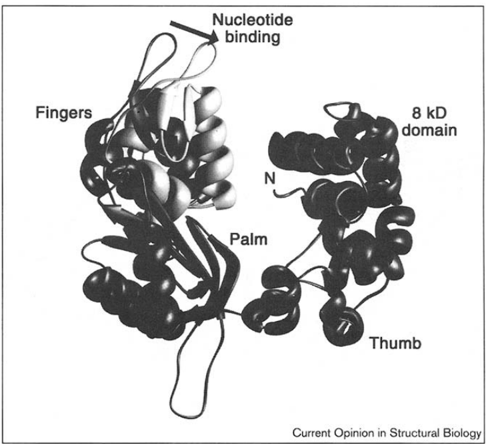
New levels in the understanding of DNA replication have been achieved from recent crystal structure determinations of several DNA polymerases and their substrate complexes. The structure of an alpha family DNA polymerase from bacteriophage RB69 shows some similarities, but also considerable differences in structure and organization from the pol I family DNA polymerases. Also, the functions of three polymerase domains and their conserved residues have been clarified by studying structures of pol I family DNA polymerases complexed to their substrates. These structures also confirm that an identical two-metal ion catalytic mechanism proposed previously is used by both the nonhomologous pol I and pol beta family DNA polymerases.
Overview
The claims and statistics of this paper haven’t been checked yet.
Free: it reads the open-access text and checks the first 5 claims that cite a source we can check. Create a free account to check every claim.
Integrity signals
Registry
Cites
Statistics
Figures
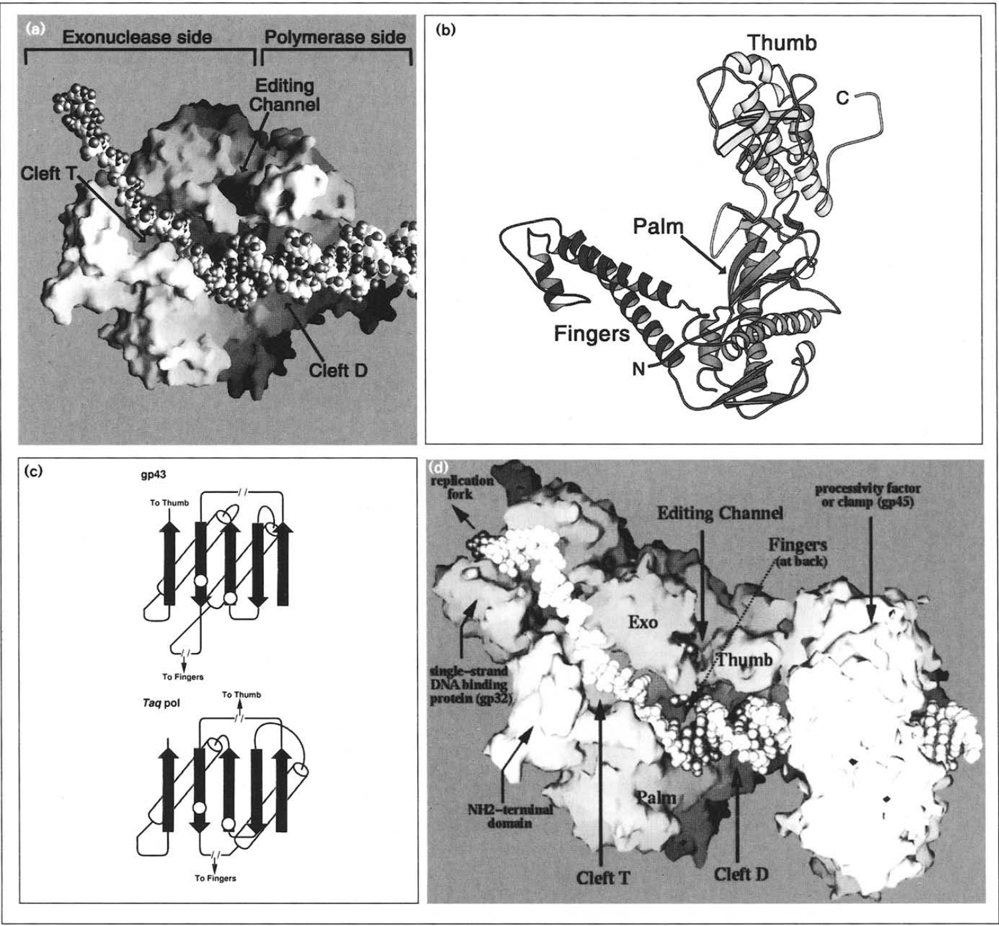
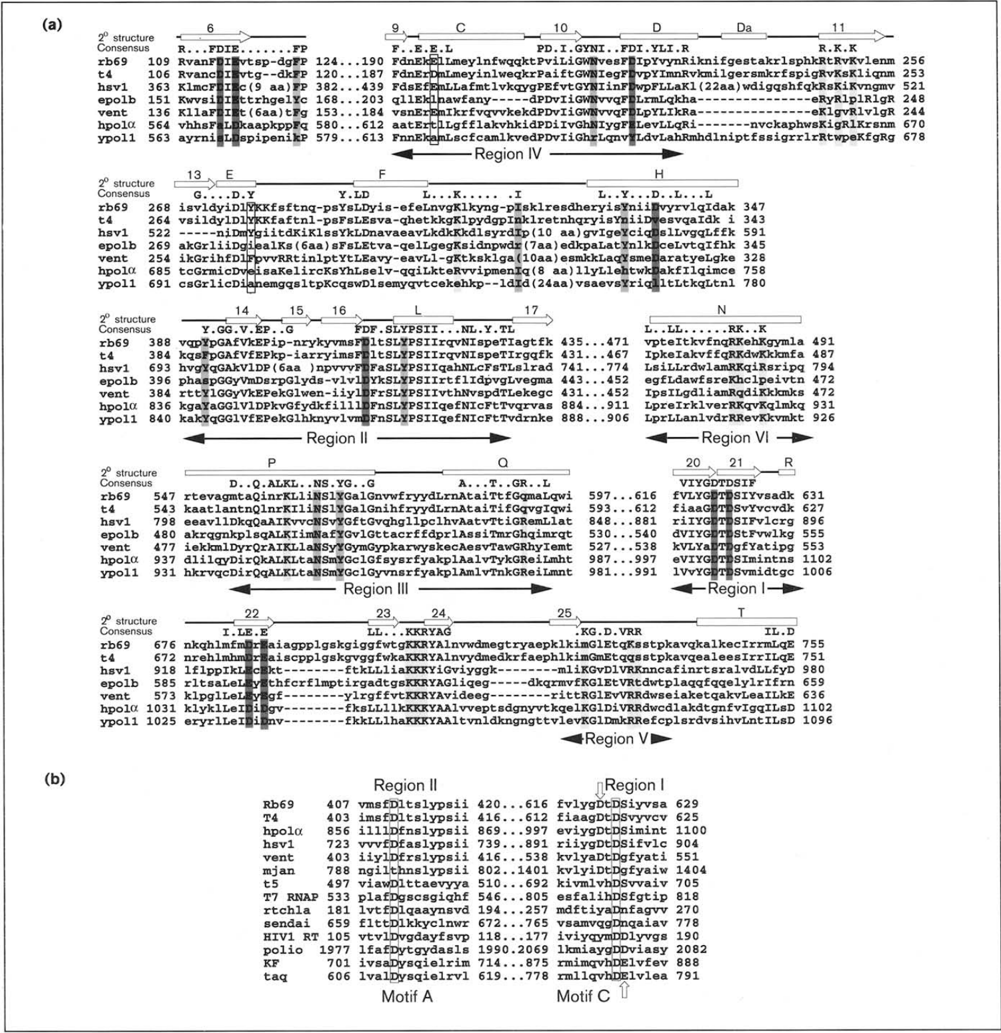
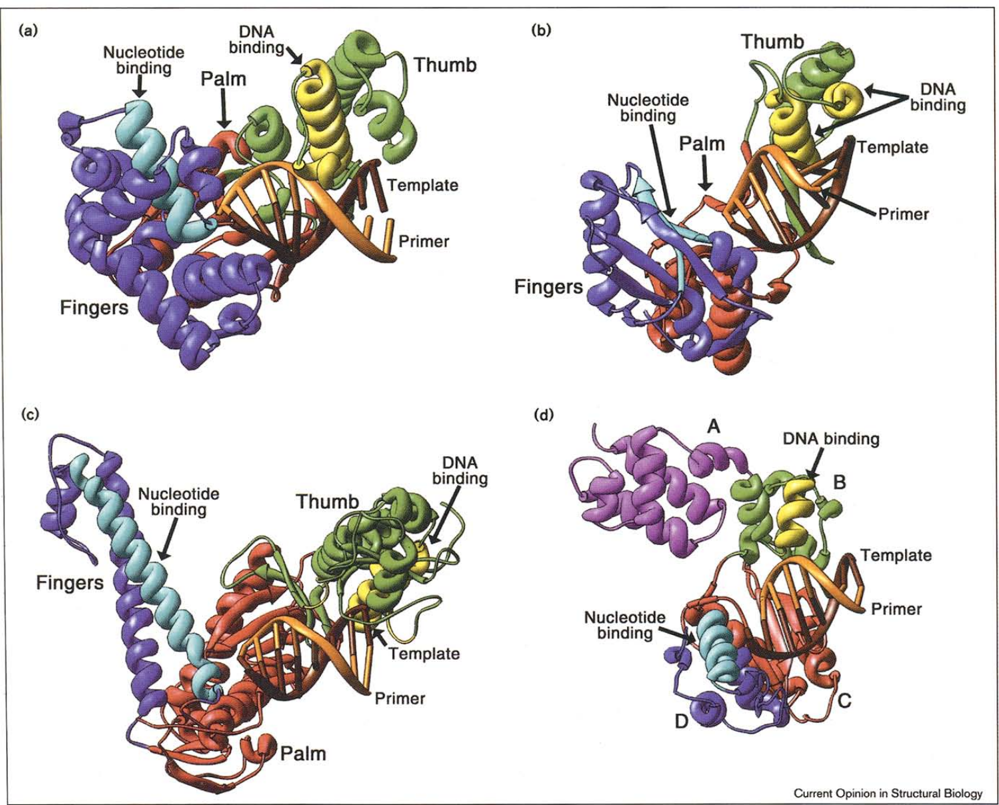
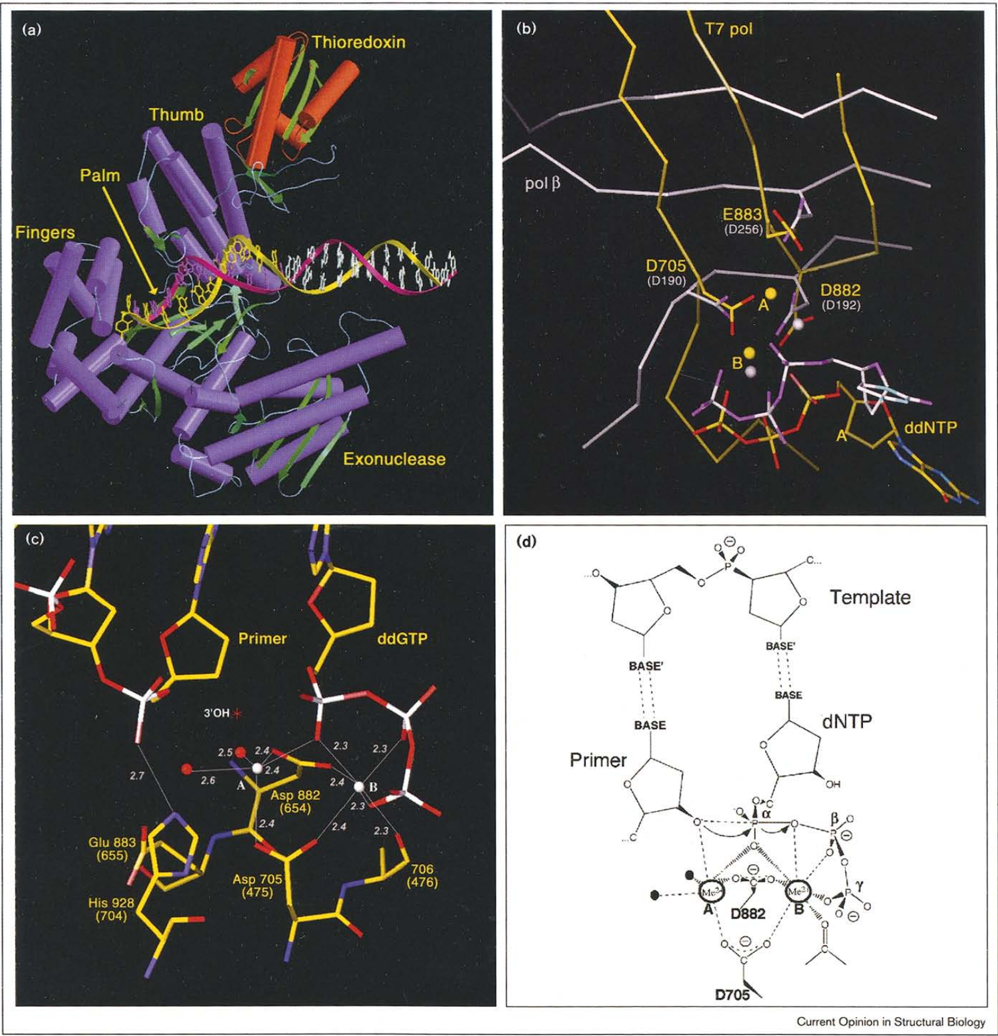
Verification
Claims the paper makes
The claims and statistics of this paper haven’t been checked yet.
Free: it reads the open-access text and checks the first 5 claims that cite a source we can check. Create a free account to check every claim.
Claims other papers make about this one
Each is checked against this paper’s own text: does it say what the citing paper says it does?
In the citing paper
“One interesting possibility comes from a consideration of the mechanism of ribozymes [57] and protein DNA polymerases [58], which act as phosphoryl transferases in part by binding and properly positioning metal ions so as to catalyze the desired reaction.”
From The eightfold path to non-enzymatic RNA replication (2012) · cites this paper as [58]
Self-check
Percentages, sums and reported differences re-computed from the paper’s own numbers.
The self-check needs the paper’s full text.
Citations
Cites
Crystal structure at 3.5 A resolution of HIV-1 reverse transcriptase complexed with an inhibitor
Kohlstaedt, L. A., Wang, J., Friedman, J. M., Rice, P. A., & Steitz, T. A. (1992) · Science · doi:10.1126/science.1377403 · Cited by 1,914
Self-citationCrystal structure of a bacteriophage T7 DNA replication complex at 2.2 Å resolution
Doublié, S., Tabor, S., Long, A. M., Richardson, C. C., & Ellenberger, T. (1998) · Nature · doi:10.1038/34593 · Cited by 1,175
Jacobo-Molina, A., Ding, J., Nanni, R. G., Clark, A. D., Lu, X., Tantillo, C., Williams, R. L., Kamer, G., Ferris, A. L., Clark, P., et al. (1993) · Proceedings of the National Academy of Sciences · doi:10.1073/pnas.90.13.6320 · Cited by 1,115
Beese, L. S., & Steitz, T. A. (1991) · The EMBO Journal · doi:10.1002/j.1460-2075.1991.tb07917.x · Cited by 1,048
Self-citationStructure of large fragment of Escherichia coli DNA polymerase I complexed with dTMP
Ollis, D. L., Brick, P., Hamlin, R., Xuong, N. G., & Steitz, T. A. (1985) · Nature · doi:10.1038/313762a0 · Cited by 848
Self-citationKong, X.-P., Onrust, R., O'Donnell, M., & Kuriyan, J. (1992) · Cell · doi:10.1016/0092-8674(92)90445-i · Cited by 753
STRUCTURES OF TERNARY COMPLEXES OF RAT DNA POLYMERASE BETA, A DNA TEMPLATE-PRIMER, AND DDCTP: 2bpf
Pelletier, H., Sawaya, M. R., Kumar, A., Wilson, S. H., & Kraut, J. (1994) · Worldwide Protein Data Bank · doi:10.2210/pdb2bpf/pdb · Cited by 692
An attempt to unify the structure of polymerases
Delarue, M., Poch, O., Tordo, N., Moras, D., & Argos, P. (1990) · "Protein Engineering, Design and Selection" · doi:10.1093/protein/3.6.461 · Cited by 637
Structures of Ternary Complexes of Rat DNA Polymerase β, a DNA Template-Primer, and ddCTP
Pelletier, H., Sawaya, M. R., Kumar, A., Wilson, S. H., & Kraut, J. (1994) · Science · doi:10.1126/science.7516580 · Cited by 598
Mechanism of Inhibition of HIV-1 Reverse Transcriptase by Nonnucleoside Inhibitors
Spence, R. A., Kati, W. M., Anderson, K. S., & Johnson, K. A. (1995) · Science · doi:10.1126/science.7532321 · Cited by 522
Cited by
Items 101–200 of 378
Techniques used to study the DNA polymerase reaction pathway
Joyce, C. M. (2009) · Biochimica et Biophysica Acta (BBA) - Proteins and Proteomics · doi:10.1016/j.bbapap.2009.07.021 · Cited by 61
“The evidence supports a transition state in which two proton transfers take place, and is therefore consistent with the idea that the twometal-ion mechanism for phosphoryl transfer [21] is assisted by a general acid and a general base derived from protein side chains.”
Model of full-length HIV-1 integrase complexed with viral DNA as template for anti-HIV drug design
Karki, R. G., Tang, Y., Burke, T. R., & Nicklaus, M. C. (2004) · Journal of Computer-Aided Molecular Design · doi:10.1007/s10822-005-0365-5 · Cited by 64
Bumps in the road: how replicative DNA polymerases see DNA damage
Hogg, M., Wallace, S. S., & Doublié, S. (2005) · Current Opinion in Structural Biology · doi:10.1016/j.sbi.2005.01.014 · Cited by 69
A Polymerase Mechanism-based Strategy for Viral Attenuation and Vaccine Development
Weeks, S. A., Lee, C. A., Zhao, Y., Smidansky, E. D., August, A., Arnold, J. J., & Cameron, C. E. (2012) · Journal of Biological Chemistry · doi:10.1074/jbc.c112.401471 · Cited by 59
Mao, C., Sudbeck, E. A., Venkatachalam, T. K., & Uckun, F. M. (2000) · Biochemical Pharmacology · doi:10.1016/s0006-2952(00)00408-1 · Cited by 59
Assembly of Qβ viral RNA polymerase with host translational elongation factors EF-Tu and -Ts
Takeshita, D., & Tomita, K. (2010) · Proceedings of the National Academy of Sciences · doi:10.1073/pnas.1006559107 · Cited by 58
“Because conventional DNA/RNA polymerization proceeds by the two metal ion catalytic mechanism (20), two metals should be coordinated by these three carboxylates for the nucleotidyl transfer to proceed at the polymerization stage.”
BackgroundChifotides, H. T., Fu, P. K. ‐., Dunbar, K. R., & Turró, C. (2004) · Inorganic Chemistry · doi:10.1021/ic034438m · Cited by 58
Ren, Y., Martînez, J., & Virtanen, A. (2002) · Journal of Biological Chemistry · doi:10.1074/jbc.m111515200 · Cited by 58
Crystal structure of Pfu, the high fidelity DNA polymerase from Pyrococcus furiosus
Kim, S. W., Kim, D.-U., Kim, J. K., Kang, L., & Cho, H. (2008) · International Journal of Biological Macromolecules · doi:10.1016/j.ijbiomac.2008.01.010 · Cited by 65
Mapping the Position of DNA Polymerase-Bound DNA Templates in a Nanopore at 5 Å Resolution
Gyarfas, B., Olasagasti, F., Benner, S., Garalde, D. R., Lieberman, K. R., & Akeson, M. A. (2009) · ACS Nano · doi:10.1021/nn900303g · Cited by 57
Okabe, M., Tomita, K., Ishitani, R., Ishii, R., Takeuchi, N., Arisaka, F., Nureki, O., & Yokoyama, S. (2003) · The EMBO Journal · doi:10.1093/emboj/cdg563 · Cited by 60
Getting a grip: polymerases and their substrate complexes
Jäger, J., & Pata, J. D. (1999) · Current Opinion in Structural Biology · doi:10.1016/s0959-440x(99)80004-9 · Cited by 65
Adelfinskaya, O., Terrazas, M., Froeyen, M., Marlière, P., Nauwelaerts, K., & Herdewijn, P. A. (2007) · Nucleic Acids Research · doi:10.1093/nar/gkm498 · Cited by 59
“Therefore, a proper geometric and spatial arrangement of all reacting residues and atoms are essential for the formation of the productive tertiary complex (36,37,40).”
BackgroundInteracting Fidelity Defects in the Replicative DNA Polymerase of Bacteriophage RB69
Bębenek, A., Dressman, H. K., Carver, G. T., Ng, S.-S., Petrov, V., Yang, G., Konigsberg, W. H., Karam, J. D., & Drake, J. W. (2001) · Journal of Biological Chemistry · doi:10.1074/jbc.m007707200 · Cited by 58
Hurt, N., Wang, H., Akeson, M. A., & Lieberman, K. R. (2009) · Journal of the American Chemical Society · doi:10.1021/ja809663f · Cited by 53
The Conserved Active Site Motif A of Escherichia coliDNA Polymerase I Is Highly Mutable
Shinkai, A., Patel, P. H., & Loeb, L. A. (2001) · Journal of Biological Chemistry · doi:10.1074/jbc.m011472200 · Cited by 50
Electronic Control of DNA Polymerase Binding and Unbinding to Single DNA Molecules
Wilson, N. A., Abu-Shumays, R. L., Gyarfas, B., Wang, H., Lieberman, K. R., Akeson, M. A., & Dunbar, W. B. (2009) · ACS Nano · doi:10.1021/nn9000897 · Cited by 52
“Crystal structures of these enzymes, which catalyze templatedependent DNA replication, reveal a highly conserved catalytic domain that resembles a partially open right-hand.(3) The palm subdomain contains residues essential for catalysis, the thumb subdomain positions the primer/template DNA duplex in the active site,…”
BackgroundViral RNA-Dependent RNA Polymerases: A Structural Overview
Ferrero, D. S., Ferrer‐Orta, C., & Verdaguer, N. (2018) · Sub-cellular biochemistry/Subcellular biochemistry · doi:10.1007/978-981-10-8456-0_3 · Cited by 52
Incorrect nucleotide insertion at the active site of a G:A mismatch catalyzed by DNA polymerase β
Lin, P., Batra, V. K., Pedersen, L. C., Beard, W. A., Wilson, S. H., & Pedersen, L. G. (2008) · Proceedings of the National Academy of Sciences · doi:10.1073/pnas.0801257105 · Cited by 50
“All families of DNA polymerases are believed to catalyze the nucleotidyl transfer reaction through a universal two-metal-ion mechanism (6).”
BackgroundMolecular Recognition of Canonical and Deaminated Bases by P. abyssi Family B DNA Polymerase
Gouge, J., Ralec, C., Henneke, G., & Delarue, M. H. (2012) · Journal of Molecular Biology · doi:10.1016/j.jmb.2012.07.025 · Cited by 51
Correlation of the Kinetics of Finger Domain Mutants in RB69 DNA Polymerase with Its Structure
Yang, G., Franklin, M. C., Li, J., Lin, T., & Konigsberg, W. H. (2002) · Biochemistry · doi:10.1021/bi0119924 · Cited by 58
DNA cleavage by the EcoRV restriction endonuclease: pH dependence and proton transfers in catalysis
Stanford, N. P., Halford, S. E., & Baldwin, G. S. (1999) · Journal of Molecular Biology · doi:10.1006/jmbi.1999.2673 · Cited by 50
Turner, R. M., Grindley, N. D. F., & Joyce, C. M. (2003) · Biochemistry · doi:10.1021/bi026566c · Cited by 55
Common structural features of nucleic acid polymerases
Cramer, P. (2002) · BioEssays · doi:10.1002/bies.10127 · Cited by 67
P Transposable Elements in Drosophila melanogaster
Rio, D. C. (2007) · Wiley eBooks · doi:10.1128/9781555817954.ch21 · Cited by 50
Lansdon, E. B., Samuel, D., Lagpacan, L., Brendza, K. M., White, K. L., Hung, M., Liu, X., Boojamra, C. G., Mackman, R. L., Cihlar, T., et al. (2010) · Journal of Molecular Biology · doi:10.1016/j.jmb.2010.02.019 · Cited by 49
Kirk, B. W., & Kuchta, R. D. (1999) · Biochemistry · doi:10.1021/bi990247c · Cited by 49
Martin, G., Möglich, A., Keller, W., & Doublié, S. (2004) · Journal of Molecular Biology · doi:10.1016/j.jmb.2004.06.047 · Cited by 57
Dynamics: the missing link between structure and function of the viral RNA-dependent RNA polymerase?
Cameron, C. E., Moustafa, I. M., & Arnold, J. J. (2009) · Current Opinion in Structural Biology · doi:10.1016/j.sbi.2009.10.012 · Cited by 49
“A determinant of nucleotide incorporation efficiency resides on a highly mobile structural element in all nucleic acid polymerases Nucleic acid polymerases employ a two-metal-ion mechanism for catalysis [15].”
DeStefano, J. J., & Cristofaro, J. V. (2006) · Nucleic Acids Research · doi:10.1093/nar/gkj426 · Cited by 47
Structure of a Preternary Complex Involving a Prokaryotic NHEJ DNA Polymerase
Brissett, N. C., Martín, M. J., Pitcher, R. S., Bianchi, J., Juárez, R., Green, A., Fox, G. C., Blanco, L., & Doherty, A. J. (2011) · Molecular Cell · doi:10.1016/j.molcel.2010.12.026 · Cited by 46
Evidence for the Kinetic Partitioning of Polymerase Activity on G-Quadruplex DNA
Eddy, S., Maddukuri, L., Ketkar, A., Zafar, M. K., Henninger, E. E., Pursell, Z. F., & Eoff, R. L. (2015) · Biochemistry · doi:10.1021/acs.biochem.5b00060 · Cited by 47
“(68) The template residue in the +1 position must undergo a dramatic rotation as it moves into the yeast pol ε active site, a mechanistic feature that is conserved between B-family pols.(69, 70) The inaccessibility of G4-associated guanines likely interferes with this base-flipping event and is consistent with our res…”
ResultStructure and Function of RNA Polymerase II
Cramer, P. (2004) · Advances in protein chemistry · doi:10.1016/s0065-3233(04)67001-x · Cited by 55
Molecular basis for RNA polymerization by Qβ replicase
Takeshita, D., & Tomita, K. (2012) · Nature Structural & Molecular Biology · doi:10.1038/nsmb.2204 · Cited by 49
“In addition, metal-B may stabilize the leaving pyrophosphate during the nucleophilic attack by the 3′-OH group of the priming GTP on the α-β phosphodiester bond of an incoming GT”
BackgroundEfficient 3D Database Screening for Novel HIV-1 IN Inhibitors
Barreca, M. L., Rao, A., Luca, L. D., Zappalà, M., Gurnari, C., Monforte, P., Clercq, E. D., Maele, B. V., Debyser, Z., Witvrouw, M., et al. (2004) · Journal of Chemical Information and Computer Sciences · doi:10.1021/ci034296e · Cited by 54
DNA polymerase of the T4-related bacteriophages
Karam, J. D., & Konigsberg, W. H. (2000) · Progress in nucleic acid research and molecular biology · doi:10.1016/s0079-6603(00)64002-3 · Cited by 47
Accuracy, lesion bypass, strand displacement and translocation by DNA polymerases
Steitz, T. A., & Yin, Y. W. (2004) · Philosophical Transactions of the Royal Society B Biological Sciences · doi:10.1098/rstb.2003.1374 · Cited by 44
Self-citationMolecular mechanisms of template-independent RNA polymerization by tRNA nucleotidyltransferases
Tomita, K., & Yamashita, S. (2014) · Frontiers in Genetics · doi:10.3389/fgene.2014.00036 · Cited by 46
“The enzyme can synthesize an ordered nucleotide sequence, CCA, onto the 3′-end of a specific primer, tRNA, without a nucleic acid template.”
BackgroundStructural and Molecular Kinetic Features of Activities of DNA Polymerases
Кузнецова, А. А., Fedorova, O. S., & Kuznetsov, N. A. (2022) · International Journal of Molecular Sciences · doi:10.3390/ijms23126373 · Cited by 42
“It is on the basis of kinetic and X-ray structural data on the Klenow fragment (and its homologs from bacteriophage T7 and thermophiles Thermus aquaticus and Bacillus stearothermophilus) that the mechanism of the DNA polymerase reaction (described above) was validated and the two-metal-ion mechanism was proposed [5,6,…”
BackgroundOkamoto, A., Tainaka, K., & Saito, I. (2005) · Bioconjugate Chemistry · doi:10.1021/bc050077i · Cited by 41
RNA-dependent RNA polymerases of dsRNA bacteriophages
Makeyev, E. V., & Grimes, J. M. (2004) · Virus Research · doi:10.1016/j.virusres.2003.12.005 · Cited by 44
Hold Tight (but Not Too Tight) to Get It Right
Brieba, L. G., & Ellenberger, T. (2003) · Structure · doi:10.1016/s0969-2126(02)00917-6 · Cited by 41
Steady-State Kinetic Characterization of RB69 DNA Polymerase Mutants Τhat Affect dNTP Incorporation
Yang, G., Lin, T., Karam, J. D., & Konigsberg, W. H. (1999) · Biochemistry · doi:10.1021/bi990653w · Cited by 41
Perlow, R. A., & Broyde, S. B. (2001) · Journal of Molecular Biology · doi:10.1006/jmbi.2001.4674 · Cited by 43
Thrall, S. H., Krebs, R., Wöhrl, B. M., Cellai, L., Goody, R. S., & Restle, T. (1998) · Biochemistry · doi:10.1021/bi981102t · Cited by 47
Zhang, H., Cao, W., Zakharova, E., Konigsberg, W. H., & Cruz, E. M. D. L. (2007) · Nucleic Acids Research · doi:10.1093/nar/gkm587 · Cited by 41
Redrejo‐Rodríguez, M., Ordóñez, C. D., Berjón‐Otero, M., Moreno-González, J., Aparicio-Maldonado, C., Forterre, P., Salas, M., & Krupovìč, M. (2017) · Cell Reports · doi:10.1016/j.celrep.2017.10.039 · Cited by 40
“required for metal coordination, in agreement with the previous suggestions (Brautigam and Steitz, 1998; Wang et al., 1997).”
ResultClose encounters: Moving along bumps, breaks, and bubbles on expanded trinucleotide tracts
Polyzos, A. A., & McMurray, C. T. (2017) · DNA repair · doi:10.1016/j.dnarep.2017.06.017 · Cited by 39
Graphene oxide as a tool for antibiotic-resistant gene removal: a review
Bytešníková, Z., Richtera, L., Šmerková, K., & Adam, V. (2019) · Environmental Science and Pollution Research · doi:10.1007/s11356-019-05283-y · Cited by 38
New therapies on the horizon for hepatitis C
Francesco, R. D., & Rice, C. M. (2003) · Clinics in Liver Disease · doi:10.1016/s1089-3261(02)00069-7 · Cited by 38
“conserved in virtually all polymerases; comparison of their three-dimensional structure reveals a conserved ‘‘two-metal-ion’’ catalytic center that is required for the catalysis of a phosphoryl transfer reaction at the polymerase active site [124].”
BackgroundBienstock, R. J., & Copeland, W. C. (2004) · Mitochondrion · doi:10.1016/j.mito.2004.05.018 · Cited by 45
Inhibition of Klenow DNA polymerase and poly(A)-specific ribonuclease by aminoglycosides
Ren, Y., NEZ, J. M., Kirsebom, L. A., & Virtanen, A. (2002) · RNA · doi:10.1017/s1355838202021015 · Cited by 42
“…of Klenow pol has been defined functionally by mutagenesis and structurally by crystallographic studies (reviewed in Joyce & Steitz, 1995; Brautigam & Steitz, 1998; Steitz, 1999) whereas the active site of PARN has been identified by site-directed mutagenesis (Ren et al+, 2002)+ A…”
BackgroundMethodMinnick, D. T., Liu, L., Grindley, N. D. F., Kunkel, T. A., & Joyce, C. M. (2002) · Proceedings of the National Academy of Sciences · doi:10.1073/pnas.032457899 · Cited by 37
DNA Polymerase Template Interactions Probed by Degenerate Isosteric Nucleobase Analogs
Paul, N., Nashine, V. C., Hoops, G. C., Zhang, P., Zhou, J., Bergstrom, D. E., & Davisson, V. J. (2003) · Chemistry & Biology · doi:10.1016/j.chembiol.2003.08.008 · Cited by 39
Andricioaei, I., Goel, A., Herschbach, D. R., & Karplus, M. (2004) · Biophysical Journal · doi:10.1529/biophysj.103.039313 · Cited by 41
“Despite their diverse biological functions (replication, recombination, repair) the structural and chemical mechanisms of base incorporation by the polymerases in these two families seem to be very similar (Patel and Loeb, 2001; Steitz, 1998; Brautigam and Steitz, 1998).”
BackgroundXu, Y., Grindley, N. D. F., & Joyce, C. M. (2000) · Journal of Biological Chemistry · doi:10.1074/jbc.m909135199 · Cited by 39
Kinetic selection vs. free energy of DNA base pairing in control of polymerase fidelity
Oertell, K., Harcourt, E. M., Mohsen, M. G., Petruska, J., Kool, E. T., & Goodman, M. F. (2016) · Proceedings of the National Academy of Sciences · doi:10.1073/pnas.1600279113 · Cited by 35
Ma, Y., Zhang, B., Wang, M., Ou, Y., Wang, J., & Li, S. (2016) · BioMed Research International · doi:10.1155/2016/2906484 · Cited by 36
“In the absence of metal ion, Asp(540) forms a hydrogen bond with the 3-hydroxyl which subsequently interactedwith the introduced Mg ion and changed the position of sugar pucker at the 3-terminus of the primer strand to provide sufficient space for attacking the α-phosphate of the nucleotide [30].”
BackgroundIn crystallo observation of three metal ion promoted DNA polymerase misincorporation
Chang, C., Luo, C. L., & Gao, Y. (2022) · Nature Communications · doi:10.1038/s41467-022-30005-3 · Cited by 37
Bermek, O., Grindley, N. D. F., & Joyce, C. M. (2010) · Journal of Biological Chemistry · doi:10.1074/jbc.m110.167593 · Cited by 39
Fernández‐Botello, A., Griesser, R., Holý, A., Moreno, V., & Sigel, H. (2005) · Inorganic Chemistry · doi:10.1021/ic050341j · Cited by 36
Perlow, R. A., & Broyde, S. B. (2002) · Journal of Molecular Biology · doi:10.1016/s0022-2836(02)00751-9 · Cited by 40
Coordination of Divalent Metal Ions in the Active Site of Poly(A)-specific Ribonuclease
Ren, Y.-G., Kirsebom, L. A., & Virtanen, A. (2004) · Journal of Biological Chemistry · doi:10.1074/jbc.m403858200 · Cited by 48
Wang, L., & Broyde, S. (2006) · Nucleic Acids Research · doi:10.1093/nar/gkj479 · Cited by 41
“5 s approaching the near reactionready van der Waals radii sum (66) (Supplementary Table S7); (vi) angle O(primer 30 end)–Pa(dNTP)–O3a(dNTP), ideally 180 for in-line attack of O30 on Pa (67) (Supplementary Table S7); (vii) quality of coordination sphere of catalytic and nucleotide binding Mg ions (Figure 2, inset B, a…”
BackgroundLoya, S., Rudi, A., Kashman, Y., & Hizi, A. (2002) · Biochemical Journal · doi:10.1042/0264-6021:3620685 · Cited by 35
Heat Shock Protein 90-Independent Activation of Truncated Hepadnavirus Reverse Transcriptase
Wang, X., Qian, X., Guo, H., & Hu, J. (2003) · Journal of Virology · doi:10.1128/jvi.77.8.4471-4480.2003 · Cited by 37
“The thumb subdomain forms part of the polymerase active site and is responsible for template-primer interactions in other known RTs and polymerases in general (3, 28).”
Hang, B., Chenna, A., Guliaev, A. B., & Singer, B. (2003) · Mutation research. Fundamental and molecular mechanisms of mutagenesis · doi:10.1016/j.mrfmmm.2003.07.006 · Cited by 37
“Pol α and pol β normally possess a tight active site that can accommodate only a single base [39,55-57].”
BackgroundRittenhouse, R. C., Apostoluk, W. K., Miller, J. H., & Straatsma, T. P. (2003) · Proteins Structure Function and Bioinformatics · doi:10.1002/prot.10451 · Cited by 34
“It is well established that the chemical step in the enzyme-catalyzed nucleotidyl transfer reaction occurs by means of a metal-assisted, in-line nucleophilic attack on the -phosphorus of the dNTP substrate by the activated 3 OH on the DNA primer terminus.(8,16) Although considerable attention has been focused on the c…”
BackgroundEnzymology of Base Excision Repair in the Hyperthermophilic Archaeon Pyrobaculum aerophilum
Sartori, A. A., & Jiricny, J. (2003) · Journal of Biological Chemistry · doi:10.1074/jbc.m302397200 · Cited by 39
Replisome structure and conformational dynamics underlie fork progression past obstacles
Yao, N. Y., & O’Donnell, M. E. (2009) · Current Opinion in Cell Biology · doi:10.1016/j.ceb.2009.02.008 · Cited by 34
“The palm domain of the α subunit contains the polymerase active site and is the most structurally conserved feature of all DNA polymerases [17].”
BackgroundThree telomerases with completely non‐telomeric template replacements are catalytically active
Ware, T. L., Wang, H., & Blackburn, E. H. (2000) · The EMBO Journal · doi:10.1093/emboj/19.12.3119 · Cited by 36
Directed evolution of novel polymerases
Holmberg, R. C., Henry, A. A., & Romesberg, F. E. (2005) · Biomolecular Engineering · doi:10.1016/j.bioeng.2004.12.001 · Cited by 37
Fluorescence Resonance Energy Transfer Studies of DNA Polymerase β
Towle-Weicksel, J. B., Dalal, S., Sohl, C. D., Doublié, S., Anderson, K. S., & Sweasy, J. B. (2014) · Journal of Biological Chemistry · doi:10.1074/jbc.m114.561878 · Cited by 31
“Pol uses a twometal ion mechanism (57, 58) for catalysis in which two metal ions participate in the reaction and coordinate the catalytic triad of three aspartate residues, Asp-190, Asp-192, and Asp256.”
Jenö, P., Keller, W., & Martin, G. (1999) · Protein Science · doi:10.1110/ps.8.11.2380 · Cited by 31
“In contrast, two carboxylic acid residues are thought to be sufficient to coordinate the two metals in Pol I polymerases~Brautigam & Steitz, 1998!, although mutation of the third carboxylate~E883A! in Klenow polymerase had some effect on catalysis~Polesky et al., 1990!. Asp256 in Polb is needed at…”
BackgroundKey Role of Template Sequence for Primer Synthesis by the Herpes Simplex Virus 1 Helicase−Primase
Ramirez‐Aguilar, K. A., Low-Nam, N. A., & Kuchta, R. D. (2002) · Biochemistry · doi:10.1021/bi026680v · Cited by 30
Zakharova, E., Wang, J., & Konigsberg, W. H. (2004) · Biochemistry · doi:10.1021/bi049615p · Cited by 30
Replisome dynamics and use of DNA trombone loops to bypass replication blocks
Yao, N. Y., & O’Donnell, M. E. (2008) · Molecular BioSystems · doi:10.1039/b811097b · Cited by 35
Klarmann, G. J., Smith, R. A., Schinazi, R. F., North, T. W., & Preston, B. D. (2000) · Journal of Biological Chemistry · doi:10.1074/jbc.275.1.359 · Cited by 36
Datta, K., Johnson, N. P., LiCata, V. J., & von Hippel, P. H. (2009) · Journal of Biological Chemistry · doi:10.1074/jbc.m109.007641 · Cited by 29
Erratum: Single-crystal metallic nanowires and metal/semiconductor nanowire heterostructures
Wu, Y., Xiang, J., Yang, C., Lü, W., & Lieber, C. M. (2004) · Nature · doi:10.1038/nature02811 · Cited by 29
Ozawa, K., Jergic, S., Park, A. Y., Dixon, N. E., & Otting, G. (2008) · Nucleic Acids Research · doi:10.1093/nar/gkn489 · Cited by 28
“In examples of structures of single-chain proofreading polymerases like DNA polymerase I (47,48) and RB69 DNA polymerase (49), the proofreading domain shares a large and well-defined interface with the polymerase domain, suggesting that both domains are rigidly associated.”
BackgroundElshawadfy, A., Keith, B. J., Ooi, H. E., Kinsman, T., Heslop, P., & Connolly, B. A. (2014) · Frontiers in Microbiology · doi:10.3389/fmicb.2014.00224 · Cited by 28
Biochemical characterization of enterovirus 71 3D RNA polymerase
Jiang, H., Weng, L., Zhang, N., Arita, M., Li, R., Chen, L., & Toyoda, T. (2011) · Biochimica et Biophysica Acta (BBA) - Gene Regulatory Mechanisms · doi:10.1016/j.bbagrm.2011.01.001 · Cited by 30
“All DNA and RNA polymerases require two divalent cations to catalyze phosphoryl transfer, and Mg is the most commonly employed cation [34].”
BackgroundDzantiev, L., & Romano, L. J. (1999) · Journal of Biological Chemistry · doi:10.1074/jbc.274.6.3279 · Cited by 31
Alpha-carboxy nucleoside phosphonates as universal nucleoside triphosphate mimics
Balzarini, J. M., Das, K., Bernatchez, J. A., Martinez, S. E., Ngure, M., Keane, S., Ford, A., Maguire, N. M., Mullins, N., John, J., et al. (2015) · Proceedings of the National Academy of Sciences · doi:10.1073/pnas.1420233112 · Cited by 27
Solution Structure of a DNA Duplex Containing the Potent Anti-Poxvirus Agent Cidofovir
Julien, O., Beadle, J. R., Magee, W. C., Chatterjee, S., Hostetler, K. Y., Evans, D. H., & Sykes, B. D. (2011) · Journal of the American Chemical Society · doi:10.1021/ja109823e · Cited by 27
Garalde, D. R., Simon, C. A., Dahl, J. M., Wang, H., Akeson, M. A., & Lieberman, K. R. (2011) · Journal of Biological Chemistry · doi:10.1074/jbc.m111.218750 · Cited by 26
Bellamy, S. R. W., Kovacheva, Y. S., Zulkipli, I. N., & Halford, S. E. (2009) · Nucleic Acids Research · doi:10.1093/nar/gkp569 · Cited by 30
“The structures of nucleases bound to a nucleic acid and Ca often show two Ca ions at the active site, in appropriate positions to catalyse the hydrolysis of the target phosphodiester bond by a twometal-ion mechanism (1,25), though some contain the Ca ion(s) in inappropriate positions (45,49,50).”
BackgroundRestriction enzyme-free mutagenesis via the light regulation of DNA polymerization
Young, D. D., Lusic, H., Lively, M. O., & Deiters, A. (2009) · Nucleic Acids Research · doi:10.1093/nar/gkp150 · Cited by 26
“Interestingly, despite the similarities in both structure and fidelity of the Taq polymerase and DNA polymerase I (20), the Taq enzyme halted in response to the caging group.”
BackgroundDNA Lesion Bypass Polymerases Open Up
Beard, W. A., & Wilson, S. H. (2001) · Structure · doi:10.1016/s0969-2126(01)00646-3 · Cited by 25
[9] DNA polymerases from hyperthermophiles
Hogrefe, H. H., Cline, J., Lovejoy, A. E., & Nielson, K. B. (2001) · Methods in enzymology on CD-ROM/Methods in enzymology · doi:10.1016/s0076-6879(01)34461-0 · Cited by 25
Mechanism for the Alteration of the Substrate Specificities of Template-Independent RNA Polymerases
Toh, Y., Takeshita, D., Nagaike, T., Numata, T., & Tomita, K. (2011) · Structure · doi:10.1016/j.str.2010.12.006 · Cited by 27
“Conventional DNA/RNA polymerization proceeds by the two metal ion catalytic mechanism (Brautigam and Steitz, 1998).”
BackgroundCho, H. D., Verlinde, C. L. M. J., & Weiner, A. M. (2004) · Journal of Biological Chemistry · doi:10.1074/jbc.m412594200 · Cited by 25
A Field Guide to Transposable Elements
Schulman, A. H., & Wicker, T. (2013) · Wiley eBooks · doi:10.1002/9781118500156.ch2 · Cited by 27
A Modified Family‐B Archaeal DNA Polymerase with Reverse Transcriptase Activity
Jóźwiakowski, S. K., & Connolly, B. A. (2010) · ChemBioChem · doi:10.1002/cbic.201000640 · Cited by 24
Shi, R., Azzi, A., Gilbert, C., Boivin, G., & Lin, S. (2006) · Proteins Structure Function and Bioinformatics · doi:10.1002/prot.21005 · Cited by 23
A Mutant of Sindbis Virus that Is Resistant to Pyrazofurin Encodes an Altered RNA Polymerase
Lin, Y.-H., Yadav, P. N., Ravatn, R., & Stollar, V. (2000) · Virology · doi:10.1006/viro.2000.0329 · Cited by 25
Tereshko, V. A., Wallace, S. T., Usman, N., Wincott, F. E., & Egli, M. (2001) · RNA · doi:10.1017/s1355838201001935 · Cited by 23
“…such as those catalyzed by alkaline phosphatase (Kim & Wyckoff, 1991), phospholipase-C (Hough et al+, 1989), DNA polymerase (Beese & Steitz, 1991; Brautigam & Steitz, 1998), adenylyl cyclase (Tesmer et al+, 1999), and many nucleases (Gerlt, 1993)+ RNA cleavage normally occurs in unpaired,…”
BackgroundShimotakahara, S., Gorin, A. A., Kolbanovskiy, A., Kettani, A., Hingerty, B. E., Amin, S., Broyde, S. B., Geacintov, N. E., & Patel, D. J. (2000) · Journal of Molecular Biology · doi:10.1006/jmbi.2000.4071 · Cited by 23
Schoenbrunner, N., Fiss, E. H., Budker, O., Stoffel, S., Sigua, C. L., Gelfand, D. H., & Myers, T. W. (2006) · Biochemistry · doi:10.1021/bi0609117 · Cited by 22
Metadata
- Authors
- Brautigam, C. A., & Steitz, T. A.
- Affiliations
- Yale University (US)
- Howard Hughes Medical Institute (US)
- Venue
- Current Opinion in Structural Biology
- Publisher
- Elsevier BV
- Published
- 1998-02
- Volume
- 8
- Issue
- 1
- Pages
- 54-63
- ISSN
- 0959-440X (ISSN-L)
- OpenAlex
- W1968034613
- Semantic Scholar
- a76d3b8e59a8c020491eccd6ae7a8e0c0608e0c8
- Cited by
- 377
- References
- 50
- Citations by year
- 2026: 4 · 2025: 4 · 2024: 5 · 2023: 6 · 2022: 8 · 2021: 5 · 2020: 11 · 2019: 3 · 2018: 6 · 2017: 10 · 2016: 5 · 2015: 7 · 2014: 16 · 2013: 15 · 2012: 12
- FWCI
- 3.59
- Type
- journal article
- Language
- en
- Open access
- hybrid
- doi.org
- Licence
- cc-by-nc-nd
- www.elsevier.com/tdm/userlicense/1.0/ (tdm)
- www.elsevier.com/legal/tdmrep-license (tdm)
- creativecommons.org/licenses/by-nc-nd/4.0/ (vor, 1471 d)
- Locations
- Current Opinion in Structural Biology (publishedVersion, cc-by-nc-nd)
- PubMed (publishedVersion)
- Funders
- American Cancer Society
- Topics
- Life Sciences › Biochemistry, Genetics and Molecular Biology › Structural Biology › Enzyme Structure and Function
- Life Sciences › Biochemistry, Genetics and Molecular Biology › Molecular Biology › Protein Structure and Dynamics
- Life Sciences › Biochemistry, Genetics and Molecular Biology › Molecular Biology › DNA Repair Mechanisms
- Keywords
- DNA polymerase, DNA replication, polymerase domain, conserved residues, crystal structure
- MeSH terms
- Amino Acid Sequence, Crystallization, DNA, DNA-Directed DNA Polymerase, Models, Molecular, Molecular Sequence Data, Nucleic Acid Conformation, Protein Conformation, Structure-Activity Relationship, Substrate Specificity, Sequence Alignment, Crystallography, X-Ray
About these checks
Registry, retraction, Cites and statistics results are computed, not judged, with one exception: a printed reference that no index lists is read once by a model before it counts as a citation error. Claims are extracted by a model and kept only when their quote appears verbatim in the text; each cited source is then checked, with a model’s help, for whether it says what the claim relies on. Those verdicts can be wrong — read the claim’s quote and the cited source before relying on one.
Statistics and arithmetic are recomputed, not judged.
Confidence bands are shown only for fields calibrated on our annotated test set. None is calibrated yet, so no band is shown.
What counts as a claim ›How we measure confidence ›How we check this ›
Are you an author, or do you see a problem with this page? Request a review
Data sources
Bibliographic data: Semantic Scholar, OpenAlex, Crossref.
Contains information from the Semantic Scholar Academic Graph Datasets, made available under the ODC Attribution License (ODC-BY 1.0).
Semantic Scholar’s data is described in: Kinney, R., et al. (2023). The Semantic Scholar Open Data Platform. arXiv:2301.10140.
