

Structural and functional insights provided by crystal structures of DNA polymerases and their substrate complexes
Open accessThe DOI matches its Crossref record; 50 of the 50 references it cites were found in a registry or an index.
Abstract
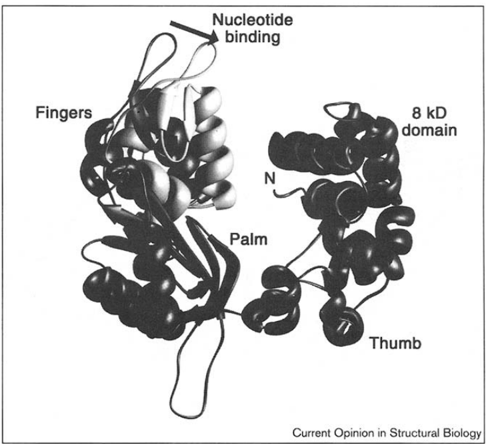
New levels in the understanding of DNA replication have been achieved from recent crystal structure determinations of several DNA polymerases and their substrate complexes. The structure of an alpha family DNA polymerase from bacteriophage RB69 shows some similarities, but also considerable differences in structure and organization from the pol I family DNA polymerases. Also, the functions of three polymerase domains and their conserved residues have been clarified by studying structures of pol I family DNA polymerases complexed to their substrates. These structures also confirm that an identical two-metal ion catalytic mechanism proposed previously is used by both the nonhomologous pol I and pol beta family DNA polymerases.
Overview
The claims and statistics of this paper haven’t been checked yet.
Free: it reads the open-access text and checks the first 5 claims that cite a source we can check. Create a free account to check every claim.
Integrity signals
Registry
Cites
Statistics
Figures
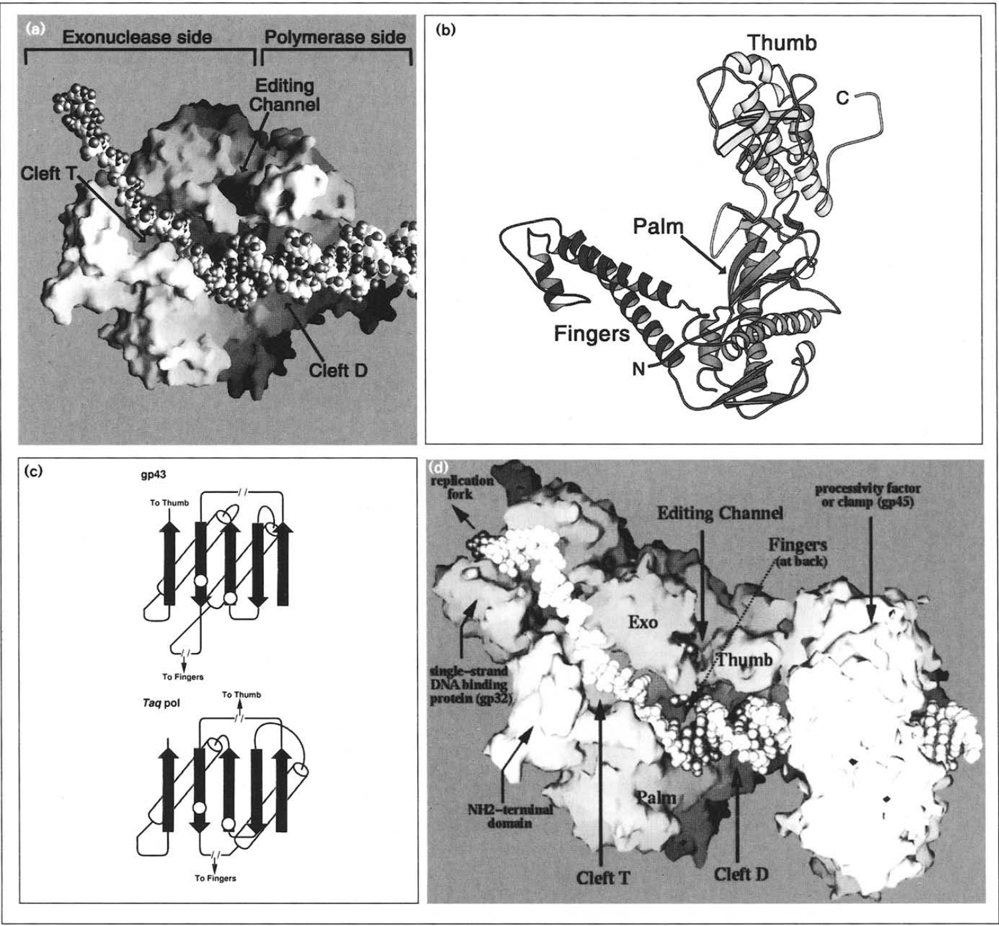
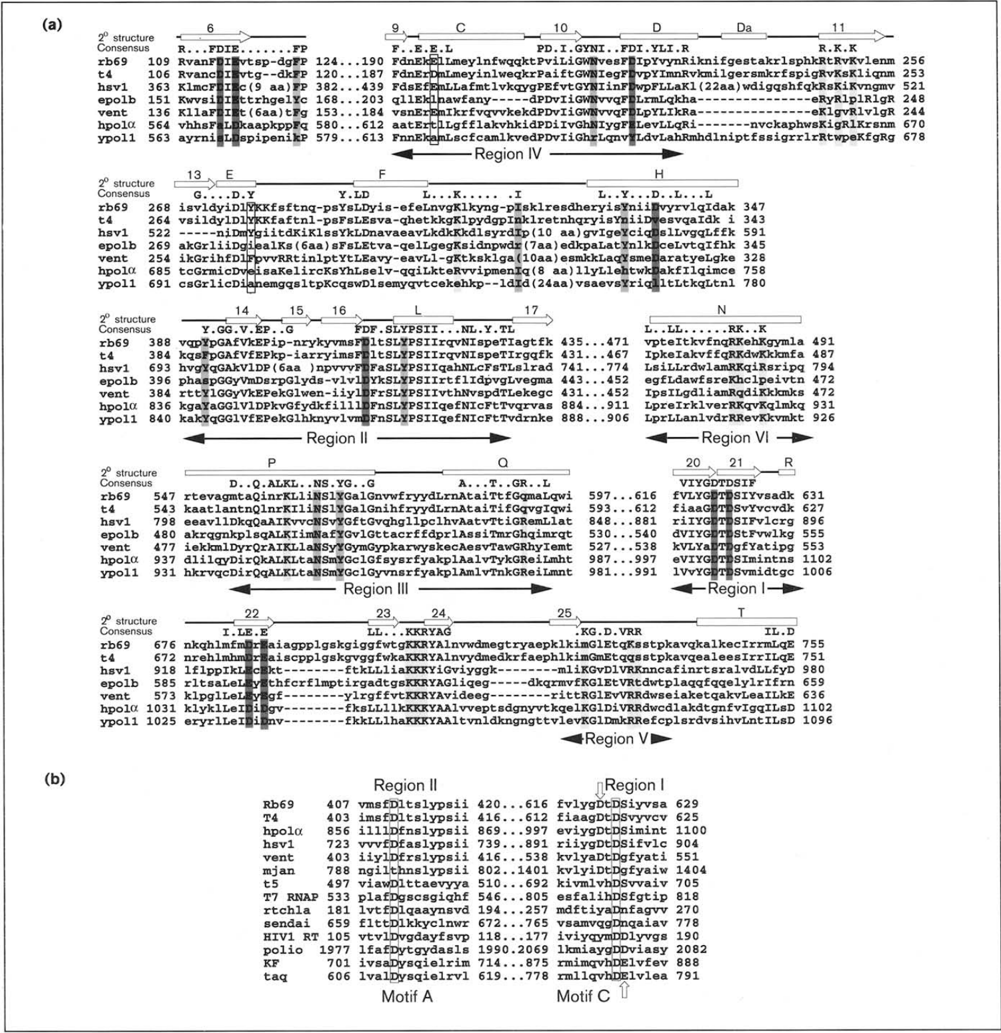
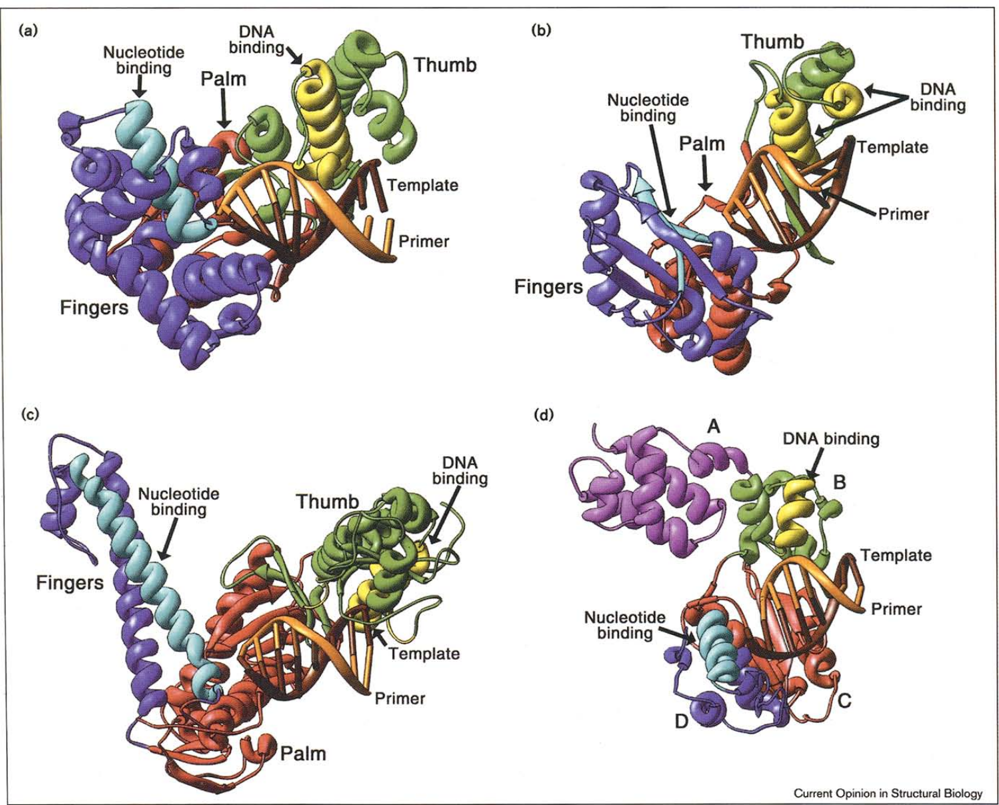
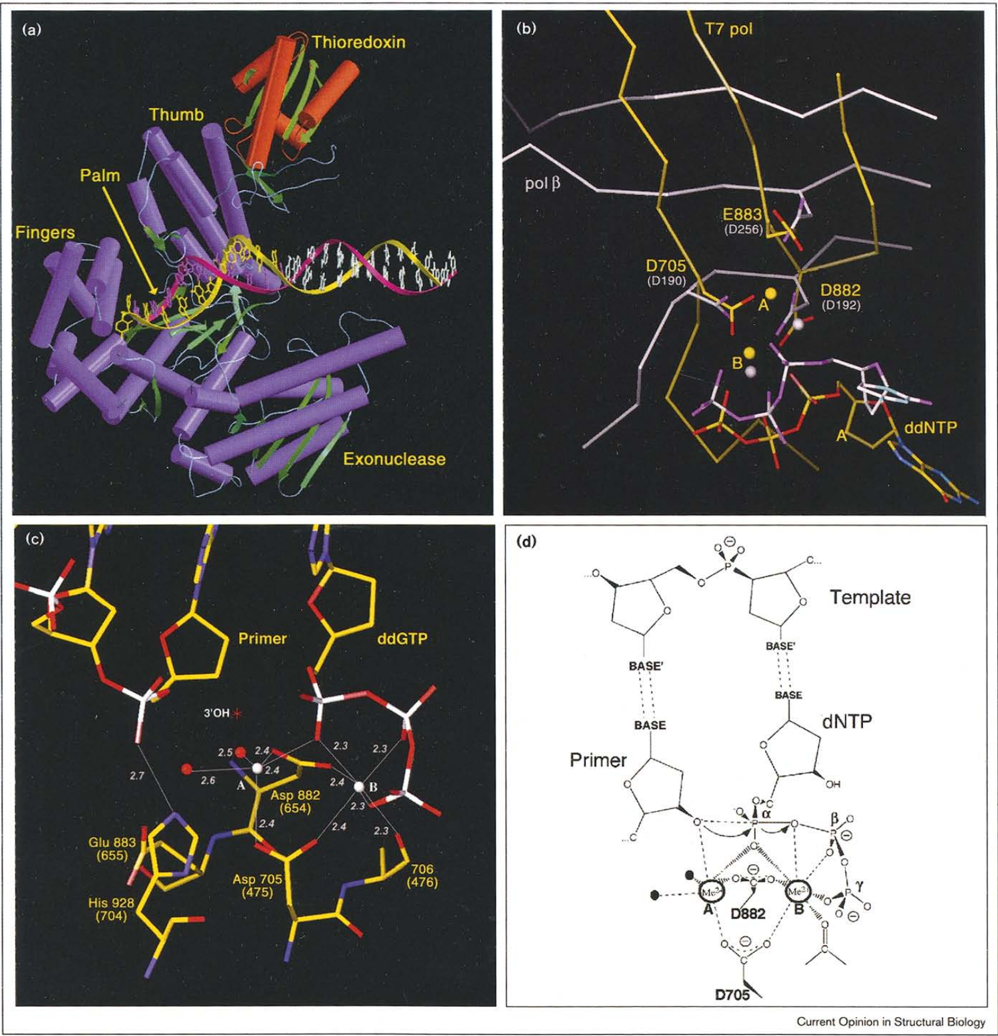
Verification
Claims the paper makes
The claims and statistics of this paper haven’t been checked yet.
Free: it reads the open-access text and checks the first 5 claims that cite a source we can check. Create a free account to check every claim.
Claims other papers make about this one
Each is checked against this paper’s own text: does it say what the citing paper says it does?
In the citing paper
“One interesting possibility comes from a consideration of the mechanism of ribozymes [57] and protein DNA polymerases [58], which act as phosphoryl transferases in part by binding and properly positioning metal ions so as to catalyze the desired reaction.”
From The eightfold path to non-enzymatic RNA replication (2012) · cites this paper as [58]
Self-check
Percentages, sums and reported differences re-computed from the paper’s own numbers.
The self-check needs the paper’s full text.
Citations
Cites
Crystal structure at 3.5 A resolution of HIV-1 reverse transcriptase complexed with an inhibitor
Kohlstaedt, L. A., Wang, J., Friedman, J. M., Rice, P. A., & Steitz, T. A. (1992) · Science · doi:10.1126/science.1377403 · Cited by 1,914
Self-citationCrystal structure of a bacteriophage T7 DNA replication complex at 2.2 Å resolution
Doublié, S., Tabor, S., Long, A. M., Richardson, C. C., & Ellenberger, T. (1998) · Nature · doi:10.1038/34593 · Cited by 1,175
Jacobo-Molina, A., Ding, J., Nanni, R. G., Clark, A. D., Lu, X., Tantillo, C., Williams, R. L., Kamer, G., Ferris, A. L., Clark, P., et al. (1993) · Proceedings of the National Academy of Sciences · doi:10.1073/pnas.90.13.6320 · Cited by 1,115
Beese, L. S., & Steitz, T. A. (1991) · The EMBO Journal · doi:10.1002/j.1460-2075.1991.tb07917.x · Cited by 1,048
Self-citationStructure of large fragment of Escherichia coli DNA polymerase I complexed with dTMP
Ollis, D. L., Brick, P., Hamlin, R., Xuong, N. G., & Steitz, T. A. (1985) · Nature · doi:10.1038/313762a0 · Cited by 848
Self-citationKong, X.-P., Onrust, R., O'Donnell, M., & Kuriyan, J. (1992) · Cell · doi:10.1016/0092-8674(92)90445-i · Cited by 753
STRUCTURES OF TERNARY COMPLEXES OF RAT DNA POLYMERASE BETA, A DNA TEMPLATE-PRIMER, AND DDCTP: 2bpf
Pelletier, H., Sawaya, M. R., Kumar, A., Wilson, S. H., & Kraut, J. (1994) · Worldwide Protein Data Bank · doi:10.2210/pdb2bpf/pdb · Cited by 692
An attempt to unify the structure of polymerases
Delarue, M., Poch, O., Tordo, N., Moras, D., & Argos, P. (1990) · "Protein Engineering, Design and Selection" · doi:10.1093/protein/3.6.461 · Cited by 637
Structures of Ternary Complexes of Rat DNA Polymerase β, a DNA Template-Primer, and ddCTP
Pelletier, H., Sawaya, M. R., Kumar, A., Wilson, S. H., & Kraut, J. (1994) · Science · doi:10.1126/science.7516580 · Cited by 598
Mechanism of Inhibition of HIV-1 Reverse Transcriptase by Nonnucleoside Inhibitors
Spence, R. A., Kati, W. M., Anderson, K. S., & Johnson, K. A. (1995) · Science · doi:10.1126/science.7532321 · Cited by 522
Cited by
Items 301–378 of 378
The Cenancestor and Its Contemporary Biological Relics: The Case of Nucleic Acid Polymerases
Delaye, L., Vázquez, H., & Lazcano, A. (2001) · Springer eBooks · doi:10.1007/978-94-010-1017-7_39 · Cited by 7
Blindauer, C. A., Sigel, A., Operschall, B. P., Griesser, R., Holý, A., & Sigel, H. (2015) · Polyhedron · doi:10.1016/j.poly.2015.02.022 · Cited by 6
The Role of Interface Domain Interactions on Thermal Stability of DNA polymerase I ITB-1
Nurbaiti, S., Hertadi, R., Martoprawiro, M. A., & Akhmaloka, A. (2009) · The Open Structural Biology Journal · doi:10.2174/1874199100903010016 · Cited by 6
“The palm is the most conserved region, contained two carboxylate residues that had important role on phosphoryl transfer reaction [7].”
BackgroundEmergent and Convergent Features in the Laboratory Evolution of Polymerase Ribozymes
Horning, D. P. (2025) · Biochemistry · doi:10.1021/acs.biochem.5c00160 · Cited by 5
Polymerase Switching in Response to DNA Damage
Ollivierre, J. N., Silva, M. C., Sefcikova, J., & Beuning, P. J. (2010) · Biological and medical physics series · doi:10.1007/978-0-387-92808-1_11 · Cited by 7
Nucleic Acid Polymerase Fidelity and Viral Population Fitness
Smidansky, E. D., Arnold, J. J., & Cameron, C. E. (2008) · Elsevier eBooks · doi:10.1016/b978-0-12-374153-0.00006-0 · Cited by 5
Docking and 3D-QSAR Studies on Some HCV NS5b Inhibitors
Moemen, Y. S. (2017) · Journal of Drug Design and Medicinal Chemistry · doi:10.11648/j.jddmc.20170304.11 · Cited by 5
“The palm region includes Palm pocket-I which consists of Phe193, Tyr195, Pro197, Arg200, Leu204, Ser228, Asn291, Leu314, Asn316, Gly317, Asp318, Val321, Leu360, Ile363, Ser365, Cys366, Ser368, Val370, Leu384, Asn411, Met414, Tyr415, Leu446, Ile447, Tyr448, Gly449, Tyr452, Trp550, Phe551, Ser556 residues [50-52].”
Atomic Structure of the Herpes Simplex Virus 1 DNA Polymerase
Liu, S., & Homa, F. L. (2009) · Springer eBooks · doi:10.1007/b135974_17 · Cited by 6
“of the incoming nucleotide (Steitz 1999, Brautigam and Steitz 1998 ).”
BackgroundInfluentialAssembly of heteropolymers via a network of reaction coordinates
Chiuchiú, D., Ferrare, J., & Simone Pigolotti, A. (2019) · Physical review. E · doi:10.1103/physreve.100.062502 · Cited by 5
DNA Polymerases That Perform Template-Independent DNA Synthesis
Berdis, A. J. (2013) · Nucleic acids and molecular biology · doi:10.1007/978-3-642-39796-7_5 · Cited by 5
Structure of the family B DNA polymerase from the hyperthermophilic archaeonPyrobaculum calidifontis
Guo, J., Zhang, W., Coker, A. R., Wood, S., Cooper, J. B., Ahmad, S., Ali, S. F., Rashid, N., & Akhtar, M. (2017) · Acta Crystallographica Section D Structural Biology · doi:10.1107/s2059798317004090 · Cited by 5
“The structures consist of five domains starting with the N-terminal domain followed by the 30–50 exonuclease domain and then three domains associated with the 50–30 DNA polymerase activity, which are known as the palm, fingers and thumb domains (Brautigam & Steitz, 1998).”
BackgroundRamadan, K., Maga, G., & Hübscher, U. (2006) · Springer eBooks · doi:10.1007/7050_005 · Cited by 5
Chiu, J., Tillett, D., & March, P. E. (2006) · Proteins Structure Function and Bioinformatics · doi:10.1002/prot.20992 · Cited by 5
Human DNA polymerase ε : expression, phosphorylation and protein-protein interactions
Tuusa, J. T. (2001) · Cited by 5
Joyce, C. M. (2013) · Elsevier eBooks · doi:10.1016/b978-0-12-378630-2.00306-6 · Cited by 5
Perrin, D. M. (2012) · Elsevier eBooks · doi:10.1016/b978-0-444-53349-4.00220-x · Cited by 4
Comparative Analysis of Family A DNA-Polymerases as a Searching Tool for Enzymes with New Properties
Bulygin, A. A., Кузнецова, А. А., Fedorova, O. S., & Kuznetsov, N. A. (2023) · Molecular Biology · doi:10.1134/s0026893323020048 · Cited by 4
“2 2023 made it possible to establish the reaction mechanism catalyzed by DNA polymerase, as well as to propose a “two metal ion mechanism” [21, 22, 28].”
BackgroundFerrer‐Orta, C., & Verdaguer, N. (2009) · Springer eBooks · doi:10.1007/b135974_18 · Cited by 5
“architecture provides the correct geometrical arrangement of substrate molecules and metal ions at the polymerase active site for catalysis ( Brautigam and Steitz, 1998 ).”
BackgroundA Comparative Analysis of Translesion DNA Synthesis Catalyzed by a High-Fidelity DNA Polymerase
Dasari, A. K. R., Deodhar, T. J., & Berdis, A. J. (2017) · Journal of Molecular Biology · doi:10.1016/j.jmb.2017.06.003 · Cited by 4
Modified Aminoglycosides Bind Nucleic Acids in High-Molecular-Weight Complexes
Ying, L., Zhu, H., Fosso, M. Y., Garneau‐Tsodikova, S., & Fredrick, K. (2020) · Antibiotics · doi:10.3390/antibiotics9020093 · Cited by 4
Blindauer, C. A., Sigel, A., Operschall, B. P., Holý, A., & Sigel, H. (2013) · Zeitschrift für anorganische und allgemeine Chemie · doi:10.1002/zaac.201300095 · Cited by 4
Pulsed Ultrasound Effect on DNA Polymerase Reaction Monitored on a QCM
Kawasaki, T., Toyoda, M., Hoshino, Y., & Okahata, Y. (2009) · Chemistry Letters · doi:10.1246/cl.2009.538 · Cited by 4
Structures of Complexes Formed by HIV-1 Reverse Transcriptase at a Termination Site of DNA Synthesis
Lavigne, M., Polomack, L., & BUC, H. C. (2001) · Journal of Biological Chemistry · doi:10.1074/jbc.m102976200 · Cited by 5
Pol γ possesses separate metal binding sites for polymerase and strand displacement functions
Baruch‐Torres, N., Park, J., Mora-Garduño, J. D., Roy, A., Singh, A., Cisneros, G. A., Brieba, L. G., Patel, S. S., & Yin, Y. W. (2026) · Nucleic Acids Research · doi:10.1093/nar/gkag720 · Cited by 3
“DNA polymerases capable of strand-displacement synthesis are found in both Pol A and Pol B families [ 74 , 75 ].”
Martín, M. J., & Blanco, L. (2013) · InTech eBooks · doi:10.5772/53908 · Cited by 3
“This reoriented α-phosphate moiety, together with Asp139, forms a second metal binding site (A) not present in the binary structure, which is required for the two metal catalytic mechanism common to all DNA polymerases [147].”
BackgroundLiao, C., & Nicklaus, M. C. (2011) · Wiley eBooks · doi:10.1002/9781118015377.ch28 · Cited by 3
(A)-tail of two polymerase structures.
Gershon, P. D. (2000) · Nature Structural Biology · doi:10.1038/79555 · Cited by 4
DNA ‐binding Enzymes: Structural Themes
Knopf, C. W., & Waldeck, W. (2001) · Wiley eBooks · doi:10.1038/npg.els.0002717 · Cited by 3
Editorial: Nucleic Acid Polymerases: The Two-Metal-Ion Mechanism and Beyond
Pata, J. D., Yin, Y. W., & Lahiri, I. (2022) · Frontiers in Molecular Biosciences · doi:10.3389/fmolb.2022.948326 · Cited by 3
“The two-metal-ion catalytic mechanism for polymerases was proposed in 1993 by Thomas A. Steitz (Steitz, 1993), based on structural studies of the 3′-5′ exonuclease active site of the Klenow fragment of E. coli DNA polymerase I (Beese and Steitz, 1991; Beese et al., 1993) and mutagenesis of the polymerase active site (…”
BackgroundMethodInfluentialBulygin, A. A., Кузнецова, А. А., Fedorova, O. S., & Kuznetsov, N. A. (2023) · Molecular Biology · doi:10.31857/s0026898423020040 · Cited by 2
DNA damage tolerance in mammalian cells
Andersen, P. L. (2009) · University Library - University of Saskatchewan (University of Saskatchewan) · Cited by 2
THE EFFECT OF MECHANICAL TENSION ON DNA POLYMERASE ACTIVITY STUDIED WITH A TWO-STATE MODEL
Shu, Y.-G., & Shi, H. (2007) · Modern Physics Letters B · doi:10.1142/s0217984907013468 · Cited by 2
The role of DNA polymerases, in particular DNA polymerase ε in DNA repair and replication
Pospiech, H. (2002) · Cited by 2
Chang, H., Su, K., Goodman, S. D., Chuang, Y.-C., Hsu, S.-J., Fang, Y.-K., Yu, H.-P., Fang, W.-H., Yang, Y., Chang, S., et al. (2025) · DNA repair · doi:10.1016/j.dnarep.2025.103864 · Cited by 1
DNA polymerase I: structure, activity, and function in bacterial DNA replication and repair
Lowder, F. C., & Simmons, L. A. (2026) · Critical Reviews in Biochemistry and Molecular Biology · doi:10.1080/10409238.2026.2682122 · Cited by 1
Chemical reactions catalyzed by DNA polymerases
Krayevsky, A. A. (2000) · Russian Journal of Bioorganic Chemistry · doi:10.1007/bf02758854 · Cited by 1
Kim, S., Castro, A., Kim, E. S., Dinkel, A., Liu, X., & Castro, M. (2016) · PLoS ONE · doi:10.1371/journal.pone.0147234 · Cited by 1
“The palm domain serves as a catalysis site of the phosphoryl transfer reaction, the finger domains serve as the interaction site with the incoming nucleoside triphosphate and the template bases to which it will be paired, and the thumb domain serves as the positioning site of the duplex DNA and plays a key role in the…”
BackgroundChemotherapeutic Intervention by Inhibiting DNA Polymerases
Berdis, A. J. (2011) · Elsevier eBooks · doi:10.1016/b978-0-12-384999-1.10005-8 · Cited by 3
Melaku, L. S. (2022) · International Journal of Clinical and Experimental Physiology · doi:10.5530/ijcep.2022.9.2.15 · Cited by 1
A conserved polar residue plays a critical role in mismatch detection in A-family DNA polymerases
Clement, P. C., Sapam, T. D., & Nair, D. T. (2024) · International Journal of Biological Macromolecules · doi:10.1016/j.ijbiomac.2024.131965 · Cited by 1
Doublié, S. (2004) · Structure · doi:10.1016/j.str.2004.09.002 · Cited by 1
Tuusa, J. T., & Oulu, B. (2001) · Cited by 1
Parasuram, R. (2014) · Digital Repository Service (Northeastern University) · doi:10.17760/d20005099 · Cited by 1
Richard, A. J. (2008) · Louisiana State University · doi:10.31390/gradschool_dissertations.65 · Cited by 1
Hingorani, M., & O’Donnell, M. E. (2014) · ASM Press eBooks · doi:10.1128/9781555817640.ch10 · Cited by 1
Joyce, C. M. (2004) · Elsevier eBooks · doi:10.1016/b0-12-443710-9/00037-5 · Cited by 1
Regulation of Mammalian Poly(A) Polymerase Activity
Thuresson, A. (2002) · Uppsala University Publications (Uppsala University) · Cited by 2
Single Molecule Studies of Nucleic Acid Enzymes
Hamdan, S. M., & van Oijen, A. M. (2009) · Elsevier eBooks · doi:10.1016/b978-0-12-374227-8.00006-7
Mutations of mitochondrial DNA polymerase gamma: an important cause of neurological disorders
Luoma, P. T. (2007) · Helda - University of Helsinki Institutional Repository · Cited by 1
Role of yeast DNA polymerase epsilon during DNA replication
Isoz, I. (2008) · DiVA at Umeå University (Umeå University)
Krumm, S. A. (2013) · OPUS Publication Server of the University of Stuttgart (University of Stuttgart) · doi:10.18419/opus-1449
Purcell, P. (2013) · Northumbria Research Link (Northumbria University)
Poly(A)-Specific Ribonuclease PARN
National Cancer Institute (2020) · Definitions · doi:10.32388/sl2rwx
Lindberg, J. (2004) · Uppsala University Publications (Uppsala University) · Cited by 1
Sharaf, M. L. (2011) · DukeSpace (Duke University)
Genetics of DNA replication and homologous recombination in arabidopsis
Schürmann, D. (2005) · edoc (University of Basel) · doi:10.5451/unibas-003646982
Docking Studies on Novel HCVNS5b Inhibitors
El‐Nahas, A. M., Moemen, Y. S., & Serry, A. E.-B. S. (2011) · Indian Journal Of Applied Research · doi:10.15373/2249555x/may2013/18
Nakamura, T. (2014) · Nihon Kessho Gakkaishi · doi:10.5940/jcrsj.56.123
Selection of Novel Eukaryotic DNA Polymerases by Mutagenesis and Genetic Complementation of Yeast
Venkatesan, R. N., & Loeb, L. A. (2003) · Humana Press eBooks · doi:10.1385/1-59259-396-8:19
DNA replication by Escherichia coli DNA polymerase III is regulated by the umuD gene products
Silva, M. C. (2013) · Digital Repository Service (Northeastern University) · doi:10.17760/d20003301
Investigating the role of UmuD in DNA polymerase regulation
Silva, M. C. (2009) · Digital Repository Service (Northeastern University) · doi:10.17760/d20000055
The dynamics of Y-family DNA polymerases and their accessory factors
Nevin, P. (2014) · Digital Repository Service (Northeastern University) · doi:10.17760/d20194084
Wowor, A. J. (2009) · Louisiana State University · doi:10.31390/gradschool_dissertations.179
“the tip of the “thumb” subdomain causes a 4 fold reduction in processivity (76).”
BackgroundMechanisms of E. coli DNA polymerase III and polymerase management by UmuD during DNA replication
Murison, D. A. (2017) · Digital Repository Service (Northeastern University) · doi:10.17760/d20248903
Unveiling the molecular basis of DNA–protein structure and function
Singh, A., Gulati, S., Shoaib, M., & Kukreti, S. (2021) · Elsevier eBooks · doi:10.1016/b978-0-12-821748-1.00008-7
Viral RNA-directed Polymerases: Structure and Function Relationships
Jäger, J., & Pata, J. D. (2005) · Kluwer Academic Publishers eBooks · doi:10.1007/0-306-47650-9_3
Friedberg, E. C., Walker, G. C., Siede, W., Wood, R. D., Schultz, R. A., & Ellenberger, T. E. (2014) · ASM Press eBooks · doi:10.1128/9781555816704.ch3
DNA Recognition/Processing | DNA Polymerase I, Bacterial
Joyce, C. M. (2013) · Elsevier eBooks · doi:10.1016/b978-0-12-819460-7.00548-x
Hingorani, M. (2001) · Elsevier eBooks · doi:10.1006/rwgn.2001.1010
DNA replication machineries: Structural insights from crystallography and electron microscopy
Bocanegra, R., Ortiz-Rodríguez, M., Zumeta, L., Plaza-G.A., I., Faro, E., & Ibarra, B. (2023) · The Enzymes · doi:10.1016/bs.enz.2023.07.004
Structural basis of multitasking by the apicoplast DNA polymerase from Plasmodium falciparum
Kumari, A., Enache, T., Craggs, T. D., Pata, J. D., & Lahiri, I. (2025) · Nucleic Acids Research · doi:10.1093/nar/gkaf1005
Ralec, C. (2013) · theses.fr (ABES) · doi:10.70675/01e57760z492bz425dzb994zbbefee37b7a9 · Cited by 1
Caramia, S. (2017) · AMS Degree Thesis (University of Bologna)
Rôle du canal TRPM7 dans la prolifération des cellules stellaires pancréatiques humaines activées
Lefebvre, T. (2019) · theses.fr (ABES) · doi:10.70675/674ea5daza64cz4b92z8e11zdbf9b854c481
Mussakhmetov, A., & Khassenov, B. (2026) · International Journal of Molecular Sciences · doi:10.3390/ijms27167188
“This domain contains conserved carboxylate groups that are clustered within the active site and plays an important role in catalysis by coordinating catalytic metal ions via a two-metal ion mechanism [92,100].”
InfluentialMODULATION OF HIV-1 REVERSE TRANSCRIPTASE AND FAMILY A DNA POLYMERASE PRIMER-TEMPLATE BINDING
Fenstermacher, K. (2014) · University Libraries (University of Maryland) · doi:10.13016/m25880
Metadata
- Authors
- Brautigam, C. A., & Steitz, T. A.
- Affiliations
- Yale University (US)
- Howard Hughes Medical Institute (US)
- Venue
- Current Opinion in Structural Biology
- Publisher
- Elsevier BV
- Published
- 1998-02
- Volume
- 8
- Issue
- 1
- Pages
- 54-63
- ISSN
- 0959-440X (ISSN-L)
- OpenAlex
- W1968034613
- Semantic Scholar
- a76d3b8e59a8c020491eccd6ae7a8e0c0608e0c8
- Cited by
- 377
- References
- 50
- Citations by year
- 2026: 4 · 2025: 4 · 2024: 5 · 2023: 6 · 2022: 8 · 2021: 5 · 2020: 11 · 2019: 3 · 2018: 6 · 2017: 10 · 2016: 5 · 2015: 7 · 2014: 16 · 2013: 15 · 2012: 12
- FWCI
- 3.59
- Type
- journal article
- Language
- en
- Open access
- hybrid
- doi.org
- Licence
- cc-by-nc-nd
- www.elsevier.com/tdm/userlicense/1.0/ (tdm)
- www.elsevier.com/legal/tdmrep-license (tdm)
- creativecommons.org/licenses/by-nc-nd/4.0/ (vor, 1471 d)
- Locations
- Current Opinion in Structural Biology (publishedVersion, cc-by-nc-nd)
- PubMed (publishedVersion)
- Funders
- American Cancer Society
- Topics
- Life Sciences › Biochemistry, Genetics and Molecular Biology › Structural Biology › Enzyme Structure and Function
- Life Sciences › Biochemistry, Genetics and Molecular Biology › Molecular Biology › Protein Structure and Dynamics
- Life Sciences › Biochemistry, Genetics and Molecular Biology › Molecular Biology › DNA Repair Mechanisms
- Keywords
- DNA polymerase, DNA replication, polymerase domain, conserved residues, crystal structure
- MeSH terms
- Amino Acid Sequence, Crystallization, DNA, DNA-Directed DNA Polymerase, Models, Molecular, Molecular Sequence Data, Nucleic Acid Conformation, Protein Conformation, Structure-Activity Relationship, Substrate Specificity, Sequence Alignment, Crystallography, X-Ray
About these checks
Registry, retraction, Cites and statistics results are computed, not judged, with one exception: a printed reference that no index lists is read once by a model before it counts as a citation error. Claims are extracted by a model and kept only when their quote appears verbatim in the text; each cited source is then checked, with a model’s help, for whether it says what the claim relies on. Those verdicts can be wrong — read the claim’s quote and the cited source before relying on one.
Statistics and arithmetic are recomputed, not judged.
Confidence bands are shown only for fields calibrated on our annotated test set. None is calibrated yet, so no band is shown.
What counts as a claim ›How we measure confidence ›How we check this ›
Are you an author, or do you see a problem with this page? Request a review
Data sources
Bibliographic data: Semantic Scholar, OpenAlex, Crossref.
Contains information from the Semantic Scholar Academic Graph Datasets, made available under the ODC Attribution License (ODC-BY 1.0).
Semantic Scholar’s data is described in: Kinney, R., et al. (2023). The Semantic Scholar Open Data Platform. arXiv:2301.10140.
