

Structural and functional insights provided by crystal structures of DNA polymerases and their substrate complexes
Open accessThe DOI matches its Crossref record; 50 of the 50 references it cites were found in a registry or an index.
Abstract
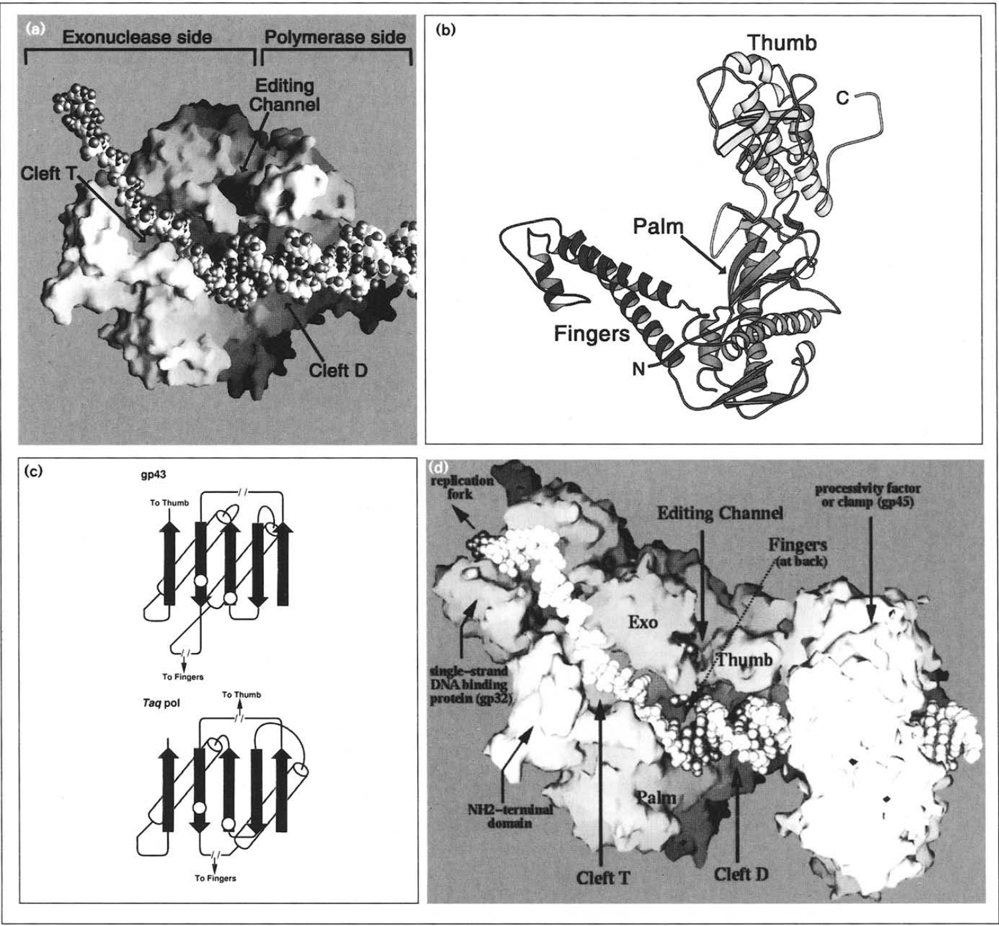
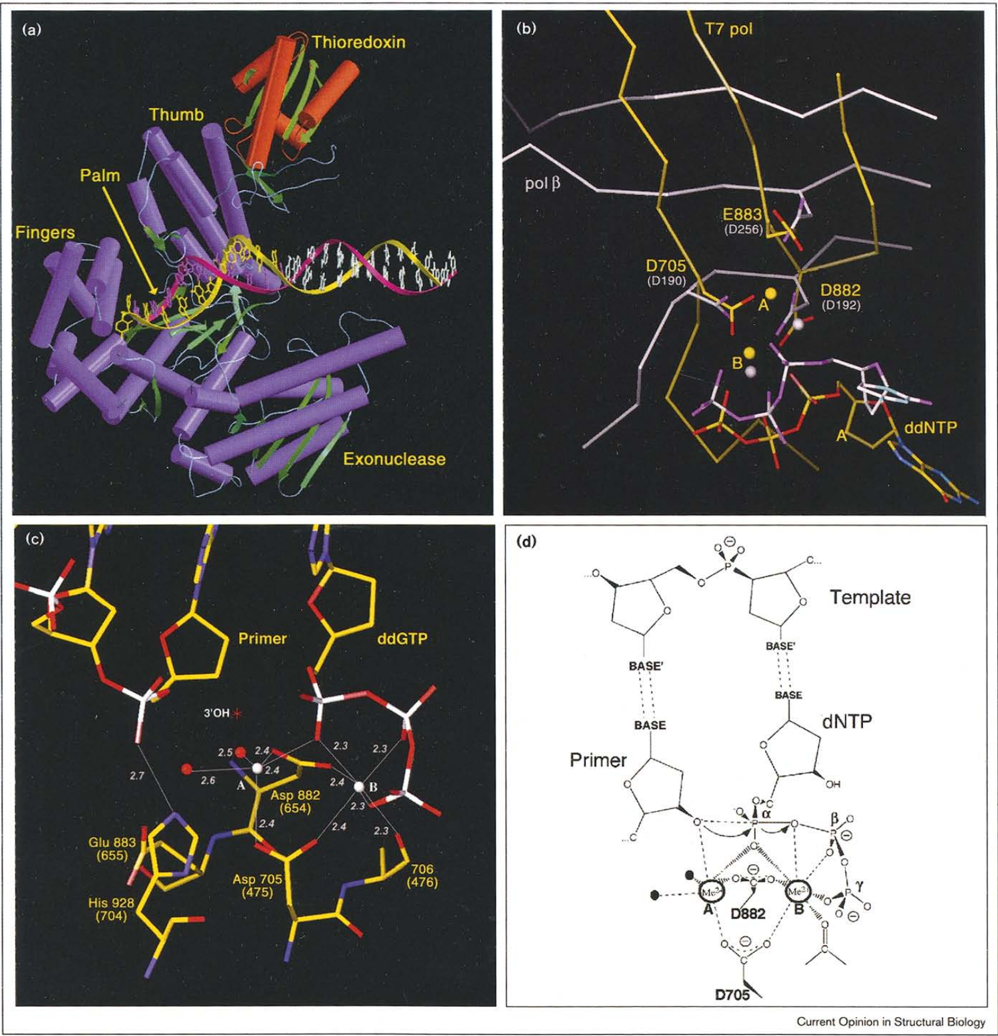
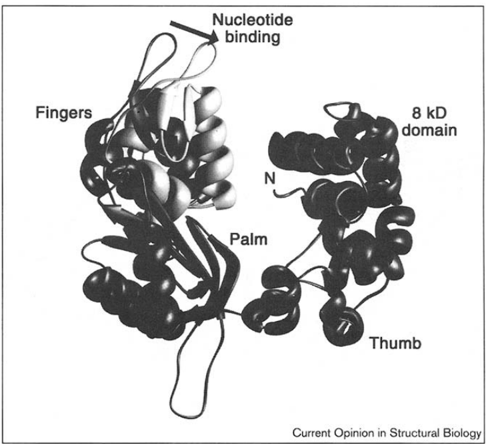
New levels in the understanding of DNA replication have been achieved from recent crystal structure determinations of several DNA polymerases and their substrate complexes. The structure of an alpha family DNA polymerase from bacteriophage RB69 shows some similarities, but also considerable differences in structure and organization from the pol I family DNA polymerases. Also, the functions of three polymerase domains and their conserved residues have been clarified by studying structures of pol I family DNA polymerases complexed to their substrates. These structures also confirm that an identical two-metal ion catalytic mechanism proposed previously is used by both the nonhomologous pol I and pol beta family DNA polymerases.
Overview
The claims and statistics of this paper haven’t been checked yet.
Free: it reads the open-access text and checks the first 5 claims that cite a source we can check. Create a free account to check every claim.
Integrity signals
Registry
Cites
Statistics
Figures
Verification
Claims the paper makes
The claims and statistics of this paper haven’t been checked yet.
Free: it reads the open-access text and checks the first 5 claims that cite a source we can check. Create a free account to check every claim.
Claims other papers make about this one
Each is checked against this paper’s own text: does it say what the citing paper says it does?
In the citing paper
“One interesting possibility comes from a consideration of the mechanism of ribozymes [57] and protein DNA polymerases [58], which act as phosphoryl transferases in part by binding and properly positioning metal ions so as to catalyze the desired reaction.”
From The eightfold path to non-enzymatic RNA replication (2012) · cites this paper as [58]
Self-check
Percentages, sums and reported differences re-computed from the paper’s own numbers.
The self-check needs the paper’s full text.
Citations
Cites
Crystal structure at 3.5 A resolution of HIV-1 reverse transcriptase complexed with an inhibitor
Kohlstaedt, L. A., Wang, J., Friedman, J. M., Rice, P. A., & Steitz, T. A. (1992) · Science · doi:10.1126/science.1377403 · Cited by 1,914
Self-citationCrystal structure of a bacteriophage T7 DNA replication complex at 2.2 Å resolution
Doublié, S., Tabor, S., Long, A. M., Richardson, C. C., & Ellenberger, T. (1998) · Nature · doi:10.1038/34593 · Cited by 1,175
Jacobo-Molina, A., Ding, J., Nanni, R. G., Clark, A. D., Lu, X., Tantillo, C., Williams, R. L., Kamer, G., Ferris, A. L., Clark, P., et al. (1993) · Proceedings of the National Academy of Sciences · doi:10.1073/pnas.90.13.6320 · Cited by 1,115
Beese, L. S., & Steitz, T. A. (1991) · The EMBO Journal · doi:10.1002/j.1460-2075.1991.tb07917.x · Cited by 1,048
Self-citationStructure of large fragment of Escherichia coli DNA polymerase I complexed with dTMP
Ollis, D. L., Brick, P., Hamlin, R., Xuong, N. G., & Steitz, T. A. (1985) · Nature · doi:10.1038/313762a0 · Cited by 848
Self-citationKong, X.-P., Onrust, R., O'Donnell, M., & Kuriyan, J. (1992) · Cell · doi:10.1016/0092-8674(92)90445-i · Cited by 753
STRUCTURES OF TERNARY COMPLEXES OF RAT DNA POLYMERASE BETA, A DNA TEMPLATE-PRIMER, AND DDCTP: 2bpf
Pelletier, H., Sawaya, M. R., Kumar, A., Wilson, S. H., & Kraut, J. (1994) · Worldwide Protein Data Bank · doi:10.2210/pdb2bpf/pdb · Cited by 692
An attempt to unify the structure of polymerases
Delarue, M., Poch, O., Tordo, N., Moras, D., & Argos, P. (1990) · "Protein Engineering, Design and Selection" · doi:10.1093/protein/3.6.461 · Cited by 637
Structures of Ternary Complexes of Rat DNA Polymerase β, a DNA Template-Primer, and ddCTP
Pelletier, H., Sawaya, M. R., Kumar, A., Wilson, S. H., & Kraut, J. (1994) · Science · doi:10.1126/science.7516580 · Cited by 598
Mechanism of Inhibition of HIV-1 Reverse Transcriptase by Nonnucleoside Inhibitors
Spence, R. A., Kati, W. M., Anderson, K. S., & Johnson, K. A. (1995) · Science · doi:10.1126/science.7532321 · Cited by 522
Cited by
Magnesium in man: implications for health and disease
de Baaij, J. H. F., Hoenderop, J. G. J., & Bindels, R. J. M. (2015) · Physiological Reviews · doi:10.1152/physrev.00012.2014 · Cited by 1,726
Huang, H., Chopra, R., Verdine, G. L., & Harrison, S. C. (1998) · Science · doi:10.1126/science.282.5394.1669 · Cited by 1,420
DNA Polymerases: Structural Diversity and Common Mechanisms
Steitz, T. A. (1999) · Journal of Biological Chemistry · doi:10.1074/jbc.274.25.17395 · Cited by 848
“different in the structures from all families (16).”
BackgroundSelf-citationCrystal structure of a bacterial RNA polymerase holoenzyme at 2.6 Å resolution
Vassylyev, D. G., Sekine, S.-I., Laptenko, O., Lee, J., Vassylyeva, M. N., Borukhov, S., & Yokoyama, S. (2002) · Nature · doi:10.1038/nature752 · Cited by 743
Hübscher, U., Maga, G., & Spadari, S. (2002) · Annual Review of Biochemistry · doi:10.1146/annurev.biochem.71.090501.150041 · Cited by 691
Li, Y. (1998) · The EMBO Journal · doi:10.1093/emboj/17.24.7514 · Cited by 688
“The mechanism of DNA polymerization by DNA pol I enzymes has been the subject of extensive biochemical and structural studies (Johnson, 1993; Joyce and Steitz, 1994; Brautigam and Steitz, 1998).”
BackgroundCrystal structure of the RNA-dependent RNA polymerase of hepatitis C virus
Bressanelli, S., Tomei, L., Roussel, A., Incitti, I., Vitale, R. L., Mathieu, M., De Francesco, R., & Rey, F. A. (1999) · Proceedings of the National Academy of Sciences · doi:10.1073/pnas.96.23.13034 · Cited by 586
Fiorentini, D., Cappadone, C., Farruggia, G., & Prata, C. (2021) · Nutrients · doi:10.3390/nu13041136 · Cited by 559
“Mg2+ availability is a critical issue for carbohydrate metabolism, which may explain its role in diabetes mellitus type 2 [40]; − Mg2+ is necessary for the correct structure and activity of DNA and RNA polymerases [41,42].”
BackgroundStructure of the Replicating Complex of a Pol α Family DNA Polymerase
Franklin, M. C., Wang, J., & Steitz, T. A. (2001) · Cell · doi:10.1016/s0092-8674(01)00367-1 · Cited by 538
Self-citationPolymeric materials based on silk proteins
Hardy, J. G., Römer, L. M., & Scheibel, T. R. (2008) · Polymer · doi:10.1016/j.polymer.2008.08.006 · Cited by 506
Directed evolution of polymerase function by compartmentalized self-replication
Ghadessy, F. J., Ong, J. L., & Holliger, P. (2001) · Proceedings of the National Academy of Sciences · doi:10.1073/pnas.071052198 · Cited by 396
Structure of a Transcribing T7 RNA Polymerase Initiation Complex
Cheetham, G. M. T., & Steitz, A. T. A. (1999) · Science · doi:10.1126/science.286.5448.2305 · Cited by 367
Building a Replisome from Interacting Pieces
Shamoo, Y., & Steitz, T. A. (1999) · Cell · doi:10.1016/s0092-8674(00)81647-5 · Cited by 363
Self-citationThe eightfold path to non-enzymatic RNA replication
Szostak, J. W. (2012) · Journal of Systems Chemistry · doi:10.1186/1759-2208-3-2 · Cited by 359
“How could RNA replication be induced to proceed in the presence of much lower concentrations of Mg or other divalent metal ions? One interesting possibility comes from a consideration of the mechanism of ribozymes [57] and protein DNA polymerases [58], which act as phosphoryl transferases in part by binding and proper…”
BackgroundStructural Basis for the Transition from Initiation to Elongation Transcription in T7 RNA Polymerase
Yin, Y. W., & Steitz, T. A. (2002) · Science · doi:10.1126/science.1077464 · Cited by 352
Self-citationActive Site Tightness and Substrate Fit in DNA Replication
Kool, E. T. (2002) · Annual Review of Biochemistry · doi:10.1146/annurev.biochem.71.110601.135453 · Cited by 350
Structures of Mismatch Replication Errors Observed in a DNA Polymerase
Johnson, S. J., & Beese, L. S. (2004) · Cell · doi:10.1016/s0092-8674(04)00252-1 · Cited by 300
Johnson, S. J., Taylor, J. S., & Beese, L. S. (2003) · Proceedings of the National Academy of Sciences · doi:10.1073/pnas.0630532100 · Cited by 290
Structural evidence for the rare tautomer hypothesis of spontaneous mutagenesis
Wang, W., Hellinga, H. W., & Beese, L. S. (2011) · Proceedings of the National Academy of Sciences · doi:10.1073/pnas.1114496108 · Cited by 263
Terminal deoxynucleotidyl transferase: The story of a misguided DNA polymerase
Motea, E. A., & Berdis, A. J. (2010) · Biochimica et Biophysica Acta (BBA) - Proteins and Proteomics · doi:10.1016/j.bbapap.2009.06.030 · Cited by 245
Sigel, H., & Griesser, R. (2005) · Chemical Society Reviews · doi:10.1039/b505986k · Cited by 231
A comparison of viral RNA-dependent RNA polymerases
FERRERORTA, C., ARIAS, A., ESCARMIS, C., & VERDAGUER, N. (2006) · Current Opinion in Structural Biology · doi:10.1016/j.sbi.2005.12.002 · Cited by 228
Ferrer-Orta, C., Arias, A., Perez-Luque, R., Escarmís, C., Domingo, E., & Verdaguer, N. (2004) · Journal of Biological Chemistry · doi:10.1074/jbc.m405465200 · Cited by 222
Transposition of hAT elements links transposable elements and V(D)J recombination
Zhou, L., Mitra, R., Atkinson, P. W., Burgess Hickman, A., Dyda, F., & Craig, N. L. (2004) · Nature · doi:10.1038/nature03157 · Cited by 224
“4 ) probably reflects the fact that each metal binding site has a slightly different role in recombinatio”
BackgroundMass spectrometry in bioinorganic analytical chemistry
Łobiński, R., Schaumlöffel, D., & Szpunar, J. (2006) · Mass Spectrometry Reviews · doi:10.1002/mas.20069 · Cited by 212
Bacterial RNase P: a new view of an ancient enzyme
Kazantsev, A. V., & Pace, N. R. (2006) · Nature Reviews Microbiology · doi:10.1038/nrmicro1491 · Cited by 204
Structural basis for the dual coding potential of 8‐oxoguanosine by a high‐fidelity DNA polymerase
Brieba, L. G., Eichman, B. F., Kokoska, R. J., Doublié, S., Kunkel, T. A., & Ellenberger, T. (2004) · The EMBO Journal · doi:10.1038/sj.emboj.7600354 · Cited by 209
“(Brautigam and Steitz, 1998) where conserved residues interact with the universal hydrogen bond acceptors (Seeman et al, 1976) in the minor groove of the bound DNA.”
BackgroundCrystal structure of a thermostable type B DNA polymerase from Thermococcus gorgonarius
Hopfner, K.-P., Eichinger, A., Engh, R. A., Laue, F., Ankenbauer, W., Huber, R., & Angerer, B. (1999) · Proceedings of the National Academy of Sciences · doi:10.1073/pnas.96.7.3600 · Cited by 208
Biebricher, C. K., & Eigen, M. (2005) · Virus Research · doi:10.1016/j.virusres.2004.11.002 · Cited by 196
The X family portrait: Structural insights into biological functions of X family polymerases
Moon, A. F., Garcia-Diaz, M., Batra, V. K., Beard, W. A., Bebenek, K., Kunkel, T. A., Wilson, S. H., & Pedersen, L. C. (2007) · DNA Repair · doi:10.1016/j.dnarep.2007.05.009 · Cited by 184
“Creation of the transition tate species leads to inversion of the -phosphate stereohemistry [36,37], and release of the pyrophosphate leaving roup with its associated nucleotide-binding metal [17,35,38].”
BackgroundThe mechanism of action of T7 DNA polymerase
Doublié, S., & Ellenberger, T. (1998) · Current Opinion in Structural Biology · doi:10.1016/s0959-440x(98)80089-4 · Cited by 193
Patel, P. H., Suzuki, M., Adman, E., Shinkai, A., & Loeb, L. A. (2001) · Journal of Molecular Biology · doi:10.1006/jmbi.2001.4619 · Cited by 185
“The interaction of metal A with the a-phosphate is thought to enhance the electropositive character of the phosphorous atom; in addition, metal A interaction with primer 30-OH is thought to facilitate deprotonation of the 30-OH group ( Brautigam & Steitz, 1998 ).”
BackgroundDNA Polymerase λ, a Novel DNA Repair Enzyme in Human Cells
Garcı́a-Dı́az, M., Bebenek, K., Sabariegos, R., Domı́nguez, O., Rodrı́guez, J., Kirchhoff, T., Garcı́a-Palomero, E., Picher, A. J., Juárez, R., Ruiz, J. F., et al. (2002) · Journal of Biological Chemistry · doi:10.1074/jbc.m111601200 · Cited by 184
Inhibition of Hepatitis B Virus Polymerase by Entecavir
Langley, D. R., Walsh, A. W., Baldick, C. J., Eggers, B. J., Rose, R. E., Levine, S. M., Kapur, A. J., Colonno, R. J., & Tenney, D. J. (2007) · Journal of Virology · doi:10.1128/jvi.02395-06 · Cited by 184
“This distortion away from an idealized reaction path may reduce the efficiency of addition, but the distance and angle of attack remain within the reactive geometry for the SN2 reaction to occur (7, 24).”
BackgroundDiscovery and significance of protein-protein interactions in health and disease
Greenblatt, J. F., Alberts, B. M., & Krogan, N. J. (2024) · Cell · doi:10.1016/j.cell.2024.10.038 · Cited by 156
Structure Activity of 3-Aryl-1,3-diketo-Containing Compounds as HIV-1 Integrase Inhibitors
Pais, G. C. G., Zhang, X., Marchand, C., Neamati, N., Cowansage, K., Svarovskaia, E. S., Pathak, V. K., Tang, Y., Nicklaus, M., Pommier, Y., et al. (2002) · Journal of Medicinal Chemistry · doi:10.1021/jm020037p · Cited by 180
Arnold, J. J., & Cameron, C. E. (2004) · Biochemistry · doi:10.1021/bi035212y · Cited by 178
Structure of T7 RNA polymerase complexed to the transcriptional inhibitor T7 lysozyme
Jeruzalmi, D., & Steitz, T. A. (1998) · The EMBO Journal · doi:10.1093/emboj/17.14.4101 · Cited by 178
“Located within the palm sub-domain is a trio of β-strands whose structure is conserved in every nucleic acid polymerase except DNA polymerase β (Steitz et al., 1994; Brautigam and Steitz, 1998).”
BackgroundMethodInfluentialSelf-citationCrystal Structure of the Catalytic α Subunit of E. coli Replicative DNA Polymerase III
Lamers, M. H., Georgescu, R. E., Lee, S.-G., O'Donnell, M., & Kuriyan, J. (2006) · Cell · doi:10.1016/j.cell.2006.07.028 · Cited by 168
Castro, C. D., Smidansky, E. D., Maksimchuk, K. R., Arnold, J. J., Korneeva, V. S., Götte, M., Konigsberg, W. H., & Cameron, C. E. (2007) · Proceedings of the National Academy of Sciences · doi:10.1073/pnas.0608952104 · Cited by 172
Mechanisms of Retroviral Recombination
Negroni, M., & BUC, H. C. (2001) · Annual Review of Genetics · doi:10.1146/annurev.genet.35.102401.090551 · Cited by 169
Insights into transcription: structure and function of single-subunit DNA-dependent RNA polymerases
Cheetham, G. M. T., & Steitz, T. A. (2000) · Current Opinion in Structural Biology · doi:10.1016/s0959-440x(99)00058-5 · Cited by 160
Self-citationA closed conformation for the Pol λ catalytic cycle
García–Díaz, M., Bębenek, K., Krahn, J. M., Kunkel, T. A., & Pedersen, L. C. (2004) · Nature Structural & Molecular Biology · doi:10.1038/nsmb876 · Cited by 142
Crystallographic snapshots of a replicative DNA polymerase encountering an abasic site
Hogg, M., Wallace, S. S., & Doublié, S. (2004) · The EMBO Journal · doi:10.1038/sj.emboj.7600150 · Cited by 154
“…DNA, the palm contains the conserved carboxylate residues involved in catalysis of the nucleotidyl transfer reaction (Delarue et al, 1990), and conserved resi- dues in the fingers domain bind the incoming nucleotide (Brautigam and Steitz, 1998; Kunkel and Bebenek, 2000; Beard and Wilson, 2003).”
BackgroundVaisman, A., Lim, S. E., Patrick, S. M., Copeland, W. C., Hinkle, D. C., Turchi, J. J., & Chaney, S. G. (1999) · Biochemistry · doi:10.1021/bi9909187 · Cited by 137
Rodriguez, A. C., Park, H.-W., Mao, C., & Beese, L. S. (2000) · Journal of Molecular Biology · doi:10.1006/jmbi.2000.3728 · Cited by 154
Calcium‐independent calmodulin binding and two‐metal–ion catalytic mechanism of anthrax edema factor
Shen, Y., Zhukovskaya, N. L., Guo, Q., Florián, J., & Tang, W. (2005) · The EMBO Journal · doi:10.1038/sj.emboj.7600574 · Cited by 139
“Interestingly, pol I and pol b in DNA polymerase families have quite different structural architectures, but they share the same two-metal–ion catalytic mechanism (Pelletier et al, 1996; Kiefer et al, 1997; Brautigam and Steitz, 1998).”
BackgroundLi, F., Xiong, Y., Wang, J., Cho, H. D., Tomita, K., Weiner, A. M., & Steitz, T. A. (2002) · Cell · doi:10.1016/s0092-8674(02)01115-7 · Cited by 145
“This purine-specific base stacking provided by Asp112 maynucleotide polymerases (Brautigam and Steitz, 1998).”
BackgroundSelf-citationMinnick, D. T., Bebenek, K., Osheroff, W. P., Turner, R. M., Astatke, M., Liu, L., Kunkel, T. A., & Joyce, C. M. (1999) · Journal of Biological Chemistry · doi:10.1074/jbc.274.5.3067 · Cited by 129
Low-fidelity Pyrococcus furiosus DNA polymerase mutants useful in error-prone PCR
Biles, B. D., & Connolly, B. A. (2004) · Nucleic Acids Research · doi:10.1093/nar/gnh174 · Cited by 125
Purohit, V., Grindley, N. D. F., & Joyce, C. M. (2003) · Biochemistry · doi:10.1021/bi0341206 · Cited by 121
Envisioning the molecular choreography of DNA base excision repair
Parikh, S. S., Mol, C. D., Hosfield, D. J., & Tainer, J. A. (1999) · Current Opinion in Structural Biology · doi:10.1016/s0959-440x(99)80006-2 · Cited by 131
Structure of Yeast Poly(A) Polymerase Alone and in Complex with 3'-dATP
Bard, J., Zhelkovsky, A. M., Helmling, S., Earnest, T. N., Moore, C. L., & Bohm, A. (2000) · Science · doi:10.1126/science.289.5483.1346 · Cited by 117
Modular Architecture of the Bacteriophage T7 Primase Couples RNA Primer Synthesis to DNA Synthesis
Kato, M., Ito, T., Wagner, G., Richardson, C. C., & Ellenberger, T. (2003) · Molecular Cell · doi:10.1016/s1097-2765(03)00195-3 · Cited by 119
Molecular dissection of the domain architecture and catalytic activities of human PrimPol
Keen, B. A., Jóźwiakowski, S. K., Bailey, L. J., Bianchi, J., & Doherty, A. J. (2014) · Nucleic Acids Research · doi:10.1093/nar/gku214 · Cited by 120
“The predicted structure of PrimPol, in addition to the known structures of primases, suggests that this polymerase lacks structural elements corresponding to the ‘thumb’ domain that is present in the replicative polymerases that is implicated in processivity (39).”
BackgroundCovalent Trapping of Protein-DNA Complexes
Verdine, G. L., & Norman, D. P. G. (2003) · Annual Review of Biochemistry · doi:10.1146/annurev.biochem.72.121801.161447 · Cited by 114
Structural basis for template-independent RNA polymerization
Tomita, K., Fukai, S., Ishitani, R., Ueda, T., Takeuchi, N., Vassylyev, D. G., & Nureki, O. (2004) · Nature · doi:10.1038/nature02712 · Cited by 118
“This domain comprises antiparallel β-sheets containing the three conserved catalytic carboxylates that are thought to be essential for catalytic activity and for coordinating the Mg 2p io”
BackgroundStructure of Saccharomyces cerevisiae DNA polymerase epsilon by cryo–electron microscopy
Asturias, F. J., Cheung, I. K., Sabouri, N., Chilkova, O., Wepplo, D., & Johansson, E. (2005) · Nature Structural & Molecular Biology · doi:10.1038/nsmb1040 · Cited by 104
“X-ray crystallographic studies suggest that all DNA polymerases might share a two–metal ion polymerization mechanis”
BackgroundFan, W., & Wu, X. (2004) · Biochemical and Biophysical Research Communications · doi:10.1016/j.bbrc.2004.09.002 · Cited by 118
Energy analysis of chemistry for correct insertion by DNA polymerase β
Lin, P., Pedersen, L. C., Batra, V. K., Beard, W. A., Wilson, S. H., & Pedersen, L. G. (2006) · Proceedings of the National Academy of Sciences · doi:10.1073/pnas.0606006103 · Cited by 94
Crystal structure of an archaebacterial DNA polymerase
Zhao, Y., Jeruzalmi, D., Moarefi, I., Leighton, L., Lasken, R. S., & Kuriyan, J. (1999) · Structure · doi:10.1016/s0969-2126(00)80053-2 · Cited by 101
Variations on a theme: Eukaryotic Y-family DNA polymerases
Washington, M. T., Carlson, K. D., Freudenthal, B., & Pryor, J. M. (2009) · Biochimica et Biophysica Acta (BBA) - Proteins and Proteomics · doi:10.1016/j.bbapap.2009.07.004 · Cited by 103
Structures, mechanism, regulation and evolution of class III nucleotidyl cyclases
Sinha, S. C., & Sprang, S. R. (2006) · Springer eBooks · doi:10.1007/112_0603 · Cited by 107
Engineering polymerases for applications in synthetic biology
Nikoomanzar, A., Chim, N., Yik, E. J., & Chaput, J. C. (2020) · Quarterly Reviews of Biophysics · doi:10.1017/s0033583520000050 · Cited by 91
“The fingers are responsible for recognizing the incoming nucleoside triphosphate, while the thumb positions the DNA primer–template duplex in the cleft and plays a role in translocation and processivity (Brautigam and Steitz, 1998).”
BackgroundCiliate Telomerase Biochemistry
Collins, K. (1999) · Annual Review of Biochemistry · doi:10.1146/annurev.biochem.68.1.187 · Cited by 88
Sousa, R., & Mukherjee, S. (2003) · Progress in nucleic acid research and molecular biology · doi:10.1016/s0079-6603(03)01001-8 · Cited by 108
Herpesvirus DNA polymerases: Structures, functions and inhibitors
Zarrouk, K., Piret, J., & Boivin, G. (2017) · Virus Research · doi:10.1016/j.virusres.2017.01.019 · Cited by 84
Arnold, J. J., Gohara, D. W., & Cameron, C. E. (2004) · Biochemistry · doi:10.1021/bi035213q · Cited by 84
“All nucleic acid polymerases require two divalent cations as cofactors to catalyze phosphoryl transfer (1).”
BackgroundRaper, A. T., Reed, A. J., & Suo, Z. (2018) · Chemical Reviews · doi:10.1021/acs.chemrev.7b00685 · Cited by 83
DeLucia, A. M. (2003) · Nucleic Acids Research · doi:10.1093/nar/gkg417 · Cited by 86
“The palm subdomain contains the conserved `polymerase fold' motif which provides the scaffold for important active site residues (11,12).”
BackgroundStructure of a High Fidelity DNA Polymerase Bound to a Benzo[a]pyrene Adduct That Blocks Replication
Hsu, G. W., Huang, X., Luneva, N. P., Geacintov, N. E., & Beese, L. S. (2005) · Journal of Biological Chemistry · doi:10.1074/jbc.m411276200 · Cited by 82
Human cytomegalovirus DNA replication: antiviral targets and drugs
Mercorelli, B., Sinigalia, E., Loregian, A., & Palù, G. (2007) · Reviews in Medical Virology · doi:10.1002/rmv.558 · Cited by 96
“The palm contains conserved residues involved in catalysis, the fingers domain binds the incoming nucleotide and interacts with the single-stranded template, and the thumb associates with the minor groove of duplex DNA [32,33].”
BackgroundStructural origins of the exonuclease resistance of a zwitterionic RNA
Teplova, M., Wallace, S. T., Tereshko, V. A., Minasov, G., Symons, A. M., Cook, P. D., Manoharan, M., & Egli, M. (1999) · Proceedings of the National Academy of Sciences · doi:10.1073/pnas.96.25.14240 · Cited by 81
Blanca, G., Shevelev, I., Ramadan, K., Villani, G., Spadari, S., Hübscher, U., & Maga, G. (2003) · Biochemistry · doi:10.1021/bi034198m · Cited by 79
Lesions in DNA: hurdles for polymerases
Baynton, K., & Fuchs, R. P. (2000) · Trends in Biochemical Sciences · doi:10.1016/s0968-0004(99)01524-8 · Cited by 86
How DNA polymerases catalyse replication and repair with contrasting fidelity
Wu, W.-J., Yang, W., & Tsai, M.-D. (2017) · Nature Reviews Chemistry · doi:10.1038/s41570-017-0068 · Cited by 76
Wöhrl, B. M., Krebs, R., Goody, R. S., & Restle, T. (1999) · Journal of Molecular Biology · doi:10.1006/jmbi.1999.3057 · Cited by 81
DNA structure and polymerase fidelity 1 1Edited by T. Richmond
Timsit, Y. (1999) · Journal of Molecular Biology · doi:10.1006/jmbi.1999.3199 · Cited by 79
In Search of an RNA Replicase Ribozyme
McGinness, K. E., & Joyce, G. F. (2003) · Chemistry & Biology · doi:10.1016/s1074-5521(03)00003-6 · Cited by 85
Le Grice, S. F. J. (2012) · Journal of Biological Chemistry · doi:10.1074/jbc.r112.389056 · Cited by 73
“Among polymerase families, palm subdomain architecture is also highly conserved, comprising a four- to six-stranded -sheet flanked on one side by two -helices (47).”
BackgroundMagnesium Deficiency and Cardiometabolic Disease
Fritzen, R., Davies, A., Veenhuizen, M., Campbell, M. D., Pitt, S. J., Ajjan, R., & Stewart, A. J. (2023) · Nutrients · doi:10.3390/nu15102355 · Cited by 85
“Mg2+ is also required for the structure and functioning of DNA and RNA polymerases [11,12].”
BackgroundObserving Translesion Synthesis of an Aromatic Amine DNA Adduct by a High-fidelity DNA Polymerase
Hsu, G. W., Kiefer, J. R., Burnouf, D., Bécherel, O. J., Fuchs, R. P., & Beese, L. S. (2004) · Journal of Biological Chemistry · doi:10.1074/jbc.m409224200 · Cited by 78
Accounting for ligand‐bound metal ions in docking small molecules on adenylyl cyclase toxins
Chen, D., Menche, G., Power, T. D., Sower, L. E., Peterson, J. W., & Schein, C. H. (2007) · Proteins Structure Function and Bioinformatics · doi:10.1002/prot.21249 · Cited by 71
“While larger metals, such as Yb3þ or Mn2þ, may support activity,(28,45) their presence can distort the active site, and in some cases alter the fidelity of the reaction.(46,47) For example, the crystal structure of the EF active site in the presence of the lanthanide Yb3þ contained only one metal”
BackgroundMapping metal-binding sites in the catalytic domain of bacterial RNase P RNA
Kazantsev, A. V., Krivenko, A. A., & Pace, N. R. (2009) · RNA · doi:10.1261/rna.1331809 · Cited by 66
Inhibition of Reverse Transcription In Vivo by Elevated Manganese Ion Concentration
Bolton, E. C., Mildvan, A. S., & Boeke, J. D. (2002) · Molecular Cell · doi:10.1016/s1097-2765(02)00495-1 · Cited by 71
Brautigam, C. A., Sun, S., Piccirilli, J. A., & Steitz, T. A. (1998) · Biochemistry · doi:10.1021/bi981537g · Cited by 71
Self-citationEvaluating the Contribution of Base Stacking during Translesion DNA Replication
Reineks, E. Z., & Berdis, A. J. (2003) · Biochemistry · doi:10.1021/bi034948s · Cited by 77
T7 RNA Polymerase Studied by Force Measurements Varying Cofactor Concentration
Thomen, P., Lopez, P. J., Bockelmann, U., Guillerez, J., Dreyfus, M., & Heslot, F. (2008) · Biophysical Journal · doi:10.1529/biophysj.107.125096 · Cited by 70
“A corresponding model has been proposed for DNA polymerases (34) and can be easily applied to RNA polymerases, since the most important domains and the amino acids involved in the active site are conserved among these enzymes (at least among Pol I family).”
BackgroundMethodResultInfluentialSpecificity of platinum–DNA adduct repair
Chaney, S. G., & Vaisman, A. (1999) · Journal of Inorganic Biochemistry · doi:10.1016/s0162-0134(99)00149-x · Cited by 69
Amino Acid Phosphoramidate Nucleotides as Alternative Substrates for HIV‐1 Reverse Transcriptase
Adelfinskaya, O., & Herdewijn, P. A. (2007) · Angewandte Chemie International Edition · doi:10.1002/anie.200605016 · Cited by 68
Idriss, H. T., Al‐Assar, O., & Wilson, S. H. (2002) · The International Journal of Biochemistry & Cell Biology · doi:10.1016/s1357-2725(01)00131-5 · Cited by 68
The Protein-DNA Interface database
Norambuena, T., & Melo, F. (2010) · BMC Bioinformatics · doi:10.1186/1471-2105-11-262 · Cited by 67
“Polymerase Enzyme that takes nucleotides from solvent, and catalyses the synthesis of a polynucleotide sequence against a nucleotide template strand using base-pairing interactions [34].”
BackgroundMechanism of 4-Chlorobenzoate:Coenzyme A Ligase Catalysis
Wu, R., Cao, J. X., Lü, X., Reger, A. S., Gulick, A. M., & Dunaway‐Mariano, D. (2008) · Biochemistry · doi:10.1021/bi800698m · Cited by 67
Weston, J. (2009) · Wiley eBooks · doi:10.1002/9780470682531.pat0407 · Cited by 69
Kondo, J., & Westhof, É. (2011) · Nucleic Acids Research · doi:10.1093/nar/gkr452 · Cited by 76
“polymerases (4,5), helicases (6), nucleases (7), transcription factors (8) and aminoacyl-tRNA synthetases (9)].”
BackgroundDelagoutte, E., & von Hippel, P. H. (2001) · Biochemistry · doi:10.1021/bi001306l · Cited by 69
Why are there four letters in the genetic alphabet?
Szathmáry, E. (2003) · Nature Reviews Genetics · doi:10.1038/nrg1231 · Cited by 74
“These stringent requirements have not yet been fulfilled by any known ribozyme, but it is encouraging that protein polymerases catalyse primer extension only indirectly, through the accurate positioning of divalent metal ion”
BackgroundIndependent Structural Domains in Paramyxovirus Polymerase Protein
Dochow, M., Krumm, S. A., Crowe, J. E., Moore, M. L., & Plemper, R. K. (2012) · Journal of Biological Chemistry · doi:10.1074/jbc.m111.325258 · Cited by 62
Global Conformational Dynamics of a Y-Family DNA Polymerase during Catalysis
Xu, C., Maxwell, B. A., Brown, J. A., Zhang, L., & Suo, Z. (2009) · PLoS Biology · doi:10.1371/journal.pbio.1000225 · Cited by 61
“It may involve repositioning of the side chains of active site residues [8], binding of metal ion(s) [12], and/or realignment of the 39hydroxyl of the primer terminus and the a-phosphate of an incoming nucleotide for an in-line phosphodiester bond formation [35].”
BackgroundIdentification of a DNA primase template tracking site redefines the geometry of primer synthesis
Corn, J. E., Pelton, J. G., & Berger, J. M. (2008) · Nature Structural & Molecular Biology · doi:10.1038/nsmb.1373 · Cited by 68
“We note that a 90° turn would be necessary to transition template between the ssDNA binding groove and the primase active site, a feature observed in other polymerases such as the Klenow, RB69 and T7 DNA polymerases, and the T7 RNA polymeras”
Background
Metadata
- Authors
- Brautigam, C. A., & Steitz, T. A.
- Affiliations
- Yale University (US)
- Howard Hughes Medical Institute (US)
- Venue
- Current Opinion in Structural Biology
- Publisher
- Elsevier BV
- Published
- 1998-02
- Volume
- 8
- Issue
- 1
- Pages
- 54-63
- ISSN
- 0959-440X (ISSN-L)
- OpenAlex
- W1968034613
- Cited by
- 377
- References
- 50
- Citations by year
- 2026: 4 · 2025: 4 · 2024: 5 · 2023: 6 · 2022: 8 · 2021: 5 · 2020: 11 · 2019: 3 · 2018: 6 · 2017: 10 · 2016: 5 · 2015: 7 · 2014: 16 · 2013: 15 · 2012: 12
- FWCI
- 3.59
- Type
- journal article
- Language
- en
- Open access
- hybrid
- doi.org
- Licence
- cc-by-nc-nd
- www.elsevier.com/tdm/userlicense/1.0/ (tdm)
- www.elsevier.com/legal/tdmrep-license (tdm)
- creativecommons.org/licenses/by-nc-nd/4.0/ (vor, 1471 d)
- Locations
- Current Opinion in Structural Biology (publishedVersion, cc-by-nc-nd)
- PubMed (publishedVersion)
- Funders
- American Cancer Society
- Topics
- Life Sciences › Biochemistry, Genetics and Molecular Biology › Structural Biology › Enzyme Structure and Function
- Life Sciences › Biochemistry, Genetics and Molecular Biology › Molecular Biology › Protein Structure and Dynamics
- Life Sciences › Biochemistry, Genetics and Molecular Biology › Molecular Biology › DNA Repair Mechanisms
- Keywords
- DNA polymerase, DNA replication, polymerase domain, conserved residues, crystal structure
- MeSH terms
- Amino Acid Sequence, Crystallization, DNA, DNA-Directed DNA Polymerase, Models, Molecular, Molecular Sequence Data, Nucleic Acid Conformation, Protein Conformation, Structure-Activity Relationship, Substrate Specificity, Sequence Alignment, Crystallography, X-Ray
About these checks
Registry, retraction, Cites and statistics results are computed, not judged, with one exception: a printed reference that no index lists is read once by a model before it counts as a citation error. Claims are extracted by a model and kept only when their quote appears verbatim in the text; each cited source is then checked, with a model’s help, for whether it says what the claim relies on. Those verdicts can be wrong — read the claim’s quote and the cited source before relying on one.
Statistics and arithmetic are recomputed, not judged.
Confidence bands are shown only for fields calibrated on our annotated test set. None is calibrated yet, so no band is shown.
What counts as a claim ›How we measure confidence ›How we check this ›
Are you an author, or do you see a problem with this page? Request a review
Data sources
Bibliographic data: Semantic Scholar, OpenAlex, Crossref.
Contains information from the Semantic Scholar Academic Graph Datasets, made available under the ODC Attribution License (ODC-BY 1.0).
Semantic Scholar’s data is described in: Kinney, R., et al. (2023). The Semantic Scholar Open Data Platform. arXiv:2301.10140.
