

Neurofilament light protein in blood as a potential biomarker of neurodegeneration in Huntington's disease: a retrospective cohort analysis
Open accessThe DOI matches its Crossref record; 27 of the 27 references it cites were found in a registry or an index.
Abstract
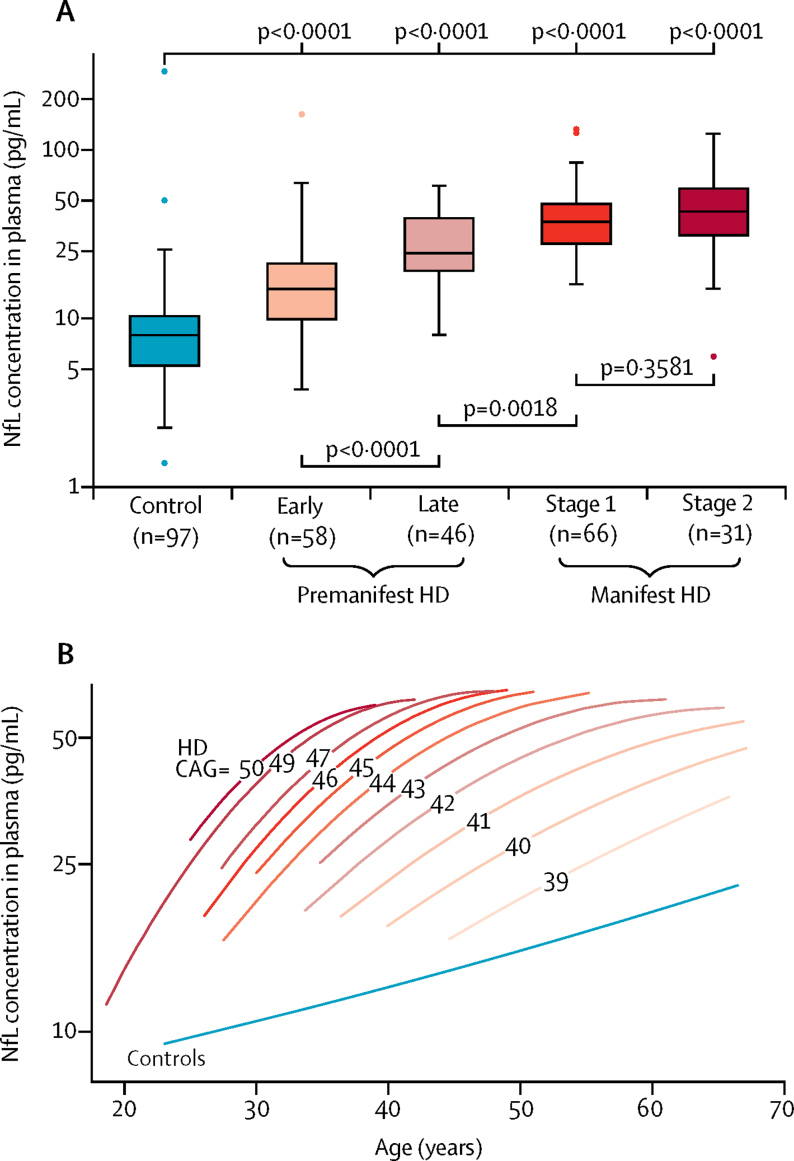
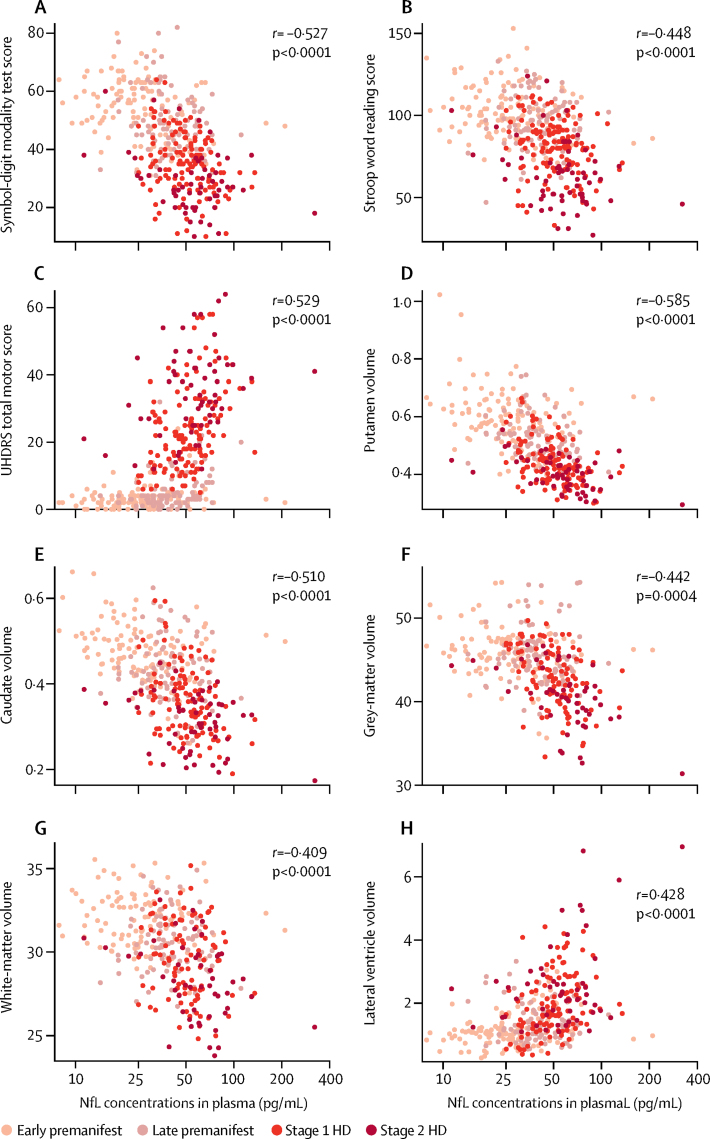
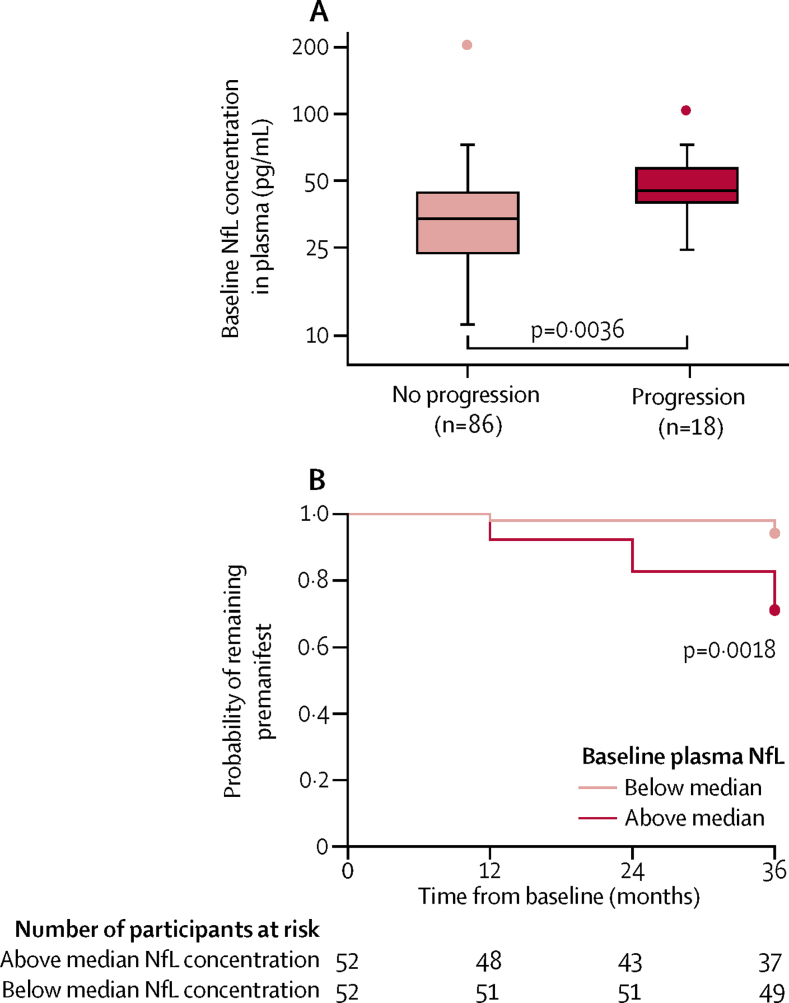
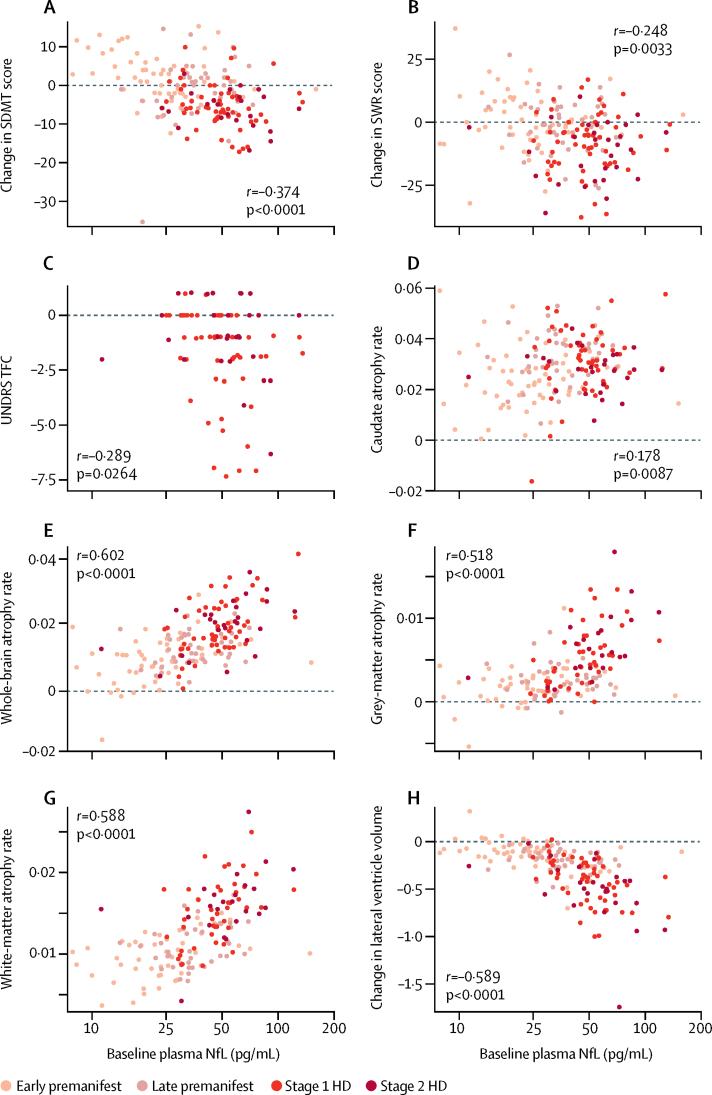
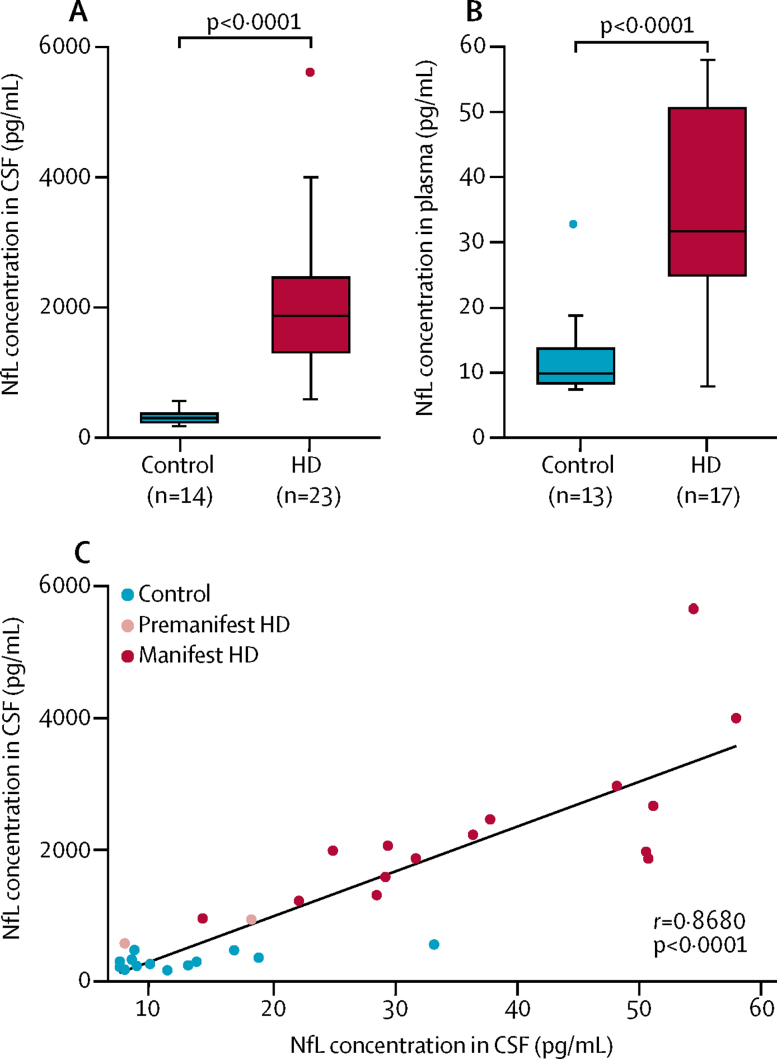
BACKGROUND: Blood biomarkers of neuronal damage could facilitate clinical management of and therapeutic development for Huntington's disease. We investigated whether neurofilament light protein NfL (also known as NF-L) in blood is a potential prognostic marker of neurodegeneration in patients with Huntington's disease. METHODS: We did a retrospective analysis of healthy controls and carriers of CAG expansion mutations in HTT participating in the 3-year international TRACK-HD study. We studied associations between NfL concentrations in plasma and clinical and MRI neuroimaging findings, namely cognitive function, motor function, and brain volume (global and regional). We used random effects models to analyse cross-sectional associations at each study visit and to assess changes from baseline, with and without adjustment for age and CAG repeat count. In an independent London-based cohort of 37 participants (23 HTT mutation carriers and 14 controls), we further assessed whether concentrations of NfL in plasma correlated with those in CSF. FINDINGS: Baseline and follow-up plasma samples were available from 97 controls and 201 individuals carrying HTT mutations. Mean concentrations of NfL in plasma at baseline were significantly higher in HTT mutation carriers than in controls (3·63 [SD 0·54] log pg/mL vs 2·68 [0·52] log pg/mL, p<0·0001) and the difference increased from one disease stage to the next. At any given timepoint, NfL concentrations in plasma correlated with clinical and MRI findings. In longitudinal analyses, baseline NfL concentration in plasma also correlated significantly with subsequent decline in cognition (symbol-digit modality test r=-0·374, p<0·0001; Stroop word reading r=-0·248, p=0·0033), total functional capacity (r=-0·289, p=0·0264), and brain atrophy (caudate r=0·178, p=0·0087; whole-brain r=0·602, p<0·0001; grey matter r=0·518, p<0·0001; white matter r=0·588, p<0·0001; and ventricular expansion r=-0·589, p<0·0001). All changes except Stroop word reading and total functional capacity remained significant after adjustment for age and CAG repeat count. In 104 individuals with premanifest Huntington's disease, NfL concentration in plasma at baseline was associated with subsequent clinical onset during the 3-year follow-up period (hazard ratio 3·29 per log pg/mL, 95% CI 1·48-7·34, p=0·0036). Concentrations of NfL in CSF and plasma were correlated in mutation carriers (r=0·868, p<0·0001). INTERPRETATION: NfL in plasma shows promise as a potential prognostic blood biomarker of disease onset and progression in Huntington's disease. FUNDING: Medical Research Council, GlaxoSmithKline, CHDI Foundation, Swedish Research Council, European Research Council, Wallenberg Foundation, and Wolfson Foundation.
Overview
The claims and statistics of this paper haven’t been checked yet.
Free: it reads the open-access text and checks the first 5 claims that cite a source we can check. Create a free account to check every claim.
Integrity signals
Registry
Cites
Statistics
Figures
Verification
Claims the paper makes
The claims and statistics of this paper haven’t been checked yet.
Free: it reads the open-access text and checks the first 5 claims that cite a source we can check. Create a free account to check every claim.
Claims other papers make about this one
Each is checked against this paper’s own text: does it say what the citing paper says it does?
The check wasn’t confident either way, so it gives no verdict — never disputed.
In the citing paper
“A composite blood biomarker for amyloid tested in a discovery dataset and then a validation cohort of participants aged 60–90 years who were already taking part in studies in Japan or Australia had areas under the receiver operating characteristic curves of 96·7% for discovery and 94·1% for validation. The blood biomarker had sensitivity and specificity above 80% against amyloid PET measurement188”
From Dementia prevention, intervention, and care: 2020 report of the Lancet Commission (2020) · cites this paper as [188]
Experimental — accuracy not yet measuredIn the citing paper
“Increased absolute NfL levels in the blood in the symptomatic disease phase is consistent with similar observations in progressive supranuclear palsy28, Huntington’s disease30, and multiple sclerosis14.”
From Serum neurofilament dynamics predicts neurodegeneration and clinical progression in presymptomatic Alzheimer’s disease (2019) · cites this paper as [30]
Self-check
Percentages, sums and reported differences re-computed from the paper’s own numbers.
The self-check needs the paper’s full text.
Citations
Cites
Bates, G. P., Dorsey, R., Gusella, J. F., Hayden, M. R., Kay, C., Leavitt, B. R., Nance, M., Ross, C. A., Scahill, R. I., Wetzel, R., et al. (2015) · Nature Reviews Disease Primers · doi:10.1038/nrdp.2015.5 · Cited by 1,641
Self-citationHuntington disease: natural history, biomarkers and prospects for therapeutics
Ross, C. A., Aylward, E. H., Wild, E. J., Langbehn, D. R., Long, J. D., Warner, J. H., Scahill, R. I., Leavitt, B. R., Stout, J. C., Paulsen, J. S., et al. (2014) · Nature Reviews Neurology · doi:10.1038/nrneurol.2014.24 · Cited by 1,016
Self-citationTabrizi, S. J., Langbehn, D. R., Leavitt, B. R., Roos, R. A., Durr, A., Craufurd, D., Kennard, C., Hicks, S. L., Fox, N. C., Scahill, R. I., et al. (2009) · The Lancet Neurology · doi:10.1016/s1474-4422(09)70170-x · Cited by 984
Self-citationTabrizi, S. J., Scahill, R. I., Owen, G., Durr, A., Leavitt, B. R., Roos, R. A., Borowsky, B., Landwehrmeyer, B., Frost, C., Johnson, H., et al. (2013) · The Lancet Neurology · doi:10.1016/s1474-4422(13)70088-7 · Cited by 846
Self-citationNeurofilament light chain: A prognostic biomarker in amyotrophic lateral sclerosis
Lu, C.-H., Macdonald-Wallis, C., Gray, E., Pearce, N., Petzold, A., Norgren, N., Giovannoni, G., Fratta, P., Sidle, K., Fish, M., et al. (2015) · Neurology · doi:10.1212/wnl.0000000000001642 · Cited by 563
Blood-based NfL: A biomarker for differential diagnosis of parkinsonian disorder
Hansson, O., Janelidze, S., Hall, S., Magdalinou, N., Lees, A. J., Andreasson, U., Norgren, N., Linder, J., Forsgren, L., Constantinescu, R., et al. (2017) · Neurology · doi:10.1212/wnl.0000000000003680 · Cited by 506
Self-citationRosengren, L. E., Karlsson, J., Karlsson, J., Persson, L. I., & Wikkelsø, C. (1996) · Journal of Neurochemistry · doi:10.1046/j.1471-4159.1996.67052013.x · Cited by 499
Increased Neurofilament Light Chain Blood Levels in Neurodegenerative Neurological Diseases
Gaiottino, J., Norgren, N., Dobson, R., Topping, J., Nissim, A., Malaspina, A., Bestwick, J. P., Monsch, A. U., Regeniter, A., Lindberg, R. L., et al. (2013) · PLoS ONE · doi:10.1371/journal.pone.0075091 · Cited by 486
Serum neurofilament light chain protein is a measure of disease intensity in frontotemporal dementia
Rohrer, J. D., Woollacott, I. O. C., Dick, K. M., Brotherhood, E., Gordon, E., Fellows, A., Toombs, J., Druyeh, R., Cardoso, M. J., Ourselin, S., et al. (2016) · Neurology · doi:10.1212/wnl.0000000000003154 · Cited by 432
Self-citationWild, E. J., Boggio, R., Langbehn, D., Robertson, N., Haider, S., Miller, J. R. C., Zetterberg, H., Leavitt, B. R., Kuhn, R., Tabrizi, S. J., et al. (2015) · Journal of Clinical Investigation · doi:10.1172/jci80743 · Cited by 268
Self-citation
Cited by
Items 101–200 of 375
Oligodendrocyte pathology in Huntington’s disease: from mechanisms to therapeutics
Bardile, C. F., Radulescu, C. I., & Pouladi, M. A. (2023) · Trends in Molecular Medicine · doi:10.1016/j.molmed.2023.07.010 · Cited by 42
Rodrigues, F. B., Byrne, L. M., Lowe, A. J., Tortelli, R., Heins, M., Flik, G., Johnson, E. B., Vita, E. D., Scahill, R. I., Giorgini, F., et al. (2021) · Journal of Neurochemistry · doi:10.1111/jnc.15360 · Cited by 39
“…fluid (CSF) are accessible biofluids that offer insights into comparative derangements in the periphery and CNS and are sources of useful biomarkers in HD (Byrne et al., 2017a; Byrne et al., 2018b; Byrne & Wild, 2016); however, evidence on the KP in these fluids in HD is limited and conflicting.”
BackgroundMethodSelf-citationNeurofilament Levels in CSF and Serum in an Adult SMA Cohort Treated with Nusinersen
Rich, K. A., Fox, A., Yalvac, M., Heintzman, S., Tellez, M., Bartlett, A., Severyn, S., Linsenmayer, M., Kelly, K., Reynolds, J., et al. (2021) · Journal of Neuromuscular Diseases · doi:10.3233/jnd-210735 · Cited by 39
Neurotoxicity after hematopoietic stem cell transplant in multiple sclerosis
Thebault, S., Lee, H., Bose, G., Tessier, D. R., Abdoli, M., Bowman, M. A., Berard, J. A., Walker, L. A. S., Rush, C., MacLean, H. J., et al. (2020) · Annals of Clinical and Translational Neurology · doi:10.1002/acn3.51045 · Cited by 38
“Ln transformation of blood biomarker levels is a wellestablished technique for blood biomarker data.(22) We then used a mixed-effects model to compare the means of all natural log (ln)-transformed columns using Tukey’s HSD test to assess for significant differences.”
MethodCharacterizing White Matter in Huntington's Disease
Gregory, S., Johnson, E. B., Byrne, L. M., Rodrigues, F. B., Henderson, A., Moss, J., Thomas, D. L., Zhang, H. G., Vita, E. D., Tabrizi, S. J., et al. (2019) · Movement Disorders Clinical Practice · doi:10.1002/mdc3.12866 · Cited by 36
“Sample collections were standardized to time of day, 12-hour fast, plasticeware and processed within 15 minutes from collection as previously described.(15,18) All samples were analyzed blinded to disease status.”
BackgroundMethodSelf-citationParkin, G. M., Corey‐Bloom, J., Snell, C. M., Castleton, J., & Thomas, E. A. (2021) · Parkinsonism & Related Disorders · doi:10.1016/j.parkreldis.2021.04.017 · Cited by 36
Neurofilament light chain as a biomarker for diagnosis of multiple sclerosis
Kouchaki, E., Dashti, F., Mirazimi, S. M. A., Alirezaei, Z., Jafari, S. H., Hamblin, M. R., & Mirzaei, H. (2021) · EXCLI journal · doi:10.17179/excli2021-3973 · Cited by 42
Page, V. J., Watne, L. O., Heslegrave, A., Clark, A., McAuley, D. F., Sanders, R., & Zetterberg, H. (2022) · EBioMedicine · doi:10.1016/j.ebiom.2022.104043 · Cited by 38
Self-citationAbsence of NEFL in patient-specific neurons in early-onset Charcot-Marie-Tooth neuropathy
Sainio, M. T., Ylikallio, E., Mäenpää, L., Lahtela, J., Mattila, P., Auranen, M., Palmio, J., & Tyynismaa, H. (2018) · Neurology Genetics · doi:10.1212/nxg.0000000000000244 · Cited by 36
Kornguth, S. E., Rutledge, N., Perlaza, G., Bray, J., & Hardin, A. (2017) · Brain Sciences · doi:10.3390/brainsci7120164 · Cited by 39
“This sequence of events whereby increased levels of l NF appears in the serum of patients at an early stage of progressive neurological disease is consistent with the finding of Byrne [49] that l NF appears to be an early biomarker correlated with the rate of clinical progression of the autosomal dominant disease Hunt…”
ResultNiemelä, V., Burman, J., Blennow, K., Zetterberg, H., Larsson, A. O., & Sundblom, J. (2018) · PLoS ONE · doi:10.1371/journal.pone.0193492 · Cited by 36
Self-citationDNA damage signatures in peripheral blood cells as biomarkers in prodromal huntington disease
Castaldo, I., Rosa, M. D., Romano, A., Zuchegna, C., Squitieri, F., Mechelli, R., Peluso, S., Borrelli, C., Mondo, A. D., Salvatore, E., et al. (2019) · Annals of Neurology · doi:10.1002/ana.25393 · Cited by 38
“viduals carrying HTT mutations at all stages of the disease, compared to healthy controls (HC).(4) NFLs, however, as”
BackgroundSpeidell, A. P., Abid, N. B., & Yano, H. (2023) · Biomedicines · doi:10.3390/biomedicines11082275 · Cited by 37
“This finding is somewhat puzzling in light of the strong positive correlation of measures of disease progression with other CNS-specific biomarkers, including CSF tau [89], mHTT [90], and neurofilament light chain [91,92], but not unexpected given the short BDNF half-life and multiple non-neural pools of neurotrophin…”
BackgroundEmerging Trends: Neurofilament Biomarkers in Precision Neurology
Sharma, P., Giri, A., & Tripathi, P. N. (2024) · Neurochemical Research · doi:10.1007/s11064-024-04244-3 · Cited by 33
“…s o f n e u r o fi l a m e n t a s a b i o l og i ca l m a r k e r i n m u lti p l e n e u r o l og i ca l d i s o r d e r s a l ong w it h t h e i r s a m p l e s ou r c e a nd ou t c o m e s a possible blood biomarker of disease onset and progression in HD, NF-L in plasma exhibits promise [165].”
Neurofilament Light Chain: Blood Biomarker of Neonatal Neuronal Injury
Depoorter, A., Neumann, R. P., Barro, C., Fisch, U., Weber, P., Kühle, J., & Wellmann, S. M. (2018) · Frontiers in Neurology · doi:10.3389/fneur.2018.00984 · Cited by 36
What, When and How to Measure—Peripheral Biomarkers in Therapy of Huntington’s Disease
Przybył, Ł., Woźna, M., Kozłowska, E., & Fiszer, A. (2021) · International Journal of Molecular Sciences · doi:10.3390/ijms22041561 · Cited by 34
“NFL is the first described biomarker from blood directly associated with a causative gene expansion [50].”
BackgroundAssociations between neurofilament light-chain protein, brain structure, and chronic kidney disease
van der Plas, E. A. A., Lullmann, O., Hopkins, L., Schultz, J. L., Nopoulos, P., & Harshman, L. A. (2021) · Pediatric Research · doi:10.1038/s41390-021-01649-6 · Cited by 34
AAV5-miHTT-mediated huntingtin lowering improves brain health in a Huntington’s disease mouse model
Thomson, S. B., Stam, A., Brouwers, C. C., Fodale, V., Bresciani, A., Vermeulen, M., Mostafavi, S., Petkau, T. L., Hill, A., Yung, A. C., et al. (2022) · Brain · doi:10.1093/brain/awac458 · Cited by 36
Self-citationZhao, Y., Sun, X., & Qi, X. (2018) · Biochemical and Biophysical Research Communications · doi:10.1016/j.bbrc.2018.11.031 · Cited by 37
“Also, the zQ175 mice showed a decrease in immunodensity of neurofilament, a biomarker of HD [33,34], which was partially corrected after P110 treatment (Fig.”
BackgroundPlatelet-derived extracellular vesicles in Huntington’s disease
Denis, H. L., Lamontagne-Proulx, J., St-Amour, I., Mason, S. L., Weiss, A., Chouinard, S., Barker, R. A., Boilard, E., & Cicchetti, F. (2018) · Journal of Neurology · doi:10.1007/s00415-018-9022-5 · Cited by 32
“1 3 the concentrations of neurofilament light chain [52, 53] and mutant huntingtin (mHtt)—the genetic product of HD—and their correlations with disease course [18, 54, 55].”
BackgroundDevarakonda, S., Basha, S., Pithakumar, A., Thoshna, L. B., Mukunda, D. C., Rodrigues, J., Ameera, K., Biswas, S., Pai, A. R., Belurkar, S., et al. (2024) · Ageing Research Reviews · doi:10.1016/j.arr.2024.102566 · Cited by 37
“Studies have re-ported a correlation between the increase in NfL levels, disease progression, and the number of CAG triplet repeats (Byrne et al., 2017).”
BackgroundOu, Z.-Y. A., Byrne, L. M., Rodrigues, F. B., Tortelli, R., Johnson, E. B., Foiani, M. S., Arridge, M., Vita, E. D., Scahill, R. I., Heslegrave, A., et al. (2021) · Scientific Reports · doi:10.1038/s41598-021-83000-x · Cited by 33
Self-citationPoint-of-Care Devices Using Disease Biomarkers To Diagnose Neurodegenerative Disorders.
Wei, T.-Y., Fu, Y., Chang, K.-H., Lin, K.-J., Lu, Y.-J., & Cheng, C.-M. (2017) · Trends in Biotechnology · doi:10.1016/j.tibtech.2017.11.004 · Cited by 29
Arnerić, S. P., Kern, V. D., & Stephenson, D. T. (2018) · Biochemical Pharmacology · doi:10.1016/j.bcp.2018.01.043 · Cited by 37
Agrawal, N., Farhat, N. Y., Sinaii, N., Do, A. N. D., Xiao, C., Berry‐Kravis, E., Bianconi, S. E., Masvekar, R., Bielekova, B., Solomon, B. I., et al. (2022) · Genetics in Medicine · doi:10.1016/j.gim.2022.11.017 · Cited by 31
Cerebrospinal fluid neurogranin and TREM2 in Huntington’s disease
Byrne, L. M., Rodrigues, F. B., Johnson, E. B., Vita, E. D., Blennow, K., Scahill, R. I., Zetterberg, H., Heslegrave, A., & Wild, E. J. (2018) · Scientific Reports · doi:10.1038/s41598-018-21788-x · Cited by 32
Self-citationRobust Markers and Sample Sizes for Multicenter Trials of Huntington Disease
Wijeratne, P. A., Johnson, E. B., Eshaghi, A., Aksman, L., Gregory, S., Johnson, H. J., Poudel, G. R., Mohan, A., Sampaio, C., Georgiou‐Karistianis, N., et al. (2020) · Annals of Neurology · doi:10.1002/ana.25709 · Cited by 30
“Fluid biomarkers in HD have recently shown a rapid treatment response and strong associations with clinical and neuroimaging markers.(44) However, further validation of fluid biomarkers and their stability is required, and thus imaging markers are currently strong candidates for clinical trial endpoints.”
BackgroundSelf-citationPeng, Y., Zhang, Y., Zhao, C., Peng, H., Wan, N., Zhang, J., Tang, J., Wang, P., Xie, Y., Cai, Q., et al. (2020) · Neurology · doi:10.1212/wnl.0000000000010671 · Cited by 32
Biofluid Biomarkers in Huntington’s Disease
Rodrigues, F. B., Byrne, L. M., & Wild, E. J. (2018) · Methods in molecular biology · doi:10.1007/978-1-4939-7825-0_17 · Cited by 32
“Blood Byrne 2017[49] 298 C < HD Corr stage Corr TMS Corr cogn Corr imaging SIMOA”
BackgroundMethodInfluentialSelf-citationNeurofilament light is a treatment‐responsive biomarker in CLN2 disease
Ru, Y., Corado, C. R., Soon, R. K., Melton, A. C., Harris, A., Yu, G. K., Pryer, N., Sinclair, J. R., Katz, M. L., Ajayi, T., et al. (2019) · Annals of Clinical and Translational Neurology · doi:10.1002/acn3.50942 · Cited by 33
The blood biomarkers puzzle – A review of protein biomarkers in neurodegenerative diseases
Barro, C., & Zetterberg, H. (2021) · Journal of Neuroscience Methods · doi:10.1016/j.jneumeth.2021.109281 · Cited by 32
Self-citationNeurological symptoms and blood neurofilament light levels
Barro, C., & Zetterberg, H. (2021) · Acta Neurologica Scandinavica · doi:10.1111/ane.13415 · Cited by 33
“In Huntington disease, NfL is increased and particularly in the manifest stage of the disease 49 where motor impairments are more evident.”
Self-citationWillemse, E. A. J., Scheltens, P., Teunissen, C. E., & Vijverberg, E. G. B. (2021) · Alzheimer's Research & Therapy · doi:10.1186/s13195-021-00841-4 · Cited by 26
Sen, M. K., Hossain, M. J., Mahns, D. A., & Brew, B. J. (2022) · Journal of Neurology · doi:10.1007/s00415-022-11507-y · Cited by 31
The updated development of blood-based biomarkers for Huntington’s disease
Zhang, S., Cheng, Y., & Shang, H. (2023) · Journal of Neurology · doi:10.1007/s00415-023-11572-x · Cited by 30
“The significant correlation between plasma Nfl level and clinical and neuroimaging changes was also validated and discussed extensively [61, 62, 74, 77, 78].”
BackgroundInfluentialBartlett, D. M., Govus, A. D., Rankin, T., Lampit, A., Feindel, K. W., Poudel, G. R., Teo, W., Lo, J., Georgiou‐Karistianis, N., Ziman, M. R., et al. (2020) · Journal of the Neurological Sciences · doi:10.1016/j.jns.2020.117022 · Cited by 31
Chaudhry, A., Athanasiou‐Fragkouli, A., & Houlden, H. (2020) · Journal of Neurology · doi:10.1007/s00415-020-10218-6 · Cited by 31
Levels of Neurofilament Light at the Preataxic and Ataxic Stages of Spinocerebellar Ataxia Type 1
Wilke, C., Mengel, D., Schöls, L. J., Hengel, H., Rakowicz, M., Klockgether, T., Dürr, A., Filla, A., Melegh, B., Schüle, R., et al. (2022) · Neurology · doi:10.1212/wnl.0000000000200257 · Cited by 29
“Moreover, our study suggests that the individual CAG repeat count, age, and disease stage (preataxic vs ataxic) are the major determinants of sNfL levels in SCA1, thus extending and specifying findings from other CAG repeat-expansion diseases.(22,23) The observation that sNfL levels were not closely related to cross-s…”
ResultHermansson, L., Yilmaz, A., Price, R. W., Nilsson, S., McCallister, S. H., Makadzange, T., Das, M., Zetterberg, H., Blennow, K., & Gisslén, M. (2019) · PLoS ONE · doi:10.1371/journal.pone.0226276 · Cited by 28
Self-citationRecent advances in molecular therapies for neurological disease: triplet repeat disorders
Gonzalez‐Alegre, P. (2019) · Human Molecular Genetics · doi:10.1093/hmg/ddz138 · Cited by 29
Leister, I., Altendorfer, B., Maier, D. D., Mach, O., Wutte, C., Grillhösl, A., Arévalo‐Martín, Á., García‐Ovejero, D., Aigner, L., & Grassner, L. (2021) · Journal of Neurotrauma · doi:10.1089/neu.2021.0264 · Cited by 27
Neurofilament Light Protein as a Potential Blood Biomarker for Huntington's Disease in Children
Byrne, L. M., Schultz, J. L., Rodrigues, F. B., van der Plas, E. A. A., Langbehn, D. R., Nopoulos, P., & Wild, E. J. (2022) · Movement Disorders · doi:10.1002/mds.29027 · Cited by 27
Self-citationThe role of exosomes in adult neurogenesis: implications for neurodegenerative diseases
Yu, Z., Teng, Y., Yang, J., & Yang, L. (2023) · Neural Regeneration Research · doi:10.4103/1673-5374.379036 · Cited by 28
Multidimensional biomarkers for multiple system atrophy: an update and future directions
Wan, L., Zhu, S., Chen, Z., Qiu, R., Tang, B., & Jiang, H. F. (2023) · Translational Neurodegeneration · doi:10.1186/s40035-023-00370-0 · Cited by 28
Diagnostic and prognostic biomarkers for HAND
McLaurin, K. A., Booze, R. M., & Mactutus, C. F. (2019) · Journal of NeuroVirology · doi:10.1007/s13365-018-0705-6 · Cited by 29
Koval, I., Dighiero-Brecht, T., Tobin, A. J., Tabrizi, S. J., Scahill, R. I., du Montcel, S. T., Durrleman, S., & Dürr, A. (2022) · Scientific Reports · doi:10.1038/s41598-022-18848-8 · Cited by 31
Self-citationBlood level of neurofilament light chain as a biomarker for neurological disorders
Turner, M. R., Thompson, A. G., & Teunissen, C. E. (2025) · BMJ Medicine · doi:10.1136/bmjmed-2024-000958 · Cited by 27
“26 In Huntington's disease and other movement disorders associated with relatively lower levels of neurofilament light chain, another use could be as secondary outcome measures in therapeutic trials, including early warning of worsening pathology from sustained increased levels of neurofilament…”
Ghazaleh, N., Houghton, R., Palermo, G., Schobel, S., Wijeratne, P. A., & Long, J. D. (2021) · Frontiers in Neurology · doi:10.3389/fneur.2021.678484 · Cited by 39
“The current study focused on clinical variables only and did not include imaging or fluid biomarkers, which previous studies have suggested may be predictive of disease progression (7, 27, 28).”
BackgroundModelling the Human Blood–Brain Barrier in Huntington Disease
Vignone, D., Paz, O. G., Fini, I., Cellucci, A., Auciello, G., Battista, M. R., Gloaguen, I., Fortuni, S., Cariulo, C., Khetarpal, V. K., et al. (2022) · International Journal of Molecular Sciences · doi:10.3390/ijms23147813 · Cited by 25
Johnson, S. C., Suárez‐Calvet, M., Suridjan, I., Minguillón, C., Gispert, J. D., Jonaitis, E. M., Michna, A., Carboni, M., Bittner, T., Rabe, C., et al. (2023) · Alzheimer s Research & Therapy · doi:10.1186/s13195-023-01168-y · Cited by 25
Self-citationTicau, S., Aldinc, E., Polydefkis, M. J., Adams, D., Coelho, T., Ueda, M., Hale, C. A., Vest, J., Nioi, P., & Collaborators, T. P. G. O. (2023) · Amyloid · doi:10.1080/13506129.2023.2232520 · Cited by 26
“An association between increased disease severity and higher NfL levels has also been observed in other neurologic diseases, such as Huntington ’ s disease [20], chronic inflammatory demyelinating polyneuropathy [22], and Charcot – Marie – Tooth disease [24].”
BackgroundPeng, Y., Li, Q., Qin, L., He, Y., Luo, X., Lan, Y., Chen, X., Wang, X., & Wang, Q. M. (2021) · Neurorehabilitation and neural repair · doi:10.1177/1545968321989354 · Cited by 29
Cortical microstructural correlates of plasma neurofilament light chain in Huntington's disease
Sampedro, F., Pérez‐Pérez, J., Martínez‐Horta, S., Pérez‐González, R., Horta‐Barba, A., Campolongo, A., Izquierdo, C., Pagonabarraga, J., Gómez‐Ansón, B., & Kulisevsky, J. (2021) · Parkinsonism & Related Disorders · doi:10.1016/j.parkreldis.2021.03.008 · Cited by 24
Evaluation of Blood Glial Fibrillary Acidic Protein as a Potential Marker in Huntington's Disease
You, H., Wu, T., Du, G., Huang, Y. M., Zeng, Y., Lin, L., Chen, D., Wu, C., Li, X., Burgunder, J., et al. (2021) · Frontiers in Neurology · doi:10.3389/fneur.2021.779890 · Cited by 24
Valverde, A., Montero‐Calle, A., Barderas, R., Calero, M., Yáñez‐Sedeño, P., Campuzano, S., & Pingarrón, J. M. (2021) · Electrochimica Acta · doi:10.1016/j.electacta.2021.137815 · Cited by 24
Yang, L., Shao, Y.-R., Li, X., Ma, Y., Dong, Y., & Wu, Z. (2021) · Neurology · doi:10.1212/wnl.0000000000012945 · Cited by 24
Neurofilament light chain: An important step toward a disease biomarker in multiple sclerosis
Berger, T., & Stüve, O. (2019) · Neurology · doi:10.1212/wnl.0000000000007022 · Cited by 25
The relationship between lifestyle and serum neurofilament light protein in Huntington’s disease
Cruickshank, T. M., Bartlett, D. M., Govus, A. D., Hannan, A. J., Teo, W., Mason, S., Lo, J., & Ziman, M. R. (2020) · Brain and Behavior · doi:10.1002/brb3.1578 · Cited by 23
“Considering that NfL is a potential biological readout of disease progression (Byrne et al., 2017), it is plausible that lifestyle factors influence levels of NfL and therefore warrant investigation, particularly as NfL has been considered as a biological measure for clinical trials.”
BackgroundInfluentialKaroly, H. C., Skrzynski, C. J., Moe, E. N., Bryan, A. D., & Hutchison, K. E. (2021) · Alcoholism Clinical and Experimental Research · doi:10.1111/acer.14712 · Cited by 24
Harris, S., Comı, G., Cree, B., Arnold, D. L., Steinman, L., Sheffield, J. K., Southworth, H., Kappos, L., Cohen, J. A., & the Ozanimod Study Investigators (2021) · European Journal of Neurology · doi:10.1111/ene.15009 · Cited by 25
Welford, R. W. D., Farine, H., Steiner, M. A., Garzotti, M., Dobrenis, K., Sievers, C., Strasser, D. S., Amraoui, Y., Groenen, P. M. A., Giugliani, R., et al. (2022) · Molecular Genetics and Metabolism Reports · doi:10.1016/j.ymgmr.2022.100843 · Cited by 27
Remyelination modulators in multiple sclerosis patients
Al-Temaimi, R. A., Abubaker, J. A., Al‐Khairi, I., & Alroughani, R. (2017) · Experimental and Molecular Pathology · doi:10.1016/j.yexmp.2017.11.004 · Cited by 24
Blūma, M., Chiotis, K., Bucci, M., Savitcheva, I., Matton, A., Kivipelto, M., Jeromin, A., Santis, G. D., Molfetta, G. D., Ashton, N. J., et al. (2024) · EBioMedicine · doi:10.1016/j.ebiom.2024.105504 · Cited by 23
Self-citationDigital Immunoassay for Proteins: Theory, Methodology, and Clinical Applications
Liu, X., Zhang, Q., Zong, C., & Gai, H. (2025) · Analytical Chemistry · doi:10.1021/acs.analchem.4c05421 · Cited by 24
The prodromal phase of hereditary spastic paraplegia type 4: the preSPG4 cohort study
Rattay, T. W., Völker, M. N., Rautenberg, M., Kessler, C., Wurster, I., Winter, N., Haack, T. B., Lindig, T. M., Hengel, H., Synofzik, M., et al. (2022) · Brain · doi:10.1093/brain/awac155 · Cited by 24
Barschke, P., Abu‐Rumeileh, S., Shweiki, M. R. A., Barba, L., Paoletti, F. P., Oeckl, P., Steinacker, P., Halbgebauer, S., Gaetani, L., Lewerenz, J., et al. (2022) · Journal of Neurology · doi:10.1007/s00415-022-11187-8 · Cited by 22
“Given the urgent need for surrogate endpoints in ongoing clinical trials for HD, PDYN- and PENK-derived peptides may be used together with neurofilament light chain protein (NfL) as biomarkers of disease severity that could be potentially influenced by future disease-modifying therapies [31, 32].”
BackgroundThe temporal event-based model: Learning event timelines in progressive diseases
Wijeratne, P. A., Eshaghi, A., Scotton, W. J., Kohli, M., Aksman, L., Oxtoby, N. P., Pustina, D., Warner, J. H., Paulsen, J. S., Scahill, R. I., et al. (2023) · Imaging Neuroscience · doi:10.1162/imag_a_00010 · Cited by 25
Self-citationKesler, S. R., Henneghan, A. M., Prinsloo, S., Palesh, O. G., & Wintermark, M. (2023) · Frontiers in Medicine · doi:10.3389/fmed.2023.1199605 · Cited by 25
“Increased blood concentration of NF-L have also been detected in person with frontotemporal dementia (221), Huntington’s disease (222), and Parkinson’s disease (223), suggesting that NF-L may be a biomarker of neurodegenerative processes in general.”
BackgroundSarkar, S., & Patranabis, S. (2024) · Cell Biochemistry and Biophysics · doi:10.1007/s12013-024-01221-z · Cited by 22
Neurofilament‐light in former athletes: a potential biomarker of neurodegeneration and progression
Taghdiri, F., Multani, N., Ozzoude, M., Tarazi, A., Khodadadi, M., Wennberg, R. A., Mikulis, D. J., Green, R., Colella, B., Davis, K. D., et al. (2020) · European Journal of Neurology · doi:10.1111/ene.14251 · Cited by 22
“These findings are consistent with the studies that looked at similar correlations in other neurodegenerative diseases such as AD [23], and HD [8].”
BackgroundResultSelf-citationMarchionini, D. M., Liu, J.-P., Ambesi‐Impiombato, A., Kerker, K., Cirillo, K., Bansal, M., Mushlin, R., Brunner, D., Ramboz, S., Kwan, M. Y., et al. (2022) · JCI Insight · doi:10.1172/jci.insight.161769 · Cited by 23
Yang, A., Chu, P., Wang, C., & Lin, C. (2023) · Journal of Exposure Science & Environmental Epidemiology · doi:10.1038/s41370-023-00594-2 · Cited by 21
Habibzadeh, A., Ostovan, V. R., Ghezel, M. A., Kavari, K., Kardeh, S., & Tabrizi, R. (2024) · BMC Psychiatry · doi:10.1186/s12888-024-06051-0 · Cited by 20
Blood Neurofilament Light Chain in Genetic Ataxia: A Meta‐Analysis
Peng, L., Wang, S., Chen, Z., Peng, Y., Wang, C., Long, Z., Peng, H., Shi, Y., Hou, X., Lei, L., et al. (2021) · Movement Disorders · doi:10.1002/mds.28783 · Cited by 21
“Elevated levels of CSF NfL (cNfL) and blood NfL (bNfL) correlated strongly with neurodegeneration and other brain pathology in a variety of neurological disorders.(21,23-25) In genetic ataxia, recent studies have found that CSF and blood NfL concentrations were significantly elevated in the early stage of disease, and…”
BackgroundHerrero‐Lorenzo, M., Pérez‐Pérez, J., Escaramís, G., Martínez‐Horta, S., Pérez‐González, R., Rivas‐Asensio, E., Kulisevsky, J., Gámez‐Valero, A., & Martí, E. (2024) · Journal of Extracellular Vesicles · doi:10.1002/jev2.12522 · Cited by 20
Dyakin, V. V., Wısnıewskı, T., & Lajtha, Á. (2021) · Symmetry · doi:10.3390/sym13030455 · Cited by 21
Circulating hsa-miR-323b-3p in Huntington's Disease: A Pilot Study
Ferraldeschi, M., Romano, S., Giglio, S., Romano, C., Morena, E., Mechelli, R., Annibali, V., Ubaldi, M., Buscarinu, M. C., Umeton, R., et al. (2021) · Frontiers in Neurology · doi:10.3389/fneur.2021.657973 · Cited by 20
Associations between prognostic index scores and plasma neurofilament light in Huntington's disease
Parkin, G. M., Corey‐Bloom, J., Long, J. D., Snell, C. M., Smith, H., & Thomas, E. A. (2022) · Parkinsonism & Related Disorders · doi:10.1016/j.parkreldis.2022.02.023 · Cited by 20
Iverson, G. L., Minkkinen, M., Karr, J. E., Berghem, K., Zetterberg, H., Blennow, K., Posti, J. P., & Luoto, T. M. (2022) · Frontiers in Neurology · doi:10.3389/fneur.2022.960741 · Cited by 20
“Also, blood NF-L levels have been reported to be higher in neurological conditions such as Alzheimer’s disease (93, 94), multiple sclerosis (95), and Huntington’s disease (96).”
BackgroundSelf-citationParkin, G. M., Thomas, E. A., & Corey‐Bloom, J. (2023) · EBioMedicine · doi:10.1016/j.ebiom.2023.104646 · Cited by 19
Memantine Mitigates Oligodendrocyte Damage after Repetitive Mild Traumatic Brain Injury
Ma, G., Liu, C., Hashim, J., Conley, G. M., Morriss, N. J., Meehan, W. P., III, Qiu, J., & Mannix, R. (2019) · Neuroscience · doi:10.1016/j.neuroscience.2019.10.016 · Cited by 21
Shin, S. S., Hefti, M. M., Mazandi, V. M., Issadore, D., Meaney, D. F., Schneider, A. L. C., Diaz-Arrastia, R. R., & Kilbaugh, T. J. (2022) · Journal of Neurotrauma · doi:10.1089/neu.2022.0070 · Cited by 20
Baldacci, F., Lista, S., Vergallo, A., Palermo, G., Giorgi, F. S., & Hampel, H. J. (2019) · Expert Review of Molecular Diagnostics · doi:10.1080/14737159.2019.1627202 · Cited by 19
Interleukin-6 as a marker of Huntington's disease progression: Systematic review and meta-analysis
Eide, S., Misztal, M. C., & Feng, Z. (2023) · Brain Behavior & Immunity - Health · doi:10.1016/j.bbih.2023.100635 · Cited by 21
“Plasma Neurofilament light chain, Interlukein-8, TNF-α, and salivary brain-derived neurotrophic factor (BDNF) and total huntingtin protein (tHtt) have established correlations to HD progression and may be easily assessed in HD patients through sampling of the plasma and saliva (Björkqvist et al., 2008; Byrne et al., 2…”
BackgroundParkin, G. M., Thomas, E. A., & Corey‐Bloom, J. (2024) · EBioMedicine · doi:10.1016/j.ebiom.2024.105173 · Cited by 18
Aqel, S., Ahmad, J., Saleh, I., Fathima, A., Thani, A. A. A., Mohamed, W. M. Y., & Shaito, A. A. (2025) · Biology · doi:10.3390/biology14020129 · Cited by 23
“Tumor necrosis factor-alpha (TNF-α ) has been implicated in HD pathogenesis as a key mediator of neuroinflammation.”
InfluentialCerebrospinal Fluid Levels of Prodynorphin‐Derived Peptides are Decreased in Huntington's Disease
Shweiki, M. R. A., Oeckl, P., Pachollek, A., Steinacker, P., Barschke, P., Halbgebauer, S., Anderl‐Straub, S., Lewerenz, J., Ludolph, A. C., Landwehrmeyer, G. B., et al. (2020) · Movement Disorders · doi:10.1002/mds.28300 · Cited by 18
“elevated serum/CSF NfL levels being found in different neurodegenerative diseases, including HD.(18,19) There is an unmet need to develop HD biomarkers to accelerate the development of new therapies.”
BackgroundInfluentialEnhanced retinal responses in Huntington’s disease patients
Pearl, J. R., Heath, L. M., Bergey, D. E., Kelly, J. P., Smith, C. O., Laurino, M., Weiss, A. H., Price, N. D., LaSpada, A. R., Bird, T. D., et al. (2017) · Journal of Huntington s Disease · doi:10.3233/jhd-170255 · Cited by 18
Stascheit, F., Aigner, A., Mergenthaler, P., Hotter, B. A., Hoffmann, S., Lehnerer, S., Meisel, C., & Meisel, A. (2023) · Frontiers in Neurology · doi:10.3389/fneur.2022.1056322 · Cited by 19
Serum neurofilament light chain in patients with epilepsy and cognitive impairment
Ueda, M., Suzuki, M., Hatanaka, M., Nakamura, T., Hirayama, M., & Katsuno, M. (2023) · Epileptic Disorders · doi:10.1002/epd2.20024 · Cited by 17
van de Zande, N. A., Bulk, M., Najac, C., van der Weerd, L., de Bresser, J., Lewerenz, J., Ronen, I., & de Bot, S. T. (2023) · NeuroImage Clinical · doi:10.1016/j.nicl.2023.103450 · Cited by 18
“Especially for NFL, a close correlation with disease progression and disease onset has been described (Byrne et al., 2017; Byrne et al., 2018).”
BackgroundWu, C., Pan, X.-S., Su, L.-Y., & Yang, S. (2023) · International Journal of Molecular Sciences · doi:10.3390/ijms241813771 · Cited by 20
“Furthermore, the average plasma NfL level of the ND group was 7.79 pg/mL for males and 8.02 pg/mL for females, while the average plasma NfL level of the CCD group was 9.37 pg/mL for males and 9.92 pg/mL for females (ND vs. CCD, p < 0.01).”
BackgroundInfluentialSjögren, M., Soylu-Kucharz, R., Dandunna, U., Stan, T. L., Cavalera, M., Sandelius, Å., Zetterberg, H., & Björkqvist, M. (2019) · Neurobiology of Disease · doi:10.1016/j.nbd.2019.104560 · Cited by 18
Self-citationSerum Neurofilament Light Predicts Severity and Prognosis in Patients with Ischemic Stroke
Wang, P., Fan, J., Yuan, L., Nan, Y., & Nan, S. (2020) · Neurotoxicity Research · doi:10.1007/s12640-019-00159-y · Cited by 19
“…and prognostic value of sNfL in nervous system disease, for example, ALS (Verde et al. 2019), spinal cord injury (Kuhle et al. 2015), Huntington’s disease (Byrne et al. 2017), spontaneous intracerebral hemorrhage (Hviid et al. 2019), and cardiac arrest (Moseby-Knappe et al. 2019) had been proposed.”
BackgroundInfluentialClinical usefulness of prognostic biomarkers in optic neuritis
Tejeda‐Velarde, A., Costa‐Frossard, L., de la Maza, S. S., Carrasco, Á., Espiño, M., Picón, C., Toboso, I., Walo, P. E., Lourido, D., Muriel, A., et al. (2017) · European Journal of Neurology · doi:10.1111/ene.13553 · Cited by 18
“The cut-off values used were 400 ng/l (which is above the interquartile range found in healthy individuals [17]) and 900 ng/l, which is above the median + 2SD values found in other noninflammatory or neurodegenerative neurological diseases [18].”
BackgroundMethodNeurofilament light level correlates with brain atrophy, and cognitive and motor performance
Kartau, M., Melkas, S., Kartau, J., Arola, A., Laakso, H., Pitkänen, J., Lempiäinen, J., Koikkalainen, J., Lötjönen, J., Korvenoja, A., et al. (2023) · Frontiers in Aging Neuroscience · doi:10.3389/fnagi.2022.939155 · Cited by 16
“Elevated NfL levels have been found in numerous neurological conditions from Alzheimer’s disease (AD) to motor neuron disease (MND) (Kuhle et al., 2011; Lu et al., 2015; Rohrer et al., 2016; Byrne et al., 2017; Mattsson et al., 2017; Benatar et al., 2018; Gaetani et al., 2019a; Lin et al., 2019).”
BackgroundSchultz, J. L., van der Plas, E. A. A., Langbehn, D. R., Conrad, A. L., & Nopoulos, P. (2021) · Annals of Neurology · doi:10.1002/ana.26039 · Cited by 16
“Furthermore, neurodegeneration is thought to begin >20 years from the predicted AMO in HD.(7) Therefore, HD gene carriers who’s predicted AMO is approximately ≤50 years old (ie, predominantly those with a CAG repeat of ≥43) may have a blunted neurodevelopmental phase.”
BackgroundSelf-citationCurrent Diagnostic Methods and Non-Coding RNAs as Possible Biomarkers in Huntington’s Disease
Pellegrini, M., Bergonzoni, G., Perrone, F., Squitieri, F., & Biagioli, M. (2022) · Genes · doi:10.3390/genes13112017 · Cited by 16
“Among them, because of the leakage of CNS molecules through the BBB, blood represents a reliable source of several biomarkers, such as NfL [27].”
BackgroundMethodInfluentialBhawna, Kumar, S., Kumar, A., & Kumar, A. (2023) · Computational Biology and Chemistry · doi:10.1016/j.compbiolchem.2023.107975 · Cited by 15
Boehnke, S. E., Robertson, E. L., Armitage‐Brown, B., Wither, R. G., Silva, N. M. L. E., Winterborn, A., Levy, R., Cook, D. J., Felice, F. G. D., & Munoz, D. P. (2020) · Alzheimer s & Dementia Diagnosis Assessment & Disease Monitoring · doi:10.1002/dad2.12069 · Cited by 17
Metadata
- Authors
- Byrne, L. M., Rodrigues, F. B., Blennow, K., Durr, A., Leavitt, B. R., Roos, R. A. C., Scahill, R. I., Tabrizi, S. J., Zetterberg, H., Langbehn, D., & Wild, E. J.
- Affiliations
- UCL Queen Square Institute of Neurology (GB)
- Sahlgrenska University Hospital (SE)
- University of British Columbia (CA)
- Leiden University (NL)
- University of Iowa (US)
- Corresponding author
- Wild, Edward J
- ORCID
- Venue
- The Lancet Neurology
- Publisher
- Elsevier BV
- Published
- 2017-08
- Volume
- 16
- Issue
- 8
- Pages
- 601-609
- ISSN
- 1474-4422 (ISSN-L)
- PMC
- PMC5507767
- OpenAlex
- W2623948558
- Semantic Scholar
- f82e82b6f19d69195340a224ecde75e11c5a7a05
- Cited by
- 364
- References
- 27
- Citations by year
- 2026: 28 · 2025: 35 · 2024: 36 · 2023: 44 · 2022: 47 · 2021: 49 · 2020: 39 · 2019: 38 · 2018: 37 · 2017: 11
- FWCI
- 16.74
- Type
- journal article
- Language
- en
- Open access
- hybrid
- doi.org
- Licence
- cc-by
- www.elsevier.com/tdm/userlicense/1.0/ (tdm)
- creativecommons.org/licenses/by/4.0/ (vor)
- Locations
- The Lancet Neurology (publishedVersion, cc-by)
- PubMed Central (publishedVersion, cc-by)
- PubMed (publishedVersion)
- Leiden Repository (Leiden University) (submittedVersion)
- Data Archiving and Networked Services (DANS) (submittedVersion, other-oa)
- HAL (submittedVersion, other-oa)
- UCL Discovery (University College London) (submittedVersion)
- Funders
- NIHR Biomedical Research Centre, Royal Marsden NHS Foundation Trust/Institute of Cancer Research
- Research Councils UK
- Knut och Alice Wallenbergs Stiftelse
- Vetenskapsrådet
- National Institutes of Health
- Medical Research Council (MR/M008592/1)
- Topics
- Life Sciences › Neuroscience › Cellular and Molecular Neuroscience › Genetic Neurodegenerative Diseases
- Life Sciences › Neuroscience › Cellular and Molecular Neuroscience › Hereditary Neurological Disorders
- Health Sciences › Medicine › Genetics (clinical) › Lysosomal Storage Disorders Research
- Keywords
- Huntington's disease, neurofilament light chain, blood biomarkers, neurodegeneration, CAG repeat expansion, cognitive decline, brain atrophy, TRACK-HD, prognostic factors, disease stage progression, functional capacity, ventriculomegaly, caudate atrophy, neuroimaging biomarkers
- MeSH terms
- Huntingtin Protein, Adult, Aged, Atrophy, Brain, Follow-Up Studies, Humans, Huntington Disease, Middle Aged, Retrospective Studies, Biomarkers, Neurofilament Proteins, Disease Progression, Trinucleotide Repeat Expansion, Young Adult, Cognitive Dysfunction
About these checks
Registry, retraction, Cites and statistics results are computed, not judged, with one exception: a printed reference that no index lists is read once by a model before it counts as a citation error. Claims are extracted by a model and kept only when their quote appears verbatim in the text; each cited source is then checked, with a model’s help, for whether it says what the claim relies on. Those verdicts can be wrong — read the claim’s quote and the cited source before relying on one.
Statistics and arithmetic are recomputed, not judged.
Confidence bands are shown only for fields calibrated on our annotated test set. None is calibrated yet, so no band is shown.
What counts as a claim ›How we measure confidence ›How we check this ›
Are you an author, or do you see a problem with this page? Request a review
Data sources
Bibliographic data: Semantic Scholar, OpenAlex, Crossref.
Contains information from the Semantic Scholar Academic Graph Datasets, made available under the ODC Attribution License (ODC-BY 1.0).
Semantic Scholar’s data is described in: Kinney, R., et al. (2023). The Semantic Scholar Open Data Platform. arXiv:2301.10140.
