

Neurofilament light protein in blood as a potential biomarker of neurodegeneration in Huntington's disease: a retrospective cohort analysis
Open accessThe DOI matches its Crossref record; 27 of the 27 references it cites were found in a registry or an index.
Abstract
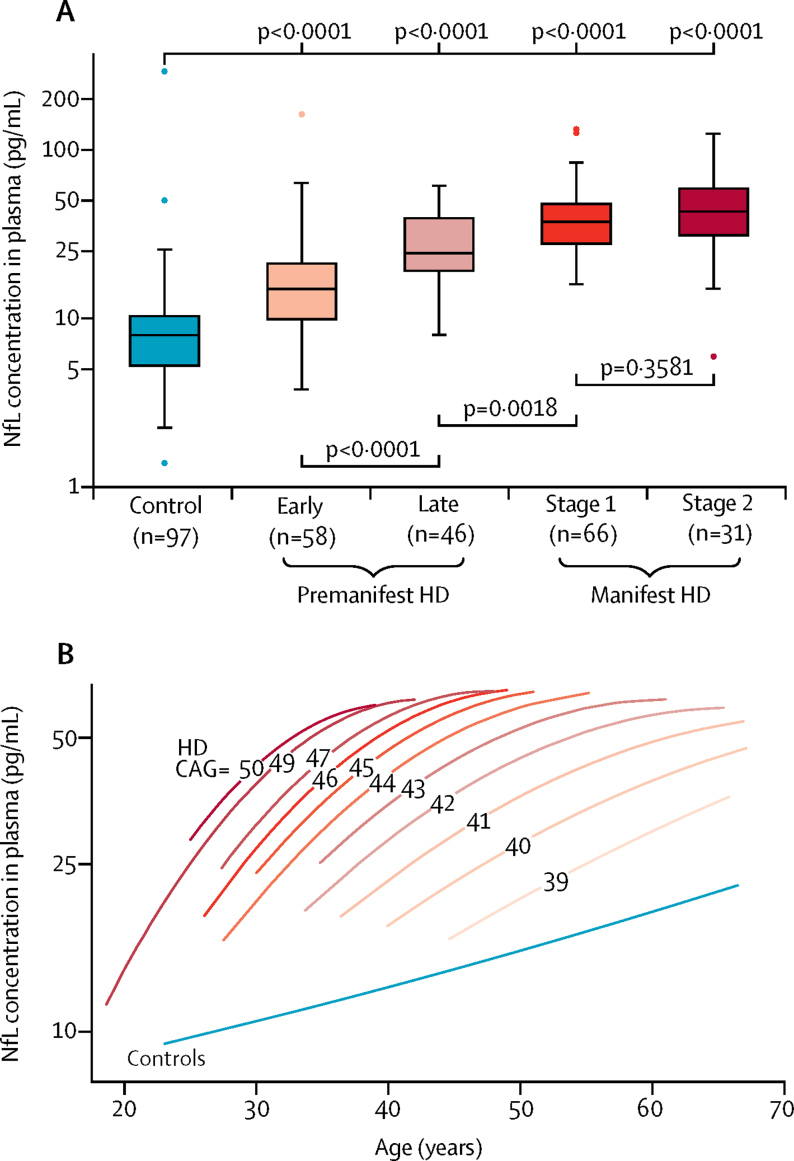
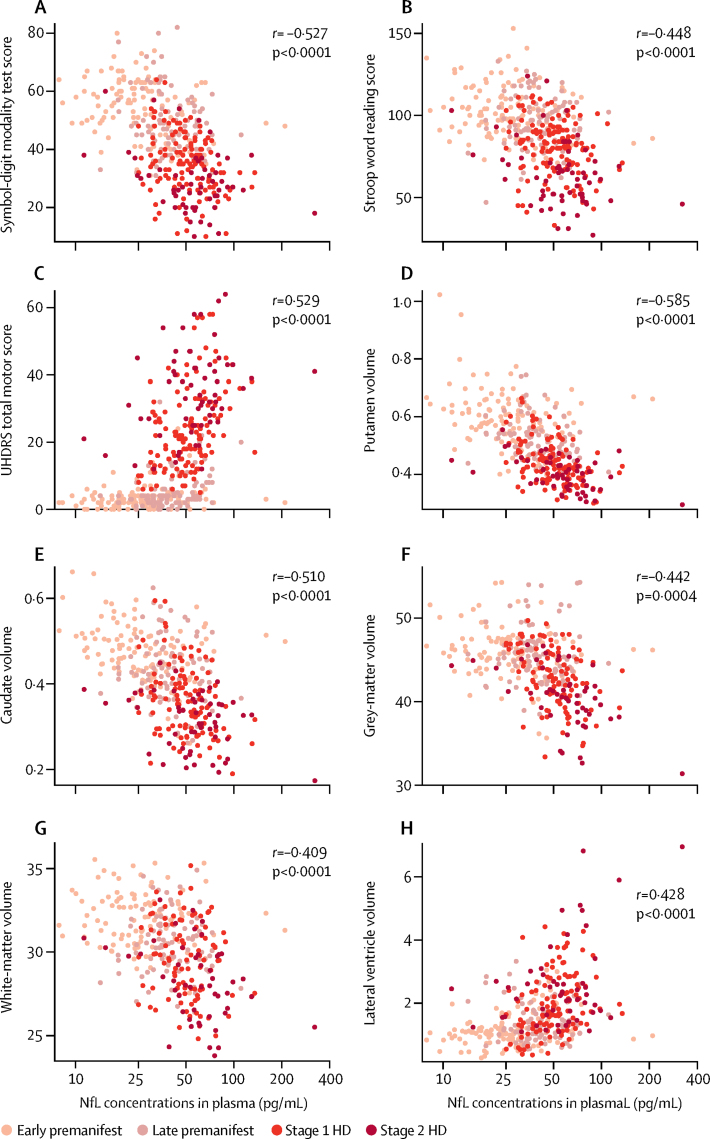
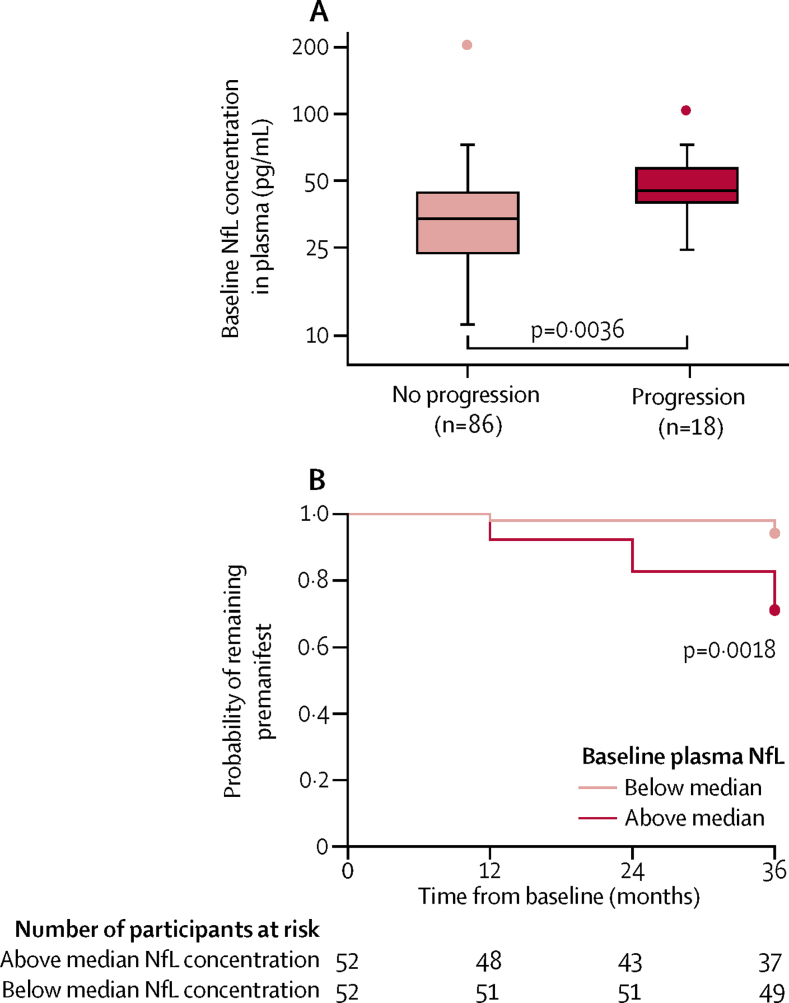
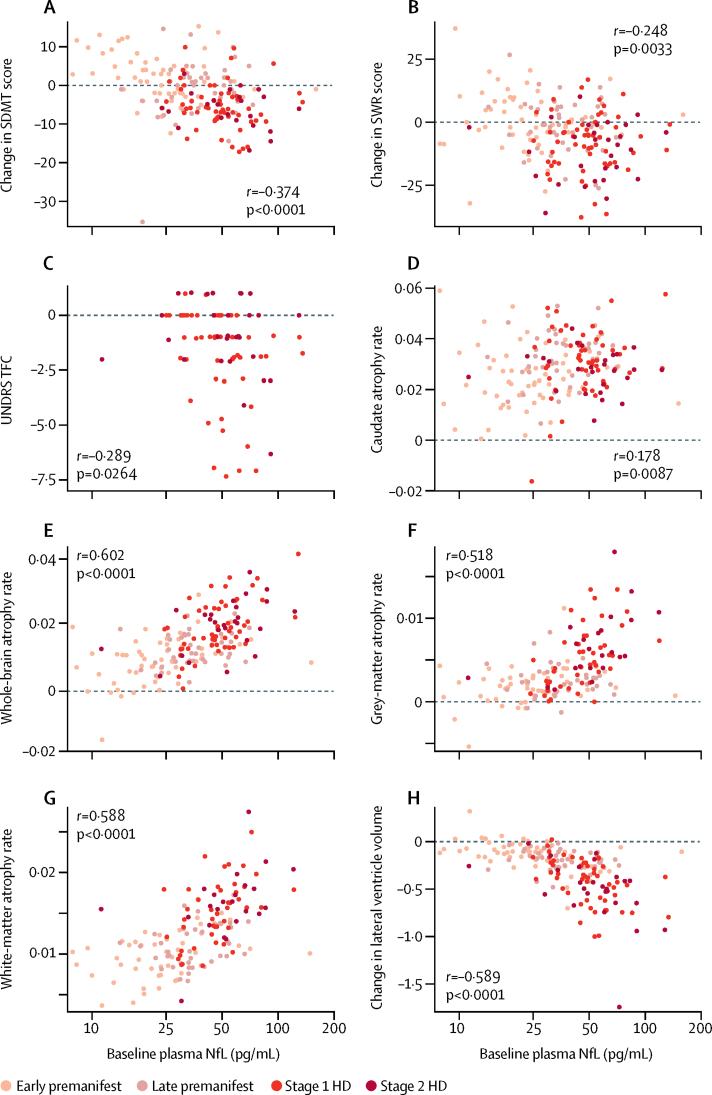
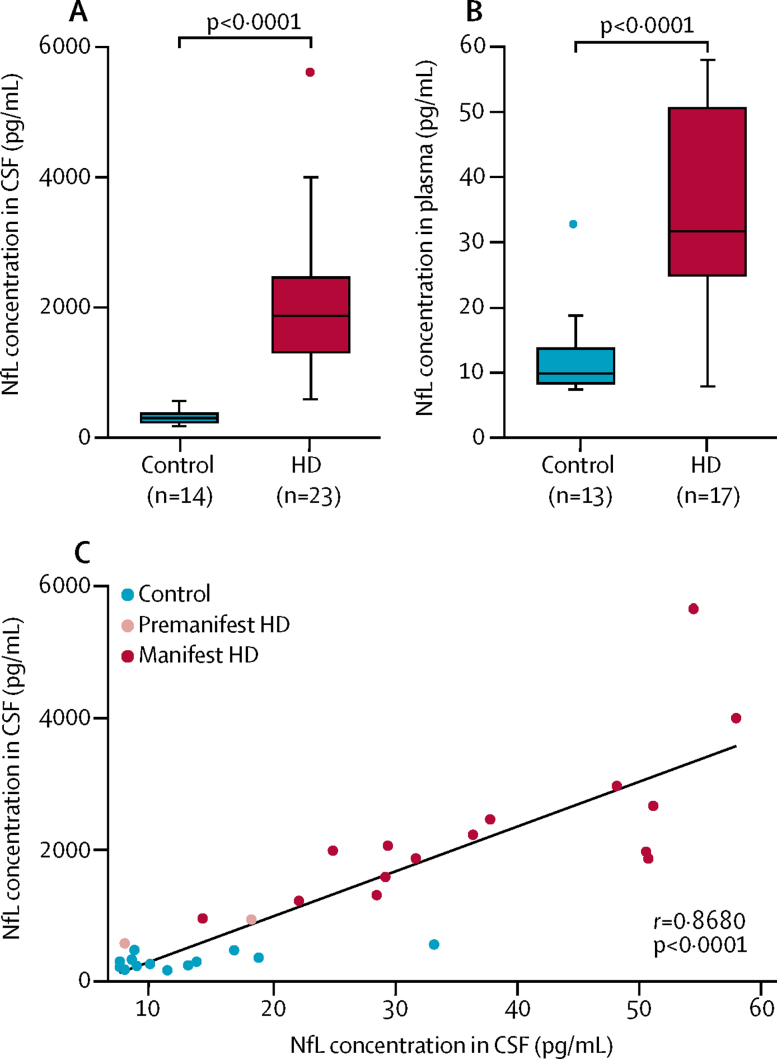
BACKGROUND: Blood biomarkers of neuronal damage could facilitate clinical management of and therapeutic development for Huntington's disease. We investigated whether neurofilament light protein NfL (also known as NF-L) in blood is a potential prognostic marker of neurodegeneration in patients with Huntington's disease. METHODS: We did a retrospective analysis of healthy controls and carriers of CAG expansion mutations in HTT participating in the 3-year international TRACK-HD study. We studied associations between NfL concentrations in plasma and clinical and MRI neuroimaging findings, namely cognitive function, motor function, and brain volume (global and regional). We used random effects models to analyse cross-sectional associations at each study visit and to assess changes from baseline, with and without adjustment for age and CAG repeat count. In an independent London-based cohort of 37 participants (23 HTT mutation carriers and 14 controls), we further assessed whether concentrations of NfL in plasma correlated with those in CSF. FINDINGS: Baseline and follow-up plasma samples were available from 97 controls and 201 individuals carrying HTT mutations. Mean concentrations of NfL in plasma at baseline were significantly higher in HTT mutation carriers than in controls (3·63 [SD 0·54] log pg/mL vs 2·68 [0·52] log pg/mL, p<0·0001) and the difference increased from one disease stage to the next. At any given timepoint, NfL concentrations in plasma correlated with clinical and MRI findings. In longitudinal analyses, baseline NfL concentration in plasma also correlated significantly with subsequent decline in cognition (symbol-digit modality test r=-0·374, p<0·0001; Stroop word reading r=-0·248, p=0·0033), total functional capacity (r=-0·289, p=0·0264), and brain atrophy (caudate r=0·178, p=0·0087; whole-brain r=0·602, p<0·0001; grey matter r=0·518, p<0·0001; white matter r=0·588, p<0·0001; and ventricular expansion r=-0·589, p<0·0001). All changes except Stroop word reading and total functional capacity remained significant after adjustment for age and CAG repeat count. In 104 individuals with premanifest Huntington's disease, NfL concentration in plasma at baseline was associated with subsequent clinical onset during the 3-year follow-up period (hazard ratio 3·29 per log pg/mL, 95% CI 1·48-7·34, p=0·0036). Concentrations of NfL in CSF and plasma were correlated in mutation carriers (r=0·868, p<0·0001). INTERPRETATION: NfL in plasma shows promise as a potential prognostic blood biomarker of disease onset and progression in Huntington's disease. FUNDING: Medical Research Council, GlaxoSmithKline, CHDI Foundation, Swedish Research Council, European Research Council, Wallenberg Foundation, and Wolfson Foundation.
Overview
The claims and statistics of this paper haven’t been checked yet.
Free: it reads the open-access text and checks the first 5 claims that cite a source we can check. Create a free account to check every claim.
Integrity signals
Registry
Cites
Statistics
Figures
Verification
Claims the paper makes
The claims and statistics of this paper haven’t been checked yet.
Free: it reads the open-access text and checks the first 5 claims that cite a source we can check. Create a free account to check every claim.
Claims other papers make about this one
Each is checked against this paper’s own text: does it say what the citing paper says it does?
The check wasn’t confident either way, so it gives no verdict — never disputed.
In the citing paper
“A composite blood biomarker for amyloid tested in a discovery dataset and then a validation cohort of participants aged 60–90 years who were already taking part in studies in Japan or Australia had areas under the receiver operating characteristic curves of 96·7% for discovery and 94·1% for validation. The blood biomarker had sensitivity and specificity above 80% against amyloid PET measurement188”
From Dementia prevention, intervention, and care: 2020 report of the Lancet Commission (2020) · cites this paper as [188]
Experimental — accuracy not yet measuredIn the citing paper
“Increased absolute NfL levels in the blood in the symptomatic disease phase is consistent with similar observations in progressive supranuclear palsy28, Huntington’s disease30, and multiple sclerosis14.”
From Serum neurofilament dynamics predicts neurodegeneration and clinical progression in presymptomatic Alzheimer’s disease (2019) · cites this paper as [30]
Self-check
Percentages, sums and reported differences re-computed from the paper’s own numbers.
The self-check needs the paper’s full text.
Citations
Cites
Bates, G. P., Dorsey, R., Gusella, J. F., Hayden, M. R., Kay, C., Leavitt, B. R., Nance, M., Ross, C. A., Scahill, R. I., Wetzel, R., et al. (2015) · Nature Reviews Disease Primers · doi:10.1038/nrdp.2015.5 · Cited by 1,641
Self-citationHuntington disease: natural history, biomarkers and prospects for therapeutics
Ross, C. A., Aylward, E. H., Wild, E. J., Langbehn, D. R., Long, J. D., Warner, J. H., Scahill, R. I., Leavitt, B. R., Stout, J. C., Paulsen, J. S., et al. (2014) · Nature Reviews Neurology · doi:10.1038/nrneurol.2014.24 · Cited by 1,016
Self-citationTabrizi, S. J., Langbehn, D. R., Leavitt, B. R., Roos, R. A., Durr, A., Craufurd, D., Kennard, C., Hicks, S. L., Fox, N. C., Scahill, R. I., et al. (2009) · The Lancet Neurology · doi:10.1016/s1474-4422(09)70170-x · Cited by 984
Self-citationTabrizi, S. J., Scahill, R. I., Owen, G., Durr, A., Leavitt, B. R., Roos, R. A., Borowsky, B., Landwehrmeyer, B., Frost, C., Johnson, H., et al. (2013) · The Lancet Neurology · doi:10.1016/s1474-4422(13)70088-7 · Cited by 846
Self-citationNeurofilament light chain: A prognostic biomarker in amyotrophic lateral sclerosis
Lu, C.-H., Macdonald-Wallis, C., Gray, E., Pearce, N., Petzold, A., Norgren, N., Giovannoni, G., Fratta, P., Sidle, K., Fish, M., et al. (2015) · Neurology · doi:10.1212/wnl.0000000000001642 · Cited by 563
Blood-based NfL: A biomarker for differential diagnosis of parkinsonian disorder
Hansson, O., Janelidze, S., Hall, S., Magdalinou, N., Lees, A. J., Andreasson, U., Norgren, N., Linder, J., Forsgren, L., Constantinescu, R., et al. (2017) · Neurology · doi:10.1212/wnl.0000000000003680 · Cited by 506
Self-citationRosengren, L. E., Karlsson, J., Karlsson, J., Persson, L. I., & Wikkelsø, C. (1996) · Journal of Neurochemistry · doi:10.1046/j.1471-4159.1996.67052013.x · Cited by 499
Increased Neurofilament Light Chain Blood Levels in Neurodegenerative Neurological Diseases
Gaiottino, J., Norgren, N., Dobson, R., Topping, J., Nissim, A., Malaspina, A., Bestwick, J. P., Monsch, A. U., Regeniter, A., Lindberg, R. L., et al. (2013) · PLoS ONE · doi:10.1371/journal.pone.0075091 · Cited by 486
Serum neurofilament light chain protein is a measure of disease intensity in frontotemporal dementia
Rohrer, J. D., Woollacott, I. O. C., Dick, K. M., Brotherhood, E., Gordon, E., Fellows, A., Toombs, J., Druyeh, R., Cardoso, M. J., Ourselin, S., et al. (2016) · Neurology · doi:10.1212/wnl.0000000000003154 · Cited by 432
Self-citationWild, E. J., Boggio, R., Langbehn, D., Robertson, N., Haider, S., Miller, J. R. C., Zetterberg, H., Leavitt, B. R., Kuhn, R., Tabrizi, S. J., et al. (2015) · Journal of Clinical Investigation · doi:10.1172/jci80743 · Cited by 268
Self-citation
Cited by
Dementia prevention, intervention, and care: 2020 report of the Lancet Commission
Livingston, G., Huntley, J., Sommerlad, A., Ames, D., Ballard, C., Banerjee, S., Brayne, C., Burns, A., Cohen-Mansfield, J., Cooper, C., et al. (2020) · The Lancet · doi:10.1016/s0140-6736(20)30367-6 · Cited by 10,430
RetractedNeurofilaments as biomarkers in neurological disorders
Khalil, M., Teunissen, C. E., Otto, M., Piehl, F., Sormani, M. P., Gattringer, T., Barro, C., Kappos, L., Comabella, M., Fazekas, F., et al. (2018) · Nature Reviews Neurology · doi:10.1038/s41582-018-0058-z · Cited by 1,988
Self-citationHuntington's disease: a clinical review
McColgan, P., & Tabrizi, S. J. (2018) · European Journal of Neurology · doi:10.1111/ene.13413 · Cited by 1,089
Self-citationDominantly Inherited Alzheimer Network, Preische, O., Schultz, S. A., Apel, A., Kuhle, J., Kaeser, S. A., Barro, C., Gräber, S., Kuder-Buletta, E., LaFougere, C., et al. (2019) · Nature Medicine · doi:10.1038/s41591-018-0304-3 · Cited by 927
Huntington disease: new insights into molecular pathogenesis and therapeutic opportunities
Tabrizi, S. J., Flower, M. D., Ross, C. A., & Wild, E. J. (2020) · Nature Reviews Neurology · doi:10.1038/s41582-020-0389-4 · Cited by 538
Self-citationNeurofilaments as biomarkers in neurological disorders — towards clinical application
Khalil, M., Teunissen, C. E., Lehmann, S., Otto, M., Piehl, F., Ziemssen, T., Bittner, S., Sormani, M. P., Gattringer, T., Abu-Rumeileh, S., et al. (2024) · Nature Reviews Neurology · doi:10.1038/s41582-024-00955-x · Cited by 446
“Participants with low NfL concentrations were more likely to remain at the premanifest stage without noticeable abnormalities on the Unified Huntington’s Disease Rating Scale 291 .”
InfluentialSelf-citationCurrent state of Alzheimer’s fluid biomarkers
Molinuevo, J. L., Ayton, S., Batrla, R., Bednar, M. M., Bittner, T., Cummings, J., Fagan, A. M., Hampel, H., Mielke, M. M., Mikulskis, A., et al. (2018) · Acta Neuropathologica · doi:10.1007/s00401-018-1932-x · Cited by 518
Self-citationTabrizi, S. J., Estevez-Fraga, C., van Roon-Mom, W. M. C., Flower, M. D., Scahill, R. I., Wild, E. J., Muñoz-Sanjuan, I., Sampaio, C., Rosser, A. E., & Leavitt, B. R. (2022) · The Lancet Neurology · doi:10.1016/s1474-4422(22)00121-1 · Cited by 331
Self-citationNeurofilaments: neurobiological foundations for biomarker applications
Gafson, A. R., Barthélemy, N. R., Bomont, P., Carare, R. O., Durham, H. D., Julien, J.-P., Kuhle, J., Leppert, D., Nixon, R. A., Weller, R. O., et al. (2020) · Brain · doi:10.1093/brain/awaa098 · Cited by 325
Self-citationHuntingtin Lowering Strategies for Disease Modification in Huntington’s Disease
Tabrizi, S. J., Ghosh, R., & Leavitt, B. R. (2019) · Neuron · doi:10.1016/j.neuron.2019.01.039 · Cited by 337
Self-citationTherapies targeting DNA and RNA in Huntington's disease
Wild, E. J., & Tabrizi, S. J. (2017) · The Lancet Neurology · doi:10.1016/s1474-4422(17)30280-6 · Cited by 298
Self-citationLiss, J. L., Seleri Assunção, S., Cummings, J., Atri, A., Geldmacher, D. S., Candela, S. F., Devanand, D. P., Fillit, H. M., Susman, J., Mintzer, J., et al. (2021) · Journal of Internal Medicine · doi:10.1111/joim.13244 · Cited by 312
Neurofilament Proteins as Biomarkers to Monitor Neurological Diseases and the Efficacy of Therapies
Yuan, A., & Nixon, R. A. (2021) · Frontiers in Neuroscience · doi:10.3389/fnins.2021.689938 · Cited by 290
Blood neurofilament light: a critical review of its application to neurologic disease
Barro, C., Chitnis, T., & Weiner, H. L. (2020) · Annals of Clinical and Translational Neurology · doi:10.1002/acn3.51234 · Cited by 296
Lin, Y.-S., Lee, W.-J., Wang, S.-J., & Fuh, J.-L. (2018) · Scientific Reports · doi:10.1038/s41598-018-35766-w · Cited by 251
Serum neurofilament light: A biomarker of neuroaxonal injury after ischemic stroke
Tiedt, S., Duering, M., Barro, C., Kaya, A. G., Boeck, J., Bode, F. J., Klein, M., Dorn, F., Gesierich, B., Kellert, L., et al. (2018) · Neurology · doi:10.1212/wnl.0000000000006282 · Cited by 223
“Serum NfL levels increase during aging and are elevated in various neurologic conditions including traumatic brain injury,(14) multiple sclerosis,(15,16) and neurodegenerative diseases.(17,18)”
BackgroundClinical Features of Huntington’s Disease
Ghosh, R., & Tabrizi, S. J. (2018) · Advances in Experimental Medicine and Biology · doi:10.1007/978-3-319-71779-1_1 · Cited by 202
Self-citationCantó, E., Barro, C., Zhao, C., Caillier, S. J., Michalak, Z., Bove, R., Tomic, D., Santaniello, A., Häring, D. A., Hollenbach, J., et al. (2019) · JAMA Neurology · doi:10.1001/jamaneurol.2019.2137 · Cited by 199
Scahill, R. I., Zeun, P., Osborne-Crowley, K., Johnson, E. B., Gregory, S., Parker, C., Lowe, J., Nair, A., O'Callaghan, C., Langley, C., et al. (2020) · The Lancet Neurology · doi:10.1016/s1474-4422(20)30143-5 · Cited by 195
Self-citationByrne, L. M., Rodrigues, F. B., Johnson, E. B., Wijeratne, P. A., De Vita, E., Alexander, D. C., Palermo, G., Czech, C., Schobel, S., Scahill, R. I., et al. (2018) · Science Translational Medicine · doi:10.1126/scitranslmed.aat7108 · Cited by 194
Self-citationSerum neurofilament light is sensitive to active cerebral small vessel disease
Gattringer, T., Pinter, D., Enzinger, C., Seifert-Held, T., Kneihsl, M., Fandler, S., Pichler, A., Barro, C., Gröbke, S., Voortman, M., et al. (2017) · Neurology · doi:10.1212/wnl.0000000000004645 · Cited by 190
Wilton, D. K., Mastro, K., Heller, M. D., Gergits, F. W., Willing, C. R., Fahey, J. B., Frouin, A., Daggett, A., Gu, X., Kim, Y. A., et al. (2023) · Nature Medicine · doi:10.1038/s41591-023-02566-3 · Cited by 172
From Pathogenesis to Therapeutics: A Review of 150 Years of Huntington’s Disease Research
Jiang, A., Handley, R. R., Lehnert, K., & Snell, R. G. (2023) · International Journal of Molecular Sciences · doi:10.3390/ijms241613021 · Cited by 197
Ashton, N. J., Leuzy, A., Lim, Y. M., Troakes, C., Hortobágyi, T., Höglund, K., Aarsland, D., Lovestone, S., Schöll, M., Blennow, K., et al. (2019) · Acta Neuropathologica Communications · doi:10.1186/s40478-018-0649-3 · Cited by 172
Self-citationTherapeutic approaches to Huntington disease: from the bench to the clinic
Caron, N. S., Dorsey, E. R., & Hayden, M. R. (2018) · Nature Reviews Drug Discovery · doi:10.1038/nrd.2018.133 · Cited by 162
NFL is a marker of treatment response in children with SMA treated with nusinersen
Olsson, B., Alberg, L., Cullen, N. C., Michael, E., Wahlgren, L., Kroksmark, A.-K., Rostasy, K., Blennow, K., Zetterberg, H., & Tulinius, M. (2019) · Journal of Neurology · doi:10.1007/s00415-019-09389-8 · Cited by 159
Self-citationBlood-Based Biomarkers for Alzheimer’s Disease Diagnosis and Progression: An Overview
Varesi, A., Carrara, A., Pires, V. G., Floris, V., Pierella, E., Savioli, G., Prasad, S., Esposito, C., Ricevuti, G., Chirumbolo, S., et al. (2022) · Cells · doi:10.3390/cells11081367 · Cited by 139
Minikel, E. V., Zhao, H. T., Le, J., O’Moore, J., Pitstick, R., Graffam, S., Carlson, G. A., Kavanaugh, M. P., Križ, J., Kim, J. B., et al. (2020) · Nucleic Acids Research · doi:10.1093/nar/gkaa616 · Cited by 151
“Rotarod performance, an early sign in some prion models (63), and neuro-filament light (NfL) in blood, an early sentinel biomarker of more slowly progressive neurodegenerative diseases in both mice (64) and humans (65,66), were evaluated at –7 dpi and every 30 days following inoculation.”
Alirezaei, Z., Pourhanifeh, M. H., Borran, S., Nejati, M., Mirzaei, H., & Hamblin, M. R. (2020) · Molecular Neurobiology · doi:10.1007/s12035-019-01698-3 · Cited by 142
Blood-based biomarkers for Alzheimer’s disease—An update
Zetterberg, H. (2019) · Journal of Neuroscience Methods · doi:10.1016/j.jneumeth.2018.10.025 · Cited by 129
Self-citationPreventing amyotrophic lateral sclerosis: insights from pre-symptomatic neurodegenerative diseases
Benatar, M. G., Wuu, J., McHutchison, C. A., Postuma, R. B., Boeve, B. F., Petersen, R. C., Ross, C. A., Rosen, H. J., Arias, J. J., Fradette, S., et al. (2021) · Brain · doi:10.1093/brain/awab404 · Cited by 135
“Remarkably, blood NfL levels increase with progression, including in pre-manifest individuals over 10 years from predicted onset, and are also associated with clinical progression, brain atrophy and emergence of clinical disease.(62) Recently, it was demonstrated that alterations of specific peptide neuromodulators in…”
Gille, B., De Schaepdryver, M., Goossens, J., Dedeene, L., De Vocht, J., Oldoni, E., Goris, A., Van Den Bosch, L., Depreitere, B., Claeys, K. G., et al. (2019) · Neuropathology and Applied Neurobiology · doi:10.1111/nan.12511 · Cited by 120
Blood Biomarkers in Neurodegenerative Diseases: Implications for the Clinical Neurologist
Alcolea, D. A., Beeri, M. S., Rojas, J. C., Gardner, R. C., & Lleó, A. (2023) · Neurology · doi:10.1212/wnl.0000000000207193 · Cited by 133
“For example, depending on the phenotype or the stage of the disease, blood NfL has been shown to correlate with global measures of disease severity, basic or instrumental functions, severity of neuropsychiatric symptoms, motor function, neuropsychological performance or global or regional brain volume in AD,(35) prima…”
Background(2018) · Handbook of Clinical Neurology · doi:10.1016/b978-0-444-63233-3.00017-8 · Cited by 122
Self-citationNeurofilaments in pre-symptomatic ALS and the impact of genotype
Benatar, M., Wuu, J., Lombardi, V., Jeromin, A., Bowser, R., Andersen, P. M., & Malaspina, A. (2019) · Amyotrophic Lateral Sclerosis and Frontotemporal Degeneration · doi:10.1080/21678421.2019.1646769 · Cited by 115
Alagaratnam, J., von Widekind, S., Francesco, D. D., Underwood, J., Edison, P., Winston, A., Zetterberg, H., & Fidler, S. J. (2021) · BMJ Neurology Open · doi:10.1136/bmjno-2021-000143 · Cited by 129
Self-citationRodrigues, F. B., Byrne, L. M., Tortelli, R., Johnson, E. B., Wijeratne, P. A., Arridge, M., Vita, E. D., Ghazaleh, N., Houghton, R., Furby, H., et al. (2020) · Science Translational Medicine · doi:10.1126/scitranslmed.abc2888 · Cited by 115
Self-citationNeurofilament Light Chain as a Biomarker of Hereditary Transthyretin-Mediated Amyloidosis
Ticau, S., Sridharan, G. V., Tsour, S., Cantley, W. L., Chan, A., Gilbert, J. A., Erbe, D. V., Aldinc, E., Reilly, M. M., Adams, D., et al. (2020) · Neurology · doi:10.1212/wnl.0000000000011090 · Cited by 115
Technological advances and changing indications for lumbar puncture in neurological disorders
Costerus, J. M., Brouwer, M. C., & van de Beek, D. (2018) · The Lancet Neurology · doi:10.1016/s1474-4422(18)30033-4 · Cited by 114
Wilke, C., Haas, E., Reetz, K., Faber, J., García‐Moreno, H., Santana, M. M., van de Warrenburg, B. P. C., Hengel, H., Lima, M. C. F., Filla, A., et al. (2020) · EMBO Molecular Medicine · doi:10.15252/emmm.201911803 · Cited by 110
“This association between NfL levels and CAG repeat length suggests a dose–response relationship for SCA3 neurodegeneration and, together with analogous findings in Huntington’s disease (Byrne et al, 2017), more generally for polyglutamine disorders.”
MethodResultFrom Cerebrospinal Fluid to Blood: The Third Wave of Fluid Biomarkers for Alzheimer’s Disease
Zetterberg, H., & Blennow, K. (2018) · Journal of Alzheimer's Disease · doi:10.3233/jad-179926 · Cited by 94
“Recent data show that serum NfL effectively identifies onset of neurodegeneration in familial AD [39] and Huntington’s disease [40].”
BackgroundSelf-citationMovement Disorder Society Task Force Viewpoint: Huntington's Disease Diagnostic Categories
Ross, C. A., Reilmann, R., Cardoso, F., McCusker, E. A., Testa, C. M., Stout, J. C., Leavitt, B. R., Pei, Z., Landwehrmeyer, G. B., Martinez, A., et al. (2019) · Movement Disorders Clinical Practice · doi:10.1002/mdc3.12808 · Cited by 98
“In addition, biomarker research is advancing rapidly.(28,34,35) The proposed categories are based on clinical examination and have the limitation of the use of the diagnostic confidence scale with its disadvantage of implying a “pseudo-precision” via the “probability” thresholds.”
BackgroundSelf-citationBiomarkers of aging in frailty and age-associated disorders: State of the art and future perspective
Salvioli, S., Basile, M. S., Bencivenga, L., Carrino, S., Conte, M., Damanti, S., LORENZO, R. D., Fiorenzato, E., Gialluisi, A., Ingannato, A., et al. (2023) · Ageing Research Reviews · doi:10.1016/j.arr.2023.102044 · Cited by 98
“An inverse relationship with attention and processing speed was reported in HD (Byrne et al., 2017).”
Neurofilament light protein in blood predicts regional atrophy in Huntington disease
Johnson, E. B., Byrne, L. M., Gregory, S., Rodrigues, F. B., Blennow, K., Dürr, A., Leavitt, B. R., Roos, R. A. C., Zetterberg, H., Tabrizi, S. J., et al. (2018) · Neurology · doi:10.1212/wnl.0000000000005005 · Cited by 96
“Recently, NfL was proposed as a candidate prognostic blood biomarker of Huntington disease (HD) onset and progression.(2) Baseline NfL was retrospectively quantified in plasma using the well-characterized TRACK-HD cohort.”
BackgroundMethodInfluentialSelf-citationNeurofilament light chain is a promising serum biomarker in spinocerebellar ataxia type 3
Li, Q., Dong, Y., Yang, L., Xie, J., Ma, Y., Du, Y., Cheng, H., Wang, N., & Wu, Z. (2019) · Molecular Neurodegeneration · doi:10.1186/s13024-019-0338-0 · Cited by 90
Towards a treatment for genetic prion disease: trials and biomarkers
Vallabh, S. M., Minikel, E. V., Schreiber, S. L., & Lander, E. S. (2020) · The Lancet Neurology · doi:10.1016/s1474-4422(19)30403-x · Cited by 94
Sánchez-Valle, R., Heslegrave, A., Foiani, M. S., Bosch, B., Antonell, A., Balasa, M., Lladó, A., Zetterberg, H., & Fox, N. C. (2018) · Alzheimer's Research & Therapy · doi:10.1186/s13195-018-0439-y · Cited by 83
Self-citationNeurofilaments in disease: what do we know?
Gordon, B. A. (2020) · Current Opinion in Neurobiology · doi:10.1016/j.conb.2020.02.001 · Cited by 94
Meregalli, C., Fumagalli, G., Alberti, P., Canta, A., Chiorazzi, A., Monza, L., Pozzi, E., Carozzi, V., Blennow, K., Zetterberg, H., et al. (2020) · Archives of Toxicology · doi:10.1007/s00204-020-02755-w · Cited by 90
Self-citationPapapetropoulos, S., Pontius, A., Finger, E. C., Karrenbauer, V. D., Lynch, D. S., Brennan, M. J., Zappia, S., Koehler, W., Schöls, L. J., Hayer, S. N., et al. (2022) · Frontiers in Neurology · doi:10.3389/fneur.2021.788168 · Cited by 105
Thompson, A. G. B., Luk, C., Heslegrave, A. J., Zetterberg, H., Mead, S. H., Collinge, J., & Jackson, G. S. (2018) · Journal of Neurology, Neurosurgery & Psychiatry · doi:10.1136/jnnp-2017-317793 · Cited by 84
Self-citationChang, X., Huang, W., Wang, L., ZhangBao, J., Zhou, L., Lü, C., Wang, M., Yu, J. Y., Li, H., Li, Y., et al. (2021) · Frontiers in Immunology · doi:10.3389/fimmu.2021.647618 · Cited by 84
Latest advances in cerebrospinal fluid and blood biomarkers of Alzheimer’s disease
Milà-Alomà, M., Suárez-Calvet, M., & Molinuevo, J. L. (2019) · Therapeutic Advances in Neurological Disorders · doi:10.1177/1756286419888819 · Cited by 78
Standardizing the CAP Score in Huntington’s Disease by Predicting Age-at-Onset
Warner, J. H., Long, J. D., Mills, J. A., Langbehn, D. R., Ware, J. J., Mohan, A., & Sampaio, C. (2022) · Journal of Huntington s Disease · doi:10.3233/jhd-210475 · Cited by 83
Self-citationSathe, S. A., Ware, J. J., Levey, J., Neacy, E., Blumenstein, R., Noble, S., Mühlbäck, A., Rosser, A., Landwehrmeyer, G. B., & Sampaio, C. (2021) · Frontiers in Neurology · doi:10.3389/fneur.2021.667420 · Cited by 76
Dash, D., & Mestre, T. (2020) · Neurotherapeutics · doi:10.1007/s13311-020-00891-w · Cited by 81
Spinocerebellar ataxia clinical trials: opportunities and challenges
Brooker, S. M., Edamakanti, C. R., Akasha, S. M., Kuo, S., & Opal, P. (2021) · Annals of Clinical and Translational Neurology · doi:10.1002/acn3.51370 · Cited by 74
“In HD, for instance, the level of NFL in blood correlates with disease severity as assessed by standardized functional capacity scoring, brain atrophy on imaging, and CAG-repeat length.(121) While not all SCAs have been evaluated for NFL levels, in SCA3, serum levels of NFL are significantly elevated in patients compa…”
BackgroundNeurofilament light levels predict clinical progression and death in multiple system atrophy
Chelban, V., Nikram, E., Pérez‐Soriano, A., Wilke, C., Foubert‐Samier, A., Vijiaratnam, N., Guo, T., Jabbari, E., Olufodun, S., Gonzalez, M., et al. (2022) · Brain · doi:10.1093/brain/awac253 · Cited by 77
Self-citationFlavonoids targeting NRF2 in neurodegenerative disorders
Khan, H. Z., Tundis, R., Ullah, H., Aschner, M., Belwal, T., Mirzaei, H., & Akkol, E. K. (2020) · Food and Chemical Toxicology · doi:10.1016/j.fct.2020.111817 · Cited by 72
Neurofilaments: The C-Reactive Protein of Neurology
Lambertsen, K. L., Soares, C. B., Gaist, D., & Nielsen, H. H. (2020) · Brain Sciences · doi:10.3390/brainsci10010056 · Cited by 73
“In HD, biomarkers have the potential role of assessing therapeutic efficacy, and most recently NF has been tested in both CSF and plasma [35,36,130,131] (Table 1).”
BackgroundMethodCoarelli, G., Darios, F. D., Petit, E., Dorgham, K., Adanyeguh, I. M., Petit, E., Brice, A., Mochel, F., & Dürr, A. (2021) · Neurobiology of Disease · doi:10.1016/j.nbd.2021.105311 · Cited by 69
Serum and CSF neurofilament light chain levels in antibody-mediated encephalitis
Mariotto, S., Gajofatto, A., Zuliani, L., Zoccarato, M., Gastaldi, M., Franciotta, D. M., Cantalupo, G., Piardi, F., Polo, A., Alberti, D., et al. (2019) · Journal of Neurology · doi:10.1007/s00415-019-09306-z · Cited by 69
Mutant Huntingtin Is Cleared from the Brain via Active Mechanisms in Huntington Disease
Caron, N. S., Banos, R., Yanick, C., Aly, A. E., Byrne, L. M., Smith, E. D., Xie, Y., Smith, S. E. P., Potluri, N., Findlay Black, H., et al. (2021) · The Journal of Neuroscience · doi:10.1523/jneurosci.1865-20.2020 · Cited by 66
“…and cognitive symptom severity (Southwell et al., 2015; Wild et al., 2015) as well as CSF concentrations of tau and neurofilament light chain (NfL), which are associated with neurodegeneration (Constantinescu et al., 2009, 2011; Wild et al., 2015; Rodrigues et al., 2016; Byrne et al., 2017, 2018).”
BackgroundSelf-citationSoylu-Kucharz, R., Sandelius, Å., Sjögren, M., Blennow, K., Wild, E. J., Zetterberg, H., & Björkqvist, M. (2017) · Scientific Reports · doi:10.1038/s41598-017-14179-1 · Cited by 62
Self-citationThompson, A. G. B., Anastasiadis, P., Druyeh, R., Whitworth, I., Nayak, A., Nihat, A., Mok, T. H., Rudge, P., Wadsworth, J. D. F., Rohrer, J. D., et al. (2021) · Molecular Psychiatry · doi:10.1038/s41380-021-01045-w · Cited by 65
Self-citationFrom Recognition to Remedy: The Significance of Biomarkers in Neurodegenerative Disease Pathology
Toader, C., Dobrin, N., Brehar, F.-M., Popa, C., Covache-Busuioc, R.-A., Glavan, L.-A., Costin, H. P., Bratu, B.-G., Corlatescu, A.-D., Popa, A. A., et al. (2023) · International Journal of Molecular Sciences · doi:10.3390/ijms242216119 · Cited by 75
NFL blood levels are moderated by subconcussive impacts in a cohort of college football players
Rubin, L. H., Tierney, R., Kawata, K., Wesley, L., Lee, J. H., Blennow, K., Zetterberg, H., & Langford, D. (2019) · Brain Injury · doi:10.1080/02699052.2019.1565895 · Cited by 60
“Along with some of the more extensively studied blood biomarkers such as S100β and tau, neurofilament light chain (NFL) has recently gained more attention as a viable biomarker for neuronal damage associated with TBI (6,7) and concussion in contact sports (8), as well as for several neurodegenerative diseases includin…”
BackgroundSelf-citationHuntingtin Lowering Strategies for Disease Modification in Huntington’s Disease
Tabrizi, S. J., Ghosh, R., & Leavitt, B. R. (2019) · Neuron · doi:10.1016/j.neuron.2019.05.001 · Cited by 67
Self-citationRamani, S., Berard, J. A., & Walker, L. A. S. (2020) · Journal of the Neurological Sciences · doi:10.1016/j.jns.2020.117229 · Cited by 61
Huntington’s disease: Neuropsychiatric manifestations of Huntington’s disease
Goh, A., Wibawa, P., Loi, S. M., Walterfang, M., Velakoulis, D., & Looi, J. C. (2018) · Australasian Psychiatry · doi:10.1177/1039856218791036 · Cited by 78
Vikartovská, Z., Farbáková, J., Smolek, T., Hanes, J., Žilka, N., Horňáková, Ľ., Humeník, F., Maloveská, M., Hudáková, N., & Cizkova, D. (2021) · Frontiers in Veterinary Science · doi:10.3389/fvets.2020.551895 · Cited by 60
Fluid and imaging biomarkers for Huntington's disease
Zeun, P., Scahill, R. I., Tabrizi, S. J., & Wild, E. J. (2019) · Molecular and Cellular Neuroscience · doi:10.1016/j.mcn.2019.02.004 · Cited by 62
Self-citationEratne, D., Loi, S. M., Walia, N., Farrand, S., Li, Q.-X., Varghese, S., Walterfang, M., Evans, A., Mocellin, R., Dhiman, K., et al. (2020) · Australian & New Zealand Journal of Psychiatry · doi:10.1177/0004867419857811 · Cited by 56
“…disease, encephalitis and other neurodegenerative and neurological diseases, with levels often elevated prior to the onset of clinical symptoms (Byrne et al., 2017; Gaiani et al., 2017; Mattsson et al., 2017; Preische et al., 2019; Rohrer et al., 2016; Scherling et al., 2014; Skillback et…”
BackgroundInfluentialA Critical Evaluation of Wet Biomarkers for Huntington’s Disease: Current Status and Ways Forward
Silajdžić, E., & Björkqvist, M. (2018) · Journal of Huntington s Disease · doi:10.3233/jhd-170273 · Cited by 59
“HPA axis hyperactivity has been reported in early disease stage, primar- Table 7 Mutant huntingtin in HD compared to control Analyte Result Correlates with . . . Reference mtHTT, CSF ↑ Burden [114, 119] [114, 119] Onset [114, 119] TMS [114, 119] Cognition [114, 119] Abbreviations: Mutant huntingtin (mtHTT). ily in the…”
BackgroundCoarelli, G., Brice, A., & Dürr, A. (2018) · F1000Research · doi:10.12688/f1000research.15788.1 · Cited by 58
Palermo, G., Mazzucchi, S., Vecchia, A. D., Siciliano, G., Bonuccelli, U., Azuar, C., Ceravolo, R., Lista, S., Hampel, H., & Baldacci, F. (2020) · Molecular Neurobiology · doi:10.1007/s12035-020-02035-9 · Cited by 53
Prudencio, M., García‐Moreno, H., Jansen‐West, K. R., Al‐Shaikh, R. H., Gendron, T. F., Heckman, M. G., Spiegel, M. R., Carlomagno, Y., Daughrity, L. M., Song, Y., et al. (2020) · Science Translational Medicine · doi:10.1126/scitranslmed.abb7086 · Cited by 55
Blood biomarkers for Alzheimer's disease and related disorders
Zetterberg, H., & Schott, J. M. (2022) · Acta Neurologica Scandinavica · doi:10.1111/ane.13628 · Cited by 60
Self-citationMohan, A., Sun, Z., Ghosh, S., Li, Y., Sathe, S. A., Hu, J., & Sampaio, C. (2021) · Movement Disorders · doi:10.1002/mds.28866 · Cited by 67
“brain MRI of Huntington’s disease gene expansion carriers (HDGECs),(8,10) as well as changes in wet biomarkers such as neurofilament light protein (NfL).(11)”
BackgroundBai, X., Bian, Z., & Zhang, M. (2022) · Phytomedicine · doi:10.1016/j.phymed.2022.154582 · Cited by 58
The 2022 Lady Estelle Wolfson lectureship on neurofilaments
Petzold, A. (2022) · Journal of Neurochemistry · doi:10.1111/jnc.15682 · Cited by 56
“The number of CAG repeats correlated with Nf concentrations (Byrne et al., 2017).”
BackgroundSerum Raman spectroscopy as a diagnostic tool in patients with Huntington's disease
Huefner, A., Kuan, W., Mason, S., Mahajan, S., & Barker, R. A. (2019) · Chemical Science · doi:10.1039/c9sc03711j · Cited by 53
Development of an age‐adjusted model for blood neurofilament light chain
Harp, C. T., Thanei, G., Jia, X., Kühle, J., Leppert, D., Schaedelin, S. A., Benkert, P., von Büdingen, H., Hendricks, R., & Herman, A. H. (2022) · Annals of Clinical and Translational Neurology · doi:10.1002/acn3.51524 · Cited by 55
Serum neurofilament light in atrial fibrillation: clinical, neuroimaging and cognitive correlates
Polymeris, A. A., Coslovsky, M., Aeschbacher, S., Sinnecker, T., Benkert, P., Kobza, R., Beer, J. H., Rodondi, N., Fischer, U., Moschovitis, G., et al. (2020) · Brain Communications · doi:10.1093/braincomms/fcaa166 · Cited by 52
“, 2018) and neurodegenerative diseases (Byrne et al., 2017; Mattsson et al., 2017; Lin et al., 2018; van der Ende et al., 2019), and suggests that sNfL is a non-disease-specific marker of neuronal damage resulting in cognitive dysfunction.”
BackgroundVallès, A., Evers, M. M., Stam, A., Sogorb-González, M., Brouwers, C. C., Vendrell‐Tornero, C., Broekmans, Ş. A., Paerels, L., Klíma, J., Bohuslavová, B., et al. (2021) · Science Translational Medicine · doi:10.1126/scitranslmed.abb8920 · Cited by 53
Cerebrospinal fluid biomarkers for assessing Huntington disease onset and severity
Caron, N. S., Haqqani, A. S., Sandhu, A., Aly, A. E.-E., Black, H. F., Bone, J. N., McBride, J. L., Abulrob, A., Stanimirovic, D. B., Leavitt, B. R., et al. (2022) · Brain Communications · doi:10.1093/braincomms/fcac309 · Cited by 53
“In HD, NEFL levels in biofluids are correlated with clinical and imaging measures of disease(24,27) and are a strong prognostic biomarker of disease onset, progression and brain atrophy in HD patients.(25,27,29) Notably, NEFL is being used in HD clinical trials as an exploratory biomark-”
MethodResultInfluentialSelf-citationTau and neurofilament light‐chain as fluid biomarkers in spinocerebellar ataxia type 3
Garcia‐Moreno, H., Prudencio, M., Thomas‐Black, G., Solanky, N., Jansen‐West, K. R., Hanna AL‐Shaikh, R., Heslegrave, A., Zetterberg, H., Santana, M. M., Pereira de Almeida, L., et al. (2022) · European Journal of Neurology · doi:10.1111/ene.15373 · Cited by 49
Self-citationA Glimpse of Molecular Biomarkers in Huntington’s Disease
Martínez, S. M., & Valor, L. M. (2022) · International Journal of Molecular Sciences · doi:10.3390/ijms23105411 · Cited by 52
“Although NF-L levels are easier to be detected in CSF than in plasma, collection of plasma is less invasive for donors once it has been demonstrated that there is a good correlation between CSF and plasma levels for this protein [45,47].”
BackgroundPlasma Markers of Neurodegeneration Are Raised in Friedreich’s Ataxia
Zeitlberger, A. M., Thomas‐Black, G., García‐Moreno, H., Foiani, M. S., Heslegrave, A., Zetterberg, H., & Giunti, P. (2018) · Frontiers in Cellular Neuroscience · doi:10.3389/fncel.2018.00366 · Cited by 52
“Over the past decade, several brain-derived proteins have emerged as promising candidate markers for neurodegeneration in a variety of acute and chronic neurological diseases (Zetterberg et al., 2013; Burman et al., 2014; Benninger et al., 2016; Byrne et al., 2017).”
BackgroundSelf-citationSerum Neurofilament light correlates with CADASIL disease severity and survival
Gravesteijn, G., Rutten, J. W., Verberk, I. M. W., Böhringer, S., Liem, M. K., van der Grond, J., Aartsma-Rus, A. M., Teunissen, C. E., & Oberstein, S. A. J. L. (2018) · Annals of Clinical and Translational Neurology · doi:10.1002/acn3.678 · Cited by 49
Plasma levels of soluble TREM2 and neurofilament light chain in TREM2 rare variant carriers
Ashton, N. J., Suárez-Calvet, M., Heslegrave, A., Hye, A., Razquin, C., Pastor, P., Sanchez-Valle, R., Molinuevo, J. L., Visser, P. J., Blennow, K., et al. (2019) · Alzheimer's Research & Therapy · doi:10.1186/s13195-019-0545-5 · Cited by 46
Self-citationSimmons, D. A., James, M. L., Belichenko, N. P., Semaan, S., Condon, C., Kuan, J., Shuhendler, A. J., Miao, Z., Chin, F. T., & Longo, F. M. (2018) · Human Molecular Genetics · doi:10.1093/hmg/ddy202 · Cited by 47
“light chain protein (NfL) as a potential plasma biomarker with prognostic value for onset and progression in HD patients (17) and could be applicable for monitoring the efficacy of a widearray of therapeutics as it is expunged from degenerating neurons.”
BackgroundTranslation of MicroRNA-Based Huntingtin-Lowering Therapies from Preclinical Studies to the Clinic
Miniarikova, J., Evers, M. M., & Konstantinova, P. S. (2018) · Molecular Therapy · doi:10.1016/j.ymthe.2018.02.002 · Cited by 50
“In this study, we also evaluated the role of pre-miRNA scaffolds in the efficacy and preliminary safety of therapeutic miRNA constructs and identified the premiR-451 precursor suitable for the miRNA-based gene therapy to treat HD.”
BackgroundInfluentialIverson, G. L., Reddi, P. J., Posti, J. P., Kotilainen, A.-K., Tenovuo, O., Öhman, J., Zetterberg, H., Blennow, K., & Luoto, T. M. (2019) · Journal of Neurotrauma · doi:10.1089/neu.2018.6341 · Cited by 40
Self-citationSchwarz, A. J. (2021) · Neurotherapeutics · doi:10.1007/s13311-021-01027-4 · Cited by 42
Huntingtin silencing delays onset and slows progression of Huntington’s disease: a biomarker study
Liu, H., Zhang, C., Xu, J., Jin, J., Cheng, L., Miao, X., Wu, Q., Wei, Z., Liu, P., Lu, H., et al. (2021) · Brain · doi:10.1093/brain/awab190 · Cited by 44
Neurofilaments contribution in clinic: state of the art
Delaby, C., Bousiges, O., Bouvier, D., Fillée, C., Fourier, A., Mondésert, E., Nezry, N., Omar, S., Quadrio, I., Rucheton, B., et al. (2022) · Frontiers in Aging Neuroscience · doi:10.3389/fnagi.2022.1034684 · Cited by 39
“Concentrations of NfL in CSF and plasma were correlated in mutation carriers (r = 0.868, p < 0.0001; Byrne et al., 2017).”
BackgroundInfluentialStage‐Dependent Biomarker Changes in Spinocerebellar Ataxia Type 3
Faber, J., Berger, M., Wilke, C., Hübener‐Schmid, J., Schaprian, T., Santana, M. M., Grobe‐Einsler, M., Önder, D., Koyak, B., Giunti, P., et al. (2023) · Annals of Neurology · doi:10.1002/ana.26824 · Cited by 39
Sap, K. A., Guler, A. T., Bezstarosti, K., Bury, A. E., Juenemann, K., Demmers, J. A., & Reits, E. A. (2019) · Molecular & Cellular Proteomics · doi:10.1074/mcp.ra119.001486 · Cited by 41
“Neurofilament light protein has been proposed as a biomarker for HD as its increased levels in the cerebrospinal fluid and blood correlate with disease progression (62).”
BackgroundZhao, H., Mo, M., Miao, C., Li, L., Yang, H., Liu, Y., & Yang, G. (2020) · General Hospital Psychiatry · doi:10.1016/j.genhosppsych.2020.01.006 · Cited by 45
Metadata
- Authors
- Byrne, L. M., Rodrigues, F. B., Blennow, K., Durr, A., Leavitt, B. R., Roos, R. A. C., Scahill, R. I., Tabrizi, S. J., Zetterberg, H., Langbehn, D., & Wild, E. J.
- Affiliations
- UCL Queen Square Institute of Neurology (GB)
- Sahlgrenska University Hospital (SE)
- University of British Columbia (CA)
- Leiden University (NL)
- University of Iowa (US)
- Corresponding author
- Wild, Edward J
- ORCID
- Venue
- The Lancet Neurology
- Publisher
- Elsevier BV
- Published
- 2017-08
- Volume
- 16
- Issue
- 8
- Pages
- 601-609
- ISSN
- 1474-4422 (ISSN-L)
- PMC
- PMC5507767
- OpenAlex
- W2623948558
- Semantic Scholar
- f82e82b6f19d69195340a224ecde75e11c5a7a05
- Cited by
- 364
- References
- 27
- Citations by year
- 2026: 28 · 2025: 35 · 2024: 36 · 2023: 44 · 2022: 47 · 2021: 49 · 2020: 39 · 2019: 38 · 2018: 37 · 2017: 11
- FWCI
- 16.74
- Type
- journal article
- Language
- en
- Open access
- hybrid
- doi.org
- Licence
- cc-by
- www.elsevier.com/tdm/userlicense/1.0/ (tdm)
- creativecommons.org/licenses/by/4.0/ (vor)
- Locations
- The Lancet Neurology (publishedVersion, cc-by)
- PubMed Central (publishedVersion, cc-by)
- PubMed (publishedVersion)
- Leiden Repository (Leiden University) (submittedVersion)
- Data Archiving and Networked Services (DANS) (submittedVersion, other-oa)
- HAL (submittedVersion, other-oa)
- UCL Discovery (University College London) (submittedVersion)
- Funders
- NIHR Biomedical Research Centre, Royal Marsden NHS Foundation Trust/Institute of Cancer Research
- Research Councils UK
- Knut och Alice Wallenbergs Stiftelse
- Vetenskapsrådet
- National Institutes of Health
- Medical Research Council (MR/M008592/1)
- Topics
- Life Sciences › Neuroscience › Cellular and Molecular Neuroscience › Genetic Neurodegenerative Diseases
- Life Sciences › Neuroscience › Cellular and Molecular Neuroscience › Hereditary Neurological Disorders
- Health Sciences › Medicine › Genetics (clinical) › Lysosomal Storage Disorders Research
- Keywords
- Huntington's disease, neurofilament light chain, blood biomarkers, neurodegeneration, CAG repeat expansion, cognitive decline, brain atrophy, TRACK-HD, prognostic factors, disease stage progression, functional capacity, ventriculomegaly, caudate atrophy, neuroimaging biomarkers
- MeSH terms
- Huntingtin Protein, Adult, Aged, Atrophy, Brain, Follow-Up Studies, Humans, Huntington Disease, Middle Aged, Retrospective Studies, Biomarkers, Neurofilament Proteins, Disease Progression, Trinucleotide Repeat Expansion, Young Adult, Cognitive Dysfunction
About these checks
Registry, retraction, Cites and statistics results are computed, not judged, with one exception: a printed reference that no index lists is read once by a model before it counts as a citation error. Claims are extracted by a model and kept only when their quote appears verbatim in the text; each cited source is then checked, with a model’s help, for whether it says what the claim relies on. Those verdicts can be wrong — read the claim’s quote and the cited source before relying on one.
Statistics and arithmetic are recomputed, not judged.
Confidence bands are shown only for fields calibrated on our annotated test set. None is calibrated yet, so no band is shown.
What counts as a claim ›How we measure confidence ›How we check this ›
Are you an author, or do you see a problem with this page? Request a review
Data sources
Bibliographic data: Semantic Scholar, OpenAlex, Crossref.
Contains information from the Semantic Scholar Academic Graph Datasets, made available under the ODC Attribution License (ODC-BY 1.0).
Semantic Scholar’s data is described in: Kinney, R., et al. (2023). The Semantic Scholar Open Data Platform. arXiv:2301.10140.
