

Neurofilament light protein in blood as a potential biomarker of neurodegeneration in Huntington's disease: a retrospective cohort analysis
Open accessThe DOI matches its Crossref record; 27 of the 27 references it cites were found in a registry or an index.
Abstract
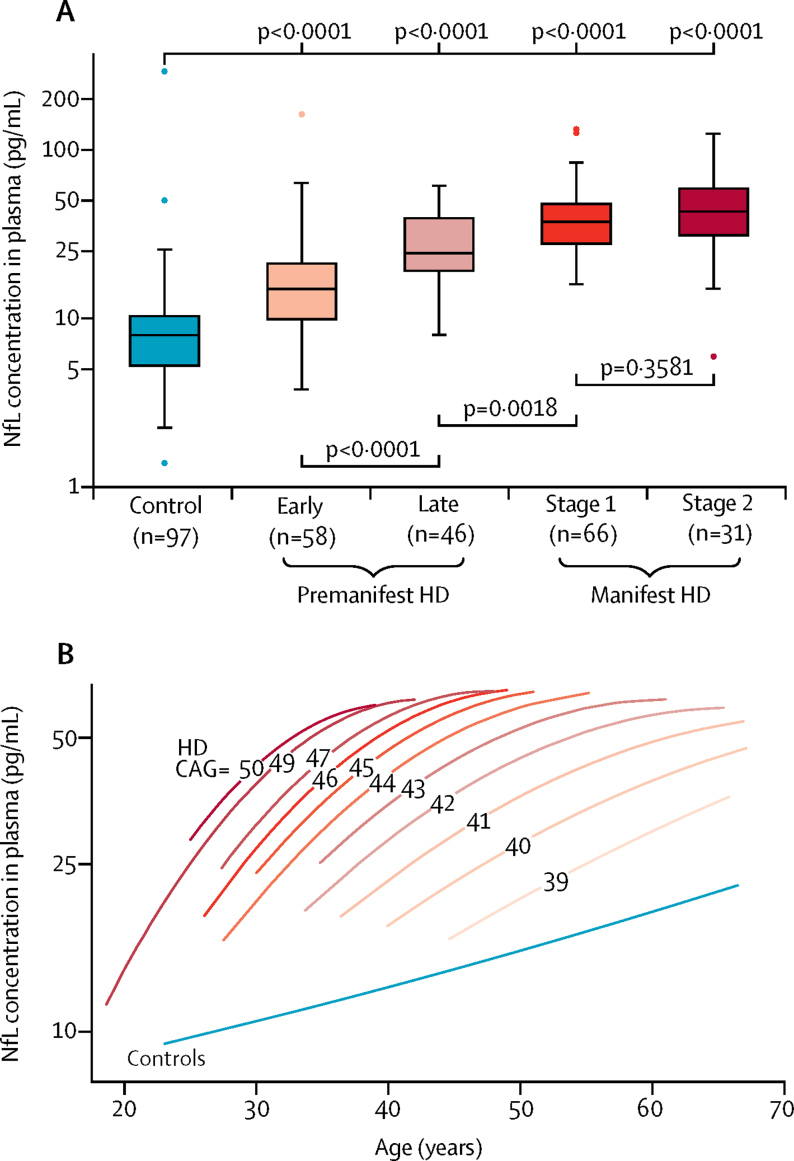
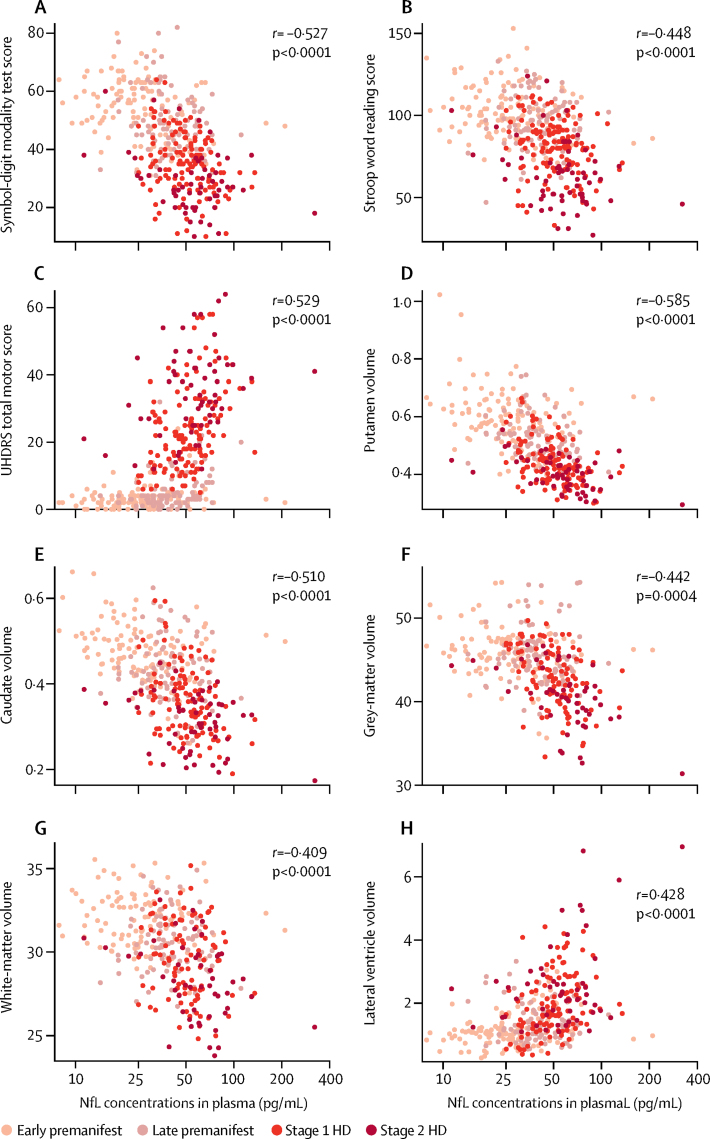
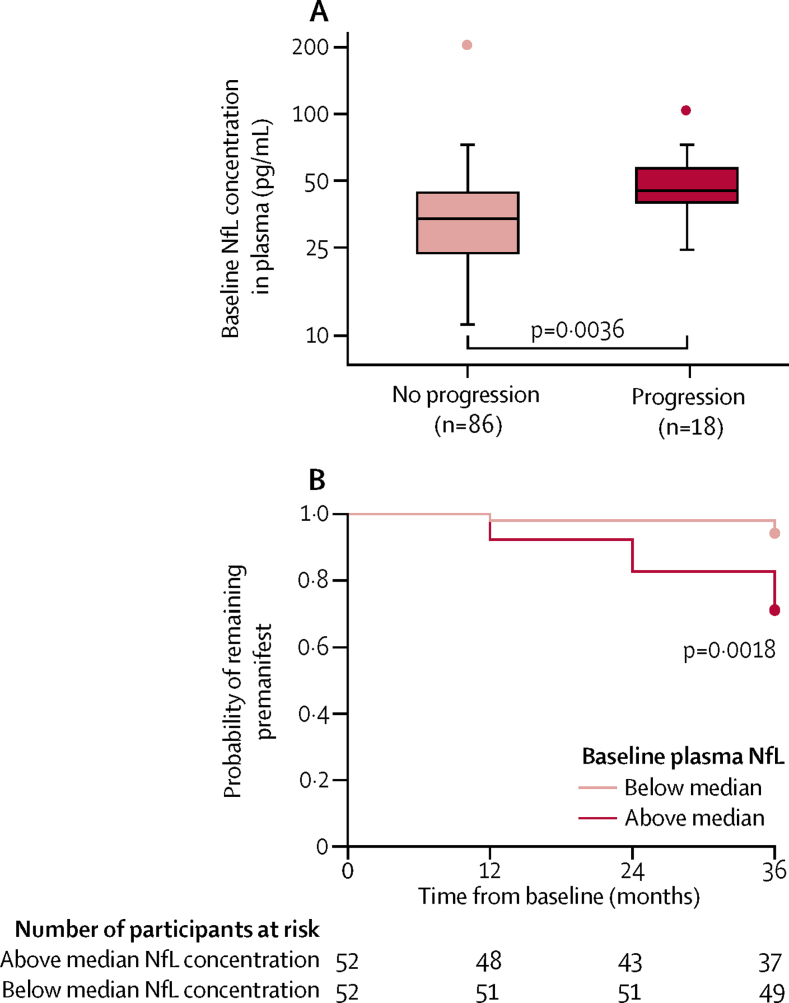
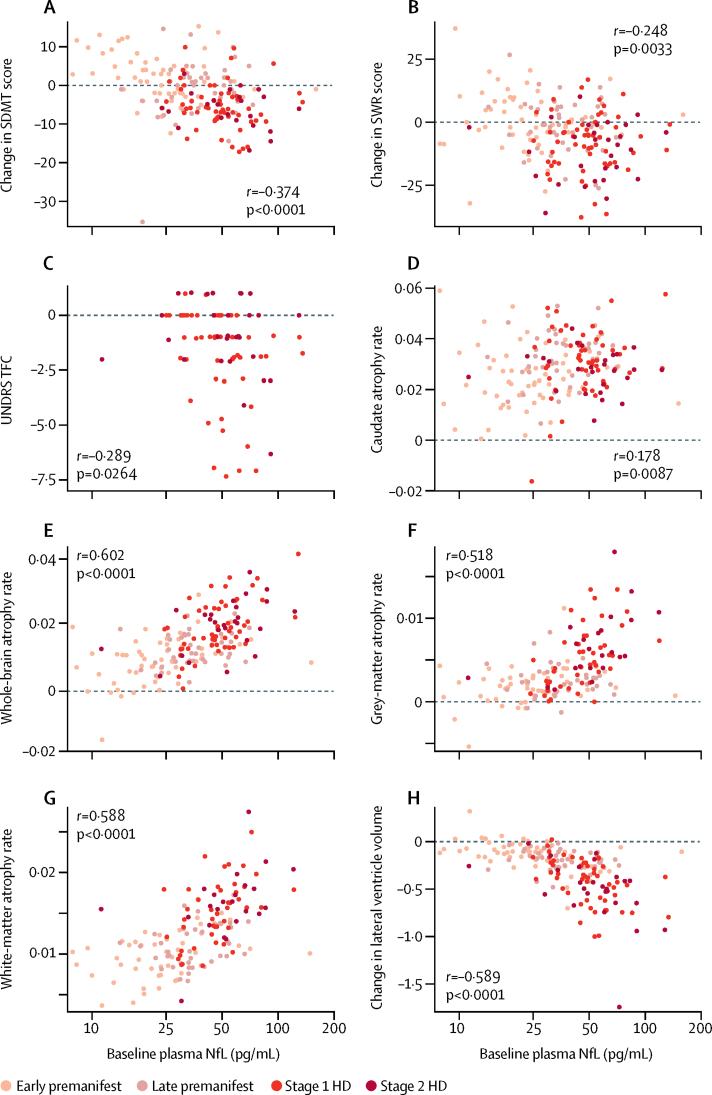
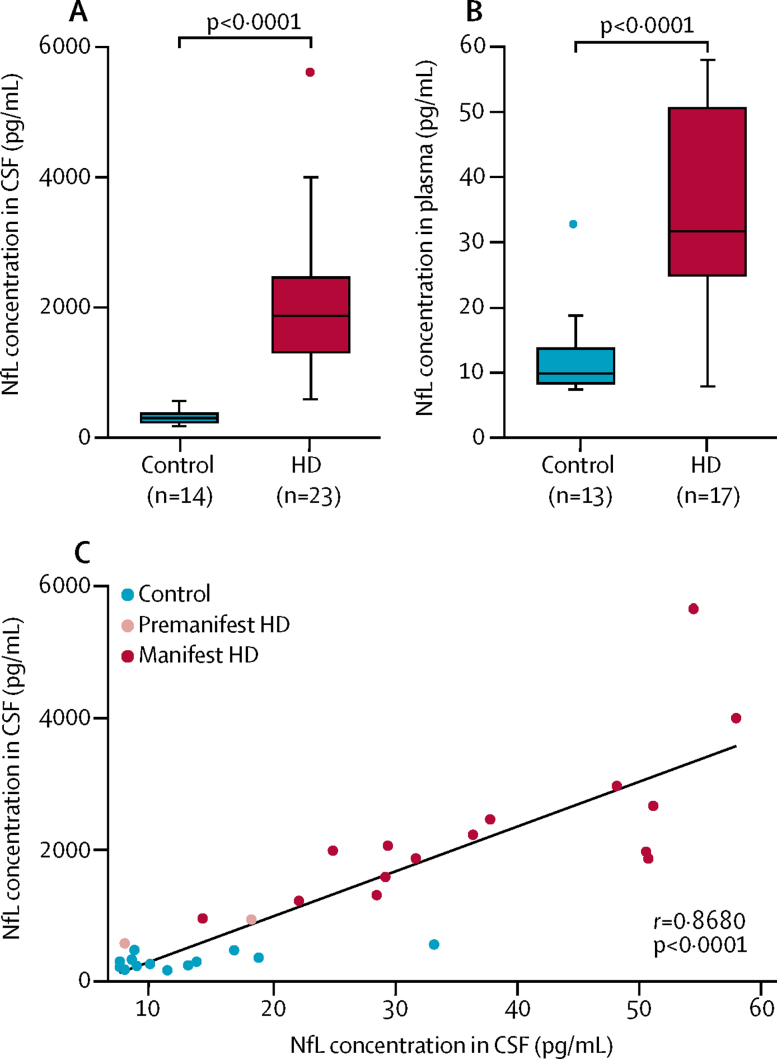
BACKGROUND: Blood biomarkers of neuronal damage could facilitate clinical management of and therapeutic development for Huntington's disease. We investigated whether neurofilament light protein NfL (also known as NF-L) in blood is a potential prognostic marker of neurodegeneration in patients with Huntington's disease. METHODS: We did a retrospective analysis of healthy controls and carriers of CAG expansion mutations in HTT participating in the 3-year international TRACK-HD study. We studied associations between NfL concentrations in plasma and clinical and MRI neuroimaging findings, namely cognitive function, motor function, and brain volume (global and regional). We used random effects models to analyse cross-sectional associations at each study visit and to assess changes from baseline, with and without adjustment for age and CAG repeat count. In an independent London-based cohort of 37 participants (23 HTT mutation carriers and 14 controls), we further assessed whether concentrations of NfL in plasma correlated with those in CSF. FINDINGS: Baseline and follow-up plasma samples were available from 97 controls and 201 individuals carrying HTT mutations. Mean concentrations of NfL in plasma at baseline were significantly higher in HTT mutation carriers than in controls (3·63 [SD 0·54] log pg/mL vs 2·68 [0·52] log pg/mL, p<0·0001) and the difference increased from one disease stage to the next. At any given timepoint, NfL concentrations in plasma correlated with clinical and MRI findings. In longitudinal analyses, baseline NfL concentration in plasma also correlated significantly with subsequent decline in cognition (symbol-digit modality test r=-0·374, p<0·0001; Stroop word reading r=-0·248, p=0·0033), total functional capacity (r=-0·289, p=0·0264), and brain atrophy (caudate r=0·178, p=0·0087; whole-brain r=0·602, p<0·0001; grey matter r=0·518, p<0·0001; white matter r=0·588, p<0·0001; and ventricular expansion r=-0·589, p<0·0001). All changes except Stroop word reading and total functional capacity remained significant after adjustment for age and CAG repeat count. In 104 individuals with premanifest Huntington's disease, NfL concentration in plasma at baseline was associated with subsequent clinical onset during the 3-year follow-up period (hazard ratio 3·29 per log pg/mL, 95% CI 1·48-7·34, p=0·0036). Concentrations of NfL in CSF and plasma were correlated in mutation carriers (r=0·868, p<0·0001). INTERPRETATION: NfL in plasma shows promise as a potential prognostic blood biomarker of disease onset and progression in Huntington's disease. FUNDING: Medical Research Council, GlaxoSmithKline, CHDI Foundation, Swedish Research Council, European Research Council, Wallenberg Foundation, and Wolfson Foundation.
Overview
The claims and statistics of this paper haven’t been checked yet.
Free: it reads the open-access text and checks the first 5 claims that cite a source we can check. Create a free account to check every claim.
Integrity signals
Registry
Cites
Statistics
Figures
Verification
Claims the paper makes
The claims and statistics of this paper haven’t been checked yet.
Free: it reads the open-access text and checks the first 5 claims that cite a source we can check. Create a free account to check every claim.
Claims other papers make about this one
Each is checked against this paper’s own text: does it say what the citing paper says it does?
The check wasn’t confident either way, so it gives no verdict — never disputed.
In the citing paper
“A composite blood biomarker for amyloid tested in a discovery dataset and then a validation cohort of participants aged 60–90 years who were already taking part in studies in Japan or Australia had areas under the receiver operating characteristic curves of 96·7% for discovery and 94·1% for validation. The blood biomarker had sensitivity and specificity above 80% against amyloid PET measurement188”
From Dementia prevention, intervention, and care: 2020 report of the Lancet Commission (2020) · cites this paper as [188]
Experimental — accuracy not yet measuredIn the citing paper
“Increased absolute NfL levels in the blood in the symptomatic disease phase is consistent with similar observations in progressive supranuclear palsy28, Huntington’s disease30, and multiple sclerosis14.”
From Serum neurofilament dynamics predicts neurodegeneration and clinical progression in presymptomatic Alzheimer’s disease (2019) · cites this paper as [30]
Self-check
Percentages, sums and reported differences re-computed from the paper’s own numbers.
The self-check needs the paper’s full text.
Citations
Cites
Bates, G. P., Dorsey, R., Gusella, J. F., Hayden, M. R., Kay, C., Leavitt, B. R., Nance, M., Ross, C. A., Scahill, R. I., Wetzel, R., et al. (2015) · Nature Reviews Disease Primers · doi:10.1038/nrdp.2015.5 · Cited by 1,641
Self-citationHuntington disease: natural history, biomarkers and prospects for therapeutics
Ross, C. A., Aylward, E. H., Wild, E. J., Langbehn, D. R., Long, J. D., Warner, J. H., Scahill, R. I., Leavitt, B. R., Stout, J. C., Paulsen, J. S., et al. (2014) · Nature Reviews Neurology · doi:10.1038/nrneurol.2014.24 · Cited by 1,016
Self-citationTabrizi, S. J., Langbehn, D. R., Leavitt, B. R., Roos, R. A., Durr, A., Craufurd, D., Kennard, C., Hicks, S. L., Fox, N. C., Scahill, R. I., et al. (2009) · The Lancet Neurology · doi:10.1016/s1474-4422(09)70170-x · Cited by 984
Self-citationTabrizi, S. J., Scahill, R. I., Owen, G., Durr, A., Leavitt, B. R., Roos, R. A., Borowsky, B., Landwehrmeyer, B., Frost, C., Johnson, H., et al. (2013) · The Lancet Neurology · doi:10.1016/s1474-4422(13)70088-7 · Cited by 846
Self-citationNeurofilament light chain: A prognostic biomarker in amyotrophic lateral sclerosis
Lu, C.-H., Macdonald-Wallis, C., Gray, E., Pearce, N., Petzold, A., Norgren, N., Giovannoni, G., Fratta, P., Sidle, K., Fish, M., et al. (2015) · Neurology · doi:10.1212/wnl.0000000000001642 · Cited by 563
Blood-based NfL: A biomarker for differential diagnosis of parkinsonian disorder
Hansson, O., Janelidze, S., Hall, S., Magdalinou, N., Lees, A. J., Andreasson, U., Norgren, N., Linder, J., Forsgren, L., Constantinescu, R., et al. (2017) · Neurology · doi:10.1212/wnl.0000000000003680 · Cited by 506
Self-citationRosengren, L. E., Karlsson, J., Karlsson, J., Persson, L. I., & Wikkelsø, C. (1996) · Journal of Neurochemistry · doi:10.1046/j.1471-4159.1996.67052013.x · Cited by 499
Increased Neurofilament Light Chain Blood Levels in Neurodegenerative Neurological Diseases
Gaiottino, J., Norgren, N., Dobson, R., Topping, J., Nissim, A., Malaspina, A., Bestwick, J. P., Monsch, A. U., Regeniter, A., Lindberg, R. L., et al. (2013) · PLoS ONE · doi:10.1371/journal.pone.0075091 · Cited by 486
Serum neurofilament light chain protein is a measure of disease intensity in frontotemporal dementia
Rohrer, J. D., Woollacott, I. O. C., Dick, K. M., Brotherhood, E., Gordon, E., Fellows, A., Toombs, J., Druyeh, R., Cardoso, M. J., Ourselin, S., et al. (2016) · Neurology · doi:10.1212/wnl.0000000000003154 · Cited by 432
Self-citationWild, E. J., Boggio, R., Langbehn, D., Robertson, N., Haider, S., Miller, J. R. C., Zetterberg, H., Leavitt, B. R., Kuhn, R., Tabrizi, S. J., et al. (2015) · Journal of Clinical Investigation · doi:10.1172/jci80743 · Cited by 268
Self-citation
Cited by
Items 301–375 of 375
Glycosphingolipids in Dementia: Insights from Mass Spectrometry and Systems Biology Approaches
Sârbu, M., Ică, R., Biricioiu, M. R., Dehelean, L., & Zamfir, A. D. (2025) · Biomedicines · doi:10.3390/biomedicines13122854 · Cited by 1
Huntington’s Disease, Cognition, and Biological Markers
Fernández-Valle, T., & Murueta-Goyena, A. (2025) · Springer eBooks · doi:10.1007/978-3-031-73363-5_56 · Cited by 2
Martínez‐Horta, S., Puig‐Davi, A., Sampedro, F., Pérez‐Pérez, J., Franch-Martí, C., Olmedo‐Saura, G., Rivas-Asensio, E., Vazquez-Oliver, A., Pérez-Carasol, L., Horta‐Barba, A., et al. (2025) · Neuroimage Reports · doi:10.1016/j.ynirp.2025.100311 · Cited by 1
“At the biomarker level, plasma NfL levels were significantly associated with PD-CRS scores, even after adjusting for age, indicating that the PD-CRS reflects neurodegeneration beyond structural atrophy (Byrne et al., 2017; Parkin et al., 2024).”
Qin, F., He, X., Huang, X. J., Wang, Y., Mao, F.-L., & Ding, K.-F. (2026) · Frontiers in Neuroscience · doi:10.3389/fnins.2026.1779717 · Cited by 1
“This suggests that in VCI, the increase in blood NfL levels may more directly reflect axonal injury caused by the vascular lesions themselves (Rundek et al., 2022; Gaetani et al., 2019; Kern et al., 2019; Merluzzi et al., 2018; Byrne et al., 2017; Soylu-Kucharz et al., 2017).”
Franch-Martí, C., Puig‐Davi, A., Rodríguez-Antigüedad, J., Pérez‐Pérez, J., Olmedo‐Saura, G., Ruíz‐Barrio, I., Bojtos, L., Pérez‐Carasol, L., Tort‐Merino, A., Pagonabarraga, J., et al. (2026) · Brain Communications · doi:10.1093/braincomms/fcag210 · Cited by 1
“5,6,32 Furthermore, higher CAP scores have been associated with early disruptions in brain network architecture, including altered hub connectivity and reduced integration across large-scale neural systems.”
Emerging biomarkers for Parkinson's disease in biological fluids
Rožanković, P. B., & Šimić, G. (2026) · Frontiers in Aging Neuroscience · doi:10.3389/fnagi.2026.1835751 · Cited by 2
Khanna, A., & Jones, G. (2026) · Frontiers in Molecular Medicine · doi:10.3389/fmmed.2026.1966010 · Cited by 1
“This said, fluid biomarkers such as Cerebrospinal fluid (CSF) derived mHTT and neurofilament light chain (NfL) show correlations with symptoms, (Byrne et al., 2017) and new diagnostic assays including serum derived NfL (sNfL) (Byrne et al., 2017), and deregulated phosphatidylcholine metabolism…”
Pérez‐Pérez, J., Olmedo‐Saura, G., Puig‐Davi, A., Pérez‐González, R., Pegueroles, J., Horta‐Barba, A., Oliver, A. V., Rivas, E. I., Alcolea, D. A., Fortea, J., et al. (2026) · Movement Disorders · doi:10.1002/mds.70550 · Cited by 1
Potential biomarker breakthrough for Huntington's disease
Ross, C. A., & Bang, J. (2017) · The Lancet Neurology · doi:10.1016/s1474-4422(17)30195-3 · Cited by 1
Damayanti, N. R., & Gardiani, D. (2019) · Callosum Neurology · doi:10.29342/cnj.v2i3.81 · Cited by 1
The role of neurofilament light chain in the context of neurological disorders
Taluntienė, V., Motiekaitytė, R., Kizlaitienė, R., Giedraitienė, N., & Kaubrys, G. (2020) · Neurologijos seminarai · doi:10.29014/ns.2020.37 · Cited by 1
Jankovic, J. J., Hallett, M., Okun, M. S., Comella, C., Fahn, S., & Goldman, J. G. (2021) · Elsevier eBooks · doi:10.1016/b978-0-323-31071-0.00013-5 · Cited by 1
Preventive drugs for Huntington’s disease: A choice-based conjoint survey of patient preferences
Parrish, M. C., Hanson‐Kahn, A., Srinivasan, V., & Grimes, K. (2022) · Journal of Clinical and Translational Science · doi:10.1017/cts.2022.372 · Cited by 1
Exploring Biomarkers for Huntington’s Disease
Deeb, O., Atallah, A., & Salameh, S. (2022) · IntechOpen eBooks · doi:10.5772/intechopen.103840 · Cited by 1
Sapp, E., Boudi, A., Reid, S. J., Trombetta, B. A., Kivisäkk, P., Taghian, T., Arnold, S. E., Howland, D., Gray‐Edwards, H. L., Kegel-Gleason, K. B., et al. (2023) · Journal of Huntington s Disease · doi:10.3233/jhd-230590 · Cited by 1
Cerebrospinal Fluid Biomarkers in Huntington’s Disease
Pio, F., & Leavitt, B. R. (2023) · Contemporary clinical neuroscience · doi:10.1007/978-3-031-32815-2_2 · Cited by 1
Self-citationMicroRNAs as Potential Biomarkers in Huntington’s Disease
You, H., & Pei, Z. (2023) · Contemporary clinical neuroscience · doi:10.1007/978-3-031-32815-2_16 · Cited by 1
Xu, Q., Wang, J., Li, H., & Gao, Y. (2024) · Revista Clínica Española · doi:10.1016/j.rce.2024.06.008 · Cited by 1
Guo, F., Wang, J., Wu, M., Yang, S., He, C., Lu, M. P., Zhao, X., Jiang, H., Liao, Q., & Li, S. (2024) · Heart Rhythm · doi:10.1016/j.hrthm.2024.08.048 · Cited by 1
Huntington’s Disease, Cognition, and Biological Markers
Fernández‐Valle, T., & Murueta‐Goyena, A. (2024) · Springer eBooks · doi:10.1007/978-3-031-32046-0_56-1 · Cited by 3
Aderinto, N., Olatunji, G. D., Kokori, E., Agbo, C. E., Ogieuhi, I. J., Ishola, I. V., Ajekiigbe, V. O., Oyewo, O., Alabi, B. O., Adeola, J. O., et al. (2025) · The Egyptian Journal of Internal Medicine · doi:10.1186/s43162-025-00476-z · Cited by 1
“The consistent association of elevated NfL levels with neurodegenerative changes makes it a valuable tool for monitoring disease progression and evaluating therapeutic interventions [42–44].”
Donley, D. W., Jenkins, T., Deiter, C. S., Campbell, R., Realing, M., Chopra, V., Hersch, S., Gigley, J. P., & Fox, J. H. (2019) · bioRxiv (Cold Spring Harbor Laboratory) · doi:10.1101/550624 · Cited by 1
Chaudhry, A., Athanasiou‐Fragkouli, A., García‐Moreno, H., Prades, S., Greenfield, J., Shiloh‐Malawsky, Y., Giunti, P., & Houlden, H. (2021) · Journal of Neurology · doi:10.1007/s00415-021-10644-0 · Cited by 1
In the Pipeline-Huntington's Disease: Can Early MicroRNA Changes Track Presymptomatic HD?
Robinson, R. (2018) · Neurology Today · doi:10.1097/01.nt.0000530611.78544.7f
Discovering Biomarkers of Alzheimer's Disease by Statistical Learning Approaches
Long, J. (2019) · PEARL (University of Plymouth) · doi:10.24382/645
Ast, A. (2019) · Refubium (Universitätsbibliothek der Freien Universität Berlin) · doi:10.17169/refubium-4035
Depoorter, A. (2018) · edoc (University of Basel) · doi:10.5451/unibas-007077373
Caracterização clínica da doença de Huntington e avaliação do nível sérico de endocanabinoides
de Carvalho, P. M. (2020) · Digital Library of Theses and Dissertations (Universidade de São Paulo) · doi:10.11606/d.17.2020.tde-11022020-142128
Salivary Huntingtin in Huntington’s Disease
Haque, A. S. (2018) · eScholarship (California Digital Library)
Blood and CSF Biomarkers in Autosomal Dominant Cerebellar Ataxias
Coarelli, G., & Dürr, A. (2023) · Contemporary clinical neuroscience · doi:10.1007/978-3-031-24345-5_13
Proteomics in Huntington’s Disease Biomarker Discovery
Červenka, J., Budkova, K., Suchá, R., Vodička, P., & Voukali, E. (2023) · Contemporary clinical neuroscience · doi:10.1007/978-3-031-32815-2_9
Coarelli, G. (2022) · theses.fr (ABES) · doi:10.70675/65d33dbaz8bbez40b2zac19z47f596278e92
Murphy, M., Farag, M., & Tabrizi, S. J. (2024) · Elsevier eBooks · doi:10.1016/b978-0-323-95702-1.00172-x
Self-citationAnderson, D. G., Ferreira‐Correia, A., Rodrigues, F. B., Byrne, L. M., Wild, E. J., & Krause, A. (2024) · Journal of Huntington s Disease · doi:10.1177/18796397241300141
“The objective of this study was to measure NfL in the blood plasma of patients with HDL2 and compare them to matched patients with HD and unaffected control cases.”
Self-citationMoon, J., Oh, E., Kim, M., Kim, R., Yoo, D., Shin, C., Lee, J., Kim, J., Koh, S., Kim, M., et al. (2024) · Journal of Movement Disorders · doi:10.14802/jmd.24232
Sekijima, Y., Ueda, M., Takahashi, K., & Kitaoka, H. (2025) · Rinsho Shinkeigaku · doi:10.5692/clinicalneurol.cn-002063
Fluid and Imaging Markers of Huntington’s Disease
Farag, M., Scahill, R. I., Wild, E. J., & Tabrizi, S. J. (2025) · Springer eBooks · doi:10.1007/978-3-031-80849-4_11
Self-citationJi, Q., Tang, E., Liao, Y., Yang, J., Wang, Y., & Zhan, Y. (2025) · Chronic Diseases and Translational Medicine · doi:10.1002/cdt3.70024
van Cruchten, R. T. P., van As, D., Glennon, J. C., van Engelen, B. G. M., & T’Hoen, P. A. C. (2022) · Figshare · doi:10.6084/m9.figshare.21532675
Willemse, E. A. J., Scheltens, P., Teunissen, C. E., & Vijverberg, E. G. B. (2021) · Figshare · doi:10.6084/m9.figshare.14615353
Johnson, S. C., Suárez‐Calvet, M., Suridjan, I., Minguillón, C., Gispert, J. D., Jonaitis, E., Michna, A., Carboni, M., Bittner, T., Rabe, C., et al. (2023) · Figshare · doi:10.6084/m9.figshare.22613084
Self-citationBiomarker zur therapeutischen Stratifikation von Patient*innen mit Myasthenia gravis
Stascheit, F. (2024) · Refubium (Universitätsbibliothek der Freien Universität Berlin) · doi:10.17169/refubium-45696 · Cited by 1
Ahola, V. (2024) · UTUPub (University of Turku)
Ruiz‐Idiago, J. (2023) · Tesis Doctorals en Xarxa (Consorci de Serveis Universitaris de Catalunya)
Integrative omics data analysis to discover novel signatures in complex diseases
Pan, L. (2023) · Open Archive (Karolinska Institutet)
Acute Management of Head Injuries : A Clinical Study Focused on Blood-Based Biomarkers
Keski-Pukkila, M. (2023) · Tampere University Institutional Repository (Tampere University)
Niu, X., Hu, Q., Zhang, X., Zhang, S., Xu, K., Xu, R., Song, Y., Fu, H., Zhou, Z., Ren, Y., et al. (2026) · Journal of Neurodevelopmental Disorders · doi:10.1186/s11689-026-09689-x
Abjean, L. (2019) · theses.fr (ABES) · doi:10.70675/f664e003zf93fz467eza6a3z3d953eaffe4e
“Le niveau plasmatique de NFL serait corrélé à celui dans le LCR, ce qui permettait de prélever seulement du sang et de mesurer NFL dont le niveau est plus élevé chez les individus porteurs de la mutation du gène Htt (Byrne et al., 2017).”
BackgroundGaura-Schmidt, V. (2019) · theses.fr (ABES) · doi:10.70675/85d67463zb66dz4139z9d9ez8bbd552cad55
Sarro, L., Valenza, M., Mongelli, A., Passoni, A., Castaldo, A., Favagrossa, M., Pasetto, L., Bonetto, V., Bagnati, R., Grisoli, M., et al. (2026) · Neurobiology of Disease · doi:10.1016/j.nbd.2026.107381 · Cited by 1
Pewińska, M., Kotowska‐Zimmer, A., Przybył, Ł., Wronka, D., Karlik, A., Smuszkiewicz, M., Balcerek, J., Suszyńska-Zajczyk, J., Piaszyk-Borychowska, A., Urbanek-Trzeciak, M. O., et al. (2026) · NAR Molecular Medicine · doi:10.1093/narmme/ugag023
“In addition, we evaluated serum levels of neurofilament light chain (NfL), a biomarker of neuronal damage, which was reported to be elevated in plasma and CSF of HD patients and in animal models [ 44 , 45 ].”
Neema, M., Halabi, N. M., Nopoulos, P., Freedberg, M., & the ChANGE-HD investigators, C. (2026) · PLoS ONE · doi:10.1371/journal.pone.0336088
“ANS dysfunction in HD seems to occur approximately 20 years prior to the predicted onset of motor symptoms of HD. Byrne et al., 2017 [24] Investigated whether neurofilament light protein (also known as NfL) in blood is a potential prognostic marker of neurodegeneration in patients with HD. mHTT…”
Epidemiology of neurological diseases in resource-limited countries
Shafiq, F., Butt, M. N., Baig, T., Kanwar, D., Laghari, A. A., & Ahsan, K. (2026) · Elsevier eBooks · doi:10.1016/b978-0-443-44155-4.00008-6
Camerin, S.-J., Atila, C., Blum, C. A., Sandgren, S., Maleska, A., Papadopoulou, A., Kühle, J., Mira, K., & Christ‐Crain, M. (2026) · European Journal of Neurology · doi:10.1111/ene.70691
Research Advances in Diagnostic Methods for Prevalent Neurological Diseases
Lv, M., Sun, X., & Wang, X. (2026) · Biosensors · doi:10.3390/bios16070368
“Disease progression biomarkers—measuring mutant huntingtin protein aggregation, neurofilament light chain (NfL) elevation, or striatal atrophy rates—serve prognostic purposes, estimating time-to-symptom-onset and tracking neurodegeneration [51–53].”
Cervantes‐Arriaga, A., Torres, A. X. B., Romero-García, D., & Rodríguez‐Violante, M. (2026) · Revista de investigaci�n Cl�nica · doi:10.1016/j.ric.2026.100047 · Cited by 2
Pérez-Villavicencio, J., Villa-Robledo, O., Megchun-Vázquez, X., Uriarte-Jiménez, F., Rubio‐Osornio, M., & Serrano‐García, N. (2026) · Neuroglia · doi:10.3390/neuroglia7030023
“Fluid biomarkers such as neurofilament light chain, which reflects axonal injury, and markers of metabolic function may complement imaging end-points [188,189].”
Neurofilament light chain (NfL) as a surrogate outcome measure for GM2 gangliosidoses
Martakis, Κ., Abreu, N. J., Baker, J. J., Baker, P. R., II, Billington, I., Burrow, T. A., Factor, M. A., Fields, T., Fields, C., Gannon, J. L., et al. (2026) · Journal of Neurology · doi:10.1007/s00415-026-13984-x
Protein aggregation in Huntington's disease
Varshney, A., Taneja, N., Chauhan, A., Gupta, M., Islam, A., & Singh, S. (2026) · Elsevier eBooks · doi:10.1016/b978-0-443-36636-9.00008-3
Caron, N. S., Brás, I. C., Barron, J. C., Harvey, E. M., Bone, J. N., Leavitt, B. R., & Hayden, M. R. (2026) · bioRxiv (Cold Spring Harbor Laboratory) · doi:10.64898/2026.08.06.743256
Self-citationAlshammari, N., Hassan, R., Patel, M. B., & Adnan, M. (2026) · Pharmaceuticals · doi:10.3390/ph19091326
“However, the level and clinical relevance of NfL varied among genetic ataxias, emphasizing the necessity of disease-specific validation [56].”
The pathophysiology of depression in Huntington’s disease
Barta, T., Glikmann‐Johnston, Y., McColgan, P., & Razi, A. (2026) · Neuroscience & Biobehavioral Reviews · doi:10.1016/j.neubiorev.2026.106933
Zhao, X., & Hu, Y. (2026) · Ageing and Neurodegenerative Diseases · doi:10.20517/and.2026.08 · Cited by 1
Grétarsdóttir, H. M., Cunningham, J. L., Rasmusson, A. J., Burman, J., Kultima, K., Paucar, M., Svenningsson, P., Constantinescu, R., & Niemelä, V. (2026) · Journal of Neurology · doi:10.1007/s00415-026-14112-5
Liu, H., Ding, Z., Wang, Y., Moniz, H., Li, Y., Ouyang, Y., Liu, C., Andersen, J., Hua, J., Xu, J., et al. (2026) · bioRxiv (Cold Spring Harbor Laboratory) · doi:10.64898/2026.09.20.753038
K.Vishal, Sriram, N., Sakthivel, S., HanumanthSrinivas, & Keesara, B. (2021) · International Journal of Pharmacology and Clinical Research (IJPCR)
The role of neurofilament light chain and other fluid biomarkers in cerebellar ataxias
Mouraux, C., Santana, M. M., Rosenthal, L. S., Cortese, A., Santorelli, F. M., Opal, P., & Coarelli, G. (2026) · Brain Communications · doi:10.1093/braincomms/fcag313
Wang, Y., Cheng, J., Liu, T., Li, S., Wang, Q., Shao, K., Yang, G., & Li, P. (2026) · Nanomaterials · doi:10.3390/nano16211355
Gopalakrishna, P. K., Vishnumukkala, T., Hein, Z. M., Karikalan, B., Chakravarthi, S., Hussan, F., Deoghare, R. S., Jagadeesan, S., Krishnasamy, N., Phyu, S. E., et al. (2026) · International Journal of Molecular Sciences · doi:10.3390/ijms27219993
Metadata
- Authors
- Byrne, L. M., Rodrigues, F. B., Blennow, K., Durr, A., Leavitt, B. R., Roos, R. A. C., Scahill, R. I., Tabrizi, S. J., Zetterberg, H., Langbehn, D., & Wild, E. J.
- Affiliations
- UCL Queen Square Institute of Neurology (GB)
- Sahlgrenska University Hospital (SE)
- University of British Columbia (CA)
- Leiden University (NL)
- University of Iowa (US)
- Corresponding author
- Wild, Edward J
- ORCID
- Venue
- The Lancet Neurology
- Publisher
- Elsevier BV
- Published
- 2017-08
- Volume
- 16
- Issue
- 8
- Pages
- 601-609
- ISSN
- 1474-4422 (ISSN-L)
- PMC
- PMC5507767
- OpenAlex
- W2623948558
- Semantic Scholar
- f82e82b6f19d69195340a224ecde75e11c5a7a05
- Cited by
- 364
- References
- 27
- Citations by year
- 2026: 28 · 2025: 35 · 2024: 36 · 2023: 44 · 2022: 47 · 2021: 49 · 2020: 39 · 2019: 38 · 2018: 37 · 2017: 11
- FWCI
- 16.74
- Type
- journal article
- Language
- en
- Open access
- hybrid
- doi.org
- Licence
- cc-by
- www.elsevier.com/tdm/userlicense/1.0/ (tdm)
- creativecommons.org/licenses/by/4.0/ (vor)
- Locations
- The Lancet Neurology (publishedVersion, cc-by)
- PubMed Central (publishedVersion, cc-by)
- PubMed (publishedVersion)
- Leiden Repository (Leiden University) (submittedVersion)
- Data Archiving and Networked Services (DANS) (submittedVersion, other-oa)
- HAL (submittedVersion, other-oa)
- UCL Discovery (University College London) (submittedVersion)
- Funders
- NIHR Biomedical Research Centre, Royal Marsden NHS Foundation Trust/Institute of Cancer Research
- Research Councils UK
- Knut och Alice Wallenbergs Stiftelse
- Vetenskapsrådet
- National Institutes of Health
- Medical Research Council (MR/M008592/1)
- Topics
- Life Sciences › Neuroscience › Cellular and Molecular Neuroscience › Genetic Neurodegenerative Diseases
- Life Sciences › Neuroscience › Cellular and Molecular Neuroscience › Hereditary Neurological Disorders
- Health Sciences › Medicine › Genetics (clinical) › Lysosomal Storage Disorders Research
- Keywords
- Huntington's disease, neurofilament light chain, blood biomarkers, neurodegeneration, CAG repeat expansion, cognitive decline, brain atrophy, TRACK-HD, prognostic factors, disease stage progression, functional capacity, ventriculomegaly, caudate atrophy, neuroimaging biomarkers
- MeSH terms
- Huntingtin Protein, Adult, Aged, Atrophy, Brain, Follow-Up Studies, Humans, Huntington Disease, Middle Aged, Retrospective Studies, Biomarkers, Neurofilament Proteins, Disease Progression, Trinucleotide Repeat Expansion, Young Adult, Cognitive Dysfunction
About these checks
Registry, retraction, Cites and statistics results are computed, not judged, with one exception: a printed reference that no index lists is read once by a model before it counts as a citation error. Claims are extracted by a model and kept only when their quote appears verbatim in the text; each cited source is then checked, with a model’s help, for whether it says what the claim relies on. Those verdicts can be wrong — read the claim’s quote and the cited source before relying on one.
Statistics and arithmetic are recomputed, not judged.
Confidence bands are shown only for fields calibrated on our annotated test set. None is calibrated yet, so no band is shown.
What counts as a claim ›How we measure confidence ›How we check this ›
Are you an author, or do you see a problem with this page? Request a review
Data sources
Bibliographic data: Semantic Scholar, OpenAlex, Crossref.
Contains information from the Semantic Scholar Academic Graph Datasets, made available under the ODC Attribution License (ODC-BY 1.0).
Semantic Scholar’s data is described in: Kinney, R., et al. (2023). The Semantic Scholar Open Data Platform. arXiv:2301.10140.
