

In-vivo staging of pathology in REM sleep behaviour disorder: a multimodality imaging case-control study
Open accessThe DOI matches its Crossref record; 52 of the 52 references it cites were found in a registry or an index.
Abstract
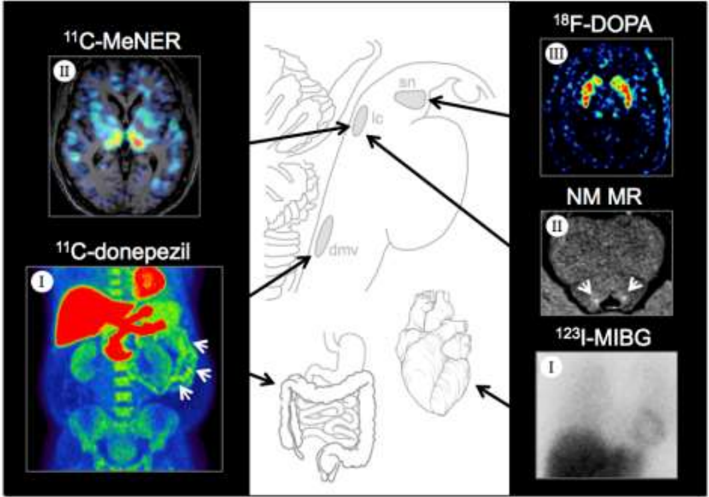
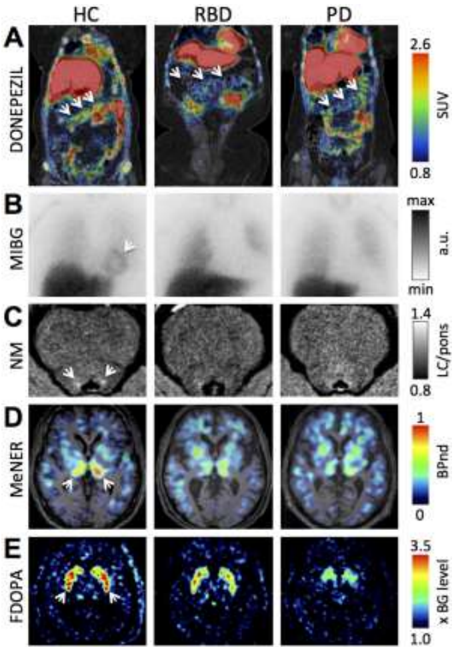
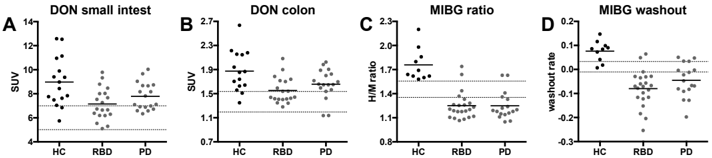
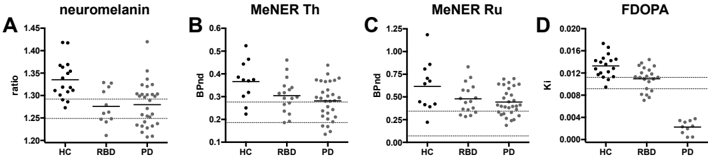
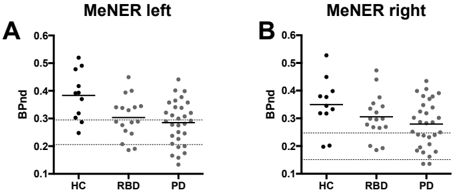
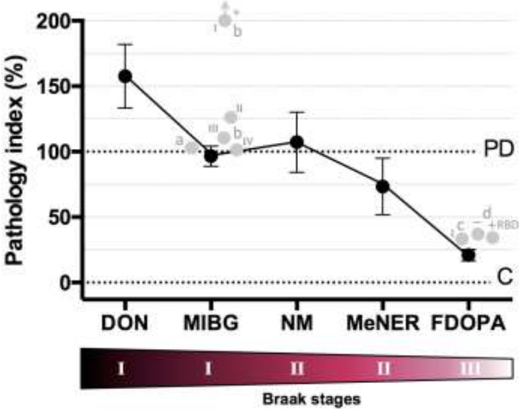
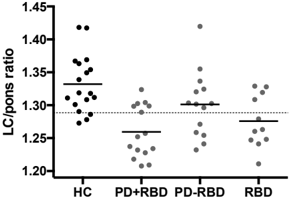
BACKGROUND Accumulating evidence suggests that α-synuclein aggregates-a defining pathology of Parkinson's disease-display cell-to-cell transmission. α-synuclein aggregation is hypothesised to start in autonomic nerve terminals years before the appearance of motor symptoms, and subsequently spread via autonomic nerves to the spinal cord and brainstem. To assess this hypothesis, we investigated sympathetic, parasympathetic, noradrenergic, and dopaminergic innervation in patients with idiopathic rapid eye movement (REM) sleep behaviour disorder, a prodromal phenotype of Parkinson's disease. METHODS In this prospective, case-control study, we recruited patients with idiopathic REM sleep behaviour disorder, confirmed by polysomnography, without clinical signs of parkinsonism or dementia, via advertisement and through sleep clinics in Denmark. We used 11C-donepezil PET and CT to assess cholinergic (parasympathetic) gut innervation, 123I-metaiodobenzylguanidine (MIBG) scintigraphy to measure cardiac sympathetic innervation, neuromelanin-sensitive MRI to measure integrity of pigmented neurons of the locus coeruleus, 11C-methylreboxetine (MeNER) PET to assess noradrenergic nerve terminals originating in the locus coeruleus, and 18F-dihydroxyphenylalanine (DOPA) PET to assess nigrostriatal dopamine storage capacity. For each imaging modality, we compared patients with idiopathic REM sleep behaviour disorder with previously published reference data of controls without neurological disorders or cognitive impairment and with symptomatic patients with Parkinson's disease. We assessed imaging data using one-way ANOVA corrected for multiple comparisons. FINDINGS Between June 3, 2016, and Dec 19, 2017, we recruited 22 consecutive patients with idiopathic REM sleep behaviour disorder to the study. Compared with controls, patients with idiopathic REM sleep behaviour disorder had decreased colonic 11C-donepezil uptake (-0·322, 95% CI -0·112 to -0·531; p=0·0020), 123I-MIBG heart:mediastinum ratio (-0·508, -0·353 to -0·664; p<0·0001), neuromelanin-sensitive MRI locus coeruleus:pons ratio (-0·059, -0·019 to -0·099; p=0·0028), and putaminal 18F-DOPA uptake (Ki; -0·0023, -0·0009 to -0·0037; p=0·0013). No between-group differences were detected between idiopathic REM sleep behaviour disorder and Parkinson's disease groups with respect to 11C-donepezil (p=0·39), 123I-MIBG (p>0·99), neuromelanin-sensitive MRI (p=0·96), and 11C-MeNER (p=0·56). By contrast, 15 (71%) of 21 patients with idiopathic REM sleep behaviour disorder had 18F-DOPA Ki values within normal limits, whereas all patients with Parkinson's disease had significantly decreased 18F-DOPA Ki values when compared with patients with idiopathic REM sleep behaviour disorder (p<0·0001). INTERPRETATION Patients with idiopathic REM sleep behaviour disorder had fully developed pathology in the peripheral autonomic nervous system and the locus coeruleus, equal to that in diagnosed Parkinson's disease. These patients also showed noradrenergic thalamic denervation, but most had normal putaminal dopaminergic storage capacity. This caudorostral gradient of dysfunction supports the hypothesis that α-synuclein pathology in Parkinson's disease initially targets peripheral autonomic nerves and then spreads rostrally to the brainstem. FUNDING Lundbeck Foundation, Jascha Foundation, and the Swiss National Foundation.
Overview
The claims and statistics of this paper haven’t been checked yet.
Free: it reads the open-access text and checks the first 5 claims that cite a source we can check. Create a free account to check every claim.
Integrity signals
Registry
Cites
Statistics
Figures
Verification
Claims the paper makes
The claims and statistics of this paper haven’t been checked yet.
Free: it reads the open-access text and checks the first 5 claims that cite a source we can check. Create a free account to check every claim.
Claims other papers make about this one
Each is checked against this paper’s own text: does it say what the citing paper says it does?
The cited source says what the claim attributes to it.
In the citing paper
“In Parkinson's disease, the vagus nerve seems to play a fundamental role in the gut-brain transmission of pathological asynuclein.141”
From The role of gut dysbiosis in Parkinson’s disease: mechanistic insights and therapeutic options (2021) · cites this paper as [141]
Self-check
Percentages, sums and reported differences re-computed from the paper’s own numbers.
The self-check needs the paper’s full text.
Citations
Cites
Folstein, M. F., Folstein, S. E., & McHugh, P. R. (1975) · Journal of Psychiatric Research · doi:10.1016/0022-3956(75)90026-6 · Cited by 88,282
The Montreal Cognitive Assessment, MoCA: a brief screening tool for mild cognitive impairment
Nasreddine, Z. S., Phillips, N. A., Bédirian, V., Charbonneau, S., Whitehead, V., Collin, I., Cummings, J. L., & Chertkow, H. (2005) · Journal of the American Geriatrics Society · doi:10.1111/j.1532-5415.2005.53221.x · Cited by 25,553
Staging of brain pathology related to sporadic Parkinson’s disease
Braak, H., Tredici, K. D., Rüb, U., de Vos, R. A. I., Jansen Steur, E. N. H., & Braak, E. (2003) · Neurobiology of Aging · doi:10.1016/s0197-4580(02)00065-9 · Cited by 10,777 · cited 6×
“PD 21/8 67±9 6·2±4·2 37 (11-51) 2/26/1/0 - 26 (23-30) 10/16 6 (2-14) 7 (1-19)”
InfluentialMDS clinical diagnostic criteria for Parkinson’s disease
Postuma, R. B., Berg, D., Stern, M., Poewe, W., Olanow, C. W., Oertel, W., Obeso, J., Marek, K., Litvan, I., Lang, A. E., et al. (2015) · Movement Disorders · doi:10.1002/mds.26424 · Cited by 7,653 · cited 9×
“PD 21/8 67±9 6·2±4·2 37 (11-51) 2/26/1/0 - 26 (23-30) 10/16 6 (2-14) 7 (1-19)”
InfluentialDiagnosis and management of dementia with Lewy bodies: Fourth consensus report of the DLB Consortium
McKeith, I. G., Boeve, B. F., Dickson, D. W., Halliday, G., Taylor, J.-P., Weintraub, D., Aarsland, D., Galvin, J., Attems, J., Ballard, C. G., et al. (2017) · Neurology · doi:10.1212/wnl.0000000000004058 · Cited by 4,476 · cited 8×
“PD 21/8 67±9 6·2±4·2 37 (11-51) 2/26/1/0 - 26 (23-30) 10/16 6 (2-14) 7 (1-19)”
InfluentialBraak, H., R�b, U., Gai, W. P., & Del Tredici, K. (2003) · Journal of Neural Transmission · doi:10.1007/s00702-002-0808-2 · Cited by 1,683 · cited 6×
“PD 21/8 67±9 6·2±4·2 37 (11-51) 2/26/1/0 - 26 (23-30) 10/16 6 (2-14) 7 (1-19)”
InfluentialHummel, T., Kobal, G., Gudziol, H., & Mackay-Sim, A. (2007) · European Archives of Oto-Rhino-Laryngology · doi:10.1007/s00405-006-0173-0 · Cited by 1,484
Goetz, C. G., Fahn, S., Martinez‐Martin, P., Poewe, W., Sampaio, C., Stebbins, G. T., Stern, M. B., Tilley, B. C., Dodel, R., Dubois, B., et al. (2007) · Movement Disorders · doi:10.1002/mds.21198 · Cited by 1,404
Chaudhuri, K. R., Martinez‐Martin, P., Schapira, A. H. V., Stocchi, F., Sethi, K., Odin, P., Brown, R. G., Koller, W., Barone, P., MacPhee, G., et al. (2006) · Movement Disorders · doi:10.1002/mds.20844 · Cited by 1,100
The REM sleep behavior disorder screening questionnaire—A new diagnostic instrument
Stiasny‐Kolster, K., Mayer, G., Schäfer, S., Möller, J. C., Heinzel‐Gutenbrunner, M., & Oertel, W. H. (2007) · Movement Disorders · doi:10.1002/mds.21740 · Cited by 1,060
Cited by
Items 201–300 of 317
Yoo, S., Ryu, D.-W., Oh, Y., Ha, S., Lyoo, C. H., Kim, Y., Yoo, J.-Y., & Kim, J. (2024) · Journal of Neurology · doi:10.1007/s00415-023-12158-3 · Cited by 8
“REM sleep behavior disorder (RBD) is the most potent marker of prodromal PD [28, 29], and the observed cardiac denervation in RBD is evidence that denervated myocardium occurs in the prodrome before obvious central denervation [30].”
Managing cognitive impairment in Parkinson’s disease: an update of the literature
Goldman, J. G., Jagota, P., & Matar, E. (2025) · Expert Review of Neurotherapeutics · doi:10.1080/14737175.2025.2450668 · Cited by 8
“● Cholinergic changes are also seen in prodromal stages, namely isolated RBD [75,76].”
Ko, D. W. K. (2021) · Autonomic Neuroscience · doi:10.1016/j.autneu.2021.102858 · Cited by 8
Fedorova, T. D., Knudsen, K., Hartmann, B., Holst, J. J., Mortensen, F. V., Krogh, K., & Borghammer, P. (2019) · Neurogastroenterology & Motility · doi:10.1111/nmo.13759 · Cited by 8
Self-citationOlfactory Dysfunction as a Clinical Marker of Early Glymphatic Failure in Neurodegenerative Diseases
Sánchez‐Benavides, G., Iranzo, Á., Grau‐Rivera, O., Giraldo, D. M., & Buongiorno, M. (2025) · Diagnostics · doi:10.3390/diagnostics15060719 · Cited by 8
“The gut-first pattern is tightly related to the presence of RBD, and it has been reported that patients with idiopathic RBD display OD and neuronal dysfunction in the peripheral nervous system and locus coeruleus equivalent to PD patients but still normal nigrostriatal dopaminergic innervation [40].”
Ahnaou, A., & Drinkenburg, W. H. I. M. (2022) · Neuroscience & Biobehavioral Reviews · doi:10.1016/j.neubiorev.2022.104897 · Cited by 7
Wang, H., Wang, Z., Tian, J., Ma, D., & Shi, C. (2024) · Frontiers in Aging Neuroscience · doi:10.3389/fnagi.2023.1294879 · Cited by 7
Isonaka, R., Sullivan, P., Holmes, C. S., & Goldstein, D. S. (2024) · Clinical Autonomic Research · doi:10.1007/s10286-024-01035-2 · Cited by 8
“…entails a high risk of development of a central synucleinopathy [55], is associated with OH [54, 56], abnormal cardiac sympathetic neuroimaging [40, 41], olfactory dysfunction [10, 57], and deposition of S129 phosphorylated α-syn in sympathetic noradrenergically innervated skin constituents [1,…”
Imaging of sleep disorders in pre-Parkinsonian syndromes
Ota, Y., Kanel, P., & Bohnen, N. I. (2022) · Current Opinion in Neurology · doi:10.1097/wco.0000000000001084 · Cited by 7
“Moreover, iRBD patients can present with a similar signal reduction in the locus coeruleus to that of Parkinson’s disease patients [62,63] with 82.”
BackgroundInfluentialFasting gallbladder volume is increased in patients with Parkinson's disease
Horsager, J., Tiroke, L. H., Skjærbæk, C., Knudsen, K., Fedorova, T. D., Okkels, N., & Borghammer, P. (2021) · Parkinsonism & Related Disorders · doi:10.1016/j.parkreldis.2021.04.027 · Cited by 7
Self-citationNeuroimaging and Pathology Biomarkers in Parkinson’s Disease and Parkinsonism
Cilia, R., Arnaldi, D., Ballanger, B., Ceravolo, R., Micco, R. D., Sole, A. D., Eleopra, R., Endo, H., Fasano, A. A., Hoenig, M. C., et al. (2026) · Brain Sciences · doi:10.3390/brainsci16010110 · Cited by 6
“…to iRBD, orthostatic hypotension, and constipation [135]. iRBD cohorts exhibited marked cardiac sympathetic denervation before overt nigrostriatal dopaminergic degeneration, strongly suggesting that the neurodegenerative process starts in the periphery and later spreads to the brain [136].”
Self-citationKim, M. S., Park, D. G., Shin, I. J., An, Y., & Yoon, J. H. (2024) · Journal of Neurology · doi:10.1007/s00415-024-12783-6 · Cited by 6
“These findings suggested that both intrinsic ENS and descending ENS from DMV were already affected in prodromal stage of body-first PD [25, 26].”
Anticipating Tomorrow: Tailoring Parkinson's Symptomatic Therapy Using Predictors of Outcome
Postuma, R. B., Weintraub, D. A., Simuni, T., Rodríguez‐Violante, M., Leentjens, A. F. G., Hu, M. T., Espay, A. J., Erro, R., Dujardin, K., Bohnen, N. I., et al. (2024) · Movement Disorders Clinical Practice · doi:10.1002/mdc3.14089 · Cited by 6
Dissecting premotor Parkinson's disease with multimodality neuroimaging
Iranzo, Á. (2018) · The Lancet Neurology · doi:10.1016/s1474-4422(18)30196-0 · Cited by 6
Young-Onset Dementia with Lewy Bodies
Aiba, Y., Sakakibara, R., Ogata, T., Iimura, A., Terayama, K., Suzuki, K., Katsuragawa, S., Kato, Y., Tateno, F., Terada, H., et al. (2018) · Case Reports in Neurology · doi:10.1159/000495748 · Cited by 6
Alzaid, H., Ethofer, T., Hobert, M. A., Kardatzki, B., Erb, M., Maetzler, W., & Berg, D. (2020) · Frontiers in Aging Neuroscience · doi:10.3389/fnagi.2020.00250 · Cited by 6
Exposure to Pesticides Predicts Prodromal Feature of Parkinson's Disease: Public Health Implications
Darweesh, S. K. L., Vermeulen, R. C. H., Bloem, B. R., & Peters, S. (2022) · Movement Disorders · doi:10.1002/mds.29012 · Cited by 6
“During that period, pathology spreads throughout the nervous system.(3) The most specific prodromal feature of PD is the presence of rapid eye movement sleep behavior disorder (RBD).”
BackgroundDifferent Patterns of Locus Coeruleus MRI Alteration in Alzheimer’s and Dementia with Lewy Bodies
Galgani, A., Palermo, G., Lombardo, F. P., Martini, N., Bastiani, L., Vergallo, A., Tommasini, L., Bellini, G., Baldacci, F., Frosini, D., et al. (2023) · Current Alzheimer Research · doi:10.2174/1567205020666230721144603 · Cited by 7
Self-citationThe challenges with the identification of Parkinson’s disease subtypes
Rigon, L., Popławska-Domaszewicz, K., Metta, V., Fogliano, C. A., Nasi, M. L., Sauerbier, A., Dafsari, H., Leta, V., Falup‐Pecurariu, C., Odin, P., et al. (2026) · Expert Review of Neurotherapeutics · doi:10.1080/14737175.2025.2611250 · Cited by 5
“Furthermore, several NMS at least partially caused by cholinergic dysfunction including apathy, constipation, and RBD are commonly observed in this subtype [132,133:].”
Neuroimaging Biomarkers in Parkinson’s Disease
Holmes, S. E., & Tinaz, S. (2024) · Advances in neurobiology · doi:10.1007/978-3-031-69491-2_21 · Cited by 6
Sharma, N., Sharma, M., Thakkar, D., Kumar, H., Smetanová, S., Burešová, L., Andrla, P., & Khairnar, A. (2025) · ACS Pharmacology & Translational Science · doi:10.1021/acsptsci.4c00286 · Cited by 5
The involvement of the cholinergic system in Parkinson disease
Pasquini, J., Brooks, D. J., & Pavese, N. (2025) · Handbook of clinical neurology · doi:10.1016/b978-0-443-19088-9.00001-9 · Cited by 5
Self-citationPham, T., Schelling, R. E., & Loh, K. H. (2025) · Advances in genetics · doi:10.1016/bs.adgen.2025.02.001 · Cited by 6
Horsager, J., Okkels, N., Fedorova, T. D., Knudsen, K., Skjærbæk, C., Berge, N. V. D., Jacobsen, J., Munk, O. L., Danielsen, E. H., Bender, D., et al. (2022) · Parkinsonism & Related Disorders · doi:10.1016/j.parkreldis.2022.09.016 · Cited by 5
Self-citationPalermo, G., Aghakhanyan, G., Bellini, G., Giannoni, S., Vadi, G., Francischello, R., Nonne, G., Tedeschi, M., Morganti, R., Frosini, D., et al. (2025) · npj Parkinson s Disease · doi:10.1038/s41531-025-01164-z · Cited by 5
Self-citationWeintraub, D. A., York, M. K., Dobkin, R. D., Nair, A., Kurth, R., Lafontant, D.-E., Caspell‐Garcia, C., Alcalay, R. N., Brown, E. G., Chahine, L. M., et al. (2026) · Annals of Clinical and Translational Neurology · doi:10.1002/acn3.70399 · Cited by 4
“…for early cognitive decline in this population is in part non-dopaminergic and non-striatal, consistent with cholinergic [39] and noradrenergic [40, 41] deficits present in iRBD, as well as Lewy body pathology observed postmortem in extra-striatal regions (e.g., brainstem, limbic system), even…”
Wang, Q.-L., Gu, X., Yang, L., Jiang, Y., Zhang, J., & He, J. (2024) · Frontiers in Aging Neuroscience · doi:10.3389/fnagi.2024.1417515 · Cited by 7
Takenoshita, S., Terada, S., Kojima, K., Nishikawa, N., Miki, T., Yokota, O., Fujiwara, M., & Takaki, M. (2024) · BMJ Mental Health · doi:10.1136/bmjment-2024-301042 · Cited by 4
Miyamoto, T., Nakajima, I., Arikawa, T., & Miyamoto, M. (2024) · Clinical Parkinsonism & Related Disorders · doi:10.1016/j.prdoa.2024.100269 · Cited by 4
“In vivo staging of IRBD using 11 C-donepezil positron emission tomography to assess cholinergic vagal innervation in the stomach demonstrated reduced colonic 11 C-donepezil uptake in IRBD patients compared to healthy controls [24].”
BackgroundFirbank, M., Pasquini, J., Best, L. A., Foster, V., Sigurdsson, H. P., Anderson, K. N., Petrides, G. S., Brooks, D. J., & Pavese, N. (2024) · Brain Imaging and Behavior · doi:10.1007/s11682-024-00939-x · Cited by 4
Self-citationDurcan, R., Donaghy, P. C., Barnett, N. A., Olsen, K., Yarnall, A. J., Taylor, J., McKeith, I. G., O'Brien, J. T., & Thomas, A. J. (2019) · International Journal of Geriatric Psychiatry · doi:10.1002/gps.5100 · Cited by 4
“A recent study in an idiopathic REM sleep disorder cohort, a condition in which nearly all individuals' progress onto either DLB, PD or multiple system atrophy, showed early peripheral autonomic nerve involvement and putaminal dopaminergic deficits compared with controls suggesting a caudorostral progression by alpha‐…”
BackgroundRadionuclide Imaging of the Gut–Brain Axis in Parkinson Disease
Horsager, J., Knudsen, K., & Borghammer, P. (2021) · Journal of Nuclear Medicine · doi:10.2967/jnumed.121.262300 · Cited by 4
Self-citationDiffusion tensor imaging‐based pontine damage as a degeneration marker in synucleinopathy
Chung, S. J., Cho, K. H., Lee, Y. H., Yoo, H. S., Baik, K., Jung, J. H., Ye, B. S., Sohn, Y. H., Cha, J., & Lee, P. H. (2021) · Journal of Neuroscience Research · doi:10.1002/jnr.24926 · Cited by 4
Sleep Disturbances and Associated Factors in Drug-Naïve Patients with Parkinson’s Disease
Zhong, M., Jiang, X., Sulei, Z., Gu, R., Bai, Y., He, H., Pan, Y., Xu, P., Yan, J., & Zhang, L. (2021) · Neuropsychiatric Disease and Treatment · doi:10.2147/ndt.s341782 · Cited by 4
Research progress on neuromolecular imaging of REM sleep behavior disorder
Geng, C., & Zhang, H. (2022) · Frontiers in Neurology · doi:10.3389/fneur.2022.1009907 · Cited by 4
Oertel, W. H., Paule, E., Hasemann, T., Sittig, E., Belke, M., Unger, M. M., Mayer, G., Werner, R., Jansen, A., Pape, H., et al. (2023) · Movement Disorders · doi:10.1002/mds.29652 · Cited by 5
“This study demonstrates for the fi rst time a reduction in the amplitude of the gastric peristaltic wave in iRBD, a prodromal stage of PD, to a degree observed in early, 57 mostly drug-naive manifest PD. Parameters of gastric motility were assessed using the nonradioactive method rtMRI.”
ResultInfluentialLocus coeruleus alterations in dementia with Lewy bodies: A systematic review
Bain, A., Toméo, C., André, C., Garnier‐Crussard, A., de Florès, R., & Dautricourt, S. (2026) · Alzheimer s & Dementia Translational Research & Clinical Interventions · doi:10.1002/trc2.70199 · Cited by 5
“[89]), and idiopathic RBD, 22,90,91 a prodromal stage of α -synucleinopathies.”
InfluentialAlterations of cerebrospinal fluid flow dynamics in Parkinson’s disease
Zhou, C., Hong, H., Chen, Y., Guan, X., Guo, T., Xu, X., & Zhang, M. (2026) · npj Parkinson s Disease · doi:10.1038/s41531-025-01257-9 · Cited by 3
Thanaviratananich, S., Nguyen, A., Chaung, M., Patterson, J. S., & Lee‐Iannotti, J. K. (2026) · Current Sleep Medicine Reports · doi:10.1007/s40675-026-00364-0 · Cited by 3
Brain-first and body-first subtypes of Lewy body disease
Borghammer, P., Berge, N. V. D., Berg, D., Takahashi, R., Postuma, R. B., & Horsager, J. (2026) · Nature Reviews Neurology · doi:10.1038/s41582-026-01241-8 · Cited by 4
“Importantly, parasympathetic denervation, demonstrated by reduced colon signal on [ 11 C]donepezil PET, probably precedes nigrostriatal dopaminergic degeneration in body-first LBD, as similar findings have been demonstrated in people with iRBD 22,99,115 .”
Self-citationYou, S., Won, K. S., Kim, K. T., Lee, H. W., & Cho, Y. W. (2021) · Journal of Clinical Medicine · doi:10.3390/jcm10225414 · Cited by 3
Magnetic Resonance Imaging and Nuclear Imaging of Parkinsonian Disorders: Where do we go from here?
Savoie, F.-A., Arpin, D. J., & Vaillancourt, D. E. (2023) · Current Neuropharmacology · doi:10.2174/1570159x21666230801140648 · Cited by 3
Zhang, R., Li, Z., Bai, Y., Xu, P., Zhang, J., & Zhang, H. (2020) · PubMed · doi:10.12122/j.issn.1673-4254.2020.01.20 · Cited by 3
“[26]Knudsen K, Fedorova TD, Hansen AK, et al.”
BackgroundPET and SPECT Imaging of the Central Dopamine System in Humans
Booij, J., van Wieringen, J., van de Giessen, E., Knol, R. J. J., & Finnema, S. J. (2020) · Springer eBooks · doi:10.1007/978-3-030-53176-8_11 · Cited by 5
If not salivary alpha-synuclein, then what? A look at potential Parkinson’s disease biomarkers
Bougea, A. M. (2020) · Expert Review of Molecular Diagnostics · doi:10.1080/14737159.2020.1721283 · Cited by 3
Skjærbæk, C., Munk, O. L., Andersen, K. B., Krishnamurthy, A., Knudsen, K., Lillethorup, T. P., Yoo, S., Ryu, D.-W., Oh, Y., Ha, S., et al. (2026) · npj Parkinson s Disease · doi:10.1038/s41531-026-01455-z · Cited by 2
Self-citationChau, S. W. H., Liu, Y., Zhang, J., Leung, E. Y. L., Chen, S., Ho, C. L., Chan, J. W. Y., Tsang, C. C., Li, S. X., Huang, B., et al. (2022) · Parkinsonism & Related Disorders · doi:10.1016/j.parkreldis.2022.105271 · Cited by 2
Zhi, Y., Chen, M., Zhou, C., Yang, Y., Huang, Y., Liang, X., Wang, P., Cheng, X., Mao, C., Jiang, Z., et al. (2024) · Magnetic Resonance Imaging · doi:10.1016/j.mri.2024.03.026 · Cited by 3
Peter‐Derex, L. (2019) · EMC - Neurologie · doi:10.1016/s0246-0378(18)87593-5 · Cited by 3
DAT imaging and myocardial MIBG scintigraphy for Lewy body diseases: A clinical‐neuroimaging study
Sakakibara, R., Tateno, F., Aiba, Y., Ogata, T., Terada, H., Inaoka, T., & Nakatsuka, T. (2019) · Neurology and Clinical Neuroscience · doi:10.1111/ncn3.12333 · Cited by 2
Umehara, T., Mimori, M., Kokubu, T., Ozawa, M., Shiraishi, T., Sato, T., Onda, A., Matsuno, H., Omoto, S., Murakami, H., et al. (2024) · Journal of the Neurological Sciences · doi:10.1016/j.jns.2024.123165 · Cited by 2
Multimodal imaging in RBD — present and future
Boeve, B. F., & Kantarci, K. (2018) · Nature Reviews Neurology · doi:10.1038/s41582-018-0054-3 · Cited by 2
Baldelli, L., Provini, F., & Buonaura, G. C. (2025) · SLEEP · doi:10.1093/sleep/zsaf120 · Cited by 2
“While early hypotheses favored a peripheral origin of ANS impairment in iRBD [6, 7], mounting evidence [8], including patients with altered ANS and preserved cardiac sympathetic innervation who later phenoconverted to MSA [9], suggests a broader spectrum of autonomic pathophysiology.”
Doppler, C. E. J., Sembowski, N., Plottka, D., Hommelsen, M., Röttgen, S., Schwabedal, J. T. C., Schreiner, S. J., Fink, G. R., Borghammer, P., Bialonski, S., et al. (2026) · Parkinsonism & Related Disorders · doi:10.1016/j.parkreldis.2026.108339 · Cited by 1
Self-citationREM Sleep Behavior Disorder: Pathophysiology, Biomarkers, and Therapeutic Strategies
Zhang, H., Zhang, S., Che, H., Wan, Y., Gao, H., & Yao, D. (2026) · Journal of Integrative Neuroscience · doi:10.31083/jin45114 · Cited by 1
“In addition, although prolonged REM latency is not a specific marker of α - synucleinopathy, its association with increased CSF tau/ β - amyloid and decreased brain-derived neurotrophic factor suggests its predictive value for the pathology of RBD co-morbid with Alzheimer’s disease (AD) [109].”
Locus coeruleus: Clinical aspects of its involvement in Parkinson's disease
Esteban, J. C. G., Azkue, N., Acera, M., Tijero, B., Gabilondo, I., & Pernaute, R. S. (2026) · Neurology Perspectives · doi:10.1016/j.neurop.2026.100220 · Cited by 1
A direct comparison of the 2005 and 2017 criteria for dementia with Lewy bodies
Segers, K., Benoit, F., Meyts, J., Glibert, G., & Surquin, M. (2020) · Psychogeriatrics · doi:10.1111/psyg.12562 · Cited by 1
Fujishiro, H., Ota, K., Yamagata, M., & Nagahama, Y. (2020) · Psychogeriatrics · doi:10.1111/psyg.12599 · Cited by 1
Autonomic Dysfunction in Parasomnias of REM Sleep
Zitser, J., & Miglis, M. G. (2021) · Springer eBooks · doi:10.1007/978-3-030-62263-3_22 · Cited by 1
What Is the Prognostic Significance of Rapid Eye Movement Sleep Without Atonia in a Polysomnogram?
Ralls, F., Cutchen, L., & Grigg-Damberger, M. M. (2022) · Journal of Clinical Neurophysiology · doi:10.1097/wnp.0000000000000826 · Cited by 1
Molecular imaging evidence in favor or against PDD and DLB overlap
Caminiti, S. P., & Carli, G. (2022) · Elsevier eBooks · doi:10.1016/b978-0-12-821651-4.00015-4 · Cited by 3
Galgani, A., & Giorgi, F. S. (2023) · Elsevier eBooks · doi:10.1016/b978-0-12-824010-6.00049-6 · Cited by 1
Knowledge mapping of prodromal Parkinson’s disease: A bibliometric review and analysis (2000–2023)
Wang, S., An, N. T. K. N. T. H., Wang, Y., Li, Y., Li, H., & Bai, Y. (2024) · Medicine · doi:10.1097/md.0000000000036985 · Cited by 1
New insights in non-motor symptoms in Parkinson’s disease
Falup‐Pecurariu, C., Fanciulli, A., Borgohain, R., Chaudhuri, К. R., & Metta, V. (2024) · Frontiers research topics · doi:10.3389/978-2-8325-4722-9 · Cited by 1
Jiménez, M. D. M. A., Soza‐Ried, C., Kramer, V., Ríos, S. A., Haeger, A., Juri, C., Horacio Amaral, P., & Chaná‐Cuevas, P. (2025) · Intelligence-Based Medicine · doi:10.1016/j.ibmed.2025.100232 · Cited by 1
Önder, H., & Çomoğlu, S. S. (2025) · Neurodegenerative Disease Management · doi:10.1080/17582024.2025.2468145 · Cited by 1
Matschke, L. A., Komadowski, M. A., Stöhr, A., Lee, B., Henrich, M. T., Griesbach, M., Rinné, S., Geibl, F. F., Chiu, W., Koprich, J. B., et al. (2024) · Authorea · doi:10.22541/au.170668460.08395343/v1 · Cited by 1
Locus coeruleus injury modulates ventral midbrain neuroinflammation during DSS-induced colitisPreprint
Tansey, M. G., Boles, J. S., Holt, J., Cole, C. L., Neighbarger, N. K., Urs, N. M., & Huarte, O. U. (2024) · Research Square · doi:10.21203/rs.3.rs-3952442/v1 · Cited by 1
Luke, R., Yoo, H. S., McKenna, D., Bevan, A. M., Durso, C., Dugan, B. J., Liang, Y., Amanirad, B., Steltz, J. A., Zhang, B., et al. (2026) · bioRxiv (Cold Spring Harbor Laboratory) · doi:10.64898/2026.04.28.719687 · Cited by 1
“Furthermore, recent clinical observations have shown that phasic, but not tonic, elevations in EMG activity effectively differentiate PD patients with RBD from those without and from healthy controls 41 .”
More Evidence Linking REM Behavioral Disorder to Parkinson Disease
Okun, M. S. (2018) · Journal watch · doi:10.1056/nejm-jw.na46945
Neurology met sleep medicine in 2018
Xiao, F., Zhang, J., Strohl, K. P., & Han, F. (2018) · The Lancet Neurology · doi:10.1016/s1474-4422(18)30459-9
Peter‐Derex, L. (2019) · EMC - Neurologia · doi:10.1016/s1634-7072(19)42492-6
You, S., Won, K. S., Kim, K. T., Lee, H. W., & Cho, Y. W. (2021) · Research Square · doi:10.21203/rs.3.rs-257118/v1
Assessing autonomic dysfunction with functional imaging in Parkinson's disease
Horsager, J., Skjærbæk, C., & Borghammer, P. (2021) · International review of movement disorders · doi:10.1016/bs.irmvd.2021.07.001
Self-citationAutonomic dysfunction during sleep in Parkinson's disease
Baschieri, F., Guaraldi, P., Cortelli, P., & Buonaura, G. C. (2021) · International review of movement disorders · doi:10.1016/bs.irmvd.2021.07.005
TAKAHASHI, J. C., & Morizane, A. (2019) · Faculty Opinions – Post-Publication Peer Review of the Biomedical Literature · doi:10.3410/f.734318078.793555630
Bulhões, M., Ribeiro, M. M., & Veiga, L. (2022) · ROENTGEN-Revista Científica das Técnicas Radiológicas · doi:10.46885/roentgen.v3i2.86
Vol. 3, N.º 2, Jul-Dez 2022 - "Proteção Radiológica"
Editorial, C. (2022) · ROENTGEN-Revista Científica das Técnicas Radiológicas · doi:10.46885/roentgen.v3i2.94
Molecular imaging in prodromal Parkinson’s disease
de Natale, E. R., Verghese, J. P., Wilson, H., & Politis, M. (2022) · Elsevier eBooks · doi:10.1016/b978-0-12-821651-4.00017-8
Molecular imaging beyond dopamine and serotonin in familial and idiopathic Parkinson’s disease
Wilson, H., Terry, A., & Politis, M. (2022) · Elsevier eBooks · doi:10.1016/b978-0-12-821651-4.00002-6
Bernardini, A., Pellitteri, G., Ermanis, G., Gigli, G. L., Valente, M., & Janes, F. (2023) · AIMS molecular science · doi:10.3934/molsci.2023010
Cholinergic Imaging and Dementia
Okkels, N., Horsager, J., Pavese, N., Brooks, D. J., & Borghammer, P. (2023) · Springer eBooks · doi:10.1007/978-3-031-35098-6_8
Self-citationJiménez, M., Soza‐Ried, C., Kramer, V., Ríos, S. A., Haeger, A., Juri, C., Horacio Amaral, P., & Chaná‐Cuevas, P. (2023) · Research Square · doi:10.21203/rs.3.rs-3215495/v1
Lee, E. J., Park, D. G., Kang, W., Shin, I.-J., Chalita, M., Oh, H., Hyun, D., Kim, H., Chun, J., An, Y., et al. (2024) · Research Square · doi:10.21203/rs.3.rs-3742244/v1 · Cited by 1
Locus coeruleus injury modulates ventral midbrain neuroinflammation during DSS-induced colitisPreprint
Boles, J. S., Holt, J., Cole, C. L., Neighbarger, N. K., Urs, N. M., Huarte, O. U., & Tansey, M. G. (2024) · bioRxiv (Cold Spring Harbor Laboratory) · doi:10.1101/2024.02.12.580010
Isonaka, R., Sullivan, P., Holmes, C. S., & Goldstein, D. S. (2024) · Research Square · doi:10.21203/rs.3.rs-3988235/v1
“…entails a high risk of development of a central synucleinopathy [52], is associated with OH [51, 53], abnormal cardiac sympathetic neuroimaging [37, 38], olfactory dysfunction [10, 54], and deposition of S129 phosphorylated ɑ -syn in sympathetic noradrenergically innervated skin constituents [1,…”
BackgroundSkrzatek, A. (2023) · theses.fr (ABES) · doi:10.70675/7e586d55zb378z452fz86ecza3a2924d9a8a · Cited by 1
Rapid eye movement sleep behavior disorder: modern concept and Parkinson’s disease correlation
Магомедовна, Х. Д., Zalyalova, Z. A., Ilina, G., & Bagdanova, N. I. (2024) · Annals of Clinical and Experimental Neurology · doi:10.17816/acen.980
The role of dopaminergic, cholinergic and noradrenergic networks in hyposmia in Parkinson’s diseasePreprint
Pérot, J., Kozlowski, E., Fraysse, A., Ouarab, S., Valabrègue, R., Rebbah, S., Lejeune, F., Massy, E., Gaurav, R., Arnulf, I., et al. (2024) · bioRxiv (Cold Spring Harbor Laboratory) · doi:10.1101/2024.10.23.619791
Etude du système noradrenergique chez l'homme et dans la maladie de Parkinson
Laurencin, C. (2023) · theses.fr (ABES) · doi:10.70675/6741e7cazdc23z459cz9474zb7eb272a5e19
Fluid and Imaging Markers of Lewy Body Dementias
Julio, K. R., van der Horn, H. J., & Ryman, S. G. (2025) · Springer eBooks · doi:10.1007/978-3-031-80849-4_10 · Cited by 1
Yu, Y., Teng, Z., Hu, B., & Chen, B. (2025) · Research Square · doi:10.21203/rs.3.rs-6965336/v1
Brainstem origin of Parkinson's disease symptoms
Tissone, A. I., & Esposito, M. S. (2025) · Handbook of behavioral neuroscience · doi:10.1016/b978-0-443-21992-4.00011-7
Altered heart-brain coupling in awake patients with isolated REM sleep behaviour disorder
Bernasconi, F., van der Meer, J., Merchant, Z., Potheegadoo, J., Lucia, M. D., Bassetti, C. L., Schaefer, C., & Blanke, O. (2026) · npj Parkinson's Disease · doi:10.1038/s41531-026-01485-7
Characterization of cardio-brain dysfunction in Parkinson's disease by PET imaging
Tan, Z., Xu, Y., Gong, H., Wu, B., Zeng, C., Jiang, Y., Tang, Y., Li, Y., Zhu, H., Li, G., et al. (2025) · EANM Innovation · doi:10.1016/j.eanmi.2025.100019
Ophey, A., Röttgen, S., Pauquet, J., Weiß, K.-L., Scharfenberg, D., Doppler, C. E. J., Seger, A., Hansen, C., Fink, G. R., Sommerauer, M., et al. (2024) · Figshare · doi:10.6084/m9.figshare.26740916
Self-citationOphey, A., Röttgen, S., Pauquet, J., Weiß, K.-L., Scharfenberg, D., Doppler, C. E. J., Seger, A., Hansen, C., Fink, G. R., Sommerauer, M., et al. (2024) · Figshare · doi:10.6084/m9.figshare.26740919
Self-citationOphey, A., Röttgen, S., Pauquet, J., Weiß, K.-L., Scharfenberg, D., Doppler, C. E. J., Seger, A., Hansen, C., Fink, G. R., Sommerauer, M., et al. (2024) · Figshare · doi:10.6084/m9.figshare.26740922
Self-citationSchmit, K. J. (2022) · Open Repository and Bibliography (University of Luxembourg)
Ebina, J., Shibukawa, M., Nagasawa, J., Hirayama, T., Mizumura, S., & Kano, O. (2025) · Research Square · doi:10.21203/rs.3.rs-7955348/v1
Metadata
- Authors
- Knudsen, K., Fedorova, T. D., Hansen, A. K., Sommerauer, M., Otto, M., Svendsen, K. B., Nahimi, A., Stokholm, M. G., Pavese, N., Beier, C. P., Brooks, D. J., & Borghammer, P.
- Affiliations
- Aarhus University Hospital (DK)
- University of Southern Denmark (DK)
- Corresponding author
- Borghammer, Per
- ORCID
- Venue
- The Lancet Neurology
- Publisher
- Elsevier BV
- Published
- 2018-07
- Volume
- 17
- Issue
- 7
- Pages
- 618-628
- ISSN
- 1474-4422 (ISSN-L)
- OpenAlex
- W2803083570
- Semantic Scholar
- 4563f9a3953b8f84462ef0bec086f71c50049b54
- Cited by
- 309
- References
- 51
- Citations by year
- 2026: 16 · 2025: 25 · 2024: 47 · 2023: 37 · 2022: 50 · 2021: 57 · 2020: 29 · 2019: 33 · 2018: 15
- FWCI
- 22.75
- Type
- journal article
- Language
- en
- Open access
- Licence
- cc-by-nc-nd
- www.elsevier.com/tdm/userlicense/1.0/ (tdm)
- www.elsevier.com/legal/tdmrep-license (tdm)
- Locations
- The Lancet Neurology (publishedVersion)
- PubMed (publishedVersion)
- Kölner Universitäts PublikationsServer (Universität zu Köln) (publishedVersion)
- University of Southern Denmark Research Portal (University of Southern Denmark) (submittedVersion, cc-by-nc-nd)
- Newcastle University ePrints (Newcastle Univesity) (cc-by-nc-nd)
- Funders
- Jascha Fonden
- Lundbeckfonden
- Topics
- Health Sciences › Medicine › Clinical Neurology › Parkinson's Disease Mechanisms and Treatments
- Health Sciences › Medicine › Psychiatry and Mental health › Dementia and Cognitive Impairment Research
- Health Sciences › Medicine › Clinical Neurology › Deep Brain Stimulation and Movement Disorders
- Keywords
- REM sleep behavior disorder, alpha-synuclein aggregation, cell-to-cell transmission, cardiac sympathetic innervation, noradrenergic terminals, locus coeruleus, nigrostriatal dopamine, 123I-MIBG scintigraphy, neuromelanin-sensitive MRI
- MeSH terms
- Aged, Denmark, Female, Heart, Humans, Locus Coeruleus, Magnetic Resonance Imaging, Male, Middle Aged, Parkinson Disease, Prospective Studies, Sympathetic Nervous System, Case-Control Studies, Polysomnography, Presynaptic Terminals, REM Sleep Behavior Disorder, Positron-Emission Tomography, Multimodal Imaging
About these checks
Registry, retraction, Cites and statistics results are computed, not judged, with one exception: a printed reference that no index lists is read once by a model before it counts as a citation error. Claims are extracted by a model and kept only when their quote appears verbatim in the text; each cited source is then checked, with a model’s help, for whether it says what the claim relies on. Those verdicts can be wrong — read the claim’s quote and the cited source before relying on one.
Statistics and arithmetic are recomputed, not judged.
Confidence bands are shown only for fields calibrated on our annotated test set. None is calibrated yet, so no band is shown.
What counts as a claim ›How we measure confidence ›How we check this ›
Are you an author, or do you see a problem with this page? Request a review
Data sources
Bibliographic data: Semantic Scholar, OpenAlex, Crossref.
Contains information from the Semantic Scholar Academic Graph Datasets, made available under the ODC Attribution License (ODC-BY 1.0).
Semantic Scholar’s data is described in: Kinney, R., et al. (2023). The Semantic Scholar Open Data Platform. arXiv:2301.10140.
