

In-vivo staging of pathology in REM sleep behaviour disorder: a multimodality imaging case-control study
Open accessThe DOI matches its Crossref record; 52 of the 52 references it cites were found in a registry or an index.
Abstract
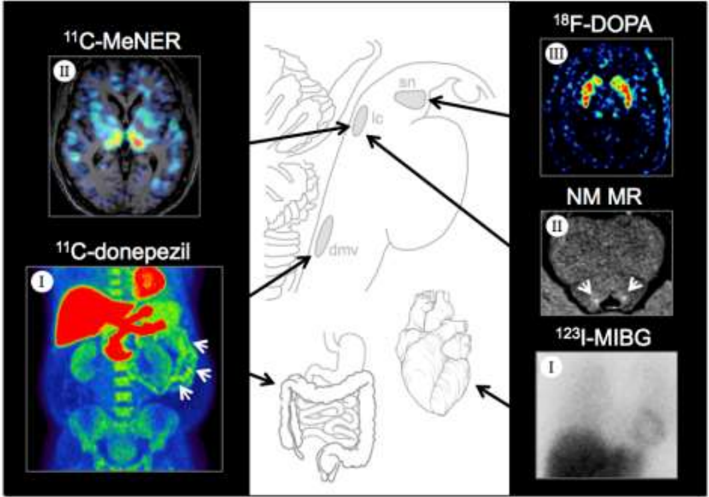
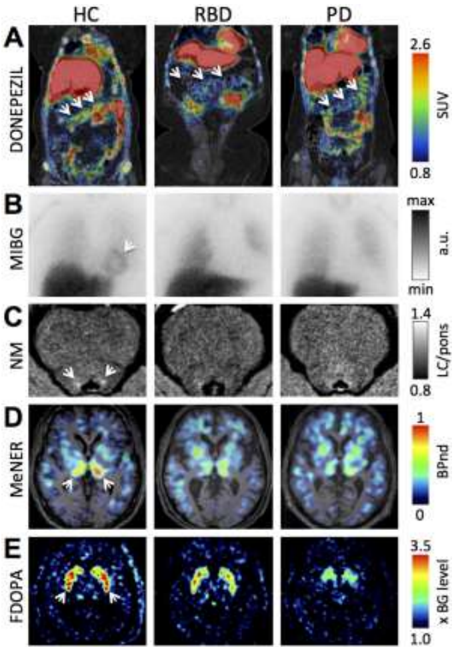
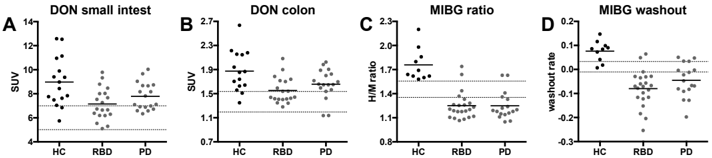
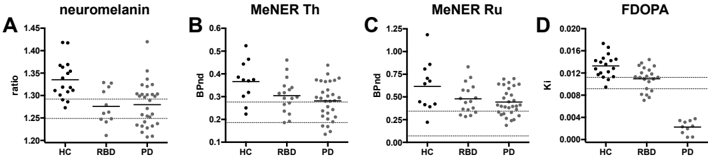
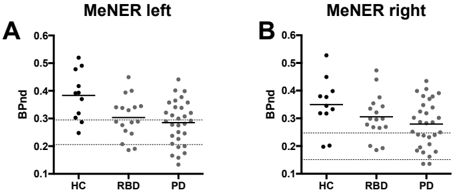
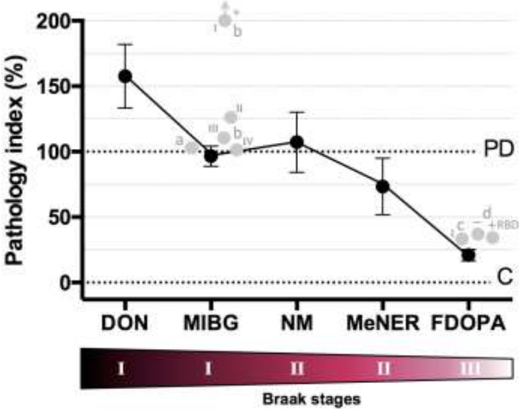
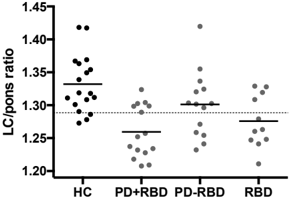
BACKGROUND Accumulating evidence suggests that α-synuclein aggregates-a defining pathology of Parkinson's disease-display cell-to-cell transmission. α-synuclein aggregation is hypothesised to start in autonomic nerve terminals years before the appearance of motor symptoms, and subsequently spread via autonomic nerves to the spinal cord and brainstem. To assess this hypothesis, we investigated sympathetic, parasympathetic, noradrenergic, and dopaminergic innervation in patients with idiopathic rapid eye movement (REM) sleep behaviour disorder, a prodromal phenotype of Parkinson's disease. METHODS In this prospective, case-control study, we recruited patients with idiopathic REM sleep behaviour disorder, confirmed by polysomnography, without clinical signs of parkinsonism or dementia, via advertisement and through sleep clinics in Denmark. We used 11C-donepezil PET and CT to assess cholinergic (parasympathetic) gut innervation, 123I-metaiodobenzylguanidine (MIBG) scintigraphy to measure cardiac sympathetic innervation, neuromelanin-sensitive MRI to measure integrity of pigmented neurons of the locus coeruleus, 11C-methylreboxetine (MeNER) PET to assess noradrenergic nerve terminals originating in the locus coeruleus, and 18F-dihydroxyphenylalanine (DOPA) PET to assess nigrostriatal dopamine storage capacity. For each imaging modality, we compared patients with idiopathic REM sleep behaviour disorder with previously published reference data of controls without neurological disorders or cognitive impairment and with symptomatic patients with Parkinson's disease. We assessed imaging data using one-way ANOVA corrected for multiple comparisons. FINDINGS Between June 3, 2016, and Dec 19, 2017, we recruited 22 consecutive patients with idiopathic REM sleep behaviour disorder to the study. Compared with controls, patients with idiopathic REM sleep behaviour disorder had decreased colonic 11C-donepezil uptake (-0·322, 95% CI -0·112 to -0·531; p=0·0020), 123I-MIBG heart:mediastinum ratio (-0·508, -0·353 to -0·664; p<0·0001), neuromelanin-sensitive MRI locus coeruleus:pons ratio (-0·059, -0·019 to -0·099; p=0·0028), and putaminal 18F-DOPA uptake (Ki; -0·0023, -0·0009 to -0·0037; p=0·0013). No between-group differences were detected between idiopathic REM sleep behaviour disorder and Parkinson's disease groups with respect to 11C-donepezil (p=0·39), 123I-MIBG (p>0·99), neuromelanin-sensitive MRI (p=0·96), and 11C-MeNER (p=0·56). By contrast, 15 (71%) of 21 patients with idiopathic REM sleep behaviour disorder had 18F-DOPA Ki values within normal limits, whereas all patients with Parkinson's disease had significantly decreased 18F-DOPA Ki values when compared with patients with idiopathic REM sleep behaviour disorder (p<0·0001). INTERPRETATION Patients with idiopathic REM sleep behaviour disorder had fully developed pathology in the peripheral autonomic nervous system and the locus coeruleus, equal to that in diagnosed Parkinson's disease. These patients also showed noradrenergic thalamic denervation, but most had normal putaminal dopaminergic storage capacity. This caudorostral gradient of dysfunction supports the hypothesis that α-synuclein pathology in Parkinson's disease initially targets peripheral autonomic nerves and then spreads rostrally to the brainstem. FUNDING Lundbeck Foundation, Jascha Foundation, and the Swiss National Foundation.
Overview
The claims and statistics of this paper haven’t been checked yet.
Free: it reads the open-access text and checks the first 5 claims that cite a source we can check. Create a free account to check every claim.
Integrity signals
Registry
Cites
Statistics
Figures
Verification
Claims the paper makes
The claims and statistics of this paper haven’t been checked yet.
Free: it reads the open-access text and checks the first 5 claims that cite a source we can check. Create a free account to check every claim.
Claims other papers make about this one
Each is checked against this paper’s own text: does it say what the citing paper says it does?
The cited source says what the claim attributes to it.
In the citing paper
“In Parkinson's disease, the vagus nerve seems to play a fundamental role in the gut-brain transmission of pathological asynuclein.141”
From The role of gut dysbiosis in Parkinson’s disease: mechanistic insights and therapeutic options (2021) · cites this paper as [141]
Self-check
Percentages, sums and reported differences re-computed from the paper’s own numbers.
The self-check needs the paper’s full text.
Citations
Cites
Folstein, M. F., Folstein, S. E., & McHugh, P. R. (1975) · Journal of Psychiatric Research · doi:10.1016/0022-3956(75)90026-6 · Cited by 88,282
The Montreal Cognitive Assessment, MoCA: a brief screening tool for mild cognitive impairment
Nasreddine, Z. S., Phillips, N. A., Bédirian, V., Charbonneau, S., Whitehead, V., Collin, I., Cummings, J. L., & Chertkow, H. (2005) · Journal of the American Geriatrics Society · doi:10.1111/j.1532-5415.2005.53221.x · Cited by 25,553
Staging of brain pathology related to sporadic Parkinson’s disease
Braak, H., Tredici, K. D., Rüb, U., de Vos, R. A. I., Jansen Steur, E. N. H., & Braak, E. (2003) · Neurobiology of Aging · doi:10.1016/s0197-4580(02)00065-9 · Cited by 10,777 · cited 6×
“PD 21/8 67±9 6·2±4·2 37 (11-51) 2/26/1/0 - 26 (23-30) 10/16 6 (2-14) 7 (1-19)”
InfluentialMDS clinical diagnostic criteria for Parkinson’s disease
Postuma, R. B., Berg, D., Stern, M., Poewe, W., Olanow, C. W., Oertel, W., Obeso, J., Marek, K., Litvan, I., Lang, A. E., et al. (2015) · Movement Disorders · doi:10.1002/mds.26424 · Cited by 7,653 · cited 9×
“PD 21/8 67±9 6·2±4·2 37 (11-51) 2/26/1/0 - 26 (23-30) 10/16 6 (2-14) 7 (1-19)”
InfluentialDiagnosis and management of dementia with Lewy bodies: Fourth consensus report of the DLB Consortium
McKeith, I. G., Boeve, B. F., Dickson, D. W., Halliday, G., Taylor, J.-P., Weintraub, D., Aarsland, D., Galvin, J., Attems, J., Ballard, C. G., et al. (2017) · Neurology · doi:10.1212/wnl.0000000000004058 · Cited by 4,476 · cited 8×
“PD 21/8 67±9 6·2±4·2 37 (11-51) 2/26/1/0 - 26 (23-30) 10/16 6 (2-14) 7 (1-19)”
InfluentialBraak, H., R�b, U., Gai, W. P., & Del Tredici, K. (2003) · Journal of Neural Transmission · doi:10.1007/s00702-002-0808-2 · Cited by 1,683 · cited 6×
“PD 21/8 67±9 6·2±4·2 37 (11-51) 2/26/1/0 - 26 (23-30) 10/16 6 (2-14) 7 (1-19)”
InfluentialHummel, T., Kobal, G., Gudziol, H., & Mackay-Sim, A. (2007) · European Archives of Oto-Rhino-Laryngology · doi:10.1007/s00405-006-0173-0 · Cited by 1,484
Goetz, C. G., Fahn, S., Martinez‐Martin, P., Poewe, W., Sampaio, C., Stebbins, G. T., Stern, M. B., Tilley, B. C., Dodel, R., Dubois, B., et al. (2007) · Movement Disorders · doi:10.1002/mds.21198 · Cited by 1,404
Chaudhuri, K. R., Martinez‐Martin, P., Schapira, A. H. V., Stocchi, F., Sethi, K., Odin, P., Brown, R. G., Koller, W., Barone, P., MacPhee, G., et al. (2006) · Movement Disorders · doi:10.1002/mds.20844 · Cited by 1,100
The REM sleep behavior disorder screening questionnaire—A new diagnostic instrument
Stiasny‐Kolster, K., Mayer, G., Schäfer, S., Möller, J. C., Heinzel‐Gutenbrunner, M., & Oertel, W. H. (2007) · Movement Disorders · doi:10.1002/mds.21740 · Cited by 1,060
Cited by
Brain-first versus body-first Parkinson’s disease: a multimodal imaging case-control study
Horsager, J., Andersen, K. B., Knudsen, K., Skjærbæk, C., Fedorova, T. D., Okkels, N., Schaeffer, E., Bonkat, S. K., Geday, J., Otto, M., et al. (2020) · Brain · doi:10.1093/brain/awaa238 · Cited by 782
“Previously published data from 22 iRBD patients were used for comparison (Knudsen et al., 2018).”
BackgroundMethodResultSelf-citationUpdate of the MDS research criteria for prodromal Parkinson's disease
Heinzel, S., Berg, D., Gasser, T., Chen, H., Yao, C., Postuma, R. B., & the MDS Task Force on the Definition of Parkinson's Disease (2019) · Movement Disorders · doi:10.1002/mds.27802 · Cited by 768
Dauvilliers, Y., Schenck, C. H., Postuma, R. B., Iranzo, A., Luppi, P.-H., Plazzi, G., Montplaisir, J., & Boeve, B. (2018) · Nature Reviews Disease Primers · doi:10.1038/s41572-018-0016-5 · Cited by 492
Brain-First versus Gut-First Parkinson’s Disease: A Hypothesis
Borghammer, P., & Van Den Berge, N. (2019) · Journal of Parkinson’s Disease · doi:10.3233/jpd-191721 · Cited by 419
“In a recently published study [26], we aimed to image neuronal dysfunction in Braak stage I, II, and III structures of patients with idiopathic RBD [3].”
BackgroundResultInfluentialSelf-citationProdromal Parkinson disease subtypes — key to understanding heterogeneity
Berg, D., Borghammer, P., Fereshtehnejad, S.-M., Heinzel, S., Horsager, J., Schaeffer, E., & Postuma, R. B. (2021) · Nature Reviews Neurology · doi:10.1038/s41582-021-00486-9 · Cited by 409
Self-citationThe microbiome–gut–brain axis in Parkinson disease — from basic research to the clinic
Tan, A. H., Lim, S. Y., & Lang, A. E. (2022) · Nature Reviews Neurology · doi:10.1038/s41582-022-00681-2 · Cited by 392
Locus coeruleus imaging as a biomarker for noradrenergic dysfunction in neurodegenerative diseases
Betts, M. J., Kirilina, E., Otaduy, M. C. G., Ivanov, D., Acosta-Cabronero, J., Callaghan, M. F., Lambert, C., Cardenas-Blanco, A., Pine, K., Passamonti, L., et al. (2019) · Brain · doi:10.1093/brain/awz193 · Cited by 365
Van Den Berge, N., Ferreira, N., Gram, H., Mikkelsen, T. W., Alstrup, A. K. O., Casadei, N., Tsung-Pin, P., Riess, O., Nyengaard, J. R., Tamgüney, G., et al. (2019) · Acta Neuropathologica · doi:10.1007/s00401-019-02040-w · Cited by 300
Self-citationCholinergic system changes in Parkinson's disease: emerging therapeutic approaches
Bohnen, N. I., Yarnall, A. J., Weil, R. S., Moro, E., Moehle, M. S., Borghammer, P., Bedard, M.-A., & Albin, R. L. (2022) · The Lancet Neurology · doi:10.1016/s1474-4422(21)00377-x · Cited by 293
Self-citationThe role of gut dysbiosis in Parkinson’s disease: mechanistic insights and therapeutic options
Wang, Q., Luo, Y., Ray Chaudhuri, K., Reynolds, R., Tan, E.-K., & Pettersson, S. (2021) · Brain · doi:10.1093/brain/awab156 · Cited by 281
The vermiform appendix impacts the risk of developing Parkinson’s disease
Killinger, B. A., Madaj, Z., Sikora, J. W., Rey, N., Haas, A. J., Vepa, Y., Lindqvist, D., Chen, H., Thomas, P. M., Brundin, P., et al. (2018) · Science Translational Medicine · doi:10.1126/scitranslmed.aar5280 · Cited by 279
Miglis, M. G., Adler, C. H., Antelmi, E., Arnaldi, D., Baldelli, L., Boeve, B. F., Cesari, M., Dall'Antonia, I., Diederich, N. J., Doppler, K., et al. (2021) · The Lancet Neurology · doi:10.1016/s1474-4422(21)00176-9 · Cited by 250
Borghammer, P. (2021) · Journal of Parkinson's Disease · doi:10.3233/jpd-202481 · Cited by 259
“First, the majority of iRBD patients are hyposmic, nearly all have lost the cardiac sympathetic innervation, but many patients have normal or only slightly pathological dopamine imaging scans [69, 73].”
BackgroundSelf-citationWallen, Z. D., Appah, M., Dean, M. N., Sesler, C. L., Factor, S. A., Molho, E., Zabetian, C. P., Standaert, D. G., & Payami, H. (2020) · npj Parkinson s Disease · doi:10.1038/s41531-020-0112-6 · Cited by 252
Emerging Neuroimaging Biomarkers Across Disease Stage in Parkinson Disease: A Review
Mitchell, T., Lehéricy, S., Chiu, S. Y., Strafella, A. P., Stoessl, A. J., & Vaillancourt, D. E. (2021) · JAMA Neurology · doi:10.1001/jamaneurol.2021.1312 · Cited by 226
Prodromal Parkinson's Disease: The Decade Past, the Decade to Come
Postuma, R. B., & Berg, D. (2019) · Movement Disorders · doi:10.1002/mds.27670 · Cited by 223
“Similarly, loss of neuromelanin signal in locus ceruleus and SN were documented in early PD(85) and in RBD.(98) Prospective proof of predictive efficacy is still pending for neuromelanin studies.”
BackgroundInfluentialPrange, S., Klinger, H., Laurencin, C., Danaila, T., & Thobois, S. (2022) · Drugs & Aging · doi:10.1007/s40266-022-00942-1 · Cited by 167
“Specifically, microstructural alterations of the inferior longitudinal fasciculus were consistently associated with PD depression and cognitive impairment, as well as RBD, olfactory impairment and systemic inflammation [221].”
BackgroundInfluentialGastrointestinal involvement in Parkinson’s disease: pathophysiology, diagnosis, and management
Warnecke, T., Schäfer, K.-H., Claus, I., Del Tredici, K., & Jost, W. H. (2022) · npj Parkinson's Disease · doi:10.1038/s41531-022-00295-x · Cited by 188
Parkinson’s disease and gut microbiota: from clinical to mechanistic and therapeutic studies
Zhang, X., Tang, B., & Guo, J. (2023) · Translational Neurodegeneration · doi:10.1186/s40035-023-00392-8 · Cited by 187
“Imaging data have shown significant dysfunction of the parasympathetic and sympathetic nervous systems in patients with idiopathic rapid eye movement sleep behavior disorder, similar to patients with PD [16].”
ResultThe spatiotemporal changes in dopamine, neuromelanin and iron characterizing Parkinson’s disease
Biondetti, E., Santin, M. D., Valabrègue, R., Mangone, G., Gaurav, R., Pyatigorskaya, N., Hutchison, M., Yahia-Cherif, L., Villain, N., Habert, M.-O., et al. (2021) · Brain · doi:10.1093/brain/awab191 · Cited by 181
“MRI at 7 T could outperform MRI at 3 T, because of both the known shortening of tissue relaxation times and higher image resolution achievable by increasing the static magnetic field which, combined, could help detect more subtle changes in the SNc. Alternatively, increased sensitivity to neuromelanin changes in the S…”
ResultClinical and imaging evidence of brain-first and body-first Parkinson's disease
Horsager, J., Knudsen, K., & Sommerauer, M. (2022) · Neurobiology of Disease · doi:10.1016/j.nbd.2022.105626 · Cited by 178
Self-citationIn vivo distribution of α-synuclein in multiple tissues and biofluids in Parkinson disease
Chahine, L. M., Beach, T. G., Brumm, M. C., Adler, C. H., Coffey, C. S., Mosovsky, S., Caspell‐Garcia, C., Serrano, G. E., Muñoz, D. G., White, C. L., et al. (2020) · Neurology · doi:10.1212/wnl.0000000000010404 · Cited by 173
The Cholinergic Brain in Parkinson's Disease
Pasquini, J., Brooks, D. J., & Pavese, N. (2021) · Movement Disorders Clinical Practice · doi:10.1002/mdc3.13319 · Cited by 147
“At earlier stages greater reductions were seen especially in the colon, a finding that has been shown also in participants with iRBD.(123) These studies highlighted how reduced AChE, especially of the colon, may be a marker of early and prodromal disease, although diagnostic accuracy in distinguishing controls from pe…”
ResultSelf-citationThe heterogeneity of Parkinson’s disease
Wüllner, U., Borghammer, P., Choe, C., Csóti, I., Falkenburger, B. H., Gasser, T., Lingor, P., & Riederer, P. F. (2023) · Journal of Neural Transmission · doi:10.1007/s00702-023-02635-4 · Cited by 158
“In contrast, de novo PD patients, who are RBD-negative at diagnosis, generally show normal or near-normal sympathetic and parasympathetic innervation of peripheral organs, but marked nigrostriatal denervation (Knudsen et al. 2018; Horsager et al. 2020; Nishikawa et al. 2022; Kim et al. 2017).”
Self-citationNeuropathology of incidental Lewy body & prodromal Parkinson’s disease
Koeglsperger, T., Rumpf, S.-L., Schließer, P., Struebing, F. L., Brendel, M., Levin, J., Trenkwalder, C., Höglinger, G. U., & Herms, J. W. (2023) · Molecular Neurodegeneration · doi:10.1186/s13024-023-00622-7 · Cited by 159
Sleep Disturbance as Potential Risk and Progression Factor for Parkinson’s Disease
Bohnen, N. I., & Hu, M. T. M. (2019) · Journal of Parkinson’s Disease · doi:10.3233/jpd-191627 · Cited by 142
“A recent in vivo multi-modal neuroinflammatory, cholinergic intestinal, cardiac sympathetic and brain monoaminergic imaging study in patients with idiopathic RBD provide support for the Braak hypothesis [52].”
ResultClinical and Imaging Markers of Prodromal Parkinson's Disease
Hustad, E., & Aasly, J. (2020) · Frontiers in Neurology · doi:10.3389/fneur.2020.00395 · Cited by 106
Neuroimaging and fluid biomarkers in Parkinson’s disease in an era of targeted interventions
Zarkali, A., Thomas, G. E. C., Zetterberg, H., & Weil, R. S. (2024) · Nature Communications · doi:10.1038/s41467-024-49949-9 · Cited by 147
“NM-MRI NM-MRI may also have utility in detecting preclinical PD, as NM alterations are seen in iRBD 45,46 , although others have reported negative fi ndings 47 .”
BackgroundMultimodal brain and retinal imaging of dopaminergic degeneration in Parkinson disease
Lee, J., Martín‐Bastida, A., Murueta‐Goyena, A., Gabilondo, I., Cuenca, N., Piccini, P. P., & Jeon, B. (2022) · Nature Reviews Neurology · doi:10.1038/s41582-022-00618-9 · Cited by 145
The Prion-Like Spreading of Alpha-Synuclein in Parkinson’s Disease: Update on Models and Hypotheses
Jan, A., Gonçalves, N. P., Vægter, C. B., Jensen, P. H., & Ferreira, N. (2021) · International Journal of Molecular Sciences · doi:10.3390/ijms22158338 · Cited by 144
Honarpisheh, P., Reynolds, C. R., Blasco Conesa, M. P., Moruno Manchon, J. F., Putluri, N., Bhattacharjee, M. B., Urayama, A., McCullough, L. D., & Ganesh, B. P. (2020) · International Journal of Molecular Sciences · doi:10.3390/ijms21051711 · Cited by 126
Metta, V., Leta, V., Mrudula, K. R., Prashanth, L. K., Goyal, V., Borgohain, R., Chung-Faye, G., & Chaudhuri, K. R. (2022) · Journal of Neurology · doi:10.1007/s00415-021-10567-w · Cited by 130
“Bacterial components such as lipopolysaccharide [41, 42] or amyloid protein curli [43] were shown to enhance α-synuclein aggregation, supporting the concept of the gut microbiome playing a role in synucleinopathies such as PD.”
BackgroundA postmortem study suggests a revision of the dual-hit hypothesis of Parkinson’s disease
Borghammer, P., Just, M. K., Horsager, J., Skjærbæk, C., Raunio, A., Kok, E. H., Savola, S., Murayama, S., Saito, Y., Myllykangas, L., et al. (2022) · npj Parkinson's Disease · doi:10.1038/s41531-022-00436-2 · Cited by 127
Self-citationAgeing promotes pathological alpha-synuclein propagation and autonomic dysfunction in wild-type rats
Van Den Berge, N., Ferreira, N., Mikkelsen, T. W., Alstrup, A. K. O., Tamgüney, G., Karlsson, P., Terkelsen, A. J., Nyengaard, J. R., Jensen, P. H., & Borghammer, P. (2021) · Brain · doi:10.1093/brain/awab061 · Cited by 117
“Of note, Parkinson’s disease patients also show decreased small intestinal and colonic cholinergic signal on 11C-donepezil PET.14,44 Delayed gastric emptying and decreased stool water weight were observed in adult rats at 20 weeks but not at 10 weeks postinjection, suggesting that cholinergic dysfunction in the stomac…”
BackgroundSelf-citationBedard, M.-A., Aghourian, M., Legault-Denis, C., Postuma, R. B., Soucy, J.-P., Gagnon, J.-F., Pelletier, A., & Montplaisir, J. (2019) · Sleep Medicine · doi:10.1016/j.sleep.2018.12.020 · Cited by 123
The brain-first vs. body-first model of Parkinson’s disease with comparison to alternative models
Borghammer, P. (2023) · Journal of Neural Transmission · doi:10.1007/s00702-023-02633-6 · Cited by 123
Self-citationLong axial field of view PET scanners: a road map to implementation and new possibilities
Slart, R. H. J. A., Tsoumpas, C., Glaudemans, A. W. J. M., Noordzij, W., Willemsen, A. T. M., Borra, R., Dierckx, R., & Lammertsma, A. A. (2021) · European Journal of Nuclear Medicine and Molecular Imaging · doi:10.1007/s00259-021-05461-6 · Cited by 122
“A caudorostral gradient of dysfunction as shown by molecular imaging supports the hypothesis that a-synuclein pathology in Parkinson’s disease initially targets peripheral autonomic nerves and then spreads rostrally to the brainstem [22, 25, 26].”
BackgroundJacobs, H. I. L., Riphagen, J. M., Ramakers, I. H. G. B., & Verhey, F. R. J. (2019) · Molecular Psychiatry · doi:10.1038/s41380-019-0437-x · Cited by 113
Doppler, C. E. J., Kinnerup, M. B., Brune, C., Farrher, E., Betts, M. J., Fedorova, T. D., Schaldemose, J. L., Knudsen, K., Ismail, R., Seger, A., et al. (2021) · Brain · doi:10.1093/brain/awab236 · Cited by 110
Self-citationDreams and nightmares in healthy adults and in patients with sleep and neurological disorders
Siclari, F., Valli, K., & Arnulf, I. (2020) · The Lancet Neurology · doi:10.1016/s1474-4422(20)30275-1 · Cited by 98
Pagano, G., Boess, F., Taylor, K. I., Ricci, B., Mollenhauer, B., Poewe, W. H., Boulay, A., Anzures‐Cabrera, J., Vogt, A., Marchesi, M., et al. (2021) · Frontiers in Neurology · doi:10.3389/fneur.2021.705407 · Cited by 98
The Gut and Parkinson’s Disease: Hype or Hope?
Scheperjans, F., Derkinderen, P., & Borghammer, P. (2018) · Journal of Parkinson’s Disease · doi:10.3233/jpd-181477 · Cited by 86
“Also, idiopathic RBD patients exhibit marked pathology in the sympathetic and parasympathetic nervous system, but a relatively intact dopamine system [33].”
BackgroundSelf-citationAsymmetric Dopaminergic Dysfunction in Brain-First versus Body-First Parkinson’s Disease Subtypes
Knudsen, K., Fedorova, T. D., Horsager, J., Andersen, K. B., Skjærbæk, C., Berg, D., Schaeffer, E., Brooks, D. J., Pavese, N., Berge, N. V. D., et al. (2021) · Journal of Parkinson s Disease · doi:10.3233/jpd-212761 · Cited by 100
“FDOPA PET data was included from eligible subjects from two previously published studies [8, 12].”
Self-citationA Neurologist's Guide to REM Sleep Behavior Disorder
Roguski, A., Rayment, D., Whone, A. L., Jones, M. W., & Rolinski, M. (2020) · Frontiers in Neurology · doi:10.3389/fneur.2020.00610 · Cited by 99
Parkinson's disease outside the brain: targeting the autonomic nervous system
Sharabi, Y., Vatine, G. D., & Ashkenazi, A. (2021) · The Lancet Neurology · doi:10.1016/s1474-4422(21)00219-2 · Cited by 97
The noradrenergic subtype of Parkinson disease: from animal models to clinical practice
Chaudhuri, К. R., Leta, V., Bannister, K., Brooks, D. J., & Svenningsson, P. (2023) · Nature Reviews Neurology · doi:10.1038/s41582-023-00802-5 · Cited by 92
Self-citationAntibiotic Exposure and Risk of Parkinson's Disease in Finland: A Nationwide Case‐Control Study
Mertsalmi, T. H., Pekkonen, E., & Scheperjans, F. (2020) · Movement Disorders · doi:10.1002/mds.27924 · Cited by 88
“prominent denervation of the gut in prodromal and established PD has been demonstrated.(10) The intestinalmicrobiota has an important role in protection against pathogens and in the maintenance of the structural integrity of the gut mucosal barrier, the production of nutrients and signaling molecules, and the regulati…”
BackgroundGastrointestinal Dysfunction in Parkinson’s Disease
Skjærbæk, C., Knudsen, K., Horsager, J., & Borghammer, P. (2021) · Journal of Clinical Medicine · doi:10.3390/jcm10030493 · Cited by 98
“Likewise, loss of cardiac sympathetic innervation and colonic acetylcholinesterase in RBD cases have been shown to be comparable to that of diagnosed PD patients, although the dopaminergic system in the RBD cases was still intact [44].”
BackgroundResultSelf-citationProposal for a Biologic Staging System of Parkinson’s Disease
Chahine, L. M., Merchant, K., Siderowf, A. D., Sherer, T., Tanner, C. M., MAREK, K. L., & Simuni, T. (2023) · Journal of Parkinson s Disease · doi:10.3233/jpd-225111 · Cited by 93
Schaeffer, E., Kluge, A., Böttner, M., Zunke, F., Cossais, F., Berg, D., & Arnold, P. (2020) · Frontiers in Cell and Developmental Biology · doi:10.3389/fcell.2020.573696 · Cited by 81
CCCDTD5 recommendations on early non cognitive markers of dementia: A Canadian consensus
Montero‐Odasso, M., Pieruccini‐Faria, F., Ismail, Z., Li, K., Lim, A. S. P., Phillips, N. A., Kamkar, N., Sarquis‐Adamson, Y., Speechley, M. R., Theou, O., et al. (2020) · Alzheimer s & Dementia Translational Research & Clinical Interventions · doi:10.1002/trc2.12068 · Cited by 94
Neuromelanin-sensitive MRI as a promising biomarker of catecholamine function
Trujillo, P., Aumann, M. A., & Claassen, D. O. (2023) · Brain · doi:10.1093/brain/awad300 · Cited by 92
Animal models of brain-first and body-first Parkinson's disease
Berge, N. V. D., & Ulusoy, A. (2021) · Neurobiology of Disease · doi:10.1016/j.nbd.2021.105599 · Cited by 88
“first PD patients) exhibiting cardiac denervation without reduced striatal dopamine, are hyposmic (Knudsen et al., 2018; Postuma et al., 2019).”
Sleep Disorders and Cognitive Dysfunctions in Parkinson’s Disease: A Meta-Analytic Study
Maggi, G., Trojano, L., Barone, P., & Santangelo, G. (2021) · Neuropsychology Review · doi:10.1007/s11065-020-09473-1 · Cited by 88
The gut-brain axis and Parkinson disease: Clinical and pathogenetic relevance
Menozzi, E., Macnaughtan, J., & Schapira, A. H. V. (2021) · Annals of Medicine · doi:10.1080/07853890.2021.1890330 · Cited by 81
“Studies conducted on early-stage PD patients found a [(11)C]-donepezil signal decrease in both the colon and small intestine [19], and similar findings were replicated in a cohort of patients with iRBD, suggesting that the cholinergic innervation of the intestine is impaired during the prodromal phase of PD [20].”
ResultAndersen, K. B., Krishnamurthy, A., Just, M. K., Berge, N. V. D., Skjærbæk, C., Horsager, J., Knudsen, K., Vogel, J. W., Toledo, J. B., Attems, J., et al. (2025) · Nature Neuroscience · doi:10.1038/s41593-025-01910-9 · Cited by 79
“In addition, de novo body-first patients show increased colonic volume and delayed colonic transit time compared with de novo brain-first patients (Extended Data Table 2) 26,27,29 .”
Self-citationdos Santos, J. C. C., Oliveira, L. F., Noleto, F. M., Gusmão, C. T. P., Brito, G. A. D. C., & Viana, G. S. D. B. (2023) · Neural Regeneration Research · doi:10.4103/1673-5374.373673 · Cited by 76
“Recent in vivo imaging research has shown that patients in the prodromal phase of PD exhibit initial damage to the peripheral autonomic nerves, before propagating rostrally toward the brainstem (Knudsen et al., 2018).”
BackgroundMurueta‐Goyena, A., Andikoetxea, A., Gómez‐Esteban, J. C., & Gabilondo, I. (2019) · Frontiers in Pharmacology · doi:10.3389/fphar.2019.01294 · Cited by 88
Impulse control disorders in Parkinson disease and RBD: A longitudinal study of severity
Baig, F., Kelly, M. J., Lawton, M., Ruffmann, C., Rolinski, M., Klein, J. C., Barber, T. R., Lo, C., Ben‐Shlomo, Y., Okai, D., et al. (2019) · Neurology · doi:10.1212/wnl.0000000000007942 · Cited by 79
Prodromal Parkinson's disease: hype or hope for disease-modification trials?
Mahlknecht, P., Marini, K., Werkmann, M., Poewe, W. H., & Seppi, K. (2022) · Translational Neurodegeneration · doi:10.1186/s40035-022-00286-1 · Cited by 74
Parkinson’s Disease and Dementia with Lewy Bodies: One and the Same
Borghammer, P., Okkels, N., & Weintraub, D. A. (2024) · Journal of Parkinson s Disease · doi:10.3233/jpd-240002 · Cited by 82
Self-citationThe gut in Parkinson’s disease: Bottom‐up, top‐down, or neither?
Leclair‐Visonneau, L., Neunlist, M., Derkinderen, P., & Lebouvier, T. (2020) · Neurogastroenterology & Motility · doi:10.1111/nmo.13777 · Cited by 62
Giorgi, F. S., Galgani, A., Puglisi‐Allegra, S., Limanaqi, F., Busceti, C. L., & Fornai, F. (2020) · Journal of Neuroscience Research · doi:10.1002/jnr.24718 · Cited by 63
“It is worth mentioning that also in the field of nuclear medicine specific noradrenergic tracers that have been recently developed might provide useful data in vivo on the state of LC terminals in patients (Knudsen et al., 2018).”
BackgroundCircuit imaging biomarkers in preclinical and prodromal Parkinson's disease
Meles, S. K., Oertel, W. H., & Leenders, K. L. (2021) · Molecular Medicine · doi:10.1186/s10020-021-00327-x · Cited by 71
“This hypothesis is supported by recent invivo multimodality imaging studies of PD patients at different disease stages (Knudsen et al. 2018; Horsager et al. 2020).”
Neuroinflammation and Immune Changes in Prodromal Parkinson’s Disease and Other Synucleinopathies
Terkelsen, M. H., Klæstrup, I. H., Hvingelby, V. S., Lauritsen, J., Pavese, N., & Romero‐Ramos, M. (2022) · Journal of Parkinson s Disease · doi:10.3233/jpd-223245 · Cited by 73
Self-citationMerchant, K., Cedarbaum, J. M., Brundin, P., Dave, K. D., Eberling, J. L., Espay, A. J., Hutten, S. J., Javidnia, M., Luthman, J., Maetzler, W., et al. (2018) · Journal of Parkinson s Disease · doi:10.3233/jpd-181471 · Cited by 63
Parkinson’s Disease: Biomarkers for Diagnosis and Disease Progression
Arya, R. K., Haque, A. K. M. A., Shakya, H., Billah, M. M., Parvin, A., Rahman, M. M., Sakib, K. M. N., Faruquee, H. M., Kumar, V., & Kim, J.-J. (2024) · International Journal of Molecular Sciences · doi:10.3390/ijms252212379 · Cited by 64
“However, there are some indications of substantially decreased availability in the sensorimotor cortex and thalamus [92].”
The Role of Magnetic Resonance Imaging for the Diagnosis of Atypical Parkinsonism
Chougar, L., Pyatigorskaya, N., Degos, B., Grabli, D., & Lehéricy, S. (2020) · Frontiers in Neurology · doi:10.3389/fneur.2020.00665 · Cited by 61
“A neuromelanin signal decrease has also been observed in patients with idiopathic rapid eye movement sleep behavior disorder (RBD) (28).”
BackgroundInfluentialNeuropsychological, electrophysiological, and neuroimaging biomarkers for REM behavior disorder
Ferini‐Strambi, L., Fasiello, E., Sforza, M., Salsone, M., & Galbiati, A. (2019) · Expert Review of Neurotherapeutics · doi:10.1080/14737175.2019.1640603 · Cited by 58
“Locus coreuleus/subcoeruleus damage Recent evidence supports that damage to pontine nuclei, including sublaterodorsal nucleus and pericoeruleus complex are responsible for generating the RBD [99].”
BackgroundMethodResultInfluentialJanitzky, K. (2020) · Frontiers in Neurology · doi:10.3389/fneur.2020.00371 · Cited by 59
“Patients with RBD show fully developed αSyn pathology in the LC, equivalent to the pathology found in patients diagnosed with PD, while exhibiting normal nigrostriatal dopaminergic innervation (148).”
BackgroundThe locus coeruleus: Another vulnerability target in Parkinson's disease
Oertel, W. H., Henrich, M. T., Janzen, A., & Geibl, F. F. (2019) · Movement Disorders · doi:10.1002/mds.27785 · Cited by 56
“Application of the NM-MRI technique in RBD cohorts has revealed similar results, thus indicating early involvement of neuromelanized LC neurons in the disease process.(4,38) However, no data are available regarding LRRK2 or GBA prodromal patients, and follow-up studies in the RBD cohorts have not been reported.”
ResultCholinergic changes in Lewy body disease: implications for presentation, progression and subtypes
Okkels, N., Grothe, M. J., Taylor, J., Hasselbalch, S. G., Fedorova, T. D., Knudsen, K., van der Zee, S., van Laar, T., Bohnen, N. I., Borghammer, P., et al. (2024) · Brain · doi:10.1093/brain/awae069 · Cited by 55
Self-citationThe Body, the Brain, the Environment, and Parkinson’s Disease
Dorsey, E. R., Miranda, B. R. D., Horsager, J., & Borghammer, P. (2024) · Journal of Parkinson s Disease · doi:10.3233/jpd-240019 · Cited by 61
“We have known now for at least two decades that PD may begin outside the brain [1, 10, 161], but whole body evaluations either by imaging [10, 161, 162] or autopsy are extremely limited [3, 159, 163, 164].”
BackgroundSelf-citationRelations of non-motor symptoms and dopamine transporter binding in REM sleep behavior disorder
Dušek, P., Ibarburu, V., Bezdíček, O., Dall’Antonia, I., Dostálová, S., Kovalská, P., Krupička, R., Nepožitek, J., Nikolai, T., Novotný, M., et al. (2019) · Scientific Reports · doi:10.1038/s41598-019-51710-y · Cited by 55
Updates and advances in the treatment of Parkinson disease
Hayes, M. W., Fung, V. S. C., Kimber, T. E., & O’Sullivan, J. D. (2019) · The Medical Journal of Australia · doi:10.5694/mja2.50224 · Cited by 55
Predictors of RBD progression and conversion to synucleinopathies
de Natale, E. R., Wilson, H., & Politis, M. (2022) · Current Neurology and Neuroscience Reports · doi:10.1007/s11910-022-01171-0 · Cited by 52
Müller-Nedebock, A. C., Dekker, M. C. J., Farrer, M. J., Hattori, N., Lim, S., Mellick, G. D., Rektorová, I., Salama, M., Schuh, A. F. S., Stoessl, A. J., et al. (2023) · npj Parkinson s Disease · doi:10.1038/s41531-023-00535-8 · Cited by 53
Progress of Pharmacological Approaches in Parkinson's Disease
Zeuner, K. E., Schäffer, E., Hopfner, F., Brüggemann, N., & Berg, D. (2019) · Clinical Pharmacology & Therapeutics · doi:10.1002/cpt.1374 · Cited by 51
Comparison of Locus Coeruleus Pathology with Nigral and Forebrain Pathology in Parkinson's Disease
Huynh, B., Fu, Y., Kirik, D., Shine, J. M., & Halliday, G. M. (2021) · Movement Disorders · doi:10.1002/mds.28615 · Cited by 50
“The A6 region was selected because this region has been highlighted in reviews and neuroimaging studies as affected in prodromes of PD, such as, rapid eye movement (REM) sleep behavior disorder.(5,6) Using our well-characterized cohort we assessed the severity of cell loss in multiple neurotransmitter cell groups vuln…”
BackgroundStructural Imaging in Parkinson’s Disease: New Developments
Prange, S., Météreau, É., & Thobois, S. (2019) · Current Neurology and Neuroscience Reports · doi:10.1007/s11910-019-0964-5 · Cited by 53
Kelberman, M. A., Keilholz, S. D., & Weinshenker, D. (2020) · Frontiers in Neuroscience · doi:10.3389/fnins.2020.583421 · Cited by 48
Biomarkers of Parkinson’s disease: 20 years later
Yılmaz, R., Hopfner, F., van Eimeren, T., & Berg, D. (2019) · Journal of Neural Transmission · doi:10.1007/s00702-019-02001-3 · Cited by 48
Sakakibara, R., Tateno, F., Aiba, Y., Ogata, T., Kishi, M., Terada, H., Inaoka, T., Nakatsuka, T., & Matsuoka, K. (2018) · Movement Disorders Clinical Practice · doi:10.1002/mdc3.12697 · Cited by 43
Microsleep disturbances are associated with noradrenergic dysfunction in Parkinson’s disease
Doppler, C. E. J., Smit, J. A. M., Hommelsen, M., Seger, A., Horsager, J., Kinnerup, M. B., Hansen, A. K., Fedorova, T. D., Knudsen, K., Otto, M., et al. (2021) · SLEEP · doi:10.1093/sleep/zsab040 · Cited by 45
Self-citationThe Logic and Pitfalls of Parkinson's Disease as “Brain‐First” Versus “ Body‐First ” Subtypes
Fearon, C., Lang, A. E., & Espay, A. J. (2021) · Movement Disorders · doi:10.1002/mds.28493 · Cited by 48
“The MIBG and functional colonic findings of the “body-first” group were similar to those previously reported in patients with idiopathic RBD.(2) This hypothesis is the culmination of multiple studies by the same group which compellingly suggest that Lewy pathology is first identified in the enteric nervous system, dis…”
ResultThe gut–brain axis in early Parkinson’s disease: from prodrome to prevention
Oliver, P. J., Civitelli, L., & Hu, M. T. (2025) · Journal of Neurology · doi:10.1007/s00415-025-13138-5 · Cited by 42
“Based on peripheral radiographic scintigraphy studies and radiographic DOPA positron emission tomography from the brain, it is speculated that RBD-positive PD is associated with early degeneration of cardiac and gastrointestinal autonomic innervation with nigrostriatal dopamine sparing [43, 44].”
Neuroimaging of rapid eye movement sleep behavior disorder and its relation to Parkinson's disease
Valli, M., Uribe, C., Mihaescu, A. S., & Strafella, A. P. (2022) · Journal of Neuroscience Research · doi:10.1002/jnr.25099 · Cited by 43
Kelberman, M. A., Anderson, C. R., Chlan, E., Rorabaugh, J. M., McCann, K. E., & Weinshenker, D. (2022) · Journal of Alzheimer s Disease · doi:10.3233/jad-215546 · Cited by 43
Exploring Human-Genome Gut-Microbiome Interaction in Parkinson’s Disease
Wallen, Z. D., Stone, W. J., Factor, S. A., Molho, E., Zabetian, C. P., Standaert, D. G., & Payami, H. (2021) · npj Parkinson s Disease · doi:10.1038/s41531-021-00218-2 · Cited by 41
The Myelin‐Weighted Connectome in Parkinson's Disease
Boshkovski, T., Cohen‐Adad, J., Mišić, B., Arnulf, I., Corvol, J., Vidailhet, M., Lehéricy, S., Stikov, N., & Mancini, M. (2021) · Movement Disorders · doi:10.1002/mds.28891 · Cited by 44
“…in patients with PD with rapid eye movement sleep behavior disorder (RBD; PDRBD) follows the Braak model ( “ bottom-up ” ) of disease progression, 9,10 whereas neurodegeneration in patients with PD without RBD (PDnonRBD) follows the alternative “ top-down ” model (from cortex to brainstem).”
BackgroundDopaminergic imaging in degenerative parkinsonisms, an established clinical diagnostic tool
Nicastro, N., Nencha, U., Burkhard, P. R., & Garibotto, V. (2022) · Journal of Neurochemistry · doi:10.1111/jnc.15561 · Cited by 44
Li, Q., Meng, L., Chen, L., Shi, X., Tu, L., Zhou, Q. G., Yu, J.-L., Liao, X., Zeng, Y., & Yuan, Q. (2023) · Frontiers in Neurology · doi:10.3389/fneur.2023.1185375 · Cited by 46
Andersen, K. B., Hansen, A. K., Sommerauer, M., Fedorova, T. D., Knudsen, K., Vang, K., Berge, N. V. D., Kinnerup, M. B., Nahimi, A., Pavese, N., et al. (2020) · Parkinsonism & Related Disorders · doi:10.1016/j.parkreldis.2020.05.013 · Cited by 41
Self-citationThe Evolution-Driven Signature of Parkinson’s Disease
Diederich, N. J., Uchihara, T., Grillner, S. E., & Goetz, C. G. (2020) · Trends in Neurosciences · doi:10.1016/j.tins.2020.05.001 · Cited by 42
“Parallel, rather than the sequential development of pathology in different systems from the beginning is also compatible with neuroimaging findings: In RBD patients, there is denervation in the forebrain of noradrenergic pathways originating in the locus coeruleus [137]; PD patients suffering from fatigue have concomi…”
BackgroundResultMicrobiome–gut–brain dysfunction in prodromal and symptomatic Lewy body diseases
Ryman, S., Vakhtin, A. A., Richardson, S. P., & Lin, H. C. (2023) · Journal of Neurology · doi:10.1007/s00415-022-11461-9 · Cited by 38
“In the “body first” Lewy body disease phenotype mentioned above, the pathology would theoretically progress from the dorsal motor nerve of the vagus to first impact the locus coeruleus [16], which is inferior to the substantia nigra and associated with the development of iRBD [168, 169].”
Sleep disorders cause Parkinson's disease or the reverse is true: Good GABA good night
Al-Kuraishy, H. M., Al-Gareeb, A. I., Albuhadily, A. K., Elewa, Y. H. A., AL-Farga, A. M., Aqlan, F. M., Zahran, M. H., & Batiha, G. E. (2024) · CNS Neuroscience & Therapeutics · doi:10.1111/cns.14521 · Cited by 41
“176 Alteration in the activity of GABAergic neurons in the brainstem is associated with the development of RBD in an animal model study.”
BackgroundProdromal PD: A new nosological entity
Schaeffer, E., Postuma, R. B., & Berg, D. (2020) · Progress in brain research · doi:10.1016/bs.pbr.2020.01.003 · Cited by 41
Deep Learning‐Based Neuromelanin MRI Changes of Isolated REM Sleep Behavior Disorder
Gaurav, R., Pyatigorskaya, N., Biondetti, E., Valabrègue, R., Yahia‐Cherif, L., Mangone, G., Leu‐Semenescu, S., Corvol, J., Vidailhet, M., Arnulf, I., et al. (2022) · Movement Disorders · doi:10.1002/mds.28933 · Cited by 42
Disruption of locus coeruleus-related functional networks in Parkinson’s disease
Sun, J., Ma, J., Gao, L., Wang, J., Zhang, D., Chen, L., Fang, J., Feng, T., & Wu, T. (2023) · npj Parkinson's Disease · doi:10.1038/s41531-023-00532-x · Cited by 44
“Previous imaging studies 17,18 have identi fi ed neuronal loss in the LC and noradrenergic denervation in patients with iRBD.”
Li, G., Chen, Z., Zhou, L., Zhao, A., Niu, M., Li, Y., Luo, N., Kang, W., & Liu, J. (2020) · Journal of Sleep Research · doi:10.1111/jsr.13136 · Cited by 37
“Similarly, peripheral autonomic structures are also impaired in iRBD (Knudsen et al., 2018; Sprenger et al., 2015).”
Background
Metadata
- Authors
- Knudsen, K., Fedorova, T. D., Hansen, A. K., Sommerauer, M., Otto, M., Svendsen, K. B., Nahimi, A., Stokholm, M. G., Pavese, N., Beier, C. P., Brooks, D. J., & Borghammer, P.
- Affiliations
- Aarhus University Hospital (DK)
- University of Southern Denmark (DK)
- Corresponding author
- Borghammer, Per
- ORCID
- Venue
- The Lancet Neurology
- Publisher
- Elsevier BV
- Published
- 2018-07
- Volume
- 17
- Issue
- 7
- Pages
- 618-628
- ISSN
- 1474-4422 (ISSN-L)
- OpenAlex
- W2803083570
- Semantic Scholar
- 4563f9a3953b8f84462ef0bec086f71c50049b54
- Cited by
- 309
- References
- 51
- Citations by year
- 2026: 16 · 2025: 25 · 2024: 47 · 2023: 37 · 2022: 50 · 2021: 57 · 2020: 29 · 2019: 33 · 2018: 15
- FWCI
- 22.75
- Type
- journal article
- Language
- en
- Open access
- Licence
- cc-by-nc-nd
- www.elsevier.com/tdm/userlicense/1.0/ (tdm)
- www.elsevier.com/legal/tdmrep-license (tdm)
- Locations
- The Lancet Neurology (publishedVersion)
- PubMed (publishedVersion)
- Kölner Universitäts PublikationsServer (Universität zu Köln) (publishedVersion)
- University of Southern Denmark Research Portal (University of Southern Denmark) (submittedVersion, cc-by-nc-nd)
- Newcastle University ePrints (Newcastle Univesity) (cc-by-nc-nd)
- Funders
- Jascha Fonden
- Lundbeckfonden
- Topics
- Health Sciences › Medicine › Clinical Neurology › Parkinson's Disease Mechanisms and Treatments
- Health Sciences › Medicine › Psychiatry and Mental health › Dementia and Cognitive Impairment Research
- Health Sciences › Medicine › Clinical Neurology › Deep Brain Stimulation and Movement Disorders
- Keywords
- REM sleep behavior disorder, alpha-synuclein aggregation, cell-to-cell transmission, cardiac sympathetic innervation, noradrenergic terminals, locus coeruleus, nigrostriatal dopamine, 123I-MIBG scintigraphy, neuromelanin-sensitive MRI
- MeSH terms
- Aged, Denmark, Female, Heart, Humans, Locus Coeruleus, Magnetic Resonance Imaging, Male, Middle Aged, Parkinson Disease, Prospective Studies, Sympathetic Nervous System, Case-Control Studies, Polysomnography, Presynaptic Terminals, REM Sleep Behavior Disorder, Positron-Emission Tomography, Multimodal Imaging
About these checks
Registry, retraction, Cites and statistics results are computed, not judged, with one exception: a printed reference that no index lists is read once by a model before it counts as a citation error. Claims are extracted by a model and kept only when their quote appears verbatim in the text; each cited source is then checked, with a model’s help, for whether it says what the claim relies on. Those verdicts can be wrong — read the claim’s quote and the cited source before relying on one.
Statistics and arithmetic are recomputed, not judged.
Confidence bands are shown only for fields calibrated on our annotated test set. None is calibrated yet, so no band is shown.
What counts as a claim ›How we measure confidence ›How we check this ›
Are you an author, or do you see a problem with this page? Request a review
Data sources
Bibliographic data: Semantic Scholar, OpenAlex, Crossref.
Contains information from the Semantic Scholar Academic Graph Datasets, made available under the ODC Attribution License (ODC-BY 1.0).
Semantic Scholar’s data is described in: Kinney, R., et al. (2023). The Semantic Scholar Open Data Platform. arXiv:2301.10140.
