

Age at symptom onset and death and disease duration in genetic frontotemporal dementia: an international retrospective cohort study
Open accessThe DOI matches its Crossref record; 38 of the 39 references it cites were found in a registry or an index.
Abstract
Background Frontotemporal dementia is a heterogenous neurodegenerative disorder, with about a third of cases being genetic. Most of this genetic component is accounted for by mutations in GRN, MAPT, and C9orf72. In this study, we aimed to complement previous phenotypic studies by doing an international study of age at symptom onset, age at death, and disease duration in individuals with mutations in GRN, MAPT, and C9orf72.Methods In this international, retrospective cohort study, we collected data on age at symptom onset, age at death, and disease duration for patients with pathogenic mutations in the GRN and MAPT genes and pathological expansions in the C9orf72 gene through the Frontotemporal Dementia Prevention Initiative and from published papers. We used mixed effects models to explore differences in age at onset, age at death, and disease duration between genetic groups and individual mutations. We also assessed correlations between the age at onset and at death of each individual and the age at onset and at death of their parents and the mean age at onset and at death of their family members. Lastly, we used mixed effects models to investigate the extent to which variability in age at onset and at death could be accounted for by family membership and the specific mutation carried.Findings Data were available from 3403 individuals from 1492 families: 1433 with C9orf72 expansions (755 families), 1179 with GRN mutations (483 families, 130 different mutations), and 791 with MAPT mutations (254 families, 67 different mutations). Mean age at symptom onset and at death was 49·5 years (SD 10·0; onset) and 58·5 years (11·3; death) in the MAPT group, 58·2 years (9·8; onset) and 65·3 years (10·9; death) in the C9orf72 group, and 61·3 years (8·8; onset) and 68·8 years (9·7; death) in the GRN group. Mean disease duration was 6·4 years (SD 4·9) in the C9orf72 group, 7·1 years (3·9) in the GRN group, and 9·3 years (6·4) in the MAPT group. Individual age at onset and at death was significantly correlated with both parental age at onset and at death and with mean family age at onset and at death in all three groups, with a stronger correlation observed in the MAPT group (r=0·45 between individual and parental age at onset, r=0·63 between individual and mean family age at onset, r=0·58 between individual and parental age at death, and r=0·69 between individual and mean family age at death) than in either the C9orf72 group (r=0·32 individual and parental age at onset, r=0·36 individual and mean family age at onset, r=0·38 individual and parental age at death, and r=0·40 individual and mean family age at death) or the GRN group (r=0·22 individual and parental age at onset, r=0·18 individual and mean family age at onset, r=0·22 individual and parental age at death, and r=0·32 individual and mean family age at death). Modelling showed that the variability in age at onset and at death in the MAPT group was explained partly by the specific mutation (48%, 95% CI 35-62, for age at onset; 61%, 47-73, for age at death), and even more by family membership (66%, 56-75, for age at onset; 74%, 65-82, for age at death). In the GRN group, only 2% (0-10) of the variability of age at onset and 9% (3-21) of that of age of death was explained by the specific mutation, whereas 14% (9-22) of the variability of age at onset and 20% (12-30) of that of age at death was explained by family membership. In the C9orf72 group, family membership explained 17% (11-26) of the variability of age at onset and 19% (12-29) of that of age at death.Interpretation Our study showed that age at symptom onset and at death of people with genetic frontotemporal dementia is influenced by genetic group and, particularly for MAPT mutations, by the specific mutation carried and by family membership. Although estimation of age at onset will be an important factor in future pre-symptomatic therapeutic trials for all three genetic groups, our study suggests that data from other members of the family will be particularly helpful only for individuals with MAPT mutations. Further work in identifying both genetic and environmental factors that modify phenotype in all groups will be important to improve such estimates.Funding UK Medical Research Council, National Institute for Health Research, and Alzheimer's Society.
Overview
The claims and statistics of this paper haven’t been checked yet.
Free: it reads the open-access text and checks the first 5 claims that cite a source we can check. Create a free account to check every claim.
Integrity signals
Registry
Cites
Statistics
Figures
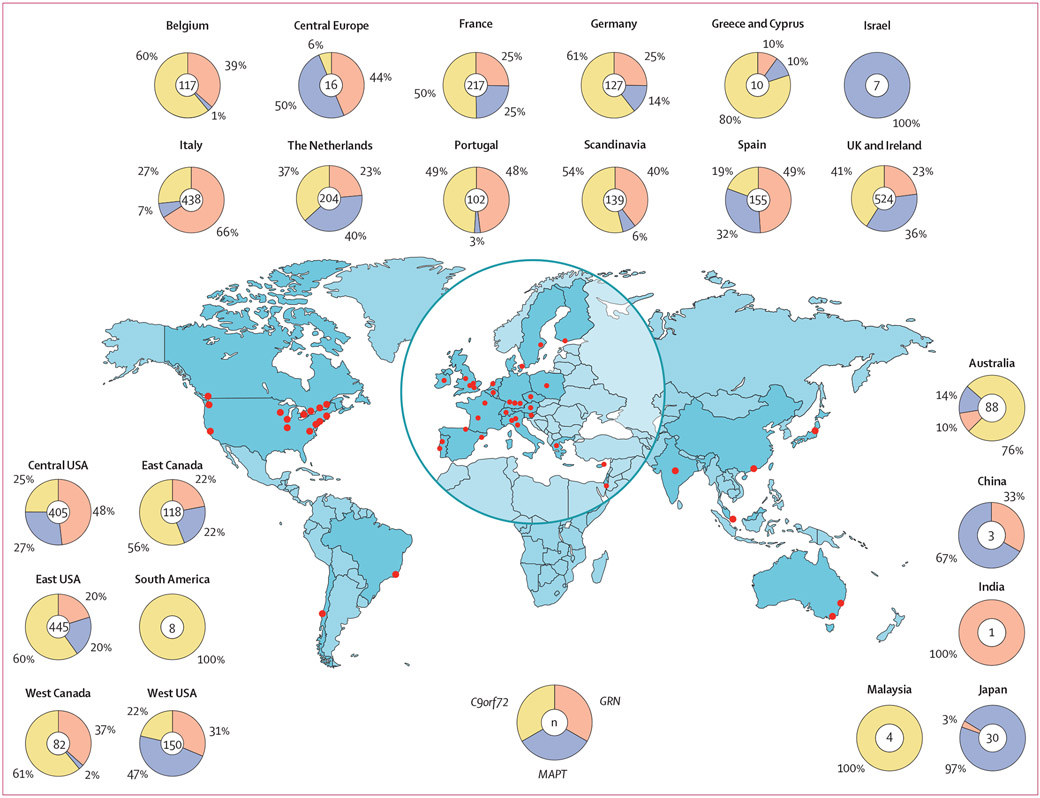
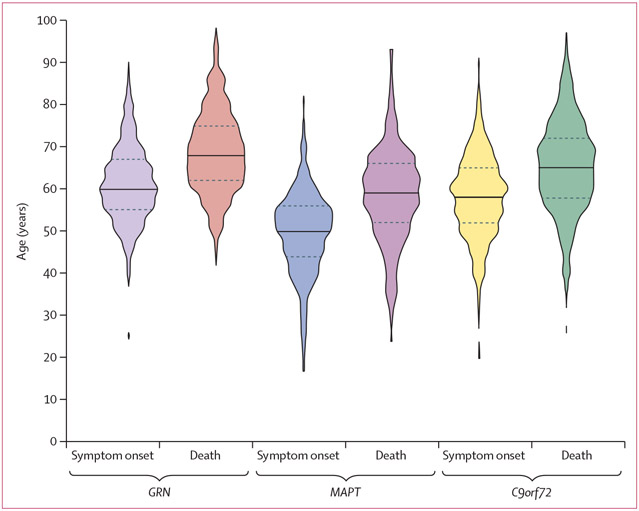
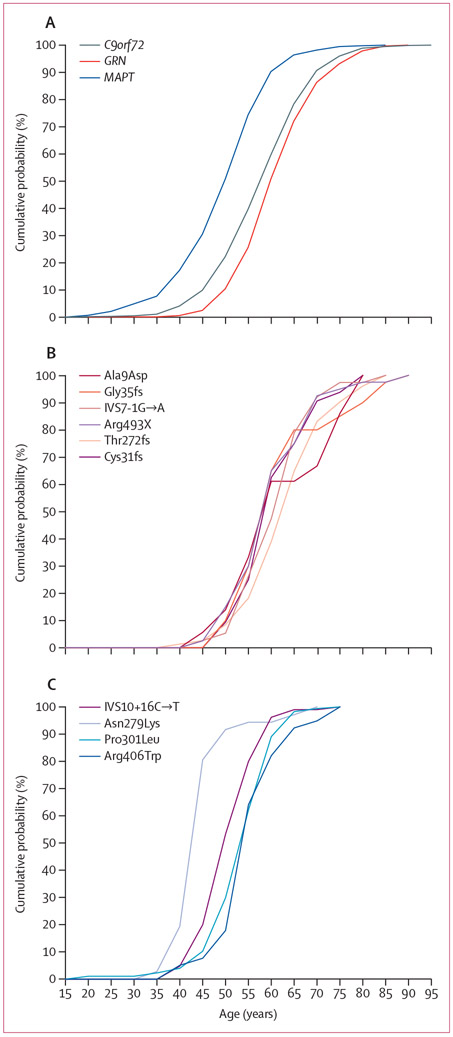
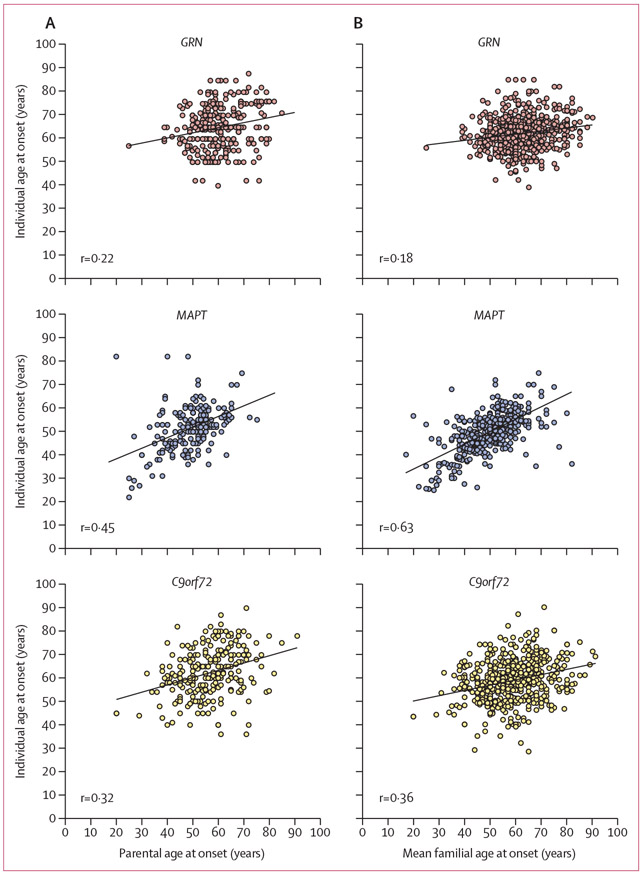
Verification
Claims the paper makes
The claims and statistics of this paper haven’t been checked yet.
Free: it reads the open-access text and checks the first 5 claims that cite a source we can check. Create a free account to check every claim.
Claims other papers make about this one
Each is checked against this paper’s own text: does it say what the citing paper says it does?
The cited source doesn’t support the claim as written.
In the citing paper
“F-FTD is rare, with only hundreds of mutation carriers known to exist worldwide.12”
From Temporal order of clinical and biomarker changes in familial frontotemporal dementia (2022) · cites this paper as [12]
Checked by a reasoning model — may be wrong.
Experimental — accuracy not yet measuredThe source backs part of the claim, not all of it — or backs it for a different population, condition or comparison.
In the citing paper
“For example, in GRN, familial age of onset only explains 14% of the variability in individual age at symptom onset.12”
From Temporal order of clinical and biomarker changes in familial frontotemporal dementia (2022) · cites this paper as [12]
Experimental — accuracy not yet measuredThe cited source says what the claim attributes to it.
In the citing paper
“Although people with mutations causing frontotemporal lobar degeneration usually have frontotemporal dementia or a related clinical syndrome (eg, corticobasal syndrome or progressive supranuclear palsy presenting as Richardson syndrome), some individuals have genetic frontotemporal lobar degeneration with another phenotype.13”
From Advances and controversies in frontotemporal dementia: diagnosis, biomarkers, and therapeutic considerations (2022) · cites this paper as [13]
Self-check
Percentages, sums and reported differences re-computed from the paper’s own numbers.
The self-check needs the paper’s full text.
Citations
Cites
Mutations in progranulin cause tau-negative frontotemporal dementia linked to chromosome 17
Baker, M., Mackenzie, I. R., Pickering-Brown, S. M., Gass, J., Rademakers, R., Lindholm, C., Snowden, J., Adamson, J., Sadovnick, A. D., Rollinson, S., et al. (2006) · Nature · doi:10.1038/nature05016 · Cited by 2,058
Self-citationCruts, M., Gijselinck, I., van der Zee, J., Engelborghs, S., Wils, H., Pirici, D., Rademakers, R., Vandenberghe, R., Dermaut, B., Martin, J.-J., et al. (2006) · Nature · doi:10.1038/nature05017 · Cited by 1,512
Self-citationMutations in progranulin are a major cause of ubiquitin-positive frontotemporal lobar degeneration
Gass, J., Cannon, A., Mackenzie, I. R., Boeve, B., Baker, M., Adamson, J., Crook, R., Melquist, S., Kuntz, K., Petersen, R., et al. (2006) · Human Molecular Genetics · doi:10.1093/hmg/ddl241 · Cited by 580
Self-citationRohrer, J. D., Nicholas, J. M., Cash, D. M., van Swieten, J., Dopper, E., Jiskoot, L., van Minkelen, R., Rombouts, S. A., Cardoso, M. J., Clegg, S., et al. (2015) · The Lancet Neurology · doi:10.1016/s1474-4422(14)70324-2 · Cited by 538
Self-citationThe heritability and genetics of frontotemporal lobar degeneration
Rohrer, J. D., Guerreiro, R., Vandrovcova, J., Uphill, J., Reiman, D., Beck, J., Isaacs, A. M., Authier, A., Ferrari, R., Fox, N. C., et al. (2009) · Neurology · doi:10.1212/wnl.0b013e3181bf997a · Cited by 536
Self-citationSymptom onset in autosomal dominant Alzheimer disease: A systematic review and meta-analysis
Ryman, D. C., Acosta-Baena, N., Aisen, P. S., Bird, T., Danek, A., Fox, N. C., Goate, A., Frommelt, P., Ghetti, B., Langbaum, J. B. S., et al. (2014) · Neurology · doi:10.1212/wnl.0000000000000596 · Cited by 502
Self-citationLe Ber, I., Camuzat, A., Hannequin, D., Pasquier, F., Guedj, E., Rovelet-Lecrux, A., Hahn-Barma, V., van der Zee, J., Clot, F., Bakchine, S., et al. (2008) · Brain · doi:10.1093/brain/awn012 · Cited by 352
Self-citationProgranulin deficiency promotes neuroinflammation and neuron loss following toxin-induced injury
Martens, L. H., Zhang, J., Barmada, S. J., Zhou, P., Kamiya, S., Sun, B., Min, S.-W., Gan, L., Finkbeiner, S., Huang, E. J., et al. (2012) · Journal of Clinical Investigation · doi:10.1172/jci63113 · Cited by 315
Warren, J. D., Rohrer, J. D., & Rossor, M. N. (2013) · BMJ · doi:10.1136/bmj.f4827 · Cited by 292
Self-citationvan Blitterswijk, M., DeJesus-Hernandez, M., Niemantsverdriet, E., Murray, M. E., Heckman, M. G., Diehl, N. N., Brown, P. H., Baker, M. C., Finch, N. A., Bauer, P. O., et al. (2013) · The Lancet Neurology · doi:10.1016/s1474-4422(13)70210-2 · Cited by 274
Self-citation
Cited by
Items 101–200 of 312
Tipton, P. W., Deutschlaender, A., Savica, R., Heckman, M. G., Brushaber, D. E., Dickerson, B. C., Gavrilova, R. H., Geschwind, D. H., Ghoshal, N., Graff‐Radford, J., et al. (2022) · Neurology · doi:10.1212/wnl.0000000000200860 · Cited by 22
“We report a temporal relationship of overall AAO between variant groups (MAPT followed by C9orf72 and then GRN) that is in accordance with previous reports.(48,49) We found that the mean AAO for cognitive symptoms was significantly different among cohorts beginning with MAPT (49 years) followed by C9orf72 (55 years) a…”
ResultSelf-citationSex and gender differences in dementia
Salwierz, P., Davenport, C., Sumra, V., Iulita, M. F., Ferretti, M. T., & Tartaglia, M. C. (2022) · International review of neurobiology · doi:10.1016/bs.irn.2022.07.002 · Cited by 17
Self-citationChen, K., Gao, T., Liu, Y., Zhu, K., Wang, T., & Zeng, P. (2024) · Neurobiology of Aging · doi:10.1016/j.neurobiolaging.2023.09.017 · Cited by 15
Comparison of clinical rating scales in genetic frontotemporal dementia within the GENFI cohort
Peakman, G., Russell, L. L., Convery, R. S., Nicholas, J. M., Swieten, J. C. V., Jiskoot, L. C., Moreno, F., Sánchez‐Valle, R., Laforce, R. J., Graff, C., et al. (2021) · Journal of Neurology Neurosurgery & Psychiatry · doi:10.1136/jnnp-2021-326868 · Cited by 23
Self-citationPrimary progressive aphasias associated with C9orf72 expansions: Another side of the story
Saracino, D., Géraudie, A., Remes, A. M., Ferrieux, S., Nogues, M., Bottani, S., Cipriano, L., Houot, M., Funkiewiez, A., Camuzat, A., et al. (2021) · Cortex · doi:10.1016/j.cortex.2021.09.005 · Cited by 19
Self-citationData‐driven staging of genetic frontotemporal dementia using multi‐modal MRI
McCarthy, J., Borroni, B., Sánchez‐Valle, R., Moreno, F., Laforce, R. J., Graff, C., Synofzik, M., Galimberti, D., Rowe, J. B., Masellis, M., et al. (2022) · Human Brain Mapping · doi:10.1002/hbm.25727 · Cited by 16
“Finally, we used EYO as a measure of disease severity, which has been shown to be imprecise as a predictor of actual onset (Moore et al., 2020).”
MethodSelf-citationThe Advance on Frontotemporal Dementia (FTD)’s Neuropathology and Molecular Genetics
Wang, J., Wang, B., & Zhou, T. (2022) · Mediators of Inflammation · doi:10.1155/2022/5003902 · Cited by 18
“By selective shearing of exon 10, tau isomers with 3 (exon 10 absent) or 4 (exon 10 visible) repeats are produced, known as 3R-tau or 4R-tau [45, 46].”
BackgroundGenetic variation in APOE, GRN, and TP53 are phenotype modifiers in frontotemporal dementia
Rosas, I., Martínez, C., Coto, E., Clarimón, J., Lleó, A., Illán‐Gala, I., Dols‐Icardo, O., Borroni, B., Almeida, M. R., van der Zee, J., et al. (2020) · Neurobiology of Aging · doi:10.1016/j.neurobiolaging.2020.08.018 · Cited by 15
Self-citationExperimental Disease-Modifying Agents for Frontotemporal Lobar Degeneration
Giunta, M., Solje, E., Gardoni, F., Borroni, B., & Benussi, A. (2021) · Journal of Experimental Pharmacology · doi:10.2147/jep.s262352 · Cited by 18
Self-citationTREM2 variants as a possible cause of frontotemporal dementia with distinct neuroimaging features
Samanci, B., Bilgiç, B., Gelişin, Ö., Tepgeç, F., Guven, G., Tüfekçioğlu, Z., Alaylıoğlu, M., Hanagasi, H. A., Gürvit, H., Guerreiro, R., et al. (2021) · European Journal of Neurology · doi:10.1111/ene.14908 · Cited by 14
“While the age of onset in the majority of the FTD patients was between 45 and 65 or even more [21], all NHD patients in our series developed the disease before the age of 41.”
BackgroundSelf-citationDisease-related cortical thinning in presymptomatic granulin mutation carriers
Borrego‐Écija, S., Sala‐Llonch, R., Swieten, J. C. V., Borroni, B., Moreno, F., Masellis, M., Tartaglia, M. C., Graff, C., Galimberti, D., Laforce, R. J., et al. (2020) · NeuroImage Clinical · doi:10.1016/j.nicl.2020.102540 · Cited by 15
Self-citationMindfulness-Based Stress Reduction in Pre-symptomatic Genetic Frontotemporal Dementia: A Pilot Study
Poos, J. M., van den Berg, E., Papma, J. M., van der Tholen, F. C., Seelaar, H., Kaat, L. D., Kievit, J., Tibben, A., Swieten, J. C. V., & Jiskoot, L. C. (2022) · Frontiers in Psychiatry · doi:10.3389/fpsyt.2022.864391 · Cited by 15
Self-citationChu, M. K., Nan, H., Jiang, D., Liu, L., Huang, A., Wang, Y., & Wu, L. (2023) · Journal of Alzheimer s Disease · doi:10.3233/jad-230052 · Cited by 12
Behavioral Variant Frontotemporal Dementia
Boeve, B. F. (2022) · CONTINUUM Lifelong Learning in Neurology · doi:10.1212/con.0000000000001105 · Cited by 22
Self-citationExamining the relation between bilingualism and age of symptom onset in frontotemporal dementia
de Leon, J., Grasso, S. M., Allen, I. E., Escueta, D. P., Vega, Y., Eshghavi, M., Watson, C., Dronkers, N. F., Gorno‐Tempini, M. L., & Henry, M. L. (2023) · Bilingualism Language and Cognition · doi:10.1017/s1366728923000226 · Cited by 16
Khrouf, W., Saracino, D., Rucheton, B., Houot, M., Clot, F., Rinaldi, D., Vítor, J., Huynh, M., Heng, E., Schlemmer, D., et al. (2023) · Neurobiology of Disease · doi:10.1016/j.nbd.2023.106108 · Cited by 12
Self-citationRisk factors to mortality and causes of death in frontotemporal dementia: An Australian perspective
Loi, S. M., Tsoukra, P., Chen, Z. Z., Wibawa, P., Eratne, D., Kelso, W. M., Walterfang, M., & Velakoulis, D. (2022) · International Journal of Geriatric Psychiatry · doi:10.1002/gps.5668 · Cited by 12
Tan, Y. J., Yong, A. C. W., Foo, J. N., Lian, M. M., Lim, W. K., Dominguez, J. C., Fong, Z. H., Narasimhalu, K., Chiew, H. J., Ng, K. P., et al. (2023) · Annals of Clinical and Translational Neurology · doi:10.1002/acn3.51744 · Cited by 14
“9) years; this was in accordance with previous reports of MAPT mutation carriers having earlier AAO.(36,63) Both blood and CSF NfL levels have been shown to correlate with disease severity, brain atrophy, annualised brain atrophy rate and survival in genetic FTD.”
ResultInfluentialSelf-citationRohrer, J. D., & Boxer, A. L. (2021) · Advances in experimental medicine and biology · doi:10.1007/978-3-030-51140-1_8 · Cited by 14
Self-citationBorrego‐Écija, S., Juncà‐Parella, J., Vandebergh, M., Pérez‐Millan, A., Balasa, M., Lladó, A., Bouzigues, A., Russell, L. L., Foster, P. H., Ferry‐Bolder, E., et al. (2024) · Neurology · doi:10.1212/wnl.0000000000209944 · Cited by 11
Self-citationFrequency and Longitudinal Course of Motor Signs in Genetic Frontotemporal Dementia
Schönecker, S., Martínez-Murcia, F. J., Rauchmann, B., Franzmeier, N., Prix, C., Wlasich, E., Loosli, S. V., Bochmann, K., Górriz, J. M., Laforce, R. J., et al. (2022) · Neurology · doi:10.1212/wnl.0000000000200828 · Cited by 14
Self-citationKrishnadas, N., Chew, M., Sutherland, A., Christensen, M., Rogers, K., Kyndt, C., Islam, F., Darby, D., & Brodtmann, A. G. (2024) · Neurology Clinical Practice · doi:10.1212/cpj.0000000000200360 · Cited by 13
Self-citationSun, K. T., & Mok, S. (2025) · Neurotherapeutics · doi:10.1016/j.neurot.2024.e00512 · Cited by 18
“Individuals harboring tau mutations at residue P301, such as P301L, have a mean age of dementia onset of 53 years, whereas AD onset is typically > 65 [123].”
Bouzigues, A., Du, V. L., Joulot, M., Peysson, N., Houot, M., Béranger, B., Russell, L. L., Foster, P. H., Ferry‐Bolder, E., Swieten, J. C. V., et al. (2025) · Alzheimer s & Dementia · doi:10.1002/alz.70367 · Cited by 14
Self-citationFrontotemporal dementia as a consequence of GRN mutations: From disease cause to models to therapies
Salzano, S., Bertasini, C., Haghighi, S. T., Lundkvist, J., Wahlberg, L. U., Chiamulera, C., Vattemi, G. N. A., Gardoni, F., & Paolone, G. (2025) · Pharmacological Research · doi:10.1016/j.phrs.2025.107957 · Cited by 16
Survival in Huntington’s disease and other young‐onset dementias
Loi, S. M., Tsoukra, P., Sun, E., Chen, Z. Z., Wibawa, P., Biase, M. A. D., Farrand, S., Eratne, D., Kelso, W. M., Evans, A. H., et al. (2023) · International Journal of Geriatric Psychiatry · doi:10.1002/gps.5913 · Cited by 11
“The microtubule‐associated‐protein tau (MAPT) mutation appears to be associated with shorter survival compared to the progranulin and C9orf72 mutation.(25) The C9orf72 mutation is a cause of FTD, MND and FTD‐MND(23) and while there is consistency that individuals with FTD‐MND phenotype have a short survival, 2–3 years…”
BackgroundCoppieters, R., Bouzigues, A., Jiskoot, L. C., Montembeault, M., Tee, B. L., Rohrer, J. D., Bruffaerts, R., Russell, L. L., Foster, P. H., Ferry‐Bolder, E., et al. (2024) · Neuroscience & Biobehavioral Reviews · doi:10.1016/j.neubiorev.2024.105909 · Cited by 15
Self-citationImpairments of inhibitory neurons in amyotrophic lateral sclerosis and frontotemporal dementia
Lorenc, F., Dupuis, L., & Cassel, R. (2024) · Neurobiology of Disease · doi:10.1016/j.nbd.2024.106748 · Cited by 10
Sex differences in clinical phenotypes of behavioral variant frontotemporal dementia
Liu, X., de Boer, S. C. M., Cortez, K., Poos, J. M., Illán‐Gala, I., Heuer, H. W., Forsberg, L. K., Casaletto, K. B., Memel, M., Appleby, B. S., et al. (2025) · Alzheimer s & Dementia · doi:10.1002/alz.14608 · Cited by 12
“28 SporadicandgeneticbvFTDsharecorefeatures,andnosymp-tom has been reported exclusively in one type.”
Self-citationDiversity-sensitive brain clocks linked to biophysical mechanisms in aging and dementia
Coronel‐Oliveros, C., Moguilner, S., Hernandez, H., Cruzat, J., Báez, S., Medel, V., Cuadros, J., Santamaría‐García, H. A., Valdes-Sosa, P. A., Lopera, F. J., et al. (2025) · Nature Mental Health · doi:10.1038/s44220-025-00502-7 · Cited by 19
Premi, E., Giunta, M., Iraji, A., Rachakonda, S., Calhoun, V. D., Gazzina, S., Benussi, A., Gasparotti, R., Archetti, S., Bocchetta, M., et al. (2021) · Neurobiology of Aging · doi:10.1016/j.neurobiolaging.2021.09.001 · Cited by 10
Self-citationZhan, L., Li, J., Jew, B., & Sul, J. H. (2021) · PLoS Genetics · doi:10.1371/journal.pgen.1009772 · Cited by 9
Dissecting the Many Faces of Frontotemporal Dementia: An Imaging Perspective
Pengo, M., Premi, E., & Borroni, B. (2022) · International Journal of Molecular Sciences · doi:10.3390/ijms232112867 · Cited by 11
“org), the US-based ARTFL/LEFFTDS, and the Australian DINAD, which have collected cross-sectional and longitudinal data of FTD patients with monogenic disease [9,82].”
BackgroundSelf-citationCan accelerated ageing models inform us on age‐related tauopathies?
Han, Z. Z., Fleet, A., & Larrieu, D. (2023) · Aging Cell · doi:10.1111/acel.13830 · Cited by 11
Machine Learning for Alzheimer’s Disease and Related Dementias
Modat, M., Cash, D. M., Canas, L. S., Bocchetta, M., & Ourselin, S. (2023) · Neuromethods · doi:10.1007/978-1-0716-3195-9_25 · Cited by 10
Self-citationCharacterization of Progranulin Gene Mutations in Portuguese Patients with Frontotemporal Dementia
Almeida, M. R., Tábuas‐Pereira, M., Baldeiras, I., Lima, M., Durães, J., Massano, J., Pinto, M. M. M., Cruto, C., & Santana, I. J. (2023) · International Journal of Molecular Sciences · doi:10.3390/ijms25010511 · Cited by 10
Self-citationEck, R. J., Stair, J. G., Kraemer, B. C., & Liachko, N. F. (2024) · Frontiers in Neuroscience · doi:10.3389/fnins.2023.1300705 · Cited by 11
“Both insulin/ insulin-like growth factor and p38 MAPK signaling pathways coordinate sod gene regulation (Yanase et al., 2009, 2020).”
BackgroundRisk factors for the neurodegenerative dementias in the Western Pacific region
Clarke, A. J., Brodtmann, A. G., Irish, M., Mowszowski, L., Radford, K. A., Naismith, S. L., Mok, V., Kiernan, M. C., Halliday, G. M., & Ahmed, R. M. (2024) · The Lancet Regional Health - Western Pacific · doi:10.1016/j.lanwpc.2024.101051 · Cited by 20
“173,174 175 – 177 Work by the Diagnosing Inherited Non-Alzheimer Dementia and New Zealand Genetic Frontotemporal Dementia studies is of particular interest in the Australasian region which will help to examine the interplay between genetic risk and environmental in fl uences on disease progression.”
BackgroundSelf-citationOlszewska, D. A., Fearon, C., McGuigan, C., McVeigh, T. P., Houlden, H., Polke, J. M., LAWLOR, B. A., Coen, R. F., Hutchinson, M., Hutton, M. L., et al. (2021) · Neurobiology of Aging · doi:10.1016/j.neurobiolaging.2021.05.010 · Cited by 9
Corriveau‐Lecavalier, N., Tosakulwong, N., Lesnick, T. G., Fought, A. J., Reid, R. I., Schwarz, C. G., Senjem, M. L., Jack, C. R., Jones, D. T., Vemuri, P., et al. (2023) · Neurobiology of Aging · doi:10.1016/j.neurobiolaging.2023.12.001 · Cited by 9
Self-citationVilla, C., Pellencin, E., Romeo, A., Giaccone, G., Rossi, G., Prioni, S., & Caroppo, P. (2024) · Frontiers in Bioscience-Landmark · doi:10.31083/j.fbl2901012 · Cited by 8
“This is the most frequent mutation worldwide, and it is found to be linked to bvFTD phenotypes [4].”
BackgroundResultInfluentialSelf-citationBest, P. T., Swieten, J. C. V., Jiskoot, L. C., Moreno, F., Sánchez‐Valle, R., Laforce, R. J., Graff, C., Masellis, M., Tartaglia, M. C., Rowe, J. B., et al. (2024) · Neurology · doi:10.1212/wnl.0000000000209829 · Cited by 8
Self-citationSilva-Llanes, I., Rodríguez-López, S., González-Naranjo, P., del Sastre, E., López, M. G., Paez, J. A., Campillo, N. E., & Lastres‐Becker, I. (2025) · Brain Behavior and Immunity · doi:10.1016/j.bbi.2025.03.008 · Cited by 8
“…diverse group of neuropathological disorders and is a prominent yet understudied form of early-onset neurodegenerative disease with an incidence of 8.4 to 27.0 people in 100,000, affecting individuals between 45 and 65 years of age (Moore et al., 2020; Mercy et al., 2008; Logroscino et al., 2023).”
InfluentialProgranulin function and regulation in the CNS
Life, B. E., & Leavitt, B. R. (2025) · Trends in Neurosciences · doi:10.1016/j.tins.2025.05.004 · Cited by 10
Genetic Counselling Improves the Molecular Characterisation of Dementing Disorders
Zampatti, S., Ragazzo, M., Peconi, C., Luciano, S., Gambardella, S., Caputo, V., Strafella, C., Cascella, R., Caltagirone, C., & Giardina, E. (2021) · Journal of Personalized Medicine · doi:10.3390/jpm11060474 · Cited by 8
“Clinically, the C9Orf72-related FTD presents with behavioural changes, and executive or language disturbance, sometimes with features of parkinsonism (non tremorigen bradikynesia) [46].”
BackgroundStructural brain splitting is a hallmark of Granulin-related frontotemporal dementia
Gazzina, S., Grassi, M., Premi, E., Alberici, A., Benussi, A., Archetti, S., Gasparotti, R., Bocchetta, M., Cash, D. M., Todd, E. G., et al. (2022) · Neurobiology of Aging · doi:10.1016/j.neurobiolaging.2022.02.009 · Cited by 9
Self-citationExtremely Early-Onset Frontotemporal Dementia: A Case Report and Literature Review
Chu, M. K., Liu, L., Nan, H., Jiang, D., Wang, Y., Rosa‐Neto, P., Piao, Y.-S., & Wu, L. (2022) · Journal of Alzheimer s Disease · doi:10.3233/jad-220679 · Cited by 12
de Boer, S. C. M., Riedl, L., Fenoglio, C., Rue, I., Landín-Romero, R., Matis, S., Chatterton, Z., Galimberti, D., Halliday, G. M., Diehl‐Schmid, J., et al. (2023) · Journal of Alzheimer s Disease · doi:10.3233/jad-230829 · Cited by 10
Self-citationSchönecker, S., Martínez-Murcia, F. J., Denecke, J., Franzmeier, N., Danek, A., Wagemann, O., Prix, C., Wlasich, E., Vöglein, J., Loosli, S. V., et al. (2024) · Neurology · doi:10.1212/wnl.0000000000209569 · Cited by 13
Self-citationZempel, H. (2023) · Cytoskeleton · doi:10.1002/cm.21793 · Cited by 13
“Due to the extreme rarity of most tauopathies (e.g., 0.8:100,000 for MAPT -associated FTD, (Moore et al., 2020; A. R. Rohrer et al., 2022), 1:100,000 for NPC (Vanier, 2010), and around 1:10,000 – 1:20,000 for DM1 and DM2 (Theadom et al., 2014)), this is challenging to investigate.”
BackgroundInfluentialSamra, K., Peakman, G., MacDougall, A. M., Bouzigues, A., Greaves, C. V., Convery, R. S., Swieten, J. C. V., Jiskoot, L. C., Seelaar, H., Moreno, F., et al. (2024) · Alzheimer s & Dementia Diagnosis Assessment & Disease Monitoring · doi:10.1002/dad2.12571 · Cited by 14
Self-citationTARDBP p.I383V, a recurrent alteration in Greek FTD patients
Charoniti, E., Papastefanopoulou, V., Florou-Hatziyiannidou, C., Koros, C., Stanitsa, E., Papatriantafyllou, J. D., Papageorgiou, S. G., & Κroupis, C. (2021) · Journal of the Neurological Sciences · doi:10.1016/j.jns.2021.117566 · Cited by 8
Self-citationAn anti-sortilin affibody-peptide fusion inhibits sortilin-mediated progranulin degradation
Ek, M., Nilvebrant, J., Nygren, P., Ståhl, S., Lindberg, H., & Löfblom, J. (2024) · Frontiers in Immunology · doi:10.3389/fimmu.2024.1437886 · Cited by 9
Anatomical progression of genetic frontotemporal lobar degeneration across the lifespan
Planche, V., Mansencal, B., Fonov, V., Manjón, J. V., Tourdias, T., Bouzigues, A., Russell, L. L., Foster, P. H., Ferry‐Bolder, E., Swieten, J. C. V., et al. (2025) · Brain · doi:10.1093/brain/awaf195 · Cited by 11
Self-citationPreclinical and Prodromal Frontotemporal Dementia: Challenges and Opportunities
Palacino, F., Manganotti, P., & Benussi, A. (2025) · International Journal of Translational Medicine · doi:10.3390/ijtm5040052 · Cited by 7
Self-citationBrain Metabolic Profile in Presymptomatic GRN Carriers Throughout a 5-Year Follow-up
Saracino, D., Sellami, L., Boniface, H., Houot, M., Pélégrini‐Issac, M., Funkiewiez, A., Rinaldi, D., Locatelli, M., Azuar, C., Causse-Lemercier, V., et al. (2022) · Neurology · doi:10.1212/wnl.0000000000201439 · Cited by 9
Network Connectivity Alterations across the MAPT Mutation Clinical Spectrum
Zhang, L., Flagan, T., Häkkinen, S., Chu, S. A., Brown, J. A., Lee, A. J., Pasquini, L., Mandelli, M. L., Gorno‐Tempini, M. L., Sturm, V. E., et al. (2023) · Annals of Neurology · doi:10.1002/ana.26738 · Cited by 7
“2 Although studies have identi fi ed structural changes in both symptomatic and presymptomatic carriers, when neural network alterations, as measured by task-free functional MRI (tf-fMRI), arise remains unclear.”
Self-citationDisease-Associated Mutations in Tau Encode for Changes in Aggregate Structure Conformation
Sun, K. T., Patel, T., Kang, S., Yarahmady, A., Srinivasan, M., Julien, O., Heras, J., & Mok, S. (2023) · ACS Chemical Neuroscience · doi:10.1021/acschemneuro.3c00422 · Cited by 7
Giardina, E., Mandich, P., Ghidoni, R., Ticozzi, N., Rossi, G., Fenoglio, C., Tiziano, F. D., Esposito, F., Capellari, S., Nacmias, B., et al. (2024) · Frontiers in Neurology · doi:10.3389/fneur.2024.1284459 · Cited by 7
Self-citationBoeve, B. F., & Rosen, H. J. (2021) · Advances in experimental medicine and biology · doi:10.1007/978-3-030-51140-1_6 · Cited by 8
Self-citationClinical Update on C9orf72: Frontotemporal Dementia, Amyotrophic Lateral Sclerosis, and Beyond
Saracino, D., & Ber, I. L. (2021) · Advances in experimental medicine and biology · doi:10.1007/978-3-030-51140-1_5 · Cited by 7
Holtman, I. R., Glass, C. K., & Nott, A. (2024) · Advances in neurobiology · doi:10.1007/978-3-031-55529-9_29 · Cited by 7
Douglas, A. G. L., Thompson, A. G., Turner, M. R., & Talbot, K. (2024) · BMJ Neurology Open · doi:10.1136/bmjno-2024-000792 · Cited by 9
Castro, J. G., Rubio‐Guerra, S., Casaletto, K. B., Selma‐González, J., Memel, M., Vaqué‐Alcázar, L., Morcillo-Nieto, A. O., Arriola‐Infante, J. E., Dols‐Icardo, O., Bejanin, A., et al. (2025) · Alzheimer s & Dementia · doi:10.1002/alz.70070 · Cited by 7
“55 Genetic (e.g., X chromosome), lifestyle 57 , and hormonal 58 differences might be the underlying mechanisms, conferring greater flexibility and adaptability of brain networks to be able to cope with frontotemporal damage in females.”
Self-citationAmbaw, Y. A., Ljubenkov, P. A., Singh, S., Hamed, A., Boland, S., Boxer, A. L., Walther, T. C., & Farese, R. V. (2025) · Alzheimer s & Dementia · doi:10.1002/alz.70631 · Cited by 7
Self-citationA Systematic Review of the Genetics and Pathology of Psychosis in Frontotemporal Dementia
Chatterjee, A., Hirsch‐Reinshagen, V., Scott, I. M., Cashman, N. R., & Hsiung, G. R. (2023) · Canadian Journal of Neurological Sciences / Journal Canadien des Sciences Neurologiques · doi:10.1017/cjn.2023.248 · Cited by 7
Self-citationProgress in Primary Progressive Aphasia: A Review
Kertesz, A., Finger, E. C., & Munoz, D. G. (2023) · Cognitive and Behavioral Neurology · doi:10.1097/wnn.0000000000000365 · Cited by 9
“The most prevalent genetic group in the overall FTD spectrum worldwide was the C9orf72 expansion: 42.1% of 3403 individuals, followed by the GRN mutation with 34.6%, and MAPT mutations comprising the least common group at 23.2% (Moore et al., 2020).”
BackgroundInfluentialSelf-citationTDP-43 as a potential retinal biomarker for neurodegenerative diseases
Glashutter, M., Wijesinghe, P., & Matsubara, J. A. (2025) · Frontiers in Neuroscience · doi:10.3389/fnins.2025.1533045 · Cited by 8
Saracino, D., & Ber, I. L. (2022) · Revue Neurologique · doi:10.1016/j.neurol.2022.03.007 · Cited by 7
“course across distinct genotypes [8,47], the interindividual variability in presymptomatic”
BackgroundSantamaría‐García, H. A., Ogonowski, N. S., Báez, S., Palacio, N., Reyes, P. A., Schulte, M., López, A., Matallana, D., & Ibáñez, A. M. (2022) · BMC Neurology · doi:10.1186/s12883-022-02954-1 · Cited by 20
de Souza, L. C., Hosogi, M. L., Machado, T. H., Carthery‐Goulart, M. T., Yassuda, M. S., Smid, J., Barbosa, B. J. A. P., Schilling, L. P., Balthazar, M. L. F., Frota, N. A. F., et al. (2022) · Dementia & Neuropsychologia · doi:10.1590/1980-5764-dn-2022-s103en · Cited by 12
Young-onset frontotemporal dementia with FUS pathology
Gowell, M., Baker, I., Ansorge, O., & Husain, M. (2020) · Practical Neurology · doi:10.1136/practneurol-2020-002730 · Cited by 8
Bartoletti‐Stella, A., Pasqua, S. D., Baiardi, S., Bartolomei, I., Mengozzi, G., Orio, G., Pastorelli, F., Piras, S., Poda, R., Raggi, A., et al. (2020) · Neurobiology of Aging · doi:10.1016/j.neurobiolaging.2020.05.004 · Cited by 6
Differentiating sporadic frontotemporal dementia from late-onset primary psychiatric disorders
de Boer, S. C. M., Riedl, L., Braak, S., Fenoglio, C., Foxe, D., Carrick, J., Landín-Romero, R., Matis, S., Chatterton, Z., Rue, I., et al. (2025) · Brain Communications · doi:10.1093/braincomms/fcaf199 · Cited by 5
“The analysis revealed similar differences between the groups and predictive values for each domain in the logistic regression models (Supplementary Tables 6 and 7).”
Self-citationElectrostatic Effects on Tau Nanocondensates
Tsoi, P. S., Lucas, L., Rhoades, D. J., Ferreon, J. C., & Ferreon, A. C. M. (2025) · Biomolecules · doi:10.3390/biom15030406 · Cited by 5
“Tau protein extracted from Alzheimer’s disease patient samples is largely hyperphosphorylated [10,11,21–25], whereas P301S is a familial mutation that leads to degenerative Tauopathy [8,10,11,23,24,26–28].”
Practice effects in genetic frontotemporal dementia and at-risk individuals: a GENFI study
Öijerstedt, L., Andersson, C., Jelić, V., Swieten, J. C. V., Jiskoot, L. C., Seelaar, H., Borroni, B., Sánchez‐Valle, R., Moreno, F., Laforce, R. J., et al. (2021) · Journal of Neurology Neurosurgery & Psychiatry · doi:10.1136/jnnp-2021-327005 · Cited by 7
“visit (1-3) and the interaction between mutated gene and visit.”
BackgroundMethodSelf-citationTemporal dynamics predict symptom onset and cognitive decline in familial frontotemporal dementia
Whiteside, D. J., Malpetti, M., Jones, P. S., Ghosh, B. C. P., Coyle-Gilchrist, I. T. S., Swieten, J. C. V., Seelaar, H., Jiskoot, L. C., Borroni, B., Sánchez‐Valle, R., et al. (2022) · Alzheimer s & Dementia · doi:10.1002/alz.12824 · Cited by 6
Self-citationCastelnovo, V., Canu, E., Domi, T., Pozzi, L., Vignaroli, F., Spinelli, E. G., Ghirelli, A., Tondo, G., Comi, C., Riva, N., et al. (2023) · Frontiers in Neuroscience · doi:10.3389/fnins.2023.1204504 · Cited by 5
“The two patients included in the study belonged to two different families and had a diagnosis of bvFTD (Moore et al., 2020).”
BackgroundJiskoot, L. C., van den Berg, E., Laenen, S. A. A. M., Poos, J. M., Giannini, L., Satoer, D., van Hemmen, J., Pijnenburg, Y. A. L., Vonk, J. M. J., & Seelaar, H. (2023) · Journal of Neurology · doi:10.1007/s00415-023-11845-5 · Cited by 5
“This design allowed the investigation of mutation carriers as they were converting to the symptomatic stage, which provides us more accurate information about the underlying disease process than previous studies that used estimated years to onset as a proxy [40].”
Self-citationGenetic testing in motor neuron disease and frontotemporal dementia: a 5-year multicentre evaluation
Cairns, L., Rankin, J., Hamad, A. A., Cooper, N., Merrifield, K., Jain, V., Rosser, E. M., Rogers, M., Buston, S., Stopford, C. L., et al. (2021) · Journal of Medical Genetics · doi:10.1136/jmedgenet-2021-107776 · Cited by 5
Wong, B., Lucente, D. E., Krivensky, S., Krahn, E. A., Karlawish, J. H., & Dickerson, B. C. (2021) · Alzheimer s & Dementia Diagnosis Assessment & Disease Monitoring · doi:10.1002/dad2.12225 · Cited by 5
Self-citationAn Automated Toolbox to Predict Single Subject Atrophy in Presymptomatic Granulin Mutation Carriers
Premi, E., Costa, T., Gazzina, S., Benussi, A., Cauda, F., Gasparotti, R., Archetti, S., Alberici, A., Swieten, J. C. V., Sánchez‐Valle, R., et al. (2022) · Journal of Alzheimer s Disease · doi:10.3233/jad-215447 · Cited by 6
Self-citationGenetic Screening in Korean Patients with Frontotemporal Dementia Syndrome
Kim, E., Na, D. L., Kim, H.-J., Park, K. W., Lee, J., Roh, J. H., Kwon, J. C., Yoon, S. J., Jung, N., Jeong, J. H., et al. (2022) · Journal of Alzheimer s Disease Reports · doi:10.3233/adr-220030 · Cited by 6
de Souza, L. C., Hosogi, M. L., Machado, T. H., Carthery‐Goulart, M. T., Yassuda, M. S., Smid, J., Barbosa, B. J. A. P., Schilling, L. P., Balthazar, M. L. F., Frota, N. A. F., et al. (2022) · Dementia & Neuropsychologia · doi:10.1590/1980-5764-dn-2022-s103pt · Cited by 27
Chu, M., Wu, L., Liu, L., Nan, H., Jiang, D., Wang, Y., & Rosa‐Neto, P. (2022) · Current Alzheimer Research · doi:10.2174/1567205020666221226122557 · Cited by 5
Tan, L. X., Oertel, F. C., Cheng, A., Cobigo, Y., Keihani, A., Bennett, D. J., Abdelhak, A., Montes, S. C., Chapman, M. C., Chen, R. Y., et al. (2024) · bioRxiv (Cold Spring Harbor Laboratory) · doi:10.1101/2024.05.29.595206 · Cited by 5
Self-citationLee, Y., Lee, D. Y., Walker, Z., Allison, J., Kaliszewska, A., Fernandes, A. R., Zhang, K. Y., Bekele, Y., Hosseini, P., Joubert, R., et al. (2025) · Molecular Therapy — Methods & Clinical Development · doi:10.1016/j.omtm.2025.101622 · Cited by 4
Bartoshyk, P., & Ó’Caoimh, R. (2025) · NeuroSci · doi:10.3390/neurosci6040114 · Cited by 5
“Studies have shown the type of mutation influences variant type, disease onset, symp-tomology, and progression [3,10].”
Zammitt, D. C., Brotherhood, E., Fearn, C., Greaves, C. V., Hayes, O., Harding, E., Lykourgos, M., Rohrer, J. D., & Stott, J. C. H. (2024) · Molecular Genetics & Genomic Medicine · doi:10.1002/mgg3.70038 · Cited by 4
Self-citationDesign considerations for C9orf72 disease prevention trials
Benatar, M. G., Staffaroni, A. M., Wuu, J., McDermott, M. P., Quintana, M., Swidler, J., Andersen, G., Huey, E. D., Turner, M. R., Macklin, E. A., et al. (2025) · Brain · doi:10.1093/brain/awaf290 · Cited by 6
Self-citationOliveira, A. R., Martins, S., Cammarata, G., Martins, M. M., Cardoso, A. M., Almeida, M. R., Macário, C., Santana, I. J., Peça, J., & Cardoso, A. L. (2022) · Biomedicines · doi:10.3390/biomedicines10081905 · Cited by 6
“Mutations in GRN, together with mutations in microtubule-associated protein tau (MAPT) or expansion of the chromosome 9 open reading frame 72 (C9orf72), account for 5% to 10% of all FTLD cases [3,4].”
BackgroundInfluentialSelf-citationSaraceno, C., Pagano, L., Laganà, V., Geviti, A., Bagnoli, S., Ingannato, A., Mazzeo, S., Longobardi, A., Fostinelli, S., Bellini, S., et al. (2024) · International Journal of Molecular Sciences · doi:10.3390/ijms25137035 · Cited by 5
“Evidence from cohort studies and individual case series suggested that the age at onset, age at death, and disease duration are highly variable across the genes implicated in FTD, in particular in GRN / C9orf72 pedigrees [56].”
BackgroundSelf-citationHuber, H., Cantoni, V., Altomare, D., Grötschel, L., Montoliu‐Gaya, L., Meda, F. J., Kvartsberg, H., Libri, I., Cotelli, M. S., Zetterberg, H., et al. (2024) · Alzheimer s & Dementia · doi:10.1002/alz.14259 · Cited by 4
Self-citationHouwer, J. F. H. D., Dopper, E. G. P., Rajicic, A., van Buuren, R., Arcaro, M., Galimberti, D., Breedveld, G. J., Wilke, M., van Minkelen, R., Jiskoot, L. C., et al. (2024) · Journal of Neurology · doi:10.1007/s00415-024-12758-7 · Cited by 5
Self-citationMAPT mutations in amyotrophic lateral sclerosis: clinical, neuropathological and functional insights
Bertier, S. D., Lautrette, G., Amador, M. D. M., Miki, T., Boillée, S., Lobsiger, C. S., Bohl, D., Darios, F. D., Machat, S., Duchesne, M., et al. (2025) · Journal of Neurology · doi:10.1007/s00415-025-13007-1 · Cited by 7
“MAPT -related FTD typically presents at a mean age of 49.5 years (range: 17–70) and has a mean disease duration of disease of 58.5 months (range: 24–93) [31].”
InfluentialSelf-citationSmith, E. D., Paterno, G., Bell, B. M., Gorion, K.-M. M., Prokop, S., & Giasson, B. I. (2025) · NeuroMolecular Medicine · doi:10.1007/s12017-025-08850-4 · Cited by 6
“For instance, the most common missense mutations exist at the Pro301 site on tau (Bugiani et al., 1999; Erro et al., 2019; Hutton et al., 1998; Moore et al., 2020).”
Khoshnood, B., Ullgren, A., Laffita‐Mesa, J. M., Öijerstedt, L., Patra, K., Nennesmo, I., & Graff, C. (2021) · Journal of Neurology · doi:10.1007/s00415-021-10887-x · Cited by 5
“Onset of FTD is generally in the middle years of life with approximately 8 years of survival [2, 3].”
BackgroundSelf-citationZecca, C., Tortelli, R., Carrera, P., Dell’Abate, M. T., Logroscino, G., & Ferrari, M. (2022) · Critical Reviews in Clinical Laboratory Sciences · doi:10.1080/10408363.2022.2150833 · Cited by 6
“However, the age of onset ranged from 17 to 80 years for people with MAPT mutations and from 20 to 90 years for the other two groups [57].”
BackgroundAloisio, S., Satolli, S., Bellini, G., & Lopriore, P. (2023) · Neurological Sciences · doi:10.1007/s10072-023-07044-9 · Cited by 6
Giudici, G., Fenoglio, C., Serpente, M., Arighi, A., Arcaro, M., Delvecchio, G., Brambilla, P., Sacchi, L., Pintus, M., Borracci, V., et al. (2025) · Neurobiology of Disease · doi:10.1016/j.nbd.2025.107132 · Cited by 4
Self-citation
Metadata
- Authors
- Moore, K. M., Nicholas, J., Grossman, M., McMillan, C. T., Irwin, D. J., Massimo, L., Van Deerlin, V. M., Warren, J. D., Fox, N. C., Rossor, M. N., Mead, S., Bocchetta, M., Boeve, B. F., Knopman, D. S., Graff-Radford, N. R., Forsberg, L. K., Rademakers, R., Wszolek, Z. K., van Swieten, J. C., Jiskoot, L. C., Meeter, L. H., Dopper, E. G., Papma, J. M., Snowden, J. S., Saxon, J., Jones, M., Pickering-Brown, S., Le Ber, I., Camuzat, A., Brice, A., Caroppo, P., Ghidoni, R., Pievani, M., Benussi, L., Binetti, G., Dickerson, B. C., Lucente, D., Krivensky, S., Graff, C., Öijerstedt, L., Fallström, M., Thonberg, H., Ghoshal, N., Morris, J. C., Borroni, B., Benussi, A., Padovani, A., Galimberti, D., Scarpini, E., Fumagalli, G. G., Mackenzie, I. R., Hsiung, G.-Y. R., Sengdy, P., Boxer, A. L., Rosen, H., Taylor, J. B., Synofzik, M., Wilke, C., Sulzer, P., Hodges, J. R., Halliday, G., Kwok, J., Sanchez-Valle, R., Lladó, A., Borrego-Ecija, S., Santana, I., Almeida, M. R., Tábuas-Pereira, M., Moreno, F., Barandiaran, M., Indakoetxea, B., Levin, J., Danek, A., Rowe, J. B., Cope, T. E., Otto, M., Anderl-Straub, S., de Mendonça, A., Maruta, C., Masellis, M., Black, S. E., Couratier, P., Lautrette, G., Huey, E. D., Sorbi, S., Nacmias, B., Laforce, R., Tremblay, M.-P. L., Vandenberghe, R., Damme, P. V., Rogalski, E. J., Weintraub, S., Gerhard, A., Onyike, C. U., Ducharme, S., Papageorgiou, S. G., Ng, A. S. L., Brodtmann, A., Finger, E., Guerreiro, R., Bras, J., Rohrer, J. D., Heller, C., Convery, R. S., Woollacott, I. O., Shafei, R. M., Graff-Radford, J., Jones, D. T., Dheel, C. M., Savica, R., Lapid, M. I., Baker, M., Fields, J. A., Gavrilova, R., Domoto-Reilly, K., Poos, J. M., Van der Ende, E. L., Panman, J. L., Donker Kaat, L., Seelaar, H., Richardson, A., Frisoni, G., Mega, A., Fostinelli, S., Chiang, H.-H., Alberici, A., Arighi, A., Fenoglio, C., Heuer, H., Miller, B., Karydas, A., Fong, J., João Leitão, M., Santiago, B., Duro, D., Ferreira, C., Gabilondo, A., De Arriba, M., Tainta, M., Zulaica, M., Ferreira, C., Semler, E., Ludolph, A., Landwehrmeyer, B., Volk, A. E., Miltenberger, G., Verdelho, A., Afonso, S., Tartaglia, M. C., Freedman, M., Rogaeva, E., Ferrari, C., Piaceri, I., Bessi, V., Lombardi, G., St-Onge, F., Doré, M.-C., Bruffaerts, R., Vandenbulcke, M., Van den Stock, J., Mesulam, M. M., Bigio, E., Koros, C., Papatriantafyllou, J., Kroupis, C., Stefanis, L., Shoesmith, C., Robertson, E., Coppola, G., Da Silva Ramos, E. M., & Geschwind, D.
- Affiliations
- UCL Queen Square Institute of Neurology (GB)
- London School of Hygiene & Tropical Medicine (GB)
- University of Pennsylvania (US)
- University College London (GB)
- Mayo Clinic (US)
- Mayo Clinic in Florida (US)
- Erasmus MC (NL)
- Salford Royal NHS Foundation Trust (GB)
- Assistance Publique – Hôpitaux de Paris (FR)
- Centro San Giovanni di Dio Fatebenefratelli (IT)
- Harvard University (US)
- Karolinska University Hospital (SE)
- Washington University in St. Louis (US)
- University of Brescia (IT)
- University of Milan (IT)
- University of British Columbia (CA)
- University of California, San Francisco (US)
- German Center for Neurodegenerative Diseases (DE)
- The University of Sydney (AU)
- Hospital Clínic de Barcelona (ES)
- Unidade Local de Saúde de Coimbra (PT)
- Centro de Neurociências e Biologia Celular (PT)
- Instituto de Salud Carlos III (ES)
- Ludwig-Maximilians-Universität München (DE)
- University of Cambridge (GB)
- Universität Ulm (DE)
- University of Lisbon (PT)
- Sunnybrook Health Science Centre (CA)
- Centre Hospitalier Universitaire de Limoges (FR)
- Columbia University (US)
- Don Carlo Gnocchi Foundation (IT)
- University of Florence (IT)
- Hôpital de l'Enfant-Jésus (CA)
- Universitair Ziekenhuis Leuven (BE)
- Northwestern University (US)
- University of Manchester (GB)
- Johns Hopkins University (US)
- McGill University Health Centre (CA)
- National and Kapodistrian University of Athens (GR)
- National Neuroscience Institute (SG)
- Florey Institute of Neuroscience and Mental Health (AU)
- Western University (CA)
- Van Andel Institute (US)
- Corresponding author
- Rohrer, Jonathan D
- ORCID
- Moore, Katrina M
- Nicholas, Jennifer
- Grossman, Murray
- McMillan, Corey T
- Irwin, David J
- Massimo, Lauren
- Warren, Jason D
- Fox, Nick C
- Rossor, Martin N
- Mead, Simon
- Bocchetta, Martina
- Boeve, Bradley F
- Knopman, David S
- Forsberg, Leah K
- Rademakers, Rosa
- Jiskoot, Lize C
- Meeter, Lieke H
- Dopper, Elise GP
- Snowden, Julie S
- Saxon, Jennifer
- Jones, Matthew
- Pickering-Brown, Stuart
- Brice, Alexis
- Caroppo, Paola
- Ghidoni, Roberta
- Pievani, Michela
- Benussi, Luisa
- Binetti, Giuliano
- Dickerson, Bradford C
- Lucente, Diane
- Graff, Caroline
- Öijerstedt, Linn
- Ghoshal, Nupur
- Morris, John C
- Borroni, Barbara
- Benussi, Alberto
- Padovani, Alessandro
- Galimberti, Daniela
- Scarpini, Elio
- Fumagalli, Giorgio G
- Mackenzie, Ian R
- Hsiung, Ging-Yuek R
- Boxer, Adam L
- Synofzik, Matthis
- Wilke, Carlo
- Sulzer, Patricia
- Hodges, John R
- Halliday, Glenda
- Kwok, John
- Lladó, Albert
- Santana, Isabel
- Almeida, Maria Rosário
- Levin, Johannes
- Danek, Adrian
- Rowe, James B
- Cope, Thomas E
- Otto, Markus
- Maruta, Carolina
- Masellis, Mario
- Black, Sandra E
- Couratier, Philippe
- Huey, Edward D
- Sorbi, Sandro
- Nacmias, Benedetta
- Laforce, Robert
- Vandenberghe, Rik
- Damme, Philip Van
- Rogalski, Emily J
- Gerhard, Alexander
- Onyike, Chiadi U
- Ducharme, Simon
- Papageorgiou, Sokratis G
- Brodtmann, Amy
- Finger, Elizabeth
- Guerreiro, Rita
- Rohrer, Jonathan D
- Heller, Carolin
- Convery, Rhian S
- Woollacott, Ione OC
- Shafei, Rachelle M
- Jones, David T
- Savica, Rodolfo
- Lapid, Maria I
- Baker, Matt
- Fields, Julie A
- Poos, Jackie M
- Panman, Jessica L
- Seelaar, Harro
- Richardson, Anna
- Frisoni, Giovanni
- Mega, Anna
- Fostinelli, Silvia
- Alberici, Antonella
- Arighi, Andrea
- Fenoglio, Chiara
- Heuer, Hilary
- Miller, Bruce
- Fong, Jamie
- Santiago, Beatriz
- Duro, Diana
- Ferreira, Carlos
- Gabilondo, Alazne
- Tainta, Mikel
- Zulaica, Miren
- Ferreira, Catarina
- Semler, Elisa
- Volk, Alexander E
- Verdelho, Ana
- Tartaglia, Maria Carmela
- Freedman, Morris
- Rogaeva, Ekaterina
- Ferrari, Camilla
- Piaceri, Irene
- Bessi, Valentina
- Lombardi, Gemma
- Bruffaerts, Rose
- Vandenbulcke, Mathieu
- Mesulam, M Marsel
- Bigio, Eileen
- Koros, Christos
- Papatriantafyllou, John
- Stefanis, Leonidas
- Geschwind, Daniel
- Venue
- The Lancet Neurology
- Publisher
- Elsevier BV
- Published
- 2020-02
- Volume
- 19
- Issue
- 2
- Pages
- 145-156
- ISSN
- 1474-4422 (ISSN-L)
- PMC
- PMC7007771
- OpenAlex
- W2993046104
- Semantic Scholar
- 918ddf32daacf742b57d457dcc8d49b2576313b6
- Cited by
- 313
- References
- 39
- Citations by year
- 2026: 33 · 2025: 49 · 2024: 51 · 2023: 53 · 2022: 48 · 2021: 54 · 2020: 24
- FWCI
- 21.28
- Type
- journal article
- Language
- en
- Update notices
- erratum (2020-02-01)
- Open access
- bronze
- doi.org
- Licence
- www.elsevier.com/tdm/userlicense/1.0/ (tdm)
- www.elsevier.com/legal/tdmrep-license (tdm)
- Locations
- The Lancet Neurology (publishedVersion)
- PubMed (publishedVersion)
- EUR Research Repository (Erasmus University Rotterdam) (publishedVersion)
- Europe PMC (PubMed Central) (acceptedVersion, other-oa)
- PubMed Central (acceptedVersion, cc-by-nc-nd)
- LSHTM Research Online (London School of Hygiene and Tropical Medicine) (acceptedVersion)
- Archivio Istituzionale della Ricerca (Universita Degli Studi Di Milano) (submittedVersion, other-oa)
- eScholarship (California Digital Library) (submittedVersion, cc-by-nc-nd)
- Iris (University of Trento) (submittedVersion, cc-by-nc-nd)
- Minerva Access (University of Melbourne) (submittedVersion, cc-by-nc-nd)
- Lirias (KU Leuven) (submittedVersion, other-oa)
- Apollo (University of Cambridge) (submittedVersion, cc-by-nc-nd)
- EUR Research Repository (Erasmus University Rotterdam) (submittedVersion)
- HAL (submittedVersion)
- ArTS Archivio della ricerca di Trieste (University of Trieste https://www.units.it/) (submittedVersion)
- UCL Discovery (University College London) (submittedVersion)
- Open access LMU (Ludwid Maxmilian's Universitat Munchen) (submittedVersion)
- eScholarship (California Digital Library) (submittedVersion)
- Florence Research (University of Florence) (submittedVersion)
- Institutional Research Information System (Università degli Studi di Brescia) (submittedVersion)
- DZNE Pub (submittedVersion)
- Research Explorer (The University of Manchester) (submittedVersion, other-oa)
- Portuguese National Funding Agency for Science, Research and Technology (RCAAP Project by FCT) (submittedVersion)
- Apollo
- Funders
- National Institute on Aging
- Medical Research Council
- National Institute of Neurological Disorders and Stroke
- National Institute for Health and Care Research
- Alzheimer's Drug Discovery Foundation
- Association for Frontotemporal Degeneration
- EU Joint Programme – Neurodegenerative Disease Research
- Canadian Institutes of Health Research
- National Institutes of Health
- Ontario Ministry of Economic Development and Innovation
- Novartis
- Bundesministerium für Bildung und Forschung
- Roche
- Heart and Stroke Foundation of Canada
- Stichting Dioraphte
- Alzheimer's Society
- Stockholm läns landsting
- National Health and Medical Research Council
- Eli Lilly and Company
- Agence Nationale de la Recherche
- Genentech
- ZonMw
- UCLH Biomedical Research Centre
- UK Dementia Research Institute
- Alzheimer's Disease Research Center, Emory University
- Fédération pour la Recherche sur le Cerveau
- GE Healthcare
- Institut de France
- Ministero della Salute
- Nederlandse Organisatie voor Wetenschappelijk Onderzoek
- Biogen
- Hjärnfonden
- AbbVie
- Karolinska Institutet
- Centre Hospitalier Universitaire de Nice
- Fondation Roger de Spoelberch
- Alzheimerfonden
- Wellcome Trust
- UCB
- Janssen Pharmaceuticals
- Ontario Brain Institute
- Fondation Brain Canada
- Topics
- Health Sciences › Medicine › Clinical Neurology › Amyotrophic Lateral Sclerosis Research
- Health Sciences › Medicine › Psychiatry and Mental health › Dementia and Cognitive Impairment Research
- Life Sciences › Neuroscience › Cellular and Molecular Neuroscience › Alzheimer's disease research and treatments
- Keywords
- frontotemporal dementia, genetic frontotemporal dementia, age at symptom onset, age at death, disease duration, GRN mutations, MAPT mutations, C9orf72 repeat expansion, familial aggregation, family history (medicine), heritability, genotype-phenotype correlation
- MeSH terms
- C9orf72 Protein, Progranulins, Adult, Aged, Aged, 80 and over, Family, Female, Humans, Male, Middle Aged, Mutation, Phenotype, Retrospective Studies, Cohort Studies, tau Proteins, Age of Onset, Disease Progression, Frontotemporal Dementia
About these checks
Registry, retraction, Cites and statistics results are computed, not judged, with one exception: a printed reference that no index lists is read once by a model before it counts as a citation error. Claims are extracted by a model and kept only when their quote appears verbatim in the text; each cited source is then checked, with a model’s help, for whether it says what the claim relies on. Those verdicts can be wrong — read the claim’s quote and the cited source before relying on one.
Statistics and arithmetic are recomputed, not judged.
Confidence bands are shown only for fields calibrated on our annotated test set. None is calibrated yet, so no band is shown.
What counts as a claim ›How we measure confidence ›How we check this ›
Are you an author, or do you see a problem with this page? Request a review
Data sources
Bibliographic data: Semantic Scholar, OpenAlex, Crossref.
Contains information from the Semantic Scholar Academic Graph Datasets, made available under the ODC Attribution License (ODC-BY 1.0).
Semantic Scholar’s data is described in: Kinney, R., et al. (2023). The Semantic Scholar Open Data Platform. arXiv:2301.10140.
