

Age at symptom onset and death and disease duration in genetic frontotemporal dementia: an international retrospective cohort study
Open accessThe DOI matches its Crossref record; 38 of the 39 references it cites were found in a registry or an index.
Abstract
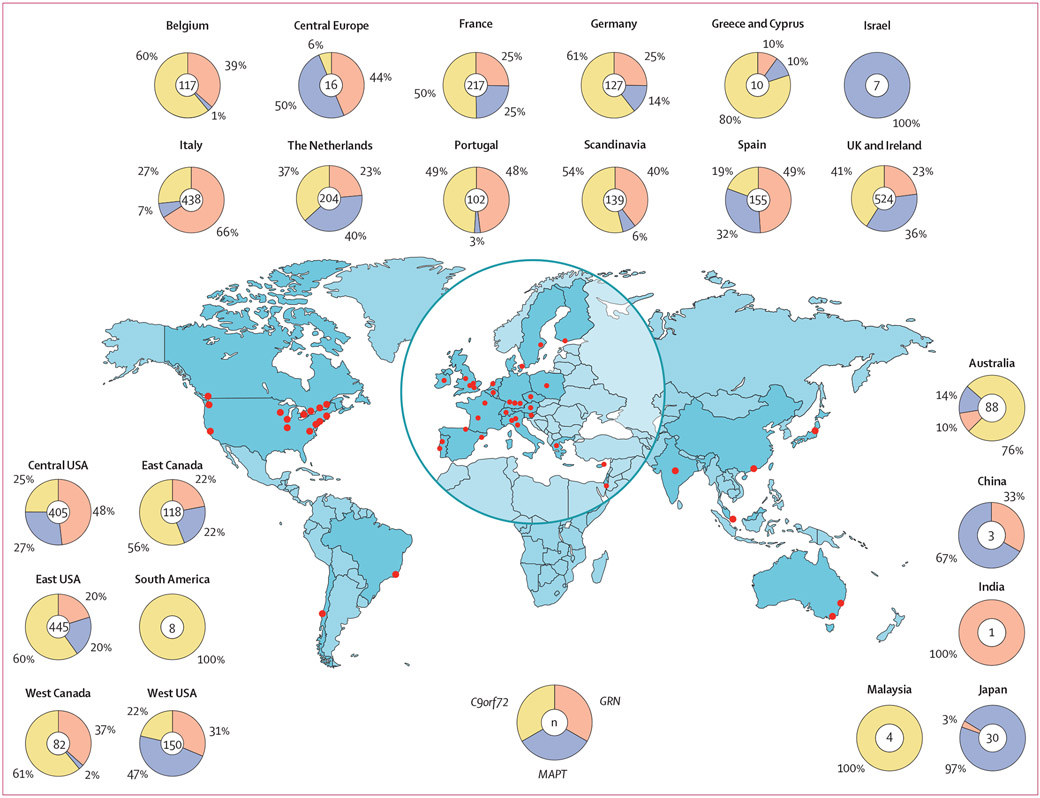
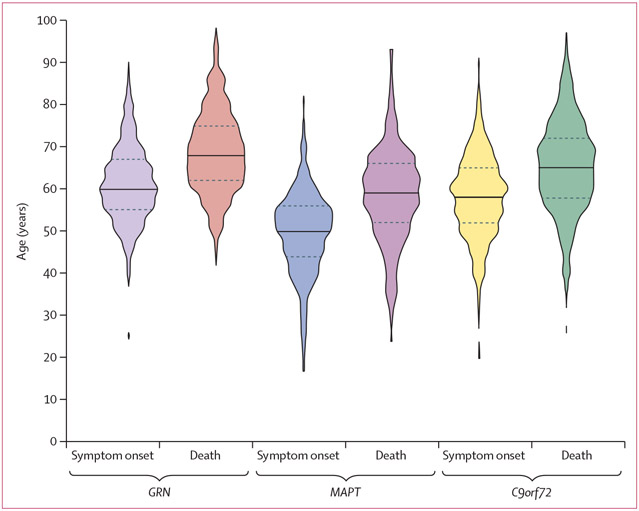
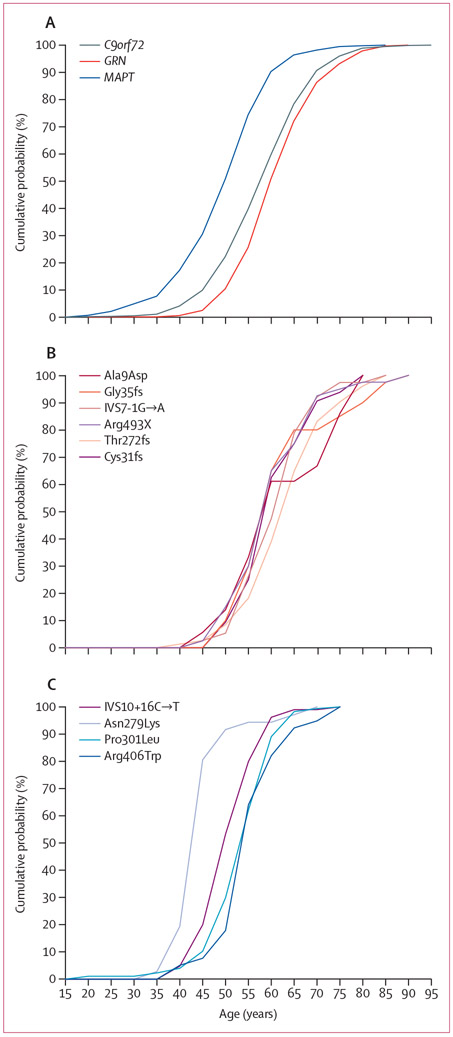
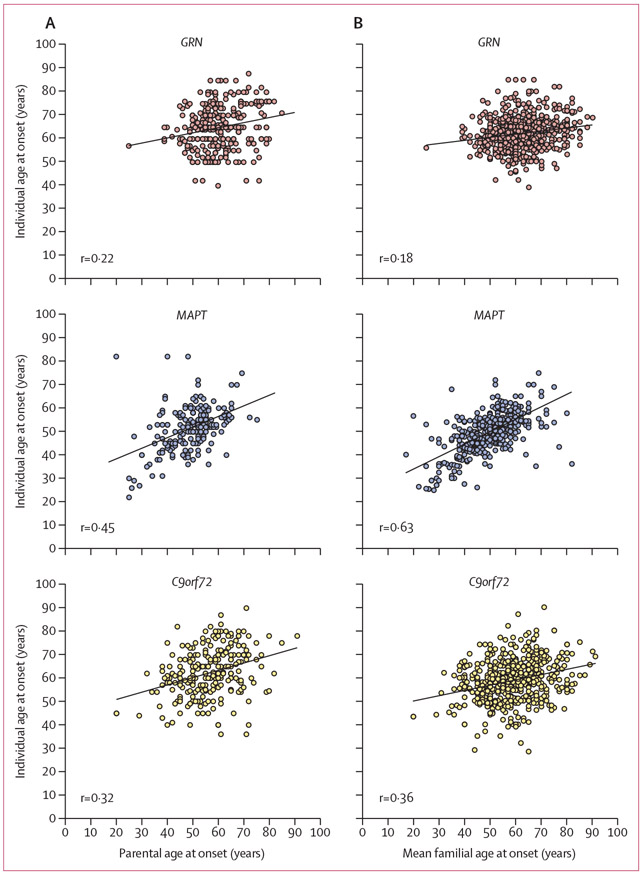
Background Frontotemporal dementia is a heterogenous neurodegenerative disorder, with about a third of cases being genetic. Most of this genetic component is accounted for by mutations in GRN, MAPT, and C9orf72. In this study, we aimed to complement previous phenotypic studies by doing an international study of age at symptom onset, age at death, and disease duration in individuals with mutations in GRN, MAPT, and C9orf72.Methods In this international, retrospective cohort study, we collected data on age at symptom onset, age at death, and disease duration for patients with pathogenic mutations in the GRN and MAPT genes and pathological expansions in the C9orf72 gene through the Frontotemporal Dementia Prevention Initiative and from published papers. We used mixed effects models to explore differences in age at onset, age at death, and disease duration between genetic groups and individual mutations. We also assessed correlations between the age at onset and at death of each individual and the age at onset and at death of their parents and the mean age at onset and at death of their family members. Lastly, we used mixed effects models to investigate the extent to which variability in age at onset and at death could be accounted for by family membership and the specific mutation carried.Findings Data were available from 3403 individuals from 1492 families: 1433 with C9orf72 expansions (755 families), 1179 with GRN mutations (483 families, 130 different mutations), and 791 with MAPT mutations (254 families, 67 different mutations). Mean age at symptom onset and at death was 49·5 years (SD 10·0; onset) and 58·5 years (11·3; death) in the MAPT group, 58·2 years (9·8; onset) and 65·3 years (10·9; death) in the C9orf72 group, and 61·3 years (8·8; onset) and 68·8 years (9·7; death) in the GRN group. Mean disease duration was 6·4 years (SD 4·9) in the C9orf72 group, 7·1 years (3·9) in the GRN group, and 9·3 years (6·4) in the MAPT group. Individual age at onset and at death was significantly correlated with both parental age at onset and at death and with mean family age at onset and at death in all three groups, with a stronger correlation observed in the MAPT group (r=0·45 between individual and parental age at onset, r=0·63 between individual and mean family age at onset, r=0·58 between individual and parental age at death, and r=0·69 between individual and mean family age at death) than in either the C9orf72 group (r=0·32 individual and parental age at onset, r=0·36 individual and mean family age at onset, r=0·38 individual and parental age at death, and r=0·40 individual and mean family age at death) or the GRN group (r=0·22 individual and parental age at onset, r=0·18 individual and mean family age at onset, r=0·22 individual and parental age at death, and r=0·32 individual and mean family age at death). Modelling showed that the variability in age at onset and at death in the MAPT group was explained partly by the specific mutation (48%, 95% CI 35-62, for age at onset; 61%, 47-73, for age at death), and even more by family membership (66%, 56-75, for age at onset; 74%, 65-82, for age at death). In the GRN group, only 2% (0-10) of the variability of age at onset and 9% (3-21) of that of age of death was explained by the specific mutation, whereas 14% (9-22) of the variability of age at onset and 20% (12-30) of that of age at death was explained by family membership. In the C9orf72 group, family membership explained 17% (11-26) of the variability of age at onset and 19% (12-29) of that of age at death.Interpretation Our study showed that age at symptom onset and at death of people with genetic frontotemporal dementia is influenced by genetic group and, particularly for MAPT mutations, by the specific mutation carried and by family membership. Although estimation of age at onset will be an important factor in future pre-symptomatic therapeutic trials for all three genetic groups, our study suggests that data from other members of the family will be particularly helpful only for individuals with MAPT mutations. Further work in identifying both genetic and environmental factors that modify phenotype in all groups will be important to improve such estimates.Funding UK Medical Research Council, National Institute for Health Research, and Alzheimer's Society.
Overview
The claims and statistics of this paper haven’t been checked yet.
Free: it reads the open-access text and checks the first 5 claims that cite a source we can check. Create a free account to check every claim.
Integrity signals
Registry
Cites
Statistics
Figures
Verification
Claims the paper makes
The claims and statistics of this paper haven’t been checked yet.
Free: it reads the open-access text and checks the first 5 claims that cite a source we can check. Create a free account to check every claim.
Claims other papers make about this one
Each is checked against this paper’s own text: does it say what the citing paper says it does?
The cited source doesn’t support the claim as written.
In the citing paper
“F-FTD is rare, with only hundreds of mutation carriers known to exist worldwide.12”
From Temporal order of clinical and biomarker changes in familial frontotemporal dementia (2022) · cites this paper as [12]
Checked by a reasoning model — may be wrong.
Experimental — accuracy not yet measuredThe source backs part of the claim, not all of it — or backs it for a different population, condition or comparison.
In the citing paper
“For example, in GRN, familial age of onset only explains 14% of the variability in individual age at symptom onset.12”
From Temporal order of clinical and biomarker changes in familial frontotemporal dementia (2022) · cites this paper as [12]
Experimental — accuracy not yet measuredThe cited source says what the claim attributes to it.
In the citing paper
“Although people with mutations causing frontotemporal lobar degeneration usually have frontotemporal dementia or a related clinical syndrome (eg, corticobasal syndrome or progressive supranuclear palsy presenting as Richardson syndrome), some individuals have genetic frontotemporal lobar degeneration with another phenotype.13”
From Advances and controversies in frontotemporal dementia: diagnosis, biomarkers, and therapeutic considerations (2022) · cites this paper as [13]
Self-check
Percentages, sums and reported differences re-computed from the paper’s own numbers.
The self-check needs the paper’s full text.
Citations
Cites
Mutations in progranulin cause tau-negative frontotemporal dementia linked to chromosome 17
Baker, M., Mackenzie, I. R., Pickering-Brown, S. M., Gass, J., Rademakers, R., Lindholm, C., Snowden, J., Adamson, J., Sadovnick, A. D., Rollinson, S., et al. (2006) · Nature · doi:10.1038/nature05016 · Cited by 2,058
Self-citationCruts, M., Gijselinck, I., van der Zee, J., Engelborghs, S., Wils, H., Pirici, D., Rademakers, R., Vandenberghe, R., Dermaut, B., Martin, J.-J., et al. (2006) · Nature · doi:10.1038/nature05017 · Cited by 1,512
Self-citationMutations in progranulin are a major cause of ubiquitin-positive frontotemporal lobar degeneration
Gass, J., Cannon, A., Mackenzie, I. R., Boeve, B., Baker, M., Adamson, J., Crook, R., Melquist, S., Kuntz, K., Petersen, R., et al. (2006) · Human Molecular Genetics · doi:10.1093/hmg/ddl241 · Cited by 580
Self-citationRohrer, J. D., Nicholas, J. M., Cash, D. M., van Swieten, J., Dopper, E., Jiskoot, L., van Minkelen, R., Rombouts, S. A., Cardoso, M. J., Clegg, S., et al. (2015) · The Lancet Neurology · doi:10.1016/s1474-4422(14)70324-2 · Cited by 538
Self-citationThe heritability and genetics of frontotemporal lobar degeneration
Rohrer, J. D., Guerreiro, R., Vandrovcova, J., Uphill, J., Reiman, D., Beck, J., Isaacs, A. M., Authier, A., Ferrari, R., Fox, N. C., et al. (2009) · Neurology · doi:10.1212/wnl.0b013e3181bf997a · Cited by 536
Self-citationSymptom onset in autosomal dominant Alzheimer disease: A systematic review and meta-analysis
Ryman, D. C., Acosta-Baena, N., Aisen, P. S., Bird, T., Danek, A., Fox, N. C., Goate, A., Frommelt, P., Ghetti, B., Langbaum, J. B. S., et al. (2014) · Neurology · doi:10.1212/wnl.0000000000000596 · Cited by 502
Self-citationLe Ber, I., Camuzat, A., Hannequin, D., Pasquier, F., Guedj, E., Rovelet-Lecrux, A., Hahn-Barma, V., van der Zee, J., Clot, F., Bakchine, S., et al. (2008) · Brain · doi:10.1093/brain/awn012 · Cited by 352
Self-citationProgranulin deficiency promotes neuroinflammation and neuron loss following toxin-induced injury
Martens, L. H., Zhang, J., Barmada, S. J., Zhou, P., Kamiya, S., Sun, B., Min, S.-W., Gan, L., Finkbeiner, S., Huang, E. J., et al. (2012) · Journal of Clinical Investigation · doi:10.1172/jci63113 · Cited by 315
Warren, J. D., Rohrer, J. D., & Rossor, M. N. (2013) · BMJ · doi:10.1136/bmj.f4827 · Cited by 292
Self-citationvan Blitterswijk, M., DeJesus-Hernandez, M., Niemantsverdriet, E., Murray, M. E., Heckman, M. G., Diehl, N. N., Brown, P. H., Baker, M. C., Finch, N. A., Bauer, P. O., et al. (2013) · The Lancet Neurology · doi:10.1016/s1474-4422(13)70210-2 · Cited by 274
Self-citation
Cited by
Root, J., Merino, P., Nuckols, A., Johnson, M., & Kukar, T. (2021) · Neurobiology of Disease · doi:10.1016/j.nbd.2021.105360 · Cited by 238
Boeve, B. F., Boxer, A. L., Kumfor, F., Pijnenburg, Y., & Rohrer, J. D. (2022) · The Lancet Neurology · doi:10.1016/s1474-4422(21)00341-0 · Cited by 218
Self-citationProgranulin as a therapeutic target in neurodegenerative diseases
Rhinn, H., Tatton, N., McCaughey, S., Kurnellas, M., & Rosenthal, A. (2022) · Trends in Pharmacological Sciences · doi:10.1016/j.tips.2021.11.015 · Cited by 208
Frontotemporal lobar degeneration
Grossman, M., Seeley, W. W., Boxer, A. L., Hillis, A. E., Knopman, D. S., Ljubenov, P. A., Miller, B., Piguet, O., Rademakers, R., Whitwell, J. L., et al. (2023) · Nature Reviews Disease Primers · doi:10.1038/s41572-023-00447-0 · Cited by 178
Self-citationC9ORF72: What It Is, What It Does, and Why It Matters
Smeyers, J., Banchi, E.-G., & Latouche, M. (2021) · Frontiers in Cellular Neuroscience · doi:10.3389/fncel.2021.661447 · Cited by 168
Lazzaro, V. D., Bella, R., Benussi, A., Bologna, M., Borroni, B., Capone, F., Chen, K.-H. S., Chen, R. E., Chistyakov, A. V., Claßen, J., et al. (2021) · Clinical Neurophysiology · doi:10.1016/j.clinph.2021.05.035 · Cited by 174
Self-citationFrontotemporal Dementia, Where Do We Stand? A Narrative Review
Antonioni, A., Raho, E. M., Lopriore, P., Pace, A. P., Latino, R. R., Assogna, M., Mancuso, M., Gragnaniello, D., Granieri, E., Pugliatti, M., et al. (2023) · International Journal of Molecular Sciences · doi:10.3390/ijms241411732 · Cited by 145
Temporal order of clinical and biomarker changes in familial frontotemporal dementia
Staffaroni, A. M., Quintana, M., Wendelberger, B., Heuer, H. W., Russell, L. L., Cobigo, Y., Wolf, A., Goh, S.-Y. M., Petrucelli, L., Gendron, T. F., et al. (2022) · Nature Medicine · doi:10.1038/s41591-022-01942-9 · Cited by 140
Self-citationRapidly progressive dementias — aetiologies, diagnosis and management
Hermann, P., & Zerr, I. (2022) · Nature Reviews Neurology · doi:10.1038/s41582-022-00659-0 · Cited by 125
Fluid biomarkers in frontotemporal dementia: past, present and future
Swift, I. J., Sogorb-Esteve, A., Heller, C., Synofzik, M., Otto, M., Graff, C., Galimberti, D., Todd, E., Heslegrave, A. J., van der Ende, E. L., et al. (2021) · Journal of Neurology, Neurosurgery & Psychiatry · doi:10.1136/jnnp-2020-323520 · Cited by 122
Self-citationPreventing amyotrophic lateral sclerosis: insights from pre-symptomatic neurodegenerative diseases
Benatar, M. G., Wuu, J., McHutchison, C. A., Postuma, R. B., Boeve, B. F., Petersen, R. C., Ross, C. A., Rosen, H. J., Arias, J. J., Fradette, S., et al. (2021) · Brain · doi:10.1093/brain/awab404 · Cited by 135
“Moreover, mutations in genes encoding microtubule associated protein tau (MAPT), progranulin (GRN), or chromosome 9 open reading frame 72 (C9orf72)(86,87) cause a dominantly inherited form of familial FTLD (f-FTLD).(86,87) These mutations (found in 420% of all FTLD patients) account for 450% of f-FTLD,(86,87) providin…”
Self-citationGenetics of Parkinson's disease
Cherian, A., & Divya, K. P. (2020) · Acta Neurologica Belgica · doi:10.1007/s13760-020-01473-5 · Cited by 132
Neuropathology and emerging biomarkers in corticobasal syndrome
Koga, S., Josephs, K. A., Aiba, I., Yoshida, M., & Dickson, D. W. (2022) · Journal of Neurology Neurosurgery & Psychiatry · doi:10.1136/jnnp-2021-328586 · Cited by 126
Young‐onset dementia diagnosis, management and care: a narrative review
Loi, S. M., Cations, M., & Velakoulis, D. (2023) · The Medical Journal of Australia · doi:10.5694/mja2.51849 · Cited by 112
Increased frequency of repeat expansion mutations across different populations
Ibáñez, K., Jadhav, B., Zanovello, M., Gagliardi, D., Clarkson, C., Facchini, S., Garg, P., Martin-Trujillo, A., Gies, S. J., Deforie, V. G., et al. (2024) · Nature Medicine · doi:10.1038/s41591-024-03190-5 · Cited by 107
“2).”
The Expanding Burden of Neurodegenerative Diseases: An Unmet Medical and Social Need
Wang, S., Jiang, Y., Yang, A., Meng, F., & Zhang, J. (2024) · Aging and Disease · doi:10.14336/ad.2024.1071 · Cited by 274
“Additionally, the GBD 2021 study revealed that while the majority of dementia cases are attributed to nonmodifiable risk factors such as age [52, 53] and genetics (such as the APOE, APP, PSEN1, and PSEN2 genes) [54-56], a significant portion can be linked to modifiable risk factors [20].”
Benussi, A., Premi, E., Gazzina, S., Brattini, C., Bonomi, E., Alberici, A., Jiskoot, L., van Swieten, J. C., Sanchez-Valle, R., Moreno, F., et al. (2021) · JAMA Network Open · doi:10.1001/jamanetworkopen.2020.30194 · Cited by 84
Self-citationCognitive and Behavioral Manifestations in ALS: Beyond Motor System Involvement
Rusina, R., Vandenberghe, R. R., & Bruffaerts, R. (2021) · Diagnostics · doi:10.3390/diagnostics11040624 · Cited by 66
“Carriers of the C9orf72 expansion are at considerably increased risk of cognitive impairment (40–50%) compared to patients without this mutation (8– 9%) [8,45].”
BackgroundSelf-citationClinical Spectrum of Tauopathies
Olfati, N., Shoeibi, A., & Litvan, I. (2022) · Frontiers in Neurology · doi:10.3389/fneur.2022.944806 · Cited by 72
Young, A. L., Bocchetta, M., Russell, L. L., Convery, R. S., Peakman, G., Todd, E., Cash, D. M., Greaves, C. V., van Swieten, J., Jiskoot, L., et al. (2021) · Neurology · doi:10.1212/wnl.0000000000012410 · Cited by 62
“Within-group pathologic heterogeneity in MAPT mutation carriers is related to the location of the mutation in the gene,(6) and there is some evidence that phenotypic heterogeneity is similarly affected by the position of the mutation.(5,7) However, studying the effect of specific mutations on disease phenotype is diff…”
BackgroundSelf-citationParkinson's disease – genetic cause
Cherian, A., Divya, K. P., & Vijayaraghavan, A. (2023) · Current Opinion in Neurology · doi:10.1097/wco.0000000000001167 · Cited by 71
“A leftwards shift towards younger ages is evident in the penetrance curve in individuals with MAPT mutations associated frontotemporal dementia (FTD); however, the same has not been documented in parkinsonian presentation of this tauopathy [66].”
Malpetti, M., Jones, P. S., Tsvetanov, K. A., Rittman, T., van Swieten, J. C., Borroni, B., Sanchez‐Valle, R., Moreno, F., Laforce, R., Graff, C., et al. (2021) · Alzheimer's & Dementia · doi:10.1002/alz.12252 · Cited by 59
Self-citationConceptual framework for the definition of preclinical and prodromal frontotemporal dementia
Benussi, A., Alberici, A., Samra, K., Russell, L. L., Greaves, C. V., Bocchetta, M., Ducharme, S., Finger, E. C., Fumagalli, G., Galimberti, D., et al. (2021) · Alzheimer s & Dementia · doi:10.1002/alz.12485 · Cited by 68
Self-citationGenetic testing in dementia — utility and clinical strategies
Koriath, C., Kenny, J., Ryan, N. S., Rohrer, J. D., Schott, J. M., Houlden, H., Fox, N. C., Tabrizi, S. J., & Mead, S. (2020) · Nature Reviews Neurology · doi:10.1038/s41582-020-00416-1 · Cited by 62
Self-citationTsvetanov, K. A., Gazzina, S., Jones, P. S., van Swieten, J., Borroni, B., Sanchez‐Valle, R., Moreno, F., Laforce, R., Graff, C., Synofzik, M., et al. (2021) · Alzheimer's & Dementia · doi:10.1002/alz.12209 · Cited by 58
“In addition, our analysis 370 included the estimated age of onset in some models, but we recognise that the precision of the estimated 371 years of onset (based on family history of onset) varies across mutations and families [7,58], being highest 372 for MAPT and low for C9ORF72 expansion.”
MethodSelf-citationA data-driven disease progression model of fluid biomarkers in genetic frontotemporal dementia
van der Ende, E. L., Bron, E. E., Poos, J. M., Jiskoot, L. C., Panman, J. L., Papma, J. M., Meeter, L. H., Dopper, E. G. P., Wilke, C., Synofzik, M., et al. (2022) · Brain · doi:10.1093/brain/awab382 · Cited by 58
“In contrast to genetic Alzheimer’s disease, disease onset in FTD mutation carriers cannot be predicted based on familial onset age, 3 highlighting the need for biomarkers that can identify early disease activity.”
Self-citationSaracino, D., Dorgham, K., Camuzat, A., Rinaldi, D., Rametti-Lacroux, A., Houot, M., Clot, F., Martin-Hardy, P., Jornea, L., Azuar, C., et al. (2021) · Journal of Neurology, Neurosurgery & Psychiatry · doi:10.1136/jnnp-2021-326914 · Cited by 55
Self-citationClinico-genetic findings in 509 frontotemporal dementia patients
Wagner, M., Lorenz, G., Volk, A. E., Brunet, T., Edbauer, D., Berutti, R., Zhao, C., Anderl‐Straub, S., Bertram, L., Danek, A., et al. (2021) · Molecular Psychiatry · doi:10.1038/s41380-021-01271-2 · Cited by 61
Self-citationLatozinemab, a novel progranulin-elevating therapy for frontotemporal dementia
Kurnellas, M., Mitra, A., Schwabe, T., Paul, R. H., Arrant, A. E., Roberson, E. D., Ward, M. E., Yeh, F. L., Long, H., & Rosenthal, A. (2023) · Journal of Translational Medicine · doi:10.1186/s12967-023-04251-y · Cited by 67
“GRN mutations cause disease with a wide range of ages of onset and phenotypic variability, even within families [7, 13].”
BackgroundInfluentialAdvances in treatment of frontotemporal dementia
Magrath Guimet, N., Zapata-Restrepo, L. M., & Miller, B. L. (2022) · The Journal of Neuropsychiatry and Clinical Neurosciences · doi:10.1176/appi.neuropsych.21060166 · Cited by 52
Social cognition impairment in genetic frontotemporal dementia within the GENFI cohort
Russell, L. L., Greaves, C. V., Bocchetta, M., Nicholas, J., Convery, R. S., Moore, K., Cash, D. M., van Swieten, J., Jiskoot, L., Moreno, F., et al. (2020) · Cortex · doi:10.1016/j.cortex.2020.08.023 · Cited by 52
Self-citationLiu, Y., Andreucci, A., Iwamoto, N., Yin, Y., Yang, H., Liu, F., Bulychev, A., Hu, X. S., Lin, X., Lamore, S. D., et al. (2022) · Molecular Therapy — Nucleic Acids · doi:10.1016/j.omtn.2022.04.007 · Cited by 61
“4 years.(20) C9-ALS/FTD is associated with severe cognitive and behavioral impairments, and patients typically have schizophrenic-like symptoms such as hallucinations, delusions, and disordered thinking.”
BackgroundTweaking Progranulin Expression: Therapeutic Avenues and Opportunities
Terryn, J., Verfaillie, C. M., & Damme, P. V. (2021) · Frontiers in Molecular Neuroscience · doi:10.3389/fnmol.2021.713031 · Cited by 49
“patients have a positive family history in 30–40 percent of all cases, with mutations in three genes (GRN,MAPT, and C9orf72) explaining the majority of the genetic cases (Moore et al., 2020).”
BackgroundInfluentialSelf-citationFrontotemporal dementias: main syndromes and underlying brain changes
Piguet, O., & Kumfor, F. (2020) · Current Opinion in Neurology · doi:10.1097/wco.0000000000000792 · Cited by 46
Wilke, C., Reich, S., van Swieten, J. C., Borroni, B., Sanchez‐Valle, R., Moreno, F., Laforce, R., Graff, C., Galimberti, D., Rowe, J. B., et al. (2022) · Annals of Neurology · doi:10.1002/ana.26265 · Cited by 46
“Such fully biomarker-based stratification appears relevant as the age of onset in genetic FTD currently cannot be reliably predicted on the basis of the familial age of onset.(17,35) NfL might even quantitatively capture proximity-to-onset as individual NfL levels of converters continuously increased with proximity to…”
BackgroundSelf-citationGenetic architecture of common non-Alzheimer’s disease dementias
Guerreiro, R., Gibbons, E., Tábuas-Pereira, M., Kun-Rodrigues, C., Santo, G. C., & Bras, J. (2020) · Neurobiology of Disease · doi:10.1016/j.nbd.2020.104946 · Cited by 42
Self-citationSynaptic density in carriers of C9orf72 mutations: a [11C]UCB‐J PET study
Malpetti, M., Holland, N., Jones, P. S., Ye, R., Cope, T. E., Fryer, T. D., Hong, Y. T., Savulich, G., Rittman, T., Passamonti, L., et al. (2021) · Annals of Clinical and Translational Neurology · doi:10.1002/acn3.51407 · Cited by 44
“Carrier 3 underperformed in frontal tests, and presented the most severe pattern of synaptic loss in thalamic regions, despite being the carrier with the highest number of years of education and estimated years from onset; albeit it is well established that estimated years of symptom onset, deduced from affected famil…”
BackgroundSelf-citationSellami, L., Rucheton, B., Benyounes, I., Camuzat, A., Saracino, D., Rinaldi, D., Epelbaum, S., Azuar, C., Lévy, R., Auriacombe, S., et al. (2020) · Neurobiology of Aging · doi:10.1016/j.neurobiolaging.2020.02.014 · Cited by 51
Self-citation18F-MK-6240 tau-PET in genetic frontotemporal dementia
Levy, J. P., Bezgin, G., Savard, M., Pascoal, T. A., Finger, E. C., Laforce, R. J., Sonnen, J. A., Soucy, J., Gauthier, S. G., Rosa‐Neto, P., et al. (2021) · Brain · doi:10.1093/brain/awab392 · Cited by 45
Self-citationSaracino, D., Ferrieux, S., Nogues, M., Houot, M., Funkiewiez, A., Sellami, L., Deramecourt, V., Pasquier, F., Couratier, P., Pariente, J., et al. (2021) · Neurology · doi:10.1212/wnl.0000000000012174 · Cited by 52
Self-citationShing, S. L. H., McKenna, M. C., Siah, W. F., Chipika, R. H., Hardiman, O. M., & Bede, P. (2021) · Brain Imaging and Behavior · doi:10.1007/s11682-020-00429-w · Cited by 46
Staffaroni, A. M., Goh, S.-Y. M., Cobigo, Y., Ong, E., Lee, S. E., Casaletto, K. B., Wolf, A., Forsberg, L. K., Ghoshal, N., Graff-Radford, N. R., et al. (2020) · JAMA Network Open · doi:10.1001/jamanetworkopen.2020.22847 · Cited by 41
Self-citationEarly symptoms in symptomatic and preclinical genetic frontotemporal lobar degeneration
Tavares, T. P., Mitchell, D. G. V., Coleman, K. K., Coleman, B. L., Shoesmith, C. L., Butler, C. R., Santana, I., Danek, A., Gerhard, A., de Mendonca, A., et al. (2020) · Journal of Neurology, Neurosurgery & Psychiatry · doi:10.1136/jnnp-2020-322987 · Cited by 39
“To evaluate the effectiveness of this composite to differentiate between mutation carriers and non-carriers, sensitivity and specificity values were computed (https://www. medcalc. org/ calc/ diagnostic_ test. php).”
BackgroundMethodSelf-citationNew Approaches to the Treatment of Frontotemporal Dementia
Neylan, K. D., & Miller, B. L. (2023) · Neurotherapeutics · doi:10.1007/s13311-023-01380-6 · Cited by 48
“MAPT mutations are inherited in an autosomal dominant fashion with a high degree of penetrance [28].”
Self-citationUnderlying genetic variation in familial frontotemporal dementia: sequencing of 198 patients
Mol, M. O., van Rooij, J., Wong, T. H., Melhem, S., Verkerk, A. J. M. H., Kievit, A. J. A., van Minkelen, R., Rademakers, R., Pottier, C. P., Kaat, L. D., et al. (2020) · Neurobiology of Aging · doi:10.1016/j.neurobiolaging.2020.07.014 · Cited by 38
Self-citationBergström, S., Öijerstedt, L., Remnestål, J., Olofsson, J., Ullgren, A., Seelaar, H., van Swieten, J. C., Synofzik, M., Sanchez-Valle, R., Moreno, F., et al. (2021) · Molecular Neurodegeneration · doi:10.1186/s13024-021-00499-4 · Cited by 36
“There was no statistically significant difference in age between PMC and NC. Years to expected onset was calculated based on the mean age at disease onset in the respective genetic groups (C9orf72, GRN, MAPT) according to Moore et al. 2020 [18].”
MethodSelf-citationChanging perspectives on frontotemporal dementia: A review
Snowden, J. S. (2022) · Journal of Neuropsychology · doi:10.1111/jnp.12297 · Cited by 52
Self-citationFontana, E., Bongianni, M., Benussi, A., Bronzato, E., Scialò, C., Sacchetto, L., Cagnin, A., Castriciano, S., Buratti, E., Gardoni, F., et al. (2023) · Alzheimer s & Dementia · doi:10.1002/alz.13541 · Cited by 38
Self-citationAl‐Dalahmah, O., Lam, M., McInvale, J. J., Qu, W., Nguyen, T. T. T., Mun, J.-Y., Kwon, S. H., Ifediora, N., Mahajan, A., Humala, N., et al. (2024) · Cell stem cell · doi:10.1016/j.stem.2024.03.013 · Cited by 38
Frontotemporal dementia: Past, present, and future
Ulugut, H., & Pijnenburg, Y. A. L. (2023) · Alzheimer's & Dementia · doi:10.1002/alz.13363 · Cited by 33
“…were identified, 5,13 and international consortia facilitated tremendous progress in the unveiling of the molecular characteristics of FTD. 14 Gradually, the measurement of CSF and blood biomarkers has attracted great interest and yielded many promising results including greater emphasis…”
BackgroundInfluentialDifferences in Sex Distribution Between Genetic and Sporadic Frontotemporal Dementia
de Boer, S. C. M., Riedl, L., van der Lee, S. J., Otto, M., Anderl‐Straub, S., Landín-Romero, R., Sorrentino, F., Fieldhouse, J. L. P., Reus, L. M., Vacaflor, B., et al. (2021) · Journal of Alzheimer s Disease · doi:10.3233/jad-210688 · Cited by 37
Self-citationSattler, R., Traynor, B. J., Robertson, J., Bosch, L. V. D., Barmada, S. J., Svendsen, C. N., Disney, M. D., Gendron, T. F., Wong, P. C., Turner, M. R., et al. (2023) · Neurology and Therapy · doi:10.1007/s40120-023-00548-8 · Cited by 34
“The age range at symptom onset is broad for patients who carry the C9ORF72 repeat expansion [7, 8].”
BackgroundSelf-citationBrain volumetric deficits in MAPT mutation carriers: a multisite study
Chu, S. A., Flagan, T., Staffaroni, A. M., Jiskoot, L. C., Deng, J., Spina, S., Zhang, L., Sturm, V. E., Yokoyama, J. S., Seeley, W. W., et al. (2020) · Annals of Clinical and Translational Neurology · doi:10.1002/acn3.51249 · Cited by 33
“An individual’s age of onset and mean familial age of onset are highly correlated, and perhaps more strongly correlated for MAPT mutation carriers compared to other FTLD mutations.(6,39) Although the mean age of the presymptomatic cohort in the present study is similar to previous studies,(5,8,39) age and mean familia…”
ResultSelf-citationMolecular Pathology of ALS: What We Currently Know and What Important Information Is Still Missing
Jankovská, N., & Matěj, R. (2021) · Diagnostics · doi:10.3390/diagnostics11081365 · Cited by 39
Forrest, S. L., Kril, J. J., & Kovács, G. G. (2021) · JAMA Neurology · doi:10.1001/jamaneurol.2021.1813 · Cited by 33
Concurrent tau pathologies in frontotemporal lobar degeneration with TDP‐43 pathology
Koga, S., Zhou, X., Murakami, A., Fernandez De Castro, C., Baker, M. C., Rademakers, R., & Dickson, D. W. (2022) · Neuropathology and Applied Neurobiology · doi:10.1111/nan.12778 · Cited by 30
“Mutations in GRN or MAPT were not detected in either patient.”
BackgroundSelf-citationLongitudinal Cognitive Changes in Genetic Frontotemporal Dementia Within the GENFI Cohort
Poos, J. M., MacDougall, A. M., van den Berg, E., Jiskoot, L. C., Papma, J. M., van der Ende, E. L., Seelaar, H., Russell, L. L., Peakman, G., Convery, R. S., et al. (2022) · Neurology · doi:10.1212/wnl.0000000000200384 · Cited by 35
“As a result, none of the studies fully highlights the complexity of the disease trajectory.(28)”
BackgroundSelf-citationConserved gene signatures shared among MAPT mutations reveal defects in calcium signaling
Minaya, M. A., Mahali, S., Iyer, A. K., Eteleeb, A. M., Martinez, R., Huang, G., Budde, J., Temple, S., Nana, A. L., Seeley, W. W., et al. (2023) · Frontiers in Molecular Biosciences · doi:10.3389/fmolb.2023.1051494 · Cited by 37
Sung, W., Noh, M., Nahm, M., Kim, Y. S., Ki, C., Kim, Y.-E., Kim, H.-J., & Kim, S. H. (2024) · Journal of Neuroinflammation · doi:10.1186/s12974-024-03039-1 · Cited by 37
“In contrast to the Caucasian population, the Asian population revealed a significantly lower frequency of FTD– GRN [100–105].”
ResultFrontotemporal dementia: from genetics to therapeutic approaches
Buccellato, F. R., D’Anca, M., Tartaglia, G. M., FABBRO, M. D., & Galimberti, D. (2024) · Expert Opinion on Investigational Drugs · doi:10.1080/13543784.2024.2349286 · Cited by 34
Self-citationNovel TUBA4A Variant Associated With Familial Frontotemporal Dementia
Mol, M. O., Wong, T. H., Melhem, S., Basu, S., Viscusi, R., Galjart, N., Rozemüller, A. J. M., Fallini, C., Landers, J. E., Kaat, L. D., et al. (2021) · Neurology Genetics · doi:10.1212/nxg.0000000000000596 · Cited by 32
“Each genetic subtype accounts for;5%–10% of all FTD, but geographical variability is evident such as high occurrence of GRN variants in Southern Europe.5 Genetic forms of ALS represent approximately 5%–10% of the total number of patients with ALS.6,7 Worldwide, the C9orf72 repeat expansion is the most frequent cause o…”
Self-citationGiannini, L. A. A., Seelaar, H., van der Ende, E. L., Poos, J. M., Jiskoot, L. C., Dopper, E. G. P., Pijnenburg, Y. A. L., Willemse, E. A. J., Vermunt, L., Teunissen, C. E., et al. (2023) · Neurology · doi:10.1212/wnl.0000000000207581 · Cited by 33
Self-citationUnravelling Genetic Factors Underlying Corticobasal Syndrome: A Systematic Review
Arienti, F., Lazzeri, G., Vizziello, M., Monfrini, E., Bresolin, N., Saetti, M. C., Picillo, M., Franco, G., & Fonzo, A. D. (2021) · Cells · doi:10.3390/cells10010171 · Cited by 29
“According to available evidence, there is a gradient in the symptom onset age according to the specific causative mutation: MAPT carriers have an earlier onset, followed by C9ORF72 and GRN carriers [93].”
BackgroundNeurodevelopmental effects of genetic frontotemporal dementia in young adult mutation carriers
Finger, E. C., Malik, R., Bocchetta, M., Coleman, K. K. L., Graff, C., Borroni, B., Masellis, M., Laforce, R. J., Greaves, C. V., Russell, L. L., et al. (2022) · Brain · doi:10.1093/brain/awac446 · Cited by 40
Self-citationCortical microstructure in primary progressive aphasia: a multicenter study
Illán‐Gala, I., Montal, V., Borrego‐Écija, S., Mandelli, M. L., Falgàs, N., Welch, A. E., Pegueroles, J., Santos‐Santos, M., Bejanin, A., Alcolea, D. A., et al. (2022) · Alzheimer s Research & Therapy · doi:10.1186/s13195-022-00974-0 · Cited by 29
“Participants fulfilling basic PPA criteria that were found to have a mutation in the GRN gene (n = 5) were classified in a separate group because these cases are characterized by a widespread and asymmetric pattern of gray matter loss [24, 25] and usually display clinical features of more than one PPA subtype [26].”
BackgroundSelf-citationPsychiatric symptoms of frontotemporal dementia and subcortical (co-)pathology burden: new insights
Scarioni, M., Gami‐Patel, P., Peeters, C. F. W., de Koning, F., Seelaar, H., Mol, M. O., Swieten, J. C. V., Bank, N. B., Rozemüller, A. J. M., Hoozemans, J. J. M., et al. (2022) · Brain · doi:10.1093/brain/awac043 · Cited by 27
Self-citationLongitudinal Brain Atrophy Rates in Presymptomatic Carriers of Genetic Frontotemporal Dementia
Poos, J. M., Grandpierre, L. D. M., van der Ende, E. L., Panman, J. L., Papma, J. M., Seelaar, H., van den Berg, E., Klooster, R. V. ’., Bron, E. E., Steketee, R. M. E., et al. (2022) · Neurology · doi:10.1212/wnl.0000000000201292 · Cited by 27
“Yet, most studies investigating brain atrophy in presymptomatic FTD have been cross-sectional in nature and/ or plotted using estimated years to onset as a proxy for actual symptom onset,(7,8,11,13,18) which has been shown to be unreliable in C9orf72 and GRN because there is large variation between and within families…”
BackgroundResultSelf-citationGenetic Testing for Amyotrophic Lateral Sclerosis and Frontotemporal Dementia
Roggenbuck, J., & Fong, J. C. (2020) · Clinics in Laboratory Medicine · doi:10.1016/j.cll.2020.05.002 · Cited by 26
Self-citationEarly life involvement in C9orf72 repeat expansion carriers
Gossink, F. T., Dols, A., Stek, M. L., Scheltens, P., Nijmeijer, B., Cohn‐Hokke, P. E., Dijkstra, A. A., van Ruissen, F., Aalfs, C. M., & Pijnenburg, Y. A. L. (2021) · Journal of Neurology Neurosurgery & Psychiatry · doi:10.1136/jnnp-2020-325994 · Cited by 29
Modifiable potential risk factors in familial and sporadic frontotemporal dementia
Soppela, H., Katisko, K., Gadola, Y., Krüger, J., Hartikainen, P. H., Alberici, A., Benussi, A., Koivisto, A. M., Haapasalo, A., Remes, A. M., et al. (2022) · Annals of Clinical and Translational Neurology · doi:10.1002/acn3.51619 · Cited by 25
“Of these three, the C9orf72 repeat expansion is the most common3 and especially frequent in the Scandinavia and Northern Europe,1 causing the majority of familial FTD and amyotrophic lateral sclerosis (ALS) cases in Finland4 while GRN mutations are the most common genetic etiologies for FTD in Italy.5,6 The C9orf72 re…”
BackgroundSelf-citationProgranulin deficiency in the brain: the interplay between neuronal and non-neuronal cells
Gawęda-Walerych, K., Aragona, V., Lodato, S., Sitek, E. J., Narożańska, E., & Buratti, E. (2025) · Translational Neurodegeneration · doi:10.1186/s40035-025-00475-8 · Cited by 23
“[85].”
Early anterior cingulate involvement is seen in presymptomatic MAPT P301L mutation carriers
Clarke, M. T. M., St‐Onge, F., Beauregard, J., Bocchetta, M., Todd, E. G., Cash, D. M., Rohrer, J. D., & Laforce, R. J. (2021) · Alzheimer s Research & Therapy · doi:10.1186/s13195-021-00777-9 · Cited by 22
“Estimated years from symptom onset were calculated for each participant as the current age taken away from the mean age at onset within the participant’s family [19] (Table 1).”
BackgroundMethodSelf-citationC9orf72-Related Neurodegenerative Diseases: From Clinical Diagnosis to Therapeutic Strategies
Zampatti, S., Peconi, C., Campopiano, R., Gambardella, S., Caltagirone, C., & Giardina, E. (2022) · Frontiers in Aging Neuroscience · doi:10.3389/fnagi.2022.907122 · Cited by 34
Xie, J., Zhang, Y., Li, S., Wei, H., Yu, H., Zhou, Q., Wei, L., Ke, D., Wang, Q., Yang, Y., et al. (2022) · Clinical and Translational Medicine · doi:10.1002/ctm2.1003 · Cited by 24
Zhou, X., Kukar, T. L., & Rademakers, R. (2021) · Advances in experimental medicine and biology · doi:10.1007/978-3-030-51140-1_14 · Cited by 25
Self-citationFRONTotemporal dementia Incidence European Research Study—FRONTIERS: Rationale and design
Borroni, B., Graff, C., Hardiman, O. M., Ludolph, A. C., Moreno, F., Otto, M., Piccininni, M., Remes, A. M., Rowe, J. B., Seelaar, H., et al. (2021) · Alzheimer s & Dementia · doi:10.1002/alz.12414 · Cited by 25
Self-citationTeichmann, M. (2021) · Revue Neurologique · doi:10.1016/j.neurol.2020.12.001 · Cited by 24
Sellami, L., Saracino, D., & Ber, I. L. (2020) · Revue Neurologique · doi:10.1016/j.neurol.2020.02.008 · Cited by 23
“same family, from 30 to more than 80 years [28].”
BackgroundIsolated parkinsonism is an atypical presentation of GRN and C9orf72 gene mutations
Carneiro, F., Saracino, D., Huin, V., Clot, F., Delorme, C., Méneret, A., Thobois, S., Cormier‐Dequaire, F., Corvol, J., Lenglet, T., et al. (2020) · Parkinsonism & Related Disorders · doi:10.1016/j.parkreldis.2020.09.019 · Cited by 24
Self-citationGalectin‐3 is upregulated in frontotemporal dementia patients with subtype specificity
Borrego‐Écija, S., Pérez‐Millan, A., Antonell, A., Fort‐Aznar, L., Tilki, E. K., León‐Halcón, A., Lladó, A., Molina‐Porcel, L., Balasa, M., Juncà‐Parella, J., et al. (2023) · Alzheimer s & Dementia · doi:10.1002/alz.13536 · Cited by 22
Self-citationSwift, I. J., Bocchetta, M., Benotmane, H., Woollacott, I., Shafei, R., & Rohrer, J. D. (2020) · Neurobiology of Aging · doi:10.1016/j.neurobiolaging.2020.08.014 · Cited by 26
Self-citationCheng, C., Reis, S. A., Adams, E. T., Fass, D. M., Angus, S. P., Stuhlmiller, T. J., Richardson, J. I., Olafson, H. R., Wang, E. T., Patnaik, D., et al. (2021) · Scientific Reports · doi:10.1038/s41598-021-96227-5 · Cited by 36
Self-citationPhase 1 study of latozinemab in progranulin‐associated frontotemporal dementia
Ward, M., Carter, L. P., Huang, J. Y., Maslyar, D. J., Budda, B., Paul, R. H., & Rosenthal, A. (2024) · Alzheimer s & Dementia Translational Research & Clinical Interventions · doi:10.1002/trc2.12452 · Cited by 22
Impaired glymphatic system in genetic frontotemporal dementia: a GENFI study
Premi, E., Diano, M., Mattioli, I., Altomare, D., Cantoni, V., Bocchetta, M., Gasparotti, R., Buratti, E., Pengo, M., Bouzigues, A., et al. (2024) · Brain Communications · doi:10.1093/braincomms/fcae185 · Cited by 20
Self-citationThe role of neurofilament light in genetic frontotemporal lobar degeneration
Zetterberg, H., Teunissen, C., van Swieten, J., Kuhle, J., Boxer, A., Rohrer, J. D., Mitic, L., Nicholson, A. M., Pearlman, R., McCaughey, S. M., et al. (2022) · Brain Communications · doi:10.1093/braincomms/fcac310 · Cited by 19
“4 years (n = 618).(49) The pathogenic expansion is almost fully penetrant by 80 years of age.”
BackgroundSelf-citationSamra, K., MacDougall, A. M., Bouzigues, A., Bocchetta, M., Cash, D. M., Greaves, C. V., Convery, R. S., Hardy, C., van Swieten, J. C., Seelaar, H., et al. (2023) · Brain Communications · doi:10.1093/braincomms/fcad036 · Cited by 21
“been seen, but PSP is not a syndrome seen in GRN mutations.(39) The less frequent occurrence of motor features and full-blown parkinsonian syndromes (particularly PSP) ap-”
Self-citationCerebellar and subcortical atrophy contribute to psychiatric symptoms in frontotemporal dementia
Bussy, A., Levy, J. P., Best, T., Patel, R., Cupo, L., Langenhove, T. V., Nielsen, J. E., Pijnenburg, Y. A. L., Waldö, M. L., Remes, A. M., et al. (2023) · Human Brain Mapping · doi:10.1002/hbm.26220 · Cited by 21
Self-citationAdvances in the treatment and management of frontotemporal dementia
Benussi, A., & Borroni, B. (2023) · Expert Review of Neurotherapeutics · doi:10.1080/14737175.2023.2228491 · Cited by 19
“It is associated with MAPT gene variants, which have over 60 pathogenic variants reported [10,22].”
BackgroundSelf-citationTan, Y. H. V., Lo, Y. K. J., & Ho, C. S. H. (2023) · General Hospital Psychiatry · doi:10.1016/j.genhosppsych.2023.11.011 · Cited by 26
Diagnostic accuracy of research criteria for prodromal frontotemporal dementia
Benussi, A., Premi, E., Grassi, M., Alberici, A., Cantoni, V., Gazzina, S., Archetti, S., Gasparotti, R., Fumagalli, G., Bouzigues, A., et al. (2024) · Alzheimer s Research & Therapy · doi:10.1186/s13195-024-01383-1 · Cited by 21
“As previously published, the years to expected onset were calculated as the difference between age at assessment and mean age at onset within the family [11, 12].”
BackgroundSelf-citationClinical Phenotypes of Behavioral Variant Frontotemporal Dementia by Age at Onset
Fieldhouse, J. L. P., Gossink, F. T., Feenstra, T. C., de Boer, S. C. M., Lemstra, A. W., Prins, N. D., Bouwman, F. H., Koene, T., Rhodius‐Meester, H. F. M., Gillissen, F., et al. (2021) · Journal of Alzheimer s Disease · doi:10.3233/jad-210179 · Cited by 26
Samra, K., MacDougall, A. M., Peakman, G., Bouzigues, A., Bocchetta, M., Cash, D. M., Greaves, C. V., Convery, R. S., Swieten, J. C. V., Jiskoot, L. C., et al. (2022) · Journal of Neurology · doi:10.1007/s00415-022-11442-y · Cited by 26
“However, some studies have also shown that C9orf72 mutation carriers can develop atypical parkinsonism [20, 21], although it is uncommon for this to be the initial presentation [22].”
BackgroundSelf-citationReview of triazole scaffolds for treatment and diagnosis of Alzheimer's disease
Li, Q., Qi, S., Liang, J., Tian, Y., He, S., Liao, Q., Xing, S., Han, L., & Chen, X. (2023) · Chemico-Biological Interactions · doi:10.1016/j.cbi.2023.110623 · Cited by 20
Sexton, C. E., Solis, M., Aharon‐Peretz, J., Alexopoulos, P., Apostolova, L. G., Bayen, É., Birkenhager, B., Cappa, S. F., Constantinidou, F., Fortea, J., et al. (2022) · Alzheimer s & Dementia · doi:10.1002/alz.12588 · Cited by 21
Self-citationCase report: TMEM106B haplotype alters penetrance of GRN mutation in frontotemporal dementia family
Perneel, J., Manoochehri, M., Huey, E. D., Rademakers, R., & Goldman, J. S. (2023) · Frontiers in Neurology · doi:10.3389/fneur.2023.1160248 · Cited by 18
Self-citationSexton, C. E., Bitan, G., Bowles, K. R., Bryś, M., Buée, L., Maina, M. B., Clelland, C. D., Cohen, A. D., Crary, J. F., Dage, J. L., et al. (2024) · Alzheimer s & Dementia · doi:10.1002/alz.13533 · Cited by 16
“59 Their study showed that both age at symptom onset and at death among people with genetic FTD was directly influenced by genetic grouping.”
BackgroundSelf-citationXu, T., Weng, L., Zhang, C., Xiao, X., Yang, Q., Zhu, Y., Zhou, Y., Liao, X., Luo, S., Wang, J., et al. (2024) · Alzheimer s & Dementia · doi:10.1002/alz.14215 · Cited by 18
Vöglein, J., Kostova, I., Arzberger, T., Roeber, S., Schmitz, P., Simons, M., Ruf, V., Windl, O., Herms, J. W., Dieterich, M., et al. (2021) · European Journal of Neurology · doi:10.1111/ene.14800 · Cited by 22
Self-citationHuman Induced Pluripotent Stem Cell Models of Frontotemporal Dementia With Tau Pathology
Kühn, R., Mahajan, A., Canoll, P., & Hargus, G. (2021) · Frontiers in Cell and Developmental Biology · doi:10.3389/fcell.2021.766773 · Cited by 19
“Male and females are equally affected (Moore et al., 2020).”
BackgroundInfluentialRus, T., Perovnik, M., Vo, A., Nguyen, N., Tang, C. C., Jamšek, J., Popovič, K. Š., Grimmer, T., Yakushev, I. Y., Diehl‐Schmid, J., et al. (2022) · Human Brain Mapping · doi:10.1002/hbm.26140 · Cited by 17
Metadata
- Authors
- Moore, K. M., Nicholas, J., Grossman, M., McMillan, C. T., Irwin, D. J., Massimo, L., Van Deerlin, V. M., Warren, J. D., Fox, N. C., Rossor, M. N., Mead, S., Bocchetta, M., Boeve, B. F., Knopman, D. S., Graff-Radford, N. R., Forsberg, L. K., Rademakers, R., Wszolek, Z. K., van Swieten, J. C., Jiskoot, L. C., Meeter, L. H., Dopper, E. G., Papma, J. M., Snowden, J. S., Saxon, J., Jones, M., Pickering-Brown, S., Le Ber, I., Camuzat, A., Brice, A., Caroppo, P., Ghidoni, R., Pievani, M., Benussi, L., Binetti, G., Dickerson, B. C., Lucente, D., Krivensky, S., Graff, C., Öijerstedt, L., Fallström, M., Thonberg, H., Ghoshal, N., Morris, J. C., Borroni, B., Benussi, A., Padovani, A., Galimberti, D., Scarpini, E., Fumagalli, G. G., Mackenzie, I. R., Hsiung, G.-Y. R., Sengdy, P., Boxer, A. L., Rosen, H., Taylor, J. B., Synofzik, M., Wilke, C., Sulzer, P., Hodges, J. R., Halliday, G., Kwok, J., Sanchez-Valle, R., Lladó, A., Borrego-Ecija, S., Santana, I., Almeida, M. R., Tábuas-Pereira, M., Moreno, F., Barandiaran, M., Indakoetxea, B., Levin, J., Danek, A., Rowe, J. B., Cope, T. E., Otto, M., Anderl-Straub, S., de Mendonça, A., Maruta, C., Masellis, M., Black, S. E., Couratier, P., Lautrette, G., Huey, E. D., Sorbi, S., Nacmias, B., Laforce, R., Tremblay, M.-P. L., Vandenberghe, R., Damme, P. V., Rogalski, E. J., Weintraub, S., Gerhard, A., Onyike, C. U., Ducharme, S., Papageorgiou, S. G., Ng, A. S. L., Brodtmann, A., Finger, E., Guerreiro, R., Bras, J., Rohrer, J. D., Heller, C., Convery, R. S., Woollacott, I. O., Shafei, R. M., Graff-Radford, J., Jones, D. T., Dheel, C. M., Savica, R., Lapid, M. I., Baker, M., Fields, J. A., Gavrilova, R., Domoto-Reilly, K., Poos, J. M., Van der Ende, E. L., Panman, J. L., Donker Kaat, L., Seelaar, H., Richardson, A., Frisoni, G., Mega, A., Fostinelli, S., Chiang, H.-H., Alberici, A., Arighi, A., Fenoglio, C., Heuer, H., Miller, B., Karydas, A., Fong, J., João Leitão, M., Santiago, B., Duro, D., Ferreira, C., Gabilondo, A., De Arriba, M., Tainta, M., Zulaica, M., Ferreira, C., Semler, E., Ludolph, A., Landwehrmeyer, B., Volk, A. E., Miltenberger, G., Verdelho, A., Afonso, S., Tartaglia, M. C., Freedman, M., Rogaeva, E., Ferrari, C., Piaceri, I., Bessi, V., Lombardi, G., St-Onge, F., Doré, M.-C., Bruffaerts, R., Vandenbulcke, M., Van den Stock, J., Mesulam, M. M., Bigio, E., Koros, C., Papatriantafyllou, J., Kroupis, C., Stefanis, L., Shoesmith, C., Robertson, E., Coppola, G., Da Silva Ramos, E. M., & Geschwind, D.
- Affiliations
- UCL Queen Square Institute of Neurology (GB)
- London School of Hygiene & Tropical Medicine (GB)
- University of Pennsylvania (US)
- University College London (GB)
- Mayo Clinic (US)
- Mayo Clinic in Florida (US)
- Erasmus MC (NL)
- Salford Royal NHS Foundation Trust (GB)
- Assistance Publique – Hôpitaux de Paris (FR)
- Centro San Giovanni di Dio Fatebenefratelli (IT)
- Harvard University (US)
- Karolinska University Hospital (SE)
- Washington University in St. Louis (US)
- University of Brescia (IT)
- University of Milan (IT)
- University of British Columbia (CA)
- University of California, San Francisco (US)
- German Center for Neurodegenerative Diseases (DE)
- The University of Sydney (AU)
- Hospital Clínic de Barcelona (ES)
- Unidade Local de Saúde de Coimbra (PT)
- Centro de Neurociências e Biologia Celular (PT)
- Instituto de Salud Carlos III (ES)
- Ludwig-Maximilians-Universität München (DE)
- University of Cambridge (GB)
- Universität Ulm (DE)
- University of Lisbon (PT)
- Sunnybrook Health Science Centre (CA)
- Centre Hospitalier Universitaire de Limoges (FR)
- Columbia University (US)
- Don Carlo Gnocchi Foundation (IT)
- University of Florence (IT)
- Hôpital de l'Enfant-Jésus (CA)
- Universitair Ziekenhuis Leuven (BE)
- Northwestern University (US)
- University of Manchester (GB)
- Johns Hopkins University (US)
- McGill University Health Centre (CA)
- National and Kapodistrian University of Athens (GR)
- National Neuroscience Institute (SG)
- Florey Institute of Neuroscience and Mental Health (AU)
- Western University (CA)
- Van Andel Institute (US)
- Corresponding author
- Rohrer, Jonathan D
- ORCID
- Moore, Katrina M
- Nicholas, Jennifer
- Grossman, Murray
- McMillan, Corey T
- Irwin, David J
- Massimo, Lauren
- Warren, Jason D
- Fox, Nick C
- Rossor, Martin N
- Mead, Simon
- Bocchetta, Martina
- Boeve, Bradley F
- Knopman, David S
- Forsberg, Leah K
- Rademakers, Rosa
- Jiskoot, Lize C
- Meeter, Lieke H
- Dopper, Elise GP
- Snowden, Julie S
- Saxon, Jennifer
- Jones, Matthew
- Pickering-Brown, Stuart
- Brice, Alexis
- Caroppo, Paola
- Ghidoni, Roberta
- Pievani, Michela
- Benussi, Luisa
- Binetti, Giuliano
- Dickerson, Bradford C
- Lucente, Diane
- Graff, Caroline
- Öijerstedt, Linn
- Ghoshal, Nupur
- Morris, John C
- Borroni, Barbara
- Benussi, Alberto
- Padovani, Alessandro
- Galimberti, Daniela
- Scarpini, Elio
- Fumagalli, Giorgio G
- Mackenzie, Ian R
- Hsiung, Ging-Yuek R
- Boxer, Adam L
- Synofzik, Matthis
- Wilke, Carlo
- Sulzer, Patricia
- Hodges, John R
- Halliday, Glenda
- Kwok, John
- Lladó, Albert
- Santana, Isabel
- Almeida, Maria Rosário
- Levin, Johannes
- Danek, Adrian
- Rowe, James B
- Cope, Thomas E
- Otto, Markus
- Maruta, Carolina
- Masellis, Mario
- Black, Sandra E
- Couratier, Philippe
- Huey, Edward D
- Sorbi, Sandro
- Nacmias, Benedetta
- Laforce, Robert
- Vandenberghe, Rik
- Damme, Philip Van
- Rogalski, Emily J
- Gerhard, Alexander
- Onyike, Chiadi U
- Ducharme, Simon
- Papageorgiou, Sokratis G
- Brodtmann, Amy
- Finger, Elizabeth
- Guerreiro, Rita
- Rohrer, Jonathan D
- Heller, Carolin
- Convery, Rhian S
- Woollacott, Ione OC
- Shafei, Rachelle M
- Jones, David T
- Savica, Rodolfo
- Lapid, Maria I
- Baker, Matt
- Fields, Julie A
- Poos, Jackie M
- Panman, Jessica L
- Seelaar, Harro
- Richardson, Anna
- Frisoni, Giovanni
- Mega, Anna
- Fostinelli, Silvia
- Alberici, Antonella
- Arighi, Andrea
- Fenoglio, Chiara
- Heuer, Hilary
- Miller, Bruce
- Fong, Jamie
- Santiago, Beatriz
- Duro, Diana
- Ferreira, Carlos
- Gabilondo, Alazne
- Tainta, Mikel
- Zulaica, Miren
- Ferreira, Catarina
- Semler, Elisa
- Volk, Alexander E
- Verdelho, Ana
- Tartaglia, Maria Carmela
- Freedman, Morris
- Rogaeva, Ekaterina
- Ferrari, Camilla
- Piaceri, Irene
- Bessi, Valentina
- Lombardi, Gemma
- Bruffaerts, Rose
- Vandenbulcke, Mathieu
- Mesulam, M Marsel
- Bigio, Eileen
- Koros, Christos
- Papatriantafyllou, John
- Stefanis, Leonidas
- Geschwind, Daniel
- Venue
- The Lancet Neurology
- Publisher
- Elsevier BV
- Published
- 2020-02
- Volume
- 19
- Issue
- 2
- Pages
- 145-156
- ISSN
- 1474-4422 (ISSN-L)
- PMC
- PMC7007771
- OpenAlex
- W2993046104
- Semantic Scholar
- 918ddf32daacf742b57d457dcc8d49b2576313b6
- Cited by
- 313
- References
- 39
- Citations by year
- 2026: 33 · 2025: 49 · 2024: 51 · 2023: 53 · 2022: 48 · 2021: 54 · 2020: 24
- FWCI
- 21.28
- Type
- journal article
- Language
- en
- Update notices
- erratum (2020-02-01)
- Open access
- bronze
- doi.org
- Licence
- www.elsevier.com/tdm/userlicense/1.0/ (tdm)
- www.elsevier.com/legal/tdmrep-license (tdm)
- Locations
- The Lancet Neurology (publishedVersion)
- PubMed (publishedVersion)
- EUR Research Repository (Erasmus University Rotterdam) (publishedVersion)
- Europe PMC (PubMed Central) (acceptedVersion, other-oa)
- PubMed Central (acceptedVersion, cc-by-nc-nd)
- LSHTM Research Online (London School of Hygiene and Tropical Medicine) (acceptedVersion)
- Archivio Istituzionale della Ricerca (Universita Degli Studi Di Milano) (submittedVersion, other-oa)
- eScholarship (California Digital Library) (submittedVersion, cc-by-nc-nd)
- Iris (University of Trento) (submittedVersion, cc-by-nc-nd)
- Minerva Access (University of Melbourne) (submittedVersion, cc-by-nc-nd)
- Lirias (KU Leuven) (submittedVersion, other-oa)
- Apollo (University of Cambridge) (submittedVersion, cc-by-nc-nd)
- EUR Research Repository (Erasmus University Rotterdam) (submittedVersion)
- HAL (submittedVersion)
- ArTS Archivio della ricerca di Trieste (University of Trieste https://www.units.it/) (submittedVersion)
- UCL Discovery (University College London) (submittedVersion)
- Open access LMU (Ludwid Maxmilian's Universitat Munchen) (submittedVersion)
- eScholarship (California Digital Library) (submittedVersion)
- Florence Research (University of Florence) (submittedVersion)
- Institutional Research Information System (Università degli Studi di Brescia) (submittedVersion)
- DZNE Pub (submittedVersion)
- Research Explorer (The University of Manchester) (submittedVersion, other-oa)
- Portuguese National Funding Agency for Science, Research and Technology (RCAAP Project by FCT) (submittedVersion)
- Apollo
- Funders
- National Institute on Aging
- Medical Research Council
- National Institute of Neurological Disorders and Stroke
- National Institute for Health and Care Research
- Alzheimer's Drug Discovery Foundation
- Association for Frontotemporal Degeneration
- EU Joint Programme – Neurodegenerative Disease Research
- Canadian Institutes of Health Research
- National Institutes of Health
- Ontario Ministry of Economic Development and Innovation
- Novartis
- Bundesministerium für Bildung und Forschung
- Roche
- Heart and Stroke Foundation of Canada
- Stichting Dioraphte
- Alzheimer's Society
- Stockholm läns landsting
- National Health and Medical Research Council
- Eli Lilly and Company
- Agence Nationale de la Recherche
- Genentech
- ZonMw
- UCLH Biomedical Research Centre
- UK Dementia Research Institute
- Alzheimer's Disease Research Center, Emory University
- Fédération pour la Recherche sur le Cerveau
- GE Healthcare
- Institut de France
- Ministero della Salute
- Nederlandse Organisatie voor Wetenschappelijk Onderzoek
- Biogen
- Hjärnfonden
- AbbVie
- Karolinska Institutet
- Centre Hospitalier Universitaire de Nice
- Fondation Roger de Spoelberch
- Alzheimerfonden
- Wellcome Trust
- UCB
- Janssen Pharmaceuticals
- Ontario Brain Institute
- Fondation Brain Canada
- Topics
- Health Sciences › Medicine › Clinical Neurology › Amyotrophic Lateral Sclerosis Research
- Health Sciences › Medicine › Psychiatry and Mental health › Dementia and Cognitive Impairment Research
- Life Sciences › Neuroscience › Cellular and Molecular Neuroscience › Alzheimer's disease research and treatments
- Keywords
- frontotemporal dementia, genetic frontotemporal dementia, age at symptom onset, age at death, disease duration, GRN mutations, MAPT mutations, C9orf72 repeat expansion, familial aggregation, family history (medicine), heritability, genotype-phenotype correlation
- MeSH terms
- C9orf72 Protein, Progranulins, Adult, Aged, Aged, 80 and over, Family, Female, Humans, Male, Middle Aged, Mutation, Phenotype, Retrospective Studies, Cohort Studies, tau Proteins, Age of Onset, Disease Progression, Frontotemporal Dementia
About these checks
Registry, retraction, Cites and statistics results are computed, not judged, with one exception: a printed reference that no index lists is read once by a model before it counts as a citation error. Claims are extracted by a model and kept only when their quote appears verbatim in the text; each cited source is then checked, with a model’s help, for whether it says what the claim relies on. Those verdicts can be wrong — read the claim’s quote and the cited source before relying on one.
Statistics and arithmetic are recomputed, not judged.
Confidence bands are shown only for fields calibrated on our annotated test set. None is calibrated yet, so no band is shown.
What counts as a claim ›How we measure confidence ›How we check this ›
Are you an author, or do you see a problem with this page? Request a review
Data sources
Bibliographic data: Semantic Scholar, OpenAlex, Crossref.
Contains information from the Semantic Scholar Academic Graph Datasets, made available under the ODC Attribution License (ODC-BY 1.0).
Semantic Scholar’s data is described in: Kinney, R., et al. (2023). The Semantic Scholar Open Data Platform. arXiv:2301.10140.
