

Age at symptom onset and death and disease duration in genetic frontotemporal dementia: an international retrospective cohort study
Open accessThe DOI matches its Crossref record; 38 of the 39 references it cites were found in a registry or an index.
Abstract
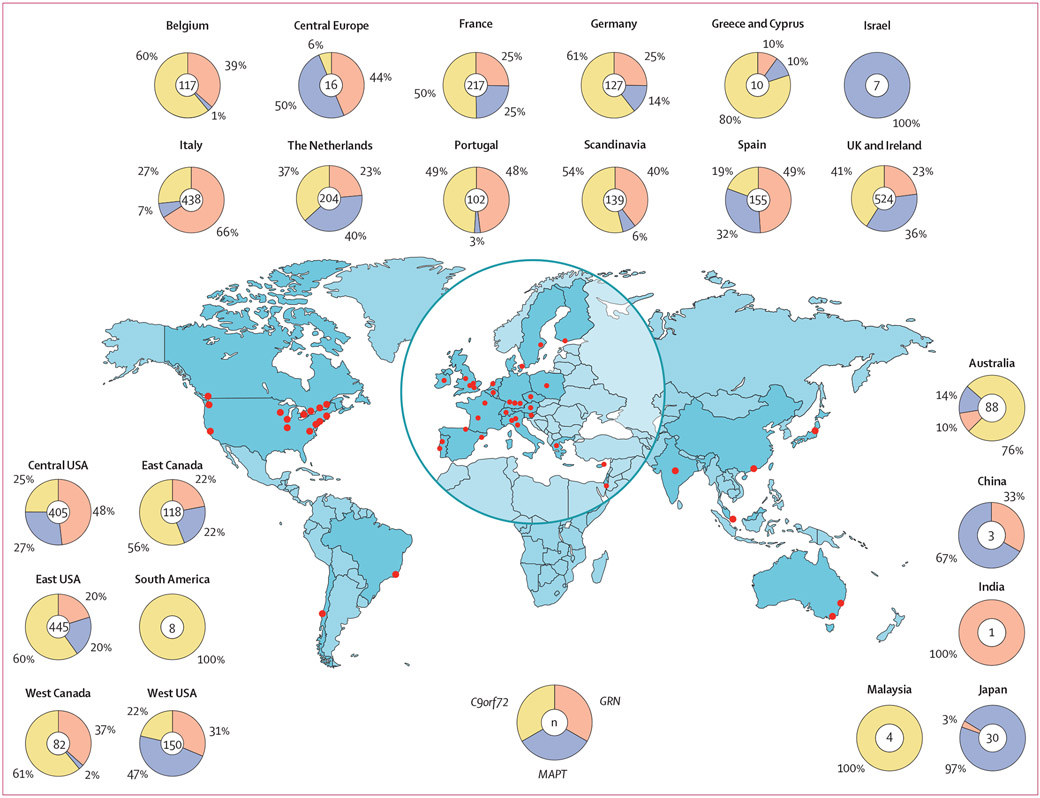
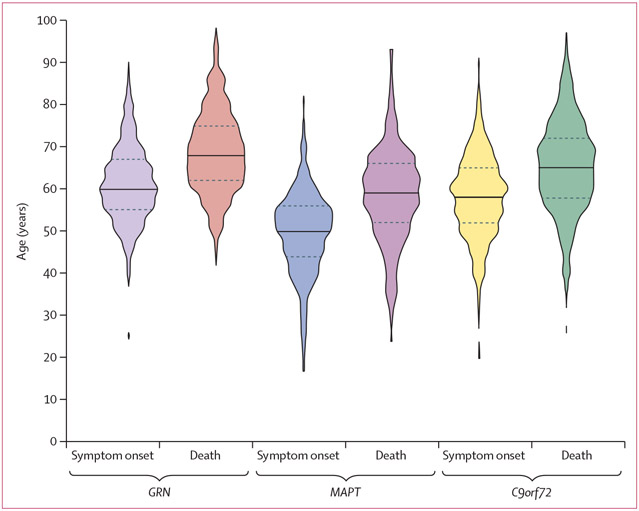
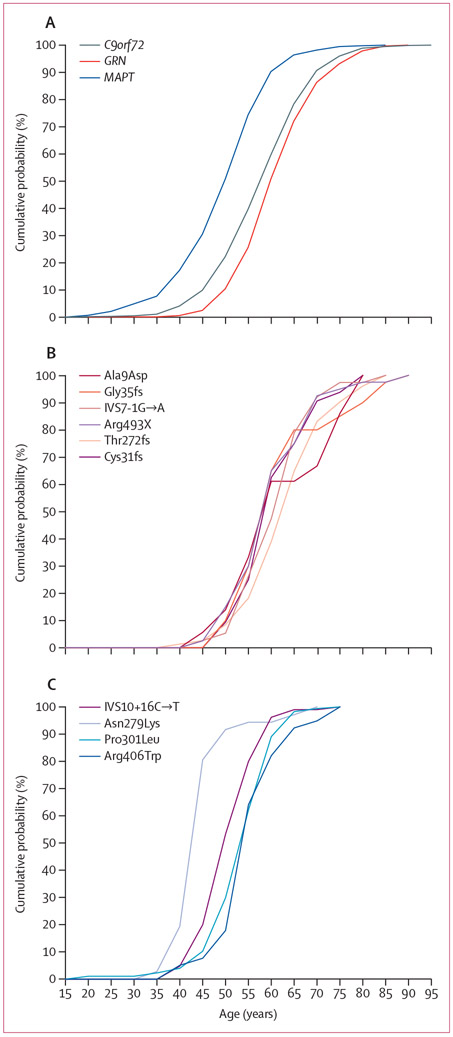
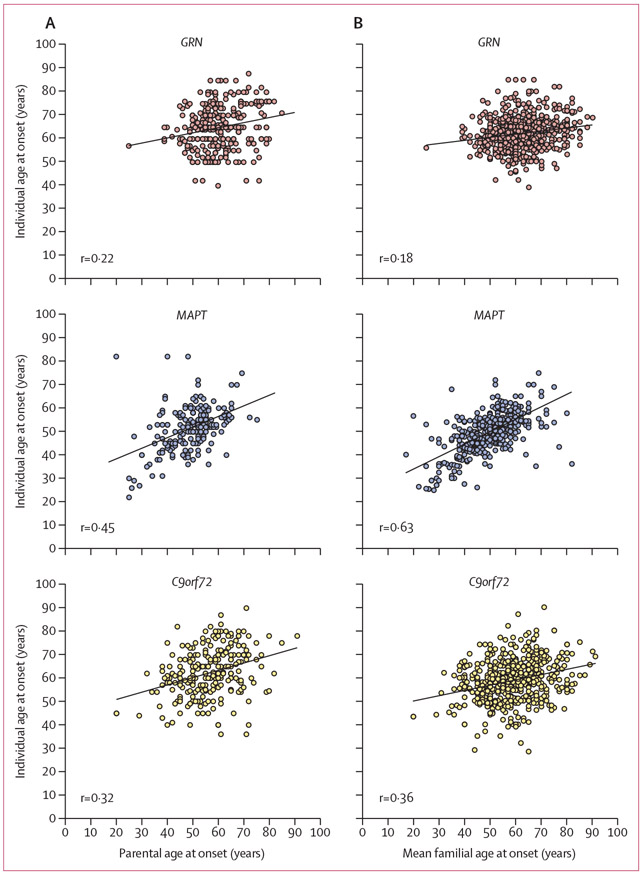
Background Frontotemporal dementia is a heterogenous neurodegenerative disorder, with about a third of cases being genetic. Most of this genetic component is accounted for by mutations in GRN, MAPT, and C9orf72. In this study, we aimed to complement previous phenotypic studies by doing an international study of age at symptom onset, age at death, and disease duration in individuals with mutations in GRN, MAPT, and C9orf72.Methods In this international, retrospective cohort study, we collected data on age at symptom onset, age at death, and disease duration for patients with pathogenic mutations in the GRN and MAPT genes and pathological expansions in the C9orf72 gene through the Frontotemporal Dementia Prevention Initiative and from published papers. We used mixed effects models to explore differences in age at onset, age at death, and disease duration between genetic groups and individual mutations. We also assessed correlations between the age at onset and at death of each individual and the age at onset and at death of their parents and the mean age at onset and at death of their family members. Lastly, we used mixed effects models to investigate the extent to which variability in age at onset and at death could be accounted for by family membership and the specific mutation carried.Findings Data were available from 3403 individuals from 1492 families: 1433 with C9orf72 expansions (755 families), 1179 with GRN mutations (483 families, 130 different mutations), and 791 with MAPT mutations (254 families, 67 different mutations). Mean age at symptom onset and at death was 49·5 years (SD 10·0; onset) and 58·5 years (11·3; death) in the MAPT group, 58·2 years (9·8; onset) and 65·3 years (10·9; death) in the C9orf72 group, and 61·3 years (8·8; onset) and 68·8 years (9·7; death) in the GRN group. Mean disease duration was 6·4 years (SD 4·9) in the C9orf72 group, 7·1 years (3·9) in the GRN group, and 9·3 years (6·4) in the MAPT group. Individual age at onset and at death was significantly correlated with both parental age at onset and at death and with mean family age at onset and at death in all three groups, with a stronger correlation observed in the MAPT group (r=0·45 between individual and parental age at onset, r=0·63 between individual and mean family age at onset, r=0·58 between individual and parental age at death, and r=0·69 between individual and mean family age at death) than in either the C9orf72 group (r=0·32 individual and parental age at onset, r=0·36 individual and mean family age at onset, r=0·38 individual and parental age at death, and r=0·40 individual and mean family age at death) or the GRN group (r=0·22 individual and parental age at onset, r=0·18 individual and mean family age at onset, r=0·22 individual and parental age at death, and r=0·32 individual and mean family age at death). Modelling showed that the variability in age at onset and at death in the MAPT group was explained partly by the specific mutation (48%, 95% CI 35-62, for age at onset; 61%, 47-73, for age at death), and even more by family membership (66%, 56-75, for age at onset; 74%, 65-82, for age at death). In the GRN group, only 2% (0-10) of the variability of age at onset and 9% (3-21) of that of age of death was explained by the specific mutation, whereas 14% (9-22) of the variability of age at onset and 20% (12-30) of that of age at death was explained by family membership. In the C9orf72 group, family membership explained 17% (11-26) of the variability of age at onset and 19% (12-29) of that of age at death.Interpretation Our study showed that age at symptom onset and at death of people with genetic frontotemporal dementia is influenced by genetic group and, particularly for MAPT mutations, by the specific mutation carried and by family membership. Although estimation of age at onset will be an important factor in future pre-symptomatic therapeutic trials for all three genetic groups, our study suggests that data from other members of the family will be particularly helpful only for individuals with MAPT mutations. Further work in identifying both genetic and environmental factors that modify phenotype in all groups will be important to improve such estimates.Funding UK Medical Research Council, National Institute for Health Research, and Alzheimer's Society.
Overview
The claims and statistics of this paper haven’t been checked yet.
Free: it reads the open-access text and checks the first 5 claims that cite a source we can check. Create a free account to check every claim.
Integrity signals
Registry
Cites
Statistics
Figures
Verification
Claims the paper makes
The claims and statistics of this paper haven’t been checked yet.
Free: it reads the open-access text and checks the first 5 claims that cite a source we can check. Create a free account to check every claim.
Claims other papers make about this one
Each is checked against this paper’s own text: does it say what the citing paper says it does?
The cited source doesn’t support the claim as written.
In the citing paper
“F-FTD is rare, with only hundreds of mutation carriers known to exist worldwide.12”
From Temporal order of clinical and biomarker changes in familial frontotemporal dementia (2022) · cites this paper as [12]
Checked by a reasoning model — may be wrong.
Experimental — accuracy not yet measuredThe source backs part of the claim, not all of it — or backs it for a different population, condition or comparison.
In the citing paper
“For example, in GRN, familial age of onset only explains 14% of the variability in individual age at symptom onset.12”
From Temporal order of clinical and biomarker changes in familial frontotemporal dementia (2022) · cites this paper as [12]
Experimental — accuracy not yet measuredThe cited source says what the claim attributes to it.
In the citing paper
“Although people with mutations causing frontotemporal lobar degeneration usually have frontotemporal dementia or a related clinical syndrome (eg, corticobasal syndrome or progressive supranuclear palsy presenting as Richardson syndrome), some individuals have genetic frontotemporal lobar degeneration with another phenotype.13”
From Advances and controversies in frontotemporal dementia: diagnosis, biomarkers, and therapeutic considerations (2022) · cites this paper as [13]
Self-check
Percentages, sums and reported differences re-computed from the paper’s own numbers.
The self-check needs the paper’s full text.
Citations
Cites
Mutations in progranulin cause tau-negative frontotemporal dementia linked to chromosome 17
Baker, M., Mackenzie, I. R., Pickering-Brown, S. M., Gass, J., Rademakers, R., Lindholm, C., Snowden, J., Adamson, J., Sadovnick, A. D., Rollinson, S., et al. (2006) · Nature · doi:10.1038/nature05016 · Cited by 2,058
Self-citationCruts, M., Gijselinck, I., van der Zee, J., Engelborghs, S., Wils, H., Pirici, D., Rademakers, R., Vandenberghe, R., Dermaut, B., Martin, J.-J., et al. (2006) · Nature · doi:10.1038/nature05017 · Cited by 1,512
Self-citationMutations in progranulin are a major cause of ubiquitin-positive frontotemporal lobar degeneration
Gass, J., Cannon, A., Mackenzie, I. R., Boeve, B., Baker, M., Adamson, J., Crook, R., Melquist, S., Kuntz, K., Petersen, R., et al. (2006) · Human Molecular Genetics · doi:10.1093/hmg/ddl241 · Cited by 580
Self-citationRohrer, J. D., Nicholas, J. M., Cash, D. M., van Swieten, J., Dopper, E., Jiskoot, L., van Minkelen, R., Rombouts, S. A., Cardoso, M. J., Clegg, S., et al. (2015) · The Lancet Neurology · doi:10.1016/s1474-4422(14)70324-2 · Cited by 538
Self-citationThe heritability and genetics of frontotemporal lobar degeneration
Rohrer, J. D., Guerreiro, R., Vandrovcova, J., Uphill, J., Reiman, D., Beck, J., Isaacs, A. M., Authier, A., Ferrari, R., Fox, N. C., et al. (2009) · Neurology · doi:10.1212/wnl.0b013e3181bf997a · Cited by 536
Self-citationSymptom onset in autosomal dominant Alzheimer disease: A systematic review and meta-analysis
Ryman, D. C., Acosta-Baena, N., Aisen, P. S., Bird, T., Danek, A., Fox, N. C., Goate, A., Frommelt, P., Ghetti, B., Langbaum, J. B. S., et al. (2014) · Neurology · doi:10.1212/wnl.0000000000000596 · Cited by 502
Self-citationLe Ber, I., Camuzat, A., Hannequin, D., Pasquier, F., Guedj, E., Rovelet-Lecrux, A., Hahn-Barma, V., van der Zee, J., Clot, F., Bakchine, S., et al. (2008) · Brain · doi:10.1093/brain/awn012 · Cited by 352
Self-citationProgranulin deficiency promotes neuroinflammation and neuron loss following toxin-induced injury
Martens, L. H., Zhang, J., Barmada, S. J., Zhou, P., Kamiya, S., Sun, B., Min, S.-W., Gan, L., Finkbeiner, S., Huang, E. J., et al. (2012) · Journal of Clinical Investigation · doi:10.1172/jci63113 · Cited by 315
Warren, J. D., Rohrer, J. D., & Rossor, M. N. (2013) · BMJ · doi:10.1136/bmj.f4827 · Cited by 292
Self-citationvan Blitterswijk, M., DeJesus-Hernandez, M., Niemantsverdriet, E., Murray, M. E., Heckman, M. G., Diehl, N. N., Brown, P. H., Baker, M. C., Finch, N. A., Bauer, P. O., et al. (2013) · The Lancet Neurology · doi:10.1016/s1474-4422(13)70210-2 · Cited by 274
Self-citation
Cited by
Items 201–300 of 312
Rodriguez‐Vieitez, E., Rydell, M. T., Ullgren, A., Montal, V., Illán‐Gala, I., Fortea, J., Jelić, V., Bouzigues, A., Russell, L. L., Foster, P. H., et al. (2025) · Molecular Psychiatry · doi:10.1038/s41380-025-03280-x · Cited by 6
Self-citationSoskic, S., Tregidgo, H. F. J., Todd, E. G., Bouzigues, A., Cash, D. M., Russell, L. L., Thomas, D. L., Malone, I. B., Foster, P. H., Ferry‐Bolder, E., et al. (2025) · Brain Communications · doi:10.1093/braincomms/fcaf420 · Cited by 5
Self-citationLiu, E., Jones, S. L., Light, V., Teunissen, C. E., Bouzigues, A., Russell, L. L., Foster, P. H., Ferry‐Bolder, E., Swieten, J. C. V., Jiskoot, L. C., et al. (2025) · Journal of Alzheimer s Disease · doi:10.1177/13872877251352103 · Cited by 4
Self-citationLessons learned from a progressive supranuclear palsy trial
Grossman, M. (2021) · The Lancet Neurology · doi:10.1016/s1474-4422(21)00035-1 · Cited by 5
Self-citationClinical heterogeneity within the ALS‐FTD spectrum in a family with a homozygous optineurin mutation
Parvizi, T., Klotz, S., Keritam, O., Caliskan, H., Imhof, S., König, T., Haider, L., Traub‐Weidinger, T., Wagner, M., Brunet, T., et al. (2024) · Annals of Clinical and Translational Neurology · doi:10.1002/acn3.52075 · Cited by 4
“31 In TDP-43 proteinopathies, particularly the TDP-43 pathology in FTLD frequently involves the basal ganglia and substantia nigra; therefore, extrapyramidal symptoms can be also expected to be part of the clinical manifestations and mimic an atypical parkinsonian syndrome like CBS.”
BackgroundO’Connor, A., Ryan, N. S., Belder, C. R. S., Lynch, D. S., Lahiri, N., Houlden, H., Rohrer, J. D., Fox, N. C., & O’Dowd, S. (2024) · Practical Neurology · doi:10.1136/pn-2024-004241 · Cited by 4
“29 There can be reduced penetrance of both C9ORF72 and GRN mutations, however, pathogenic MAPT mutations are almost 100% penetrant and have a reasonably consistent age at onset within families.”
Self-citationNo association of CpG SNP rs9357140 with onset age in Belgian C9orf72 repeat expansion carriers
Koçoğlu, C., Gossye, H., Dillen, L., Mossevelde, S. V., Bleecker, J. D., Vandenberghe, R. R., Deyn, P. P. D., Sleegers, K., Cras, P. P., Engelborghs, S., et al. (2020) · Neurobiology of Aging · doi:10.1016/j.neurobiolaging.2020.07.021 · Cited by 3
Self-citationTaylor, B., Mohamud, S., Brotherhood, E., Harding, E., Waddington, C., Camic, P. M., Alexander, D. C., Crutch, S. J., Stott, J. C. H., Hardy, C. J. D., et al. (2022) · medRxiv · doi:10.1101/2022.09.22.22280192 · Cited by 3
Tan, Y. H. V., Lo, Y. K. J., & Ho, C. S. H. (2023) · SSRN Electronic Journal · doi:10.2139/ssrn.4581535 · Cited by 3
Tau and delirium superimposed on dementia: A case report
Yu, P.-C., Kuo, C.-M., & Chen, I.-C. (2024) · SAGE Open Medical Case Reports · doi:10.1177/2050313x241243148 · Cited by 2
“20 Similar age was observed in the presented case.”
BackgroundXia, T., Li, C., Iverson, A. A., Spat‐Lemus, J., Woroch, A., & Naasan, G. (2024) · Neurocase · doi:10.1080/13554794.2024.2440548 · Cited by 2
“The identified pathogenic variant in MAPT (c.902C>T, p. Pro301Leu) is the most common MAPT mutation and 59 families carrying this pathogenic variant around the world have been reported in the literature (Moore et al., 2020).”
Cheng, Y.-M., He, X., Huang, X. J., Mao, F., Qin, F., & Wang, Y. (2025) · Brain Research · doi:10.1016/j.brainres.2025.149608 · Cited by 2
Maina, M. B., Isah, M. B., Marsh, J. A., Muhammad, Z., Babazau, L., Idris, A. A., Aladyeva, E., Miller, N., Starr, E., Miller, K. J., et al. (2025) · Alzheimer s & Dementia · doi:10.1002/alz.70145 · Cited by 4
“63 Similarly,the MAPT R406W mutation has been identified in multiple families worldwide.”
Lee, H., Chatterjee, A., Mackenzie, I. R., Scott, I. M., Beg, M. F., Popuri, K., Wittenberg, D., Rademakers, R., & Hsiung, G. R. (2025) · Journal of Alzheimer s Disease · doi:10.1177/13872877251350684 · Cited by 2
“13,26,27 Splicesitemutations predicted to disrupt normal mRNA splicing included: c.933 + 1G> A, occurring at nucleotide position + 1 within intron 9 (immediately following coding nucleotide 933), and c.463-1G > T, a substitution located at the canonical splice acceptor site of intron 5 (position −…”
Self-citationRamakrishnan, S., Arshad, F., Bs, K., Bosco, S., Pon, A. G., Ganaraja, V. H., Deekshitha, M., Mahima, R., Arunachal, G., Kulanthaivelu, K., et al. (2025) · BMC Neurology · doi:10.1186/s12883-025-04336-9 · Cited by 3
“Frontotemporal dementia (FTD) is one of the most common causes of presenile degenerative dementia before the age of 65 years [1].”
Chatterton, Z., de Boer, S. C. M., Riedl, L., Matis, S., Fenoglio, C., Rue, I., Landín-Romero, R., Southwood, D., Galimberti, D., Arighi, A., et al. (2025) · Scientific Reports · doi:10.1038/s41598-025-22667-y · Cited by 3
Self-citationC9orf72 in myeloid cells prevents an inflammatory response to microbial glycogen
McCourt, B. T., Lemr, K., Chakrabarti, S., Woidke, E., Ramaiah, S., Singh, V., Sangwan, N., Brown, J. M., Cominelli, F., Rodriguez‐Palacios, A., et al. (2026) · Cell Reports · doi:10.1016/j.celrep.2025.116906 · Cited by 6
Altered Anterior Insular Metabolic Connectivity in Asymptomatic MAPT P301L Carriers
Chu, M. K., Jiang, D., Liu, L., Nie, B., Cui, B., Wang, Y., Rosa‐Neto, P., & Wu, L. (2023) · Journal of Alzheimer s Disease · doi:10.3233/jad-221035 · Cited by 5
“P301L is the most common MAPT mutation [6].”
BackgroundRare exonic variant affects GRN splicing and contributes to frontotemporal lobar degeneration
Wauters, E., Gossye, H., Frydas, A., Sieben, A., & Broeckhoven, C. V. (2023) · Neurobiology of Aging · doi:10.1016/j.neurobiolaging.2023.06.009 · Cited by 3
Vítor, J., Saracino, D., Ströer, S., Camuzat, A., Dorgham, K., Clot, F., Martin-Hardy, P., Pasquier, F., Guedj, E., & Ber, I. L. (2023) · Journal of Alzheimer s Disease · doi:10.3233/jad-230315 · Cited by 2
Self-citationLevodopa responsive asymmetric parkinsonism as clinical presentation of progranulin gene mutation.
Biagioli, N., Cavallieri, F., Marti, A., Rauso, G. D., Fioravanti, V., Monfrini, E., Gasparini, F., Beltrami, D., Grisanti, S., Rossi, J., et al. (2023) · Journal of the Neurological Sciences · doi:10.1016/j.jns.2023.120737 · Cited by 2
Taomoto, D., Sato, S., Kanemoto, H., Suzuki, M., Hirakawa, N., Takasaki, A., Akimoto, M., Satake, Y., Koizumi, F., Yoshiyama, K., et al. (2023) · Psychogeriatrics · doi:10.1111/psyg.13072 · Cited by 2
“12 Familial patients with FTLD mutations sometimes show atypical symptoms, such as psychosis, in sporadic cases.”
BackgroundSelf-citationKarcher, A., Hamza, R., & Jantzi, C. (2024) · Frontiers in Psychiatry · doi:10.3389/fpsyt.2024.1437363 · Cited by 2
Longobardi, A., Bellini, S., Nicsanu, R., Pilotto, A., Geviti, A., Facconi, A., Tolassi, C., Libri, I., Saraceno, C., Fostinelli, S., et al. (2024) · International Journal of Molecular Sciences · doi:10.3390/ijms25137457 · Cited by 3
“The heterogeneity of phenotypic expression in genetic FTLD, even in patients carrying the same mutation, suggests the presence of potential genetic modifiers that influence phenotypic features, such as age at onset, age at death, and disease duration [39].”
BackgroundSelf-citationRoy, A. R. K., Noohi, F., Morris, N., Ljubenkov, P. A., Heuer, H. W., Fong, J. C., Hall, M., Lago, A. L., Rankin, K. P., Miller, B. L., et al. (2024) · NeuroImage Clinical · doi:10.1016/j.nicl.2024.103649 · Cited by 3
“(Majounie et al., 2012; Gijselinck et al., 2016; Moore et al., 2019) Although changes in language do not often arise in the clinical phase, alterations in emotions and social behavior are common.”
BackgroundSelf-citationKnow your brain aging to know your resilience in neurodegenerative diseases
Ng, B., & Zetterberg, H. (2024) · Brain Communications · doi:10.1093/braincomms/fcae467 · Cited by 3
Ma, Y., Tang, C. K., Lei, X., Wang, L. P., & He, D. (2025) · Journal of Alzheimer s Disease · doi:10.1177/13872877241312932 · Cited by 3
“The results showed that sex distribution and disease duration are equal in genetic svPPA, but patients with svPPA carrying the FTLD-tau-related gene have a younger age of onset than those carrying the FTLD-TDP-43-related gene, these fi ndings are consistent with the previous research of Moore et al. 46 It is worth noti…”
Phenotypic Characterization of ALS‐Causing SOD1 Mutations Affecting Polypeptide Length
Berdyński, M., Safranow, K., Andersen, P. M., & Żekanowski, C. (2025) · Human Mutation · doi:10.1155/humu/9792233 · Cited by 4
“The present study has obvious limitations common to similar projects, such as retrospective data collection which weakens its general conclusions [43].”
Bentham, P., Staff, R. T., Schelter, B. O., Shiells, H., Harrington, C. R., & Wischik, C. M. (2021) · Journal of Alzheimer s Disease · doi:10.3233/jad-210390 · Cited by 2
Rossi, G., Salvi, E., Benussi, L., Mehmeti, E., Geviti, A., Bellini, S., Longobardi, A., Facconi, A., Carrara, M., Bonvicini, C., et al. (2022) · International Journal of Molecular Sciences · doi:10.3390/ijms232112847 · Cited by 2
Self-citationPérez‐Millan, A., Borrego‐Écija, S., Swieten, J. C. V., Jiskoot, L. C., Moreno, F., Laforce, R. J., Graff, C., Masellis, M., Tartaglia, M. C., Rowe, J. B., et al. (2022) · Journal of Neurology · doi:10.1007/s00415-022-11435-x · Cited by 2
“32), and thus, not useful for individual predictions [9].”
InfluentialSelf-citationDistinct mechanistic pathways of early tauopathy revealed by MAPT mutationsPreprint
Foiani, M. S., Nirujogi, R. S., Watamura, N., Bez, S., Tsefou, E., Santambrogio, A., Patel, S., Hannah, D., Goulbourne, C. N., Fatima, N., et al. (2026) · bioRxiv (Cold Spring Harbor Laboratory) · doi:10.64898/2026.02.14.705716 · Cited by 3
“To date, more than 70 MAPT mutations have been reported 5 , altering isoform balance, structure, post-translational modification, and aggregation, which track with clinical symptoms 6,7 , biomarker profiles 8–11 , disease progression rates 12 , and severity 13 .”
Corriveau‐Lecavalier, N., Barnard, L. R., Przybelski, S. A., Gogineni, V., Botha, H., Graff‐Radford, J., Ramanan, V. K., Forsberg, L. K., Fields, J. A., Machulda, M. M., et al. (2023) · NeuroImage Clinical · doi:10.1016/j.nicl.2023.103559 · Cited by 2
“This is in line with investigations that have found a greater prevalence of language-related phenotypes in GRN mutation carriers relative to other common FTLD genetic mutations (Le Ber et al., 2008; Van Langenhove et al., 2013; Moore et al., 2020; Saracino et al., 2021).”
BackgroundResultInfluentialSelf-citationResearch trends and hotspots for frontotemporal dementia from 2000 to 2022: a bibliometric analysis
Chen, X., Chen, Y., Ni, B., & Huang, C. (2024) · Frontiers in Neurology · doi:10.3389/fneur.2024.1399600 · Cited by 4
A novel c.1468 G > A GRN mutation causes frontotemporal dementia in a Chinese Han family
Xia, M., Gao, C., Shang, J., Li, D., Yang, A., Zang, W., & Zhang, J. (2025) · European journal of medical research · doi:10.1186/s40001-025-02418-5 · Cited by 1
“FTD induced by GRN mutations is less prevalent in China compared to Western countries [4, 14].”
Murphy, P., Webster, E., & Cipolotti, L. (2025) · Journal of Neuropsychology · doi:10.1111/jnp.70001 · Cited by 2
“The age of onset of neurodegenerative conditions that specifically affect the frontal lobes is quite broad (Moore et al., 2020; Pagano et al., 2016).”
CGG repeat expansions in Charcot-Marie-Tooth disease: insights from the 100 000 Genomes Project
Bertini, A., Facchini, S., Quartesan, I., Curró, R., Schnekenberg, R. P., Dominik, N., Alves, G., Ferullo, L., Tucci, A., Houlden, H., et al. (2025) · Journal of Neurology Neurosurgery & Psychiatry · doi:10.1136/jnnp-2025-336590 · Cited by 1
Spencer, B. E., Xie, S. X., Ohm, D. T., Elman, L. B., Quinn, C. C., Amado, D. A., Baer, M., Lee, E. B., Deerlin, V. M. V., Dratch, L., et al. (2025) · Brain Communications · doi:10.1093/braincomms/fcaf405 · Cited by 1
“We also observed a younger age at onset of cognitive-behavioural symptoms for individuals with initial FTD who develop subsequent motor features (54.31 [6.85]) than those who never develop subsequent features (61.57 [9.22], Table 1).”
InfluentialSelf-citationCogan, G., Houot, M., Bogoin, J., Noël, S., Larcher, K., David, I., Moreau, P., Bensalah, M., Fauret‐Amsellem, A., Lamari, F., et al. (2025) · Brain · doi:10.1093/brain/awaf423 · Cited by 2
So, I., Bouzigues, A., Russell, L. L., Foster, P. H., Ferry‐Bolder, E., Swieten, J. C. V., Jiskoot, L. C., Seelaar, H., Sánchez‐Valle, R., Laforce, R. J., et al. (2025) · Journal of Alzheimer s Disease · doi:10.1177/13872877251393414 · Cited by 3
“37 Of particular interest, in induced pluripotent stem cells, the MAPT IVS10 + 16 mutation increases 4R tau isoform expression and impairs neuronal progenitor proliferation.”
Self-citationGraafland, C. H., Bunnik, E. M., Borroni, B., Bouzigues, A., Borrego‐Écija, S., Solje, E., Graff, C., Rohrer, J. D., Swieten, J. C. V., Kaat, L. D., et al. (2025) · Alzheimer s Research & Therapy · doi:10.1186/s13195-025-01930-4 · Cited by 1
“However, in the absence of symptoms it is difficult to predict when carriers of genetic FTD are in this presumed window of opportunity, as age of onset varies from 35 to 80 even within families carrying the same mutation [4, 5].”
Self-citationLife, B. E., Kazemian, P., Petkau, T. L., Gomes, A. D. M., Thomson, S. B., Shen, N., Myung, J. J. K., Jayousi, F., Lengyell, T. C., Lange, P. F., et al. (2026) · Neurobiology of Disease · doi:10.1016/j.nbd.2026.107419 · Cited by 1
Groeneveld, J., de Boer, S. C. M., Krudop, W. A., Ozhegov, G., Hulsman, M., Dols, A., Kerssens, C. J., Schouws, S. N. T. M., Barkhof, F., Holstege, H. H., et al. (2026) · Neurology Genetics · doi:10.1212/nxg.0000000000200382 · Cited by 1
“47 However, it is important to note that our cohort is relatively young overall (mean age 63 ± 8 years), which may have led to the underrepresentation of older individuals carrying PGVs.”
Bouzigues, A., Grassi, M., Cantoni, V., Premi, E., Bellini, S., Binetti, G. G., Logroscino, G., Russell, L. L., Ferry‐Bolder, E., Foster, P. H., et al. (2026) · The Lancet Neurology · doi:10.1016/s1474-4422(26)00197-3 · Cited by 1
Self-citationSpanish version of the Frontotemporal Dementia Knowledge Scale: adaptation and validation
Guimet, N. M., Calandri, I. L., Bagnati, P. M., Wynn, M., & Allegri, R. F. (2022) · Arquivos de Neuro-Psiquiatria · doi:10.1590/0004-282x-anp-2020-0550 · Cited by 1
Spanish version of the Frontotemporal Dementia Knowledge Scale: adaptation and validation
Guimet, N. M., Calandri, I. L., Bagnati, P., Wynn, M. J., & Allegri, R. (2021) · LA Referencia (Red Federada de Repositorios Institucionales de Publicaciones Científicas) · Cited by 1
Genetic investigation of dementias in clinical practice
Takada, L. T. (2022) · Arquivos de Neuro-Psiquiatria · doi:10.1590/0004-282x-anp-2022-s103 · Cited by 3
Criterios diagnósticos en la enfermedad demencial ¿Qué hay de nuevo?
Labos, E., Bavec, C. V., Cristalli, D. O., Deschle, F., Isaac, C. F., Dorman, G. S., Ollari, J., Rubiño, V., & Russo, M. J. (2023) · Vertex Revista Argentina de Psiquiatría · doi:10.53680/vertex.v34i160.460 · Cited by 6
Protein–Protein Interactions in Neurodegenerative Diseases
Poluri, K. M., Gulati, K., Tripathi, D. K., & Nagar, N. (2023) · Springer eBooks · doi:10.1007/978-981-99-2423-3_3 · Cited by 5
Bocchetta, M. (2023) · Oxford University Press eBooks · doi:10.1093/med/9780197676158.003.0070 · Cited by 1
Self-citationPozzi, F. E., Aprea, V., Giovannelli, G., Lattuada, F., Crivellaro, C., Bertola, F., Castelnovo, V., Canu, E., Filippi, M., Appollonio, I. M., et al. (2024) · Neurogenetics · doi:10.1007/s10048-024-00756-w · Cited by 1
“We hypothesize that the MAPT p.K298E is associated with early onset (the average onset age was around 57 years old considering all described cases) and a behavioral phenotype (bvFTD), consistent with the predominant phenotype and demographic features of other MAPT mutations [8, 12].”
ResultFlight to insight: maximizing the potential of Drosophila models of C9orf72-FTD
d’Almeida, N. A., & Tipping, M. (2024) · Frontiers in Molecular Neuroscience · doi:10.3389/fnmol.2024.1434443 · Cited by 1
Jia, S., Li, P.-L., Gao, P., Jiang, Y., Zhang, C., & Yun, W. (2024) · Neurocase · doi:10.1080/13554794.2024.2436215 · Cited by 2
“We examined gene mutations associated in AD, FTD, or other dementia-related neurodegenerative diseases.”
InfluentialVillaseñor, A. A., & Saidi, L. G. (2025) · Dementia · doi:10.1177/14713012251342630 · Cited by 2
“Genetic studies of FTD disorders have shown that FTD has 30% family history (Greaves & Rohrer, 2019; Moore et al., 2020) and demonstrates an association with history of other neurological disorders such as dementia, psychiatric disorders, or motor symptoms (Antonioni et al., 2023; Johnson et al.,…”
Fluid and Imaging Markers of Frontotemporal Lobar Degeneration
Prinse, F., Houwer, J. F. H. D., Dopper, E. G. P., & Seelaar, H. (2025) · Springer eBooks · doi:10.1007/978-3-031-80849-4_9 · Cited by 1
Self-citationCoppola, C., Saracino, D., Oliva, M., Puoti, G., Lus, G., Ber, I. L., Pariente, J., Tessitore, A., Benussi, L., Ghidoni, R., et al. (2020) · Journal of Alzheimer s Disease · doi:10.3233/jad-200924 · Cited by 2
Self-citationCerebrovascular reactivity impairment in genetic frontotemporal dementiaPreprint
Kancheva, I. K., Bouzigues, A., Russell, L. L., Foster, P. H., Ferry‐Bolder, E., Swieten, J. C. V., Jiskoot, L. C., Seelaar, H., Sánchez‐Valle, R., Laforce, R. J., et al. (2024) · medRxiv · doi:10.1101/2024.03.24.24304799 · Cited by 1
Self-citationThalamic volume as a susceptibility/risk biomarker for C9orf72 phenoconversionPreprint
Shen, T., Wuu, J., Olm, C. A., Radhakrishnan, H., Li, Y., Pattany, P. M., Granit, V., Carberry, N., Irwin, D. J., Massimo, L. M., et al. (2025) · medRxiv · doi:10.1101/2025.09.20.25336234 · Cited by 1
Self-citationInternational view on genetic frontotemporal dementia
Wauters, E., & Broeckhoven, C. V. (2019) · The Lancet Neurology · doi:10.1016/s1474-4422(19)30406-5
Génétique de la maladie d’Alzheimer et des maladies apparentées : qu’en sait-on en 2022 ?
Formaglio, M., Ber, I. L., & Wallon, D. (2022) · La Presse Médicale Formation · doi:10.1016/j.lpmfor.2022.01.017 · Cited by 3
Foreseeing Before Disease Onset: Brain Atrophy Progression in Genetic Frontotemporal Dementia
Agosta, F., Spinelli, E. G., & Filippi, M. (2022) · Neurology · doi:10.1212/wnl.0000000000201476
Estudios a micro y nanoescala de la respuesta de Bordetella pertussis a condiciones del entorno
Villalba, M. I. (2020) · El Servicio de Difusión de la Creación Intelectual (National University of La Plata) · doi:10.35537/10915/143896 · Cited by 1
The MAPT p.P301L mutation presents as a rare early-onset corticobasal syndrome: A case report
Li, C., Lee, N., Lin, K., Hsiao, I., Weng, Y.-H., & Lin, C. (2023) · Neurology Asia · doi:10.54029/2023ejf
Troubles de la mémoire et du comportement chez un homme de 49 ans
Wallon, D., Formaglio, M., Meyronet, D., & Sellal, F. (2023) · Pratique Neurologique - FMC · doi:10.1016/j.praneu.2023.04.007
Clinical model for Hereditary Transthyretin Amyloidosis age of onset prediction
Pedroto, M., Coelho, T., Jorge, A., & Mendes-Moreira, J. (2023) · Frontiers in Neurology · doi:10.3389/fneur.2023.1216214
Jia, S., Li, P.-L., Gao, P., Jiang, Y., Zhang, C., & Yun, W. (2023) · Research Square · doi:10.21203/rs.3.rs-3214696/v1
Increasing our understanding of emotion recognition impairment among frontotemporal dementias
Baker, A. O., & Tippett, L. J. (2023) · International Psychogeriatrics · doi:10.1017/s1041610223000893
“This is precious time as FTD can swiftly progress, leading to death within 10 years, on average (Moore et al ., 2020).”
Role of sex steroid hormone on hand grip strength and cognitive function in the elderly
Parwanto, E., Tjahyadi, D., Amalia, H., Hairunisa, N., Edy, H. J., Oladimeji, A. V., & Djebli, N. (2023) · Universa Medicina · doi:10.18051/univmed.2023.v42.329-345
“(73) Compared with the general population, people with fronto-temporal dementia have an 8x increased risk of death.”
BackgroundCumulative Incidence of Motor and Cognitive Features in the ALS-FTD SpectrumPreprint
Spencer, B. E., Xie, S. X., Ohm, D. T., Elman, L. B., Quinn, C. C., Amado, D. A., Baer, M., Lee, E. B., Deerlin, V. M. V., Dratch, L., et al. (2024) · medRxiv · doi:10.1101/2024.04.30.24306638
Self-citationAfasia progressiva non fluente/agrammatica e aprassia della parola primaria progressiva
Teichmann, M. (2024) · EMC - Neurologia · doi:10.1016/s1634-7072(24)49340-9
Degenerazioni lobari frontotemporali: neuropatologia, genetica e classificazione
Saracino, D., Ber, I. L., & Deramecourt, V. (2024) · EMC - Neurologia · doi:10.1016/s1634-7072(24)49339-2
Genetic Semantic Dementia? Twins’ Data and Review of Autosomal Dominant CasesPreprint
Henderson, S. K., Ralph, M. A. L., Jones, P. S., Naessens, M., Cope, T., Whiteside, D. J., Bouzigues, A., Russell, L. L., Foster, P. H., Ferry‐Bolder, E., et al. (2024) · medRxiv · doi:10.1101/2024.10.18.24313757
Self-citationGerhand, S. (2024) · Cambridge University Press eBooks · doi:10.1017/9781009025911.002
Su, Y. R., Chu, M. K., Wang, H., Wu, L., & Gao, Y. (2024) · bioRxiv (Cold Spring Harbor Laboratory) · doi:10.1101/2024.11.25.625321
“It is the second most common form of dementia in individuals under 65 years of age, thus being recognized as an early-onset dementia [2][3] .”
Mishra, A., & Beswick, E. (2025) · International Journal of Scientific Research in Science and Technology · doi:10.32628/ijsrst251232
Genetics of Frontotemporal Dementia: an updated overview
Ghanim, M. A., Abuawad, M., Alqub, M., Dwikat, M., Alkhaldi, S., & Rabaya, D. (2024) · Palestinian medical and pharmaceutical journal/Palestinian medical & pharmaceutical journal · doi:10.59049/2790-0231.10.1.2273
de Vienne, D., & de Vienne, D. M. (2025) · medRxiv · doi:10.1101/2025.08.08.25333050
“However, moderate population-specific founder effects appear to exist for this mutation [9], and the penetrance estimates are roughly similar in other cohorts [10], even in those including a fraction of patients from non-European origin [11, 13].”
Clinical phenotype of frontotemporal dementia associated with the Pro392Leu SQSTM1 mutation
Escobar, J. R., Agüero, P., Martínez-Ulloa, P., Sainz, M. J., Pérez‐Pérez, J., & Gómez‐Tortosa, E. (2025) · Amyotrophic Lateral Sclerosis and Frontotemporal Degeneration · doi:10.1080/21678421.2025.2549308 · Cited by 1
“In 60% of familial cases, heritability is linked to variants in one of three genes: chromosome 9 open reading frame 72 ( C9orf72 ), progranulin ( GRN ), and microtubule-associated protein tau ( MAPT ) (5,6).”
Optineurin mutation-associated language variant frontotemporal dementia
Park, A., West, K., Darby, D., & Brodtmann, A. G. (2025) · BMJ Case Reports · doi:10.1136/bcr-2025-266544
Self-citationOffspring burden in Frontotemporal Dementia: the other side of caregiving
Cantoni, V., Alberici, A., Geviti, A., Festari, C., & Borroni, B. (2025) · Neurological Sciences · doi:10.1007/s10072-025-08469-0
Self-citationSoriani, M.-H., Blasco, H., Corcia, P., Danel-Brunaud, V., Desmaison, A., Pradat, P., Querin, G., Vourc’h, P., & Guy, N. (2025) · Revue Neurologique · doi:10.1016/j.neurol.2025.07.008 · Cited by 1
Genetic Approaches to Neurodegenerative Disease
Takada, L. T., & Yokoyama, J. S. (2025) · Cambridge University Press eBooks · doi:10.1017/9781108985055.009
Additional file 1 of Latozinemab, a novel progranulin-elevating therapy for frontotemporal dementia
Kurnellas, M., Mitra, A., Schwabe, T., Paul, R., Arrant, A. E., Roberson, E. D., Ward, M., Yeh, F. L., Long, H., & Rosenthal, A. (2024) · Figshare · doi:10.6084/m9.figshare.26597423
Additional file 1 of Diagnostic accuracy of research criteria for prodromal frontotemporal dementia
Benussi, A., Premi, E., Grassi, M., Alberici, A., Cantoni, V., Gazzina, S., Archetti, S., Gasparotti, R., Fumagalli, G., Bouzigues, A., et al. (2024) · Figshare · doi:10.6084/m9.figshare.24993750
Self-citationPathogenic or Likely Pathogenic GRN Variants Are Found in 0.1% of Parkinson's Disease Patients
Ganoza, C. A., Westenberger, A., Paul, J. J., Curado, F., Rennecke, J., Mannepalli, S., Zonic, E., Saravanakumar, D., Paknia, O., Al‐Ali, R., et al. (2025) · Movement Disorders · doi:10.1002/mds.70161
Zhao, X., Wu, L., & Li, P. (2026) · Journal of Alzheimer s Disease Reports · doi:10.1177/25424823251412416
“GRN was higher in female, 10,31,32 but there was no signi fi cant gender difference in the FTD population related to MAPT and c9orf72 gene mutations.”
Composite grey matter fingerprints for genetic frontotemporal dementia
Bouzigues, A., Campana, G., Joulot, M., Gensollen, N., Russell, L. L., Foster, P. H., Ferry‐Bolder, E., Swieten, J. C. V., Jiskoot, L. C., Seelaar, H., et al. (2026) · Journal of Neurology Neurosurgery & Psychiatry · doi:10.1136/jnnp-2025-337186 · Cited by 2
“28 However, findings in a young subgroup of this cohort (aged between 19 and 29) indicate that thalamic reductions may”
Self-citationUllgren, A., Rydell, M. T., Bergström, S., Öijerstedt, L., Olofsson, J., Bouzigues, A., Russell, L. L., Foster, P. H., Ferry‐Bolder, E., Swieten, J. C. V., et al. (2026) · Journal of Neural Transmission · doi:10.1007/s00702-026-03118-y · Cited by 1
“C9-MC C9-MC usually experi - ences a slow decline in grey matter volume starting in early adulthood, while clinical symptoms progress more rapidly, with a relatively short disease duration, once onset has been reached [25–27 ].”
Self-citationCalemi, C., Bruffaerts, R., & Ellender, T. J. (2026) · bioRxiv (Cold Spring Harbor Laboratory) · doi:10.64898/2026.02.27.708197
“FTD encompasses a heterogeneous spectrum of clinical phenotypes, presenting with variable degrees of speech and language impairment (Moore et al., 2020; Rohrer et al., 2015), often characterised by changes in fundamental frequency (Nevler et al., 2017).”
Self-citationPremi, E., Bianchetti, G., Bracca, V., Campana, G., Gatti, E., Cao, T., Fornito, A., Cantoni, V., Bellini, S., Corbo, D., et al. (2026) · NeuroImage Clinical · doi:10.1016/j.nicl.2026.103994
Self-citationIrwin, D. J. (2026) · Neurology Genetics · doi:10.1212/nxg.0000000000200402
“2,9 Finally, the study focused on PGVs, but future work can examine the frequency and relevance of rare variants of unknown signi fi cance in diagnostically ambiguous patients.”
Self-citationProtective TMEM106B-rs3173615 delays age at onset in GRN mutation carriers
Pagano, L., Saraceno, C., Geviti, A., Fostinelli, S., Facconi, A., Laganà, V., Giacomucci, G., Cotelli, M. S., Ingannato, A., Bagnoli, S., et al. (2026) · Molecular Psychiatry · doi:10.1038/s41380-026-03653-w
Self-citationLiu, L., Gao, Y., Wang, Z., Qu, S., Yan, F.-X., Wang, S.-M., Liang, J., Yuan, M., & Ma, X. (2026) · Amyotrophic Lateral Sclerosis and Frontotemporal Degeneration · doi:10.1080/21678421.2026.2674011
Hua, K., Pearson, M. R., Apresa, B. I., Chung, J. M., Ambrose, A. J., Hiatt, S. M., Lago, A. L., Hall, M., Rabkina, L., Kwan, S., et al. (2026) · npj Dementia · doi:10.1038/s44400-026-00068-w · Cited by 1
“…example, carriers of MAPT P301L mutations show phenotypic variability, with a mean age of onset of 53 years and average disease duration of 8 years, whereas MAPT P301S mutation carriers present substantially earlier, with an average age of onset of 34 years and a shorter diseasecourseof5years 16 .”
Self-citationArco, J. E., Marth, L., Schönecker, S., Martínez-Murcia, F. J., Prix, C., Wagemann, O., Wlasich, E., Bernhardt, A., Stockbauer, A., Bouzigues, A., et al. (2026) · Lecture notes in computer science · doi:10.1007/978-3-032-27314-7_5
Self-citationde Boer, L., Reichard, B., Poos, J. M., Houwer, J. F. H. D., Swartenbroekx, T., Aro, O. A., Rajicic, A., Brouwer, A., Dopper, E. G. P., Kaat, L. D., et al. (2026) · Journal of Neurology · doi:10.1007/s00415-026-13892-0
“These variants are highly penetrant but have variable ages of symptom onset, even among individuals within the same family [3].”
Self-citationDiagnosis and management of frontotemporal dementia: a narrative review
Cenacchi, V., Lombardo, T., Palacino, F., Cattaruzza, T., Manganotti, P., & Benussi, A. (2026) · Neurodegenerative Disease Management · doi:10.1080/17582024.2026.2687481 · Cited by 2
Self-citationGraafland, C. H., Rensink, M. J., Bolt, I. L. L. E., & Bunnik, E. M. (2026) · AJOB Neuroscience · doi:10.1080/21507740.2026.2686616
Hartog, W. L., de Leeuw, D. M., de Boer, S. C. M., Fransen, N. L., Landín-Romero, R., Tijms, B. M., Fumagalli, G., & Pijnenburg, Y. A. L. (2026) · Cortex · doi:10.1016/j.cortex.2026.06.021
Self-citationHarrington, E. A., Dratch, L., Jones, T. A., Fong, J. C., Kinnamon, D. D., Goldman, J. S., Uhlmann, W. R., & Roggenbuck, J. (2026) · Amyotrophic Lateral Sclerosis and Frontotemporal Degeneration · doi:10.1080/21678421.2026.2696378
Self-citation
Metadata
- Authors
- Moore, K. M., Nicholas, J., Grossman, M., McMillan, C. T., Irwin, D. J., Massimo, L., Van Deerlin, V. M., Warren, J. D., Fox, N. C., Rossor, M. N., Mead, S., Bocchetta, M., Boeve, B. F., Knopman, D. S., Graff-Radford, N. R., Forsberg, L. K., Rademakers, R., Wszolek, Z. K., van Swieten, J. C., Jiskoot, L. C., Meeter, L. H., Dopper, E. G., Papma, J. M., Snowden, J. S., Saxon, J., Jones, M., Pickering-Brown, S., Le Ber, I., Camuzat, A., Brice, A., Caroppo, P., Ghidoni, R., Pievani, M., Benussi, L., Binetti, G., Dickerson, B. C., Lucente, D., Krivensky, S., Graff, C., Öijerstedt, L., Fallström, M., Thonberg, H., Ghoshal, N., Morris, J. C., Borroni, B., Benussi, A., Padovani, A., Galimberti, D., Scarpini, E., Fumagalli, G. G., Mackenzie, I. R., Hsiung, G.-Y. R., Sengdy, P., Boxer, A. L., Rosen, H., Taylor, J. B., Synofzik, M., Wilke, C., Sulzer, P., Hodges, J. R., Halliday, G., Kwok, J., Sanchez-Valle, R., Lladó, A., Borrego-Ecija, S., Santana, I., Almeida, M. R., Tábuas-Pereira, M., Moreno, F., Barandiaran, M., Indakoetxea, B., Levin, J., Danek, A., Rowe, J. B., Cope, T. E., Otto, M., Anderl-Straub, S., de Mendonça, A., Maruta, C., Masellis, M., Black, S. E., Couratier, P., Lautrette, G., Huey, E. D., Sorbi, S., Nacmias, B., Laforce, R., Tremblay, M.-P. L., Vandenberghe, R., Damme, P. V., Rogalski, E. J., Weintraub, S., Gerhard, A., Onyike, C. U., Ducharme, S., Papageorgiou, S. G., Ng, A. S. L., Brodtmann, A., Finger, E., Guerreiro, R., Bras, J., Rohrer, J. D., Heller, C., Convery, R. S., Woollacott, I. O., Shafei, R. M., Graff-Radford, J., Jones, D. T., Dheel, C. M., Savica, R., Lapid, M. I., Baker, M., Fields, J. A., Gavrilova, R., Domoto-Reilly, K., Poos, J. M., Van der Ende, E. L., Panman, J. L., Donker Kaat, L., Seelaar, H., Richardson, A., Frisoni, G., Mega, A., Fostinelli, S., Chiang, H.-H., Alberici, A., Arighi, A., Fenoglio, C., Heuer, H., Miller, B., Karydas, A., Fong, J., João Leitão, M., Santiago, B., Duro, D., Ferreira, C., Gabilondo, A., De Arriba, M., Tainta, M., Zulaica, M., Ferreira, C., Semler, E., Ludolph, A., Landwehrmeyer, B., Volk, A. E., Miltenberger, G., Verdelho, A., Afonso, S., Tartaglia, M. C., Freedman, M., Rogaeva, E., Ferrari, C., Piaceri, I., Bessi, V., Lombardi, G., St-Onge, F., Doré, M.-C., Bruffaerts, R., Vandenbulcke, M., Van den Stock, J., Mesulam, M. M., Bigio, E., Koros, C., Papatriantafyllou, J., Kroupis, C., Stefanis, L., Shoesmith, C., Robertson, E., Coppola, G., Da Silva Ramos, E. M., & Geschwind, D.
- Affiliations
- UCL Queen Square Institute of Neurology (GB)
- London School of Hygiene & Tropical Medicine (GB)
- University of Pennsylvania (US)
- University College London (GB)
- Mayo Clinic (US)
- Mayo Clinic in Florida (US)
- Erasmus MC (NL)
- Salford Royal NHS Foundation Trust (GB)
- Assistance Publique – Hôpitaux de Paris (FR)
- Centro San Giovanni di Dio Fatebenefratelli (IT)
- Harvard University (US)
- Karolinska University Hospital (SE)
- Washington University in St. Louis (US)
- University of Brescia (IT)
- University of Milan (IT)
- University of British Columbia (CA)
- University of California, San Francisco (US)
- German Center for Neurodegenerative Diseases (DE)
- The University of Sydney (AU)
- Hospital Clínic de Barcelona (ES)
- Unidade Local de Saúde de Coimbra (PT)
- Centro de Neurociências e Biologia Celular (PT)
- Instituto de Salud Carlos III (ES)
- Ludwig-Maximilians-Universität München (DE)
- University of Cambridge (GB)
- Universität Ulm (DE)
- University of Lisbon (PT)
- Sunnybrook Health Science Centre (CA)
- Centre Hospitalier Universitaire de Limoges (FR)
- Columbia University (US)
- Don Carlo Gnocchi Foundation (IT)
- University of Florence (IT)
- Hôpital de l'Enfant-Jésus (CA)
- Universitair Ziekenhuis Leuven (BE)
- Northwestern University (US)
- University of Manchester (GB)
- Johns Hopkins University (US)
- McGill University Health Centre (CA)
- National and Kapodistrian University of Athens (GR)
- National Neuroscience Institute (SG)
- Florey Institute of Neuroscience and Mental Health (AU)
- Western University (CA)
- Van Andel Institute (US)
- Corresponding author
- Rohrer, Jonathan D
- ORCID
- Moore, Katrina M
- Nicholas, Jennifer
- Grossman, Murray
- McMillan, Corey T
- Irwin, David J
- Massimo, Lauren
- Warren, Jason D
- Fox, Nick C
- Rossor, Martin N
- Mead, Simon
- Bocchetta, Martina
- Boeve, Bradley F
- Knopman, David S
- Forsberg, Leah K
- Rademakers, Rosa
- Jiskoot, Lize C
- Meeter, Lieke H
- Dopper, Elise GP
- Snowden, Julie S
- Saxon, Jennifer
- Jones, Matthew
- Pickering-Brown, Stuart
- Brice, Alexis
- Caroppo, Paola
- Ghidoni, Roberta
- Pievani, Michela
- Benussi, Luisa
- Binetti, Giuliano
- Dickerson, Bradford C
- Lucente, Diane
- Graff, Caroline
- Öijerstedt, Linn
- Ghoshal, Nupur
- Morris, John C
- Borroni, Barbara
- Benussi, Alberto
- Padovani, Alessandro
- Galimberti, Daniela
- Scarpini, Elio
- Fumagalli, Giorgio G
- Mackenzie, Ian R
- Hsiung, Ging-Yuek R
- Boxer, Adam L
- Synofzik, Matthis
- Wilke, Carlo
- Sulzer, Patricia
- Hodges, John R
- Halliday, Glenda
- Kwok, John
- Lladó, Albert
- Santana, Isabel
- Almeida, Maria Rosário
- Levin, Johannes
- Danek, Adrian
- Rowe, James B
- Cope, Thomas E
- Otto, Markus
- Maruta, Carolina
- Masellis, Mario
- Black, Sandra E
- Couratier, Philippe
- Huey, Edward D
- Sorbi, Sandro
- Nacmias, Benedetta
- Laforce, Robert
- Vandenberghe, Rik
- Damme, Philip Van
- Rogalski, Emily J
- Gerhard, Alexander
- Onyike, Chiadi U
- Ducharme, Simon
- Papageorgiou, Sokratis G
- Brodtmann, Amy
- Finger, Elizabeth
- Guerreiro, Rita
- Rohrer, Jonathan D
- Heller, Carolin
- Convery, Rhian S
- Woollacott, Ione OC
- Shafei, Rachelle M
- Jones, David T
- Savica, Rodolfo
- Lapid, Maria I
- Baker, Matt
- Fields, Julie A
- Poos, Jackie M
- Panman, Jessica L
- Seelaar, Harro
- Richardson, Anna
- Frisoni, Giovanni
- Mega, Anna
- Fostinelli, Silvia
- Alberici, Antonella
- Arighi, Andrea
- Fenoglio, Chiara
- Heuer, Hilary
- Miller, Bruce
- Fong, Jamie
- Santiago, Beatriz
- Duro, Diana
- Ferreira, Carlos
- Gabilondo, Alazne
- Tainta, Mikel
- Zulaica, Miren
- Ferreira, Catarina
- Semler, Elisa
- Volk, Alexander E
- Verdelho, Ana
- Tartaglia, Maria Carmela
- Freedman, Morris
- Rogaeva, Ekaterina
- Ferrari, Camilla
- Piaceri, Irene
- Bessi, Valentina
- Lombardi, Gemma
- Bruffaerts, Rose
- Vandenbulcke, Mathieu
- Mesulam, M Marsel
- Bigio, Eileen
- Koros, Christos
- Papatriantafyllou, John
- Stefanis, Leonidas
- Geschwind, Daniel
- Venue
- The Lancet Neurology
- Publisher
- Elsevier BV
- Published
- 2020-02
- Volume
- 19
- Issue
- 2
- Pages
- 145-156
- ISSN
- 1474-4422 (ISSN-L)
- PMC
- PMC7007771
- OpenAlex
- W2993046104
- Semantic Scholar
- 918ddf32daacf742b57d457dcc8d49b2576313b6
- Cited by
- 313
- References
- 39
- Citations by year
- 2026: 33 · 2025: 49 · 2024: 51 · 2023: 53 · 2022: 48 · 2021: 54 · 2020: 24
- FWCI
- 21.28
- Type
- journal article
- Language
- en
- Update notices
- erratum (2020-02-01)
- Open access
- bronze
- doi.org
- Licence
- www.elsevier.com/tdm/userlicense/1.0/ (tdm)
- www.elsevier.com/legal/tdmrep-license (tdm)
- Locations
- The Lancet Neurology (publishedVersion)
- PubMed (publishedVersion)
- EUR Research Repository (Erasmus University Rotterdam) (publishedVersion)
- Europe PMC (PubMed Central) (acceptedVersion, other-oa)
- PubMed Central (acceptedVersion, cc-by-nc-nd)
- LSHTM Research Online (London School of Hygiene and Tropical Medicine) (acceptedVersion)
- Archivio Istituzionale della Ricerca (Universita Degli Studi Di Milano) (submittedVersion, other-oa)
- eScholarship (California Digital Library) (submittedVersion, cc-by-nc-nd)
- Iris (University of Trento) (submittedVersion, cc-by-nc-nd)
- Minerva Access (University of Melbourne) (submittedVersion, cc-by-nc-nd)
- Lirias (KU Leuven) (submittedVersion, other-oa)
- Apollo (University of Cambridge) (submittedVersion, cc-by-nc-nd)
- EUR Research Repository (Erasmus University Rotterdam) (submittedVersion)
- HAL (submittedVersion)
- ArTS Archivio della ricerca di Trieste (University of Trieste https://www.units.it/) (submittedVersion)
- UCL Discovery (University College London) (submittedVersion)
- Open access LMU (Ludwid Maxmilian's Universitat Munchen) (submittedVersion)
- eScholarship (California Digital Library) (submittedVersion)
- Florence Research (University of Florence) (submittedVersion)
- Institutional Research Information System (Università degli Studi di Brescia) (submittedVersion)
- DZNE Pub (submittedVersion)
- Research Explorer (The University of Manchester) (submittedVersion, other-oa)
- Portuguese National Funding Agency for Science, Research and Technology (RCAAP Project by FCT) (submittedVersion)
- Apollo
- Funders
- National Institute on Aging
- Medical Research Council
- National Institute of Neurological Disorders and Stroke
- National Institute for Health and Care Research
- Alzheimer's Drug Discovery Foundation
- Association for Frontotemporal Degeneration
- EU Joint Programme – Neurodegenerative Disease Research
- Canadian Institutes of Health Research
- National Institutes of Health
- Ontario Ministry of Economic Development and Innovation
- Novartis
- Bundesministerium für Bildung und Forschung
- Roche
- Heart and Stroke Foundation of Canada
- Stichting Dioraphte
- Alzheimer's Society
- Stockholm läns landsting
- National Health and Medical Research Council
- Eli Lilly and Company
- Agence Nationale de la Recherche
- Genentech
- ZonMw
- UCLH Biomedical Research Centre
- UK Dementia Research Institute
- Alzheimer's Disease Research Center, Emory University
- Fédération pour la Recherche sur le Cerveau
- GE Healthcare
- Institut de France
- Ministero della Salute
- Nederlandse Organisatie voor Wetenschappelijk Onderzoek
- Biogen
- Hjärnfonden
- AbbVie
- Karolinska Institutet
- Centre Hospitalier Universitaire de Nice
- Fondation Roger de Spoelberch
- Alzheimerfonden
- Wellcome Trust
- UCB
- Janssen Pharmaceuticals
- Ontario Brain Institute
- Fondation Brain Canada
- Topics
- Health Sciences › Medicine › Clinical Neurology › Amyotrophic Lateral Sclerosis Research
- Health Sciences › Medicine › Psychiatry and Mental health › Dementia and Cognitive Impairment Research
- Life Sciences › Neuroscience › Cellular and Molecular Neuroscience › Alzheimer's disease research and treatments
- Keywords
- frontotemporal dementia, genetic frontotemporal dementia, age at symptom onset, age at death, disease duration, GRN mutations, MAPT mutations, C9orf72 repeat expansion, familial aggregation, family history (medicine), heritability, genotype-phenotype correlation
- MeSH terms
- C9orf72 Protein, Progranulins, Adult, Aged, Aged, 80 and over, Family, Female, Humans, Male, Middle Aged, Mutation, Phenotype, Retrospective Studies, Cohort Studies, tau Proteins, Age of Onset, Disease Progression, Frontotemporal Dementia
About these checks
Registry, retraction, Cites and statistics results are computed, not judged, with one exception: a printed reference that no index lists is read once by a model before it counts as a citation error. Claims are extracted by a model and kept only when their quote appears verbatim in the text; each cited source is then checked, with a model’s help, for whether it says what the claim relies on. Those verdicts can be wrong — read the claim’s quote and the cited source before relying on one.
Statistics and arithmetic are recomputed, not judged.
Confidence bands are shown only for fields calibrated on our annotated test set. None is calibrated yet, so no band is shown.
What counts as a claim ›How we measure confidence ›How we check this ›
Are you an author, or do you see a problem with this page? Request a review
Data sources
Bibliographic data: Semantic Scholar, OpenAlex, Crossref.
Contains information from the Semantic Scholar Academic Graph Datasets, made available under the ODC Attribution License (ODC-BY 1.0).
Semantic Scholar’s data is described in: Kinney, R., et al. (2023). The Semantic Scholar Open Data Platform. arXiv:2301.10140.
