

Association of BMI with overall and cause-specific mortality: a population-based cohort study of 3· 6 million adults in the UK
Open accessThe DOI matches its Crossref record; 27 of the 29 references it cites were found in a registry or an index.
Abstract
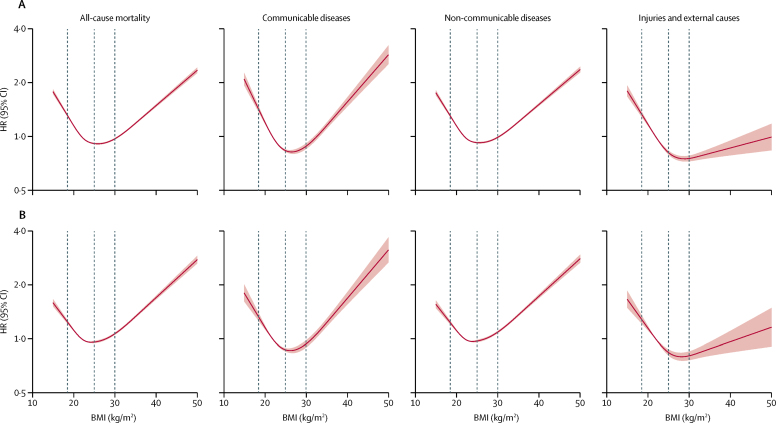
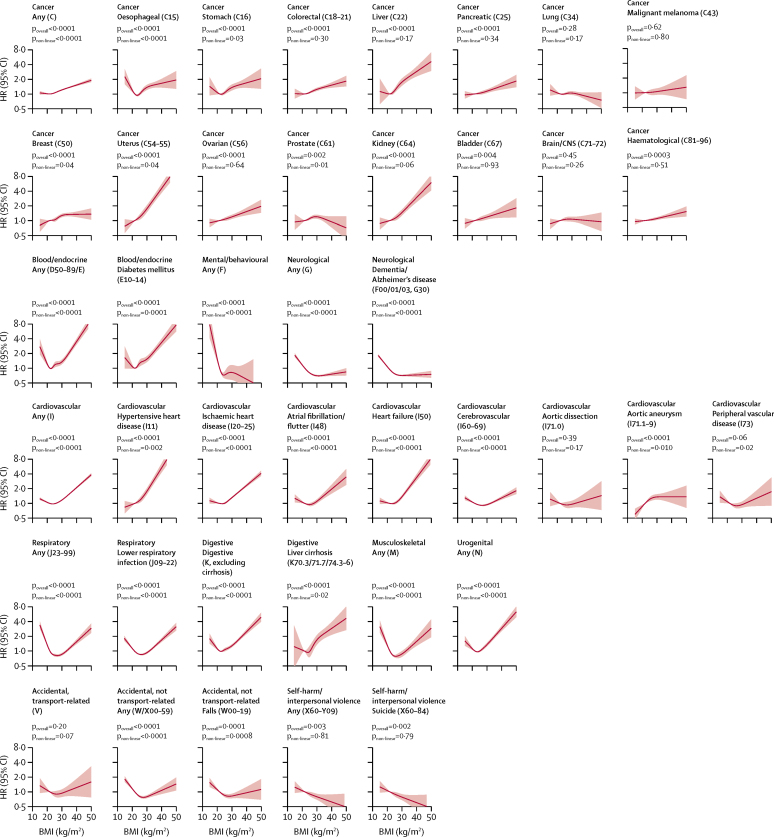
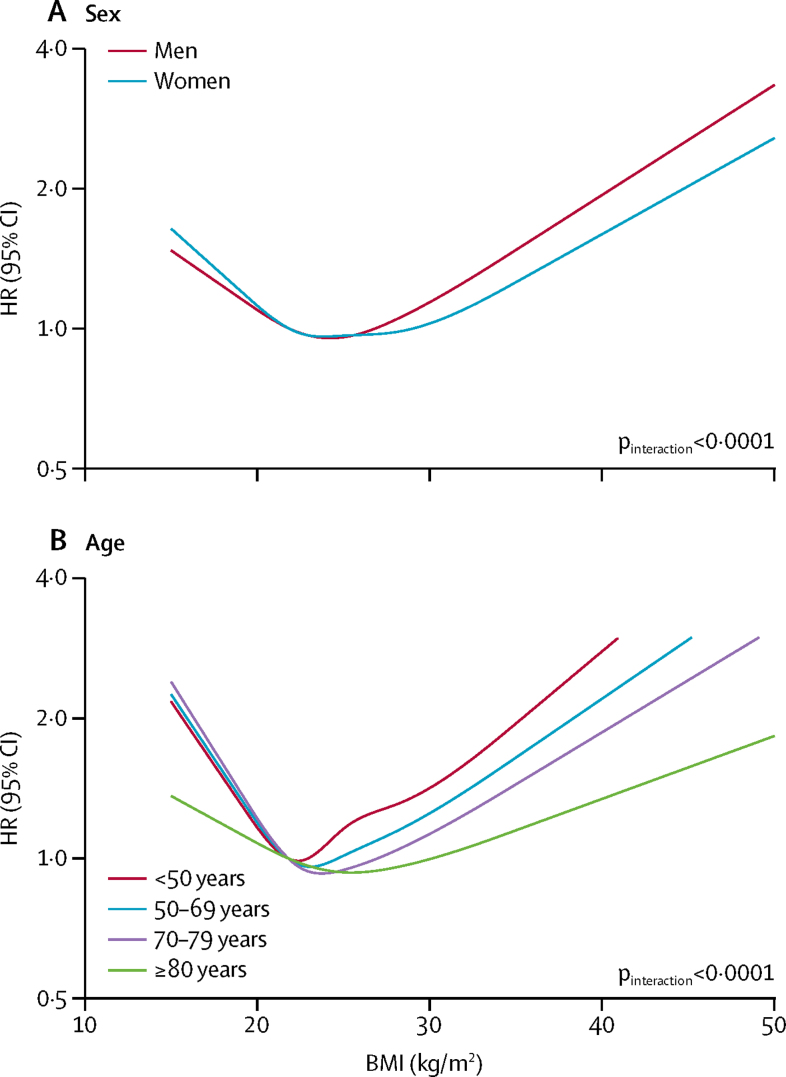
Background BMI is known to be strongly associated with all-cause mortality, but few studies have been large enough to reliably examine associations between BMI and a comprehensive range of cause-specific mortality outcomes. Methods In this population-based cohort study, we used UK primary care data from the Clinical Practice Research Datalink (CPRD) linked to national mortality registration data and fitted adjusted Cox regression models to examine associations between BMI and all-cause mortality, and between BMI and a comprehensive range of cause-specific mortality outcomes (recorded by International Classification of Diseases, 10th revision [ICD-10] codes). We included all individuals with BMI data collected at age 16 years and older and with subsequent follow-up time available. Follow-up began at whichever was the latest of: start of CPRD research-standard follow up, the 5-year anniversary of the first BMI record, or on Jan 1, 1998 (start date for death registration data); follow-up ended at death or on March 8, 2016. Fully adjusted models were stratified by sex and adjusted for baseline age, smoking, alcohol use, diabetes, index of multiple deprivation, and calendar period. Models were fitted in both never-smokers only and the full study population. We also did an extensive range of sensitivity analyses. The expected age of death for men and women aged 40 years at baseline, by BMI category, was estimated from a Poisson model including BMI, age, and sex. Findings 3 632 674 people were included in the full study population; the following results are from the analysis of never-smokers, which comprised 1 969 648 people and 188 057 deaths. BMI had a J-shaped association with overall mortality; the estimated hazard ratio per 5 kg/m 2 increase in BMI was 0·81 (95% CI 0·80–0·82) below 25 kg/m 2 and 1·21 (1·20–1·22) above this point. BMI was associated with all cause of death categories except for transport-related accidents, but the shape of the association varied. Most causes, including cancer, cardiovascular diseases, and respiratory diseases, had a J-shaped association with BMI, with lowest risk occurring in the range 21–25 kg/m 2 . For mental and behavioural, neurological, and accidental (non-transport-related) causes, BMI was inversely associated with mortality up to 24–27 kg/m 2 , with little association at higher BMIs; for deaths from self-harm or interpersonal violence, an inverse linear association was observed. Associations between BMI and mortality were stronger at younger ages than at older ages, and the BMI associated with lowest mortality risk was higher in older individuals than in younger individuals. Compared with individuals of healthy weight (BMI 18·5–24·9 kg/m 2 ), life expectancy from age 40 years was 4·2 years shorter in obese (BMI ≥30·0 kg/m 2 ) men and 3·5 years shorter in obese women, and 4·3 years shorter in underweight (BMI <18·5 kg/m 2 ) men and 4·5 years shorter in underweight women. When smokers were included in analyses, results for most causes of death were broadly similar, although marginally stronger associations were seen among people with lower BMI, suggesting slight residual confounding by smoking. Interpretation BMI had J-shaped associations with overall mortality and most specific causes of death; for mental and behavioural, neurological, and external causes, lower BMI was associated with increased mortality risk. Funding Wellcome Trust.
Overview
The claims and statistics of this paper haven’t been checked yet.
Free: it reads the open-access text and checks the first 5 claims that cite a source we can check. Create a free account to check every claim.
Integrity signals
Registry
Cites
Statistics
Figures
Verification
Claims the paper makes
The claims and statistics of this paper haven’t been checked yet.
Free: it reads the open-access text and checks the first 5 claims that cite a source we can check. Create a free account to check every claim.
Claims other papers make about this one
Each is checked against this paper’s own text: does it say what the citing paper says it does?
The cited source says what the claim attributes to it.
In the citing paper
“As a chronic disease, obesity increases cardiometabolic risk [1] and ultimately confers an increased risk of premature mortality [2,3].”
In the citing paper
“Furthermore, several prospective studies reported a J-shaped association between BMI and both all-cause and cardiovascular mortality (73, 74).”
From Health Consequences of Sarcopenic Obesity: A Narrative Review (2020) · cites this paper as [74]
Self-check
Percentages, sums and reported differences re-computed from the paper’s own numbers.
The self-check needs the paper’s full text.
Citations
Cites
(2000) · PubMed · Cited by 13,173
The metabolic phenotype in obesity: Fat mass, body fat distribution, and adipose tissue function
Goossens, G. H. (2017) · Obesity Facts · doi:10.1159/000471488 · Cited by 8,481
Health effects of overweight and obesity in 195 countries over 25 years
Collaborators, T. G. 2. O. (2017) · New England Journal of Medicine · doi:10.1056/nejmoa1614362 · Cited by 7,918
Prospective Studies Collaboration (2009) · The Lancet · doi:10.1016/s0140-6736(09)60318-4 · Cited by 4,807
Flegal, K. M., Kit, B. K., Orpana, H., & Graubard, B. I. (2013) · JAMA · doi:10.1001/jama.2012.113905 · Cited by 3,998
Di Angelantonio, E., Bhupathiraju, S. N., Wormser, D., Gao, P., Kaptoge, S., de Gonzalez, A. B., Cairns, B. J., Huxley, R., Jackson, C. L., Joshy, G., et al. (2016) · The Lancet · doi:10.1016/s0140-6736(16)30175-1 · Cited by 2,821
Data Resource Profile: Clinical Practice Research Datalink (CPRD)
Herrett, E., Gallagher, A. M., Bhaskaran, K., Forbes, H., Mathur, R., van Staa, T., & Smeeth, L. (2015) · International Journal of Epidemiology · doi:10.1093/ije/dyv098 · Cited by 2,667
Self-citationBody-mass index and mortality among 1.46 million white adults
Berrington de Gonzalez, A., Hartge, P., Cerhan, J. R., Flint, A. J., Hannan, L., MacInnis, R. J., Moore, S. C., Tobias, G. S., Anton-Culver, H., Freeman, L. B., et al. (2010) · New England Journal of Medicine · doi:10.1056/nejmoa1000367 · Cited by 2,317
The use of fractional polynomials to model continuous risk variables in epidemiology
Royston, P., Ambler, G., & Sauerbrei, W. (1999) · International Journal of Epidemiology · doi:10.1093/ije/28.5.964 · Cited by 1,066
Research works printed but not linked: 1
- Gallagher A Puri S Staa T Linkage of the General Practice Research Database (GPRD) with other data sources Pharmacoepidemiol Drug Saf 20 2011 S230 (abstr).
Cited by
Items 901–1,000 of 1,001
Coelho‐Júnior, H. J., Calvani, R., Russo, A., Landi, F., & Marzetti, E. (2025) · Frontiers in Nutrition · doi:10.3389/fnut.2025.1585310 · Cited by 2
Bermingham, C. R., Ayoubkhani, D., Zaccardi, F., Coulman, K. D., Valabhji, J., Khunti, K., Pournaras, D. J., Santos, R., Islam, N., Razieh, C., et al. (2026) · International Journal of Obesity · doi:10.1038/s41366-025-01995-z · Cited by 2
Stenberg, E., Sundbom, M., Hedberg, S., Ottosson, J., & Näslund, E. B. (2026) · Surgery for Obesity and Related Diseases · doi:10.1016/j.soard.2026.03.012 · Cited by 2
Luo, X., Cai, B., & Jin, W.-W. (2025) · Frontiers in Cardiovascular Medicine · doi:10.3389/fcvm.2025.1610257 · Cited by 2
Sevild, C. H. (2021) · NVA (Nasjonalt vitenarkiv) · Cited by 2
Gustatory dysfunction is associated with increased mortality Among US adults
Yu, S. E., Mitchell, M. B., Zou, J., Banerjee, M., Chiang, S., Bergmark, R. W., Maxfield, A. Z., Roditi, R. E., Fleet, S. E., Pinto, J. M., et al. (2025) · Chemical Senses · doi:10.1093/chemse/bjaf037 · Cited by 2
Zhang, F., Mao, L., Zhou, X., Zhang, G., Guo, Z., Cheng, G., Qu, R., Deng, Z., Li, W., Tang, L., et al. (2025) · Scientific Reports · doi:10.1038/s41598-025-16470-y · Cited by 2
“36 .”
Tagesklinische Versorgungsstruktur zur Komplextherapie der Adipositas III°
Seoudy, A. K., Beckmann, A., Wietzke, P., Settgast, U., Ziegenbruch, U., Türk, K., Hartmann, K., Brandes, J., Schulte, D. M., Wehkamp, K., et al. (2021) · Diabetologie und Stoffwechsel · doi:10.1055/a-1482-8115 · Cited by 2
“[13] Bhaskaran K, Dos-Santos-Silva I, Leon DA et al.”
BackgroundKim, K., Jung, J., Um, Y. H., Ahn, Y., Ko, S., Han, K., & Yun, J. (2025) · Diabetology & Metabolic Syndrome · doi:10.1186/s13098-024-01559-7 · Cited by 2
Betzler, B. K., Rim, T. H., Cheung, C. Y.-L., Wong, T. Y., & Cheng, C. (2023) · Springer eBooks · doi:10.1007/978-3-031-24052-2_16 · Cited by 2
CADTH (2023) · Canadian Journal of Health Technologies · doi:10.51731/cjht.2023.804 · Cited by 2
Dynamic regulation of circulating endotrophin by changes in fat mass in humans
Fernández‐Verdejo, R., Bu, D., Zhang, N., An, Z., Ravussin, É., & Scherer, P. E. (2026) · Metabolism · doi:10.1016/j.metabol.2026.156679 · Cited by 2
Healthy self-interest? Health dependent preferences for fairer health care
Antonini, M., & Costa‐Font, J. (2025) · Journal of Economic Behavior & Organization · doi:10.1016/j.jebo.2025.107337 · Cited by 2
Weight or metabolism: which deserve more attention in obesity?
Zhu, B., Gusdon, A. M., & Qu, S. (2018) · Annals of Translational Medicine · doi:10.21037/atm.2018.12.37 · Cited by 2
Morales, J. C., Smith, K. E., & Mason, T. B. (2025) · Body Image · doi:10.1016/j.bodyim.2025.101891 · Cited by 2
Kushner, R. F., Ard, J. D., Wadden, T. A., O'Neil, P. M., Bays, H. E., Greenway, F. L., Jakicic, J. M., Wyatt, H. R., Kenan, Y., Asaraf, L. C., et al. (2025) · International Journal of Obesity · doi:10.1038/s41366-025-01910-6 · Cited by 2
“…disease, has tripled over the last few decades, and is associated with numerous complications [1 – 3], including increased occurrence of multi-morbidity, e.g., hypertension, cardiovascular disease, type 2 diabetes, certain cancers, obstructive sleep apnea, and musculoskeletal conditions [4, 5].”
Víctor de la, O., de Cuevillas, B., Henkrich, M. M., Vizmanos-Lamotte, B., Núñez-García, M., Sajoux, I., de Luis, D. A., & Martínez, J. A. (2025) · Journal of Personalized Medicine · doi:10.3390/jpm15060251 · Cited by 2
“Moreover, strong and long-standing associations exist between excessive body weight and all-cause mortality [5].”
InfluentialSleep Duration, Mortality, and High-Risk Populations: A Nationwide Study in the United States
Kim, M., Lee, H. S., Ahn, S., & Lee, W. (2024) · Journal of Sleep Medicine · doi:10.13078/jsm.240021 · Cited by 2
Koltun, K. J., Forse, J. N., Feigel, E. D., Tiede, D., Kargl, C. K., Steele, E. J., Bird, M. B., Lovalekar, M. T., Martin, B. J., & Nindl, B. C. (2025) · Medicine & Science in Sports & Exercise · doi:10.1249/mss.0000000000003918 · Cited by 2
Metabolic Health and Carotid Intima-Media Thickness: Association of Different Definitions in Women
Magri, C. J., Xuereb, S., Xuereb, R. A., & Fava, S. (2023) · The American Journal of Cardiology · doi:10.1016/j.amjcard.2023.08.003 · Cited by 2
Du, J., Zhao, W., Liu, Y., Li, S., Zhang, Z., Zhou, Y., Sun, W., Ai, H., Nie, S., & Gong, W. (2025) · Nature and Science of Sleep · doi:10.2147/nss.s520901 · Cited by 2
“29,30 A prospective study in the United States found that overweight and obese participants in early adulthood (age 21) had a 19% and 64% higher mortality rate, respectively, than normal-weight individuals.”
Zheng, X., Tian, C., Xu, G., Du, D., Zhang, N., Wang, J., Sang, Q., Wuyun, Q., Chen, W., Lian, D., et al. (2024) · The American Surgeon · doi:10.1177/00031348241241621 · Cited by 2
Yagi, T., Alam, S., Niti, S. I., Pardue, S., Shen, X., Glawe, J. D., Kolluru, G. K., Tanaka, T., & Kevil, C. G. (2026) · Redox Biology · doi:10.1016/j.redox.2026.104066 · Cited by 2
Maejima, Y., Yokota, S., Yamachi, M., Misaka, S., Ono, T., Oizumi, H., Mizuno, K., Hidema, S., Nishimori, K., Aoyama, M., et al. (2024) · Frontiers in Endocrinology · doi:10.3389/fendo.2024.1387964 · Cited by 2
Lu, A., Yu, F., Tan, X., Jin, X., Wang, X., & Wu, W. (2024) · Clinical Interventions in Aging · doi:10.2147/cia.s445378 · Cited by 2
A Life Course Approach to Body Weight
Hardy, R., & Howe, L. D. (2023) · Oxford University Press eBooks · doi:10.1093/oso/9780192864642.003.0016 · Cited by 2
Celander, J., Engström, M., Höskuldsdóttir, G., Lenér, F., Simons, K., Wallenius, V., Eliasson, B., Hedberg, S., & Mossberg, K. (2025) · Nutrition Metabolism and Cardiovascular Diseases · doi:10.1016/j.numecd.2025.104521 · Cited by 2
Georgia, T., Stavrou, G., Papakostas, P., Pyankova, G., & Kotzampassi, K. E. (2021) · Obesity Surgery · doi:10.1007/s11695-021-05530-7 · Cited by 2
Li, S., Huang, B., Liu, M.-L., Cui, X.-T., Cao, Y., & Gao, Z. (2022) · Frontiers in Endocrinology · doi:10.3389/fendo.2022.806807 · Cited by 2
“Additive interaction analysis was used to verify the relationship between gender (male or female) and leu (in 2 groups by RCS cutoff) for DR (38, 39).”
MethodCheng, H., Chen, J., Li, Y.-F., Li, Y., Chunfung, T. S. E., Shen, B., Li, S., Chen, Q., Tang, L., Mai, H., et al. (2025) · British Journal of Cancer · doi:10.1038/s41416-025-03033-1 · Cited by 2
“Given the outstanding fl exibility for fi tting risk function changes and adjustment for confounding factors, the RCS has been widely applied to survival analysis [29 – 31].”
Association between sleep duration and cardiovascular disease specific mortality: A meta-analysis
Ye, F., Liu, J., Zhang, S., & Han, X. (2022) · Neurology Asia · doi:10.54029/2022yry · Cited by 2
Kojima, S., Usui, N., Shigetake, M., Uehata, A., Inatsu, A., Ando, S., Matsuzawa, R., Suzuki, Y., Nakata, J., Tsuchiya, T., et al. (2023) · Nephrology Dialysis Transplantation · doi:10.1093/ndt/gfad169 · Cited by 2
Epidemiology and yearly trend of obesity and overweight in primary care in Italy
Lapi, F., Marconi, E., Medea, G., Grattagliano, I., Rossi, A., & Cricelli, C. A. (2025) · Internal and Emergency Medicine · doi:10.1007/s11739-025-03870-1 · Cited by 2
Chen, H., Xiang, W., Yan, K.-K., Huang, Y., Qin, Z., Li, Z., Wang, X., & Zhang, J. (2026) · Scientific Reports · doi:10.1038/s41598-025-34748-z · Cited by 2
“If a non-linear association was observed between TyG index and frailty transition, such as a U, J, L-, reverse J, or reverse L-shaped pattern, a two-line piecewise linear model with a single change point was applied to explore the TyG index cut-off value with the highest likelihood 27,28 .”
Overweight/obesity among health professionals and associated factors
de Pinho, S., de PINHO, L., Silva, C. S. D. O. E., da Silva, R. F., Pereira, V. G., dos Santos, S. P., Soares, M. A. M., & Barbosa, D. A. (2025) · Revista Brasileira de Enfermagem · doi:10.1590/0034-7167-2024-0254 · Cited by 2
“These findings are consistent with those of a population-based cohort study in the United Kingdom, which showed that the association between BMI and mortality was stronger in adults younger than 50 years (26) .”
Guo, J., Dove, A. E., Shang, Y., Marseglia, A., Johnell, K., Rizzuto, D., & Xu, W. (2023) · The Journals of Gerontology Series A · doi:10.1093/gerona/glad111 · Cited by 2
“Furthermore, in a population-based cohort study from the United Kingdom, the nadir of all-cause mortality risk was 25 kg/m 2 among adults aged ≥70 years (37).”
BackgroundCavder, U., Ayçiçek, B., Diri, H., Uzun, M., Araç, E., Silahtar, O. H., & Demir, N. (2025) · Annals of Nutrition and Metabolism · doi:10.1159/000546273 · Cited by 2
“In contrast, conditions such as malnutrition, cancer, chronic obstructive pulmonary disease, and heart failure, which also lead to low BMI, are strongly linked to increased cardiovascular risks [6 – 9].”
Zhong, M., Liu, C.-N., & Chen, Y. (2026) · Reviews in Cardiovascular Medicine · doi:10.31083/rcm46650 · Cited by 2
“Elevated BMI, WC, and BRI are linked to a higher risk of cardiovascular mortality [ 24–26].”
Pastorino, R., Marafon, D. P., Hoxhaj, I., Grossi, A., Giraldi, L., Rondinò, A., Cadoni, G., Polesel, J., Serraino, D., Vecchia, C. L., et al. (2024) · American Journal of Cancer Research · doi:10.62347/uuxk7608 · Cited by 2
DeStephanis, D., Long, M., Williams, A. G., Santiago, M., Tonkin, J., Stevens, C., Davis, M. A., Ruggiero, A. D., Henstridge, D. C., Premilovac, D., et al. (2025) · Obesity · doi:10.1002/oby.24221 · Cited by 2
“There is even controversial evidence that the lowest population mortality risk is shifting toward a higher BMI than the historical ideal and that the association of mortality and BMI is predominantly explained by an individual ’ s metabolic health and inflammatory status [26,27].”
Intestinal imbalance in young people as a marker of chronic somatic diseases
Chervinets, V. M., Chervinets, Y. V., & Kravchuk, E. S. (2022) · Экспериментальная и клиническая гастроэнтерология · doi:10.31146/1682-8658-ecg-200-4-153-159 · Cited by 2
Musa, H. R., Musa, A. R., Muhammed, Y. G., Batagarawa, U. S., & Ibrahim, A. (2024) · BioMed Target Journal · doi:10.59786/bmtj.223 · Cited by 2
Pérdida de peso y los adultos mayores: Riesgos y beneficios
Gans, W., Savelle, R. L., Gal, N. J., Dahl, W. J., & Rivero‐Mendoza, D. (2020) · EDIS · doi:10.32473/edis-fs414-2020 · Cited by 2
Prinz, A. L., & Richter, D. J. (2022) · European Journal of Environment and Public Health · doi:10.29333/ejeph/12681 · Cited by 2
Zhang, Y., Li, S., Mai, P., Su, Q., GAO, M., Zeng, K., Tong, C., Zhang, K., & Huang, H. (2026) · BioData Mining · doi:10.1186/s13040-026-00520-w · Cited by 2
“Displays restricted cubic spline (RCS) curves with 4 knots to test nonlinear relationships between independent variables and outcomes [35, 36] and to estimate the optimal independent variable values for the most accurate osteoporosis.”
Health Implications of the Nutritional Status of Indian AdultsPreprint
Chaurasia, A. R. (2020) · medRxiv · doi:10.1101/2020.06.17.20134338 · Cited by 2
Mohatar Barba, M. (2025) · Institutional Repository of the University of Granada (University of Granada) · Cited by 2
Assessment of people living with obesity
Murphy, A., Diab, P. N., Goedecke, J. H., Conradie-Smit, M., & May, W. (2025) · South African Medical Journal · doi:10.7196/samj.2025.v115i9b.3730 · Cited by 2
The link between long-term nut consumption and health outcomes: A hard nut to crack?
Eslami, O., & Shidfar, F. (2020) · EXCLI journal · doi:10.17179/excli2020-2640 · Cited by 2
Hao, Q.-Y., Weng, J., Zeng, T.-T., Zeng, Y. H., Guo, J., Li, S., Chen, Y., Yang, P., Gao, J., & Li, Z. H. (2025) · European Journal of Nutrition · doi:10.1007/s00394-025-03649-2 · Cited by 2
“BMI was calculated as weight divided by the square of height (kg/m²), with a BMI threshold of ≥ 30 kg/m 2 commonly used to define obesity in Western populations [ 30 ].”
Ethics of Using Social Media for Learning: Encouraging Appreciation and Responsibility
Erwin, E., & Dakhalan, A. M. (2024) · Scientechno Journal of Science and Technology · doi:10.70177/scientechno.v3i2.1355 · Cited by 2
“Do not add to the grief of the victims’ families by uploading violent fhoto (Bhaskaran et al., 2018; Islam et al., 2020).”
BackgroundTan, L., & Shin, S. (2025) · Public Health Nutrition · doi:10.1017/s1368980025000357 · Cited by 2
“They found BMI had a J-shaped association with overall mortality and most causes of death, with lowest risk at 21 – 25 kg/m 2(11) .”
Le, H. T., da Silva, M., Bennet, L., Elhakeem, A., Häggström, C., Sun, M., Mboya, I. B., Wahlström, J., Michaëlsson, K., Sandin, S., et al. (2026) · EClinicalMedicine · doi:10.1016/j.eclinm.2026.103870 · Cited by 2
“1 Studies on cause-specific mortality have typically relied on once-measured body mass index (BMI), 2–5 which does not capture dynamic changes in body weight over time.”
Monacis, D., Giusi, G., & Colella, D. (2022) · Giornale italiano della ricerca educativa · doi:10.7346/sird-012022-p61 · Cited by 2
Adipose Tissue Homeostasis in Health and Disease
Cassidy, F. C. (2024) · IntechOpen eBooks · doi:10.5772/intechopen.12358 · Cited by 2
Efficacité, sécurité et coût-efficacité de La chirurgie de l’obésité
Louwagie, P., Neyt, M., Dossche, D., Camberlin, C., ten Geuzendam, B., den Heede, K. V., & Brabant, H. V. (2019) · doi:10.57598/r316bs · Cited by 2
Prevalence of cardiometabolic diseases in underweight: a nationwide cross-sectional study
Chen, M., Shi, S., Wang, S., Huang, Y., Zhou, F., & Zhong, V. W. (2024) · British Journal Of Nutrition · doi:10.1017/s0007114524002885 · Cited by 3
Silva, M. (2022) · Revista de Educação Física / Journal of Physical Education · doi:10.37310/ref.v91i1.2813 · Cited by 2
Ngeyvijit, J., Payackpunth, C., Saengmongkonpipat, P., Pinsai, S., Rodrigues, A., & Phoophiboon, V. (2025) · PLoS neglected tropical diseases · doi:10.1371/journal.pntd.0013222 · Cited by 2
García, I. B. (2020) · Repositorio de Patentes de la Universidad de Almería (Universidad de Almería) · Cited by 2
Wang, W.-C., Wu, Y.-C., Lin, Y.-H., Lin, Y.-T., Chen, K.-H., Pan, C.-C., Wang, J., & Lee, C.-H. (2022) · Journal of Clinical Medicine · doi:10.3390/jcm11216519 · Cited by 2
“In a large population-based cohort study [13], a higher risk of musculoskeletal disease mortality was observed in people with a BMI < 24 (95% CI 24 to 25) kg/m2, the cut-off point considered the upper limit of normal [14].”
BackgroundHuang, J.-Y., Huang, C., Ko, C., Chien, K., & Wu, Y. (2025) · Academic Radiology · doi:10.1016/j.acra.2025.08.046 · Cited by 2
Lanuza, F., Diaz‐Toro, F., Troncoso-Pantoja, C., Leiva, A. M., Nazar, G., Concha‐Cisternas, Y., Martorell, M., Labraña, A. M., Parra-Soto, S. L., Ramírez‐Alarcón, K., et al. (2024) · Salud Pública de México · doi:10.21149/15520 · Cited by 2
Descent of Fetal Head into The Pelvic Inlet in Primigravida: Systematic Review
Sihotang, I. M., Sitepu, M., & Rusda, M. (2021) · Sumatera Medical Journal · doi:10.32734/sumej.v4i2.5845 · Cited by 2
Obesity grade I: a study of real clinical practice in the Russian Federation
Strizheletskiy, V. V., Gomon, Y. М., Spichakova, E. A., Gusev, A. V., Karginova, N. V., Колбин, А. С., Temnikov, I. O., Livshits, M. V., & Budanov, D. S. (2024) · Medical Technologies Assessment and Choice · doi:10.17116/medtech20244601183 · Cited by 2
The Financial Toll of BMI on Health Services: A Comparative Cost Assessment Using Big Data
Brankovic, A., & Samed, J. (2024) · Journal of Applied Science and Education (JASE) · doi:10.54060/a2zjournals.jase.46 · Cited by 2
Withdrawn as duplicate: Weight and mortality: why body composition matters
Odegaard, A., & Manson, J. E. (2021) · American Journal of Clinical Nutrition · doi:10.1093/jn/nqaa409 · Cited by 2
Wei, Y., Wang, Y., Li, H., Wang, C.-J., Liu, S., Huang, Z., Wang, G., Tao, Y., & Xia, Y. (2022) · Frontiers in Oncology · doi:10.3389/fonc.2022.892510 · Cited by 2
Risydianto, M. N., Siswandari, & Riyadi, S. (2024) · Advances in Health and Exercise · Cited by 2
Barrioni, C. M. S., Santos, M. D. A., Oliveira, R. D. L., Gonçalves, P. R., de Souza, V. G., Pereira, D. N. A., do Amaral, D. A., & Gregório, É. L. (2021) · Brazilian Journal of Health Review · doi:10.34119/bjhrv4n1-105 · Cited by 2
Bhandari, K. R., Pachhai, D. B., Parajuli, S., Kandel, K., & Upadhyay, H. P. (2022) · Journal of Lumbini Medical College · doi:10.22502/jlmc.v10i1.475 · Cited by 2
Can we trust observational data for clinical decision-making?
Nissen, S. E., & Reed, G. W. (2018) · European Heart Journal · doi:10.1093/eurheartj/ehy874 · Cited by 2
Chen, E. (2022) · Open University of Cape Town (University of Cape Town) · Cited by 2
Andersen, E., Bøhler, L., Leirbakk, M. J., Cabral, D., Wedegren, M. C., Wieland, M. L., Meyer, H. E., & Madar, A. A. (2025) · BMC Public Health · doi:10.1186/s12889-025-22475-z · Cited by 1
“PA plays a pivotal role in the prevention and management of overweight and obesity [12], conditions strongly linked to the risk of T2D [13], cardiovascular diseases (CVDs) [14, 15], and overall mortality [16].”
Muthukkumar, R., Haudenschild, C., Spangler, H., MacKenzie, T. A., Lynch, D. H., & Batsis, J. A. (2025) · Journal of the American Geriatrics Society · doi:10.1111/jgs.19608 · Cited by 1
Santana, N. M. T., & Leite, F. M. C. (2025) · Frontiers in Public Health · doi:10.3389/fpubh.2025.1588877 · Cited by 1
“Obesity reduces healthy life years, increases mortality, and represents a growing economic burden on health (14).”
InfluentialXu, W., Xiang, Y., Liu, B., Yan, J., Zhang, T., Yu, W., Han, J., & Meng, S. (2025) · Frontiers in Cardiovascular Medicine · doi:10.3389/fcvm.2025.1459411 · Cited by 1
Hygiene, J. O. P. M. A. (2020) · Europe PMC (PubMed Central) · doi:10.15167/2421-4248/jpmh2019.60.4s3 · Cited by 1
Sorensen, J., West, M. M., Robinson, K. M., Charlton, M. E., Lizarraga, I. M., & Nash, S. H. (2025) · Cancer Medicine · doi:10.1002/cam4.70823 · Cited by 1
LEWIS, G. A., Hughes, D. M., Irving, G. J., Wilding, J. P. H., & Hardy, K. J. (2025) · Diabetes Obesity and Metabolism · doi:10.1111/dom.16257 · Cited by 1
“Age, 22,23 age at diagnosis and diabetes duration 22,24 – 26 are the most important predictors of one-year mortality in type 2 diabetes.”
Evaluation of a 3-Item Health Index in Predicting Mortality Risk: A 12-Year Follow-Up Study
Knight, S. P., Ward, M. D., Duggan, E., Feng, X., Kenny, R. A., & Romero‐Ortuño, R. (2023) · Diagnostics · doi:10.3390/diagnostics13172801 · Cited by 2
“To account for the likely nonlinear relationship between BMI and mortality [54], BMI was categorized into four groups based on the World Health Organization (WHO) guidelines [55]: ‘underweight/normal’ (BMI < 25), ‘overweight’ (25 ≤ BMI < 30), ‘obese’ (30 ≤ BMI < 35), and ‘morbidly obese’ (BMI ≥ 35).”
MethodOptimizing the pathological diagnosis of diffuse malignant peritoneal mesothelioma
Nava, F. L., Kusamura, S., Shimonovitz‐Moore, M., Cavalleri, T., Baratti, D., Guagliò, M., Cabras, A. D., Colletti, G., Deraco, M., & Milione, M. (2025) · European Journal of Surgical Oncology · doi:10.1016/j.ejso.2025.110377 · Cited by 1
Causal effects of body composition on lifespan: Mendelian randomization analysis
Jiesisibieke, Z. L., & Schooling, C. M. (2025) · International Journal of Obesity · doi:10.1038/s41366-025-01799-1 · Cited by 1
“Observationally, the role of adiposity has been extensively explored; commonly evaluated using body mass index (BMI) [1, 2].”
Meron, M. K., Koren‐Morag, N., & Oieru, D. (2024) · Obesity Facts · doi:10.1159/000542080 · Cited by 1
“These are chronic medical conditions associated with increased risk of morbidity and mortality [1].”
Weight loss content on TikTok and antifat attitudes
Salomon, I., Abruzzo, C., & Pensiero, S. (2025) · Journal of Gender Studies · doi:10.1080/09589236.2025.2552810 · Cited by 1
“Existing data suggests that the relationship between BMI and mortality is complex, and for some individuals, a lower BMI is more dangerous than a higher one (Bhaskaran et al., 2018; J. E. Winter et al., 2014).”
Peng, T., Liu, C., Yang, T., Liao, L., Li, Q., Liang, H., Zhang, J., Xie, C., Wang, W., & Li, C. (2025) · BMC Gastroenterology · doi:10.1186/s12876-025-03606-7 · Cited by 1
“Firstly, adjustment for BMI and age is essential, as both are significant predictors of both physical activity levels and mortality in individuals with metabolic diseases [30, 31].”
Bustamante-Rodríguez, J. C., Zuzunaga-Montoya, F. E., Ballena-Caicedo, J., Valladolid-Sandoval, L. A. M., Vásquez-Romero, L. E. M., Loayza-Castro, J. A., Carrillo, C. I. G. D., & Vera-Ponce, V. J. (2025) · Nutrición clínica y dietética hospitalaria/Nutrición clínica, dietética hospitalaria · doi:10.12873/451bustamante · Cited by 1
Impact of Supervised Exercised Training Before Bariatric Surgery on Body Composition
Cornu, E., Gaulier, C., Feret, E. L. R., Guilmain, M., Faure, C., Galeas, M., Hermann, J., Kidri, S., Gregam, E. L., Satizelle, T., et al. (2025) · Clinical Obesity · doi:10.1111/cob.70033 · Cited by 1
Colella, D., & Monacis, D. (2021) · European Journal of Physical Education and Sport Science · doi:10.46827/ejpe.v6i12.3691 · Cited by 1
Time trends of the association of body mass index with mortality in 3.5 million young Swedish adults
Mboya, I. B., Fritz, J., da Silva, M., Sun, M., Wahlström, J., Magnusson, P. K. E., Sandin, S., Yin, W., Söderberg, S., Pedersen, N. L., et al. (2024) · Annals of Epidemiology · doi:10.1016/j.annepidem.2024.07.043 · Cited by 1
“[3,12] However, age, sex, and different causes of death are all differently associated with BMI [6,8] but were not always fully accounted for in previous time-trend analyses.”
BackgroundMethodResultInfluential[Comparison of prediction ability of two extended Cox models in nonlinear survival data analysis].
Chen, Y., Wei, H., Pan, J., & An, S. (2023) · PubMed Central · doi:10.12122/j.issn.1673-4254.2023.01.10 · Cited by 1
Park, C., Kim, K., Kim, M., & Choi, J. Y. (2024) · PLoS ONE · doi:10.1371/journal.pone.0309061 · Cited by 1
Kawamoto, R., Kikuchi, A., Ninomiya, D., & Kumagi, T. (2023) · PLoS ONE · doi:10.1371/journal.pone.0292287 · Cited by 1
Selenoprotein P predicting mortallity in acute ill patients with dyspnea
Lindblom, V., Wessman, T., Wändell, P. E., Melander, O., Carlsson, A. C., & Ruge, T. (2025) · Archives of Gerontology and Geriatrics · doi:10.1016/j.archger.2025.105766 · Cited by 1
Рудень, В. В., & Hodor, O. (2024) · Lviv clinical bulletin · doi:10.25040/lkv2024.04.040 · Cited by 1
Shi, S., Chen, W., Deng, L., Chen, K., & Liao, Y. (2025) · American Journal of Hypertension · doi:10.1093/ajh/hpaf036 · Cited by 1
Monacis, D., & Colella, D. (2023) · IntechOpen eBooks · doi:10.5772/intechopen.104481 · Cited by 1
Obesitas chirurgie: is het werkzaam, veilig en kosteneffectief?
Louwagie, P., Neyt, M., Dossche, D., Camberlin, C., ten Geuzendam, B., den Heede, K. V., & Brabant, H. V. (2019) · doi:10.57598/r316as · Cited by 1
Islam, M. S., Shams, A. A., Akter, S., & Biswas, B. (2021) · Bangladesh Journal of Zoology · doi:10.3329/bjz.v49i2.56259 · Cited by 1
“Although a dominant trait, the expression of polydactyly in humans is relatively rare, diverse and heterogeneous (Biesecker, 2002; Fankhauser, 2006). This has been the case in the present survey, where 2.2% males and only 0.2% females were polydactylous. In a study conducted amongst the students of Delta State Univers…”
BackgroundResultInfluentialEpidemiologien ved svær overvægt og metabolisk syndrom
Gribsholt, S. B., & Bruun, J. M. (2022) · Cited by 1
Metadata
- Authors
- Bhaskaran, K., dos-Santos-Silva, I., Leon, D. A., Douglas, I. J., & Smeeth, L.
- Affiliations
- London School of Hygiene & Tropical Medicine (GB)
- Corresponding author
- Bhaskaran, Krishnan
- Venue
- The Lancet Diabetes & Endocrinology
- Publisher
- Elsevier BV
- Published
- 2018-12
- Volume
- 6
- Issue
- 12
- Pages
- 944-953
- ISSN
- 2213-8587 (ISSN-L)
- PMC
- PMC6249991
- OpenAlex
- W2898741363
- Semantic Scholar
- 2177d6543e914c435350504e6a3932ee247a32d0
- Cited by
- 1,228
- References
- 29
- Citations by year
- 2026: 104 · 2025: 231 · 2024: 208 · 2023: 159 · 2022: 179 · 2021: 170 · 2020: 119 · 2019: 52 · 2018: 6
- FWCI
- 82.58
- Type
- journal article
- Language
- en
- Open access
- hybrid
- doi.org
- Licence
- cc-by
- www.elsevier.com/tdm/userlicense/1.0/ (tdm)
- creativecommons.org/licenses/by/4.0/ (vor)
- Locations
- The Lancet Diabetes & Endocrinology (publishedVersion, cc-by)
- Europe PMC (PubMed Central) (publishedVersion, other-oa)
- PubMed Central (publishedVersion, cc-by)
- PubMed (publishedVersion)
- LSHTM Research Online (London School of Hygiene and Tropical Medicine) (acceptedVersion)
- NORA - Norwegian Open Research Archives (submittedVersion, other-oa)
- Funders
- Wellcome Trust and the Royal Society (grant number 107731/Z/15/Z)
- Topics
- Health Sciences › Medicine › Public Health, Environmental and Occupational Health › Obesity, Physical Activity, Diet
- Health Sciences › Medicine › Oncology › Cancer Risks and Factors
- Health Sciences › Medicine › Endocrinology, Diabetes and Metabolism › Diabetes, Cardiovascular Risks, and Lipoproteins
- Keywords
- body mass index, all-cause mortality, cause-specific mortality, J-shaped association, obesity paradox, underweight, cancer mortality, cardiovascular mortality, respiratory mortality, mental and behavioral disorders, accidental death, never smokers, sex differences, UK adults, Clinical Practice Research Datalink
- MeSH terms
- Adolescent, Adult, Aged, Aged, 80 and over, Cause of Death, Female, Follow-Up Studies, United Kingdom, Humans, Male, Middle Aged, Mortality, Obesity, Prognosis, Prospective Studies, Body Mass Index, Survival Rate, Overweight, Young Adult
About these checks
Registry, retraction, Cites and statistics results are computed, not judged, with one exception: a printed reference that no index lists is read once by a model before it counts as a citation error. Claims are extracted by a model and kept only when their quote appears verbatim in the text; each cited source is then checked, with a model’s help, for whether it says what the claim relies on. Those verdicts can be wrong — read the claim’s quote and the cited source before relying on one.
Statistics and arithmetic are recomputed, not judged.
Confidence bands are shown only for fields calibrated on our annotated test set. None is calibrated yet, so no band is shown.
What counts as a claim ›How we measure confidence ›How we check this ›
Are you an author, or do you see a problem with this page? Request a review
Data sources
Bibliographic data: Semantic Scholar, OpenAlex, Crossref.
Contains information from the Semantic Scholar Academic Graph Datasets, made available under the ODC Attribution License (ODC-BY 1.0).
Semantic Scholar’s data is described in: Kinney, R., et al. (2023). The Semantic Scholar Open Data Platform. arXiv:2301.10140.
