

Association of BMI with overall and cause-specific mortality: a population-based cohort study of 3· 6 million adults in the UK
Open accessThe DOI matches its Crossref record; 27 of the 29 references it cites were found in a registry or an index.
Abstract
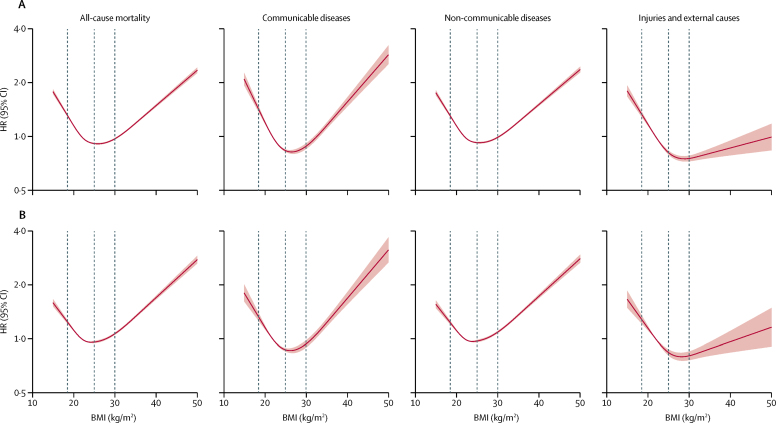
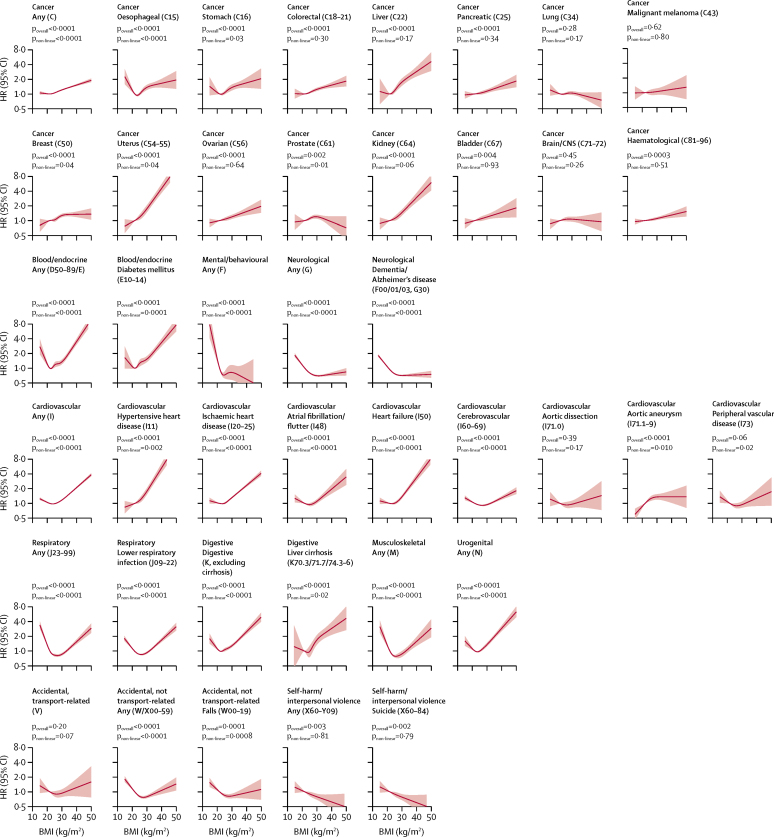
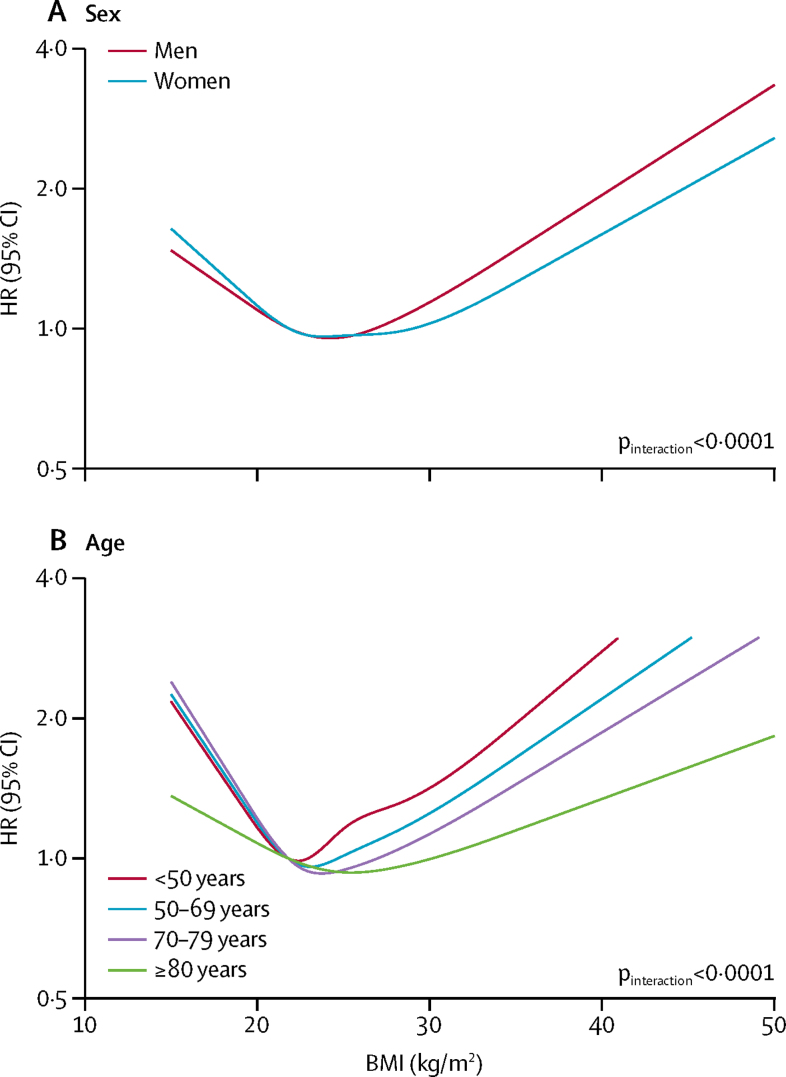
Background BMI is known to be strongly associated with all-cause mortality, but few studies have been large enough to reliably examine associations between BMI and a comprehensive range of cause-specific mortality outcomes. Methods In this population-based cohort study, we used UK primary care data from the Clinical Practice Research Datalink (CPRD) linked to national mortality registration data and fitted adjusted Cox regression models to examine associations between BMI and all-cause mortality, and between BMI and a comprehensive range of cause-specific mortality outcomes (recorded by International Classification of Diseases, 10th revision [ICD-10] codes). We included all individuals with BMI data collected at age 16 years and older and with subsequent follow-up time available. Follow-up began at whichever was the latest of: start of CPRD research-standard follow up, the 5-year anniversary of the first BMI record, or on Jan 1, 1998 (start date for death registration data); follow-up ended at death or on March 8, 2016. Fully adjusted models were stratified by sex and adjusted for baseline age, smoking, alcohol use, diabetes, index of multiple deprivation, and calendar period. Models were fitted in both never-smokers only and the full study population. We also did an extensive range of sensitivity analyses. The expected age of death for men and women aged 40 years at baseline, by BMI category, was estimated from a Poisson model including BMI, age, and sex. Findings 3 632 674 people were included in the full study population; the following results are from the analysis of never-smokers, which comprised 1 969 648 people and 188 057 deaths. BMI had a J-shaped association with overall mortality; the estimated hazard ratio per 5 kg/m 2 increase in BMI was 0·81 (95% CI 0·80–0·82) below 25 kg/m 2 and 1·21 (1·20–1·22) above this point. BMI was associated with all cause of death categories except for transport-related accidents, but the shape of the association varied. Most causes, including cancer, cardiovascular diseases, and respiratory diseases, had a J-shaped association with BMI, with lowest risk occurring in the range 21–25 kg/m 2 . For mental and behavioural, neurological, and accidental (non-transport-related) causes, BMI was inversely associated with mortality up to 24–27 kg/m 2 , with little association at higher BMIs; for deaths from self-harm or interpersonal violence, an inverse linear association was observed. Associations between BMI and mortality were stronger at younger ages than at older ages, and the BMI associated with lowest mortality risk was higher in older individuals than in younger individuals. Compared with individuals of healthy weight (BMI 18·5–24·9 kg/m 2 ), life expectancy from age 40 years was 4·2 years shorter in obese (BMI ≥30·0 kg/m 2 ) men and 3·5 years shorter in obese women, and 4·3 years shorter in underweight (BMI <18·5 kg/m 2 ) men and 4·5 years shorter in underweight women. When smokers were included in analyses, results for most causes of death were broadly similar, although marginally stronger associations were seen among people with lower BMI, suggesting slight residual confounding by smoking. Interpretation BMI had J-shaped associations with overall mortality and most specific causes of death; for mental and behavioural, neurological, and external causes, lower BMI was associated with increased mortality risk. Funding Wellcome Trust.
Overview
The claims and statistics of this paper haven’t been checked yet.
Free: it reads the open-access text and checks the first 5 claims that cite a source we can check. Create a free account to check every claim.
Integrity signals
Registry
Cites
Statistics
Figures
Verification
Claims the paper makes
The claims and statistics of this paper haven’t been checked yet.
Free: it reads the open-access text and checks the first 5 claims that cite a source we can check. Create a free account to check every claim.
Claims other papers make about this one
Each is checked against this paper’s own text: does it say what the citing paper says it does?
The cited source says what the claim attributes to it.
In the citing paper
“As a chronic disease, obesity increases cardiometabolic risk [1] and ultimately confers an increased risk of premature mortality [2,3].”
In the citing paper
“Furthermore, several prospective studies reported a J-shaped association between BMI and both all-cause and cardiovascular mortality (73, 74).”
From Health Consequences of Sarcopenic Obesity: A Narrative Review (2020) · cites this paper as [74]
Self-check
Percentages, sums and reported differences re-computed from the paper’s own numbers.
The self-check needs the paper’s full text.
Citations
Cites
(2000) · PubMed · Cited by 13,173
The metabolic phenotype in obesity: Fat mass, body fat distribution, and adipose tissue function
Goossens, G. H. (2017) · Obesity Facts · doi:10.1159/000471488 · Cited by 8,481
Health effects of overweight and obesity in 195 countries over 25 years
Collaborators, T. G. 2. O. (2017) · New England Journal of Medicine · doi:10.1056/nejmoa1614362 · Cited by 7,918
Prospective Studies Collaboration (2009) · The Lancet · doi:10.1016/s0140-6736(09)60318-4 · Cited by 4,807
Flegal, K. M., Kit, B. K., Orpana, H., & Graubard, B. I. (2013) · JAMA · doi:10.1001/jama.2012.113905 · Cited by 3,998
Di Angelantonio, E., Bhupathiraju, S. N., Wormser, D., Gao, P., Kaptoge, S., de Gonzalez, A. B., Cairns, B. J., Huxley, R., Jackson, C. L., Joshy, G., et al. (2016) · The Lancet · doi:10.1016/s0140-6736(16)30175-1 · Cited by 2,821
Data Resource Profile: Clinical Practice Research Datalink (CPRD)
Herrett, E., Gallagher, A. M., Bhaskaran, K., Forbes, H., Mathur, R., van Staa, T., & Smeeth, L. (2015) · International Journal of Epidemiology · doi:10.1093/ije/dyv098 · Cited by 2,667
Self-citationBody-mass index and mortality among 1.46 million white adults
Berrington de Gonzalez, A., Hartge, P., Cerhan, J. R., Flint, A. J., Hannan, L., MacInnis, R. J., Moore, S. C., Tobias, G. S., Anton-Culver, H., Freeman, L. B., et al. (2010) · New England Journal of Medicine · doi:10.1056/nejmoa1000367 · Cited by 2,317
The use of fractional polynomials to model continuous risk variables in epidemiology
Royston, P., Ambler, G., & Sauerbrei, W. (1999) · International Journal of Epidemiology · doi:10.1093/ije/28.5.964 · Cited by 1,066
Research works printed but not linked: 1
- Gallagher A Puri S Staa T Linkage of the General Practice Research Database (GPRD) with other data sources Pharmacoepidemiol Drug Saf 20 2011 S230 (abstr).
Cited by
Items 801–900 of 1,001
Logie, K., McKechnie, T., Talwar, G., Lee, Y., Parpia, S., Amin, N., Doumouras, A. G., Hong, D., & Eskicioglu, C. (2023) · Colorectal Disease · doi:10.1111/codi.16808 · Cited by 4
“A recent analysis including over 100 000 patients demonstrated that each incremental gain in BMI of 5 kg/m 2 was associated with a 13% increased risk of colorectal cancer [ 4 ].”
BackgroundMortality Risk of Low BMI in Life Insurance Applicants
Rigatti, S. J., & Stout, R. L. (2024) · Journal of Insurance Medicine · doi:10.17849/insm-51-1-8-16.1 · Cited by 4
Liu, W., Yan, X., Dong, Z., Su, Y., Ma, Y., Zhang, J., Diao, C., Qian, J., Tao, R., & Cheng, R. (2022) · Frontiers in Oncology · doi:10.3389/fonc.2022.855830 · Cited by 4
Rezende, L. F., Paiva, L. S., Paradela, S. N., Rettore, M. A., do Amaral, A. D., Jácome, G. P. O., & Mendes, N. B. D. E. S. (2020) · Revista Eletrônica Acervo Saúde · doi:10.25248/reas.e3685.2020 · Cited by 4
Lifestyle and Dietary Behaviors Are Associated with Body Mass Index in Romanian Young Adults
Crișan, D., Frumuzachi, O., Pașca, D., Gavrilaș, L., & Crișan, G. (2026) · Nutrients · doi:10.3390/nu18101644 · Cited by 3
“These trends translate into increased risks of type 2 diabetes, cardiovascular disease, several cancers, and premature mortality, highlighting the need to characterize modifiable behavioral risk factors at the population level [4–7].”
Lin, Y., Chen, Y., Liu, J., Li, M., Tang, Y., Zhao, J., & Zhang, Y. (2025) · Frontiers in Nutrition · doi:10.3389/fnut.2025.1617256 · Cited by 3
Ramos, M., Larsen, S., Fusco, F., Lamotte, M., & Capehorn, M. (2025) · Journal of Medical Economics · doi:10.1080/13696998.2025.2575692 · Cited by 3
“Furthermore, mortality was adjusted to higher levels of BMI with a specific hazard ratio 24 .”
Huo, Z., Chong, F., Luo, S., Tong, N., Lu, Z., Zhang, M., Liu, J., Xu, H., & Li, N. (2024) · Supportive Care in Cancer · doi:10.1007/s00520-024-09060-7 · Cited by 3
“By employing restricted cubic spline (RCS) methods, the potential nonlinear relationship between continuous cystatin C and serious postoperative complications was evaluated [38, 39].”
Sport and Fitness in Children and Adolescents - A Multidimensional View
Wachira, L.-J. M. (2022) · IntechOpen eBooks · doi:10.5772/intechopen.98108 · Cited by 3
Ljubičić, M., Sarić, M. M., Sorić, T., Sarić, A., Klarin, I., Dželalija, B., Medić, A., Dilber, I., Rumbak, I., Ranilović, J., et al. (2025) · PLoS ONE · doi:10.1371/journal.pone.0322454 · Cited by 3
“It is well documented that a higher BMI is generally correlated with an increased susceptibility to various health conditions, including DM, heart disease, and certain types of cancer [1,13,26,27].”
Weir (2020) · The Journal of Family Practice · doi:10.12788/jfp.0068 · Cited by 3
Recognition and Management of Hypoglycemia
Shubrook (2020) · The Journal of Family Practice · doi:10.12788/jfp.0069 · Cited by 3
Alarfaj, S. J., Ibrahim, A. A. M., Alshahrani, J., Alnuwaysir, M., Almutairi, A., & Alwahhabi, B. K. (2022) · Journal Of Advanced Pharmacy Education And Research · doi:10.51847/wav0cpt0bt · Cited by 3
Orozco‐Ruiz, X., & Kostev, K. (2025) · Diabetes Obesity and Metabolism · doi:10.1111/dom.70104 · Cited by 3
“11 9 – 11 However, some large population-based studies, including Bhaskaran et al. (2018), have reported that the lowest risk for all-cause mortality is found among overweight individuals, a phenomenon often referred to as the ‘ obesity paradox ’ .”
Association between pregnancy affected by vaginal bleeding and women's mortality: A cohort study
Dudukina, E., Horváth–Puhó, E., Sørensen, H. T., & Ehrenstein, V. (2023) · BJOG An International Journal of Obstetrics & Gynaecology · doi:10.1111/1471-0528.17623 · Cited by 3
“Lifestyle characteristics implicated as risk factors of both VB 6,60– 62 and mortality, are smoking 63– 65 and BMI 66,67 ; however, their availability in this study was limited to pregnancies ending in childbirth.”
BackgroundMahendraker, N., Gutierrez-Asis, E., Park, S., Williams, L. S., Schleyer, T., & Umberfield, E. E. (2024) · ACI Open · doi:10.1055/s-0044-1788652 · Cited by 3
He, X., Zhang, X., Mao, F., Yao, Y., Zhang, R., & Li, J. (2025) · Chinese Medical Journal · doi:10.1097/cm9.0000000000003900 · Cited by 3
Heald, A. H., Stedman, M., Warner-Levy, J. J., Whyte, M., Rutter, M. K., & Gibson, M. (2024) · Cardiovascular Endocrinology & Metabolism · doi:10.1097/xce.0000000000000310 · Cited by 3
“It is associated with an increased risk of developing long-term conditions such as type 2 diabetes, cardiovascular disease, hypertension, and a number of cancers, while also being associated with premature death [3].”
BackgroundCapehorn, M., Johansson, E., Davies, A., Evans, J., Godbeer, F., van Hest, N., Cotterill, G., & Tolley, K. H. (2025) · Advances in Therapy · doi:10.1007/s12325-025-03288-3 · Cited by 3
“For non-CV death, general population mortality was adjusted by excluding the mortality of obesity-related complications accounted for elsewhere in the model (e.g. fatal CV events and T2DM) and was BMI-specific given the independent association between BMI and mortality [34–36].”
Gomwe, H., Phiri, L., Marange, C. S., Matsha, T. E., & Kgoele, M. (2026) · International Journal of Environmental Research and Public Health · doi:10.3390/ijerph23030385 · Cited by 3
Possible selection bias in register-based obesity studies
Carlsson, L. M. S., Peltonen, M., Jacobson, P., Andersson‐Assarsson, J. C., Svensson, P., Taube, M., Karlsson, C., Ahlin, S., Kristensson, F. M., Perkins, R., et al. (2025) · European Journal of Epidemiology · doi:10.1007/s10654-025-01237-6 · Cited by 3
“[1, 2, 3] Bariatric surgery is an established treatment of obesity and results in large and maintained weight loss,[4 ] but its long-term effects on mortality have not been examined in large randomized controlled trials (RCTs).”
Cost-Utility Analysis of Metabolic Bariatric Surgery for Individuals with Obesity in Saudi Arabia
Nagi, M. A., Turongkaravee, S., Almalki, Z. S., Thavorncharoensap, M., Sangroongruangsri, S., Chaikledkaew, U., Alqahtani, A., AlSharif, L. S., Alsubaihi, I. A., Alzarea, A. I., et al. (2025) · ClinicoEconomics and Outcomes Research · doi:10.2147/ceor.s527169 · Cited by 3
Real‐World Effectiveness and Treatment Patterns of Tirzepatide in a Large UK Digital Health Cohort
Rosenior-Patten, O., Lees, Z., Rowe, R., Hussain, S., Ahmad, E., Brooke, E., Dix, S., & Maybury, C. M. (2026) · Diabetes Obesity and Metabolism · doi:10.1111/dom.71067 · Cited by 3
“Obesity is strongly associated with numerous comorbidities, including type 2 diabetes mellitus and cardiovascular disease [3], and with increased all-cause mortality [4].”
Deng, J., & Zhao, L. (2025) · PLoS ONE · doi:10.1371/journal.pone.0325452 · Cited by 3
“…nearly one-third of the global population now meets the WHO criteria for being overweight or obese [1, 2], Obesity has long been thought to be associated with an increased risk of numerous diseases, including hypertension, type 2 diabetes, coronary artery disease, stroke, and various cancers [3–6].”
Body composition and risk of heart failure: protocol for a systematic review and meta-analysis
Oguntade, A. S., Jin, D., Islam, N., Malouf, R. S., Taylor, H., Caleyachetty, R., Lewington, S., & Lacey, B. (2021) · Open Heart · doi:10.1136/openhrt-2021-001632 · Cited by 4
“21 The relationship between HF risk and measures of central adiposity, such as waist circumference or waist– hip ratio, has been less well studied than for BMI.”
Asai, T., Wakida, M., Kubota, R., Fukumoto, Y., Sato, H., Nakano, J., & Hase, K. (2021) · Geriatrics · doi:10.3390/geriatrics7010007 · Cited by 3
“Sex stro gly affects BMI; thus, the association of BMI with health outcomes would differ accordingly, as observed in a study showing an association between BMI and mortality [17,18].”
BackgroundProvider Advice and Patient Perceptions on Weight Across Five Health Systems
Jain, S., Rothenberger, S. D., Bennett, W. L., Clark, J. M., Conroy, M. B., Herring, S. J., Kraschnewski, J. L., Lent, M. R., Bramante, C. T., Cappella, N., et al. (2020) · American Journal of Preventive Medicine · doi:10.1016/j.amepre.2020.03.013 · Cited by 3
Obesity, Weight Loss and Cardiovascular Risk
Jamaly, S., Ali, M., & Talib, A. (2020) · Gothenburg University Publications Electronic Archive (Gothenburg University) · doi:10.13140/rg.2.2.11917.56808 · Cited by 3
Body mass index and colorectal cancer recurrence and mortality: A nationwide cohort study in Denmark
Hjorth, C. F., Olsen, M. H., Ulrichsen, S. P., Nors, J., Wheler, J., Borgquist, S., Iversen, L. H., Dalton, S. O., & Cronin-Fenton, D. P. (2025) · International Journal of Cancer · doi:10.1002/ijc.70248 · Cited by 3
“4,31 The contrasting highest mortality among patients with underweight observed in our study may reflect advanced age, stage, comorbidities or frailty, which are more frequently associated with underweight.”
Obesity management for the gastroenterologist
Ansari, S., Haboubi, H., & Haboubi, N. Y. (2020) · Frontline Gastroenterology · doi:10.1136/flgastro-2019-101391 · Cited by 3
Tsai, S.-Y., Tsai, M.-C., Hsu, M., Tsai, L., Hsu, H., Jhuang, J., Chiang, C., Lee, W., Chien, K., Hsu, H., et al. (2025) · Cancer Epidemiology · doi:10.1016/j.canep.2025.102801 · Cited by 3
The role of protein kinase D (PKD) in obesity: Lessons from the heart and other tissues
Renton, M. C., McGee, S. L., & Howlett, K. F. (2024) · Biochimica et Biophysica Acta (BBA) - Molecular Cell Research · doi:10.1016/j.bbamcr.2024.119814 · Cited by 3
Wang, C., Hsu, C., Chu, W., & Lin, C. (2025) · Preventive Medicine Reports · doi:10.1016/j.pmedr.2025.103314 · Cited by 3
“Numerous studies have reported a positive association between BMI and ASCVD risk (Bhaskaran et al., 2018; Khan et al., 2018; Caleyachetty et al., 2017).”
Obesity and clinical psychosomatic women’s health
Lal, M., & Sarhadi, A. H. L. (2020) · Elsevier eBooks · doi:10.1016/b978-0-12-817919-2.00032-2 · Cited by 3
Taste-Driven Responsiveness to Fat and Sweet Stimuli in Mouse Models of Bariatric Surgery
Dastugue, A., May, C. L., Ledoux, S., Bourgot, C. L., Delaby, P., Bernard, A., & Besnard, P. (2022) · Biomedicines · doi:10.3390/biomedicines10040741 · Cited by 3
“Due to multiple associated co-morbidities, such as type 2 diabetes, hypertension, cancer, heart and neurodegenerative diseases [1], severe obesity is at the origin of a reduction in the life expectancy ranging from 5 to 20 years [2,3], this trend being all the more dramatic when obesity is precocious [4].”
BackgroundZeng, Y., Li, F., Liang, W., Liu, Y., Zou, Z., Baker, J. S., Dong, Y., Ma, J., Hu, J., Yang, Y., et al. (2025) · BMC Public Health · doi:10.1186/s12889-025-21516-x · Cited by 3
“The details of the study have been described elsewhere [19].”
Tang, M., Li, Y., Liu, X., Lu, H., Wu, Y., Yi, L., Jiang, Y., & Zhao, G. (2025) · BMC Public Health · doi:10.1186/s12889-025-25147-0 · Cited by 3
“Previous studies have also reported that the optimal ranges of BMI for the population raise gradually with age [13, 34].”
Zhao, Z., Fan, W., Wang, L., & Chu, Q. (2023) · International Journal of General Medicine · doi:10.2147/ijgm.s417499 · Cited by 3
Wu, Y. H., Lin, C., Wang, C., Wang, R., Jin, B., Zhang, X., Chen, B., Yang, Y., Cui, J., Xu, W., et al. (2025) · Diabetes Obesity and Metabolism · doi:10.1111/dom.16325 · Cited by 3
“10 Beyond mortality endpoints, BMI is also associated with health-related quality of life (HRQL), multidimensionally impairing physical functioning, as well as psychological and social well-being.”
Chen, Y., Wang, N., Dong, X., Wang, X., Zhu, J., Chen, Y., Jiang, Q., & Fu, C. (2021) · Journal of Epidemiology & Community Health · doi:10.1136/jech-2020-214821 · Cited by 3
Yang, J., Cheng, N., Zhang, Y., Ye, L., Li, J., Zhou, Z., Wang, Z., Liu, L., Huang, X. B., Liang, X., et al. (2021) · BMJ Open · doi:10.1136/bmjopen-2020-045495 · Cited by 3
Lee, S. J., & Shin, S. W. (2023) · Preprints.org · doi:10.20944/preprints201909.0247.v3 · Cited by 3
Li, F., Wang, Z., Qi, S., Xu, Y., & Shi, C. (2026) · Journal of the American Heart Association · doi:10.1161/jaha.125.043083 · Cited by 3
Baker, J. F., Ziolkowski, S., Long, J., Leonard, M. B., & Stokes, A. (2019) · The Journals of Gerontology Series A · doi:10.1093/gerona/glz144 · Cited by 3
Qi, Y., Zhang, B., & Han, Y. (2024) · PLoS ONE · doi:10.1371/journal.pone.0305922 · Cited by 3
Malnutrition significantly affected centenarian prognoses: A prospective study with 5-year follow-up
Feng, L., Chen, W., Yang, T., Liu, Q., Zhao, Y., Song, Q., Ping, P., & Fu, S. (2023) · Clinical Nutrition ESPEN · doi:10.1016/j.clnesp.2023.09.921 · Cited by 3
Wong, T., Yu, T., Chang, L.-Y., & Lao, X. Q. (2022) · BMC Public Health · doi:10.1186/s12889-022-12762-4 · Cited by 3
“People with a normal BMI may be overrepresented in the older participants of our sample, since people who were underweight, overweight or obese tended to have a higher risk of death [1].”
BackgroundSong, L., Wu, X., Xu, M., Xue, L., Yu, X., Cheng, Z.-Q., Huang, C., & Miao, L. (2025) · BMC Medical Informatics and Decision Making · doi:10.1186/s12911-025-03059-8 · Cited by 3
Bald, A., Khandaker, R., Borngaesser, F., Choi, J., Mpody, C., Wongtangman, K., Ramishvili, T., Fassbender, P. J., Nafiu, O. O., Rudolph, M. I., et al. (2025) · Anaesthesia · doi:10.1111/anae.70059 · Cited by 3
Obesity and the Risk of Malignancy: An Evolving Saga
Wilcock, S., & Haboubi, N. Y. (2020) · The Journal of the Royal College of Physicians of Edinburgh · doi:10.4997/jrcpe.2020.408 · Cited by 3
Lin, T.-Y., & Leu, H. (2025) · PubMed Central · doi:10.6515/acs.202501_41(1).20241021b · Cited by 3
Enríquez, J. P. (2021) · Biomedical Journal of Scientific & Technical Research · doi:10.26717/bjstr.2021.34.005602 · Cited by 3
“On the other hand, mortality levels increase concerning all forms of malnutrition [4-6].”
BackgroundThirty-Year Trends in Multiple Sclerosis Prevalence, Lifestyle Factors, and Mortality in England
Palladino, R., Thompson, A. J., & Ciccarelli, O. (2026) · JAMA Neurology · doi:10.1001/jamaneurol.2026.0352 · Cited by 3
Association among lean mass, gut microbiome alterations and bone mineral density in high-altitude
Xu, R., Li, T., Wang, Z., Wang, H., Sun, M., Xie, J., Tong, L., Peng, W. H., & Wang, Y. (2025) · Clinical Nutrition · doi:10.1016/j.clnu.2025.05.018 · Cited by 3
Underweight was associated with increased mortality in adults with latent tuberculosis infection
Liao, J.-Z., Liu, X., & Qi, M. (2025) · Frontiers in Nutrition · doi:10.3389/fnut.2025.1607507 · Cited by 3
Valsamis, E. M., Larsen, J. B., Sayers, A. E., Jones, T., Gwilym, S. E., Kristensen, P. K., Thillemann, T. M., Mechlenburg, I., Whitehouse, M. R., & Rees, J. L. (2025) · PLoS Medicine · doi:10.1371/journal.pmed.1004786 · Cited by 3
“There is evidence that underweight people have a higher baseline risk of mortality; it is uncertain, however, whether the increased risk observed in our study reflects an additional excess beyond this baseline [30].”
Bidulka, P., Vestergaard, S. V., Hlupeni, A., Kjærsgaard, A., Wong, A. Y. S., Langan, S., Schmidt, S. A. J., Lyon, S., Christiansen, C. F., & Nitsch, D. (2021) · PLoS ONE · doi:10.1371/journal.pone.0257255 · Cited by 3
Height, weight, and body mass index in patients with familial dysautonomia
Cotrina, M. L., Morgenstein, B., Perez, M. A., Norcliffe‐Kaufmann, L., Palma, J., & Kaufmann, H. (2023) · PLoS ONE · doi:10.1371/journal.pone.0293800 · Cited by 3
Kwok, M. K., Lee, S. Y., Leung, G. M., & Schooling, C. M. (2025) · Journal of Epidemiology & Community Health · doi:10.1136/jech-2025-223659 · Cited by 3
“4 Randomised controlled trials (RCTs) have shown that intentional weight loss is not associated with higher mortality at older ages, 5 including older overweight or obese adults.”
Off‐farm employment and body mass index among agrarian women in sub‐Saharan Africa
Tsiboe, F., Aseete, P., & Fang, D. (2024) · Journal of the Agricultural and Applied Economics Association · doi:10.1002/jaa2.103 · Cited by 3
Endoscopic gastroplasty: an effective solution in a high-risk patient with morbid obesity
López-Nava, G., Laster, J., Negi, A., Bautista-Castaño, I., Corbelle, F., & Asokkumar, R. (2021) · Clinical Journal of Gastroenterology · doi:10.1007/s12328-020-01322-1 · Cited by 3
Chen, L., Wei, S., Zheng, D., Huang, Z., Ho, K., Tian, F., Yang, W., Wen, W., Zhang, Z., & Lin, H. (2025) · Environmental Advances · doi:10.1016/j.envadv.2025.100668 · Cited by 3
How to measure obesity in public health research? Problems with using BMI for population inferencePreprint
Visokay, A., Hoffman, K., Salerno, S. M., McCormick, T. H., & Johfre, S. S. (2025) · medRxiv · doi:10.1101/2025.04.01.25325037 · Cited by 3
Li, M., Liao, J., Wang, L., Lv, T., Sun, Q., Xu, Y., Guo, Z. R., Quan, M., Qin, H., Yu, H., et al. (2024) · Frontiers in Immunology · doi:10.3389/fimmu.2024.1303259 · Cited by 3
Organ fat, not general obesity, defines risk for diabetes, inflammation, and comorbiditiesPreprint
Ennis, M., Yamazaki, H., Tauchi, S., Nakamura, F., Dohke, M., Hanawa, N., Wagner, R., & Heni, M. (2025) · medRxiv · doi:10.64898/2025.12.22.25342850 · Cited by 3
Akabane, M., Kawashima, J., Altaf, A., Woldesenbet, S., Cauchy, F., Aucejo, F., Popescu, I., Kitago, M., Martel, G., Ratti, F., et al. (2025) · HPB · doi:10.1016/j.hpb.2025.05.005 · Cited by 4
Tanaka, Y., Ando, T., Tsuchiya, K., & Mochizuki, K. (2024) · Asia Pacific Journal of Public Health · doi:10.1177/10105395241247336 · Cited by 3
“3,14,21 In general, height is less dependent on lifestyle differences and less variable than is BMI in adults.”
Comprehensive Evidence for Mortality and Underlying Morbidity Related to Visceral Fat Distribution
Zhou, H., Ling, D., Huang, Q., Liang, J., Su, G., Cui, Z., Chen, Z., Ma, X., Jiang, Z., Zheng, S., et al. (2026) · Med Research · doi:10.1002/mdr2.70055 · Cited by 3
The use of electrically assisted bicycles for promoting active transport and health
Bourne, J. E. (2021) · Bristol Research (University of Bristol) · Cited by 4
Lara, F. V.-O. D., Fernández, C., Zurita-Campos, J., & Hernández, J. A. M. (2024) · Medicine - Programa de Formación Médica Continuada Acreditado · doi:10.1016/j.med.2024.08.001 · Cited by 3
A U shaped association between the HCT-ALB and hospital mortality in patients with sepsis
Liu, Q., Lu, W., Zhou, S., Chen, X., & Sun, P. (2025) · Scientific Reports · doi:10.1038/s41598-025-99459-x · Cited by 3
“Baseline characteristics included: age (year), sex, BMI (BMI were grouped into underweight (BMI 18.5 kg/m 2 ), normal weight (18.5–24.9 kg/m 2 ), overweight (25.0–29.9 kg/m 2 ), and obese (≥ 30.0 kg/m 2 )) 24 , ethnicity, and hospital length of stay (days).”
InfluentialAssociation of obesity and the clinical course of hospitalised COVID‐19 survivors
Emamjomeh, A., Mohammadifard, N., Abbasi, M., Askari, M., Taheri, M., Javanbakht, S., Ahmadian, M., Sayyah, M., Mahmoudi, S., Heidari, K., et al. (2024) · Clinical Obesity · doi:10.1111/cob.12663 · Cited by 3
“8 Obesity primarily leads to respiratory impairments such as obesity hypoventilation syndrome, obstructive sleep apnea and pulmonary hypertension.”
Aune, D., Otaki, Y., Mahamat‐Saleh, Y., Hibino, M., Heath, A. K., Berlanga‐Taylor, A. J., Konta, T., Yamagata, K., Fujimoto, S., Tsuruya, K., et al. (2026) · European Journal of Epidemiology · doi:10.1007/s10654-026-01402-5 · Cited by 3
Ibukun, O., Esosa, U. S., Ademola, I. O., Olokor, N.-D., & Akinnaso, O. (2023) · Jordan Journal of Pharmaceutical Sciences · doi:10.35516/jjps.v16i4.1128 · Cited by 3
“Research has demonstrated that obesity decreases life expectancy because it raises the possibility of developing numerous medical complications, such as type 2 diabetes mellitus, dyslipidemia, cardiovascular diseases, and some types of cancer 2 .”
BackgroundSha, S., Sun, S., Dong, L., Wei, H., Chen, W.-Y., Dong, E., Li, L., Lan, J., Li, J., Yang, L., et al. (2024) · Pigment Cell & Melanoma Research · doi:10.1111/pcmr.13203 · Cited by 3
“The restricted cubic spline regression model (Bhaskaran et al. 2018; Kaura et al. 2019) was established by using rms_6.”
Ran, J., Liu, Y., Yi, X., & Zhang, F. (2025) · Journal of Inflammation Research · doi:10.2147/jir.s537870 · Cited by 3
“47 Pathophysiological mechanisms likely underpin these extremes: low BMI reflects cancer-associated cachexia, marked by skeletal muscle atrophy, chronic inflammation, and immunosuppression, compromising therapeutic tolerance and survival.”
Iizuka, K., Kobae, K., Yanagi, K., Yamada, Y., Deguchi, K., Ushiroda, C., Seino, Y., Suzuki, A., Saitoh, E., & Naruse, H. (2024) · Healthcare · doi:10.3390/healthcare12040465 · Cited by 3
“Some studies have reported that, compared with that of individuals with a normal weight, the life expectancy from the age of 40 years was 3.5 years shorter for obese women [24].”
BackgroundInfluentialKonsensuspapier der Österreichischen Adipositasgesellschaft (ÖAG)
Brix, J. (2025) · Wiener klinische Wochenschrift · doi:10.1007/s00508-025-02568-w · Cited by 3
Obesity and Diabetes Epidemic: World Diabetes Day- 2018
Rao, G. H. R. (2018) · Archives of Diabetes & Obesity · doi:10.32474/ado.2018.01.000120 · Cited by 3
Bariatric surgery : an HTA report on the efficacy, safety and cost-effectiveness
Louwagie, P., Neyt, M., Dossche, D., Camberlin, C., ten Geuzendam, B., den Heede, K. V., & Brabandt, H. V. (2019) · Lirias · Cited by 3
Yin, Z., Chen, K., Gao, F., & Xu, F. (2025) · Frontiers in Endocrinology · doi:10.3389/fendo.2025.1567047 · Cited by 3
Suematsu, Y., Hirata, T., Koyoshi, R., Arimura, T., Sumita, Y., Nakai, M., & Miura, S. (2025) · Circulation Journal · doi:10.1253/circj.cj-25-0047 · Cited by 3
Garg, S., Garre, I., Anne, B., & Raju, Y. S. N. (2019) · Indian Journal of Cardiovascular Disease in Women · doi:10.1055/s-0039-3402531 · Cited by 3
Whang, J. Y., Park, P. G., Park, Y., Huh, J. H., & Lee, S. (2023) · Frontiers in Medicine · doi:10.3389/fmed.2023.1217937 · Cited by 3
Lee, T. G., Park, P.-G., Park, Y., Huh, J.-H., & Lee, S. (2023) · Journal of Clinical Medicine · doi:10.3390/jcm12175679 · Cited by 3
“Conversely, in surviving patients, the follow-up duration based on all-cause mortality was defined as that between the AAV diagnosis and the last visit [10,11].”
BackgroundMethodPyo, J. Y., Lee, L. E., Ahn, S. S., Song, J. J., Park, Y., & Lee, S. (2021) · Yonsei Medical Journal · doi:10.3349/ymj.2021.62.6.494 · Cited by 3
Stroke severity among ischemic stroke patients with elevated diastolic blood pressure
Knisely, K., Edrissi, C. K., Rathfoot, C. A., Sanders, C. B., Nathaniel, S. I., & Nathaniel, T. I. (2023) · Future Neurology · doi:10.2217/fnl-2022-0016 · Cited by 3
Validation of a single question for assessment of habitual physical activity in women
Benton, M. J., & Hutchins, A. M. (2025) · Journal of Patient-Reported Outcomes · doi:10.1186/s41687-025-00986-y · Cited by 2
“It should also be noted that the predicted difference in BMI of -3.5 kg/m 2 with a one-level increase in habitual physical activity approximates the − 5 kg/m 2 reduction in BMI that has been found to reduce overall mortality by 20% [64].”
InfluentialPark, H., Huh, Y., Kim, S. H., Yoo, M., Ko, C. S., & Park, H. S. (2022) · Korean Journal of Family Practice · doi:10.21215/kjfp.2022.12.3.185 · Cited by 2
The caloric restriction fallacy, rodent diet aids and the tumor suppression theory of agingPreprint
Wolf, A. M. (2021) · OSF Preprints (OSF Preprints) · doi:10.31219/osf.io/a2689 · Cited by 2
Albon, E., Afentou, N., Dretzke, J., Hall, J., Ogwulu, C. O., Price, M. J., Clare, K., Singhal, R., Tahrani, A. A., Frew, E. J., et al. (2025) · Health Technology Assessment · doi:10.3310/pwkq2310 · Cited by 2
Orange, S. T., Roebuck, J., Marshall, P., Madden, L. A., Vince, R. V., & Bell, B. T. (2024) · British Journal of Health Psychology · doi:10.1111/bjhp.12739 · Cited by 2
HIV Treatment and Obesity: What’s New?
Freitas, P., & Ribeiro, S. (2024) · Infectious diseases · doi:10.5772/intechopen.112667 · Cited by 2
Prise en charge de l’obésité en 2024
Émile, C. (2024) · Option/Bio · doi:10.1016/s0992-5945(24)74591-7 · Cited by 2
Castellanos, Á. M. (2024) · Medical Research Archives · doi:10.18103/mra.v12i3.5102 · Cited by 2
Detecting Non-linear Dependence through Genome Wide AnalysisPreprint
Akingbuwa, W. A., & Nivard, M. G. (2025) · bioRxiv (Cold Spring Harbor Laboratory) · doi:10.1101/2025.02.12.637804 · Cited by 2
“Finally, a J-or U-shaped association has been observed between body mass index (BMI) and all-cause mortality such that both high and low BMI are associated with increased risk of mortality 9,10 .”
Hasan, M. J., Noor, S., & Momen, S. (2025) · Alexandria Engineering Journal · doi:10.1016/j.aej.2025.11.050 · Cited by 2
Epigenetic and polygenic contributions to body mass index: a validation study of predictive models
Marszałek, K., Wróbel, M., Subramanian, B., Jaworska, K., Pisarek, A., Piniewska-Róg, D., Makiel, K., Suder, A., Michalczyk, M. M., Wysocka, B., et al. (2026) · Clinical Epigenetics · doi:10.1186/s13148-025-02040-6 · Cited by 2
“Body mass index (BMI), calculated as body weight divided by height squared, remains a central clinical measure of obesity [2–4].”
Matsumura, Y., Yamamoto, R., Shinzawa, M., Nakamura, Y., Li, Q., Mizui, M., Matsui, I., Sakaguchi, Y., Shinomiya, H., Ishibashi, C., et al. (2024) · Journal of Occupational and Environmental Medicine · doi:10.1097/jom.0000000000003238 · Cited by 2
An Overview of Modern Strategies for Treating Obesity
Jędrasek, A., Barg, M., Biały-Karbowniczek, J., Bartela, A., & Wojtyła, K. (2024) · Journal of Education Health and Sport · doi:10.12775/jehs.2024.68.49506 · Cited by 2
Metadata
- Authors
- Bhaskaran, K., dos-Santos-Silva, I., Leon, D. A., Douglas, I. J., & Smeeth, L.
- Affiliations
- London School of Hygiene & Tropical Medicine (GB)
- Corresponding author
- Bhaskaran, Krishnan
- Venue
- The Lancet Diabetes & Endocrinology
- Publisher
- Elsevier BV
- Published
- 2018-12
- Volume
- 6
- Issue
- 12
- Pages
- 944-953
- ISSN
- 2213-8587 (ISSN-L)
- PMC
- PMC6249991
- OpenAlex
- W2898741363
- Semantic Scholar
- 2177d6543e914c435350504e6a3932ee247a32d0
- Cited by
- 1,228
- References
- 29
- Citations by year
- 2026: 104 · 2025: 231 · 2024: 208 · 2023: 159 · 2022: 179 · 2021: 170 · 2020: 119 · 2019: 52 · 2018: 6
- FWCI
- 82.58
- Type
- journal article
- Language
- en
- Open access
- hybrid
- doi.org
- Licence
- cc-by
- www.elsevier.com/tdm/userlicense/1.0/ (tdm)
- creativecommons.org/licenses/by/4.0/ (vor)
- Locations
- The Lancet Diabetes & Endocrinology (publishedVersion, cc-by)
- Europe PMC (PubMed Central) (publishedVersion, other-oa)
- PubMed Central (publishedVersion, cc-by)
- PubMed (publishedVersion)
- LSHTM Research Online (London School of Hygiene and Tropical Medicine) (acceptedVersion)
- NORA - Norwegian Open Research Archives (submittedVersion, other-oa)
- Funders
- Wellcome Trust and the Royal Society (grant number 107731/Z/15/Z)
- Topics
- Health Sciences › Medicine › Public Health, Environmental and Occupational Health › Obesity, Physical Activity, Diet
- Health Sciences › Medicine › Oncology › Cancer Risks and Factors
- Health Sciences › Medicine › Endocrinology, Diabetes and Metabolism › Diabetes, Cardiovascular Risks, and Lipoproteins
- Keywords
- body mass index, all-cause mortality, cause-specific mortality, J-shaped association, obesity paradox, underweight, cancer mortality, cardiovascular mortality, respiratory mortality, mental and behavioral disorders, accidental death, never smokers, sex differences, UK adults, Clinical Practice Research Datalink
- MeSH terms
- Adolescent, Adult, Aged, Aged, 80 and over, Cause of Death, Female, Follow-Up Studies, United Kingdom, Humans, Male, Middle Aged, Mortality, Obesity, Prognosis, Prospective Studies, Body Mass Index, Survival Rate, Overweight, Young Adult
About these checks
Registry, retraction, Cites and statistics results are computed, not judged, with one exception: a printed reference that no index lists is read once by a model before it counts as a citation error. Claims are extracted by a model and kept only when their quote appears verbatim in the text; each cited source is then checked, with a model’s help, for whether it says what the claim relies on. Those verdicts can be wrong — read the claim’s quote and the cited source before relying on one.
Statistics and arithmetic are recomputed, not judged.
Confidence bands are shown only for fields calibrated on our annotated test set. None is calibrated yet, so no band is shown.
What counts as a claim ›How we measure confidence ›How we check this ›
Are you an author, or do you see a problem with this page? Request a review
Data sources
Bibliographic data: Semantic Scholar, OpenAlex, Crossref.
Contains information from the Semantic Scholar Academic Graph Datasets, made available under the ODC Attribution License (ODC-BY 1.0).
Semantic Scholar’s data is described in: Kinney, R., et al. (2023). The Semantic Scholar Open Data Platform. arXiv:2301.10140.
