

Association of BMI with overall and cause-specific mortality: a population-based cohort study of 3· 6 million adults in the UK
Open accessThe DOI matches its Crossref record; 27 of the 29 references it cites were found in a registry or an index.
Abstract
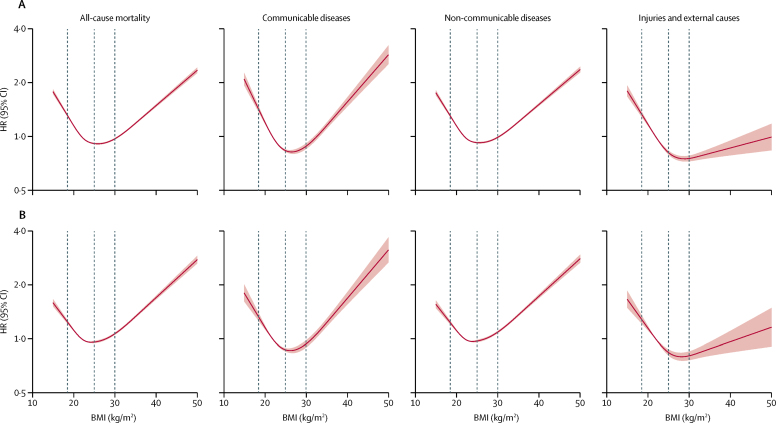
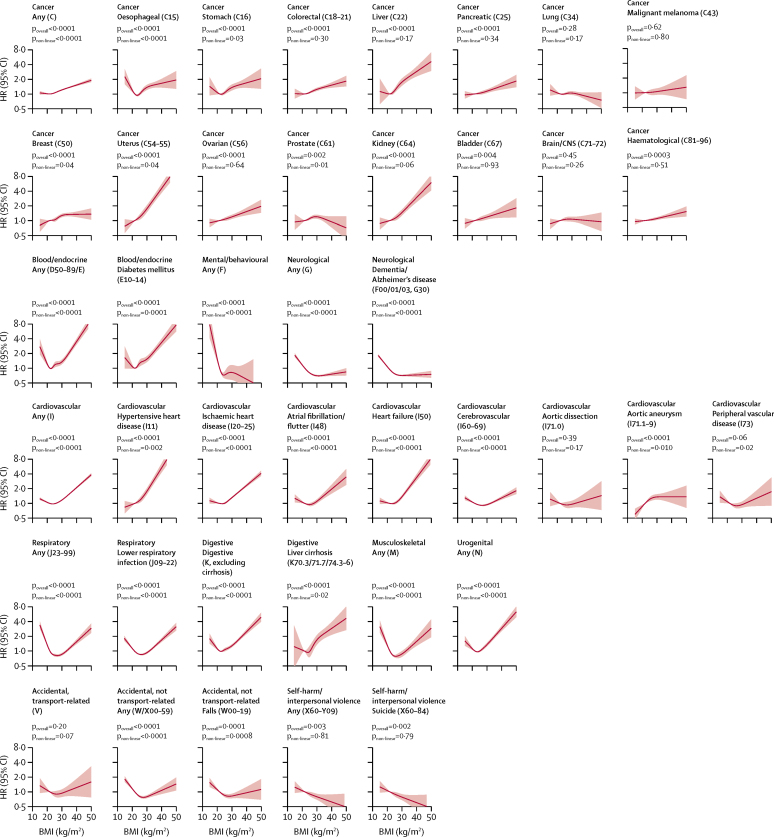
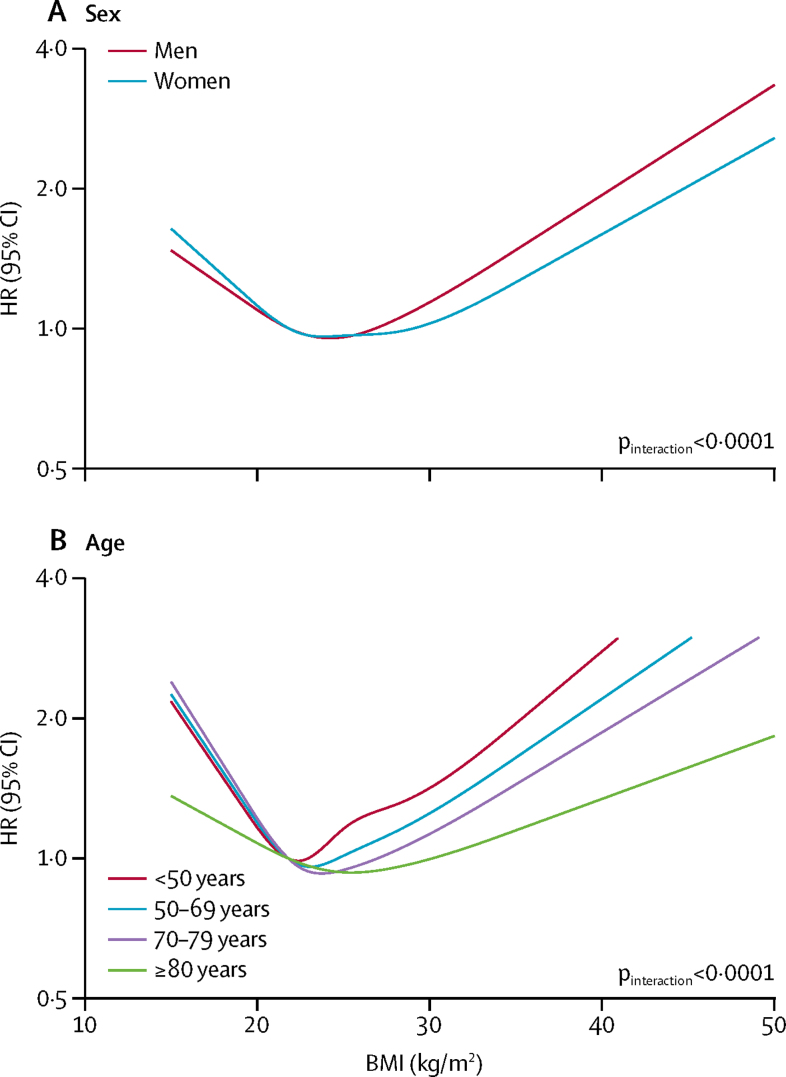
Background BMI is known to be strongly associated with all-cause mortality, but few studies have been large enough to reliably examine associations between BMI and a comprehensive range of cause-specific mortality outcomes. Methods In this population-based cohort study, we used UK primary care data from the Clinical Practice Research Datalink (CPRD) linked to national mortality registration data and fitted adjusted Cox regression models to examine associations between BMI and all-cause mortality, and between BMI and a comprehensive range of cause-specific mortality outcomes (recorded by International Classification of Diseases, 10th revision [ICD-10] codes). We included all individuals with BMI data collected at age 16 years and older and with subsequent follow-up time available. Follow-up began at whichever was the latest of: start of CPRD research-standard follow up, the 5-year anniversary of the first BMI record, or on Jan 1, 1998 (start date for death registration data); follow-up ended at death or on March 8, 2016. Fully adjusted models were stratified by sex and adjusted for baseline age, smoking, alcohol use, diabetes, index of multiple deprivation, and calendar period. Models were fitted in both never-smokers only and the full study population. We also did an extensive range of sensitivity analyses. The expected age of death for men and women aged 40 years at baseline, by BMI category, was estimated from a Poisson model including BMI, age, and sex. Findings 3 632 674 people were included in the full study population; the following results are from the analysis of never-smokers, which comprised 1 969 648 people and 188 057 deaths. BMI had a J-shaped association with overall mortality; the estimated hazard ratio per 5 kg/m 2 increase in BMI was 0·81 (95% CI 0·80–0·82) below 25 kg/m 2 and 1·21 (1·20–1·22) above this point. BMI was associated with all cause of death categories except for transport-related accidents, but the shape of the association varied. Most causes, including cancer, cardiovascular diseases, and respiratory diseases, had a J-shaped association with BMI, with lowest risk occurring in the range 21–25 kg/m 2 . For mental and behavioural, neurological, and accidental (non-transport-related) causes, BMI was inversely associated with mortality up to 24–27 kg/m 2 , with little association at higher BMIs; for deaths from self-harm or interpersonal violence, an inverse linear association was observed. Associations between BMI and mortality were stronger at younger ages than at older ages, and the BMI associated with lowest mortality risk was higher in older individuals than in younger individuals. Compared with individuals of healthy weight (BMI 18·5–24·9 kg/m 2 ), life expectancy from age 40 years was 4·2 years shorter in obese (BMI ≥30·0 kg/m 2 ) men and 3·5 years shorter in obese women, and 4·3 years shorter in underweight (BMI <18·5 kg/m 2 ) men and 4·5 years shorter in underweight women. When smokers were included in analyses, results for most causes of death were broadly similar, although marginally stronger associations were seen among people with lower BMI, suggesting slight residual confounding by smoking. Interpretation BMI had J-shaped associations with overall mortality and most specific causes of death; for mental and behavioural, neurological, and external causes, lower BMI was associated with increased mortality risk. Funding Wellcome Trust.
Overview
The claims and statistics of this paper haven’t been checked yet.
Free: it reads the open-access text and checks the first 5 claims that cite a source we can check. Create a free account to check every claim.
Integrity signals
Registry
Cites
Statistics
Figures
Verification
Claims the paper makes
The claims and statistics of this paper haven’t been checked yet.
Free: it reads the open-access text and checks the first 5 claims that cite a source we can check. Create a free account to check every claim.
Claims other papers make about this one
Each is checked against this paper’s own text: does it say what the citing paper says it does?
The cited source says what the claim attributes to it.
In the citing paper
“As a chronic disease, obesity increases cardiometabolic risk [1] and ultimately confers an increased risk of premature mortality [2,3].”
In the citing paper
“Furthermore, several prospective studies reported a J-shaped association between BMI and both all-cause and cardiovascular mortality (73, 74).”
From Health Consequences of Sarcopenic Obesity: A Narrative Review (2020) · cites this paper as [74]
Self-check
Percentages, sums and reported differences re-computed from the paper’s own numbers.
The self-check needs the paper’s full text.
Citations
Cites
(2000) · PubMed · Cited by 13,173
The metabolic phenotype in obesity: Fat mass, body fat distribution, and adipose tissue function
Goossens, G. H. (2017) · Obesity Facts · doi:10.1159/000471488 · Cited by 8,481
Health effects of overweight and obesity in 195 countries over 25 years
Collaborators, T. G. 2. O. (2017) · New England Journal of Medicine · doi:10.1056/nejmoa1614362 · Cited by 7,918
Prospective Studies Collaboration (2009) · The Lancet · doi:10.1016/s0140-6736(09)60318-4 · Cited by 4,807
Flegal, K. M., Kit, B. K., Orpana, H., & Graubard, B. I. (2013) · JAMA · doi:10.1001/jama.2012.113905 · Cited by 3,998
Di Angelantonio, E., Bhupathiraju, S. N., Wormser, D., Gao, P., Kaptoge, S., de Gonzalez, A. B., Cairns, B. J., Huxley, R., Jackson, C. L., Joshy, G., et al. (2016) · The Lancet · doi:10.1016/s0140-6736(16)30175-1 · Cited by 2,821
Data Resource Profile: Clinical Practice Research Datalink (CPRD)
Herrett, E., Gallagher, A. M., Bhaskaran, K., Forbes, H., Mathur, R., van Staa, T., & Smeeth, L. (2015) · International Journal of Epidemiology · doi:10.1093/ije/dyv098 · Cited by 2,667
Self-citationBody-mass index and mortality among 1.46 million white adults
Berrington de Gonzalez, A., Hartge, P., Cerhan, J. R., Flint, A. J., Hannan, L., MacInnis, R. J., Moore, S. C., Tobias, G. S., Anton-Culver, H., Freeman, L. B., et al. (2010) · New England Journal of Medicine · doi:10.1056/nejmoa1000367 · Cited by 2,317
The use of fractional polynomials to model continuous risk variables in epidemiology
Royston, P., Ambler, G., & Sauerbrei, W. (1999) · International Journal of Epidemiology · doi:10.1093/ije/28.5.964 · Cited by 1,066
Research works printed but not linked: 1
- Gallagher A Puri S Staa T Linkage of the General Practice Research Database (GPRD) with other data sources Pharmacoepidemiol Drug Saf 20 2011 S230 (abstr).
Cited by
Items 701–800 of 1,001
Oladipo, G. S., Jaiyeoba-Ojigho, J. E., Adheke, O. M., & Josephine Onyinyechi, M. B. A. M. (2023) · International Archives of Medical Research · doi:10.56484/iamr.1375753 · Cited by 5
Knight, S. P., Ward, M. D., Newman, L., Davis, J. R. C., Duggan, E., Kenny, R. A., & Romero‐Ortuño, R. (2022) · Entropy · doi:10.3390/e24050676 · Cited by 5
“In order to account for the likely non-linear relationship between BMI and mortality [29], BMI was stratified by ‘underweight/normal’ (BMI < 25), ‘overweight’ (25≤ BMI < 30), ‘obese’ as (30 ≤ BMI < 35), and ‘morbidly obese’ (BMI ≥ 35), as per World Health Organization (WHO) guidelines [30].”
MethodBody mass index in nursing home residents during the first year after admission
Vossius, C., Borda, M. G., Lichtwarck, B., Myhre, J., Sollid, M. I. V., Borza, T., Feiring, I. H., Benth, J. Š., & Bergh, S. (2023) · BMC Nutrition · doi:10.1186/s40795-023-00710-3 · Cited by 5
Guo, Y., Du, K., Wu, H., Li, X., Huang, H., Liu, J., Huang, G., & Xu, X. (2024) · Journal of Building Engineering · doi:10.1016/j.jobe.2024.109755 · Cited by 5
Zhu, Y., Liu, C., Xu, X., Ma, X., Liu, J., Zhang, Z., Li, F., Wong, D. K.-H., Fan, Z., Wu, C., et al. (2023) · Journal of Personalized Medicine · doi:10.3390/jpm13030554 · Cited by 5
“Being one of the three defining criteria for MAFLD, excess weight is as critical a determinant of adverse clinical outcomes such as DM [45,46].”
BackgroundBubnov, R. V., & Golubnitschaja, O. (2019) · Advances in predictive, preventive and personalised medicine · doi:10.1007/978-3-030-13550-8_18 · Cited by 5
Katano, S., Yano, T., Yamano, K., Numazawa, R., Nagaoka, R., Honma, S., Fujisawa, Y., Ohori, K., Kouzu, H., Kunihara, H., et al. (2024) · ESC Heart Failure · doi:10.1002/ehf2.14812 · Cited by 5
Lin, Y., Hung, Y., Chen, J., Sung, J., Hsu, M., Dinh, H. K., Chen, K., & Chen, C. (2025) · Diabetes Obesity and Metabolism · doi:10.1111/dom.16647 · Cited by 5
Association of Weight at Different Ages and All-Cause Mortality Among Older Adults in the US
Berry, K. M., Garcia, S., Warren, J. R., & Stokes, A. (2022) · Journal of Aging and Health · doi:10.1177/08982643211059717 · Cited by 5
“…between adult body mass index (BMI) and 10-year mortality, where normal weight individuals, particularly younger adults (<50 years), have the lowest mortality risk and individuals with both low and high BMI values have increased risk (Berrington de Gonzalez et al., 2010; Bhaskaran et al., 2018).”
BackgroundLiu, R., Dang, S., Zhao, Y., Yan, H., Han, Y., & Mi, B. (2022) · Archives of Public Health · doi:10.1186/s13690-022-00861-y · Cited by 5
The Early Life Course of Body Weight and Gene Expression Signatures for Disease
Potente, C., Harris, K. M., Chumbley, J. R., Cole, S. W., Gaydosh, L. M., Xu, W., Levitt, B. E., & Shanahan, M. J. (2021) · American Journal of Epidemiology · doi:10.1093/aje/kwab049 · Cited by 5
Gong, J., Liu, F., Yu, P., Wang, P., Si, C., Wang, X., Zhou, H., Gu, J., Qin, A., & Song, F. (2024) · BMC Medicine · doi:10.1186/s12916-024-03592-9 · Cited by 5
“Based on National Cholesterol Education Program Adult Treatment Panel-III (NCEP ATP-III) [31] criteria and previous research [32, 33], we used six markers including blood pressure, c-reactive protein, triacylglycerol, low-density lipoprotein cholesterol, high-density lipoprotein cholesterol and…”
MethodMerkel, E. D., Behon, A., Masszi, R., Schwertner, W. R., Kuthi, L. K., Veres, B., Osztheimer, I., Papp, R., Molnár, L., Zima, E., et al. (2024) · ESC Heart Failure · doi:10.1002/ehf2.14961 · Cited by 5
Exogenous Metals Indirectly Affect Human Semen Quality via Immune Cells at Single-Cell Resolution
Liu, N., Li, G., Zhang, G., Li, Y., Meng, T., Xiong, C., Pan, A., Guo, H., Li, Y., Liu, L., et al. (2025) · Environment & Health · doi:10.1021/envhealth.5c00082 · Cited by 5
Cheng, H., Chen, J., Jia, G., Liang, Y., Li, Y., Chen, Y., Lin, J., Wang, P., Chen, Q., Tang, L., et al. (2024) · ESMO Open · doi:10.1016/j.esmoop.2024.103707 · Cited by 5
Alanazi, M. A., El-Hiti, G. A.-R., Alhafy, N., Almutleb, E. S., Fagehi, R. A., Alanazi, S. A., & Masmali, A. M. (2022) · Advances in Clinical and Experimental Medicine · doi:10.17219/acem/156645 · Cited by 5
Hossain, S., Chowdhury, A. I., Sarwer, M. N., Akter, F., & Mukta, N. A. (2025) · Health Science Reports · doi:10.1002/hsr2.71113 · Cited by 5
Transforming Treatment: The Impact of Bariatric Surgery on Oral Drug Absorption
Wigg, D., Edginton, A. N., Jones, M. D., & Fotaki, N. (2025) · Obesity Reviews · doi:10.1111/obr.70044 · Cited by 5
Sun, J., Deng, L., Li, Q., Zhou, J., & Zhang, Y. (2024) · BMC Public Health · doi:10.1186/s12889-024-21072-w · Cited by 5
Xiao, L., Liang, S., Zeng, L., Cai, S., Wang, J., Hong, C., Li, Y., Li, R., JIANG, P. C., Xie, Z., et al. (2026) · npj Digital Medicine · doi:10.1038/s41746-025-02314-6 · Cited by 5
Orozco‐Ruiz, X., Sarabhai, T., & Kostev, K. (2025) · Diabetes Obesity and Metabolism · doi:10.1111/dom.16243 · Cited by 5
Prognostic impact of body mass index on metastatic HER2-positive breast cancer survival
Vynnychenko, О. І., & Moskalenko, Y. (2024) · Український радіологічний та онкологічний журнал · doi:10.46879/ukroj.3.2024.363-376 · Cited by 5
Association of BMI and incidence of type 2 diabetes in Saudi population
AlJabr, Q., Alalawi, M., Aldhneen, B., AlGharash, A., Aldabbab, M., Aldabbab, H., Bu-khamseen, A. A., Alkattan, A., & Sayafi, A. A. (2024) · Health Science Reports · doi:10.1002/hsr2.1951 · Cited by 5
Imoto, W., Ihara, Y., Imai, T., Tamoto, M., Ibuki, T., Yamada, K., Kaneko, Y., Shintani, A., & Kakeya, H. (2024) · Journal of Infection and Chemotherapy · doi:10.1016/j.jiac.2024.04.007 · Cited by 5
Onghena, L., Nieuwenhove, Y. V., Vlierberghe, H. V., Devisscher, L., Raevens, S., Verhelst, X., Lefere, S., & Geerts, A. M. (2024) · United European Gastroenterology Journal · doi:10.1002/ueg2.12642 · Cited by 5
Ler, P., Jylhävä, J., Hägg, S., Finkel, D., Aslan, A. K. D., Ploner, A., & Karlsson, I. (2025) · EBioMedicine · doi:10.1016/j.ebiom.2025.105883 · Cited by 5
Huang, B., Zhang, X., Guo, H., Cheng, M., Cui, J., & Jia, J. (2025) · Renal Failure · doi:10.1080/0886022x.2025.2555375 · Cited by 5
“However, statistical similarity does not necessarily imply clinical equivalence. although both BMi and BRi have shown u-or J-shaped associations with mortality in previous studies [9,40], the underlying mechanisms may differ.”
Weight and mortality: why body composition matters
Odegaard, A., & Manson, J. E. (2020) · American Journal of Clinical Nutrition · doi:10.1093/ajcn/nqaa409 · Cited by 5
Li, Z., Li, C., You, R., Li, Y., Liu, L., Pu, H., Lei, M., Li, W., Zhang, T., & You, D. (2025) · npj Precision Oncology · doi:10.1038/s41698-025-00809-9 · Cited by 5
“…adjustment, persistently low perioperative AGR and decreasing-rising AGR trajectory werestillsigni fi cantlyassociatedwithbothOSandRFSinCRC,NSCLCand HCC subgroup, suggesting that the prognostic value of AGR was independent to tumor-speci fi c features in each cancer (Supplementary Table 17 – 19).”
Abernethy, D., Bennie, J. A., & Pavey, T. (2025) · Annals of Epidemiology · doi:10.1016/j.annepidem.2025.05.002 · Cited by 5
Bohrmann, B., Massa, M. S., Ross, S., Lewington, S., & Lacey, B. (2023) · JAMA · doi:10.1001/jama.2023.2619 · Cited by 5
Jiang, C., Qin, F., Yan, J., Zou, J., Wang, H., Zhang, H., Feng, X., & Hou, G. (2024) · European Journal of Surgical Oncology · doi:10.1016/j.ejso.2024.108610 · Cited by 5
Tareke, A. A., Alem, A., Debebe, W., & Zerfu, T. A. (2024) · Scientific Reports · doi:10.1038/s41598-024-66409-y · Cited by 5
“Besides the common interpretation of BMI as indicator of an individual’s fatness, it is widely used as a risk factor for morbidity and mortality 16 and is widely used in formulating public health policies.”
BackgroundPark, P. G., Pyo, J. Y., Ahn, S. S., Song, J. J., Park, Y., Huh, J. H., & Lee, S. (2023) · Frontiers in Medicine · doi:10.3389/fmed.2023.1168016 · Cited by 5
“In particular, it shows a U shape, which is characterized by roughly opposite results between the non-obese and obese people (20).”
BackgroundResultDing, C.-Y., Qi, W.-H., An, Y.-J., Yuan, X., Yao, Y.-T., & the Evidence in Cardiovascular Anesthesia (EICA) Group (2024) · Journal of Cardiothoracic Surgery · doi:10.1186/s13019-024-02586-1 · Cited by 5
“The relationship between obesity and life-expectancy is complex, with the consensus of studies showing increased mortality in people who are either underweight or very obese [4, 5].”
BackgroundIncreased risk of mortality from COVID-19 in people with obesity
Ribeiro, A. C., Poli, P., & Uehara, S. C. D. S. A. (2023) · Rev Rene · doi:10.15253/2175-6783.20232481453 · Cited by 5
Xu, Z., Chen, C., & Xiong, L. (2025) · BMC Psychiatry · doi:10.1186/s12888-025-06924-y · Cited by 4
“More-over, research by Bhaskaran et al. [27] showed that a BMI range of 24–27 kg/m² was link to a rise in mortality, particularly for mental health disorders.”
Shin, D., Kim, D., Kim, H., & Kim, J. (2026) · Nutrients · doi:10.3390/nu18050856 · Cited by 4
“Maintaining a healthier BMI is associated with lower visceral adiposity and reduced chronic inflammation, both of which are strongly linked to mortality from cardiometabolic diseases [36].”
Stannard, S., Owen, R. K., Berrington, A. M., Ziauddeen, N., Fraser, S. D., Paranjothy, S., Hoyle, R. B., & Alwan, N. A. (2026) · Journal of Obesity · doi:10.1101/2024.12.09.24318705 · Cited by 4
Agrawal, V., Lakshminarayanan, S., Medha, R., & Deepanjali, S. (2022) · Nutrition in Clinical Practice · doi:10.1002/ncp.10896 · Cited by 4
Ren, Q., Wu, H.-F., Yu, D., Zhang, F., Shen, Z.-L., Huang, G., Lin, F., Chen, W., & Yu, Z. (2023) · Nutrition · doi:10.1016/j.nut.2023.112256 · Cited by 4
Zheng, X., Zhu, X., & Wang, A. (2025) · BMC Nursing · doi:10.1186/s12912-025-04196-1 · Cited by 4
“For both models, we fitted RCS with four knots placed at the default quantiles of MD. Standardized coefficients were calculated after Z-score normalization of MD and CF to allow for effect size comparison [20, 21, 33].”
Zhu, X., Jiao, J., Liang, W., Wang, X., & Zhang, H. (2025) · Journal of Sports Sciences · doi:10.1080/02640414.2025.2559518 · Cited by 4
“Obesity, especially visceral obesity, is strongly correlated with chronic diseases such as type 2 diabetes, dyslipidemia, and hypertension (Bhaskaran et al., 2018; Kammerlander et al., 2021; Mi et al., 2020).”
Farão, E. M. D., Costa, D. V. S. D., Valvassoura, S. A., Andrade, V. R., Fernandes, E. V., Gouvêa-e-Silva, L. F., & de Oliveira, D. M. (2023) · Revista Interfaces Saúde Humanas e Tecnologia · doi:10.16891/2317-434x.v11.e2.a2023.pp1875-1887 · Cited by 4
Testing a Biobehavioral Model of Food Insecurity and Chronic Disease in Hispanic Older Adolescents
Rancourt, D., Heeren, F. A. N., & Cardel, M. I. (2023) · Nutrients · doi:10.3390/nu15041027 · Cited by 4
“Obesity during adolescence contributes to risk of cardiovascular disease in adulthood [21], and a higher body mass index (>25 kg/m2) in adulthood is associated with increased mortality risk associated with cancer, cardiovascular disease, and blood endocrine disorders [22].”
BackgroundAl-Hazzaa, H. M., Alhakami, A., & Alotaibi, A. (2025) · Frontiers in Pediatrics · doi:10.3389/fped.2025.1607811 · Cited by 4
Dong, X., Wang, Y., Kang, Y., Zhou, X., Li, J., Cao, H., Li, Y., Li, Y., Yang, P., Duan, Y., et al. (2024) · Journal of Affective Disorders · doi:10.1016/j.jad.2024.02.028 · Cited by 4
Boaz, M., Shriqui, V. K., Azoulay, O., & Weinstein, T. (2021) · Life · doi:10.3390/life11020166 · Cited by 4
“Compared to the general population, in which obesity is associated with increased morbidity and mortality [6], overweight/obese (OWOB) hemodialysis patients may have a survival advantage over their normal-weight counterparts [7,8].”
BackgroundWu, X., Wang, W., Zhang, D., & Zhu, F. (2021) · European Journal of Nutrition · doi:10.1007/s00394-021-02739-1 · Cited by 4
Zhao, M., Xin, Y., Ni, W., Liu, Q., Ding, Y., Zhang, S., Bai, X., Song, H., Wang, M., Wu, S., et al. (2024) · Scientific Reports · doi:10.1038/s41598-024-82099-y · Cited by 4
The Impact of Yoyo Dieting and Resistant Starch on Weight Loss and Gut Microbiome in C57Bl/6 Mice
Phuong-Nguyen, K., O’Hely, M., Kowalski, G. M., McGee, S. L., Aston‐Mourney, K., Connor, T., Mahmood, M. Q., & Rivera, L. R. (2024) · Nutrients · doi:10.3390/nu16183138 · Cited by 4
Lin, C., Fan, K., Yen, I., Chen, S., Hsu, C., Lyu, Y., Wu, W.-C., Yang, C., Lin, M., Shih, S., et al. (2025) · Scientific Reports · doi:10.1038/s41598-025-03988-4 · Cited by 4
Minato-Inokawa, S., Honda, M., Tsuboi-Kaji, A., Takeuchi, M., Kitaoka, K., Takenouchi, A., Kurata, M., Wu, B., Kazumi, T., & Fukuo, K. (2022) · BMJ Open Diabetes Research & Care · doi:10.1136/bmjdrc-2022-003013 · Cited by 4
Liu, Y., You, H., Zhu, Y., Luo, F., Zhao, Y., Zhang, D., Xiao, Y., You, S., Zhang, R., Han, Y., et al. (2025) · Journal of Clinical & Translational Endocrinology · doi:10.1016/j.jcte.2025.100416 · Cited by 4
“Deconstruction of the overall association between BMI and the risk of 5-year all-cause mortality into direct and indirect associations mediated by TyG. identified a significant non-linear association between BMI and all-cause mortality, which is consistent with our present findings [27].”
Lee, C.-L., Liu, W.-J., & Wang, J. (2020) · Clinical Nutrition · doi:10.1016/j.clnu.2020.09.006 · Cited by 4
Bovet, P., Farpour‐Lambert, N. J., Banatvala, N., & Baur, L. A. (2023) · Routledge eBooks · doi:10.4324/9781003306689-12 · Cited by 4
Gielen, A. H. C., Melenhorst, J., Breukink, S. O., Weijenberg, M. P., & Bours, M. J. L. (2023) · Cancers · doi:10.3390/cancers15174307 · Cited by 4
Zhang, C., Liu, Z., Sun, K., Zhao, J., Huang, H., & Zhang, C. (2024) · Nutrition · doi:10.1016/j.nut.2024.112383 · Cited by 4
Wang, A.-Y., Hu, H., Sun, Y. P., Ou, Y., Ma, Y., Li, M., Li, Q., & Tan, L. (2024) · Frontiers in Aging Neuroscience · doi:10.3389/fnagi.2024.1422772 · Cited by 4
Vecchiato, M., Quinto, G., Neunhäeuserer, D., Battista, F., Bettini, S., Gasperetti, A., Vettor, R., Busetto, L., & Ermolao, A. (2023) · International Journal of Obesity · doi:10.1038/s41366-022-01252-7 · Cited by 4
“INTRODUCTION The worldwide increasing prevalence of obesity represents a major health burden and is associated with an increased risk for many metabolic and cardiovascular diseases and comorbidities, such as arterial hypertension, coronary artery disease, heart failure and arrhythmias [1].”
BackgroundSocioeconomic status and body mass index life course models: the 1993 Pelotas (Brazil) birth cohort
Vieira, L. S., Vaz, J. D. S., Wehrmeister, F. C., Ribeiro, F. G., Motta, J. V. D. S., Gonçalves, H., & Assunção, M. C. F. (2021) · Cadernos de Saúde Pública · doi:10.1590/0102-311x00260820 · Cited by 4
Li, J., Liu, X., Yang, Q., Huang, W., Nie, Z., & Wang, Y. (2025) · Frontiers in Medicine · doi:10.3389/fmed.2025.1589888 · Cited by 5
“There is mounting evidence that obesity, as measured by body mass index (BMI), is an important factor contributing to the increased death risk of people (8, 9).”
Association between Sympathetic Nervous System Activation, Obesity and Insulin Resistance
Кочетков, А. И., Ostroumova, O. D., Starodubova, A. V., Оstroumova, Т. М., & Bondarenko, D. A. (2019) · Rational Pharmacotherapy in Cardiology · doi:10.20996/1819-6446-2019-15-2-230-243 · Cited by 4
Cai, Y., Zhao, N., Mi, J., Du, H., Wan, Z., Liu, Z., Pan, Y., Yan, X., Fan, Z., Li, J., et al. (2026) · Insights into Imaging · doi:10.1186/s13244-026-02206-7 · Cited by 4
“We further investigated the potential nonlinear relationships between IPFD and 12 diseases using RCS, which can detect complex patterns often missed by traditional linear models by fi tting piecewise cubic polynomials between prede fi ned knots [22].”
Global status and trends of proteomics in obesity: a bibliometric analysis and knowledge graph study
Wu, X., Chen, Y., Wu, T., Pan, Q., & Guo, L. (2025) · Tropical Medicine and Health · doi:10.1186/s41182-025-00785-7 · Cited by 4
“Higher BMI is linked to shorter life expectancy [4].”
Kundu, P., Burgess, S., & Chatterjee, N. (2023) · medRxiv · doi:10.1101/2023.03.17.23287394 · Cited by 4
Hu, C., Zhang, J., Lin, L., Jia, X., Wang, S., Zheng, R., Li, M., Xu, Y. H., Xu, M., Lin, H., et al. (2025) · Diabetes Obesity and Metabolism · doi:10.1111/dom.70249 · Cited by 4
“8,17 Previous studies have mainly focused on all-cause mortality, 8,10,29 while limited evidence has investigated all-cause or cause-specific premature mortality.”
Gupta, R., Sharma, K. K., Khedar, R. S., Sharma, S., Makkar, J. S., Bana, A., Natani, V., Bharati, S., Kumar, S., Hadiya, V. M., et al. (2023) · International Journal of Cardiology Cardiovascular Risk and Prevention · doi:10.1016/j.ijcrp.2023.200230 · Cited by 4
“Studies in the mid and late 20th century from Europe and North America reported that high BMI was a risk factor for cardiovascular events in the general population [2 – 8], as well as for recurrent events among patients with established CAD [15 – 17 , 31 – 33].”
BackgroundHuo, Z., Chong, F., Luo, S., Li, N., Tong, N., Lu, Z., Guo, J., Zhang, L., Lin, X., Zhang, M., et al. (2024) · The journal of nutrition health & aging · doi:10.1016/j.jnha.2024.100409 · Cited by 4
Xiong, R., & Zhou, X. (2025) · Frontiers in Public Health · doi:10.3389/fpubh.2025.1676418 · Cited by 4
Han, C., Li, X., Wang, S., Hong, R., Ji, J., Chen, J., Zhu, H., Morrison, E. R., & Lei, X. (2022) · Personality and Individual Differences · doi:10.1016/j.paid.2022.111921 · Cited by 4
Assessing alternative strategies for measuring metabolic risk
Enichen, E. J., Heydari, K., & Kvedar, J. C. (2024) · npj Digital Medicine · doi:10.1038/s41746-024-01376-2 · Cited by 4
Huo, Y., Li, G., Wu, X., Luo, C., Deng, Y., Yang, M., Wang, X., Lu, L., Lu, Q., & Wang, F. (2025) · Medicine · doi:10.1097/md.0000000000042488 · Cited by 4
Obesity and Risk of Crohn’s Disease Half the Story
Mendall, M. A. (2022) · Clinical Gastroenterology and Hepatology · doi:10.1016/j.cgh.2022.05.031 · Cited by 4
Per, B. L., Loeser, S., Edwards, S., Lee, W. S., Wilton, L. R., & Clark, S. R. (2025) · Acta Psychiatrica Scandinavica · doi:10.1111/acps.13796 · Cited by 4
“Compared to the general population, patients with schizophrenia have three times the obesity rate, twice the prevalence of diabetes, and significantly higher rates of overall mortality [5].”
Mortality in Greenlanders with chronic hepatitis B virus infection
Krarup, H. B., Rex, K. F., & Andersen, S. (2022) · Journal of Viral Hepatitis · doi:10.1111/jvh.13673 · Cited by 4
Sun, C., Jiang, H., Zhu, H., Shao, C., Luo, Z., Zhang, B., Zhang, X., & Wang, S. (2025) · Journal of Health Population and Nutrition · doi:10.1186/s41043-025-01030-x · Cited by 4
“Obesity in elderly populations has been associated with attenuated risks of some adverse outcomes [13].”
Papantoniou, P., & Maniadakis, N. (2025) · Frontiers in Public Health · doi:10.3389/fpubh.2025.1690211 · Cited by 4
Ma, L., Li, Y., Li, G., Sun, J., Zhang, X., Shi, Z., Yan, Y., Duan, Y., Wang, J., Li, Z., et al. (2024) · Diabetes Obesity and Metabolism · doi:10.1111/dom.15610 · Cited by 4
“Besides, although curvilinear associations between BMI and cause-specific mortality have been established, 27 it remains unclear whether similar associations exist between adiposity indicators and multimor-bidity.”
BackgroundAssociation of adiposity with morbidity in Finnish adults: A register-based follow-up study
Mäki, P., Harald, K., Lindström, J., Männistö, S., & Laatikainen, T. K. (2023) · Scandinavian Journal of Public Health · doi:10.1177/14034948221148053 · Cited by 4
“Furthermore, obesity has been associated with increased mortality [7–9] and decreased life expectancy [8,10].”
BackgroundLiu, Y., Yuan, S., Zuo, J., Liu, S., Tang, X., Li, X., Yao, D., & Jin, Y. (2023) · European journal of medical research · doi:10.1186/s40001-023-01543-3 · Cited by 4
“Obesity, classified as BMI ≥ 30 kg/m 2 in Caucasian populations, or BMI ≥ 25 kg/m 2 in Asian–Pacific populations [8], is related to higher risk of advanced liver disease [9–11].”
BackgroundQin, Y., Xuan, L., Wu, Z., Deng, Y., Liu, B., & Wang, S. (2024) · Scientific Reports · doi:10.1038/s41598-024-81208-1 · Cited by 4
Rahman, M. J., Parvez, S. M., Rahman, M. M., He, F. J., Cunningham, S. A., Narayan, K. M. V., Abedin, J., & Naser, A. M. (2022) · Nutrients · doi:10.3390/nu14143000 · Cited by 4
“Prior research suggests that both underweight and overweight are associated with an increased risk of all-cause mortality relative to normal BMI [92].”
BackgroundMurakami, K., Fujii, R., Tsuboi, Y., Okumiyama, H., Umematsu, R., & Suzuki, K. A. O. (2025) · Journal of Nutrition · doi:10.1016/j.tjnut.2025.09.031 · Cited by 4
Fu, M., Hu, X., Yi, S., Sun, S., Zhang, Y., Feng, Y., Geng, Q., Zhou, Y., & Dong, H. (2021) · Frontiers in Cardiovascular Medicine · doi:10.3389/fcvm.2021.680083 · Cited by 4
Günal, A. M., Yılmaz, S., & Arslan, S. (2025) · Frontiers in Public Health · doi:10.3389/fpubh.2025.1569755 · Cited by 4
“In contrast, globally, deaths attributed to high BMI exceed 4 million cases (64).”
Cai, B., Liang, Y., Zheng, W., Zeng, Q., Ye, L., & He, C. (2025) · Journal of Medical Biochemistry · doi:10.5937/jomb0-59611 · Cited by 4
“Non-linear relationships were modeled with restricted cubic splines (RCS) using knots at the 10th, 50th, and 90th percentiles, followed by piecewise regression to detect thresholds (16).”
Jakobsen, J. K., Kortsen, D. B., & Jensen, J. B. (2020) · Scandinavian Journal of Urology · doi:10.1080/21681805.2020.1803399 · Cited by 4
Monacis, D., Colella, D., & Kolimechkov, S. (2023) · Kinesiologia Slovenica scientific journal on sport · doi:10.52165/kinsi.29.1.122-137 · Cited by 4
Assessment of inbreeding depression on morphometric traits among North Indian population cohorts
Fatma, R., Chauhan, W., & Afzal, M. (2024) · Discover Public Health · doi:10.1186/s12982-024-00132-x · Cited by 4
Li, J., Liu, H., & Xu, B. (2025) · Frontiers in Nutrition · doi:10.3389/fnut.2025.1525115 · Cited by 4
Castellanos, Á. M. (2023) · Acta Scientific Medical Sciences · doi:10.31080/asms.2023.07.1605 · Cited by 4
Accuracy of body mass index based on self-report data among law enforcement cadets
Johnson, Q. R., Joyce, J. M., Kukić, F., Lockie, R. G., Kornhauser, C. L., Orr, R. M., & Jay, D. (2020) · Nauka bezbednost policija · doi:10.5937/nabepo25-27062 · Cited by 4
Weight change and all-cause and cause-specific mortality: A 25-year follow-up study
Yang, H., Wang, J., Wang, X., Sun, W., Tong, C., Fan, J., Qiao, Y., & Abnet, C. C. (2024) · Chinese Medical Journal · doi:10.1097/cm9.0000000000002970 · Cited by 4
“[7,8] For example, obesity was confirmed to be related to metabolic and cardiovascular risks, [9] while some studies indicated that mortality in the elderly and chronic disease populations was consistently associated with a lower BMI.”
ResultObesity and 2019-nCoV: A risky relationship
Carretero‐Gómez, J., Arévalo‐Lorido, J. C., & Carrasco-Sánchez, F. J. (2020) · Revista Clínica Española (English Edition) · doi:10.1016/j.rceng.2020.04.001 · Cited by 4
Chen, T., Meng, M. L., Hong, E. M., Durrant, F. G., Talmor, G., Park, R. C. W., & Benson, B. E. (2023) · Head & Neck · doi:10.1002/hed.27403 · Cited by 4
Michaud, A., Koskoletos, C., Patterson, B., Crossley, K. M., Birmingham, T. B., Culvenor, A. G., & Hart, H. F. (2024) · Osteoarthritis and Cartilage Open · doi:10.1016/j.ocarto.2024.100473 · Cited by 4
“Excessive or abnormal accumulation of body fat, also known as adiposity, can lead to signi fi cant health risks [17,18].”
BackgroundBlood pressure, hypertension, and the risk of aortic aneurysm in the UK Biobank
Naqvi, R. E. Z., Baroom, G., Zheng, L., Hibino, M., Berlanga‐Taylor, A. J., Heath, A. K., & Aune, D. (2025) · BMC Cardiovascular Disorders · doi:10.1186/s12872-025-05279-2 · Cited by 4
“…and Ehlers-Danlos syndrome [8], smoking [9], elevated total and low-density lipoprotein (LDL) cholesterol (4;6), and high body mass index (BMI) [10–13] are risk factors for aortic aneurysm, while physical activity [14], higher HDL cholesterol [4] and diabetes [5, 13, 15] may be associated with…”
Mo, M., Li, B., Yang, Y., Kang, P., Wang, J., Luo, W., Jiao, T., Wu, G., & Xu, X. (2026) · Scientific Reports · doi:10.1038/s41598-026-42405-2 · Cited by 4
Zhou, S.-Q., Luo, F., Li, K., Xiong, R., & Lv, F. (2023) · Scientific Reports · doi:10.1038/s41598-023-44560-2 · Cited by 4
“If a nonlinear relationship was identified, the inflection point was subsequently calculated using a recursive algorithm and bootstrapping 17 .”
Method
Metadata
- Authors
- Bhaskaran, K., dos-Santos-Silva, I., Leon, D. A., Douglas, I. J., & Smeeth, L.
- Affiliations
- London School of Hygiene & Tropical Medicine (GB)
- Corresponding author
- Bhaskaran, Krishnan
- Venue
- The Lancet Diabetes & Endocrinology
- Publisher
- Elsevier BV
- Published
- 2018-12
- Volume
- 6
- Issue
- 12
- Pages
- 944-953
- ISSN
- 2213-8587 (ISSN-L)
- PMC
- PMC6249991
- OpenAlex
- W2898741363
- Semantic Scholar
- 2177d6543e914c435350504e6a3932ee247a32d0
- Cited by
- 1,228
- References
- 29
- Citations by year
- 2026: 104 · 2025: 231 · 2024: 208 · 2023: 159 · 2022: 179 · 2021: 170 · 2020: 119 · 2019: 52 · 2018: 6
- FWCI
- 82.58
- Type
- journal article
- Language
- en
- Open access
- hybrid
- doi.org
- Licence
- cc-by
- www.elsevier.com/tdm/userlicense/1.0/ (tdm)
- creativecommons.org/licenses/by/4.0/ (vor)
- Locations
- The Lancet Diabetes & Endocrinology (publishedVersion, cc-by)
- Europe PMC (PubMed Central) (publishedVersion, other-oa)
- PubMed Central (publishedVersion, cc-by)
- PubMed (publishedVersion)
- LSHTM Research Online (London School of Hygiene and Tropical Medicine) (acceptedVersion)
- NORA - Norwegian Open Research Archives (submittedVersion, other-oa)
- Funders
- Wellcome Trust and the Royal Society (grant number 107731/Z/15/Z)
- Topics
- Health Sciences › Medicine › Public Health, Environmental and Occupational Health › Obesity, Physical Activity, Diet
- Health Sciences › Medicine › Oncology › Cancer Risks and Factors
- Health Sciences › Medicine › Endocrinology, Diabetes and Metabolism › Diabetes, Cardiovascular Risks, and Lipoproteins
- Keywords
- body mass index, all-cause mortality, cause-specific mortality, J-shaped association, obesity paradox, underweight, cancer mortality, cardiovascular mortality, respiratory mortality, mental and behavioral disorders, accidental death, never smokers, sex differences, UK adults, Clinical Practice Research Datalink
- MeSH terms
- Adolescent, Adult, Aged, Aged, 80 and over, Cause of Death, Female, Follow-Up Studies, United Kingdom, Humans, Male, Middle Aged, Mortality, Obesity, Prognosis, Prospective Studies, Body Mass Index, Survival Rate, Overweight, Young Adult
About these checks
Registry, retraction, Cites and statistics results are computed, not judged, with one exception: a printed reference that no index lists is read once by a model before it counts as a citation error. Claims are extracted by a model and kept only when their quote appears verbatim in the text; each cited source is then checked, with a model’s help, for whether it says what the claim relies on. Those verdicts can be wrong — read the claim’s quote and the cited source before relying on one.
Statistics and arithmetic are recomputed, not judged.
Confidence bands are shown only for fields calibrated on our annotated test set. None is calibrated yet, so no band is shown.
What counts as a claim ›How we measure confidence ›How we check this ›
Are you an author, or do you see a problem with this page? Request a review
Data sources
Bibliographic data: Semantic Scholar, OpenAlex, Crossref.
Contains information from the Semantic Scholar Academic Graph Datasets, made available under the ODC Attribution License (ODC-BY 1.0).
Semantic Scholar’s data is described in: Kinney, R., et al. (2023). The Semantic Scholar Open Data Platform. arXiv:2301.10140.
